



Abstract
The manosphere has rapidly moved from anonymous forum-based communities to mainstream contexts, generating manfluencers with mass followings. While popular and networked misogyny, together with various parts of the manosphere have been well studied, manfluencers as key agents in the mainstreaming of the manosphere have received relatively little academic attention. This article explores how Estonian TikTok manfluencers signal problematic messages through audiovisual elements with such strong connotations to the manosphere that they embody or reference an ideology without any need to mention it explicitly. By using a mixed-methods approach, the study will employ a combination of standardized content analysis and group exercises with audiences (not fans) of this content to conceptualize and explore what in this article is termed “misogynesque” – a coded style of content unique to the genre of manfluencers that is able to circulate in mainstream settings. The study elaborates on how manfluencers engage in affective racketeering by using audiovisual elements to evoke affective responses in their audiences. Results indicate that the misogynesque is constructed through the connotations of sounds and visuals, which have become symbols of hypermasculinity. These include luxury yachts, cars, a trained physique and daily routines. Misogynesque is further employed through a process of affective racketeering, which utilizes the sociosemiotic connotations of audio cues and framing styles. For example, close-up framing facilitates sympathy and intimacy, while the use of techno music projects aggression and intimidation. The results of this study are crucial for understanding the processes behind the mainstreaming of the manosphere and networked misogyny.
Introduction
Extreme right-wing values, views and politics are currently on the rise across the West, as we have witnessed during recent elections in the U.S., Germany, France, Sweden, and the Netherlands. Particularly in the U.S., Trump won the vote of young men between 18 and 29 (Yerushalmy, 2024). The extreme turn to the right is reflected in online environments as well, since a recent study found that politically right-leaning online shows have nearly five times the following of left-leaning online shows (Gogarty, 2025). With the rise to infamy of Andrew Tate, Jordan Peterson and many other extremist influencers, journalism has been ringing alarm bells regarding the radicalization of young men in various countries (Burn-Murdoch, 2024; Gillett, 2024; Stuart, 2025; Walfisz, 2025).
Social media has become a particularly important tool for extremist and alt-right individuals and groups in disseminating their ideologies (Regehr et al., 2024; Shaw, 2023). Radicalizing content is further fueled by the recent decisions of major platforms to reduce moderation efforts, which leave many marginalized groups in society vulnerable to hate speech (McMahon et al., 2025; Türk, 2025). One radical online environment that seems to be growing in popularity is the manosphere–groups that focus on men’s perspectives and grievances, while promoting hateful and violent ideas about women (Farrell et al., 2019). While the manosphere is often associated with niche extremist groups such as incels and Men’s Rights Activists, its ideologies are mainstreamed globally on social media, owing to manfluencers promoting extremist ideas of masculinity (Lott et al., 2025; Solea & Sugiura, 2023).
The promotion of extreme views regarding gender and, more specifically, masculinism (Nicholas, 2024) is further fueled by content that is not explicitly a part of the manosphere but promotes the values of hegemonic and toxic masculinity. One recent and popular trend is looksmaxxing, which emphasizes the enhancement of various physical attributes, such as eye, lip, and jaw shape, to increase men’s “sexual market value” (Usborne, 2024). Simultaneously, there have been recent viral examples of male content creators promoting their 5 a.m. routines, cold plunges, and weight-lifting coaching (Manavis, 2025). Reinis (2025) calls these content creators masculine optimization influencers, who promote discipline through giving career and fitness advice while reinforcing hierarchical gender relations. The problematic aspects of this type of content are often unrecognized under the guise of self-help advice, which has flooded social media as a genre (Signer, 2023).
The mainstreamed manosphere appears to be evolving into a distinct genre, as such offering “interpretative, recognizable, and flexible frames of reference” to its audiences (Lüders et al., 2010, p. 947). The genre conventions of a community also indicate its “norms, epistemology, ideology, and social ontology” (Berkenkotter & Huckin, 2016, p. 21). This shift of the manosphere into a mainstream genre enables content creators to further propel masculinism into the mainstream – often no words are even necessary to convey these hypermasculine and sexist messages as the surrounding ideologies have been encoded into various visuals, filters, and music genres used on social media. What emerges from these trends and shifts in digital culture is the growing difficulty in pinpointing the potentially problematic aspects and ties to discriminatory ideologies of this type of content.
This study will focus on an aspect of social media manfluencers that has so far been rarely explored – the audiovisual features of their TikTok videos. By combining quantitative analysis of Estonian TikTok manfluencers’ videos (n = 120) with the perceptions of online audiences (n = 19), I will analyze the patterns emerging from manfluencers’ videos to outline specific characteristics and attributes regarding the use of visuals and sounds. In particular, the analysis will explore how this type of content builds affective stickiness (Ahmed, 2004) to achieve the algorithmic success it has recently enjoyed. Estonia provides a strong example to study manfluencers, as the country’s small population (approx. 1.3 million people) and small TikTok scene make it possible to form a representative sample, which is helpful for mapping global trends among manfluencers. However, the results of this study will not thoroughly focus on the national context of manfluencers’ videos, which has been previously studied by Lott and others (2025). The study found that Estonian manfluencers do not rely on the national sociocultural context as they are using narratives already popularized in the international manosphere.
Importantly, this study introduces two novel concepts to pinpoint the problematic aspects of content on social media with implicit ties to the manosphere. First, the audiovisual composition of the content will result in the conceptualization of the misogynesque, broadly defined as a genre of social media content which does not explicitly convey masculinist, sexist or misogynist ideas, but carries strong connotations to these ideologies. Second, I will introduce the term affective racketeering, which focuses on the manipulative ways that manfluencers elicit affective responses from their audiences.
Social Media Genres
Genres carry great importance – through centuries, they have helped people to interpret the world and create meaning (Creeber, 2015). Simply put, genres signify the relationship between producer, text, and recipient to ensure a common understanding, forming a “horizon of expectations” (Lomborg, 2013, p. 3; Neale, 1980). Genres simultaneously constitute a social structure influencing the production of texts but, at the same time, form generatively as a situated practice (Berkenkotter & Huckin, 2016). In the context of manfluencers on TikTok, genres serve as constraints or a mold (Frow, 2006), which guide the boundaries of acceptable practice in the production of content and guide the audiences in their engagement with the content (Hill, 2019). Thus, genres support both producers and audiences in the encoding and decoding practices on social media (Hall, 1980). However, no particular text is a pure example of a genre; individual variations remain (Lomborg, 2013). Genres are rarely straightforward, and generic norms are likely to change over time (Frow, 2006). This is especially true for social media genres, where content is constantly produced by large numbers of users, all simultaneously in dialogue with audiences of their content and greatly influenced by platform algorithms (Cotter, 2019; Lomborg, 2013).
While I do not necessarily claim that manfluencers constitute a fully formed genre on social media, their content does often follow specific rules and frames. Therefore, the use of genre theory is particularly useful for explaining the sociosemiotic significance of this content’s generic elements. Competence within the genre rules in the manosphere is important as it admits a person into a shared space of meaning and contributes to forming homosocial currencies where misogyny is just banter (Haslop et al., 2024; Kanai, 2016; Tanner & Gillardin, 2025). Previous studies have shown how ideologies are often expressed and mobilized through more implicit means. For example, Teitelbaum (2017) explored the relationship between nationalist movements in Sweden and various music genres (e.g., folk, rock, and hip-hop). This study will specifically look at the generic and aesthetic elements of Estonian manfluencers’ content on TikTok. This is an under-researched aspect of manfluencers’ content, despite the centrality of genre-based aesthetics. Tanner and Gillardin (2025) indicate that their analysis of normative masculinity discourse reveals a strong connection to cinematic culture and musical style, but this was not the sole focus of their article. Therefore, audiovisual analysis deserves further attention.
There is more research regarding the aesthetics of a somewhat similar trend – tradwives, who create content on social media about women upholding traditional gender roles by embracing domesticity, motherhood, and so on (Bower, 2024). Tradwives’ identities range from the conservative right to the alt-right, yet all of them promote right-wing agendas (Sykes & Hopner, 2024). Interestingly, both the ultramasculine and ultrafeminine content on social media have very distinct and rigid norms for their audiovisual aesthetic. Tradwives have been categorized into three major groups based on their aesthetics: nostalgic tradwives, former feminists, and Southern Belles (Bower, 2024). These categories are conveyed, for example, by using 1950s iconography, wearing pearl necklaces to emphasize hyperfemininity, performing domestic tasks, and so on (Bower, 2024). Tradwife content is polysemic in the context of refracted publics (Abidin, 2020), reaching various audiences and facilitating sympathy toward extreme views (Bower, 2024).
This study will conceptualize the novel term “misogynesque” to capture the dynamics and aesthetics of the manfluencer genre. I argue that manfluencers are producing content corresponding to a misogynesque aesthetic, which encompasses certain norms and codes. While the audiovisual aspects of this aesthetic will be explored in later sections, I will elaborate on the relevance and seriousness of the misogynesque here. One could argue that the term’s focus on misogyny is unjustified, considering manfluencers’ preoccupation with coaching masculinity. Therefore, a concept of “masculinesque” or something similar with a focus on performative masculinity would be more fitting. While indeed, masculinity is a primary theme, the misogynesque helps to emphasize the insidious nature of this type of content and the threat it poses to society, especially women. Similarly to tradwives (Kelly, 2018; Zahay, 2022), manfluencers often do not express explicitly misogynist, racist, or homophobic views. The problematic aspects of their content emerge as a result of numerous videos and codes, which together embody an ideology. Much like no particular piece of content is a pure example of a genre (Lomborg, 2013), often a single video of a manfluencer does not indicate the seriousness of the content. Philosopher Kate Manne (2018) outlines in her conceptualization of misogyny how the naïve or folk notion of the concept makes instances of misogyny hard to pinpoint. Misogynesque as a term aims to ameliorate a similar problem–to capture the problematic aspects of content that might not explicitly discriminate and instead implicitly code discriminatory ideas into a virulent and aesthetic genre of content. However, when using the misogynesque to describe someone’s content or activities, the term should be used carefully by paying a lot of attention to context to avoid unjust accusations or judgments about a person’s views.
TikTok’s Affective Publics
Online culture has become largely centered around visual and, more specifically, short-form video content (Kaye et al., 2022). Currently, one of the biggest short-video platforms is TikTok, which is especially popular among Gen Z people (Stahl & Literat, 2023). Every platform has its own vernacular – the genres of communication used on a platform, which are shaped by the platform’s affordances and architecture (Gibbs et al., 2015). With TikTok, the platform vernacular can generally be characterized as having a “higher degree of sociality, immediacy, and playfulness” and a focus on music and other types of audio clips (Kaye et al., 2022, p. 7). Perhaps thanks to these features, TikTok is often regarded as an inclusive platform that offers a positive environment for subverting various social norms, for example, regarding gender (Foster & Baker, 2022). Sociality and co-creation are especially valued through TikTok’s imitation publics (Zulli & Zulli, 2022), meaning that activities on the app are oriented toward imitating and replicating other users’ content on a scale that renders the whole platform a memetic text. This type of vernacular is shaped and reflected by various features and affordances of the platform, such as the duet, stitch, video reply to comments, and sound use functions (Kaye et al., 2022).
TikTok is infamous for its recommendation algorithm, which creates a hyperpersonalized experience for users, characterized by fragmentation and polarization (Kaye et al., 2022). While multitudes of genres and topics are available to discover, every user is constrained to their informational silo with little opportunity to encounter content from friends or acquaintances, which might break their silo. This makes it hard to escape potential filter bubbles, since the platform is also home to various types of problematic content and communities (Weimann & Masri, 2023). Specifically, TikTok’s sound-centricity and imitation publics are a prime environment for spreading disinformation in innovative ways (Bösch & Divon, 2024). Although TikTok’s guidelines prohibit various types of extreme, hateful, or otherwise problematic content, many content creators have found ways to bypass these measures by using codes to communicate their messages (Boucher, 2022).
Social media platforms play an important role in the spread of harmful or violent content – platforms’ “physical, technical, symbolic, and environmental characteristics /-/ encourage users to engage with violence in specific ways” (Morales, 2023, p. 2). To analyze violence in this context, Morales (2023) developed a framework addressing three main aspects: practices, contexts, and grammars of violence. Tanner and Gillardin (2025) use this framework to analyze “sigma discourse” (i.e., a form of normative masculinity discourse) on TikTok and emphasize that these ideas function as a “ready-to-think” form for young men. This argument can be extended to manfluencers as well, considering the similarity of their ideas (c.f. Lott et al., 2025). In terms of grammars of violence, the authors emphasize sigma discourse’s stylistic aspects – using scenes from movies portraying characters with a desirable performance of masculinity (e.g., American Psycho, Fight Club) and the use of Phonk music (Tanner & Gillardin, 2025). While manfluencers rely on similar tropes regarding masculinity as sigma discourse, their content is audiovisually different because it is done with the intention of building a “personal brand.” Therefore, they are less likely to use clips from movies and prioritize their own presence in videos. Sigma discourse is practiced by regular users on TikTok whose content is less curated than influencers or manfluencers.
A lot of polarizing content on social media functions through affective publics – environments that connect and mobilize people through expressions of sentiment (Papacharissi, 2016). As social media content travels through online spaces, it gathers affective value by moving between different signs and objects (Ahmed, 2004). The platform architecture of TikTok in particular, fosters an environment with a high potential for affect as well as emotion (Cervi & Divon, 2023). TikTok’s imitation publics help content to accrue affective stickiness, through which various topics find resonance with audiences (Paasonen, 2020). Simultaneously, the platform’s culture of co-creation provides structures of feeling for media content, which shape engagement and provide a “pattern of impulses, restraints, and tonality” (Papacharissi, 2016, p. 321). Paasonen (2020, p. 52) has described how social media content pulls audiences in by the “intermeshing of positive and negative affective strands that layer into mutable and possibly sticky tapestry within which user attention travels and halts”. While often these affective publics support activism for important causes (Cervi & Divon, 2023; Papacharissi, 2016), they can just as well fuel polarizing binary political discourse (Lim, 2021). In the context of affect, while often popular social media content can facilitate joy, interest, or ambivalence, it can just as well facilitate anger, disgust, and outrage (Paasonen, 2020).
Manfluencers as a Subtype of Influencers
Influencer culture has gone through many changes in recent years. Shifts have included moving toward transient content, amateur and authentic aesthetics, cross-platform content creation and promoting an influencer’s persona, and their status as opinion leaders rather than the brands they work with (Abidin, 2018, 2020). However, specifically on TikTok, virality is reserved for posts, not for particularly exceptional online identities or personae (Haenlein et al., 2020). Thus, influencers are forced to use vernacular creativity (Burgess, 2006) – innovatively combining existing cultural texts for affective impact–and visibility labor (Abidin, 2016), requiring continuous effort to attract their audiences in TikTok’s attention economy (Goldhaber, 1997). In addition, influencers utilize various forms of capital: exclusivity and economic capital; exoticism and cultural capital; exceptionalism and technical capital; everydayness and social capital; and their own bodies as capital (Abidin, 2018; Hearn & Banet-Weiser, 2020).
This study focuses specifically on manfluencers–influencers who are focused on weaponizing “highly performative and extremist notions of masculinity” while promoting sexist ideas about women (Haslop et al., 2024; Wescott et al., 2024, pp. 167–168). As a subtype of influencers, many manfluencers rely on accruing masculine capital, which determines their worth among other men (Anderson, 2005). Masculine capital is built through performing traits associated with hegemonic masculinity, such as heterosexuality, avoiding emotion, and dominating other men (Anderson, 2005). The most notable manfluencer is Andrew Tate, but influencers coaching men on masculinity is developing into a separate genre internationally with indications of professionalization, meaning that various values, norms, symbols, and slang are becoming increasingly unified (Greenwood, 1966; Trice, 1993). There seems to be a shift in general of the manosphere’s segments moving to mainstream platforms, for example, incels mainstreamed on TikTok (Solea & Sugiura, 2023). For example, manfluencers and masculine optimization influencers (Reinis, 2025) simultaneously exist on TikTok, although the latter are more focused on self-improvement and capitalist dominance. In this study, I conflate these two terms, as the previous focus on manfluencers has dominantly dealt with the most famous examples (Andrew Tate, Jordan Peterson, etc.) and focused mainly on sexism and misogyny, while the wider overlapping theme in this type of content is masculinity coaching, which justifies the inclusion of masculine optimization influencers under the larger umbrella of manfluencers. While to some, these may seem like fringe extreme communities with little impact on the wider society, manfluencers’ content has been shown to have serious implications for the spread of misogynist attitudes (Doiciar & Crețan, 2025; Renström & Bäck, 2024).
The ideologies of manfluencers comply with the norms and ideals of masculinism (Nicholas, 2024). Brittan (1989, p. 4) conceptualizes masculinism as an ideology of the patriarchy that “justifies and naturalizes male domination” by appealing to fundamental differences between genders, heteronormativity, ensuring male dominance in both private and public matters, while maintaining a gender-based division of labor. Although there have been some signs of younger generations being more inclined to embrace progressive masculinity, men still admit to anxiety when not conforming to narrow masculinist ideals and engage in behavior that remasculinizes them (Ralph, 2023). Manfluencers promote masculinism by setting rigid gender norms, facilitating a sense of aggrievement and victimhood among the male audience and normalizing violence and offering scapegoats to various grievances (Agius et al., 2020; Bujalka et al., 2022).
Although many studies have analyzed the ideologies of manfluencers on different platforms (Bujalka et al., 2022; Haslop et al., 2024; Lott et al., 2025; Solea & Sugiura, 2023), none have thoroughly addressed the audiovisual aspects of this type of content. In their analysis, Bujalka and others (2022) describe the manfluencers’ process of ontological racketeering, marking a four-stage process of constructing threats to ontological security, exacerbating anxieties, offering solutions to the constructed threats (by monetization), and finally, building legitimacy through the audience’s acceptance. In this study, I offer a further element as a companion to this framework–affective racketeering–which focuses specifically on the audiovisual coded aspects of manfluencers’ content that aims to evoke affective emotional reactions from online audiences.
Methods and Data
This study employs a mixed-methods approach, combining content analysis with collaborative group exercises. First, to form the sample for the content analysis stage, I categorized manfluencers into seven groups: fitness, self-help, finance, humor, gamers and reaction videos, podcasts, and spiritualists. I decided to focus on the three most popular categories of manfluencers: self-help, finance, and fitness, as these had the most users in the category and seemed the most formed in terms of genre. From every category, four manfluencers with 10 videos were selected (n = 120). These accounts were active, posted often, and their content strongly represented their category, meaning that they focused specifically on either self-help, fitness, or finance topics. As the Estonian manfluencer scene is rather small, it was easy to determine which users were Estonian through usernames, spoken language, or visuals in the videos with recognizable Estonian landmarks. The manfluencers can also be considered to “reasonably expect to be observed by strangers”; therefore, informed consent was not obtained (Townsend & Wallace, 2016, p. 8). I screened their videos for indications of age to ensure all creators would be at least 18 years old.
Sample formation was followed by content analysis (Krippendorff, 2019). I coded the following aspects of TikTok videos: genre of the audio, mood of the audio, theme of the video, visuals, and tone of voice of the speaker. This provided a more quantitative overview of the aesthetic elements and enabled me to identify the most popular choices under each observed category. The aim of this stage was to identify the main elements of the TikTok videos to start finding patterns in the content, which would indicate the common use of certain audios or visuals. This process was rather difficult as many of the coded aspects are subjective, such as the mood of the audio or the tone of voice of the speaker. This is why it was necessary to add another phase to gather perspectives regarding the more subjective elements that I coded individually.
To incorporate the audiences’ perspectives into the genre of manfluencers, I conducted a group workshop with 19 participants from various (mostly European) countries studying in Estonia at the institute where I work. First, drawing from audio elicitation techniques (e.g., Levell, 2019), the participants listened to 10 video sounds (without any visuals) that were used in the manfluencers’ videos and were asked to privately write down the genre of the audio, as well as the feelings and connotations that such sounds create for them. Each sound was played twice for approximately 15 seconds, as TikTok videos are usually short. Prior to listening to the sounds, the participants were not aware that the sounds were taken from manfluencers’ videos. I used thematic coding (Braun & Clarke, 2006) to explore patterns within the respondents’ answers. When choosing the audios for the listening exercise, I included sounds that had been represented among Estonian manfluencers on TikTok. Although the participants listened to each of the 10 sounds separately, I will present the results of their interpretations by grouping their interpretations of similar genres to identify possible patterns within the data. For example, while one sound featured piano music and another guitar music, I will combine the audience’s interpretations of both sounds as they represent (calm) instrumental music as a genre.
Subsequently, the participants were divided into groups of 2–3 and asked to browse on TikTok and/or Instagram to try to find manfluencers’ content. After familiarizing themselves with the content, the groups were asked to use Google Gemini to create three typical scenes from a manfluencer’s video. The use of AI for this exercise provided a creative approach while staying within a reasonable time frame. The participants could spend more time studying the content to come up with accurate prompts for providing detailed visuals, rather than using most of the time for drawing visuals. Participants could independently decide how they wanted to form the prompt for image generation. When writing, they were asked to consider the theme of the video, the environment the video is filmed in, the framing of the video, and the appearance of the manfluencer. For example, one of the groups used the following prompt: “Create me a picture of a man in a dark setting in close-up. He should look muscular, a bit scary looking. He should wear a cap with the line “Make men great again.” There should be a podcast microphone in the picture. He is wearing a tank top, so you can see some tattoos on his arms.” The visual analysis of the generated content was supported by theorization from Kress and van Leeuwen (2021).
It could be argued that the use of AI for this exercise poses the risk of letting software dictate the common visuals of manfluencers, rather than the students themselves (e.g. if they had drawn the manfluencers by hand). However, students had to provide detailed prompts after doing research on the genre, which ensures that their own ideas are represented as much as possible. The stereotypical projections from AI in the visuals arguably support finding genre rules and symbols of manfluencers’ content, as the software is trained on publicly available data (Manyika & Hsiao, 2024). In addition, the use of AI was intended to encourage the students who might be insecure about their drawing skills and would thus struggle to provide visual representations of the content. Finally, the students had the opportunity to evaluate AI’s output and make modifications as needed. Therefore, the AI visuals are important objects of analysis, although there are some limitations to using an experimental creative research method in such a study.
There are a few ethical considerations and limitations to consider. First, the participants of the workshop were my students, and I had to account for power dynamics inherent to the situation. The workshop took place during a course I taught. Participants were able to submit their content anonymously on their private computers and could opt out of participating in the study. I did not ask for any demographic information upon submission to prevent potential identification. However, to give at least minimal context regarding the group exercise, most of the participants were women under 30 years old and from different European countries. It might be presumed that women are less aware of manosphere content, as many studies have emphasized that this type of content is specifically targeted at young men rather than women (Wescott et al., 2024). However, in this case, the participants were well aware of the manosphere, having previously attended a lecture on the topic. Before beginning the exercises, I introduced the tasks and emphasized that participation in the study was voluntary. Informed consent was obtained anonymously from all participants, and the presented data has been anonymized.
General Overview of the Manfluencer Scene
The three dominant groups in the sample were self-help, fitness, and finance. Manfluencers under the self-help category focused on a wide range of topics, mainly relating to mindset coaching. Often, they emphasize the importance of discipline in people’s lives, offer their commentary on various social issues (e.g., mental health), and give relationship advice by commenting on how a man should treat his partner (they presume their audiences to be male and heterosexual). The second most popular category of manfluencers was fitness. These content creators posted videos with instructions for various gym exercises and gave nutritional advice on how to develop a muscular physique. Finally, in the financial advice category, content creators offer advice to their users on how to become financially successful, mostly through investing in high-risk cryptocurrencies.
In general, the topics of Estonian TikTok manfluencers can be divided into six categories (Figure 1). Most of the videos (~43%) dealt with topics of motivation, discipline, and exercising. These videos often give general mindset advice to viewers about how to be successful, for example, that losing friendships is a natural part of becoming successful. They also emphasize the need for discipline and “the grind,” both in the context of working out and financial success. Also common was the topic of interpersonal relationships (~16%). Here, manfluencers touched upon topics related to gender norms, finding a partner, expressing emotions, and so on. Equally common were videos about instructions and tips (~16%), which, although similar to the first category, related more specifically to doing certain exercises, weight loss, and mindset tips. Finally, mental health developed into a separate category where manfluencers talk about mental health conditions (5%), as well as regulating emotions and dealing with self-esteem issues.
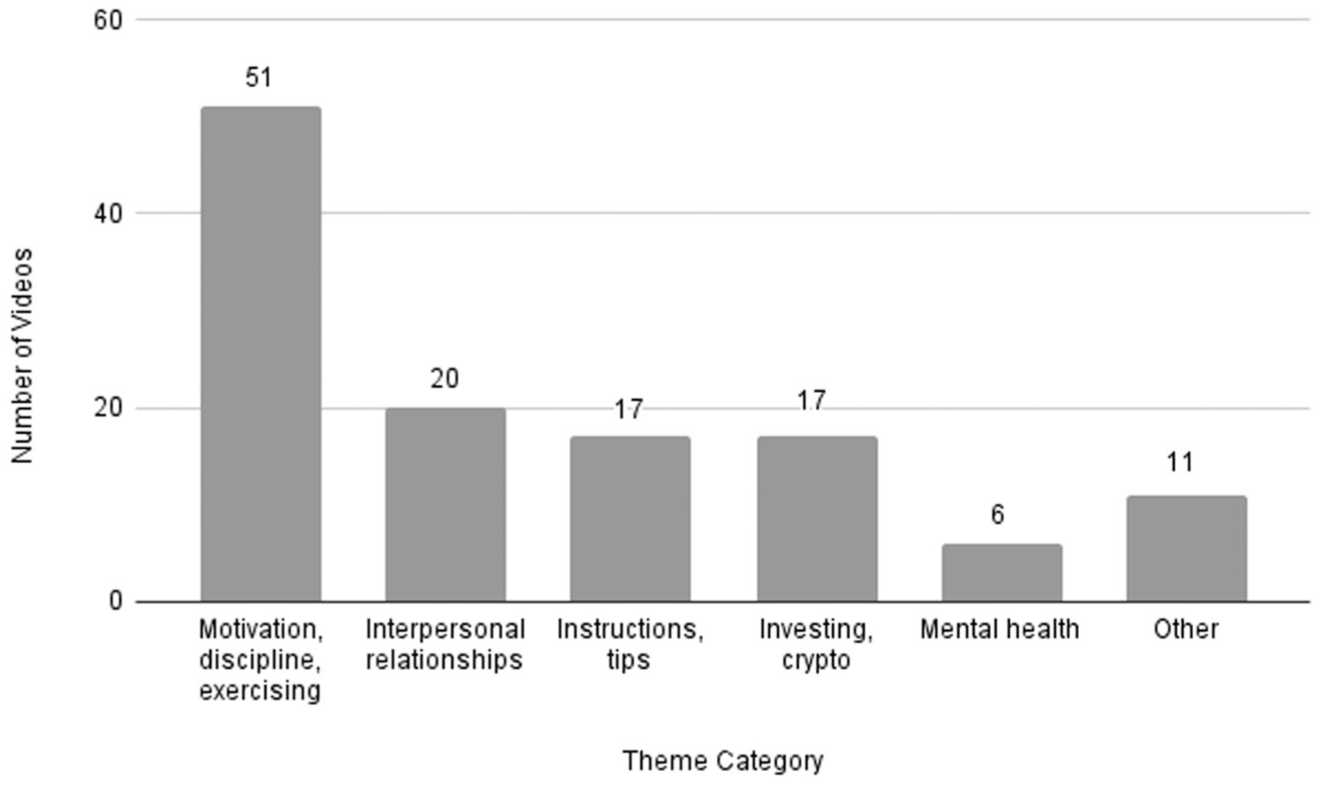
Themes of Estonian manfluencers’ TikTok videos (n = 120).
Visuals
The visuals of manfluencers’ videos employed various contexts to create a certain atmosphere. The most frequent are visuals about exercising (~42%), which follows the thematic trends of the videos mostly focusing on motivation, discipline, and exercising (Figure 2). Usually, these videos feature manfluencers filming themselves working out at a gym, in some clips flexing their muscles in front of mirrors. The prevalence of exercising scenes indicates that gym content is becoming one symbol of the misogynesque. Second, the use of close-ups (~29%) was very common in the videos as well. In these videos, the manfluencers were usually in their homes or cars, where they filmed a video with a close-up of their face. As I will elaborate further, close-up framings are one way of facilitating emotional proximity with the viewer (Kress & van Leeuwen, 2021). This framing style could therefore be viewed as a form of affective racketeering. Rather often (~18%), the manfluencers used urban contexts in their visuals–these included clips from specifically Dubai, talking in their car, high-rise buildings, spacious apartments with high ceilings, glass walls, and driving luxury cars. The use of Dubai’s urban space was common among finance manfluencers, who seem to attend networking events in the region and film most of their content there. Manfluencers use Dubai’s wealthy cityscape as proof of their own private wealth and cosmopolitan lifestyle. Although many videos were filmed in Estonia, they refrain from foregrounding the cityscapes in the country. The use of Dubai’s urban space also indicates a code of the misogynesque. Simultaneously, the common symbol of cars in manfluencers’ videos has wider connotations to car culture relating to men and masculinities (Balkmar, 2020). Work settings were common as well (~12%), with manfluencers working on their computers, often showing growth in their stocks as proof of their expertise regarding finances and success. Pictures of dull workspaces were also used as symbols of unsuccessful people working blue-collar or service jobs. Some videos used outdoor contexts (10%), where the manfluencers walk in nature, rest on a beach, jump from cliffs or work out outside.

Visuals of manfluencers’ TikTok videos (n = 120).
In the audience interpretation stage of analysis, the participants used exercising as a common visual theme to recreate manfluencers’ videos, which again confirms the notion that fitness content is becoming a symbol of the misogynesque. Groups portrayed manfluencers exercising both outdoors and in the gym (Image 1). This implies that not all kinds of fitness content symbolize manfluencers, but it is more bound to weight-lifting and gym content. In two pictures, we can see a tattooed, muscular body, which functions as a symbol of masculinity. Interestingly, three out of four manfluencers in these pictures are looking away from the camera, with connotations of distance, unapproachability, and in some cases, vanity as the manfluencers are flexing in front of the mirror (Image 1). Those pictures do not acknowledge the viewer but offer themselves as objects of contemplation or judgment (Kress & van Leeuwen, 2021). However, as they are all shirtless in the pictures and corresponding to the ideals of masculinity, they convey an awareness of their superiority and desirability. The third picture points a demanding gaze toward the viewer, although the sunglasses again add a layer of distance and unapproachability. This can be seen as a form of affective racketeering–making the audience feel ignored or submissive.

Audiences’ recreations of manfluencers exercising using Google Gemini.
Close-up framings were present in the audience’s recreations as well (Image 2). In all pictures, the expression on the manfluencer’s face seems calm, slightly sad, or upset. Often, this framing is used to create emotional proximity and empathy for the manfluencers–another example of affective racketeering. Social distance is thus removed and engagement is encouraged, resembling a relationship between intimately familiar people–a common technique in movies with emotional scenes (Kress & van Leeuwen, 2021). However, this does not mean that manfluencers only talk about emotional topics with close-up framings. Instead, this style of filming is used to minimize the distractions of other visuals and to bring the spotlight to a specific issue addressed in the video.

Audiences’ recreations of manfluencers in close-up framings using Google Gemini.
Transport and urban environments in warm climates were commonly represented in the audiences’ recreations of manfluencers’ videos (Image 3). The typical setting in the recreations is an urban space characterized by sunny weather and clothing appropriate for warm weather. In terms of clothing, an important symbol of success is a slim-fit button-up shirt and, in some occasions, a jacket. Thus, luxury transport as well as skin-tight smart-casual clothing (to emphasize the manfluencer’s physique) have become symbols of success in manfluencers’ content. In one picture, there is a group of blonde women in the background behind the manfluencer, signifying his desirability and the objectification of women as their faces are blurry. In another picture, a manfluencer is looking out at the panorama of high rises in his penthouse apartment – both symbolizing his success and superiority. Thus, from the audiences’ recreations we can see that flaunting wealth – through penthouses, yachts, scenery in warm climates – and the visual objectification of women have become codes of the misogynesque.

Audiences’ recreations of manfluencers in urban environments using Google Gemini.
Audios of Manfluencers’ Content
The audio usage was analyzed by looking at three different aspects: genre of background music, mood of background music, and the communication style of the manfluencers. Starting with the communication style (Figure 3), most of the manfluencers’ videos had no voiceover (~46%), indicating that they rely on background music while showing their ideas as text on screen. The lack of voiceover was common in the gym and finance categories, whereas almost all videos under the self-help category involved the manfluencer speaking in the video. When speaking, both a serious and assertive tone (~28%) and a calm friendly tone (~27%) were common. In the self-help category, a serious and assertive tone was overwhelmingly dominant, which can be seen as an example of affective racketeering, where the audience’s emotional state is manipulated through specific audiovisual elements. A serious and assertive tone usually took the form of a monotone and strict speaking style; one content creator even roared at the end of one video. A few included a voiceover taken from other videos, which usually featured a loud and intense tone of voice.

Tone of voice in the manfluencers’ videos (n = 120).
In terms of genres represented in the manfluencers’ videos (Figure 4), the most common were synth, techno, and rap (35%), followed by acoustic or instrumental music (usually on the guitar or piano) (~32%), no music (~17%), pop music (~13%), and rock music (~4%). The most popular genres, namely techno and rap, have cultural associations to masculinity (Amico, 2001; de Boise, 2020). More specifically, certain sonic textures common in the audio backgrounds in the manfluencers’ videos maintain ties to gender. Such textures include heavy bass and rhythm, lower registers, and vocals that are spoken, not sung (Amico, 2001; de Boise, 2020). These genres can thus become part of the misogynesque by functioning as symbols connotating hypermasculinity. In the self-help category, manfluencers commonly did not use background music at all, which is fitting, considering that this category relies heavily on the manfluencer’s explanation of various issues. Instrumental or classical music was equally dominant in this category, which generally helps to create a calm atmosphere. For both the finance and fitness categories, techno and synth were the most represented genres, evoking an energized and occasionally intimidating atmosphere.

Music genre of manfluencers’ TikTok videos (n = 120).
Delving into the mood and audio atmosphere of the videos (Figure 5), the most common was serious and dramatic music in the background (~40%), while sad or calm music was almost equally frequently used (40%). Significantly less common were videos that did not use any music (~16%). Finally, the rarest were audios conveying a happy mood (~3%). In this regard, the fitness category had an overwhelming majority of videos with serious and dramatic audio, which is used to intimidate the audience and carries connotations of discipline and intense activities. This is another example of affective racketeering. The finance category also used dramatic and serious music the most, although calm or sad music was common as well. In the self-help category, music mostly created a calm or sad mood, which is fitting, considering that the manfluencers tend to touch upon social issues and create strong victimization narratives about men’s position in society. Thus, the mood of the audio aims to generate sympathy among the audience, which we can consider a form of affective racketeering. While the mood of an audio relates to affective racketeering in the form of emotional manipulation, genres of audios become a part of the misogynesque through the formation of connotations to hypermasculinity for the audiences.
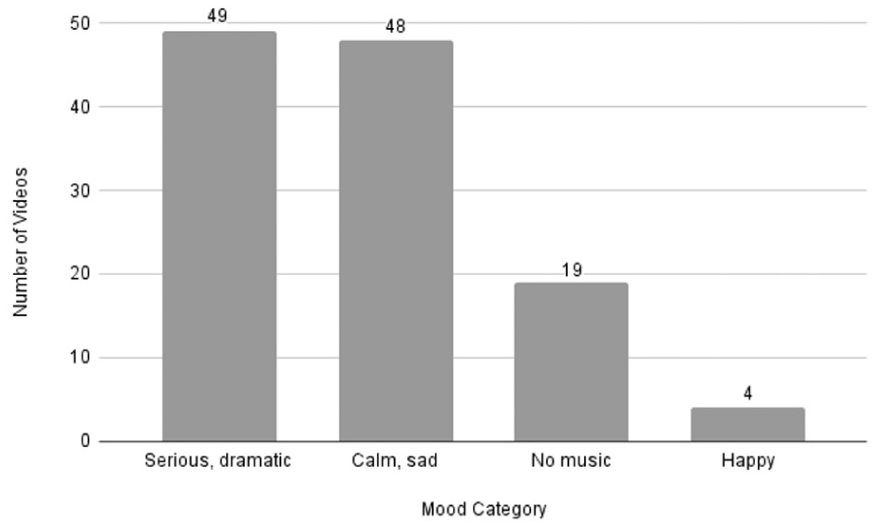
Mood of manfluencers’ background music (n = 120).
Finally, as coding the mood of the audios is a very subjective process, I will introduce the audience’s perceptions of commonly used audios in the manfluencers’ videos. This section is closely tied to the concept of affective racketeering as it features the emotional associations the audiences had when listening to selected sounds. When reflecting on the feelings the sounds created by piano and guitar music, most participants noted feelings of calm, happiness, and reflection (n = 18) or sadness and melancholy (n = 16), a few noted feeling nostalgic (n = 5). Interestingly, while the audience’s emotions regarding both sounds were rather similar, connotations remained different. Connotations of sad piano music remained mostly on the emotional level, with audiences again noting down sadness (n = 10), movies and storytelling (n = 4), and politics (n = 3). For example, one participant noted: “Some empowerment that starts with sadness but builds up to some culmination.” At the same time, calm guitar music evoked associations with nature, travelling (n = 8), as well as reminiscing and romanticizing (n = 5). Instrumental music can thus be effectively used in the manfluencers’ videos to facilitate either a calm or melancholy affective state.
Three audios featured techno music, which created very similar reactions among the audience. An overwhelming majority noted feelings of fear, anxiety, and discomfort (n = 30) when listening to the sounds, which was followed by confidence, strength, and aggression (n = 17). For example, one participant noted: “Heaviness, disturbing, ‘muscles’.” The connotations were largely similar as well, with 29 associations to masculinity, fitness, and intimidation, followed by a few associations with TikTok or Instagram edits (n = 6). Another respondent noted: “Sounds like something from a video (TikTok or reel) of a gymbro posing and flexing their muscles, dark, and shady.” Two sounds were more specifically associated with masculinity and manfluencers, while the third sound was connected to confidence and flaunting. This can be linked to the intimidating mood of the two sounds, while the third one could be characterized as more energetic, not necessarily intimidating. The audience’s overwhelming association of techno music with masculinity again shows how a genre can become part of the misogynesque, thus hinting at a larger ideologies or values encoded in the video.
Pop music could not be grouped with any other genres and is presented individually. The song mostly created emotions of happiness (n = 6) and nostalgia (n = 6), while carrying connotations specifically to TikTok trends (n = 9), specifically thirst traps and videos displaying confidence (n = 9). As with techno sounds, we can see that certain pop songs (in this case, a bass-boosted version of “Stereo Love” by E. Maya and V. Jigulina) have built strong connotations with specific aesthetics and contexts and can thus be used to convey a position, values, or in some cases, even ideologies.
Audiences also listened to two examples of synth music, one ominous and the other melancholy. Interestingly, the ominous synth sound created more feelings of ambivalence among the audience (n = 6), while no one noted feelings of ambivalence about the melancholy version. Both synth sounds evoked feelings of anticipation, curiosity and mystery (n = 8) while also, perhaps connected to the anticipation, creating feelings of anxiety and darkness (n = 9). One participant noted: “Mystical, idolising someone/somebody.” Although the emotions of synth music were largely similar, the connotations remained different. The ominous version carried connotations of cinema and movies (n = 5), nature and scenery (n = 5), as well as seriousness and upcoming change (n = 4). Melancholy synth carried connotations of evenings and driving (n = 6), advice and motivation (n = 4), and sexuality (n = 3). Another participant described: “Quite dark side of sth [something] or reflective.” Thus, with the use of synth music, the most general association is creating feelings of anxiety and anticipation, which helps to understand the context where these sounds might be used in the process of affective racketeering.
Finally, the audio samples included two clips with a male voiceover commonly used on social media. In the first clip, the voiceover talks about the importance of not training for specific goals but rather being constantly ready – presumably either for a competition or combat. The second clip talks about the need to persistently work for your goals. Both clips use colloquial language, for example “boom, just got paid” and “I ain’t training for shit.” Although the background music was different – rap music and guitar music – the audience’s responses were similar, and thus, the audios can be analyzed together. In terms of emotional responses, audiences brought out discomfort (n = 16), power and success (n = 10), and masculinity (n = 7). One participant described their feelings: “Success, money, also masculine feelings ‘work, work, work, you have to be better’.” The audios carry connotations of success and finance (n = 18), the manosphere (n = 7), and fitness (n = 7). For example, another participant noted: “Andrew Tate, toxic masculinity, business courses, how to be rich, average influencer from Dubai.” It could be argued that all of these connotations are in fact directly linked to the manosphere, as these are the topics that manfluencers predominantly focus on in their videos. This is the most direct example of the misogynesque in this sample – some male voiceovers have strong connotations to the manosphere, which enables them to connect their video to a larger ideology without explicitly stating their opinions.
Discussion and Conclusion
This study explored the audiovisual aspects of Estonian TikTok manfluencers’ videos through a mixed-methods approach. By combining content analysis of manfluencers’ videos with a group workshop with audiences, I explored how manfluencers code their content and elicit affective responses from their audiences.
As is common in genres promoting extreme and performative notions of gender (Kelly, 2018; Zahay, 2022), TikTok manfluencers mostly do not express explicitly discriminatory views to attract wider audiences outside the manosphere’s niche. They focus their content on financial success, exercising, or relationship advice, all of which become extremely performative in TikTok’s context. Instead of directly voicing misogynist ideas, manfluencers often create misogynesque content: they use audiovisual elements that have acquired such strong connotations to the manosphere that they embody or reference an ideology without any need to mention it explicitly. However, the misogynesque is not necessarily a deliberate effort to dog whistle by the manfluencers. It is more likely that the tropes of manfluencers’ ideologies are limited enough that their videos follow similar narratives and visuals. Manfluencers further use affective racketeering to manipulate the emotional state of their audiences so that they would be more receptive to their ideas. While the core of the misogynesque lies in the connotations of genres, sounds, and visuals, affective racketeering is more about the mood and atmosphere of the audios and the technical framing of the manfluencers’ videos.
Just as tradwives have their own symbols of hyperfemininity (Bower, 2024), manfluencers too have developed their own symbols for hypermasculinity. By showing themselves walking in marinas filled with luxury yachts, driving expensive cars in Dubai, flexing an extremely trained tattooed physique or giving a detailed outline of their extremely disciplined daily routines, the performative visuals of the content reinforce, and code symbols of hegemonic masculinity. Some audios of techno music are strongly tied to the misogynesque, with audiences directly associating them with masculinity and intimidation or aggressiveness. An especially effective way of using misogynesque is by using male voiceovers from other clips – a direct example of vernacular creativity and remix culture (Burgess, 2006; Zulli & Zulli, 2022). These audios were strongly identified as a code of the manosphere by the audiences and generated feelings of discomfort in them.
Audiovisual elements thus become a focal point in the misogynesque by becoming symbols of masculinism and reinforcing a strict gender hierarchy. The misogynesque also utilizes various forms of capital, as is common with many influencers (Abidin, 2018; Hearn & Banet-Weiser, 2020). Manfluencers flaunt exclusivity and economic capital by showing symbols associated with wealth (cars, yachts, planes, etc.), giving financial advice and using these symbols as proof of their expertise. Exoticism, cultural capital, and everydayness are embodied in the manfluencers’ videos through extreme discipline and various meticulous routines. Exceptionalism and technical capital are evident in the professional editing style of some manfluencers. The body becomes an exceptional capital that needs to be trained, pushed to extremes, and shown to others. In the process, the body accrues meaning and restructures norms around gender. Social capital is shown through the professionalization processes of manfluencers, mainly through partnerships with companies and other content creators. Finally, the manfluencers’ content is overall striving to collect and demonstrate masculine capital (Anderson, 2005). This includes norms regarding physique, financial status, relationship status, sexual orientation, and mindset.
The misogynesque is further developed through affective racketeering, aiming to get affective and emotional reactions from audiences. Sympathy and intimacy are generated through close-up framing and melancholy instrumental music. Some videos attempt to create feelings of intimidation in the viewer – fitting, considering that mostly, manfluencers position themselves as coaches, requiring expertise from their side and respect from the audiences. Intimidation is achieved through an assertive tone of voice, as well as the use of specifically techno music, which creates feelings of discomfort among audiences. While some music genres already have associations to misogyny, homophobia, or masculinity (de Boise, 2020; Kistler & Lee, 2009), manfluencers are actively gendering the music they use by cultivating associations to masculinist content. However, not all of the affective racketeering is tied to negative feelings. Instrumental music can be used to manipulate audiences into a calm state, pop music can facilitate happiness or confidence, and synth music can create feelings of anticipation and mystery. This particular use of audiovisuals makes the manfluencers’ content affectively sticky (Ahmed, 2004), manipulating audiences into an emotional state where they would be more receptive to the manfluencers’ ideas. Once engagement is established, this content takes the form of a “ready-to-think” framework for young men, further sustaining narratives of male dominance (Tanner & Gillardin, 2025).
The picture (and the sound, for that matter) is indeed worth more than a thousand words in the context of TikTok. Manfluencers on social media create affective publics (Papacharissi, 2016), which offer an appealing form of content especially for boys and young men. What this study aimed to make clear was that these narratives are often attached to sounds and visuals, made possible through TikTok’s imitation publics (Zulli & Zulli, 2022). The affective publics found here are much better at flying below the radar, both in terms of platform moderation and among other social media users who may be unaware of its codes. This makes the little moderation efforts that remain on mainstream platforms even harder and complicates pinpointing misogyny, as is often the case in offline contexts as well (Manne, 2018). Simultaneously, (social media) genres are in a constant flux (Frow, 2006; Lomborg, 2013), which means that the codes of misogyny and masculinism are a moving target to study and combat as they change over time. While earlier descriptions of affective publics have focused on movements making use of people’s preexisting grievances (Ging, 2019; Papacharissi, 2016), the publics found here can manipulate audiences through affective racketeering. This relies much less on preexisting grievances and creates a potential springboard for more overt manosphere content. The codes appear to be transnational – while the analysis focused on Estonian manfluencers, the sounds evoked similar feelings and connotations for participants from outside of Estonia. This again shows the potential for this content to spread internationally.
Considering TikTok’s imitation publics and remix culture (Zulli & Zulli, 2022), elements of manfluencers’ content will migrate to other contexts. Regular TikTok users might eventually start incorporating elements from the manfluencer genre in their own content (voiceovers, background music, images, etc.) to position themselves in the hierarchy of masculinities. As symbols of misogynesque make their way into the mainstream, many people might use these symbols in their content, completely unaware of their connotations. A similar process happened with masculinity typologies, which originated from the manosphere and the alt-right (Diallo et al., 2025). The categorization of alpha and sigma masculinities found its way into the mainstream and popularized rigid gender stereotypes even further. This migration of isolated elements is risky as it ensures the proliferation of manosphere’s content, while obfuscating the ties it has to discriminatory ideologies. Thus, the manosphere’s dog whistles and other methods of social steganography are mainstreamed in the process of context collapse (Marwick & Boyd, 2011), eventually becoming a part of wider digital culture as well as cultural literacy on social media.
Footnotes
Acknowledgements
I would like to thank my PhD supervisors Dr. Maria Murumaa-Mengel and Dr. Raili Marling at the University of Tartu, who helped with reviewing the manuscript of this article.

Ethical Considerations
Local institutional ethics experts were consulted.
Consent to Participate
Written informed consent was obtained from all participants involved in the group exercise.
Consent to Publication
The analysis of TikTok content was based solely on publicly available material, and no identifiable or direct examples are presented in the study; therefore, informed consent was not required for this component.
Funding
The author disclosed receipt of the following financial support for the research, authorship, and/or publication of this article: The publication of this article was supported by the Baltic Engagement Centre for Combating Information Disorders (BECID), project number 101226242.
Declaration of conflicting interests
The author declared no potential conflicts of interest with respect to the research, authorship, and/or publication of this article.
Data availability statement
The data analyzed in this article is publicly available on the TikTok platform; however, the names of the accounts will not be named to ensure their anonymity, as consent was not asked for the study.