



Abstract
In the platformized era, digital games have become key arenas for romantic connection, yet their role in shaping intimacy between strangers remains underexplored. This study examines how such relationships are initiated, developed, and evaluated in Honor of Kings, China’s most popular multiplayer online battle arena (MOBA) game. Based on 25 in-depth interviews with young players, it addresses four questions: the stages of romantic intimacy formation, enabling digital affordances, reasons for choosing games over dating or social apps, and evaluations of game-based romantic relationships. Findings reveal a four-stage process—encounter, acquaintance, development, and establishment or termination. Conceptualizing games as affective infrastructures, the study shows how platform design structures and commodifies digital intimacy while enabling embodied, performative commitment. Comparative analysis with dating apps, social media, and Massively Multiplayer Online Role-Playing Games (MMORPGs) highlights the distinctiveness of fast-paced, interaction-intensive play in fostering embedded emotional commitment. It also uncovers players’ tactical workarounds to reclaim autonomy from platforms. By theorizing intimacy as both enabled and contested within socio-technical systems, this research advances an infrastructural account of how love is imagined, enacted, and negotiated in contemporary digital culture.
Introduction: I Fell in Love With a Stranger in Video Games
In recent years, romantic relationships formed within video games have shifted from isolated anecdotes to culturally significant social practices. As massively multiplayer online games (MMOGs) become embedded in the emotional routines of everyday life, they no longer function solely as sites of entertainment but emerge as high-affect interactive environments in which strangers meet, resonate, and sometimes fall in love. These new practices of intimacy reflect a broader structural shift in how romantic connections are imagined, initiated, and sustained in the platformized age (Hobbs et al., 2017). The sociology of intimacy conceptualizes intimate relationships not as natural or private but as socially constructed and historically situated practices. It emphasizes how intimacy is shaped by cultural norms, gender expectations, and technological mediation (Bray, 2007). From this perspective, intimacy is not a static emotional state but a dynamic, institutionalized practice reflecting broader structures of emotional expression, relational legitimacy, and affective visibility.
While existing studies have extensively explored the dynamics of intimacy on social media and dating apps, the affective possibilities offered by video games remain under-theorized. This study investigates how players in Honor of Kings, one of China’s most popular Multiplayer Online Battle Arena (MOBA) games, form romantic relationships with previously unfamiliar partners through gameplay. It argues that such emotional connections between strangers are not incidental but structurally enabled through platform design and digital affordances. The concept of stranger intimacy highlights how technological infrastructures create conditional openness, allowing unfamiliar users to enter recognizable structures of emotional connection.
To examine this phenomenon, the study integrates three interrelated theoretical frameworks. First, the notion of digital intimacy provides a lens through which to understand how emotional connection is restructured in mediated environments. Second, the theory of digital affordances explains how in-game features facilitate relational development. Third, the concept of affective infrastructure positions games as emotional architectures that not only support but also regulate, organize, and commodify affective life.
This research adopts a qualitative methodology, drawing on semi-structured interviews with 25 young Chinese players who reported developing romantic relationships through gameplay. These narratives reveal how intimacy is practiced, sustained, and sometimes dissolved across intersecting digital platforms. Situating these experiences within the shifting cultural landscape of love, technology, and youth in contemporary China, this study aims to extend theoretical conversations around stranger intimacy and affective infrastructure—arguing that conceptualizing games as affective infrastructures helps reveal how emotion becomes legible, deliberately designed, and commodified in digital culture.
Reimagining Stranger Intimacy in Games: Digital Affordances and Affective Infrastructures
Intimacy has long been a focus in psychology, sociology, and media studies. In psychology, it is often defined as an emotional bond built on self-disclosure, empathy, curiosity, and vulnerability (Shaver & Reis, 1988). Sociological approaches treat intimacy as socially constructed: Giddens (2013) describes “pure relationships” in late modernity as increasingly detached from institutions like marriage and grounded in autonomy and reciprocity. In recent years, scholars have warned against equating intimacy solely with romance or sexuality (Dobson et al., 2018; Jamieson, 2011), noting its many forms across friendships, kinship, and care networks, both offline and online.
Shifts in mobility, community structures, and digital communication have enabled more fluid, media-mediated forms of “stranger intimacy,” in which unfamiliar individuals build connections without prior offline contact. Such connections are a key manifestation of “digital intimacy”—emotional relationships unfolding in highly mediated environments—that rely on interfaces, infrastructures, and temporal rhythms rather than physical proximity (McGlotten, 2013). Related concepts such as “online intimacy” and “mediated romance” show how technologies reshape temporal, spatial, and emotional aspects of connection (Kwok & Wescott, 2020; Lomanowska & Guitton, 2016).
Before 2010, researchers largely focused on whether strangers could form genuine emotional bonds under conditions of anonymity and text-based interaction. McKenna et al. (2002) found that self-disclosure played a critical role in fostering intimacy, precisely because identity cues and visual markers were absent. Bargh and McKenna (2004) further argued that anonymity and the reduction of nonverbal cues allowed users to idealize one another, deepening emotional connection. Whitty (2003), in her study of early chatrooms, explored how users constructed “imagined intimacies” by scripting virtual bodies and emotional narratives, blurring the boundaries between reality and fantasy. These accounts demonstrate that digital intimacy can flourish even in environments devoid of physical or visual presence. Earlier ethnographic accounts of online spaces such as MUDs and Usenet forums (Baym, 1998; Turkle, 1995) similarly documented how sustained textual exchanges, playful identity experimentation, and community-based norms enabled the formation of deep emotional bonds among strangers long before the rise of image-centric and profile-based platforms. In these pre-social media environments, intimacy was cultivated through asynchronous conversations, collectively negotiated norms, and long-term participation in shared digital spaces. This historical trajectory underscores that stranger intimacy is not a novel invention of the platform age but a practice that has continually adapted to evolving technological and cultural conditions.
Recent scholarship has moved beyond individual psychology toward structural conditions, examining how design scripts, algorithms, and affective economies shape intimacy (De Ridder, 2022; Parsakia & Rostami, 2023). While Koch and Miles (2021) highlight that stranger intimacy is embedded in platform architectures and affordances, in game studies, Boellstorff (2008) conceptualizes virtual worlds as “structured emotional environments,” foregrounding how socio-technical design organizes feeling and attachment. Building on this, Sundén and Sveningsson (2012) introduce affective gaming, demonstrating how intimacy in multiplayer worlds such as World of Warcraft is co-produced by players, avatars, and mechanics as a performative practice. Complementing this perspective, Chen (2011) in Leet Noobs illustrates how sustained cooperation and in-game communication serve as binding forces within expert player groups, reinforcing trust and emotional investment. Extending beyond Massively Multiplayer Online Role-Playing Games (MMORPGs), Grace (2017) examines affection games that prioritize emotional connection and pro-social interaction. Together, these studies position games as emotionally generative spaces, embedded within and shaped by broader platform infrastructures.
While much of this scholarship has examined narrative-rich MMORPGs or visually immersive virtual worlds, comparatively little attention has been paid to fast-paced, competitive formats like MOBA games. Unlike MMORPGs, which allow prolonged interactions and expansive social worlds, MOBAs—such as Honor of Kings—are characterized by short matches, high-intensity collaboration, and often ad hoc team composition. These temporal and structural constraints reshape the affordances for intimacy. This shift invites new questions about how stranger intimacy can be initiated, deepened, and sustained within such compressed timeframes.
For analytic clarity, we define intimacy as a romantic, dyadic emotional relation marked by mutual intention, continuity, and commitment. This distinguishes it from casual flirtation, sex-driven encounters, and non-romantic ties (e.g., kinship and friendship). Our scope is deliberately narrow—heterosexual intimacy between strangers in digitally mediated game environments—in line with our sample and research questions. We recognize that intimacy is neither synonymous with romance nor contingent on sexual activity, and that intimate bonds also take non-romantic, asexual, and queer forms; accordingly, we offer this definition as one lens within a broader spectrum to be elaborated in future research.
To analyze this phenomenon, we draw on two complementary theoretical frameworks. The first is digital affordances, originally rooted in Gibson’s (1979/2014) ecological psychology and later adapted by Gaver (1991) to describe the action possibilities offered by technological systems. In media and platform studies, digital affordances denote the structured potentialities for interaction embedded in digital environments (Hayes et al., 2016). In gaming contexts, these affordances shape how emotional interaction becomes accessible, visible, and actionable (Bentley & Osborn, 2019), although existing work has rarely applied them to the micro-temporal dynamics of MOBA play.
The second framework is affective infrastructure, which captures how emotional life is organized, mediated, and sustained through both material and symbolic means. The technical-affective dimension examines how material infrastructures—such as roads, hospitals, media platforms, or digital networks—shape emotional experiences via spatial design, temporal rhythms, and operational logics (Facer & Buchczyk, 2019; Street, 2012). The organizational-affective dimension focuses on emotions themselves as infrastructures, structuring collective endurance, solidarity, and political engagement (Bosworth, 2023; Näre & Jokela, 2023). In media and communication research, affective infrastructures describe how platform design, algorithmic pacing, and interactive rhythms together organize the grammar and tempo of emotional participation (Döveling et al., 2018; Goldenberg & Gross, 2020), although their application to online gaming environments remains under-theorized.
We position these two frameworks as mutually reinforcing: digital affordances illuminate the concrete interactional possibilities within platforms, while affective infrastructure situates these affordances within the broader socio-technical systems that sustain emotional life. Despite increasing attention to affective infrastructures in digital contexts, their application to online games remains under-theorized. We argue that multiplayer online games—particularly Honor of Kings—function as affective infrastructures in their own right. They not only facilitate emotional interactions but also organize affective communities and relationship norms through sustained practices of co-presence. In doing so, games become experimental arenas for romantic practice, emotional articulation, and social imagination in the platformed age.
Playing With Strangers: Video Games, Social Interaction, and Stranger Intimacy
While video games have long been recognized as embedded social practices in everyday life, research on gaming-based relationships has primarily centered on pre-existing social ties. In the context of MMOGs, players frequently engage not only with friends and family but also with strangers across geographic and cultural boundaries (Lai & Fung, 2020; Liu, 2019). A substantial body of literature has explored how gameplay can reinforce existing bonds and generate social capital, particularly among acquaintances and kin networks (Molyneux et al., 2015; Zhong, 2011). For instance, co-playing with parents, partners, or siblings has been framed as both a bonding and therapeutic activity, albeit not without friction (Ahlstrom et al., 2012; Curtis et al., 2017).
Yet this scholarship largely privileges familiar intimacy, offering limited insight into how games may cultivate affective ties between strangers. Despite the fact that interactions with unfamiliar players are central to the architecture and everyday use of online games, research has predominantly focused on friendship development, noting how strangers may become friends through in-game cooperation or communication (Domahidi et al., 2014). What remains under-theorized is how romantic intimacy—rather than mere camaraderie—emerges in such mediated, task-oriented environments.
Some scholars have gestured toward the romantic potential of gaming spaces, particularly in East Asian contexts where games may function as alternative dating platforms (Liu, 2019). However, few studies have examined how romantic relationships between strangers are actually initiated, developed, and interpreted by players themselves, or how platform affordances and gameplay mechanics mediate these processes.
This study builds upon and extends this emergent line of inquiry by shifting analytical attention toward romantic intimacy between strangers in digital gaming spaces. Rather than treating games as neutral backdrops for social activity, we conceptualize them as affective infrastructures—emotionally generative environments structured by technological affordances, gameplay dynamics, and sociocultural scripts. Specifically, we investigate how young Chinese players navigate emotionally meaningful, romantic connections in MOBA games.
Drawing on this framework, we pose the following research questions:
RQ1. How do young Chinese players develop romantic intimacy with strangers in multiplayer online games? What are the stages and practices involved in this process?
RQ2. What technological affordances facilitate the formation and progression of such relationships?
RQ3. Why do players turn to gaming platforms—rather than dating or social apps—as spaces for romantic connection?
RQ4. How do players perceive and evaluate the intimacy formed through games?
The Research Setting: Honor of Kings as a Site of Digital Intimacy
This study selects Honor of Kings, the most popular MOBA game in China, as its research setting to explore the formation of stranger intimacy among Chinese youth. Launched in 2015 by TiMi Studio Group (Tencent Games), Honor of Kings reached 146 million monthly active users in China in 2023 (Statista, 2023), attracting a gender-balanced player base and offering a more casual, mobile-friendly experience than titles like League of Legends. This demographic mix creates opportunities to examine gendered dynamics of romantic interaction.
The game’s relevance aligns with shifting Chinese attitudes toward love and marriage, as young people turn to digital platforms to explore alternative intimacy scripts. Honor of Kings integrates interaction-oriented features—random matchmaking, voice chat, social plazas, and symbolic gift exchanges—while linking seamlessly with WeChat and QQ. These affordances make it an ideal site for investigating how cooperative gameplay and cross-platform connectivity mediate emotional closeness between unfamiliar players.
Data and Method
This study used online semi-structured interviews to explore players’ experiences of stranger intimacy in Honor of Kings. Online interviews enabled access to a geographically dispersed player base while offering privacy and comfort for discussing sensitive topics. Participants were recruited via targeted postings in Honor of Kings interest groups and relationship boards on Douban and WeChat, with maximum variation sampling to ensure diversity in gender, relationship status, and duration.
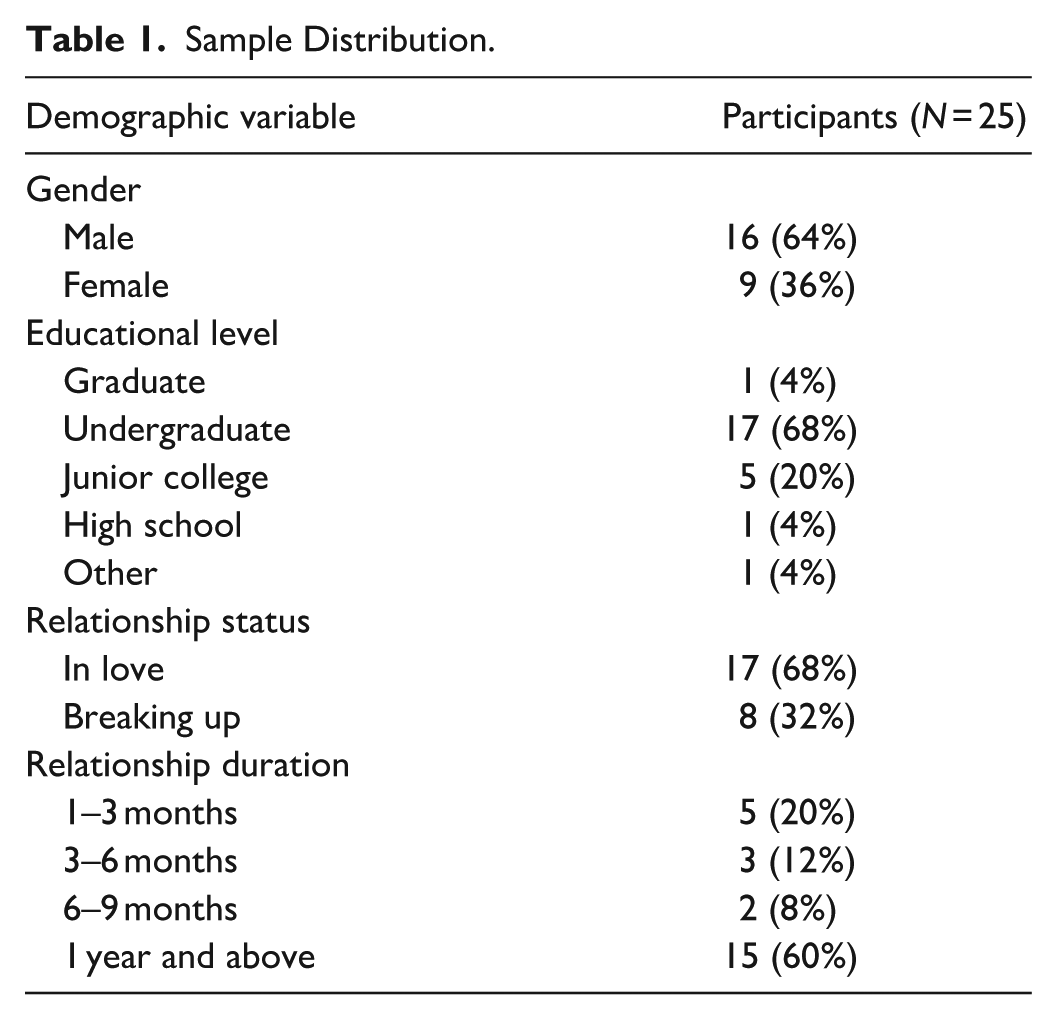
From 56 initial responses, 25 participants (16 male, 9 female; mean age 22) were selected. Most held undergraduate degrees, and over half had maintained game-based relationships for more than a year. The demographic distribution of participants is presented in Table 1. Interviews (30–45 min via Tencent Meeting) covered (1) how intimacy was initiated, developed, and sustained and (2) how it was evaluated.
Sample Distribution.
All sessions were recorded with consent, transcribed, and analyzed in NVivo 14 using a hybrid thematic approach, combining inductive pattern identification with deductive coding from prior research on digital intimacy and affective infrastructures.
From Strangers to Lovers: The Dynamic Stages of Intimacy Formation in Online Games
To theorize the emergence of romantic intimacy in Honor of Kings, we propose a four-stage model derived from participants’ retrospective accounts: encounter, acquaintance, development, and establishment or termination. Importantly, relationship progression was neither linear nor uniform. Some connections unfolded rapidly, collapsing stages into compressed temporal windows, while others stalled or dissolved early. These variations underscore the plasticity and contingency of intimacy in digitally mediated environments. By attending to both successful and failed attempts at intimacy, we emphasize not only the social and emotional labor involved in romantic development but also the infrastructural and interactional conditions under which such relationships emerge, evolve, or terminate.
Romantic intimacy in Honor of Kings often begins through what appears to be technological coincidence—encounters facilitated by the platform’s built-in features. Most participants reported meeting their partners via random matchmaking or plaza-based recruitment, both of which are deliberately designed to foster interaction among unfamiliar players. These features provide what we identify as low-threshold affordances—including randomness, open-ended team formation, and temporary anonymity—that enable low-commitment engagement. Beyond the confines of the game itself, some players extended their encounters through third-party platforms such as QQ or commercial gaming apps, which serve as auxiliary channels for early-stage connection. What seems on the surface to be a spontaneous or serendipitous meeting is, in fact, orchestrated by a layered socio-technical infrastructure—one that simultaneously mediates access, shapes interactional possibilities, and conditions emotional receptivity. This initial moment of “encounter” sets the stage for intimacy not through narrative buildup or pre-existing ties but through platformed contingency: an affective opening made possible by design.
In the stage of acquaintance, voice becomes both medium and message. In Honor of Kings, players frequently rely on the game’s built-in team voice chat to initiate and nurture early-stage intimacy. All participants emphasized that voice-based interaction enabled faster emotional access than text, fostering a sense of comfort, immediacy, and authenticity. What unfolds here is not merely technical communication but a process of vocal embodiment—the use of tone, rhythm, pauses, and spontaneous speech as substitutes for visual and textual cues (Allison et al., 2020). While social media platforms allow for curated self-presentation, real-time voice interaction resists such editing, making expressions more affectively and bodily grounded. A “nice voice” or “lively tone” was frequently cited by both male and female participants as a source of attraction, suggesting that voice functions as an embodied signifier of personality, emotional state, and even gendered desirability. However, these vocal interactions often reproduce heteronormative gender scripts but in affectively coded and culturally situated ways. Male respondents typically valued warmth and talkativeness in female voices, aligning with normative expectations of femininity. Female players, by contrast, expressed admiration for in-game performance—particularly strategic competence and leadership—as key dimensions of romantic appeal. As one participant noted, “He’s really good at playing Lanling Wang, and that just makes him so attractive.” This asymmetry in romantic imagination reflects what Jackson and Cram (2003) term cognitive gender frameworks—internalized templates of desire that cast men and women as complementary but unequal relational actors.
Beyond its role in emotional signaling, voice enables what can be described as voice-body coupling: players coordinate combat while creating non-combat moments of ritualized intimacy. One female participant recounted, “When we’re not fighting, we’d hide together in the bushes—it’d just be the two of us.” Such moments, while occurring in a virtual space, were often experienced as emotionally co-present, shaped by tacit synchrony and spatial proximity. These encounters reveal a second layer of digital embodiment: not only is voice itself a vehicle for affect, but it also enables players to co-script shared spatial gestures—to “do intimacy” by aligning character movement with interpersonal mood. In this sense, voice becomes a dual mechanism: a way to both speak intimacy and enact it through coordinated embodied gameplay. This phase often culminates in a key relational shift: adding one another on WeChat, China’s dominant social messaging platform. While early interactions may remain confined to the game interface, the move to WeChat represents an implicit transition toward greater stability, intentionality, and cross-contextual connection. In the Chinese digital milieu, adding someone on WeChat carries symbolic weight—functioning not only as a practical access point but also as an informal credential of closeness (Chen et al., 2018). This platform migration highlights how digital intimacy unfolds across layered and culturally encoded media ecologies.
As romantic rapport deepens, players begin to transition from casual collaboration to intentional emotional investment. In this developmental stage, intimacy is no longer incidental; it becomes something to be managed, reciprocated, and sustained through ongoing interaction. Many participants described forming exclusive in-game partnerships, using team voice chat not merely for strategic coordination but to sustain a continuous channel of private communication. Conversations gradually expanded beyond gameplay, encompassing daily routines, personal backstories, and emotional support. This shift toward symbolic intimacy is scaffolded by the game’s built-in affordances—features such as “fixed team” functions, couple avatars, and personalized invitations via QQ or WeChat—which provide certain infrastructures for emotional disclosure. For many, gaming sessions became a part of their daily relational rhythm, often described as “clocking in” to maintain emotional connection. These repeated engagements resemble what scholars term emotional rituals (Carey & Adam, 2008; Simpson et al., 2018), where shared affective experiences foster symbolic bonding. In-game victories—particularly the collective moment of “igniting the crystal”—were frequently described not only as competitive achievements but also as relational performances, producing heightened feelings of “we-ness.” As one participant reflected, “We’re not just couples—we’re teammates. Every win felt like a joint accomplishment.”
This stage is also characterized by a growing awareness of emotional labor—a recognition that sustaining intimacy in the game requires more than spontaneous affection. As relationships deepen, players reported feeling responsible not only for their partner’s emotional well-being but also for their own in-game performance and symbolic gestures such as gifting skins, sending flowers, or logging in regularly to maintain intimacy scores. Drawing on Hochschild’s (1983) concept of emotional labor—the regulation of feelings and affective expressions to meet institutional or interpersonal expectations—this study argues that games like Honor of Kings embed romantic care within a framework of gamified emotional labor. Unlike traditional settings where emotional labor is often tied to work or family roles, here it is infrastructurally encoded in the platform’s mechanics. Features such as couple rankings, performance-based recognition, and intimacy metrics convert romantic gestures into quantifiable, comparable, and incentivized outputs. Intimacy is thus no longer entirely private or spontaneous—it is measured, ranked, and enacted through interactional affordances.
However, participants responded to this structure in divergent ways. Some viewed these mechanisms as playful modes of validation, appreciating their ability to gamify expressions of love. Others, however, described a sense of subtle pressure to meet expectations or to continually prove their affection through repeated in-game actions. Under such circumstances, several participants chose to opt out of the platform’s quantification mechanisms. “Love shouldn’t be scored,” one player observed. Accordingly, they intentionally refrained from sending virtual roses or upgrading their couple level, hoping to avoid an arms race of performative affection. Some pairs kept their conversations in private voice chat while purposefully leaving the in-game couple badge unactivated, thereby bypassing the platform’s public marker of partnership. These micro-acts of refusal exemplify everyday workarounds through which players negotiate with—and sometimes resist—the game’s gamified script of romantic care, reclaiming the tempo and terms of their intimate relationships.
As emotional ties solidify, players increasingly engage in media migration—using games as a dating environment, WeChat for daily check-ins, and short-video platforms for sharing moods—reflecting what Madianou and Miller (2013) describe as a polymedia environment, wherein the choice of medium itself becomes part of relational strategy. This distributed emotional ecology signals not only adaptability but also relational depth and commitment.
In the final stage, romantic intimacy either becomes consolidated or quietly dissolves. Many players formalize their relationships through in-game couple-binding features—such as shared nicknames, exclusive icons, and visible intimacy scores. These symbolic elements serve as affective confirmations that render the relationship both visible and quantifiable. Among them, the intimacy score system is particularly emblematic of affectional gamification: players can improve their ranking by gifting virtual roses, completing tasks together, or consistently teaming up. In doing so, emotional bonds are translated into a measurable sense of relational progress, reinforcing the coupling both symbolically and structurally. For many participants, this stage also signaled a turning point. As emotional connection deepened, the centrality of the game diminished, with WeChat gradually replacing the game as the primary space for daily communication. This platform migration was widely interpreted as a marker of relational maturity, reflecting a shift from game-based intimacy to a more integrated, cross-contextual relationship—as one participant put it, “Now the game is just one of the things we do together.”
Yet not all relationships endured. Several participants noted that the same low-entry threshold that made connection easy also made disengagement effortless. When conflicts emerged or interest waned, breakups often occurred through ghosting, deletion, or silent withdrawal—mechanisms that bypassed emotional confrontation or closure. As one respondent bluntly put it, “If I don’t reply, that’s enough. He’ll know.” Others voiced doubts about the fidelity and exclusivity of in-game relationships, given the inherent anonymity, fluidity, and multiplicity of interaction in game spaces.
These narratives highlight the structural fragility of digitally mediated intimacy in gaming environments. While platforms facilitate the formation of romantic bonds, they also enable emotional disposability—an ease of exit that reflects both the gamified logic of digital romance and the broader precarity of emotional labor in contemporary mediated life.
Why Games: The Romantic Love Script in Honor of Kings
While online dating has been widely examined as a key modality for modern romantic scripting (Sharabi & Dykstra-DeVette, 2019), far less attention has been paid to how competitive games like Honor of Kings become spaces where romantic intimacy emerges. As early as 2003, Bauman (2003) introduced the term “computer-dating” as emblematic of the technologized and liquid nature of modern courtship, where the decline of traditional structures renders intimacy more individualized and mobile. Later work on social media and dating apps emphasized algorithmic personalization (Tong et al., 2016) and commercialized affective labor (Lin et al., 2023). Yet why does love emerge within an MOBA game rather than in spaces explicitly designed for dating?
This section identifies the unique romantic affordances of Honor of Kings by comparing it with three domains: social media, dating apps, and other types of multiplayer games—arguing that the game offers an alternative affective infrastructure fostering low-pressure, serendipitous, and embodied intimacy through cooperative play.
Honor of Kings Versus Social Media
While social media has emerged as a central arena for romantic self-fashioning among youth, it is characterized by strategic self-presentation—a mode of identity construction curated through images, bios, and stylized narratives (Reed et al., 2016). Participants in this study consistently described social media as a space of performance anxiety, where one must “look good, talk smart, and always say the right thing.” Such pressures often inhibit authentic emotional expression and produce a persistent fear of misrepresentation.
By contrast, Honor of Kings offers a “low-stakes relational environment” where random matchmaking, minimal identity cues, and short matches (15–30 min) reduce the structural cost of initiating contact. Importantly, “low-stakes” here refers to the reduced structural cost of initiating contact rather than the subjective significance of the relationship; as many participants noted, emotionally meaningful bonds can and do emerge within these seemingly casual encounters.
Within the Chinese digital ecosystem, Honor of Kings is perceived as a weak-tie social space, yet its looseness enables intimacy to develop organically through repeated co-presence, synchronized play, and shared humor. As one respondent said, “We don’t talk about love. But when you laugh at the same things and win together, it’s already a little intimate.” This kind of looseness, we argue, fosters what scholars term ambient intimacy—emotional closeness built through co-presence and affective rhythm rather than explicit self-disclosure (Hjorth et al., 2012).
Honor of Kings Versus Dating Apps
While dating apps have been widely praised for reshaping contemporary courtship through mobility, proximity, and algorithmic personalization (Chan, 2017), they also impose a platform-driven logic on intimacy. GPS-enabled applications promise immediacy and efficiency, yet many participants described them as overly goal-oriented and emotionally constrained. As one interviewee put it, “On Tinder, you’re looking for a partner. In games, love just happens.”
Participants frequently critiqued dating apps for overemphasizing visual appeal and social validation—“the love rule of dating apps is ‘beauty is power’,” as one respondent put it. This perception echoes Lin et al.’s (2023) critique of commercialized intimacy, in which algorithmic sorting and aesthetic hierarchies reduce romantic potential to surface-level traits. By contrast, game-based relationships were seen as more interactional and processual, revealing personality over time. The high-pressure, real-time nature of Honor of Kings gameplay made it harder to mask temperament or affective responses—“When I see how he reacts under pressure, I know who he really is,” one participant observed. Such behavioral exposures, unlike curated profiles, were regarded as more authentic indicators of compatibility. These preferences reflect a generational shift in intimacy norms: rather than treating romance as a fixed project, many respondents framed it as moments of mutual recognition emerging through shared play and emotional reciprocity. This shift parallels broader sociocultural changes in post-reform China, where individual desire increasingly displaces familial and societal expectations (Sun & Yang, 2020). In this context, Honor of Kings becomes an alternative affective infrastructure—one in which intimacy is discovered and unfolded through collaborative action rather than engineered by platform design.
Honor of Kings Versus Other Multiplayer Games
To better understand the specificity of romantic intimacy in Honor of Kings, we invited participants to compare their experiences across different multiplayer gaming environments. Players consistently distinguished Honor of Kings from traditional MMORPGs such as Chinese Paladin, World of Warcraft, or Second Life, citing differences in rhythm, emotional investment, gender roles, and modes of collaboration.
Many respondents described Honor of Kings as more emotionally immediate and affectively lightweight, attributing this to its short game rounds, randomized team formation, and fast-paced tactical dynamics. Unlike MMORPGs, which cultivate long-term companionship through persistent narratives and ritualized bonding mechanisms (e.g., virtual marriages, pet-raising, shared guild quests), Honor of Kings facilitates a form of “micro-intimacy in motion”—fleeting but emotionally charged moments of collaboration. These brief intervals of co-performance offer intense affective resonance without requiring prolonged interaction. As one participant noted, “Each game is short, but different. That keeps us excited and close.” The quick cycle of tension and resolution creates opportunities for bonding through co-performance.
In this environment, cooperation rather than confession becomes the dominant mode of relational intimacy. Participants emphasized that successful gameplay required mutual attunement, quick decision-making, and shared responsibility—factors that collectively produced a sense of “we-ness.” As one player remarked, “It’s not just about winning. It’s about winning together.” Intimacy, then, emerges not through explicit romantic signaling but through the tacit synchrony of collaborative play.
Participants also reflected on the subversion of normative gender scripts within Honor of Kings. While MMORPGs often reinforce heteronormative dynamics—such as the “strong male protector and gentle female” archetype—Honor of Kings features powerful female characters with independent backstories and combat roles. For instance, Yunying, a female warrior known for both her offensive skills and healing capacity, represents a departure from traditional passive femininity. Female respondents noted that such representations allowed them to experience narratives of equality and joint agency: “Here, we fight together—not just fall in love.”
Several participants acknowledged, however, the distinct emotional affordances of slower, more immersive games. In titles such as Second Life or Chinese Paladin, intimacy is scaffolded by symbolic rituals and extended co-presence: “We can get married, raise pets, and do everything together. It’s slow but intimate.” Boellstorff’s (2008) ethnography of Second Life similarly documents virtual weddings, sexual encounters, and cohabitation practices as emotionally authentic and socially consequential. These cases illustrate that it is precisely game design that shapes both the tempo and topology of intimate experience.
The Sustainability and Termination of Romantic Relationships: The Evaluation of Stranger Intimacy in Video Games
Despite the affective affordances that make online games fertile ground for stranger intimacy, concerns persist about their sustainability and emotional depth. Echoing critiques of online dating—where disembodiment and platform temporality may erode trust (Belotti et al., 2022)—game-mediated intimacy is often viewed as casual or unstable. As one respondent noted, “The process of finding love via games lacked a fundamental level of trust when compared to traditional methods.”
To unpack how digitally mediated romantic relationships are experienced and evaluated over time, this section focuses on three analytical dimensions: (1) perceived stability, (2) emotional seriousness, and (3) sociocultural embeddedness, while retaining a comparative lens across Honor of Kings, dating apps, social media, and MMORPGs.
Perceived Stability
While many participants acknowledged the potential for intimacy to emerge in Honor of Kings, concerns about its sustainability were widespread. Game-based romance was frequently described as “situational”—dependent on play frequency, emotional novelty, and continued engagement with the game. “You may love the game now, but not forever,” one player noted. The short match durations and random teaming foster low-entry interactions but also make emotional ties vulnerable to interruption once the shared gameplay ceases.
Yet, players also emphasized that stability should not be equated with longevity alone. Rather, it was understood in terms of relational adaptability across platforms. Several participants described the transition from in-game communication to WeChat-based interaction as a sign of deepening commitment. Others cited offline meetings as an important test of emotional durability—suggesting that intimacy formed in games may mature and extend beyond the virtual. “If we had met in person, the relationship might have lasted longer,” one respondent reflected. Importantly, some participants in long-distance game-based relationships emphasized that emotional proximity could be maintained without constant co-presence: “We don’t talk every day, but we support each other. That’s stability too.” These insights challenge the common assumption that digitally mediated relationships are inherently transient or shallow.
Comparatively, dating apps were often viewed as more fragile in relational continuity. Players noted that algorithmic matching and visual-first impressions on apps like Tinder encouraged fast matches but fast exits—where ghosting and superficial connection were common. By contrast, the repetition and rhythm of gameplay in Honor of Kings allowed intimacy to accumulate gradually, creating micro-rituals of connection over time. Social media, although often used to maintain romantic ties, was described as lacking shared activity to “anchor” emotional investment. Relationships forged through likes, comments, or DMs were seen as more vulnerable to distraction or ambiguity. One player commented, “Liking someone’s post is not the same as fighting side by side.” Meanwhile, MMORPGs were described as offering a different kind of stability: one rooted in narrative immersion and symbolic ritual—such as in-game marriages or cohabitation. However, some players found those formats too slow or performative, noting that Honor of Kings offered a more dynamic and responsive context for gauging compatibility. Together, these insights suggest that stability in digital intimacy is not platform-specific but rather shaped by how players navigate across platforms, adapt to relational change, and invest in emotional maintenance.
Seriousness and Commitment
For many participants, romantic intimacy in Honor of Kings was not deliberately pursuit but emerged as a byproduct of collaborative play. As one player noted, “I didn’t come here to fall in love—but it just happened.” Once intimacy developed, however, many shifted from casual interaction to sustained emotional engagement. Contrary to stereotypes of digital relationships as superficial, respondents stressed the depth and sincerity of their investment, particularly when relationships extended beyond the game to platforms like WeChat.
In this context, the seriousness of a romantic bond was not measured by physical co-presence or duration, but by emotional reciprocity, relational availability, and the consistency of care. As one long-distance player explained, “Even though we’re mostly online, I treat this relationship as seriously as a real-life one.” This challenges the rigid online–offline binary, foregrounding affective consistency as the core marker of commitment. Of particular note was the game’s capacity to foster emotional crosswiring—a dynamic in which players, through repeated high-stakes collaboration, develop a deep bodily familiarity with each other’s affective response patterns. This contrasts with the trait-based assessments on dating apps or social media—such as “sense of humor” or “worldview alignment”—typically inferred from textual or visual cues. Intimacy here emerged not through self-disclosure, but through affective socialization-in-practice: emotional attunement achieved via synchronous co-performance.
From this vantage point, the practice of commitment in Honor of Kings diverges markedly from other platforms. Dating apps encourage rapid judgments based on minimal information, with commitment hinging on text-based exchanges or promises of offline meetings. Social media relies on sustained visibility and reciprocal engagement, while MMORPGs institutionalize relational legitimacy through ritualized systems such as virtual weddings or shared assets. In contrast, Honor of Kings fosters an embodied commitment rooted in synchronous action, where emotional investment unfolds in real time through coordinated play, strategic interdependence, and rapid feedback loops. Here, intimacy is enacted through repeated in-game behaviors—“I’ll come save you” and “I’ll block the damage for you”—emerging through doing rather than saying.
Prevalence and Sociocultural Embeddedness
Although Honor of Kings was not explicitly designed as a matchmaking or dating platform, many participants reported that developing romantic intimacy through the game was a common phenomenon. This trend is not unique to gaming environments; rather, it reflects broader practices observed on dating apps, social media, and MMORPGs, where stranger intimacy has become a normalized feature of digital life. Yet the conditions and pathways through which such intimacy emerges differ substantially across platforms: dating apps rely on algorithmic pairing, social media fosters intimacy through persistent visibility, and MMORPGs draw on narrative immersion. By contrast, Honor of Kings facilitates intimacy through its fast-paced, highly repetitive, and interaction-heavy mechanics.
On one hand, Honor of Kings reflects a generational shift in the perception and performance of intimacy. Several participants emphasized that younger players—particularly those born after 2000—grew up in digital environments where emotional connection is forged more through “playing” than “talking.” Rather than following the conventional linear script of “defining the relationship, then maintaining it,” these players embraced more fluid, negotiated, and interaction-based forms of intimacy. Compared to the swift filtering logic of dating apps or the ritualized structures of MMORPGs, Honor of Kings fosters what might be termed an “interactional rhythm of intimacy”—a tempo of connection that aligns more closely with the everyday affective lives of urban youth in China.
On the other hand, amid increasing geographic mobility and the erosion of traditional community ties, Honor of Kings has emerged as a critical infrastructure for emotional re-embedding. In contexts where family- and neighborhood-based social networks are no longer readily available, the game provides a structured yet non-coercive space for emotional co-presence. Unlike dating apps that emphasize individual choice and one-time matching, or social media platforms that primarily sustain pre-existing relationships, Honor of Kings enables what might be called emotional co-regulation through repeated shared activity. This repetitive and co-synchronous gameplay rhythm helps counteract the relational anxiety caused by processes of disembedding (Giddens, 1990), offering youth a micro-social space in which emotional bonds can be practiced and reinforced.
In sum, Honor of Kings not only exemplifies the prevalence of stranger intimacy in gaming environments but also reveals the emergence of new affective publics in China’s digital society. On such platforms, intimacy is no longer inherited or declarative—it is performative, iterative, and increasingly platformed. This embeddedness makes Honor of Kings a compelling case through which to understand the emotional reconfigurations at play in a platformized era.
Conclusion and Discussion
This study examines how romantic intimacy between strangers is initiated, developed, and evaluated within Honor of Kings. Drawing on in-depth interviews with 25 young players, we propose a four-stage model—encounter, acquaintance, development, and establishment or termination—to capture the fluid trajectory of digitally mediated intimacy. Far from being accidental or peripheral, these relationships emerge as increasingly normalized, emotionally serious, and structurally embedded practices in the everyday digital lives of Chinese youth.
Empirically, this study challenges the dominant assumption that romantic intimacy in games is fleeting or trivial. We found that players engage in affective practices through embodied collaboration, voice interaction, and synchronized gameplay rhythms—practices we conceptualize as embedded emotional commitment. In contrast to dating apps and social media platforms, where intimacy is often shaped by algorithmic matching and carefully curated self-presentation, Honor of Kings offers a low-barrier, performative, and non-instrumental space for relational connection. Our comparative analysis suggests that intimacy in virtual worlds is not a “less authentic” imitation of offline relationships but a distinct form of sociality constructed through language, emotion, and ritual. Its authenticity lies partly in the universal human desire for connection and partly in the real-time interactions between players—whether aligned with or in resistance to platform scripts. Intimacy, in this context, is not a pre-existing state but a process of iterative performance shaped by desire, interaction, avatars, players, and platform infrastructures.
Theoretically, this study builds upon and extends earlier research on affect and desire in game environments by proposing a new conceptual lens: games as affective infrastructures. Rather than viewing games merely as spaces for emotional expression, we argue that they function as institutional mechanisms that organize, incentivize, and regulate relational life. Systemic features such as couple scores, intimacy rankings, and matchmaking algorithms transform affect into “affective capital,” rendering emotional life visible, governable, and exchangeable within platform economies. Furthermore, games are embedded in specific cultural contexts and thus provide critical vantage points for understanding shifting norms of intimacy and emotional subjectivity among Chinese youth.
While these platform scripts provide the scaffolding for romantic interaction, our findings also reveal how players actively negotiate with—and sometimes resist—the gamified designs embedded in Honor of Kings. These “workarounds” include avoiding public couple markers and refusing to engage with intimacy score systems. These tactics illustrate how players negotiate the platform’s intimacy scripts by selectively embracing some features while sidestepping others. Recognizing workarounds as integral to digital intimacy expands the analytical lens beyond how platforms enable relationships, highlighting how users co-construct and contest the very conditions of emotional connection within socio-technical environments. This negotiated dimension adds nuance to the notion of affective infrastructures, suggesting that platform-enabled intimacy is always mediated by user agency, resistance, and tactical adaptation.
To further advance this framework, we introduce the concept of the player–avatar hybrid subject as the recipient and bearer of intimacy. In the context of Honor of Kings, emotional connections are not directed solely at the player or the avatar but emerge through their dynamic entanglement with the game’s affordances. Prior research on player–avatar relationships has shown that avatar embodiment, appearance, and capability design actively shape players’ affective investment and identification (Xu et al., 2023), creating conditions for what Banks (2015) terms symbiotic relationships—where the avatar is experienced as an extension of the self—and other relationships—where the avatar is approached as a distinct social entity. Even in fast-paced environments like MOBAs, these design features enable the fluid interplay between identification and differentiation, sustaining the iterative, embodied, and repeatable performances through which intimacy takes form.
While our findings illuminate how Honor of Kings facilitates and structures intimacy, they also underscore that such intimacy is far from equally accessible. Structural conditions—including gendered expectations, language fluency, and gaming capital—shape whose emotions are validated and whose relationships are rendered visible. Female players are often expected to perform disproportionate emotional labor, while male players tend to enjoy greater expressive freedom or dominance in relational dynamics. Moreover, the game’s intimacy systems largely reinforce heteronormative scripts, offering limited affordances for queer or non-normative forms of relational expression. These dynamics highlight that intimacy in games is not merely emotional but profoundly political—negotiated through logics of inclusion and exclusion under platform design. Future research should further investigate how these politics intersect with cultural norms, technological affordances, and user agency across diverse gaming environments.
Taken together, these stratified dynamics suggest that any account of affective infrastructures must be attentive to power, access, and recognition. Based on our empirical and theoretical insights, we propose four key analytical dimensions for future research on affective infrastructures:
Infrastructural everydayness: The object of study must be deeply embedded in users’ daily routines, with its affective capacities rendered habitual and naturalized.
Layered affordances: Researchers should examine both the material elements (e.g., game design, rules) and cultural contexts (e.g., emotional scripts, values, power) that shape affective emergence.
Cross-media embeddedness: Affective infrastructures rarely operate in isolation—they resonate with other platforms and exist within broader polymedia environments.
Actor-centered meaning-making: Scholars must attend to how users navigate, negotiate, or resist platform-embedded intimacy scripts within their lived experiences.
This study is not without limitations. Our sample is restricted to Honor of Kings players in China, which limits generalizability across cultural contexts. While this focus allows for rich cultural grounding, future studies should examine how platformed intimacy operates in diverse societies with different emotional norms and gaming cultures. Moreover, our sample largely reflects heterosexual dynamics, underscoring the need for further research on queer and non-normative forms of intimacy in digital game spaces.
Future research may take several directions. First, longitudinal studies could track how game-based intimacies evolve across platforms and life stages, offering insights into the temporal plasticity of platformed relationships. Second, more attention should be paid to how queer users resist, rework, or reimagine dominant intimacy scripts. Third, we encourage the application of the affective infrastructure framework to other digital intimacy arenas—such as dating apps, fan cultures, or public affective spaces—to deepen our understanding of how emotional life is governed, commodified, and collectively shaped in contemporary digital societies.
Footnotes
Acknowledgements
Not applicable.

Ethical considerations
This study was reviewed and deemed exempt from formal ethical approval. Verbal informed consent was obtained from all participants.
Consent to participate
Verbal informed and voluntary consent was obtained from all participants prior to interviews.
Consent for publication
Participants provided informed consent for the anonymous use of their narratives in academic publications.
Author contributions
The author was responsible for conceptualization, data collection, data analysis, and manuscript writing.
Funding
The author received no financial support for the research, authorship, and/or publication of this article.
Declaration of conflicting interests
The author declared no potential conflicts of interest with respect to the research, authorship, and/or publication of this article.
Data availability statement
Due to the sensitivity of the material and privacy concerns, the data are not publicly available but may be requested from the author under reasonable conditions.