




Abstract
This study examines the critical role of Twitter (X) in crisis communication during the earthquake that struck Türkiye on 6 February 2023, focusing on how two prominent influencers, Haluk Levent and Oğuzhan Uğur, effectively utilized the platform in response to the disaster. Analysis of highly retweeted posts and engagement rates for tweets collected using related keywords—“ahbap,” “babalatv,” “haluklevent,” and “oguzhanugur”—reveals how Twitter served not only for functions such as sharing locations for rescue operations, information dissemination, organization, and fundraising but also for defense against attacks and criticism of the government. Furthermore, Twitter emerged as a digital battleground where power struggles unfolded between the state and activist influencers. This study addresses this oversight by examining how Twitter functions not merely as a tool for communication and aid coordination but also as an arena of political contestation, filling a critical gap in understanding the role of social media. It underscores the critical need to consider the underlying political dynamics that social media interactions bring to the forefront during emergencies.
Introduction
This study examines the critical role of (now X)* in crisis communication during the earthquake that struck Türkiye on 6 February 2023, focusing on how two prominent influencers, Haluk Levent and Oğuzhan Uğur, effectively utilized the platform in response to the disaster and examining the intricate dynamics between civic influencers and governmental forces. This research focuses on understanding how Twitter not only facilitated emergency responses but also emerged as a digital battleground where power struggles between the state and public entities unfolded. The primary objective of this research is to delineate the efforts and practices of two prominent influencers through which social media, specifically Twitter, influences and shapes public discourse and action in crisis situations under an authoritarian regime.
Building upon a combined approach of quantitative and qualitative analyses, this study focused on tweets marked with keywords linked to notable influencers—“ahbap,” “babalatv,” “haluklevent,” and “oguzhanugur.” We specifically examined tweets that were retweeted over 5,000 times and calculated the total engagement rate to gain insights into public engagement and the spread of vital information during the crisis. By integrating deductive and inductive coding methods, we refined the framework originally developed by Houston et al. (2015) to include the technological affordances and modern media practices prevalent among users, tailored to the distinctive media environment of Türkiye. Twitter was instrumental in coordinating rescue operations, disseminating information, and mobilizing resources. However, it also emerged as a platform where influencers could challenge governmental narratives, criticize inadequate responses, and counter misinformation, often facing backlash from state-aligned actors.
Türkiye and Syria were struck by a 7.8 magnitude earthquake in the early hours of 6 February 2023, followed by several aftershocks, including one measuring 7.5 magnitude. These earthquakes affected 10 cities in Southeast East Anatolia. Despite earlier warnings of possible earthquakes, the destruction was massive, leaving over 7,000 buildings collapsed, including hospitals, airports, and public buildings (Ghosh, 2023). The earthquake resulted in the loss of over 50,000 lives in Türkiye, with an additional approximately 8,000 fatalities in neighboring Syria. Furthermore, the disaster rendered a staggering 2 million people homeless (Arsu et al., 2023). The authorities faced severe criticism from citizens in the region. Rescue operations and aid did not arrive at several disaster zones in a timely manner. The casualties had already surpassed tens of thousands of people, with many trapped under rubble and millions dealing with shortages of food, water, and proper shelters (Altayli et al., 2023). The posts, pictures, and videos shared on social media show that a human tragedy did take place, as victims and citizens arriving in the region complained about the insufficient relief efforts of the state. Social media became an important space to get information from the ground to detect emergencies; share the locations of the people waiting under rubbles to be rescued; organize rescue operations with rescue teams, charities, and volunteers (Yıldırım, 2023); raise funds for emergency earthquake aid; collect calls (Ayyıldız & Tümbek Tekeoğlu, 2024) and share software and apps; get real-time information (Argın, 2023); share expressions and criticisms (Ağralı et al., 2022; Yıldırım, 2023); and bypass the state-controlled media (İnanç, 2023).
In response to growing criticism of the government’s management of the earthquake crisis, Presidential Communications Director Fahrettin Altun announced the launch of the “Disinformation Reporting App,” ostensibly designed to combat the spread of false information related to the earthquake (Büyük, 2023). However, the app’s announcement sparked criticism, with concerns about potential limitations on freedom of speech. The dominant narrative in pro-government media framed the earthquake as the “catastrophe of the century,” depicting it as an unavoidable natural disaster and deflecting attention from governmental shortcomings in disaster preparedness, such as the measures for prevention of earthquake-related damages in a quake-prone country, tasks, and failures of the responsible authorities or problems of the victims. Pro-government media coverage focused on successful rescue efforts and the country’s solidarity. Also, in line with its pattern observed in numerous accidents and disasters, the AKP government, increasingly influenced by Islamization, has once again employed the tactic of urging citizens to rely on faith and destiny. This approach shifts blame for negligence and responsibility onto supernatural forces and fate from the government’s mismanagement (Kurt, 2023).
During the crisis, influential social media figures Haluk Levent and YouTuber Oğuzhan Uğur gained public prominence with their swift and effective responses to the earthquake. Levent, a rock singer with a history of social activism since the 1999 Izmit earthquake, founded the Foundation of Anatolian People and Peace Platform (AHBAP) in 2017 to support disadvantaged communities (Ahbap, 2023; Congar, 2023). Uğur, known for his comedy on Youtube, used his show “Mevzular Açık Mikrofon” (Issues Open Microphone) to foster political discussions beyond mainstream media (Arsu et al., 2023). Both leveraged their platforms, particularly Twitter, to organize and finance rescue operations, drawing donations from those distrustful of official channels (Berkem, 2023).
Subsequently, on the third day of the earthquake, the authorities imposed restrictions on Twitter and TikTok, citing concerns over disinformation. This throttling of internet services blocked access to these platforms, sparking widespread criticism as citizens and relief organizations relied on them for communication (“Turkey throttles Twitter as top official announces ‘disinformation reporting service’”, 2023). Meanwhile, independent journalists faced detentions, financial penalties, and program suspensions for critical coverage of the government’s response efforts.
The High Council for Broadcasting (RTÜK) imposed financial sanctions and suspended programs on Halk TV, Tele 1, and Fox TV due to their critical reporting on earthquake rescue efforts (“Turkey’s media watchdog fines opposition channels,” 2023). Additionally, four journalists were detained, criminal investigations were initiated against three media personnel, and six others reported harassment related to their coverage of the earthquake (Journalists covering Turkey earthquake detained and harassed, 2023). This crackdown on media freedom highlighted the challenges faced by non-partisan media outlets in providing objective reporting during times of crisis.
The ruling government showed discontent with the popularity of Haluk Levent and Oğuzhan Uğur on social media platforms such as Twitter and TikTok, so these figures faced accusations from pro-government entities of orchestrating self-serving public relations (PR) campaigns and misinformation. Their efforts sparked a backlash from AKP and MHP members, critiquing their transparency and effectiveness (Uyan, 2023). MHP leader Bahçeli specifically accused them of undermining state efforts and misusing personal connections for fundraising, notably criticizing Ahbap’s connections with Levent (“Gov’t ally Bahçeli targets charity Ahbap,” 2023). In response to Ahbap, the “Türkiye One Heart” fundraising campaign was launched by the state institutions for the Turkish Red Crescent Kızılay and Disaster and Emergency Management Presidency (AFAD), showing state capability by raising 115 billion Turkish Liras, mainly from the public sources, yet drawing criticism for alleged opacity and superficiality in handling the funds (“‘Turkey One Heart’ Quake Relief Campaign Raises Cash and Eyebrows,” 2023). Controversies over exclusions of celebrities working for Ahbap in this campaign led to suspicions of political bias in aid distribution (“Haluk Levent’ten ‘İmirzalıoğlu ve Kaynarca’ya veto’ açıklaması,” 2023). Despite challenges, Levent and Uğur’s efforts remained significant, underlining the strength of grassroots activism and the critical role of social media in community solidarity during crises. Opposition politicians and citizens, as well as celebrities like Madonna, supported these initiatives, enhancing their public impact (Geybullayeva, 2023).
The Political Parties in the Parliament of Türkiye-2023.

Note: This table was prepared to introduce the political context of Türkiye during the earthquake.
While existing studies have recognized the role of social media in disaster response, they frequently overlooked the profound political implications of these interactions, especially in environments where alternative actors and platforms confront state controls. Taking the perspective that “disasters and crises cannot be approached as if in a political vacuum” (Cottle, 2014, p. 11), this study addresses existing gaps by examining how Twitter functions not merely as a tool for communication and aid coordination but also as an arena of political contestation. This approach underscores the critical need to consider the underlying political dynamics that social media interactions bring to the forefront during emergencies. Therefore, Twitter’s usage through its key influencers on the most debated and criticized content, and how it fits within the current socio-political context through popular Twitter expressions, will enrich studies in crisis management, social media, and political communication by examining these interactions within the broader framework of power relations.
Literature Review
Communication tools and technologies have played and will continue to play a vital role in covering and disseminating information about disasters, their causes, and their effects in history (Cottle, 2014). While they complement “planning, response, and recovery,” the quality and effectiveness of disaster communication may influence the impact of the disaster (Houston et al., 2015, p. 1). In times of disaster, it becomes even more important when people need help, their families and friends need to get information about their loved ones, and citizens demand news from the ground. On the contrary, the communication infrastructure and high demand in times of crisis may disrupt the communication and information flow (Shklovski et al., 2010). Thus, effective communication and information flow are at the core during disasters for governments, organizations, communities, and citizens (Houston et al., 2015). Although mass media coverage of disasters attracts more attention, shapes the agenda of the public, and influences the perceptions of the citizens, media reporting of one-way communication may serve political purposes and interests of the authorities and elites, with limited opportunity for participation and response of the citizens and other stakeholders (Cottle, 2014).
New communication technologies, mainly social media, have started to offer significant opportunities and new ways for disaster communication, widely adopted by people seeking information and connectivity during response and recovery processes (Gray et al., 2016). Social media facilitates real-time, cost-effective, reliable, participatory, and interactive communication, enhancing effectiveness in disaster scenarios (Houston et al., 2015; Keim & Noji, 2011; Mills et al., 2009). While social media usage remains largely spontaneous and decentralized (Bruns & Burgess, 2014), platforms such as Twitter hold potential during disasters due to their structured format and prompt communication capabilities. Research on the Haiti earthquake demonstrated Twitter’s utility in keeping the public informed, fundraising, and delivering aid, emphasizing the need for organizations to leverage social media platforms for timely and responsive disaster communication (Gurman & Ellenberger, 2015). Also, citizens can provide real-time information in crisis situations when traditional news outlets and journalists are unable to reach affected areas (Meikle & Redden, 2011). Adopting the uses and gratifications approach, Houston et al. (2015, p. 8) proposed a comprehensive framework of social media uses as functions in three phases of disaster: pre-event, event, and post-event (Please see Table 2). The authors highlighted that this framework should be “updated and adjusted to reflect the changing technology landscape” (p. 2).
Functions of Disaster social media.

Note. Reprinted from “Social media and disasters: A functional framework for social media use in disaster planning, response, and research,” by J. B. Houston, J. Hawthorne, M. Perreault, and M. R. Halliwell, 2015, Disasters, 39(1), pp. 1–22. Copyright 2015 by the journal Disasters.
Recent studies on the use of social media during disasters in Türkiye provide a comprehensive view of its functions, advantages, problems, and challenges, with a particular focus on Twitter’s role in disaster communication and management. A critical analysis by İnal et al. (2022) underscores the importance of a partnership between disaster management authorities and the media. This partnership is crucial for disseminating detailed disaster-related information, which can significantly improve public understanding and risk communication, thereby enhancing response strategies and resilience during post-disaster periods. They highlighted the importance of Twitter’s progressive development as a dynamic communication tool for its pivotal role during crises. Similarly, Demirhan (2024) assessed the role of social media in crisis management during the 2023 Kahramanmaraş earthquakes, noting that institutions often adopt a passive role in their interactions on social platforms, particularly when processing information received from citizens. This suggests the need for improved strategies in managing social media during crises under conditions of weak risk management. In addition, another study by Çanakçı et al. (2022) reviewed Twitter’s use in managing responses to significant crises such as the 1999 Marmara Earthquake and the 2022 Coronavirus. They identified persistent issues such as misinformation and unregulated use and recommended establishing a dedicated unit within institutions to provide accurate, timely information and improve disaster responses. In her detailed analysis of Twitter’s utilization during the immediate aftermath of the 2023 earthquake, Yıldırım (2023) highlighted Twitter’s pivotal role in disseminating information, coordinating aid, and expressing emotional support. The research recommends enhancing social media, particularly Twitter, by forming dedicated teams to ensure accurate and timely information dissemination and effectively address misinformation. It suggests training social media managers in crisis communication and developing policies to maintain continuous internet access during disasters, aiming to optimize social media’s impact on disaster response and community resilience. Ağralı et al. (2022) also discussed the October 2020 İzmir Earthquake, revealing users’ solidarity and desire to contribute to relief efforts. This study highlighted that while aid organizations maintained two-way communication with the public, state officials predominantly engaged in one-way communication. This disparity in communication styles underscores a gap in how state authorities effectively engage with the public. In her study, Argın (2023) also highlighted Twitter’s role in promoting solidarity and coordinating disaster responses while noting the platform also contained posts with government criticisms, ethical violations, and misinformation. However, she did not delve into the details of the criticisms about the government. On the contrary, the study conducted by Aldamen and Hacimic (2023) claims that in the February 2023 earthquakes in Türkiye, Twitter was utilized as a crisis communication tool that evolved by facilitating rapid sharing of updates and coordination of rescue efforts, showcasing effective management of government institutions. They praised for President Erdoğan’s leadership, contrasting with the 1999 Izmit and 2000 Izmir earthquakes. Also, several studies have delved into the challenges and potential pitfalls of social media in disaster scenarios. Gökmen (2023) analyzed Instagram visuals related to the earthquake, identifying a prevalent trend toward dramatic and manipulative representations that significantly influence public perceptions. Simultaneously, Demir (2023) highlighted the dual effects of social media: while some posts successfully aided rescue efforts, others negative and malicious uses caused to loss of time and a serious decrease in the motivation of the rescue teams and exacerbated anxiety.
These comprehensive insights underscore the critical role of social media in disaster scenarios, illustrating both its potential benefits and challenges in improving disaster management and public engagement. It not only acts as a tool for immediate communication and aid coordination but also as a platform that requires careful management to mitigate the risks associated with misinformation and to harness its full potential in building community resilience and safety. Nevertheless, “disasters and crises cannot be approached as if in a political vacuum” (Cottle, 2014, p. 11). Governments and authorities face various challenges due to the complications of disasters and crises, and they should pursue effective communication in coordination with the stakeholders during the disasters. The study of Al-Omoush et al. on the government’s use of social media shows that promoting citizen participation, collaboration, and transparency by the government represents a significant and positive shift in government trust. However, they note that contradictions on social media can affect trust in government and the attitudes of citizens in a negative way (Al-Omoush et al., 2023). While social media offers promising opportunities for public authorities to communicate with citizens to explain and legitimate their decisions and actions, this transformation challenges established social relations and political structures (Cottle, 2014). As the affordances of new technologies evolve, both stakeholders in the disasters and researchers must consider the diverse affordances, advantages, and drawbacks of emerging media and communication tools, along with their implications for cultural, social, and political power dynamics and participation (Cottle, 2014; Houston et al., 2015).
Furthermore, popular social media influencers can have a significant role in the self-organized dissemination of disaster-related information and organizing public action (Yang et al., 2019). The popularization of quantitative attention measurement methods around 1950 and the advent of the internet around 2000 have led to a shift in determining popularity away from “the gatekeepers of the established mass media, educational institutions, and cultural elites,” and the popularity is increasingly determined via digital media, particularly via social media (Werber et al., 2023, p. 1). Still, the established gatekeepers can try to discredit and unpopularize “threatening popularity” to be deprived of attention and exclude via novel strategies, tools, and discourses despite increasing challenges of digital media for them to prevent the popularity (Cottle, 2014; Werber et al., 2023). Despite lacking political affiliations or being popular culture figures, some individuals can provoke conflicts when they gain unexpected attention. Efforts to dismiss this attention as undeserved often undermine the credibility of those who leverage their popularity to justify their positions (Werber et al., 2023). This type of popularity, seen as a threat, may be targeted by traditional gatekeepers who try to discredit it using new strategies and tools despite the challenges posed by digital media (Cottle, 2014; Werber et al., 2023). However, attempts to suppress or marginalize these figures may inadvertently increase their visibility and significance, thereby intensifying the controversies they are involved in. The recognition of such figures has far-reaching implications, affecting aesthetic, political, economic, religious, or scientific issues. It may often lead to friction with established elite, bourgeois institutions, and cultural norms (Bollenbeck, 1996).
Data and Methods
The keywords “ahbap, babalatv, haluklevent, and oguzhanugur” were chosen based on their prominence in Türkiye’s social media landscape during the post-earthquake period. Twitter rankings indicated these accounts as significant influencers: Babala TV ranked 9th, Haluk Levent 16th, and Oğuzhan Uğur 60th, surpassing even President Erdogan (87th). These accounts were pivotal in disseminating information and engaging the public extensively during the crisis (Sarp Nebil, 2023). Tweets were collected using the Twitter API v1.1, employing a focused search query to retrieve tweets containing the selected keywords. This method allowed for systematic data gathering across specific intervals from 6 to 26 February 2023, ensuring comprehensive coverage of the discussions related to the earthquake, resulting in a dataset of 22,934,334 tweets. Our team ran the data collection in a Jupyter Notebook on a JupyterHub server. The Python code relies on the Twitter API library by Jonas Geduldig (https://github.com/geduldig/TwitterAPI). The JSON responses from Twitter were saved as JSONL files, meaning each json object was saved as a line in the file with the search results. Each search was saved to a separate file.
The focus on retweets is grounded in their recognized role as key indicators of public engagement and information spread. According to data from Adba Analytics covering the earthquake’s immediate aftermath, 86% of Twitter shares consisted of retweets, emphasizing their central role in disseminating content rapidly across the network. This is further supported by Twitter’s dominant share of 98% in media distribution during the disaster, underscoring its critical function in crisis communication. (“Twitter deprem bölgesinin sesi,” 2023). This extensive reliance on retweets illustrates the platform’s utility in emergencies and reaffirms retweets as a vital measure of a message’s reach and influence within the public sphere. Given the dataset’s size, qualitative analysis of all tweets was impractical. Thus, we analyzed tweets retweeted over 5,000 times to discern macro-level communication activities as a barometer of public attention and engagement amid the crisis (Figure 2). Also, inspired by the Twitter engagement rate, we calculated the total engagement (likes and retweets) divided by the number of tweets, and then we divided the total Türkiye’s Twitter users, 18.55 million in February 2023 (Kemp, 2023) to gauge engagement rates for each category (Figure 3). Of the 1,199 tweets meeting the 5,000-retweet threshold (Figure 1), we detected that 14 of them were deleted during our analysis. We initially derived codes from the framework of Houston et al. (2015) by integrating deductive and inductive coding approaches. 1 Furthermore, we expanded them to encompass the technological affordances and modern media practices adopted by users, particularly within the unique media landscape of Türkiye. By blending quantitative and qualitative methodologies, this study offers a nuanced understanding of Twitter’s role as a communication tool, shedding light on user behaviors, government interactions, and broader social and political dynamics during times of crisis.
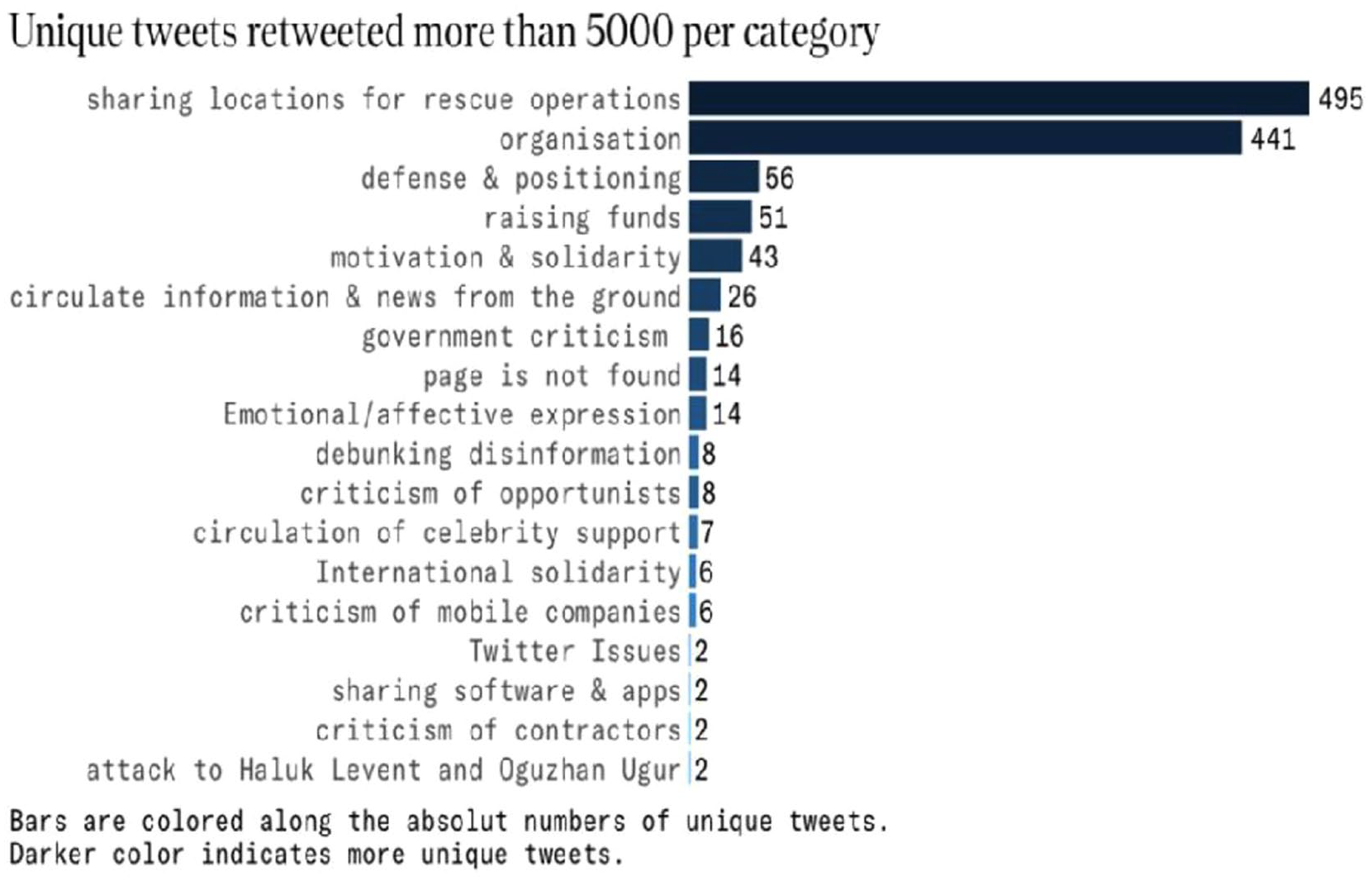
The Unique tweets for each category retweeted more than 5,000 times.

Total number of retweets each category received in the data set.

The average engagement rate of each category.
Research Findings
Using a combination of deductive and inductive coding methods, we applied the framework of Houston et al. (2015) as a starting point, adapting it to include the unique technological affordances and modern media practices prevalent in Türkiye’s distinct media landscape. From this approach, we identified 17 distinct user practice categories on Twitter, details of which are outlined in the findings section below.
Sharing locations for rescue operations was notably prominent, as it featured the most retweeted posts. Victims and their families utilized the accounts of popular figures and platforms like Uğur’s Babala TV to disseminate crucial information and solicit aid. Babala TV’s official Twitter account went beyond mere retweeting by providing detailed information such as contact names, addresses, phone numbers, and the conditions of individuals trapped under rubble. Their credibility and extensive follower network, enhanced by figures like Oğuzhan Uğur, played a pivotal role in disseminating this information, illustrating the significant impact of influential social media users in crisis communication. However, the crisis also brought to light the challenges of social media use in emergencies. To combat disinformation and false addresses, accounts began adding “teyitli” (confirmed) to their posts, a measure demanded by their followers. The temporary restriction of Twitter access during the crisis sparked widespread criticism, particularly for its impact on rescue operations. Figures like Haluk Levent voiced their concerns, highlighting the platform’s crucial role in facilitating rescue efforts. Despite their importance, the engagement levels of such posts were relatively low, likely due to the overwhelming volume of tweeting activity. Nonetheless, tweets about individuals still trapped under the rubble initiated a political conflict on the third day of the earthquake, challenging official statements from government agencies and mainstream media coverage. This situation highlighted the difficulty for states in keeping major disasters “out of sight” and “out of political mind,” as Cottle (2014) noted. Moreover, attempts to block platforms such as Twitter were viewed as governmental efforts to control media coverage and suppress public outcry, underlining the tension between state powers and social media’s role in public discourse.
The second major theme in highly retweeted tweets focused on organizations for coordinating aid efforts, involving appeals for essential supplies such as shelter, food, and medical assistance and guiding accessing these resources. Tweets also relayed calls for help from those already rescued and identified areas still needing aid, significantly aiding organizations in locating missing persons and matching them with necessary resources. Beyond basic needs, these tweets highlighted critical but less common needs such as insulin and shared vital contact details such as phone numbers, WhatsApp numbers, and addresses of key institutions such as AFAD to enhance coordination. In addition, they addressed potential organizational challenges and emphasized the importance of carefully selecting and coordinating aid efforts.
The third category from our analysis was defending and positioning Haluk Levent, Ahbap, Oğuzhan Uğur, and Babala TV amid attacks on their organizations and personal reputations. Both individuals robustly asserted their coordination with ministries, AFAD, and other government institutions through their social media engagements. Notably, Haluk Levent’s declaration, “Both AFAD and AHBAP are ours,” became one of the most influential messages, attracting a staggering 160,668 retweets. This high engagement underscored the substantial public support and trust they garnered despite facing criticism. Levent and Oğuzhan Uğur consistently highlighted their collaborative efforts with the government, sharing updates, videos, photos of their relief activities, and other transparent communications to solidify their credibility among the public. These actions were crucial in maintaining their organizational integrity and influence during a turbulent period. These posts largely focused on fostering cooperation with the government and encouraging solidarity among organizations and citizens. Particularly notable was a tweet by Levent, which, though later deleted, had circulated widely in traditional media and highlighted his and other celebrities’ exclusion from the Türkiye One Heart donation campaign. This incident sparked discussions about perceived government interference, as popular actors known for their support of Ahbap, like Oktay Kaynarca and Kenan İmirzalıoğlu were conspicuously absent from a joint broadcast, leading to speculation about a deliberate exclusion. Levent’s subsequent apology and deletion of the tweet after discussions with ATV management hinted at political pressures affecting public figures’ participation in media events. Among the top tweets, well-known figures like opposition leader Kemal Kılıçdaroğlu, Memleket Party Leader Muharrem İnce, pop star Tarkan, and comedian Şahan Gökbakar supported these organizations and promoted Levent and Uğur’s initiatives.. This episode underscored the ongoing tension between government entities and independent foundations during crises, reflecting broader dynamics of control and influence in Türkiye’s media landscape.
The fourth category highlighted in our analysis centered on fundraising efforts for earthquake relief. Haluk Levent and Oğuzhan Uğur publicly introduced individuals and corporations on social platforms like BabalaTV, noting their contributions and directing donations to the non-profit organization Ahbap. This initiative also gained international support, notably from Cristiano Ronaldo and Madonna, who endorsed Ahbap’s efforts; Madonna’s Instagram post on Valentine’s Day encouraged her 18 million followers to support Türkiye and Syria, specifically through Ahbap. While her post increased global awareness and solidarity, it faced criticism from some sectors of social media and pro-government media, which propagated conspiracy theories that international aid was being misdirected from state institutions to Ahbap (Güler, 2023), indicating a broader tension between governmental and civil society organizations in Türkiye over aid distribution. These dynamics underscored a growing public reliance on non-governmental organizations amid declining trust in government due to corruption cases and perceived nepotism (MacDonald, 2023).
Motivation and solidarity posts proved highly effective in garnering attention and generating a significant number of retweets. While governmental organizations typically shared formal and informative content, more informal and uplifting messages resonated strongly with many users. Haluk Levent and Oğuzhan Uğur expressed gratitude for the unified national support following the earthquake, sharing motivational messages that uplifted their teams and field volunteers. They also highlighted successful rescue operations and the resolution of missing person cases, offering hope to those impacted by the disaster. These tweets were highly engaging, receiving about 10 times more favorites than retweets on average.
In addition, we categorized English tweets shared by other influential users under international solidarity. These posts included links for donations to organizations such as Ahbap and Akut for Türkiye and Molham and SAMS for Syria. Ahbap was particularly praised as the most trustworthy foundation for rescuing and providing for people in need. This acknowledgment further highlighted the global reach and impact of these solidarity efforts.
Furthermore, emotional and affective expressions detected in certain tweets constituted another significant category. These posts often conveyed deep emotions such as grief, anger, and despair, showcasing users’ emotional investment and empathy toward those affected, often communicated through informal language to enhance the messages’ sincerity.
During the crisis, information from the ground became crucial as mistrust in Türkiye’s largely pro-government media landscape grew, leading many to seek real-time updates via social media. These posts frequently depicted damaged areas and provided essential updates, including government warnings and statistics about the concentration of tweets from critically affected areas like Hatay. This region was specifically highlighted to underscore its dire need for aid. Despite dismissals by official media as unfounded claims, social media became instrumental in amplifying Hatay’s urgent appeals for help, sparking widespread public debate and ensuring the situation remained visible. As noted by Cottle (2014, p. 6), this dynamic again illustrated the challenge of keeping major disasters “out of sight” and “out of political mind,” a task much more difficult to manage in today’s connected world.
Criticism of mobile companies emerged as a significant point of discussion on social media during the crisis. Governmental institutions and their affiliated social media accounts typically refrained from publicly addressing the performance issues of these entities due to institutional constraints and political connections. However, influential entities such as Ahbap and Babalatv leveraged social media to spotlight severe connectivity issues and internet access disruptions in the affected regions (Figure 4). These posts aimed to escalate public pressure on mobile companies to promptly resolve these critical issues, highlighting their impact on rescue and relief operations. The substantial engagement on these posts reflected the public’s urgency for improved connectivity during the crisis.
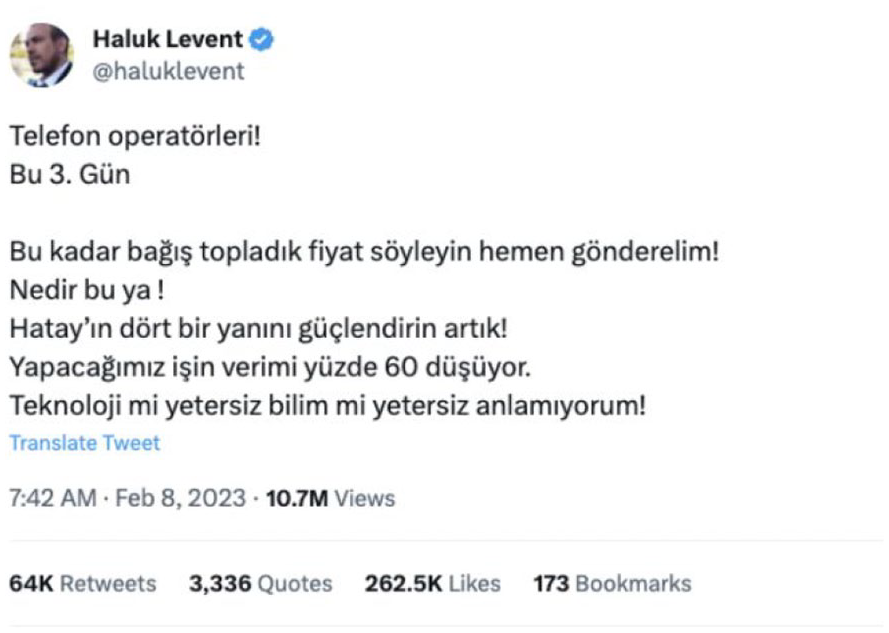
Haluk Levent (2023): “Telephone operators! This is the third day we’ve collected donations. Tell us the price, and we’ll send it right away! What the hell is this? Strengthen the four corners of Hatay now! The efficiency of our work is dropping by 60 percent. I do not understand if technology or science is inadequate.” https://x.com/haluklevent/status/1623210524568653824
Criticism of contractors responsible for the collapsed buildings also garnered significant attention. Despite Türkiye being one of the most earthquake-prone regions in the world and the implementation of stricter construction regulations following the 1999 Izmit earthquake, the recent widespread destruction triggered intense public outrage. High-profile figures like Uğur and Levent used social media to demand accountability and legal action against the contractors deemed responsible for the unsafe buildings (Figure 5). The high engagement rate of these tweets underscored the extensive anger among social media users, pushing for stringent enforcement of building safety standards and accountability in the construction sector.
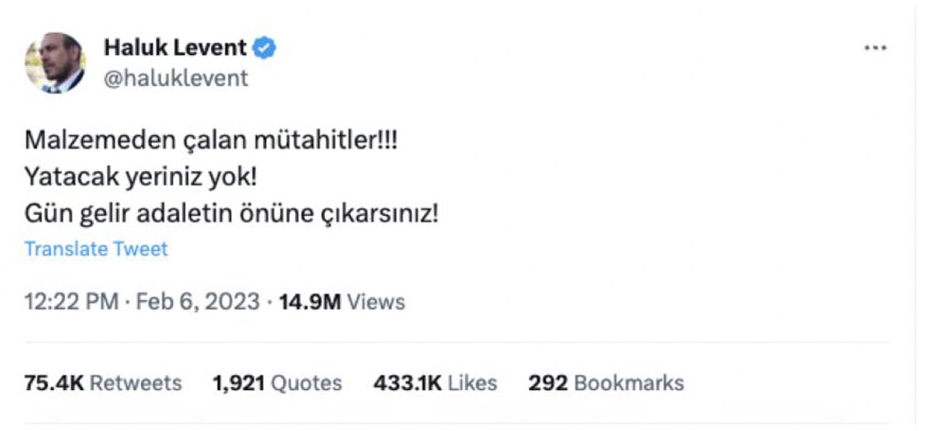
Haluk Levent (2023): The contractors stealing material! You have no place to rest in peace! One day, you may find yourself facing justice!” https://x.com/haluklevent/status/1622556328827691013
Tweets also highlighted opportunists exploiting the earthquake by capitalizing on people’s desperation. Levent and Uğur warned against scammers falsely soliciting donations and misleading volunteers. They also called out regional stores for inflating prices of essentials needed by victims. These posts not only heightened awareness of unethical practices but also served to deter further price gouging, with sellers wary of being publicly shamed and boycotted by vigilant social media users.
Engagement and total retweets revolved around government criticism, notably after Oğuzhan Uğur responded to Türkiye’s Red Crescent (Kızılay) Chairperson Kerem Kınık’s claim that all destroyed buildings had been reached for rescue efforts. In addition, significant backlash arose when the Information and Communication Technologies Authority (BTK) restricted access to social media for about ten hours. Uğur and Levent highlighted these actions in their tweets, questioning the effectiveness of relief efforts and the communication with victims, thereby underscoring the essential role of platforms such as Twitter in disaster response. Further skepticism was directed at governmental institutions such as Kızılay and AFAD. A notable tweet by journalist Murat Ağırel, which became highly engaged and widely covered by traditional media, sparked further debate. Ağırel criticized the Kızılay for allegedly selling tents intended for disaster victims to the NGO Ahbap for US$2.44 million rather than distributing them directly to those affected. This controversy was extensively discussed from February 26, peaking with revelations that inflamed public opinion and led to defensive responses from Ahbap and Haluk Levent regarding the tent purchases (Figure 6).
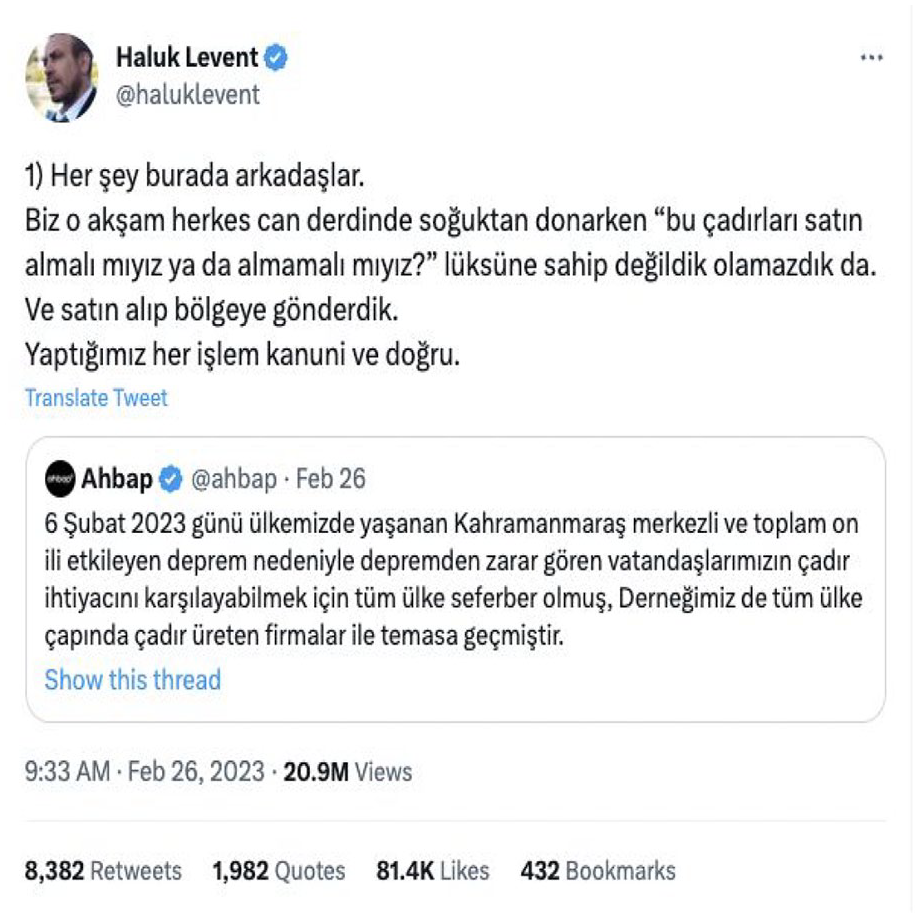
Haluk Levent (2023): “While people were freezing to death, trying to survive, we didn’t have the luxury of debating whether we should buy these tents. And we bought it and sent it to the region. Everything we do is legal and correct.” https://x.com/haluklevent/status/1629761544568418305
Within the first few days, two highly retweeted tweets targeted Uğur and Levent. One, from a prominent pro-government account, criticized Ahbap for prioritizing public relations and overshadowing AFAD’s efforts, which allegedly lacked time for such visibility. Another tweet implicitly criticized Uğur for his brief presence in the disaster area and included Uğur’s forceful response: “You’re a despicable lackey, and I won’t let this nation forget.” Levent and Uğur countered these claims on Twitter, aiming to correct misinformation. Despite lower numbers, these rebuttal tweets saw considerable engagement, demonstrating broad support for them. They actively addressed the accusations through various media, including emotional videos and photos, to communicate their side of the story.
Finally, Oğuzhan Uğur demonstrated Twitter’s critical role in crisis management by showcasing how the platform could exceed its usual daily tweet limit of 2,400 posts. Due to heavy tweeting, particularly about rescue locations and organizational efforts, he redirected followers from @Babalatv to @PincTivi after exceeding the limit. The organizations also utilized tools such as maps and forms to help victims find shelters and support fundraising initiatives.
Discussion and Conclusion
This study offers a nuanced exploration of crisis communication on Twitter amid governmental repression and influencer activism during the earthquake crisis in Türkiye. Prior literature has established the role of social media in disaster scenarios yet has often overlooked the dynamic interplay between state power and popular digital activism under authoritarian regimes.
Empirically, the findings reveal how grassroots efforts can circumvent and challenge state-imposed narratives, highlighting a shift toward decentralized crisis communication. This is particularly evident in how influencers like Haluk Levent and Oğuzhan Uğur managed to maintain public engagement and trust despite governmental attempts to discredit them, showcasing the “undesirable popularity” of figures who challenge authoritarian controls.
Methodologically, this study leverages a mixed-methods approach, combining quantitative analysis of tweet volumes and engagement with qualitative insights into the content and context of tweets. This dual approach allows for a comprehensive understanding of both the scale of digital interactions and the subtle nuances of communication that shape public perception and behavior during crises.
The implications of this study extend beyond the specific context of Türkiye’s earthquake response, offering broader insights into the management of social media during disasters in politically complex environments. It underscores the potential of social media to enhance transparency and accountability, particularly in settings where traditional media may be censored or biased. This study differentiates itself by examining the communicative effectiveness of social media during disasters and how these platforms shape crises and are shaped by political influences. It investigates how social media is a battleground where various political interests and societal norms converge and contest during a crisis. This involves critically analyzing how government bodies, civil society, and individual actors utilize these platforms to negotiate power, influence public opinion, and manage public perception during disasters. Furthermore, this study supports the concept of “the surveillance capacity” of new media, which complicates the concealment of disasters from the public eye, enhancing transparency and also introducing new challenges in the form of heightened public scrutiny and the rapid spread of misinformation (Cottle, 2014, p. 6). We also believe that considering the “transformation of what is popular” is very important at this point, as it brings new opportunities and challenges in social, political, and economic issues that concern the public.
Accordingly, in a polarized society that has long criticized the stateization of the government and governmental authoritarianism, discussion on the earthquake—which inherently involves political, economic, and social dimensions—cannot realistically be separated from the long-standing impacts of political actors who have governed for two decades. As explained above, the conflicts were reflected in both social media and mainstream media. In sum, while earlier research has paved the way by mapping the terrain of social media’s role in disaster management, this study seeks to extend the discourse by examining how these technological tools are embedded within and reflect existing and potential conflicts and may reshape the political and social landscape during times of crisis. Through the analysis of these incidents, this study aims to underline the resilience of civil society actors in the face of challenges and the inherent difficulties they face within the authoritarian regime, which seeks to find a populist discourse to shift blame away from the ruling government and the relevant responsible state institutions. Instead of collaborative opportunities, these civil actors are seen as challengers and competitors to the state, fueling conflict and rivalry. This dynamic reinforces the regime’s efforts to promote and maintain its hegemony over knowledge and crisis.
The regions continue to grapple with profound challenges one year after the devastating 7.8-magnitude earthquake in southern Türkiye and northern Syria. Despite the loss of over 52,000 lives and extensive infrastructure damage, the slow pace of rebuilding underscores deep social inequities and the inadequate governmental response. Families, including many Syrian refugees, continue to live in dire conditions in temporary shelters, highlighting the enduring social and political impacts of the disaster (Tung, 2024). Oğuzhan Uğur has remained deeply committed to the relief efforts, channeling his platform into significant outreach initiatives. Through his “Deprem Özel Programı” (Earthquake Special Program), he has not only facilitated substantial support and resources but has also expressed profound emotional turmoil and frustration over the slow pace of recovery. His programs have provided a voice to those struggling in the aftermath, reflecting a pervasive sense of responsibility while coping with personal despair and the ongoing challenges the victims face (“Deprem Özel Programıyla Yürekleri Parçalayan Oğuzhan Uğur”, 2024). Haluk Levent’s Ahbap Association has notably progressed in constructing 1,150 steel homes, with 252 completed in Malatya and 450 in Antep, prioritizing those most affected, such as families with disabilities and those whose homes were destroyed. The plan to build 21 more schools is part of a broader effort to address both immediate and long-term needs, underlining the necessity of viewing disaster response as a complex interplay of ongoing social recovery and political negotiation. (“Haluk Levent: Deprem bölgesinde yaptığımız 2 + 1 konutlarımız bitti” 2024). This extended focus seeks to enrich our understanding of the crisis’s sustained impact on Türkiye’s societal fabric and governance, emphasizing strategies that cater to both immediate relief and long-term resilience.
This research also raises unresolved questions about the long-term impacts of such digital activism on state policy and public trust. Can these digital platforms continue to serve as effective tools for civic engagement and resistance against state control, or will they be co-opted by governmental forces in other authoritarian contexts? Future studies should explore these dynamics in other regions and disasters, assessing the consistency of these patterns across different political and social landscapes. This could help to develop more robust strategies for leveraging social media in crisis management, ensuring that the benefits of digital communication are maximized while minimizing the risks of misinformation and political manipulation.
Footnotes
Acknowledgements
The authors thank Luca Hammer for his invaluable assistance in the data collection phase of this research. We extend our deepest sympathies to all those who lost their lives in this tragic event and to those who mourn their dearly departed. Our thoughts remain with everyone still grappling with the aftermath of the earthquake.
Declaration of Conflicting Interests
The author(s) declared no potential conflicts of interest with respect to the research, authorship, and/or publication of this article.
Funding
The author(s) disclosed receipt of the following financial support for the research, authorship, and/or publication of this article: This publication is part of the research of the Collaborative Research Center 1472 “Transformations of the Popular,” funded by the German Research Foundation (Deutsche Forschungsgemeinschaft) Project ID 438577023—SFB 1472.
Ethical Statement
As Twitter data are publicly available, researchers are not always required to apply for ethical approval to analyze and publish the data. Information is shared without breaching any confidentiality obligation, as only information about public figures is shared.
