




Abstract
Digital transformation and the use of interconnected digital technologies have opened up new opportunities across the world and hold promises for enhanced productivity and development for all. However, research from around the globe has proven that urban poor women are less likely to be digitally active, limiting the realization of its benefits. This study provides an insight into the mobile phone technology experiences of urban poor women at the resettlement site Perumbakkam in Chennai, India. A purposively selected group of women from the resettlement site participated in a workshop that focused on the usage of mobile technology. Post-workshop, the shared experiences of these marginalized women have provided insight into the interactions between gender and communication technology at resettlement sites. The researchers discovered that there was a growing awareness and recognition among the women about how technology could benefit their lives. They expressed eagerness to learn more about utilizing the new technology, particularly for economic improvement. However, structural barriers, particularly patriarchal gender norms, have thus far hindered women from fully harnessing the potential of mobile technology.
Introduction
Studies on urban development-induced displacement and resettlement (UDIDR) have shed light on its adversarial impact, especially on the urban poor population (Shaw & Saharan, 2018). The erasure of the urban poor from the city is made possible by “invoking a particular set of values: hygiene, environment, progress and growth-centric government, market participation, planning and order, aesthetics, notions of a world-class city, and leisure” (Bhan, 2009, p. 141). The urban poor face “multiple losses, including loss of homes, livelihoods, and community resources, which further leads to even greater impoverishment post-resettlement” (Patel et al., 2015, p. 1). The interlinked factors that raise the impoverishment risks in resettlement are: “landlessness, joblessness, loss of access to common property resources, marginalization, food insecurity, morbidity and mortality, social disarticulation, and uncertainty” (Cernea, 1997, p. 1569; Nikuze et al., 2019, p. 45; Patel et al., 2015, p. 232).
Literature on resettlement reveals the magnitude of the impact of resettlement in India, with case studies pointing “to the poor quality of resettled housing units, their small size, and their distance from existing employment sources and schools” (Shaw & Saharan, 2018, p. 598). Women become even more impoverished after resettlement, as many of them are not able to continue working when the resettlement area is far away from their original location (Anand & Tiwari, 2006). Resettlement projects often lack adequate infrastructure and services. Lack of adequate and safe transport and responsive policing impact women’s mobility within their locality and their commuting to and from the city, resulting in constraints in their access to resources and opportunities (Desai et al., 2018). In a nutshell, development-induced displacement and resettlement have become factors in weakening the already heavily disadvantaged position of women (Terminsky, 2013).
The city of Chennai in southern India is currently witnessing a massive development-induced resettlement program where the urban poor in informal settlements situated on the river banks of Chennai city are being resettled as part of a river restoration and flood rehabilitation project. The Perumbakkam resettlement site is one of the largest resettlement sites, with an estimation of 25,000 tenements (Tamil Nadu Urban Habitat Development Board, 2015). Urban researchers have critiqued the fact that en masse resettlement projects like Perumbakkam, which is situated on the outskirts of the city, have given rise to new forms of discrimination and stigmatization. When the poor, who depend on the city for survival, are moved to the fringes of the city, they not only face geographical exclusion but also social and economic exclusion (Cernea, 2000). This en masse resettlement of people from various informal settlements within the city to suburbs is an act of neo-discrimination (Narayanan, 2019). The crisis of social reproduction in resettlement colonies in Chennai can be captured through the physical (size of the housing) and social environment (spatial concentration of poverty; Gajendran, 2015).
Gender and Mobile Technology for Development
The dominant perspective in scholarly discussions and development policies from around the globe is one of the techno-optimism with regard to Mobile Technology for Development (MT4D). However, there are counter perspectives that scholars have put forth, focusing primarily on the inherent limitations of this approach in realizing its claimed positive outcomes, which can be attributed to various factors (Toyama, 2011). Digital divide, for instance, is the result of persistent disparities in mobile technology access that are influenced by a variety of factors, including availability, affordability, awareness, proficiency, empowerment, and societal norms (Hernandez & Roberts, 2018). The urban impoverished population frequently finds themselves excluded from this technology-centric realm, as commercial technologies in the market are primarily designed for profit generation rather than addressing the specific requirements of low-income communities. Although mobile devices represent global technology, the diffusion of mobile technology has not followed a consistent pattern, either at a global level or within specific nations (Goggin, 2013; Ling & Donner, 2009; Smith & Romeo, 2007). Citizens in advanced economies exhibit a greater propensity to own mobile phones, particularly smartphones, and to participate in online activities and social media, in contrast to individuals in developing economies (Silver, 2019). Moreover, advancements in the field of mobile device research have been uneven, highlighting the pressing need for comprehensive studies that span diverse geographic locations and regions to refine and enrich our current understanding (Goggin & McLelland, 2009). Goggin (2013) posits that studies focusing on mobile technology originating from the “global south” acquire increased significance in light of evolving geopolitical dynamics. Such research holds the capacity to profoundly transform our entrenched understandings related to mobile devices, online media, their historical progression, and cultural contexts.
From a subaltern studies standpoint, there is also an imperative to investigate MT4D discourses through gender lens. Tacchi and Chandola (2016) raise apprehensions regarding the prevailing narrative surrounding “new media,” “development,” and “globalization,” advocating for a more critical exploration of these conceptual frameworks. They argue that understanding the transformative potential of smartphones in developing regions requires a deeper exploration of the practical implementation of new technologies by non-elite individuals. These individuals are frequently neglected in dialogues, yet their adoption significantly shapes their viewpoints and experiences. Their research offers a nuanced, gender-oriented insight into the connection between smartphones and development, shedding light on the wider social, cultural, and political settings within which women lead their lives. The research also explores the twofold marginalization experienced by these women, both as inhabitants of impoverished areas and as females. It underscores how their utilization of smartphones reveals this dual marginalization, while simultaneously demonstrating their individual agency (Tacchi & Chandola, 2016). In their 2016 study, Tacchi and Chandola underscore the transformative role of mobile phones in amplifying the social connections and opportunities for women residing in slums. However, they also highlight the substantial impact that local cultural and societal institutions exert on the utilization and subsequent effects of these devices.
Resettlement, by and large, affects the urban poor, as the shift is away from the city center. Finding and building a collective voice is one of the major challenges in the new emerging urban neighborhoods amid the disruption of livelihoods and displacement (Vyas, 2012). Research across the globe has exhibited the correlation between technology and development, especially the potential of mobile technology in helping women close gender gaps in outcomes such as networking, employment, or income generation (Pande & Schaner, 2017). However, technology in itself cannot empower women, but imparting the right, adequate skills and guidance on the appropriate usage of these technologies can help women better their lives. As Brudvig puts it, “Technology can assist those without status or power to claim it” (Chair et al., 2020, p. 3). In India, only 33% of women use mobile phones, compared to 67% of men (Barboni et al., 2018).
Researchers have stressed the importance of studying this gender gap by looking at the structural factors that are inhibiting Indian women from realizing the full socio-economic potential of mobile technology (Pande & Schaner, 2017).
The UN Sustainable Development Goals include the pledge to harness information and communications technologies (ICTs) to advance women’s empowerment. However, data on determinants of the “digital divide” among men and women in the use of the internet and other ICTs have been unclear (Jellema & Brudvig, 2015). Technology is not always designed for the poor or designed keeping in mind the needs of the poor. To compound it, technologies have a masculine image, as the field is dominated by men and incorporates symbols, metaphors, and values that have masculine connotations (Wajcman, 2007). According to the Global Report of the World Wide Web Foundation titled “Women’s Rights Online—Closing the digital gender gap for a more equal world,” poor women in urban areas of developing nations are 50% less likely than poor men to use the internet (Chair et al., 2020).
Digital inclusiveness is an essential part of development, but there are barriers to women becoming part of a networked society. Sonne (2020), in her research, states that women in India have less access to phones, or their access is restricted to shared phones or phones with fewer features. She further states that barriers faced by women in access and usage are strongly influenced by socio-cultural notions such as women not needing a phone or that phone usage might lead women comprising family honor; these notions lead women to self-censor and accept frequent monitoring of their phone usage by male members of the family. Singh et al. (2018), in their article, point out that Indian women have access to traditional media like the TV, closely followed by outdated mobile phones without internet connectivity. Barriers to ICT usage, especially smartphones with internet connectivity, pertain predominantly to patriarchal norms. Barboni et al. (2018, p. 14) point out that mobile phone usage challenges traditional gender norms as phone usage raises questions about girls “purity” before marriage and post-marriage, when their prime responsibility is family and household chores. There were also strong opinions suggesting that the use of mobile phones could potentially facilitate digital harassment toward women, as has been reported in various media outlets. Women from economically disadvantaged urban backgrounds typically experience limited access to mobile phones, a restriction often justified by their families through the discourse of self-respect, honor, decency, and dignity (Devadas, 2021).
Liberal feminists analyze this as an issue of access and opportunity, but socialist and radical feminists analyze the gendered nature of techno-scientific knowledge and culture and put the spotlight on artifacts themselves (Wajcman, 2007). An important area that necessitates academic research on Information Communication Technology for Development is in the “understanding of individual motivations and barriers to usage and impact assessment via project evaluation” (Chib & Harris, 2012, p. 7). Research on beneficiary motivations at psychological, individual, and social levels is needed to translate ICT4D field experiments and investigations into case studies that can be valued and applied to various geographical and cultural settings (Chib & Harris, 2012).
Participatory Research
Any community-based intervention needs to be holistically researched, planned, and implemented through a participatory approach. The knowledge, perspectives, and capabilities of communities and various stakeholders, along with the expertise of researchers involved in researching an issue or problem, contribute not only to knowledge generation but also can result in a real-world impact (Vaughn & Jacquez, 2020).
Participatory research was developed “to advance social and economic conditions, effect change, and reduce the distrust of the people being studied” (Macaulay et al., 1999, p. 775). Breitbart (2012) states that participatory research involves the study of a particular issue or phenomenon with a commitment to democratization and demystification of the research, wherein the results enable the improvement of the livelihoods of the community collaborators.
Participatory Media Workshop for Urban Poor Women in Resettlement Sites
A two-day workshop titled “Participatory Media for Women in Resettlement Sites” was conducted in December 2018 for the women in the resettlement site of Perumbakkam in Chennai. The workshop aimed to create awareness among women about the usage of social media through smartphones for socio-economic development purposes. This article presents the follow-up study of a 2-day workshop on participatory media for women in resettlement, which introduced concepts such as smartphone mobile technology, social media networking sites, usage of mobile cameras, positive storytelling, and usage of social media for business development, among other topics.
This particular request for training (a workshop) on social media networking sites through smartphones came from the resettled women themselves. The women in Perumbakkam felt the need for themselves to become active in the digital space as they heard about the enabling nature of mobile technology. The primary reason they ascribed to not being digitally active was lack of knowledge and skills to use smart phones and social media, and owing to the restrictive patriarchal social norms.
There was also a strong opinion among women that social media could be a potential tool for exposing various rights, violations, and the hardships they encounter in the process of resettlement. Few women wanted to learn secret filming techniques or the use of spy cameras or body cameras. When we enquired about the need for these skills, we were informed that they would like to do undercover filming, especially to expose the lacunae of the various agencies involved in resettlement, and post it on social media as a justice-seeking mechanism.
The entire process of displacement and resettlement is usually filled with hostilities, mistrust, misinformation, and tensions between the resettled communities and the various government and non-government agencies involved in the process. These videos, if posted on social media, can be counterproductive for this already vulnerable group of women. There were also ethical concerns and privacy issues, which could potentially serve as triggers for new problems and conflicts and further escalate existing hostilities. With the need to help women transition into the digital space, there was also the responsibility of informing and educating them about the risks of using social media through digital literacy.
Digital inclusion of urban poor women in resettlement sites comes with its own challenges, opportunities, responsibilities, and risks. Hence, the researchers designed the workshop keeping in mind the needs of the women aligned toward information or media literacy and also enabling them with the right knowledge, attitude, and skills required for the usage of social media through mobile technology. The workshop focused more on the usage of social media for networking, positive storytelling, economic development, and social networking, along with its risks and limitations.
On the first day, sessions were participatory in nature and were conducted by journalists and media educators, researchers, legal experts, and leads of NGOs in Perumbakkam. During the second day of the workshop, the women were part of a hands-on participatory co-creation and co-learning exercise with media students in creating digital stories for social media using smartphones. This 2-day workshop helped the 18 female participants gain knowledge, attitude, and skills on using social media through smart phones. They were motivated to have a social media account on their own to enable women community members to build new networks and forge new relationships for their socio-economic development. Post-workshop, the women got together with 25 other women from the Perumbakkam resettlement site and started a Facebook (FB) page called “Perumbakkam Sadhanai Pengal” (Perumbakkam women achievers) with a motive to sell their handmade products. The participants also started individual accounts on social media pages and started posting stories on their FB and Instagram pages.
Method
Two years after the workshop, the researchers diligently followed up with the female participants to understand social media and mobile technology adoption. The 18 participants were tracked using their mobile numbers given in the registration forms (see Image 1). Only 13 of those women were traceable, whereas five participants were untraceable for various reasons such as shifting homes, marriage, and so on, hence the sample size for this study (n = 13). This study presents the role of mobile technology in the lives of women in resettlement. Through their testimonials, women share their stories of innovation and agency in adopting mobile technology. The study also presents the barriers that exist to women’s access to mobile technology. This study applies a participatory approach to study the adoption and usage of mobile phone technology among the urban poor women at resettlement sites.
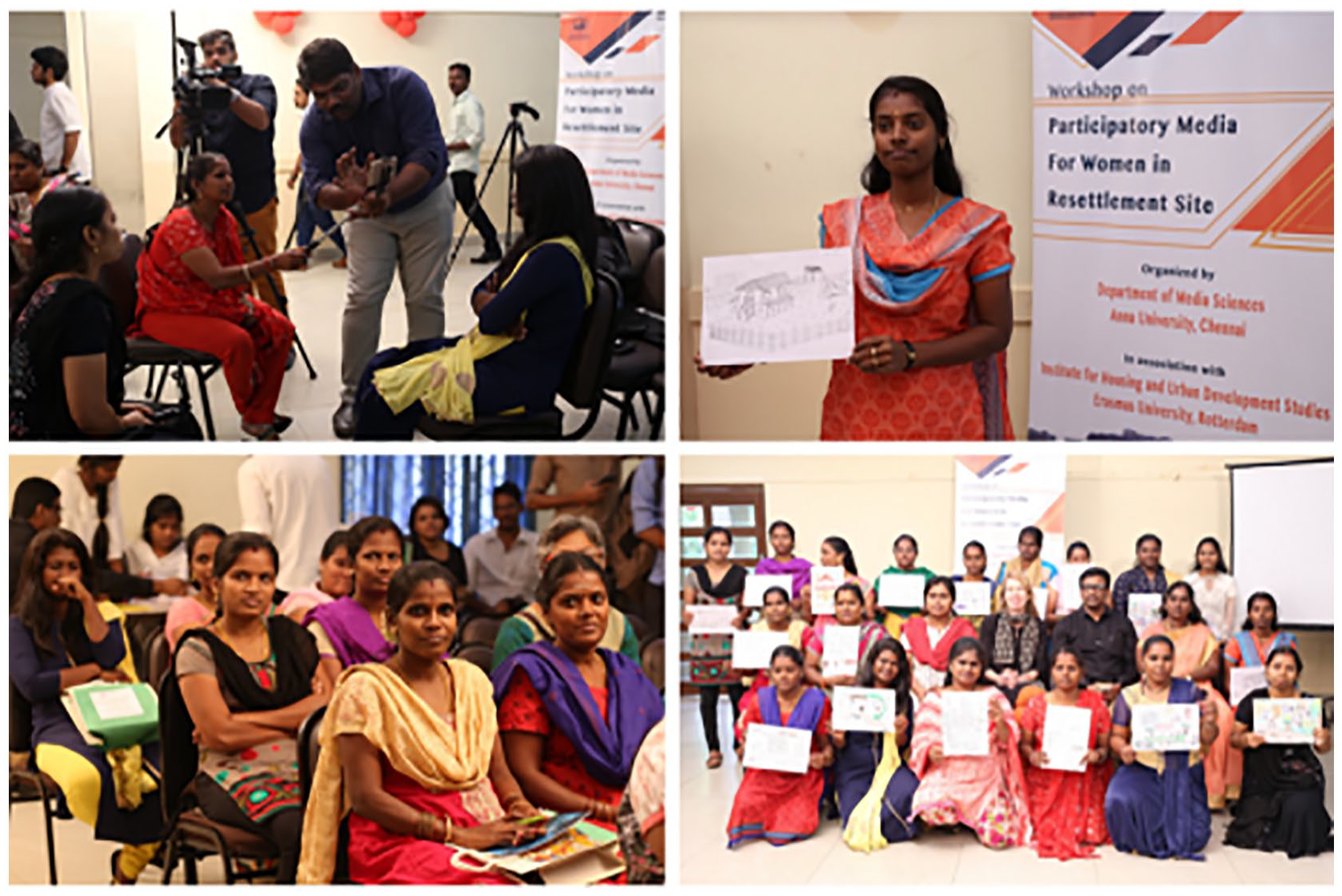
Participants in the workshop.
Measures
The researchers conducted in-depth interviews to understand the female participants’ experiences in digital space. A semi-structured questionnaire was used to gain information from each participant in the workshop. Each interview session ranged from 20 to 25 min and was recorded with the consent of the participants. Gurumurthy and Chami (2014) in their research on the intersections between women, local governance, and ICT has developed a framework for analyzing the contribution of ICT to women’s empowerment. Their research evaluates how “guided use of digital technologies enables marginalised women to gain active citizenship, i.e., the ability of the women to exercise informational, communicative, and associational power in the local public-political sphere” (Gurumurthy & Chami, 2014, p. 3). The framework also includes structural and agency-related factors influencing women’s empowerment through digital technologies. The three power categories—informational, communicative, and associational—along with structural and agency-related factors were used as a framework to evaluate the usage of social media through mobile phones by women participants in the workshop from the resettlement site in this study.
Roberts and Hernandez (2019), 5‘A’s concept provides this study with a conceptual structure for specifically analyzing barriers to technological access, which are availability, affordability, awareness, ability, and agency among the poor women in the Perumbakkam resettlement site. The five factors provided a structured framework for in-depth analysis of the social and political factors that serve as barriers and limit technology for the resettled women.
All the interviews were conducted in Tamil and later transcribed and translated into English, and a detailed analysis was done to extract data and quotes for each attribute under the 5‘A’ concept.
Results
Demographics
The below table shows the demographic characteristics of the 13 women who participated in the workshop and were part of this study (see Figure 1). The participants’ ages ranged from 18 to 45 years, out of which eight are employed, one is a student, and the rest four are unemployed. The employed women are mostly in the unorganized sector, and two of the participants are self-employed. Majority of the participants, that is, nine participants (69.2%), belong to the scheduled caste, which is officially considered a socially and economically marginalized and vulnerable group of people in India.
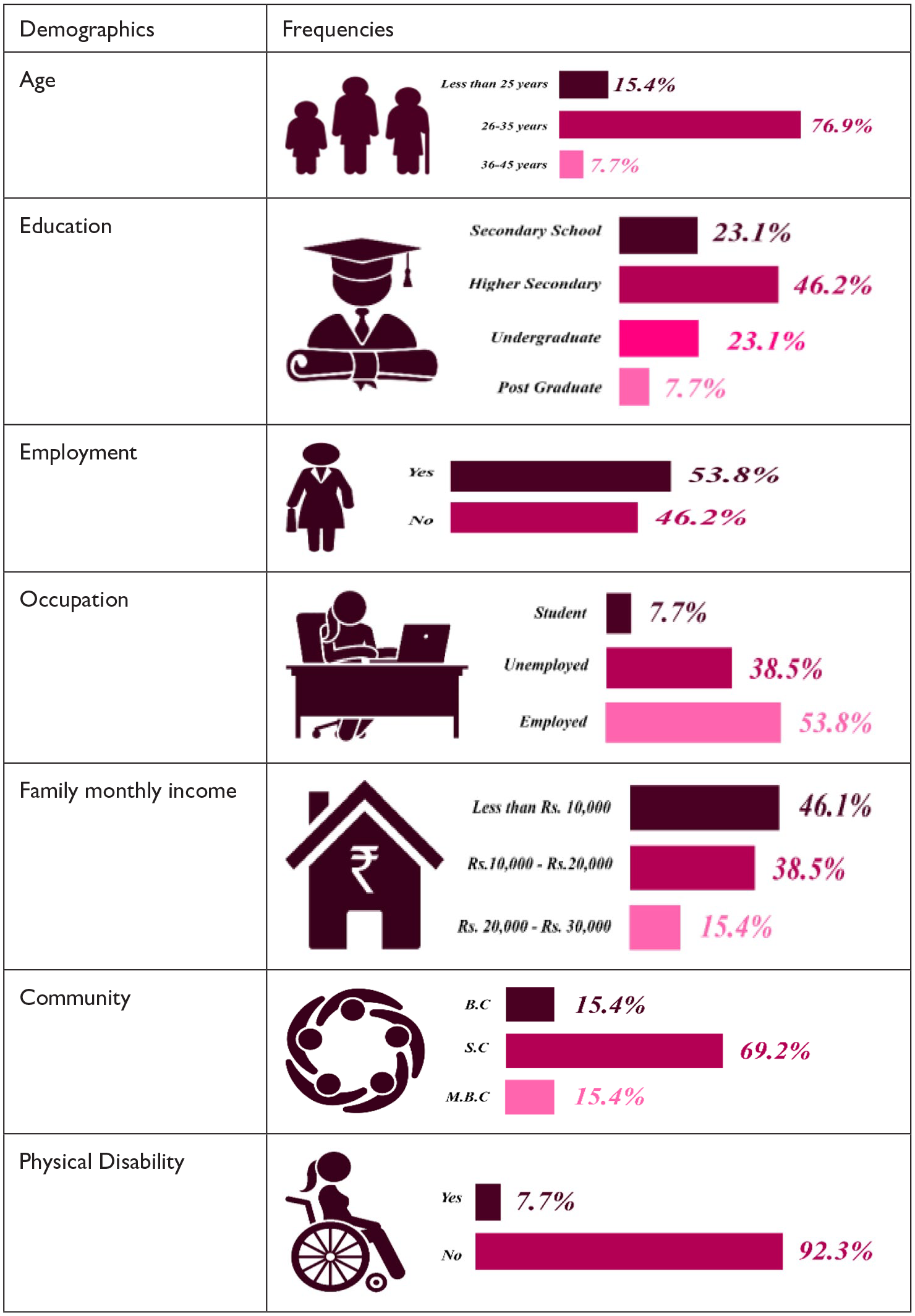
Socio-demographic profile of participants.
Availability and Affordability of Smartphones, Internet Connectivity, and Social Media for Resettled Women
All except one participant (92%) owned a personal mobile phone (see Figure 2). This single person shares a mobile phone with other family members, and the reason she mentioned for not possessing a personal mobile phone is “economic constraint in affording a mobile phone.” Around nine participants (69.2%) in this study possess and use a smartphone, and the rest of the three participants (23.1%) owned basic model mobile phones. Around six (46.2%) women participants in the study possessed smartphones during the workshop; one participant purchased the smartphone post-workshop as she felt the need to use her newly acquired skills in the workshop.
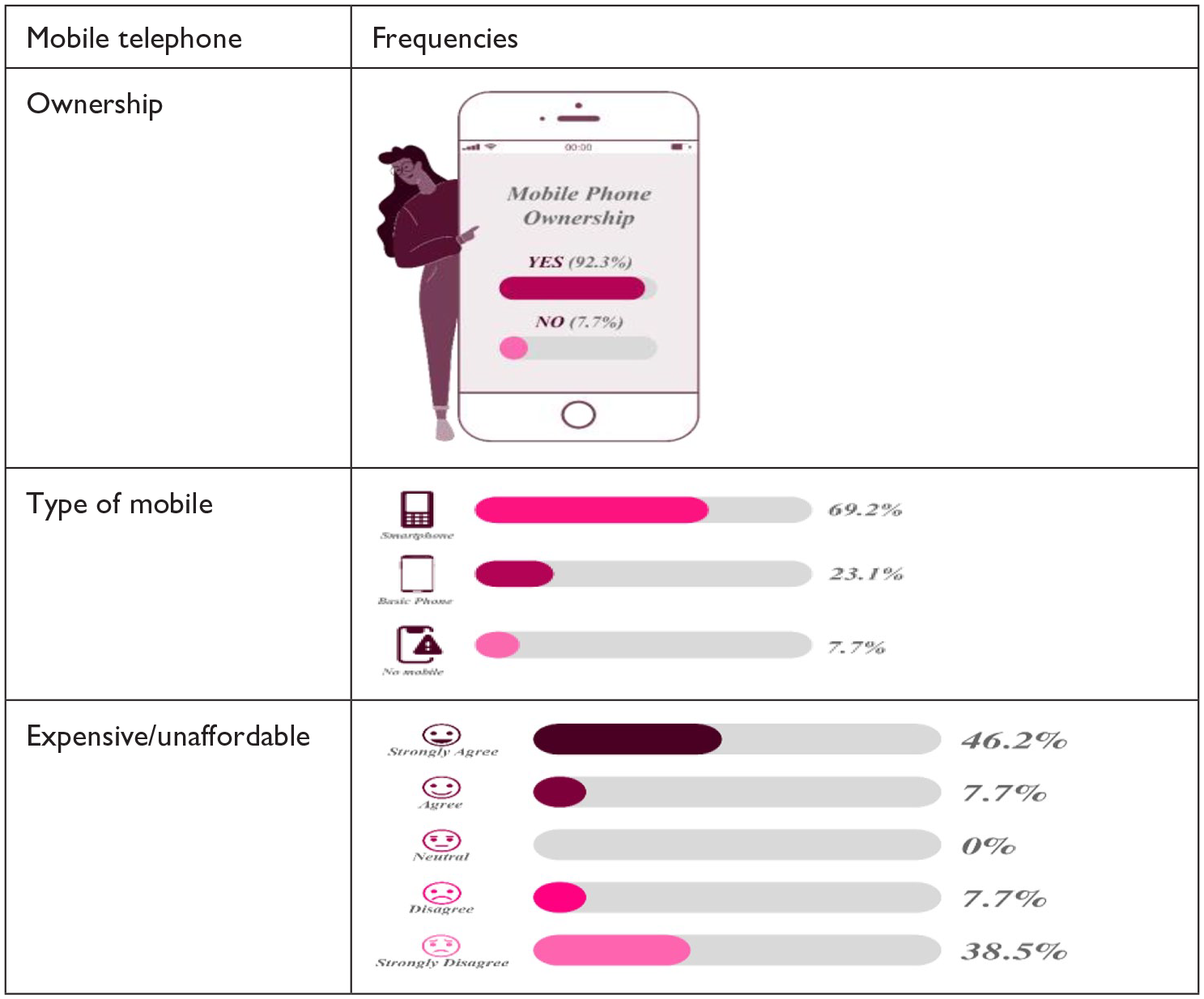
Mobile phone ownership among the participants.
One respondent stated that “during the COVID lockdown, my husband purchased a smartphone to facilitate the attendance of my children’s online classes. Though the purpose is the education of children, I started using Facebook and WhatsApp as I have a smartphone now.”
Two of the participants in the study acquired a smartphone as it was required for their children’s academic purposes, especially online classes during the COVID-19 lockdown. They started using it in their leisure time to access social media and other information. But they restricted their usage because of the cost of internet packages.
Every single one of the participants stayed away from accessing OTT (over-the-top) media service content. The reasons cited were the cost of the subscription to OTT platforms. There were still issues with the affordability of smartphones and internet packages among women. There were mixed opinions about the affordability of smartphones and internet connectivity, as more than half of the participants felt that the technology was expensive and unaffordable.
Acceptability of Smart Phones and the Ability of Women to Harness Social Media’s Communicative, Associative, and Informational Power
The participants in the study displayed a positive attitude toward mobile technology. All the women who shared their experiences believed that smartphones are for everyone, and education need not be a barrier to accessing this technology. Majority of women believed that smartphones were safe for women and that they could not lead to crime. Majority of the female participants’ exhibit acceptance of mobile technology in their lives (see Figure 3).

Acceptability of mobile phone usage among the participants.
Mobile phones are extensively used by women to network with family and friends and to access essential services. As one respondent stated, I use my smartphone for communicating with my friends and family members spread across the city. I also use it for essential services like booking LPG cylinders, ration shop transactions, and for banking purposes.
One respondent stated that her smartphone is an integral part of her life.
“Without the help of a smartphone, I will not be able to do my work. My life’s work is nothing without a smartphone.”
Apart from networking and accessing essential services, women also exhibited their abilities to use them for acquiring new skills and seeking employment.
I use YouTube for videos on jewelry design tutorials. It helps me in my creative process and in making innovative designs based on the information I derive from the videos. I am passionate about jewelry making and earn a profit from selling artificial jewelry.
Downloading employment-related applications and keeping a tab on job vacancies are apt examples of the ability of women to seek employment and their desire for economic independence through technology.
“I use a smartphone to search jobs online through the Naukri (employment) application. This application made it easier to search for a job opening according to my preferences. This smartphone technology has made my life easier.”
Social Media Account Ownership Among Women
Around 10 (76.9%) participants were active on “WhatsApp” and used it to network and share personal photos and videos with their family members and relatives. The women shared with the researchers that smartphone technology has helped them connect with their family and friends who live in the city (see Figure 4). Although resettlement has separated them from their families and friends, technology has helped them stay updated about the happenings in the lives of friends and families and has also helped them to constantly keep in touch with the events in their previous neighborhood. Only six (46.2%) of the respondents have their own “Facebook” accounts. It indicates that women have some barriers in creating their FB accounts.

Ownership of Social media accounts.
Structural and Socio-Cultural Factors That Restrict Social Media Usage by Women
Despite the numerous opportunities for personal and professional engagement that social media offers, women face restrictions in using social media applications due to the prevailing perception that mobile phones can potentially facilitate digital harassment against them (see Figure 5). Denial of permission to hold a social media account and control of social media accounts by male members of the family were reported by many women.
“I don’t have a Facebook account as my parents’ refused permission. But I have an Instagram account, though I am not allowed to post personal pictures on my Instagram page.” “My husband had laid restrictions on the usage of social media. He has control over my smartphone. He checks my phone and keeps tab on the messages and apps installed in it. I use WhatsApp only for my children’s education.”
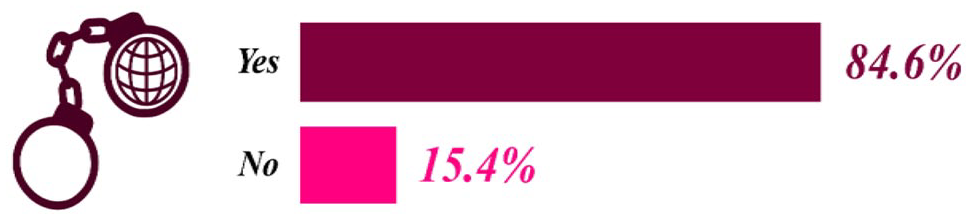
Social media usage restrictions among the participants.
The majority of the women (84.6%) face restrictions in the usage of social media, and only two (15.4%) of the women did not face any restrictions from their family members. But a participant stated that “I don’t have any restrictions on using mobile phones, but the social media account I use is in my husband’s name.”
Another participant admitted that even though she does not have restrictions, she needs permission.
My husband did not allow me to open a social media account at first. After attending the workshop, I explained the pros and cons of using social media, and then he permitted me to set up an account. Even then, I prefer to get prior permission from my husband for posting family pictures on my social media account.
There were also participants who stated they practiced self-restraint.
I don’t have any restrictions from my family members on using social media. I have restricted myself from using social media because of the security risks involved in sharing personal information.
Another participant shared, “I used to make videos for Tik Tok but never posted them online, but instead used them purely for personal sharing in WhatsApp with friends and family.”
The researchers found that women have various forms of restrictions from family members on accessing social media. They seek permission from male members of the family to post pictures on their FB accounts. There were also some respondents who restricted themselves from using social media due to safety and security concerns about cybercrimes involving women. The researchers found that a few respondents have used their smartphones for filming Tik Tok videos, but they have not posted them for public access. The use of mobile technology helped them identify their children’s talents and potential, such as dancing, singing, acting, and so on.
Agency: Technology Adoption and Innovations in Various Capacities by Women
The participants were innovators in using mobile technology in their everyday lives. The participants have harnessed the potential of mobile technology in various capacities, and the following quotes provide testimonials of their experiences. These quotes can be read as interactions between gender and mobile technology in resettlement.
Quote 1:
After this workshop, I have developed the habit of recording the crimes happening in my neighborhood as evidence for law and order purposes. Though I haven’t lodged any legal complaints until now, I have the recording on my smartphone to help the people in my neighborhood if the situation demands it.
Quote 2:
I am able to teach other women in my locality to use mobile phones to click photos and record videos. I am using this tool for both personal and community purposes, like raising complaints. For instance, if the drainage is leaking in my block, I can record a video and share the same through WhatsApp with the authorities concerned for immediate action.
Quote 3:
Smartphones and social networking sites have changed my life. It has helped me personally and professionally. I use social media (Facebook) to support my husband’s fast-food center. By posting videos of the fast-food center, I bring in more customers to the food center.
Quote 4:
With the help of social media (Facebook), I was able to nurse my mother into regaining consciousness. Until then, she had suffered from memory loss from a fatal accident. Doctors have advised us to habitually communicate with her about various events that have happened in the past. I used my Facebook page feeds to trigger her memories by showing the profile pictures of my relatives and quizzing her on the same. This technique helped her make a speedy recovery. The doctors were surprised by the results and appreciated me for coming up with this creative solution.
The capability approach put forth by Amartya Sen addresses evaluation in terms of “differences in individuals’ abilities to convert the same resources into valuable functioning” (Wells, 2021). It is not mere possession and ability to utilize technology, which are important in capability approach evaluation, but whether they allow a person to work productively (Van der Klink et al., 2016; Loh & Chib, 2018). The female participants in our study understood the necessity and advantages of adapting to new technologies. They also exhibited freedom of choice, individual heterogeneity, and the capability to learn and use new technologies for their social and economic needs.
Discussion
The participants held strong positive attitude toward the adoption of technology and possessed a strong belief that mobile technology enables development. Women use social media tools specifically to create social networks to build on the lost social capital due to resettlement; leadership roles in terms of solving civic issues are also taken up by the women who engage the community through WhatsApp and FB pages.
Mobile technology does have the potential to empower women to achieve a sense of self-worth. Knowledge of mobile technology with skills such as usage of cameras in mobile phones, social media account creation, presence, and networking through social media provides a sense of self-efficacy for women. When access is provided to women, they tend to innovate their usage and also help other women with access and participation in digital networking platforms. Women can be seen as innovators in adopting technologies in their everyday lives; there were examples of a woman posting videos of their fast-food joint to increase customers; another woman narrated the way she used family photographs from her FB account to help her mother recover from memory loss due to a road accident; and the women also used social media to individually acquire new skills for tailoring and handicraft business.
There is conscientization among participants in the workshop toward the benefits of using mobile technology, as many convinced their family members and other women in their neighborhood about the need for women to be present on social networking sites. Some of the participants involved in the workshop stated that there were restrictions, especially from male members of the family. The husbands in the case of married women and the fathers or brothers in the case of unmarried women had control over their smartphones. Women needed permission to post photographs or even access social media. Many participants stated that their husbands checked their social media accounts and WhatsApp messages regularly. Some women use their husband’s FB profiles and are not allowed to create their own accounts. As per the 2015 GSMA report entitled “Accelerating Digital Literacy,” it has been observed that there exists a degree of apprehension toward social media platforms such as FB and WhatsApp in the urban regions of India. This skepticism has often led to discouragement from family members for women to utilize these applications. The underlying concerns stem from the potential risk of inadvertent interactions with unknown males and the associated fear that their photographs could be disclosed inappropriately or manipulated (GSMA, 2015). In the case of Perumbakkam resettlement, technology is feared by male members when it comes to women having a personal account, as they “do not want their women to be vulnerable to cybercrimes.” The social norms are so rigid in these neighborhoods that female victims of abuse are often stigmatized by the community. The recent spate of cybercrime involving the morphing of women’s photographs from social media accounts and sex rackets in the state of Tamil Nadu through online dating has induced fear among both female participants and their male family members. Men have imposed restrictions and constantly monitor their women family members’ online activities. In the case of unmarried women, the norms are stricter. This is a common practice across the country where girls are barred from using phones, citing reputational concerns such as the fact that girls’ use of phones leads to promiscuity and a threat to the family name; thus, the social costs of violating purity norms fall almost exclusively on the girl (Pande & Schaner, 2017).
The COVID-19 lockdown enabled women to access smartphones, as these smartphones were bought for online classes for children. The women got possession of the smartphones, and after the online classes of their children, they were able to use the smartphones for personal purposes. None of the women participants have used mobile technology for e-commerce or business development purposes; however, there is an interest among women in developing themselves economically using digital technology. Although the acquisition of skills using social media platforms such as YouTube was reported by the women, they lacked the knowledge and skills to scale up their businesses to suit online platforms.
Conclusion
The uncertainties emerging from the process of displacement are at peak during the immediate period after relocation. This period requires a collective, or a greater, presence of agencies to facilitate community building (Vyas, 2012). Situating the issue of resettlement in the socio-economic context, the losses the people suffer when moved from an inner city informal settlement to large-scale resettlement sites on the outskirts of the city are humongous. Singh and Khosla (2014) state that apart from the loss of physical assets, displacement results in the permanent loss of an informal settlement’s entire social fabric, which includes social assets, cultural activities, rituals, and routines, along with their habitat. This breakdown of social network is traumatic and disrupts the lives and livelihoods of the entire community. Another important factor in the resettlement of the urban poor is the shift from one economic zone to a totally new economic zone. The resettlement of people from an inner city slum to the Perumbakkam resettlement site, which is situated on the IT corridor of Chennai, involves changes in economic activities as well as social arrangements. The organizational set-up of slums is that of an informal economic zone where the predominant mode of communication is word of mouth, supported by well-knit social networks and access to resources. Whereas the Information Technology corridor where the Perumbakkam resettlement site is situated falls under a formalized digital economy zone (Bosco & Van Eerd, 2023) where the mode of communication is predominantly on digital platforms. There is a need for resettled women to quickly integrate into the digital economy, and social media can be viewed as an enabling tool in the process of social, economic, as well as geographical inclusion of the urban poor resettled women.
Janaki (2018) reveals that those who are digitally active are more empowered socially, psychologically, and intellectually than others. In her study, she reports that ICT as a tool has increased the sense of self-worth and led to more social activism by women. In their research, Gurumurthy and Chami (2014) have noted that technology can increase women’s informational power, boost communicative power, and enhance their associational power. The employment of mobile phones by female micro-entrepreneurs can result in substantial economic and social advantages, including income augmentation, job creation, and bolstering household resilience. Nonetheless, it has been observed that in low- to middle-income nations, female micro-entrepreneurs are less inclined than their male counterparts to exploit mobile technology for their enterprises or even recognize the potential benefits it could confer (GSMA, 2023). A research conducted among women residing in a resettlement site in Chennai revealed that the utilization of certain ICT features, albeit by a small proportion of women, has been demonstrated to enhance their social and financial capital. This has resulted in their increased participation within organizations, augmented support from neighbors and the community at large, improved skill sets, superior employment opportunities and an escalation in income. However, it was observed that women generally have not yet harnessed the full potential of their mobile phones (Almira & Van Eerd, 2021).
The researchers found that the adoption of mobile technology among resettled women has a positive impact. Individuals at the lower end of the social hierarchy, who are constrained by various limitations, are in greater need of fostering innovation. Women in the resettlement site have been innovators in adopting and utilizing new technologies in beneficial ways. From filming crimes in the neighborhood to starting community social media pages for presenting positive stories to rehabilitating patients, the women have experimented with the technology. There is conscientization and realization that technology can benefit their lives to a sizable extent, and the women showed eagerness to learn more about the usage of technology to improve their lives, especially economically. However, there is a great need to counter the socio-cultural patriarchal norms that act as barriers to women accessing technology. The communicative, associative, and informational power of technology can be fully harnessed by women, but structural barriers, especially patriarchal gender norms, prevent women from realizing the full potential of mobile technology.
The Government of India is striving toward a digitally inclusive citizenry through various projects under Digital India initiatives, yet information on these schemes is yet to reach beneficiaries like urban poor women. There is tremendous scope and need to enable women in resettlement sites with regards to mobile technology to help them reap the benefits of digital platforms to improve and empower their lives. Although this study was an experiment to understand the adoption and acceptability of mobile technology and usage of social media among urban poor women, the researchers strongly opine that there is a tremendous need to envision and implement projects to provide adequate training to women in resettlement to help them cope with the disconnect and exclusion resulted by the process of resettlement. Mobile technology can be used as a potential tool to help these women rebuild their lives in resettlement, as it provides them with the much-needed access pipelines to various needs to improve their capabilities and empower themselves.
Footnotes
Declaration of Conflicting Interests
The author(s) declared no potential conflicts of interest with respect to the research, authorship, and/or publication of this article.
Funding
The author(s) disclosed receipt of the following financial support for the research, authorship, and/or publication of this article: This research is funded by the Ministry of Education, Government of India under the SPARC (Scheme for Promotion of Academic and Research Collaboration) project titled “Communication for Development (C4D): Interventions in Resettlement to Improve Livelihood Outcomes for Poor Women” and DAIDA Foundation, Netherlands.
