




Abstract
Spreading issue awareness about increasingly interdisciplinary scientific discoveries faces progressively larger communication challenges due to the complexity, innovation pace, and broad applicability of these innovations. Traditionally, the public relies on legacy media for information and discussion of science topics. In face of a changing information landscape, however, legacy media struggle with decreasing funding for their science desks, and science journalists turn to more specialized outlets, often online. Given these developments, it is important to understand which platforms besides legacy media serve as facilitators of science issue awareness. In this study, we analyzed the impact of social media on the awareness of gene editing. We used a representative survey administered by professional survey firm YouGov between December 2016 and January 2017, yielding a final sample of 1,600 US adults with a 41.7% response rate. The regression analysis findings suggest that social media is a significant avenue through which awareness of gene editing, and subsequently other scientific issues, is spread. Using the example of Facebook, we were able to demonstrate that how, rather than if, one uses social media is the determining factor in spreading issue awareness. Awareness was positively predicted by the length of social media sessions and network heterogeneity, while pure amount of sessions actually negatively predicted awareness. Legacy media remain an important predictor of gene editing awareness. These results demonstrate that social media functions as an important information space for science issues and should receive individual attention along with legacy media outlets when examining science communication.
Recent years have been marked by a decline of traditional science journalism as a source of science news for the public (Xenos, 2017) and a concurrent shift to online platforms as a supplement and substitute of traditional science news (Anderson et al., 2010; Brossard & Scheufele, 2013). Among those online platforms, social media such as Twitter, Facebook, and YouTube functions as information providers (Brossard, 2013) and discussion grounds for issues such as climate change (Jang & Hart, 2015) and vaccination (Dunn et al., 2015). Science news ranks third in surveys asking Americans about their interest in specific news topics, which is below local and political news, but ahead of topics like business and sports (Funk et al., 2017). Furthermore, Americans are interested not only in, and hold opinions on, science issues that receive more traditional media coverage such as climate change (Pew Research Center, 2015a) but also in more niche issues such as human gene editing (Pew Research Center, 2015a; Scheufele et al., 2017).
In this changing news environment, the question of where Americans become aware of science issues is important, as awareness plays a role in attitude and behavior formation in general (Sweldens et al., 2014), as well as for science issues more specifically (Owens & Driffill, 2008). Awareness is also an important marker for the scientific community that often signals when to engage in debate with the public about research (Nerlich & McLeod, 2016). Understanding how the public seeks information and becomes aware about science might allow researchers to better understand how new technological and scientific developments might be interpreted and how the public forms attitudes about such issues (Yeo et al., 2015).
This is specifically important for emerging technologies, which are fast-growing and novel in their practical applications (though not necessarily in origins), with prominent impacts once realized. As these technologies become more applicable, they rise to prominence, which can introduce uncertainty and ambiguity. Public awareness and subsequent deliberation may shape public opinion about such technologies, which can in turn impact support or opposition for research and funding (Huber et al., 2019), as well as political decisions about regulations governing research and applications, and who should enforce them (Scheufele, 2013, 2014; Yeo et al., 2015).
Individuals typically do not learn about scientific issues directly from scientists, but indirectly via mass or online media in stories covering the results or implications of scientific research (Scheufele, 2014). These mediated spaces facilitate filtering and interpretation of an enormous amount of information by presenting pre-selected news, either from traditional news organizations or from members of social media networks, and serve as an exchange platform for scientists, the media, and the public (Scheufele, 2014). Since emerging technologies and the information environment move fast, the general decline in science journalism within legacy media outlets compounds the perennial struggle to keep pace. In addition, more complex issues are often more difficult to cover, thus finding even less representation on public agendas (Xenos, 2017). So if coverage of science issues in traditional journalism is decreasing, what could be a new avenue for information dissemination and issue guidance (Xenos, 2017)?
This article examines whether social media in general, and specifically Facebook, serves as a space in which individuals become aware of the emerging technology surrounding gene editing. Gene editing is an archetypical example of an emerging technology in several ways. First, it is an example of the Nano-Bio-Info-Cogno (NBIC) convergence, which describes an increasingly interdisciplinary approach to scientific issues, which intensifies the complexity, pace of innovation, and applicability of scientific research, thereby reinforcing existing challenges in the communication of such research between scientists and the broader public (Scheufele, 2014). Second, its applications have potentially far-reaching consequences for society and communal life. Its practical applications, such as using the CRISPR-Cas9 system to edit genomes in human embryos to eliminate the risk of developing certain hereditary diseases (Hsu et al., 2014), are novel and constantly developing, despite ethical debates regarding such applications of genetic science ranging back to the 1970s (Berg et al., 1975). Third, it receives notable surface-level attention in the media and popular culture, compared to other science issues. Thus, gene editing is representative of emerging science issues more broadly, as we understand them to date.
At the Intersection of Science and Politics
While surveys suggest that most American social media users report seeing science-related posts in their feeds (Funk et al., 2017), little research has examined whether social media contributes to specific issue awareness. In the context of political issue awareness, spread via social media is more documented. “Netroots” (portmanteau from Internet and grassroots) political organizations, which consist of online political activists, use blogs, wikis, and social media to promote their causes and policy information and to organize supporters (Karpf, 2012). In other instances, social media has been found to facilitate issue awareness and lateral message exchange, leading to connective political action (Bennett & Segerberg, 2012; Boulianne, 2016; Reuter & Szakonyi, 2015; Shirky, 2011). Science issues, such as climate change, and associated matters of funding and regulation (Huber et al., 2019) have increased in relevance in election campaigns (McKinnon et al., 2016), and scientific advancements from nuclear technology to genetic engineering have increasing direct implications for individuals and the public (Scheufele, 2014). These legal, ethical, moral, and sociopolitical implications make science issues political issues (Scheufele, 2014) and as such prompt the examination of the political communication literature for insights regarding how social media facilitates issue awareness.
Why Social Media Might Matter
The literature suggests that social media might very well function as one of the “mediated realities” put forward by Scheufele (2014), where members of the public become aware of scientific issues and their larger societal implications. Traditionally, scientists are driven to the media to reach larger audiences to communicate their findings and garner public support and funding (Weingart, 1998). Yet, the media are not just important for scientists to communicate the impact and importance of their work, but the media in turn rely on certain scientists to make science topics more accessible and newsworthy, effectively creating a “mediated reality” between scientists, the media, and the public (Nisbet et al., 2003; Nisbet & Huge, 2006; Peters et al., 2008; Scheufele, 2014).
Increasingly, scientists and institutions rely on social media to interact with individuals, whereby they specifically engage via Twitter, Facebook, LinkedIn, or blogs, whereas platforms such as Reddit or Instagram are less popular (Collins et al., 2016; Darling et al., 2013; Liang et al., 2014; Peters et al., 2014). Secondary engagement is believed to occur via sites such as Wikipedia, which reference academic journals (Teplitskiy et al., 2017) and are used for direct information seeking (Calabrese et al., 2019). Furthermore, Americans increasingly turn to social media, such as Twitter, Facebook, and YouTube, for science news (Brossard, 2013) and tend to share links to science and research on Facebook (Hargittai et al., 2018). Public trust in science, for example, has been shown to be related to social media news use (Huber et al., 2019). This suggests that social media could indeed function as a mediated space in which individuals become aware of science topics. In addition, while previous studies find multiple social media platforms to play a role, Facebook appears to be particularly important. Indeed, Facebook-primary (i.e., Facebook-only) and multiplatform science-related pages are relatively abundant and have sizable followings, with users of such pages often reporting seeing science news they would not have seen elsewhere (Hitlin & Olmstead, 2018). This is reinforced by the fact that despite the growing importance of other social media platforms, Facebook remains the platform with the most active users at 2.4 billion (Clement, 2019).
Therefore, this study gauges relationships between social media use, and Facebook use specifically, with awareness of issues surrounding human gene editing. In doing so, we draw on research suggesting that specific affordances and scenarios of social media use could play a critical role in the science communication effects of social media (Huber et al., 2019). The exploration of the wide range of online formats and platforms used for science communication is young (Davies & Hara, 2017); thus, to date, no studies have assessed content about gene editing on Facebook, while Twitter has been found to be a discussion ground for the issue (Calabrese et al., 2019). Since Twitter and Facebook are the most popular platforms among scientists, as well as the public, one might expect them to be related, so anticipating gene editing content to be found on Facebook as well. This would also fit with the conceptualization of social media as platforms which have distinct features, but are positively related to each other (Kietzmann et al., 2012; Ngai et al., 2015). Generally, it is believed that the more individuals use social media, even if just to communicate and connect, the more likely they are to encounter news (Huber et al., 2019).
Most of the political learning effects of traditional media are believed to be grounded in its habitual and ritualistic use patterns (Shehata et al., 2015), which inevitably expose consumers to hard news and information, due to technological and market pressures that make it impossible to always specifically cater information to the consumers’ exact preferences (Prior, 2007). This dynamic of hard political knowledge getting mixed in with, or occurring right in the proximity of, softer, more entertaining content is referred to as a “gateway” effect (Baum, 2003, 2011) and has had measurable impact on political knowledge gain specifically for those with low prior knowledge (Baum, 2003; Feldman & Young, 2008; Shehata et al., 2015; Xenos & Becker, 2009). In terms of science issues, habitual media use cultivates perceptions about science and the scientific process (Gerbner, 1987; Nisbet et al., 2002).
For the most part, the basic patterns governing the dynamics of television consumption are not too different from those influencing social media use. Like TV, social media use is also highly habitual and ritualistic (Xenos & Lee, 2017). In addition, social media is characterized by a partial-choice environment that allows for filtering and targeted searching and exchanging of information and also fosters connections to others for information not related to hard information inquiries (Bode, 2016). Since those online networks tend to mirror offline networks, they also tend to be similarly diverse and consist of close and loose social ties, which are not necessarily completely congruent with users’ personal interests or preferences for information. As a result, relatively diverse informational content may be expected (Boyd & Ellison, 2007; Ellison et al., 2007; Goel et al., 2010). Therefore, one might expect social media to foster incidental exposure to scientific issues, thus increasing awareness of scientific findings among the public (Xenos & Lee, 2017).
Incidental Exposure and Feed Diversity
The political communication literature on learning and behavior effects of incidental exposure of users to information on the Internet is rooted in the work by Tewksbury et al. (2001). On platforms that aggregated news, entertainment, and online services such as search and email, users were incidentally exposed to information that increased current event knowledge (Tewksbury et al., 2001). These characteristics appear strikingly similar in their basic functions to more contemporary social media environments.
Generally, social media users are expected to be more aware of science topics, as they have a higher chance of incidentally encountering science news in addition to active news seeking, which both positively relate to news content engagement (Oeldorf-Hirsch, 2018). This is due to the fact that social media in general (Barnidge, 2015; Kim et al., 2013), and Facebook more specifically (Bakshy et al., 2015), diversifies and expands information networks.
The potential of social media for knowledge and information diffusion is rather well documented in the political communication literature. Baumgartner and Morris (2010) did a notable exploration of the potential of social networking websites, taking up Baum’s (2003) and Baum and Jamison’s (2006) considerations regarding the incidental exposure potential of “soft news,” finding that social media sites share several soft news aspects. They concluded that the affordances of social networking sites as news sources were well recognized by their subjects, who reported getting some of their news from such sites (Baumgartner & Morris, 2010). However, the potential of these platforms for incidental learning depends largely on the amount of people in an individual’s network who are interested in politics (Baumgartner & Morris, 2010). Crossover of such information can only be hoped for if network nodes with according interests are present. It follows that an increasingly diversified news feed, stemming from a diverse network, should enhance the chances of such information exposure.
Bode (2016) shares the view of social media’s potential for incidental exposure as a function of network diversity, allowing a hybridity between selective and incidental exposure. She further finds that social media disseminates knowledge passively, due to its incidental and low-barrier nature, enhancing the potential of long-lasting and more diverse learning gains (Bode, 2016; Krugman & Hartley, 1970).
Hermida et al. (2012) found that subjects use social media as a significant news source and that subjects who incorporate social media in their news consumption are more likely to have a diverse news diet than those who do not. In a similar vein, Fletcher and Nielsen (2017) found that the different reasons for using social media, coupled with limited control of the information environment on these platforms, lead to incidental exposure for subjects who browsed Facebook, Twitter, or YouTube for reasons other than news use. The forms of exposure vary between seeing others’ discussions of firsthand news information or viewing links to external news sources or news publishers directly uploading to the platform. They find that specifically for users with a low information seeking motivation, who frequent a limited amount of news sources on a regular basis, social media has the capability of countering selective exposure effects and increasing incidental exposure (Fletcher & Nielsen, 2017). Although Twitter and YouTube indicated even stronger incidental exposure effects, this is explained by the fact that users motivated by information seeking frequent these platforms more dominantly, fostering a richer information environment characterized by a user base with a stronger news preference, versus Facebook where the main use motivation is relationship forming and maintaining (Kim & Lee, 2016). Nonetheless, from a network quality standpoint, Facebook features symmetrical relationships, offline ties, social cues, direct messaging, commenting and wall posts, as well as less filtered information (Kim & Lee, 2016). These features enhance information flow (Halpern & Gibbs, 2013) and prompt more deliberative and direct communication, which are associated with better communication of information, as compared to Twitter (Oz et al., 2018; Stroud et al., 2014).
More recently, Lee and Kim (2017) found evidence suggesting that information learned from social media via incidental exposure to news is a strong predictor of recognizing and recalling information, given that the individual interacts further with the news exposed to, concluding that incidental exposure on social media initiates gateway effects. Furthermore, they determine that the likelihood of incidental exposure is significantly predicted by network heterogeneity and the number of weak ties, rather than individual predictors (Lee & Kim, 2017). Again, the literature suggests that a more diverse social media feed has the potential to accumulate information that the individual might not be directly searching for, but nonetheless might find interesting and worth engaging with.
Xenos and Lee (2017) built further upon these notions of social media as a partial-choice environment, in which individuals are exposed to a variety of information and opinions, allowing social media to unfold its incidental exposure and gateway effect potential (Bode, 2016; Fletcher & Nielsen, 2017; Kim & Lee, 2016; Lee & Kim, 2017). They suggest that due to the rather diverse nature of individuals’ online social networks (see Boyd & Ellison, 2007; Ellison et al., 2007; Goel et al., 2010), even users who attempt to use social media for a specific purpose, such as “news versus entertainment” or “partisan selective exposure,” will sooner or later encounter incidental information if a node in their network displays interest in such content, with the latter being a reasonable assumption (Xenos & Lee, 2017). Indeed, when testing these assumptions with a representative sample of US adults, Xenos and Lee (2017) found that individuals reporting a high amount of diversity in terms of political interests and outlooks among the network members appearing in their news feed tend to acquire more political information than those with more homogeneous feeds (pp. 20–21). While there is some evidence that those with low political knowledge gain information from social media via a gateway effect, this gateway effect is amplified for low-interest users by a high feed diversity (Xenos & Lee, 2017). They conclude that as long as social media networks are composed based on a variety of selection factors and use patterns are governed by habitual and ritualistic social media exposure, incidental exposure to information can be expected to take place.
In summary, the composition of news feeds and generally the type of information that is available to one in social media networks depends largely on the content that other members of that network post and share, as well as whether one decides to maintain those individuals as part of one’s network and to which degree one allows their content to populate one’s own network (Bode, 2016; Thorson & Wells, 2015). The literature pertaining to incidental exposure on social media makes a strong suggestion that it is not possible to perfectly curate a highly selective news feed, and thus incidental exposure will eventually take place, given adequate diversity of one’s online social network. It follows, then, that social media and the diversity of one’s social media networks might play an important role in generating awareness about issues pertaining to gene editing technologies and scientific discoveries, as well as political debate, concerning gene editing.
Science News and Individual Information Seeking Behavior
We know that scientific issues have become increasingly politicized because of their growing complexity and the potential for scientific discoveries to have significant impacts on individuals and the societies in which they live (Brossard & Scheufele, 2013; Scheufele, 2013). As a result, public opinion and policy decisions are dependent on various actors and require a properly informed public that can effectively interpret the multifaceted information (Fletcher & Nielsen, 2017; Scheufele, 2013, 2014). Earlier, social media was outlined as a potential platform for science to enter this public discourse and for individuals to participate and become informed about science issues.
A few considerations must be made when examining whether social media might contribute to increasing awareness of discoveries and advances related to gene editing. As mentioned above, most scientific issues are not yet clearly defined along partisan lines and political parties are not readily identified in science-related media articles (Yeo et al., 2015). Instead, think tanks and organizations not clearly defined in the partisan spectrum dominate the media space surrounding scientific issues, and therefore, Yeo et al. (2015) propose to consider ideological, rather than partisan, leanings when examining individual information seeking behavior regarding science information.
Messing and Westwood (2014) showed that the social endorsement aspect of social media networks significantly increases the likelihood that individuals elect to view information that is not necessarily congruent with their attitudes or political leanings. From this and the findings regarding network diversity mentioned above, one might further extrapolate that social media plays a role in increasing awareness about gene editing–related issues.
Yeo et al. (2015) also argue that the complexity of emerging scientific issues and their detachedness from existing partisan paradigms could prompt information seeking behavior focused on guidance to make sense of an issue and arrive at conclusions or judgments. This type of information seeking behavior is grounded in the need to reduce uncertainty (Atkin, 1973), and is dependent on the perceived utility of the information, where increased utility points to increased attention (Freedman, 1965; Sears & Freedman, 1967). Since traditional media might not always provide the information necessary for individuals to contextualize such a complex and uncertain issue as gene editing, social media spaces might serve as arenas to which individuals may turn for supplemental information that provides clearer indications of ideological cues and aids in processing and interpreting relevant information.
Reiterating that the majority of individuals tend to be not overly interested, aware of, or knowledgeable about science issues, especially in emergent fields (Xenos et al., 2011), one might conclude two things. First, that most individuals will not specifically seek science information from specialized outlets which will allow them to enter public discourse on the issue, but instead are more likely to be (inadvertently) exposed to information circulated by the highly informed minority on social media. Second, individuals will engage in guidance information seeking behavior to make sense of an unfamiliar issue, which they have yet to form opinions and attitudes toward (Yeo et al., 2015).
This development might be exacerbated by the fact that traditional news outlets have been forced to cut back their investments in their science journalism departments; furthermore, established and reputable science journalists increasingly turn to blogs and specialized niche outlets online for such information (Dudo et al., 2011; Nature, 2009). These developments might strengthen social media as a platform on which individuals become informed about science matters, either in addition to or at the cost of traditional news outlets.
Furthermore, research on the digital public sphere in more general terms suggests that online media has the potential to increase information availability free of limitations associated with traditional outlets. For example, it can afford to be topic- rather than event-focused, to dive deeper into specific issues, while offering more contextual and background information, and in so doing it can open new avenues for interactive discussion (Cacciatore et al., 2012; Xenos, 2008). In addition, online coverage of science issues differs from that found in traditional outlets (Anderson et al., 2010), and while this does not necessarily suggest that social media plays an increased role in spreading information about gene editing, it does suggest that social media is worth examining, due to its potential impacts on awareness and potential subsequent attitude formation.
Hypotheses
Based on the literature review, three hypotheses were devised. Given that social media use will eventually lead to science news exposure, whether intended or incidental (Huber et al., 2019), we expect the following:
H1. Social media use is significantly and positively related to gene editing awareness.
Platform differences and qualities, as well as structures of use, play a role in science news exposure (Huber et al., 2019). Facebook is linked to incidental exposure (Bode, 2016). Furthermore, Facebook features science-related pages (Hitlin & Olmstead, 2018) and more diverse, yet symmetrical, networks, which facilitate less filtered and more deliberate and direct communication and social endorsements, which further facilitate information communication (Halpern & Gibbs, 2013; Kim & Lee, 2016; Stroud et al., 2014); hence,
H2: Facebook use will significantly and positively be related to gene editing awareness.
Finally, since the likelihood of incidental exposure is significantly predicted by network heterogeneity and number of weak ties, rather than individual predictors (Lee & Kim, 2017), our final hypothesis is as follows:
H3. As Facebook network heterogeneity increases, awareness of gene editing increases.
Method
Data
The data (N = 1,600) were collected via a survey conducted by the professional survey firm YouGov and administered in December 2016 and January 2017. The response rate was 41.7% (Callegaro & DiSogra, 2008). Representativeness across sociodemographic strata was ensured by matching respondents to sampling frames on gender, age, race, education, political ideology, party identification, and political interest. A wide array of information was collected, including demographics, political ideology, social media use, risk perceptions, knowledge regarding gene editing, and attitudes toward different major types of human gene editing scenarios.
A subset of relevant variables was created from the original data set. This subset contains variables pertaining to the dependent variable gene editing awareness, as well as independent variables regarding news and media use, social media use, social media network diversity, and more traditional predictors, such as age, education, and political ideology. A detailed overview of the variables used for this study and their descriptive statistics can be found in Table 1 in Appendix.
Criterion Variable
Gene editing awareness (M = 2.04, SD = 0.91) was computed from two questions pertaining to awareness of recent developments in gene editing research and regulation, with answers ranging from not at all (1) to a great deal (5). Specifically, respondents were asked how aware they were of two different news stories pertaining to gene editing: (1) the regulation of human trials for gene editing, and (2) using genetic material from more than two parents to create a baby through mitochondrial replacement techniques. The components of the new variable showed good reliability with α = .84.
Independent Variables
Frequency of social media use was a composite measure based on reported use of blogs, Instagram, LinkedIn, Reddit, Snapchat, Twitter, Wikipedia, and YouTube, derived from the same battery as frequency of Facebook use, with reliability α = .79. These platforms were mentioned in the literature on science communication and social media as regularly used by scientists and/or the public. The measure is intended to be more differentiated than those that use the generic term “social media” and allows for specific testing for platform differences (Huber et al., 2019). The measures were combined to create the broader construct of social media, characterized by platforms with distinct features but interrelated core elements (Kietzmann et al., 2012; Ngai et al., 2015). Use of one platform is likely to positively predict use of another, and as use increases, the higher the likelihood of sharing or encountering science information. Indeed, all platforms show significant, positive correlations with each other. Thus, the measure should allow us to tap the underlying orientation toward social media. We decided to use our general social media use measure, and not a measure of social media use for science topics, as the former was more precise in regard to the different platforms and frequency of use. Furthermore, in light of an incidental exposure argument, it allows us to capture those who do not recall encountering science information or actively search for it. Since science coverage is often an integral part of general news (e.g., Brantner & Huber, 2013; Elmer et al., 2008) and half of social media users report regularly seeing science posts (Hitlin & Olmstead, 2018; Pew Research Center, 2015b) as well as sharing science-related links (Hargittai et al., 2018), we are quite confident that social media users encounter information about science issues.
Frequency of Facebook use (M = 5.66, SD = 2.96) and frequency of social media use (M = 2.39, SD = 1.55) were both measured on a 7-point scale (1 = once a month to 7 = multiple times per day), with those who answered never or indicated earlier that they do not use any social media recorded as zero (0).
Average time spent on Facebook per day (M = 2.48, SD = 1.78) was assessed on a 6-point scale (1 = less than 10 min a day, 2 = 10–30 min/day, 3 = 31–60 min/day, 4 = 1–2 hr/day, 5 = 2–3 hr/day, 6 = more than 3 hr a day).
Total number of Facebook friends (M = 2.75, SD = 2.53) was measured on a 9-point scale (1 = 100 or less to 9 = more than 1,000). Between Items 1 and 3, the number of friends increased in increments of 50, while between Items 4 and 8, the increments of increase were 100 friends.
Facebook network heterogeneity (M = 4.66, SD = 2.18) was computed from six questions assessing agreement, on a 7-point scale (1 = strongly disagree to 7 = strongly agree), with statements about the respondent’s news feed containing people with different levels of education, varying interests in politics and differing political opinions, people with different political ideologies, people of a wide age range, and from a diverse mix of racial and ethnic groups. The composed new variable also shows good reliability with α = .86 and a unidimensional factor loading. It should be noted that the average includes those respondents who answered “no” to using any type of social media and were thus recorded as zero on the scales.
Science attention/exposure (M = 2.62, SD = 0.80) was composed of nine items, taken from two question batteries. Three questions asked about attention paid to news stories about science and technology, political or ethical implications of emerging technologies (such as gene editing), and new scientific tools and developments (such as CRISPR-Cas9). The items were measured on a 5-point scale (1 = none to 9 = a lot). The remaining six questions constituting the measure asked about how often a variety of news sources (online or offline newspapers, TV, radio, online or offline science magazines, online-only news sites, and online-only science platforms) were used to access news about science and its societal applications, on a 5-point scale (1 = never to 9 = everyday). The science attention/exposure variable shows good reliability with α = .83. We intentionally chose a traditional news media measure with focus on attention and exposure to science news, as this should specifically control for the science information seeking aspect of traditional media. It is noted that this measure is essentially combining an attention and an exposure measure—two concepts that the classic communication effects literature would suggest to keep separate. However, when assessing the items as a separate attention and exposure variable, no significant difference between the two could be detected, and both significantly predict the outcome variable. Furthermore, the variables are significantly correlated at r = .52. The correlation is not so high as to suggest issues of multicollinearity (>0.8 being the rule of thumb), and neither do the Variance Inflation Factor (VIF) values for the attention (1.56) and exposure (1.64) items, which are both well below the rule of thumb cut-off of 10. The correlation is high enough, however, to justify combining the two variables. Since the main focus of the study is on the effects of social media content, namely Facebook, the combined variable is a net benefit to the model. It allows us to wash out effects not related to social media use while freeing up additional degrees of freedom and reducing risks of multicollinearity.
Additional independent variables that were used as controls were gender (1 = female, 0 = male), race (1 = white, 0 = non-White) and income (M = 5.88, SD = 3.24), which was measured using response options ranging from “less than US$10,000/year” (1) to “US$500,000 or more/year” (16). Furthermore, education (M = 3.40, SD = 1.48) was coded from 1 = no HS’ to 6 = postgrad. Political ideology (M = 4.13, SD = 1.68) measured individuals’ self-placement on scales ranging from 1 = very liberal to 7 = very conservative on both social and economic issues. Religiosity (M = 5.77, SD = 3.68) taps respondents’ reported amount of religious guidance in everyday life on a 10-point scale (0 = no guidance to 10 = a great deal of guidance). Number of college science courses (M = 3.79, SD = 5.00) was measured on a scale ranging from 1 to 20+ courses, and the reported mean includes treating those respondents who indicated not having taken any college courses as zero.
Analysis
Missing observations from just a small percentage of cases for a number of covariates can result in a large number of observations with some missing information, and relying only on complete cases is inefficient, as it disregards available information and potential bias (Horton & Kleinman, 2007; Landerman et al., 1997). Researchers thus recommend imputing missing data, if the data meet the necessary requirements. If above 5% but below 40% of the data are missing, data are missing on not just the dependent variable, and data are not missing completely at random (MCAR), multiple imputation techniques are recommended to deal with missing data (Jakobsen et al., 2017). Since our data meet these requirements, we chose to utilize multiple imputation with the predictive mean matching (PMM) method, which tends to preserve the original data distribution quite well (Kleinke, 2017).
To assess issues of missing data, Little’s test for MCAR was conducted, which returned a chi-square value of 2,171.086 with 784 degrees of freedom at p < .001. The alpha level was set at .05, and thus we rejected the null hypothesis that the data are MCAR. Concluding that the data are not MCAR, one may assume that it is missing at random (MAR), allowing for the utilization of Multiple Imputation with PMM. Under listwise deletion of missing data, N was 1,011, with most missing values occurring for the variables number of Facebook friends (371), Facebook network heterogeneity (323), and time spent on Facebook (320). These items were rather specific and not all respondents might have been certain enough to provide an answer or willing to admit to a low number of friends, for example. Either explanation would fit Little’s test result that the data are not MCAR. Since no variable is missing more than 23.2% of data, and no more than 36.8% of cases are incomplete, multiple imputation with PMM remains adequate, as it has been shown to remain rather robust even under 50% missing data (Vink et al., 2014).
Missing values were then imputed via PMM, allowing the analyses to be run with the full data set of 1,600 respondents. Multiple regression analysis was conducted on the first imputed data set.
The variables were entered into the multiple regression in four blocks. The blocks were structured based on assumptions regarding their causal order. The first block thus consists of gender, age, race, and income, as those demographic variables are expected to precede the others. The second block consists of the predisposition variables education, number of science courses taken in college, political ideology, and religiosity. The third block adds the combined science news media attention and exposure variable. The fourth block consists of all relevant social media variables, including the specific Facebook-related measures. It should be noted that the frequency of Facebook use variable, which assesses how often in a day a subject visits Facebook, was part of question battery asking about daily social media check-ins on various platforms. To avoid any risk of confounding variables, the Facebook component was thus removed from the social media battery and assessed as its own variable.
Since not all respondents indicated that they utilize social media, or have taken science courses in college, those respondents who answered no, or don’t know in the case of science courses, were recorded as zero; 13.9% of respondents reported no use of social media.
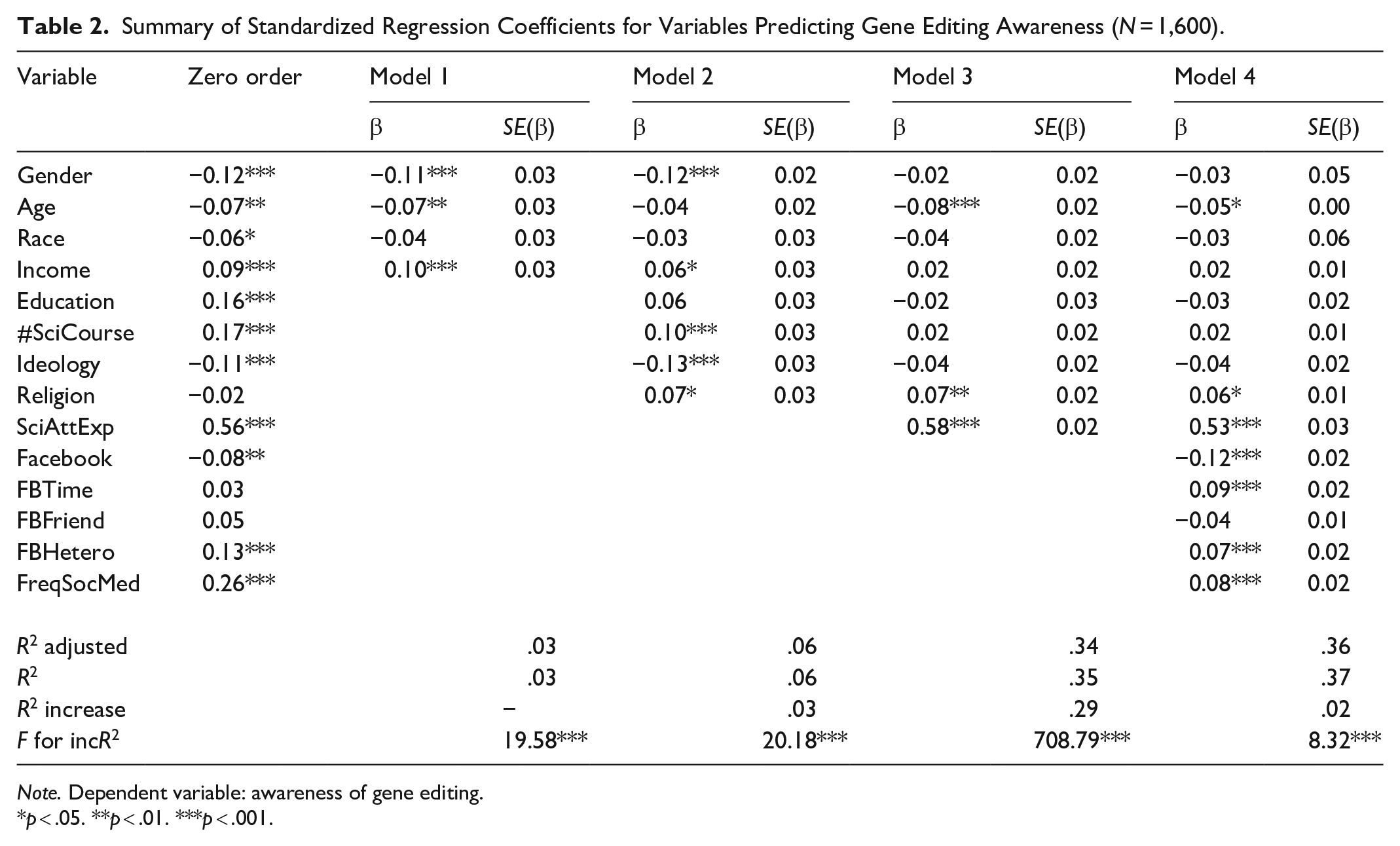
Table 2 in Appendix shows the results of multiple regression, including zero-order correlations of the independent variables with the dependent variable. 1 P values are not reported for these, but significant correlation coefficients are indicated. The “Results” section focuses on the interpretation of significant results only.
To ensure the robustness of the model, we also ran it under listwise deletion (N = 1,011). The model under listwise deletion replicated the results of the model with the imputed data in terms of signs and significance of the various regression coefficients, and the directions of the relationships. 2 Following diagnostic analyses of the model for outliers, influence, error non-normality, non-constant error variance, non-linearity, collinearity, and auto-correlated errors, 3 we concluded that the current model is robust enough to meaningfully model the data, and the data are adequately described by the ordinary least squares (OLS) model.
Results
Perhaps the most striking result is the negative impact of Facebook use (β =−0.12, p < .001) on gene editing awareness. For every increase in frequency on the Facebook use scale, for example, from reporting to use Facebook two to three times a day to reporting to use it daily, respondents tended to register 0.12 SDs lower on the 5-point gene editing awareness scale. Thus, as the frequency of visits or check-ins to Facebook increases, awareness about gene editing–related issues seems to decrease. Furthermore, Facebook use is not only a negative but also the second strongest predictor of gene editing. This finding stands in clear contrast to H2, which postulates that Facebook use would positively predict gene editing awareness. However, before we can fully reject H2, attention needs to be heeded to the results of the other social media variables and the more differentiated Facebook use measures that stand in contrast to the Facebook use measure.
Time spent on Facebook daily (β = 0.09, p < .001), for instance, is a positive predictor of gene editing awareness. As noted earlier, this measure specifically asks about daily time spent on Facebook, and for every increase on the scale (usually between an additional 30 min and an hour), gene editing awareness on average increased 0.9 SDs on the 5-point awareness scale. Thus, time spent on Facebook daily is a reasonably strong positive predictor of gene editing awareness, lending partial support to H2. This partial support is substantiated by the findings for the other more differentiated Facebook measure, Facebook network heterogeneity (β = 0.07, p < .001). Here, every unit increase in the heterogeneity measure is associated with a 0.7 SD increase on the 5-point awareness scale. This finding not only lends support to H3, that network heterogeneity increases awareness, but also offers further partial support to H2, that Facebook use can positively predict awareness.
The most remarkable result, however, remains the discrepancy in the relationships between Facebook use in general and time spent on Facebook daily with the criterion variable. This striking discrepancy might be explained by different forms of Facebook utilization that the two measures indicate respectively. The “Discussion” section provides a more nuanced possible explanation of this counteractive relationship. At this point though, we can rule out issues of multicollinearity that might explain the counter-direction of the two variables, as they are only moderately correlated at r = .55. Furthermore, the VIFs for Facebook use (1.66) and time spent on Facebook (1.63) are well below 10, further supporting this. In addition, the regression analysis includes more differentiated measurements for Facebook use (i.e., time spent, number of friends, and heterogeneity) while also controlling for other variables that might drive awareness (i.e., other social media use and science news attention/exposure), thus suppressing variance that could otherwise be erroneously captured in the Facebook variable causing the negative relationship. In addition, various permutations of regression blocks and variables were run, which consistently resulted in the same pattern of results, further alleviating concerns about multicollinearity.
In fact, the strong positive relationship between frequency of social media use (β = 0.08, p < .001) and gene editing awareness not only offers support for H1 but also offers encouragement to further investigate social media spaces as an avenue of information and awareness dissemination. For every one unit increase on the social media use scale—for example, indicating to use any of the listed platforms once a week, as opposed to two to three times a month—yielded an increase of 0.08 SDs on the 5-point awareness scale. To ensure that there were no issues with the composite frequency of social media use measure, every component of the measure (see variable description above) was run independently in the regression model, substituted one by one, and in doing so we found that all components of the composite behave similarly, as they individually significantly and positively predict gene editing awareness. The multiple regression analysis results indicate that the dependent variable gene editing awareness scales well and is meaningfully predicted by several of the independent variables. This result might seem surprising for variables such as LinkedIn or Wikipedia and suggests that these elements are tapping a spurious variable, such as interest in science or interest in technology. Yet, we are confident that no spurious relationship is present. As mentioned before, these platforms are associated with science communication (Collins et al., 2016; Teplitskiy et al., 2017) and part of the underlying broader construct of social media (Kietzmann et al., 2012; Ngai et al., 2015), which is believed to influence science news exposure (Huber et al., 2019).
Of course, legacy media use remains an important predictor of gene editing awareness, as indicated by the 0.53 SD increase in awareness for every one unit increase in the science news attention/exposure (β = 0.53, p < .001) composite measure, making exposure and attention to legacy news media, either online or offline, the single strongest predictor of gene editing awareness. This is likely due to the circumstance that these items asked specifically about use of media for science news purposes. As mentioned earlier, the rationale for this was to control for directed information searching and to determine what social media, which is more prone to incidental exposure mechanisms, adds to this.
In comparison to legacy media, the small standard deviation changes on the awareness scale for the social media measures might suggest that the practical effects are rather small, though significant at p < .001. They are also moderately but significantly correlated (r = .26) with gene editing awareness. However, these small practical effects are congruent with the fact that most science pages feature soft science news or ads, and that scientists are using social media with a comparatively low frequency (Collins et al., 2016; Hitlin & Olmstead, 2018). Thus, one would expect that exposure to legacy science news would draw out much of the variation in gene editing awareness, with incremental effects for social media and Facebook. Yet, the results suggest that social media and Facebook offer information exposure mechanisms that might function differently and make a significant addition to more traditional outlets, and that the efficiency of those mechanisms might depend on how social media is used and who uses it (i.e., frequency vs duration of use). As the importance and shift of science news to social media grow, the importance of the practical effects of these platforms is expected to grow as well.
Shifting the focus to the remaining independent variables not directly related to social media use, religion (β = 0.06, p < .05) is moderately positively correlated with gene editing awareness, whereas increased age (β =−0.05, p < .001) negatively predicts awareness.
Overall, the final multiple regression model shows that approximately 36% of the variance in gene editing awareness can be explained by the joint contribution of the predictors, as seen in Table 2 (Appendix). The (slightly) changing coefficients as additional variables are added to the model and suggest that the predictors are to some degree correlated.
The results for tests of incremental R2 values indicate that each block of variables increases the R2 values substantially, and that the increases are statistically significant (Table 2, Appendix). The basic demographics explain roughly 3% of the variance in the outcome. Entering education, science courses, ideology, and religion only modestly increased the R2 to about 6%, although the incremental increase is significant, as indicated by the F score for the change in R2. Adding attention/exposure to science news significantly improves the model over and above the previous model, accounting for around 33% of the variance in gene editing awareness. Frequency of social media use makes another significant contribution to the cumulative R2 of about two additional percentage points. Ultimately, the Facebook-related variables lift the R2 for the complete model to approximately 36% as mentioned above.
Discussion
One of this article’s driving questions was how individuals learn about a specific, socially relevant issue on social media, in lieu of traditional legacy media which is declining in scope and focus on such themes. Knowing that science communication shares several characteristics with political communication, such as information and deliberation pertaining to scientific issues occurring on mediated platforms (Scheufele, 2014), an argument was made that due to their low-barrier characteristics and partial-choice environments (Bode, 2016), social media platforms, especially Facebook, foster knowledge gain via information diffusion mechanisms, and that awareness of human gene editing might occur via similar mechanism.
Indeed, the results support the notion that social media and Facebook play a role in increasing awareness of gene editing. This relationship between social media use in general, and specific qualities of Facebook, to reported gene editing awareness suggests that social media platforms might have the ability to facilitate learning and spreading of new information via their unique affordances. While most previous research on how individuals learn about scientific issues in mediated spaces has focused on traditional media outlets, the present findings suggest that the theoretical considerations applicable to the dissemination of political information in online environments also hold true for scientific issues. The results show that traditional news sources are still considerably strongest in their relation to gene editing awareness, but social media certainly does matter. The results display significant, positive relationships between various forms of social media use and awareness of human gene editing.
The above highlighted counteractive finding of Facebook use negatively predicting awareness, whereas time spent on Facebook positively predicts awareness, does not cast doubt on these findings, but instead could offer some explanation as to what type of social media use might make most use of the platforms’ unique affordances: driving awareness via incidental exposure. The discrepancy between these two variables might be explained by the nature of their measurement and the type of Facebook use these measurements indicate. The scale for Facebook use ranged from once a month (1) to multiple times per day (7), making it a rather approximate measure, as it is completely fathomable that a majority of individuals who use Facebook would fall toward the higher end of the scale. The mean (5.66) indicates as much, especially considering it is calculated by including individuals who reported no use of social media coded as zero (0). Furthermore, even quick check-ins or glances at Facebook would place a respondent in the multiple times a day category. Time spent on Facebook, however, asked rather specifically about the amount of time spent on Facebook per day, and here it appears that those individuals who “dig” into Facebook and report spending a considerable amount of time on Facebook are more aware of gene editing news stories. This type of social network behavior would indeed support the notion that more involved and time-intensive use results in a higher chance of exposure to various scientific news topics and discussions. Therefore, one might assume that social media has the potential of raising awareness of science-related issues via mechanisms of incidental exposure, as long as one increases one’s exposure time.
Scientific issues that tap a high amount of subject specificity are often difficult to comprehend and rarely on the broader public agenda (Xenos, 2017). In this case, social media, and Facebook specifically, might have the ability to curate some awareness around even fringe science issues. This is specifically valuable in face of the decline of more traditional science journalism (Xenos, 2017). Of course, this study does not offer any insights regarding the actual quality of the information gained on social networks, raising the question whether from a viewpoint of quality and objectivity social media can adequately fill the gap left in traditional science journalism. Thus far, previous findings suggest that some discussion of gene editing does take place on social media, for example, Twitter, (Calabrese et al., 2019), but also that the quality of science news is often more geared to soft news (Hitlin & Olmstead, 2018).
Some scholars have suggested that social media environments are more egalitarian, which can contribute to narrowing knowledge gaps. One might venture to view the measures of socioeconomic status in the present study as an indicator of potential knowledge. The results showed, however, that income and education level (aside from specifically science education) were not more likely to predict awareness of human gene editing. This would give hope that information pertaining to gene editing spread via social media can even reach those who are not more likely to self-select it. Traditional science journalism, on the other hand, tends to reach a more limited circle of readers, with certain socioeconomic backgrounds. Overall, the relationship between social media, specifically Facebook, and gene editing awareness suggests that the broader construct of social media, and its various components and qualities, could play a role in raising awareness about this scientific technology, and perhaps science issues in general. This might be due to expansion and diversification of information networks (e.g., Bakshy et al., 2015), social cues (Kim & Lee, 2016), and direct contact to scientists (e.g., Collins et al., 2016). This study cannot determine which of these mechanisms is at play, but in addition to providing some support that social media plays a role in raising science issue awareness, likely by increasing the chance of encountering science news (Oeldorf-Hirsch, 2018), it also lends support to the assumption that the qualities of use, that is, who uses platforms how, play a role in science news diffusion via social media (Huber et al., 2019).
Naturally, there are several limitations to this study. A causal direction between social media use and human gene editing awareness is impossible to deduce, as the data are cross-sectional. The possibility of a spurious variable, such as interest in science and technology, influencing the relationship between social media and gene editing awareness can also not be fully ruled out. Furthermore, the study did not examine any of the content of the science information encountered online. It is entirely plausible that science content on social media is highly specialized and difficult to penetrate for mainstream audiences, which would be detrimental to those who have only low levels of familiarity with the topic and are looking for guidance on unwieldy topics (Xenos, 2017), although the sparse insights so far suggest otherwise (Hitlin & Olmstead, 2018). The fact that we do not have any conclusive insights about platform content prompted us to focus on awareness, making no further conclusions about attitudes or trust in gene editing, as we cannot account for misinformation about scientific findings (Allgaier, 2016; Liang et al., 2014) or the components of science communication on social media. Awareness, however, is an important factor in attitude and behavior formation generally (Sweldens et al., 2014) and for science issues (Owens & Driffill, 2008).
Thus, this study offers several valuable insights into understanding the impact of social media on awareness of scientific issues. A lot of the literature surrounding social media focuses on behavioral outcomes. Results of this article suggest that social media has the potential for also being used in ways that increase awareness and potentially shape attitudes further down the line. In line with the convergence argument (Deuze, 2007; Jenkins, 2006), social media, and Facebook specifically, might foster a participatory and creative environment that allows for exchange of information and creation of new networks and organizations that contribute to an online discussion sphere for science issues (Cacciatore et al., 2012).
Further research should probe in two directions. It should examine the dynamics and processes that govern how individuals navigate and curate their social media spaces and study the type of science information that is shared on these platforms. With the anticipated decline of traditional science journalism, it appears that classic ways of knowledge dissemination might be receding (Xenos, 2017). While there are indicators that social media spreads awareness about human gene editing, it remains unclear what type of content contributes to this awareness. Therefore, it is worth exploring social media platforms such as Facebook or Twitter in terms of the kinds of science-related information commonly circulated in these online spaces. In addition, future research should examine who shares knowledge online and via which networks. People often look to opinion leaders when learning about new topics and orienting themselves in information environments. Who the online opinion leaders and mediators of deliberation are thus seems worth exploring.
Finally, given the significant relationship of traditional news media exposure with gene editing awareness, future research should also lend a closer examination to the content of traditional news media in terms of how scientific issues are discussed and reported about.
Footnotes
Appendix
Summary of Standardized Regression Coefficients for Variables Predicting Gene Editing Awareness (N = 1,600).
| Variable | Zero order | Model 1 |
Model 2 |
Model 3 |
Model 4 |
||||
|---|---|---|---|---|---|---|---|---|---|
| β | SE(β) | β | SE(β) | β | SE(β) | β | SE(β) | ||
| Gender | −0.12*** | −0.11*** | 0.03 | −0.12*** | 0.02 | −0.02 | 0.02 | −0.03 | 0.05 |
| Age | −0.07** | −0.07** | 0.03 | −0.04 | 0.02 | −0.08*** | 0.02 | −0.05* | 0.00 |
| Race | −0.06* | −0.04 | 0.03 | −0.03 | 0.03 | −0.04 | 0.02 | −0.03 | 0.06 |
| Income | 0.09*** | 0.10*** | 0.03 | 0.06* | 0.03 | 0.02 | 0.02 | 0.02 | 0.01 |
| Education | 0.16*** | 0.06 | 0.03 | −0.02 | 0.03 | −0.03 | 0.02 | ||
| #SciCourse | 0.17*** | 0.10*** | 0.03 | 0.02 | 0.02 | 0.02 | 0.01 | ||
| Ideology | −0.11*** | −0.13*** | 0.03 | −0.04 | 0.02 | −0.04 | 0.02 | ||
| Religion | −0.02 | 0.07* | 0.03 | 0.07** | 0.02 | 0.06* | 0.01 | ||
| SciAttExp | 0.56*** | 0.58*** | 0.02 | 0.53*** | 0.03 | ||||
| −0.08** | −0.12*** | 0.02 | |||||||
| FBTime | 0.03 | 0.09*** | 0.02 | ||||||
| FBFriend | 0.05 | −0.04 | 0.01 | ||||||
| FBHetero | 0.13*** | 0.07*** | 0.02 | ||||||
| FreqSocMed | 0.26*** | 0.08*** | 0.02 | ||||||
| R2 adjusted | .03 | .06 | .34 | .36 | |||||
| R 2 | .03 | .06 | .35 | .37 | |||||
| R2 increase | − | .03 | .29 | .02 | |||||
| F for incR2 | 19.58*** | 20.18*** | 708.79*** | 8.32*** | |||||
Note. Dependent variable: awareness of gene editing.
p < .05. **p < .01. ***p < .001.
Declaration of Conflicting Interests
The author(s) declared no potential conflicts of interest with respect to the research, authorship, and/or publication of this article.
Funding
The author(s) disclosed receipt of the following financial support for the research, authorship, and/or publication of this article: The authors acknowledge the Office of the Vice Chancellor for Research and Graduate Education at the University of Wisconsin–Madison (with funding from the Wisconsin Alumni Research Foundation) for its support of this research.
