



Abstract
This article considers the ways in which new fathers use networked media to emotionally self-disclose as part and parcel of negotiating, initiating, and reciprocating emotional intimacies in the context of mental health difficulties. While, doubtless, disclosure by itself does not equal intimacy, we focus closely on the moment of disclosure as an affectively significant moment in the building of intimate ties. We focus on the ways in which platforms and their affordances are worked with, within and against, in the fraught and liminal moment of disclosure. We use that key moment of disclosure to shed light on the fluid and cross-cutting networked intimacies men establish as they cope with mental health struggles within broader contexts of silences around male mental health. As our analysis reveals, this means we pay attention not just to the experiencing of new forms of intimacy online but equally to the mediated shaping of existing intimacies and ties—locating our project, at its topmost level, within mediated frameworks of interpersonal ties.
This article considers the ways in which new fathers use networked media to negotiate, initiate, and reciprocate intimate ties with others in the context of mental health difficulties. We shed light on the fluid and cross-cutting networked intimacies (Andreassen, Petersen, Harrison, & Raun, 2017) that men negotiate as they cope with their difficulties within broader contexts of silences around male mental health. A particular focus is the disclosure of their struggles to others as an affectively significant moment in the building of intimate ties, taking forward Chambers’ (2013, 2016) notion of self-disclosure as the engine that drives intimacies (see also Nicholson, 2013). As part of this, we explore the ways social media platforms and their affordances are worked with, within, and against, in the emotionally fraught and liminal moment of mental health disclosure and the connections that ensue. This means we pay attention not just to the establishment of new intimate connections online, but also to the mediated shaping of existing close relationships—locating our project, at its topmost level, within mediated frameworks (Silverstone, 1999; Thompson, 1995) of interpersonal ties (Baym, 2015).
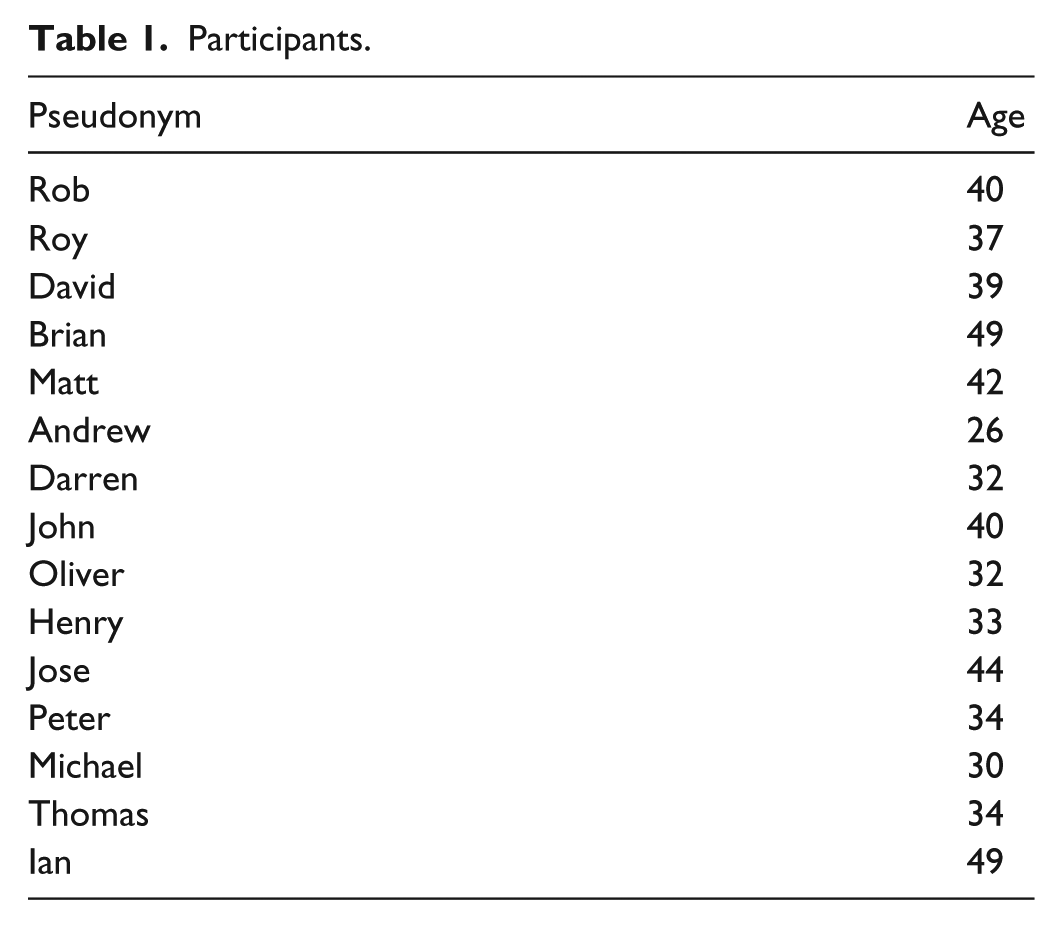
The research on which this article is based consisted of 15 interviews with fathers who had suffered mental health difficulties after having a baby. Our overarching research question was the following: What role, if any, do networked media play in new fathers’ negotiations of mental health difficulties? Within this broad framework, we nested subsidiary questions around new fathers’ circumstances, support (both seeking and provision), and communication. Our focus on disclosure and intimacies in this article connects to all of these, but particularly the last two. Following discussions of the literature and our methodology, our findings are divided into two parts. First, in intimacies, negotiated, we outline how existing, and often strongly bonded, intimacies are complexified by the arrival of mental health difficulties, and how networked media are sometimes deployed as part of the negotiation of mental health disclosure within these existing relationships. Second, in intimacies, initiated, we consider how and why networked media emerges to be central to initiating new intimacies centered upon either explicit or more coded forms of disclosure, and how they mediate the encountering of others’ attempts to reach out.
At the heart of our findings across these sections are the complexity and plurality of the mediated ties fathers negotiated in relation to their struggles, the powerful emotion-work that the engagement with or establishment of such connections involves, and the liminality and sometimes even invisibility of some of this emotion-work. Bringing these themes together is our use of the textile metaphor of the tapestry. First, a tapestry is a form of textile art, where threads of diverse kinds and colors are woven together, cross-cutting and overlapping. This aspect of the metaphor brings us close to the overlapping and simultaneous nature of intimacies in the contexts of these men’s lives, where old intimacies coexist with newly unfolding ones. Second, the weaving in a tapestry is done against a strong backdrop, and this backdrop of the tapestry—the contexts of these men’s lives—is one we cannot begin to conceptualize outside of frameworks of mediation (Livingstone, 2008; Silverstone, 1999). And third, tapestries consist of what is called “weft-faced weaving,” where warp threads are hidden, unlike in plain cloth weaving, where both warp and weft threads are visible. As our analysis demonstrates, a good deal of the emotion-work performed in these networked intimacies is fleeting, hidden, ambiguously coded, but rarely, we suggest, absent.
Networked Intimacies: Disclosure and Authenticity
While popular understandings of intimacy are often restricted to conjugal or familial relationships, more recent theorizing has expanded the notion to include a range of others with whom people might share a variety of modes of intimacies (Attwood, Hakim, & Winch, 2017). Central to our own use of the notion in this article, such expanded understandings of intimacy include connections established in myriad elective (cf. Chambers, 2013), chosen and non-conjugal contexts, establishing and sustaining rapports which involve emotional openness, support, familiarity, confidentiality, and mutual understanding. As Chambers (2016, pp. 27-28) notes later, this may include diverse forms of intimacy which are based predominantly on choice—in terms of choosing intimate ties, or having friends like family. Such intimacies center, it is argued, on acts of support and care, a degree of familiarity, and knowledge of personal or private circumstances (Boris, Gilmore, & Parrenas, 2010; Ehrenreich & Hochschild, 2003). We also draw on understandings of intimacies as involving a quest for authenticity in terms of feeling able to be one’s authentic self with others (Plummer, 2000)—as well as on the importance of belonging and being connected—and the practices that accompany or lead to these (Andreassen et al., 2017). We carry such contemporary understandings of intimacy with us as we investigate the ways intimacy is produced and negotiated within new fathers’ networks, with a particular focus on its role both as a means and as an outcome of the disclosure of mental health difficulties.
We draw particular attention to the recent burgeoning of research on the idea of networked intimacies, bringing together broader scholarship which intersects affect studies and the architectures of and practices unfolding within online platforms (cf. Hillis, Paasonen, & Petit, 2015; Papacharissi, 2010). Papacharissi’s key work on affective publics elucidates the mutually shaping ways in which social media work as “signifiers of emotion.” She draws out in particular how architectures both invite and are agentically worked with and within, for the purposes of affective investment, attunement, and expression. Paasonen (2014), meanwhile, provides us with the key phrase “infrastructures of intimacy.” Her argument is that networked platforms and the numerous practices across these, which also spill into the offline world, produce an infrastructure of intimacy where there is an emphasis not simply on intimate connections but also on the diverse material environments across which these connections might be expressed.
The disclosure of difficult experiences or emotions, it is argued, can serve as the engine that drives intimacies (Chambers, 2013). Research has consistently evidenced the critical role of sharing personal information with compassionate others, as a key building block for emotionally supportive ties, making these intimate ties part of the coping repertoires of those battling difficult emotions (Barak & Gluck-Ofri, 2007). And crucially, scholarship points to the particular suitability of online interfaces for disclosing or communicating emotionally as a result of the roles of anonymity, pseudonymity, homophily, being free of geographical boundaries, and having relative control over how much can be disclosed and when (Amichai-Hamburger, Kingsbury, & Schneider, 2013). Yet, neither disclosure nor the intimacies driven by it should be thought of as solely online, as key research on the blurring of online and offline social ties (cf. Baym, 2015) in contemporary polymedia environments (cf. Madianou & Miller, 2012) has firmly established. For, not only do online ties merge with the offline, or move in and out of the offline, but also the social world itself is in a condition of deep mediatization (cf. Couldry & Hepp, 2018). We might, then, begin to think of all intimacies as “networked” to one degree or another—as our evidence on pre-existing ties and the shaping role of mediated communication within and around these ties shows us.
In keeping with research on mediation and mediatization, then, we might consider contemporary intimacies as inherently fluid, cross-cutting, in flux, and to one extent or another, networked and mediated. As our evidence shows, ties that are strong and bonded offline might experience greater emotional depth and communication when people exchange typed words to talk through difficult situations. Equally, as one of us established recently in work on mothers self-disclosing difficulties online (Das, 2018), mediated online support and disclosure might also shape unrelated offline ties. This all-encompassing nature of mediated intimacies, where platforms and sociality mutually constitute each other (van Dijck, 2014), is of particular relevance. This relates to Andreassen et al.’s (2017) findings on an online donor group discussion on Facebook, where disclosing difficulties helps people come together and narrate their own selves, and where the website architecture mediates the role of time and space in such a process.
Within this broader context of research on networked intimacies, there has been a vital body of research on mothers seeking advice,, and camaraderie online (cf. Das, 2017), in the context of long-standing bodies of evidence that patients, vulnerable groups, and other stigmatized groups have found valuable and meaningful information and support (cf. Amichai-Hamburger et al., 2013) online. Evidence has highlighted strong social connections and support, encompassing instrumental, informational, and emotional aspects of women’s perinatal experience. One of us recently analyzed online maternal discourse about childbirth, which showed how online ties demonstrate a mixed set of emotional connections coexisting with one another, some of which are supportive and rooted in camaraderie, while some are exclusionary and rooted in logics of intensive mothering (Hays, 1998). Research on maternal interpersonal ties has also demonstrated a nuanced and mixed picture, where disclosure, support, and camaraderie often coexist with competition and blame discourses (Das, 2017).
Paternal Mental Health and Emotion-Work
Despite this valuable research focus on mothers, there has, until now, been minimal research on fathers in this context. Little is known about the role of networked media in the development of ties, connections, and relationships in the context of fathers’ perinatal mental health struggles, in spite of increasing emphasis in the UK on greater support for fathers, whose perinatal mental health difficulties are well evidenced in the context of cultures of silencing (Conrad & White, 2010) and limited support (Galasinski, 2013; Garfield et al., 2014; Goodman, 2004). Male struggles to communicate about mental health (cf. Mayers, 2018), lack of spaces for male engagement with early years support networks (Cosson & Graham, 2012), and evidence of positive well-being outcomes for fathers seeking and finding support in online spaces (Fletcher, May, St George, Morgan, & Lubans, 2011; Salzmann-Erikson & Eriksson, 2013) led us to the role of media and digital technologies in the shaping of intimacies in the lives of men coping with emotional well-being difficulties in the context of new fatherhood. In particular, we hone in on key affective moments where intimacies are driven and performed through acts of disclosure. We have been struck by how fraught these moments sometimes are—burdened, on one hand, with guilt, anxieties and uncertainties, and spurred, on the other hand, with desires to release such burdens through reaching out.
This can perhaps be contextualized within a longer history of intimacy research that has not focused heavily on men’s emotional ties and intimacies. Scholarship, for example, alludes to men being more hesitant to express intimate emotions in heterosexual relationships (Duncombe & Marsden, 1995), leaving the burden of emotional work to female partners. There are also references to the notion that female emotion-work is largely expressive and aimed at sustaining others, while male emotion-work is internally focused and devoted to suppressing feelings (Robertson & Monaghan, 2012). However, Robertson and Monaghan (2012) point out that there may be a risk here of conflating emotion and acts of communication, with many men expressing emotion often through deeds and acts of support and solidarity. Likewise, citing research that claims that male intimacies are based more on sociability rather than emotion (Coates, 2003), they note that sociability itself can often act as an intimate and emotionally relaxed act for many men.
While our findings confirm how masculinities can act as a substantial barrier to overt emotional communication, particularly with existing friends and loved ones, a look beneath the surface indicates, we suggest, a considerably more complex picture. Notably, as a result of their mental health struggles, many of the men did experience an intense need to be intimate and open, and this often prompted substantial attempts to carve out, sometimes unsteadily and sometimes barely visibly, a variety of ways in which to do so. In elucidating this, we mobilize conceptualizations of affect, including mediated and networked articulations of affect (cf. Paasonen, 2014; Papacharissi, 2010), as we look at the complex nature of intimacies—across a range of offline and online, strong and weak, pre-established and new social ties. While affect itself is inherent to the idea of intimacy, and social media increasingly central to intimate conversations and relationships, we argue in this article that the ways in which this works in the mediation of social ties are often fluid, and sometimes surprising.
Methodology
We were conscious in setting out on this project that a significant section of research on self-disclosure and mental health adopts quantitative and psychological entry points into the area (cf. Ho, Hancock, & Miner, 2018). While recognizing the value of such work, we were keen to explore the nuances and lived human contexts within which postnatal mental health struggles were experienced, and our methodology, at its core, adopted its interpretive, qualitative stance to delve into experiences within the lived, everyday contexts of these men’s lives. Interpretive methodologies, which underpin qualitative interviews and other methods like ethnography, as we know, “focus primarily on understanding and accounting for the meaning of human experiences and actions” (Fossey, Harvey, McDermott, & Davidson, 2002, p. 720), which guided the design of our interviews and our own iterative, dialogic engagement with each other as we collected data through some often difficult and demanding fieldwork.
We conducted hour-long, semi-structured interviews with 15 new fathers in the UK. We sought out a sample of fathers who felt they had experienced mental health issues in the first year or two of their baby’s life and who had used the Internet in some way as part of coping. Recruitment, which included flyers distributed at nurseries and circulated online via social media networks, proved to be difficult to begin with. The project, though, received a social media boost from activists and charities working on postnatal mental health issues for men, which led to an increasing flow of volunteers. Participants also sometimes spread information about the project in their own online and offline networks, which generated more participants. We used largely Twitter and Facebook to reach out to these diverse groups, and participants emailed us to register their interest.
We interviewed three fathers in person and 12 online via online video chat. Similar to much of fatherhood research, our sample was largely White and middle class (see Dermott, 2008). A few key people and organizations involved with paternal mental health helped us in the recruitment process by circulating our call on social media. Our final sample showed diversity in terms of reported mental health difficulties, ranging from formally diagnosed mental illnesses to undiagnosed feelings of significant anxiety or depression. We also found a wide variety of social media use in our sample.
Our interviews were audio-recorded and professionally transcribed. We based them on a topic guide covering the context of participants’ fatherhoods, the perinatal mental health challenges they had experienced, use of personal networks and/or professional forms of support, and, in particular, use of online forms of support. The project received a favorable opinion from the University of Surrey Ethics Committee. We used a video chat platform called appear.in to conduct the online interviews, which meant that neither us nor the fathers had to create a profile or sign up to use this portal. For people struggling with mental health issues, face-to-face meetings with a stranger can be anxiety-inducing, we thought, and the “safety” of an online video chat interview offered these men a comfortable and private channel of communication, while creating minimum disruption at the same time as enabling us to have a “face-to-face” conversation.
From the outset, we maintained fieldnotes, jotting down immediate reflections after each interview and discussing them with one another. Outside of becoming a key device with which to make sense of often difficult and demanding interviews, these fieldnotes emerged to be a fundamental part of our analysis. Our note-taking followed the route of “salience hierarchy” (Emerson, Fretz, & Shaw, 1995), noting issues which struck us “as the most noteworthy, the most interesting, or the most telling” (Wolfinger, 2002, p. 89). Later, each researcher studied transcripts independently, and each assigned codes, discussing the emerging hierarchy of codes, starting with a high level of granularity. Although we used NVivo to conduct the process of coding, we used pen-and-paper and immersive, iterative approaches through repeated reading and discussing, for themes and patterns to emerge.
Findings
We present our findings in two strands. First, we explore how networked media was woven into how these men negotiated the complexification of existing intimacies, as they negotiated intense difficulties with being emotionally open with those closest to them. Next, we explore attempts to initiate new networked intimacies via digital media spaces, outlining how online platforms could offer invaluable outlets for support, yet involved unsettled and liminal emotion-work, the occupation of tentative, uncertain spaces, and a combination of both reaching out and responding to others. Throughout, we note that these new fathers’ negotiations of intimacy in the context of mental health difficulties become entangled in struggles between intense drives for intimacy and openness on one hand, and barriers to reaching out on the other.
Intimacies, Negotiated: Mediated Disclosure in Existing Intimacies
While loneliness and isolation had, in themselves, contributed to perinatal mental health difficulties for some fathers, most of the sample seemed to have a range of long-standing intimate ties encompassing partners, family members, and/or close friends. In this section, we explore how some fathers turned to mediated communications to help negotiate existing relationships in the context of their struggles amid intense difficulties they often experienced with talking face-to-face about them.
In a small number of cases, face-to-face communication with close existing intimate ties had provided a crucial channel of disclosure and emotional support in coping with perinatal difficulties—and through the process of doing so, the ties themselves had strengthened and affectively deepened. Moreover, for most of the fathers, we observed clear awareness of the potential benefits of engaging with those close to them and, in many cases, a profound affective urge to do so as well. Rather than avoidance, what we observed in most cases was the emergence over time of substantial drives to engage.
Yet crucially, the urge to reach out to partners, family, and/or close friends had normally emerged amid powerful anxieties and barriers against doing so. In many instances, bringing significant mental health struggles explicitly into existing relationships proved highly challenging. As a result, many endured several months or sometimes much longer battling between the affective need to reach out to those closest to them and the difficulties with doing so. Often, it was the very depth, commitment and intimacy of such existing ties that was serving to raise the stakes—the risk of damaging hard-won existing perceptions and dynamics foremost in the mind. Rob, who had developed significant anxieties following a traumatic birth, outlined his fears about how reaching out to close friends risked shattering their expectations and damaging relationships: . . . to talk to . . . people that do know me is difficult because part of it is that, is that it makes me very withdrawn when I’m not feeling well, which is kind of the opposite of what . . . I’m perceived as . . . I would imagine they would be like totally amazed . . . I don’t want people to see me as different or treat me as different, or think they have to be careful around me. . .
A further barrier was Rob’s acute sense of responsibility to support his partner in her recovery from the birth and to play down the significance of his own struggles in this context. Consistent with this, we often found existing intimacies to be complexified by structures of masculinity operating in tandem with dominant understandings of fatherhood, inducing a burden of guilt at the prospect of receiving rather than providing support. Roy was one of several for whom the overwhelming sense of responsibility to support his partner had contributed to intense difficulties speaking to her about his anxieties, in spite of awareness of needing to. As well as reflecting broader masculine pressures to cope and carry on, this reflected a seemingly impenetrable sense of responsibility not to “burden” his intimate partner amid their new parental roles: She was doing an awful lot at the time . . . I think I felt that if I brought it up, it would be almost like a slap in her face, like I may need more support but you’re doing so much already. . .
For other fathers, the sheer awkwardness of engaging loved ones face to face about intense emotional difficulties, combined with intense urges to isolate themselves, had been enough to prevent disclosure and damage relationships.
It was in this context that some of the fathers had turned to networked media as a means to maintain or open up channels of communication with those closest to them. John, for instance, had struggled substantially with postnatal depression, had undergone therapy and significant relationship difficulties, and, despite being relatively open about his suffering, had been unable to confide in his mother, with whom he had always been close. The first time she, and the rest of John’s extended family, heard him speak about his condition was when he let them know he was going to be speaking about his experiences on radio: It was the first time my mum heard me talk about it. I . . . suppose the talking about, a bit like I’m talking to you now, although the feelings are a lot less, me talking about it was part of my therapy.
Something about the grandness of a mediated gesture, or the sense of material isolation and disconnection that a radio studio enabled, had helped John insert distance between himself, his condition, and his existing familial intimacies in ways that ultimately enabled his struggles to be brought into relationships with his family.
In other cases, fathers and those close to them had turned to private digital media channels to open up channels of communication and disclosure amid intense struggles to reach out. David and his partner had simultaneously suffered from severe postnatal depression, his difficulties having been significant enough for him to have contemplated ending his life. Amid intense emotional and practical barriers, he described how they had sustained meaningful communication and their relationship with one another through the use of Facebook Messenger, even while less than a meter apart: I stayed up all night, every other night, having him, and she stayed up on the other night, and we were literally no further than twenty metres apart, the only way we could communicate was through Messenger. So I would literally sit on the other side of a wall to her and talk to her over that media because that’s . . . that’s the only chance we got. . .
Using one-on-one spaces of private messaging in existing intimacies, for instance, on private friends or family groups on social media, has been noted to be significant by Chambers (2016), who points out that ‘messaging apps such as WhatsApp have the potential to liberate certain users by controlling group size and degree of privacy, as scalable sociality in a polymedia environment. In David’s case, it helped sustain and hold on to a conversational thread when both partners were in states of significant despair.
Media channels that enabled communication with discrete small groups also played a role for some. In Matt’s case, his and his partner’s simultaneous mental health difficulties had meant attempts to meaningfully communicate about them had proved particularly fraught and unsuccessful. Amid broader relationships tensions, such difficulties ultimately led to their separation, prompting particularly intense feelings of helplessness and failure on his part. During some of his darkest moments, he had found himself able to send cries for help and to receive supportive messages from his immediate family via a private WhatsApp group with his mother, father, and siblings.
. . . we’ve got a family WhatsApp group, so my mam and my dad and my sister and my brother, and . . . a few times I’d comment, I’d put a thing on there saying . . . I can’t cope with this anymore or . . . how am I meant to get to sleep or sommat like that . . . and then . . . you’d obviously get support coming back . . . That’s really the fir . . . [first time] . . . when I started opening up about how I was feeling . . . And it was quite alien to my dad. So it gave me a bit more of an outlet.
In this case, the use of WhatsApp had enabled Matt to open up for the first time to his brother, sister, and father—and it was clear the mediated, small-group orientation had particularly helped in broaching the subject with his father, who he knew would struggle to understand. Crucially, the channel also provided an ongoing outlet for particularly fraught affective moments thereafter.
Pre-existing intimate relationships, including long-term and kinship ties, then, did not always readily accommodate the introduction of mental health–related disclosure, support, and interaction. The commitment, responsibilities, and investment such ties represented meant that often there was felt to be too much to be lost with an emotional disclosure of experiences and feelings contrary to existing understandings and crucially, to dominant expectations relating to masculinity and fatherhood. However, rather than avoiding emotion-work or intimacies altogether, these men had often struggled with messy and conflicting pulls on their emotions: the urge to reach out, perform intense emotion-work, develop intimacies—and the intense, and sometimes deeply gendered, anxieties around doing so. And as part of such struggles, some of the men found themselves turning to networked media as a means to communicate about their mental health difficulties in existing intimate relationships. This, we suggest, highlights how the different kinds of communicative spaces (whether public or private, synchronous or asynchronous) offered by media intermediaries may afford opportunities for the introduction of difficult emotional issues into existing ties. Such experiences, we would suggest, connect usefully with scholarship on polymedia (Madianou & Miller, 2012), using the “scalable” functions (cf. Chambers, 2016; Madianou & Miller, 2012) of social media platforms to reach as many, or as few, people as necessary.
Intimacies, Initiated: Carving Out New Mediated Spaces for Disclosure
While fathers had sometimes found themselves turning to media as a means to negotiate the introduction of difficult emotional issues into antecedent close relationships, in many other cases, their use of networked communications was oriented more toward attempts to initiate ties with people outside of these, including those not previously known to them at all. In this section, we consider what prompted such attempts to reach out online, and the different ways fathers sought to initiate new intimacies, sometimes in substantial ways, but often through practices that were distinctly partial, coded, or hesitant.
Often, fathers had been prompted to seek out new intimacies online because of the prospect of connecting with others in a manner that seemed to entail less risk, guilt, or emotional barriers than would being open with those they were already close to. Rob, mentioned earlier in the context of how fatherly pressures were prompting difficulties for him in talking about his struggles with his partner and family, described how his intense drive for interactions that could center on his difficulties had prompted him to go online to seek out others who had suffered similar mental health issues. As well as offering the safety and mutual understanding that only fellow sufferers can provide, such individuals, particularly in the context of private Facebook Messenger conversations, offered the prospect of substantive interactions and developing ties that were devoid of the pressures associated with existing partners, family, or close friends: It was helpful talking to somebody who I knew exactly what they meant when they said a certain feeling or you know that sort of thing. I . . . was kind of conscious that I didn’t want to keep talking to my wife and my mum and dad about it constantly because . . . you feel as if you’re burdening them with it all the time. So I guess I kind of looked at this other person as . . . I could talk to them and not have to bother my immediate family with it. . .
Similarly, Roy, who also found that masculine expectations to support his partner at all costs had contributed to his feeling unable to speak to her about his anxieties, had managed to locate and interact with fellow sufferers on an unrelated forum on MetaFilter: I suppose the fact that I could have the conversation without worrying about my partner finding out about it I guess, because that, that ties into the fact that I was feeling like it wasn’t like a fraud or feeling guilty about, you know . . . if she was struggling to cope with things, then it wasn’t going to make her feel worse if I have this conversation online. . .
Roy had found these discussions on the private spaces of MetaFilter critically significant because it provided a road to meaningful online interactions and relationships with others that felt authentic and did not, in his understanding, involve burdening those already close to him.
Crucially, even within such online environments, fathers’ confidence to reach out and forge supportive connections varied considerably, as did the approaches they took and the outcomes of these. Some had eventually felt able to make full and substantive disclosures that emerged to be watershed moments in their mental health journeys and triggered ongoing supportive relationships. After suffering several months and undergoing professional support and treatment, Peter had been prompted to make what felt like a significant public statement on Facebook about his difficulties: I put like a kind of a post up off the back of Mental Health Week, saying I’ve been suffering from depression for X number of months now and . . . these are some of the things that upset me and . . . this feels like an important thing to do, to kind of announce it and talk about it. So I kind of put that up, and lots of people were very supportive and . . . yeah, and a few more people . . . pop up and say, oh me too, actually, I’ve . . . suffered from depression before, or I’m going through a rough time at the moment.
As Peter indicates, as well as prompting supportive messages, his overt act of disclosure had resulted in the forging of significant new connections with particular individuals in his broader networks who had found that his post had opened up a space for them to reciprocate his disclosure.
It is notable, though, that Peter had only felt able to do this after several months and after coming through the worst of his difficulties. And he also explained the palpable hesitation and anxiety he experienced while composing the post: ‘. . . lots of kind of back and forwards, thinking about oh just, maybe I’ll just, I’ll just clarify that and I’ll just re-phrase this.’ This theme of delay and hesitation in attempting to reach out came up quite frequently in the accounts of those fathers who felt able to make open gestures of reaching out. Rob explained how it had taken him a long time—and some professional help—before he had recognized how acute his need was to reach out to others, and that since that point he had wrestled tirelessly between the urge to disclose and the feelings of discomfort and risk that still often prevented this.
While, in the examples above, doubts, anxieties, and struggles were eventually cast aside through the substantive and explicit gestures of public online disclosure, it was more often the case that, in spite of the possibilities of social media, fathers found the ability to cast aside doubts and reticence elusive. Often, fathers’ attempts to establish supportive relationships online involved fleeting, unsettled, and liminal emotion-work—occupying tentative, uncertain spaces. In a number of cases, this involved affectively powerful moments in which attempts to communicate about deeply personal troubles were hidden behind coded gestures, something we have termed “affective coding” (Das & Hodkinson, under review). For instance, Oliver, after not speaking to anybody about his struggles, including his partner, for a year, had, following eventual conversations with her and receipt of professional help, become increasingly conscious of his need for meaningful connections relating to his struggles amid ongoing unhappiness about not feeling able to do so. For him, talking to a medical practitioner had helped only to a limited degree because what it firmly underlined was his need to develop close peer relationships—whether they involved people in his existing networks or those not already known to him: I think there’s been a few things where I’ve tried to kind of put myself out there a little bit . . . I shared it [an article on mental health] on Facebook, and maybe, I think, selfishly thought, I might get a bit of a response . . . I kind of was hoping for someone of my, any of my friends to see that and go . . . hold on a minute, why is he sharing that . . . it’s really, it’s a hard thing to put yourself out there for that regard . . . Maybe I should have prefaced that with a comment of, by the way, this really resonates with me, but I didn’t do that . . .
Unable to bring himself to reach out through an explicit, fulsome, or visible disclosure such as Peter’s, Oliver had instead invested a great deal in the sharing of something much more general, in the hope that someone would wonder about his reasons for doing so and reach out to him.
Such affective coding worked, as we see it, “as a form of affectively-loaded, digital social steganography—a form of hiding messages . . . occupying a liminal space between silence and more explicit attempts to reach out” (Das & Hodkinson, under review). Heartbreakingly, in Oliver’s case, this coded attempt at reaching out fell on deaf ears and he remained intensely lonely in his struggles. But in some cases, coded attempts fell into the hands of attuned decoders willing to respond, resulting in the forging of supportive connections and relationships. Here, as well as sometimes benefiting from such responses and the interactions that followed, many of the fathers noted how they themselves had become able to spot and respond to coded cries for help from others: If I see somebody on Facebook who’s liked a particular article or liked a particular thing [relating to mental health], then obviously you do wonder why they liked that, you know . . . if you’ve got no interest in cars, you’re not going to like a car page. (Rob)
Even here, the visible substance of such responses and the nature and longevity of ensuing ties could vary significantly. Sometimes, as Matt says below, they might be limited to brief and apparently superficial or fleeting expressions of commiseration—only visible on a Facebook discussion thread as an I understand, hang in there—yet such gestures could hold substantial affective and intimate significance, coming from a place of overwhelming identification even if the person felt unable to express details about their own struggles or to instigate more substantive interactions: I’d like say . . . if you saw something, I’d say hear hear, or yeah, tell me about it, or sommat like that. I suppose it was like a bit of an outlet for me, just to put that comment out there and . . . it was a little bit of moral support for whoever it was, . . . But never any real, never any real detail or detailed discussion.
While the scholarship on reciprocation or non-reciprocation of self-disclosure (cf. Coulson & Greenwood, 2012) is indeed valuable, intimacies might then be forged, deep inside, as a feeling of identification with another person, a shared knowledge about a shared difficult experience, or an apparently depthless expression of support, even when disclosure cannot be fully reciprocal and the connection may look to the external viewer to be depthless. Davidson and Milligan’s (2004) account of the connective tissue of difficult emotions is particularly useful as we conceptualize the initiation of new intimacies as these sometimes fleeting, yet affectively powerful, acts of reaching out and reciprocation. Such apparently ephemeral moments of affective connection often held pivotal emotional and symbolic significance for the fathers. Yet, such affectively heavy yet brief intimacies occasionally formed part of broader connective repertoires of supportive ties that sometimes also involved the establishment of new relationships of a longer-term nature.
On occasion, then, responses to disclosure were more extensive, reciprocation or offers of support laying the seeds for more substantive relationships played out across different public, community, or private domains. Roy’s disclosure of his struggles on a moderated MetaFilter forum had resulted in ongoing supportive interactions on the forum itself that in two cases were also extended into private messaging spaces. Peter’s aforementioned public announcement about his troubles had prompted a new father in his networks to reach out to him for support, resulting in their meeting face to face on more than one occasion. Similarly, Rob’s response to the Facebook disclosure of others included contacting them on private Messenger and instigating an ongoing supportive relationship on a private online channel that they continue to use during difficult moments: . . . there was one or two people that I only really know from Facebook, I don’t know them personally. So they’re just friends of a friend . . . And they . . . actually posted something about the same sorts of issues that I was having . . . just on their general wall . . . And so actually I create, I contacted them privately through messaging, and I still talk to them now, where if they’re feeling bad, they talk to me and I talk to them, just to discuss it . . .
We found networked media enmeshed into the disclosure of fathers’ own struggles and their encountering of others’ attempts to reach out, resulting in mediated intimacies that ranged from substantial attempts to support and long-term multi-domain relationships, to fleeting, yet affectively significant and deeply meaningful, online gestures between people who would never meet.
Discussion
Our findings in this article sit in the broader framework of evidence that the architecture and affordances (Hutchby, 2001) of online social environments facilitate emotional disclosure and the relationships they can give rise to (Amichai-Hamburger et al., 2013). Research on mothers’ online ties (Das, 2018) demonstrates the production of strong social and emotional connections, and the seeking and provision of social support, including its instrumental, informational and emotional forms (cf. Leahy-Warren, McCarthy, & Corcoran, 2011). However, whether online or offline, openness and intimacy are fraught, as we have demonstrated, with significant emotional self-doubt and hesitation with regard to the very task of opening up, alongside doubts and anxieties around privacy, confidentiality, fears of not keeping up with appearances or anticipated social roles, and fear of stigma (Kim, Sherman, & Taylor, 2008; Rafaeli & Gleason, 2009). We conclude by drawing some overarching conclusions from this work.
First, we note that the use of networked media enabled and made visible emotion-work that was often fraught and liminal, but rarely, in our understanding of the fathers’ accounts, absent. Notwithstanding the role of dominant understandings of masculinity in the difficulties many fathers had reaching out to those closest to them, it should not be concluded that they wanted to avoid affective, intimate interactions relating to their struggles. Most spoke of an acute consciousness of the need to engage effectively with others and to establish intimacies inclusive of disclosure and support for their perinatal difficulties. And, though their approaches and outcomes were varied, the fathers’ stories were dominated by ongoing struggles to reach out and connect amid dilemmas, anxieties, and barriers that made every step so difficult. This finding in particular both set apart and drew together the evidence we found on fathers from the evidence found on maternal ties (Das, 2018). Mothers in this previous project seemed to disclose more openly about their perinatal difficulties than these fathers, for whom coded and disguised attempts were, overall, more notable. But, on the contrary, in both cases, gendered norms played an immensely significant role, pressurizing women under the logic of intensive mothering and men under the pressures of normative masculinities. For fathers, barriers to communication included worries that those close to them would see or treat them differently, intense concerns about burdening loved ones, feelings of vulnerability generated by difficult physical conversations, worries about disappointing expectations, and sometimes the fear, even amid online groups of fellow sufferers, of rendering their situation somehow more real. Crucially, leaving aside their levels of success, fathers’ ongoing struggles against such barriers—and their use of media as part of these—signal to us a difficult engagement with, rather than an avoidance of, emotion-work. But equally, it draws attention to the way the use of networked media, however fleetingly or ambiguously, enabled expression and articulation amid such tensions in the doing of emotion-work (Table 1).
Participants.
Second, the role of networked media in the moment of disclosure can have a profound influence with respect to a range of existing and new intimacies. Existing ties, despite their longevity and strength, do not always offer up space for face-to-face disclosure. Here, consistent with research on polymedia (Madianou & Miller, 2012), our research shows how the introduction of mediated communications can offer more accessible spaces for disclosure to close friends and loved ones, helping to enable difficulties to be addressed and relationships protected or enhanced. Sometimes, however, existing intimacies simply have much at stake or are complexified by structures of masculinity inducing burdens of guilt. Here, we found that networked media can become key as part of attempts to initiate new intimacies centered on support and disclosure. While the outcomes of such acts of initiation are varied in terms of the nature and longevity of intimate ties established, they remain key moments of affective and symbolic authenticity—deeply affective and often fraught with emotional complexity and meaning. Similarly, responding to others’ disclosure attempts sometimes mobilized networked architecture to become acts of intimate reciprocation, ranging from substantial attempts to support that became long-term online and offline relationships, to fleeting yet heartfelt online gestures between people who would never meet.
Third, we note that a good deal of the mediated attempts to connect we have described are fraught with tension, semi-hidden or shrouded in ambiguity. This includes use of different media channels as a means to introduce mental health struggles into relationships with those already closest to them, something invisible to those outside such relationships. Another instance is the element of struggle, uncertainty, and anxiety even for those fathers who had become able to make public forms of disclosure on social media. The most striking example of such tension and ambiguity, though, is perhaps provided by the use by many fathers of coded, liminal online attempts to seek or offer supportive interactions. Here, our notion of affective coding draws attention to discourse and platform management strategies that invite others to decode and respond to semi-hidden digital cries for help and that often center on the hope to forge supportive, intimate connections. Crucially, though, in spite of the elements of invisibility and ambiguity, such mediated emotion-work often had great affective and symbolic significance—it felt like doing something. These, then, were sets of agentic acts of different kinds and with mixed outcomes that formed part of a range of strategies in difficult times.
Finally, in bringing the fathers’ journeys of mediated intimacy together, we highlight how, while some had come further than others, many are able, with the help of networked media, to negotiate a range of different sorts of connections as part of their struggles—from old to new, mediated to face-to-face, public to private, and fleeting to long-term. While certain connections could prove particularly critical, sometimes it was the blend or repertoire of overlapping ties and intimacies—each negotiated in different ways and to different ends—that stood out.
We began this article with some attention to the textile metaphor we selected—the tapestry—as it allowed us an inroad into the multiplicity of ties, the hidden nature of emotion-work and the mediated nature of the social in the lives of these men. A wide array of practices working within, with, and sometimes against the architecture of platforms not just mediated new ties but also, in countless subtle ways, enabled disclosure and progressed intimacies in existing ties, spilling across the online and the offline, and traversing boundaries and binaries. Needless to say, no metaphor is perfect, and we recognize, for example, that some may interpret the tapestry as implying a level of fixity that does not do justice to the flux and change that such ties and intimacies so evidently involve. To be clear, our use of the metaphor is not intended to emphasize fixity and envisages tapestries of intimacy in a contingent and fluid sense rather than its more literal sense in this particular respect. Its value, we suggest, is in the highlighting of multiplicity, overlapping layers, concealment, and disguise. Thus, the fathers’ somewhat piecemeal approach to doing intimacies brings us close to our metaphor of the tapestry, which is marked by a multiplicity of juxtaposed ties that coexist, and where each tie might fulfill a role and meet a need. And the semi-hidden nature of some of the emotion-work we have spoken about also returns us to the tapestry, where the weft-faced weaving leaves invisible warp threads, reminding us that such mediated emotion-work is often fraught, frequently liminal, sometimes hidden, but rarely absent.
Footnotes
Declaration of Conflicting Interests
The author(s) declared no potential conflicts of interest with respect to the research, authorship, and/or publication of this article.
Funding
The author(s) disclosed receipt of the following financial support for the research, authorship, and/or publication of this article: This project was funded by the Faculty of Arts and Social Sciences at the University of Surrey.
