




Abstract
Facebook is used as part of public health communication efforts but little evidence is available on why people engage with health-related Facebook pages and what content appeals to them. This study aimed to investigate user perceptions of and experience with the Make Healthy Normal (MHN) Facebook page, part of a government campaign to address overweight and obesity in adults in New South Wales, Australia. This sequential mixed methods study comprised an online survey (n = 591) and six focus groups (n = 33) of Facebook users, including both fans (i.e., users who have “liked” the MHN page) and non-fans. We analyzed the online survey descriptively and employed inductive thematic analysis for the focus groups, integrating the two data sources at the stage of interpretation. Our results show that MHN and similar health pages are in demand but that there are a number of contextual and content-related factors that are critical in determining user engagement and over which page administrators have varying levels of influence. Contextual factors, including the drivers for user engagement and Facebook user practices, can be leveraged or managed to influence user engagement but they cannot be controlled. On the contrary, content factors, like the nature of posts, post presentation, and post subject, can be directly influenced by page administrators. Policymakers and practitioners can use these findings to inform the design and operation of their own Facebook pages and should look to conduct and disseminate robust evaluation of their pages to improve user satisfaction and engagement.
Introduction
The potential of Facebook and other social media platforms as a channel for health communication has been debated in the peer-reviewed literature over the last decade (Dooley, Jones, & Iverson, 2014; McNab, 2009; Moorhead et al., 2013; Thackeray, Neiger, Smith, & Van Wagenen, 2012). Yet little evidence has been generated that documents why people engage with health pages on Facebook and what content appeals to them. Moreover, what is available concerns small-scale experimental studies or pages with limited reach (Laranjo et al., 2015; Swindle, Ward, & Whiteside-Mansell, 2018; Woolley & Peterson, 2012) or is purely descriptive (Park, Rodgers, & Stemmle, 2011; Platt, Platt, Thiel, & Kardia, 2016). To our knowledge, no detailed evaluations of real-world social marketing campaign Facebook pages are available, despite their widespread use (Kite, Foley, Grunseit, & Freeman, 2016; Park et al., 2011). As the way people view and consume media is changing rapidly and the dominance of television as a communication platform wanes (Regional TAM, OzTAM, & Nielsen, 2016), such information will be critical in developing and implementing future health campaigns.
Facebook is the most widely used social media platform both globally and in Australia (Perrin, 2015; Sensis, 2015), making it an attractive communication channel for public health campaigns. Nearly two-thirds of Australian adults maintain a Facebook profile and almost 40% of users login to Facebook 20 times or more per week. The ubiquity of Facebook, coupled with its intense use, means messages may be disseminated to a large audience, rapidly, and often for comparatively little investment compared to traditional broadcast media like television (Kaplan & Haenlein, 2011). In addition, social media platforms such as Facebook offer unique opportunities for bidirectional interaction between campaign and audience, and among audience members, which are generally not possible when using more traditional channels (Freeman & Chapman, 2008). The interactive format facilitates “word-of-mouth” marketing, or marketing between consumers, one of the most trusted and powerful forms of marketing (Nielsen, 2013) because it can amplify a message and lend credibility and authenticity to a brand (Lang, 2013). Moreover, the available evidence suggests that the public is generally receptive to health messages on social media (Uhrig, Bann, Williams, & Evans, 2010; Zheng, 2014), although there is some evidence that motivations for engaging with health issues on social media are not always positive (Allem et al., 2017). There is otherwise very limited evidence available as to who engages with health issues on Facebook, why they engage, and what they expect from Facebook content. Addressing this gap will provide valuable insights into how Facebook can best be used as a communication platform for public health messages.
The Make Healthy Normal (MHN) Campaign
MHN is a multi-year Australian-based social marketing campaign launched by the New South Wales (NSW) Government in June 2015 as part of a state-wide strategy to address overweight and obesity (Centre for Population Health, 2013). It aims to challenge the normalization of being unhealthy and encourage NSW adults to adopt a healthier lifestyle. Phase 1 of the campaign (2015-2016) targeted all NSW adults, while Phase 2 (2016-2018) focused on males aged 35 to 54 years and parents with children aged 5 to 12 years. Although the majority of the campaign spend was allocated to advertising on two television commercials, the campaign also made use of a number of other communication channels, including out-of-home advertising (e.g., bus sides, billboards), online advertising, community events, and social media, particularly Facebook. More details on the campaign and its evaluation are available elsewhere (Kite et al., 2018).
The MHN Facebook Page
The MHN Facebook page has been operating since the beginning of the campaign and aims to provide engaging content aligned with the campaign’s key messages around healthy eating and active living. The page administrators aim for approximately three posts per week, some of which receive a paid boost to increase their reach. The tone of the content is intended to be conversational and supportive, highlighting ways to eat better and be more physically active as well as promoting related NSW Government programs, including the Get Healthy Information and Coaching Service (https://www.gethealthynsw.com.au/), a telephone support service for adults, and Go4Fun (https://go4fun.com.au/), a healthy lifestyle program for children above a healthy weight. As of February 2018, the page had over 31,000 page likes, and over 100,000 likes, comments, and shares across approximately 400 posts.
This study aimed to investigate user perceptions of and experience with the MHN Facebook page using mixed methods. Specifically, we sought to (1) gain insights into the characteristics of fans of the page, (2) explore Facebook users’ reasons for engaging with the page, and (3) investigate the user experience of and response to the page and its content.
Methods
This sequential mixed methods study (Leech & Onwuegbuzie, 2009) comprised an online survey and focus groups with Facebook users, including both fans (i.e., users who have “liked” the MHN page) and non-fans (i.e., users who had not, at the time of recruitment, “liked” the MHN page). It was approved by the University of Sydney’s Human Research Ethics Committee (Protocol number: 2017/145).
Online Survey
Participants for the online survey were recruited via Facebook advertising and posts on the MHN page. Paid advertisements used Facebook’s filtering options to target the posts at NSW adults, prioritizing those from low socioeconomic groups consistent with the campaign’s target audience. Participants needed to be aged 18+ years and living in NSW. Both fans and non-fans of the page were eligible to participate. Questionnaire content included why users have or have not liked the MHN page, whether they like any other health-related Facebook pages, how often they engage with the page, and their opinion on the quality of the content of the page, frequency of posting, and how the page could be improved.
Measures
Participants were shown a list of Facebook pages related to healthy eating, active living, or healthy weight, identified by the Ministry of Health as similar or “competing” pages to MHN, and asked whether they were fans of any of them, with multiple responses allowed. Participants who were fans of at least one of these non-MHN health page were then asked on average how frequently they engaged with the pages nominated, with responses on a 5-point Likert-type scale, where 0 = never, 1 = rarely, 2 = sometimes,” 3 = somewhat frequently, and 4 = very frequently. Specifically, engagement was measured by asking participants to indicate how often they viewed the page or its content, “liked” content, “shared” content, commented on content, and invited friends to like the page using a question adapted from Junco (2012). Fans of MHN were also asked how often they engaged with the MHN page specifically. We then calculated mean engagement with both MHN and non-MHN health pages across all of the above activities.
We asked fans why they had “liked” the page and what they thought were its best and worst features. Non-fans were asked why they had not “liked” the MHN page. All of these questions had open responses, which were post-coded (i.e., codes were derived iteratively following data collection, as opposed to being predefined) by the lead researcher (J.K.) to identify common categories of responses. N.B., J.V., and V.L. independently coded a randomly selected sub-sample of responses to examine coding reliability. Interrater reliability was between 72% and 80% across the different measures. Discrepancies were resolved through discussion and where appropriate, codes were modified to ensure their scope and boundaries were clear and consistently applied between coders.
MHN fans were also asked what they had done outside of Facebook in response to MHN content, including trying to change their behavior, discussing content with friends or family outside of Facebook, visiting the MHN website, calling the Get Healthy Service, or seeking advice or help from a health professional. Participants who indicated that they did one or more of these off-Facebook responses were coded as “any response,” with others coded as “no response.”
Participants’ self-reported postcode of residence was used to classify them into quintiles indicating area-level socioeconomic status according to the Socio-Economic Index for Areas (SEIFA) disadvantage scale (Australian Bureau of Statistics [ABS], 2013), and then coded as least (Quintiles 1-3) and most disadvantaged (Quintiles 4 and 5) for analysis. Participants’ postcodes were also used to classify their location using the Accessibility/Remoteness Index of Australia (ARIA) (Hugo Centre for Migration and Population Research, 2013), and dichotomized into urban versus regional, rural, and remote for analysis. Participant’s time spent on Facebook was measured through questions developed by Junco (2012). Participants self-reported height and weight, allowing us to calculate body mass index (BMI) in accordance with World Health Organization (WHO, 2016) classifications. BMI categories were then dichotomized into healthy weight versus overweight/obese for analysis.
Analysis
We conducted a t-test for differences in mean to compare the number of pages liked by MHN fans and non-fans to explore the profile of our survey sample and to examine the characteristics of fans of the page. Characteristics of our survey sample were compared to that of the general Facebook user base (Sensis, 2015) and to that of the MHN fan base, which was extracted from Facebook’s Insights data (Facebook, 2015). We also conducted linear regressions modeling mean engagement with MHN and mean engagement with non-MHN health pages. Logistic regression modeling was used to analyze off-Facebook activity to investigate how users were interacting with the MHN page and non-MHN health pages. Independent variables for all regression models included demographics (i.e., gender, age, socioeconomic status, and location) that have been shown to be associated with many different health outcomes, including in public health campaigns (see, for example, Durkin, Brennan, & Wakefield, 2012; Kite, Rissel, Greenaway, & Willliams, 2014; O’Hara et al., 2016, Wakefield, Loken, & Hornik, 2010). As MHN is an overweight and obesity prevention campaign, we also included BMI category to explore any differences in engagement by weight status, while we included frequency of Facebook use as an indication of potential exposure to MHN content. In addition, we included children in the household (yes vs. no) as an independent variable because families with children aged 5 to 12 years is a key target audience for the campaign’s second phase. All analyses were conducted with SPSS Statistics 22, and a threshold of p < .05 was used for statistical significance.
Focus Groups
Survey participants were invited to participate in focus groups at the end of the survey. We conducted six groups, three each with fans and non-fans, segmented by age (18-30 years, 30-50 years, 50 years and over). The groups had between four and six people each and were conducted in Sydney, NSW. Participants were mostly women (26 women, 7 men), reflecting the profile of participants who completed the survey, and were all regular (mostly daily) users of Facebook. Groups were moderated by a market research agency, appointed by the NSW Ministry of Health. Discussion topics included how and why participants use social media in general and Facebook specifically, why people do or do not engage with public health-related pages like MHN on Facebook, what they expect from pages like MHN, and their experience with and opinion of the MHN page. In response to results from the online survey, questions for non-fans around their awareness of and exposure to MHN content were added. Groups were also shown a selection of MHN posts that have appeared on the page and asked for their reaction to the content, including how it influenced both their online (e.g., sharing or commenting on content and inviting friends to view the page) and offline behavior (e.g., eating habits, physical activity, etc.). A selection of these posts are shown in Figure 1.
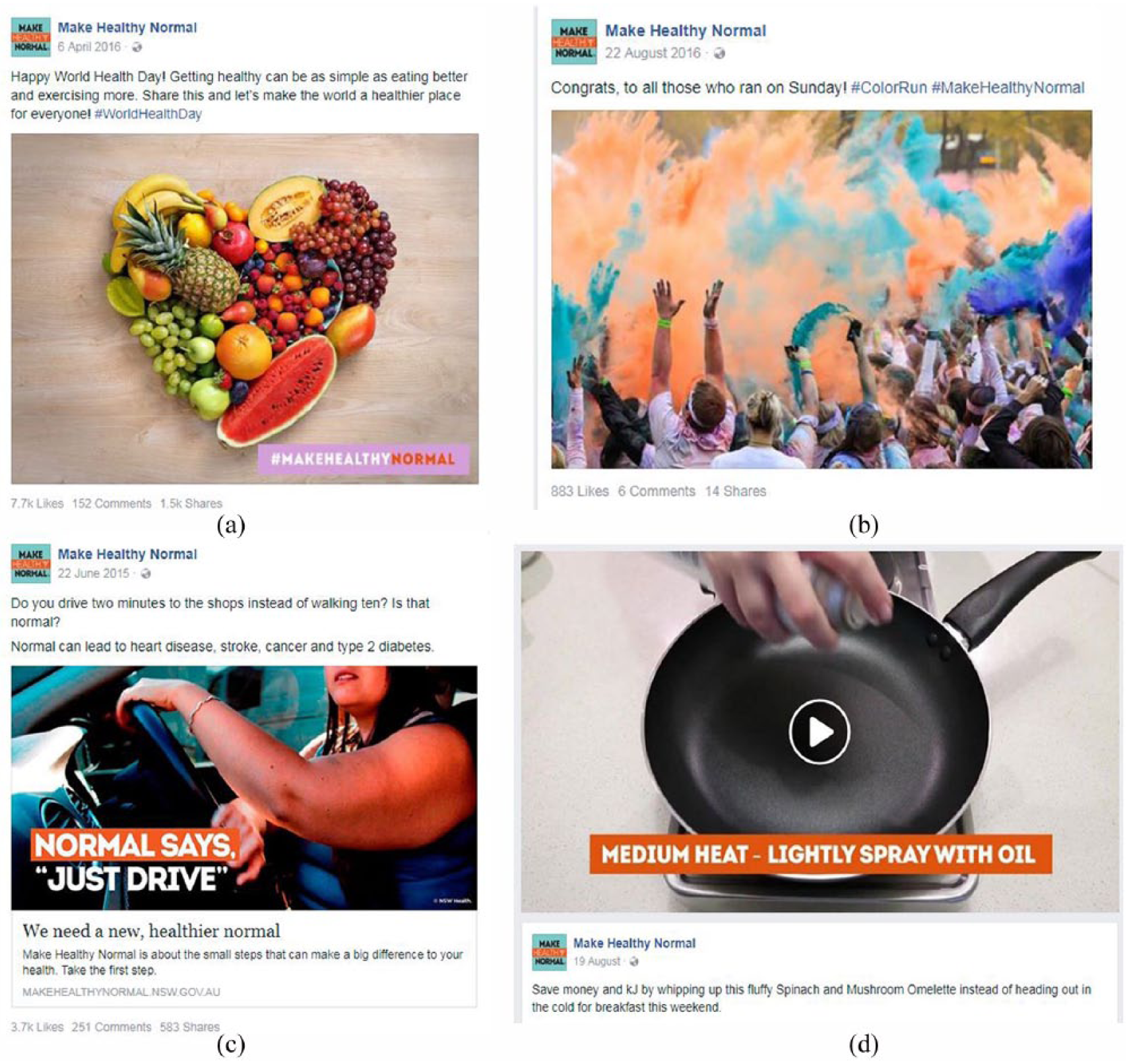
Examples of MHN content shown in focus groups.
Analysis
Focus groups were recorded and transcribed verbatim, with transcriptions imported into NVivo 11 for analysis. J.K. developed a coding frame through an inductive, iterative process, listening to the recordings and reviewing transcripts to identify common themes across the entire data set, using the approach described by Braun and Clarke (2006) whereby themes were generated from the content of the focus group discussions, rather than a priori. The final themes represent semantic (as opposed to latent) patterns in the data set, highlighting an important aspect of the data in relation to the research questions. B.M. independently coded one group to check validity of the coding frame and assisted in refining the final themes. Other authors were consulted on theme definitions and interpretations.
Mixed Methods Integration
While the survey results were used to refine the discussion guide for the focus groups, as described above, the two components of this study were predominately integrated at the stage of interpretation, as opposed to the analysis stage (Doyle, Brady, & Byrne, 2009). That is, data from the survey and focus groups were analyzed separately and then compared using a qualitative approach, giving equal emphasis to both components (Leech & Onwuegbuzie, 2009). The aim of the data integration was to expand the scope and depth of understanding of the issues to give a more complete picture of user perceptions of the MHN page (Fielding, 2012).
Results
Online Survey
Characteristics of Fan Base
A total of 591 participants completed the survey, which represented 35% of all unique visitors to the survey. This included 320 MHN fans (55%). Women and, to a lesser extent, younger adults were over-represented compared to the general Facebook user base, although to some degree this reflects the fan base of MHN, according to Facebook’s Insights data for the MHN page (Supplementary Table 1). Compared to non-fans, fans of MHN were more likely to be younger, have higher self-rated health, and be physically active and from more socioeconomically advantaged areas (Table 1).
Characteristics of Survey Sample.

SD = standard deviation.
Almost all (85%) participants reported being fans of at least one healthy eating, active living, or healthy weight-related page (excluding MHN). On average, fans of MHN liked 2.6 health pages (range = 0-10), significantly more than non-fans, 1.7 (range = 0-8, mean difference = 0.9; 95% confidence interval [CI] = [0.6, 1.2]; p < .001).
Reasons for Engaging With MHN
Using the post-coded theme categories, the most commonly reported reason for liking the page was to get ideas, help, support, motivation, or inspiration (38%, n = 120). Other common themes included feeling that the campaign aligned with their personal values or interests (29%, n = 94); finding the content to be informative, practical, relevant, or helpful (17%, n = 53); and to support MHN (e.g., “[MHN] is a very important cause and I want to see it succeed.”) or raise awareness of the issue (14%, n = 44). The most common reasons non-fans gave for not liking the page were being unaware that MHN had a Facebook page or that their exposure to the page had been very limited (39%, n = 21), had not thought to “like” it (19%, n = 10), and tend not to “like” anything on Facebook (e.g., “I don’t tend to like things on Facebook”; 11%, n = 6).
When fans were asked what they liked most about the page, 38% (n = 121) of responses conveyed that the MHN page provided sensible, practical, simple, or helpful tips to being healthy. The next most common category of response (15%, n = 48) was that the content was interesting, high quality, engaging, sharable, or inspiring. Other commonly expressed sentiments included that the page was informative (10%, n = 33), the values espoused by the campaign were laudable (10%, n = 33), that it was relatable or relevant (8%, n = 24), and that it was trustworthy, reputable, or evidence-based (6%, n = 19). With regard to aspects of the page least liked, the most common response was “nothing” (31%, n = 98), followed by that they do not see the posts often enough (17%, n = 53) and that the page needed more of particular content type, for example, videos, tips, testimonials, or links (7%, n = 23).
Experience With and Response to MHN
In general, participants did not interact frequently with the non-MHN health pages they had “liked” (Figure 2). When they did engage, this was most commonly viewing the page or its content and liking content. Patterns of engagement were similar for the MHN page and non-MHN health pages, with the exception that engagement with MHN occurred, on average, less frequently (p < .001 for all activities). For example, nearly half (46%) of fans reported never or rarely viewing MHN or its content, compared to 33% of participants when asked about the non-MHN health pages. Women engaged with MHN significantly less frequently than men, with the same direction of effect observed for other pages, although the result for non-MHN pages was non-significant (Table 2 and Supplementary Table 2). However, while there was strong evidence of a statistical difference between genders, on average, both men and women “rarely” engaged with the MHN page. Furthermore, participants who spent more time on Facebook per day engaged more frequently with MHN and with other pages (Supplementary Table 2).

Average frequency (0=never, 4 = almost always) of engagement with MHN page and other pages when using Facebook.
Generalized Linear Models Predicting an Increase in Mean Engagement With MHN and With Non-MHN Health Pages.
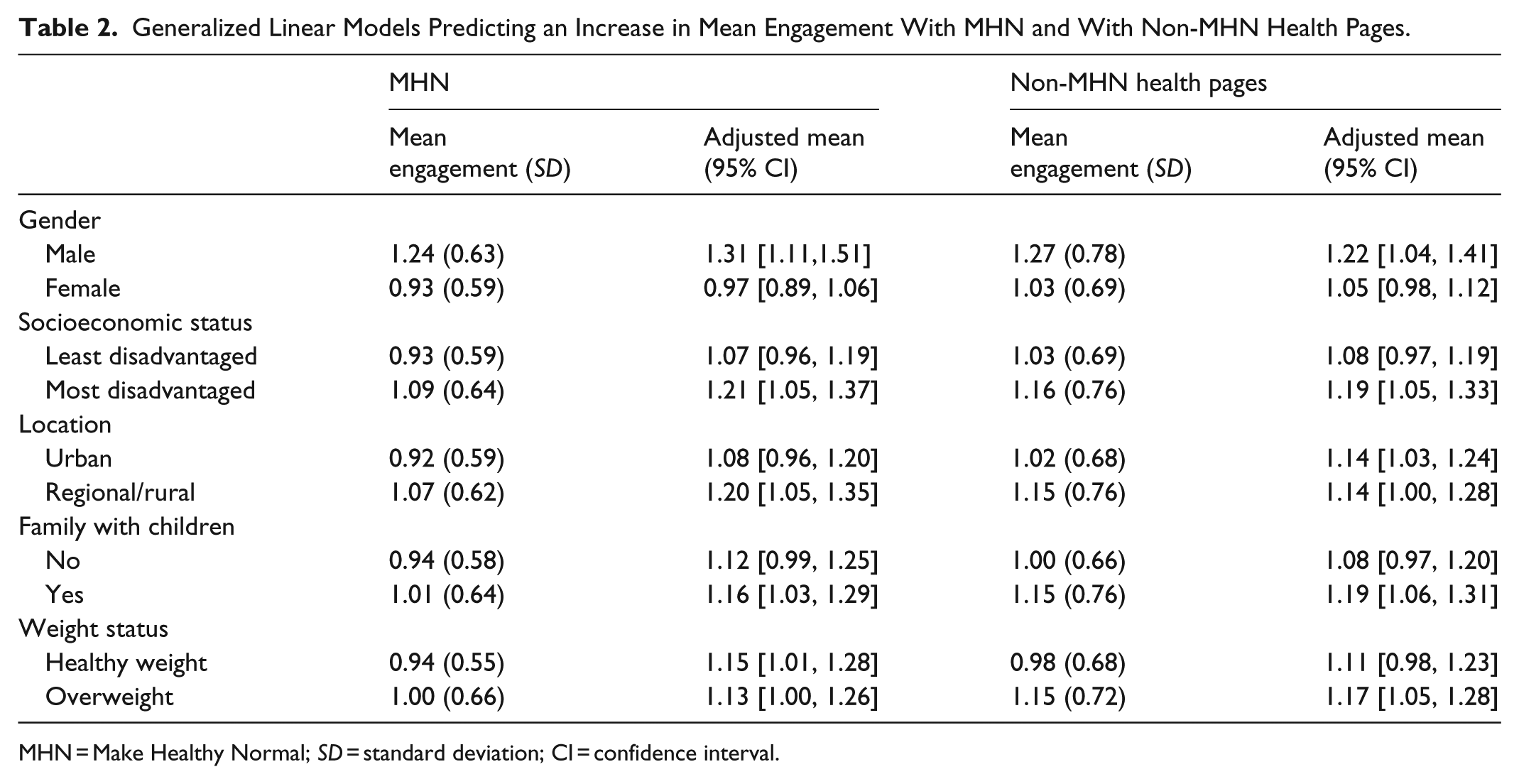
MHN = Make Healthy Normal; SD = standard deviation; CI = confidence interval.
Most fans reported an action outside of Facebook as a result of exposure to MHN content (Figure 3), most commonly “tried to change my behaviour or habits” and “visit the MHN website.” For every 1 year increase in age, participants were approximately 5% less likely to have done any of these off-Facebook actions, while participants who engaged more frequently with the MHN page were more than six times as likely to have done any of the actions (Table 3). No other significant differences were observed for any demographic or behavioral characteristics.

Response to MHN content outside of Facebook.
Logistic Regression Model Predicting Any Offline Response to MHN Content.

MHN = Make Healthy Normal; AOR = adjusted odds ratio; CI = confidence interval.
Focus Groups
Our analysis gave rise to five main themes that could broadly be divided into those that relate to context and those that relate to content (Table 4 and Figure 4). Specifically, contextual factors are those that a user brings with them in engaging with the page, either through the reasons for engaging with MHN on Facebook (“Drivers”) or the way they use Facebook more generally (“User practices”). Content factors, on the contrary, are more closely related to the specific topics that were addressed in the posts (“Post subject”), to the look and feel of a page (“Presentation”), and the nature of the content (“Nature of content”). Interaction between these factors influenced the extent to which users viewed and joined the MHN page, and subsequent engagement and assessment of the utility of the content. These five main themes and 13 subthemes are discussed in detail below.
Summary of Themes From Focus Groups With Illustrative Quotes.


Conceptual map of focus group themes and their subthemes.
Contextual Factors
Drivers
During the discussions, it became clear that participants had a number of reasons for engaging with MHN on Facebook that had little to do with the specific content or implementation of the MHN Facebook page. Rather, they came from established beliefs and norms about Facebook, health, and the role of government. We characterized this theme as having three subthemes: (1) centrality of social media, (2) trustworthiness, and (3) MHN as social benefit.
Centrality of social media
One of the major reasons participants engaged with MHN (and similar Facebook health pages) was because social media is central to their lives and represents a means to explore and connect with their interests. Integral to this was Facebook’s dominance as a social media platform, especially for older participants. Although some participants, particularly younger participants, preferred other platforms, especially Instagram, Facebook was commonly seen as essential to modern life because “everyone is on it.”
Participants reported always being connected to social media and seeing it as an integral part of how they communicate with friends and family, seek out news and information, and pursue their personal and professional interests. Many found it difficult to estimate the amount of time they spent each day on social media, explaining that they would look at social media whenever they had the opportunity. When questioned further, some professed that they spent “too much” time on social media, which was usually met with laughter and agreement from other participants, underscoring the ubiquity and habitual nature of engagement with social media.
Trustworthiness
In order for participants to be willing to engage with MHN and similar pages on any level, they needed to perceive these pages and their administrators as trusted sources of information. The MHN page was perceived as “trustworthy” as it is government run; pages backed by government health departments were afforded trust based on a belief that the government’s motivation would be social benefit (see below), rather than private profits. Trustworthy pages gave a sense of authority or expertise, were evidence-based, and were perceived as balanced. Established or well-known brands, like the WHO and large media outlets, were also trusted, as were qualified professionals and experts (including celebrities like Jamie Oliver). Seeing that particular Facebook friends had engaged with a page also conferred trust in that page. Pages that presented unscientific or unrealistic advice or content or extreme or fringe views were considered untrustworthy, as were pages that appeared to have an ulterior motive, such as to sell something.
MHN as a social benefit
A key reason for engaging with MHN specifically was that it was seen as providing a social benefit. Although most participants, even the fans, professed to know little about MHN as a campaign, there was agreement that campaigns of this nature are important initiatives, worthy of government attention and public support. Many of the younger participants, in particular, expressed personal support for the aims of the campaign, particularly the desire to change what is considered “normal.” These participants firmly believed that, while they themselves were “healthy,” many people in the broader community needed to improve their lifestyles. In this way, participants indicated that their current (or potential) engagement with MHN was motivated by a desire to support what was considered a worthy initiative, rather than to improve their own health.
User Practices
The second contextual factor reflects users’ established habits and practices on Facebook. These were unrelated to MHN but were nonetheless critical in determining when and how users would engage with the page.
Follow and Forget
Fans of MHN could generally not recall the last time they had seen or engaged with MHN content or what had drawn them to like the page in the first place. This reflects a very influential Facebook practice, that of “follow and forget.” Participants explained that once they had become a fan of a page, they would rely on its content appearing in their newsfeeds, rather than actively seeking out content by visiting the page itself. Many commented that this behavior was related to the large amount of content in their feeds, which discouraged active searching of pages and made it easy to miss content that did not immediately stand out. Regular exposure to content from a particular page was seen as important as, without this, pages are forgotten and are perceived as stale and out-of-date, making their messages easier to dismiss.
Selective Sharing
Participants talked about being very discerning with what they would share on Facebook. This was driven partly by privacy concerns, partly by concerns of being seen as an “over-sharer” (someone who discloses too much information about themselves), and partly by the type of Facebook user participants were. With regard to the latter, most participants considered themselves to be “lurkers”; users who did not post much of their own content but preferred to simply scroll through their newsfeed and see what others had posted. These users preferred to tag specific friends in posts rather than share a post to everyone in their network. Active users, on the contrary, were more willing to share posts where they felt strongly that there was a communal benefit for doing so; that is, they had a strong feeling that the information they were sharing would be of use or interest to everyone.
In summary, the reasons participants gave for engaging with the MHN page and in assessing its utility were backgrounded by general modes of interacting with Facebook. It appears that government health pages have a pre-existing attraction which is grounded in trustworthiness and social benefit, a context which primes participants for engaging with pages such as MHN. Once a page has been noticed, further interaction with that page is partly dependent on the user’s habitual ways of interaction with Facebook, in terms of passive or active seeking of that page’s content and their comfort with sharing content.
Content Factors
The contextual factors described above formed the backdrop for how and why participants engage with MHN or other similar health pages. Their explanations also made reference to more specific details about the content they expect and respond to on health pages. Our analysis has divided these elements into three themes, each with its own subthemes: (1) the nature of the content, (2) presentation, and (3) post subject.
Nature of Content
The nature of the content was important in maintaining participant interest. This reflects stylistic features of content that relate to what is conveyed, as opposed to presentation, which relates to how it is conveyed. We identified three subthemes to this theme: (1) responsiveness, (2) novelty, and (3) simplicity with depth. These represented the underlying essence or composition of the content.
Responsiveness
As mentioned above, participants used Facebook as a news source and therefore wanted health-related pages to respond quickly to emerging information and issues. This was expressed as an interest in hearing about the latest scientific evidence and what it meant for them and their lifestyle and a desire to have controversial or unscientific advice explained, challenged, or debunked in real time. There was also a perception that guidelines and evidence were constantly changing, leading to confusion as to what is and is not healthy. For example, both 50+ year-old groups raised the issue in the context of knowing how much physical activity they should do, which was prompted by the recent heart attack death of a prominent 47-year-old former athlete. These participants were concerned that they could do “too much” physical activity and might therefore be putting themselves at greater risk of heart attack.
Novelty
The discussions suggested that pages and content had to be informative while also being new or different to attract and maintain interest and engagement. Participants wanted ideas and inspiration for what they could do so messages that were perceived as being “old news” (e.g., that people should drink more water) would be ignored or dismissed easily. It was also important to see this new content regularly. “New” did not necessarily mean a new message; it could be the same message presented in a different way. While MHN content was felt to have potential, its novelty was often thought to be lacking.
Simplicity with depth
According to participants, messages and ideas posted on a health page needed to be simple and easy-to-understand. “Good” content was that which conveyed a clear message in as few words as possible or with no words at all (e.g., Figure 1a and b). Most participants felt they would quickly dismiss anything that required them to think too long or hard to understand it. Such content might have contradictory messages or messages that required decoding or additional reading to interpret (e.g., Figure 1c and d).
At the same time, if their initial interest was stimulated, participants also wanted the option of being able to find out more about the message or idea in a post (e.g., written recipes, links to further information, etc.). There was, however, disagreement across the groups as to whether this additional information needed to be in the post itself or accessible via a link. Older participants preferred a link while younger participants (18- to 30-year-olds) were less inclined to click on links and leave Facebook.
Presentation
Participants also discussed stylistic features that related to how content was presented: (1) personal relevance, (2) positivity, and (3) appealing visuals. These reflected the tone, feel, and appearance of posts and were influential in grabbing and maintaining interest in a piece of content.
Personal relevance
Participants needed to be able to relate to the page and its content to maintain their interest. This meant that the content should be relevant to their lifestyle, taking into account competing priorities and demands on their time and balancing the needs of the individual against the needs of their family, for example. Some suggested this could be achieved through personal stories from individuals who were “just like them” and had managed to make changes for the better. Others emphasized the importance of having images and messages that were appropriate to the intended audience and did not patronize or shame them. For instance, the image used in Figure 1c was felt by some participants to be stigmatizing and more likely to discourage action.
Positivity
Participants wanted the tone or feel of content to be upbeat, light, and positive. There was a general consensus across all age groups that pages needed to be positive to be inspiring and motivating, which participants believed would help them to achieve their personal health goals. Pages that focused on the consequences of unhealthy lifestyle were dismissed as being uninteresting or unappealing because they were seen as demotivating, unhelpful, and potentially patronizing. Related to this, a few participants suggested that some people may want to connect with other users for social support but this did not seem to be of personal interest to the participants.
Importance of visuals
Participants reported needing appealing and eye-catching (still) images in order for them to stop scrolling through their newsfeed and pay attention to content, including the thumbnail image used for videos. The thumbnail for an instructional recipe video (Figure 1d), for instance, was thought to be unlikely to grab the attention of participants because the finished product is not shown and the text in the thumbnail was deemed uninteresting and not revealing. Bright colors, appealing food, and well-composed photos were mentioned as important features of still images. Videos also needed to be well-produced, with consideration given to lighting and the composition of each shot, including the background. Participants described such videos as appearing “professional.” Videos without high production values were less likely to be watched because they were considered unimpressive and lacking authority or authenticity.
Post Subject
In addition to the stylistic features, we found that there were two particular subject areas about which participants were interested in receiving information or instruction from a page like MHN: (1) recipes and (2) active events.
Recipes
Recipes and meal planning were often the first mentioned by participants when asked what kind of posts they engaged with or wanted from health-related Facebook pages. Many participants professed to be followers of recipe-generating pages (e.g., Tasty, Taste, Jamie Oliver) but were aware that such pages often did not have health as an underlying goal. Participants wanted recipes that were healthy while also being appealing and simple, which meant being tasty, using commonly available ingredients, and being relatively quick and easy to make. At the same time, they also wanted variety in the types of meals and snacks that were shown, a driving factor in many participants’ decisions to engage with multiple recipe-generating pages. Participants responsible for preparing and cooking meals for a household, particularly for children, were the most interested in recipes and meal planning advice.
Active events
Although mentioned by fewer participants than recipes, there was some interest in being kept up to date on local events and classes that involved physical activity. “Local” was a relatively fluid concept: events could take place near where participants lived or worked (e.g., small yoga or exercise classes) or be large-scale, city- or state-wide events (e.g., fun runs like City2Surf; http://city2surf.com.au/). In addition, some participants discussed having a place on Facebook for users to organize walking or exercise groups with other users with whom they had no pre-existing relationship. However, this tended to be discussed as something that might interest other people, rather than something of personal interest. A small number of participants mentioned the possibility of including videos of exercise routines but, again, this was generally discussed as being of interest to others, rather than themselves.
In summary, if a Facebook user has an underlying interest in health pages making him or her receptive to the broad idea of campaigns with a Facebook presence such as MHN, this does not translate to steady engagement with posts, even when the user is following the page. According to our focus groups, the content needs to be presented and formulated to pique users’ attention, be applicable in their everyday life, and address topical concerns in health.
Discussion
To our knowledge, this study is the first to report on users’ experience and satisfaction with a public health campaign Facebook page and therefore provides new and useful insights for public health policymakers and practitioners. Our findings show that health pages like MHN are in demand but that there are critical contextual and content factors that will influence the level of engagement users have with a page. Public health organizations, including government health departments, are well placed to meet this demand as the contextual factors are, in part, working in their favor: they are generally seen to be conducting campaigns to benefit society and as trustworthy sources of health information and advice, which is consistent with available evidence (Grunseit et al., 2018). However, our findings also indicate that this trust is not sufficient for maintaining engagement; the content also needs to be of a high standard, meeting user expectations of nature, presentation, and subject. This highlights the need for sufficient, ongoing investment in the page and its content.
Our results suggest that users attracted to MHN and similar pages are generally very interested in health and value health highly, with survey participants tending to be fans of several health-related pages and many participants in both the survey and focus groups expressing personal support for the campaign’s aims. Although we cannot be sure of the sample’s representativeness, users attracted to this content appear to be healthier than the general population (Australian Institute of Health and Welfare [AIHW], 2016), particularly MHN fans who were on average more physically active and more likely to have a higher self-rated health compared to non-fans. Overweight and obese participants also appeared to be underrepresented in our survey sample, compared to the general population (AIHW, 2016). This might reflect the opt-in nature of Facebook pages, which means that users have greater control over what content they see, compared to traditional broadcast media (Smith, Niederdeppe, Blake, & Cappella, 2013), making it easier to avoid what might be challenging content. Alternatively, it could be that those who are already healthy are more attracted to health-related content on Facebook. Future research could explore if and how pages like MHN could attract different populations, including understanding who does not engage with health-related content on Facebook and why.
Page administrators for MHN and similar health-related pages can use our findings to guide their decisions about where and how to invest their resources. Both our survey and focus groups results highlighted a number of influential contextual and content factors that are important in generating and maintaining engagement with a page like MHN. It is important that practitioners consider both of these factors when designing and managing their own Facebook pages as they appear to be influential in determining the relative success or failure of a page. However, the level of influence over which page administrators have on these factors varies, with more influence able to be exerted over content factors than contextual factors (illustrated in Figure 4). For instance, our results suggest that MHN could look to introduce a direct link between the campaign and active events, similar to that seen in Sport England’s (2016) This Girl Can campaign, and to focus on creating and sharing high quality, varied, and simple healthy recipes. Recipes in particular appear to be an opportunity to meet a major consumer demand and, potentially, influence nutrition through Facebook. Participants were interested in accessing recipes despite the fact that recipes are available on myriad high-profile Facebook pages and through other online sources already. This finding may in part reflect confusion among consumers around how to apply dietary advice and guidelines in everyday life (Boylan, Louie, & Gill, 2012), and also a dearth of trusted, health-focused recipe pages (Kite et al., 2016).
Contextual factors, on the contrary, cannot be controlled directly by page administrators. It may be possible, however, to leverage or manage these factors to build or maintain engagement. For example, we found that it was rare for people to initiate an unprompted visit to the MHN page or similar pages, consistent with previous research (Woolley & Peterson, 2012). Participants instead preferred to encounter content in their newsfeeds. However, a key complaint about MHN from both survey and focus group participants was that they did not see the content often enough. Administrators could therefore look to manage this user practice of “follow and forget” by focusing on creating visually appealing content that will grab attention and by regularly paying for boosts to maximize reach. Similarly, MHN could look to create novel and sharable content to leverage the general support for MHN’s aims and its perceived trustworthiness and to capitalize on the practice of selective sharing. Our results suggest that one possible avenue for such content is to respond to current issues and controversies as it would likely be considered interesting and relevant to users’ networks, increasing its likelihood of being shared (Syn & Oh, 2015). There is also evidence showing that exposure to conflicting or confusing nutrition information is associated with confusion as to what constitutes a healthy diet and a loss of trust in health experts and their recommendations (Nagler, 2014). Therefore, this is an avenue that would not only address a clear need but also help to build and maintain trust in public health experts and organizations. It would also take advantage of social media’s unique ability to connect promptly and directly with the audience, something that cannot be done through traditional broadcast media (Freeman & Chapman, 2008). However, providing such responsive content would likely mean investing additional resources to be able to respond quickly and accurately to events and audience requests. Failure to invest sufficient resources would present a significant risk as errors or a failure to respond in a timely fashion would likely undermine the perceived trustworthiness of a page.
A major gap in this research is that we were unable to explore adequately the impact of exposure to MHN on Facebook on knowledge, attitudes, and behaviors. In the survey, most fans reported doing something outside of Facebook in response to MHN content, most commonly that they tried to change their own behavior. While at face value this is encouraging, it is unclear what this might mean in practice. Participants, for instance, might have answered “yes” to this question when they had tried to make one recipe or when they had made a permanent change to their dietary habits, two behavioral changes that have vastly different implications for population health. However, a robust evaluation of the impact of a Facebook page on population health would be difficult in the current fractured media environment (Regional TAM et al., 2016). Indeed, our focus group participants generally could not remember their last interaction with the MHN page or its content and otherwise had trouble identifying the source of “good” and “bad” content. This would make it difficult for any evaluation to attribute campaign effects to a specific Facebook page, highlighting the need for comprehensive evaluations of entire social marketing campaigns and broader health strategies (Kite et al., 2015) and for exploring innovative approaches to evaluating future campaigns (Niederdeppe, 2016).
This study had a number of additional limitations. First, the recruitment strategy meant that participants may not be representative of the broader NSW adult population, Facebook users generally, or fans of the MHN page specifically. However, given the evaluation was focused on users’ experience and satisfaction with the MHN page, rather than population-level impact, this bias does not discount our findings, but rather limits it to the subgroup who participated. In addition, the survey sample size achieved was significantly below expectations, reducing the power to detect differences between groups. For practical reasons, we could not collect data and conduct analysis simultaneously, therefore sampling was not based on theme saturation. This may mean that some themes remain unidentified, requiring further research. Furthermore, as the results relate predominately to one specific page that targets overweight and obesity, they may not be generalizable to other pages. Further research with similar pages and with pages addressing different health issues is necessary to identify consistent challenges and effective solutions. Finally, our findings relate specifically to Facebook and may not be relevant to other social media platforms.
Conclusion
Our findings make it clear that Facebook, and social media more generally, will continue to be a key channel for health communication because of its centrality to modern life. There is demand for the content and information that MHN aims to provide, although there is room for the page to improve its reach and the appeal of its content to better meet this demand. Page administrators may be able to directly and/or indirectly influence contextual and content factors to improve a page’s appeal and its reach. In particular, there is scope to produce responsive, novel, and sharable content through timely posting of evidence-based information on health and lifestyle in response to current events. Ongoing evaluation will be necessary to further explore these contextual and content factors and to refine content to ensure relevance and attractiveness. This includes considering ways to determine the relative contribution of the Facebook page to the overall impact of the broader MHN campaign.
Supplemental Material
User_perceptions_-_Supplementary_Tables – Supplemental material for User Perceptions of the Make Healthy Normal campaign Facebook Page: A Mixed Methods Study
Supplemental material, User_perceptions_-_Supplementary_Tables for User Perceptions of the Make Healthy Normal campaign Facebook Page: A Mixed Methods Study by James Kite, Bronwyn McGill, Becky Freeman, John Vineburg, Vincy Li, Nathan Berton and Anne Grunseit in Social Media + Society
Footnotes
Acknowledgements
The authors would like to thank the participants, SnapCracker Research & Strategy, Michael Collins and Michelle Maxwell from the NSW Ministry of Health, and Beverley Lloyd from the NSW Office of Preventive Health.
Declaration of Conflicting Interests
The author(s) declared no potential conflicts of interest with respect to the research, authorship, and/or publication of this article.
Funding
The author(s) disclosed receipt of the following financial support for the research, authorship, and/or publication of this article: This research was funded by the NSW Ministry of Health.

Supplemental Material
Supplemental material for this article is available online.
Author Biographies
References
Supplementary Material
Please find the following supplemental material available below.
For Open Access articles published under a Creative Commons License, all supplemental material carries the same license as the article it is associated with.
For non-Open Access articles published, all supplemental material carries a non-exclusive license, and permission requests for re-use of supplemental material or any part of supplemental material shall be sent directly to the copyright owner as specified in the copyright notice associated with the article.
