




Abstract
Drawing on the e-Diasporas Atlas project (www.e-diasporas.fr) and original empirical research, this study examines the complex role of the World Wide Web in supporting and enabling new types of diaspora identity politics. It compares the online identity politics of two conflict-generated diasporas: Tamils and Palestinians. Both of these stateless diaspora communities maintain a strong web presence and have mobilized around various secessionist attempts, grievance narratives, issue-agendas, and calls for the right to self-determination that have garnered significant attention from the international community and mainstream media in recent times. Analytical concepts from transnational advocacy networks (TANs) and social movement literature are used to draw attention to the dynamic identity-based processes and framing mechanisms that connect diasporic demands and political claims across online and offline environments. The data combine Tamil and Palestinian e-Diasporas hyperlink network maps with web-based content analysis and key respondent interviews. The study argues that online diasporic exchanges transcend host–homeland territorial boundaries and invite comparatively expressive forms of identity-based political engagements that are simultaneously both deeply local and digitally global. In particular, the analysis demonstrates that human rights–based language offers a unique streamlining bridge between various locales, countries of settlement, and the international system more broadly.
Introduction
Drawing on the e-Diasporas Atlas project and original research (Kumar, 2016), this study considers the complex role of the World Wide Web (hereafter web) in mobilizing “conflict-generated” diasporas and their associated diaspora identity politics. The rapid growth of information and communication technologies (ICTs) coupled with an acceleration of forced migration (Van Hear, 2003) over the past 25 years has pushed global diaspora politics onto the world stage, demanding a more empirically rigorous exploration from scholars across the social sciences. It is widely noted that diaspora politics build on a sense of place-based attachment (real or imagined) and are often expressed, negotiated, or performed from afar, “at a distance” (Adamson, 2012; Anderson, 1991; Lyons and Mandaville, 2010). The growing ease, cost-effectiveness, and versatility of online technology-enabled transnational exchanges make the web a quintessential outreach platform for a variety of non-state actors (informal groups, organizations, everyday individuals) involved in diaspora politics. Even so, “there remains a dearth of nuanced research on digital diasporas,” and the interplay between ICTs, online platforms, and diaspora communities remains relatively unexplored (Ponzanesi & Leurs, 2014, p. 11)
In this Special Issue, I take up this call by comparing the “online identity politics” of two “conflict-generated” (Cohen, 1997; Lyons, 2006) diasporas: Tamils and Palestinians. Both of these “stateless” diasporas maintain a strong web presence (Aouragh, 2011; Ranganathan, 2009) and have mobilized around various secessionist attempts, grievance narratives, issue-agendas, and calls for the right to self-determination that have garnered significant attention from the international community and mainstream media in recent times. The hyperlink analysis presented in the research will show that global diaspora politics are multi-dimensional in their approach and are intended for as wide an audience as possible. While often conflating identity with political interests, these decentralized online network structures organize themselves around ethno-religious grammar and community-specific symbology which function not only as unifying reference points for otherwise dispersed populations but also as intimations of identity formation in and of themselves.
In the following section, I present the conceptual framework used to guide my study, which builds on key literature from diaspora, transnational advocacy networks (TANs), and social movements. Analytical concepts from social movement literature are especially useful in drawing attention to the dynamic identity-based processes that connect diasporic agendas and claims transnationally. A major contribution of the study is its mixed-methods approach, which combines digital map visualizations (e-Diaspora Tamil and Palestinian corpora) with web-based content analysis (webCA) and key informant interviews. After explaining the three-pronged research approach, I shift focus to the empirical results and present findings from the Tamil and Palestinian e-Diasporas Atlas corpora. This is followed by a comparative synthesis, where I unpack the case study data to discuss the politics of language, strategic human rights frames, and localized (London, UK) sites of transnational diaspora mobilization. I use Tamil and Palestinian cases to shed necessary light on the growing relevance of the online as an arena for communicating, expressing and constructing “conflict-driven” diaspora identity politics—phenomenon that to date remains under-theorized and under-researched.
Diaspora Politics and Transnational Network Mobilization Processes
Over recent decades, the study of global diasporas and diaspora identity politics has emerged as a major topic of cross-disciplinary interest for the social sciences, but basic understandings and meanings of the term remain heavily contested. On one hand, many contemporary scholars recognize that defining diaspora as an exact and all-encompassing concept—or even as a contained unit of study—is growing increasingly problematic (Faist, 2010; Ragazzi, 2012). On the other hand, much of our conceptual understandings continue to unravel around core “triadic relations,” between the host country, the homeland, and the diaspora itself, and remain confined to this essentialist paradigm (Cohen, 1997; Sheffer, 2003). Today, “diasporas” have become more of a broad label of reference for dispersed communities and dislocation from an ancestral homeland through voluntary/economic migration or forced displacement. The sudden proliferation of the term has led to significant “concept stretching,” conflating notions of diaspora with ethnic minorities or religious groups, (im)migrants, refugee populations, transnational communities, and long-distance nationalism (Baser, 2015; Brubaker, 2005).
It is important to note that while diaspora as a politicized concept remains highly contested, a constant in its varying conceptualizations has become its transnational scope (Adamson & Demetrious, 2007; Bauböck & Faist, 2010). Transnationalism is understood as “the processes by which immigrants forge and sustain multi-stranded social relationships that link together their societies of origin and settlement” (Basch, Glick Schiller, & Szanton Blanc, 1994, p. 7). I offer a more nuanced and updated consideration of such dynamic cross-border processes, in which a shared sense of collective identity (usually national, ethnic, or religious) and attachments to a particular ancestral homeland (real or imagined) connect across web-based technologies of presence (Diminescu, 2008, p. 572). My focus on the connective opportunities of online network structures is an attempt to counter the black-box “territorial traps” and problems of “methodological nationalism” (Agnew, 1994; Wimmer & Schiller, 2002) that have until recently constrained in-depth inquiry of diaspora identity politics (Diminescu & Loveluck, 2014). With the help of digital methods software, I will show that the web helps mobilize and build new nodes (and sites) of diasporic representations, contributing to what Adamson (2012) calls “ongoing political transnationalism” (p. 31).
Keck and Sikkink’s work on TANs offers a valuable framework on which to (re)assess the multi-faceted collective identities that link contemporary diaspora mobilization activities. Transnational networks “promote causes, principled ideas, and norms” and are organized through relational, “voluntary, reciprocal and horizontal patterns of communication and exchanges” (Keck & Sikkink, 1998, pp. 8–9, 30). In this networked approach, instrumental goals, shared ideas, information, and values are the agents of motivation, the factors that bind calls to action across borders. Diaspora mobilization processes are argued to share many of these characteristics and yet are distinguished by specific identity-based bonds (ethnic, religious, national, sectarian identity) and sentiments of homeland attachment (Adamson, 2012). Instead of reducing diasporic relations to patterns of migration or displacement, it is argued that diasporic identities are more actively assumed through discursive constructions (and even contestations) of a transnationally dispersed sense of imagined community (Anderson, 1991; Sökefeld, 2006). This approach integrates identity-based sentiments of belonging or memories of (imagined or idealized) ancestral homelands into social movement frameworks and acts as a way of distinguishing diasporas from other transnational networks which focus on issues affecting the global commons (such as the environment, international trade policy, or nuclear proliferation).
In this study, I apply parts of the TAN framework and analytical concepts from the social movement literature (McAdam, McCarthy, & Zald, 1996; Meyer & Tarrow, 1998; Tarrow, 2011) to help draw attention to the dynamic identity-based processes and mobilization mechanisms that connect diasporic issue-agendas, demands, and claims across online and offline environments. While it would be a conceptual stretch to view diasporic mobilization and transnational social movements as one in the same, both processes often follow similar (leaderless, decentralized) logics which have been built upon non-state actors and fluctuating boundaries of inclusion and exclusion.
Interconnected concepts like mobilizing structures, political opportunities, and framing processes (Amarasingam, 2015) are used to underline the fact that diaspora identity politics are actively constructed through online strategies, hyperlinking, and digitized tactics, in which knowledge (the ability to shape, control, and use information) becomes a form of power in itself. For example, it is argued that new mobilizing structures 1 like the web (Adamson & Kumar, 2014) encourage new patterns of diasporic engagement and “create and sustain discourses of community” (Sökefeld, 2006, p. 270) that connect the local to the global. Scholars have also noted the importance of “hostland” political opportunities 2 in which stateless diasporas more readily transport “homeland” issue-agendas and struggles for secession and self-determination to countries of settlement by engaging in localized on-the-ground activity (Baser & Swain, 2010). Looking outward, actors involved in global diaspora politics benefit from the online development of grievance narratives, issue-based “interpretative packages” (Polletta & Jasper, 2001, p. 291), and framing processes 3 (Snow & Benford, 1992) that have the potential to resonate and strike a chord with not only participant community members but also wider audiences (including external bodies like the United Nations [UN]).
As tools for change, online platforms are beginning to function as transnational springboards for new and more public forms of diaspora identity politics. Kok and Rogers (2016) conceptualize these dynamic network processes as “transglocalisation,” where local, national, and transnational diasporic formations leave traces online, exist together but often act separately. My analysis of hyperlinked patterns of diaspora politics gains its inspiration from the handful of scholars who have transcended territorial boundaries to underline the transnational patterns of diasporic engagement and the increasingly important role of online technologies in mobilizing host–homeland activity networks (like the EU based MIG@NET 4 project). Recent scholarships have explored diasporic connectivity online as “digital diasporas,” “virtual diasporas,” “e-diasporas,” “connected migrants,” “young electronic diasporas,” and even “transnational imagined communities” (Axel, 2004; Brinkerhoff, 2009; Diminescu, 2012; Everett, 2009; Leurs, 2016; Mandaville, 2003). Others push for a fundamental methodological shift (away from qualitative methods) and have used digital methods to unpack “online structures” beyond descriptive analyses, which fail to fully grasp the network complexities of node-based diaspora activities (Diminescu & Loveluck, 2014; Kissau & Hunger, 2010; Kok and Rogers, 2016; Kumar, 2012, 2015). Drawing on methods used by the e-Diasporas Atlas project and webCA techniques, I offer an empirically rich exploration of the key activities, themes, and issue-agendas that I contend “make up” online representations and formations of diaspora identity politics. Rather than going online with a set of bound (triadic/essentialist) presuppositions, the research strives to discover a purpose from networked publics (boyd, 2010) within hyperlink data by studying its relevance to and influence on diasporic engagement. I seek to systematically capture and trace diasporic nodes and sites of online political mobilization and use digital methods to contribute a comparative analysis that goes beyond a single actor, website, or case study. Corpus map visualizations will help us to better understand how new online sites, node linkages, and information channels are changing the very contours of diaspora politics. Below, I present the research methodologies employed for each case study, which collectively aim to produce a comprehensive account of the patterns of online engagement and their associated impacts on global diaspora politics.
Methodological Approach and Research Design
The empirical data and analysis presented in this study draw from my broader doctoral research conducted between 2011 and 2014 on “stateless” diaspora communities and the activists involved in online representations of diaspora identity politics. For this study, I adopt a comparative case study approach (Tamil and Palestinian) and use data triangulation (e-Diaspora network visualizations, webCA, actor interviews) to identify and map out nodes and sites of online diasporic engagement. This allows for an online-based “axes of comparison” (Cunningham, 2001, p. 135) which sets my study apart from previous scholarship on “digital diasporas” or diaspora identity politics that go online with a pre-defined purpose or end up focusing on a handful of actors or locations (Bernal, 2014; Georgiou, 2006; Trandafoiu, 2013; Whitaker, 2004). Although the research in its scope extends well beyond continental Europe, efforts were made to contextualize each case study and their respective findings for the conceptual and theoretical goals of this Special Issue. The research aims to shed light on the flow of aggregates (connecting, sharing and hyperlinking web content) and the communicative channels and relational patterns that structure diaspora network mobilization across online and offline environments.
The web-based mapping and corpus building were performed under the auspices of the Paris-based e-Diasporas Atlas. Led by Dana Diminescu (2012), the e-Diasporas Atlas project aims to observe and analyze diasporic web presence through cartographic representations, with corpus networks representing a snapshot of a moment in time. First, a series of preliminary searches (in English) were conducted using the Firefox browser (e.g., “Tamil diaspora,” “Tamil community,” “Palestinian diaspora,” “Palestinian community”). Navicrawler (a semi-automatic Firefox extension) was then used to scan and crawl the web, archiving all hyperlinks (edges) between web nodes. After completing the systematic crawling phase (an overnight process), the collected web nodes went through a data enrichment process (location, language, text-mining) and corpus classification (manually coding type of website, actor, activity). Each website included in the corpora was filtered through the CoolWhois browser to trace IP address node registration information (https://www.whois.com/). Finally, the (classified) corpus networks were imported into Gephi, a software application that allows researchers to visualize, graph, and browse corpus networks (Bastian, Heymann, & Jacomy, 2009). Corpus networks were explored through algorithms to rank dynamic node-hyperlink data and make sense of these “diasporic” connections and exchange patterns. Through network analysis, clusters begin to form (as dictated by the thematic classifications recorded in the data enrichment phase). As a tool for sharing information, the e-Diasporas Atlas, the project’s methodology, and its 27 corpora are easily accessible (http://www.e-diasporas.fr/)
The mapping was then supplemented by a webCA using network algorithms in the form of corpus node hyperlinks (frequency data) to create the sample (40 websites) for each case study. According to Herring (2004), “[t]he homepage is the minimal unit that defines a website” (p. 52), meaning it is what users are most likely to encounter, hence the most salient from a research perspective. A one-click down approach was used to accommodate different website interface designs and gather information from the more frequently viewed pages of the sample (e.g., the “about us,” “mandate,” and “mission statement” page of a website). Keywords and phrases for the webCA were selected based on initial exploratory observations and focused on the prevalent themes, issues, and narratives being articulated on node websites. In each case, the first round of website text frequency calculations was complemented by a second round of frequency validation, in which the same text was lifted from the units of analysis and recounted. Each data set was input into Wordle (http://www.wordle.net/) to help generate visualizations or “word clouds” from the text and is presented in the comparative synthesis section of the study.
Interviews (n = 16) were organized based on corpus data sets and a snowballing technique, where actors briefly mentioned fellow community leaders, political activists, bloggers, and organizations in their online–offline network. While fairly open-ended, interviews were framed by two main lines of enquiry, the first being the individual actor and the second focusing on online activities. This entailed considering respondents’ overall relationship and understanding of the web as a mobilizing structure. Of great importance was uncovering why they chose or felt compelled to engage in the first place and for what purposes. Semi-structured interviews were conducted both face-to-face (in London, UK/Toronto, Canada) and through a variety of media (via Skype, telephone, and email chat interfaces) to accommodate distance and the respondent’s preference. Given the contentious nature of some of themes discussed (whether rooted in grievances, trauma, community) emphasis was placed on maintaining conditions that made the respondent feel as comfortable as possible. Having laid out my theoretical framework and methodological approach, I now turn to the empirical case studies.
The Tamil Diaspora and Narratives of Homeland Struggle
As a community largely defined by conflict-driven migration, contemporary identity-based political bonds remain rooted in homeland grievances and the struggle for liberation of “Tamil Eelam” in North East Sri Lanka. Although many Tamils emigrated in the early years of Sri Lankan independence (1948), a mass exodus began at the start of the 26-year-long Sri Lankan civil war. Between 1983 and 1998 over 450,000 Tamils sought asylum in Western Europe and North America (Wayland, 2004, p. 414). Such amplified migration patterns were particularly obvious in Canada, where the Tamil population increased from just 2,000 in 1983 to an estimated 200,000 after the 2000s (90% reside in the Greater Toronto Area) (Tekwani, 2003, p. 188). Past trauma and homeland grievances remain interwoven across contemporary communities in countries of settlement. Indicative of generational shifts, the Tamil struggle for self-determination has moved beyond the shadows of the Liberation Tigers of Tamil Eelam (LTTE) who were defeated in 2009. Grievances associated with the anti-Tamil pogroms (“Black July”) and the bloody civil war of 1983 serve as annual reminders of the suffering experienced by “brothers and sisters” in the North East. In the digital age, the individuals who publicly link themselves to past traumas reshape the narratives surrounding historical grievances, pointing to a transnational community that exists beyond essentialist/triadic analyses. As confirmed by key informant interviews, the web has expanded the opportunities and motivations of Tamil activists and diaspora community members, who use the platform to invite wider audiences to engage in online–offline mobilization activities.
Web Cartography: Tamil e-Diasporas Atlas
Consisting of 243 nodes, Figure 1 provides a visual representation of Tamil activities and network exchanges online. Corpus findings indicate that the majority of activity linkages stem from news, human rights, and community-based website nodes (183 of 243 nodes). As key news authorities, http://tamilnet.com/ and http://dailymirror.lk/ structure and steer the information flow between corpus node linkages. We note the dense cluster of activity at the bottom left of the corpus, an area in which both of these nodes maintain an influential presence. While community-specific, these nodes characteristically provide updates on newsworthy domestic and international affairs through informative, fact-based headlines. Equally visible in the bottom left cluster are human rights–based linkages, which maintain relations with nodes concentrated on the top of the corpus. This differs from community-based nodes, which are structured more evenly and maintain linkages throughout the corpus. Overall, the activity isolation highlights the way news-based node linkages flow throughout the corpus, providing much of the network structure. To gain a better understanding of the proportional influence of these activities, we can also examine e-Diaspora link statistics (edges) to consider the overall authority and connective “reach” of corpus node subsets (Table 1).

Tamil corpus activity map.
Corpus Node Edges Distribution.

Statistical data obtained through the data enrichment (manual coding) phase of the e-Diaspora mapping complement visual representations of online Tamil activity. Table 2 presents the top 10 Tamil corpus authorities as informed by inbound linkages (e.g., connections from other corpus nodes). We note that the majority of corpus authorities empower news-based activities. Website domain names imply that the subjects of discussion will be newsworthy community affairs. With the exception of http://hindustantimes.com/, http://hindu.com/, and http://thehindu.com/ (Indian news sources), nodes are specific to the Tamil community. I argue that by disseminating “newsworthy” community updates, corpus authorities play an important role in feeding calls for mobilization. Nodes characteristically represent large-scale actors (not individual bloggers) and are defined either formally as organizations or informally as group collectives (Figure 2). Interestingly, corpus authorities are registered to locations outside of the ancestral homeland, highlighting the important role diaspora advocacy networks play in maintaining transnational linkages between online and offline environments.
Top 10 (Authoritative) Tamil Corpus Websites.


Tamil corpus actor map.
If coded based on domain address registration details, we find that a significant portion of nodes are untraceable (39%). Of those traceable, some 37% of all corpus linkages maintain connections with nodes registered in the United States, with http://tamilnet.com/ standing at the center of the sub-classification. The reach and presence of the UK country cluster are minimal, as compared to the US-based nodes, only 11% of all corpus linkages connect with UK-based nodes. Discussed in greater detail in the comparative synthesis part of this study, the language classification of the Tamil corpus map (Figure 3) provides a visual representation of the overall influence of language in dividing and clustering node linkages. English-based nodes make up 57% of all corpus nodes and visibly cluster on the left of the corpus structure. One of the most notable features of the corpus network is the cluster of Tamil language nodes in the right of the structure. Consisting of 46 nodes (19% of the corpus), Tamil language nodes connect with only 33% of all corpus linkages. This is significantly lower than websites that operate entirely in English, which are connected to 73% of all corpus node linkages.
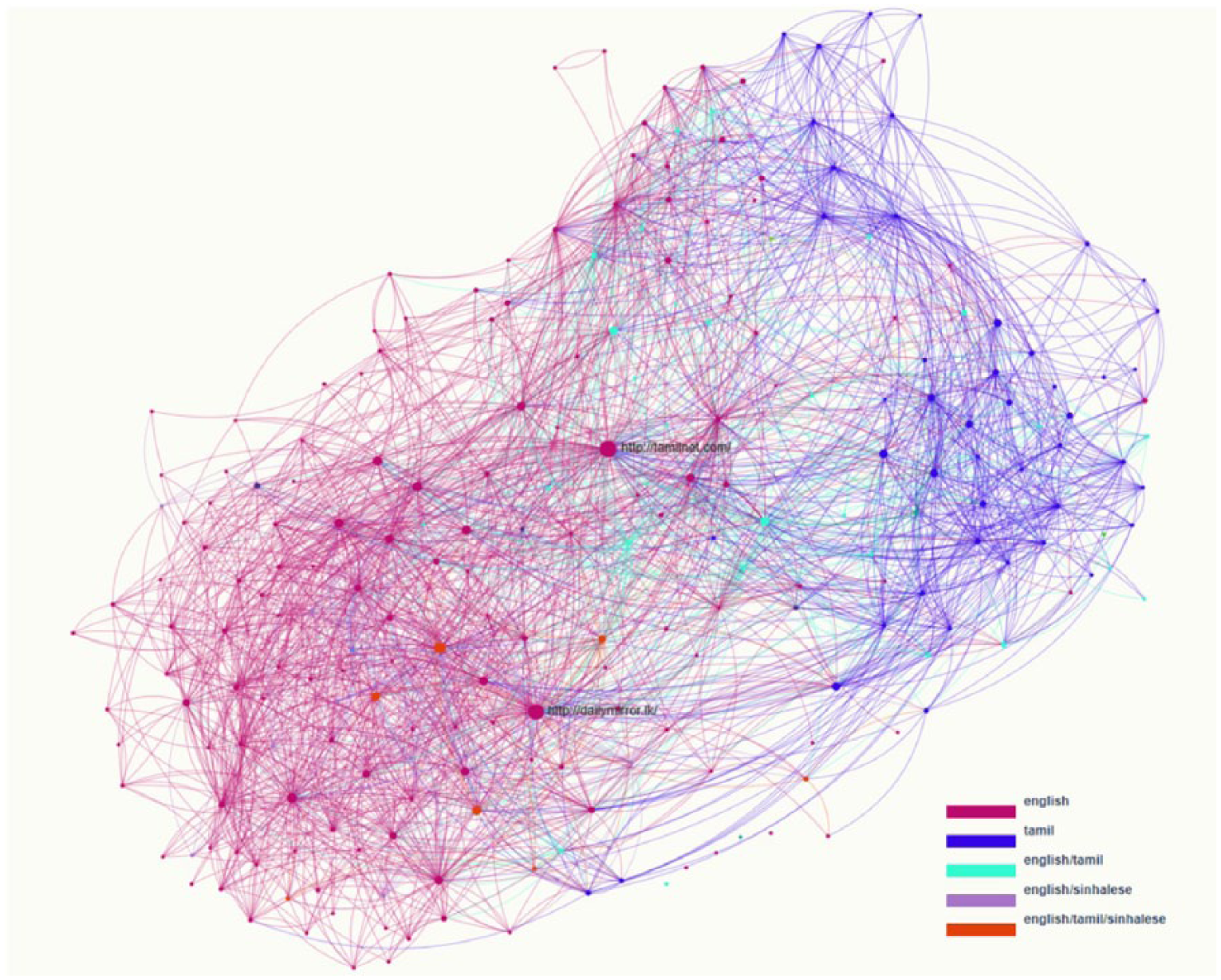
Tamil corpus language map.
The Palestinian Diaspora and Narratives of Forced Exile
For over 50 years, Palestinian collective identity has remained well rooted in narratives of conflict and the struggle for self-determination in the territorial homeland. Palestinian grievances are largely rooted in sentiments of forced “exile and displacement” (Rabinowitz, 2005, p. 47). This is particularly linked to the Nakba (day of catastrophe) of 1948, and the 1967 Six-Day war known as Naksa (day of setback), during which hundreds of thousands of Palestinians were forced to flee their homes. Although decades in the past, these events continue to bond and unite dispersed Palestinian populations. Today, it is estimated that some 75% of Palestinians live outside their ancestral homes (Rabinowitz, 2005). As of 2013, the Palestinian Central Bureau of Statistics (PCBS) estimates there to be some 11.8 million Palestinians worldwide, of which only 4.5 million live in Palestine (44.2% are considered United Nations Relief and Works Agency refugees). Over half of the total population lives outside Palestine, with 5.2 million residing in neighboring countries (Jordan, Lebanon, Syria), 1.4 million in Israel, and some 665,000 around the world (State of Palestine, 2013). More recently, the Gulf region, Europe, and the United States have emerged as key destinations for Palestinian migrants (Rekacewicz, 2000). The history of messy dispersal and the issue of Palestinian refugees play a crucial role in fusing Palestinian homeland issues to international politics. The echoes of Palestinian land claims and inconsequential UN resolutions 5 have been heard across the world for decades and remain a source of intrigue for individuals outside the community. Grievance narratives have had time to brew and are now maintained by self-perpetuating activist networks that often have limited identity-based attachments with the diaspora. Catering to a transnational audience, for example, online platforms have come to serve as an empowering resource for community members and non-Palestinian “cause-based” activists to join forces in their ongoing support for Palestinian political rights.
Web Cartography: Palestinian e-Diasporas Atlas
Consisting of 493 nodes, Figure 4 provides a visual representation of Palestinian online activity networks. When compared to the Tamil e-diaspora, we can see that node linkages are densely interwoven and clusters are extremely difficult to decipher in the corpus structure. Just under half of all corpus nodes center on news, community, peace, and political rights–based activity (239 of 493 nodes). By streamlining information flow linkages throughout the corpus, electronicintifada.net is highlighted as a key network authority. As presented in the statistical data below, the website serves as the overarching authority information hub for the majority of Palestinian online activity. News-based linkages maintain exchange influence throughout a significant portion of the corpus structure. When analyzing the Palestinian activity map visualization, we also note the bridging characteristics of community, peace, and political rights linkages. This is most visible in the bottom right of the corpus which largely consists of activity nodes based on protest, solidarity, and boycott. If we dig deeper into the link statistics (edges) provided in the map visualization, we get a better sense of the overall influence and connective “reach” of corpus node subsets (Table 3).

Palestinian corpus activity map.
Corpus Node Edges Distribution.
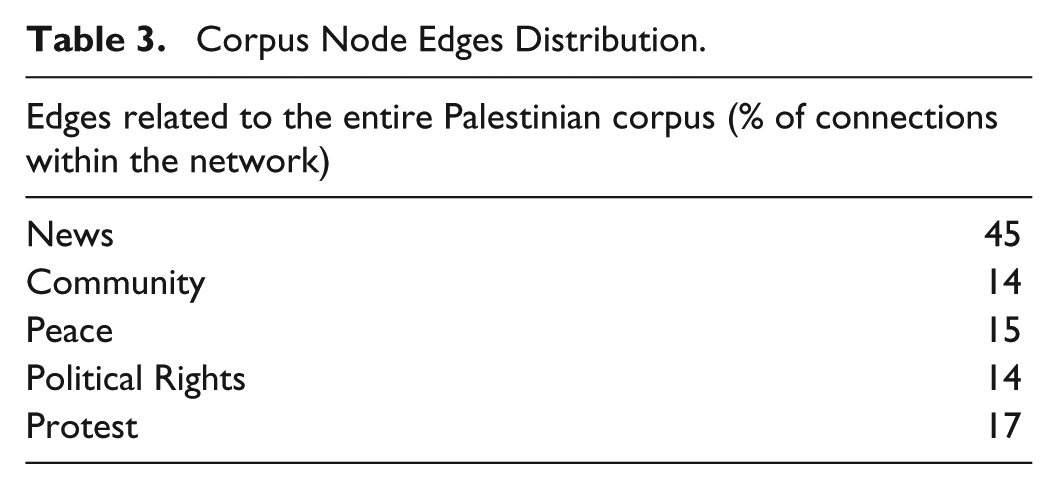
Table 4 presents the top 10 Palestinian corpus authorities as determined by inbound linkages (e.g., connections from other corpus nodes). Compared to the Tamil case, we can see that while the corpus is Palestinian-specific, it is not directed by or representative of the diaspora per se. As opposed to referencing the “ethnic” aspects of the Palestinian community, as essentialist approaches would have us believe, corpus authorities focus on the Palestinian political cause. Website domain names are expressive and monitor Palestinian political affairs in solidarity with the Palestinian people. It should be noted that http://amnesty.org/ is the only non-“Palestinian”-specific website to carry authority within the corpus. As a non-governmental organization (NGO), Amnesty International is widely recognized as a watchdog for issue-agendas pertaining to international justice, human rights, and refugees (Hopgood, 2006). Like the Tamil case, nodes characteristically represent large-scale actors (not bloggers), (media) organizations, and informal group collectives (Figure 5). The mapping results suggest that the conceptual boundaries surrounding the so-called “digital diaspora” are especially flexible in the Palestinian case. Rather, the Palestinian cause caters to a wider transnational audience, which intertwines and muddles the network boundaries between online “diaspora politics” and transnational advocacy/social movements.
Top 10 (Authoritative) Palestinian Corpus Websites.


Palestinian corpus actor map.
Nodes registered in the United States maintain a strong corpus influence (58% of all nodes link to the country cluster). Some 21% of all corpus linkages maintain connections with nodes registered in the United Kingdom (68 nodes). Interestingly, the findings reveal that nodes based on Israel (24 nodes) and Palestine (22 nodes) maintain an “in profit” (inbound > outbound) relationship with US, UK, and Canadian country-clusters. These transnational linkages point to a network relationship, in which “diasporic” web nodes “link in” to nodes located in Israel/Palestine that are believed to be “closer” to the ground realities in the contested homeland.
Discussed in greater detail in the forthcoming synthesis section of this study, the language classification of the Palestinian corpus map (Figure 6) highlights an overriding dominance of English (80% of nodes). 95% of all corpus linkages are related to English language nodes, which is significantly greater than in the Tamil case. Bilingual English/Arabic language nodes represent only 4% of corpus nodes (19 of 493 nodes) and maintain connections with only 9% of all corpus linkages. We also note the variety of global languages such as French, German, Italian, Hebrew, and Dutch—pointing to the ever-growing internationalization of the Palestinian cause. Similar findings were reported across many of the case studies conducted through the e-Diasporas Atlas mapping project (Diminescu, 2012), which suggests English as a key language of “global” diaspora politics.

Palestinian corpus language map.
Comparative Synthesis: Discussion
Language and Identity Politics
In each of the case studies, English was found to be the dominant language of online diasporic activity networks. The expansion of English as a universal language of human rights, international politics, and the digital age are interdependent and are mutually reinforced through ongoing processes of globalization (Pennycook, 1994). Such trends may for these reasons be more of a question of operational utility based on common fluency and linguistic capabilities between dispersed migrant populations across multiple countries of settlement. The use of English in contemporary diaspora identity politics presents an interesting cleavage because native language continues to be a salient marker of collective identity and family kinship and reaffirms ethno-cultural attachments to the ancestral homeland. The Tamil case most visibly demonstrated trends of politicized linguistic identity. Language has long been a source of division and conflict between Tamil and Sinhalese populations in Sri Lanka (often linked to the 1956 Sinhala Only Act). In recalling his experiences growing up in Sri Lanka, a member of the Canadian Tamil Congress (CTC) explained,
we were forced to learn Sinhala . . . policy after policy disenfranchised the entire Tamil group. We lost the language rights, representation, we started losing everything . . . then came the riots. (21 June 2012)
The Tamil language is considered a defining marker of Tamil ethnic identity, and while deemed an official language in 1987, it remains a key pillar of contemporary diaspora politics. Language is politicized for the transnational Tamil diaspora because it is directly pinned against Sinhalese nationalism and is used to frame demands for political rights and self-determination in the North East. Linking these grievance narratives to homeland populations, a member of the Tamil Youth Organisation United Kingdom (TYOUK) noted, “the people in the North East are very protective of language, they say ‘how can you support the cause if you don’t speak it?’ . . . they get offended when you don’t speak Tamil” (20 September 2012). By contrast, one of the key defining features of the Palestinian case is the prominence of non-community members, who in support of the Palestinian cause use online platforms to join transnational Palestinian solidarity networks. Compared to the Tamil case, Palestinian online identity politics caters to a transnational audience, conflating identity-based political bonds with political interests and supporters of the Palestinian cause. English is used to tackle the linguistic barriers that would otherwise impede the ability of actors and supporters to organize and coordinate transnational solidarity campaign networks. According to a member of Palestine House, increased technological and digital literacy over the past decade has impacted the linguistic mediums that facilitate Palestinian online exchanges:
In the last 10-15 years even people in the Arab world have started speaking English. People and students communicate, feel at ease with it . . . when I send out emails in Arabic, I receive messages back in English. (21 June 2012)
As visible in Figure 7, iconic imagery, symbolic markers, and ethno-religious grammar play an important strategic role in building and contributing to cross-border sentiments of shared collective identity.

Tamil and Palestinian online content: (a) Free Tamil Eelam online global campaign (TYOUK) (May 2014) and (b) Palestinian Corpus Websites: badil.org and electronicintifada.net (November 2012).
(Re)framing Diaspora Politics Through Human Rights
The prevalence of rights-based discourse in (re)framing homeland grievances and calls to action is considered a key research finding of this study. The impact of human rights discourse, however, differs between each case and is largely dictated by the narratives of forced migration and displacement that circumscribe web networks. Cross-comparisons show that website content is noted to focus largely on political grievances, international recognition, and collective identity—all within the “master” frame (Snow & Benford, 1992) of human rights. It would make strategic sense that identity-based diasporic claims of injustice would also cluster into rights-based master framing processes, especially online. Diaspora identity politics are more likely to “stick” and become part of global politics when principles of human rights are employed to gain legitimacy from the international community. These comparably adaptable human rights–based master frames further emphasize the growing limitations of the essentialist/primordial focus that relies on static triadic contained models for diaspora identity politics.
We can look at the webCA results to help shed light on the human rights narratives and issue-agendas dominating Tamil and Palestinian diaspora identity politics online. Figure 8 suggests online proclamations of Tamil collective identity to link conditions on the ground to global affairs through publicized reflections on past migration, violent struggles, and homeland injustices. With the transnational Tamil community now at the forefront of online advocacy (keywords: “diaspora,” “nation”), the web has come to function as a mobilizing structure to more readily raise awareness of the traumas experienced at the hands of Sri Lankan governing authorities. Appeals for international justice employ a rights-based approach in an effort to gain wider recognition and support from external audiences and bodies like the UN (keywords: “human rights,” “reconciliation,” “war crimes,” “justice,” “genocide”). The web serves as a focal hub for contemporary actors involved in Tamil diaspora politics to (re)engage more strategically with the struggle for self-determination, beyond the legacy of the LTTE.

Tamil web content analysis.
By contrast, the Palestinian findings (Figure 9) further demonstrate the ongoing conflation between collective representations of Palestinian identity and the Palestinian political cause online. The web offers a connective opportunity structure for network activists to raise awareness of the conditions in the occupied Palestinian territories more publicly (keywords: “occupation,” “human rights”). Online activists mobilize around issues in the Palestinian homeland and the broader Israeli-Palestinian conflict, as evidenced by the extensive reference to collective action (keywords: “support,” “solidarity,” “campaign,” “resistance”). The controversial Boycott Divestment and Sanctions (BDS) campaign maintains a significant presence online (keywords: apartheid, boycott) and is a notable example of non-violent transnational political mobilization in which online networks are used as instruments to influence on-the-ground politics. We note that online “diasporic” representations of collective Palestinian identity intertwine unresolved grievances, with protest agendas and homeland politics.

Palestinian web content analysis.
As a framing subject, human rights discourse contributes a dynamic political opportunity around which stateless and leaderless diasporic formations can structure themselves and mobilize. Democratic principles (justice, equality, freedom) and a more liberal host country social fabric also lead many diaspora actors to steer away from violent tactics that can undermine the public legitimacy of homeland grievances. Tamil activists across the transnational diaspora community have made concerted efforts to publicly disassociate calls for self-determination in the North East from militant aspects of the “armed struggle” commonly associated with the LTTE. Noting the shift to non-violent online mobilization strategies, the interviewee from TYOUK explained,
we want Tamil Eelam, but the mechanisms have changed . . . now it’s about being nuanced, the mode of struggle has change. Now I am networking, that’s what the struggle is about, links and a vision . . . (20 September 2012)
Similarly, the editor of the UK-based news site Tamil Guardian noted that much of their human rights–based activism relied on outbound messaging and networking:
Online, we are rerouting the narrative, the struggle is there for us now. Our political views are similar . . . the Tamil community is absolutely behind the fact that a genocide occurred. (23 August 2012)
A human rights framework also allows non-state actors involved in homeland politics to pin claims to the international system and the UN more readily. This in turn allows issue-agendas to gain potential support from wider activist audiences without necessarily compromising the authenticity of diasporic claims. On this point, a member of BADIL (Resource Center for Palestinian Residency and Refugee Rights), which is based in Palestine, explained that the organization used “a clear methodology, not according to any agenda, but to international law,” adding that “technology has made it easier” to connect with refugees across the region (15 June 2012). The organization’s rights-based approach has equally provided an outbound channel for cross-collaboration beyond the diaspora. “We deal with everyone on an equal basis,” noted the interviewee, “the main criteria is if they believe in Palestinian rights or not.” It is less surprising, then, that a number of grassroots organizations in the Palestinian corpus are actually mobilized Jewish-led peace organizations. Noting the increase in Jewish-led Palestinian advocacy, a member of one such US-based organization explained, “more and more you see a percentage of people who identify social justice as the source of their Jewish identity” (15 May 2012). A member of the UK-based Jews for Justice for Palestinians (JfJfP) similarly noted that they were “more about the political identity” and in their support for a peaceful resolution, occasionally “got some difficulty from Palestinians themselves” (11 May 2012). Ultimately, these reflections show that the highly malleable discourse of human rights can co-exist and conflict with the collective identities that define and bind “connected migrants” (Diminescu, 2008) and diaspora communities online.
Mobilizing Homeland Politics Across Global Cities
Cross-comparison between Tamil and Palestinian cases suggests there to be an important yet understudied connection between location, transnational mobilization processes, and homeland/diaspora identity politics. For example, in the Palestinian case, online activist networks played an important role in mobilizing local support during the recent 2014 Israel-Gaza conflict (Operation Protective Edge). Palestinian solidarity groups and activist networks used the web to update and coordinate protests against the offensive. Scenes of violence against innocent civilians (particularly children) in the Palestinian homeland were widely circulated online, sparking a series of demonstrations in major cities across the globe, including Paris, London, Frankfurt, Wellington, Buenos Aires, and Durban (The Guardian [“Gaza Violence”], 2014). An activist who took part in the 26 July 2014 London protest noted that she had been invited to attend the event through Facebook (Figure 10). She explained that she followed many human rights organizations online, including Palestinian Solidarity, and had an interest in social justice. According to the interviewee, real-time images from Gaza were key to raising international awareness of the conditions in the occupied territories: “when children are the victims, people can no longer look away” (26 July 2014).
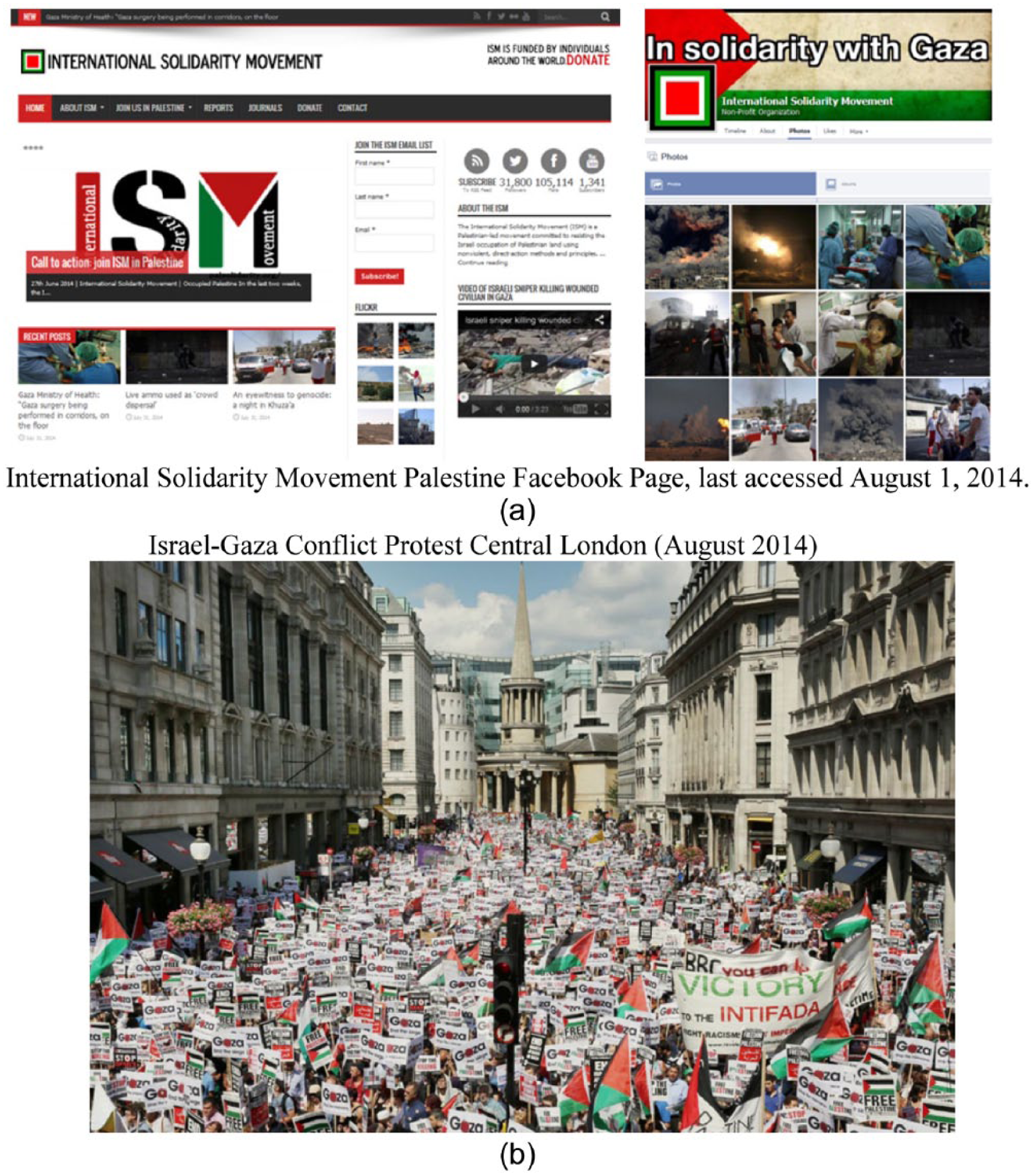
International solidarity movement (palsolidarity.org): (a) International solidarity movement Palestine Facebook page, last accessed 1 August 2014; (b) Israel-Gaza conflict protest, Central London (August 2014).
The role of web-based advocacy in mobilizing populations across host societies was also notable in the Spring of 2009, with the defeat of the LTTE by Sri Lankan authorities signaling the end of the 27-year-long civil war (Figure 11). Demanding justice for innocent Tamil civilians, simultaneous protest events were coordinated through online platforms across major cities around the world, including Paris, Oslo, Zurich, Sydney, New York, Geneva, and Toronto. The webmaster from blackjuly83.com (a commemorative site) noted the importance of the web in building community and steering collective action to the streets during this time:
I don’t think the [2009] protests would have worked so well if we didn’t have images posted online . . . to have this, “I’m here and there” the youth were part of this. (19 July 2012)

Tamil protest, London 2009.
One of the more publicized series of demonstrations occurred in London, where protestors organized mass sit-ins, hunger strikes, and roadblocks demanding attention from media outlets and the international community (Table 5). Spearheaded by the British Tamil Forum, the protests lasted a total of 73 days (“Tamil protests ends” [BBC], 2009). During this time, the number of public protestors grew daily, from a handful of activists to over 15,000 as organizers called in support via SMS text messaging and online posts (BBC, 2009).
Corpus Distribution—Location (Percentage of Corpus Nodes).

Filtered through the CoolWhois IP tracer (see Methodological Approach and Research Design).
It is most striking that in linking the local to the international, London, UK, emerged as a key location with symbolic authority for each case. The importance of London as a global city—or at least a city that localizes global civil society—has emerged as an important area of research in recent times (Adamson & Koinova, 2013; Schiller & Çağlar, 2009). Looking beyond colonial legacies and the post-Brexit future, the sheer volume of capital, labor, and culture flowing through London today has made the city stand out as a focal hub for migration politics, super-diversity, and global affairs (Sassen, 2010; Vertovec, 2007). Adamson (2015) has pointed to the density of institutions (government offices, cultural organizations, media conglomerates, international institutions, NGOs) as a key reason why London is beginning to play an increasingly important role as a site for global constituencies and transnational identity politics. To fully explore the above trends would require further exploration, which is beyond the scope of this study. However, we can at least look at these commonalities as an indication that local socio-political effects increase the opportunities available in the processes of mobilization.
Conclusion
As with any study, the presented research too has its limitations. The digital tools developed by the e-Diasporas Atlas project were used to sketch and map out the online (node-hyperlink) presence of “conflict-generated” Tamil and Palestinian diasporas at a particular moment in time, based on a series of web-crawls that had a definitive timeline (Winter to Spring 2012). I did not trace ongoing web-based changes in real-time or map out social media (Twitter, Facebook, Instagram) networks that often form a “Web within the Web” (Diminescu & Loveluck, 2014, p. 12). Instead, I used corpus map visualizations to delve into the new nodes, multiple sites, and information channels that play a key role in supporting diasporic engagement and identity-based political mobilization processes. The technological traces of “diaspora” presented in this study provide a partial glimpse into the online formations, representations, and practices that are (re)shaping the very contours of diaspora identity politics today.
By using a web-led e-Diasporas Atlas approach, the study went beyond descriptive theorizations of (ethnically, nationally, religiously) bound diasporas as “things” that exist between the host and homeland. Instead, it advocated for greater, more precise consideration of identity-based activities and shared political interests that are transnationally mobilized and constructed online in the name of a particular diaspora (on behalf of dispersed people or ancestral homeland) (Brubaker, 2005). As evidenced by the multi-dimensional network linkage patterns studied in each case study, the landscape of global diaspora politics is rapidly changing in the digital age and extends well beyond triadic relational models. From a social movement perspective, I used a mixed-methods approach to help trace the various ways in which online platforms operate as transnational springboards for a multitude of diasporic grievance narratives, political claims, and issue-agendas. The empirical contribution of the research (e-Diaspora maps, webCA, interviews) quite literally shows that it is indeed possible to capture, visualize, and unpack the transnational dimensions (Adamson & Demetrious, 2007) that shape new online diasporic mobilization processes.
Tamil and Palestinian cases were used to demonstrate that online “diasporic” exchanges transcend territorial boundaries and invite comparatively expressive forms of political engagement that are simultaneously both deeply local and digitally global. While ethno-religious grammar and community-specific symbols play a crucial role in structuring and maintaining transnational identity-based bonds online, so too does the language of human rights (Snow & Benford, 1992). In each empirical case, human rights–based language was found to offer a streamlining bridge between everyday people across various locales, countries of settlement, and the international system (centered around the UN). From my research findings, I suggest that the discourse on human rights adds organizational scaffolding around horizontally networked online platforms that are malleable enough to accommodate different narratives of migration (voluntary or conflict-driven patterns), refugee issues, and faith-based collective identities on a transnational scale. I argue that by embracing a rights-based approach, non-state actors involved in global diaspora politics can create open-ended opportunities to gain or leverage support from wider audiences without having to necessarily compromise particular loyalties or emotional attachments to the ancestral homeland (real or imagined). Politicized aspects of collective identity can cluster around or “link in” to global affairs with significantly greater ease through these strategic framing processes. This is important for future research because it shows that in the digital age, grievance narratives and political claims (whether Tamil, Palestinian, or other) are being acknowledged and framed not just as diasporic problems but as international issues affecting international politics.
For these reasons, I recommend a more in-depth consideration of the offline context, particularly in terms of key locations and global (increasingly “smart”) cities that act as important nodes or opportunity structures in transnational identity politics (Adamson & Koinova, 2013). Future research should explore the interplay between global cities like London, UK, and processes of “transglocalization,” a novel concept put forth by Kok and Rogers (2016) to explain multi-territorial engagements that leave traces online and connect local, national, and transnational diasporic formations. This would be a potentially vital link in future explorations of online diaspora mobilization and a fruitful way to challenge “methodological nationalism” and introduce new nodes, sites, channels, arenas, and networks of power to the study of global diaspora politics.
Footnotes
Declaration of Conflicting Interests
The author(s) declared no potential conflicts of interest with respect to the research, authorship, and/or publication of this article.
Funding
The author(s) received no financial support for the research, authorship, and/or publication of this article.