



Abstract
Public procurement and cross-sector collaborations in national economies offer the opportunity for advances in sustainability practices, including through sustainability-related renegotiations during the execution of public contracts. Using rich, granular data from contract modification notices made publicly available by the European Union (EU) tenders electronic daily (TED), we investigate whether sustainability-related renegotiations, apart from generating positive environmental externalities, also limit ex-post transaction costs associated with contract renegotiations. Transaction costs are assessed in our study by the sentiment of renegotiations (negative or conflictual) and potential red flags associated with overly costly adjustments. Our findings suggest that regardless of whether contracts were initially focused on sustainable issues or not, sustainability-related renegotiations could have the dual benefit of a priori reducing environmental externalities while further limiting ex-post transaction costs associated with contract execution. More generally, contract modifications (renegotiations) may be under-utilised in public procurement contracts given their possible ‘double dividends’.
Introduction
Public procurement contracts account for more than 12% of GDP worldwide. 1 The substantial share of public procurement and cross-sector collaborations in national economies provide a unique opportunity for change through policy. One important instance of such changes is through following sustainability practices in pursuit of sustainable development goals, 2 where a primary pathway is through practicing sustainable public procurement. 3 Recent European Union (EU) public procurement directives (directives 2014/EU/23, 2014/UE/24, 2014/UE/25) pave the way for social and green public procurement by encouraging the use of environmental criteria in the award procedures, 4 giving more discretion to public procurers. 5
These sustainability-driven efforts do not consider, however, how sustainability-related renegotiations might influence contract implementation. Are sustainability concerns likely to foster cooperation between contracting parties, 6 thereby limiting conflictual renegotiations, as suggested by the New Public Governance (NPG) principles? 7 Some empirical studies have highlighted the high rate of renegotiation of public contracts and the associated transaction costs, with somewhat conflicting views. On the one hand, NPG framings suggest that complex contracts, which are more likely to involve discretionary procedures and renegotiations, may allow for adaptation without destroying cooperation between parties. 8 On the other hand, research on procurement suggests that discretionary procedures and renegotiations may be associated with mismanagement (i.e. favouritism and/or corruption), leading to more costly renegotiations. 9
In this paper, we investigate the relationship between sustainability-related contract renegotiations and ex-post transaction costs associated with contract renegotiations, in particular, ex-post transaction costs. 10 While ex-ante transaction costs refer to search and initial negotiation costs, ex-post transaction costs are incurred as the contracts are executed. These typically refer to the costs of monitoring performance and enforcing contract terms, including those costs for renegotiating the contract when circumstances require different or adapted terms. 11
In our context, we proxy these ex-post costs by the sentiment of renegotiations and contract value changes, using publicly available data on contract execution, that is contract modification notices (CMNs). We web-scraped more than 80,000 CMNs published on the EU tenders electronic daily (TED) website between January 2016 and August 2021. These data cover public procurement for the EU Area, including, but not limited to, green public procurement. Tenders above a minimum threshold for all areas (sustainability-related or not) are included in the dataset.
When looking at the detailed reasons that explain why contracts were renegotiated, we follow previous literature on green public procurement 12 to distinguish renegotiations motivated by sustainability reasons from other reasons. We then unpack how differentially motivated renegotiations are associated with contract renegotiation outcomes, characterised as follows. Using the CMN dataset, we first assess the ‘sentiment’ of the renegotiations, relying on sentiment analysis 13 to assess whether sustainability-related renegotiations are associated with more cooperative or conflictual behaviour compared to others. Second, we observe if the renegotiations are associated with excessively costly changes in contract value, which might be attributed to mismanagement and contribute to higher transactions costs. 14 Our research builds on the work of Beuve and Saussier, 15 who also looked at the extent to which renegotiations in public contracts are cooperative or not (although sustainable contract renegotiations was not a focus of their work). Beuve and Saussier used a crude proxy to assess the conflictual or non-conflictual nature of renegotiations – namely the probability that contracts will be renewed – whereas we use a more precise measure constructed using data on the reasons why the parties renegotiated. In addition, our methodology is not restricted in its application to contracts that can be renewed but can also be applied to one-off contracts.
Our results suggest that public procurers who renegotiate for sustainability reasons may benefit from a double dividend: one coming from a potential positive environmental impact (assuming sustainability-driven efforts generate positive externalities), and a second one coming from a more cooperative approach to managing renegotiations (and lower ensuing transaction costs), with no corresponding evidence of mismanagement compared to traditional contracts. Our work makes several important contributions to the academic literature. Empirically, our construction of a large-N dataset on contract renegotiations opens opportunities for new avenues of research investigation, such as expanding our understanding of sustainable practices beyond a traditional focus on the initial award procedures. Our research also contributes new measures of renegotiation outcomes, including measures related to traditional ‘red flags’ 16 and sentiment analysis 17 of contract data. Conceptually, our work makes original contributions to the investigation of different dimensions of public procurement, including sustainable collaborations, 18 the exercise of discretion in public procurement, 19 and our understanding of transaction costs and the potential for reducing them through relational approaches to contracting. 20
In the sections that follow, we first present our theoretical framing, considering sustainable public procurement and the context of the EU, and derive theory- and evidence-informed expectations for our analysis. We next present our data and methods, describing in detail the construction of our study measures. We follow with the results of our analyses, and we conclude by summarising our contributions to the literature and the implications for policymaking, while highlighting limitations of our work.
Theoretical and contextual background: public procurement and sustainability-related renegotiations
Public procurement offers the opportunity to play a key role in promoting sustainability goals, not only due to its large share in the economy, but also because of its potential to influence businesses and civil society through cross-sector collaboration. 21 While there are cutting-edge developments in this literature, such as Petersen et al.'s 22 research on how cross-sector collaboration can contribute to new and potentially sustainability-driven business models, processes through which contracts are adapted to (re)orient toward sustainable change are still understudied. 23
Current public procurement literature often draws from transaction cost economics (TCE) concepts 24 to define procurement costs ‘related to finding and selecting vendors, negotiating contract terms, monitoring vendors’ performance, and ensuring that the delivered product meets specifications’. 25 However, the same literature is often restricted to unpacking transaction costs that occur before the execution of the contract – known as ex-ante costs, that is related to search (e.g. scanning the market for vendors) and initial negotiation costs (e.g. conducting checks of proposers). For instance, Petersen et al. 26 are constrained to investigating ex-ante expenses because of the nature of their data. However, the benefits (and costs) of sustainable practices might also arise as the contracts are executed. Ex-post transaction costs, which arise after the contract is signed (i.e. monitoring and enforcing costs), are often associated with complex contracts and overall switching costs. 27 To the best of our knowledge, prior studies focusing on contract renegotiations and their associated ex-post costs 28 did not analyse the effects of sustainability-related modifications.
In framing this research, we bridge the sustainable public procurement literature with studies on complex contracting, 29 including the application of NPG principles, and contract renegotiation 30 to investigate how discretion in public procurement – specifically in contract renegotiations used to advance more sustainable practices (e.g. green public procurement) – may lead to other (ex-post) potential benefits. There is currently a lack of consensus in prior studies regarding the subsequent positive or negative effects of contract renegotiations, with no clear (and even conflicting predictions) for their role.
The NPG framing is distinct in that rather than assuming a competitive orientation of the multi-sector parties to a public procurement contract, it elucidates how cooperation, trust and other relational aspects of the collaboration can emerge to improve the relationship and contract outcomes. 31 One line of thinking that follows links sustainable practices in public procurement with greater cooperation between partners and reduced shading behaviour and conflict during contract execution. 32 As public procurement contracts become more relational, common guiding principles offer a solution to overcome contractual disputes. 33 The guiding principles support the cultivation of trust, cooperation and other forms of social capital at the outset of the relationship, providing a foundation for sustaining collaboration and increasing the chances of win-win outcomes. 34
On the contrary, other works contend that high rates of contract renegotiation are a major flaw of public contracts that potentially undermine the advantages of competitive auctions. 35 Indeed, public procurement contracts often carry more rigidity clauses (providing less room for renegotiations) with the intent to limit political hazards from oppositions and other interested third parties 36 and to deter corruption that can emerge in the form of frequent and costly renegotiations. 37 In effect, renegotiations are viewed as a reflection of non-cooperative or punitive shading behaviours that are anticipated in public procurement contract design, and they are also the exact types of interactions that relational approaches to contracting aim to avoid.
Given these somewhat conflicting perspectives on contract renegotiations, we take an exploratory approach to unpack the role of renegotiations in supporting sustainable procurement. The context for our empirical study is the social and green public procurement landscape in the EU. Innovation in procurement utilises the expertise of the private sector to support the development of new solutions by signalling to the market what is currently in demand in the public sector. 38 A current and pressing demand has emerged in relation to sustainable practices. Although the EU has long developed social and environmental policies that shape the way governments address sustainability-related issues, 39 the effectiveness of its role as a sustainable actor has been subject to much debate in recent years.
More specifically, as sustainability, environmental, and social topics grab the spotlight, some dispute whether EU environmental policies are free from ‘dismantling’, that is a process leading to a stalling or reversal of the original sustainable goals. 40 For instance, while during the 1990s the EU was advancing the most environmentally ambitious proposals of the global north, in recent decades, it has augmented discretion and flexibility to alleviate concerns of other stakeholders, such as those in key businesses. 41 Conversely, the European Commission recently laid down rules for businesses to respect human rights and the environment in global value chains, although these actions did not encompass any specific rules for public procurement. 42
Neither the 2004 nor the more recent 2014 EU Directives on public procurement make it mandatory for EU members to adopt sustainable practices for public procurement, implying that the observed adoption of sustainable practices can be used as a measure of green public procurement (in the absence of a coercive mandate). That said, these recent directives were adopted in an effort to increase awareness of the need to afford environmental mechanisms greater weight in public tenders. 43 While the European Commission initially held arguably more conservative views that emphasized the internal market provisions within a free market, the European Court of Justice subsequently adjusted guidance for how sustainable practices should be understood in the context of public procurement. 44
These dynamics of green procurement efforts create room for our analyses, as we can leverage the heterogeneity in how contracts are both awarded and further renegotiated in terms of their sustainable practices. As suggested above, a potentially important intervening variable in these relationships may be discretion, which can counteract the challenges of limited or asymmetric information at the outset and afford some space for relational governance mechanisms to bridge the gaps in incomplete contracts, curbing the proclivity toward complexity and rigidity in public procurement. 45 In the next section, we delineate our empirical strategy, highlighting our approach to unpacking the potential positive or/and negative outcomes of sustainability-related renegotiations and their associated transaction costs.
Data and methods
The empirical setting of this exploratory study corresponds to public procurement (and subsequent renegotiations) within the European Economic Area. We draw from a subset of the TED data that encompasses information on contract renegotiation. Simply put, TED is the online version of the ‘supplement to the official journal’ of the EU, dedicated to European public procurement. Every day, about 2600 new notices are published on TED. CMNs are published when contracts are renegotiated for additional works, services or supplies due to circumstances that the contracting authority could not foresee. The terms of the modification that require publication of notice without a new procurement procedure are described in Article 72 of 2014/24/EU, 46 presented here in Box A.1 in the appendix.
We extracted the CMNs data by web-scraping the information published on the TED website. These data contain information on 80,000 contracts during the period January 2016 to September 2021.The compiled CMNs data are then merged with contract award notices (CANs) data using award notice identifiers. Finally, our main analytic dataset comprises all the CMNs up to the end of September 2021, with data on their respective CANs from 2016 to 2020. We dropped CANs observations from pre-2016 from our dataset, as they could have been renegotiated before the new European directives were in place; they were voted in 2014 but applied in 2016 all over Europe. This allows for full coverage of renegotiations data for all CANs within the sample timeframe. After cleaning, 47 our dataset contains 12,548 renegotiated contracts. 48
Dependent variables
This paper aims to investigate the associations between sustainability-related contract modifications and renegotiation outcomes, including: (i) cooperative behaviour in renegotiations and (ii) mismanagement as identified through overly expensive contract changes. These dependent variables are operationalised as follows in the analyses:
Renegotiation sentiment. Following sentiment analyses introduced in Jockers and Thalken,
49
renegotiation outcomes are labelled as positive, neutral or negative based on the value of ‘polarity score’. The polarity score ranges between [-1, + 1], where the key points of -1, 0 and 1 represent very negative, neutral, or very positive sentiments, respectively. Since contracts in the CMNs dataset belong to multiple European countries, the textual information is reported in multiple local languages. To allow consistent analysis, ‘modification reasons’ are translated into English prior to conducting text analyses. The textual analyses were overseen to assure specific words used to code the sustainability-related renegotiations (detailed next) were ascertained as neutral. This is important to avoid both dependent and independent variables being correlated by construction (such as if ‘sustainable’ was considered as a positive word). In this classification, ‘positive’ renegotiations are assumed ‘cooperative’ while ‘negative’ renegotiations are regarded as adversarial. For instance, renegotiations classified as negative often refer to deadlines, emergencies, and ‘massive disturbances’. Neutral renegotiations are often brief and generic, for instance, ‘circumstances were known only after starting construction’. Positive renegotiations typically indicate joint efforts to achieve collaboration, such as ‘a careful and administratively coordinated process of purchasing’. Contract value change. This is the change in contract value as a result of a contract renegotiation. This measure calculates the relative difference in contract ‘value after modification’ to ‘value before modification,’ represented in percentages. Importantly, it is calculated separately for both ‘spot changes’ and ‘cumulative changes’, where the latter corresponds to value change in successive modification notices (CMNs) referring to the same contract (CAN). Figure 1 presents density graphs for the renegotiated values. They consider either the value increase per CMN (left-side) or cumulative value increase per CAN (right-side). As mentioned earlier, the EU directive mandates a 50% threshold for renegotiations without a new procurement. Going beyond this threshold might be seen as major red flag and would be particularly associated with higher transaction costs. The effect of this law and the strategic response of contract parties are clearly seen around the 50% threshold in Figure 1.
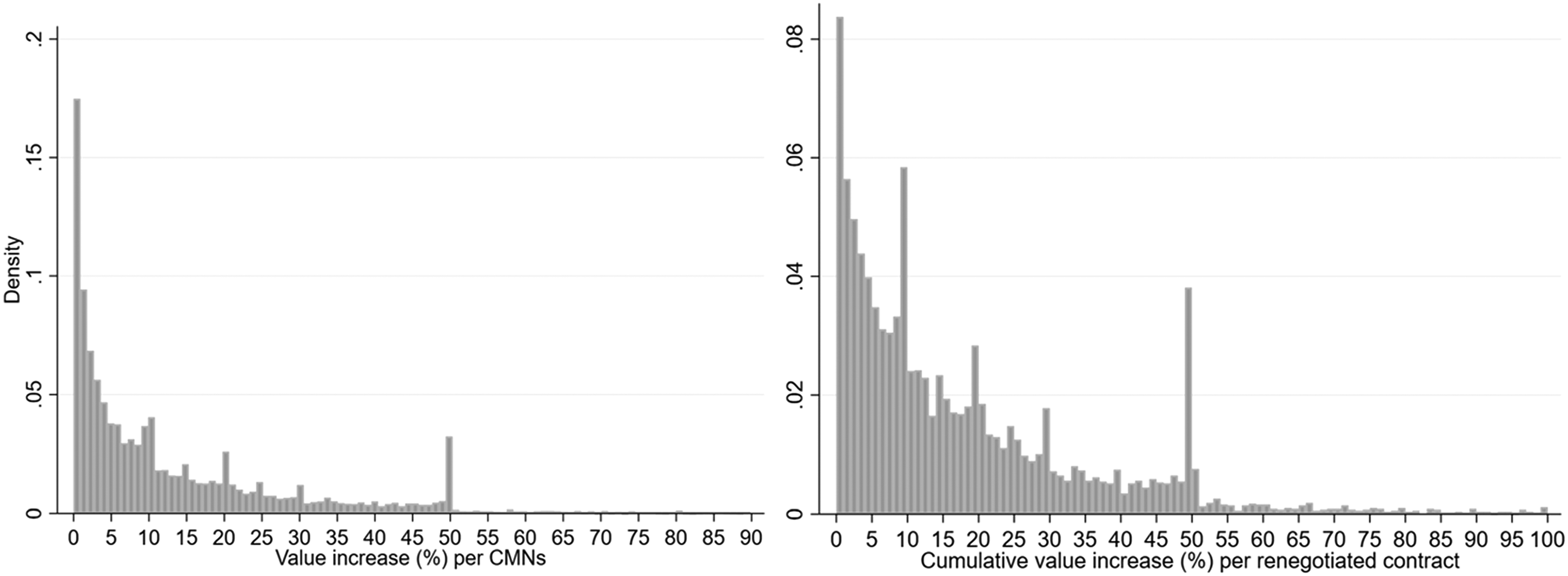
Value increase (per CMN) and cumulative value increase (per CAN).
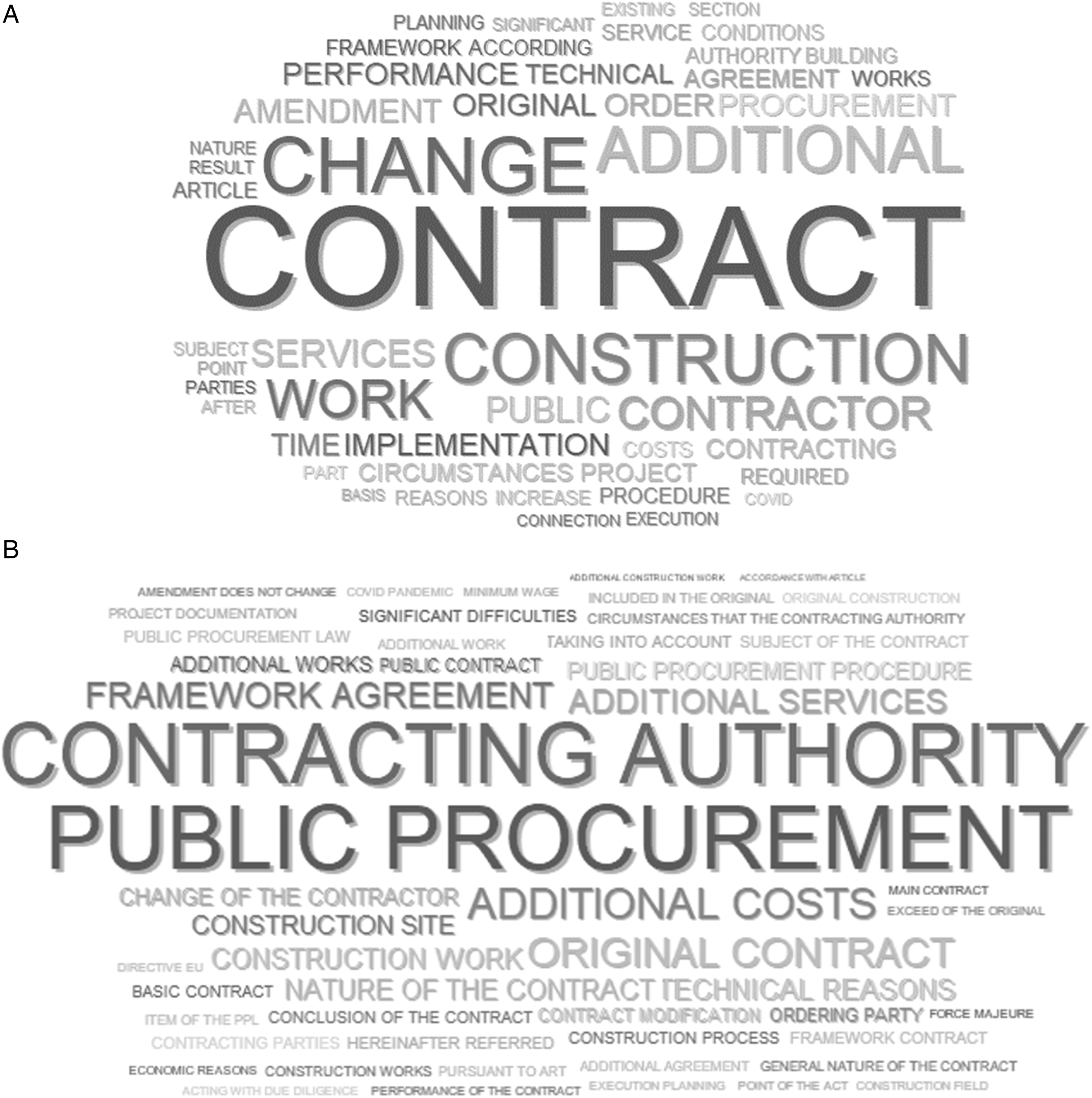
‘Word’ and ‘phrase’ clouds for ‘modification reasons’. (A). Word cloud for ‘modification reasons’. (B). Phrase cloud for ‘modification reasons’.
Independent variables
The key independent variable in our analysis is sustainability-related renegotiations. Our sample of contracts is not restricted in any way to sustainable or green public procurement, as any contract could eventually be renegotiated following sustainability concerns. As there is no clear EU directive regarding obligations for sustainable public procurement, neither for original contract awards nor further modifications, we follow the latest evidence and approach in the green public procurement literature to construct sustainability measures. 50 More specifically, we performed a word search for ‘environment’ and ‘sustainable’ on the ‘modification reasons’ and ‘modification description’ – which are textual variables in the CMN dataset detailing the modification – to generate a dichotomous variable that identifies sustainability-related renegotiations.
We also included multiple control variables in our models, primarily to adjust for contract award and renegotiation characteristics. First, given the importance of public procurement discretion, we develop measures that reflect different dimensions through which it might shape contract and renegotiation outcomes. To determine the contracts with higher discretion levels, we follow Decarolis et al. 51 and consider two discretion dimensions at the award level: the award criteria and the contract procedure type. In terms of the award criteria, procurement either focuses on the ‘lowest price’ or ‘most economically advantageous tender’ (MEAT). The MEAT approach aligns with NPG principles that advocate more discretion and cooperation between contracting parties at the award stage, given the opportunity to freely select preferred suppliers and establish governance mechanisms based on trust or relational contracts. 52 Accordingly, we define ‘lowest price’ as low discretion and MEAT as higher discretion (i.e. a binary measure taking the value of 1 for ‘MEAT’ and 0 for ‘lowest price’ criteria). In terms of the procedure type, ‘restricted procedures’ and ‘open procedures’ should have fewer opportunities for contracting authorities to exercise discretion, as these involve no negotiation rounds with the bidders. Analogously, we develop a binary measure of discretionary procedures that takes the value of 1 for other procedure types and 0 for ‘restricted’ and ‘open’ procedures. 53
Additional measures used as control variables in our regression specifications include the contract initial value; whether the supplier is a small or medium enterprise (SME); if the contract was subcontracted, the contract type (’work’, ‘supply’ or ‘services’, following the TED definition); the contracting authority type (10 different categories, also following TED); the country in which the contract is based, and Common Procurement Vocabulary (CPV) code, a standard system of classification for public procurement. We employ the initial 2-digit CPV codes as fixed effects (FEs) and consider them to be an important control, as they should account for attributes of environmentally-related contracts, such as those that refer to sustainability and social concerns; as any other contract, they could go through renegotiations that are sustainability-related or not.
We also control for contract signature and renegotiation dates (regressions with CAN/CMNs dates as year and month FEs). Importantly, we also include a measure for an award-stage ‘red flag’ that captures the number of bidders for a contract, as identified in the TED data and following guidelines of the EU Integrity Watch. 54 The number of tenderers received proxies for a low (high) level of competition in the procedure. According to the EU Integrity Watch, a situation with a low number of tenderers fundamentally defeats the purpose of competitive public procurement procedures.
Finally, given the potential for the recent COVID-19 pandemic to shape procurement renegotiations, we also include a binary control variable for whether the contract was renegotiated because of COVID-related reasons. Similar to our key independent variable, this measure is constructed based on a word search of the ‘reasons for modification’ and ‘modification description’. COVID-related renegotiations are defined based on the presence of specific keywords related to the pandemic: COVID, pandemic, lockdown and SARS. Another pandemic-related variable employed in this study is the Stringency Index from OxCGRT. 55 This index variable indicates the level of government containment measures in response to COVID-19 at the time of renegotiation. The stringency index is a composite measure based on nine response indicators, including school closures, workplace closures, and travel bans, re-scaled to fit within the range of 0–100 (100 = strictest).
Descriptive statistics and methods
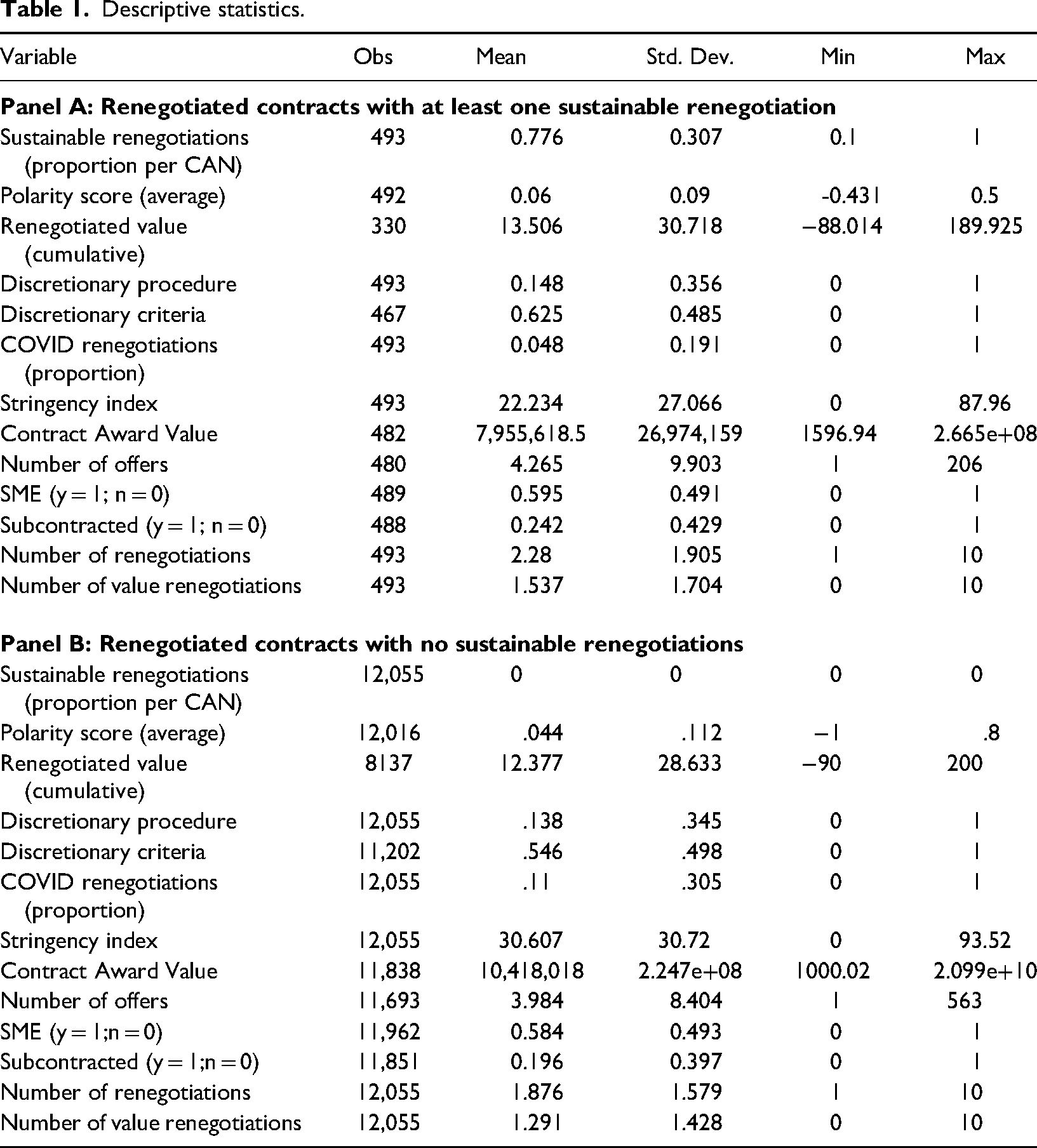
Table 1 shows descriptive statistics for all variables at the CAN-level, that is aggregating all CMNs related to the same CAN. They are presented by subsamples of (a) contracts with at least one sustainability-related renegotiation, and (b) contracts with renegotiations that are not sustainability-related.
Descriptive statistics.
We employ regression analysis (ordinary least squares) to investigate the associations between the dependent and independent variables described above. Our sample consists of the universe of renegotiated EU contracts provided by the TED data set. To complement the analysis and illustrate some distinctive cases in our sample, we also conduct spatial analyses for the UK and France. 56 The underlying geolocated data for the latter analysis are extracted from the address details of contracting authorities and winning bidders.
Analyses and results
Descriptive analysis and findings
To better understand the context of renegotiations, Figures 2 and 3 present the most common words and phrases used as modification reasons. Figure 2 considers the entire sample, while Figure 3 is restricted to the subsample of sustainability-related renegotiations. It is apparent that renegotiations generally refer to technical aspects of contracts and renegotiation-related terms, such as ‘amendments’, ‘change’ and ‘additional’ (Figure 2A, full sample). When considering phrases, the ‘contracting authority’ is often mentioned (Figure 2B, full sample). As we narrow to sustainability-related CMNs, several terms referring to ‘environment’ (by construction, as this is one of the words used to code the group), and, interestingly, around ‘background institutions’ emerge more frequently (Figure 3B). This provides us with initial evidence that the underlying reasons behind these sustainability and non-sustainability renegotiations likely differ.
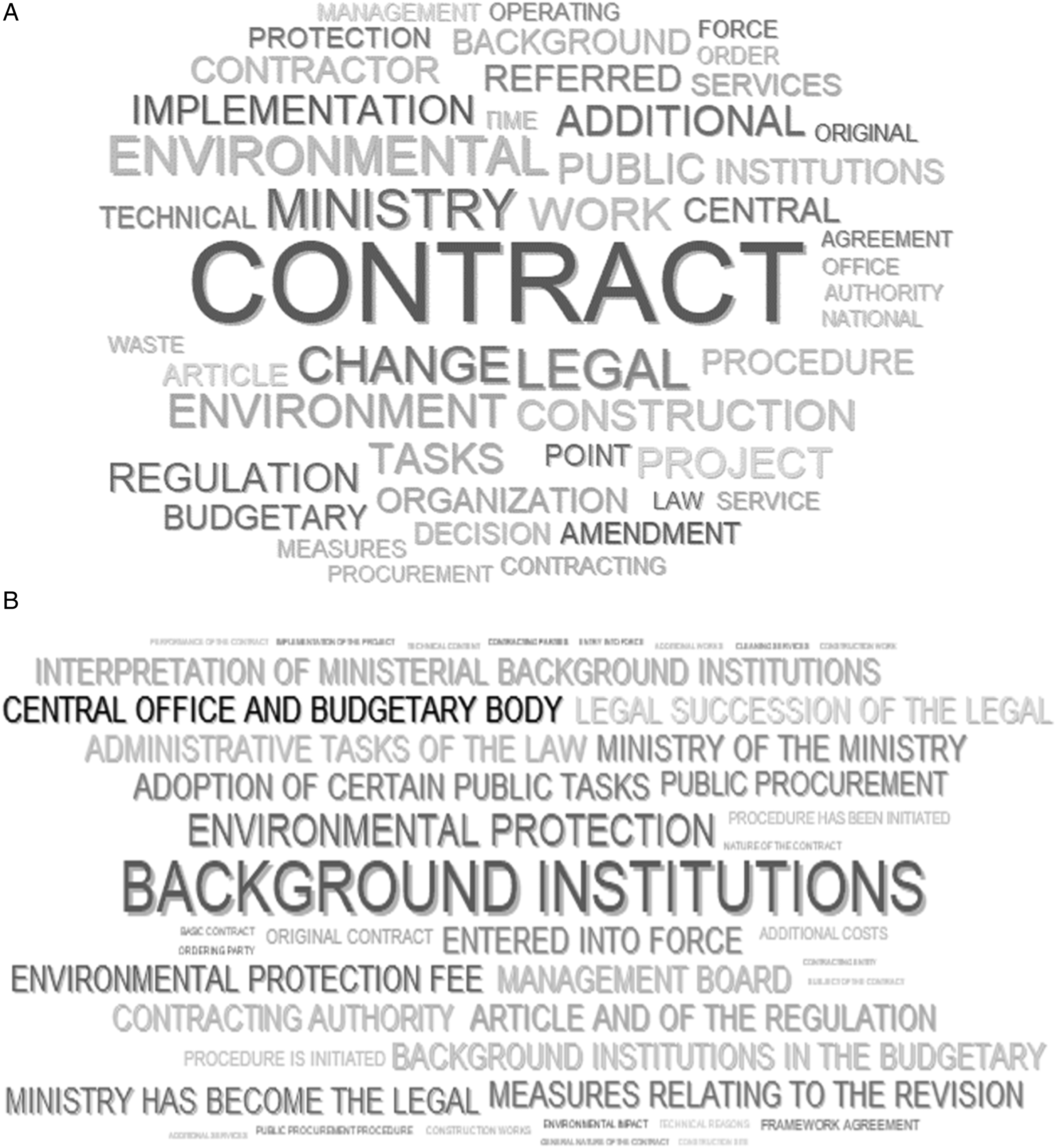
‘Word’ and ‘phrase’ clouds for ‘modification reasons’ considering sustainability-related renegotiations. (A). Word cloud for ‘modification reasons’ considering sustainability-related renegotiations. (B). Phrase cloud for ‘modification reasons’ considering sustainability-related renegotiations.
To illustrate the spatial features and geo-location elements, Figure 4 presents heatmaps for the location of contracting authorities (Figure 4A) and winning bidders (Figure 4B) for the UK and France. Figure 5 narrows the subsample to sustainability-related renegotiations and outlines the location of both partners (linked per contract if we have addresses for both in the contract dyad). This is useful to compare in what areas of these two countries the contracts with or without sustainability-related renegotiations are located, such as if contracts are in metropolitan areas or not, or if partners are closely located or not in the case of sustainability-related renegotiations.
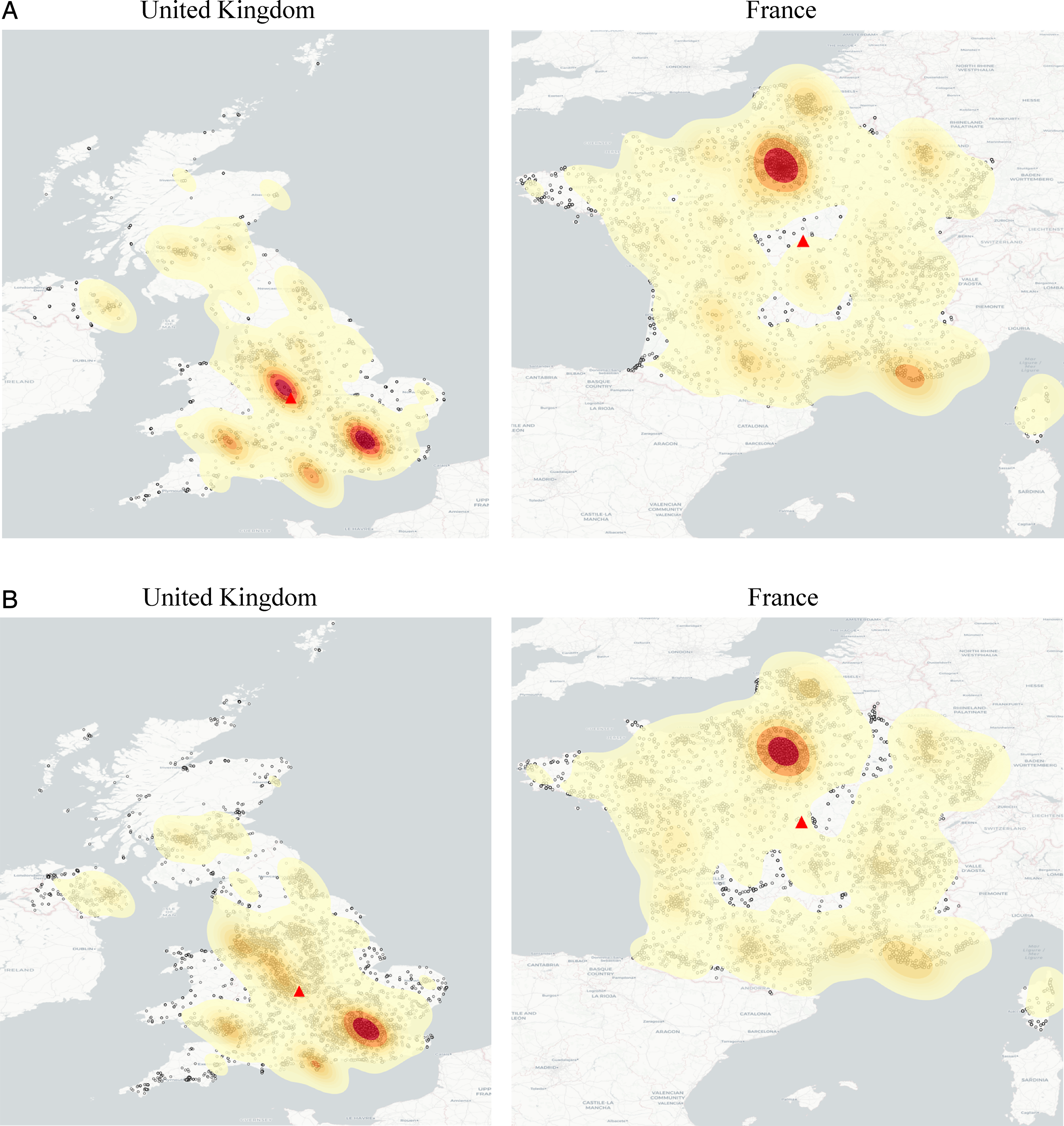
(A). Heatmap considering location of contracting authorities (UK and France). (B). Heatmap considering location of winning bidders (UK and France).
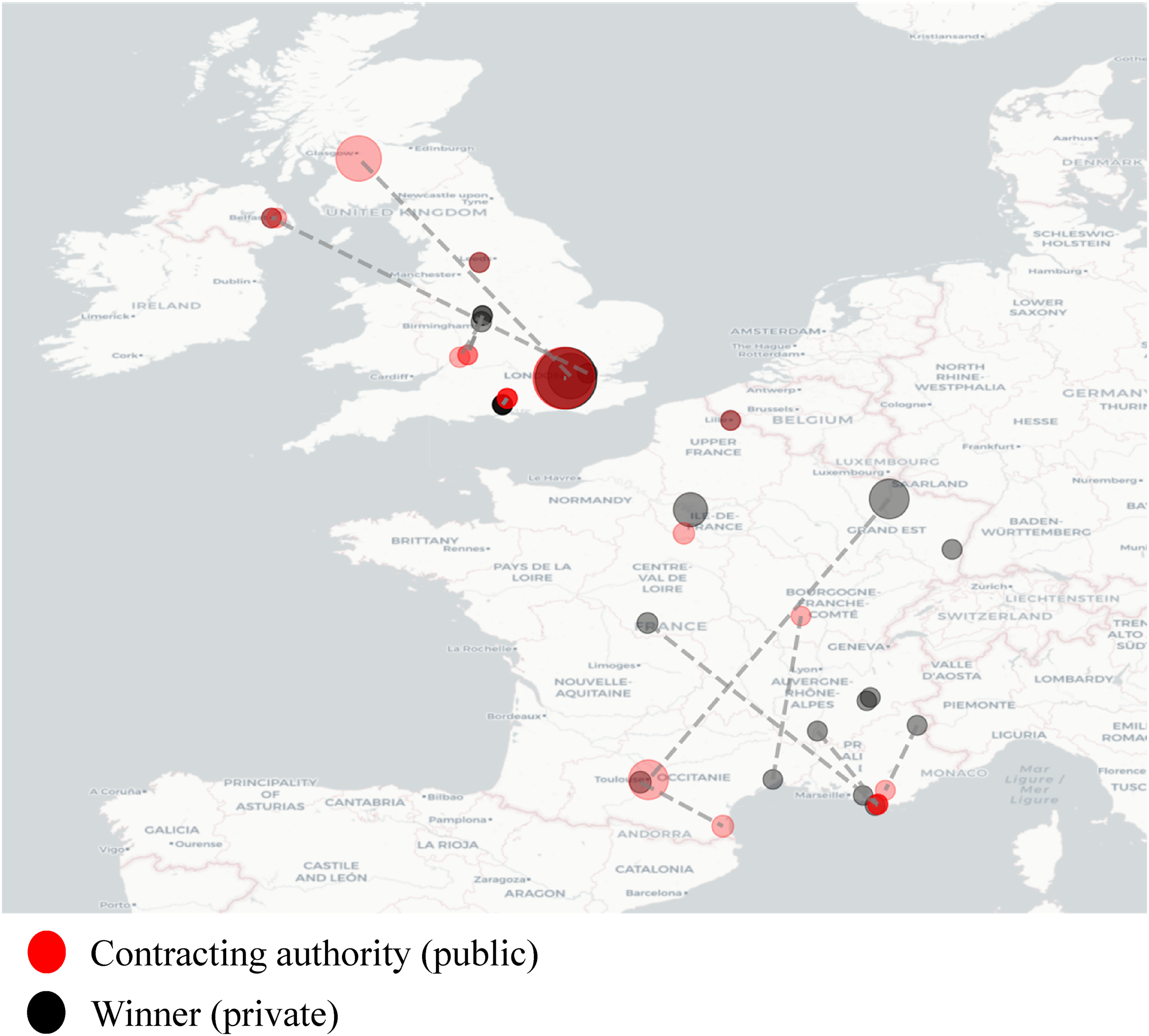
Sustainability-related renegotiations with geolocated partners in the UK and France.
An interesting pattern we observe, particularly in France, is that the sustainability-related renegotiations are often happening outside of the major metropolitan areas (compared to the overall sample for the country). For the UK, the full sample shows partners concentrated around London and also Birmingham, particularly when considering contracting authorities. The sustainability-related renegotiations follow such a pattern as well. Examples of sustainability-related renegotiations in these two countries include complex renegotiations in France due to security concerns for workers and the environment after the discovery of asbestos fragments (in hydraulic works) and modifications in a UK healthcare contract to safeguard sustainable services and avoid the duplication of resourcing for the contracting authority.
Regression analysis and findings
Table 2 presents the results from regression analyses undertaken to explore associations between sustainability-related contract modifications and the sentiment of renegotiations, with specifications (1) to (5) differing by the control variables included. Specification (1) is the most basic and does not include FEs; specification (2) adds contract type, contracting authority type, and CPV FEs; specification (3) additionally controls for CMN date FEs; specification (4) differs from (3) only in that it substitutes CAN date FEs for CMN dates; and finally, specification (5) includes both CMN and CAN dates FEs.
Sentiment analyses – the influence of sustainability-renegotiations on the renegotiation sentiment.
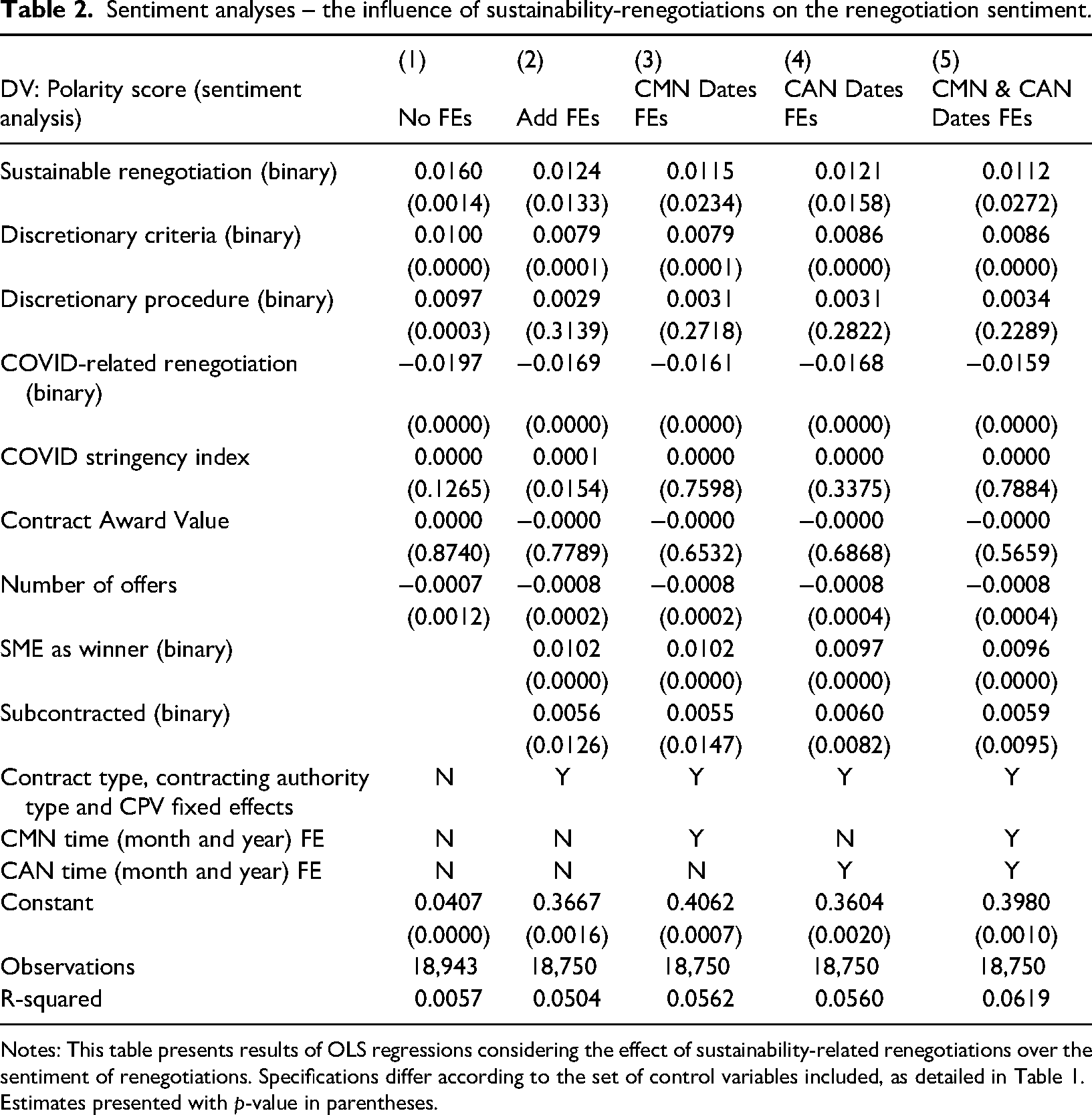
Notes: This table presents results of OLS regressions considering the effect of sustainability-related renegotiations over the sentiment of renegotiations. Specifications differ according to the set of control variables included, as detailed in Table 1. Estimates presented with p-value in parentheses.
As shown in Table 2, it appears that sustainability-related renegotiations are strong, statistically significant predictors (p < 0.03) across the specifications, with smallest estimated association (coefficient) found in specification (5), that is beta = 0.0112. On face value, the magnitude of the association corresponds to a relatively low 10% of a standard deviation of the polarity score; however, it is worth noting that this represents 25% of the polarity score mean value (in our smallest estimate).
Our results hold if we cluster the standard errors at the CPV-level, and also if we add another control variable that captures the ‘word count’ for the ‘modification reason’. These findings suggest that sustainability objectives are associated with more positive sentiments in contract renegotiations and are in line with the theory- and evidence-based expectations set out earlier in this paper.
The regression results also show that relying on discretionary criteria (MEAT as opposed to ‘lowest price’) in contract awards is positively associated with the sentiment polarity score. This finding is anticipated based on theory suggesting that discretion affords a more relational approach to contracting, and it provides additional support for the supposition that non-financial criteria might be influencing sentiments. Interestingly, COVID-related renegotiations appear to convey negative sentiments, although the COVID stringency index is less influential when also considering the specific reason for the renegotiation.
Another potential explanation for these results is that sustainability-related renegotiations are associated with corrupt behaviour, in light of prior research suggesting that public procurement renegotiations are often associated with mismanagement. 57 If this was the case, the positive sentiment observed could be capturing favouritism instead of desirable cooperative behaviour. We thus further investigate the relationship between sustainability-related renegotiations and the renegotiated value of contracts, under the assumption that mismanagement and corruption take the form of costly renegotiations. 58 Table 3 presents the results of this analysis, where the dependent variable is the spot contract value change measured in percentages. Specifications and control variables mirror the ones shown in Table 2. We find no evidence of sustainable renegotiations being associated with an increase in contract value; coefficient values range from positive to negative, with p-value between 0.389 and 0.855 across specifications 1 to 5.
Risk of mismanagement associated with overly expensive renegotiations.
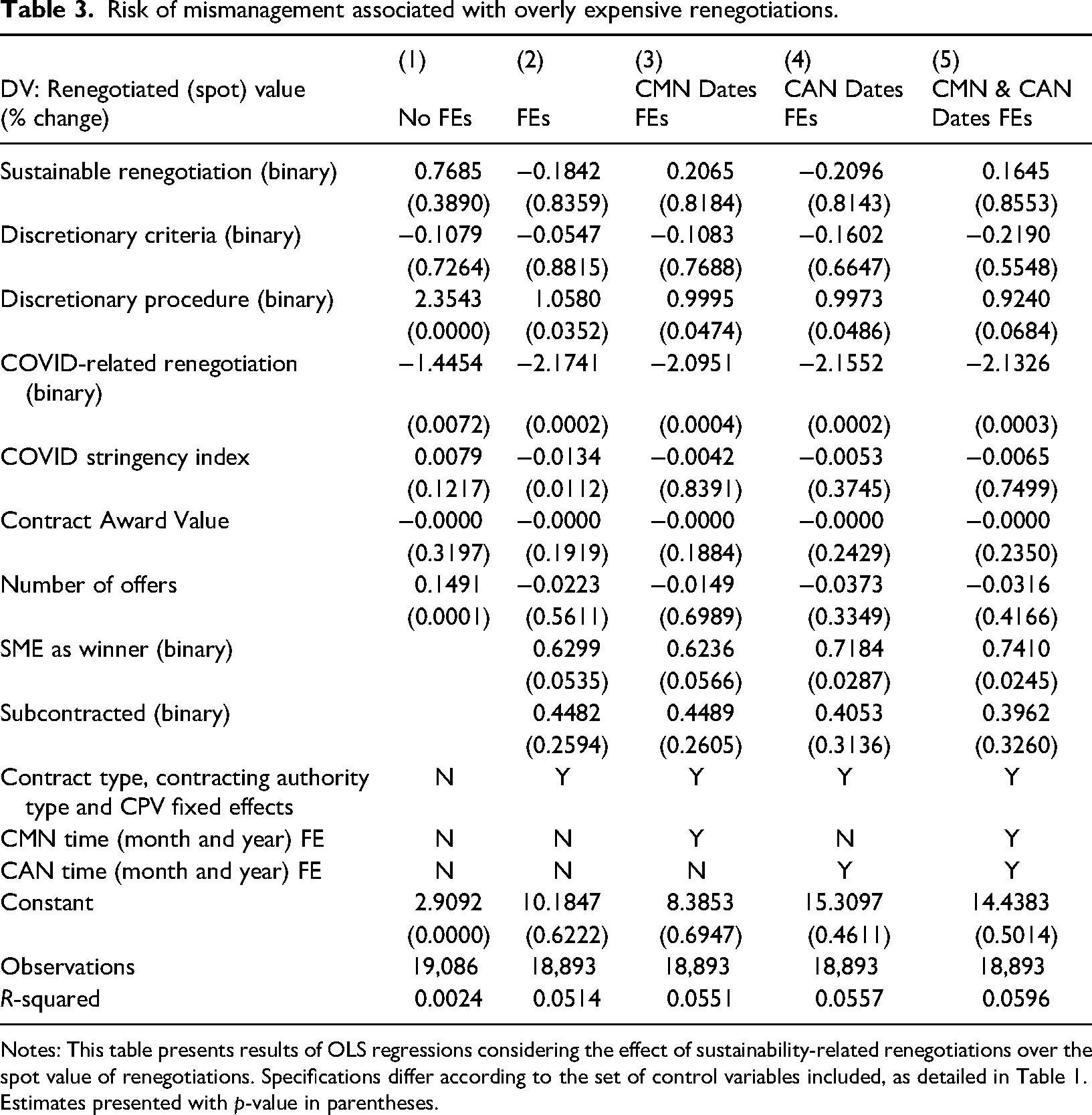
Notes: This table presents results of OLS regressions considering the effect of sustainability-related renegotiations over the spot value of renegotiations. Specifications differ according to the set of control variables included, as detailed in Table 1. Estimates presented with p-value in parentheses.
In terms of the control variables, we see no relationship between discretionary criteria and spot contract value changes. Discretionary procedures, however, are mildly associated with more costly renegotiations (p = 0.0684 as the highest p-value in specification 5). The empirical research to date on how discretion affects renegotiations is inconclusive, and prior research also raises concerns about how discretionary procedures and criteria might be correlated with corruption when both deployed together. 59 COVID-related renegotiations appear to be associated with less costly renegotiations, which could be related to the character of these renegotiations, that is being largely focused on minor changes as a consequence of the pandemic. We also caution, however, that the sample could potentially be biased by the self-selection of contracts that did not warrant interruption. For instance, contracts that were able to survive the COVID-19 pandemic might be the ones that did not demand major adaptations.
In additional analyses to explore the sensitivity of the estimated relationships in our data to various choices in modelling and measures, we also estimated the regressions analogously (as in Table 3) but with the cumulative contract value changes instead of the spot changes in contract value as dependent variable. While the ‘spot’ contract value change refers to the change in contract value in a given contract modification, the ‘cumulative’ contract value change measures the value change of a given contract (i.e. according to the contract award notice) in successive modifications up to the focal modification (i.e. some contracts have been through multiple ‘contract modification notices’, each with a given change in contract value). Table 4 presents the results of this analysis. Again, we find no evidence of sustainable renegotiations being associated with an increase in contract value (with p-value between 0.616 and 0.981 across specifications 1 to 5).
Risk of mismanagement associated with overly expensive renegotiations – alternative specifications considering the cumulative value change of renegotiations.
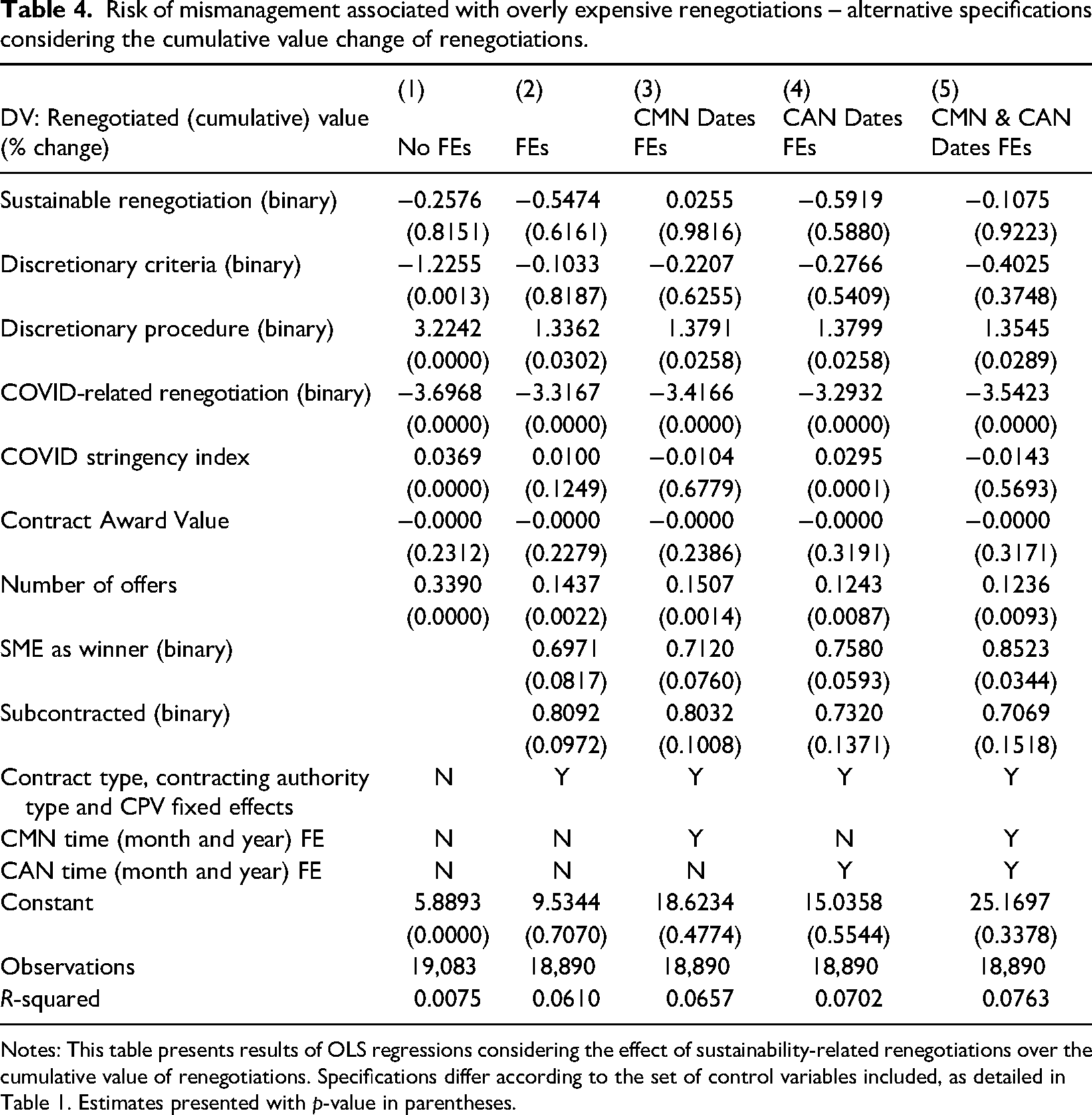
Notes: This table presents results of OLS regressions considering the effect of sustainability-related renegotiations over the cumulative value of renegotiations. Specifications differ according to the set of control variables included, as detailed in Table 1. Estimates presented with p-value in parentheses.
Alternatively, we considered a simple binary measure of contract value change (equal to 1 when the renegotiated value exceeds the 50% threshold) – suggesting a potential major red flag in renegotiation outcomes – and found results analogous to those reported in Tables 3 and 4. As research also argues that frequent renegotiations could be another ‘red flag’ signalling contract mismanagement, 60 we explored whether contracts renegotiated because of sustainability concerns were renegotiated more often. We did not find any statistically significant associations to support this assertion either.
Finally, for all our different models (Tables 2, 3 and 4), the coefficient of determination is relatively low whatever is the specification used (i.e. R-squared range from 0.05 to 0.08). This is not surprising as there is no established model to assess renegotiation outcomes according to different modification reasons. Other recent works investigating renegotiation outcomes present similar or lower than 0.05 coefficients of determination. 61 Importantly, when standard errors were clustered at the CPV-level (either 2- or 3-digit), the results did not change for any of the models. This provides us with further confidence that our results are robust to correlation or dependence within multiple groups in the data, as well as heteroscedasticity that could arise due to different classification of procurement. Besides, residual plots present no evidence of non-linear relationships between our hypothesised variables.
Discussions and conclusions
The findings of our study suggest that there may be additional benefits of sustainability-related renegotiations apart from the a priori expected positive environmental externalities. By focusing on the execution of contracts and moving beyond the traditional focus on award processes – and therefore focusing on ex-post instead of ex-ante transaction costs – we make several contributions to inform policymaking and the academic literature. First, using granular data from contract modifications, we constructed measures of the underlying reasons and consequences of sustainability-related renegotiations to unpack these relationships. We bridged the broad literatures on sustainable collaborations, 62 public management and discretion 63 and associated transaction costs, 64 while contributing to the more specific topics of contract modifications 65 and green public procurement. 66
In terms of our specific findings, we shed light on the benefits of renegotiating toward more sustainable contracts and accordingly identified unexplored avenues through which governments can achieve higher societal benefits. Public discretion can create room for adaptation while contracts are executed, 67 potentially fostering more meaningful and sustainable renegotiations. Our findings also suggest that contract modifications, when sustainability-related, can foster cooperation 68 in contrast to leading to mismanagement and costly renegotiations. 69
In addition, we advance recent empirical studies that opened avenues in the investigation of cooperative versus conflictual renegotiations. 70 Instead of using proxies that neglect the specific reasons for renegotiation per se, we illuminated the usage of textual analyses as a way to characterise modification reasons. Such methods, widely employed across disciplines, 71 can be used not only to analyse renegotiations but also contract award descriptions and other aspects of contract arrangements. We encourage future research that builds on this empirical work, including our measures of potential mismanagement, 72 and evaluates these measures in other contexts. For instance, studies could further investigate what are specific guiding principles, in terms of collaborative and relational aspects, that drive positive sentiments and cooperative contracts. 73
As to the guidance and insights our findings offer for policymaking, our research indicates that contract renegotiations could be a legitimate pathway for public and private partners to move cooperatively toward a sustainable agenda. Although our findings are generated using rather blunt measures of cooperation versus conflict in renegotiations (i.e. sentiment analysis), they provide a foundation on which to build additional research, both quantitative and qualitative, that can further inform the green public procurement agenda. Our research also suggests that sustainable practices should be taken into account at both the award stage and the execution of contracts, given the potential ‘double dividend’ they may yield. We reiterate that our findings are not restricted to the subset of contracts awarded because of sustainability concerns; we simply compare renegotiations according to their motives, sustainability-related or not. At the same time, one should not dismiss potential risks associated with contract mismanagement or the spectre of ‘green washing,’ in which unsubstantiated claims are made to convince the public that products procured are environmentally friendly. 74
This study, as any other research, is not free from limitations. First, the EU does not have access to the data needed to assess whether contracts in the TED are ongoing or if they were interrupted or terminated. Accordingly, we are only able to identify contract end dates for contracts with a CMN, and this precludes us from comparing ‘never renegotiated’ contracts with ‘renegotiated contracts’. We acknowledge the selection issues this feature of the data raises: renegotiated contracts might present unique features as compared to contracts that were not renegotiated. Thus, we stress that our findings and interpretations are valid for the universe of EU renegotiated contracts, as made available in the TED dataset. Second, there are some limitations of using textual analyses with our data. For example, ‘modification description’ is sometimes missing or may offer relatively few details. Alternatively, the ‘modification reason’ information is much more detailed (an average of 70 words) with few missing values, although sometimes the reported reasons are quite generic and short. Further research using these data may enhance the construction of these measures with others bringing ‘fresh eyes’ to the coding, as well as drawing on expert legal advice in assessing conflictual versus cooperative renegotiations.
Footnotes
Acknowledgments
Special thanks to Milena Arsenijevic and Fernando Fincatti for their invaluable contributions as research assistants.
Declaration of conflicting interests
The authors declared no potential conflicts of interest with respect to the research, authorship and/or publication of this article.
Funding
The authors received no financial support for the research, authorship and/or publication of this article.

Notes
Author biographies
Appendix