



Abstract
In this case study of a research and development facility construction project at a large biopharmaceutical organization, we explored how digital investments must be accompanied by a partnership approach and a transformation of the cultural values of an organization tied to operational principles. The project faced considerable challenges, including a highly constrained market environment, time and cost constraints, and a multiyear organization transformation with a diverse mix of stakeholder objectives. Despite these challenges, the project was brought in under budget and on schedule, achieving other objectives that often seem at odds with each other (best-in-class sustainability ratings, quality scores from customers, and with a remarkably low number of change requests). We found that significant stakeholder engagement early in the architect and contractor selection process leads to the right contract management process and ultimately successful outcomes. A key insight from this case involves the need for differentiated supplier relationship management for procurement-project team integration.
Introduction
The plethora of press releases on the need for digital transformation pervades almost every field, and construction management is no exception (Meng and Brown, 2018; Yi, 2019). Despite the development of new digital tools for the management of major construction projects, many inefficiencies arise due to traditional procurement cultures mired in cost-focused strategies above value creation (Handfield et al., 2015a, 2015b). As a result, success in multiyear construction projects is particularly fleeting, given the significant volatility of market conditions, people changing out of roles, shifting stakeholder requirements, and strained owner–contractor relationships that exist in many of these environments (Mok et al., 2017). Successful large construction project (LCP) management often involves a diverse set of external parties (architects, general contractors (GCs), subcontractors, design engineers, etc.) as well as a multitude of internal stakeholders with different functional interests (research and development, procurement, operations, financial officers, investors, local communities, and others) (Bemelmans et al., 2012; Foster et al., 2015). These conditions make it particularly challenging to satisfy all of the stakeholders in LCPs and ensure collaboration among the different parties. Although multiple reports have highlighted the benefits of increased collaboration and the challenge of how it can best be formed and sustained, recent studies of the literature have called for change (Townsend and Gershon, 2020).
In addition, since multiyear construction projects tend to be associated with large investments, long lifecycle duration, and significant design; and regulatory, social, and environmental shifts in scope, the ability to effectively manage construction contracts and associated risks is intrinsically related to successful outcomes. Due to the significant role of contracting and interfirm relationships in LCPs, supply chain and procurement strategies play a significant role in project success, due to their impact on project value and on the way project risks are managed (Handfield et al., 2015a, 2015b; Morris and Pinto, 2007).
Challenges exist in securing commitments for another important construction project input: human capital. Shortages in skilled trades have been widely documented in the field, and there also exist capacity challenges in securing supplier resource commitments in the face of long-term demand forecasts that are unstable (especially during coronavirus disease). For example, a major oil and gas company with ∼$55 billion of expenditure committed to long-term projects at a meeting recognized that successful project outcomes have a heavy dependency on supplier performance, with a handful of suppliers have a major critical impact (Handfield et al., 2015a, 2015b). Supply resource constraints exist in many construction projects, causing a negative impact on projects, causing delays, cost overruns, and potential adverse effects on the company’s reputation.
In this research, we conducted an event analysis using the case of a large multiyear construction project involving a large research and development (R&D) building for a major global biopharmaceutical enterprise. What distinguishes this case is management’s commitment to a deeply rooted culture emphasizing fundamental operations excellence principles, rooted in a burning platform that drove shifts in managerial behaviors, both internally and within the supply base. These operating principles are rooted in the Deming management theory (Gartner and Naughton, 1988), which emphasizes that only through frequent reviews of variability by all parties can problems with a project or process be understood well enough to change it, especially when the system is not stable or has frequent shifts.
To enable monitoring of such shifts, the team relied on a number of important digital technologies that enabled frequent interaction, review of metrics, and collaborative problem-solving processes. This combination of emerging digital technologies with applied but true operating principles yields a new breed of construction management insights. These insights support the idea that traditional procurement cost-based contract negotiations and purely schedule/cost-driven project management may not be appropriate in large-scale multiyear construction projects. Supply shortages, project volatility and uncertainty, shifts in project scope, and macroeconomic uncertainties render the use of fixed-price contract negotiation and rigid batch-based performance reviews ineffective in such settings (Construction Industry Institute, 1991; Handfield et al., 2015a, 2015b). Large multiyear projects require a more nuanced approach for managing multiple stakeholders in real time, one that creates a mechanism for sharing risks and rewards associated with shifts in environmental conditions within the project environment. While prior studies often advocated a more “collaborative” approach for project management (Dyer and Doyle, 2010; Foster et al., 2015), the practical implications of managing risk require agile responses using digital technologies to monitor the situation. When coupled with the operating principles of the Deming management method focused on variance reduction through review of metrics, superior outcomes can be achieved.
In this study, we explore the following research question:
What are the critical components of internal and external relationship management that result in successful construction project outcomes using emerging digital technologies?
We conducted an in-depth case study of a multiyear construction project, involving multiple risks, several groups of stakeholders, and a highly constrained supply market environment, which emerged with successful outcomes (underbudget, ahead of schedule, and stakeholder delight). This project was selected specifically because of its extraordinary successful outcomes; notably, multiple metrics (right first time, schedule and budget adherence, sustainability scores, and measures of user engagement) that were significantly better than other projects completed by this organization. The mechanisms associated with ensuring the right team came together under these conditions are explored in some detail, yielding some important insights that provide a framework depicting how procurement may need to adopt a nontraditional approach for major construction projects. The results also suggest how Deming-based operational principles can serve as the foundation for adopting such approaches when supported by real-time digital technologies and frequent reviews between stakeholders.
Literature review
Recent studies in the construction management industry literature suggest that there are many limitations to using traditional procurement and contracting practices in construction projects. Azambuja and O’Brien (2009) argue that construction supply chains are different from manufacturing supply chains, as they are characterized by a highly fragmented structure and transient locations that are recreated several times between trades. In this context, developing collaboration between partners (a key supply chain management concept) poses numerous perceived challenges. Cox and Ireland (2002) also found that relatively few organizations in the construction industry effectively apply collaborative supply chain management principles to their contracting practices. Many of the organizations studied lacked internal resources to continuously pursue high levels of operational and commercial collaboration, as well as the frequency and volume of demand that enabled the ability to establish the necessary long-term commitment to suppliers. A review of the research on construction supply chains concludes that research is needed on longitudinal studies, organizational barriers to partnering, the benefits of partnering, and conditions under which collaborative relationships can take place, as well as the different levels of experience around contract formation processes (Bemelmans et al., 2012). An in-depth review of the literature by Townsend and Gershon (2020) also highlight the ongoing debate over the benefits of increased collaboration and the challenge of how it can best be formed and sustained given the complexity of many LCPs.
In addition, there are significant challenges that exist in commodity volatility associated with major raw material inputs for construction as well as downstream capital projects, including fabricated steel, nickel, copper, and other major commodities (Monczka et al., 2016). This requires significant effort to not only hedge prices for these commodities, but to also monitor and plan for purchases against project schedules that are also uncertain, leading to significant shortfalls between supply and demand. As an example, a major EPC company in early 2000 found themselves over $1 billion over their lump sum bid price for a project, due to the rapid increase in the price of steel due to sudden demand emanating from China.
In general, construction projects are invariably temporary and expensive. During a traditional construction project, the parties often have different and even opposing objectives (Skeggs, 2001). There are three primary bodies of research that explore construction management and the need for collaboration of parties in the project: project management, contract management, and procurement. We summarize key insights from each of these areas and point to the need for an overarching gap that exists in all three areas.
Digital project management
Recent reviews of project procurement in the project management literature reveals that supplier selection is seen as a critical component of the process. The most common sets of criteria used to select suppliers for projects include quality (9.2% of citations), cost/price (8.2%), staff and personnel (7.9%), financial factors (7.9%), company management (7.6%), experience (6.5%), and timeliness (6.0%) (Borges de Araújo et al., 2017). Further, it was observed that supplier selection and evaluation consider multiple factors in the decision-making process (Chen and Wang, 2009; Singh and Tiong, 2005). These can be both quantitative and qualitative evaluations (Alptekİn, 2014). Because of this, it is necessary to use adequate methods to reach a decision on procurement by limiting the number and type of factors required. Although the procurement process has been studied for a variety of projects, it was also noted that the criteria vary by type of project.
For the construction industry in general, however, the bulk of prior research focuses on the analytical methodologies used to evaluate multiple criteria for supplier evaluation (Aretoulis et al., 2010; Arslan et al., 2008). While significant work exists on the different methodologies used to evaluate criteria for supplier selection in project procurement (Borges de Arujaho et al., 2017), relatively little research examines how internal stakeholders are engaged in improving collaboration between suppliers and stakeholders using digital technologies. Although experience is often mentioned as a criterion, a shortcoming is that individual expertise is rarely cited as a primary means of evaluating bids for major projects. Rather, the focus has been primarily on the bidding process and the supplier selection process; comparatively little emphasis has been placed on the ongoing contract management process (with or without digital vehicles), as well as the composition and role of the individuals involved in the process (Arslan et al., 2008; Townsend and Gershon, 2020).
Another body of work examines the level of integration across project management. The Project Management Institute defined a total of 14 areas: project integration, scope, time, cost, quality, human resource, communications, risk, procurement, stakeholder, safety, environmental, financial, and claim management. For the human component, there are a few select research articles that focus on relationship management in construction projects. Berteaux and Javernick-Will (2015) suggest that project-based organizations in the architecture, engineering, and construction industry must integrate knowledge and processes adapting to local environments. They investigated the challenges of local adaptation and organizational integration processes by relating to project performance and concluded that projects having high integration result in richer information exchange than projects having low integration. Ospina-Alvarado et al. (2016) developed a framework for construction project integration by defining several attributes depending on their critical importance. They conclude that projects experience higher success rates and improved performance with the adoption of an integrative approach. However, these studies rather focused on software integration, relational integration, or contractual integration.
Finally, it is worth noticing that project management in the construction industry is largely regarded as the “least digitized” of all industries, according to a study by McKinsey (Agarwal et al., 2016). 1 Areas for potential improvement through digital technologies include digital mapping, next-generation five-dimensional modeling, digital collaboration, internet of things and advanced analytics, and future-proof design and construction. Building information three-dimensional (3D) modeling software has been shown to lead to improved productivity, time management, and building material management. 2
Contract management
Research in the contract management literature provides some insights into the success factors for large multiyear construction project success. An in-depth case study of a private–public hockey facility suggests that large, state-of-the-art projects requires not only specific forms of work but also designated individuals, “partnership coordinators,” defined as “a person (or persons) who facilitates cooperatives with municipal and business entities to enhance the pursuit of collective, social, and competitive gains to attract workers, businesses and other entrepreneurs.” These partnership coordinators are key players in the construction process in communicating the value of the partnership as it unfolds, ensuring roles and responsibilities are clear (Foster et al., 2015). A comparison of partnering contracts for construction projects in the UK, US, and Denmark, suggests that there exist differences in such contracts. First, collaborative partnering contracts are legally binding in Great Britain and Denmark. On the other hand, the partnering contract is not legally binding in the USA, although changes in this view are emerging (Dyer and Doyle, 2010: 1). An important differentiating feature of US partnering arrangements in construction contracts involves the change in behavior which is required, as noted in the following definition developed by a task force of the Construction Industry Institute at Texas A&M University in 1987:
… Partnering is a long-term commitment between two or more organizations for the purpose of achieving specific business objectives by maximizing the effectiveness of each participant's resources. This requires changing traditional relationships to a shared culture without regard to organizational boundaries. The relationship is based upon trust, dedication to common goals, and an understanding of each other's individual expectations and values (CII, 1991: 2).
The partnering concept in Britain and Denmark consists of a legally binding contract aiming at obliging the parties to be bound to optimize the joint and common goals through collaboration, positive incentives, and information. In contrast, the US partnering concept expects the parties to obtain these key elements through a nonbinding partnering charter to be characterized as a letter of intent with no binding legal value, but with a stronger focus on the process compared to the British and Danish partnering contracts (Tvarnø, 2015). This issue of formal versus informal contracts continues to provoke debate (for example, see Frydlinger et al., 2019). Hart’s Nobel prize work (Hart, 1975) on incomplete contracts provokes an ongoing legal debate over what is meant by obligations of “good faith” (which in most common law jurisdictions does not apply unless specifically established by the contract). In the case of this project, the US-based partnering concept was established from the outset. However, the relational contract approach was an important feature, as we shall see (Frydlinger et al., 2019).
Other research in the contract management literature suggests that relationship management plays a critical role in differentiating the success of large oil and gas projects (Handfield et al., 2015a, 2015b). Specifically, research shows that risks managed over the course of successful projects were more often managed through regular performance reviews (44% for successful vs. 27% for unsuccessful), and in particular, early identification of risks in the sourcing process is key. In particular, Meng (2012) provides evidence that a supply chain relationship in major construction projects is described by key indicators in 10 areas: mutual objectives, gain and pain sharing, trust, no-blame culture, joint working, communication, problem solving, risk allocation, performance measurement, and continuous improvement. These components are viewed as key to successful outcomes. On the other hand, traditional adversarial relationships must be overcome to promote communication, sharing culture, clear definition of responsibilities, commitment to win–win, and regular monitoring of the project (Chan et al., 2004; Hellard, 1995; Meng, 2012).
Procurement research
The procurement literature emphasizes how strong relational partnerships between supply managers and suppliers lead to an understanding of the buying company's needs, an improved ability to meet changing requirements, and improved performance (Crook and Esper, 2014; Flynn et al., 2010; Zimmerman and Foerstl, 2014). Handfield et al. (2015a, 2015b) emphasize the importance of supply management alignment, defined as the behavioral characteristics and process requirements for understanding and explicitly defining internal stakeholder needs, and linking these to supplier performance agreements. Their model explores the synergistic effects derived through strong internal lines of communication combined with external supply relationships based on defined metrics and processes. Other work by Mok et al. (2017) suggests that large cultural building projects (CBPs) involve a wide range of stakeholders who have diverse backgrounds and interests, and are interdependent owing to intricate relationships and interactions. In fact, stakeholders are the central figures of a CBP as well as chief determinants of its successful delivery (Lin, 2014), since cultural infrastructure developments are often “human driven” and “human oriented.” The importance of cross-functional team leadership has also been emphasized on category management teams (Trent, 1996). However, the high complexity of project stakeholders has been a hurdle in establishing stakeholder common ground and collaborations, leading to many challenges and pitfalls of CBP development which are actually emerged from or associated with stakeholders.
A summary of the key literature themes is shown in Table 1, and is illustrated in Figure 1.
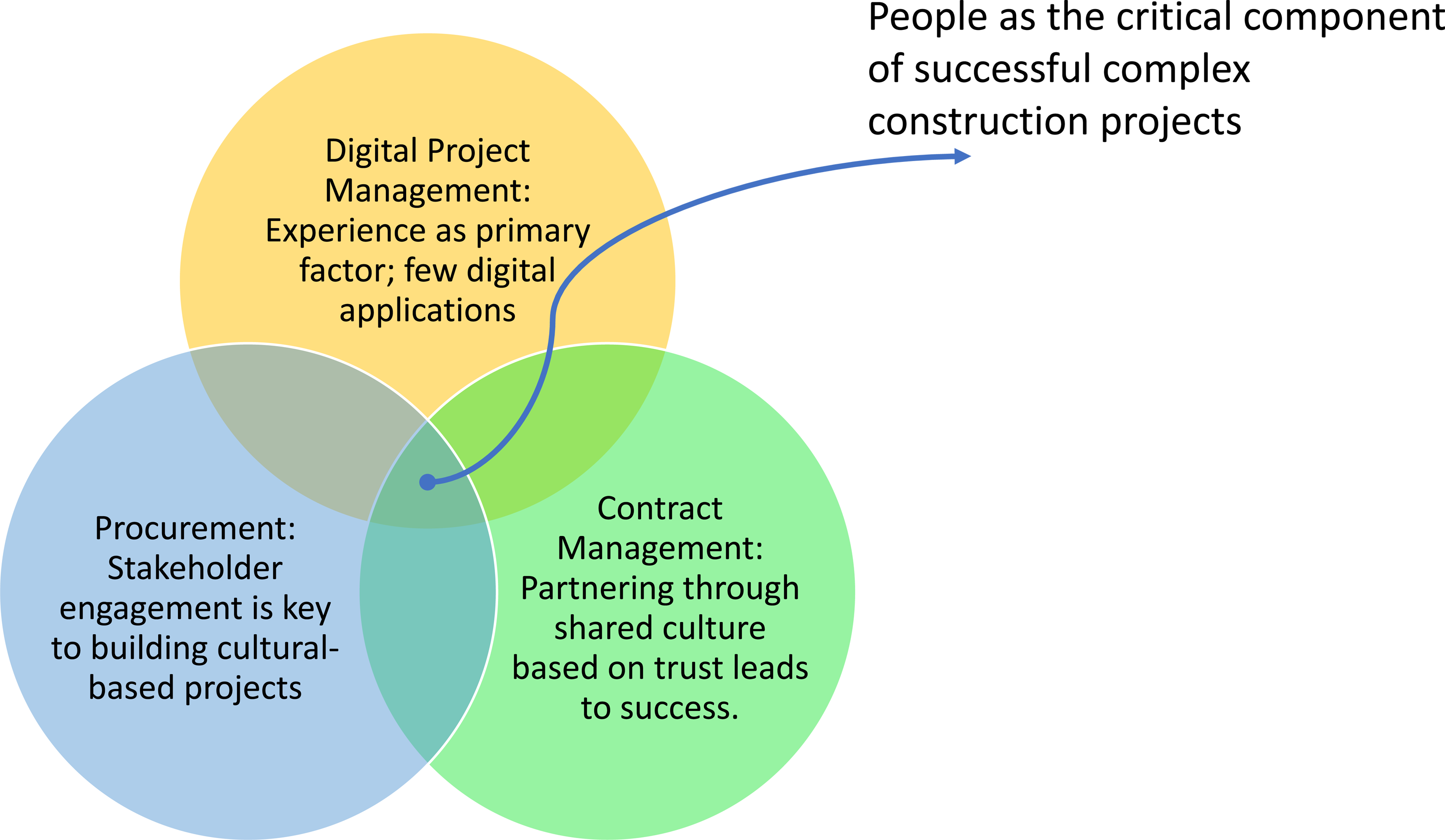
Intersection of research literature.
Peer-based performance outcomes used in case selection.

In general, our review of the research suggests that these overlapping fields (digital project management and procurement and contract management) are aligned in suggesting that LCPs are highly complex and that significant effort is required to manage internal stakeholders and external suppliers. Moreover, the problems in construction are broadly experienced in any project with multiple interdependencies and potential uncertainty and change. For instance, the World Commerce and Contracting organization noted that the lowest price tendering is unsustainable in the face of increasing complexity. The Institute of Chartered Accountants in England and Wales conducted a series of audits and noted that “The construction sector is complex. Clients are often only looking for the lowest bid, which in turn encourages construction companies to offer unsustainable low prices in the hope that some aspect of the project will subsequently change to improve their profits. Unexpected changes can then turn small profits into losses and make it difficult to return a particular project to profitability.” 3
The review of prior research suggests that a different approach is required for complex construction projects, one that adopts a digital partnership with high levels of collaborative activity and aligned decision making. A common theme that also appears briefly in each body of research (but not described in-depth) is the important role of individuals from different stakeholder groups and external partners working closely together to achieve common outcomes (Townsend and Gershon, 2020). Many researchers use phrases that articulate the role of leadership and collaboration; such examples are shown below.
“The core leadership team to have a clear vision, possess the necessary knowledge and experience, and effectively exercise its decision-making power” (Mok et al., 2017). “It seems prudent to have someone involved with the process, but not directly involved with the formal negotiations, take on the role of partnership coordinator” (Foster et al., 2015). “Engagement criteria, such as collaboration with contractors, cooperative managers, partnering history, risk sharing with the owner, the level of risk sharing with the client and the ability to cooperate were assigned to the subcategory of “cooperation relations” (de Araújo et al., 2017).
In each case, however, this quality is typically mentioned in passing but is not significantly explored. A missing gap is that although the importance of collaborative partnering relationships for construction projects is emphasized, very little is known about the specific characteristics of how to ensure these activities occur during different phases of the project cycle. We propose that many of the routine activities defined through the Deming management method can provide a strong foundation for defining the natural flow of activities that should occur (including the common themes of effective problem solving, review of performance data, definition of responsibilities, frequent communication, and measurement of outcomes) (Gartner and Naughton, 1988). When team members are connected through real-time performance systems that enable visibility of events, quicker response, and collaborative problem solving can occur before the problem escalates (Handfield and Linton, 2017).
Specifically, we advocate that special emphasis be given to the nature of the “soft” elements of project team alignment from the very beginning and that rather than given lip service, this component be “designed in” to the project beginning with initial project scoping, but also in the bidding process, architect and GC selection process, as well as ongoing project management activities. The key determinants of how to ensure the right team of people truly works together effectively during the project cycle are explored in this study. In Deming's terms, a system is all of the aspects of the organization and the environment—employees, managers, equipment, facilities, government, customers, suppliers, shareholders, and so forth—fitted together, with the aim of producing some type of output (Deming, 1986: 317). System stability implies that predictions of this output can be made, so given the frequent shifts in large complex projects, bringing the system into a state of stability is a paramount objective achieved through frequent monitoring and review of performance.
We further propose that the role of individual communication and trust is particularly essential in complex construction projects involving multiple stakeholders, highly complex project environments, and frequent changes in scope and requirements (Townsend and Gershon, 2020). We also propose that the specific blend of individuals be selected to ensure the right complementarity and effective human relationships and that steps be taken to ensure this is maintained throughout the entire sourcing and supplier selection process, and over the life of the project. This is stated as follows:
Proposition 1: The success of complex, large-scale, and shifting construction projects with multiple stakeholders is determined by designing-in well-functioning teams with strong interpersonal harmonized relationships connected by real-time digital tools, from the beginning of the sourcing process throughout the complete life cycle of the project.
The development of a strongly functioning team is not something that happens by accident. As noted in the book “The Five Dysfunctions of a Team,” the core elements that spell disaster in a team include (a) the absence of trust and inability to be vulnerable, (b) fear of conflict and inability to have debate, (c) lack of commitment and buy-in to decisions, (d) lack of accountability due to lack of buy-in, and (e) inattention to the team results (Lencioni, 2002). We further note that the collaboration of team members can be created through digital technologies, specifically using real-time collaborative software systems that promote visibility of issues and problems. The motivation for our study is thus to examine not only the supplier selection and bidding process, but the post-contracting behavior of the parties, and the relational and technological attributes that lead to project success.
Methodology
We selected the development of an in-depth case study in order to observe firsthand whether the intersection of digital building technologies could be combined with effect team-based relationships could produce above-average construction performance outcomes. This required the careful selection of a case that met these criteria. In this section, we begin by detailing the basis for case selection, describe the attributes of the construction case used, and develop the data collection and data analysis process employed.
Case selection
Case studies involve an analysis of the process and outcomes of a contemporary real-life phenomenon (Tellis, 1997). This approach is considered applicable when: (a) the phenomenon contains various relationships/factors whose interactions are the research focus (Fidel, 1984), (b) the research focus concerns “why” and “how” questions (Yin, 2009), (c) the examination of the phenomenon becomes meaningless without its embedded context (Baxter and Jack, 2008), and (d) context-dependent knowledge can only be generated with the minimum intervention of the investigator (Yin, 2009). An important consideration for undertaking theory-building case studies is to clearly articulate the rationale behind why such research is being conducted (Eisenhardt and Graebner, 2007). Justifications can include: a gap in existing theory that does not adequately explain the phenomenon under investigation (Benbasat et al., 1987: Eisenhardt and Graebner, 2007; Meredith, 1998; Rothlisberger, 1977); the research is exploratory and therefore calls for case research to build theories (Meredith, 1998) the research is explanatory (i.e. asking “how” and “why” types of questions) and the context and experiences of actors are critical (Benbasat et al., 1987; Bonoma, 1985), especially the experiences of managers to increase the practical relevance of the findings (Fisher, 2007).
In this study, we focus on the internal and external relationships that exist in project procurement. We are primarily interested in the attributes of the buying company team, as well as the supplier team, and the components of the evaluation process and contracting process that follows.
Case selection is a rigorous process requiring a determination of the key focal criteria to be identified, or as noted by one author: “case study is not a methodological choice but a choice of what to be studied” (Stake, 1995; 2005). Information-oriented sampling is adopted for appropriate case selection (Flyvbjerg, 2006). Given the focus of our research study, we selected a case based on several criteria. First, we sought a case that spanned a wide range of stakeholders with diverse interests, which are often the source of complexities in project management and partnership development. Second, we sought a case that involved a highly complex set of project requirements. In this case, the project involved the development of a centralized laboratory facility that would house the entire organization's team of R&D scientists. Third, we sought a case that was experiencing significant external constraints, in terms of the availability of qualified architects and GCs. Our case project is located in the Silicon Valley area of California, which is experiencing one of more significant construction booms in the history of the United States.
4
Finally, we sought to identify a project that was deemed to be a highly successful outcome that came in under cost and on time. Based on dozens of different $10m + construction projects in this company, we selected a project that addressed the three most important measures of project success, sometimes known as the “iron triangle” (Townsend and Gershon, 2020): cost, schedule, and quality. The measures which determined the case selection were deemed critical to Gilead, and are shown in Table 1 as well as in Figure 2.
Schedule adherence. A metric that tracks actual time to completion/planned time. In this case, 0.993 means the peer portfolio completed 1% ahead of the stretch schedule. Cost and quality. Post-project life cycle management costs are a metric defined as costs associated with post-turnover “fixes.” This project did not have significant post completion “fix” costs. The company spent <1% of the overall project cost budget on post-completion costs, which exceeded peer project benchmarks and translated into significant savings in terms of contingency costs that were saved. This measure is also an excellent surrogate for a “right-first-time” or quality metric. Sustainability. This project was indexed to achieve Leadership in Energy and Environmental Design (LEED) gold (0). Compared to the company's last 10 projects, most ended up between LEED certified to LEED Silver. Quality. A post-project survey indicated that >80% of stakeholders stated they were extremely satisfied with the new building, the highest score possible on the survey.
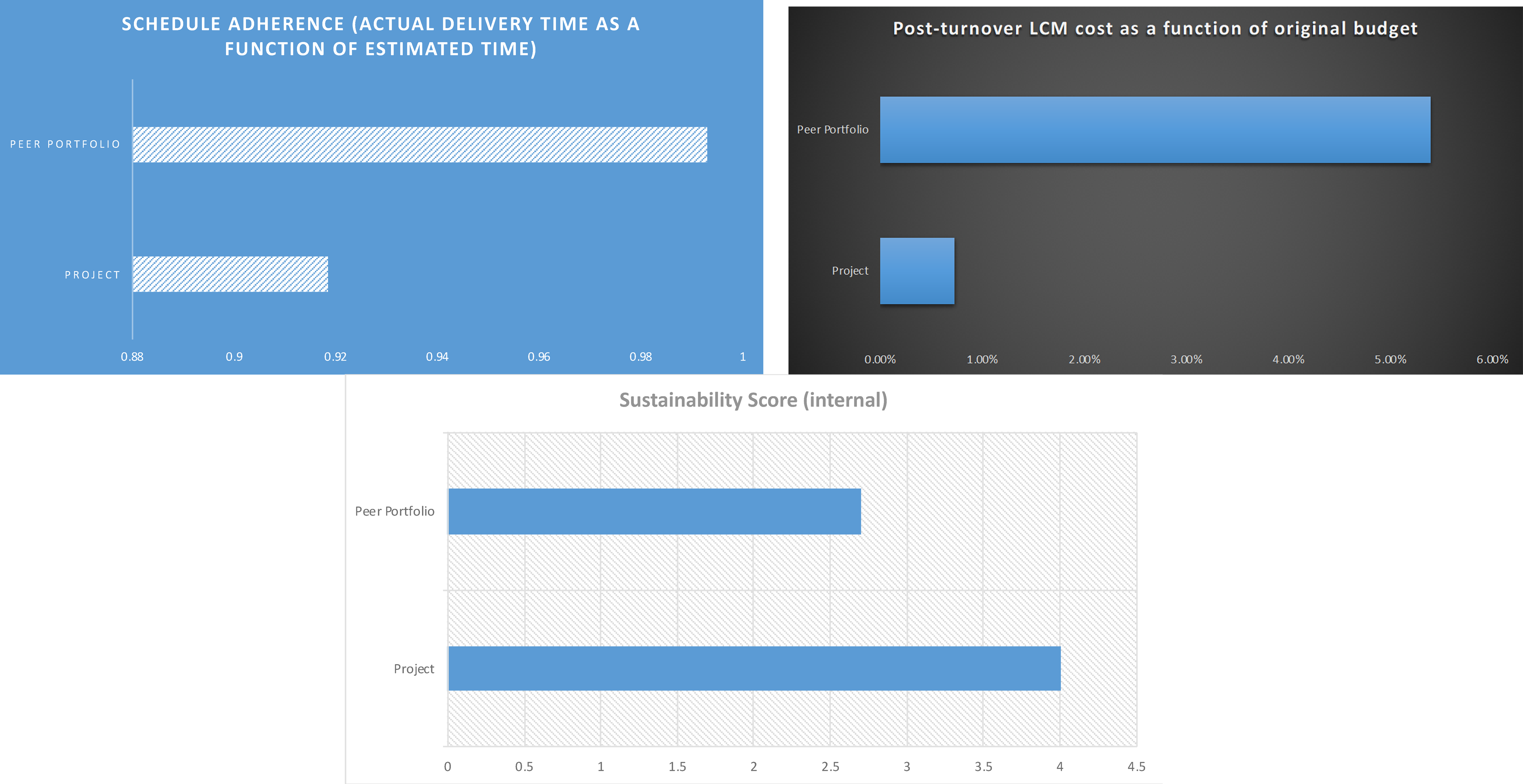
Peer-based performance outcomes.
These outcome metrics (right first time, schedule and budget adherence, sustainability scores, and high measures of user engagement based on surveys) distinguished this project from other construction projects carried out by this organization in prior years, and led to its selection as a targeted case for analysis, due to its outstanding success measures.
Project case attributes
The company selected is a large pharmaceutical company (Gilead Science) with $24.7 billion in revenue in 2020, located in the high growth area south of San Francisco. The case project involves a ground-up, four-story, mid-rise, steel frame, 350,000 square feet lab building with 17′ floor to floor separation. This is a Type 1-A Construction. The building was intended to host the company's large R&D organization, in a space consisting of Office Areas, Main Labs, Support Labs, Equipment Room, Lab Corridors, and Specialty Labs. The R&D function was dispersed across many different facilities across the campus(es), and the importance of creating a space where collaboration between scientists and lab technicians could be facilitated was deemed as a critical strategic lever to improve productivity and innovation for the company by its leadership team. Because of the complex nature of the state-of-the-art laboratory equipment required, this led to some very complex specialty components and design requirements, including such items as a central solvent supply to feed solvents directly, Dispensing Fume Hoods in Main Labs, dedicated glass-wash rooms, a lab solvent waste system, a Mass Spec Waste Collection System, specialized automation systems, emergency generators, a house UPS system, and many other features. Many of these components required detailed input from the scientific stakeholders who would be using the centralized lab space.
Data collection and analysis
To identify the core stakeholders and differentiating features of the case, interviews took place with the major stakeholders within the company. In addition, the third-party managing company on-site representative was interviewed, as well as the GC and the architectural firm. The interview protocol used in these interviews is shown in the Appendix. The questions in the interview protocol were derived from Proposition 1, to explore the distinguishing criteria and whether they varied from prior project management cases. All interviews took place by phone or in a face to face meetings and involved an open forum. Guarantees of confidentiality of comments and nonattribution were also ensured from the beginning. Project planning documents from all stages of the project were made available and were reviewed, as were important emails between parties involved at critical junctures in the project. These data were reviewed, coded, and filtered into each of the principal themes identified in the proposition. The write-up of the case was then used as the basis for extracting key themes which appear in this manuscript.
Results
Each of the major phases of the project is described next, with the phases summarized in Figure 3.
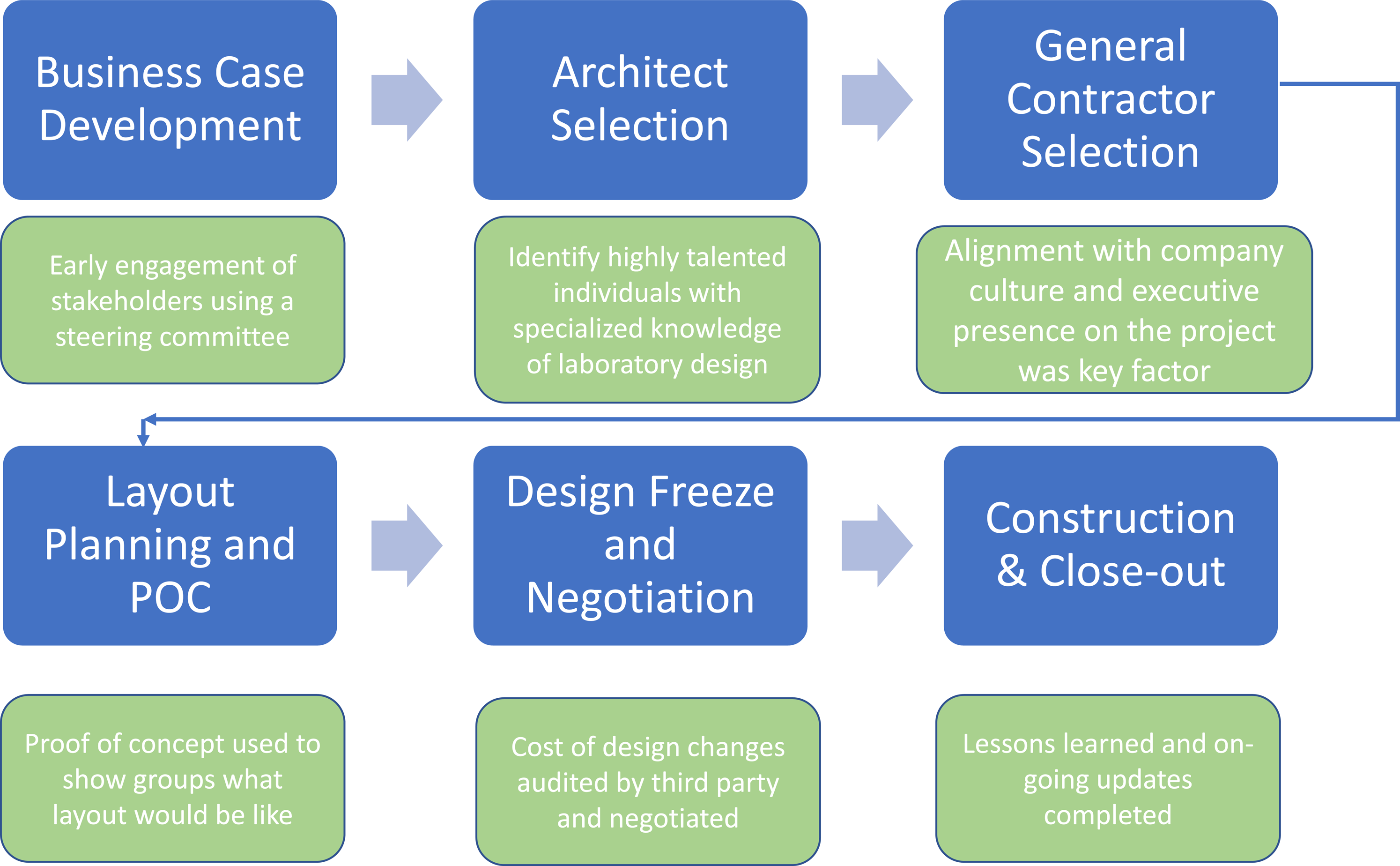
How picking the “right people” impacts the success of a complex project.
Project planning
The project was started in 2016, with a business case identified. The motivation for the project was to bring together the company's research organization which was spread out around eight different buildings and who were running out of laboratory space. As the organization's lifeblood is R&D, senior management decided it would be key to create a centralized research lab for the research organization. The significance of personal interaction was a primary incentive, as scientists often converse at lunch, at breaks, or in the hallways, and the idea of colocation to avoid having to walk around campus (which spans more than three-quarters of a mile) was deemed an important facilitation for research productivity. This is consistent with the findings of Townsend and Gershon (2020), who cited the importance of communication inclusiveness, frequency of communication, and the attributes of personnel as critical components of successful construction projects.
A business case was identified, and was then submitted to Corporate Engineering, who immediately partnered with the sourcing team to engage on the project. In addition, other key stakeholders impacted by the project were made to be part of the full-time schedule, including engineering, facilities security, the architectural consulting firm (which was added later in the project), and others shown in Table 1.
Because of the urgent nature of getting drugs to market quickly, it was imperative that the construction be completed on an expedited schedule, and an aggressive timeline was established upfront. The selected methodology is known as a “Design Assist” approach. This is in contrast to the “Design Build” method, described below.
Design Build. Designers and contractors work with one another, but the responsibility for the project is assigned to a single entity, who is the only contractor responsible for the project. Design Assist. The design engineer completes the design to a certain phase, then employs trade partners to help complete the design and ultimately build the project. Engineers are knowledgeable about the design elements, but bring in the trades who understand the efficiencies on how to properly plan construction to avoid rework downstream. The trades are also generally more able to begin construction during a prefabrication process, in areas such as plumbing, electrical, and other areas, leading to a more expedited construction process. Design Bid Build. A linear approach where the design is completed first, bid out to trades, and then contracted for construction. This can often result in unforeseen change orders that may need to go back to redesign.
The goal of the Design Assist was to ensure early supplier involvement in the project design. Specifically, the GC and mechanical engineering plumbing (MEP) contractor were brought in early to enable early engagement in the design efforts, constructability reviews, and ensure a well-coordinated approach during the design phase. Because of the highly complex nature of the equipment being installed, as well as the need to take advantage of prefabrication capabilities, having all the subcontractors on board early allowed the 3D model for the design to be codeveloped by the MEP contractor. Roles and responsibilities were assigned early, with the chief architect responsible for coordinating the design engineers, and the GC managing the trades, subcontractors, mechanical, engineers, and plumbers, and synching frequently between the design activity and the building activity.
One of the key elements identified as critical to the project early on was the steering committee, which met weekly. The architect also attended this meeting and was instrumental in articulating the needs of the project team to the end users. The steering committee was not just composed of the usual cadre of engineers, facilities leaders, and operations executives, but also included senior research leaders who were familiar with the day-to-day activities of their team. Herein lies an immediate differentiator in the approach taken to govern the project, through its lifecycle. The eventual occupants of the building, the Research team, were not relegated to customers “signing off” on proposals and recommendations from the Project Engineering group—but rather were integral team members that weighed in on seemingly tactical operational and procurement tasks such as supplier selection, design reviews, and workspace ideation. The supplier selection committee composition is shown in Figure 4.
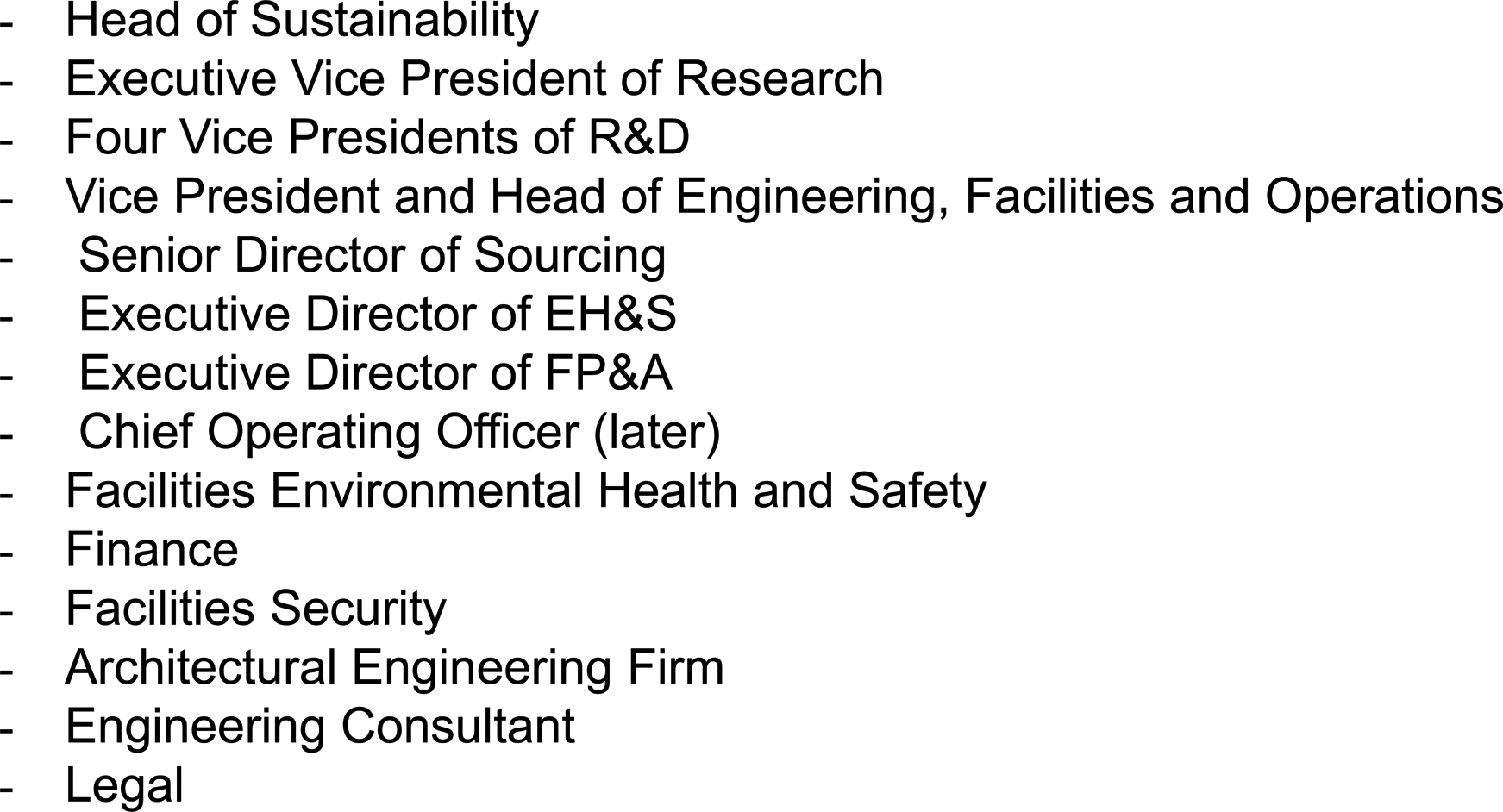
Evaluation team member representation.
A critical differentiator that was important to this project was the involvement of the Legal team early in the project. This is an important nuance—the Legal team was invited to the supplier selection team early and was brought onboard from a mindset perspective to drive a collaborative approach. Their input was incorporated from the outset into the requirements from the initial stages of the product. They were also core members of the business negotiation team, so that contractual requirements were clear from the beginning of the project. Traditionally, Legal teams in the Engineering/Construction industry, and many in the world of finance are not as intrinsically involved in these types of “relational” or “collaborative” agreements.
Selection of architect and design team
The team first began by deciding to hire a specialized architectural firm, that would precede the selection of the GC. While this is fairly common practice, the interesting element here was that the “cultural fit” of the architectural firm was prioritized over cost/schedule elements. It was important that the supplier network understand the importance of the building to the lifeblood of the company and were able to commit more than their technical expertise to the effort. The organization engaged a number of potential design service candidates with whom they were familiar, and engaged procurement to help in identifying the best candidate in terms of fit. There were three finalists identified, two of them which were large national firms and a third that was a smaller mid-tier firm with a local office that had done a lot of life science work. The team decided to solicit proposals from architects they had used as well as those they had not—and they ultimately selected the firm that displayed the deepest appreciation for their understanding of the science, an awareness of the company culture, and the ability to follow an “agile project methodology.” In addition, the selection was heavily biased toward firms that also internally prioritized core values that were important to Gilead—sustainability and corporate responsibility, as well as impeccable safety records. These criteria highlight an evolving mindset that sophisticated firms are using in supplier selection that goes beyond economics and schedule adherence, and one that we believe was key to the eventual success of the effort.
Another factor that fed into the selection process was the acknowledgment that there was a constrained market for architectural firms that had knowledge of how to design laboratories. For instance, Google and Facebook had construction in the biotech space, and many other biotech companies as well as universities (University of California—San Francisco, Stanford, and others) were in the throes of lab expansion, so knowledge and expertise were limited. Lab experience was thus viewed as beneficial in selecting the architect, but the fact that they had not done a lot of work in the Bay area was viewed as a downside. The specific skill sets of the individual assigned to the project was the overwhelming deciding factor. This is noted in the following quote:
We needed first a project manager that we could trust on many levels—one that would keep the group focused, and make sure that they are organized, who could drive the project to completion, and who had past experience in running big projects. We also wanted a lab designer who had done lab design for a number of years, and could translate what a scientist told them into a design. The architect we went with had a lab specialist, who had spent time in her career as a lab scientist, and who later transitioned into architectural design. She understood what went on in a lab every day, and could speak the language of lab technicians and scientists. We wanted someone who didn’t say “yes” to every request, and could become the voice of the project manager. We knew there were going to be requests on this project that were unfeasible, and we wanted someone who would gain credibility within our internal scientists to be able to show how best to achieve the desired outcomes from a design perspective, without compromising engineering code/imperatives.
An important criterion for the selection of the architect was the firm's ability to work on biology and chemistry lab designs, as well as their interaction with other subs and engineers. They were brought in for an interview with the senior management team. Some of the architecture firms came in with sophisticated digital tools, “3D” models and a suite of modern data science tools but as one procurement member we interviewed said,
It was important we not get wowed by 3D models and fancy systems—It was more important for us to evaluate the people on their team, and how they would fit. We brought them up to see our COO, and while all firms were at par on a capability level, it came down to working with a firm that we felt understood our culture, aspired to co-create a new engineering standard and took as much pride in the effort as we did—all stuff that is very difficult to quantify on an RFP scorecard!
This statement supports one of our critical observations: technology cannot be superseded by the need for a strong team-based orientation, one that values an emphasis on regular dialogue, communication, and performance evaluation (Deming, 1986).
Selection of GC
The selection of the GC was also conducted in a similarly thorough manner, with all members of the stakeholder team participating. A slightly different approach was utilized, in which the request for proposal (RFP) was issued, and bidders had a chance to digest it through. Each participant was given an opportunity to propose through a written proposal, and this narrowed it down to three GCs. Each GC was then given an hour period to present and make their case for the project. The reason for this was again tied to the notion of relational capital. “We felt that one of the most critical elements of the project was the PEOPLE involved, not the firms, that would make it a success. We will be working together for 4 years, and so we wanted to be sure we had highly talented individuals in the key roles.” Following oral interviews/presentations, and evaluation of written proposal submissions from six leading GCs for the purpose of both construction of the parking deck and the laboratory, the project's RFP evaluation team met to review a digest of the evaluation team's submitted scorecards and come to a consensus on the invitation list for finalist interviews conducted in a three-day period, by eliminating all but three of the providers. The evaluation ratings for the six suppliers are shown in Figure 5, which emphasizes the “people” component of the evaluation (project team involved and relevant construction experience), which made up 50% of the evaluation criteria.
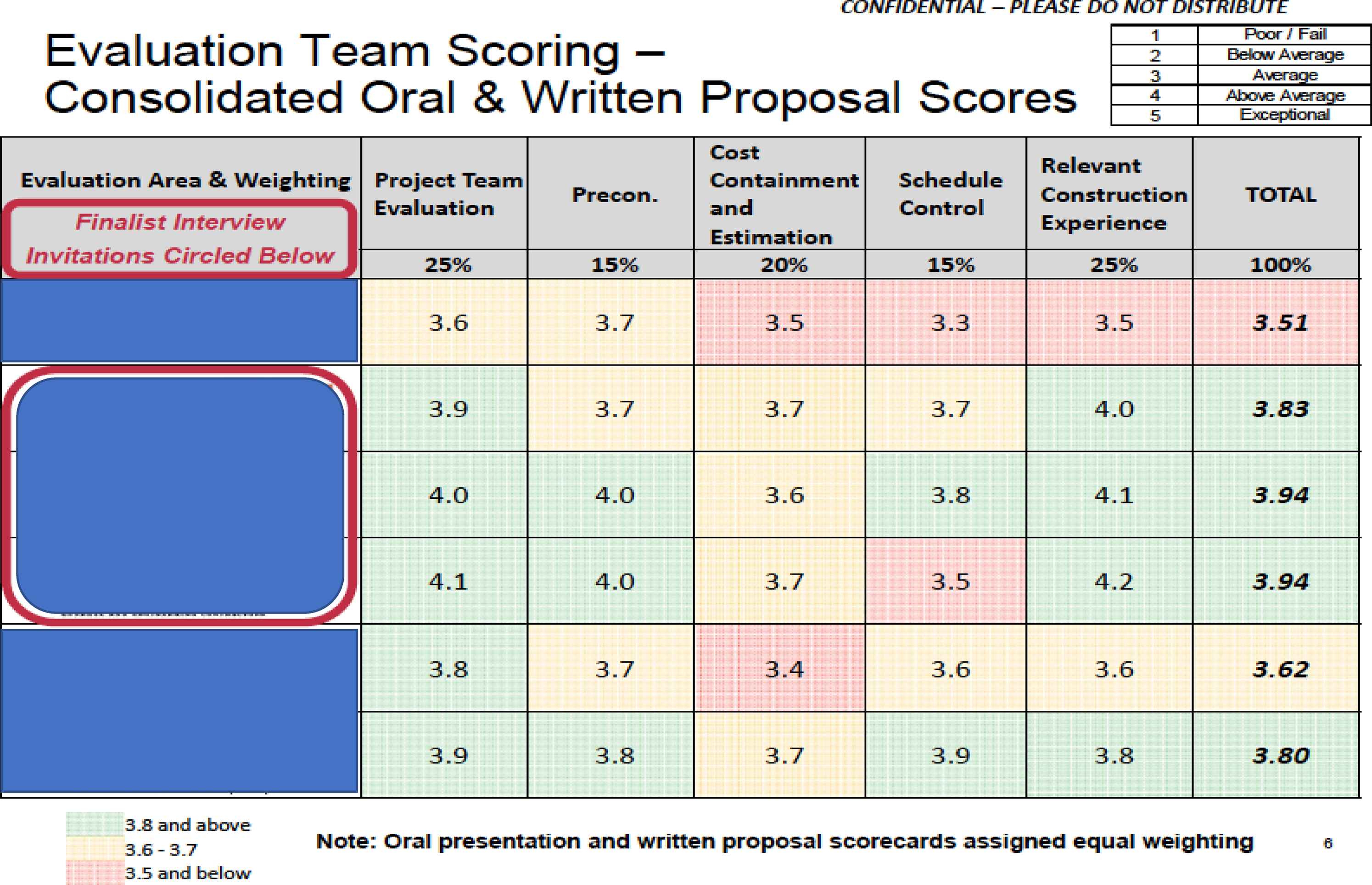
Supplier request for proposal (RFP) assessment scorecard.
The project's RFP evaluation team, along with additional Steering Committee representation, met to conduct second-round interviews and come to an award recommendation ranking to deliver to Senior Leadership. The team came to a unanimous consensus on the finalist award scores, and legal, biology, and construction and space planning delegates were involved in the final set of evaluation meetings. The recommendation ranking which resulted in an award to the final two GCs resulted in a dead heat, as both had equal evaluation scores (3.94 each), but differing strengths. Note here that the team also used a “dummy” variable in addition to the variables shown, which included intangibles that were intentionally biased to matter as much as cost and schedule.
The two remaining finalists were brought in for a final round of interviews. One of the finalists was more competitive in terms of their cost, but this was not the determining factor. The team prioritized the firm that brought the most innovation to the table, along with a team that had many examples of success with adaptive project management methodologies that leveraged digital. As one executive described, “the trustworthiness factor in the end was critical for us, as we viewed them as a strategic provider and partner. Although we used the scorecard, in the end, it was that human intervention and interpretation of the signals from the provider that determined who we could entrust the work to.”
The differentiating factor that finally resulted in the award was that the winning company, despite not having lab-related or biopharma construction experience, had a better alignment with the buying company's culture, and would be dedicating one of their principal leaders to the project. One of the key questions used in the evaluation assessment was “Provide a recent example of how a potential cost overrun was identified, communicated to owner, and avoided. What key lessons learned came from the experience?” This component that assessed the right alignment of cultures later proved to be a critical factor during the execution of the project, which involved a good number of complex negotiations. The team recognized the need for a contractor that was not unprepared for high levels of uncertainty and change in a project environment and sought one that would understand the importance of facing facts, acknowledging problems when they occurred, and engaging the team to collaboratively work out each challenge as it arose.
Layout planning and proof of concept
Once the architect and GC were selected, planning began in earnest. Developing the layout for a massive building that would house an extremely large R&D organization was a complex challenge. The visibility of the project to the leadership team was high, as the chief operating officer of the company was the executive sponsor and regularly interacted with the R&D leadership team. This executive council met on a monthly basis and was frequently engaged to support decision making and ensured the strategic scope of the project was communicated and on track. Once the initial design was submitted, it became quickly evident that despite its size, the organization would be space-constrained, requiring the addition of more space than originally anticipated. There was also the issue of a new and different office concept, creating a work environment with more open spaces on one end, with labs at the other. This new layout was different from what most people were currently familiar with. The team recognized that it would be key to show people what the space would look like before they could proceed with the building phase, and wanted to ensure complete buy-in from all stakeholders involved. To facilitate this level of engagement, the team retrofitted a smaller building on campus with the assistance of the facilities team, to do a proof of concept for the new open-layout plan. A focus group of scientists was created who became regularly involved in the space planning process. They were shown what to anticipate in the new workspace, and this led to early orientation sessions with leaders as well as regular dialogue with the individual R&D groups operating in the building.
Collecting stakeholder input is not an easy process! The different research groups often had differing requirements, and the open space concept was not something that many people were comfortable with. Open space layouts are not a new concept, but people often want their own space, even though they will eventually adapt to an open space. These types of change management efforts were important and occurred throughout the entirety of the design and construction process.
Several technologies were important in engaging stakeholders. First, building information modeling (BIM) was employed to ensure stakeholders were engaged in the layout of the facility, particularly scientists who would be working in the space. To sustain this approach and ensure that suppliers became aware of changes in stakeholder requirements, the application of digital technologies was deemed essential by senior leadership for application across the life cycle of the project. Digital technologies such as BIM were used not just during design, but in the maintenance and operation of the facility. To sustain overall collaboration a clearly articulated digital strategy was established for the project early during the architect and GC selection processes. It was made clear which tools would be used for what, and the team stuck to the use of these tools throughout. BIM was one example; the use of augmented reality for visualization was another. It is also notable that all meetings held with the senior vice presidents who were part of the project steering committee were held in a completely digital manner.
While this paper does not delve into layout planning and change management of the open space concept, we note that this midstream change in the project (where layout and capacity philosophy was changed midstream), highlight supplier negotiations and the overall value of partnership management.
Design change process and cost negotiation
An interview with the construction project leader provides insights into the level of change associated with a complex project of this nature:
We started planning the building based on past projects, beginning with a solid programming effort. We then met a lot with all 16 user groups, and had detailed discussions around the current space, its size, and the types of activities that go on in the laps. Those programming documents are essential for capturing the user requirements at a detailed level. The programming details are used as input into the design group. There are multiple stage gates during the design process, where the requirements are evaluated and revised by the GC, so they can see the design as it progresses, and provide technical inputs if there are things that need to change in the design. Every change often had multiple implications and interactions with other components of the building design, so it was critical to have this level of input early on in the process.
There were four phases of design, and at the end of each phase the design was “frozen.” The first was a “design freeze,” then a “lab equipment freeze,” and these had to be transparent on the dates when they occurred. Next was the lab design freeze. There were cost and schedule implications at each stage of the freeze, which often involved more drawings, firming up the implications, and consensus on what the decision was going to be. The project leader was tasked with project controls, monitoring costs, and reviewing the preliminary schedule to be delivered on. The process involved multiple meetings with the GC on how to approach the project, break down the phases, the associated cost increases, etc. As the project moved forward, the design evolved and there were multiple cost estimates that were generated. The contractor produced a 50% detailed design estimate and issued a permit design. The cost estimates for each stage had to be reviewed, optimized, and risks identified. Independent third-party estimates were conducted for each design change and these were submitted to the GC, to ensure that a good discipline and rigor was maintained on the cost structure.
Having an independent cost benchmarking activity identified discrepancies that had to be resolved. These discrepancies often involved intensive negotiations to optimize the costs and pricing. The third-party independent consultant was a significant part of the project cost, but having this individual who knows the industry, and is familiar with construction was key in ensuring that the team was confident that the cost increases were reasonable. The consultant also helped to minimize design changes to avoid unnecessary costs.
Once a certain phase of design was reached and there was a high confidence in the total cost, the design was locked in. This is a difficult decision, as the earlier one locks in a design, the more risk is being taken. On this project, the team waited until they were far into the design (development of construction documents), so there were not as many unknowns, and many of the decisions had been developed through consensus with key research groups. This also helped to negotiate the final price, and estimators were used to help understand the cost of changes and if they were accurate.
There were nevertheless some significant negotiations that took place over the price, but the project coordinator noted that
This was much easier than other projects we have done in the past. We had to go back and forth on the numbers to try and land on where we wanted to be on the budget. This was a new GC that we hadn't worked with before, but it was clear from the outset that they viewed us as a partner, and knew that this was about building and sustaining a relationship. That played into the negotiations in an important fashion, as their senior leadership and ours were communicating throughout, and at the project level to two teams also got along very well. This is really what fed into the success of the project.
Discussion
Key success factors for Complex projects
An important component of the project was ensuring that direct communication occurred between all major stakeholders at the beginning of the project, throughout the project, and at the closeout. The executive steering committee composed of the employee value propulsion of research and his direct staff, and having their direct involvement early on was key. Second, having the designers, GC's and trades all having input into the design early on really helped the team dynamics and the project flow. There was also a high level of awareness created, by having the GC and trades talk directly to the end users and understanding what they wanted in their own words (as opposed to having it filtered through the project management team). They could get their input from the source, which significantly improved the understanding on what the building was for and what was going to happen within it. All of the teams (extended team, GCs, and architects) met several times a week, and would also split off into breakout groups to have a dialogue on the risks they were anticipating.
There were also daily cost meetings that emphasized the importance of being transparent. These started as somewhat contentious early on in the project, but once we started bringing in our third-party benchmarks, it helped bring an objectivity to the cost negotiations. There were cost meetings, mechanical meetings, electrical, safety, and plumbing meetings. This was a critical component of the project that led to an incredible outcome: the project was completed 5% under budget! The project team used the design lockdowns to actually return contingency dollars that were in the project back to the business, employing a data-driven approach for looking at costs. By not keeping the contingency dollars to its original lump sum value throughout the life cycle of the project, a culture of partnership was established. Once the scope and design of the project were locked down, the remaining contingency needed was recalibrated at each stage based on the level of risks and unknowns remaining in the project. The company utilized multiple knowledge management systems over the course of the project. Primavera was used to manage the construction project schedule, and Sharepoint was used to provide access to all design documents. In addition, the project had an agile process where lessons learned from past efforts and peer projects were being incorporated into the project execution.
Another important integrating mechanism was the integrated project delivery concept, which is a construction project mechanism that brings parties to think of themselves as a “full team.” Traditional roles such as “clients” and “workers” were eliminated, but rather an end picture of what the team was trying to achieve was established as the vision for the project. As noted by one executive:
The IPD contract was defined in terms of a team that was going to deliver a building for science! That vision drove the buying, the GC's actions, and those of the contractors. During the meetings, there was a cross-dialogue among the different teams, and it was clear who had the information necessary that would impact decisions. I would go to the Subject Matter Expert for project management directly. It wasn't just done through emails, but through direct face to face project meetings. The specific “ways of working” were established from the beginning, and this set the tone for the expectation for everyone involved in the entire project.
Grounding teams in operational principles for complex projects
This result corroborates other research studies, which in unsuccessful projects, managers relied significantly more often on daily phone calls and emails (Handfield et al., 2015a, 2015b). Successful projects were more likely to include a formal documentation of the situation and detailed action plans communicated with clarity, transparency, and visibility of risks to all parties was key. These approaches are congruent with the Deming management method, which emphasizes clear identification of datum for regular performance reviews by all parties in an open and problem-solving mindset. This is clearly the case here, as regular face-to-face communication using collaborative digital tools was a key to the success.
While much of the prior research focuses on the processes and tools associated with project procurement and contract management, we propose that not enough attention is paid to the “human factor,” which ultimately impacts the outcome of complex projects. Because there are so many difficult moments that arise, where there are changes in design that impact cost, which impact schedule, or which create the potential for conflict, the need for a harmonious team structure is especially important in these types of projects. It is critical that all parties understand that these conflicts will be inevitable and that mechanisms for managing them be agreed on upfront. In project procurement, a lot of emphasis is placed on supplier selection criteria, but not enough is placed on the notion of “mutual trust” as an operating principle throughout the project conflict resolution phases of construction. An excellent example of this was when the design changed to an open-space layout midstream. Rather than leveraging this as an opportunity to charge the client with engineering change orders, the entire supply chain team worked with the owners and the research stakeholders to find a way to create an inspirational design for the building, while adhering to cost objectives. This is very rare in an industry where the “change-order” philosophy is prevalent and is an example of how putting operating principles first in a partnership relationship can improve the final outcomes. In this case, the statistical outcomes of the project are worth highlighting: the project finished 3 months ahead of schedule, is on target to achieve LEED Gold status, 5% of the budget was returned back to the client as true savings, and the project achieved high compliance in terms of contract adherence. This was due to the selection of a supplier that had the right people who were truly as vested in cost management as the owner!
As noted by several of the executives we interviewed, the key principles involved listening, empathy, and making data-based decisions:
From a soft behavioral side, it was critical that we highlighted the ways of working that we agreed to upfront. We established simple principles that we could apply when we were at a roadblock. A key principle was to enable data-based decisions—it didn't matter if we were looking at an issue that was $3000 or hundreds of thousands of dollars in scope. The principle of using data communicated in real time to arrive at a conclusion, and basing decisions on fairness to both parties resulted in some wins for them, some for us, but always maintained a sense of continuity and purpose to the project. We know for a fact that the architect and GC added a lot of value to the project when we found savings, and ended up getting a better product for the same price. The key is having a combination of listening to people, considering their ideas, and having a sense of empathy allows everyone to operate like a team aligned on the same purpose.
When we saved money, we could buy 10 more fume hoods or another biosafety cabinet. Everyone felt that they were saving money not just to save money, but to do something great for science! More savings meant more science!
The ways of working principles involved having everyone do what is in the best interest of the common project charter, and using data to make decisions.
Our case analysis of this project does not suggest that success is thus dependent on having all of the right people, but rather a dependency on behaviors that are established early on. Everything we did was to reinforce the way we want to execute that depends on less sterile ways of enhancing collaboration. This is where knowledge management, digital tools, clear charters, and executive support expectations were all helpful. They can help shape the behaviors, by providing complete transparency to the changes that were being proposed in the design, layout, and construction of the building where stakeholders would be working.
Several key important lessons emerge from this study, which represents further potential avenues for research.
Understanding the right mix of personality traits and clarifying appropriate behaviors that work best for a given project situation may be an avenue for future research. In particular, ensuring that the project team is willing to work along the lines of data-driven processes, who have a sense of fairness and equity, and who are strong communicators with high emotional intelligence quotient appear to be important characteristics of the approach. This has been highlighted in other case studies, but not fully developed as such (Mok et al., 2017). The ability to engage in data-driven problem resolution as a behavioral expectation was important to the success of the project team. An important component of any project is to ensure the right metrics are defined upfront, and the cadence for reviewing the metrics agreed on. Weekly meetings appear to be important, particularly as projects such as this one had significant complex elements associated with it. Collaborative tools were used throughout the process to provide updates on tasks, workflow, budget variance, and sign off on all work. This enabled everyone on the team to feel engaged and part of the process, as well as establishing a sense of urgency when difficulties arose. The use of third-party auditors as an unbiased party in the project activity is an important one, that all parties have to agree on. The willingness to abide by their findings is also an important component of the contract agreement. Although this project is an n of 1, the client (Gilead Science) conducted a retrospective of projects that were successful and those that were not as successful. The distinguishing factor was the presence of a strong supplier relationship management focus as a determinant of project partner selection. Finally, the relative weights in the assessment process appears that it should be more heavily focused on the prior experience and personal interaction of the team (de Araújo et al., 2017). Other factors, while important, may be used to filter out participants, but may not figure as heavily in the final outcome decision (Mok et al., 2017).
Limitations
The study is limited in that it is focused on a single case study, and has limitations in terms of generalizability. However, the fact that few projects come in under budget, and on time, in a constrained market environment, is a testament to the importance of team composition in the outcomes. Future research should focus on exploring the specific characteristics of team members and understanding the different roles that each should play on complex procurement projects. For instance, assessment scales have been developed to help identify a sourcing team leader's behavioral style and ability to satisfy critical leadership requirements, and these could be applied to construction project teams (Trent, 1996). The impact of other factors, including length and value of the project, prior team experience, number of functions involved, and level of leadership sponsorship could be explored as determinants of construction project success.
Conclusions
The research provides strong support for the proposition that an important component of successful construction management involves the selection of the right team of individuals, to ensure that the right mix and alignment of objectives is considered, and this becomes an essential ingredient of sourcing the project. Agreeing on a common set of operating principles focused on a real-time review of performance measurement was another critical component of success. The specific inclusion of multiple stakeholders in all stages of the project, from its origins to closeouts, was a key factor. However, the most important singular factor that stands out here is the explicit consideration given to the individual personal characteristics of the team. A real-time data-driven process was agreed on from the beginning of the project, which ensured that all parties had a method for coming to agreement when conflicts arose. The fact that conflicts are inevitable in LCPs emphasizes the need for frequent, open dialogue, as well as an equitable and data-driven approach for resolving issues as they come up. These lessons learned require further validation on a broader scale, to consider other factors that may come into play, such as organizational cultures, personal team attributes, and project-specific factors.
The case also shows that executives must visibly support a collaborative approach for complex projects to be successful, and should also be available as an escalation route for rapid problem resolution. However, top-level executives do not need to be involved at every stage for such projects to work. As shown in this case, collaboration can be reinforced as a behavioral expectation of all individuals involved in the project. We recognize that individuals can move on, so a cultural norm that emphasizes data-based decisions, reasonable and open discussion of problems, and early engagement of all parties early on proved to be a recipe for success. Collaboration must be developed as a core capability for project management, not an exception.
Footnotes
Declaration of conflicting interests
The authors declared no potential conflicts of interest with respect to the research, authorship, and/or publication of this article.
Funding
The authors received no financial support for the research, authorship, and/or publication of this article.
