



Abstract
Background
Effective monitoring is essential for managing atrial fibrillation (AF), and eHealth tools present innovative solutions. However, a comprehensive summary of their application in AF management remains scarce.
Objective
This study investigates the status, trends, and determinants of eHealth tool utilization in AF management. We utilize bibliometric methods to forecast patterns and assess correlations between economic indicators, network infrastructure, and advancements in this domain.
Methods
We systematically searched the Web of Science Core Collection for articles on eHealth tools and AF, with a cutoff date of June 11, 2025. We employed bibliometric techniques to analyze publication metrics, including document count, contributing countries, institutions, and keywords, and used linear regression to examine the relationship between publication volume, per capita GDP, and network infrastructure.
Results
Our search yielded 641 publications since 1998, reflecting significant growth in eHealth research for AF over the past decade across 83 countries and 1593 institutions. The United States, the United Kingdom, and Germany led in publication volume, primarily from high-income countries. A strong correlation was observed between publication numbers and per capita GDP and network infrastructure. Key authors and journals emerged, with common keywords such as “Mobile health” and “Digital health,” indicating prominent research themes.
Conclusions
This study highlights the increasing relevance of eHealth tools in AF management. Notable correlations with economic development and network infrastructure underscore their role in advancing eHealth applications, while emerging trends promise future research directions.
Introduction
Atrial fibrillation (AF) is one of the most prevalent and clinically significant cardiac arrhythmias, with an increasing global burden. It is estimated that by 2050, between 6 and 12 million individuals in the United States will be affected by AF, with a projected 18 million cases in Europe.1,2 AF is characterized by irregular atrial contractions, impaired heart function, and the formation of atrial thrombi, which can lead to life-threatening complications such as ischemic stroke. These clinical manifestations significantly impair the quality of life of patients, increase morbidity and mortality rates, and place a heavy economic burden on healthcare systems worldwide. 3
Traditionally, the management of AF faces several limitations. These include low detection rates, non-adherence to clinical guidelines, and a lack of consideration for patient preferences. 4 On one hand, patients are required to regularly travel to healthcare facilities for follow-up visits and laboratory tests while being prescribed long-term anticoagulation therapy. This leads to a significant expenditure of time, effort, and financial resources, which can undermine patients’ confidence in their recovery and treatment adherence. 5 On the other hand, healthcare providers face challenges in timely monitoring and managing patients, adjusting treatment plans accordingly, which ultimately affects the quality and effectiveness of AF treatment and increases the risk of adverse events. 6
Given these challenges, there is a critical need to explore personalized, intelligent, and efficient management models for AF that can promote cardiovascular rehabilitation in AF patients. Recent guidelines suggest incorporating eHealth tools into the routine follow-up care of AF patients to improve healthcare quality and reduce complications.7,8,9 eHealth tools, which are digital devices based on information and communication technology, have the potential to assist in disease prevention, diagnosis, treatment, monitoring, and management. 10
eHealth tools have demonstrated significant promise in improving the detection rates of AF. By utilizing remote monitoring, smart reminders, and data analysis, these tools facilitate early symptom identification, reducing the likelihood of missed diagnoses. 11 Regarding poor adherence to clinical guidelines, eHealth tools can enhance the compliance of healthcare providers by offering personalized treatment suggestions and treatment reminders, thus improving the consistency of clinical practice. 12 Additionally, eHealth tools can cater to patient preferences such as treatment convenience and management of drug side effects.13,14 By leveraging feedback from patients, these tools can adjust treatment plans, fostering better satisfaction and adherence to treatment protocols. For newer oral anticoagulants, which do not require frequent monitoring, eHealth tools still hold value in improving patient adherence by reminding patients to take their medications on time and undergo periodic check-ups, thus contributing to the long-term management of treatment and monitoring for adverse effects. 15
Growing clinical evidence underscores the significant potential of eHealth tools in the management of AF. However, there is a notable lack of systematic reviews and research, especially regarding future developments and trends within this field. The influence of various factors on research in this area remains underexplored. Bibliometric analysis offers an objective and comprehensive approach to assessing the research status of a specific domain. 16 By quantitatively analyzing citation patterns, publication trends, and collaborative networks, bibliometrics provides insights into the impact and influence of particular studies, researchers, and institutions.
To date, there has been no bibliometric analysis that fully examines the intersection of AF and eHealth tools, leaving a gap in understanding the future prospects of research in this critical field. This study aims to fill this gap by conducting a detailed bibliometric analysis of the intersection between AF and eHealth tools, identifying key trends, influential contributors, and future directions of research. The findings from this study will contribute to a better understanding of the evolving landscape of AF management through eHealth tools and provide valuable insights for future advancements in this area.
Methods
Study design and data acquisition
This study employs bibliometric analysis along with a systematic literature mapping approach to investigate eHealth tools in AF management. The methodology combines quantitative citation network analysis with thematic synthesis to identify research trends and uncover knowledge gaps. For this research, we selected the Web of Science (WoS) Core Collection as the primary database, chosen for its high-quality indexing and comprehensive coverage of leading, peer-reviewed journals. WoS is well-regarded for its reliable citation tracking and its widespread use in bibliometric studies. Although other databases like Scopus and Lens provide broader coverage, our focus was on capturing the most influential studies, emphasizing high-quality research outputs. The data for this article was retrieved on June 11, 2025. Our search strategy specifically targeted research on the role of eHealth tools in AF management, using the following search terms: (Telemedicine or Virtual Medicine or Medicine, Virtual or Tele-Referral or Tele Referral or Tele-Referrals or Mobile Health or Health, Mobile or mHealth or Telehealth or eHealth or Tele-Intensive Care or Tele Intensive Care or Tele-ICU or Tele ICU or Telecare or Tele-Care or Tele Care) AND TS = (Atrial Fibrillation or Atrial Fibrillations or Fibrillation, Atrial or Fibrillations, Atrial or Auricular Fibrillation or Auricular Fibrillations or Fibrillation, Auricular or Fibrillations, Auricular or Persistent Atrial Fibrillation or Atrial Fibrillation, Persistent or Atrial Fibrillations, Persistent or Fibrillation, Persistent Atrial or Fibrillations, Persistent Atrial or Persistent Atrial Fibrillations or Familial Atrial Fibrillation or Atrial Fibrillation, Familial or Atrial Fibrillations, Familial or Familial Atrial Fibrillations or Fibrillation, Familial Atrial or Fibrillations, Familial Atrial or Paroxysmal Atrial Fibrillation or Atrial Fibrillation, Paroxysmal or Atrial Fibrillations, Paroxysmal or Fibrillation, Paroxysmal Atrial or Fibrillations, Paroxysmal Atrial or Paroxysmal Atrial Fibrillations)).
All economic indicators discussed in this paper, as well as the open-source database on the World Bank's network infrastructure, are available for free download on the official website (https://www.worldbank.org).This study employs an ecological cross-sectional analysis to explore correlations between data from the Web of Science (WoS) Core Collection and World Bank national-level indicators. The analysis aims to identify potential relationships between these datasets at the national level, providing insights into global trends in AF management and eHealth tools.
Literature screening and data extraction
The literature selection process for this study commenced on June 11, 2025, with an extensive search conducted within the Web of Science Core Collection (WoSCC) database. A keyword-based search was performed to identify articles relevant to eHealth tools in AF management. The search was restricted to studies published in English, with carefully selected terms to ensure a comprehensive yet focused retrieval of pertinent literature.
A total of 787 articles were initially retrieved based on the search query. After filtering by language, only English-language publications were retained, leading to the exclusion of 21 articles in other languages, which included 13 in German, 3 in French, 2 in Russian, 1 in Czech, 1 in Portuguese, and 1 in Spanish. This left 766 English-language articles. Additional selection criteria were then applied, focusing on ‘Article’ and ‘Review’ types. Documents excluded at this stage comprised 47 conference proceedings, 33 meeting abstracts, 27 editorials, 12 early access papers, 5 letters, and 1 meeting report. Ultimately, 641 articles, including 497 original articles and 144 reviews, were included in the final analysis. The detailed selection process is shown in Figure 1. This article adhered to the guidelines outlined in the Preferred Reporting Items for Systematic Reviews and Meta-Analyses extension for Scoping Reviews (PRISMA-ScR) checklist.

Flowchart depicting the article selection and literature screening process according to the PRISMA-ScR guidelines.
This thorough selection procedure ensures that only high-quality, relevant research articles are incorporated, providing a solid foundation for the bibliometric analysis conducted in this study.
Data analysis
This study utilized a range of visualization tools, including Gradpad Prism (Version 9.5), ArcMap (Version 10.8), VOSviewer (Version 1.6.19), and CiteSpace (Version 6.3.R3), for an in-depth analysis. Gradpad Prism was employed to evaluate temporal trends in the field from 1998 to 2025. ArcMap enabled a visual representation of the geographical distribution of published papers across various countries. This study performed a correlation analysis using GraphPad Prism to explore the relationship between national GDP per capita and publication volume, as well as national infrastructure(Secure Internet Servers (per 1 million people) and Fixed Broadband Subscriptions (per 100 people)) and publication output. Data on GDP per capita and national infrastructure were obtained from the World Bank database, with the most recent available year being 2024. Only countries with more than five publications were included in the analysis. Scatter plots were first created to visualize the data. Given the skewed and overdispersed nature of publication counts, linear regression was not appropriate. Instead, Spearman's rank correlation was applied, which does not assume normality and is suitable for assessing monotonic relationships. The ρ value, 95% confidence intervals, and p-values were calculated. A p-value <.05 was considered statistically significant, indicating a strong influence on publication trends, while a p-value >.05 indicated no significant effect.
Visualization
VOSviewer was utilized to construct and visualize bibliometric networks, generating maps based on co-authorship, co-citation, and keyword co-occurrence to highlight major research clusters and offer insights into the relationships and structure within the academic community. CiteSpace was employed to visualize emerging trends and patterns in scientific literature, using co-citation and clustering analysis to identify new research areas, key advancements, and the evolution of the field.
To ensure reproducibility, all cut-offs were data-driven.
Keywords: VOSviewer 1.6.19 revealed an elbow at occurrence = 4; CiteSpace sensitivity (f = 4–10) showed ΔQ < 5%, silhouette ≥0.99, and stable Top-5 ranks (Suppl. Table 1). Co-citations: LCS log—log inflection = 27; pruning 20–50 citations peaked silhouette at 0.9248, and varied largest cluster size <10% (Suppl. Table 2). Productivity: √Nmax rule (Rousseau et al., 2019)
17
set ≥5 papers; ±2 robustness changed top-20 centrality <4%.
Cluster labels are auto-generated by LLR (Chen, 2010) 18 : the n-gram most over-represented in a cluster's titles, abstracts or keywords. Statistical prominence ≠ semantic intent; we therefore cross-checked each label against its top-30 keywords, five flagship papers, VOSviewer thesaurus, time span and silhouette to ensure thematic coherence. Timeline axis = median publication year of cluster documents (Chen, 2010) 18 ; bars span earliest → latest paper, left-to-right ordering reveals thematic life-cycles and evergreen topics.
Results
Analysis of annual publication
Among the 641 publications on eHealth tools in AF management, the first was published in 1998. 19 Since that time, the quantity of published papers has typically demonstrated an increasing trend.(Figure 2). This timeline can be divided into three distinct phases, with notable shifts occurring in 2016 and 2023. The initial phase, referred to as the “Dawn Emergence” (1998–2015), marks the awakening of the field with gradual, incremental growth. During this period, the number of publications slowly increased from 1 to 12. The second phase, known as the “Midday Surge” (2016–2022), represents a rapid and intense rise under the high sun. In just seven years, the number of publications soared from 22 to 116. The third phase, termed the “Twilight Recession,” signifies a gentle decline from the peak as daylight fades. During this phase, the number of publications dropped to around 70, returning to levels seen prior to 2021.
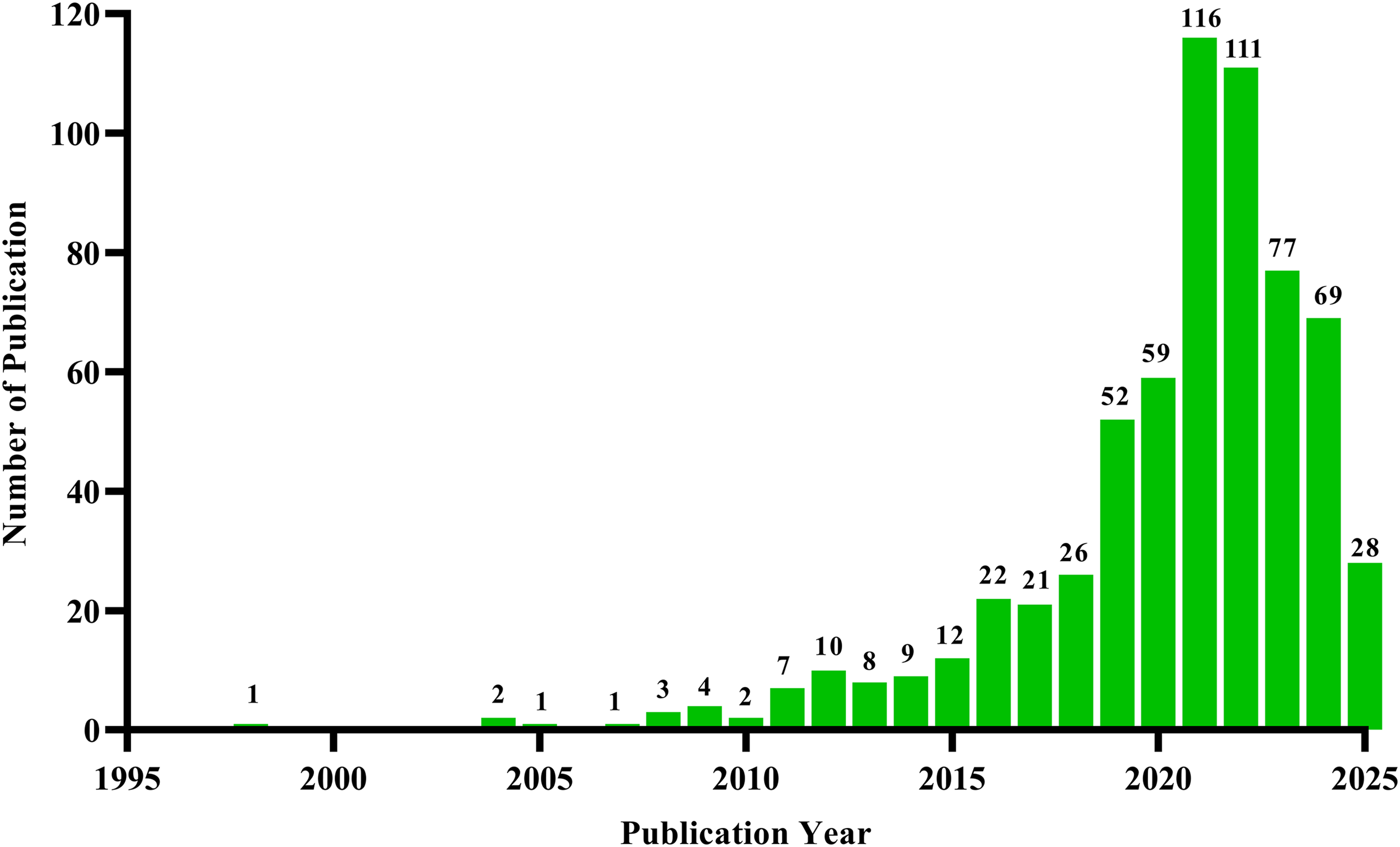
Worldwide publication trend on eHealth tools in atrial fibrillation management.
Countries and institutions analysis
The publications were spread across 83 countries (Figure 3(a)), with significant collaboration evident among the most productive nations. The United States (188 articles) and England (137 articles) are the only countries to have published more than 100 articles. Meanwhile, Germany (99 articles), Italy (93 articles), and China (91 articles) have each contributed over 90 articles, underscoring their significant presence in this field (Figure 3(b)).Table 1 presents the top 10 countries and institutions in this research domain.

Geographic distribution of countries involved in the use of eHealth tools for atrial fibrillation management (a). The number of publication count in countries with more than five articles published (b).
The top 10 countries and institutions on eHealth tools in atrial fibrillation management.

Figure 4(a) illustrates the co-occurrence relationships among institutions engaged in eHealth tools in AF management, with University of Liverpool at the center, exhibiting the highest frequency of co-occurrence with other institutions, thus highlighting its central role in global research collaborations. Figure 4(b) presents the country co-occurrence network, illustrating the connections and patterns of collaboration between different research nations. The United States, England, Australia, and Canada share strong connections, suggesting that interactions and collaborations between these countries occur frequently.

The density map of co-organizations (a). The density map of co-country in eHealth tools in atrial fibrillation management (b).
Continent analysis
In this study, we categorized the publications related to eHealth tools in AF management by continent: Asia, Europe, Oceania, North America, South America, and Africa, with Antarctica making no contribution. The analysis indicated that Europe had the highest number of publications, contributing 823, followed by North America with 228, and Asia with 182. Oceania accounted for 76 publications, while South America and Africa had significantly lower contributions, with 33 and 13 publications, respectively. These results underscore the unequal distribution of research across continents, with Europe and North America dominating in terms of publication volume (Figure 5).

Distribution of publications on the use of eHealth tools for atrial fibrillation management across various continents.
National economic level analysis
The World Bank classifies national economic levels into four categories: high-income, upper-middle-income, lower-middle-income, and low-income. Figure 6(a) presents a global visualization map showing the number of articles published by each economic group. The analysis reveals that high-income countries published the largest number of articles, totaling 1121, followed by upper-middle-income countries with 175 publications. Lower-middle-income and low-income countries published 52 and 7 articles, respectively (Figure 6(b)).

Distribution of publications regarding the use of eHealth tools for atrial fibrillation management across different national economic levels. (a) Geographic distribution visualization. (b) A precise histogram of the data.
GDP per capita (current USD) analysis
By obtaining data on global per capita GDP and the number of annual published articles from the World Bank's official website and performing a correlation analysis, a positive correlation was identified between the two variables, which was statistically significant (Spearman ρ = 0.9198, 95% CI [0.7998, 0.9691], P < .05 (two-tailed, n = 20)) (Figure 7(a)). Further examination indicated a positive correlation between the per capita GDP of countries with at least five published articles and their publication volume, which was also statistically significant (Spearman ρ = 0.3683, 95% CI [0.02978, 0.6311], P < .05 (two-tailed, n = 35)) (Figure 7(b)).
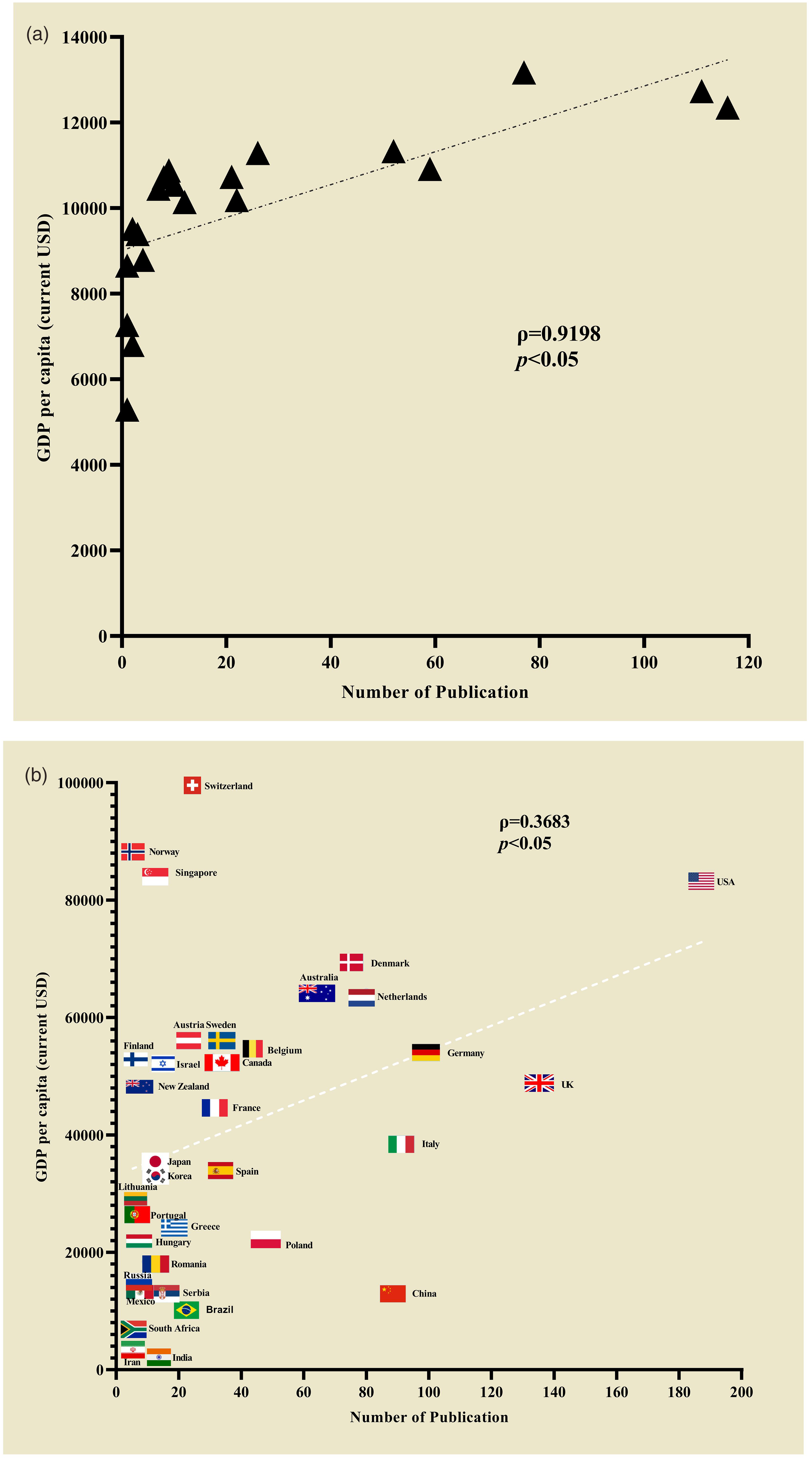
Correlation between GDP per capita (current USD) and the annual number of publications. (a) The correlation between annual publications and the global per capita GDP. (b) The relationship between per capita GDP and the publication count in countries with more than five articles published.
National network infrastructure analysis
By retrieving data on national network infrastructure from the World Bank, a correlation analysis was performed between two variables: Secure Internet Servers (per 1 million people) and Fixed Broadband Subscriptions (per 100 people). The analysis revealed a strong positive correlation between Secure Internet Servers (per 1 million people) and the number of annual published articles, which was statistically significant (Spearman ρ = 0.9648, 95% CI [0.8860, 0.9895], P < .05 (two-tailed, n = 14)) (Figure 8(a)). Further analysis showed a positive correlation between the Secure Internet Servers (per 1 million people) of countries with at least five published articles and their publication volume, which was also statistically significant (Spearman ρ = 0.5850, 95% CI [0.3034, 0.7726], P < .05 (two-tailed, n = 35)) (Figure 8(b)). Additionally, a positive correlation was observed between Fixed Broadband Subscriptions (per 100 people) and the number of annual published articles, which was statistically significant (Spearman ρ = 0.9721, 95% CI [0.9229, 0.9901], P < .05 (two-tailed, n = 18)) (Figure 9(a)). Further investigation indicated a positive correlation between Fixed Broadband Subscriptions (per 100 people) in countries with at least five published articles and their publication volume, which was also statistically significant (Spearman ρ = 0.3813, 95% CI [0.04480, 0.6401], P < .05 (two-tailed, n = 35)) (Figure 9(b)).

Correlation between secure internet servers (per 1 million people) and the annual number of publications. (a) The correlation between annual publications and the global Secure Internet servers (per 1 million people). (b) The relationship between Secure Internet servers (per 1 million people) and the publication count in countries with more than five articles published.
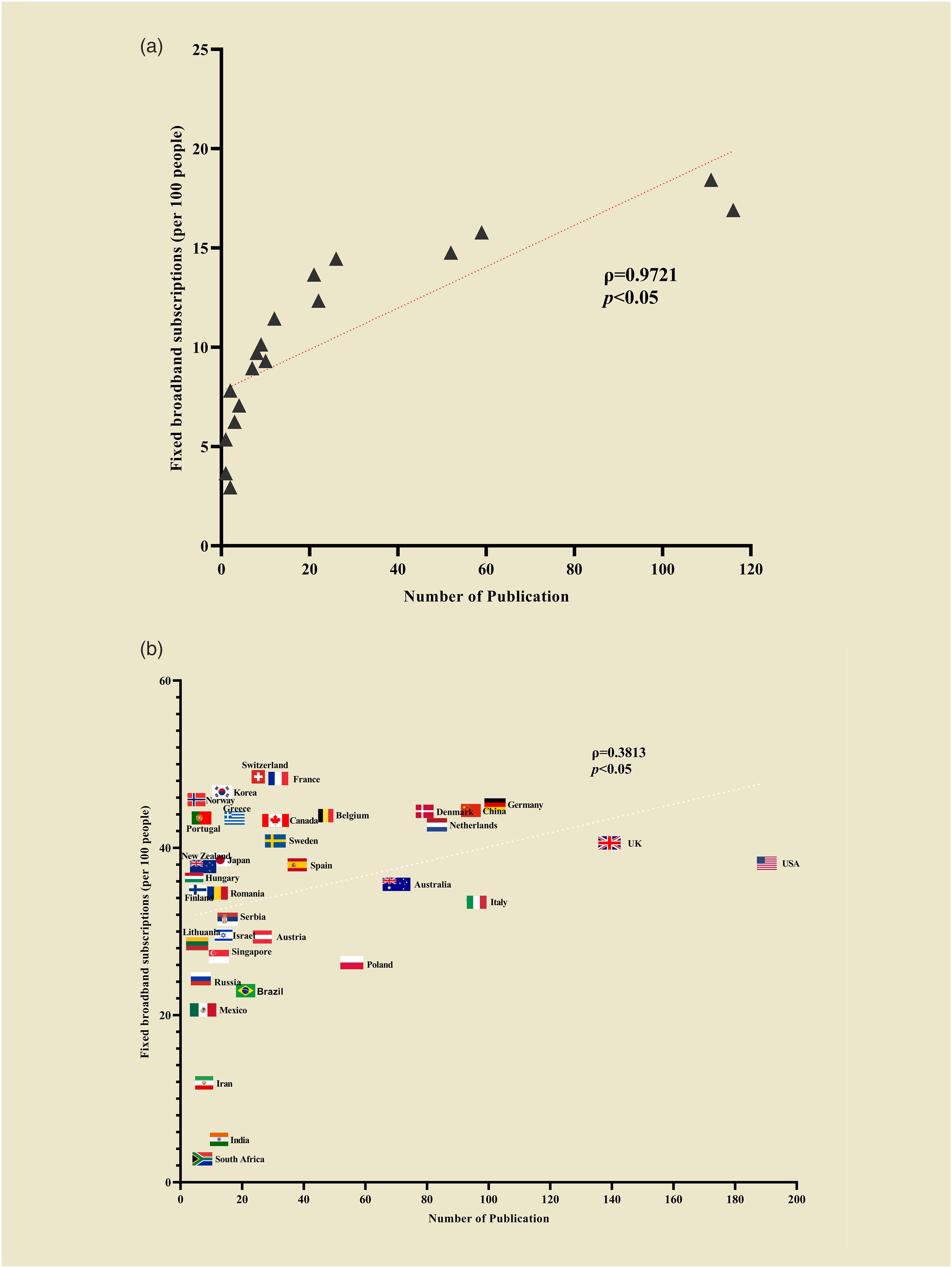
Correlation between fixed broadband subscriptions (per 100 people) and the annual number of publications. (a) The correlation between annual publications and the global Fixed broadband subscriptions (per 100 people). (b) The relationship between Fixed broadband subscriptions (per 100 people) and the publication count in countries with more than five articles published.
Co-authors and co-cited authors analysis
Since the initial publication on eHealth tools in AF management in 1998, a total of 3875 authors have contributed to the research in this field. Co-authorship analysis reveals a network of leading scholars who have played a significant role in advancing the discipline (Figure 10). Prominent figures such as Lip, Gregory Y. H., Guo, Yutao, and Linz, Dominik hold central positions within this network, highlighting the collaborative nature of the research. Co-cited authors, who are cited together in at least one publication, share similar research interests. Guo, Yutao is frequently co-cited, emphasizing his ongoing influence in the field. Authors such as Hindricks, G, and Lip, GYH, are also recognized as key contributors, underscoring their substantial impact. Table 2 presents the top 10 authors and co-cited scholars in the area of eHealth tools in AF management. A strong co-occurrence relationship exists among these scholars, with those who publish more frequently being cited together more often. These patterns underline their significant influence on current research and future developments.

The overlay map of co-authors in eHealth tools in atrial fibrillation management.
The top 10 co-authors and co-cited authors of of eHealth tools in atrial fibrillation management.

Journals and co-cited journals analysis
Table 3 provides a summary of the top 10 journals and co-cited journals associated with eHealth tools in AF management, highlighting the interdisciplinary and collaborative nature of the research in this field. Well-known journals such as Europace, Journal of Medical Internet Research, and JMIR Mhealth and Uhealth have published the largest number of papers, reflecting their substantial impact on the research area. Circulation, Europace, and the European Heart Journal are the most commonly cited journals, highlighting their significant impact in this field.
The top 10 journals and co-cited journals of eHealth tools in atrial fibrillation management.

The dual-map overlay in CiteSpace illustrates the evolution of research across various disciplines. As depicted in Figure 11, the citing articles are positioned on the left, while the cited articles appear on the right, linked by colored citation pathways. Green citation paths indicate that research in medicine, medical, and clinical fields is frequently cited by journals in health, nursing, and medicine.

Dual-map overlay of journals involved in eHealth tools in atrial fibrillation management.
Co-cited references analysis
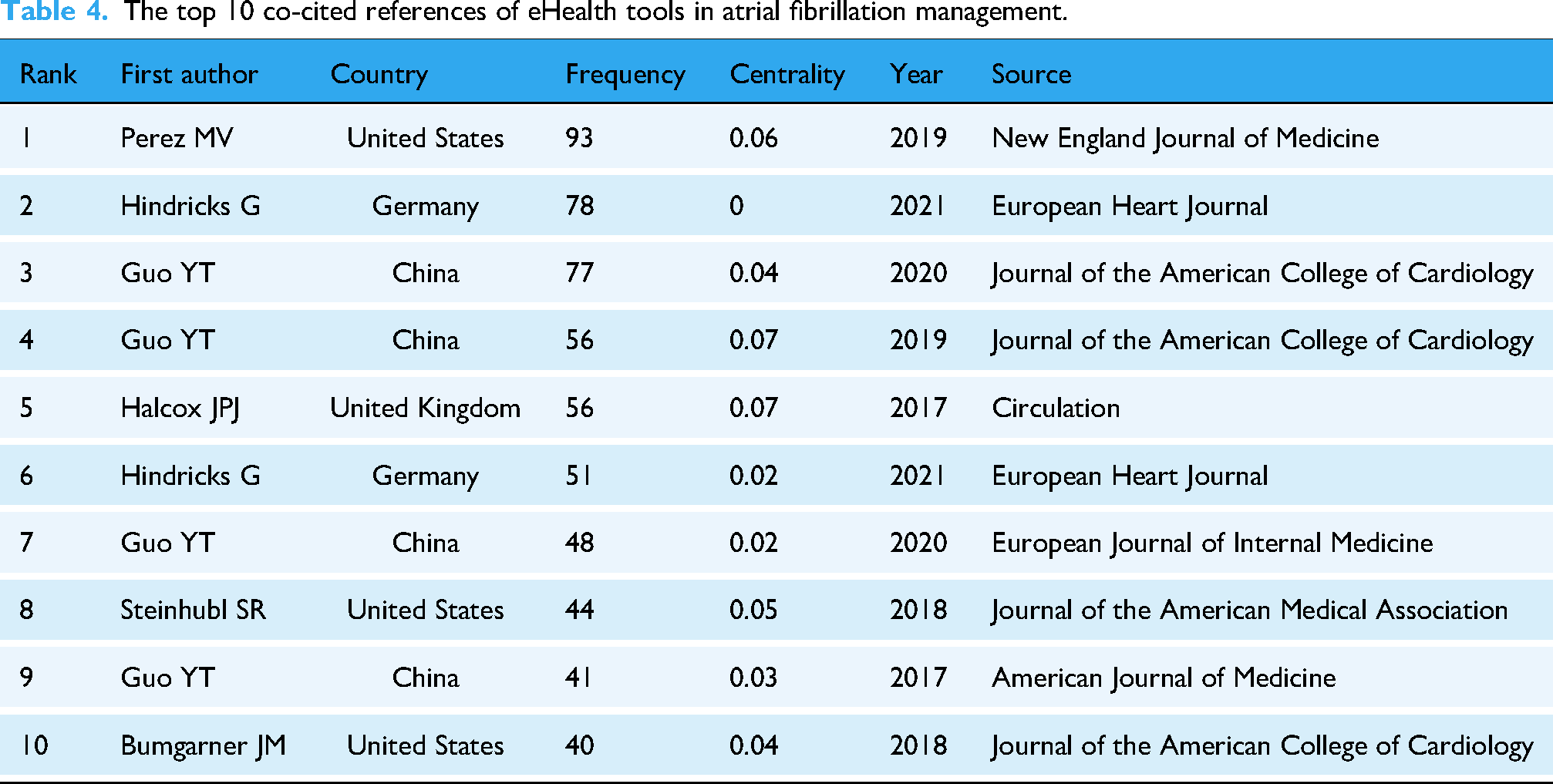
Co-citation analysis of references is a key feature of CiteSpace, commonly used to identify central research themes within a field. The co-citation of references reveals the strength of connections between various sources. Figure 12 presents the co-citation network, highlighting important articles that are frequently cited together. The paper “Large-Scale Assessment of a Smartwatch to Identify Atrial Fibrillation” stands out as the most cited, with 93 citations published in the New England Journal of Medicine. 20 This study assessed the Apple Watch's capability to detect AF through irregular pulse alerts. A total of 419,000 participants were monitored, with 2161 receiving notifications. Among those who used ECG patches, 34% were confirmed to have AF, and 84% of the alerts matched AF on the ECG. This influential study demonstrated the potential for large-scale, user-driven arrhythmia screening via consumer wearables, setting the stage for pragmatic trials in cardiovascular care. The network reveals notable co-citation clusters, highlighting the interconnections between these key studies. Table 4 provides a summary of the top 10 most co-cited references related to eHealth tools in AF management.

The network of co-cited references in eHealth tools in atrial fibrillation management.
The top 10 co-cited references of eHealth tools in atrial fibrillation management.
Keywords analysis
A keyword co-occurrence network plays a crucial role in identifying research hotspots and emerging trends within a specific field. Figure 13 illustrates the network structure for the research domain concerning eHealth tools in AF management, emphasizing terms that frequently appear together. Important terms such as “Mobile health,” “Risk,” “Care,” “Stroke,” “Digital health,” “Heart failure,” “Mobile health technology,” and “Remote monitoring” represent core research themes(Table 5).

The network of keywords co-occurrence.
Top 20 keywords of eHealth tools in atrial fibrillation management in terms of frequency and centrality.

Figure 14(a) outlines nine key keyword clusters, each corresponding to a distinct research topic. The clusters “#0 machine learning,” “#1 mobile health,” “#1 remote monitoring,” and “#6 robotics” emphasize echnological advancements in eHealth. Machine learning and robotics drive automated and intelligent healthcare solutions, while mobile health and remote monitoring enable continuous patient monitoring through digital platforms. The clusters “#3 oral anticoagulants,” “#4 cardiovascular disease,” and “#7 heart rhythm” focus on medical treatments for AF. Oral anticoagulants prevent clots, while cardiovascular disease and heart rhythm are central to understanding AF and its treatment. The clusters “#8 Chronic Heart Failure” and “#9 catheter ablation” cover long-term AF management and treatments. Chronic heart failure often coexists with AF, while catheter ablation is a procedure used to treat persistent AF. Finally, the cluster “#5 emergency medicine” reflects urgent care for AF. Emergency medicine addresses the rapid diagnosis and treatment of AF in acute settings.

Keyword analysis in eHealth tools in atrial fibrillation management. (a) Keyword cluster network map. (b) Keyword landscape.
Figure 14(b) provides a visual depiction of keywords, showcasing the evolving focus within this research area. The evolution of research in AF management shows a shift from early focus on remote monitoring, oral anticoagulants, and robotics to more recent innovations like machine learning, mobile health, and cardiovascular disease. This progression reflects advancements in both treatment and technology integration. This chronological view aids in understanding the progression and transformation of key research topics in this field.
The timeline view of the keyword cluster network demonstrates the chronological evolution of research topics related to eHealth tools in AF management (Figure 15). Early emerging clusters include terms like “remote monitoring,” “oral anticoagulants,” “robotics,” “heart rhythm,” and “chronic heart failure.” Over time, the focus has gradually shifted towards topics such as “machine learning,” “moblie health,” “cardiovascular disease,” “emergency medicine,” and “catheter ablation”. Future research in AF management is expected to increasingly integrate advanced technologies like machine learning and mobile health with established methods such as remote monitoring and catheter ablation. The focus will likely shift towards personalized treatment strategies, leveraging data analytics for better decision-making, and improving patient outcomes through continuous monitoring and real-time interventions. Furthermore, advancements in emergency medicine and cardiovascular disease management will contribute to a more comprehensive, patient-centered approach.

The keywords of eHealth tools in atrial fibrillation management were shown in the keywords timeline view. Clusters are ordered left to right by their median publication year; the colored bar of each cluster spans from its earliest to latest included paper, so length and position indicate thematic lifespan and temporal evolution.
Figure 16 presents the top 25 keywords that have experienced the most significant citation bursts in the area of eHealth tools for AF management. These keywords are categorized according to their beginning (Figure 16(a)), strength (Figure 16(b)), and duration (Figure 16(c)). Terms such as “mobile phone,” “wearable devices,” and “quality of life” show marked citation bursts. Future advancements in AF management will likely focus on improving mobile applications and wearable devices to enhance quality of life, enabling continuous monitoring and personalized patient care.

The top 25 references with the strongest citation bursts. (a) Ranking by beginning. (b) Ranking by strengths. (c) Ranking by durations.
Discussion
Overview
This study presents a cross-sectional analysis of eHealth tool applications in AF management and a bibliometric review of the field. Data from the Web of Science indicate significant growth in research on eHealth tools for AF, particularly since 2019, driven by the COVID-19 pandemic's impact on online service demand. A comparative analysis using World Bank data shows that developed countries, especially in Europe and North America, dominate this research area. Linear regression analysis suggests a positive correlation between GDP per capita and research output, indicating that wealthier nations lead in this field. Additionally, investment in infrastructure correlates with output, emphasizing its importance. The bibliometric analysis identified key authors, institutions, journals, and articles, focusing on mobile applications, wearable devices, and personalized patient care to enhance quality of life.
General information
Research on eHealth tools for AF management began in 1998 and has shown a steady upward trend. Initially slow, the field rapidly expanded, especially during the COVID-19 pandemic, which increased interest in eHealth solutions. Although demand for these tools has lessened somewhat as the pandemic subsided by 2023, it remains higher than pre-2021 levels.
Developed nations, including the United States, the United Kingdom, and Germany, lead this research, indicating strong international collaboration. The University of Liverpool is a significant contributor, reflecting its expertise. Europe and North America dominate this field, likely due to their higher levels of economic development.
High-income countries are particularly advanced in developing eHealth tools for AF management, highlighting the link between economic prosperity and research. The study suggests a correlation between GDP per capita, network infrastructure, and advancements in eHealth integration in AF management, indicating these factors support research.
Notable contributors include Gregory Y. H. Lip for his extensive publication record and Guo Yutao from China, excelling in publication volume and citations, establishing his authority in this field. Among journals, Europace leads in publications and citations, while Circulation is recognized for citation impact. Notably, four of the ten most-cited articles were authored by Guo Yutao, reinforcing his respected status in eHealth research for AF.21,22,23,24
Economic development and its impact on eHealth tools in AF management
The influence of economic development on the use of eHealth tools in AF management is significant, with a notable correlation between income levels and research output. Although higher-income countries tend to generate more publications, this does not necessarily indicate greater actual use or innovation in eHealth technologies.
Closer examination of the data reveals a positive relationship between GDP per capita and research output related to eHealth in AF management. However, this correlation does not imply causality. Economic resources may facilitate high-tech sector development, but they do not demonstrate direct investment leading to improved clinical outcomes or increased eHealth tool usage.
Additionally, the clustering of high-income countries may reflect indexing biases (e.g., from WoSCC) rather than true disparities in research productivity. This highlights limitations in the analysis, including confounding factors and potential reverse causality, which should be considered in interpreting the results.
In AF management, wealthier nations often allocate more healthcare funds, potentially benefiting from advanced technologies like eHealth tools,25,26 but this economic advantage does not guarantee superior outcomes. Comprehensive investments in both health and technology remain essential for progress in this field.
Thus, this study underscores the role of economic conditions in advancing healthcare technology. Countries with stronger economic foundations can leverage eHealth tools more effectively in managing chronic conditions like AF, emphasizing the need for investment without prescriptive assertions about potential outcomes.
The impact of national infrastructure on the development of eHealth tools in AF management
National infrastructure, particularly network facilities, significantly influences the advancement of eHealth tools for AF management. This study examines key indicators of network infrastructure: Secure Internet Servers (per 1 million people) and Fixed Broadband Subscriptions (per 100 people). The results reveal a correlation between strong network infrastructure and the research and application of eHealth tools in AF management.
However, this correlation does not imply a direct causal relationship. A robust network infrastructure may reflect a nation's commitment to technological advancement, but the data does not capture actual usage or effectiveness of eHealth tools. Additionally, indexation bias from databases like WoSCC may obscure true research productivity across regions.
Regions with superior infrastructure can implement eHealth tools effectively, supporting the needs for continuous monitoring and communication essential to chronic condition management. Nonetheless, this correlation must be interpreted cautiously, considering potential confounding factors and reverse causation.
While this study highlights the importance of national infrastructure, it avoids making normative statements about necessary investments without strong evidence. The focus remains on elucidating the implications of the findings. Ultimately, these insights suggest improving technological infrastructure may facilitate the adoption of eHealth tools in managing AF, but further investigation is needed to understand the underlying dynamics fully.
Research hotspots of eHealth tools in AF management
Research hotspots identified through keyword co-occurrence and clustering analysis reveal five key areas within eHealth tools for AF management: “Machine Learning,” “Mobile Health,” “Cardiovascular Diseases,” “Emergency Medicine,” and “Catheter Ablation.” This section reviews these trends via bibliometric studies, highlighting the evolving role of digital health technologies in AF care.
Machine Learning is vital for detecting and predicting AF. Research with smartwatches and ECG patches shows algorithms significantly enhance early identification and risk stratification. 20 Wearable ECG devices improve detection rates and support timely anticoagulant therapy in high-risk populations. 27 Integrating machine learning in AF management allows healthcare providers to make informed, data-driven decisions.
Mobile Health (mHealth) technologies are reshaping AF management by facilitating remote monitoring and patient engagement. Studies indicate mHealth strategies lead to fewer adverse events compared to traditional approaches. 21 Applications like the mAF App enhance patient knowledge, medication adherence, and quality of life, supporting guidelines promoting eHealth tools for symptom tracking. 24
Cardiovascular Diseases remain critical for AF management, with research often exploring digital tools within standard care. Wearable mHealth devices aid in early AF detection and intervention, 22 reducing complications and improving outcomes.
In Emergency Medicine, managing AF in high-risk individuals is essential. Remote screening via iECG technology boosts detection rates among the elderly, enhancing satisfaction. 28 This trend underscores the importance of telemedicine and digital solutions in urgent clinical settings.
Catheter Ablation is crucial for AF treatment, with digital tools increasingly used in pre- and post-procedural processes to facilitate monitoring and improve success. 29
The 2024 European Society of Cardiology/European Association for Cardio-Thoracic Surgery (ESC/EACTS) guidelines recognize eHealth tools as “empowering” in the Atrial Fibrillation-Care (AF-CARE) pathway, emphasizing their role in improving anticoagulation adherence and symptom management. 30 The guidelines advocate personalized tool selection tailored to clinical needs and patient preferences. However, challenges like the digital divide, implementation barriers, and the need for robust evidence on outcomes such as stroke prevention and quality of life remain. Addressing these issues is crucial for leveraging digital health tools in AF management.
Future directions of eHealth tools in AF management
Recent keyword burst analysis highlights three trends that may shape the future of eHealth tools in AF management: “mobile phone,” “wearable devices,” and “quality of life.” These trends reflect a growing emphasis on patient-centered care and continuous monitoring.
Mobile phones are increasingly crucial in managing AF. The evolving mobile health applications (mHealth) empower patients with real-time health data. 31 Future iterations may include automated alerts for irregular heart rhythms, medication reminders, and direct communication with healthcare providers. While such features could facilitate timely interventions and reduce the need for in-person visits, their effectiveness will depend on rigorous validation.
Wearable devices, like smartwatches and heart rate monitors, are important for managing chronic conditions such as AF, enabling continuous monitoring and early arrhythmia detection. 32 Data collected may integrate into health platforms, offering insights into patients’ conditions. As technology advances, these devices could play a key role in long-term AF management; however, verifying their accuracy and comfort is essential.
A significant trend in AF management is the increased focus on quality of life. Effective management extends beyond symptom control to include overall patient well-being. Future eHealth tools are likely to emphasize personalized care addressing clinical, psychological, and social aspects. 33 By providing tailored solutions, mobile applications and wearables could significantly enhance patients’ quality of life.
In summary, eHealth tools in AF management are set to evolve, prioritizing mobile and wearable technologies that enhance personalized care and patient well-being. While the integration of technology with patient-centered approaches holds promise, it is crucial to recognize the limitations of bibliometric predictions, which reflect current citation trends without ensuring future priorities.
Limitations
To our knowledge, this study is one of the first bibliometric analyses focusing on eHealth tools in AF management. Prior research, such as investigations into user experience in mHealth interventions 34 and the TeleCheck-AF project, have primarily examined specific intervention types or clinical settings, including teleconsultations and monitoring of Direct Oral Anticoagulants (DOAC) therapy.35,36 Although these studies offer valuable insights, they often miss a comprehensive view of various eHealth tools applicable across multiple phases of AF care.
However, several limitations need to be acknowledged. First, our study exclusively utilized the WoSCC and publicly available World Bank data. While these are reputable sources, other databases like PubMed or Scopus were not included, potentially omitting important literature and narrowing the research scope.
Second, the analysis was restricted to English-language publications, which risks overlooking significant studies from non-English sources, especially in regions where eHealth practices differ. This limitation can skew the representation of the global research landscape.
Lastly, the correlation analysis presented in this study identifies associations between variables but does not establish causation. While such correlations highlight trends, future research should employ methodologies like longitudinal studies or randomized controlled trials to confirm causal links between eHealth tools and AF management outcomes. Addressing these limitations in subsequent studies by broadening data sources, incorporating non-English research, and adopting more rigorous designs is essential for deepening insights into AF management.
Conclusions
This study highlights the growing importance of eHealth tools in AF management, reflected in the significant increase in research over the past decade. The data reveal a strong link between publication volume and economic development, alongside network infrastructure, underscoring their vital roles in advancing eHealth applications. High-income nations with advanced network capabilities are at the forefront of eHealth adoption, setting the stage for future innovations. Emerging trends, especially in mobile health technologies like wearables and smartphones, indicate promising developments. Future research should further investigate these trends, emphasizing the need for geographical and linguistic diversity, and examine the effects of eHealth tools on patient outcomes in AF care. Such efforts will be crucial for the evolution of digital health interventions in this vital healthcare area.
Supplemental Material
sj-docx-1-dhj-10.1177_20552076261427101 - Supplemental material for eHealth tools in atrial fibrillation management: An ecological cross-sectional analysis and bibliometric review of research trends and knowledge gaps
Supplemental material, sj-docx-1-dhj-10.1177_20552076261427101 for eHealth tools in atrial fibrillation management: An ecological cross-sectional analysis and bibliometric review of research trends and knowledge gaps by Xianxian Zhou, Shuang Zhang, Lin Hu, Liyi Liao, Zhangli Xie and Xuping Li in DIGITAL HEALTH
Footnotes
Author note
It is acknowledged that bibliometric output reflects research activity and trends but does not equate to actual clinical uptake or effectiveness. Consequently, the findings should be interpreted with the understanding that high publication rates do not necessarily translate into improved patient outcomes in atrial fibrillation management.
Acknowledgments
The authors sincerely appreciate the contributions of all the students and colleagues who have assisted in this research and extend gratitude to Central South University and Yiyang Central Hospital for their substantial support of this project.

Ethical approval
This study did not involve the collection of new data from human or animal subjects. The data used for the correlation analysis were sourced from publicly available datasets, such as the World Bank dataset, and all bibliometric analysis data were derived from the Web of Science Core Collection. Therefore, ethical approval and participant consent were not required for this study. The research adheres to all relevant ethical guidelines and regulations, utilizing publicly accessible data. Future studies involving direct interaction with human or animal subjects should ensure appropriate ethical approval is obtained, in line with established ethical standards.
Funding
The authors disclosed receipt of the following financial support for the research, authorship, and/or publication of this article: This work was supported by the Hunan Provincial Natural Science Foundation (Grant Number 2019JJ40433 to XPL).
Declaration of conflicting interests
The authors declared no potential conflicts of interest with respect to the research, authorship, and/or publication of this article.
Data availability
The data sets utilized and analyzed in this study can be obtained from the corresponding author upon reasonable request.
Supplemental material
Supplemental material for this article is available online.
References
Supplementary Material
Please find the following supplemental material available below.
For Open Access articles published under a Creative Commons License, all supplemental material carries the same license as the article it is associated with.
For non-Open Access articles published, all supplemental material carries a non-exclusive license, and permission requests for re-use of supplemental material or any part of supplemental material shall be sent directly to the copyright owner as specified in the copyright notice associated with the article.
