




Abstract
Background
The present study explored the characteristics and accuracy of TikTok messaging regarding nutrition and exercise during pregnancy.
Methods
Using quantitative content analysis, researchers coded TikTok top posts (n = 800) for content about nutrition and/or exercise during pregnancy in 1 month in May 2022.
Results
Nutrition posts created by credentialed individuals were 69.2% congruent with expert recommendations and largely did not provide specific calorie (97.5%) or weight gain recommendations (92.4%). Content created by an exercise specialist focused on strength training (67.1%) over aerobic training. When all exercise types and intensities were grouped together, 40.6% fully adhered to and 59.4% deviated from published expert recommendations. Content on strength training was significantly less likely to adhere to the guidelines compared to content on aerobic exercise. Those who indicated their own professional training were not more likely to publish content that was congruent with guidelines than those without known expertise.
Conclusions
Experts and recommending groups in the United States need to address the gap between the apparent interest in strength training during pregnancy and the relative lack of specific and usable guidelines on this type of exercise.
Background
Overweight and obesity are among the costliest health challenges in the United States, now persisting into a fourth decade as a public health epidemic. 1 Despite substantial investments in treatment, the prevalence of obesity continues to rise, currently affecting more than 40% of the U.S. population. 2 Particularly concerning is the increasing rate among children and adolescents, with nearly 20% (approximately 14.7 million individuals aged 2–19) classified as obese. 3 Over the past 30 years, childhood and adolescent obesity rates have more than doubled and tripled, respectively—conditions that carry profound comorbidities across the lifespan. 1 Although effective treatment remains critical, prevention—especially early in life—is arguably of greatest importance for mitigating long-term health risks. 4
Among preventive strategies, targeting women of reproductive age presents a unique and impactful opportunity. 5 This life stage is pivotal not only for the woman's own health, including risk for excessive gestational weight gain (GWG) and postpartum weight retention,6,7 but also for influencing the health of the next generation through epigenetic pathways affected by maternal behaviors during pregnancy.8,9 Excessive GWG and retained postpartum weight contribute to a cascade of risks—gestational diabetes, hypertensive disorders, cesarean delivery, and long-term obesity—for both mothers and their infants. 10 Recognizing these concerns, the Institute of Medicine (IOM) revised its GWG guidelines in 2009, aligning with WHO body mass index (BMI) categories. 11 However, over half of women exceed these guidelines, with even higher rates among those already overweight or obese, compounding adverse maternal-fetal outcomes and establishing conditions that may perpetuate obesity across generations.
While multiple factors influence excessive weight gain in pregnancy; nutrition and physical activity remain the most modifiable. Their roles in improving maternal-fetal outcomes are well established, with organizations such as American College of Obstetricians and Gynecologists (ACOG), American College of Sports Medicine (ACSM), and IOM issuing regular guidance on healthy diet and exercise during pregnancy.12–14 The U.S. Dietary Guidelines (2020–2025) recommend a balanced diet rich in essential nutrients and caloric adjustments based on pre-pregnancy BMI. 14 Likewise, current exercise recommendations highlight the safety and benefits of prenatal physical activity.12,13 Nonetheless, outdated beliefs—such as concerns about exercise harming the baby or the persistent “eating for two” mindset—continue to influence behavior.15,16
Pregnancy is often viewed as a window of opportunity for behavior change. 17 Many women experience heightened body awareness and motivation to adopt healthier habits for their baby's sake, often seeking both information and emotional support.18,19 This makes access to reliable health information critical during this period.20,21 While healthcare providers remain key sources, women increasingly turn to a variety of platforms—midwives, family, apps, and especially social media—for guidance.22,23
Among these platforms, TikTok has rapidly gained traction, especially among individuals aged 18–34, a demographic overlapping with peak childbearing years. 24 In 2018, 72.9% of U.S. pregnant women reported using online platforms for pregnancy-related information. 24 TikTok's algorithm-driven “For You” page surfaces content based on user interests and hashtags, meaning health information may be encountered both intentionally and passively.24–26 Given pregnancy's cultural relevance to identity, body image, and lifestyle, and the (re)construction of social norms for women as they become mothers, content related to nutrition and exercise during this time may be particularly engaging, whether or not users actively seek it.
Limited research has addressed pregnancy-related fitness and nutrition content on social media. Studies have identified qualitative themes of pregnancy and postpartum Instagram accounts focused on exercise and nutrition, 27 user attitudes toward pregnancy content creators on Facebook, 28 and qualitative themes in pregnancy conversations about exercise on Reddit. 29 None of the current research explores accuracy according to established scientific guidelines, and none explores TikTok. However, the convergence of a critical public health crisis, a highly motivated and engaged population, and a rapidly adopted, unregulated communication platform creates an undocumented context that requires scholarly inquiry.
Given that TikTok's content is widely consumed but not validated, and considering the established negative impact of health misinformation on behavior, a fundamental step toward addressing this public health concern is to characterize and validate the informational landscape where this target group is currently learning. Therefore, the primary purpose of the present study is to describe the nature and frequency of TikTok messages related to nutrition and exercise during pregnancy. Quantitative content analysis is a useful tool to observe the frequency of both manifest and latent content in health messages. The secondary purpose is to evaluate the accuracy of these messages in light of current scientific guidelines in U.S. policy, specifically the IOM GWG guidelines. This remains necessary to determine compliance with the national standard for prenatal care and counseling. Given this, the study used methods that naturalistically mimicked what a mother in the United States would likely see in her TikTok feed.
Methods
Sample
Researchers identified the most popular content creators related to pregnancy and health-behaviors through a Google search and recorded top hashtags used by these content creators to determine the heavily trafficked locations for related posts. Researchers determined 20 popular hashtags topically related to pregnancy, nutrition, exercise, and/or general prenatal health (e.g. #pregnancyworkout, #fitpregnancy, #prenatalnutrition, #healthypregnancy). TikTok's design highlights “top” posts according to the algorithm of the user. These top posts have higher levels of engagement by views, likes, and comments than most videos. The study sample was derived from the top posts from a single month (May 2022) associated with a user account created for the study. The “users” (researchers) only viewed videos connected to the content creators and hashtags identified in the qualitative process above. This design allowed researchers to create a naturalistic exploration of algorithmic feed for a typical user interested in the relevant content.
Because popular posts receive continued engagement after the original date of posting, sampling in 1 month (May 2022) provided the most popular posts/content across a 6-month time period. The selected hashtags yielded 800 TikTok posts. Research assistants received a list of assigned top posts from the month. The codebook determined that all posts about health behaviors during pregnancy gathered from a hashtag on TikTok should be coded. Posts were considered to be about healthy behaviors in pregnancy if the content of the post addressed fitness or nutrition during gestation. Coders excluded posts that pertained to trying-to-conceive, the postnatal period, pelvic floor strength or rehabilitation, or mothering outside of pregnancy without any reference to nutrition or fitness behavior during an actual pregnancy. These criteria yielded 656 posts with relevant content on nutrition and/or exercise during pregnancy. These methods complied with TikTok's terms of use at the time of data collection.
Variables and coding
A coding manual providing conceptual and operational definitions for each variable was developed by research team experts using extant literature. Conceptual definitions provided an objective reference for coders on both manifest and latent variables. Operational definitions provided instructions for numeric coding in a coding spreadsheet. The sample was coded on the content of each post and characteristics of the content creator. Regarding the post content, the following variables were coded: general topic (nutrition and/or exercise), specific topic (e.g. body weight, recipes, type of exercise), and originality of content. Regarding characteristics of the content creators, the following variables were coded: stated credentials (professional/certified, lay, or unclear), current pregnancy status, and if creator/content had promotional purpose (e.g. a paid or unpaid advertisement for a specific product such as a supplement or food brand). Posts were further coded relative to nutrition and/or exercise specific characteristics and then evaluated to determine the degree to which the content was congruent with the respective current scientific guidelines.
Nutrition posts were categorized on the following variables: type of diet (general USDA diet or other (e.g. keto, vegan, gluten-free)), nature of food advice (promoting a food, discouraging a food, or a combination), and whether the post contained advice on supplements, caloric intake, and/or weight gain. Content creators of nutrition posts were identified as credentialed (e.g. RD, RDN, MD, or MPH), self-proclaimed health expert, or no credentialing reported/apparent. Each nutrition post was evaluated and coded to compare nutrition/food content relative to the current USDA dietary recommendations, caloric intake, 14 and IOM GWG guidelines. 11 Exercise posts were categorized on type of exercise (aerobic exercise, anaerobic/strength training, combination, or other) and further subgrouped by intensity (e.g. aerobic training as low-, moderate-, or vigorous intensity; and strength training as interval, light-, or heavy resistance). A post on other domains of physical fitness (e.g. flexibility/mobility, balance, agility) was categorized as “other.” Content creators of exercise posts were identified as credentialed in the health/fitness industry (e.g. certified strength and conditioning specialist, health fitness intelligence, etc.), self-proclaimed exercise specialist (e.g. stating “I’m a certified trainer”), or no credentialing reported/apparent.
Additional coding for exercise posts included whether any instructional/cautionary communication was provided (oral or written). Finally, each exercise post was evaluated and coded based on the degree to which the content adhered to current guidelines for exercise during pregnancy as established by ACOG and ACSM.12,13
Two trained research assistants coded each post according to the established coding manual. Once sufficient reliability (Cohen's kappa) in a pilot test was achieved for all variables, researchers completed coding the full sample within a 2-week period (overlap sample 10%; n = 80 posts). Final intercoder reliability sufficient for an exploratory study was reached for all 16 coding variables (Cohen's kappa 0.64–0.97). Eleven variables generated strong or almost perfect reliabilities, and five generated moderate reliabilities. 30 Descriptive statistics were generated using SPSS (version 29). Chi-square test of independence estimated associations between categorical variables in the sample, with a p-value less than 0.05 signifying statistical significance. Conclusions about data with moderate intercoder reliability were considered tentative.31,32
Results
Of the 800 identified TikTok posts using the aforementioned hashtags, 82.0% (n = 656) contained content relevant to nutrition and/or exercise during pregnancy and were categorized based on content topic and was produced by 189 unique content creators (see Figure 1).
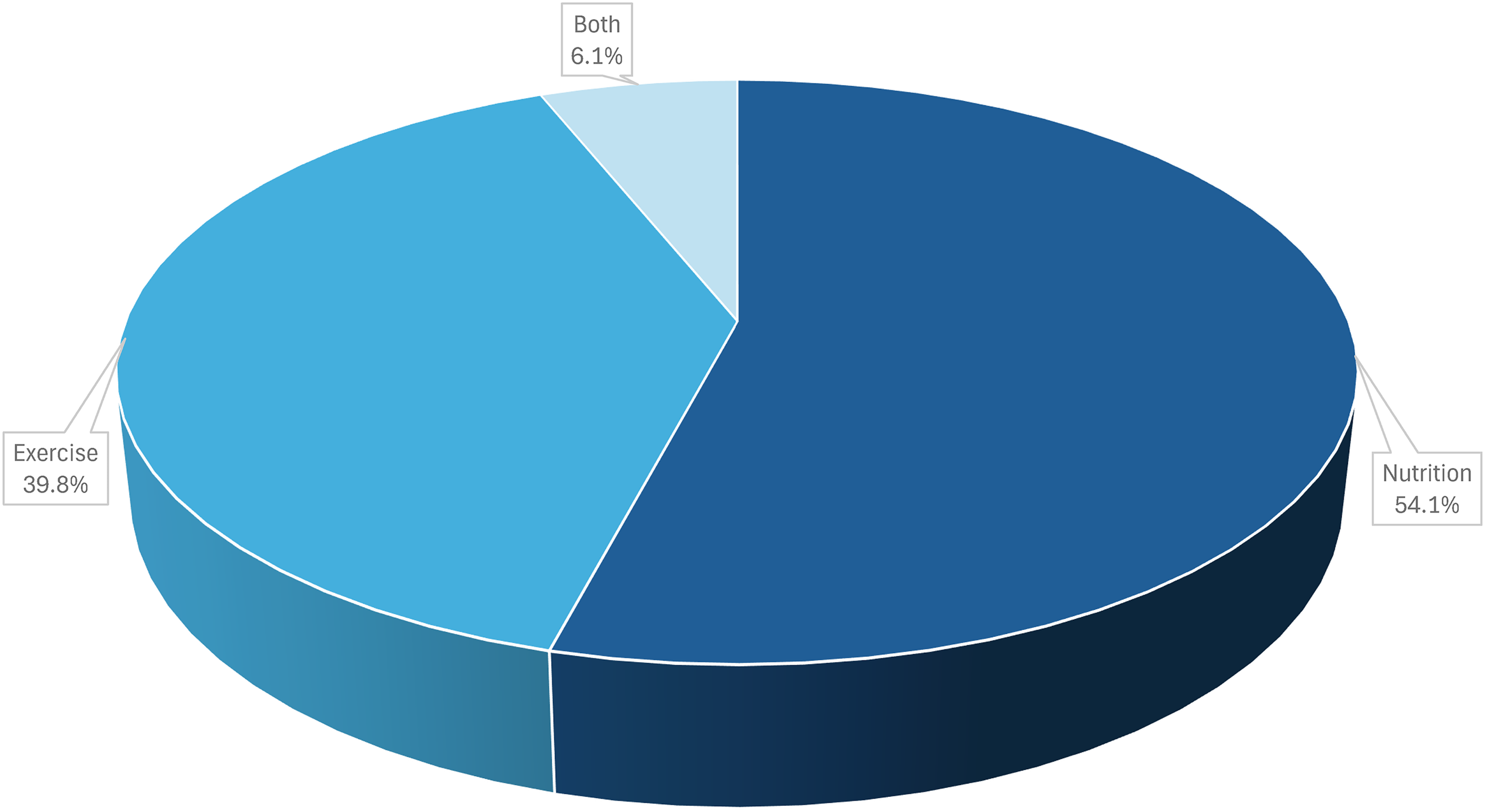
Percentage of primary content types.
The 144 posts excluded from further analysis did not contain content on nutrition and/or exercise, despite being tagged as such. The sample largely contained posts of original content (98.6%) with the remaining small proportion (1.4%) containing reposted or a mix of original and reposted content. Whether content was created by credentialed or lay individuals varied for nutrition versus exercise posts. In the overall sample, 13.1% of posts were from individuals with an apparent health credential, 40.0% were from individuals who were self-proclaimed health expert, and 46.2% of the posts were from individuals who did not offer credentials and/or could not readily be identified as a health professional otherwise (e.g. profile page or in the video; see Figure 2).

Content topic distribution by creator expertise.
In the overall sample, content creators either appeared pregnant or stated a current pregnancy in 43.3% of posts. Content creators acknowledged a direct promotion of a product, service, or brand in 25.0% of the overall sample, most of which were posts about nutrition (78.9%).
Nutrition posts
Characteristics of posts containing nutrition content are presented in Table 1. Overall, the type of diet conveyed in nutrition posts was based on a general USDA diet (94.6%) compared to “other” diet types (e.g. keto). The nature of food advice was more often about what food(s) to eat (87.4%), rather than what foods should be avoided (4.7%). The method in which the content was delivered was predominantly through direct advice (oral or written) (88.1%) compared to indirect/nonverbal food advice (e.g. showing the content creator eating a particular food) (11.9%). Content creators of nutrition posts varied in their apparent expertise with 20.8% credentialed, 54.4% self-proclaimed health experts, and the remaining 24.8% by those without known credentials or expertise. Content on nutritional supplements was in 18.9% of posts; this content was significantly more likely to be produced by those with an apparent credential compared to those with self-proclaimed expertise (χ2(2) = 16.5, p = 0.000; phi coefficient = −0.216).
Characteristics of TikTok posts on food and nutrition during pregnancy.

WG: weight gain.
Congruence with nutrition and weight gain recommendations
The content in each post was evaluated relative to current national nutrition food and caloric intake (USDA, 2020) and weight gain guidelines for pregnancy (IOM, 2009). Contents on caloric intake and weight gain were categorized as accurate, inaccurate, or mentioned with no specific recommendations given. The majority of posts, whether published by someone credentialed or otherwise, did not include content/advice about caloric intake (98.7%) or weight gain (95.0%). All nutrition posts, regardless of diet type, were compared to USDA guidelines and were categorized as (1) congruent, scientific, clear, and specific (15.2%), (2) congruent, general, and/or nonspecific content (75.4%), or (3) general and deviates from congruent (8.2%). Content on food relative to the recommendations (i.e. scientific/specific, general/vague) was not related to the post popularity (χ2(3) = 0.50, p = 0.918).
Exercise posts
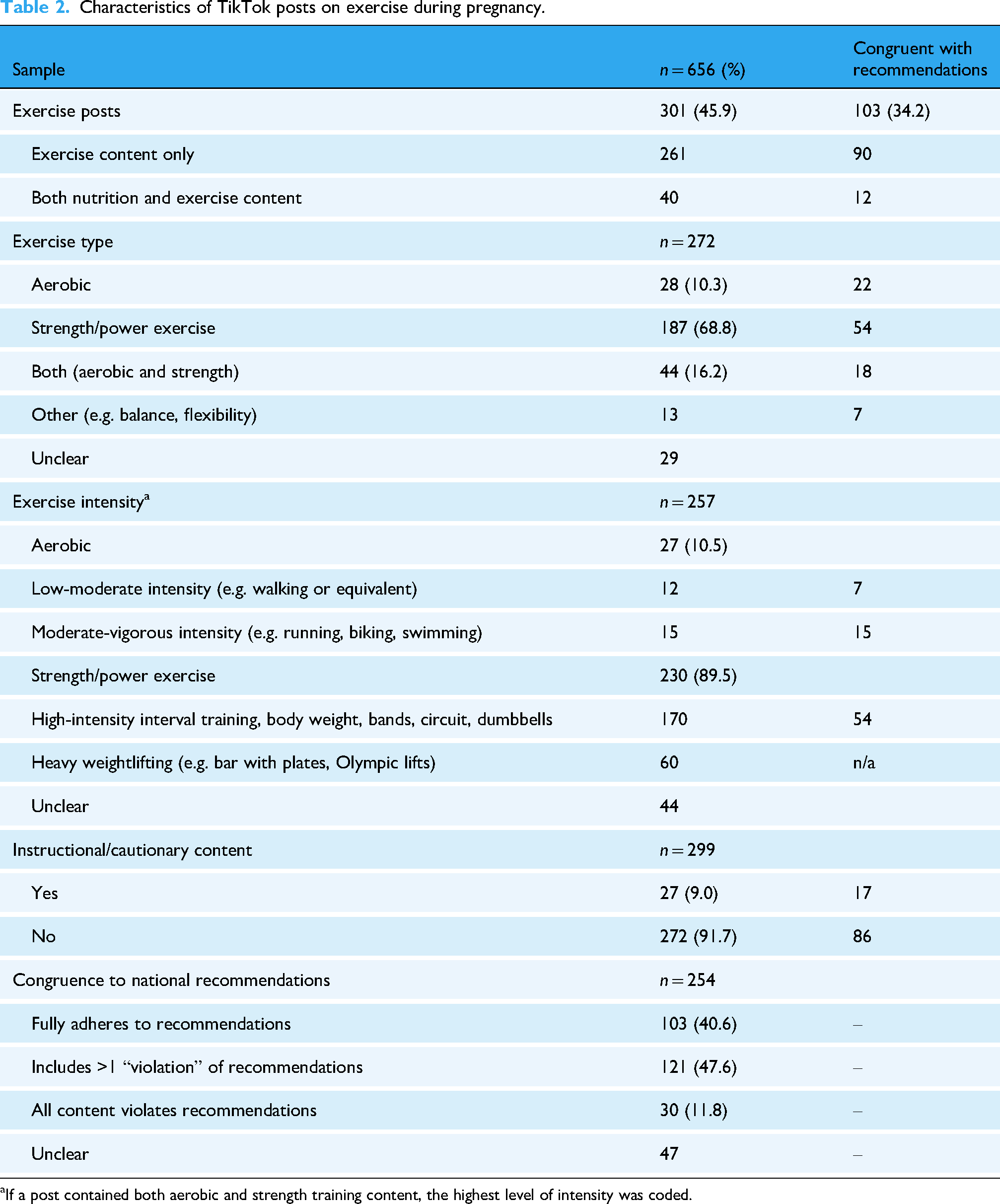
Characteristics of posts containing exercise content are presented in Table 2. The 301 exercise-related posts (45.9% of the total sample) were coded for exercise type and intensity. The type of exercise that appeared in the posts were (1) aerobic exercise (10.3%); (2) strength/power training (68.8%); (3) a combination of aerobic and strength training (16.7%); or (4) other (4.8%). The number of posts that contained some form of strength training, whether alone or in combination with aerobic, was 230 of 301 (89.5%). Posts were further categorized by exercise intensity with aerobic posts categorized as low-moderate (44.4%) or moderate-vigorous (53.6%) and anaerobic/strength training posts categorized as light resistance or high-intensity interval training (66.1%) or heavy resistance (23.3%). Exercise posts were largely produced by content creators with no apparent credentials/expertise, with 28.6% of the sample produced by those with credentials (4.0%) or self-proclaimed expertise (24.6%). Content created by an individual with credentials or who self-identified as an exercise specialist was more often about strength training (82.9%).
Characteristics of TikTok posts on exercise during pregnancy.
If a post contained both aerobic and strength training content, the highest level of intensity was coded.
Exercise content was unlikely to include instructional or cautionary information (91.0%). Of the smaller sample created by those with stated or apparent expertise, 18.1% included instructional/cautionary information.
Congruence with exercise guidelines
The accuracy of content in each post was evaluated relative to current exercise guidelines and grouped into three categories: the post (1) did not deviate from guidelines (fully adhered to), (2) included accurate content with at least one “violation” of the guidelines, or (3) contained content that was not congruent with guidelines in any way. When all exercise types and intensities were grouped, 40.6% fully adhered to and 59.4% deviated from the guidelines in some way.
Chi-square test revealed a significant association between type of exercise (aerobic vs. strength training) and congruence to exercise guidelines (χ2(1) = 35.2, p < 0.01), such that content on strength training was significantly less likely to adhere to the guidelines compared to content on aerobic exercise. We further categorized posts by the number of likes they received (≤5000 or >5000 likes). There was no association between likes and congruence with exercise guidelines (χ2(2) = 4.0, p = 0.14) or type of exercise (aerobic or strength training) (χ2(1) = 1.5, p = 0.22) (see Figure 3).
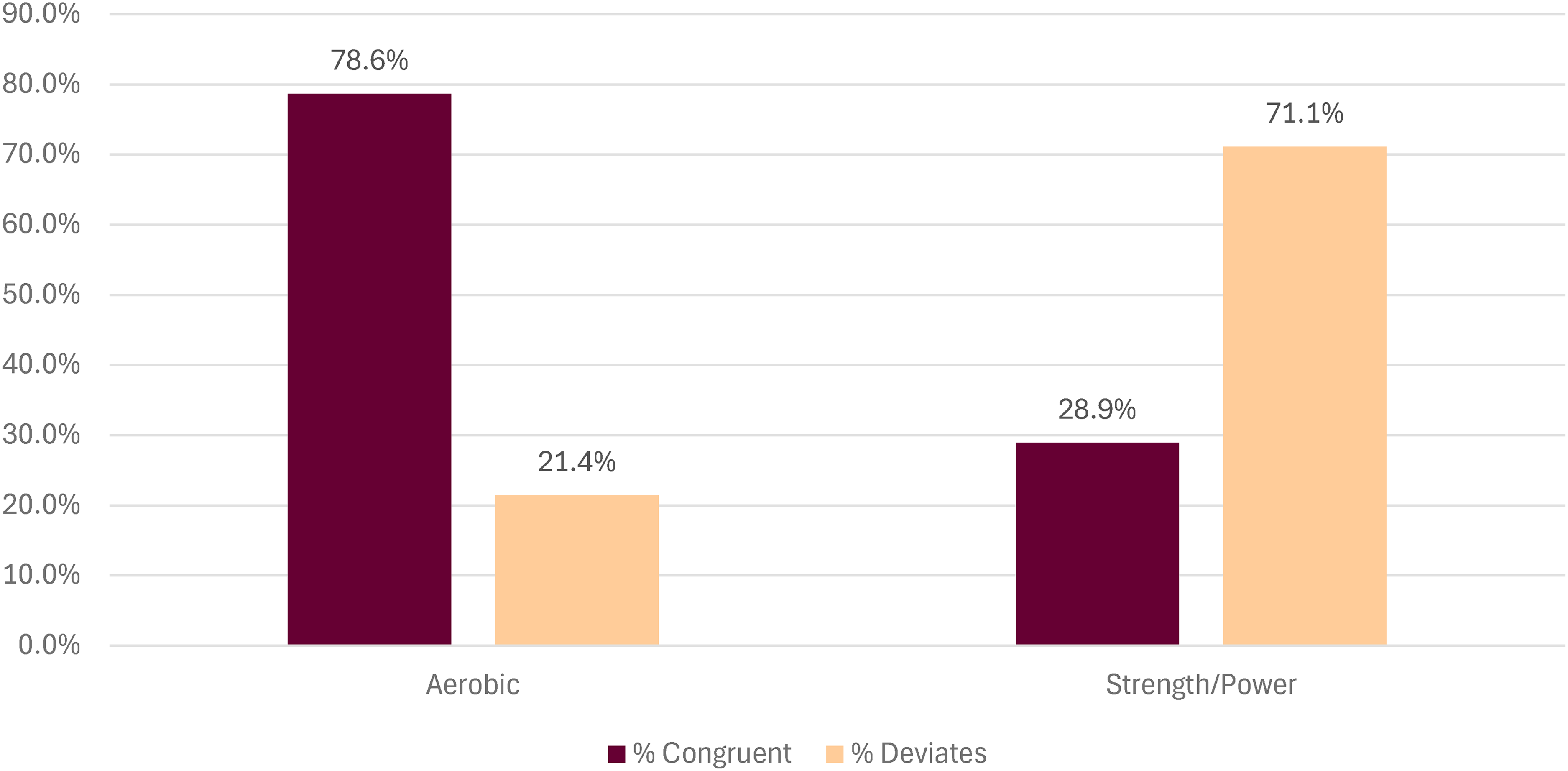
Congruence with exercise guidelines by type.
Discussion
The present study's objectives were to describe content of popular posts about nutrition and exercise during pregnancy on TikTok and to further evaluate this content relative to current expert guidelines/recommendations. The vast number of posts on nutrition and exercise during pregnancy certainly shows public interest in the topic. Regarding content on nutrition, the number of posts on nontraditional diets (5.4%) was lower than expected, particularly given the general tendency for publicity and conversation regarding fad diets. Likewise, considering that informal conversations during pregnancy often include questions or concerns about “what foods to avoid” due to health/safety risks to the baby, the low number of posts that included food avoidance advice (4.7%) did not reflect this traditional norm. While the majority of content was posted by noncredentialed individuals, it is not surprising that the majority of credentialed content creators was associated with nutrition posts (86.0%) rather than exercise posts (8.1%), given that routes for credentialing in nutrition sciences are more delineated than in exercise sciences. The majority of nutrition posts was largely devoid of any specific guidance on calorie intake or weight gain. This is perhaps consistent with the general goal of TikTok posts to entertain with palatable or appealing content rather than to educate with specific and perhaps challenging information. Content creators were likely directly or indirectly aware that the TikTok audience does not expect to use the platform for specific, academic, or educational nutrition content, even while searching for health information. 33 A small portion of the posts promoted a product; a practice which may be innocuous in some cases or which may promote counterproductive health information in other cases. Product promotion and offering attention-increasing tactics draw attention and help content creators gain engagement and followers. This may be problematic if the goal of their communication tactics is to deliver banal or misleading information that becomes a norm for health behaviors during pregnancy.
Exercise posts primarily involved strength-training (∼90%). Of those posts, most were bodyweight/dumbbell-style exercises (170 of 230 posts, 73.9%) and to a lesser but compelling extent, Olympic lifts and/or heavy weights appeared (90 of 230 posts, 26.1%). The number of posts on strength training versus aerobic exercise indicates public interest surpassing the messaging of expert guidelines. Regardless of exercise type or intensity, exercise posts generally lacked instruction, caution, or guidance. This is particularly of greater interest in that the majority of exercise content focused on strength training, where injury risk from strain or complex movements is greater.
Nationally accepted recommendations on low-to-moderate intensity aerobic exercise are well established and arguably offer little room for misinterpretation. Additionally, the forms of aerobic exercise (e.g. walking, running, swimming) are often more intuitive to the general public, creating less opportunity for engaging in this activity in a way that is not safe or beneficial. As such, we anticipated that exercise posts about aerobic exercise would be compliant with national recommendations. Unlike aerobic exercise, exercise that targets the development of strength or power is often more complicated to execute. National guidelines on strength training during pregnancy are still in their infancy and as such they are somewhat conservative and offer more general guidance (e.g. “avoid heavy weights,” “avoid lifting overhead”). Given this, it was not surprising to find that compared to posts on aerobic exercise, posts on strength/power training were significantly more likely to deviate from guidelines. Anecdotally, many of the strength training posts that violated guidelines included some type of overhead press, a movement cautioned against in the current national recommendations for exercise during pregnancy. Considering that overhead movements in strength/power training are relatively common, women exercising are unlikely to avoid them during pregnancy. It may be important for national guidelines to better address the specific risk associated with lifting weights overhead and/or provide more instructional guidance on ways to consider executing these movements with attention to safety (i.e. scaling, movement modifications, external cues, and environmental safeguards). Interestingly, the relatively few posts that provided instructional/cautionary content were no more likely to be created by content creators with known expertise or credentials than content creators with no apparent expertise. However, we recognize that “credentialing,” or lack thereof, in exercise may or may not accurately reflect an individual's skill or authority in the field, as not all professionals in health and fitness are required to have a single-designated certification or training. Further, those listing what may be considered a health authority (e.g. medical doctor, MD) may not be more qualified than a self-proclaimed health coach, since any in-depth exercise prescription education is largely not included in medical training programs. The popularity of a post was not related to type of exercise or whether it was congruent with national recommendations, suggesting that accuracy and compliance with national recommendations does not positively or negatively affect the popularity of the post.
People want to learn about health during pregnancy. Many women want to eat well and exercise, if not for their own health, then for the health of the baby. Despite the desire to engage in these behaviors, there is also an increased vigilance and caution surrounding food and exercise. Patients may seek information independently if obstetricians fail to communicate effectively regarding nutrition and exercise. Trends in TikTok content are likely to indirectly influence health behaviors by first influencing perceived norms and behavioral intention. The theory of normative social behavior posits that two types of norms shape behavioral intention and actual behavior: descriptive norms, or the behavior's perceived popularity, and injunctive norms, or the behavior's perceived social approval. 32 These norms can occur at both the personal and societal levels. Descriptive norms shape behavior because humans tend toward the belief that what others are doing is the correct or appropriate behavior. Injunctive norms, on the other hand, generate perceived affiliation with others, that is, a sense of being “in the club.” 34 In the context of TikTok, it follows that when pregnant women repeatedly watch others eating or exercising in particular ways, they may gain a sense of what is popular and approved by peers. Given these socially powerful norms, their intentions to follow such practices may trend in the same direction, whether or not that direction is scientifically accurate, safe, or healthy.
What women perceive as acceptable should come from experts who have studied these health behaviors. Campaigns for appropriate GWG and beneficial exercise must attend to the kinds of messages women consume about nutrition and exercise during pregnancy.
The national recommendations should provide the dominant injunctive norms for women, which means that they must be communicated actively on the platforms that women use. However, it behooves researchers, scientists, and experts who are informing these guidelines to also address the demand that women display through the content they are consuming. If norms are a variable that predicts health intentions and behaviors,34,35 TikTok is an important area for intervention in shaping healthy descriptive and injunctive norms regarding nutrition and exercise during pregnancy. This study was a cross-sectional content analysis of TikTok posts. As such, we cannot generalize to the larger population of pregnant women and to the larger audience of social media users who do not use TikTok. One specific limitation in our measurement was the coding for food recommendations. We found that the “general” code captured some unusual claims. Coding for the general diet would benefit from a more nuanced definition.
Conclusions
This study is novel in its approach to describe content of popular posts about nutrition and exercise during pregnancy on TikTok and to evaluate this content relative to current expert guidelines and recommendations. Future studies should address the actual perceived descriptive and injunctive norms and their effects on women's nutrition and exercise behaviors during pregnancy. The prevalence of content on strength training, alongside the relatively underdeveloped guidelines, supports the need for researchers to aggressively investigate the impact of strength training on pregnancy and birth outcomes. National guidelines, being evidence-based, are dependent on a rich base of scientifically rigorous studies that repeatedly demonstrate, not just the safe execution, but beneficial outcomes of strength training during pregnancy. Experts and recommending groups need to address the gap between the apparent interest in strength training during pregnancy and the relative lack of specific and usable guidelines on this type of exercise.
Footnotes
Acknowledgments
We thank our research assistants, Claire Burton, Manuelda Dike, Amanda Kiang, Paula Leigh, Sahara Thomas, and Alexandra Martin, for their contributions to study design, data collection, and coding.

Ethical considerations
The publicly available data in this study were sourced responsibly, include no identifiable personal information, and comply with TikTok's terms of use and ethical guidelines.
Author contributions
All authors conceptualized the study design and developed the codes for the codebook. LPK performed statistical analysis of the data, and all authors interpreted the data. CPS and LMA drafted the manuscript. All authors read and approved the final manuscript.
Funding
The authors disclosed receipt of the following financial support for the research, authorship, and/or publication of this article: Funding for this project was provided by an internal institutional research grant (Cross Disciplinary Interdisciplinary Undergraduate Research—CDIUR) from Pepperdine University in summer 2022.
Declaration of conflicting interests
The authors declared no potential conflicts of interest with respect to the research, authorship, and/or publication of this article.
Data availability statement
The datasets generated and analyzed in this study are publicly available.