



Abstract
Background:
Kidney transplantation is the best treatment for kidney failure but is associated with medical, psychological, and existential challenges for patients. Patients’ experiential knowledge can help other patients facing these challenges. Patients’ self-narratives and creative writings are ways to operationalize this experiential knowledge. Creative writing has been described as a therapeutic tool for patients with chronic disease. Over the past year, we conducted creative writing workshops with kidney transplant recipients (KTRs), living kidney donors (LKDs), kidney transplant candidates (KTCs), and professional writers. During these workshops, patients were invited to explore different aspects of their experiences of their transplant or donation journey through narrative-writing, poetry, comic art, and screenwriting.
Objective:
The objectives of this study were to gather the perspectives of KTRs, KTCs, and LKDs on the role of patients’ self-narratives and creative writing, and to collect patients’ experiences of the creative writing workshops.
Design:
Focus groups and individual interviews.
Setting:
The Center hospitalier de l’Université de Montréal (CHUM) kidney transplant program.
Participants:
KTRs, LKDs, and KTCs attending the CHUM kidney transplant clinic between February 2020 and January 2021.
Methods:
We conducted 2 focus groups and 8 semi-structured individual interviews with 7 KTRs, 8 LKDs, and 5 KTCs from the CHUM between June and November 2020, before the creative writing workshops. We also conducted 10 semi-structured interviews with 5 KTRs, 1 KTC, and 4 LKDs in March 2021, after their participation in the creative writing workshops. The interviews were recorded and transcribed. Thematic and content analyses were conducted.
Results:
KTRs, LKDs, and KTCs had multiple significant moments to share from their transplant/donation journey. These moments were highly emotional and marked by uncertainty. The creative writing workshops were described as therapeutic by participants, because they offered a safe space for group-facilitated reflection, including a discovery and learning process, and normalization, relativization, and appreciation of the transplant/donation experience. The creative writing workshops also provided an opportunity to give back to others (helping other patients, promoting kidney donation and continuing this process in the future through the web platform).
Limitations:
Our participants came from a single French-speaking urban transplant center in Quebec and were highly educated.
Conclusion:
The study set out to capture the perspectives of KTRs, LKDs, and KTCs through the sharing of self-narratives and their participation in creative writing workshops related to their transplant or donation journey. A website was set up to publish patients’ creative writings (https://recitsdudonetdelavie.lorganon.ca/les-recits/). Further study is needed to assess the website’s impact on other patients.
Trial registration:
Not registered.
Introduction
Kidney transplantation is the treatment of choice for kidney failure.1,2 The pre- and posttransplant period brings many challenges for patients.3-6 Waiting for a transplant is associated with emotional distress, uncertainty, guilt for the deceased donor, 3 anxiety, and even depression.7,8 After a transplant, patients have to cope with uncertainty about future outcomes, immunosuppressive drugs and related adverse effects, psychological and medical complications, emotional distress, fear of losing or rejecting the organ, and grief for the deceased organ donor.9-11 Moreover, organ transplantation is associated with changes in personal identity.12-14
Creative writing includes a variety of genres: screenwriting, comic writing, poetry, fiction, and storytelling. 15 It has been described as a therapeutic tool for patients with chronic disease.16-18 Creative writing allows patients to express emotions and fears and provides an opportunity for personal growth. 19 The only reports of creative writing workshops for transplant recipients or donors have come out of poetry workshops for teenage transplant recipients in the United States. 20 Although creative writing is reported as beneficial for the person doing the writing, there is no data on the perspectives of kidney transplant recipients (KTRs), kidney transplant candidates (KTCs), and living kidney donors (LKDs) on the potential role of creative writing and the development of a web platform bringing together patients’ self-narratives and creative writing.
Between September 2020 and January 2021, we conducted 4 virtual creative writing workshops with KTRs, KTCs, and previous LKDs. Each workshop comprised two 90-minute sessions held 2 weeks apart. They were led by members of the research team (CM and SH) and 4 different professional writers invited to each workshop (novelist, poet, comic artist, and screenwriter). During the second session, participants shared their writings, which explored various aspects of their journey through kidney transplantation or donation. See Appendix for a brief description of the content in the creative writing workshops. Participants who agreed were invited to post their creative writing on a website, lorganon.ca.
The objective of this study was 2-fold. First, before the creative writing workshops, we wanted to gather patients’ perspectives on significant moments in their transplant or donation journey and their experience of sharing related self-narratives. Second, after the workshops, we wanted to document participants’ experiences of attending the workshops, which included sharing their self-narratives, creating, and sharing their writing.
Methods
This study was exploratory in nature and used semi-structured interviews and focus groups with KTCs, KTRs, and LKDs. We used the consolidated criteria for reporting qualitative research checklist. 21 We conducted individual interviews and focus groups before participants attended the creative writing workshops and individual interviews after the workshops. The Center hospitalier de l’Université de Montréal (CHUM) research ethics committee approved the study and all participants gave informed consent (CHUM CE19.166) to take part in the pre-workshop focus groups, and in the interviews before and after the workshops. After the workshops, there was a separate consent process regarding the decision to post the creative writing on the website, anonymously or not. See Figure 1 for an overview of the recruitment process detailed.

Flow diagram of the recruitment process.
Interviews and Focus Groups Conducted Before the Creative Writing Workshops
Recruitment for focus groups and interviews was carried out between February 2020 and January 2021. Convenience and purposive sampling were used to recruit participants. 22 Purposive sampling consisted in recruiting participants with varying sociodemographic characteristics (age, sex, etc.). 22 Adult KTCs, KTRs, and LKDs who were followed at the Center hospitalier de l’Université de Montréal (CHUM) transplant clinic and could speak French were invited to participate by means of letters, posters, and flyers distributed at the transplant clinic. An invitation letter was sent by mail and email to 59 KTRs, 58 KTCs, and 42 LKDs, followed by a telephone call made by a member of the research team (FB or MFM). Forty-one patients (mostly KTRs and LKDs) attending the CHUM transplant clinic were also approached directly by a member of the research team (FB or MFM) and received a letter inviting them to participate. Twenty-five KTRs, 13 KTCs, and 19 LKDs agreed to receive more information about the study and were contacted by telephone by a member of the research team (FB) providing further details. The KTRs, KTCs, and LKDs were not known to each other. Of these 57 patients, 5 withdrew (4 KTRs and 1 KTC), 7 could not be reached (3 KTRs, 3 KTCs, and 1 LKD), and 23 failed to sign and return the informed consent form (11 KTRs, 4 KTCs, and 8 LKDs). From the remaining 22 patients, 2 LKDs were unable to participate due to time constraints. Twenty patients participated in the study: 7 KTRs, 5 KTCs, and 8 LKDs.
Twelve participants took part in 2 virtual focus groups: 6 KTRs in the first and 6 LKDs in the second. The timing of the focus groups was determined based on participants’ and researchers’ availabilities. For the participants who could not be scheduled for a focus group, we conducted an individual interview. This was mostly the situation for KTCs and it could be explained by the fact that these patients are busy with their dialysis sessions. During the focus groups, participants were welcomed by the research assistant who had contacted them (FB). The focus groups were facilitated by the principal investigator (MCF), who had experience in qualitative research and in conducting focus groups. MCF was known to some participants, since she is a clinician and a member of the CHUM kidney transplant medical team. However, because patients do not have a single physician assigned to them at the transplant clinic, MCF was not necessarily involved in their transplant care. It was made clear from the beginning of the focus groups that whatever was addressed during the discussion would have no impact on their clinical care. The focus groups began with brief introductions of every participant, after which the research team made a short presentation on creative writing and medicine and explained the objectives of the study. Participants had an opportunity to ask questions about the presentation. Discussion then began. Participants were invited to express their opinions and perspectives freely. FB, the research assistant, took notes during the focus groups. All the discussions were recorded and transcribed. The focus groups lasted between 75 and 90 minutes. Participants received financial compensation for their time (CAN$30).
For those who were unable to attend a focus group, an individual interview was proposed. Eight participants were interviewed individually: 5 KTCs, 2 LKDs, and 1 KTR. Six interviews were conducted by telephone and 2 by videoconference by a member of the research team (FB). All the interviews were conducted in French. The interviews lasted around 40 minutes (between 32 and 52) and were recorded and transcribed.
The issues covered during the interviews and focus groups were outlined in an interview guide with open-ended questions addressing the following topics: (1) the most significant moment in the interviewee’s transplant journey; (2) experiences of sharing donation/transplant self-narratives; (3) potential benefits or challenges of sharing self-narratives; (4) perspectives on a web platform publishing patients’ self-narratives and creative writings; and (5) sociodemographic data. Given that no study has been conducted of patients’ perspectives on sharing self-narratives pertaining to the donation/transplantation journey, our interview guide was designed to elicit their experiences. The guide was developed by the research team (MCF, CM, and SH) based on the literature on creative writing in medicine. Consistent with qualitative methodology, the interview guide was modified during the study as new topics emerged from the interviews.
Interviews Conducted After the Creative Writing Workshops
Sixteen of the 20 participants (5 KTRs, 6 LKDs, and 5 KTCs) agreed to receive an invitation to take part in the creative writing workshops, and 9 participated in at least 1 of the workshops, which were held between September 2020 and January 2021. Four new patients (3 KTRs and 1 LKD) also joined the workshops. All participants in the creative writing workshops were invited to be interviewed individually so that the team could gather their experiences. Five KTRs, 4 LKDs, and 1 KTC agreed to participate and provided informed consent. One KTR was lost to follow-up, and 2 KTRs chose not to participate because they had joined only 1 workshop and did not feel they had sufficient feedback to provide. Interviews were conducted in March 2021. Seven interviews were conducted by telephone and 3 by videoconference with a member of the research team (AA). It was deemed more appropriate to conduct individual interviews because of the reduced number of post-workshop participants, and for the sake of capturing their individual experience, rather than putting them back into the same context as the workshops, where they possibly had preexisting dynamics. The interviews lasted between 15 and 30 minutes (average about 17 minutes) and were recorded and transcribed. The following topics were addressed during the interviews: (1) experiences of participating in the creative writing workshops; (2) impact of the workshops and writing; (3) elements liked and disliked during the workshops; (4) experiences of sharing stories about their donation or transplant journey during the workshops; (5) how to post stories on a web platform; and (6) sociodemographic data. The interview guide was developed by the research team (MCF, CM, and SH).
Data Analysis
The focus group and interview transcripts were analyzed using the content and thematic analysis method.22,23 This involved (1) establishing a list of themes based on the interview guide, which constituted the coding frame; (2) reading the transcripts and sorting them based on the coding frame to create a more abstract frame of analysis; (3) adding new themes or categories as they emerged from the transcripts, as well as modifying or removing any elements that were not representative of the emerging data; (4) organizing these categories into figures, charts or matrices; and (5) drawing corresponding conclusions. NVivo (QSR International) software was used to facilitate the qualitative analysis. Two members of the research team developed the coding frame (AA and FB). FB coded all the pre-workshop interviews and the focus groups and AA coded all the post-workshop interviews. The number of participants allowed for data saturation. 24 An independent researcher with experience in qualitative methods and creative writing (LL) coded 40% of the raw data and made modifications to the coding frame with the agreement of the research team members. With these modifications, the coding agreement rate between was estimated at between 77% and 83%.
Results
Before the Creative Writing Workshops: Perspectives on Significant Moments of the Transplant/Donation Journey and Sharing Self-Narratives
Characteristics of participants
Seven KTRs, 5 KTCs, and 8 LKDs participated in focus groups and interviews before the creative writing workshops. Of these 20 participants, 10 were men; the average age was 61, 16 described themselves as White and 13 had college- or university-level education. Table 1 summarizes participants’ characteristics.
Characteristics of Participants to the Interviews and Focus Groups Before the Creative Writing Workshops.
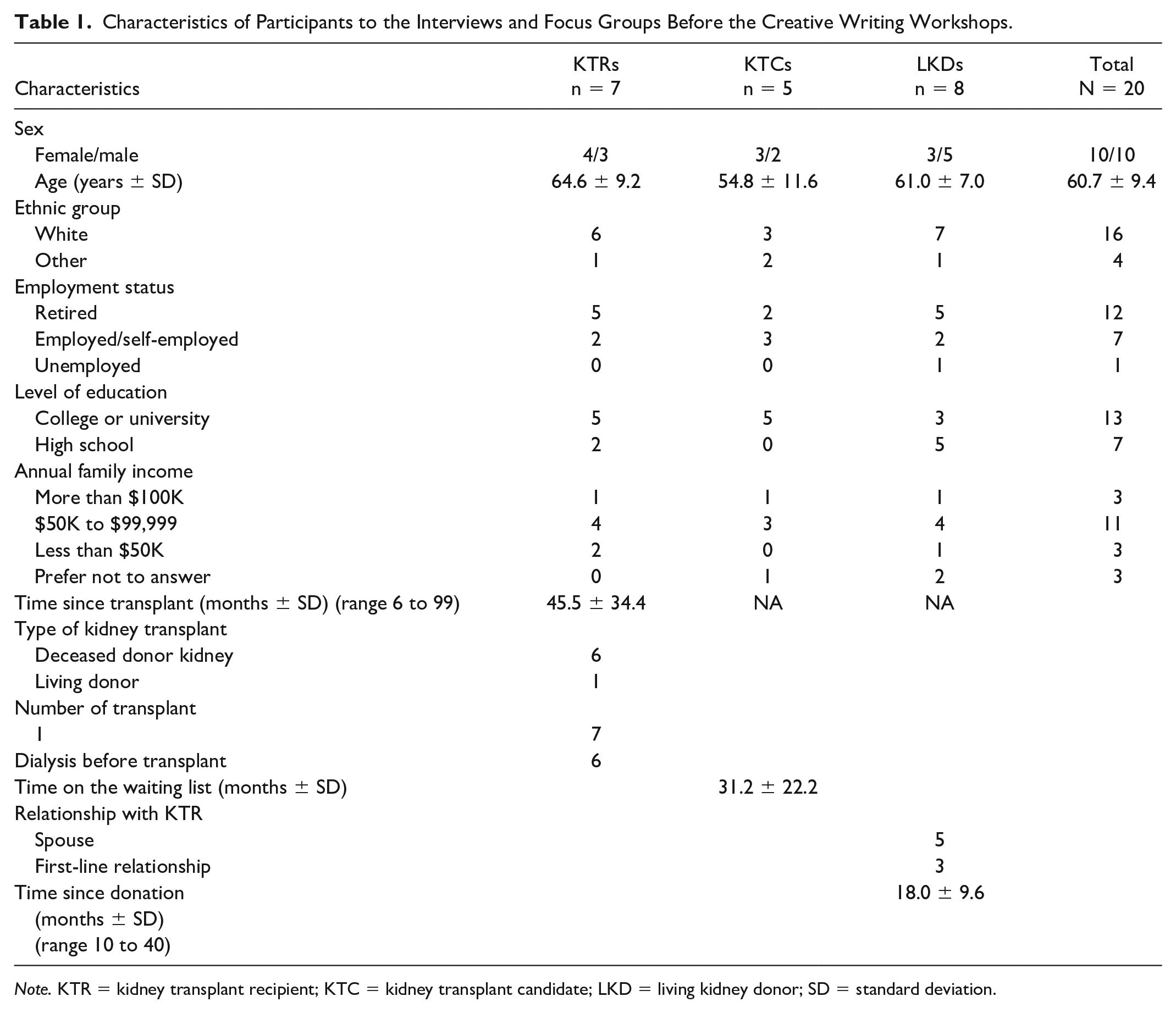
Note. KTR = kidney transplant recipient; KTC = kidney transplant candidate; LKD = living kidney donor; SD = standard deviation.
Qualitative data
During the focus groups and individual interviews, the main themes identified were participants’ most significant moments during their transplant/donation journey, as well as benefits and challenges of their experience of sharing patients’ self-narratives; see Figure 2, which summarizes the themes raised before and after the creative writing workshops.

Summary of patient’s perspectives about sharing transplant/donation self-narratives: before, during, and after the creative writing workshops.
Significant moments during the transplant/donation journey: highly emotional and uncertain
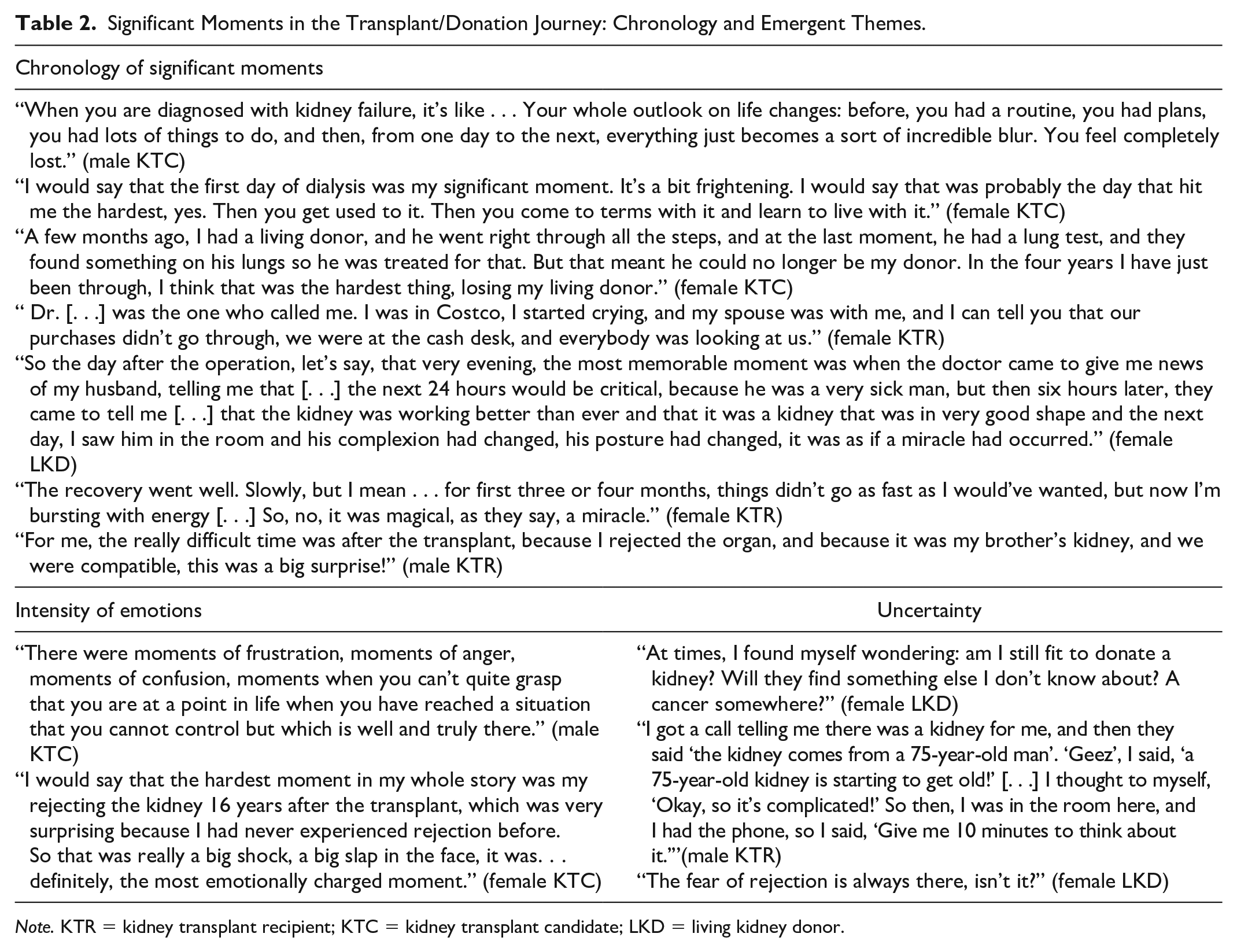
When addressing the topic of patients’ self-narratives, participants first mentioned significant moments during their transplant and donation journey. For LKDs, seeing their loved ones regaining health after the surgery was one of the most significant moments. For KTRs, the telephone call announcing the availability of an organ, feeling better after the transplant surgery and the experience of organ rejection were mentioned as important moments. For some KTCs, the first day of dialysis was the most remembered moment; for others, it was their potential living kidney donor being turned down by the medical team because of a contraindication to donation, or the kidney failure diagnosis as a tipping point in their life. All these were highly emotional moments for patients. Frequently, their reaction to these events was one of shock. The intense initial reaction could take a long time to dissipate or transform as they tried to adapt to their new reality. These moments can also generate lasting questions. See Table 2 for participants’ quotations illustrating specific significant moments.
Significant Moments in the Transplant/Donation Journey: Chronology and Emergent Themes.
Note. KTR = kidney transplant recipient; KTC = kidney transplant candidate; LKD = living kidney donor.
In addition to the initial intense emotions accompanying these various moments, a theme of uncertainty emerged (see Table 2). Uncertainty surrounds the decision of whether or not to become a living donor for a loved one. Once the decision to donate is made, fear that a contraindication may be found ensues. There is also uncertainty about the outcome of the transplant for the recipient, such as potential complications and organ rejection. When a candidate receives a call with the offer of a deceased donor kidney, their decision on whether to accept is marked by many subjective unknowns. Complex contradictory emotions can be experienced simultaneously: 1 KTR reported expecting no further telephone calls after a disappointing refusal from a potential living donor, but still earnestly wishing for the call that eventually came; another, when the call came in, reacted with great excitement but still found it difficult to believe. “Miracles” happen in the lives of some KTRs, while for others, things can “go downhill” fast when their life plans are shattered by organ rejection. These extreme situations can happen to the same patient when a successful transplant is followed by unexpected rejection. KTRs reported feeling frustration as they failed to understand why they had to wait longer than another patient to receive a kidney; another reported that their own doctors were unable to explain why rejection had occurred. Behind all transplant journeys unfolds a diversity of unpredictable, sometimes bewildering moments marked by fear or anxiety.
Experience of sharing self-narratives
Most LKDs, KTRs, and KTCs reported sharing their own story verbally with selected family members or friends, or with other patients and volunteers attending the dialysis or transplant clinic. Fewer reported sharing self-narratives with work colleagues or acquaintances. Only 1 LKD shared his/her story in a newspaper article through their journalist child, and 1 KTR speaks of his transplant story during training sessions he gives to the public. One LKD and 1 KTR had never heard other transplant or donation self-narratives.
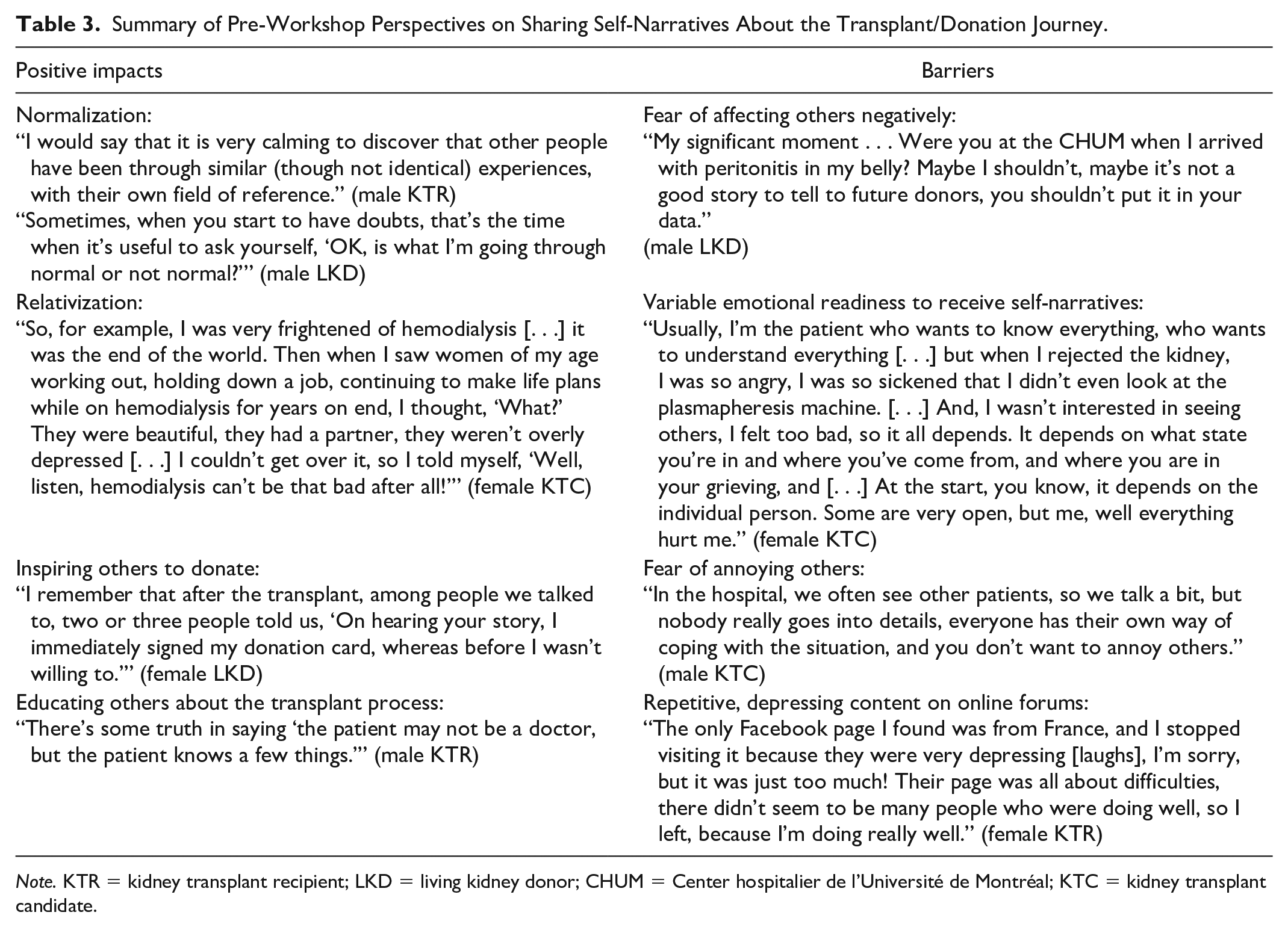
Participants reported sharing their own narrative, or seeking others’ narratives to reassure themselves in their own journey and receive support. Sharing narratives normalizes, allow comparisons with others and relieves the feeling of loneliness. Hearing others’ narratives was also perceived as a way of gaining knowledge different from the statistical and medical knowledge provided by their treating team. For LKDs, this helped them to make decisions, such as whether to donate or not, in the case of a shared decision process with a loved one who would receive their kidney. It was also helpful in terms of emotional support when they went forward with these decisions. Moreover, some participants reported feeling moved by different transplant or donation narratives. Some LKDs shared their story with the aim of inspiring others to donate a kidney. One LKD who donated to his wife wanted to leave his self-narrative in the form of a letter to his granddaughter, as a gift to inspire her for the future. Some KTRs felt pride in being able to educate others about the transplant process. One KTR wanted to transpose his self-narrative into a book dedicated to his parents, as a way of paying tribute to their ongoing support. See Table 3 for quotations from participants about the benefits of sharing self-narratives.
Summary of Pre-Workshop Perspectives on Sharing Self-Narratives About the Transplant/Donation Journey.
Note. KTR = kidney transplant recipient; LKD = living kidney donor; CHUM = Center hospitalier de l’Université de Montréal; KTC = kidney transplant candidate.
However, some LKDs expressed concern about negatively influencing future donors with their “traumatizing” story, and some reported family members not wanting to hear about their donation decision. One KTC felt that the person receiving the story should feel emotionally ready for it to be a positive experience, and another added that there is sometimes reluctance to share because of a fear of annoying the listener. Participants reported dissatisfaction with reading newspaper articles, Facebook pages, or online forums on transplants, which they viewed as repetitive and depressing. Important elements in a transplant or donation self-narrative were thought to be a diversity of experiences, “good” and “bad” stories, at all stages of the transplant or donation journey (before, during, and after the transplant).
Perspectives on the development of a web platform with patients’ self-narratives
Before the creative writing workshops, all participants felt that a web platform to publish self-narratives in the form of creative writing by KTRs, LKDs, and KTCs would be beneficial, since readers would be able to learn from the diversity of experiences. Some expressed concern that juxtaposing stories of people who were “doing well” with those of people who were “doing less well” might negatively influence some readers.
Experiences of Attending Creative Writing Workshops
Characteristics of participants
Five KTRs, 1 KTC, and 4 LKDs participated in individual interviews after the creative writing workshops. Among these 10 participants, there were 5 men, the average age was 59 years, 7 described themselves as White, and 9 had college- or university-level education. Eight participated in the narrative-writing, 4 in the script-writing, 5 in the poetry-writing, and 6 in the cartoon-art workshop. Table 4 summarizes participants’ characteristics.
Characteristics of Participants in the Interviews After the Creative Writing Workshops.

Note. KTR = kidney transplant recipient; KTC = kidney transplant candidate; LKD = living kidney donor; SD = standard deviation.
Qualitative data
Participants perceived the creative writing workshops as a space for self-expression, sharing, mutual support, and helping each other reflect on their transplant or donation journey. In addition to some therapeutic aspects, the creative writing workshops gave them an opportunity to give back to others. They saw the web platform as a way of continuing to provide this mutual help to other LKDs, KTRs, and KTCs beyond the workshops (see Figure 1).
Experience of the creative writing workshops
Participants reported feeling listened to and welcomed with open communication during the creative writing workshops. Even though some of them felt somewhat “forced” to open up via writing, they all reported this as a positive experience. For example, 1 KTR reported the workshops allowed her to “explore the full depths of her emotions,” which was something she had not expected and which provided her with a “fantastic” experience. Some of them discovered creative writing altogether. They learned much from others’ stories, which at times allowed them to forge greatly appreciated connections with other participants, varying from admiration to friendship—precious and unforgettable “gifts.” Two KTRs and 1 LKD qualified the experience as “fun,” while others described it as “moving,” “gratifying,” or “beautiful.” Some participants commented on the way the workshops raised their awareness of the importance of organ donation.
Participants reported that comments on their creative writing were thoughtful, rich, and encouraging. The atmosphere of the workshops was described as respectful and welcoming. Some participants found that the guidelines were helpful and delivered with care. The diversity of participants’ viewpoints (donors, recipients, candidates) and the variety of workshops was appreciated. The participants reported that the mixing of patients within the same workshop, at different points in the donation or transplantation journey, created learning opportunities on what could be coming in the future (eg, KTC to KTR) and that it also allowed a symbolic connection between donors and recipients to occur, creating a shared sense of well-being and gratefulness within participants. The length (90 minutes) and frequency (every 2 weeks) of workshops was appreciated by some, as was the virtual delivery of the workshops, from the point of view of convenience.
However, some participants would have appreciated a livelier dynamic with in-person workshops. Some participants did not appreciate the nature of the comments they received on their creative writing, because they felt that following the suggestions given would change the essence of what they were trying to say. Some participants reported that the workshops demanded a great deal of time and energy. Two participants stated that they would have liked some other participants to express themselves more, and others less, during the workshops. Some commented that they did not feel sufficiently prepared to start writing, which would take them out of their comfort zone, whereas 1 participant felt they had already seen the material because they had previously studied comic writing. Finally, 1 LKD felt he did not belong in the group because his health was still good after donating a kidney, although he still appreciated hearing from KTRs who had been through major illness. All participants would recommend these workshops to others. As 1 LKD said, “it kind of opens your mind to a variety of other people.” However, 1 KTR felt that potential participants should know that the workshops involve some high-intensity work requiring energy and that people who underestimate themselves should still be encouraged to try them. Because the workshops were not an emotionally easy task, some participants reflected on the receptive mindset needed to benefit from them.
Impacts of creative writing and sharing self-narratives
Participants created a story focusing on their past experiences of illness or on their transplant/donation journey. Some wove a certain amount of fiction around the reality. Most felt proud of or satisfied with their achievement, but 2 felt shy and devalued their work. Participants reported that writing allowed them to express themselves in a way that contrasted with common perceptions about transplants or donation (“receiving a kidney is not really a panacea: you can be gravely ill afterwards”).
Most importantly, the experience of creative writing and sharing these stories in a group allowed some participants to reflect about themselves, their transplant/donation journey, their relationships (involved in this journey), and society in general: “it was an opportunity to look back at all the events and maybe see them in a new light,” and to “crystalize” this new understanding through writing. Many participants—like those interviewed before the creative writing workshops—said that they were able to relativize their own situation through comparison with others’ self-narratives: realizing that their own story was similar to those of others brought about a process of normalization. Identifying themselves in others’ stories and comparing their own story with those of others, participants either felt impressed and inspired by the altruism or heroism of others, or benefited from appreciating their own situation. In summary, the perspective they gained changed the way they felt about their own situation: they found resolution of some questions or doubts, learned to tolerate their situation, or gained reassurance and validation from others’ stories (see Table 5). This was perceived as therapeutic by 3 participants, even though the process felt like “hard work.” Five participants also mentioned feeling less lonely through realizing that others had had experiences similar to their own. The mutual support was described in terms of motivation, and “strength to face up to” what they were going through.
Summary of the reported impacts of the creative writing workshops.

Note. KTR = kidney transplant recipient; LKD = living kidney donor.
Perspectives on the development of a web platform featuring creative writings
Most participants who had taken the creative writing workshops reacted to the prospect of publishing their creations online with humility. Some felt happy, though in a reserved way, while others were noncommittal. All, however, saw the potential benefits of sharing their stories online: their writings could inspire others to donate a kidney, express gratitude to their caregivers, continue to help future KTRs, or create kinship with their friends and families. Two participants suggested that the creative writing pieces should be contextualized on the web platform (with keywords or descriptions), to prepare potential readers for what the stories might contain.
Discussion
We examined the perspectives of KTRs, LKDs, and KTCs on sharing self-narratives, as well as their experiences of participating in creative writing workshops. Patients with kidney failure have been recognized to be at increased risk of depression and anxiety, for which arts-based interventions (including creative writing) have been designed to help with “existential boredom,” 25 a term that describes “the experience of indefinite waiting, causing a person to dwell on existential issues such as illness and mortality.” 26 In a study of pediatric patients with kidney failure, their creative writing was used to gain a better understanding of their lived experience of the illness, 27 but creative writing’s impacts were not studied. We are the first to report empirical data of the impacts of creative writing groups and sharing self-narratives on KTRs, LKDs, and KTCs.
We have demonstrated that significant moments in the transplant or donation journey are multiple, highly emotional and associated with uncertainty. As shown by Wasson, the transplant experience does not correspond to medical temporality, where the procedure is described as a “healing moment.” 28 Transplantation is characterized by a non-linear temporality, “post-transplant time as still profoundly structured by waiting, expectation and suspense, the transformed body less healed than permanently contingent and fragile in different ways.” 28 As our participants reported, the experience is also perceived as lonely. We can assume that the high intensity, uncertainty and loneliness of the lived experience of transplantation or donation lead to a search for experiential learning and support from the self-narratives of peers.
Even though the creative writing workshops were described as emotionally demanding and time-consuming, they were reported as being therapeutic. It has been found that creative activities can empower people and increase their well-being and self-efficacy. 29 A recent study of 19 participants who were writing creatively and viewed creative writing as an important part of their life found that the process was a source of personal growth and allowed for emotional release. 19 There are a few other examples of storytelling used for therapeutic reasons in health care.30-33 However, there is great heterogeneity in the findings of these studies, since creative writing, expressive writing, and nonliterary storytelling were applied to various clinical populations with different mental health and cognitive states. These studies all suggest different goals and mechanisms of therapeutic action. Although creative writing is still not defined with an explanatory model as a specific therapy or practice in health care, 15 our study is the first to report some therapeutic effects of creative writing and sharing self-narratives pertaining to KTRs, LKDs, and TCs.
Our participants also stated that they saw sharing narratives and creative writing as a way of “giving back.” This is unsurprising, since gift-giving in an important concept in organ transplantation. Renée C. Fox has shown that the triple obligation of gift-giving described by Marcel Mauss (the obligation to donate, to receive and to repay) also applies in organ transplantation.34,35 Sharing stories could be a way of repaying the magnificent gift received.
Participants viewed creative writing workshops and the sharing of creative writing as a way of helping other patients. In other studies using creative writing, this has been considered as peer support or peer mentoring, which involves pairing people with mentors who have had similar experiences for the purpose of receiving training, information and emotional support.36-38 As we have shown, KTRs viewed peer support and peer mentoring as a way of addressing transplant concerns and relieving loneliness and isolation. 39 In the present study, sharing self-narratives both before and during the creative writing workshops provided opportunities for normalization and relativization. In addition to the impacts of sharing self-narratives, during the creative writing workshops a unique type of learning arose from the group-facilitated reflection around stories. Participants benefited from the new knowledge they gained, and from their ability to help each other, at times educating or reassuring each other. A study of KTRs’ perspectives on self-management revealed needs for autonomy building through adaptive coping, dealing with fear, burdensome treatment, and responsibilities. 40 We know that LKDs can undergo lengthy, invasive, and emotionally challenging processes: many LKDs and LKD candidates describe feeling insufficiently prepared and insufficiently informed.41,42 KTCs also face challenges in terms of accessing educational tools and connecting with a social network. 43 Our creative writing groups offered opportunities for learning, problem solving and giving back to others, which are all important in empowering, educating and supporting KTRs, LKDs, and KTCs.
Recently, Waterman et al 44 built a digital storytelling website featuring the personal narratives of over 150 LKDs, KTRs, and KTCs in video format with the hope of encouraging more candidates to become LKDs. This mirrors our participants’ intentions to advocate for kidney donation through the sharing of self-narratives. We can hypothesize that sharing patients’ self-narratives, in that project and our own, can make an impact in terms of kidney donation advocacy via mechanisms different from those used by the medical community, drawing on the effectiveness of narrative messages that evoke affective reactions, as opposed to statistical evidence that evokes cognitive responses. 45
Before and after the creative writing workshops, all participants were supportive of a web platform to feature patients’ self-narratives and creative writing, despite concerns about the possible negative content of some stories. They felt that special attention should be paid to providing guidance for the writing process and presentation of the stories online, given the emotional challenges inherent in this process: the risk involved in dealing with emotions related to serious illness in the arts has been called “dangerous emotional terrain.” 46 Considering that our web platform could also serve as a relevant educational tool in today’s online world, ethical concerns surrounding the disclosure of personal information and the accuracy of health information contained in the patients’ self-narratives must be kept in mind. 44
Limitations
There are some limitations related to our study sample. All our participants came from a single urban transplant center in Quebec. Our participants, both before and after the creative writing workshops, were mainly of White ethnicity with a college or university degree, and a mean age of approximately 60. Because the creative writing workshops were conducted in French, we were not able to reach out to a greater diversity of patient ethnicities with a lower level of French literacy. Storytelling is considered as an effective way of reaching vulnerable patient populations in health care, a tool that reaches culturally diverse populations in a relevant way.47-50 Further efforts should be made to optimize the outreach of creative writing groups. Other relevant barriers to diversity and inclusion could be related to the timing of the workshops in the evenings: the required time commitment may suit older, retired participants rather than busy working young adults. The virtual delivery of the workshops, during the pandemic, also targeted patients with a stable or available Internet connection (and higher income).
Another limitation in our data collection arises from the specificity of the multiple processes involved in the creative writing workshops. Although we were attentive to the reported experience of the creative writing process itself, most of the time the participants’ answers did not allow for a clear distinction between the phenomenon of writing and that of sharing their writing and self-narratives in the workshop; the 2 actions were confounded together. Further studies are needed to tease out these different processes in relation to their reported therapeutic effects.
Finally, the mix of both focus group and one-on-one semi-structured interviews during the pre-workshop data collection and post-workshop individual interviews is noted as a limitation of the study.
Conclusion
Our qualitative study aimed to capture the perspectives of KTRs, LKDs, and KTCs on sharing self-narratives and on their participation in creative writing workshops focused on their transplant or donation journey. Our writing workshops had the unique feature of providing a specific form of arts-based intervention and brought therapeutic benefits to the KTR, LKD, and KTC population. More research is needed in terms of studying the impacts of creative writing as an arts-based intervention, as opposed to other forms of storytelling: nonartistic (eg, digital storytelling, life review and reminiscence therapy),51-53 or psychotherapeutic (eg, expressive writing).15,18,30,31
The web platform “Récits du don et de la vie en contexte de soins” (https://recitsdudonetdelavie.lorganon.ca/les-recits/) has now been launched. It showcases the self-narratives of KTRs, LKDs, and KTCs, who gave consent for them to be published after their participation in creative writing workshops. Further studies are needed to assess the impact of this platform on its users, as well as their level of engagement with it.
Footnotes
Appendix
Ethics Approval and Consent to Participate
The Centre hospitalier de l’Université de Montréal research ethics board approved the study. All participants provided informed consent.
Consent for Publication
All the authors consent for publication.
Availability of Data and Materials
The data are available from the corresponding author upon reasonable request.
Author Contributions
1. Laurence Laneuville participated in the data analysis and in the writing of the manuscript.
2. Fabian Ballesteros participated in the conduct of the research and the data analysis, and in the writing of the manuscript.
3. Aliya Affdal participated in the conduct of the research and the data analysis, and in the writing of the manuscript.
4. Marie-Françoise Malo participated in the conduct of the research and the data analysis, and in the writing of the manuscript.
5. Léonore Brassard participated in the conduct of the research and in the writing of the manuscript.
6. Benjamin Gagnon-Chainey participated in the conduct of the research and in the writing of the manuscript.
7. Pascale Millot participated in the conduct of the research and in the writing of the manuscript.
8. Catherine Mavrikakis participated in research design, in the conduct of the research and in the writing of the manuscript.
9. Simon Harel participated in research design, in the conduct of the research and in the writing of the manuscript.
10. Marie-Chantal Fortin participated in research design, in the conduct of the research and the data analysis, and in the writing of the manuscript.
Declaration of Conflicting Interests
The author(s) declared no potential conflicts of interest with respect to the research, authorship, and/or publication of this article.
Funding
The author(s) disclosed receipt of the following financial support for the research, authorship, and/or publication of this article: This research project was funded by the Chaire McConnell-Université de Montréal en recherche-création sur les récits du don et de la vie en contexte de soin and by the Audace Program of the Fonds de recherche Québec.
N. B. These workshops were funded by the Chaire McConnell-Université de Montréal en recherche-création sur les récits du don et de la vie en contexte de soin and by the Audace Program of the Fonds de recherche Québec ( ). The objective of the Chaire McConnell-Université de Montréal is to create, through creative writing, a space of exchange, hospitality and support for health care workers and patients around the experience of organ donation and transplantation, disease and care.