



Abstract
This study examines the lexical tactics of algorithmic resistance employed by Arab users to deceive Facebook content moderation algorithms in the case of censoring pro-Palestinian voices on Facebook, a phenomenon particularly conspicuous during the Palestine–Israel incidents of evicting East Jerusalem's Sheikh Jarrah neighbourhood in May 2021. It has since escalated, becoming increasingly pronounced with the ongoing war that commenced on 7 October 2023, known as the ‘Operation Al-Aqsa Flood’ and continues to unfold to the present day. To achieve this aim, Facebook data scraping was used to extract comprehensive insights on the most frequent lexical resistance techniques, the most used resistance keywords, the geographical mapping of users and the related socio-political context. This study draws upon critical perspectives from data colonialism, resistance studies, critical platform studies and digital humanities to propose the concept of lexical algorithmic resistance as a conceptual framework for understanding the dynamics of language-based algorithmic resistance. By elucidating how language becomes a site of resistance, this study contributes to perspectives that deepen our understanding of power dynamics and resistance tactics in the face of data colonialism and highlights the dual nature of digital tools, which can be wielded both as instruments of oppression and tools of resistance. The study revealed the diversity of lexical algorithmic resistance techniques employed, the keywords of resistance utilised in the Arabic sphere and the variations thereof at spatial and regional levels.
Keywords
This article is a part of special theme on Everyday Experiences of Data Colonialism and Data Nationalism. To see a full list of all articles in this special theme, please click here: https://journals.sagepub.com/page/bds/rethinkingdatacolonialismin/fromtheglobalsouth
Introduction
In contexts where freedom of expression is constrained, individuals resort to coded language and cryptic communication to discreetly convey messages. This involves lexical adaptations understood only by those familiar with the context. With the advancement and widespread use of social media platforms coupled with the significant revolution in artificial intelligence (AI) techniques and tools, language-based algorithmic resistance has flourished through the tactical use of language affordances and digital tools. In the Arabic sphere, where social media corporations, such as Facebook, wield imperial control over political and cultural life, Arab activists employ various linguistically oriented resistance techniques against content moderation algorithms. These tactics include practices of deceiving algorithms such as dividing words into separate syllables or sections and utilising the unpointed Arabic language, among others.
In the contemporary digital landscape, the proliferation of information control mechanisms, notably censorship, has emerged as a prominent strategy for quelling dissent and activist endeavours. These procedures are implemented to restrict the flow and dissemination of information and limit individuals’ ability to organise and mobilise transformative action. With AI, censorship tools and techniques have flourished and diversified. However, individuals and groups have devised countermeasures, predominantly through linguistically oriented approaches, enabling them to navigate censorship barriers and challenge discriminating algorithms, thus fostering resistance against such suppressive endeavours.
Censorship techniques have evolved, with the advent of the internet, from traditional methods like cutting and blacking out content to more sophisticated digital methods such as filtering, blocking and hacking (Bennett and Moises, 2015). This evolution reflects a dynamic shift in the landscape of information control, demonstrating the intricate interplay between politics and digital technology that encompasses utilising digital tools by repressive regimes to stifle dissent, juxtaposed with their deployment by democracies, civil society entities and political activists to confront and mitigate prevailing patterns of ‘digital repression’ (Feldstein, 2021: 254). This dynamic underscores the dual nature of digital tools, which can be wielded as both instruments of oppression and tools of resistance. The current sophisticated socio-political landscape necessitates understanding and critically engaging with the intersections of technology, politics and resistance to effectively navigate the complexities of digital repression.
For example, to survive within the capitalist and oppressive systems of social media corporations, pro-Palestinian users resort to forms of ‘microresistance’ (Bonini and Treré 2024: 25). These tactics are not aimed at eradicating the system but at gaming and deceiving it to amplify visibility and strengthen the narrative's agency. Vinthagen and Johansson (2013) highlight James Scott's argument that these activities represent tactics employed by oppressed individuals to navigate and subvert oppressive control, particularly in situations where direct rebellion poses significant risks (4). The ‘everyday’ practices of resistance, as proposed by Scott (1985), within the platform community enable pro-Palestinian users to exercise ‘algorithmic agency’ (Bonini and Treré, 2024) over the power of the platform and to combat the corporations’ data moderation.
The rise of algorithmic governance (restrictions imposed by algorithmic moderation) on major social media platforms such as Facebook, X (formerly Twitter), Instagram and YouTube has introduced significant constraints on freedom of expression, particularly in the realm of socio-political discourse. These platforms enforce community guidelines designed to mitigate harmful content; however, these regulations often disproportionately target marginalised voices, limiting their ability to engage with broader audiences, as will be clarified.
‘Shadowbanning’ is a relevant concept in this context, meaning to limit or eliminate the exposure of a user, or content or material posted by a user, to other users of the social media Internet site through any means, regardless of whether the action is determined by an individual or an algorithm, and regardless of whether the action is readily apparent to a user. (Wisconsin Senate Bill 582 2021, 3)
Such a practice hinders activists’ freedom to support certain cases or amplify specific messages. Deplatforming, the act of removing users or content for breaching these guidelines (Rogers, 2020: 2), is another prominent example of such restrictions. While this practice aims to curtail the spread of misinformation or extremist ideologies, it has also led many actors, particularly from the far-right, to migrate to fringe (alternative) platforms such as Gab and BitChute (Rauchfleisch and Kaiser, 2021: 1–2). These platforms, operating with minimal or no content moderation, provide an alternative space for maintaining ideological narratives.
In contrast, pro-Palestinian actors face unique challenges under this regulatory regime. Unlike other actors that can leverage fringe platforms, these activists depend on mainstream platforms’ global reach and visibility to disseminate their messages effectively. Fringe platforms, often isolated and with limited user bases, cannot offer the audience scale necessary for impactful advocacy (8). This dependency on traditional platforms forces pro-Palestinian voices to navigate the dual constraints of algorithmic moderation and their need for access to diverse, large-scale audiences.
This research paper is motivated by the lack of attention paid to user agency in resisting the power of algorithms and data colonialism. Although data studies have extensively explored the dystopian outcomes of data systems and algorithmic governance, there remains a scarcity of research on activist interactions, adaptations and experimental uses of algorithms (Bonini and Treré, 2024: 138). ‘As algorithms assume a dominant role in the mediation of power, it becomes increasingly important to consider to what extent and in what ways their power can be resisted’ (Velkova and Kaun, 2021: 524). Throughout history, activists have demonstrated the ability to repurpose technologies beyond their original design intentions to meet their needs and achieve political goals. Leveraging their ingenuity and often operating with limited resources, these activists have been at the forefront of establishing independent media infrastructures and subverting corporate digital platforms for their purposes. (Bonini and Treré, 2024: 137).
This dynamic of repurposing technologies underscores the intricate relationship between resistance and power, echoing Foucault's well-known assertion that ‘where there is power, there is resistance, and yet, or rather consequently, this resistance is never in a position of exteriority in relation to power’ (Foucault, 1978: 95–96). Engaging with Foucault's proposition, Lila Abu-Lughod (1990) inverts the first section to ‘where there is resistance, there is power,’ arguing that forms of resistance ‘tell us more about forms of power and how people are caught up in them’ (42). Resistance is used as ‘a diagnostic of power,’ enabling us not to romanticise resistance but to question the structures and workings of power and to ‘detect historical shifts in configurations or methods of power’ (48). The value of everyday resistance lies not only in its demonstration of the dignity or heroism of those who resist but also in its ability to illuminate the intricate and evolving dynamics of power structures. This perspective shifts the focus from merely seeking evidence of the failure of oppressive systems to understanding the deeper, complex interactions between resistance practices and changing historical contexts of power (53).
Building on Abu-Lughod's proposition and considering the dramatic shift in the nature of resistance – from the poetry and folktales employed by women of the Egyptian Bedouin community, as explored by Abu-Lughod, to the current complex context of algorithmic society – we argue that contemporary users’ resistance to algorithmic power highlights the evolving power dynamics between algorithmic authority and user agency, digital corporations and their users and capitalist logic and user logic. Although these powers are asymmetrical, the rapid development of AI is facilitating an expansion and evolution of user agency and resistance. This growth transcends merely indicating the presence of controlling power structures, suggesting a more intricate interplay where users increasingly challenge and influence the algorithmic and capitalist frameworks that seek to govern them.
In light of this new paradigm, we are attempting to expand the framework of data colonialism by moving beyond a focus on algorithmic power as the sole player in the power dynamics game. We aim to accommodate user agency and resistance as significant factors in disrupting and reshaping power balances. This broader perspective recognises the complex interplay between controlling forces and the increasingly assertive actions of users, emphasising the role of resistance in the evolving landscape of digital power relations. Central to this argument, we use the concept of ‘Algorithmic resistance’ (Bonini and Treré, 2024; Ettlinger, 2018; Karizat et al., 2021; Treré, 2018; Velkova and Kaun, 2021) to denote several forms of resistance to the power of algorithms. In this meaning, resistance is considered one of the ‘weapons of the weak’ (Scott, 1985) in the face of technological corporations’ repression and algorithmic power.
Velkova and Kaun (2021) define algorithmic resistance to be ‘a complicit form of resistance, one that does not deny the power of algorithms but operates within their framework, using them for different ends’ (535). They characterise this resistance as a form of ‘repair politics,’ which involves addressing and repairing perceived issues in an algorithm's outputs. This is achieved by working within the algorithm's framework to influence and shape its outcomes (535). Bonini and Treré (2024) perceive algorithmic resistance as ‘various tactics of appropriation and repurposing of social media algorithms by social movements to pursue their political aims and achieve greater visibility’ (144). In the context of the present study, we understand the processes of repairing, appropriation and repurposing as forms of deceiving algorithms and gaming the system.
Accordingly, we propose the concept of ‘lexical algorithmic resistance’ (LAR) as a conceptual framework to describe the language-based tactics users develop to deceive the biased algorithms of social media corporations, thereby amplifying their narratives and elevating their voices. Our analysis focuses specifically on the lexical 1 aspects of algorithmic resistance, enabling us to conduct an intersectional examination of these manifestations with particular attention to the cultural dimensions. This involves the tactical use of language as a tool for resistance, positioning human language against machine language (algorithms) to reveal insights into the history and evolution of human cultural heritage and its current status in the algorithmic age. Additionally, this approach could be useful in enriching the cultural repertoire of algorithms by participating in a feedback loop that may expand the algorithms’ capabilities and adaptation strategies.
Algorithmic resistance tactics used to navigate stringent social media moderation are often referred to as ‘code-switching’ (shifting between languages), ‘Arabizi’ and ‘algospeak’ (a blend of algorithm and speak). Arabizi, also known as Arabish or Franco-Arab, is a form of Arabic transliteration using Latin characters and numerals to replace Arabic sounds without direct phonetic equivalents in English (Darwish, 2014: 217). Algospeak creatively modifies language – through misspellings, substitutions or invented words – to evade algorithmic censorship, ensuring content remains accessible despite moderation systems (Delkic, 2022). Elswah (2024) highlights Algospeak tactics, including altering Arabic text (e.g., removing dots, substituting letters with numbers), combining unrelated content with sensitive material or using symbols like emojis (e.g., a watermelon emoji representing the Palestinian flag). These strategies convey the intended message while bypassing detection (14). However, terms like code-switching, Arabizi and algospeak are either too narrow (as with the first two) or overly broad (as with the third, encompassing linguistic and non-linguistic expressions). To emphasise predominantly linguistic practices, this study adopts the term ‘lexical algorithmic resistance’ for precision.
The following sections delve into practices of lexical algorithmic resistance employed as a form of revolt against the restrictive practices enacted by social media platforms, which curtail the freedom of expression. Specifically, they examine the restriction of pro-Palestinian voices on Facebook, a phenomenon that was particularly conspicuous during the Palestine–Israel incidents of evicting East Jerusalem's Sheikh Jarrah neighbourhood in May 2021 and has since escalated, becoming increasingly pronounced with the ongoing war that commenced in 2023 and continues to unfold to this day.
Digital censorship, freedom of expression and resistance: a theoretical background
Censoring social media content is practised by different players such as governments and non-state actors in addition to tech corporations. In response, resistance tactics and strategies for evading content moderation algorithms have become highly significant.
Governments and non-state actors
In the realm of online information control, governments deploy a range of practices to manipulate and restrict the flow of information. Bennett and Moises (2015) highlight these methods, including website restrictions, manipulation of online conversations and the utilisation of hackers to disrupt critics’ internet presence. This approach extends beyond mere censorship, encompassing active measures to influence online discourse and suppress dissenting voices.
Morozov (2011) underscores the significance of social media in this context, noting how the widespread sharing of personal information online has become normalised. This trend presents an opportunity for intelligence services to gather extensive data on individual behaviours and societal trends. Through analysis of social media content, intelligence agencies gain insights into people's habits, opinions, connections and interests, enabling a comprehensive understanding of society (166). Tech corporations play a pivotal role in this landscape, collaborating with oppressive governments to enforce suppressive regulations, as noted by Dwoskin and Vynck (2021), who highlight that major tech companies such as Facebook, Google and Twitter have affirmed their commitment to local regulations, including handling takedown requests from governmental bodies.
Governments enforce local speech regulations on social media platforms, compelling companies to comply with these rules or face penalties. This phenomenon, termed ‘data nationalism,’ manifests either through local compliance or geo-blocking content to adhere to laws (Daskal and Sherman, 2020: 8). In the United States, there are ongoing discussions about banning the Chinese video-sharing mobile application TikTok due to national security concerns over data privacy (Fung, 2024; Harwell and Zakrzewski, 2023; Rembert, 2021).
A tangible example of government intervention occurred in 2011 when the Israeli government objected to the Facebook group page named the ‘Third Palestinian Intifada’, boasting over 350,000 ‘likes’, resulting in its removal due to allegations of inciting violence against Jewish individuals. An official statement issued by Facebook justified the group's takedown because of its explicit promotion of violent action (Flower, 2011). This incident illustrates the complex interplay among governments, social media platforms and freedom of expression.
Furthermore, tech corporations’ facilitation of mass surveillance by providing authoritarian regimes with monitoring programs to spy on and control social media networks raises significant concerns about privacy violations and the potential targeting of individuals’ communications without their knowledge as reported by Amnesty International (2014). This indiscriminate surveillance threatens fundamental rights and underscores the need for greater transparency and accountability in this digital age.
In addition to governments, non-state actors who align themselves with specific causes or governments sometimes use technology to suppress freedom of expression and silence opposition. They achieve this through actions such as dismantling social media groups or disabling accounts that express dissenting opinions. The Jewish Internet Defense Force (JIDF), an online organisation advocating Israel, serves as an example of such actors. The JIDF actively targets anti-Israeli Facebook groups by compiling lists, infiltrating them and ultimately disabling them. One notable instance involves the deletion of a large Arabic-language group sympathetic to Hezbollah, where the JIDF removed a significant portion of its members (Morozov, 2011: 105).
Tech corporations
As another player in this context, tech corporations monetise personal data extracted from individuals through collection and analysis and subsequently utilise it for targeted advertising and various other purposes. This practice is based on the commodification and appropriation of personal data and human life in a way that is perceived as a new phase of colonialism, known as ‘data colonialism’ (Couldry and Mejias, 2019: xi). As historical colonialism paved the way for the development of industrial capitalism, critics have investigated data colonialism as leading to a new global-scale type of capitalism based on the appropriation of human life instead of natural resources (Couldry and Mejias, 2019; Thatcher et al., 2016). In particular, the creation of surveillance-based capital constitutes what is called ‘surveillance capitalism,’ defined by Zuboff (2019) as a ‘new economic order that claims human experience as free raw material for hidden commercial practices of extraction, prediction, and sales’ (ix).
Moreover, tech corporations are implicated in content moderation and censorship practices, often exceeding the efforts of local governments. Twitter has faced accusations of suppressing online tributes related to the 2008 Gaza War, while Microsoft's Bing search engine has been found to censor content more extensively in the United Arab Emirates, Syria, Algeria and Jordan than the respective governments of those countries (Morozov, 2011: 214). During the Arab Spring, it became evident that authoritarian regimes in the Middle East and North Africa received support from Western consulting firms and technology companies in their efforts to control and regulate the Internet. This was clear in the widespread presence of Western-supplied surveillance and censorship technology in the region (322–3).
Recent incidents of civilian killings, such as the May 2021 Palestine–Israel crisis, highlight the complicity of tech giants, such as Facebook and Twitter in information control. Both platforms admitted to blocking or restricting ‘millions of mostly pro-Palestinian posts and accounts related to the crisis,’ with blame often shifting to AI glitches (Dwoskin and Vynck, 2021). The ongoing bloody conflict that started on 7 October 2023, has highlighted a great deal of censorship practised by tech companies and is indicative of the significant influence wielded by tech corporations in shaping online discourse and controlling the flow of information. This underscores the power dynamics at play, where tech corporations not only monetise personal data, but also exercise considerable influence over online speech and expression.
The significance of resistance
Despite the risks and drawbacks, which include account suspension, locking, deactivation and taking down or blocking posts, users find it necessary to engage with social media platforms to amplify their messages and call for action. This engagement is crucial for activists and users from the Global South, who are trapped between governmental and non-governmental censorship on the one side and manipulation by tech corporations on the other. Several forms of algorithmic resistance have been developed in response to these pressures.
The significance of resistance to repressive strategies extends beyond its immediate impact on individual freedom. It symbolises a commitment to promoting transparency, accountability and inclusivity within societies. By challenging systems of oppression and advocating the protection of fundamental rights, resistance movements contribute to enhancing civic participation and advancing social justice objectives. Moreover, resistance serves as a crucial mechanism for upholding democratic principles and preserving the integrity of democratic institutions in the face of mounting threats to the freedom of expression and information.
As a way of revolting against Facebook's discriminatory policies and censorship, Palestinian and Arab users initiated a campaign in 2021 aimed at lowering Facebook app review ratings by submitting negative one-star reviews. This procedure has been effective, as evidenced by the significant decrease in Facebook's average star rating in both the Apple App Store and the Google Play Store. It was viewed as a significant problem by Facebook and classified as a ‘severity 1,’ indicating a major issue with the website that requires serious attention (Solon, 2021).
Resistance mechanisms have developed since the May 2021 Palestine–Israel incidents and have taken several shapes. Lexical tactics of algorithmic resistance employed as a form of revolt against the restrictive practices enacted by social media, Meta in particular, took centre stage. These tactics enable users to express their views freely while deceiving algorithms and evading censorship. The following section explores how language is used both as a tool for censoring dissenting content and as a means for circumventing automated censorship in the Palestine–Israel context.
Language as a tool of repression and resistance in the algorithms age
Repression of pro-Palestinian voices
Language, an essential medium of communication and expression, has increasingly become a battleground for political and ideological conflicts. This is particularly evident in the digital age, where social media platforms wield significant power in moderating content and shaping public discourse. Using lexical substitutions to circumvent algorithms has been detected in several situations around the world. Chancellor et al. (2016) explain how the pro-eating disorder (pro-ED) community has developed and used ‘lexical variants’ to bypass Instagram's content moderation. These lexical variants involve altering the spelling of moderated tags while retaining their semantic meaning, thus allowing the community to continue accessing and sharing pro-ED content despite the platform's restrictions (1201–1202). Additionally, vaccine-opposed users on Instagram employ lexical variation, such as misspelling words or substituting them with emojis, developing ‘folk theorization’ that these practices help avoid content moderation algorithms that focus on specific keywords (Moran, 2022: 6). In the Palestinian context, lexical variants phenomenon was noticed by some researchers such as Hamama (2021); Alnemr (2021) and Mendonça et al. (2023) among others.
Meta, the parent company of Facebook and Instagram, has faced substantial criticism for its restrictions on pro-Palestinian content. International organisations such as Amnesty International (2023) and Human Rights Watch (2023), alongside several critics including Ismail (2024); Biddle (2021a, 2021b); Solon (2021) and Flower (2011), have documented and condemned these practices.
The ongoing crisis that began on 7 October 2023, has starkly revealed the systemic bias and double standards practised by Meta. In a report issued in December 2023, Human Rights Watch described Meta's restriction of pro-Palestinian content as ‘the biggest wave of suppression of content about Palestine to date.’ The report documented a significant number of cases in which content related to Palestine, including posts about human rights abuses, was suppressed or removed by Instagram and Facebook between October and November 2023. The vast majority of these cases (1049 out of 1050) involved peaceful content supporting Palestine, while only one case involved the removal of content supporting Israel. This disparity highlights biased content moderation practices on these platforms regarding the Israel–Palestine crisis.
Meta's policy changes further underscore this bias. The company implemented a significant adjustment by lowering the threshold of certainty required to hide hostile content from 80% to 25% for content originating from large parts of the Middle East, as reported by Amnesty (2023). This change indicates a more aggressive approach to moderating content from this region, reflecting political and ideological biases that restrict freedom of speech and distort linguistic and cultural expressions.
Both Facebook and Instagram have been accused of erratically and widely removing posts from pro-Palestinian users who are critical of the Israeli government and documenting instances of Israeli state violence. Facebook's internal rules for moderating the term ‘Zionist’ allow the platform to suppress criticism of Israel, leading to allegations of censorship (Biddle, 2021a; Ismail, 2024). These practices reveal a broader strategy of political and ideological censorship that stifles dissenting voices and limits the visibility of certain narratives.
The manipulation of language extends to automated translations and content moderation. For example, Meta added the word ‘terrorist’ to Instagram bio translations that included words like ‘Palestinian,’ ‘Alhamdullilah’ (meaning ‘Praise be to God’), and the Palestinian flag emoji (Amnesty, 2023; Cole, 2023; Paul, 2023). This automatic association of Palestinian identity and Islamic expressions with terrorism exemplifies how language is weaponised to marginalise and demonise certain groups. Words used to describe individuals or groups have emotional and political significance, which should be understood, especially when used in hate speech, as these words carry significant historical and emotional weight and are employed to achieve specific objectives, as pointed out by Metehan Durmaz (Ismail, 2024).
The instances of mistaken identities further exacerbate these issues. In May 2021, Facebook mistakenly deleted numerous posts by Palestinians documenting Israeli state violence at Al-Aqsa Mosque because company staff confused it with an unrelated organisation on the Dangerous Individuals and Organizations (DIO) list 2 that also had ‘Al-Aqsa’ in its name (Biddle, 2021b). Such errors highlight flaws in automated content moderation systems and the consequences of inadequate cultural and contextual understanding.
In 2021, Facebook's automated censorship targeted particular terms related to Palestinian resistance, such as ‘martyr’, ‘Qassam’, ‘resistance’, and ‘Ayyash’ (in reference to Yahya Ayyash), stifling political expression and discourse related to the Palestinian cause (Ismail, 2024). These automated practices systematically silence voices and narratives that challenge dominant political ideologies, particularly those related to the Palestinian struggle. According to the eighth annual report, ‘Hashtag Palestine’, issued by 7amleh – The Arab Center for the Advancement of Social Media on February 2, 2023, Meta continues to be the most restrictive company among major social media platforms concerning its moderation of Palestinian digital content (Qadi et al., 2023: 33).
Arabic script and ‘Ruptures in the Feedback Loops’
In response to these restrictions, users have developed techniques to circumvent automated censorship. One such method involves obfuscating text by substituting certain letters with visually similar symbols or numbers, effectively disguising sensitive or flagged terms while remaining legible to human readers. For example, the word ‘Israel’ becomes ‘Isr@3 l’, and ‘Palestine’ becomes ‘P@l3stin3’ (Paul, 2023). These tactical substitutions complicate the algorithms’ ability to identify and flag the terms, thereby enabling users to evade content moderation systems while still conveying their intended messages.
Mendonça et al. (2023) argued that ‘the power of algorithms depends on their capacity to identify and cluster individuals. In refusing to be fully known and transparent, individuals may increase the internal friction of algorithmic systems. Processes of disidentification represent ruptures in the feedback loops generated by algorithms and avoid their tendencies to prophesise our future on the grounds of our (constructed) pasts.’ This perspective underscores the importance of obfuscation and strategic ambiguity as methods for individuals to resist algorithmic profiling and prediction. By deliberately masking or altering their digital behaviours and identities, users can create obstacles for algorithms that rely on consistent and transparent data to function effectively. This form of resistance not only disrupts the predictive accuracy of algorithms but also challenges the broader dynamics of surveillance capitalism, where user data is continuously harvested and monetised. The ability to evade complete identification and categorisation thus becomes a critical form of agency, allowing individuals to assert control over their digital identities and the narratives constructed around them.
The Arabic language, with its unique features and structures, presents additional layers of complexity and provides more ruptures in the feedback loops in the context of automated censorship and natural language processing (NLP). The interplay of script and morphology in Arabic reflects its historical development, structural features, and cultural significance. The Arabic script has evolved over time, acquiring layers and characteristics that contribute to its visual richness. Initially, Arabic calligraphy was written with plain dotless letters, but later it incorporated two additional layers: ‘ʾiʿjām/naqt’, a pointing system to differentiate similar letters, and ‘tashkil’, supplementary diacritics controlling pronunciation. Furthermore, each Arabic letter possesses a distinct visual identity, particularly when joined with others in the script.
In contrast to other languages, Arabic is characterised by its right-to-left writing direction, a foundational feature of its script. This distinctive orientation significantly affects the overall structure and flow of Arabic text, fundamentally influencing the composition of words and sentences on the page. Additionally, Arabic is renowned for its rich morphology, which is characterised by a sophisticated system of roots, patterns and affixes. This linguistic structure enables the formation of diverse vocabulary from a limited set of root letters, allowing for the expression of a wide array of concepts and ideas.
As a cursive writing system, written from right to left with a dense morphological framework, the Arabic script presents significant challenges for current NLP tools (Alotaiby et al., 2009; Al-Shaibani and Ahmed, 2023). These challenges complicate the development and implementation of algorithms for content moderation, translation and other linguistic applications, often leading to errors and biases in automated systems. On the other hand, despite these obstacles, Arab users benefit from the peculiar nature of the Arabic language and continue to resist oppressive practices through creative strategies that challenge the power and accuracy of algorithmic systems as explored in the following sections.
Data and methods
A comprehensive methodology was developed and implemented to collect and analyse data from public Facebook groups, focusing on language techniques for resisting Facebook's censorship of pro-Palestinian voices during the ongoing bloody incidents that started on the 7th of October 2023. This methodology included using Facebook scraping to detect the most commonly used resistance techniques by Arab users to evade Facebook's content moderation algorithms, identifying the most frequent resistance keywords and mapping the geographical distribution of the Facebook users involved in this case study.
Facebook lacks transparency regarding the controversial keywords blacklisted by its content moderation algorithms. ‘To this date, we are uncertain about why and what content gets removed by the AI and whether Facebook over-moderates or under-moderates the Arabic language.’ (Elswah, 2023: 9). Consequently, Arab users often resort to guessing which keywords might be detected by the algorithms–as part of the folk theorisation discussed above– and adapt or repurpose these words as a means of deception. To collect these controversial keywords, referred to in this study as ‘resistance keywords’, the Facebook scraping process was divided into two phases:
Initial Scraping: This phase involved creating a database of resistance keywords used in a limited number of open Facebook groups. Final Scraping: This phase expanded the scope to a broader range of open Facebook groups using the resistance keywords database from the initial scraping to extract comprehensive and reliable insights. Initial Selection of Public Facebook Groups: 21 Facebook Public groups were meticulously chosen based on predefined criteria, ensuring their relevance to the study's objectives. Criteria such as topic alignment, Arab users, activity level and membership size were considered to select groups likely to contain lexical techniques to distract Facebook's content moderation algorithms. Table 1 presents the Facebook groups utilised in the process of initial Facebook data scraping to generate a database of resistance keywords. Each row corresponds to a distinct Facebook group identified by its Facebook ID. The table includes information such as the number of members in thousands (K) and the total number of scraped posts within the specified date range (from 07/10/2023 to 27/04/2024). The data revealed a diverse range of Facebook groups, varying in terms of membership size and activity level. Among the identified groups, the largest in terms of membership consisted of 170,000 individuals, whereas the smallest comprised 3500 members. In terms of post activity, the groups exhibited a broad spectrum, with the number of posts ranging from 218 to 1153 over the specified period. Collectively, the Facebook groups listed in the table encompass 779,500 thousand members and have contributed a cumulative total of 10,095 posts during the specified timeframe. These groups served as valuable sources for mining data and identifying resistance keywords within the context of this study. Programming Procedures for Facebook Posts Scraping: To facilitate data collection, various programming procedures were implemented using Python. Initially, an application was created within the Meta Developer account to enable access to Facebook's Graph API. Access permissions were obtained through an access token, allowing the retrieval of data from the selected 21 public Facebook groups. Furthermore, the Beautiful Soup
3
library was installed and Python code was developed to automate scraping Facebook posts. Initial Scraping of Facebook Posts: The initial scraping process was executed to collect posts containing resistance keywords and techniques, spanning from 07/10/2023 to 27/04/2024 from 21 Facebook public groups. This timeframe was chosen to ensure a comprehensive representation of discussions occurring within the incidents that started on the 7th of October 2023, known as the ‘Operation Al-Aqsa Flood.’ Exporting Data to CSV File: Following the scraping phase, the collected data were exported in a CSV file format. This facilitated further analysis and manipulation of the dataset. Filtering Data for Resistance Keywords and Techniques: Data filtering was performed using multiple classification methods. This included categorisation based on the frequency of occurrence of specific keywords and techniques related to LAR for the Facebook algorithms as well as classification based on semantic meaning, employed techniques and user location. Extraction of Resistance Keywords: Resistance keywords were extracted from the filtered dataset using the classification methods outlined above. This step was crucial for identifying and isolating resistance keywords for the final scaping. Utilising Resistance Keywords in the Final Data Scraping from the Whole Facebook Data: The identified resistance keywords served as refining parameters for final data scraping endeavours. This ensured a more targeted approach to collecting data pertinent to the objectives of the study. Output and Analysis: The collected data from the final scraping of Facebook based on predefined keywords underwent thorough analysis to derive meaningful insights. This included determining the most frequent resistance keywords and analysing the prevalent techniques employed in resistance keywords. Visualisation: To enhance the comprehension and presentation of the findings, various visualisation techniques, such as charts and graphs, were employed. These visual aids provided a comprehensive overview of the analysed data, facilitating an effective representation of the outcomes of the study.
Both the initial and final phases of Facebook scraping included several systematic steps to gather, filter and analyse relevant information systematically as follows:
Facebook groups used in data scraping to generate the resistance keywords.

This comprehensive methodology constituted a reliable foundation for deriving meaningful insights into the power dynamics of resistance discourse within Facebook.
Results and discussion
Insights from initial scraping
Facebook is one of the most widely used social media platforms, with 3.07 billion monthly active users in 2024 (Shewale, 2024). Given this extensive user base, employing Facebook as a case study in the current research is particularly relevant. This is especially pertinent in light of the significant criticism directed at the platform for censoring pro-Palestinian content, as discussed above.
The initial scraping aimed to uncover the elusive or tricky keywords employed within the selected 21 Facebook public groups by Arab users to evade Facebook's censorship. Table 2 serves as a comprehensive repository, encapsulating essential information regarding the post dynamics, and, most notably, the nuanced lexicon of resistance. The table shows information regarding Facebook public groups, including the total number of members, all posts, resistance posts and the number of resistance words identified. The data revealed that 21 Facebook public groups were examined, collectively comprising a substantial membership base of 779,500 individuals. Over the course of data collection, 10,095 posts were analysed, of which 302 were classified as resistance posts. These resistance posts contained a diverse array of resistance words, with a total of 407 unique terms.
An outline of the process of data collection for the initial scraping to detect resistance keywords.

Among the identified resistance keywords, several recurrent lexical patterns emerged prominently, including ‘ڠـزة’ (Gaza), ‘فــــــلًَسًــــــــطيـــــــّن’ (Palestine), ‘اسـ/ ـرائـ _ـيل’ (Israel), ‘ال ص ه يو ن ي ة’ (Zionism) and ‘حـ.ـركـ.ـة حـ.ـمـ.ـا.س’ (Hamas Movement). These words encapsulated key themes and concepts related to resistance discourse within the examined Facebook groups. Several deceiving/resistance techniques were employed by users, as will be detailed in the final scraping section.
Overall, the data presented in Table 2 underscores the significance of the initial scraping process, providing valuable insights into the landscape of resistance discourse within the analysed Facebook public groups and shedding light on the prevalent lexical patterns utilised within these online Arabic communities.
Regional patterns of engagement in resistance discourse
The proliferation of social media has transformed how communities engage in political discourse, enabling diverse and widespread participation across the globe. This section examines the geographical distribution of the initial scraping resistance keywords used by Arabic-speaking Facebook users, as illustrated in Figure 1. This visualisation offers significant insights into regional engagement and the dynamics of resistance discourse within various Arabic communities.
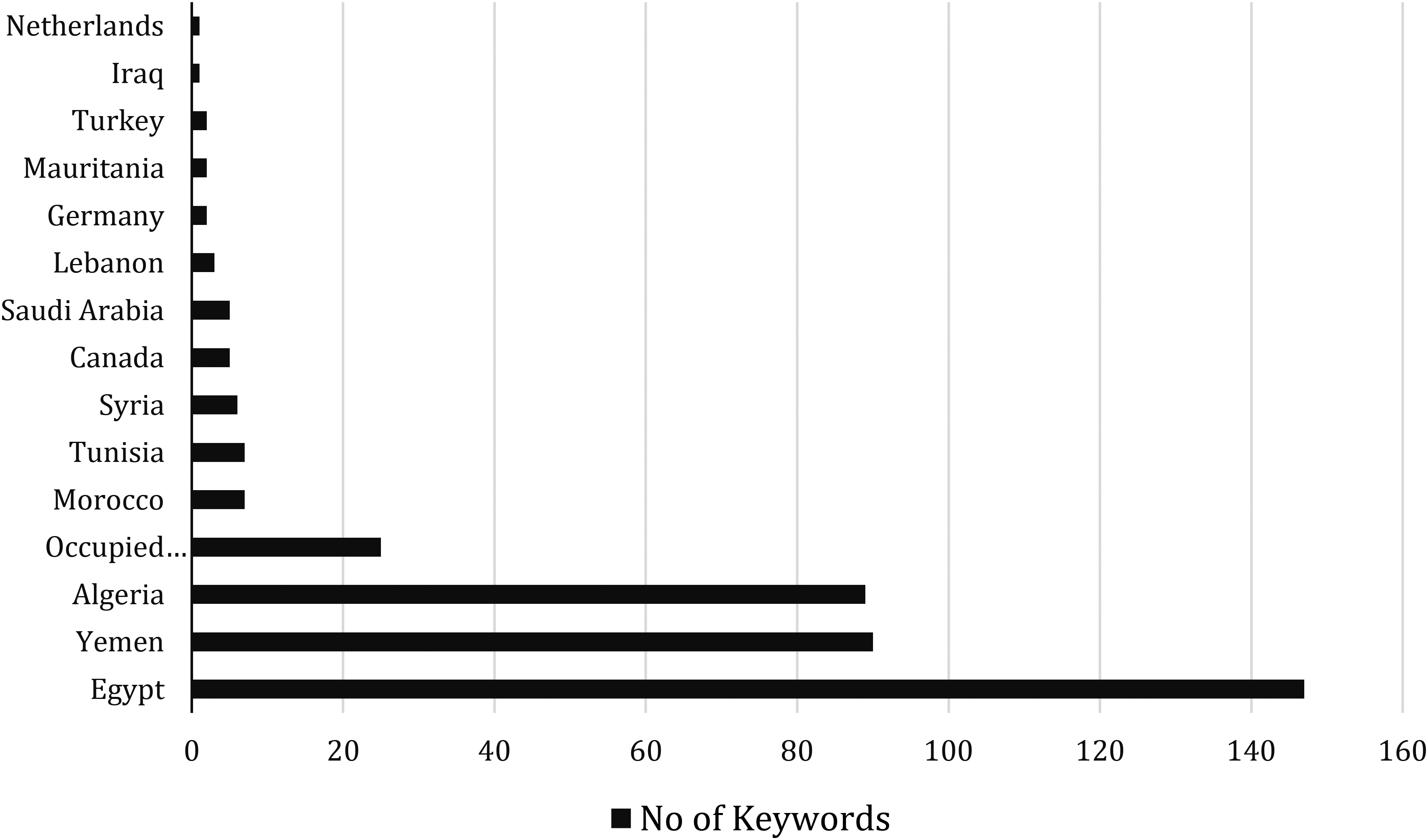
Geographical distribution of numbers of resistance keywords according to the Facebook users’ location in the initial scraping.
The largest number of resistance keywords, totalling 147, originated from users in Egypt. This significant contribution underscores active participation and discourse within the Egyptian Facebook community on matters related to the ongoing Palestine–Israel incidents and the users’ awareness and suffering from Facebook content moderation restrictions. Similarly, users from Yemen and Algeria contributed a substantial number of keywords, with 90 and 89 keywords, respectively, highlighting their prevalent engagement in resistance-related discussions within these regions. This data is indicative in light of the fact that Egypt is the most populous Arab country, with 110 million people, followed by Algeria as the second most populous. Additionally, Facebook is the most used application in Egypt, Yemen and Algeria (StatCounter Global Stats 2024a, 2024b, 2024c).
Occupied Palestine emerged as another notable location, with 25 keywords originating from users in this region. Given the complex socio-political landscape and ongoing conflicts, we mean by occupied Palestine the area from the Jordan River to the Mediterranean Sea. In this study, contributions from Gaza (2 keywords), Ramallah (1), Nablus (5) and Jaffa (17), were referred to as occupied Palestine.
Furthermore, a smaller number of resistance keywords originated from Arab users in Morocco, Tunisia, Syria, Canada, Saudi Arabia, Lebanon, Germany, Mauritania, Turkey, Iraq and the Netherlands. While these numbers may be comparatively low, they still represent diverse approaches of engagement and interest in lexical algorithmic resistance within these regions.
The distribution of keywords across these locations highlights the diverse nature and regional dynamics of resistance discourse on Facebook, emphasising the varying degrees of engagement and participation across different geographical locations in Arabic communities.
Insights from the final scraping process
The initial scraping of 21 open Facebook groups resulted in a database of 407 resistance keywords. These keywords are terms that Arab users believe to be controversial, leading them to distort the form of these words to deceive algorithms while remaining readable to common readers. In the final scraping phase, the scope of the analysis was expanded to include the open groups within the Facebook dataset to extract more comprehensive and reliable insights.
Table 3 presents the findings of the final scraping phase, focusing on the extraction and analysis of resistance keywords from various Facebook public groups. The table outlines the number of initial resistance keywords identified across the 21 groups, the scraping limit imposed, the total count of collected resistance keywords, the most frequently encountered resistance keywords and the predominant resistance techniques observed during the scraping process.
Data collection of the final scraping to extract and analyse the resistance keywords.

The data indicated that 407 unique resistance words were identified within the examined 21 Facebook public groups. To systematically extract and analyse these resistance keywords, a scraping limit of 10,000 posts was set for each word, resulting in an extensive dataset comprising 3,484,641 resistance keywords.
Among the collected resistance keywords, several recurrent terms emerged as the most frequent, including ‘انfطو’ (Flood), ‘فلسطييين’ (Palestine), ‘ڠـزة’ (Gaza), ‘الص&يونية’ (Zionism), ‘الق،صف’ (Bombardment), ‘اخرائيل’ (Israel), ‘مق.اومة’ (Resistance) and ‘خماس’ (Hamas). These keywords encapsulate key themes and concepts central to the discourse on the ongoing Palestine–Israel incidents and resistance within the Facebook public groups.
The table also highlights the most frequently employed techniques observed during the scraping process. These techniques, detailed in the following section, include Replacement, Division, Addition, Extra Dotting, Dotlessness, Deletion and Joining. These techniques reflect the diverse LAR tactics and manoeuvres users use within Facebook groups to convey messages of resistance, dissent and solidarity in tricky ways.
Analysis of the predominant LAR techniques
Language-based creativity plays a significant role in navigating censorship and algorithmic monitoring within the context of the present study. Table 4 categorises and provides samples of resistance keywords according to the specific lexical techniques used to bypass censorship and convey complex messages. The identified techniques include Replacement, Division, Addition, Extra Dotting, Dotlessness, Deletion and Joining. Each method was exemplified with representative samples, illustrating multifaceted approaches to language manipulation. These techniques not only subvert algorithmic detection, but also enrich the expressive capacity of resistance discourse. By examining these lexical techniques, this study sheds light on the intricate ways in which language is employed to sustain and communicate resistance narratives in online Arabic communities. The insights provided in Table 4 underscore the dynamic interplay between language, technology and political expression in contemporary social media landscapes.
Replacement: This technique involves substituting certain characters or symbols within words to deceive algorithms while conveying specific meanings or emphasising resistance narratives. Examples include replacing an Arabic letter with an English one, as in the word ‘انfطو’ (flood); with a symbol, as in the word ‘الص&يونية’ (Zionism); with a number, as in the word ‘الجـ8ــاد’ (Jihad); with an incorrect letter, as in the word ‘الأقسى’ (Al-Aqsa) and with a space, as in the word ‘شـ داء’ (Martyrs). Additionally, this technique may involve shuffling letters within the same word, such as ‘تالبيب’ (Tel Aviv). Division: This technique involves breaking words or phrases into smaller components or segments using dots, underscores, commas, slashes and spaces. Examples include “حـ.ماس” (Hamas); “رفـ_ـح” (Rafah); “الق،صف” (Bombardment); “القـ/سام” (Al-Qassam); “G,,e,,n,,o,,c,,i,,d,,e” (Genocide) and “ص ه ي ون ي” (Zionist). Addition: The addition technique involves inserting extra characters into words to convey nuanced meanings or to emphasise resistance sentiments. Examples include ‘غزززة’ (Gaza); ‘المو'ت’ (Death); ‘ـطين๛فلـ’ (Palestine); ‘ڠزتنا’ (Our Gaza); ‘الابا.ده’ (Genocide) and ‘ينةaالصها’ (Zionists). Extra Dotting: The extra dotting technique involves adding extra dots to specific letters to alter their appearance. Examples include ‘خماس’ (Hamas); ‘إسززااائيل’ (Israel) and ‘ڠـزة’ (Gaza). Dotlessness: Dotlessness involves removing dots and/or diacritics from words, thereby altering their lexical features to deceive content moderation algorithms. Examples include ‘عره’ (Gaza); ‘غرْ'ة’ (Gaza); ‘الاٮاده الحماعٮه’ (Genocide) and ‘المڡاومه’ (Resistance). This is one of the most intriguing LAR techniques, leveraging the unique structural features, rich morphology and historical development of the Arabic alphabet, as discussed above. By removing the layers of ‘ʾ (Res’ (dotting system) and ‘tashkil’ (diacritics) from the Arabic script and retaining only the plain letters, users creatively revert to an older form of Arabic script, posing a significant challenge to algorithmic content moderation systems. Deletion: Deletion involves omitting certain characters from words as a way of disguising their original form. Examples include ‘حما’ (Hamas); ‘PALETINE’ (Palestine); ‘النتن’ (Netanyahu) and ‘فلسطي’ (Palestine). Joining: Joining involves combining separate words or phrases to create compound terms as a method of text obfuscation. Examples include ‘جزائسطين’ (Algeria + Palestine), ‘do not give up’ (Don't Give Up), ‘الصهيوأمريكية’ (Zionist + American), ‘كتائالقساام’ (Al-Qassam Brigades) and ‘غزةتحتالقصف’ (Gaza Under Attack).
Arrangement of the most frequently used LAR techniques and their clarifying samples.

Table 4 provides a detailed analysis of the diverse lexical algorithmic resistance techniques employed within resistance discourse on public Facebook groups, highlighting the intricate ways in which language is manipulated to evade Facebook algorithms.
The proportion of the most frequently used LAR techniques
Language manipulation has become a critical tool for circumventing censorship and fostering resistance discourse. This study explores the predominant tactics employed in resistance keywords based on the final scraping process, as depicted in Figure 2. By presenting the distribution of these techniques as percentages, this study offers valuable insights into the tactics used to reshape and manipulate keywords in the context of LAR discourse.

An illustration of the proportion of the most frequently used LAR techniques.
Replacement: The replacement technique was the most prevalent, constituting 41% of the total distribution. This finding suggests a significant emphasis on substituting certain elements within keywords to avoid detection. The prevalence ratio is attributed to the ease with which it can be reshaped and used.
Division: Following Replacement, the division technique accounted for 30% of the total distribution. The division involves the segmentation or parsing of keywords into smaller units, which is likely aimed at visually changing the shape of the keyword to deceive the algorithm.
Addition: The addition technique contributes 12% of the distribution, indicating a notable but comparatively lower frequency of adding extra symbols or characters to keywords. This strategy may be employed to amplify messages or convey an additional context within resistance keywords.
Extra Dotting: The technique of extra dotting accounts for 6% of the distribution, suggesting a moderate frequency of adding dots or diacritics to the keywords. This technique may enhance the presentation or visual impact of keywords to deceive the algorithms.
Dotlessness: The dotlessness technique accounts for 5% of the distribution, indicating a moderate frequency of omitting dots and/or diacritics from keywords. This can be explained by the fact that standard keyboards do not provide the option for undotted Arabic script. However, several websites and applications offer this service 4 .
Deletion: The deletion technique constitutes 3% of the distribution, reflecting a relatively low frequency of deleting characters within the resistance keywords. This strategy may be employed to focus on essential content to be understandable and deceivable to the algorithms.
Joining: Finally, the joining technique contributes 3% to the distribution, suggesting a relatively low frequency of merging separate units or elements to form cohesive keywords. This strategy may be employed to complicate the presentation of keywords to deceive algorithms.
Figure 2 provides a comprehensive overview of the distribution of the most commonly used techniques in the final scraping of the resistance keywords. The findings underscore the diverse array of strategies employed to manipulate and reshape resistance keywords, reflecting the complexity of the process and strategic considerations involved in determining the keywords and their visual shape within the realm of resistance discourse to overcome algorithms’ censorship.
Top-ranking resistance keywords in the final scraping phase
The detailed breakdown of top-ranking resistance keywords emphasises the strategic considerations involved in resistance communication, reflecting the complexity and nuances required to navigate algorithmic censorship and promote socio-political advocacy.
The accompanying Figure 3 offers an extensive depiction of the foremost resistance terms in the Arabic sphere in the under-question case, drawing from the final scraping of keywords. This data presents crucial insights into the prevailing themes and subjects that permeate the discourse on resistance within Arabic-speaking communities, emphasising the pivotal role that specific keywords play in moulding and delineating this discourse.

Distribution of the most frequent resistance keywords in the Arabic sphere depending on the final scraping.
The top-ranking resistance words were as follows:
انfطو (flood): This word topped the list, constituting 11.83% of the total keywords. Its prominence suggests a significant focus on the Palestinian–Israeli crisis, specifically the incidents that started on the 7th of October 2023, known as the ‘Operation Al-Aqsa Flood.’ The term ‘flood’ is used metaphorically to describe the intensity and scale of this military operation. فلسطييين (Palestine): With a percentage of 6.34%, the prominence of this word underscores the central role of the Palestinian cause in discussions of resistance in the Arabic sphere. In discourse, ‘Palestine’ often embodies the broader struggle for national identity, sovereignty and liberation from perceived occupation and oppression. ڠـزة (Gaza): Ranking third at 5.77%, this word highlights the specific geographical focus on the Gaza Strip within the broader discourse of resistance. References to ‘Gaza’ typically evoke images of the ongoing blockade, genocide, war crimes, humanitarian crises and the frequent conflicts that have beset this densely populated territory. الص&يونية (Zionism): This term, representing 4.35% of the keywords, reflects the prevalent critique of Zionism within the resistance discourse. In this context, ‘Zionism’ is often discussed in terms of its ideological implications and the historical and contemporary conflicts associated with the establishment and expansion of the State of Israel. الق،صف (Bombardment): Representing 4.34% of the keywords, this term indicates a prominent focus on the destructive impact of the aerial bombardment of the Gaza Strip. It is used to highlight the scale and devastation of Israeli military actions, often emphasising the humanitarian toll on civilians. اخرائيل (Israel): Representing 3.76% of the keywords, this word reflects criticism and irony toward Israel. It is frequently associated with discussions on military aggression and occupation policies. مق.اومة (Resistance): This term, constituting 3.51%, underscores the overarching theme and the pivotal role of resistance within discourse. The word ‘resistance’ is used to describe various forms of opposition to Israeli actions, ranging from armed struggle to international advocacy. خماس (Hamas): With 3.48%, this word represents Hamas as a political movement in the resistance narrative perceived by Arab users. ‘Hamas’ is often discussed in terms of its military operations against Israel and its role in the broader Palestinian resistance movement. القـ/سام (Qassam): Representing 3.21%, this term refers to the Qassam Brigades, the military wing of Hamas and underscores their significance in resistance movements. The term ‘Qassam’ is used to highlight the military capabilities and operations of these brigades, including rocket attacks and other forms of armed resistance. حما (Hamas): With 3.20%, this word illustrates a focus on the themes of defence and protection within the discourse of resistance. This word refers to the actions of resistance groups as protective measures against aggression, often emphasising the legitimacy and necessity of such actions in the face of external threats.
Overall, Figure 3 offers a comprehensive overview of the diverse range of themes and topics within the Arabic sphere of resistance discourse to deceive algorithms. It emphasises the significance of certain keywords in shaping narratives, fostering solidarity and amplifying voices within these communities, demonstrating the complexity and strategic considerations involved in resistance communication.
Conclusion
This study proposed the concept of lexical algorithmic resistance as a conceptual framework for understanding and examining the language-based tactics employed by Arab users to deceive Facebook content moderation algorithms, taking censoring pro-Palestinian voices on Facebook as a case study. The methodology included selecting relevant Facebook groups, programming data scraping procedures, filtering for resistance keywords and techniques and utilising these keywords in data scraping from the entire Facebook dataset. The results highlighted a diverse array of resistance keywords and techniques within the examined groups, revealing the lexical tactics used to convey resistance or dissent messages.
Visual aids showcased the prevalence of specific LAR keywords and techniques, offering valuable insights into the themes and subjects permeating resistance discourse in Arabic-speaking communities. The data also underscored the global nature of discussions on resistance, transcending geographical boundaries and facilitating dialogue on socio-political issues, activism and advocacy. The distribution of keywords across various locations emphasised this global discourse and the diverse lexical tactics employed in different regions.
Significant engagement and discourse were identified within Egyptian, Yemeni, Algerian and Palestinian Facebook communities, highlighting their involvement in resistance-related matters. Techniques such as division, replacement, addition, extra dotting, dotlessness, deletion and joining have been employed to manipulate keywords, showcasing the creative linguistically oriented methods used to evade censorship and convey resistance. Egypt contributed the highest number of resistance keywords, followed by Yemen and Algeria, with replacement and division being the predominant techniques for keyword manipulation.
This study encountered several challenges, which are significant to reflect on. Firstly, the lack of transparency in Facebook's content moderation algorithms presented a challenge in definitively identifying all blacklisted or flagged keywords. Users’ guesses regarding controversial keywords may not always align with the actual algorithmic criteria, potentially affecting the accuracy of the resistance keywords database.
Furthermore, reliance on public Facebook groups may exclude significant portions of the discourse occurring in private groups or through direct messages. Consequently, this study might not fully capture the breadth and depth of the LAR employed across the entire platform.
Additionally, one of the resistance techniques, dotlessness, is under scrutiny by scholars such as Al-Shaibani and Ahmed (2023), who are working to enable algorithms to detect unpointed Arabic scripts. While this development is underway, it gives users time to practice their resistance and activism until the algorithms can detect the old unpointed Arabic script. Another example of AI content moderation advancements that may hinder LAR techniques is Arabic language spell-checking services that can recognise the joining-up words and correct them to be readable and understandable such as the Qalam application (Qasim, 2020). This highlights how advancements in natural language processing and AI could be used both to detect and support resistance efforts, necessitating an examination of ethical considerations and the potential for technology to either suppress or amplify resistance voices.
Future research could assess the effectiveness of different LAR techniques in avoiding content moderation. Experimental studies should test which methods are the most successful in bypassing algorithms while maintaining message clarity. It is important to investigate the impact of changes in social media algorithms and content moderation policies on resistance strategies, including how users adapt their techniques in response to increased algorithmic scrutiny.
Research should also expand beyond Facebook to include other social media platforms, such as Twitter, Instagram and TikTok. Comparing the LAR techniques and keywords used across different digital environments can provide a more comprehensive understanding of digital resistance tactics.
Additionally, future studies should compare resistance discourse in Arabic with other languages that face similar socio-political challenges. This comparison could highlight universal strategies and unique cultural adaptations in digital resistance movements.
Finally, a practical approach could focus on studying the broader impact of the online resistance discourse on public opinion and policymaking. Analysing the real-world consequences of digital resistance can underscore its significance in shaping socio-political landscapes.
Overall, the study provided a comprehensive overview of resistance discourse within the analysed Facebook public groups and the prevalent lexical patterns and techniques utilised in these online Arabic communities. This research is critical for understanding the techniques employed in resistance discourse, and the central role that specific keywords play in shaping this discourse. The insights gained from this study enhance our understanding of the dynamics of resistance in the digital age, and the innovative methods used by online communities to sustain their activism and advocacy efforts.
Footnotes
Acknowledgement
As we finalise this research paper, the world is witnessing the devastating effects of the ongoing genocide in Palestine, the aftermath of the war in Lebanon, continuing conflict from Russia's invasion of Ukraine and widespread refugee displacement. These global crises shape the environment in which this research is conducted, reinforcing the urgency of understanding how digital spaces are controlled and manipulated, particularly through algorithmic content moderation. We would also like to express our deepest admiration for the resilience and perseverance of those affected by these crises, whose strength amidst such adversity continues to inspire and motivate the work we do. We would also like to express our gratitude to the three guest editors of this special issue – Kerry McInerney, Suruchi Mazumdar and Sagnik Dutta – for their insightful feedback and dedicated efforts in curating this issue. Additionally, we extend our thanks to the two anonymous reviewers for their helpful and constructive reviews.

Funding
The authors received no financial support for the research, authorship, and/or publication of this article.
Conflicting interests
The authors declared no potential conflicts of interest with respect to the research, authorship, and/or publication of this article.