




Abstract
Bargaining and coalition building are a central part of modern politics. We argue that majoritarian bargaining is important for the formation of coalitions and that group-identity preferences have an impact on partner selection. We tested the effect of gender, race, and ideological distance in a majority-rule bargaining experiment and found that ideological distance significantly affected the likelihood and amount offered to potential partners. We concluded that formateurs are not necessarily purely rational actors pursuing policy goals and/or the benefits of office. Rather, they also care about the identity of their partners, preferring others who are like themselves.
Keywords
Majoritarian bargaining situations are an integral part of modern politics. Coalition research has a long history in political science (Axelrod, 1970; Baron and Diermeier, 2001; de Swann, 1973; von Neumann and Morgenstern, 1953), and the seminal Baron and Ferejohn (1989) legislative bargaining model has been extended to a broad range of situations, including spatial bargaining, and bargaining over a stochastic surplus or public goods (Eraslan and Evdokimov, 2019). Experimental research in the field has grown to the extent that Baranski and Morton (2020) were able to perform a meta-analysis on the results. However, research addressing the social dynamics involved in coalition formation – identity, norms, other-regarding preferences – is still relatively scarce.
In this study, we used a standard laboratory implementation of the Baron and Ferejohn (1989) model, a divide-the-dollar majority bargaining game where policy is purely distributive, to test the impact of social identity on coalition partner selection. Our findings showed that ideology has a strong effect on who participants ally with. Participants offered less and were less likely to offer any positive amount to those who were more distant from them ideologically. Substantively, the results provided evidence that a preference for similar group members could help predict which coalitions will form, even when there are no ideological benefits to be gained.
Preferences for in-group members could alter partner selection in majoritarian bargaining decisions, irrespective of the policy outcomes that result. There are some suggestive examples in politics. In Germany, the SPD (Social Democratic Party) and Die Linke (“The Left”) have broadly similar policy preferences but have rarely formed coalitions; indeed, the SPD has often preferred the “grand coalition” with the conservative CDU (Christian Democratic Union). One reason is Die Linke’s history as having formed out of a merger between the East-German PDS (Party of Democratic Socialism) and the West-German WahlAlternative Soziale Gerechtigkeit (WASG) in 2005. The latter was founded by Oskar Lafontaine, a former chairman of SPD who fell out with the the party, has since campaigned against it and is considered responsible by some in the SPD for having contributed to the party’s decline in recent years. Another example is the Christian Democrats in Chile, a conservative but anti-Pinochet party, which in the 2017 general elections opted to go alone and lose seats rather than join with other conservative parties who voted differently in the 1988 plebiscite that ousted Pinochet.
While these examples are suggestive of social identity ties, it is hard to measure the effect of social identity using observational data, because it is difficult to disentangle the “pure effect” of social identity from unobserved preferences over policy. For example, the SPD’s unwillingness to accept Die Linke as a coalition partner could be due to the policy distance between the two parties, ideological identity, or both. To surmount this problem, we used a laboratory experiment where participants made a distributive proposal (a division of money) to two group members, knowing only their gender, race, and political ideology. In our setup, group members’ characteristics had no practical relevance for payoffs, there were no reputation or monetary gains from benefiting one type of person over another, paying more than the continuation value implied a direct loss to personal earnings, and choices were single shot with no strategic repercussions. Even so, people offered more money to those who were closer to them ideologically.
Of course, students in a lab are not professional politicians, chair(wo)men on a board, or council members. However, decades of experimental research suggests that assumptions of self-interested rationality are not always supported (Thaler, 2015). Individuals, leaders, supporters, and grass-roots campaigners can have personal preferences (cf. Iyengar et al., 2012; Lehrer, 2012), and these preferences may affect partner selection in majoritarian bargaining situations, independently of policy consequences. Furthermore, even strategic, self-interested political representatives may have to take account of the preferences of their supporters. Therefore, incorporating social identity concerns may help us understand majoritarian bargaining.
Identity theory
According to social identity theory, a person’s membership in a group is an important part of their personal identity (Akerlof and Kranton, 2010; Tajfel and Turner, 1986). They may then behave more altruistically toward, cooperate with, and preferentially associate with, in-group members (Akerlof and Kranton, 2010; Charness et al., 2007; Chen and Li, 2009; Fershtman and Gneezy, 2001), trust less, and discriminate or punish out-group members (Charness et al., 2007; Chowdhury et al., 2016; Fershtman and Gneezy, 2001). Political allegiance is itself a form of group identity (Campbell et al., 1960; Huddy and Bankert, 2017), and there is evidence that out-group hate toward nonpartisans can be enhanced by the electoral cycle (Michelitch, 2015: 01).
There are two reasons that identity groups could be congruent with political coalitions. Firstly, if negotiating actors have ideological preferences over outputs, then groups may simply reflect these preferences (cf. Bandyopadhyay and Oak, 2008; Bassi, 2017). For example, in many countries, members of political parties have shared ideological positions on the left–right dimension or share an ethnic group membership. In this case, coalition members will have a shared social identity, even though social identity plays no causal role in coalition formation. Secondly, actors may prefer to have partners who are similar to themselves, irrespective of outputs. Coalitions are formed by individuals and those they represent, who may possess a social identity with a particular group (Akerlof and Kranton, 2000). Thus, coalition formation might be influenced by negotiators’ preferences for people similar to themselves, or a dislike of those who are different. These preferences could explain coalition formation among similar players, even when those coalitions are more costly for the proposer in terms of concessions. Our experimental design allowed us to identify whether social identity had an effect on coalition formation, irrespective of a proposer’s preferences over outputs, and thus whether identity played a causal role.
Experimental design
Our experiment was based on Baron and Ferejohn (BF; 1989), where
Previous BF experiments have provided important insights on how rules and incentives alter coalition formation (e.g., Diermeier and Morton, 2005; Drouvelis et al., 2010; Fréchette et al., 2003: 2; Fréchette et al., 2005). Baranski and Morton (2020) analyzed all published BF experiments up to 2018 and found that stationary subgame perfect equilibrium predictions are not strongly supported by experimental evidence, there are roughly 40% all-way split proposals in three-member groups, group size and impatience have an impact on the prevalence of minimum-winning coalitions, and the probability of delay increases as the penalty for disagreement decreases.
Our implementation followed the standard setup for experimental BF games. Experiments started with a short questionnaire on demographics and political identity. Participants then played 10 rounds of a BF game in three-person groups, with a pie of GBP 17.00. After that, subjects played a one shot three-person dictator game (pie of £3.00), as a measure participants’ pro-social orientation. Finally, participants filled out a short survey regarding their experience in the experiment.
In each of the 10 BF periods, subjects were regrouped with players from their randomly generated matching group of six participants. Therefore, decisions made in one period would not affect decisions in the next period, reducing concerns about the (“policy”) outcomes of a participant’s offer.
1
Each period consisted of up to five rounds. In each round, all group members submitted an offer (a division of the £17.00). One offer was randomly selected and presented to all group members, who then voted to accept or reject it. If the offer was accepted, the period ended, and the next period began. If the offer was rejected, the next round began with the pie discounted by
As a benchmark, we solved the game for a symmetric, subgame perfect equilibrium, assuming risk-neutral, self-interested players. Proposers make a positive offer to exactly one other player. We assumed that proposers choose the other player at random. Since proposers are also selected at random, the expected value of Round
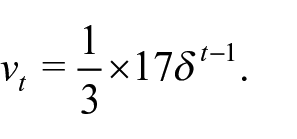
Players in Round
Experimental treatment
Participants were informed of the gender, race, and ideological positions of their group members in the BF periods. The gender and race of the other participants was displayed through an on-screen avatar that matched the data provided in the survey. The ideological position of each group member was shown on an 11-point left–right scale (Figure 1).

(a) Avatar set and (b) political self-placement scale presented to the treatment groups.
Gender and race represent classic social identity traits that affect human behavior (Jenkins, 1996). Ideology, in contrast, is a salient identity, which may have lower social desirability bias, as people may be less ashamed to discriminate against political outgroups (Fowler and Kam, 2007; Huddy et al., 2015). Furthermore, by including information on all three characteristics, we avoided presenting a single obvious focal point, which could have led to demand effects.
Hypotheses
The baseline model predicts that subjects will offer £3.97 to one of the group members, offer nothing to the other, and keep the rest. However, experimental research suggests we should expect a smaller proposer advantage (see Diermeier and Morton, 2005; Fréchette et al., 2005). Regarding partner selection, there was no reason to expect any systematic pattern, since all players had equal bargaining power and were equally “cheap.” This holds for self-interested players, as well as for any model of social preferences in which players care symmetrically about other players’ payoffs.
Conversely, building on social identity literature, we argued that social identity affects preferences over coalition partners, even if it plays no role in determining payoffs. Our design-specific hypotheses were as follows:
H1: The proposer will be more likely to coalesce with an in-group than an out-group member. Specifically,
H1a: Offers to same gender or race group members are higher than offers made to group members of different gender or race.
H1b: Offers to same gender or race group members are more likely to be non-zero than offers made to group members of different gender or race.
H1c: Offers to other group members are higher when the ideological distance between the proposer and receiver is smaller.
H1d: Offers to other group members are more likely to be non-zero when the ideological distance between the proposer and receiver is smaller.
H2: The receiver of an offer will be more likely to coalesce with an in-group than an out-group proposer. In our setup, this would imply that,
H2a: Holding offers constant, group members will be more likely to accept offers from a proposer of the same gender or race.
H2b: Holding offers constant, group members will be more likely to accept offers from proposers who are closer to them ideologically.
Data
All 10 experimental sessions were conducted at the University of Essex Social Science Experimental Laboratory (ESSEXLab) in December 2014 to February 2015. Each session consisted of 18 individuals (details in Online Appendix A1). The participants were limited to nationalities from stable democracies (identified by Polity IV measures; Marshall and Cole, 2014) to ensure a meaningful understanding of a left–right ideological scale.
Out of 180 participants, 66% were female (n = 119) and 69% white (n = 124). All sessions included at least two non-white participants and three men, making it difficult to know who one was interacting with in the game. Due to the small number of participants that were “black,” “Latin American,” or “South Asian,” we pooled their races into a non-white “others” category for the empirical analysis. 2 Figure 2 plots the distribution of ideological self-placement, as well as the distribution of distances between all pairs of participants who interacted with each other.

Participants’ ideology and ideological distance: (a) distribution of self-placements of participants on the ideological scale – 0 meaning extreme left and 10 extreme right (not observed); (b) distribution of absolute differences in self-placement within participant dyads.
Empirical analysis
Identification of the causal effect of social identity was based on the random assignment and re-matching of groups in each of the 10 periods. This eliminated any correlation between the social identity characteristics presented in the treatment and other factors. The only information provided to subjects was the gender, race, and ideological position of the other group members. Because participants negotiated over multiple periods, we obtained a panel dataset of the subject’s behavior as they interacted with other group members with varying characteristics.
To analyze proposal behavior (H1) we looked at participants’ first-round offers to each group member. Figure 3 shows the smallest and largest offers made by the proposer to the other two group members. As expected given previous results, there were few offers near the symmetric equilibrium shown as “SSNE” on the graph. The most frequent type of offer was a three-way equal split. 3

Distribution of offers and votes: (a) joint distribution of largest and smallest offer made by the proposer to the other two group members. “SSNE” indicates symmetric, subgame perfect equilibrium: offering £3.97 to one group member and nothing to the other. (b) Share of first-round offers that were accepted and rejected by a majority of group members. Of all first-round proposals, 7.66% were rejected by both other group members – meaning the group went on to Round 2 of the game – slightly more than the zero rejections theoretically predicted.
To test our hypotheses, we analyzed proposer and receiver behavior using ordinary least squares (OLS) and logit models (see Table 1). The unit of analysis was the dyadic offer of each proposer to one of the other two group members. Our independent variables were “Same Gender Prop.–Rec.” and “Same Race Prop.–Rec.” dummies, indicating whether the receiver shared the same characteristics with the proposer; and the ideological distance between the proposer and receiver, denoted “Diff. Ideology Prop.–Rec.” As control variables, we added the gender, race, and ideological self-placement of the proposer, as well as the similarities between the proposer and the third group member: “Diff. Ideology Prop.–3rd,” “Same Gender Prop.–3rd,” and “Same Race Prop.–3rd”
Statistical models on proposal and voting behavior: M1–M3 are OLS models regressing the amout offered by a proposer to each group member on the difference in ideology between them and the group member receiving the offer as well as dummy variables indicating whether both are of the same gender or race. M2 adds comparisons to the third group member not included in the offer as control variables and M3 adds proposer characteristics as controls variables. M4 is a logit model regressing a dummy variable indicating non-zero offers on the same variables. M5–M6 are logit models regressing a dummy variable indicating whether a group member receiving an offer accepted it on the proposer’s and recipient’s characteristics. In short, M1–M4 analyze proposer behavior, whereas M5–M6 analyze receiver behavior.

Note: L.R.: likelihood ratio. All models include matching group clustered standard errors.
p < 0.001; **p < 0.01; *p < 0.05.
Models M1–M3 present linear regressions of the amount offered. 4 The results were robust to using fixed-effects estimations that accounted for all constant individual-specific characteristics. 5 In line with H1c, the models showed a strong negative effect of ideological distance between proposer and receiver (“Diff. Ideology Prop.–Rec.”) on how much money the proposer offered. For every one-point increase in ideological distance, proposers offered, on average, 13 pence less to a receiver, ceteris paribus. M1 shows the results without control variables, whereas M2 and M3 add controls. The strong negative effect of ideological distance was substantively unaltered. 6
Contrary to what we expected (H1a), the coefficients for “Same Gender” and “Same Race” were not statistically significant. One could argue that gender and race can only become salient in mixed groups, as in an all-white or all-female group, this element does not identify people of other types. However, the non-effects of gender and race persisted even when controls for group composition were included. 7
Model M4 tests subhypotheses H1b and H1d, by looking at the probability of offering more than zero to another group member, that is, the probability of including the other as a coalition partner. Results were similar to the previous models. The coefficient on “Same Gender” was positive and significant, but this finding was not robust to all model specifications (see the Online Appendix).
According to H2, we expected participants that were similar to the proposer to be more likely to vote in favor of a given offer. 8 Figure 3(b) displays the proportion of first-round offers that were accepted and rejected by a majority of group members.
We used logistic regression on the vote of each participant. Model M5 showed a significant effect of “Diff. Ideology Prop.-Rec.” indicating that offers were more likely to be rejected by people that were ideologically further away from the proposer. However, this was probably caused by the lower offers made to those people in the first place. Once we controlled for the amount offered (M6), social identity traits were no longer significant predictors of voting behavior. Thus, social identity had no independent effect on voting behavior, rejecting hypotheses H2a and H2b.
Strategic concerns (e.g., coalition or reputation building) are unlikely to explain our results, since subjects were rematched after every period, and were not aware of the size of matching groups. Another possibility is that proposers simply used ideological closeness as a tie-breaking heuristic to select a coalition partner, and were really indifferent between the two alternative partners. This seems unlikely. 9 First, gender was an easier cue to use, since in this experimental setting, there were only two alternatives to choose from. Second, if subjects were simply using ideological distance as a tie-breaker, then we would expect subjects to consistently offer the same amount to the ideologically closest recipient. In fact, they make higher offers as this recipient gets closer to them. Thus, ideological closeness in itself appears to matter and not just as a heuristic.
Conclusion
In this paper, we tested for the effect of social identity on coalition formation. Our results showed that participants systematically favored group members that were closer to them ideologically, offering them more and making them fewer zero offers. Thus, social identity can create coalitions of ideologically like-minded actors, even in the absence of a policy dimension. We suggest that this may also occur in coalition formation outside the laboratory, either when political actors themselves have a social identity, or when the social identity of their supporters constrains them.
We found no evidence for in-group bias based on race or gender. One reason could be that social desirability reduces the effect of these variables. Yet, in some countries, political coalitions do form based on ethnicity (Madrid, 2008; Posner, 2004: 4). Alternatively, the effect of identity could depend on its salience. Michelitch (2015: 1) presents an example of this in taxi fares in Ghana, where only at election time does co-partisanship alter how much drivers are willing to accept for a ride. An interesting line of further research would be to conduct similar experiments in countries with more salient ethnic identities.
In conclusion, our results imply that coalition formateurs are not necessarily purely rational actors pursuing policy goals and/or the benefits of office. Rather, they also care about the identity of their partners, preferring others who are like themselves. Of course, ideologically connected coalitions may also form due to similar preferences over policy. We propose considering the potential impact of social identities as a complement to formal theoretical work, which could help to predict coalitions.
Supplemental Material
SICB_resubmit_log – Supplemental material for The impact of group identity on coalition formation
Supplemental material, SICB_resubmit_log for The impact of group identity on coalition formation by Denise Laroze, David Hugh-Jones and Arndt Leininger in Research & Politics
Supplemental Material
Social_identity_and_coalition_building – Supplemental material for The impact of group identity on coalition formation
Supplemental material, Social_identity_and_coalition_building for The impact of group identity on coalition formation by Denise Laroze, David Hugh-Jones and Arndt Leininger in Research & Politics
Footnotes
Declaration of conflicting interests
The author(s) declared no potential conflicts of interest with respect to the research, authorship, and/or publication of this article.
Funding
The author(s) disclosed receipt of the following financial support for the research, authorship, and/or publication of this article: This experiment was funded by ESSEXLab seedcorn funding (Grant nos. FY00324, FY00333 and FY00344).

Supplemental materials
The replication files are available at https://dataverse.harvard.edu/dataset.xhtml?persistentId=doi%3A10.7910%2FDVN%2FJMZE6G&version=DRAFT#
Notes
References
Supplementary Material
Please find the following supplemental material available below.
For Open Access articles published under a Creative Commons License, all supplemental material carries the same license as the article it is associated with.
For non-Open Access articles published, all supplemental material carries a non-exclusive license, and permission requests for re-use of supplemental material or any part of supplemental material shall be sent directly to the copyright owner as specified in the copyright notice associated with the article.
