




Abstract
Biodiversity change and increasing within-country economic inequalities represent two of the greatest global challenges of the Anthropocene. The most marginalized in society are often the most vulnerable to biodiversity change but there is no consensus on the relationships between biodiversity change and rising economic inequalities. To address this gap, we conducted a systematic scoping review of the literature and found 27 studies that explicitly examined the relationships between economic inequality and biodiversity. These were predominantly quantitative but also included qualitative, scenario, and review papers. The majority of studies (21/27) found evidence to suggest that more unequal regions had lower levels of biodiversity, and also that wealthier areas had higher levels of biodiversity. However, few studies investigated the causal mechanisms underlying the reported relationships, and there was little consistency in the metrics used to measure either inequality or biodiversity. Future research needs to focus on testing, or in-depth explorations, of causal mechanisms, with both quantitative and qualitative approaches needed. It is crucial that we understand how economic inequality and biodiversity interact if we are to meet the aims of reducing economic inequality and preventing further biodiversity loss.
Introduction
The Anthropocene is dominated by accelerating rates of earth systems changes, including climate change, biogeochemical flows, biodiversity change, and more. (IPBES, 2019; McNeill and Engelke, 2016; Rockström et al., 2009). These changes have the potential to negatively affect human well-being, through impacts on food, energy, water, medicine, and culture (Pascual et al., 2017). Concurrently, economic inequality is one of the key social challenges of the 21st century (Kakwani, 1980; Piketty and Saez, 2014; Wilkinson and Pickett, 2010). Inequality takes different forms, each with evidence to suggest that higher levels are not only negative for those most affected, but also wider society (Berkhout et al., 2021). Economic inequality is the structural inequality most often the focus of research and data collection. Although global inequality has decreased in recent decades, within-country inequality has increased in most regions and in most of the world’s countries since the 1980s. There is plentiful evidence to show that higher economic inequality is linked to many negative impacts, such as poorer health, higher crime rates, poverty and many others (Kakwani, 1980; Piketty, 2014; Piketty and Saez, 2014; Wilkinson and Pickett, 2010, 2018). There has also been some research to suggest that high economic inequality can have negative impacts on various environmental outcomes, for example, higher deforestation rates have been observed in countries with higher inequality (Koop and Tole, 2001). Recent reviews have conceptualized the links between inequality and the environment (Cushing et al., 2015; Hamann et al., 2018), yet the system is complex and the evidence about the relationship between inequality and biodiversity remains mixed and limited.
The link between biodiversity and human wellbeing is well documented within the ecosystem service literature, IPBES assessments, and natural capital calculations (Costanza et al., 1997, 2014; Mace et al., 2012; Schmeller and Bridgewater, 2016). Beyond this, many people also place intrinsic values on biodiversity, which are much harder to quantify (Pascual et al., 2017). Biodiversity can also have negative impacts on human well-being through both direct (conflict over resources or space) and indirect harm. These have been termed as ecosystem disservices or biodiversity harms or dis-benefits (Dunn, 2010; Lyytimäki and Sipilä, 2009). There are many factors that drive biodiversity change, and a multitude of studies have tried to map these relationships out (Bowler et al., 2020; Tilman et al., 2017).
The links between environmental and human well-being are complex and broad. In this review, we focus on the relationship between biodiversity and economic inequality – that is, the quantified difference between people’s material resources (most typically measured as income or wealth) within a defined society (e.g. within a country, region or state) (Sen, 1997). According to the Convention on Biological Diversity (CBD), biodiversity is the ‘variability among living organisms from all sources including, inter alia, terrestrial, marine and other aquatic ecosystems and the ecological complexes of which they are part; this includes diversity within species, between species and of ecosystems’ (CBD, 2006).
However, inequality is often missing from these discussions with studies focussing on wealth and human population growth or density instead. A body of research illustrates that biodiversity conservation interventions can be impeded by economic inequality (Martin et al., 2014). Yet there is currently no consensus on how inequality (economic or other) impacts biodiversity or how biodiversity changes can impact inequality. It is important that we understand this relationship for a number of reasons: firstly, so that we can devise and implement the correct interventions when addressing both biodiversity change and inequality; secondly, reducing inequality and conserving biodiversity are both separate targets in the SDGs, but we need to understand how they are or might be related.
A number of researchers have theorized how economic inequality and biodiversity may interact (Boyce, 1994, 2007, 2018; Dorling, 2010; Scruggs, 1998). We provide a succinct summary of these below and in Figure 1, but see Hamann et al. (2018) and Berthe and Elie (2015) for more detailed descriptions. The mechanisms theorized can be divided into collective and individual mechanisms.
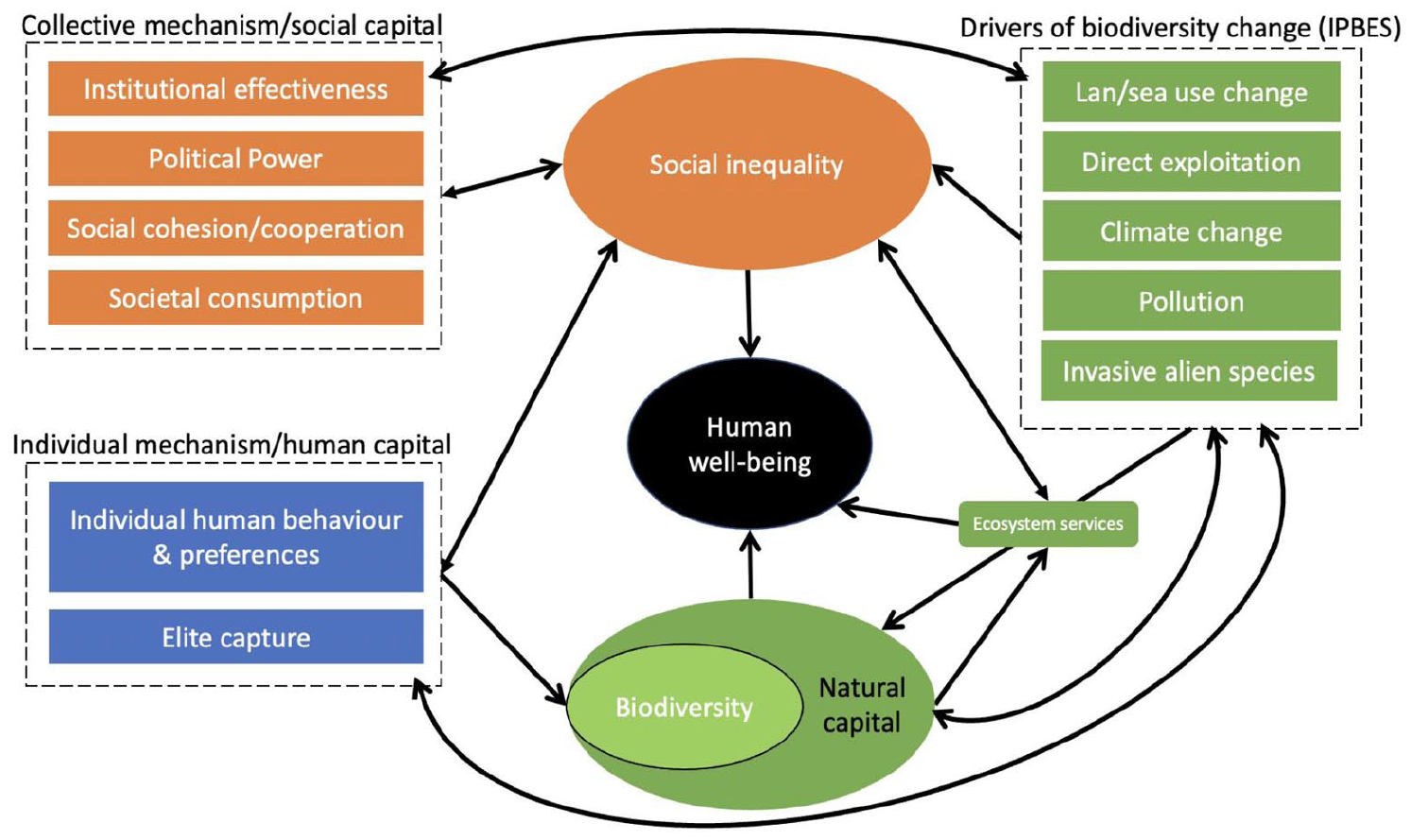
Diagram summarizing theorized relationships between inequality, biodiversity and human well-being.
On the collective-side, inequality may undermine democratic decision-making in protecting public goods (Kashwan, 2017). Researchers have suggested that this may be particularly problematic in the Global South where weak institutional structures and skewed economic returns to the wealthiest make collective action for conservation or environmental protection difficult and cause exploitative growth at the expense of the environment. There is some evidence to support this, for example, field experiments in Colombia found that increasing wealth inequality leads to worse cooperation regarding harvest decisions in forest commons (Cardenas et al., 2002). Forest degradation is also positively correlated to inequality, but also dependent on the existing institutions (Andersson and Agrawal, 2011).
On the individual-side, inequality may decrease people’s motivation to participate in biodiversity conservation measures if they cannot see the potential benefits to themselves (Loft et al., 2020). There are also arguments that higher inequality could lead to better environmental protection if powerful elites facilitated collective action, particularly if elites benefitted from the provision of a public environmental good (Berthe and Elie, 2015). For example, higher inequality in land distribution is associated with lower deforestation in Mexico (Alix-Garcia, 2008). However, the above examples and theories often focus on the wider environment, rather than specifically looking at biodiversity.
The relationship between biodiversity and inequality is complex, with both variables embedded within a complex system. There will be both direct and indirect effects in both directions, and the relationship is likely to be mediated through and interact with other factors. Recent review work has shown that research into biodiversity drivers rarely considers the interactions between them (Mazor et al., 2018). In this paper, we reflect on how well the included papers deal with the complexity of the relationship between inequality and biodiversity. This complexity stems from direct and indirect influence not just of inequality on biodiversity, but also the quality and quantity of biodiversity on inequality.
There are a few well-cited papers that look at the relationship globally between inequality and threatened biodiversity present in each country (Halkos and Tzeremes, 2010; Mikkelson et al., 2007; Pandit and Laband, 2009). However, there has been disagreement in the academic literature about the methodologies of these papers (Mirza et al., 2020; Pandit and Laband, 2009). Some of these methodological disputes stem from different spatial scales of study, whether assessing flora or fauna, and the degree of inequality.
The existing theories and quantitative studies reviewed in this paper focus on economic inequality. However, other forms of inequality may also impact biodiversity and vice versa. These inequalities may take the form of different aspects of life, such as wealth, income, power, education, access to biodiversity, amongst others. These inequalities may also occur between different population groups, such as men and women, different ethnic groups, and other sub-divisions within society.
For example, research has shown the importance of equality between men and women in successful conservation projects (Kaeser et al., 2018; Keane et al., 2016); it has also shown that biodiversity loss often has different impacts on men and women (Harper et al., 2013). As another example, access to natural spaces has also been shown to be unequal between ethnic minority groups, especially in the Global North (Boyd et al., 2018; Mears et al., 2019).
In these two examples, these types of inequality can be objectively measured. Yet, perceived inequalities, both between different aspects of life and different groups of people, have also been shown to be an important predictor of individual behaviour and social outcomes. In these cases, the perceived inequalities did not relate directly to biodiversity, but they did exemplify how social inequalities in general can interact with environmental or conservation issues (Gimpelson and Treisman, 2018; Kuhn, 2011).
Environmental justice issues run in parallel to this research question, and evidence continues to emerge that poorer and marginalized communities are more likely to be reliant on the environment, exposed to environmental pollution and other environmental hazards, and less likely to have access to high-quality green or natural spaces (Boyce et al., 2016; Tessum et al., 2019). A wealth of evidence also suggests these groups are more likely to bear the costs or negative impacts of biodiversity conservation (Holmes and Brockington, 2013; Martin et al., 2013; Milner-Gulland et al., 2014; West et al., 2006). This adds to the need to understand the relationship between inequality and biodiversity.
In this paper, we aim to bring findings across all scales and types of inequality together, to summarize the current knowledge base and provide direction for future research in this area. The overall aim of the paper is to uncover what evidence exists on the relationship between inequality and biodiversity, or species diversity or richness. It is important not just to understand whether there is a relationship between inequality and biodiversity, but also what the underlying mechanisms driving the relationship are, for that reason that is the secondary focus of this paper.
Methods
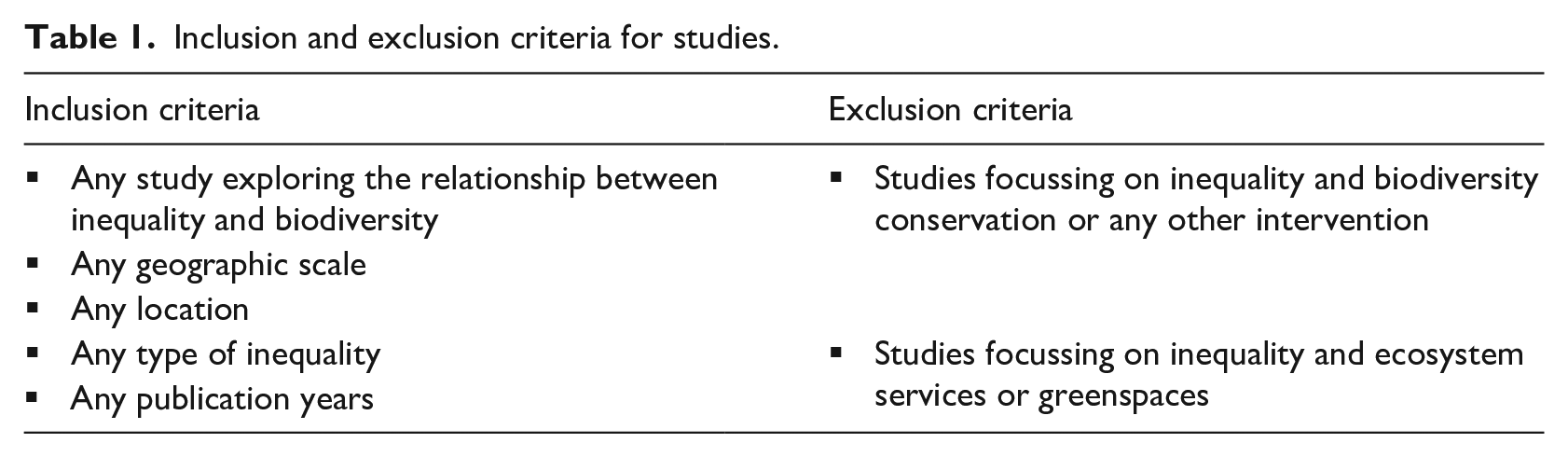
A systematic search strategy was used to identify published, peer-reviewed studies that specifically examined relationships between biodiversity and inequality. The literature search was conducted in March 2020–April 2021. Literature was identified through structured searches of Scopus and Web of Science, using the search terms ‘inequality’ AND ‘biodiversity’ OR ‘species diversity’ OR ‘species richness’. Although the latter two are only aspects of biodiversity, in certain papers that was the terminology used. This first search process found 575 articles. Following this, we checked the first 20 pages of Google Scholar for any articles missing from the first search (Haddaway et al., 2015). Following the removal of duplications and applying the inclusion and exclusion criteria (Table 1) we found 27 articles to include in the review.
Inclusion and exclusion criteria for studies.
Although 27 studies is a moderately small sample, these were the only studies that explicitly looked at the relationship between aspects of inequality and biodiversity, albeit that many actually examine the relationship between biodiversity and either wealth or income. We felt it was important to scope the field at this time to assess coherence and provide direction for future research – in this context, even an empty review would have been informative.
Analysis
Due to the heterogeneity of the selected articles in terms of research design, measures, and participants, data were analysed using narrative synthesis (Popay et al., 2006). The aim of narrative synthesis is to identify factors that explain the differences in results in the studies included in the review. Patterns of finding across all 27 studies were identified according to study design, measures of biodiversity, types and measures of inequalities and causal mechanisms given by authors.
Vote counting was used to describe the frequency of significant and non-significant results across the quantitative studies, biodiversity and inequality metrics, study scales, relationships tested and causal mechanisms. Whilst we acknowledge that vote counting has some known flaws (e.g. giving equal weight to studies with different research designs, samples and effect sizes), it is a useful as a preliminary interpretation of results across studies (Popay et al., 2006).
Results
The studies remaining in our final selection were dominated by quantitative research (21/27), with a smaller representation of qualitative, scenario, theory and review papers (Figure 2). The publication dates ranged from 2001 to 2021, with the highest frequencies (4) in 2009, 2019 and 2020. Most studies (17/27) focused on a national level scale, comparing areas within cities, between cities, or between regions of a single country. The remaining 11 studies compared multiple countries or took a global approach (one of the studies included both a global and national analysis and therefore is counted twice).
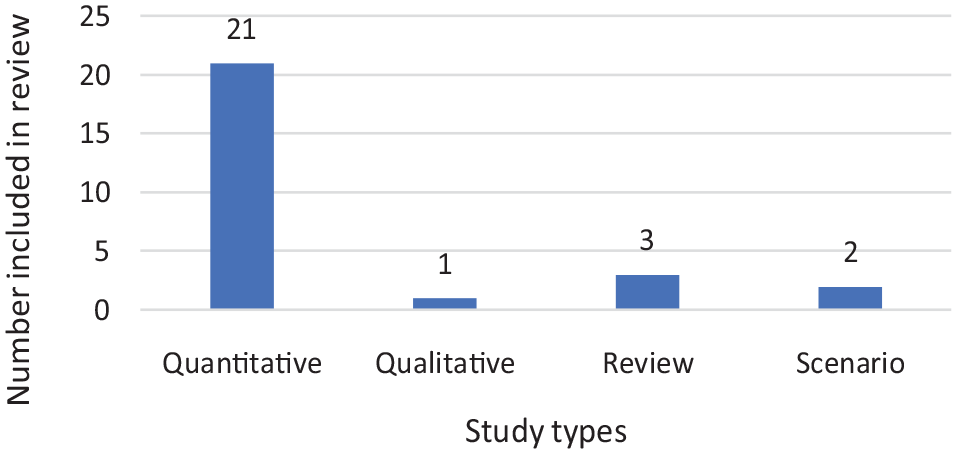
Different study types included in the review.
Although all the papers reviewed analysed, or claimed to analyse, the relationship between inequality and biodiversity in some form, they varied on what aspects were analysed. Some considered the impact of inequality on biodiversity, while others only looked at the impact of wealth or income on biodiversity.
Study types
Quantitative studies
We identified 21 quantitative studies, the majority (11/21) focussing on comparing areas within a single city, five compared countries around the world, four compared multiple cities, states, or counties within a country, one focused on a single region, and one focused on countries within a continent.
Twenty-one studies looked at different forms of inequalities, including income inequalities (18) and education (3). Four studies looked at the inequalities between different groups, in this case, all looked at ethnicity/racial inequalities. These studies reported a broad range of relationships between biodiversity and either inequality or wealth/income at different spatial scales, degrees of inequality or wealth/income, and metrics of biodiversity. However, as an overview:
nine studies showed evidence that wealthier cities or regions tended to have higher biodiversity,
three studies found that countries with higher inequality levels have lower or more threatened biodiversity,
three studies found no relationship,
three studies found that the relationship depended on other (measured) factors,
three studies found that areas with higher ethnic minority populations tended to have lower biodiversity,
one study found that the relationship varied depending on what element of biodiversity was measured, and
one study found that countries with high inequality levels performed better in biodiversity measures.
Sixteen of the 21 studies suggested causal mechanisms for the relationships reported. Ten of those studies, that focus on regions or cities, referred to the luxury effect where wealthier people are more likely to choose to move to greener areas or have more power and ability to ‘green’ areas. Other casual mechanisms mentioned in a smaller number of studies, included: high levels of inequality reduce the effectiveness of institutions, therefore reducing abilities to conserve biodiversity (2); biological factors, such as species characteristics (2); cultural preferences (2); historical legacies (2); environmental characteristics (1); inequality reducing opportunities for environmental degradation (1); and the fact that cities with higher high socioeconomic status have a negative or neutral association with plant diversity, especially in cities where higher socioeconomic status populations live in denser areas with limited space for biodiversity (1).
Qualitative studies
Only one qualitative study met our selection criteria. It focused on the correlation between biodiversity and wealth, specifically around agro-biodiversity in Nepal. The study looked at the causal mechanism of wealthier farmers investing in tech improvements, rather than species variety.
Scenarios
We found two scenarios papers which met our selection criteria. Both of them focused on oceans and fish biodiversity, and their scenarios relevant to inequalities focused on the power and wealth of elites and how that would impact fisheries management. Both concluded that higher inequality would lead to poor governance and management of oceans and fisheries leading to biodiversity declines.
Reviews
We found three review papers, two focused on economic inequalities and one on racial inequalities. One of these studies included a meta-analysis and the others reviewed existing literature.
Metrics
The majority of studies focused on income or wealth inequalities (Figure 3). There was a much smaller number including other forms of inequalities, including between different ethnic groups, as well as, different aspects of life, such as education level. Non-economic inequalities tended to be included alongside economic inequality, rather than be the primary focus of the analysis. Depending on which relationship was analysed in a study, there were a wide variety of economic metrics used. The most commonly used were median household (6/27) or family (4/27) income when looking at the correlation between biodiversity and wealth or income and the Gini index (6/27) when looking at the impact of inequality on biodiversity (Figure 3).
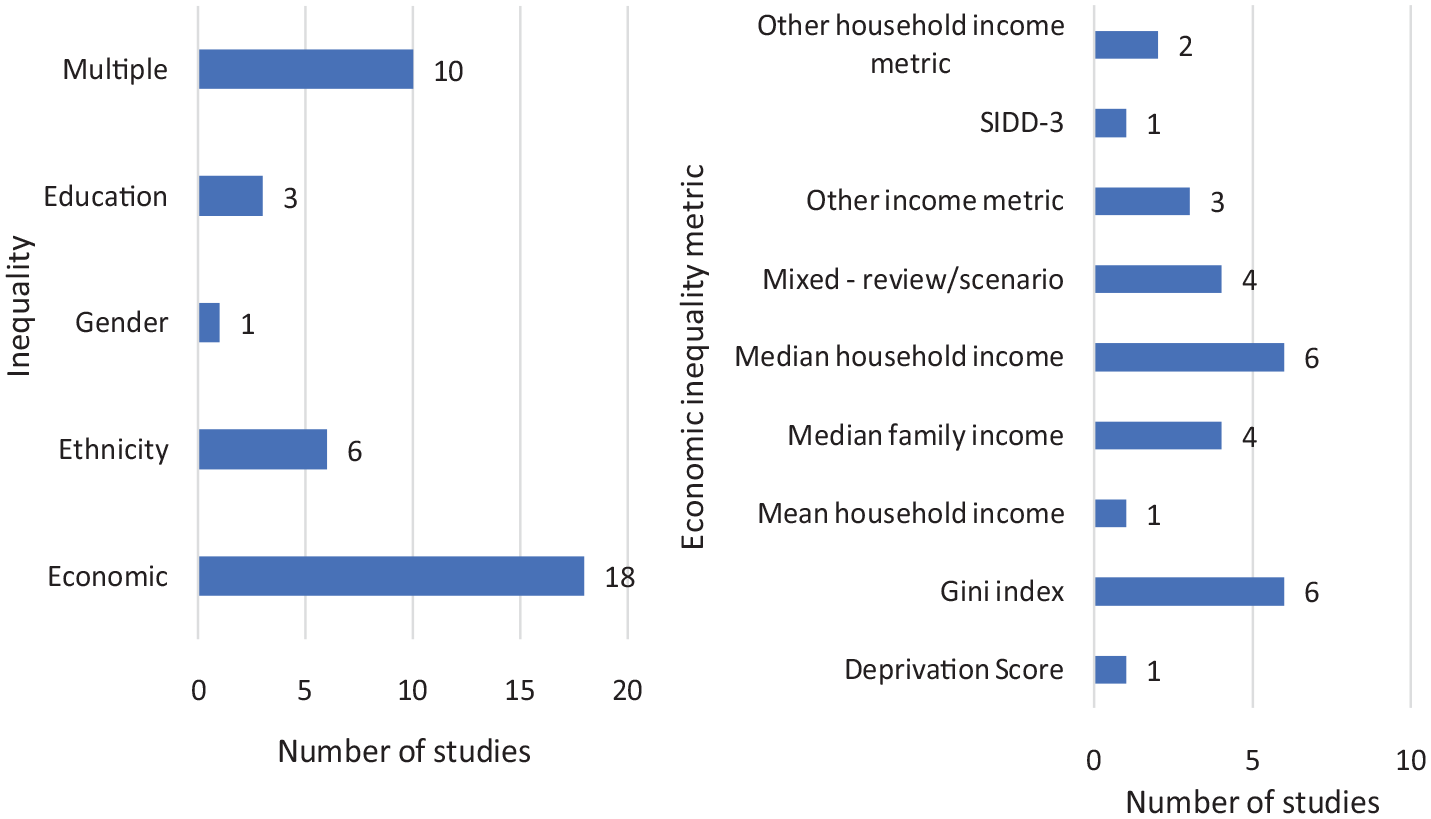
Inequality types and economic inequality metrics included in studies.
Species diversity was the most frequently (14/27) used measurement of biodiversity (Figure 4). Plants were the most frequently included taxa (18/27) with birds the second most frequently included (Figure 4).
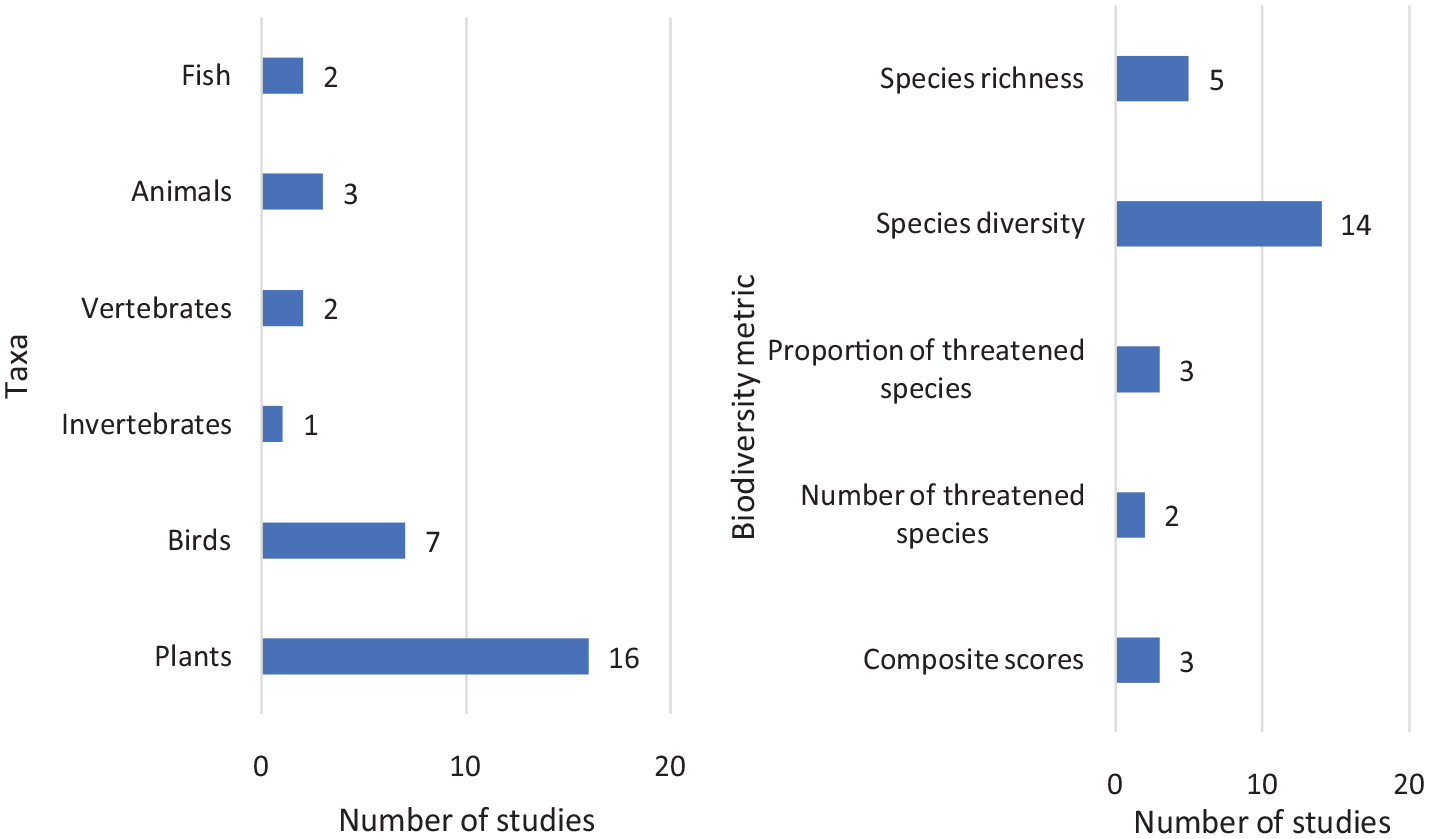
Taxa focus and biodiversity measurements included in studies.
The most frequent relationship across all the studies reviewed was that wealthier regions contain higher levels of biodiversity than poorer regions (11/27). Although this relationship in not specifically between biodiversity and inequality, these studies claim to look at the relationship between inequality and biodiversity. These studies focused on the national level, often comparing different areas within cities (Figure 5).
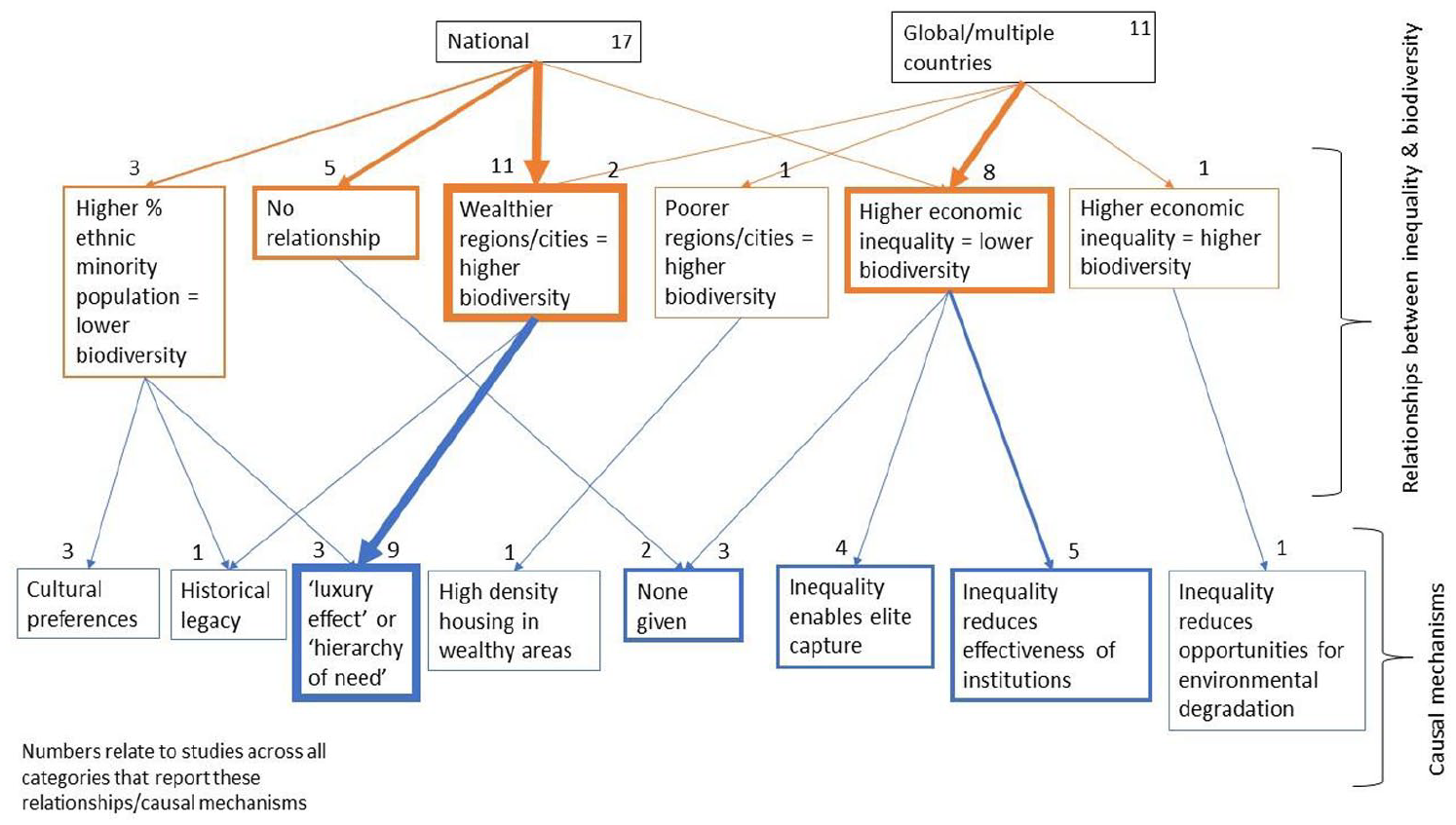
Diagram showing the frequency of relationships between biodiversity and inequality and causal interpretations represented in the review studies.
The second most frequent finding was that countries or regions with higher economic inequality had lower levels of biodiversity, or a higher proportion of threatened biodiversity (8/27). However, two of the studies also reported the opposite findings, that is that poorer regions contained higher levels of biodiversity or higher economic inequality was associated with higher levels of biodiversity. Five of the studies reported no significant relationship between biodiversity and inequality (Figure 5).
Twelve of the studies explicitly considered whether non-native species had an impact on the relationship between inequality and biodiversity (Figure 6), all of these were national-level studies. Five of these found no effect on the overall relationship and four found that non-native species present in wealthier areas significantly contributed to higher biodiversity levels. This relationship seemed particularly prevalent for plant species in gardens but was also mentioned regarding bird species.
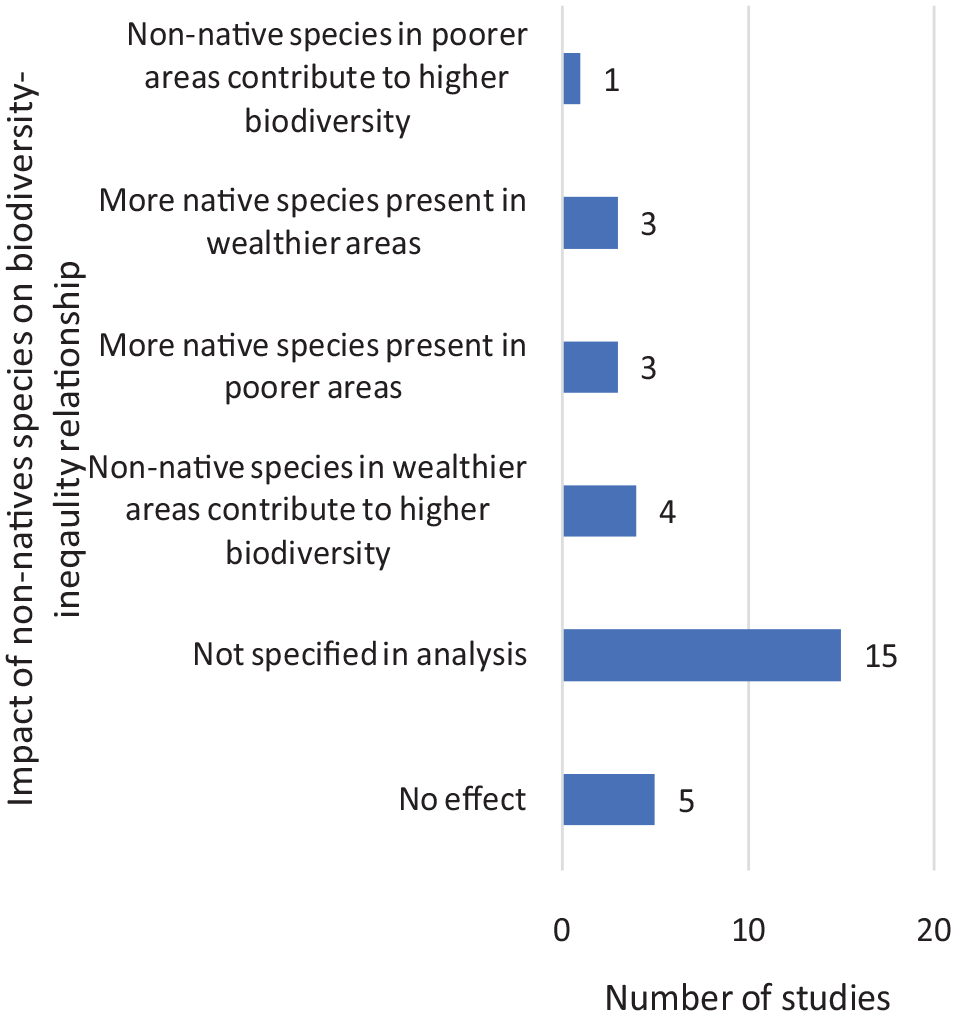
Inclusion of non-native species and how it impacted the relationship between inequality and biodiversity.
Causal mechanisms
The majority of studies included did theorize causal mechanisms for the relationship their results showed (22/25), however very few tested those mechanisms. The most frequently postulated mechanism was the ‘luxury effect’ or ‘hierarchy of need’ (12/27). This theory suggests that wealthier individuals will choose to move to an area with higher biodiversity or more vegetation, as well as, put more energy into campaigning or acting to increase biodiversity or greenness. The reasoning behind these theories state that wealthier people do not have to focus on more pressing issues of poverty or deprivation, and therefore have more capacity to focus on their surroundings and are also likely to have more power to influence changes. There were also some studies that suggested this could also be due to cultural or class preferences for certain types of biodiversity for example campaigns for street trees, or choice of planting in shared or private gardens. This causal mechanism was only offered to explain differences between regions or areas within a country or city. The next two most frequent mechanisms were offered in global or multi-country studies; firstly, that inequality reduces the effectiveness of institutions (5/27), and secondly, that higher inequality levels enable elite capture (4/27).
Research gaps
Most studies (20/27) suggested future research directions. Eleven of the studies stated that more case studies were needed, this was combined with the recommendation that future research needed to focus on a wider range of taxa groups and geographical regions (particularly the Global South), to explore how context effects the findings. Ten studies suggested research should focus on understanding the causal mechanisms driving the relationship between inequality and biodiversity, this included recommendations of further quantitative and qualitative research, with suggestions that qualitative research could aim to explore human perceptions and preferences for biodiversity and how this differed between different social groups.
Discussion
The most typical finding in studies supports Boyce’s (1994) theory that inequality, particularly economic, has negative impacts on biodiversity. This trend has been found to exist at multiple scales, including cities, nationals, and internationally. However, there were also inconsistencies between studies in how they measured both biodiversity and inequality, and the evidence is still lacking to understand the underlying mechanisms driving this relationship.
The findings within national-level studies overall suggested that wealthier areas had higher levels of biodiversity than poorer areas. Many of these studies weren’t measuring inequality levels per se, but highlighting inequalities in how biodiversity is distributed within cities or regions. Kuras et al. (2020) reviewed more of the literature on the distribution of urban biodiversity and socio-economic factors and concluded that the majority of evidence supported this idea, with notable exclusions. Cities where the wealthier areas were high-density, cities with tropical or arid climates, and potentially newer cities showed the opposite relationship.
This finding fits with the bias in the existing evidence base that (mostly in the Global North) there are inequalities in accessing green or natural spaces. Poorer, more deprived people and ethnic minorities, are less likely to spend time in these spaces (Boyd et al., 2018; Mears et al., 2019). The barriers to accessing these spaces are varied but limited good quality green spaces close by will of course have an impact. However, further research is needed to understand how biodiversity levels interact with what is perceived as good quality greenspace (Dallimer et al., 2012).
The findings within international-level studies overall suggested that countries with higher inequality had lower levels of, or more threatened, biodiversity. However, one study found the opposite trend. Bradshaw et al. (2019) compared African countries and found that those with higher inequality scored better on their environmental performance rank, which included a measure of the proportion of species listed as threatened on the IUCN red list. Although this is only 1 of the 27 studies included, it is the only study which focuses on the Global South so justifies careful interpretation. It is important to note that significant differences exist in biodiversity, regardless of inequality due to the latitudinal gradient of biodiversity. These differences may affect any studies looking at biodiversity.
This will especially be true when looking at the relationship between biodiversity and inequality, for which a pattern exists between the Global South and North. On average, inequality is higher in the Global South, but so is biodiversity, compared to the Global North. This makes the relationship between inequality and biodiversity more difficult to discern.
The findings from Mirza et al. (2020) might help in interpreting this finding as they showed that institution effectiveness (measured through the World Bank’s Governance Indicators) can have a mediating role in the relationship between inequality, economic growth, and biodiversity, particularly when comparing Global North and Global South countries. Bradshaw et al. (2019) also considered the role of institutions and governance and found no relationship. This may be because they used a different set of indicators (the 2015 Ibrahim Index of African Governance). This emphasizes the difficulties of comparing studies or compiling evidence where different metrics are used. Other international-level studies did not differentiate by governance or look for differences between developing and developed countries. Previous research has shown that governance scores are strongly corelated with some species population trends in developing countries (Smith et al., 2003). Further research is needed to understand how the relationship between inequality and biodiversity might differ in the Global North and South, and to unpack the complex role that institutions or governance may play.
Metrics and measurements
Across all studies, various metrics were used to measure both inequality and biodiversity. Whilst change through time is anticipated as newer and more reliable metrics emerge and more in-depth data is available, this does make comparing studies and drawing conclusions challenging. For future research in this area, we recommend that researchers consider the metrics used in analysis carefully to ensure that not only are they most appropriate for the scale and analysis, but also to enable their findings to be compared to other research. This can be done through internationally agreed metrics per spatial scale.
For the biodiversity metrics included, there was an uneven representation of different groups of taxa, with plants and birds most frequently represented. While plants might be most impacted by local context, as they are least able to shift their ranges (Holland et al., 2009), we need more research on other taxa groups to inform our understanding of how the relationship between biodiversity and inequality may vary.
Another aspect of biodiversity measurement that differed between studies was the consideration of non-native species. Although most studies did not mention whether non-native species were included or excluded, those that did were fairly evenly split over the distribution of non-native and native species between wealthier and poorer areas. However, a greater number of studies found that the presence of non-native species increased species diversity in wealthier areas compared to poorer areas, rather than the opposite. In some cases, non-native plant species boosted species diversity in wealthier areas due to private gardens. In another study, more species of non-native birds were found in wealthier areas. Whether this is positive or negative could be argued either way. Increased species diversity may contribute to increased human well-being (Lohr and Relf, 2014; Potgieter et al., 2019) and provide a greater diversity of habitats for other species. On the other hand, some non-native species can have negative impacts on human wellbeing and invasive alien species are considered a major driver of biodiversity change (Crowley et al., 2017; IPBES, 2019).
In terms of inequality metrics, the focus was on economic inequality with a variety of measurements. The most frequently used metrics were the Gini index of income inequality when looking at impacts of inequality on biodiversity, and median household income, when looking at the correlation between biodiversity and wealth or income.
As with any variable, there are conceptual and practical challenges in measuring inequality (Martín-Legendre, 2018). Inequality data is usually derived from household surveys or census data. Survey data brings challenges with reliability, comparability, and representation of the population. This is especially true in countries with high corruption levels, prevalent tax evasion, underfunding, incompetence or ignored sectors of the population. This means that relevant measures will depend on the population’s culture, size and the aspect of the inequality being focused on (McGregor et al., 2019).
The Gini index is arguably the most popular measure of income inequality, with relatively easy comparison between different population sizes, and is regularly reported by countries and international organizations. Many of the national-level studies compared median or mean household incomes to look at the correlation between biodiversity and wealth or income, which enabled a conclusion about whether poorer or wealthier areas had higher biodiversity. These studies framed their conclusions around economic inequality. However, that is not what they were really measuring. Rather their conclusions tell us how inequality affects access to biodiversity. Consistent framing around what measurements are being used and what the findings can tell us about the relationship between inequality and biodiversity is crucial.
Wider inequalities and intersectionality
As anticipated, the research was dominated by a focus on income inequality. However, some studies did include ethnicity and gender when looking at inequalities between groups, as well as education when looking at inequalities of life situations. When these were included, they were mostly alongside economic measures rather than being the main focus of the research. The exception to this within our included studies was the review by Schell et al. (2020). They draw attention to the historical legacy of segregation, both within city layouts and in conservation and scientific research more generally.
Important inequalities exist between different groups or populations, these can include genders, ethnic groups, those with and without disabilities, different sexual orientations, linguistics, religions, migration statuses and geographical lines. These types of inequalities are described as horizontal inequalities, that is they are inequalities between groups of people with different characteristics or who live in different places. Inequalities between individuals or households, potentially within the same group and often measured as income or wealth, are described as vertical inequalities (Jayaraj and Subramanian, 2006).
Vertical inequalities can lead to an exacerbation of horizontal inequalities. For example, in more economically unequal societies, women often have lower status than in more economically equal societies (Pickett, 2021). Due to this, many studies that incorporate multiple inequality measures show the same trend. This means that further study is required to look at other forms of inequality in an attempt to understand their nuance.
Causal mechanisms
Most studies provided causal mechanisms for the reported relationships, yet these were mostly suggestions rather than explicit analyses. Mirza et al. (2020) used Structural Equation Modelling, which incorporates causal assumptions and provides evidence to suggest that institution effectiveness, or governance, plays an important role as a mediating or causal factor in the relationship between inequality and biodiversity. Nevertheless, this does not prove causality de facto and we support their conclusion that there is a need for more research attention to causality.
In epidemiological research, causal inference from observational research is fundamental and there is a long history of applying causal criteria, dating from early attempts to establish that cigarette smoking was a cause of lung cancer. Epidemiology fundamentally applies the ‘potential outcomes framework’, which states that a true causal effect is the difference between an observed outcome that occurs because of exposure to a particular causal factor and the unobserved outcome that would have occurred in the absence of exposure to that same factor, all other things being equal. In practical terms, this means comparing exposed and unexposed groups and formally considering the extent to which they are comparable (exchangeable) (Shimonovich et al., 2021).
The use of directed acyclic graphs (DAGs) to improve confidence in the avoidance of bias by setting out assumptions about putative causal interrelationships is increasingly influential in epidemiology and is starting to be seen in environmental research (Brewer et al., 2017). DAGs are used to build models that avoid threats to valid causal inference and allow unbiased estimates of hypothesized causal relationships. Other methods that support causal inference include sufficient-component cause (SCC) models that assess how multiple factors interact to produce effects, and the Grading of Recommendations, Assessment, Development and Evaluation (GRADE) method of systematically assessing a body of evidence.
The potential of qualitative research
We found only one qualitative study that met our inclusion criteria, and none that took a mixed methods approach. We came across many qualitative case studies that investigated the relationship between inequality and biodiversity conservation interventions, but these are answering a different research question to the aim of this review. Yet there is clearly much that qualitative and mixed methods research can add, and many of the studies within the review called for more qualitative case studies. Qualitative research will be particularly relevant to the individual mechanisms theorized to affect the relationship between inequality and biodiversity. It also may have useful applications for understanding the collective mechanisms in more depth as well (Figure 1). For example, at a more local scale, qualitative research can provide an in-depth understanding of the drivers for people to move to areas with higher biodiversity and what behaviours contribute to higher biodiversity levels in wealthier areas. It also shows how cultural and class preferences may interact with the relationship between inequality and biodiversity. If institutions do play a mediating role in the relationship between inequality and biodiversity, qualitative research could provide case studies of institutions involved in biodiversity protection and exploitation in a variety of different levels of inequalities. Qualitative research will also be particularly helpful in understanding where perceived inequalities might impact biodiversity, and vice versa. There is already substantial literature exploring how perceived inequalities impact the success of conservation or environmental interventions (Bennett, 2016; Ward et al., 2018).
Research gaps and future research directions
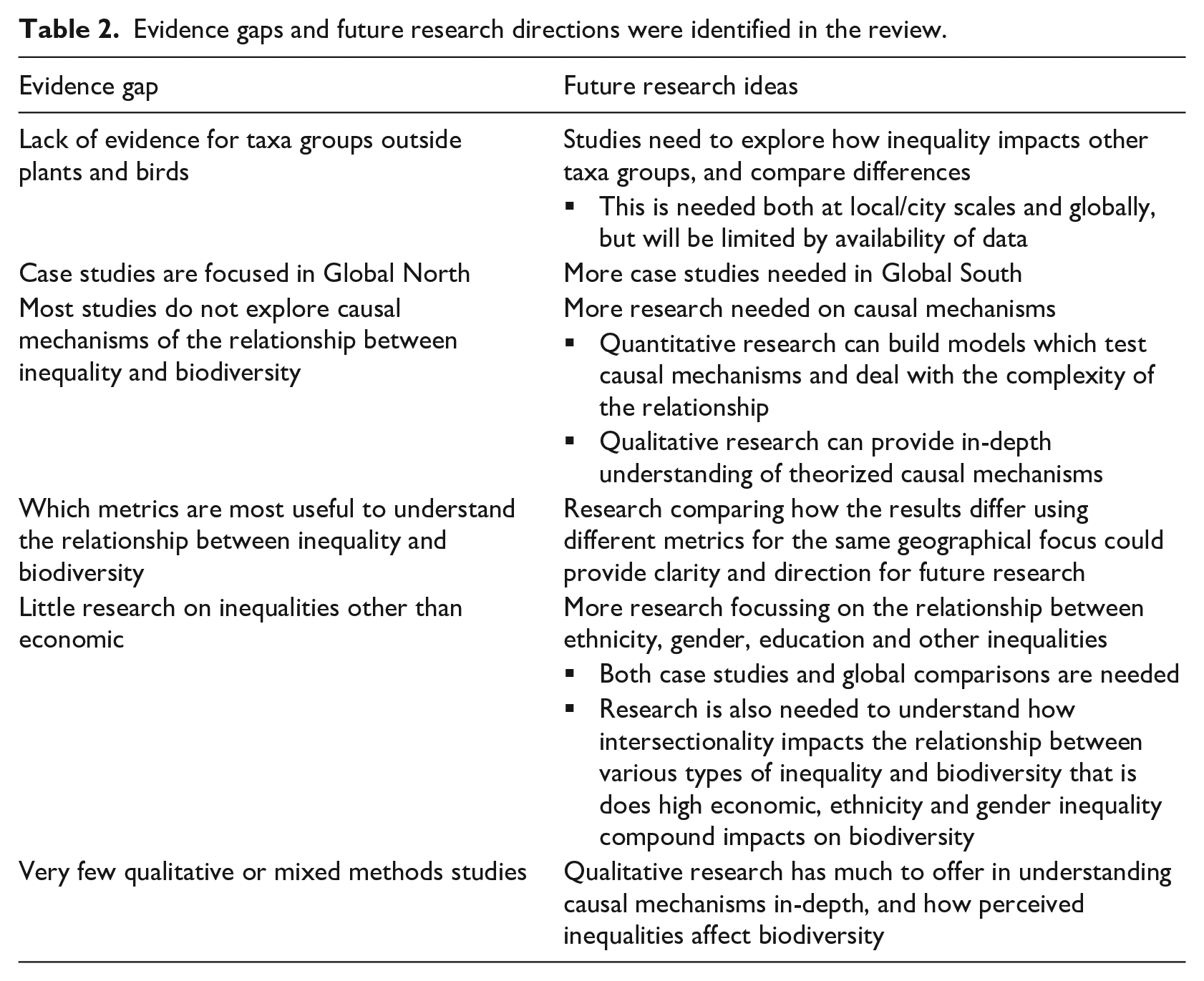
Throughout the sections above, we have identified gaps in the evidence base to understand the relationship between inequality and biodiversity. In Table 2, we summarize these and provide suggestions for future research directions to better inform our understanding, and therefore the ability to meet the Sustainable Development Goals.
Evidence gaps and future research directions were identified in the review.
In this review, we focused our search on studies that investigated the relationship between inequality and, specifically, biodiversity. However, although some studies identified institutions as a mediating factor, it is also important to consider how inequality interacts with the drivers of biodiversity change. This is beyond the scope of this review but would be a useful and important contribution to the literature. As listed in the IPBES assessment, the main drivers of biodiversity change are land/sea use change, direct exploitation of organisms, climate change, pollution and invasive alien species (IPBES, 2019).
Broader investigations can also be done to look at which societal and historical institutions exist that promote inequality and biodiversity loss, for example, whether certain societal and economic structures, such as capitalism or socialism, are better at managing inequality and biodiversity loss.
Overall, much more research is needed in this area of study, including more studies testing specific pathways between inequality and biodiversity. These need to be comparable on important aspects of study design to be able to make a stronger inference about this relationship. However, we also need more research in the broader fields of inequality and biodiversity to understand why they continue to present as intractable challenges.
Conclusion
We reviewed the existing literature to explore the evidence around the relationship between inequality and biodiversity. We found that there are a limited number of studies that analyse the relationship between, specifically, economic inequality and biodiversity. Those that do, use a variety of methodologies, data types and sources, geographical scales, economic levels and development levels. The differences in these studies make them difficult to compare and greater exchangeability on key aspects of study design would enhance future synthesis analyses.
Most research has focused on the Global North where relevant datasets are more available. Further research within the Global South would be a substantial development of knowledge of the relationships between inequality and the environment.
The majority of studies that were reviewed supported the hypothesis that higher levels of inequality have negative impacts on biodiversity, despite there being little consensus across studies in their approaches to measure either inequality or biodiversity. Most studies also did not test causal mechanisms, merely reporting the significance of the relationship. If we are to meet the Sustainable Development Goals of reducing both inequality and biodiversity loss, further research is needed to understand how these issues interact and what affects the relationships.
Supplemental Material
sj-docx-1-anr-10.1177_20530196231158080 – Supplemental material for The complex relationships between economic inequality and biodiversity: A scoping review
Supplemental material, sj-docx-1-anr-10.1177_20530196231158080 for The complex relationships between economic inequality and biodiversity: A scoping review by Ida Kubiszewski, Caroline Ward, Kate E. Pickett and Robert Costanza in The Anthropocene Review
Footnotes
Acknowledgements
We would like to thank our supporting institutions for allowing us to do this research. We would also like to thank the three anonymous reviewers for their helpful feedback on this manuscript.
Declaration of conflicting interests
The author(s) declared no potential conflicts of interest with respect to the research, authorship, and/or publication of this article.
Funding
The author(s) received no financial support for the research, authorship, and/or publication of this article.

Supplemental material
Supplemental material for this article is available online.
References
Supplementary Material
Please find the following supplemental material available below.
For Open Access articles published under a Creative Commons License, all supplemental material carries the same license as the article it is associated with.
For non-Open Access articles published, all supplemental material carries a non-exclusive license, and permission requests for re-use of supplemental material or any part of supplemental material shall be sent directly to the copyright owner as specified in the copyright notice associated with the article.
