




Abstract
The proclamation of the Anthropocene occurred simultaneously with consideration of the contribution of biomimetic products towards a more sustainable future. One major challenge is the purposeful handling of consumer goods in order to save resources and avoid waste. This can be achieved by damage control. In recent years, damage control exerted by plants has turned out to be a treasure trove of functional principles that can be transferred to technical systems. Plants prevent damage to themselves through the formation of gradient transitions by means of geometrical characteristics and biomechanical properties. Furthermore, they can respond structurally and mechanically to withstand higher stresses without damage. Damage management in plants includes the self-repair of wounds and the formation of abscission zones, the latter ensuring the controlled disintegration of biological materials systems. Plant-inspired solutions of damage control can contribute to Sustainable Development Goal 12 ‘responsible consumption and production patterns’ through the efficient use of resources and the reduction of waste generation.
Keywords
Introduction
The collapse of a human-made structure such as a bridge or house is a disturbing event because we assume that engineers produce indestructible edifices. In contrast, natural structures such as branched trees and shrubs with rich foliage or animals that can walk, fly and swim are considered, from their very nature, as being perishable. Leaves that can withstand storms but that fall off the tree in autumn are part of our everyday life and we welcome such events as an expression of the natural cycle.
Sustainable development in the Anthropocene
The currently observable trend of returning to nature with closed loop cycles is related to the human-induced changes on Earth. Crutzen and Stoermer (2000) have proposed the term ‘the Anthropocene’ for this human-dominated epoch. It is characterised by three features: (i) the accumulation of anthropogenic deposits such as radionuclides and microplastic; (ii) the so-called ‘Great Acceleration’, that is, the exponential change in human-induced effects on Earth, including the exponential growth of global concentrations of carbon dioxide and waste and the exponential decline in biodiversity (Steffen et al., 2011); (iii) the largely irreversible influence that humans exert on the entire Earth system and that has brought the tipping points of global warming dangerously close (Lenton et al., 2019). We need to act now if we wish to preserve any chance of counteracting these effects.
Agenda 2030 and its Sustainable Development Goals (SDGs) have been adopted with a focus on sustainable development (Grober, 2012), which conjointly considers ecological, economic and social issues. This approach has resulted in 17 SDGs and 169 targets that embody an internationally agreed set of sustainability goals. Progress towards these targets has been agreed to be tracked by 230 SDG indicators (United Nations, 2016). The 2030 Agenda for Sustainable Development is an urgent call for action by all countries in a global partnership. Nevertheless, there are also critical voices as to whether such a complex system can be reduced to single measurable units. Vandemoortele (2018) argues that the Agenda 2030 does not have universal scope because the few targets that are verifiable – those that contain conceptual clarity, numerical outcome and concrete deadlines – apply mainly to developing countries. Most of the targets represent a difficult intergovernmental compromise, made increasingly difficult by the deepening North-South divide, the return of East-West tensions and the resurgence of nationalism in some member states. Kroll et al. (2019) hypothesise that the achievements of the agenda depend on humankind’s ability to maximise synergies and resolve existing trade-offs between the SDGs. From their perspective, SDGs 11 (‘sustainable cities and communities’), 13 (‘climate action’), 14 (‘life below water’), 16 (‘peace, justice and strong institutions’) and 17 (‘partnership for the goals’) contain a significant portion of trade-offs and non-associations with the other targets. In contrast, there are notable synergies in certain targets of SDG 1 (‘no poverty’), 3 (‘good health and well-being’), 7 (‘affordable and clean energy’), 8 (‘decent work and economic growth’) and 9 (‘industry, innovation and infrastructure’). Eisenmenger et al. (2020) critically reflect on the potential of the SDGs to monitor, support and drive change towards sustainability from a socio-ecological perspective. Their research indicate that the SDGs are a prioritization of economic growth over ecological integrity and a focus on efficiency improvements rather than absolute reductions in resource use.
In the context of the presented paper on plant-inspired damage control, we will focus in general on SDG 12 ‘ensure sustainable consumption and production patterns’ and in particular on target 12.1 ‘By 2030, achieve the sustainable management and efficient use of natural resources’ and target 12.5 ‘By 2030, substantially reduce waste generation through prevention, reduction, recycling and reuse’. For example, SDGs 1 ‘no poverty’ and 5 ‘gender equality’ refer to equal rights of access to natural resources (target 1.4 and 5a) and thus are linked to SDG 12, the efficient use of natural resources (target 12.2). Furthermore, SDG 6 ‘clean water and sanitation’ refers to improving water quality through wastewater reduction (target 6.3) and wastewater treatment (target 6.6.a), with both targets enabled by SDG 12 (target 12.5), a substantial increase in recycling, safe global reuse and the support of reuse technologies. SDG 11 ‘sustainable cities and communities’ aims to pay attention on municipal waste management (target 11.6) and SDG 12 ‘responsible consumption and production’ focusses on reduction of global food waste (target 12.3) and waste generation (target 12.5). The number of words starting with an ‘R’ is striking in target 12.5. In the context of the circular economy, which aims at avoiding waste and the continual use of resources, the so-called R’s framework of sustainability offers the public, designers and manufacturers up to nine strategies for participation in resource conservation and waste avoidance. The R-terms either comply exactly with target 12.5 or can be subsumed under the topics ‘prevention’ and ‘efficient use of resources’. On the one hand, R-words are straightforward action instructions, which can convey the goals of sustainability and the associated strategies of efficiency, consistency and sufficiency. However, the tautogram of the 9R-words emphasizes the relatedness of interrelated expressions and causes better memorability. On the other hand, individual buzzwords cannot describe the complexity of the circular economy and the necessary participation of humankind. On the contrary, the simple enumeration of buzzwords or the restriction to find new words that have to start with an ‘R’ can prevent holistic thinking and thwart future-oriented and problem-based action. Therefore, it is necessary to interpret the R-words in the context of clear goals and target groups. Table 1 gives an overview of the 9R’s framework focusing on product fabrication by designers and manufacturers, on product use by consumers and on the consideration of the damage control of products. The recommended actions for consumers and producers are supplemented by natural models for damage control.
The 9R’s framework of the circular economy aims to avoid waste generation and to use resources efficiently.
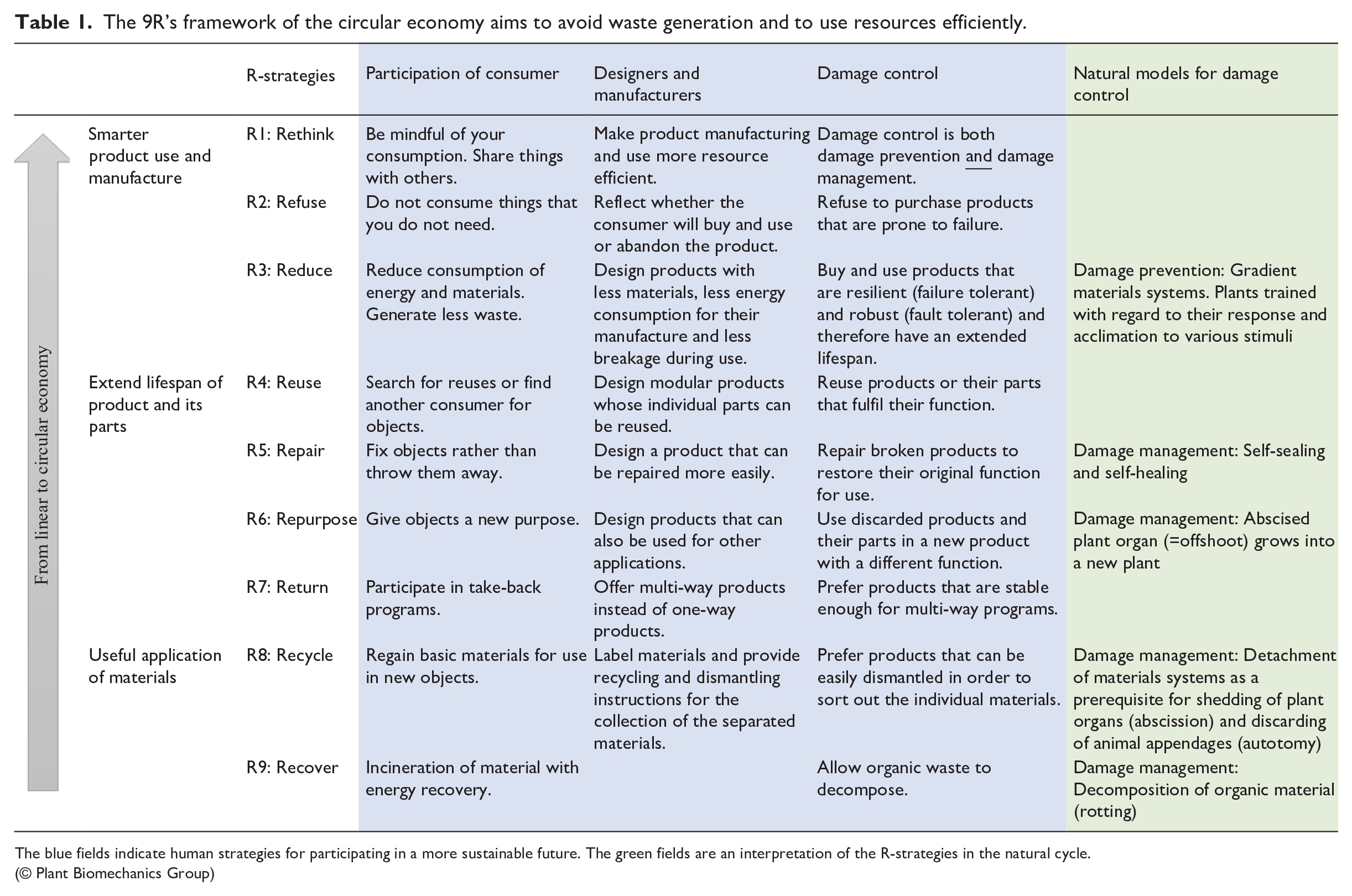
The blue fields indicate human strategies for participating in a more sustainable future. The green fields are an interpretation of the R-strategies in the natural cycle.
(© Plant Biomechanics Group)
Learning from nature in the Anthropocene
Learning from natural closed loop cycles has the potential to become a major aspect for solving both the small and the large challenges in the Anthropocene. In order to direct the reader’s focus to the topic of this article, a brief outline should be given of the development of curiosity-oriented learning from living nature to the systematic transfer of biological knowledge to technical products. In the context of challenges in the Anthropocene, we will pay special attention to the normative aspect of bio-derived solutions for a more sustainable future.
Learning from nature is deeply rooted in the human psyche and has accompanied humankind throughout its cultural evolution (Speck and Neinhuis, 2004). The dream of flying can be thought of as the birthplace of biomimetics (systematic learning from nature). Leonardo da Vinci, who lived in the 15th to 16th centuries, is considered to be the major pioneer of biomimetics (Schneider, 2000). He was a polymath who addressed questions from various scientific disciplines, which he thus united in an interdisciplinary approach within his own person (Speck and Speck, 2013). Further aviation pioneers followed who were inspired either by the flight of animals (e.g. birds, bats) or the gliding flight of plant seeds and fruits. Between 1890 and 1910, Art Nouveau was most popular, an international style of art, architecture, and applied art characterised by floral ornaments and decorative flowing lines, both of which mimicked shapes of plants, while omitting underlying biomechanical principles. In this period began the construction of the famous Basílica de la Sagrada Família, influenced by the architectural and engineering knowledge of the chief architect Antoni Gaudí, who combined Gothic and curvilinear Art Nouveau forms. In 1957, the American engineer and physicist Otto Herbert Schmitt coined the term ‘biomimetics’ by defining it as a biological approach to engineering, in contrast to ‘biophysics’, which describes the engineering/physical approach to biology (Speck et al., 2017). In 1958, during his time at the Aerospace Medical Research Lab, the American medical doctor Jack E. Steele introduced the word ‘bionics’, which is understood as the copying of functions from nature. The term ‘bionics’ was officially used in 1960 as the title of a meeting at the Wright-Patterson Air Force Base in Dayton (Speck et al., 2017).
In 2002, the American forest scientist Benyus popularized the term ‘biomimicry’ as a practice that promises a better and more sustainable world by imitating or taking inspiration from nature (Benyus, 2002). Biomimicry considers nature as a normative principle according to the quote from Benyus (2002, n.page) ‘Nature as measure. Biomimicry uses an ecological standard to judge the ‘rightness’ of our innovations. After 3.8 billion years of evolution, nature has learned: What works. What is appropriate. What lasts’. Since 2012, a variety of biomimetic guidelines has been formulated by guideline committees consisting of experts from various scientific disciplines, industrial representatives and full-time employees from the Association of German Engineers (Verein Deutscher Ingenieure = VDI) or the International Organization of Standardization (ISO). In this context, the distinction between the two biomimetic approaches of systematically learning from nature were established: first, the biology push process (=bottom-up approach) and, second, the technology pull process (=top-down approach). The biology push process starts with a scientific question from a biologist, mostly in the framework of basic research, whereas the technology pull process begins with a technical challenge formulated by an engineer from industry. The next steps of both approaches are comparable. After having selected and analysed a suitable biological model, the functional principles have to be qualitatively deciphered and quantitatively formulated, for example, by numerical or analytical models or by simulations. The transfer to technology is achieved via feasibility studies and the subsequent production of samples at the laboratory scale, of prototypes and of pilot series. Both biomimetic approaches lead to technical developments that are not 1:1 copies of the natural model but that have been optimized by insights from biology (ISO 18458:2015, 2015; Speck and Speck, 2008; VDI 6220, 2012).
Even though a flow of ideas has occurred from biology to technical products, the scientists involved do not claim that the biomimetic products are, therefore, as a result of an approach-immanent by-product more sustainable than conventional products (Speck et al., 2017). Von Gleich et al. (2010) coined the term ‘biomimetic promise’, which forms the core of the normative content of biomimetics, namely the promise of an extraordinary quality of biomimetic products. In both biomimetics and biomimicry, a contribution to a more sustainable future can only be guaranteed if a special ethos and respectful interaction with nature complement the technological ambitions of the practice (MacKinnon et al., 2020). In this respect, bio-derived developments can contribute to the solution of specific challenges in the Anthropocene (Gebeshuber et al., 2009).
Historical observation shows that the motives for learning from nature have changed over the centuries. Starting with rather unsystematic but curiosity-oriented learning, the dream of flying became the focus of a systematic and scientific approach. The possible contributions of biomimetic products to a more sustainable future have been considered since the turn of the millennium, i.e. at the time of the proclamation of the Anthropocene. Calls for sustainable developments inspired by natural models can thus be considered a phenomenon of the Anthropocene.
In this paper, we present damage control in plants as an inspiration for sustainable solutions in the Anthropocene. In the context of plant-inspired damage control, three main aspects are addressed: (i) damage prevention (e.g. gradient materials systems, response and adaptation to environmental stress), (ii) damage management (e.g. self-repair function, detachment of materials systems) and (iii) the potential contribution of biomimetics products to a more sustainable future in the 9R’s framework embedded in the SDGs.
Plant-inspired damage control
Structural damage is omnipresent in all organisms. In plants, external injuries can be caused by various events such as rock falls, fires, flying objects, pathogens or insect attack. Internal fissures can arise because of stress peaks during growth processes.
Damage can occur at all hierarchical levels: entire plant organs can fall off, a variable number of tissues can be mechanically damaged or completely removed by feeding insects and cells can be detached from each other, creating an artificial cavity. Damage often occurs in sites at which either the geometrical characteristics and/or the mechanical properties change abruptly and whenever the strength limit of the material is exceeded. Studies have shown that plants and animals have developed a wide range of functional principles that enable them not only to prevent, mitigate, limit, contain or repair structural damage, but also to create predetermined fracture sites to shed plant organs (abscission) and discard appendages (autotomy). In this article, we define damage control as an umbrella term covering damage prevention and damage management (Figure 1). In our view, plants are particularly well suited as sources of ideas for damage control because, unlike animals, they are exposed to damaging environmental conditions (e.g. heat, fire, cold, storms), injurious flying and falling objects and various pest infestations without being able to crawl into a burrow or hide behind a tree or shrub. For this reason, we will focus in the following on selected examples of damage control in the plant kingdom studied in particular interdisciplinary projects. Moreover, we will present a selection of plant-inspired applications.
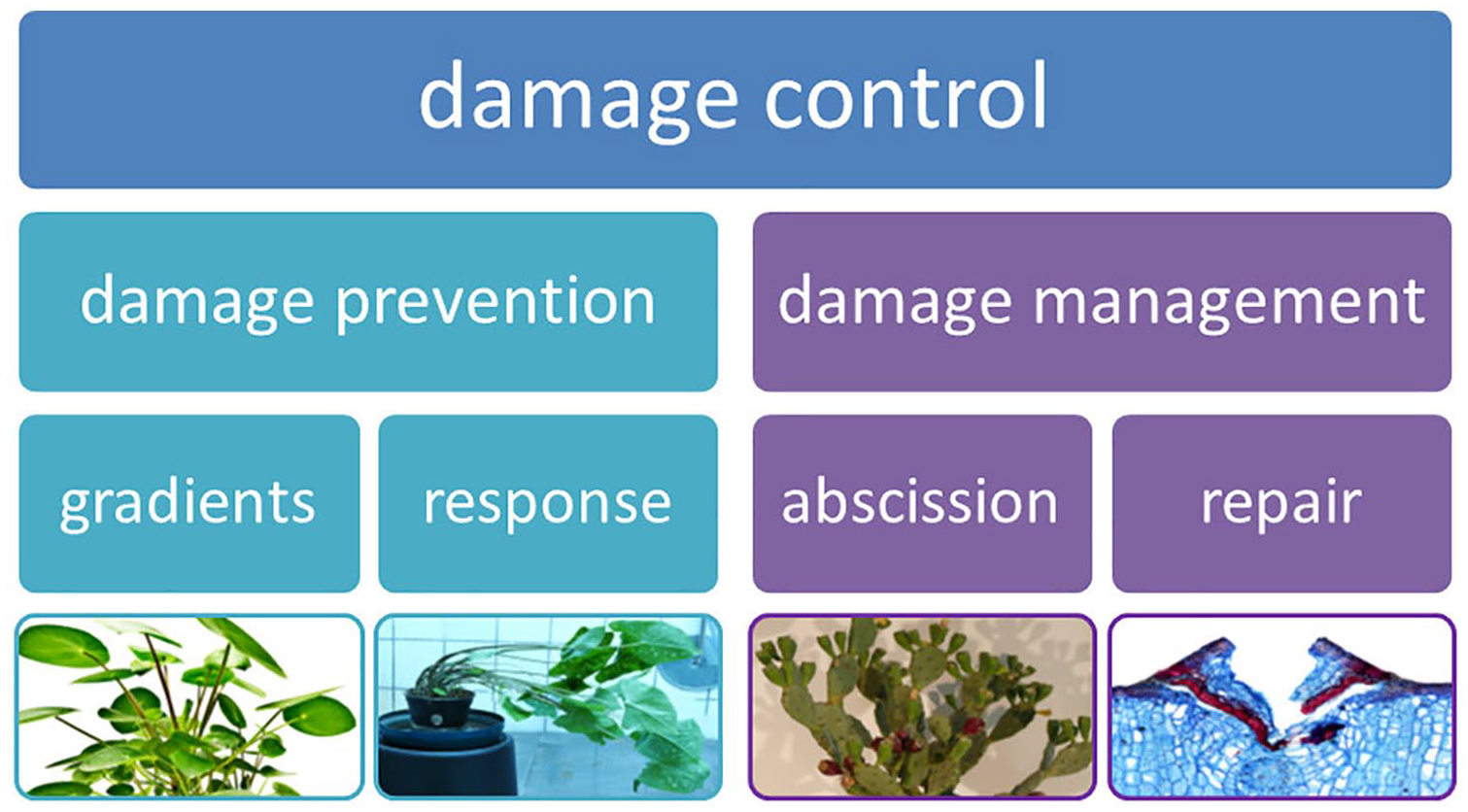
Damage control in the plant kingdom.
Damage prevention by gradual transitions
In classic civil engineering and architecture, individual elements with different geometries often have to be combined to achieve a large change in geometry over a short distance. This abrupt change leads to areas of high stresses and thus represents a weak point. Further weak points result from the use of many additional connecting parts such as screws and nuts (Figure 2).
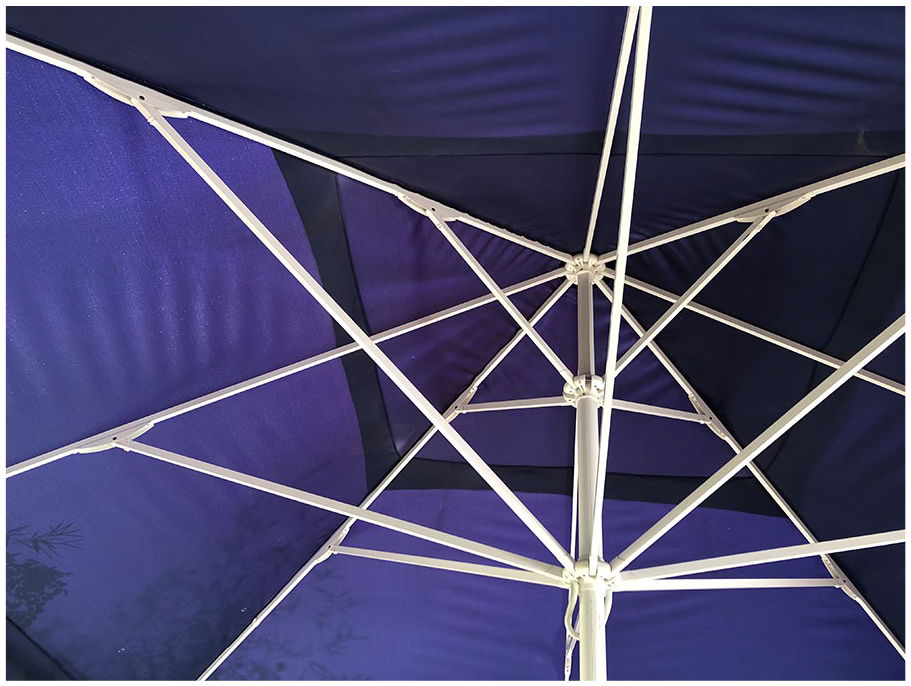
Technical connections between rod-shaped and planar elements, as in this parasol, often consist of a multitude of individual elements.
Such stress peaks can be prevented by structural and mechanical gradient transitions. Within the framework of a technology pull process, civil engineers from the University of Stuttgart (Germany) and biologists from the University of Freiburg (Germany) addressed the technical challenge of a smooth transition from rod-shaped to planar elements. In the course of biological evolution, various smooth transition between rod-shaped and planar elements have evolved in terms of gradient structures at different hierarchy levels (Wegst et al., 2015). Langer et al. (2019) selected foliage leaves as highly suitable biological models, because of their general composition of a rod-shaped petiole (=leaf stalk), a planar lamina (=leaf blade) and a smooth and robust transition zone in between. Langer et al. (2019) analysed leaves of Caladium bicolor (Aiton) Vent. (hereafter: C. bicolor), which has peltate leaves, that is, the petiole, like the shaft of an umbrella, merges centrally into the leaf blade and not at the leaf margin (Figure 3a).
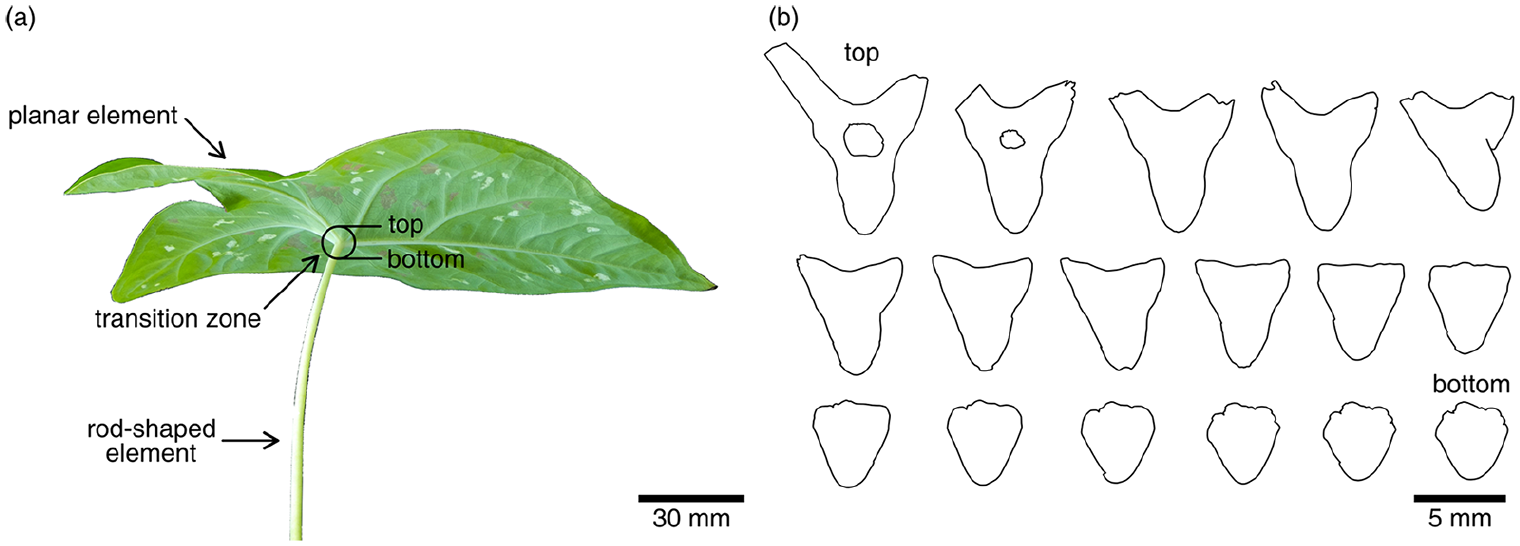
Peltate leaves of Caladium bicolor. (a) Side view. The leaf consists of a rod-shaped petiole that smoothly merges into the planar lamina. The labels top and bottom correspond to the cross-sections in (b) showing the outlines of the cross-sections (distance 200 µm) along the petiole-lamina transition zone.
The gradual change in shape between the individual cross-sections is evident in the short transition zone, which changes from almost circular near the petiole to a three-lobed star at the transition to the planar lamina (Figure 3b). Since plants are hierarchically structured, the shape gradient on a macroscopic level is supported and refined by further gradients at the microscopic and molecular levels. At the tissue level, Langer et al. (2019) have focused on the three-dimensional arrangement of the vascular bundles in the parenchymatous ground tissue, which can be considered as fibre-reinforced materials systems. Gradients at the cellular level occur with respect to cell size, cell wall thickness and lignification of the cell walls.
Horn et al. (2019) have applied the concept of hierarchically structured materials systems with various gradients to the interior structure of concrete components. By adding porosity to the concrete matrix and, ideally, by placing the reinforcing fibres in accordance with the tensile stress trajectories, a graded type of concrete has been developed with a functional gradation of reinforced concrete components. The case study includes a comparative analysis of slabs consisting of graded and conventional concrete. The sustainability contributions of the graded concrete have been evaluated by using the quantitative Bio-inspired Sustainability Assessment (BiSA) method (Horn et al., 2018). The results of BiSA show significant improvements of graded concrete slabs over conventional concrete slabs. Based on the calculated percentage share of transport, electrical energy, steel reinforcement, concrete and end-of-life for conventional concrete, for graded concrete and for graded concrete including indirect savings (through change in the load-bearing structure) a total savings of 55.8% in resource depletion, 18.6% in global warming potential and 40.1% in material and energy costs could be found. Overall, the use of graded concrete for slabs can reduce environmental impact by 13%, economic impact by up to 40% and social impact by 35.7% (Horn et al., 2019).
Damage prevention by response to wind stress
Plants are immobile and cannot escape unfavourable environmental conditions or hide behind protective structures. An immediate response within seconds to days to such stresses and an acclimation within days to weeks with regard to environmental conditions is essential for the survival of the individuals. From a biological viewpoint, adaption is a genetic change in populations over evolutionary time. However, the term ‘adaptation’ is used differently in the individual disciplines and in common language. We will come back to this point when we present the technical applications.
Individual plants can respond to wind or mechanical stimulation (e.g. rain drops or passing animals) by an initial decline in physiological activity. During acclimation, morphological and physiological adjustment compensate this decline by biochemical changes such as the activity of enzymes, the formation of new tissue and a change in the growth rate and morphology of the entire plant or and plant organ (Lambers et al., 2008). This effect is called thigmomorphogenesis (Jaffe, 1973) and can include changes in morphology (e.g. length reduction and diameter increase), a decrease or increase of turgor pressure, pre-stresses within tissues (e.g. fibres, epidermis, parenchyma) and an increase of lignification (Anten et al., 2010; Gladala-Kostarz et al., 2020). For these ‘trained’ plants, strong wind gusts are subcritical and their responses and acclimations prevent them from being damaged, unlike plants that grow in greenhouses and that lack stimulation-dependent responses and acclimation.
An immediate response to wind gusts is the streamlining of entire plants and their plant organs. The giant reed (Arundo donax L.; hereafter: A. donax), which generally grows to 6 m in height, is well known for withstanding high wind loads without mechanical damage. It grows in dense stands and is often planted in hedge rows because of its excellence wind resistance. Field measurements of A. donax have shown pronounced reconfiguration with increasing wind speed resulting in a reduced projected surface area of the stem and its leaves (Speck, 2003). Figure 4 presents the relationship between wind speed and drag force of an individual plant of A. donax measured at its native site in southern France. At low wind speeds of up to 1.0 m/s, the drag is proportional to the square of the wind speed, whereas a linear relationship has been found at wind speeds between 1.5 and 10 m/s. Without the streamlining effect, the drag force would grow exponentially with the wind speed. Table 2 compares the measured drag force of A. donax with streamlining with the extrapolated values of drag force by using the second-order polynomial equation given in the insert of Figure 4. The reduction of drag forces by more than 70% underlines the major role that streamlining plays in enabling the giant reed to survive high wind loads without damage. This is especially true for stand-alone plants or for the plants on the edges of the stand, which are exposed to higher wind loads than the plants inside the dense stand (Speck, 2003).
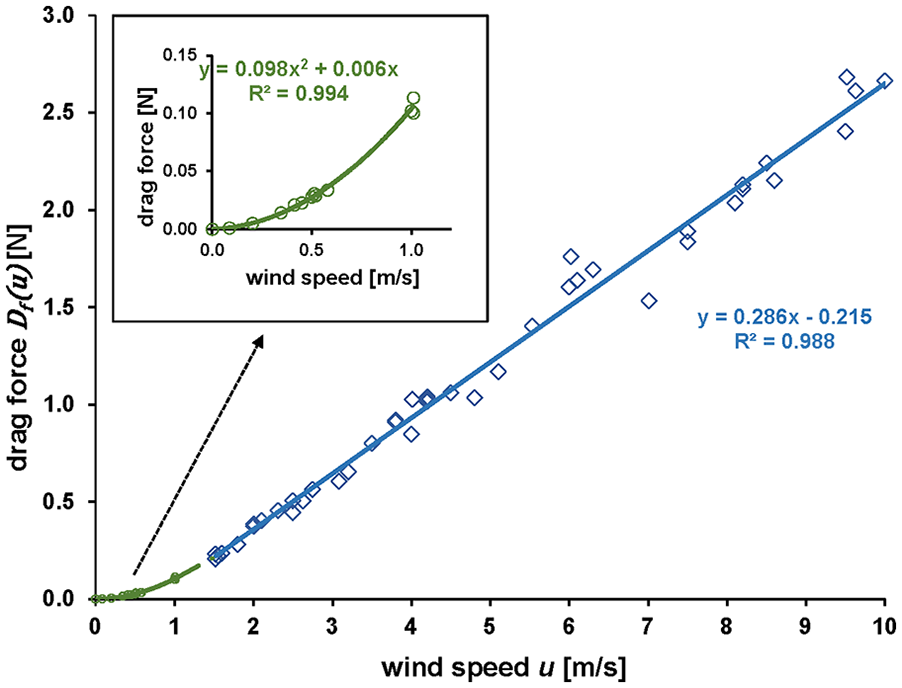
Drag force as a function of the wind speed of an individual Arundo donax plant. The green data and regression line show an exponential relationship for small wind speeds up to 1 m/s. In contrast, a linear relationship is found for wind speeds between 1.5 and 10 m/s (blue data and blue regression line). The respective formula and the coefficient of determination (R²) are given.
Comparison of wind speed-dependent drag force without and with streamlining.
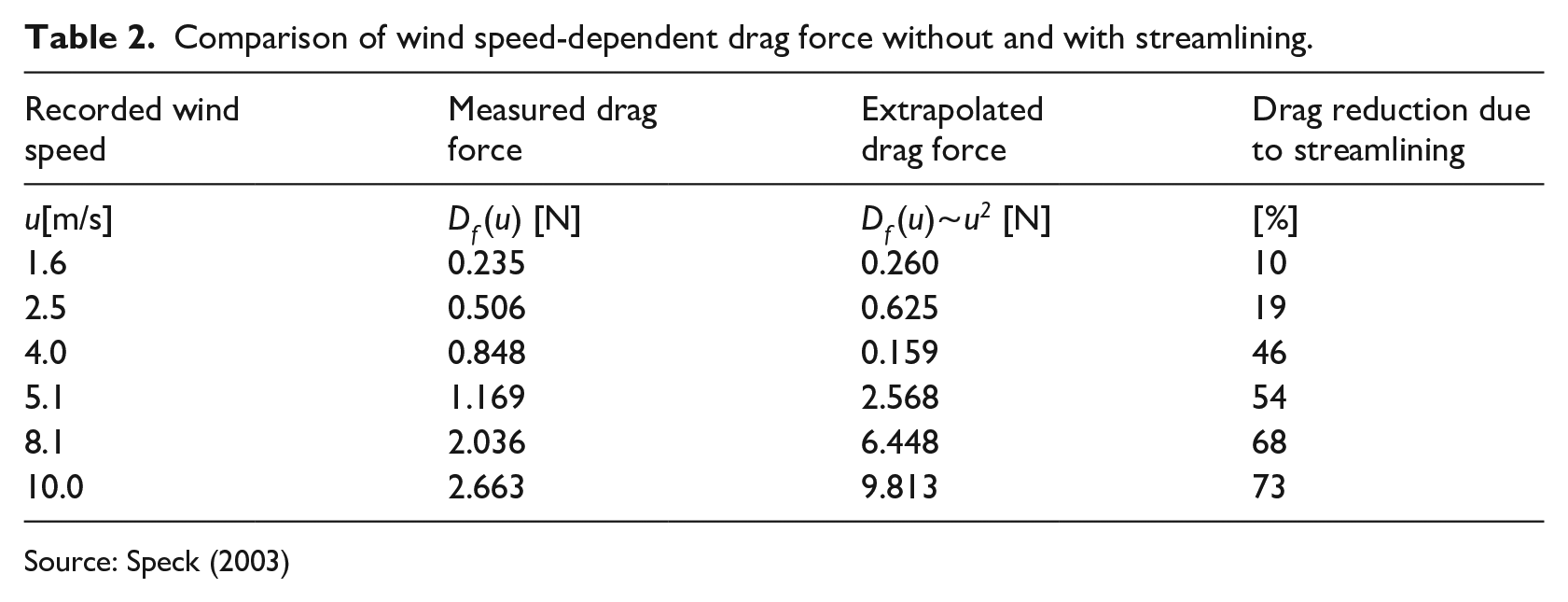
Source: Speck (2003)
Plants are particularly well suited as a source of ideas for responsive and adaptive building envelopes, because both materials systems are bound to their location and exposed to different environmental conditions. Many plant-inspired facade shading systems have been developed in recent years (Al-Obaidi et al., 2017). The motion principle of the bird-of-paradise flower has served as a biological model for the Flectofin® (Lienhard et al., 2011), the plant stomata concept has been adopted to an adaptive wall system (Lopez et al., 2015) and the humidity-driven opening and closing of spruce cones has acted as a model for the climate-responsive HygroSkin (Menges and Reichert, 2015).
A distinction is made between responsive and adaptive elements in both biology and architecture. Hasselaar (2006: 353) discriminates between ‘responsive’ and ‘adaptive’ facades. He defines ‘responsive’ as ‘responding readily and positively’ or ‘do something as a reaction’. In contrast, ‘adaptive’ is defined as ‘the ability to adjust and adapt to changing circumstances by itself’ Hasselaar (2006: 353). Thus, responsive facades merely react to environmental changes in a defined way, for example, by lowering the blinds as soon as sunlight is detected. Adaptive facades, however, have the capability of changing their behaviour, features or configurations in relation to external variations. Adaptive facade shading systems can regulate light intensity by diffusion, reflection or absorption. Kabošová et al. (2019) have developed a wind-adaptive building envelope. When exposed to dynamic wind flows, the shape of the tensegrity-membrane system transforms to an unsmoothed and dimpled surface. This streamlined shape contributes to the reduction of wind suction and drag force.
Biomimetic and conventional building envelopes have regulatory functions. On the one hand, the system should be able to react within seconds or minutes, on the other hand, they are often programmed to add up the received inputs over a period of several minutes so that the shading does not close and reopen with every passing cloud. In general, building envelopes should avoid negative environmental influences and maintain internal comfort conditions while keeping energy consumption to a minimum. Since buildings are responsible for approximately 40% of energy consumption and 36% of greenhouse gas emissions in the European Union, they are the single largest energy consumer in Europe (European Commission, 2019). It is therefore a societal responsibility to raise the energy efficiency of buildings by novel design strategies. Lopez et al. (2015) conclude that adaptive architectural envelopes can reduce the costs of heating, cooling, ventilating or lighting and can thus contribute in significant energy savings in buildings.
Damage management by self-repair
During the course of biological evolution, plants have developed a magnitude of functional principles to seal and heal wounds. Diverse reactions dependent on the respective body plan of the plant species can be found after mechanical damage. Initially after damage, mostly physical responses cause rapid wound sealing and include (i) the deformation of the entire plant organ (Hesse et al., 2020; Speck et al., 2018), (ii) the tissue deformation in the wounded region (Anandan et al., 2018; Mylo et al., 2020), (iii) the squeezing of sealing cells into fissures (Busch et al., 2010) and (iv) the discharge of mucilage (e.g. cacti) or latex (e.g. euphorbia) (Anandan et al., 2018). Mainly chemical reactions and more complex biological responses dominate the healing process such as (i) the formation of a (ligno-suberized) boundary layer (Anandan et al, 2018; Mylo et al., 2020), (ii) the development of a wound periderm (Anandan et al., 2018; Mylo et al., 2020), (iii) the local lignification of cell walls (Paul-Victor et al., 2017) and (iv) the coagulation of latex (Bauer and Speck, 2012). Self-sealing and self-healing are included under the umbrella term of ‘self-repair’ (Harrington et al., 2015). The wound reactions listed above contribute to a partial or complete restoration of the structural and mechanical integrity after wound healing. The quality of structural integrity is assessed by means of macroscopic observations and microscopic thin sections with regard to the completeness of the wound closure and coverage. The healing efficiency is a quantitative measure for the mechanical restoration after healing in relation to the undamaged state (Speck and Speck, 2019). The healing effect takes into account the mechanical values of the unwounded, wounded and healed states (Mylo et al., 2020).
In the following, we present three self-repair projects with different potentials for transfer to technology. In the first project, Mylo et al. (2020) investigated the self-repair ability of the cacti Opuntia ficus-indica (L.) Mill. (hereafter: O. ficus-indica) and Cylindropuntia bigelovii (Engelm.) F.M. Knuth (hereafter: C. bigelovii). Macroscopic and microscopic investigations and repeated bending tests were carried out on the same branches at unwounded, wounded and healed states following a circumferential injury of the branches. After a healing phase of 21 days, wound tissue had formed that sealed the wound surface by means of a lignified boundary layer. With regard to the initial bending stiffness, wounding caused a median decrease between 21% and 31%. After a healing period of 21 days, a positive healing effect was found for C. bigelovii and a negative healing effect for O. ficus-indica. The authors hypothesize that the selection pressure lies on an efficient restoration of the structural integrity by means of water-retaining dermal tissues. For the restoration of the mechanical properties of the cactus branch, the evolutionary concept of ‘sufficient is good enough’ seems to apply.
Second, a rapid self-sealing mechanism was sought for the pneumatic system Tensairity® (Airlight Ltd., Biasca, Switzerland) within the technology pull process of biomimetics (Figure 5). The sealing of growth-induced fissures inside the stems of the liana Dutchman’s pipe (Aristolochia macrophylla Lam.; hereafter: A. macrophylla) was selected as a suitable model. As soon as fissures arise in the ring of strengthening tissue, parenchymatous sealing cells squeeze into the lesion, seal the fissures and stop crack propagation (Busch et al., 2010). Inspired by this functional principle, Rampf et al. (2013) developed a biomimetic polyurethane foam coating for the membranes of the pneumatic system. A repair efficiency of 99.8% was achieved when 0.12 g/cm² foam was applied to the membrane and then polymerized at 1 bar overpressure. The self-sealing foam Raku-PUR 33-1024-3 is available on the market.
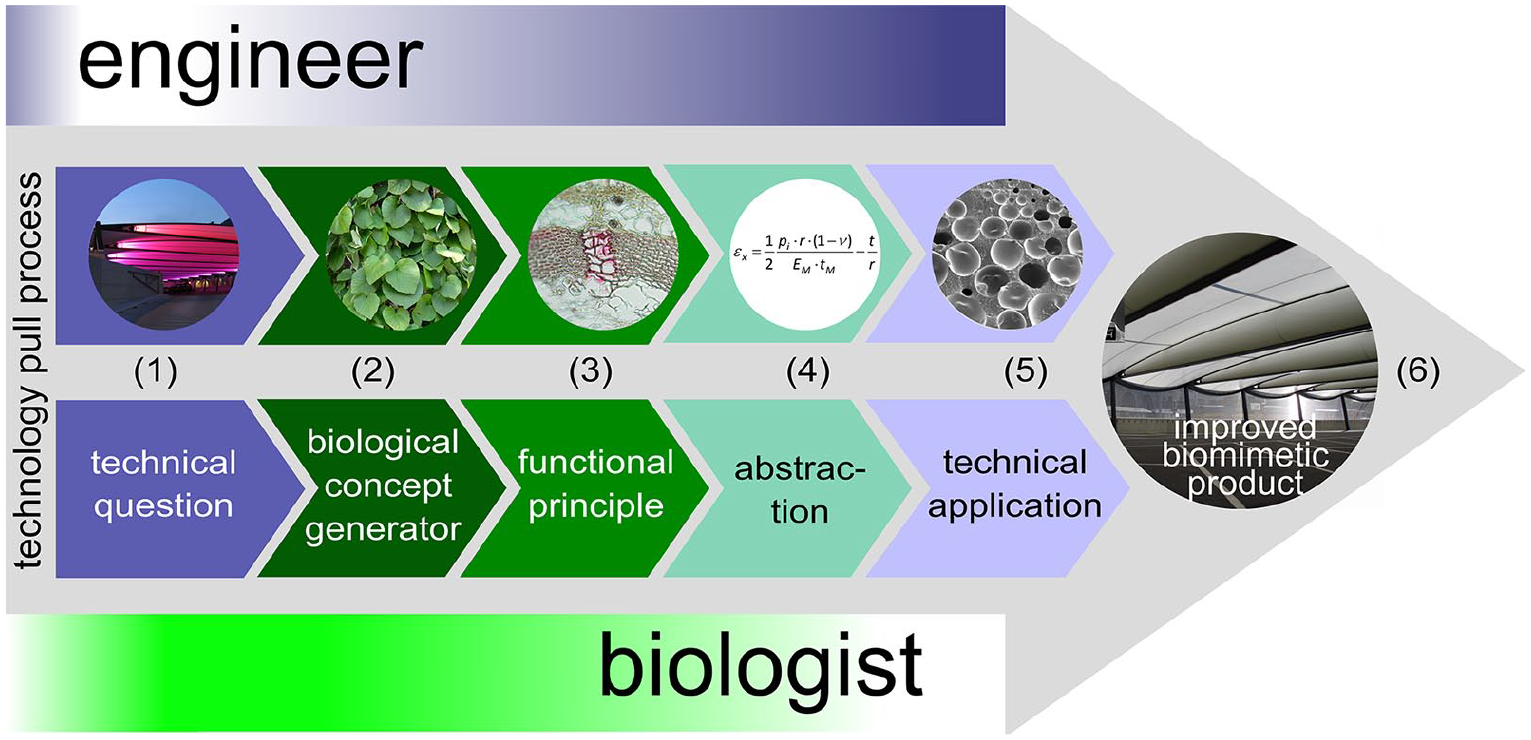
Technology pull process of a self-sealing foam coating for pneumatic structures. The self-sealing principles of the liana Aristolochia macrophylla served as model for a biomimetic polyurethane foam coating with a rapid self-sealing function.
The third example was developed within the biology push process of biomimetics. Triggered by an external wound, the succulent leaves of the pink carpet (Delosperma cooperi (Hook.f.) L.Bolus; hereafter: D. cooperi) bend or contract, bringing the wound edges into contact with each other within 60 minutes and preventing further water loss. The underlying principle of the deformation of the entire leaf is a combination of hydraulic and mechanical effects (Speck et al., 2018). The hydraulically driven motion is the result of swelling and shrinking effects attributable to internal water displacement or dehydration (Klein et al., 2018). The mechanically driven motion is based on the release of stored energy generated by growth-induced mechanical pre-stresses in the tissues (Konrad et al., 2013). Inspired by the principle of mechanical instabilities, Yang et al. (2018) developed a bioinspired self-healing polymer with shape-memory effect. A scratch of 8 × 50 µm (width × depth) can be optically healed within 10 minutes and at a temperature of 65°C. The great advantage of the polymer for potential applications in engineering is the multiple repeatability of self-healing.
The three examples presented above show that, during the course of biological evolution, completely different functional principles depending on the respective body plan of the plant have developed for rapid wound sealing and subsequent healing. All functional principles are potential models for technical materials systems with repair functions. However, the concept ‘sufficient is good enough’ as found in the cactus species O. ficus-indica, is not suitable for transfer to technology since, in technical applications, restoration of the original mechanical properties and the initial structural integrity in the damaged area is required. Therefore, a self-repairing materials system as inspired by the damage repair occurring in the cactus will probably not be developed further. This is not the case for the principle of sealing cells found in the liana A. macrophylla, as this have been successfully transferred to a polyurethane foam that rapidly seals damage in the membrane of a pneumatic system. Similarly, the principle of sealing damage by deformation, as found in D. cooperi leaves, has successfully been transferred to a polymer with a shape-memory effect.
In recent years, several materials systems with self-sealing or self-healing function have been developed inspired by plants and animals (Cremaldi and Bhushan, 2018; Speck and Speck, 2019). However, the concept of ‘self-repair’ goes beyond the concept of ‘repair’. ‘Self-repair’ combines seemingly contradictory qualities, because the word ‘repair’ makes one think of a craftsman who repairs damage with tools and not that the repair of the damage occurs ‘by itself’. In most cases, the ‘self-repair’ of technical products does not happen by itself, because a certain energy input (e.g. temperature, pressure, light) is necessary to repair the damage.
The new Circular Economy Action Plan of the European Commission (2020) aims to change from a linear pattern of production and consumption (‘design – manufacture – use – dispose’) to initiatives for the entire life cycle of products (‘design – manufacture – use – repair – reuse – recycle – bring resources back into the economy’). One of the actions foreseen for consumers and public buyers is the ‘right to repair’ in EU consumer and product policies by 2021. The sector ‘electronics and information and communications technology (ICT)’ will be a priority area for implementing the ‘right to repair’.
However, is self-repair always preferable to repair? The thought experiment of being able to use a shopping bag for a lifetime because any damage that may occur to it will repair itself is tempting. As long as the shopping bag is in its intended product environment, this can be a potential contribution to sustainability. However, the bag can become an environmental problem if it is placed in the wrong product environment. In the sea, for example, a plastic bag that self-repairs itself over and over again becomes a never ending waste problem.
Damage management by abscission
Fruit drop in summer or leaf fall in autumn are temporarily and spatially determined shedding mechanisms in the closed life cycle of plants. The involved tissues create a so-called abscission zone by means of abrupt changes in geometrical characteristics and/or biomechanical properties (Figure 6). In general, abscission is divided into three phases. In the resorption phase, chlorophyll is degraded and the majority of its components (e.g. nitrogen, phosphate) is stored all winter until the next growth period when they are recycled to re-leaf the plant. In the protection phase, a ligno-suberized boundary layer is formed that protects the plant from dehydration and the penetration of pathogens. In the detachment phase, various mechanisms of shedding in the abscission zone have been found to be dependent on the respective plant species. Possible mechanisms are the production of enzymes in the abscission zone, which dissolve the middle lamellae between adjacent cell walls, thus leading to cell disruption and the detachment of the plant part. Other mechanisms include the continuous uptake of water into the cells, which swell and eventually fail, or the formation of tiny cells with thin walls that break apart under mechanical stress (e.g. weight of the plant part, additional wind load). The protective layer is exposed after detachment of the plant part (Addicott, 1982; Geitmann, 2018). The above-described functional principles for the disintegration of biological materials systems are based on geometrical characteristics and/or biomechanical properties that differ greatly from the surrounding tissue. These abrupt transitions can serve as an inspiration for the development of technical materials systems with intended detachment zones, thereby making their individual materials available for recycling or repurpose (Table 1).
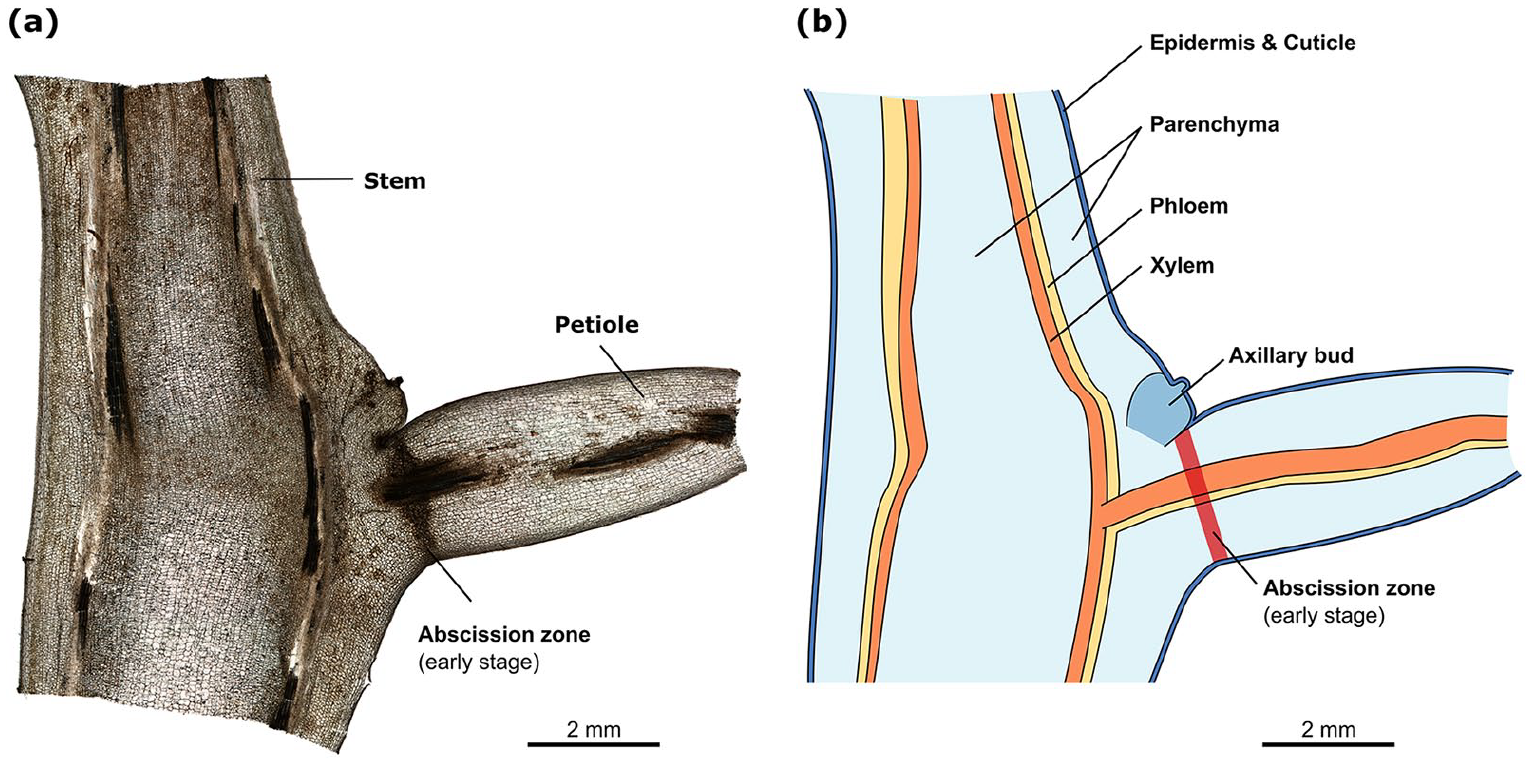
Longitudinal section of the stem and leaf stalk showing the formation of an abscission zone as a prerequisite for the subsequent detachment of the leaf. (a) Thin section of poinsettia (Euphorbia pulcherrima) and (b) schematic drawing showing the variety of tissues involved in the abscission zone.
Key steps of recycling are the dismantling of products and their components, i.e. the detachment of materials systems into individual materials in order to ensure, in the best case, a type-specific material separation. Although recycling rates have increased in recent years, half of the 28 European Commission countries will probably not meet the recycling goals of 2020, namely that at least 50% of municipal waste should be reused or recycled. The European Commission has identified gaps and challenges mainly in the political and societal area (Pyzyk, 2018). Furthermore, classic recycling procedures might have reached their limits and should be replaced by more innovative and efficient solutions.
An often quoted example is the disposal of mobile phones. Shock wave technology causes a phone to fracture at its joints and it can be disassembled into its main components, such as the shell of the casing, the circuit board, the display screen and the keypad. The main advantage is the clean separation of components with low and high recyclable content for more efficient recycling (Eisert and Bartkowski, 2016). From a mechanical point of view, these joints represent unwanted weak points during the lifetime of the phone. In our daily experience, products break easily at their joints. The shock wave technology makes use of this fact. Analogous to the abscission zones of plants, the joints or connections of the diverse materials in technical products are the so-called predetermined breaking points at which materials can be disintegrated in a targeted and controlled manner. Efficient fragmentation of complex products is a prerequisite for high recycling rates.
Closing remarks and perspectives
Humankind is exerting unquestionable influences on the Earth. Simultaneously with and following on the proclamation of the Anthropocene, possible contributions of biomimetic products have been considered with respect to a more sustainable future. The reflection on natural models as inspirations for sustainable developments may be a phenomenon of the Anthropocene. However, the biomimetic promise is just wishful thinking unless a specific ethos and a respectful approach to nature complement the technological ambitions of the practice.
Nature's closed material cycles will serve as models in the search for sustainable solutions. Two central points are the avoidance of waste and the most complete possible return of materials into the material cycle. One often reads that nature does not produce waste and therefore is the perfect model for waste avoidance. This is not true. Nature has also produced and deposited waste in the form of brown coal, black coal, peat, natural gas and oil. These fossil fuels were formed in geological prehistoric times from the decomposition products of dead plants and animals. Humans’ intervention in the carbon cycle by the burning of fossil fuels to generate energy has been the cause for the increased CO2 emissions that contribute markedly to the greenhouse effect.
A key element of the waste policy of the European Communion is to move waste management up the ‘waste hierarchy’ in order to follow the principles of closed loop management. The most favourable option is waste prevention, followed by minimisation, reuse, repair, recycling and energy recovery. The least favourable option is landfill (Table 1). Because humankind has left its mark on the current age of the Anthropocene, we should now make every effort to fulfil the SDGs. A practical guidance is the R's framework to which bioinspired damage control can contribute. On the one hand, damage prevention is a technical standard. Even in the case of misuse, most products do not break down. On the other hand, damage management is rarely found in the form of products with a self-repair function or with planned predetermined breaking points to fragment the product for reuse and to disintegrate its materials for recycling. This article describes selected functional principles of damage control in plants and presents a selection of biomimetic technical applications. The transfer of plant-inspired damage control can contribute to various SDGs and in particular to SDG 12, namely ‘responsible consumption and production patterns’ by means of the efficient use of resources and reduction of waste generation. However, not all natural principles can serve as straightforward blueprints or precise building instructions for artificial constructions.
Future Research & Development projects may provide bioinspired solutions for waste prevention and resource efficiency through damage control. This requires scientists with an expertise in a specific field and curiosity about new and surprising results to find adequate answers to scientific questions. Furthermore, successful cooperation in interdisciplinary work is not possible without good communication, an open-minded personality and the courage to be a ‘rookie’ in another disciplines. In the field of sustainability, however, a third component plays a role, namely politics, which has to translate the findings into recommendations for action and laws. With the 2030 Agenda, a platform was found on which global goals and actions were agreed to be fulfilled by 2030. Everyone is challenged.
We would like to conclude this article with a quote from Einstein on the subject of ‘curiosity’, which we think paraphrases very well as a guiding principle for asking questions about plant-inspired solutions as a contribution to a more sustainable future: ‘The important thing is not to stop questioning. Curiosity has its own reason for existing. One cannot help but be in awe when he contemplates the mysteries of eternity, of life, of the marvelous structure of reality. It is enough if one tries merely to comprehend a little of this mystery every day. Never lose a holy curiosity’. (Albert Einstein, Life magazine, May 2, 1955)
Footnotes
Acknowledgements
We thank Sandra Caliaro and Marco Caliaro for the preparation of the thin section and the schematic drawing showing the abscission zone (Figure 6). Our thanks also go to R. Theresa Jones for improving the English. We would also like to thank the participants of the Workshop ‘livMatS as Part of and Reaction to the Anthropocene’ for the interdisciplinary exchange and the many fruitful discussions.
Authors’ note
This manuscript is based on the lecture ‘Lessons learned from Nature: Damage control in biological materials systems’ held at the Workshop ‘livMatS as Part of and Reaction to the Anthropocene’, which took place from 1st to 2nd August 2019 at the University of Freiburg (Germany).
Declaration of conflicting interests
The author(s) declared no potential conflicts of interest with respect to the research, authorship, and/or publication of this article.
Funding
The author(s) disclosed receipt of the following financial support for the research, authorship, and/or publication of this article: We thank the Ministry of Science, Research and the Arts (Baden-Wuerttemberg, Germany) for funding within BioElast and the Deutsche Forschungsgemeinschaft (DFG, German Research Foundation) for funding under Germany’s Excellence Strategy – EXC-2193/1 – 390951807.
