




Abstract

Publication of qualifications on the Member Register

The College’s online Member Register, a public record of each current member’s membership number and grade, now has the additional facility to advertise members’ qualifications.
The new functionality has been developed following interest from members, who can now proudly display their educational and career achievements alongside their membership of the College.
Permitted inclusions (see yellow box opposite) are those postgraduate qualifications and professional accomplishments which contribute to eligibility for the individual’s grade of membership. Associate Fellows not yet qualifying for Fellowship may also display awards which are recognised in the criteria for individual Fellowship domains.
To have their qualifications displayed, members will need to follow the instructions in the grey box below to upload them to their online account. Members who have previously uploaded their qualifications and awards for the purpose of providing evidence of eligibility for Full Membership, Associate Fellowship or Fellowship should note that these will not have been automatically added to the Member Register by the College unless they have joined or upgraded since December 2023. These members should also follow the instructions in the grey box below, bypassing the third step.
Once validated by the College, details of qualifications and awards will then be displayed on the individual’s record. There is no charge for this service.
Members can link their personal record to their practice website or LinkedIn profile in order to demonstrate their professional standing, educational achievements and commitment to high standards.
Associate Members and Affiliate Members also appear on the Member Register but are not eligible to add postgraduate qualifications to their published entry. However, Associate Members may upload their postgraduate qualifications to their online account, and the College will be pleased to advise whether their qualifications provide, or contribute towards, eligibility for Full Membership, Associate Fellowship or Fellowship.
1.
If you need to use the ‘Forgot Password’ option, please check your junk/spam folder in case the password reset email is directed there
2. Using the dropdown menu at the top of the screen, navigate through Membership > My Account, to click on
3. Click
4. Click
Publication of your qualifications and/or awards will take place after validation by the College.

The following awards are currently permitted on the Member Register:
MJDF
MFDS
MFGDP(UK)
Diploma in General Dental Practice
Postgraduate Certificate(s) in a relevant subject
Accredited Full Membership of the British Association for Cosmetic Dentistryr
CGDent Diploma in Primary Care Orthodontics
Diploma in Postgraduate Dental Studies
Fellowship of the American Academy of Implant Dentistry
Fellowship of the Faculty of Dental Trainers of the Royal College of Surgeons of Edinburgh
Fellowship of the Faculty of Medical Leadership & Management
Fellowship of the Higher Education Academy
Fellowship of the International College of Dentists
FGDP(UK) Diploma in Implant Dentistry
FGDP(UK) Diploma in Minor Oral Surgery
FGDP(UK) Diploma in Orthodontics
FGDP(UK) Diploma in Primary Care Oral Surgery
FGDP(UK) Diploma in Restorative Dentistry
Law degree or LLM
Master’s level qualification(s) in a relevant subject
Membership in Advanced General Dental Surgery of the Royal College of Surgeons of Edinburgh
Membership in General Dental Surgery
Membership of the Royal Australasian College of Dental Surgeons
MPhil or PhD in a relevant subject
Postgraduate Certificate in Medical Education
Postgraduate Certificate or Diploma in a relevant legal subject
Postgraduate Diploma or Masters in a leadership and/or management subject
Postgraduate Diploma(s) in a relevant subject
RCS(Ed) Diploma in Implant Dentistry
Specialty Membership of a Royal College or Royal College faculty
Board Certification by the American Board of General Dentistry
Fellowship of the College of Dentistry of South Africa
Fellowship or Honorary Fellowship of the former Faculty of General Dental Practice UK
Fellowship of the Royal College of Dentists of Canada
Fellowship of the Royal College of Physicians and Surgeons of Glasgow or its Faculty of Dental Surgery
Fellowship of the Royal College of Surgeons in Ireland or its Faculty of Dentistry
Fellowship of the Royal College of Surgeons of Edinburgh or its Faculty of Dental Surgery
Fellowship of the Royal College of Surgeons of England or its Faculty of Dental Surgery
Fellowship of the Royal Australasian College of Dental Surgeons
To be accepted, Postgraduate Certificates, Postgraduate Diplomas and Master’s-level qualifications must be university-awarded or equivalent credentials at Level 7 as defined in England, Wales and Northern Ireland (equivalent to Level 11 in Scotland).
They must also provide, respectively, 60, 120 and 180 UK credits or their international equivalent – 60 UK credits is the equivalent to 30 European Credit Transfer and Accumulation System (ECTS) credits or typically 15 US credits.
Awards from recognised UK higher education institutions and those of other member states of the European Higher Education Area (EHEA) are recognised by default, however those submitting qualifications awarded by an institution outside of the EHEA will also be asked to provide a Statement of Comparability, which can be obtained from the UK National Information Centre for the recognition and evaluation of international qualifications and skills (UK ENIC).
The list of eligible awards may change from time to time as eligibility criteria for College membership grades are reviewed. College Fellowships in Dental Nursing, Dental Hygiene & Therapy and Dental Technology are currently being developed, and awards contributing to eligibility for these will be added to the list once determined.
Elections to regional and role-based seats on College Council: call for candidates

Nominations are now open for upcoming elections to twelve seats on the College Council, and all eligible members are invited to stand.
The Council is the voice of the College’s members, overseeing its role as a professional body and guiding the Trustee Board on the development of the College to fulfil its mission.
Elections will shortly be held for eight of the thirteen regional seats on the Council, and for the first time also to four seats representing specific roles within the dental team.
Nominations will close on Monday 15 April and, following validation, voting will open during the week beginning 22 April. Voting will close after 30 days and the results will be announced shortly thereafter.
As a Council member, you would provide leadership, strategic input and direction in all the professional affairs of the College. You would be helping to shape key moments in the College’s growth and could also get involved in specific initiatives on areas such as careers, policy and standards.
If elected, you would serve a three-year term from June 2024 – June 2027, during which you would be expected to attend face-to-face Council meetings on three Fridays each year, as well as regular online meetings and occasional committees outside of business hours. You would also be expected to vote, and eligible to stand, in the annual election of two Vice Presidents; to participate in the triennial appointment of a College President; and to attend College events around the UK. The role is voluntary, but essential expenses are covered.
Successfully elected Council members will be formally inducted at the Council meeting on Friday 21 June 2024 in London. They will be able to stand for re-election in 2027, and individuals may serve up to three elected terms (i.e. a maximum of nine years) on the Council.
To stand for election to a regional seat, you must be a Full Member, Associate Fellow or Fellow of the College (in any team role) and must live or work within that region, and be registered to that region with the College.
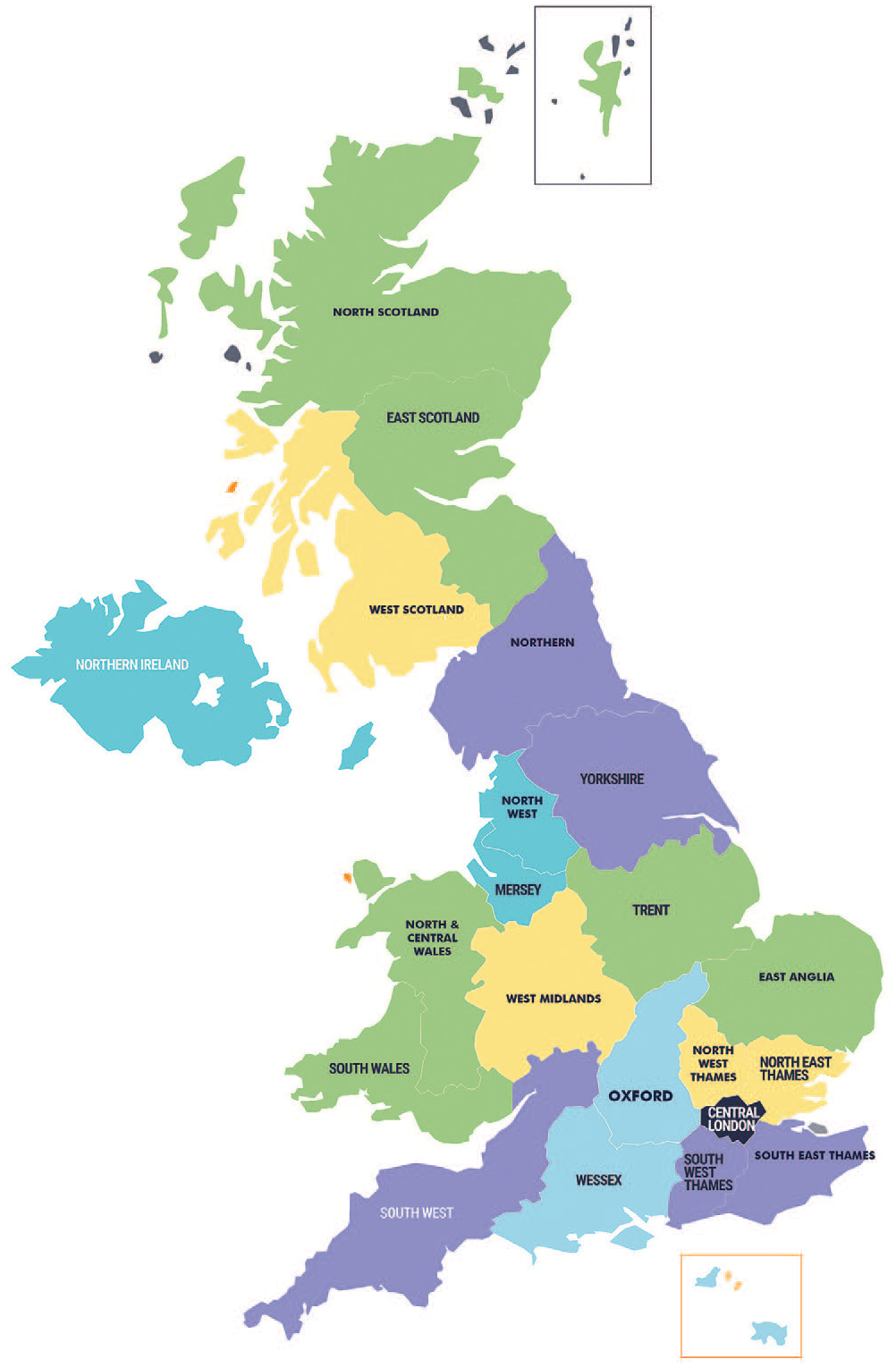
To stand for election to a role-based seat, you must be an Associate Member, Full Member, Associate Fellow or Fellow of the College, and must be registered with the GDC (or overseas equivalent) in a relevant role for the seat. All members are automatically assigned to one of the College’s four faculties for electoral purposes, based on the team role in which they have registered their College membership.
If you are a member considering upgrading your membership in order to stand or vote in an election, or a non-member considering joining the College, you will need to allow at least two weeks ahead of the relevant date for this process to complete.
Nominations are sought for the following seats:
London
Mersey and North West
North East & North West Thames
South West
Trent and East Anglia
Wales
West Midlands
Yorkshire & Northern
Faculty of Dental Hygiene & Dental Therapy
Faculty of Dental Nursing & Orthodontic Therapy
Faculty of Dental Technology & Clinical Dental Technology
Faculty of Dentists
All eligible members as at 15 March 2024 have been emailed a link to the nominations website by the College’s election services provider, Mi-Voice. If you cannot find this, please check your junk/spam folder.
If you are interested in standing for election, please complete the nomination process via that link, where you will be asked for further information, and to submit an election statement.
You will also be required to provide the names of two supporters of your nomination. For regional seats, your supporters must each be a Full Member, Associate Fellow or Fellow of the College. For role-based seats, your supporters must each be an Associate Member, Full Member, Associate Fellow or Fellow of the College. If you are unsure of the membership status of potential supporters, please consult the online Member Register.
If you think you might like to put yourself forward as a candidate and wanted further information, we would be pleased to have a confidential discussion and answer any questions about the role and the process. Please get in touch via
If you experience technical difficulties submitting your nomination, please contact Mi-Voice by emailing
Recruitment for new President

The College is in the process of recruiting its second President.
The President chairs and represents the elected College Council, is accountable to the Board of Trustees, and is the College’s most senior and visible office holder. S/he will work closely with the Chief Executive to deliver the College’s ambitions as a professional body and charity in the public interest, and will provide leadership across the profession at a critical time on the journey to secure dentistry’s own Royal Charter.
The current President, Dr Abhi Pal, was elected the eleventh and final Dean of the Faculty of General Dental Practice UK (FGDP) in 2021, and has served the majority of his three-year term of office as the first President of the College. The second President will be the first to be appointed by the College since its independence.
While Deans of the FGDP were elected by and strictly from within the Faculty Board, all Full Members, Associate Fellows and Fellows of the College are eligible to apply for the post of College President.
In February, current members were informed by email that applications were being accepted, and following the deadline of 18 March, candidates have now been shortlisted for interview.
The final appointment will be made by a selection panel chaired by a member of the College Council, and the new President will take office at the Council meeting on Friday 21 June 2024 in London.
Response to ‘Dental Recovery Plan’
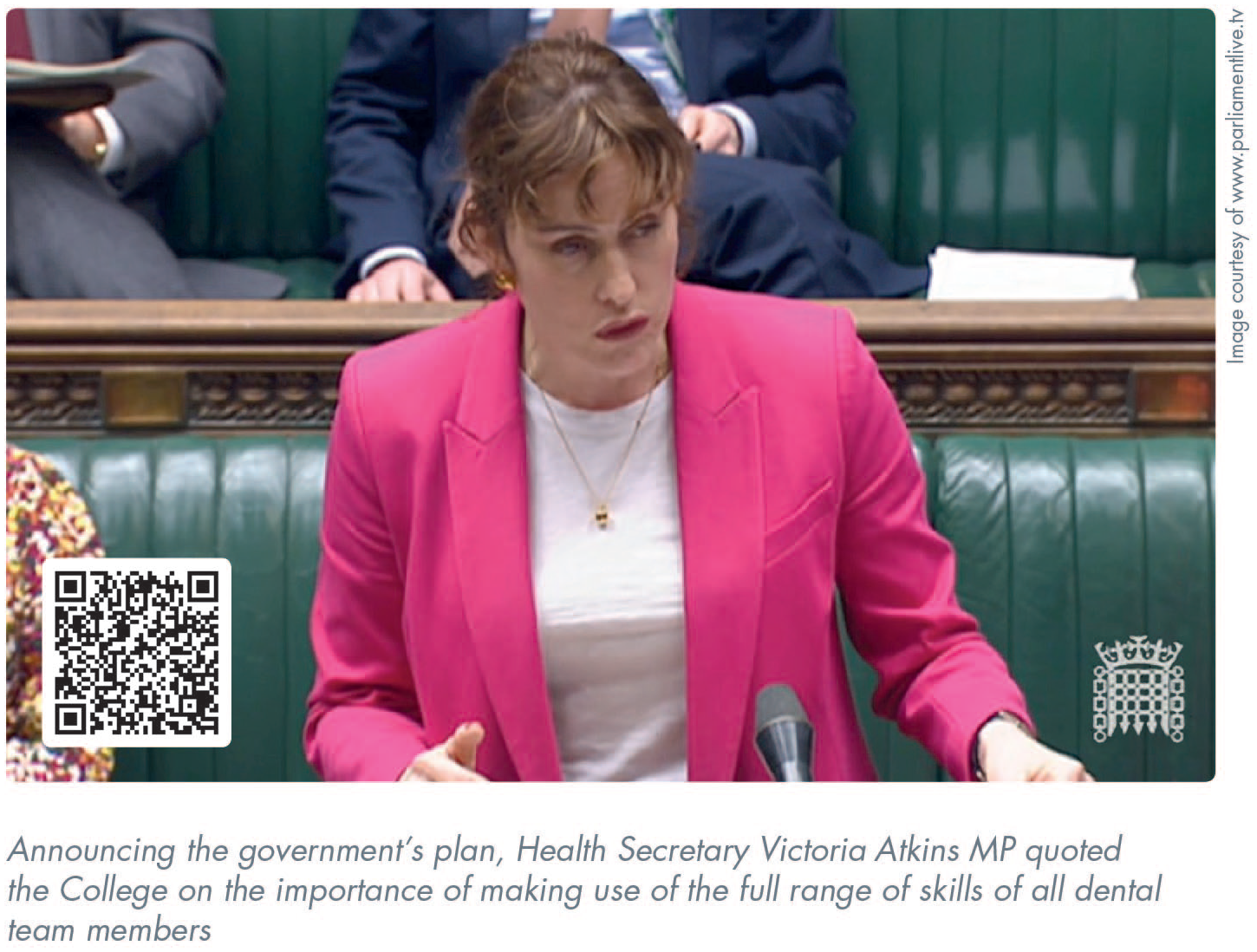
The College has issued a response to the government’s ‘recovery plan’ for NHS dentistry in England.1
Commenting on the proposals, Dr Abhi Pal FCGDent, President of the College, said:
“The government has set out a range of initiatives intended to help tackle some of the many longstanding problems facing NHS dental provision in England. These include some potentially positive new initiatives, which we welcome, alongside previously made announcements. However, while some further positive changes to the dental contract are anticipated later this year, the Dental Recovery Plan does not represent the more fundamental contract reform which is required, nor will the additional £210m in funding behind the plan, welcome as it is, restore universal access to NHS dental care.
“We welcome the proposed Smile For Life programme, with its focus on intervening early to prevent oral diseases in children. Tooth decay remains the leading cause of hospital admission for 6–10-year-olds in England, and a preventative approach has the potential to reduce the need for restorative treatment. However, we wait to see whether sufficient resources will be invested for the programme to be a success.
“The additional temporary funding aimed at those who have been unable to access dental care for two years or more is much needed. However, we would like to see consideration of the ongoing care of individuals benefitting from this initiative.
“The intention to bring NHS dentistry back to some of the many communities who have lost access to it is also very welcome. While mobile units may help in the short term, bricks-and-mortar dental surgeries should remain the backbone of routine ongoing care delivery, and appropriate funding should be put in place to support the re-establishment of NHS practices to address lack of access and meet the volume of need.
“While we support in principle the NHS making use of available local capacity to provide much-needed dental care, the proposal to use private-only practices to do this would either fail or be completely iniquitous to those practices which have remained committed to NHS delivery. The correct solutions are to take measures to support the recruitment and retention of dental professionals in the NHS, and to support the financial viability of practices through adequate funding of contracts.
“The planned ‘golden hello’ scheme also brings implicit recognition of the difficulties experienced by dental practices in the recruitment and retention of clinical staff to deliver NHS dental care. However, we are concerned that the proposed short-term offer, which is in any case limited to dentists, may fail to overcome many practitioners’ long-term concerns about embarking on a career in NHS care delivery, among which are burnout, lack of career progression and insufficient recognition for enhanced skills. We would emphasise that these factors apply not only to dentists but to other members of the dental team, especially dental nurses, and consideration should be given to exploring alternative models of incentivisation to support their recruitment and retention.
“We are already looking forward to the increase in the number of dental school places available for dentistry, dental hygiene and dental therapy students. The planned expansion of student numbers must be accompanied by an appropriate increase in academic teaching capacity and resources so that the quality of undergraduate training is maintained.
“We also look forward to the implementation of medicines exemptions for dental hygienists and therapists. Greater recognition and use of the full range of skills of all team members will enable the delivery of more care and make NHS dentistry more attractive to dental professionals. We also look forward to further proposals which empower the wider dental team when the next set of contractual changes are consulted upon.
“We also recognise that an increase in the minimum UDA value will support a minority of practices to continue delivering NHS dental care. And we support the intent to introduce community water fluoridation in areas of high need as this has the potential to reduce the prevalence of oral diseases and the need for invasive interventions.
“Finally, while dental practices struggle to recruit and many patients struggle to access care, there are many dental professionals who have qualified and practised overseas and who could be providing care here in the UK, but are unable to do so due to the waiting lists for registration exams.
“We are already looking forward to an increase in the number of sittings and places for the Overseas Registration Examination, and we welcome the proposed expansion of the LDS examination. We also welcome proposals to support candidates in preparing for the LDS, and would advocate for similar support to be made available to candidates preparing for the ORE.
“We support the intention to speed up entry to the NHS Performers List, and the possibility of provisional registration, but public safety must not be compromised in our haste to fill gaps in the workforce. There must be proper structure in the training and assessment of provisional registrants, and a robust Quality Assurance process must be developed to ensure that the end product is a Safe Practitioner. Additional training and support may also be required for supervising dentists, as this role may well be more challenging than that of Educational Supervisor of Foundation Dentists.
“Similarly, we support the intention to identify non-EEA qualifications which meet the standard required for registration as a dentist in the UK, but due care and rigour must take priority in order to ensure patient safety. In time, this may prove a useful additional means of ameliorating the labour shortage experienced by dental practices, and the consequent lack of access to NHS dental care experienced by so many patients.”
1. UK Department of Health and Social Care (DHSC). Our plan to recover and reform NHS dentistry - A national plan for NHS dentistry services in England. 7 February 2024. Available at https://www.gov.uk/government/publications/our-plan-to-recover-and-reform-nhs-dentistry
Certificates of Membership now available for download
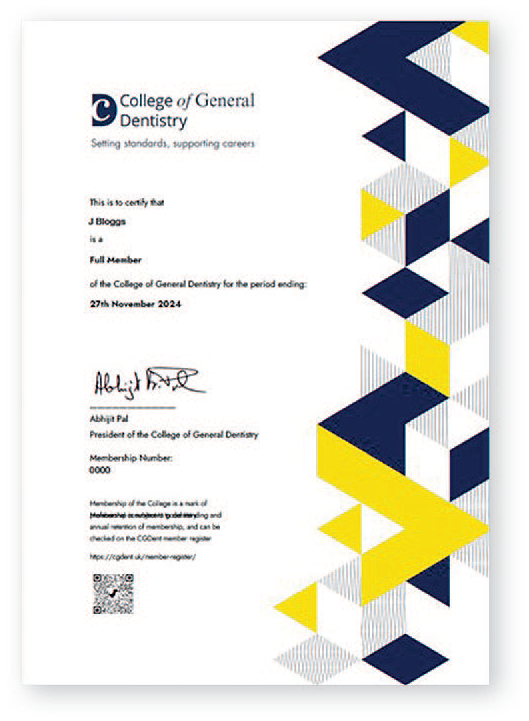
College members can now download a copy of their Certificate of Membership from their online account.
The Certificate of Membership is available as a PDF file for Student Members, Affiliate Members, Associate Members, Full Members, Associate Fellows and Fellows to save, print and display.
The certificate includes the member’s membership number and grade of membership as well as the expiry date of their current annual membership term. It will update automatically after their next renewal payment has been successfully processed, and the updated certificate showing their new term of membership can then be downloaded.
College Fellows should note that their annual membership certificate is separate from their Fellowship certificate, which they should have received by post (unless they joined or upgraded very recently).
1.
If you need to use the ‘Forgot Password’ option, please check your junk/spam folder in case the password reset email is directed there
2. Using the dropdown menu at the top of the screen, navigate through Membership > My Account, to click on

In memory of John Brookman, 1931–2024
John Brookman FCGDent, FFGDP(UK)(Hon.), one of the founding board members of the Faculty of General Dental Practice, and the founder of Vocational Training for GDPs, passed away peacefully on 27 January, aged 92.
Born David John Brookman in Watford in 1931, he pursued a desire to be a dentist from childhood, and in 1954 qualified from the Royal Dental Hospital, London, with both the LDS and BDS.
Working as a general dental practitioner in Surrey, in 1957 he married Penny, with whom he had four children, Mark, Lucy, James and Claire.
In the early 1960s, he suffered a mental health breakdown and had to suspend his dental career. With support from friends and family he made a full recovery, during which he re-trained as a teacher. This proved to be a pivotal experience in his return to dentistry.
In 1970, he purchased a practice in Banstead, expanding it to five full-time dentists with part-time associates and hygienists, serving a mix of NHS and private patients.
In 1973, he became an assistant dental tutor for the British Postgraduate Medical Federation. Recognising the gap between the degree of competence required for daily dental practice and the level acquired at dental school, from 1975 he established the UK’s first Vocational Training scheme for general dental practitioners in Guildford. This laid the foundation for nationwide vocational training, which was later organised on a voluntary basis for some years by the Committee for Vocational Training (of which he was a member) before it became a statutory requirement in 1993. He also set up educational programmes for dental tutors and teachers, introducing clinical audit and peer review and emphasising problem-solving through practical application.
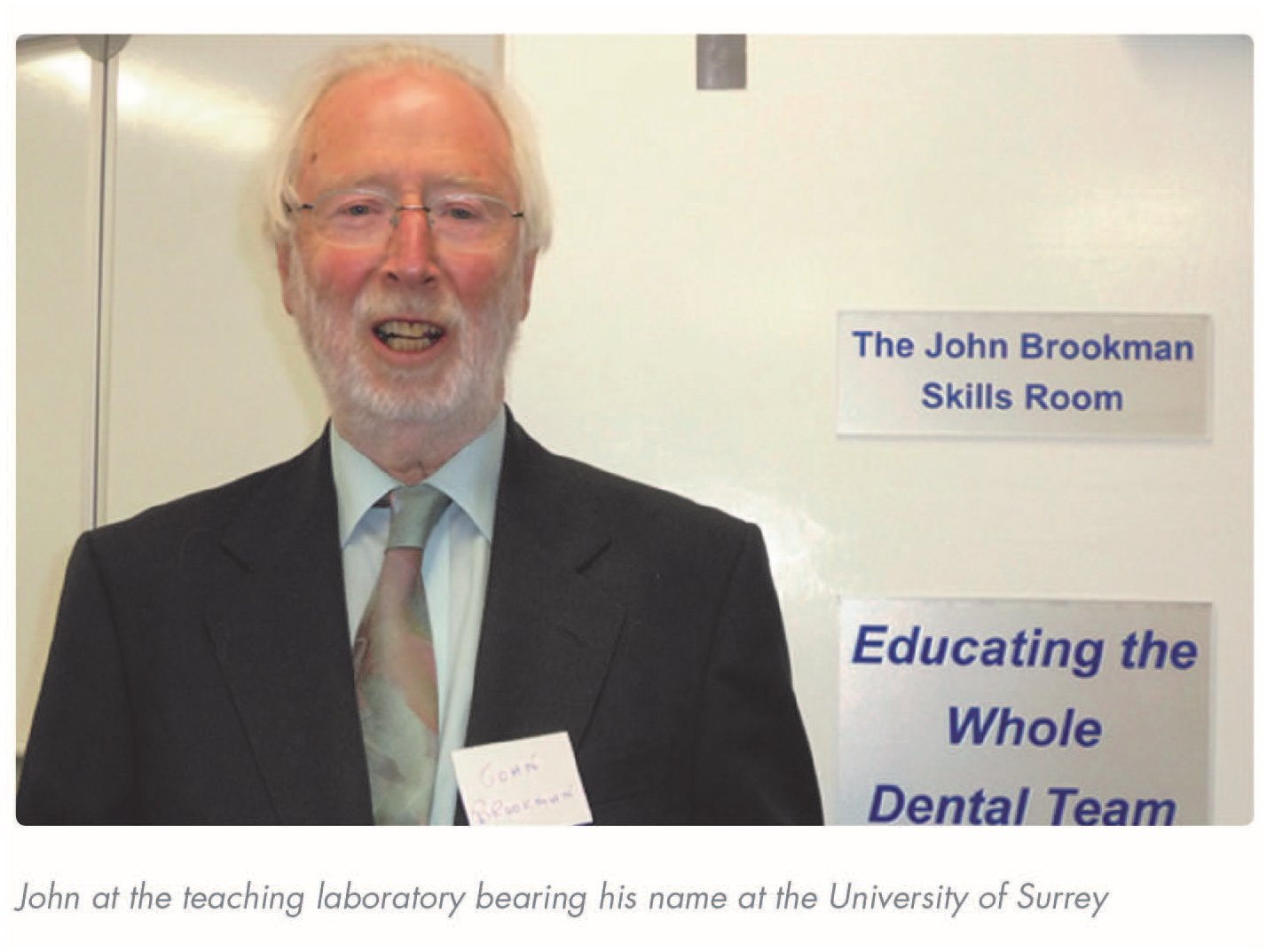
From 1975 he was also a lecturer at the University of Surrey, which later named its phantom head teaching laboratory after him, and he was a research lecturer at the Eastman Dental Institute and Senior Dental Advisor to Surrey Health Services and the Thames postgraduate regions.
He passed the Membership in General Dental Surgery examination of the Royal College of Surgeons of Edinburgh, achieved Fellowship of the Faculty of Dental Surgery of the Royal College of Surgeons of England (RCS) and was Chairman of the UK Conference of Dental Advisors. He was also President of the British Dental Association’s Southern Counties branch, a founder advisor to the editorial board of The Dentist, and co-produced three educational films with the editor of the British Dental Journal on techniques for fissure sealing, impressions and endodontics.
A founder of the College of General Dental Practitioners of the United Kingdom (CGDP) – one of several organisations established at the time to pursue the postgraduate educational interests of general practice dentists – he was among those involved in discussions which ultimately united like-minded GDPs behind the formation of the Faculty of General Dental Practitioners at the RCS, and in 1992 he became one of the Faculty’s founding board members.
John and Penny retired to Keswick in 1993, and he embraced life, enjoying fell walking and wood turning. They were both active members of the village church and his Christian faith was hugely important to him, shaping how he lived and worked.
He received Honorary Life Membership of the BDA in 1999, and in 2012 was awarded Honorary Fellowship of the FGDP in recognition of his significant contributions both to postgraduate dental education and to the Faculty’s history. He joined the College of General Dentistry at its launch in 2021, later becoming a Life Fellow.
Alongside his many professional accomplishments and community commitments, he was regarded by those who knew him as a true gentleman.
Sadly, Penny died from cancer in 2007. John continued to walk the fells well into his eighties, and it would have meant the world to him that he was able to live out his life in the home he loved so much.
CGDent Postgraduate Diploma in Primary Care Orthodontics, 2024–26

The College is now accepting applications for the next cohort of its Postgraduate Diploma programme in Primary Care Orthodontics, starting in June.
The comprehensive Level 7 programme is designed to give General Dental Practitioners the skills and knowledge needed to treat more complex malocclusions, including extraction cases, taking them up to just below specialist training level. It covers all appliance systems – fixed functional, aligners, lingual and Inman – and includes both the theory and practical aspects of orthodontic care.
Through a combination of lectures, seminar and practical sessions, the syllabus includes:
Records, assessment, diagnosis and treatment planning
Treatment planning for Class I, Class II div1, Class II div 2 and Class III malocclusions
Radiography – Ceph/OPG/CBCT
Fixed appliances
Lingual appliances
Removable appliances
Functionals
Retention
Aetiology of malocclusion, growth & development
Development of the dentition and tooth movement
Dental material and biomechanics
Multidisciplinary care, including restorative, periodontics and surgery
Critical reading skills
Health education, health & safety, legislation and audit
Marketing and practice management
During the programme, which is limited to 12 places, students will discuss multiple new cases, participate in hands-on practical sessions and weekly online planning discussions, and will be given one-to-one mentoring by specialists for ten treated cases. The 2024–26 programme is supported by six training blocks, five of three days and one of four days, which take place in June and October 2024, and February, June, September and December 2025.
To ensure enough case-flow and experience, the course is recommended for dentists who have treated at least ten fixed cases, are treating a minimum of ten orthodontic cases per annum, and are familiar with using fixed appliances.
The 120 credit programme, including ongoing informal and formal assessment, is delivered by IAS Academy, with a final examination held by the College.

Professor Hobson is also the presenter of the College’s series of three webinars which explore the possibilities and limitations of orthodontic treatment with fixed braces and provide an insight into the postgraduate diploma programme:
Introduction to orthodontics: Assessment, Diagnosis and Case Selection
Introduction to orthodontics: Principles of Treatment Planning
Introduction to orthodontics: Appliances, Retention & Training
These are free to view on-demand by College members, who can also claim free CPD certificates.

It is led by Professor Ross Hobson, a specialist orthodontist, former Head of Orthodontic MSc/Specialist training at Newcastle University, and former Chair in Orthodontics at the University of Central Lancashire. He holds a Master’s in Dental Surgery and PhD from Newcastle, a Membership in Orthodontics at the Royal College of Physicians and Surgeons of Glasgow, is a Fellow of the College of General Dentistry, the Royal College of Surgeons of Edinburgh and the Royal College of Surgeons of England, and was the first dentist to be awarded the Senior Fellowship of the Higher Education Academy.
Holders of the CGDent Postgraduate Diploma in Primary Care Orthodontics (DipPCOrth) are eligible for Associate Fellowship of the College, and the qualification also satisfies the Clinical domain of Fellowship. Find out more at

In this blog on the College website, Prof Hobson also discusses the complexity and importance of correct assessment and diagnosis of a patient before orthodontic treatment.

College engages the next generation of dental professionals

As part of a new initiative to raise awareness of its mission to dental students and early career professionals, the College held its first ‘NextGen’ event on Saturday 25 November 2023.
The CGDent NextGen Leadership Workshop, which took place in Manchester, was open to students on the Bachelor of Dental Surgery, BSc or DipHE Dental Hygiene and Dental Therapy, BSc Clinical Dental Technology and BSc Dental Studies courses at the University of Manchester, the University of Liverpool, the University of Birmingham and the University of Central Lancashire, as well as Foundation Dentists and Foundation Dental Therapists in the North West region.
Successful applicants were awarded a fully funded place at the one-day workshop, which explored the skills required for effective leadership in dentistry, through a series of talks, workshops and discussion. The day focused on the five competencies in the Agency domain of the College’s Career Pathways in Dentistry: Professional Framework – autonomy, decision-making, influence, leadership, and management.
Supported by five College facilitators, the delegates were encouraged to examine the key leadership skills and consider how they could develop them through short-term, medium-term and long-term goals.
“It was great to meet the facilitators and other students there. Everyone was so welcoming, and the talks and activities were easily accessible – no matter what stage or area of dentistry we were in. I’ve learned multiple ways to develop my skill set, information about the College of General Dentistry and thoroughly look forward to future events!”
Many of those who attended the workshop have become NextGen Ambassadors for the College, with the aim of raising awareness within their communities of CGDent’s mission and of the career support it offers to dental professionals.
The College wishes to thank the students and Foundation Trainees who enthusiastically took part in the day; the workshop facilitators who generously gave their time and expertise (Phillip Brown, Poppy Dunton, Roshni Karia, Abhi Pal and Sir Nairn Wilson); and the University of Manchester, University of Liverpool, University of Birmingham, University of Central Lancashire and Health Education North West for their support.

Anyone studying in the UK for a BDS or any other undergraduate dental qualification or traineeship, in any year group, is eligible to join the College as a Student Member or Student Affiliate.

Find out more at

Associate Membership of the College is open to all dental and oral health professionals who have completed their pre-registration education and are registered with the GDC or an equivalent overseas authority, and also to dentally-qualified non-registrants and former registrants who are no longer in practice.

Associate Members enjoy many of the College’s membership benefits, including quarterly print copies of the Primary Dental Journal, discounts on CPD events, enhanced access to standards and guidance, and a listing and profile page on our public Member Register.
Associate Members are also eligible to enrol onto our Certified Membership programme, which offers mentored career support.
Those joining the College as an Associate Member, or upgrading to Associate Membership, within one year of first registering with the GDC, pay the concessionary fee rate (currently £42) in their first year of membership.
Find out more at

Ministerial meeting

On 13 December 2023, the President of the College, Dr Abhi Pal, participated in a roundtable meeting with the newly appointed Minister for Primary Care, Andrea Leadsom MP.
Held at the Department of Health and Social Care, the meeting had been called by the newly-appointed Minister to outline her priorities for NHS dentistry in England – ensuring access for urgent dental care and increasing preventative activities such as perinatal advice and supervised toothbrushing schemes – and to hear the profession’s suggested solutions to the problems facing patients and NHS providers.
A wide range of stakeholders were present and discussed the critical need for contract reform as well as the delayed Dental Recovery Plan amongst other issues. On behalf of the College, Dr Pal made the case that the NHS needs to focus on arresting the exodus of the existing dental workforce and on increasing its appeal to newly-qualified professionals and those from overseas, and that to do this it needs to offer more attractive prospects by supporting a formal career progression framework for all those delivering NHS primary dental care.
A general dental practitioner and principal of NHS-contracted dental practices in Edgbaston and Derbyshire, Dr Pal has previously given evidence on NHS dentistry to the House of Commons Health and Social Care Select Committee, taken part in a meeting on access to careers and progression in dentistry at 10 Downing Street and addressed the House of Lords Committee on the Integration of Primary and Community Care.
Trustee Board changes

Marie Parker and Jane Clarke have been appointed as Trustees of the College. They are the third and fourth new Trustees appointed since the College opened its doors to members in 2021, with Fred Thomson and Onkar Dhanoya having been appointed in 2022.
Members of the Board of Trustees, who serve three-year terms of office, are accountable for the fulfilment of the College’s legal and regulatory duties as a charity, and for ensuring the proper running of the organisation.
The other members of the Trustee Board are
The new appointees have succeeded Dr Kevin Lewis FCGDent, former Dental Director at Dental Protection, who served on the Board from 2017–22 and is now a College Ambassador; fellow former dental Trustee Professor Liz Kay MBE FCGDent, Foundation Dean and Emeritus Professor at Peninsula Dental School (2019–22); Kate Gregory, a legal consultant and qualified litigator (2019–22); and fellow former independent Trustee Lesley Pan, who specialises in building and developing charitable enterprises (2019–23).
Other former members of the Board include Professor Sir Nairn Wilson CBE FCGDent, Past President of the British Dental Association and Honorary Founding President of the College, who served as Chair from 2017–20; Dr Ian Mills FCGDent, former Dean of the Faculty of General Dental Practice UK, who was a Trustee from 2018–21; and Duncan Rudkin, Chief Executive and Registrar of the General Pharmaceutical Council, who served from 2017–19.
The College strives towards the highest standards of governance, in line with our charitable purposes. From running the organisation and developing strategy to leadership and support, the College is made up of dynamic teams of professionals from dentistry and beyond. Information on some of the key teams overseeing the College’s development, including the Trustees, Council and Faculty Boards, is available online.

New research reveals the missed opportunity of preventative oral care

World leading consumer health company Haleon, in conjunction with the College, has launched the ‘Dental Health Barometer’ to provide insights into the role of preventative oral healthcare in the UK.
Preventative care is defined as proactive dental care and advice that helps a patient to take action to maintain a healthy mouth, protecting against tooth decay, gum disease and more serious issues such as tooth loss and negative impacts on general health.
However, the survey of UK consumers and dental health professionals reveals that preventative oral care advice is not being offered consistently to patients. That’s despite a high incidence of tooth decay – with 70,000 people treated in UK emergency departments for the disease last year alone.1 Just one third (34%) of oral health professionals said they always offer preventative care advice to patients, while one in four (25%) patients said they weren’t given preventative advice during their last dental appointment.
Over half (59%) of oral health professionals said that they are more likely to offer preventative advice for private patients than NHS patients, and over a third (37%) of NHS oral health professionals cited time constraints as the top reason for not being able to routinely offer preventative care advice, as opposed to just 15% of private oral health professionals. Though we know oral health professionals are working hard during a time of unprecedented pressure on the UK dental landscape, these figures come as little surprise given the widely reported ‘dental deserts’ where some areas of the UK have over 3,000 patients for every NHS dentist.2
Additionally, oral health professionals differed on the preventative advice they would recommend to patients. While half (50%) said advice on additional oral hygiene products and brushing techniques were key, only 2 in 5 (41%) pointed to advice on diet as preventative care and just over a third (34%) would consider advice on caring for gums to be preventative advice.
Bas Vorsteveld, Haleon’s General Manager for Great Britain and Ireland, said:
“We know that oral health professionals are facing huge pressures, and we want to help support them to be able to provide better preventative advice – not just during routine dental appointments, but outside of appointments too. Our findings revealed preventative care advice is not always offered consistently, despite patients and dentists understanding its importance. We remain committed to addressing these issues and will look to develop new initiatives to support dental professionals.
“These will form alongside our existing initiatives which include providing educational materials to healthcare professionals, continuing to innovate and provide therapeutic oral care for patient issues at home and through campaigns like Shine Bright which raises awareness in children of the prevention of oral health conditions.”
Nearly half (49%) of the UK public think preventative care for oral health is very important with over half (54%) of consumers saying they would prefer to receive preventative care advice for their oral health from their dentist. Meanwhile, the majority (87%) of oral health professionals think that preventative action is beneficial and aim to provide it proactively.
However, there is a lack of understanding across consumers and oral health professionals over whether preventative care is routinely available on the NHS. Almost half (48%) of consumers said preventative oral healthcare advice is offered on the NHS, and over a third (34%) were unsure. Oral health professionals were more aware, with 74% saying preventative oral healthcare advice is offered on the NHS. Once again, younger dentists are more aware that preventative care advice should be routinely available on the NHS.
The importance of preventative care has already been acknowledged by the Department of Health, through the roll out of the Delivering Better Oral Health (DBOH) toolkit, which was updated in 2021. This aims to provide best practice guidance on routine preventative care. It is encouraging that over a quarter (76%) of oral health professionals surveyed were aware of this toolkit. Younger dentists are more likely to be aware of it, with 82% aged 23–34 being aware compared to 58% of dental health professionals aged 45–54.
Dr Kate Fabrikant, Haleon’s Medical Affairs Director for Northern Europe, further supports this:
“Working in the industry, we must find ways to support the availability and accessibility of preventative oral care for all. We will continue to support dental professionals in facilitating behavioural change towards better oral health in their patients, whilst improving health literacy of the patients to seek out and engage in preventative care, to help them practice better everyday self-care and avoid longer term dental issues. There is a long road to travel to normalise healthy smiles in society, and it will take professionals, industry and policy makers coming together to get to this end goal.”
The study found patients have a strong level of trust in advice given by their dentist. Where it is offered, 9 in 10 (88%) found the advice helpful. The study found that NHS patients, younger people and men were less likely to proactively ask for preventative care advice.
Dr Abhi Pal, President at the College of General Dentistry said:
“We are committed to quality and standards of excellence in general practice dentistry – helping professionals to do the best for their patients. The research revealed some fascinating insights into the role that preventative care plays in the UK. It’s quite properly a mainstay of both private and NHS appointments, and we support any initiative that promotes prevention.”
The Barometer also found that there were regional discrepancies between both patients and oral health professionals. It was found that:
Only 40% of consumer respondents from Greater London think that preventative care is very important for oral health compared to over half (55%) in Northern Ireland and South West England.
Respondents from Greater London also were less likely to have received advice, with only 37% having encountered preventative care advice compared to over half of respondents (55%) in the South East and nearly half (47%) in the North East.
Over half (55%) of respondents in Wales said thinking back to their most recent trip to an oral health professional, they received preventative care advice verbally from them,
○ compared to 50% of those in Scotland,
○ 48% of those in England,
○ and under 2 in 5 (37%) in Northern Ireland
Northern Ireland have recalled a particularly low level of preventative care during dentist visits – with only slightly over a third of respondents (37%) having received advice at their last appointment. Despite this, the respondents from the region were some of the most interested in learning about preventative advice (53%) compared to (36%) of East England, West Midlands and Yorkshire and Humber who were less interested.
The East of England saw the lowest level of detail from their oral health professional on preventative care advice, with only 30% feeling their dentist provided a lot of detail.
A poster depicting the key findings of the research is available to download at

1. Gibbons A. Tens of thousands going to A&E with tooth decay because they cannot get NHS dentist. The Telegraph. 23 October 2023. Available at https://www.telegraph.co.uk/news/2023/10/23/tooth-decay-patients-ae-nhs-dentist-shortage/ [Accessed Feb 2024].
2. Liberal Democrats. Rise in “dental deserts” leaves millions struggling to get NHS dentist appointment. [Internet]. London: Liberal Democrats; 19 Apr 2023. Available at https://www.libdems.org.uk/press/release/rise-in-dental-deserts-leaves-millions-struggling-to-get-nhs-dentist-appointment [Accessed Feb 2024].

A webinar discussing the findings of the research was co-hosted by the College and Haleon on 30 November 2023.
The recording is available to view on the College website.


This document gives dental teams access to the best evidence of what works for oral health improvement, all in one place, to help you provide high quality preventative care and advice to patients. The result of a comprehensive review of published evidence on prevention by over 100 experts including College representation, it is issued jointly by Office for Health Improvement and Disparities and the Departments of Health in England, Wales and Northern Ireland. It is available at


This issue of the PDJ (v.13, no.1) features a paper which explores this topic, entitled “How to have healthy conversations: contemporary evidence and behaviour change tools in support of Delivering Better (Oral) Health”, on
Written by authors who were also involved in developing the Delivering Better Oral Health (DBOH) Version 4 document – Jennifer E. Gallagher, Jenny H. Godson and Zoe Marshman – the paper describes how DBOH Version 4 brings together the theory plus key principles and practical tools to help front-line clinicians achieve the best effect. It considers how behaviours during day-to-day life influence health and oral health, reviews the contemporary evidence on behaviour change, and provides practical advice on how this evidence may be used by dental professionals to support patients to change their behaviours for the better.
‘What are you doing in Glasgow in December?’
Patricia Thomson FCGDent, Vice President of the College and Council representative for West and North Scotland, reviews the recent CGDent Scotland Study Day.
On 1 December 2023, the dental community of Scotland and beyond convened at Glasgow Science Centre for our third annual study day as CGDent Scotland. This was the continuation of a tradition of annual high-quality CPD conferences in Glasgow, initiated by the highly esteemed John Craig, the man charged with setting up the West of Scotland division of FGDP (UK) when it was established in 1992. He was a man of great vision and, supported by a group of other altruistic like-minded GDPs, nurtured the community of dental practice in Scotland, an initiative which has been continued to this day.
Many distinguished speakers from around the world have addressed our conference over the years. Memorably, several years ago Professor Van Haywood travelled from Georgia with his wife to headline our study day. On being transported from Glasgow Airport by one of Glasgow’s finest taxi drivers, after asking where they had come from and receiving the reply “Georgia USA”, the taxi driver spluttered: “What the **** are you doing in Glasgow in December?!” The warmth of this reply was much to Van Haywood’s amusement and he recounted the conversation to the delegates, delivered in his version of a broad Glasgow accent.
This year’s speakers, the mild-mannered Professors Subir Banerji FCGDent and Shamir Mehta FCGDent, may have been asking themselves the same question in less fruity language when they experienced the sub-zero temperatures during their stay in Glasgow, and woke to a blanket of thick snow on the day of their departure. Finally, after spending Saturday’s daylight hours in Glasgow Airport, they managed to board a flight back to Heathrow that evening.
We were very honoured to welcome Subir and Shamir to spend the study day with us addressing the problem of tooth wear.
The 400 delegates present comprised dental professionals of all levels of experience, over 130 Vocational Dental Practitioners (VDPs), the final year students at Glasgow Dental School, and a number of dental students from Dundee University. Most delegates attended in person, but a small number participated online.
In step with our evolution from FGDP West of Scotland to CGDent Scotland, we were delighted to welcome VDPs from all parts of our country, and are grateful to NHS Education Scotland (NES) for continuing to engage with this event, which welcomes the most recent recruits to our profession into the community of general practice and demonstrates to them the fellowship and support that we offer.

The day was very generously supported by various dental organisations and members of the dental trade who have enabled the event to grow to the ambitious scale that we now enjoy.
Proceedings kicked off at 8.15am with hot beverages and breakfast rolls, before a prompt start to the lecture programme at 9am.
Our speakers held the delegates’ attention for two lectures in the morning and one lecture after lunch, during which they discussed the need to record and categorise tooth wear, and moved on to the aetiology and treatment. The lectures were titled “The How and The What and The Wear”.

Subir and Shamir have a unique style of delivery which consists of them sharing the stage and running through their presentation in a conversational manner, in which they discuss various points and anecdotes, bouncing ideas and, occasionally, challenging each other. They have an excellent interpersonal chemistry, and their discussion appeared to flow effortlessly throughout the sessions. Proposed treatment techniques were backed by evidence. The feedback revealed that this format was warmly received by the delegates, and is a presentation formula that works very well for them.
There was a separate breakout session for the students during the second lecture of the day, and they convened in another lecture theatre for several “TED”-style talks presented by multiple stakeholders. This started with an introduction to the College of General Dentistry, its aims and ambitions, the Career Pathway, and the study clubs and activities that we offer in Scotland, together with an encouragement to engage. This was followed by talks on entering the Vocational Training Scheme and ultimately embarking on general practice as an independent practitioner. There was a very enlightening presentation by one of our main sponsors, Martin Aitken, a Scottish accountancy firm with an in-depth knowledge of the business of dentistry, in which the students were introduced to the concept of keeping financial records and paying tax!
It was a bit of an undertaking to feed almost 400 delegates at lunchtime, but this was ably achieved by the staff of the Science Centre, and there was even time for delegates to visit the exhibition hall and interact with our trade sponsors.
All delegates reconvened in the IMAX auditorium for the afternoon with Subir and Shamir’s final lecture, and after another coffee break, the final lecture – The Caldwell Memorial Lecture – was presented by Professor Jason Leitch CBE FCGDent, the National Clinical Director for NHS services in Scotland. Jason graduated as a dentist from Glasgow University, became an oral surgeon, and then attended Harvard to undertake his Master’s in Public Health. He then returned to Scotland, but not to dentistry, climbed the ladder of promotion in Public Health, and found himself in the unenviable position of Clinical Director of Scotland when the COVID pandemic arrived. He became the main media persona in Scotland during the pandemic, and was praised for the clarity of his public health messaging. He spoke eloquently on the demands that governments faced throughout the pandemic, balancing the four challenges of the harm to health of the virus, economic harm, impact on health and social care service, and social isolation. He then moved on to the challenges that we face in the future as a nation with the provision of health and social care, discussing the implications for both manpower and finance. Although very sobering, Jason’s talk was delivered in an entertaining and thought-provoking manner.
Just after 5pm, it was time for the delegates to return to the upper floor of the Science Centre for the post-conference drinks reception, and to admire the night-time panoramic view of the banks of the Clyde stretching to the spires of Glasgow University. This part of the day facilitates the mingling of the varied members of our community, the chance for delegates to meet the speakers, networking and catching up with old friends and colleagues.
The success of the day is down to cooperation and engagement of the entire dental community, and was capably orchestrated by our events coordinator Patricia de Vries. As a result of Patricia’s expert and meticulous planning, we filled our sponsor and delegate places by early October. Patricia also liaised with the Science Centre to ensure the smooth running of the day. We are hugely indebted and grateful to her for the service that she provides.
The study day in Glasgow is a well-oiled machine that has been staged over the last three decades, but it does not happen without much planning and effort by the events planners and members of the CGDent Scotland Committee. However, it is very rewarding for all involved, and we believe it displays the essence of what it means to belong to the “community of practice”.
Dental professionals from across the UK and elsewhere are encouraged to attend, with College members benefitting from heavily discounted tickets. So, we look forward to seeing you in Glasgow in future; you can be assured of a warm welcome, even in December…and even from the taxi drivers.

The next CGDent Scotland Study Day will take place on Friday 6 December 2024 at Glasgow Science Centre. Further details will be published soon. To keep up to date, visit

WHO World Antimicrobial Resistance Awareness Week

Understanding antimicrobial resistance (AMR) and the drivers for its development will help healthcare professionals work together to reduce its emergence and spread. It is well documented that the more we use antimicrobial agents, the more drug resistance will develop. Fourteen national dental organisations came together in November to support the World Health Organization’s World AMR Awareness Week theme, “Preventing Antimicrobial Resistance Together”.1
If no action is taken, AMR infections are predicted to lead to 10 million deaths annually by 2050; a number higher than the total caused by COVID-19 during the pandemic period.
Our profession already focuses on the prevention of oral diseases to reduce the incidence of severe infections that necessitate the use of antimicrobial agents. Adhering to the best practice recommendations aimed at preventing infections, in addition to stewarding the use of antimicrobial agents, is very important. Accordingly, “Delivering better oral health: an evidence-based toolkit for prevention”2 is included in the Dental Antimicrobial Stewardship toolkit.3,4 It is also acknowledged that system-level changes are required to facilitate the provision of best practice. Furthermore, we need to look to the future and ensure appropriate disposal of antimicrobials to reduce environmental contamination. Guidance on the appropriate disposal of waste in healthcare settings including dentistry is available in HTM 07-015 and SHTN3.6
We encourage you to make the most of these resources to ensure you and your team are working together to help keep your patients safe by tackling the problem of AMR:
1. This statement was developed and supported by the Association of Clinical Oral Microbiologists, College of General Dentistry, Association of Dental Hospitals, British Association of Oral Surgeons, British Association for the Study of Community Dentistry, British Dental Association, British and Irish Society of Oral Medicine, British Society of Antimicrobial Chemotherapy, Faculty of Dental Surgery of the Royal College of Surgeons of England, Faculty of Dental Surgery of the Royal College of Physicians and Surgeons of Glasgow, Faculty of Dental Surgery of the Royal College of Surgeons of Edinburgh, Faculty of Dentistry of the Royal College of Surgeons in Ireland, Scottish Antimicrobial Prescribing Group and Health Education and Improvement Wales.
2. Office for Health Improvement and Disparities, Department of Health and Social Care, NHS England, NHS Improvement. Delivering better oral health: An evidence-based toolkit for prevention. [Internet]. London: UK GOV; 2021. Available at https://www.gov.uk/government/publications/delivering-better-oral-health-an-evidence-based-toolkit-for-prevention [Accessed Feb 2024].
3. English Surveillance Programme for Antimicrobial Utilisation and Resistance (ESPAUR); UK Health Security Agency (UKHSA). Dental Antimicrobial Stewardship Toolkit. [Internet]. London: UK GOV; 2016 (updated 2023). Available at https://www.gov.uk/guidance/dental-antimicrobial-stewardship-toolkit [Accessed Feb 2024].
4. Scottish Antimicrobial Prescribing Group (SAPG) Committee and SAPG Dental Stewardship Steering Group (DSSG), Healthcare Improvement Scotland (HIS). Guidance and Education. [Internet]. Scotland: SAPG; 2024. Available at https://www.sapg.scot/guidance-qi-tools/dental-stewardship/ [Accessed Feb 2024].
5. NHS England. Health Technical Memorandum 07-01: Safe and sustainable management of healthcare waste. [Internet]. London: NHS; 2022. Available at https://www.england.nhs.uk/wp-content/uploads/2021/05/B2159iii-health-technical-memorandum-07-01.pdf [Accessed Feb 2024].
6. NHS Scotland, Health Facilities Scotland. Scottish Health Technical Note 3 (SHTN 3). [Internet]. Edinburgh: NHS Scotland; 2013. Available at https://www.nss.nhs.scot/publications/waste-management-shtn-3/
Please note the document referenced immediately above has now been archived following publication of an updated version after the article above was first published on the College website. The updated document is referenced below:
NHS Scotland, Health Facilities Scotland. NHS Scotland Waste Management Guidance: Scottish Health Technical Note 03-01, V7. [Internet]. Edinburgh: NHS Scotland; 2023. Available at https://www.nss.nhs.scot/media/4571/shtn-03-01-v7-oct-2023.pdf [Accessed Feb 2024].
Antimicrobial Prescribing in Dentistry: Good Practice Guidelines
Antimicrobial Prescribing in Dentistry: chairside synopsis
Antimicrobial Prescribing Self-Audit Tool
These resources are all available at

Dental Antimicrobial Stewardship Toolkit

Free CPD for prescribers

Free course for non-prescribers


This recorded webinar, presented by Wendy Thompson FCGDent, offers a refresher on the guidelines, explores how dental teams can help keep patients safe from untreatable infections, and considers why dental practitioners might overprescribe antibiotics.
Free to watch for CGDent members, with 1h 45m of CPD.

West Midlands members encouraged to get involved in research
The College would like to encourage research-interested colleagues based in the West Midlands to get involved with an active regional dental research network. The West Midlands Dental Research Network, part of the National Institute for Health and Care Research’s Clinical Research Network, is looking for dental practices to join.
Yann Maidment, CGDent Research Lead and Kanwar Ratra, CGDent Council Member for the West Midlands, said:
“If you live or work in the region and are interested in research, have already thought about making your practice research-active or are considering involvement as a means of professional development, we encourage you to join the West Midlands Dental Research Network.”
Further details are in the grey box overleaf.

Have you thought about becoming a research active dental practice? We are here to offer you that opportunity.
The Clinical Research Network West Midlands is part of the National Institute for Health and Care Research (NIHR). We are here to help provide advice, support and assistance to allow your dental practice to take part in high-quality dental research in the clinical setting where the care is provided.
Research Career Development
Contributing to NICE Evidence Base
Patients given opportunity of research involvement (per NHS Constitution)
Quality Mark for CQC Inspection
Staff Learning and Development with CPD opportunities
NIHR accredited certificate
Updates on research findings to contribute to policy and practice
We seek expressions of interest from forward-thinking dental practices who would like to join our Dental Research Network. This will provide the opportunity to be the first to find out about high profile dental research studies taking place in your area.
Joining the Dental Research Network does not commit you to taking part in a particular study and is free.
To express your interest please contact Anesha Chauhan, the Clinical Research Practitioner coordinating the Dental Research Network in W Midlands. Email:

This College Standards & Guidance document, first published in 2010, is made up of a series of nine papers which introduce readers to the basic principles of research methodology, discuss the relevance of research to primary dental care, and provide an overview of the different stages in a research project, from asking a research question to finally writing up and disseminating the results.
Log in to our website to view the guidance online free of charge or register to view here:


Published in May 2022, this title is an updated and expanded version of the guidance noted to the left. Editors Ario Santini and Kenneth A. Eaton introduce the principles and practice of clinical research.
Available in paperback and ebook directly from Author House:

Dentistry Show lectures

The College has confirmed its programme of CPD lectures for the British Dental Conference & Dentistry Show (BDCDS), which is taking place at the National Exhibition Centre in Birmingham on Friday 17 and Saturday 18 May 2024.
The College is the headline education partner for the Enhanced CPD Theatre, where it is hosting four lectures:
Friday 17 May, 3.15pm–4.00pm
Dr George Wright BDS, Dip. MJDF, PgDip (DLE), ACIArb, Cert CII (Claims), FFFLM, FCGDent, MDTFEd; Deputy Dental Director, Dental Protection; Chief Examiner, Faculty of Forensic and Legal Medicine, Royal College of Physicians
Friday 17 May, 4.15pm–5.00pm
Dr Helen Kaney BDS, LLB, Dip LP, MBA, FCGDent, FFFLM; Dental Advisor, the Medical and Dental Defence Union of Scotland; dual-qualified dentist and solicitor; founding member, Dental Law and Ethics Forum
Saturday 18 May, 1.15pm–2.00pm
Preetee Hylton RDN; President-Elect, British Association of Dental Nurses; Associate Examiner, National Examining Board for Dental Nurses; Lecturer, NCFE CACHE Level 3 Diploma in Principles and Practice in Dental Nursing
Saturday 18 May, 4.15pm–5.00pm
Dr Sukhvinder Singh Atthi BDS, Dip. MFDS (RCS Ed.), PgCert/s, Dip. FFGDP(UK), MSc Oral Surgery, MSc Orthodontics, FCGDent, FHEA, ILM; Lecturer in oral surgery, University of Birmingham; Tier II-accredited oral surgeon
Staff and senior members are also looking forward to meeting members and prospective members at Stand Q01, and to answering any queries you may have about the College and membership.
BDCDS is the UK’s largest dental event, offering 200 lectures across 11 CPD theatres, and attracting 9,000 dental professionals and over 400 exhibiting suppliers.
Registration is free for all dental professionals at

Members’ meeting

The third annual CGDent Members’ Meeting, which is open to all members of the College to join, will take place online on Tuesday 9 April 2024 from 6.30pm–7.30pm. The meeting is hosted by the College’s President, Chief Executive and Chair of Trustees, who will set out the progress to date and future plans in realising the vision for the College, and offer members the opportunity to ask questions.
Register now at

Prestigious Presidency for College Fellow

College Fellow Dr Pankaj Patel has taken up post as President of the Pierre Fauchard Academy.
A private practitioner who trained in Mumbai, is based in Nairobi and has also practised and studied in the UK, Germany, Switzerland and the US, he was previously the organisation’s Trustee for Africa and International Vice President.
The first Specialist in General Dental Practice registered with the Kenya Medical Practitioners and Dental Council, he was a senior lecturer and examiner in restorative dentistry at the University of Nairobi for over 15 years, has supported the training of dental nurses in Kenya, and set up the country’s first MFGDP study group. He is a member of the Kenya Medical Association and has served on the Council of the Kenya Dental Association and on the Medical Advisory Committee of the Kenya Hospital Association. An approved dentist for the United Nations in Kenya and the US embassies in East and Central Africa, he oversees the dental department of the Jalaram Medical Services charity, is a Founder Trustee of the nascent College of Dental Surgeons of Eastern Africa, and has been awarded The Order of Grand Warrior of Kenya in recognition of his services to the nation in dentistry.
He was a Fellow and the first elected Overseas Representative of the former Faculty of General Dental Practice UK, is a Life Member of the Society for Advancement of Anaesthesia in Dentistry, and has been awarded Fellowships by the Royal Society of Health, Royal Society of Medicine, International College of Dentists, American College of Dentists and Academy of Dentistry International.
Dr Abhi Pal, President of the College of General Dentistry, said:
“I was delighted to learn of Pankaj’s election to the Presidency of the Pierre Fauchard Academy. Such a prestigious post is a well-deserved honour for someone who has already done so much for dentistry internationally. Many congratulations on behalf of the College, we wish him all the best for his term as President.”