



Abstract
A long existing compulsive curriculum of ideological and political education is employed by the Chinese government to promote citizenship education among Chinese university students. This article builds on the findings of a mixed-methods research that examined the role of ideological and political education on university students’ civic perceptions and civic participation. The results showed little evidence of this curriculum having a clear effect on students’ political participation such as voting, as well as their idealized broad civic participation, but did reveal relatively positive effects on students’ civic intention and civic expression. In addition, it also identified its significant role in organizing students towards attending party-related activities. It shows that ideological and political education is insufficient to achieve specified aims of citizenship education among Chinese university students. We then argue that it results from a mechanistic understanding of citizenship and participation in educational policies and structural barriers to young people’s formal participation. Hence, this article argues that the forms and contents of citizenship education in China need to be reconsidered beyond the limits of the current ideological and political education and that the analyses contributed to an argument for a broader approach to citizenship education to be developed and adopted.
Introduction
In the twenty-first century, declining civic participation has become a crucial problem in many Western established democracies (Dalton, 2004; Livingstone and Markham, 2008). Among various indicators of declining civic participation, political disengagement from behaviours like voting and voter registration, signing a petition or contacting political officials has received particular attention from scholars. Although participation measures have been dropping across all age groups, youth political engagement has seen the most precipitous drop (see Delli Carpini, 2000) and has caused particular alarm (EUYOUPART, 2005; Milner, 2010; Print et al., 2004; Wattenberg, 2011).
Responding to this observation, there is growing research interest in citizenship and citizenship education on government agendas and in educational agencies (Dudley and Gitelson, 2002; Galston, 2007). For instance, compulsory citizenship education was implemented in September 2002 in England. In Scotland, the Curriculum for Excellence aims to provide the context for developing active global citizens. Similarly, Llewellyn et al. (2007) detailed the emphasis on active citizenship in Canada. In fact, a recent international survey of civic and citizenship education covering 38 countries found that the majority provided a specific civic education course that was compulsory in general education (Schulz et al., 2010).
Researchers have contributed to the literature by investigating various contexts and processes within citizenship education to explore the effect of civic education on young people’s citizenship learning, especially the impact upon their civic participation. Findings about the impact of formal civic education on citizenship outcomes are mixed with positive ones and unidentified ones (Print et al., 2004). It generally argues that citizenship education requires a more comprehensive and a broad approach which recognizes young people’s roles in creating new forms of participation in everyday life (Faulks, 2006; Law, 2007; Manning and Edwards, 2014).
Cultivation of citizen consciousness and promotion of civic participation are also important themes in Chinese political life. In 2007, the 17th national congress of the Communist Party of China (CPC, Chinese Communist Party (CCP)) first officially pointed out the national task of ‘strengthening citizen consciousness education and establishing ideas of democracy, rule of law, freedom, equality as well as justice’ (CCP News Website, 25 October 2007). 1 The independent curriculum of ideological and political education across all levels of the educational system from primary schools to universities has been further employed by the Chinese government as a fundamental way to achieve that target in the last decade. It is true to suggest that this generation of young people in China do have more opportunities to engage with public life; however, unlike Western citizenship discourses, the main purpose of citizenship education under the ideological and political education is publicly declared to indoctrinate China’s youth with a certain national ideology (Chu, 1977). In this regard, the real influence of citizenship education through the ideological and political education in China is open to necessary critical interrogation. Existing studies have explored how citizenship and citizenship education are understood and practised in many different societies; nevertheless, little is known about Chinese students. In addition, empirical studies on what constitutes broad approaches to citizenship education are extremely rare. Therefore, this writing attempts to address these challenges.
With reference to Chinese university students, this article contributes to examining the role and impact of the ideological and political education on students’ civic perceptions and civic participation in China. In addition, particular focus is placed on how the curriculum provides support for students’ civic participation. The research employs mixed-methods research, including content analysis of relevant official documents, questionnaire and interviews with students. Analysis of questionnaire and interview data finds that this curriculum showed limited effect on students’ political participation such as voting as well as their idealized broad civic participation, but did reveal relatively positive effects on students’ civic intention and civic expression. In addition, it also identified its significant role in organizing students attending party-related activities. This study also reveals what constitutes idealized civic participation from Chinese students’ perspectives.
Examining the effectiveness of citizenship education
To investigate the effectiveness of citizenship education, various contexts and practices are explored. One aspect of these efforts is to examine inside of educational settings: citizenship curriculum for civic improvement and democratic citizenship (Osler and Starkey, 2006), while another aspect is to look beyond educational settings in young people’s wider context. The latter is consistent with a broad conception of democracy: democracy is not merely a form of government but a broad mode of associated living and conjoint communicated experience (Dewey, 1966: 87).
Schools have long been considered as influential political socializing agents. Consistent with this understanding, emphasis on citizenship education is placed on formal curriculum development, evaluation and school-based practices with the aims of enabling young people to develop democratic knowledge, skills and dispositions as members of the polity (Heater, 1999; Marshall, 1970). Thus, the central idea is that certain kinds of citizenship education, articulated in official policies and educational discourses, are required in order to facilitate students to achieve their citizenship status. Some commentators believe that citizenship education is a curriculum subject. For instance, it was found that Personal, Social and Health Education (PSHE) is a main venue for the delivery of citizenship education in secondary schools (OFSTED, 2005). Other scholars also tried to link citizenship education with subjects of history, geography (Freeman, 2003; Lambert, 2003; Westaway and Rawling, 2003), and information and communications technology (ICT) (Selwyn, 2002), as they believe those subjects are also crucial for citizenship learning.
Meanwhile, other scholars take a wider view towards citizenship education, which goes beyond a specific explicit citizenship curriculum. Gearon (2003) termed this kind of citizenship education as an implicit part of the school curriculum. To be specific, it argues that effective citizenship education requires a whole school dimension, which means that behaviours leading to participation opportunities in schools and in the wider community need to be included (Newton, 2002). Kennedy (2003) expressed the same idea that citizenship teaching should move beyond abstract concepts and give students chances to engage with relevant civic activities both in and outside of their classrooms. In fact, much of the literature concerns the potential significance of active participation for citizenship learning. The development of pupil voice, students’ participation in decision making (Department for Education and Skills (DfES), 2003) and running school councils are common civic activities which would benefit the development of notions of citizenship in children and young people (Taylor and Johnson, 2002).
Research shows that a citizenship curriculum seems to have clear positive effects on students’ civic knowledge and their forms of civic expression. For instance, the Citizenship Education Longitudinal Study (CELS) revealed that there was a gradual and steady increase in participants’ attitudes towards participation, equality and social trust under the compulsory citizenship education curriculum in England (Keating et al., 2010). In addition, Lee (2003) argues in his research that Hong Kong students show a high level of civic knowledge and attitudes towards immigrants and are concerned about elections and freedom of expression.
Unfortunately, studies did not reveal significant effects of citizenship curriculum on students’ particular civic behaviours, especially on their political participation. For example, Saha’s (2000) Australian study found no effect of taking a civic class on normative political participation. Similarly, Lee (2003) also finds that some Hong Kong students try to avoid active political participation. The CELS report finds that although participants became increasingly aware of the importance of politics, only a minority reported engaging in political discussion as well as political participation (Keating et al., 2010). Moreover, recent work from the United Kingdom suggests that students of civic education think it has little impact. To be specific, Henn and Foard (2012) found that of the students who had taken a General Certificate of Secondary Education (GCSE) in Citizenship Studies, over 60% claimed that their knowledge and understanding had increased by ‘not very much or indeed by not at all’ (p. 54, emphasis in original).
In short, findings about the impact of formal civic education on citizenship outcomes are mixed with positive ones and unidentified ones (Print et al., 2004). In addition, its impact on normative political activities is inadequate or insufficient. Thus, the above literature indicates that citizenship learning is never solely based on a school citizenship curriculum, as the changing social contexts of young people’s lives tend to operate to curtail their civic perceptions and civic participation. From this sense, although competing definitions and modes of citizenship education could lead to the potential of a coherent vision and varied practices of citizenship education inside educational settings (Kerr, 2005), we should consider the possibility that a civic curriculum alone may not be an efficient way of increasing young people’s civic participation, as it would not necessarily be the case that if a student knew more about civic knowledge, they would participate more (Manning and Edwards, 2014).
Beyond the educational setting: The changing nature of citizenship
The traditional notions of citizenship have been challenged by information technology since the 1990s, as it is viewed as a means of engaging in politics and performing global citizenship rather than engaging with national politics (Loader, 2007). Some scholars suggest that there is a shift from national citizenship to global citizenship (Delanty, 2000), local identities (Oommen, 1997) and multiple citizenship (Heater, 2004). Hartley (1999) described ‘DIY citizenship’ to argue the increasing importance of media for political participation in various unintended and public ways. For example, Van Zoonen et al.’s (2010) work found that people’s responses to the anti-Islam film Fitna on YouTube showed multiple forms of citizenship invoked by the film. Manning and Edwards (2014) also argued that young people employed various means of media production to articulate their political expression and perform an ‘unlocated’ citizenship, which helped address public issues of transnational relevance. Moreover, Theocharis (2012) has shown how the student occupations that have taken place in universities used a variety of online tools to organize and mobilize young people.
All these discussions suggest the need to understand new forms of participation among young people, as they are now facing myriad ways of being political and involved. Everyday dimensions of young people’s civic participation and political engagement have been highlighted in recent research. For instance, Manning (2013) has described the way some young people express their political views through everyday practices like vegetarianism, energy and water conversation.
The discussion of changes in the nature of citizenship has received attention in citizenship education. A number of studies have concentrated on citizenship learning beyond educational settings in young people’s everyday lives from socio-economic perspectives (Manning, 2013). They believe that young people are not ‘cultural dopes’ who respond mechanically to outside influences, while they are generally more malleable and susceptible to outside factors than older people (Smith et al., 2005: 246). In addition, students’ active participation in the wider community could bring benefits for students and indeed the whole society. Prime et al. (2002) argued that getting in touch with other people in the locality can build strong social networks, increase trust and provide a stepping stone to future social involvement.
Lawy and Biesta (2006) offer a representation of this type of argument. In his opinion, the above mode could be understood as citizenship-as-achievement to train young people to becoming a particular type of democratic citizen, while he advocated citizenship-as-practice, which means that young people can automatically learn from participation in wider political and social life. This is also echoed in Osler and Starkey’s (2003) argument that citizenship ‘is not a process that can be realized exclusively at school. Learning is taking place beyond the school and the school needs to build on this learning and to encourage learners to make connections between their experiences and learning in the school and the community’. (p. 252)
In this connection, an inclusive environment for citizenship learning is the appropriate response to the changing notion of citizenship. Young people’s clear preference for more ‘direct’ and everyday forms of political participation should be nurtured by civic educators, while public policy should be crafted to address the raft of barriers to young people’s political participation.
The above-mentioned theoretical discourses and practices have shown instances of the limited effectiveness of citizenship curricula on student’ civic participation, while a broad understanding of citizenship in an everyday dimension is of great importance. However, little is known about the implementation of citizenship education in China. The International Association for the Evaluation of Educational Achievement (IEA) has initiated the International Civic and Citizenship Study (ICCS) project in 2011 across a large number of countries and areas, but Mainland China was excluded in this project. In this connection, this study examines the effectiveness of the citizenship curriculum on Chinese university students’ civic perceptions and civic participation. Before discussing relevant issues, it is crucial to understand the background and implementation of citizenship education in Chinese universities.
The development of ‘citizenship’ in Mainland China
The notion of ‘citizenship’ was not found in the Chinese context until late in the Qing Dynasty. The underlying reason was that the extremely strict politically centralized system in Chinese feudalism society was unable to incubate spirits of democracy, freedom and active participation. People were considered as ‘subjects of the feudal rule’ (Chenmin in Chinese), and they were attached to the monarch and the family. The hierarchy thoughts ‘monarch-monarch, minister-minster, father-father, son-son’ proposed by Confucius and ‘Father and son are close, officials have righteousness, couples are different, respect for seniority, friends have faith’ proposed by Mencius comprehensively depicted the feudal hierarchy relationships. The individual was immersed in the patriarchal clan system, which destroyed people’s creativity and denied the meaning of their existence. Therefore, it could be argued that people in ancient China are generally those who are lacking or have lost political consciousness as an individual subject. Although such proposed qualities as righteousness, faith, love and integrity could be seen in the primary Chinese merits, which then developed into part of moral education in Chinese later history, the dictatorial system indeed prevented people from developing a sense of rights, democracy or public participation related to citizenship in ancient China. This political tradition has exerted a negative influence in later Chinese history, and even today most people just know that they have to obey the law, while they do not know how to protect their own rights (Dong and Shi, 1998).
In the early twentieth century, the Qing Dynasty experienced huge crisis from the massive domestic peasant rebellions and foreign imperialist invasion, which eroded the dynastic state and offered challenging alternatives to both the orthodox ideologies of Confucianism and imperial rule (Rogaski, 2004). The newly emerging bourgeoisie, influenced by Western democracy and freedom, rallied for the transformation of the old feudal society. In 1911, Sun Yat-Sun led the Xinhai revolution and finally put the long-lasting feudal system to an end. Bourgeois revolutionaries established a new republican government, and it was the first time in Chinese history that it was made clear what it would mean to be a citizen in a new republican society. Civic republicanism emphasized the individual’s dedication to the public sphere by self-discipline and active participation in practical and concrete tasks related to daily lives. They regarded the citizen as an idealized form of a modern people, who could actively participate in the creation of a strong and wealthy nation in the modern world (Fogel, 1997). In 1912, the first constitution, the ‘Provisional Constitution of the Republic of China’, was enacted and was the first attempt to make provision for civil rights, which made the idea of democracy deeply rooted in people’s hearts. However, due to unrest in the political and social situations during the 1937 Anti-Japanese War and then the 1946 Domestic War, this notion of citizenship did not further develop, and its articulated civic rights were not realized.
The foundation of the People’s Republic of China (PRC) in 1949 by the CPC brought up people’s rights again, and then people stood up to become the masters of the country. The notion of ‘citizen’ first officially appeared in an official document in 1952, and then it was used generally in all other official documents. However, the term of ‘citizen’ was only rigidly depicted in formal, legal and propagandistic official documents, and it was replaced by ‘people’, the opposite of ‘enemy’ in the political context, while enemy was the bourgeois class. The reason was that class struggle between the proletariat and capitalism was reinstated as the main social contradiction by the CPC in Mao’s period. Therefore, common people still did not sufficiently understand its bestowed meaning such as civic rights and active participation; on the contrary, their thinking and behaviours were controlled again but this time by socialist values. One must unconditionally obey the requirements of the collective nation, from ideals and career goals to love, marriage, clothing, hair and even the inner world of the individual. People’s individual rights were viewed as poisons to the socialist highest goal of mass mobilization, class struggle and collectivism.
The 1978 Reform and Opening-up Policy provided a start for China’s democracy process. Deng Xiaoping announced the abandonment of class struggle and appealed for focus on economic development among the whole Party’s domestic affairs. The most important development was that personal interest was recognized and motivated by the CCP. Facing new ways of political reform and market operation, the notion of ‘citizen’ was recognized again. Particularly, the re-emergence of the concept of the citizen then contributed to a desire of the Chinese leaders to deal with questions of what, for a qualified citizen under a new social compact of market economy, would represent appropriate conduct and social obligations.
Citizenship education curriculum: The implementation of ideological and political education in current universities
China has not yet worked out a systematic curriculum for citizenship education in Chinese universities and its independent status has not been finally established. In fact, the political and ideological education provided is a major official channel for citizenship education (Lee and Ho, 2005), which closely follows national curriculum standards as prescribed by the Ministry of Education (MoE).
The curriculum of ideological and political education was set up in Chinese higher education in 1982, with the intention to foster qualities of socialism among university students. Its main contents were from Marxism, Mao-Tse-Tung ideology, important CPC and state documents, selected editorials and articles in state newspapers (Rosen, 1983). Textbooks were later revised to incorporate Deng’s theory of economic reform. In the twenty-first century, Jiang’s theory of ‘three representations’ and Hu’s ‘Scientific developing views’ were also amended into curriculum textbooks. We can say it is more like moral education, which advocates the ‘five loves’ (love of home country, people, labour, science and socialism) for the PRC’s socialist modernization and the five-isms (patriotism, collectivism, internationalism, communism and dialectical and historical materialism) for combating ‘feudal, capitalist and other decadent idea’.
The Opening-up policy greatly accelerated economic development, and people’s consciousness of rights began to spring up. In 1985, the central committee of the CPC released the Reform Notice on the Curriculum of Moral Education and Political Theories in Schools (hereafter called 1985 Reform Notice) to help students to understand different social ideologies. The emphasized teaching content was to educate university students to learn Chinese revolutionary history about how the CPC has led Chinese people stepping onto the socialism road and to motivate them to foster a spirit of sacrifice for the socialism cause. The reform also pointed out the need to improve the teaching method from doctrinarian to heuristic teaching, open class discussion and social practices. In addition, the reform referred university students to Marxism classics to be studied in depth whenever they felt confusion. Although it was praised for the development of teaching methods, its teaching contents were still strictly confined within the socialism domain.
With the establishment of a socialist market economy in 1994, China’s interaction with the rest of the world was to become much closer. Besides economic communication, Western political ideology tended to influence the Chinese people. The Tiananmen Square event on 4 June 1989 could be seen as a political event, in which university students in China were asking for more individual rights and active participation in social development. This event was viewed as a failure of the 1985 Reform Notice by the CPC, and the new document was issued in 1995 called ‘The Reform Advices on the Curriculum of Marxism Theories and Moral Education’ (hereafter called 1995 Reform Advices). In this policy, ‘Two classes’ (Liangke in Chinese) was first employed to summarize the courses of Marxism theories and moral education, and this term is still used today. It especially pointed out the significance of studying ‘two classes’ in universities.
In 2005, The Further Reform Advice on Ideological and Political Education was released and it underpinned the curriculum structure in the following decade in Chinese universities. Four separate courses were included in this curriculum, and they are Marxism theories; Maoism, Deng’s theories and Three Representatives; the outline of Chinese Modern History; and moral cultivation and law, respectively, and relevant textbooks began to be used among university students enrolled in September 2006. However, the contents and teaching methods still did not change too much and continued to pay attention to the cultivation of a spirit of socialism, collectivism and patriotism. The citizenship idea of ‘democracy, equality and freedom’ was not obviously developed in this university curriculum, and there was no systematic citizenship curriculum in Chinese universities or any relevant curriculum under the name of ‘citizenship education’ (Ao, 2013).
Under the wave of globalization, development for citizenship consciousness became an urgent task for Chinese modernization. The 17th national congress of CPC in 2007 first officially pointed out the national task of ‘strengthening citizen consciousness education and establishing ideas of democracy, rule of law, freedom, equality as well as justice’, which motivated MoE and educational scholars to work on relevant theories and practices about how to deliver meaningful citizenship education to students. The established ideological and political education was then further employed by the Chinese government as an ideal place to deliver citizenship education among university students. Some efforts have also been made under the framework of ideological and political education to promote civic consciousness. For example, when delivering the courses of ‘Moral cultivation and law’, teachers try to bring citizenship contents like what a citizen should be, how to become a citizen and what citizenship consciousness is into the class (Tan, 2013).
Previous research on the role of the ideological and political education in China
Reforms in ideological and political education appear at first sight to mark a considerable step towards citizenship education in the first decade of twenty-first-century China. Although systematic citizenship education has not been established in Chinese universities, the positive side is that this curriculum has introduced civic knowledge and civic consciousness into university classrooms. For instance, socialism Core Value systems (including qualities of prosperity, democracy, civility, harmony, freedom, equality, justice, the rule of law, patriotism, dedication, integrity and friendship) proposed in the 2012 18th National Conference are later incorporated into textbooks of ideological and political education, which reflected that this curriculum not only continued to encompass civic morality education but also encouraged students to get involved in public affairs and improve public life through civic consciousness (Wang, 2013). Cheung and Pan (2006) also observed the broadening scope of citizenship education and a shift in emphasis in citizenship education policy from one of loyalty to the ruling party, to one that includes personal development, social responsibility and community involvement within the state’s political framework.
In addition, theoretical research pointed out relevant improvement suggestions based on perceived limits of the existing ideological and political education. First, Lee and Ho (2005) have noted that China’s citizenship education policy has been reoriented away from politics towards an emphasis on self-identity, that is, personal moral quality and individual wellbeing. Considering the fact that the ideological and political education was still imbued with the characteristics of political education and moral education, and its main content in curriculum guidelines and textbooks is the translation of the CCP’s political policies and argumentations, scholars emphasized the importance of constructing a comprehensive framework of citizenship education in Chinese universities (Wang, 2013). For instance, Tan (2013) included civic education, moral education, civic skills and development of civic habits as essentials parts of citizenship education. Second, it turns out that ideological and political education mainly depends on theory indoctrination in class while ignoring the essentiality of civic activities and separated from social reality (Ao, 2013). Responding to this situation, it is argued that the fundamental aim of citizenship education is to foster active citizens with practical capacities rather than theorists playing with abstract citizenship knowledge. To be specific, the citizenship learner should be encouraged to experience citizenship practices not only in class but also in real life in order to improve their abilities to get involved in civic activities (Zhu and Feng, 2006). Third, researchers also pointed out the importance of creating a comprehensive network of citizenship learning between universities, families and communities. From this sense, the government and schools should no longer play an authoritative role in citizenship learning such as designing curricula and textbooks, organizing patriotism rituals and stipulating assessment methods.
The impact of this ‘improved’ curriculum of ideological and political education for students’ civic consciousness and civic participation, from the students’ perspectives, was not explored in any depth, as updated empirical evidence on students’ civic perceptions and civic participation is limited. In addition, current empirical research mainly concentrated on the development of civic consciousness while neglected the influence on students’ civic behaviours on the practical dimension. What’s more, findings mainly focus on university students’ reported problems with this curriculum. Therefore, empirical studies are urgently needed to reveal a comprehensive picture of university students’ civic perceptions and civic participation under this citizenship curriculum in Chinese universities.
Research conceptual model and methodology
Forming part of a larger research study into cultural citizenship and citizenship education in China, the main purpose of the study reported in this writing is to examine the effectiveness of citizenship education curricula on university students’ civic perceptions and civic participation. There has been some theoretical and empirical research around this area, and further based on the model from IEA Citizenship Education Study and CELS study, this study identifies some major indicators that help investigate students’ views towards citizenship education curriculum.
The IEA civic study provided an ‘octagon model’ to examine necessary aspects under citizenship education and wider community which are related to students’ civic experience. However, although this study was conducted in different national settings, it has never developed a research version for China. Therefore, relevant adaptation was made in order to cater for the Chinese context. The IEA civic study examines all areas related to citizenship education including teachers, community and families. As this is an examination of the citizenship curriculum in Chinese universities, particular attention is placed on the school context and formal citizenship curriculum from university students’ perspectives. Finally, five aspects of variables related to the ideological and political education were proposed for exploration, including students’ received learning outcomes, teaching methods, assessment methods, preferred learning methods and students’ improvement suggestions. Moreover, university atmosphere/ethos is another indicator thought to shape citizenship education.
Citizenship outcomes among university students, their civic perceptions and civic behaviours were examined. In terms of university students’ civic perceptions, this study has looked at indicators of trust, civic intention and attitudes towards equality. In terms of civic participation, this study adopts the definition and typology of civic participation from Jenkins et al. (2003), which mainly proposed three types of civic involvement: political participation, civic activities and civic expression. In this regard, seven indicators for civic participation in Chinese context were used in this study: voting in national-level elections, getting in touch with governmental officials, attending a political campaign, taking part in public events designed to raise awareness of equality and justice, joining a community or voluntary organization, donating money to poor people and discussing about social affairs with friends. The first two are in the domain of political participation, while the rest are of broad civic participation.
In order to examine the role of the ideological and political education on students’ citizenship outcomes, four research questions were addressed:
How is this curriculum delivered among university students?
How do university students view levels of their received citizenship learning?
What are the citizenship outcomes among university students in terms of their civic perceptions and civic participation?
Does the level of received citizenship learning have an impact on students’ civic participation?
An empirical study characterized with a mixed methodology was employed to collect data. In stage 1, a Chinese version of the questionnaire was set out to gather basic demographic information of university students and also to investigate students’ views on the above aspects of the citizenship curriculum. In addition, the questionnaire examines how students generally perceive civic implication of the ideological and political education. A 5-point scale is used to allow students to indicate the extent to which they agree with the statements (1 = strongly disagree to 5 = strongly agree). The questionnaire could be completed within 30 minutes, and the quantitative data were then analysed by SPSS Software. In stage 2, semi-structured interviews were conducted among students to examine the depth and breadth of students’ experience of citizenship learning in universities. In addition, the interviewees were motivated to give explanations about the answers they had given in stage 1, which provided some useful thinking on educational policies and social policies in China. Interviews were conducted in mandarin and were tape-recorded, coded and analysed for major themes. The whole research got the ethics approval from the University of Glasgow in December 2013.
The empirical research was conducted in one university among university students in Beijing. This university was carefully selected in order to ensure a representative sample. It is a nationwide comprehensive university in China that includes majors of arts, science and business. Besides that, it welcomes students from different areas of China and has more than 9000 undergraduate students. It can be taken that the students in this university can be seen as a representative of undergraduate students in China. The first research centre of citizenship education in China was launched in this university in 2013, and professional citizenship research has been conducted there by scholars. Based on their efforts, the university curriculum for citizenship has been rather mature, and relevant educational reforms have taken place in curriculum teaching.
Students in different colleges were invited to participate in the questionnaire and 212 questionnaires were collected: 56.1% were completed by females and 43.9% by males, with 11.8% from freshmen students, 25.2% from second year students and 36.8% from third year. In addition, there was a relatively balanced response from different majors, and a third of the participants were Party members. A total of 12 semi-structured interviews were conducted with students based on the principle of background characteristics. The average time of each interview was about 30 minutes. The following sections present general findings from the questionnaire and interviews, and further analysis with possible explanations follows.
General findings
Frequency of different teaching methods and assessment methods
Table 1 shows the occurring frequency of teaching methods that are commonly employed in citizenship teaching. It is important to mention that each teaching method (TM) were all experienced by participants in their university curricula, but with unbalanced or different occurrence.
Frequency of teaching methods experienced by respondents in the ideological and political education.
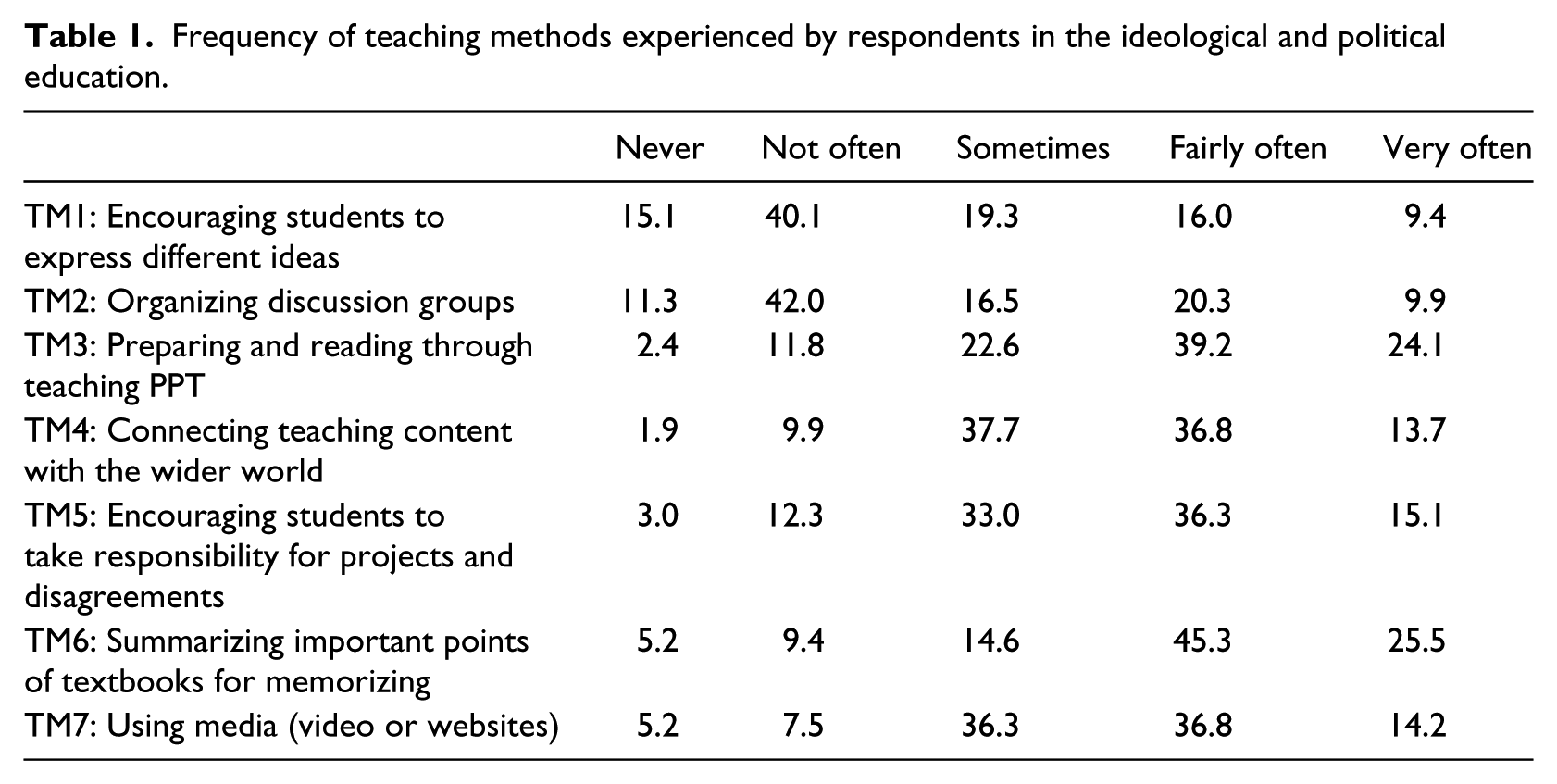
As the table shows, the most frequent teaching method is TM6 of ‘Summarizing important points of textbooks for memorizing’, for its percentage of ‘fairly often’ is 45.3% and ‘very often’ is 25.5%, which means more than 70% of the participants reported their extensive experience with TM6. The second frequent is TM3 of ‘preparing and reading through teaching PPT’, with 39.2% of ‘fairly often’ and 24.1% of ‘very often’. Therefore, it indicated the practice of ‘citizenship-as-achievements’ is also the situation in Chinese context.
Respondents in interviews further expressed their dissatisfaction towards these two prevailing teaching methods above: ‘We are told about the abstract concepts of civic values: democracy, civic participation and social cohesion. It is really hard to motivate into real action, because I did not fully understand those terms’ (11, F, S); ‘Teachers do not care about whether we have understood, and all they do is to make sure we could memorize relevant points for examinations’ (05, F, A). Such responses remind us that classroom experience needs to connect with the world of the student if it is to impact upon that student’s value systems and learning processes (Dewey, 1916).
However, it is reassuring to find that teaching methods of TM4 of ‘connecting teaching content with the wider world’, TM5 of ‘encouraging students to take responsibility for projects and disagreements’ and TM7 of ‘using media’ were also comparatively fairly often used, with the percentage of 36.8%, 36.3% and 36.8%, respectively. Therefore, it revealed that there was a trend that flexible teaching methods have been used, and students were encouraged to have relevant civic experience in this curriculum.
It is obvious to notice that TM1 of ‘encouraging students to express different ideas’ and TM2 of ‘organizing discussion groups’ were less frequently employed in the curriculum, as they both showed over 50% on the scale of ‘not often’ and ‘never’ altogether. In this case, it indicated the limited support for students’ free discussion and meditation of political issues and civic issues in this curriculum.
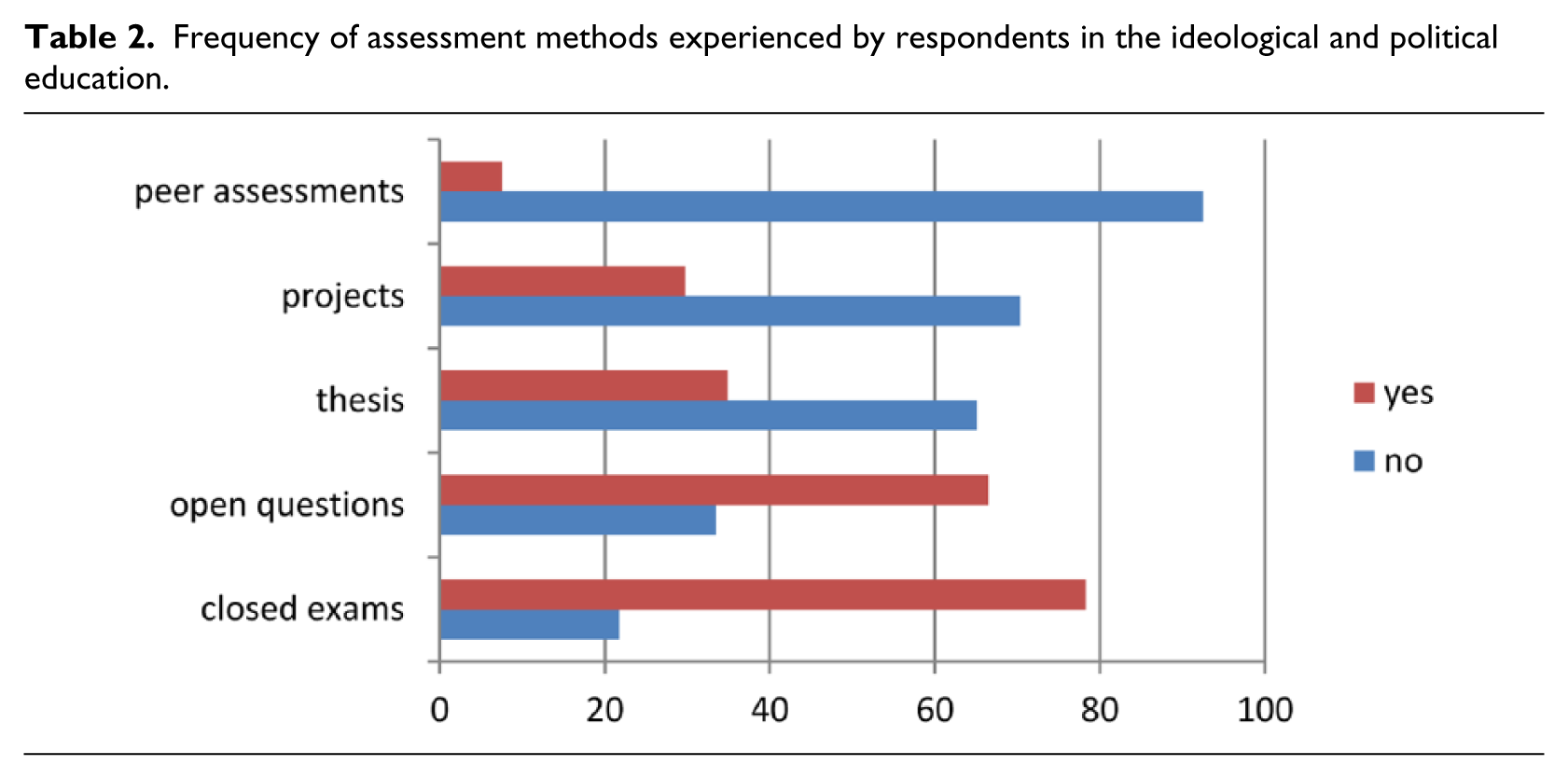
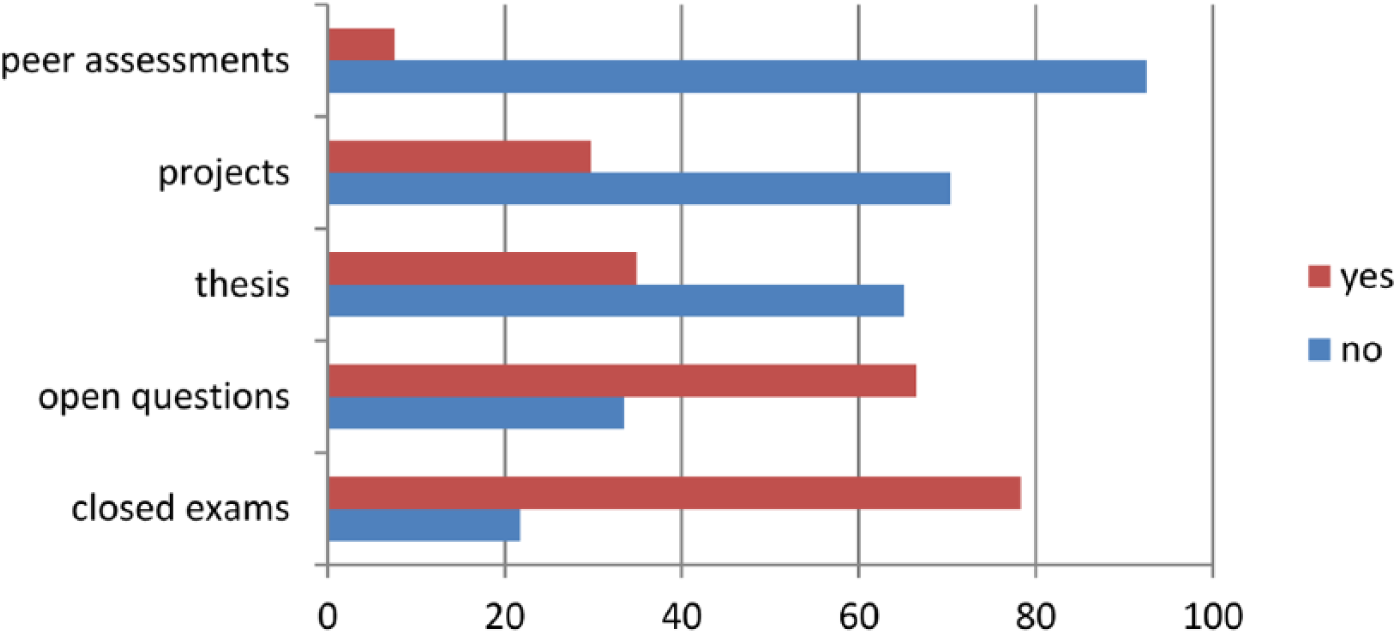
In terms of assessment methods experienced by the participants, the bar chart below in Table 2 shows its occurring percentages. It is noticeable that assigning closed exams and open questions are the most frequent assessment methods, as more than 60% of participants reported their experience. Thesis and project designs were also used in assessment, with a relatively smaller percentage of about 40%. By contrast, it was observed that more than 95% reported no experience of the assessment method of peer assessment; therefore, it indicated that this kind of assessment method characterized with personal interaction and communication was rarely used in the citizenship curriculum in this university.
Frequency of assessment methods experienced by respondents in the ideological and political education.
Respondents in interviews mainly expressed their confusion about assessment methods. One interviewee stated that Exams take the form with 40–50 multiple-choice questions, followed with 2–3 open questions on date, place and contents of certain historical events related with the Party or national/international affairs. I wonder how civic knowledge could be improved this way.
Another student expressed that she was not very clear about assessment standards. She continued to give an example: ‘sometimes students who tried to present creative and critical answers to open questions received a lower score than those who provided format answers according to textbook’.
Received learning outcomes: Less learnt about participation
Table 3 shows participants’ responses to nine aspects of intended citizenship learning outcomes, which are constructed around national, social and personal dimension of citizenship understanding. All aspects of intended citizenship learning except ICL1 and ICL3 were moderately experienced by the participants, with more than 50% of the participants above the middle level of 3. Therefore, it indicated respondents’ high degrees of agreement on received civic awareness in certain domains from ideological and political education.
Students’ responses to their civic learning from the ideological and political education.
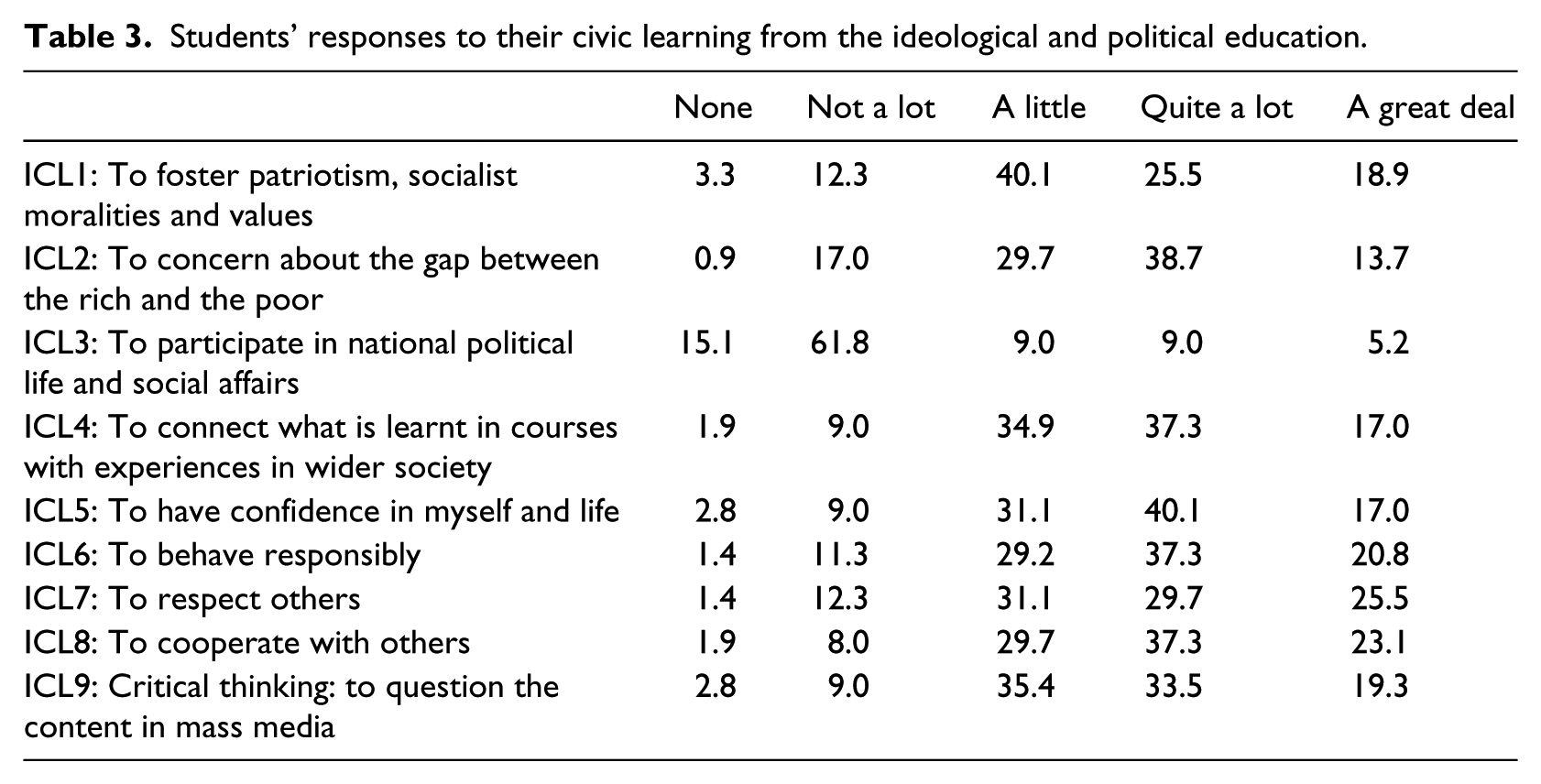
Students were more confident in their personal dimension and social dimension civic understanding. For instance, more than half of the participants (52.4%) deemed themselves to be very concerned about social equality issues form the curriculum. In addition, most of the participants claimed that they have learned a lot of civic qualities like confidence, responsibility, respect, cooperation and critical thinking.
However, notably, a largest percentage of 61.8% among the participants expressed that they had learnt a little of participating in national political life and social affairs. In addition, 15.1% even reported no learning experience about this aspect. The mode of RCL3 (2.0), which is under the middle level, could clearly show that it was less frequently learnt by the participants. Another result is that more than half of the participants (55.7%) showed their inadequate ability to foster patriotism, socialist moralities and values through this curriculum. Compared with the supreme status of the ideological and political education as well as emphasized patriotism education described in former sections, it thus indicated the primary aims of this curriculum were crucially challenged. This finding is inconsistent with previous research that an overwhelming majority of students (92.4%) expressed their loyalty towards the nation in Tu’s (2011) study. Therefore, specific explanation for this situation needs to be explored further.
Students were asked about their choices among options of teaching textbooks in school, discussing with friends and teachers, discussing with the family, reading newspapers, viewing serious news on TV and searching information on the Internet to see which source was mainly relied on when in their citizenship learning. The results showed that only 32.1% reported the use of official textbooks of the ideological and political curriculum. On the contrary, more than half of the participants received relevant citizenship knowledge from teachers, some classes of history and philosophy and supplementary learning materials like video and Internet information. Therefore, it was indicated that the curriculum for citizenship was not viewed as a potent aspect for citizenship learning among the participants, while the participants were looking for other areas for more knowledge.
When students were further asked to rank those learning choices, about 33.6% of the participants chose the Internet at the first place, which is higher than that of teaching textbooks at 29.4% and discussing with friends and teachers at 28%. It means that more students would prefer to receive civic information from the Internet. Interestingly, when looking at the percentage of the second place, it was still the Internet with the number of 45.2%. Finally, almost 30% of the sample ranked serious TV news at the third place, which outnumbered other sources’ percentage of rank status. Therefore, the results here revealed that the mass media was attracting students when they want to know more about citizenship issues. However, it was still worthy to mention that students did not discard official textbooks totally, as 29.4% of them would like to turn to it for help in their first choice. The above analysis about students’ confidence of private and social dimension of citizenship under this curriculum probably provides an explanation to this situation.
Some efforts were then made to investigate what is the students’ expected citizenship learning situation. Its aim was not to provide a detailed and comprehensive blueprint for curriculum reforms in Chinese Universities, which was beyond the scope of this research. Rather, it aimed to provide a direction to focus on students’ perspectives (Table 4).
University students’ suggestions of improving citizenship curriculum.
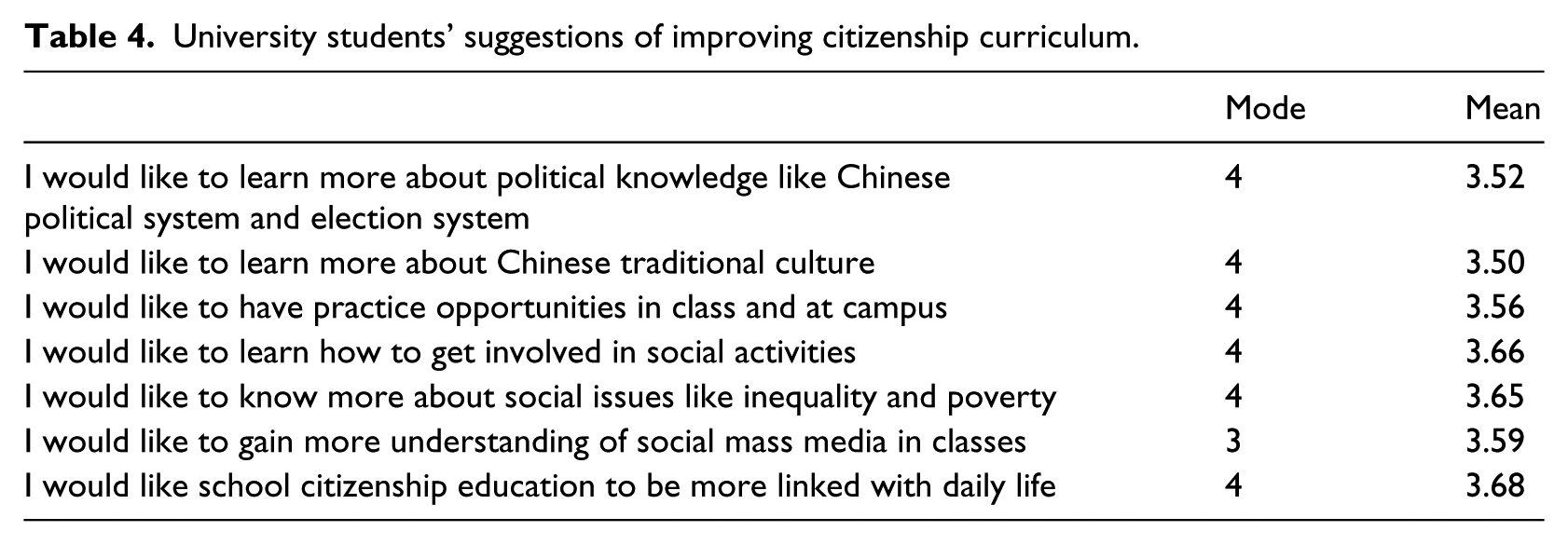
The modes and means above showed that most participants generally agreed with those statements; therefore, it indicated that participants were expecting more improvement in the ideological and political curriculum concerning its learning contents and teaching methods. In addition, the pursuit for civic participation support is clear among the participants.
Interestingly, the mode of ‘I would like to gain more understanding of social mass media in classes’ was 3, while its mean is relatively high. This result may be produced by a dichotomy of attitudes existing among students: a large number of students chose the measurement of 4 or 5, while others chose the measurement of 1 or 2. Therefore, it indicated that while some of the students were cautious about the role of mass media, some of the students were greatly impressed by the potential influence of mass media for citizenship learning.
University students’ citizenship outcomes in terms of civic perceptions
This section discusses the patterns of students’ civic perceptions including their attitudes towards trust, civic intention and citizenship understanding.
Trust in teachers and social, political institutions
Trust is a crucial concept related to social capital and citizenship. To be specific, high levels of trust are positively related to high political participation and strong social cohesion (Putnam, 1999; Whiteley, 2005: 13–15).
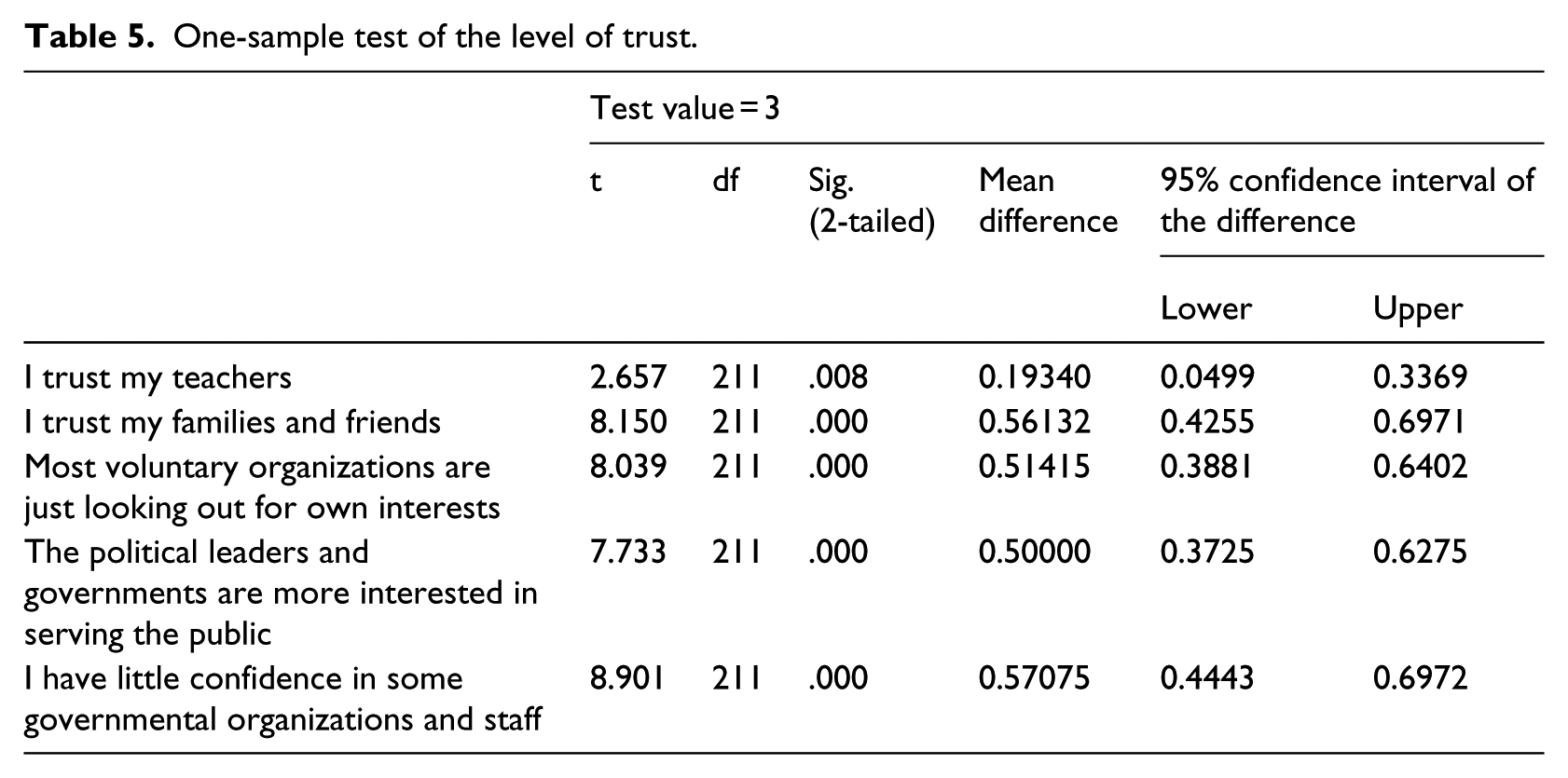
I constructed five indexes which try to measure the degree of trust towards people and public organization among the participants. Each index shows the distribution of students’ attitudes on a 1–5 scale, in which 1 represents strongly disagree and 5 means strongly agree.
It was hypothesized that the mean for each scale is of no difference with midpoint of 3. From the output in Table 5, p was supported at the <.01 level, which means that each mean is different from the midpoint level of 3.
One-sample test of the level of trust.
The second output in Table 6 shows that means are all higher than the midpoint of 3, which indicated that participants generally agreed with those indexes. Trust in their families and friends was strong, revealed by the mean of 3.56. Likewise, trust in teachers was relatively strong. However, the standard deviations for the first two indexes are larger than 1, which indicates a high variation among respondents’ trust towards teachers, families and friends.
Means of level of trust.
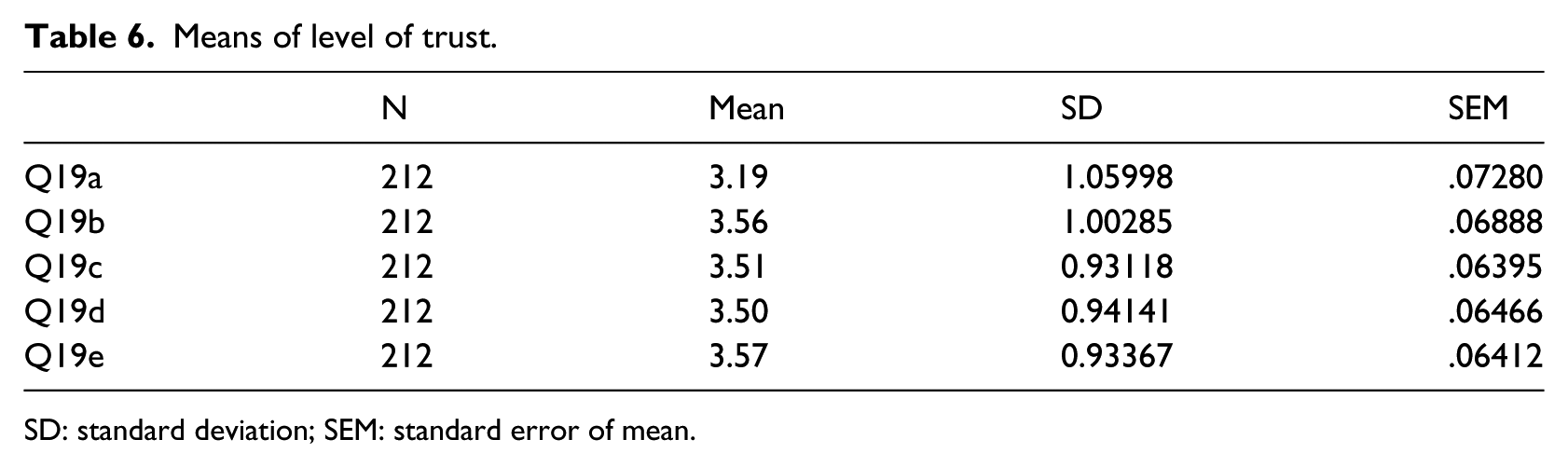
SD: standard deviation; SEM: standard error of mean.
Nevertheless, they do not develop enough trust towards voluntary organizations, governmental leaders and staffs. From the quantitative data, most participants agreed with the statements that ‘most voluntary organizations are just looking out for own interests’, ‘the political leaders and governments are more interested in serving the public’ and ‘I have little confidence in some governmental organizations and staff’.
Students’ civic intention
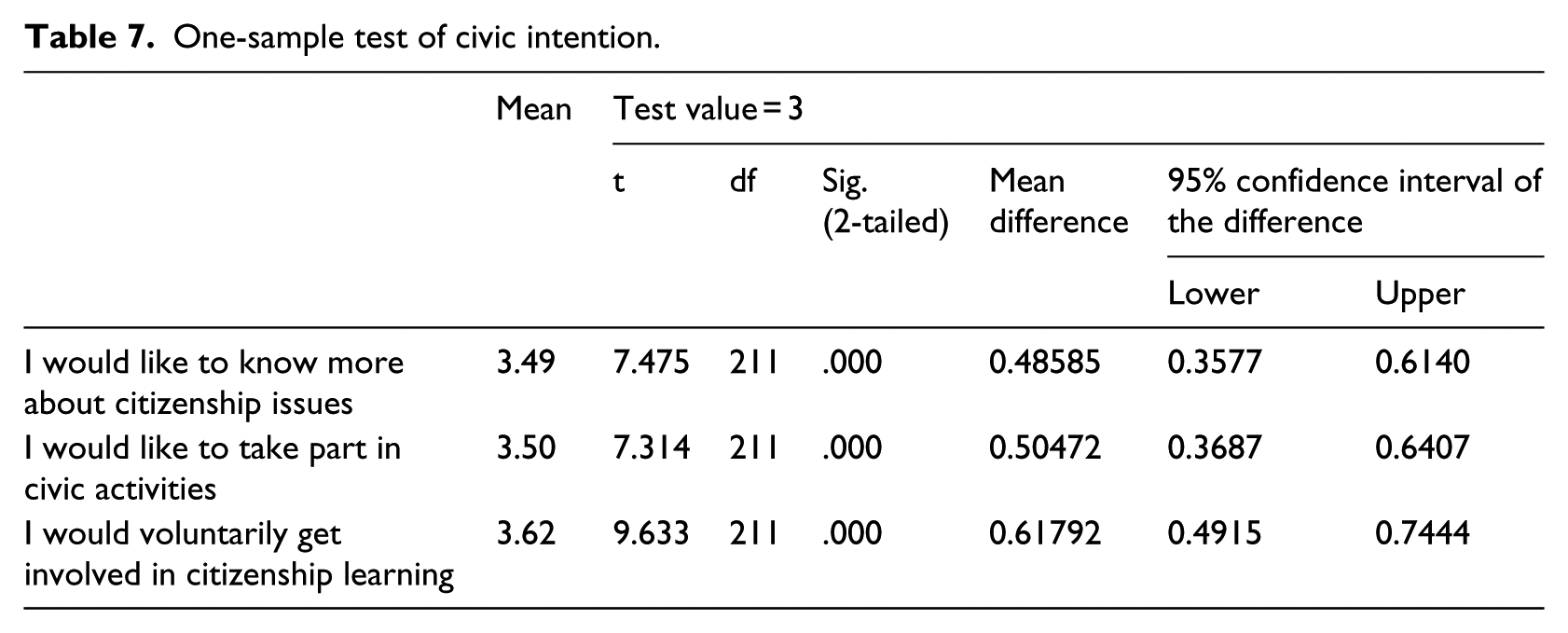
I constructed three indexes which measure participants’ civic intention, and one-sample t-test was also employed, and results showed the distribution of students’ responses on a 1–5 scale, where 1 signifies strongly disagree and 5 means strongly agree.
The output in Table 7 shows that students’ responses were significantly different from the midpoint of 3 at the p < .01 level. In addition, mean scores of those items ranging from 3.49 to 3.62 were higher than the midpoint; therefore, it showed students generally agreed with those statements. In other words, it showed explicit civic intention to know more about civic issues and to take part in civic activities among those participants in the Chinese context.
One-sample test of civic intention.
Students’ citizenship understanding
Students were asked to choose the most important thing in citizenship learning. Identifying what is considered ‘good’ at a particular time provides a measure of civic virtue and some insight into motivations for citizenship behaviours (Heater, 2004: 198).
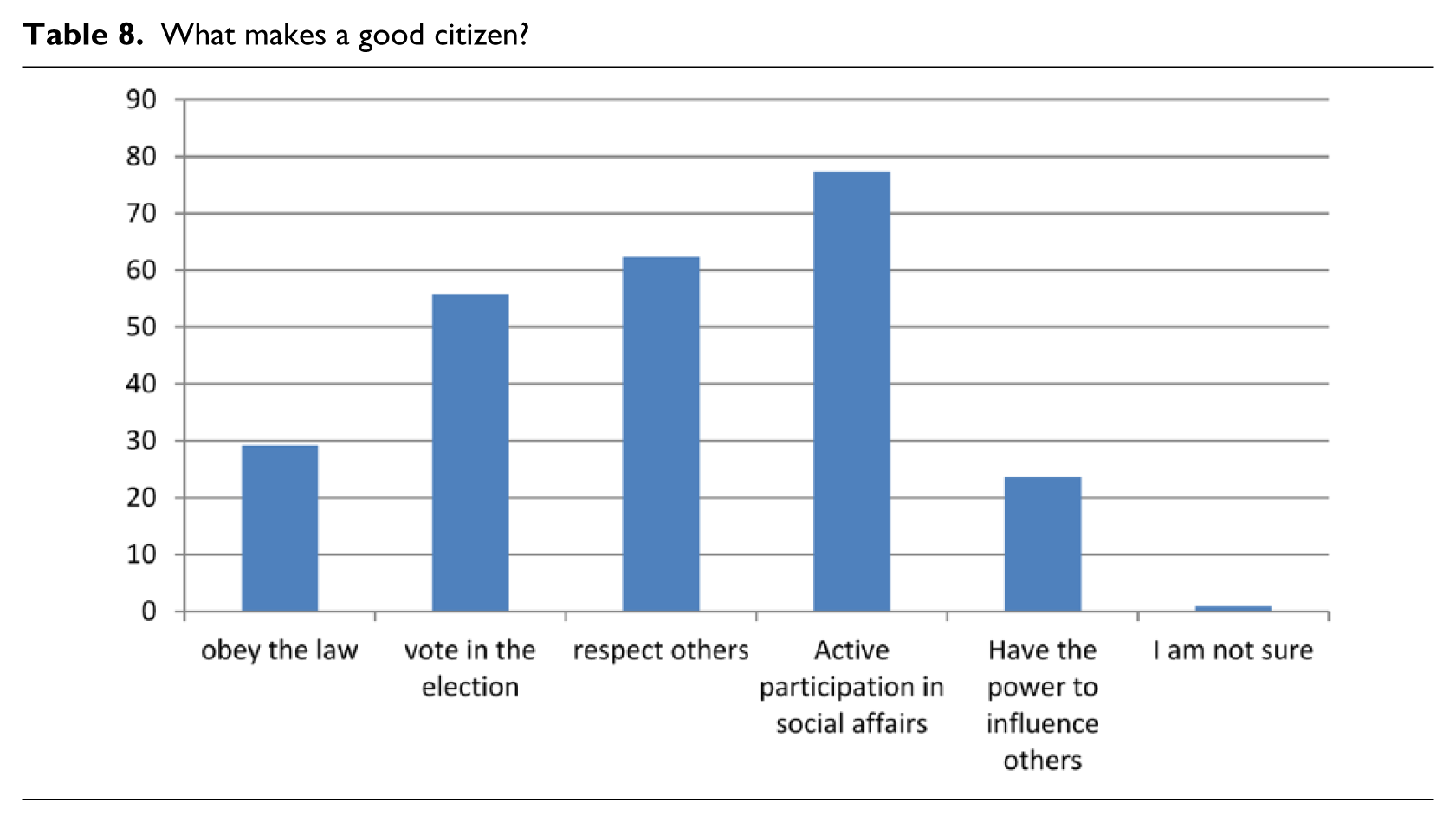
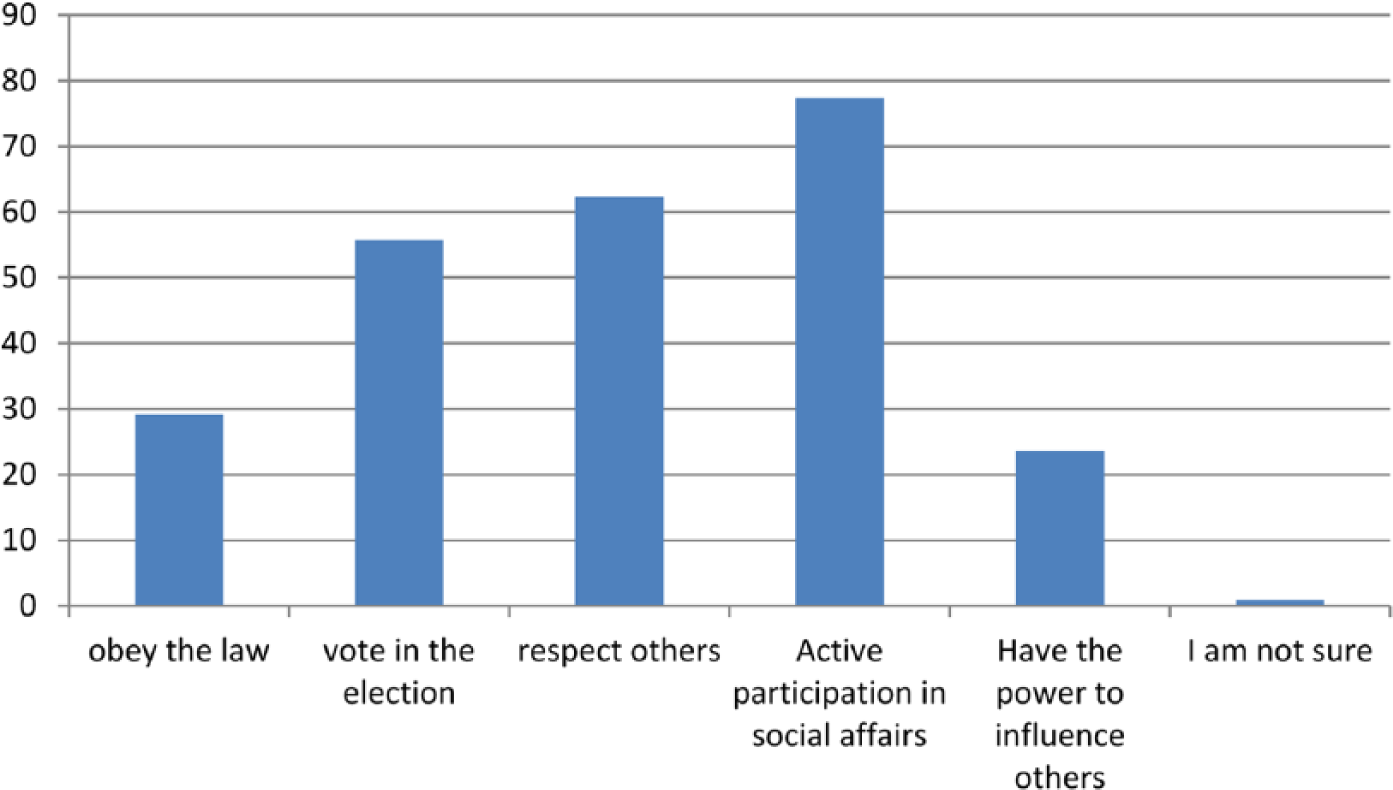
The percentages in the bar chart below in Table 8 show almost all of the participants had a clear mind of what would make a good citizen, as the percentage of choosing ‘I am not sure’ is extremely small. Among the rest of the options, the percentage of ‘active participation in social affairs’ was the largest, which indicated that the participants generally acknowledge the importance of civic participation. Then followed the quality of ‘respect others’ and ‘vote in election’ with both percentages above 50%. In contrast, participants were least likely to associate citizenship with ‘obey the law’ and ‘have the power to influence others’.
What makes a good citizen?
Unlike the picture revealed from the questionnaire which showed respondents’ clear views of citizenship, the interview data showed variability and confusion in the students’ personal understanding of citizenship. For example, one respondent confessed that he did not quite understand its specific meaning although he came across this term in textbooks from time to time: Teacher did not explain much about this term. I just treated it as an abstract term for examination. I think it is mainly related with the responsibility of patriotism, socialism and collectivism for Chinese people. (04, M, S) The term of ‘citizenship’ is commonly used and discussed in western context, but I do not know its exact meaning in Chinese context. Maybe it has the same meaning as ‘Renmin’ or ‘Qunzhong’ in Chinese. (01, F, S) Citizenship is a political term. It is not associated with students’ life. (05, F, A)
Such comments mirrored the immature citizenship curriculum in universities. The notion of ‘citizenship’ is not emphasized in the university curriculum, while it is pointed out as citizenship morality education. In this sense, it aligns more closely with the dimension of moral education.
Opportunities for civic participation: Less experience in political participation
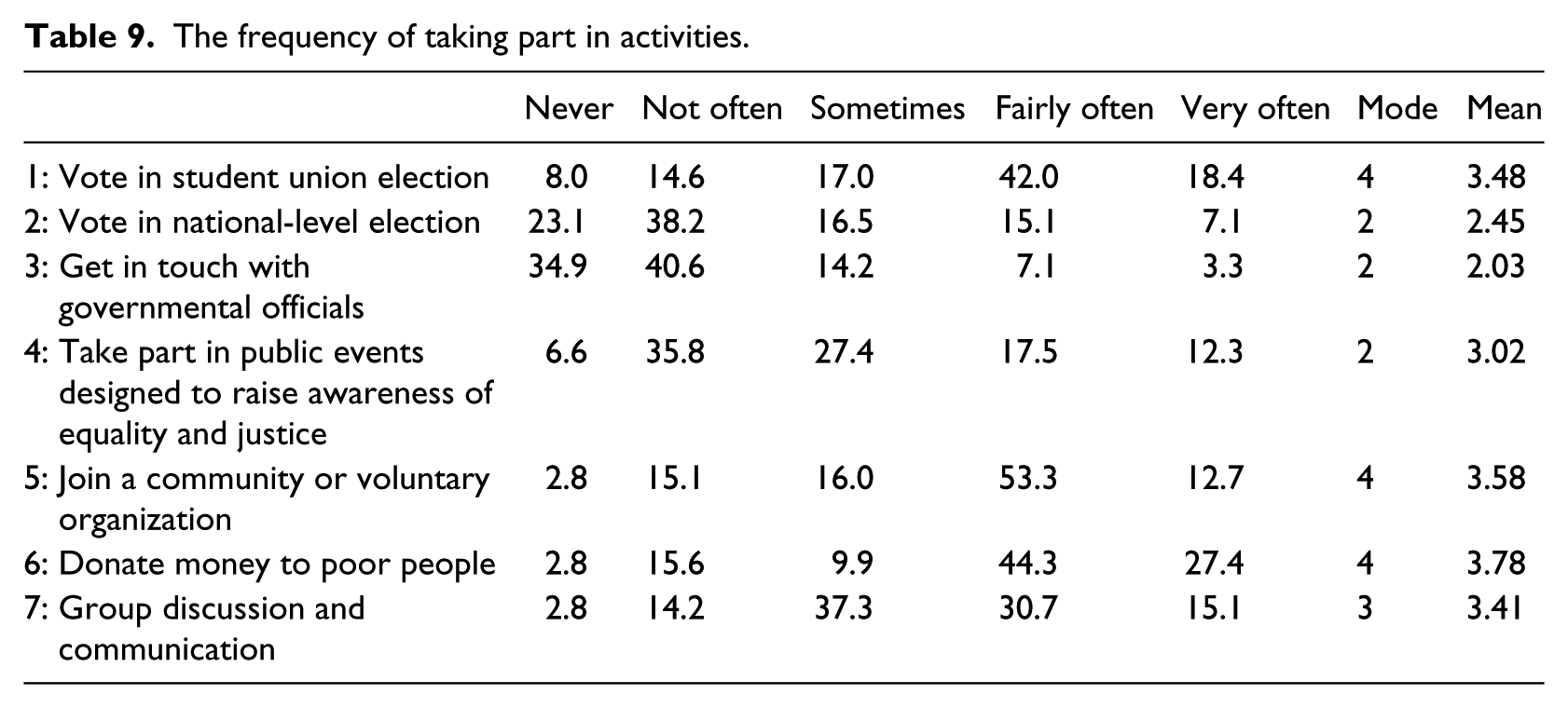
The participants were given a list of seven types of potential civic activities and were asked to report the degree to which they had been encouraged to take part. In order to get a clear image of their frequencies, calculating mean and mode is used to achieve this purpose. The modes of activities of ‘voting in national-level election’, ‘getting in touch with governmental officials’ and ‘taking part in public events designed to raise awareness of equality and justice’ are 2, which indicated the majority of the participants did not often get involved in those three activities. In addition, the means of ‘voting in national-level election’, ‘getting in touch with governmental officials’ are significantly below the midpoint of 3 indicating a lower occurrence of these two activities. However, the modes of activities of ‘voting in student union election’, ‘Joining a community and voluntary organization’ and ‘donating money to poor people’ are all of 4, showing that these activities were highly encouraged among the participants.
In order to provide a more detailed map, percentages of each scale of those civic activities were further examined (Table 9). The same result was found that voting in national-level elections, taking part in public events and getting in touch with governmental officials were least popular. In fact, more than 75% of the participants reported their lack of experience with contacting governmental officials. In addition, more than 50% of the participants felt they were not encouraged to vote in nation-level elections. On the contrary, donating money to poor people was the most popular activity, as more than 80% of the participants felt they were motivated to get involved in this activity. What’s more, students were more likely to be encouraged to join a community voluntary organization, as more than 80% of them also reported their experience. Therefore, it showed that participants were more encouraged in broad civic activities rather than political participation.
The frequency of taking part in activities.
In interviews, students mainly talked about their routine participation in CCP celebration meetings, CCP discussion meetings and social activities of helping others encouraged by the university, and they were generally motivated to participate in those university activities mainly by their personal development consideration. For instance, 11 (F, S) expressed that ‘as a member of CCP, I was given more opportunities to attend university-level meetings and activities, which would be a good part in my CV for job hunting. Many students envy me very much’. One interviewee (08, M, S) gave the same viewpoints: I want to be a college assistant when I graduate, and the first qualification for applying that job is becoming a member of CCP. Therefore, I tried my best to join in the CCP in order to be qualified, and I took part in relevant campus activities organized by the CCP.
Participants who were not Party members also mentioned potential advantages of taking part in party activities: ‘Although I am not interested in party-related activities, I still try to attend because it would add some credits to my annual grades’ (01, F, S); ‘I would like to attend party-related activities as I may have the chance to know some powerful students leaders or teachers’ (05, F, A). From this sense, it could help to explain the high attendance percentage in party-related activities revealed from the quantitative finding.
Does the level of received citizenship learning have an impact on students’ civic participation?
Regression analysis was conducted between participants who received citizenship learning outcomes and their civic activities. Particular attention was paid to the concern of whether students’ self understanding of citizenship from the university curriculum can be developed into real actions in their civic lives. For further analysis, an additive index for received learning outcomes was created by summing the scores from measures under the question about learning outcomes (Cronbach’s α = .876). In addition, an additive index for civic activities was also created by summing the scores from measures under the question about civic activities in campus (Cronbach’s α = .876).
According to Table 10, R2 of .124 shows 12.4% of the variation in the civic participation is explained by the variation in the received citizenship learning outcomes. Beta value of .353 indicates a positive correlation between the predictor and the criterion. This association is significant at p < .001. The result output indicated that there is a positive relation between received citizenship learning outcomes in participants’ perspectives and their relevant citizenship activities. To be specific, it meant that the more one believes that he has received citizenship knowledge, the more he would like to put it into practice in the real life. However, this kind of relation is kind of weak as revealed by R2 of .124. In other words, more supporting conditions need to be identified even if the participants believe that they have received a lot of citizenship learning.
Bivariate regression analysis for the relation between received citizenship learning and civic activities.

Students’ general attitudes towards the ideological and political curriculum
Five indexes were constructed which measured the overall attitudes towards citizenship learning from the ideological and political curriculum. The analysing technique of one-sample t-test was used, and results showed the distribution of students’ responses on a 1–5 scale, where 1 signifies strongly disagree and 5 means strongly agree.
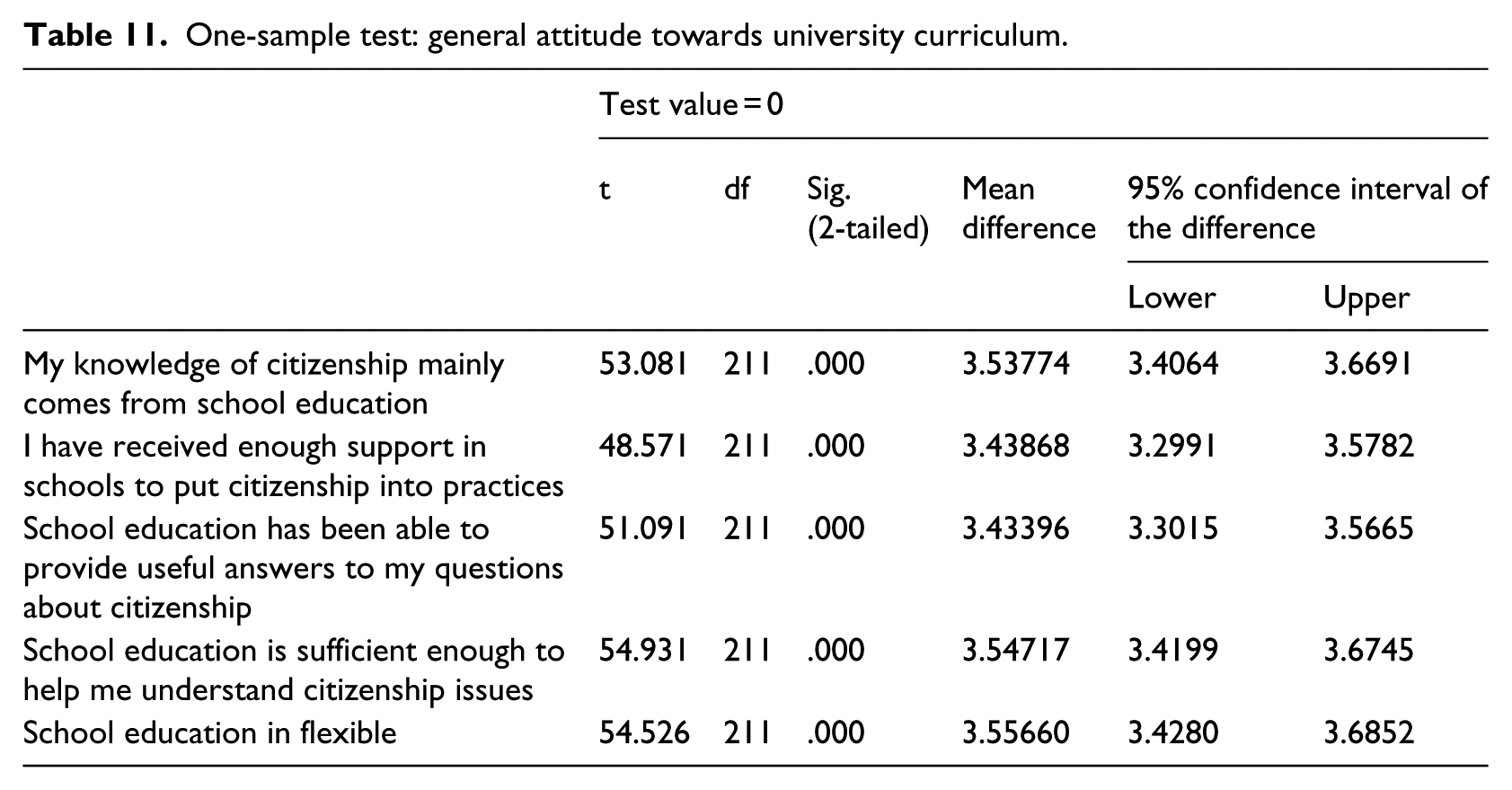
The result output in Table 11 showed that the mean score of each index is slightly higher than the midpoint of 3 ranging from 3.43 to 3.55 at p < .01. Thus, it was indicated that the participants did not hold an absolute negative attitude towards university curricula; rather, they did show some positive attitude; however, they have not been developed completely. The means of these two statements of ‘I have received enough support in schools to put citizenship into practices’ and ‘School education has been able to provide useful answers to my questions about citizenship’ were the lowest; therefore, the statistically significant differences between means showed that the participants generally were not so satisfied with the university curriculum for its inability of providing citizenship practice opportunities.
One-sample test: general attitude towards university curriculum.
Generally, four keywords of participation emerged in interviews: involvement, political elections, social affairs and making difference. For instance, 06 (M, A) linked civic participation with involvement in social policy decisions. In this student’s opinion, citizens should be entrusted with freedom and respect to make suggestions for social developments. In addition, participants were generally concerned about university students’ situation in civic participation. For example, the student numbered as 12 (F, A) said that university students are always neglected in civic participation, and their voices are not seriously considered. Similar ideas were expressed by most of the participants: Most campus activities are related with CPC, and thus they are well organized and highly supported by the university. However, I do not think we can express different ideas, and even so, our ideas would never make a change. (07, F, A) It will be difficult for university students to play an effective role in society, and I do not think we can make some changes even though we take part in relevant social activities. In addition, it is really impossible for us to attend political participations like national voting. (06, M, A)
Unlike the students’ two-sided, but overall positive, attitudes revealed in the questionnaire, the overall response to the focus on the ideological and political curriculum was negative from the interviews: We cannot learn updated information about social and civic situation from this curriculum. (03, F, M) The contents of textbooks are old and unattractive; we are hardly greatly influenced by a few lessons of political studies. (08, M, S)
One student (10, F, A) commented, The textbooks were composed in 1990s, and students have been learning the same material these years. As a student in 2000s, we are facing different situation. It is ridiculous that we are only asked to memorize those political guides and historical events considering the purpose of CPC development.
It was then mentioned to this student that the current ideological and political curriculum was newly revised in 2006, but she replied that ‘I did not perceive significant changes in textbooks, as contents are always around maxims, socialism and CPC’s political doctrine’. Another student (07, F, A) expressed the same concern that she did not understand why Marxist philosophy was given such an important place in Chinese university curriculum.
To summarize, surprisingly the results showed some favourable indicators that the ideological and political education can have a relevant positive effect on students’ civic outcomes. First, the results suggest that students have developed an explicit sense of civic intention, which means they believed they have become concerned about social equality issues through the curriculum and they would like to engage in civic participation. Second, further analysis indicated that students’ received learning outcomes through the curriculum are slightly positively related to civic participation. In particular, the Party is playing a significant role in encouraging university students to take part in some broad civic activities. Third, flexible teaching methods have been experienced, as they were encouraged to get connected with social reality and take responsibility. Fourth, their preferred learning source of mass media showed that they are no longer strictly confined within the curriculum for civic understanding, while they possess the freedom to search information from other sources.
However, examination of students’ responses towards ideological and political education generally revealed the participants’ concern about a lack of idealized civic participation opportunities. In addition, it showed a low frequency of their political participation encouraged by the curriculum. Thus, the results showed that the citizenship curriculum had little effect on students’ idealized civic participation, especially active political participation. What’s more, they generally agreed with the argument that teaching contents should include political knowledge and traditional culture rather than be centred on Marxist and Socialist doctrines. In addition, teaching methods should be improved.
Further analysis: The role of explicit learning in fostering active citizenship in China
This section provides possible explanations for the identified effects of ideological and political education. One approach to understanding students’ perspectives is to examine the impact of socio-political and educational context on their citizenship formation and interactions among students, schools and teachers (Law, 2007; Parmenter et al., 2000). This article then associates the discussion with the wider Chinese context accounting for university students’ civic perceptions and civic participation.
It could be argued that the current ideological and political curriculum in Chinese universities constitutes the main explicit citizenship learning context for university students, as the university is considered as the most influential political socializing agent, with clear aims of educating students to be particular kinds of people qualified for socialism, and communism is emphasized in this compulsory curriculum subject.
University students have strong concern for political, social and moral issues
Throughout the questionnaire, students showed a high level of civic intention. They were concerned about political, social and moral issues and would like to get involved in political and civic activities, which is consistent with some Chinese research that ideological and political education is interrelated to citizenship education in some respects.
This would be related to the increased emphasis placed on individual wellbeing, individual rights, responsibilities and moral character in Chinese citizenship education since the 1990s (Lee, 2003; Lee and Ho, 2005). According to the aforementioned literature, the revised version of citizenship education tends to include personal and social education components through such topics as law, rights and general life knowledge.
Positive relation between students’ received civic learning and civic participation
The questionnaire surprisingly indicated that when students received civic learning from the citizenship curriculum, there has been a positive impact on their civic participation. In terms of civic participation, the results further showed that students have more experience in social-related activities organized by CCP, while their experience of political-related activities is limited. The interview data also suggest the significant role played by CCP in motivating students to attend social activities. Therefore, this positive relation in this study is actually conditioned on certain factors.
As discussed above, the emphasized national dimension of citizenship education contributed to explain this result. Theoretically, the literature has identified Chinese characteristics of citizenship: emotional attachment to the national flag and national anthem, to China’s long and remarkable history and recent accomplishments and more generally to patriotism and nationalism (Lee, 2003); thus, party-related activities are greatly supported by the university and the governments. In addition, the revealed motivation mainly from students’ perceptions of self-benefits increased the role of the CCP in promoting civic activities. Facing difficulties in job-hunting and life pressure after graduation, the interview data showed students’ willingness to attend party-related activities.
The limited effect of the citizenship curriculum on university students’ political participation
The full picture of the findings inferred that this explicit citizenship teaching based on ideology and political education in Chinese universities could not fully meet students’ genuine need for exercising active citizenship; therefore, its specific aims of increasing political participation failed. A number of serious problems were still identified to explain this result.
First, the traditional Chinese educational system has paid too much attention to student’ political orientation and their political education, while it lacks the incentive to cast a deep look at students’ inner feelings about their humanitarian inclination and life education (Wang, 2014). In particular, it aims to foster obedience, socialism and communism among university students, but ignores the importance of personal development and civic rights. In other words, curriculum development in ideological and political education at university level has failed to keep pace with the demands of the times, due to its long-term neglect of research on theoretical issues and curriculum design (Chen and Reid, 2002). The participants in the interviews have expressed their definite dissatisfaction towards current ideological and political education, and the most striking argument proposed was that the university curriculum could not provide relevant civic opportunities according to students’ ideal notions of civic participation.
Second, a problematic relationship between encouraged moral dispositions or virtues and the desired resulting action was evident in ideological and political education. To be specific, Li (2008) pointed out that the current citizenship curriculum emphasized the pursuit of idealized values but paid little attention to establishing feasible and practical guidelines and actions among people in general. The result is that students just pay attention to theoretical learning without fully understanding and tend to lack any civic participation consciousness. One survey in China showed that an overwhelming majority of students (72%) did not think that they have accepted real citizenship education in China (Cai, 2013). In this research, when participants were asked about their understanding of citizenship, they expressed their confusion, as the university curriculum offers little help. It seems that the new generations of university students are more radical about political development and social development and to some extent they have developed into practice-oriented subjects. They dare to question the rationality of official textbooks, as they do not think the university curriculum is closely related to actual civic learning and civic participation.
Third, mechanistic teaching methods taking the form of indoctrination were in critical need of attention. According to the questionnaire findings, this form of teaching method was employed to a great extent among university students. In addition, the student interviews revealed that they would prefer to learn citizenship content through interactive activities related to their daily lives rather than through teacher-centred pedagogy.
Notable disconnect between ideal civic participation from students’ perceptions and the realistic situation of civic participation
The quantitative data demonstrated that most students in the sample showed a high level of civic commitment and relevant civic knowledge and they expressed their understanding of civic participation in interviews around ‘political participation’, ‘expression’ and ‘making difference’. However, analysis of the real situation of civic participation among university students revealed a different picture. It is evident that there is a low occurrence of political participation among the participants from the questionnaire data. In addition, the qualitative data showed that students mainly reported their attendance in party-related activities based on the personal benefits to them in the university, while their wider civic participation was limited.
The proposed disconnect between students’ idealistic civic participation and realistic civic participation is mainly attributed to the objective Chinese context: the desirable pedagogical outcome of the ideological and political education and the permissible framework of citizenship education in Chinese wider society. This apparent disconnect could be partly explained by the framework of ideological and political education practices, as the desirable pedagogical outcome of this official curriculum mainly concentrates on cultivating obedience, patriotism, socialism and nationalism at the expense of more dynamic forms of civic practices among university students. Certainly, it is important to note that students are also portrayed as active actor of civic participation in the curriculum; however, the agencies through which such wider civic participation can be channelled are vaguely described with abstract terms and words. Correspondingly, in practice, party-related study and activities are the only kinds of participation which are clearly defined and greatly encouraged by the curriculum and the university. Previous research showed that constraints from heavy study pressure turned out to be a frequent reason for students’ relatively inactive level of civic participation, as they considered that attending activities would take time away from more focused academic studies of memorization of facts and exam preparation. However, in this research, participants seldom mentioned that reason, and the most frequent reason pointed out was that they did not feel supported by the formal educational system for wider civic participation as they understood it.
Besides attributing desirable pedagogical outcome of the university curriculum to the disconnect, the permissible framework for civic participation in wider society also accounted for this situation, as it does not designate relevant agencies to promote efficacious and autonomous civic participation among university students based on the previous analysis. Limited access to formal participation for young people and their inability to make any differences argue that civic participation under mass media also needs improving. Under this situation, students prefer to attend social participation and keep themselves away from sensitive political participation. Thus, the absence of any effective channel for formal civic participation made such civic opportunities unrealistic.
Actually, this unbalanced status reflects the competing value systems in Chinese pluralist society. On one hand, university students are demanding more civic opportunities motivated by their implicit citizenship learning from mass media. In addition, this demand indeed conforms to the notion that students should develop as whole persons spiritually, morally, socially, culturally, mentally and physically; therefore, much remains to be done to ensure that students have reasonable opportunities to develop as complete persons (Ungoed-Thomas, 1997). On the other hand, university students’ ideal civic participation was objectively restrained by the curriculum and by the wider social framework in China. Patriotism, collectivism and socialism are three rudimental values to be promoted in the guidelines, and great financial and relevant supports have been provided to guarantee the implementation of those values. Therefore, it fundamentally reflects the disconnection between thick citizenship among university students and thin citizenship in educational policies, between students’ cultural citizenship understanding and traditional citizenship in the political framework.
Conclusion
With reference to the students in the sample university in Beijing, this article has examined the effectiveness of the citizenship curriculum of ideological and political education among university students in terms of their civic perceptions and civic participation, and how students’ perceptions are affected by the socio-political and educational context in China.
The findings have provided relevant implications from the existing literature on globalization and information technology, citizenship and citizenship education. First, the findings provide empirical data showing the positive impact of the ideological and political education on students’ civic views, civic intention and broad civic participation. Existing research into the revised citizenship education in China is mainly based on policy studies and theoretical discussion without the support of empirical data, while this study aims to remedy this situation. In addition, the findings challenged the views of many Western scholars that Chinese students are moulded to nurture a concept of citizenship structured on the teaching of Mao Tse-Tung (Gilliom, 2009). On the contrary, Chinese university students identify self-development and civic participation as most important in their perceptions of citizenship.
The second implication of this study enriches the literature of a broad and comprehensive framework of citizenship and citizenship education. The findings identify the current limitations of citizenship education in China and further support existing research that the citizenship curriculum fails to promote political participation among young people (Manning, 2013). The findings showed that the university needs to undertake some changes if it wants to be a more positive space for students’ inclusive state of civic participation. The complexity of the lived citizenship experience of university students is often misrepresented. To be specific, students’ choice of mass media in citizenship learning reflected the possible site for new forms of civic participation in mass media discussed by scholars.
This study has shown that although schools are generally considered as the main agent to deliver citizenship education, the wider range of context beyond the educational setting should be taken into consideration. In China, ideological and political education was traditionally viewed as an extraordinarily major channel to deliver official ideology and policy requirements by the Chinese government among university students; however, the empirical findings showed that although it, to some extent, contributes to students’ growing concern for social affairs and moral development, this formal curriculum tends to play a less effective role in students’ citizenship learning, especially students’ active citizenship understanding and civic activities.
Students are not only consumers of citizenship education but also active participants in the construction of multiple identities. The expansion of higher education aims to ‘produce more mobilized citizenry, changed cognitions, new forms of authority and new political discourses’ (Kamens, 2009: 106). From this sense, it then leads to indicate the fundamental reason why the explicit citizenship teaching through ideological and political education is no longer successful to encourage active citizenship and liberal democracy in a cosmopolitan sense among university students: it is solely based on party-related principles and theories while restraining the development of everyday citizenship. Thus, more efforts should be made to develop definitions of citizenship in political policy and university curricula, meanwhile a more flexible context in students’ everyday lives could be further explored.
Footnotes
Declaration of Conflicting Interests
The author(s) declared no potential conflicts of interest with respect to the research, authorship, and/or publication of this article.
Funding
The author(s) disclosed receipt of the following financial support for the research, authorship, and/or publication of this article: They received joint financial support from Chinese Scholarship Council and the University of Glasgow for the research, authorship and/or publication of this article.