



Abstract
In the current context of the undergraduate PR academic education in the United Kingdom degrees being shut down or merged with other communication disciplines, the present essay represents a timely reflection on the results and internal incoherence of PR education provision in the United Kingdom. Starting from the key idea that public relations is a mature occupation and academic social discipline, we developed a thorough analysis of PR fields, where we analysed the intra- and inter-dynamics between these various types of fields, aiming at identifying the main issues that impact the teaching of PR and its academic expressions. Drawn from the field analysis, we then focused on two key trends which currently shape the undergraduate PR education in the UK to recommend changes to the process of curriculum development that reconstructs the social value of Public Relations.
Introduction
PR is and has always been a locus of struggles. Due to its double nature as a social science and an occupational project, PR fits into the broader category of knowledge-based occupations. As a social science, PR has an inherent multi-paradigmatic, fragmented nature (Edwards, 2012; L’Etang, 2013), with no singular and universally acceptable definition. The ‘regime of truth’ (Foucault, 1980) construed about PR is constantly changing and presenting multiple dimensions. Within this essay, we will deconstruct and reconstruct the current fields of knowledge, with a clear focus on academia as an essential space for generating PR cultural capital. Concurrently, we will also discuss the invisible relationships with other fields (occupational/industrial and societal), highlighting the power relations and the impact on the current body of knowledge.
There is a high asymmetry between PR usage and its reputation (Moloney, 2006); its expansion and diversification have been discussed both from a pluralist and critical perspective (Berger, 1998; Edwards, 2018a; Moloney, 2006). Studies connect the rise of the PR transnational epistemic community with the increasing social influence of PR on the public sphere (Cronin, 2018; Moloney, 2006). While some scholars connote the epistemic diversity of definitions and perspectives of PR as a positive and constructive state of the discipline (i.e., Edwards, 2012), others discuss its marginalisation in a broader context of disciplinary struggles of legitimacy and power relations (Cronin, 2018; Moloney, 2006).
The PR industry has an influential role in today’s global world and economies (Gregory, 2011); PR scholarship also revolves around the same debates. One major debate located in this field is focused on the object of the public relations: PR as an organisational management function or PR as a social practice (Edwards, 2012; Vujnovic and Kruckeberg, 2021). Another debate within the discipline is influenced by critical theorists and can be sourced in sociology or media studies: PR as a neoliberal tool/as an unscrupulous force for corporate interests (Kruckeberg and Starck, 1988) or PR as a positive force for change and social good. However, it is evidenced that currently the most influential paradigm in the practice of PR and in the PR education is the functionalist understanding of PR (exploring PR within the organisational environment). The main reason for the influence of the functionalist understanding of PR is, as per Vujnovic and Kruckeberg’s account (2021), the expansion of neoliberal ideology, mechanisms and practices within the university and academic sector. The predominant paradigm of PR as a vocational discipline is also reinforced by the governments’ approach on valuing university education as a pathway to employment and professional outputs. At a first glance, these shifts in the British universities should have positioned PR degrees into a powerful relationship with traditional arts or management degrees. However, PR education in the UK has suffered the reverse effect, as PR single honours have been eliminated as degrees (undergraduate or postgraduate) and turned either into academic pathways or ‘professional’ modules within broader BA degrees (Ruck and Bailey, 2023), whose convergence models we will debate further.
Acknowledging the vocational nature of PR discipline and its paradigmatic traditions, the current essay draws from Bourdieu’s understanding of social field and Foucault’s conceptualisation of ‘regime of truth’. While previous studies that applied Bourdieu’s approach on PR have mostly looked at PR as an occupational project (Bourne, 2022; Edwards, 2011, 2014, 2018b; Fitch, 2014; L’Etang, 2004; Pieczka, 2000; Pieczka and L’Etang, 2006; Trenwith, 2010), our paper intersects the Bourdieusian concept of field with the Foucauldian conceptualisation of discourse. The current essay is structured in two parts. The first part deconstructs the meanings, practices and current knowledge of various PR fields, from the broader space of public and societal environments, to industry and occupational space and even more closely, to academia and professional associations, focusing on internal shifts and inter- power relations. Our key arguments here are that (1) public relations is a mature and established social discipline and social communication practice; (2) however, despite this maturity, PR is a term which aggregates various and sometimes apparently conflicting representations. This status quo has a relevant impact on the way in which PR is taught at a university level; its education is also socially construed, and it is our responsibility, as educators, to reflect on the current changes and shifts with a nuanced analysis and pedagogical perspective. The second part of the essay aims to reconstruct and propose a model relevant to the academic space, bridging between different fields and critical conversations, therefore fostering PR literacy for students, practitioners, stakeholders and wider publics.
For the purpose of this essay, we introduce a conceptual framework of analysis, where fields that generate various understandings and practices of PR are visualised according to the logics of knowledge generation. PR as a societal circuit reflects the broader socio-cultural environment in which PR operates in an invisible way. The occupational field of PR is populated by the main actors which support the professionalisation of PR, i.e., employers in general (PR firms, in-house PR/communication departments, clients), freelance groups or communities, professional associations and key opinion leaders. The field of PR knowledge is represented by actors that generate cultural capital about PR; here, we will discuss the paradigmatic diversity of PR, alongside the role of universities in supporting PR scholars and educating PR students.
Deconstruction of PR fields
PR and society: A story of invisibility and misperceptions
In the public awareness, PR has always been confronted with a legitimacy crisis. The high asymmetry between PR’s usage and low public professional reputation has been a source of theoretical interrogation (i.e., Moloney, 2006); the main causes being PR’s invisible nature and the misrepresentations sourced by other, more visible and louder social spaces. The pervasive and invisible nature of PR has been discussed since the beginning of the profession. Bernays’s (1971) foundational ideas on what the PR counsellor does and how he/she operates depict a grey eminence, never in the spotlight, but using scientific methods to engineer consent. According to Aronczyk and Espinoza (2022), the agency that PR practitioners have in engineering public consent has been lost in the last decades due to the dominant focus of scholarship on the technical and managerial aspects of the profession. The role that PR practitioners perform as counsellors, therefore operating at a strategic level, compels Aronczyk and Espinoza to define PR practitioners as “PR agents to be value- generating actors who create and shape cultural narratives, information standards, and rules of engagement with strategically framed interlocutors.17” (2022: 11). However, this invisible nature is looked at in a critical way; avoiding the limelight is a strategic choice for PR counsellors, using deliberate strategies of silence to construct ecosystems of influence (Aronczyk and Espinoza, 2022: 12–3). With professional titles constantly changing and shifting boundaries, most of PR counsellors’ work remains in the realm of influence and networking.
PR does not possess a high reputation amongst the general public or certain professional groups (Moloney, 2006). In the popular culture, movies and TV series stereotypically depict PR either as a ‘party girl light’ profession (Bowen, 2009) or as a dishonest, manipulative spin-doctors’ profession (Tsetsura et al., 2014). In practice, one professional category that repeatedly projects a negative public perception of public relations are journalists. The two professional fields possess a conflicting relationship, with journalism being valued positively as the ethical instance in this relationship and PR being perceived as the unethical and ‘spin’ industry (Jackson and Moloney, 2016; Macnamara, 2015).
Public perceptions of PR can be vague; industry surveys do not investigate public perceptions of different practices of communication and the equivalent professions. Few studies have actually looked at the various perceptions of trust of key stakeholders involved in communication on behalf of organisations. Moreno and colleagues (2021) consider that public trust is a social contract between a profession and its beneficiaries; for public relations, the final beneficiary of communication activities is the public. Therefore, if the public believes that professions act and serve their interest, then a high level of trust can be achieved for that particular profession. However, “public distrust for the PR profession can be attributed to a deficit of knowledge or a lack of factual information about the goals and principles of the profession” (2021:3).
Occupational PR field: A story of growth and market-driven changes
The field of PR as a profession tells us a different story, and that is one of growth and expansion, driven by market dynamics and principles. This second field of PR is represented by the industry of PR and its actors: employers (i.e., PR firms, in-house departments of organisations – private, public and third sector), professional associations, freelance groups or communities and key opinion leaders. Globally, the PR industry could reach US $149.44 billion by 2026 (Bourne, 2022), while in Britain, public relations is worth almost £15 billion per year and employs 95,000 people (Waddington, 2019). PR scholars mention that this data includes only the reported profit/income, without considering work executed by freelancers, small PR consultancies and in-house PR practitioners who might perform PR tasks as part of another role (Bourne, 2022). Its professional breadth is also impressive; 69% professionals are employed in-house, the public sector being the largest employer (33% in public sector, 22% in private and 14% in third sector), while only 18% work in an agency and 13% are independent practitioners (Chartered Institute of Public Relations, 2022). Moloney (2006) considers that there is an underestimation of the actual number of people working in PR because of how data is reported, as most surveys and methodologies only take into account explicit job titles and persons who self-declare in a context where PR specialisms have always changed their names; for instance, government communication specialists do not use the term ‘PR specialists’, but ‘government communication specialists’ or ‘information officers’. Also, for many businesses and organisations, the term ‘PR’ has negative connotations, therefore they will develop synonymic terms (i.e., organisational communicator). Moloney advises developing a more accurate picture of the breadth of public relations, specifically to look at it “as persuasive communications (excluding advertising) done by people in honorary, voluntary and paid posts in the public, private and voluntary sectors” (2006: 17–18). With this size, scale and breadth, the PR industry is one of the most lucrative communication and creative industries.
The growth of the PR profession is complemented by expansion (Bourne, 2022). PR has entered on other disciplines’ territories and has gained relevance by developing new practices. The push and pull dynamics between PR and other communication practices and professions is well debated; advocates of convergence, both academic (Zerfass and Durhing, 2011) and industry-focused (Weber, 2014) discuss the integration between marketing communications and public relations. Such integration highlights two levels: (1) content and (2) strategy. At content-level, scholars from different media and communication disciplines (i.e. Hardy, 2020, 2022; MacRury, 2017, 2018a, 2018b) are trying to institutionalise the concept of ‘branded content’ as a promotional sub-field that “takes various forms, from material that is self-published by brands, through to ‘publisher-hosted’ content, where brands supply or fund material carried by third-party publishers” (Hardy, 2020: 4). This newly formed research strand focuses on practices of promotional content, where the lines between paid, earned, shared and owned media content become intertwined. To their account, this convergence is reflected also at occupational level, where today’s branded content professionals are the ‘content creators’ (MacRury, 2017: 249), represented by ‘traditional’ occupations (such as marketers, advertisers, PRs, brand specialists, etc) but mostly by the ‘new professionals’ (such as influencers, vloggers, practitioners) who create content by merging promotion and media, developing promotional countercultures. Their key argument is that if in media consumers’ minds, the delimitations between PR-generated content, advertising and marketing content are not clear, then this would also prompt the creation and institutionalisation of a concept that would reflect how these boundaries integrate blur in practice.
PR has multiple distinctive professional areas and levels of influence compared to other communication industries where competitive practices or discourses are yet to be constructed. In the PR freelance world, UK community is very much media relations-focussed (Anton and Moise, 2023; PRCA, 2019), while within in-house departments, corporate affairs and corporate communication are highly valued areas of PR practice (Deloitte, 2023). Many industry leaders have also emphasised the resurgence of strategic value PR embedded during COVID-19. In the UK, a report published by the UK Government Communication Service (Government Communication Service, 2020) highlighted areas of strategic value for which PR was recognised: transition to hybrid and remote working models, PR as a leadership function (i.e., coordinating internal and external communication), digital PR, internal communication, informal partnerships and professional networks, and social communication. Secondly, an emergent area where PR has gained strategic relevance is its persuasive nature; in the last years, UK PR in-house departments and PR agencies have started to embed behavioural knowledge to enhance decision-making. While this particular focus of PR as a mass communication practice (i.e., influencing large segments of publics) reflects PR’s scientific US origins through the work of Edward Bernays, this dimension has then been ‘lost’ to the predominance of Grunigian paradigm that focused mostly on the management of communication activities (i.e., effectiveness, relationships) and this is reflected within the industry as well as occupational discourses. Consequently, the portrayal of PR and communication professionals generated by the PR industry and its key opinion leaders does seem to resemble Aronczyk and Espinoza’s definition (2022): a professional advisor, with (1) the knowledge to aggregate various sources of data about stakeholders’ level of trust and formulate strategic recommendations; (2) the competency to pervasively construct contexts of communication, which need foresight, analysis, knowledge production and understanding of important narrative trends. These key competencies cannot be achieved without an appropriate level of education.
These push and pull shifts require an in-depth analysis. For instance, there is no research, to our knowledge, that would document the structural convergence in PR (at the level of in-house departments and PR agencies) and its implications; similarly, we are lacking further understanding on the extension of earned content (i.e., media coverage) in the space of branded content and its implications for media relations as a key area of public relations. The relevance of this type of in-depth knowledge is pressing, especially as the narrative of convergence practices in the industry and occupational areas informs and legitimises current shifts in PR scholarship and education.
PR scholarship: A story of positive paradigmatic diversity or internal incoherence?
The key field where the knowledge of PR as a social and communication discipline is generated is the realm of scholarship. Here, a conflicted story of paradigmatic diversity and cultural academic divisions becomes apparent when exploring the literature. Despite the wide and long historical authenticity of PR academic knowledge, other disciplines have theoretically critiqued PR. Public relations, as a social and communication discipline, has always struggled for legitimacy against critical perspectives from sociology or cultural studies and for jurisdictional control against other communication and management disciplines (i.e., media studies, marketing, advertising etc.).
Traditionally, sociology has been highly critical of PR. Sociological critique began with the School of Frankfurt’s representatives who mentioned the impact of PR and other promotional industries on the public sphere, or role, to the rise of consumerism and consumer society. Habermas, the sociologist who institutionalised the concept of the public sphere, discussed the domination of PR in the Western public space and critically considered that PR techniques “have become a key phenomenon for the diagnosis of” the public sphere (1989: 193). Even though Habermas was criticising first and foremost the practice of public relations (Northhaft and Zerfass, 2023: 249), the Habermasian influence on criticism of PR coming especially from sociology and media studies, has been very productive. UK political economics academic literature (see for instance Davis, 2000, 2002, 2003, 2013) looks at the development of promotional cultures in Western spaces and their impact on the public nature of communication and the democratic nature of communicational spaces and practices. Media and Communication studies and academic research has developed this particular paradigm and PR is always portrayed as promoting capitalist/neoliberal mechanisms and structures, through corporate agendas, government manipulation and international organisations’ interventions.
Critical theory has permeated public relations scholarship, being one of the most recently productive areas of research in the UK. Systematically opposing Grunig’s excellence functional paradigm (L’Etang et al., 2015), a critical mass of researchers who predominantly teach and research in Media and Communications programmes or Arts liberal schools in the UK, Australia and New Zealand, US drove a new research agenda (Edwards, 2012: 11): “Aldoory, (2005), for example, argues that management paradigms of PR (Grunig, 1992; Kim and Ni, 2010) contrast with the rhetorical paradigm (Heath and Toth, 2009), the postmodern paradigm (Holtzhausen, 2011) and the feminist paradigm (Grunig et al., 2000, 2001), all of which she sees as evolving schools of thought in the field, each approaching PR using a specific analytical lens.” A more recent theoretical strand, following the 2000s socio-cultural turn in PR, highlights the humanistic nature of PR, either inscribed in cultural roots (Brown et al., 2021) or in the increasingly complex nature of societal issues (Ciszek et al., 2022), authors aiming to reorient PR into being socially, culturally, and ethically responsive to the pressing issues of the 21st century. However, new distinctions are being drawn between the universalist nature of humanist paradigm and the focus on the particulars of the critical humanist perspective: “While humanism is a broad philosophy that considers multiple forms of living and being, critical humanism mainly rejects universalisms that do not attend to the particular. As a critique of traditional humanism, critical humanism rejects the universalism of humanity, emphasizing the significance of socio-cultural context.” (Ciszek et al., 2022: 2). As in the case with the sociological influence, PR scholarship has gone through two stages of theoretical decantation: firstly, studies have explored the applicability of critical theories in the PR practice, using cultural studies/philosophical paradigms for Public Relations; in the second stage, PR scholars began developing critical theories of Public Relations. This process is needed whenever new knowledge is created by the application of theories outside the field.
The value of theory for PR practice is one of the most contingent and conflictual topics in PR. At the beginning of the debate (see Ferguson, 1984), scholars talked about the impossible task to build a theory of PR, even questioning whether PR was worthy of theory at all. Brunner (2019: (2) is more optimistic, considering that, due to the applied nature of PR: “Theory helps practitioners become better practitioners because it helps them better understand publics, messaging, strategy, and tactics.” Considering which theories have influenced PR practice the most, Meadows and Meadows (2014), consider sociology as dominating theories such as agenda setting, the situational theory of publics, critical theory/critical discourse analysis, and framing theory, followed closely by the normative theory in PR, i.e. the excellence theory, as the second most cited. According to more recent studies (Grunig and Kim, 2021; Hung-Baesecke et al., 2021), “The Excellence Theory now represents the most dominant paradigm of public relations research (Botan and Taylor, 2004; Huang et al., 2017; Ki and Ye, 2017; Pieczka and L’Etang, 2006; Sallot et al., 2003; Ye and Ki, 2012). It has attracted numerous applications, extensions, criticisms, and refinements. Research that elaborates and refines the Excellence Theory in the areas of publics, public relations models, organization-public relationships, reputation, ethics, empowerment, culture diversity and professionalism, public relations strategy in specialized areas and global practices, and evaluation and measurements has significantly contributed to the body of knowledge of public relations (see Toth, 2007). The Excellence Theory has stood the test of time.” (Hung-Baesecke et al., 2021: 319)
Hierarchies of value have impacted the legitimacy of PR theories and knowledge, in comparison to other more established social disciplines (from an institutional and professional point of view). What most PR scholars see as paradigmatic diversity, other scholars consider its internal incoherence as a cause for the discipline’s status quo of existing in a vicious cycle of self-assertion and self-defence (Duhring, 2015: 6). Northhaft and Zerfass (2023: 246) argue that “attempts to arrive at a constitutive theory of public relations – i.e., a theory that precisely defines what public relations is as a subject of inquiry or object of research – have always been doomed to failure.” However, we do consider the paradigmatic variety and within-the-field competition as a disciplinary driver for change and progress, as long as the emphasis is not on the differences, but the connections between different paradigmatic perspectives (Curtin, 2012; Edwards, 2012). Attempts have been made to highlight that this paradigmatic variety is constructive for the advancement of the discipline and PR scholarship: “Such discursive spaces allow the inherent variation in individual interpretations of these habits of mind to become visible, and open up avenues for new, revolutionary habits to emerge (Margolis, 1993; Edwards, 2012: 9).
Intra- and inter-fields power dynamics and their relevance for educational PR
The first part of our paper focussed on identifying three stories about PR which dominated, at this point, each of the PR fields: the societal field, the occupational field, and the scholarship field. In terms of intra-dynamics, each field is defined by constantly changing meanings: publics’ limited and stereotypical understandings of PR, practitioners’ focus on reputational value as a distinctive point from other communication practices, and scholars’ theoretically infused approaches of PR. This picture becomes more complex when we focus on the inter-relationships between these fields. We could have focussed on multiple angles, such as the apparent lack of dialogue between occupational field and the scholarship field; nevertheless, as we mentioned earlier in this paper, our aim was to identify the relevance of these types of dynamics and relations for PR university education, a space where PR literacy is transmitted and conveyed to students, as future professionals.
There are multiple power dynamics between these fields, as we will highlight in the second part of the paper. The occupational field maintains quite a dissonant relationship with the educational PR field; as many practitioners are graduates of PR or communications degrees, they maintain an emotional connection to the place of their knowledge formation, but at the same time, they internalise the occupational field’s discourse about the academic space, which is that universities and academics are not so well connected to the practice of PR or they do not establish connections with the PR industry. Even though we see many PR professionals being invited as guest speakers or visiting lecturers in universities, this discourse is still being promoted within the occupational field. Secondly, occupational PR field is constantly influenced by PR scholarship; so far, as we already mentioned, the Grungian paradigm seemed to be the most impactful theoretical approach, nevertheless, this situation seems to be changing, due to the nature of PR and organisations intersecting more with societal dimensions, i.e., social movements, cultural phenomena, societal issues.
How are these intra- and inter- dynamics relevant for the current situation of educational PR in the UK? Public perceptions of PR, and especially its invisibility, influence university leaders’ decision-making in relation to the institutionalisation of PR (Smith, 2022). PR industry and the professionals that populates it do not consider university PR education as the best mode of gaining professional competencies, as we will discuss in the second part of our paper. Additionally, the apparent convergence at the level of communication practices has been translated into convergence of PR degrees names and their curricula. Lastly, the hierarchies of value manifested at the level of PR scholarship that we already presented also impacted the way PR is being taught in universities. Institutionalised in business or arts liberal schools, PR has been predominantly pigeonholed into a practice-based and vocational discipline, without any capacity of fostering theoretical understanding. Despite well-represented paradigmatic influences from other disciplines, decision-makers and academic leaders in universities usually design only practice-based PR courses; this dominance impacts public understandings of the social value of PR and key professional competencies that BA PR graduates develop during their academic journey.
Reconstruction of PR education. Space for collaboration and the call to grow pedagogical research and expertise
The field of PR knowledge also includes its institutional dimension: PR education. Public relations, as an applied communication discipline, has built and progressively construed its own value through its ability to attract students and as a pathway to professional outputs. As a result, globally PR degrees attracted a good number of students (Hallahan, 2013; Moloney, 2006), especially as many PR firms and in-house departments started to recruit graduates directly from colleges. All these realities, as well as the development of PR industry and its professionalisation should have logically been reflected in its academic institutionalisation, through a growth of the number of PR degrees in the UK. Contrary to that, a recent report by PR Academy suggests 16 degrees have recently been removed from university courses (Ruck and Bailey, 2023).
Undergraduate public relations degrees in the United Kingdom.
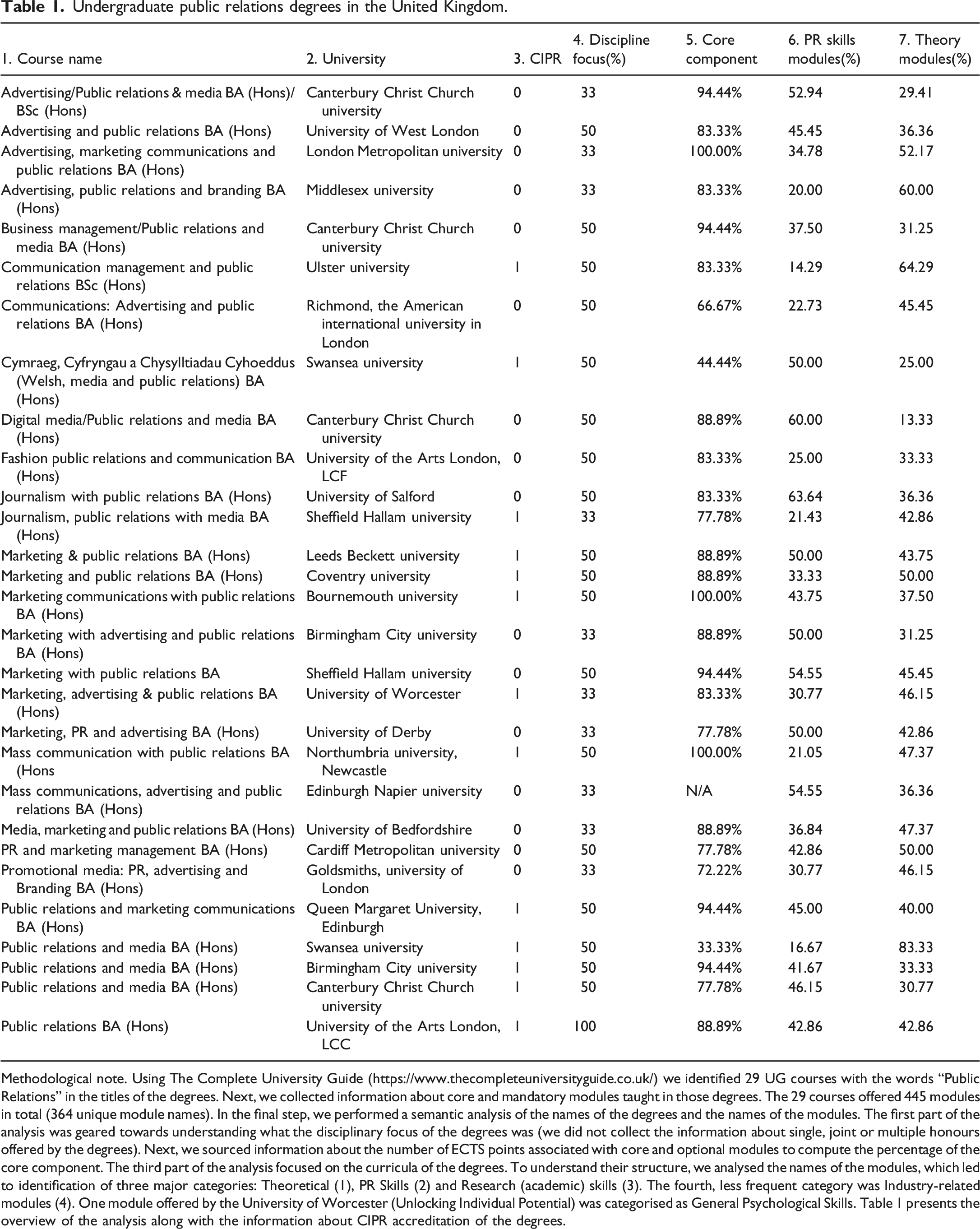
Methodological note. Using The Complete University Guide (https://www.thecompleteuniversityguide.co.uk/) we identified 29 UG courses with the words “Public Relations” in the titles of the degrees. Next, we collected information about core and mandatory modules taught in those degrees. The 29 courses offered 445 modules in total (364 unique module names). In the final step, we performed a semantic analysis of the names of the degrees and the names of the modules. The first part of the analysis was geared towards understanding what the disciplinary focus of the degrees was (we did not collect the information about single, joint or multiple honours offered by the degrees). Next, we sourced information about the number of ECTS points associated with core and optional modules to compute the percentage of the core component. The third part of the analysis focused on the curricula of the degrees. To understand their structure, we analysed the names of the modules, which led to identification of three major categories: Theoretical (1), PR Skills (2) and Research (academic) skills (3). The fourth, less frequent category was Industry-related modules (4). One module offered by the University of Worcester (Unlocking Individual Potential) was categorised as General Psychological Skills. Table 1 presents the overview of the analysis along with the information about CIPR accreditation of the degrees.
The misleading nature of the convergence of PR curricula
What should be taught in a PR degree is a widely debated within PR scholarship and PR professional associations. Often focusing on simplistic dichotomies, i.e., academic vs practitioner, theory vs practice, education vs training, academic research vs practitioner research (Somerville et al., 2011: 549), scholars and professionals together created the idea of an instrumental value as the singular way of understanding and teaching PR. The beginnings of PR in the UK are professional and occupational ones, followed by professional certifications provided by the Institute of Public Relations that also developed the first curricula in PR education. These curricula “emphasised technical skills, personal qualities and experience above objectively determined expertise and theoretical knowledge” (L’Etang, 2002: 44). To L’Etang’s point, the paternal relationship that the current CIPR has with the academic teaching of PR can be seen in their requirements for CIPR certified degrees that range from curricular areas to the appropriateness of staff teaching on these degrees. It seems that the debate between theoretical and practical elements of the UK PR academic curriculum originates partly in the IPR’s disregard for academic knowledge of PR. Somewhat consequently, not all practitioners seem enthusiastic about the value of PR UG degrees in the UK. Theaker (2004) pointed out that the growth of degrees at both undergraduate and master’s level and the development of vocational qualifications have been greeted with suspicion rather than as evidence of professionalism. To add to that, “some practitioners, who see themselves as creative rather than scientific, have resisted the general feeling that public relations is maturing into a profession” (Theaker, 2004: 66). As a consolation, a slightly better recognition of the importance of PR degrees is present among more experienced practitioners. In 1999, 98% senior managers expected entry-level employees to have a PR degree (IPR, 1999). On the other hand, academics have firmly recognised the role of practical experience in teaching PR. For example, 1990 IPRA guidelines for PR education suggested that PR courses should be taught by lecturers with demonstrable practical experience and understanding of academic and practical aspects of the field.
Outside academia, the understanding of what educational background is best for a career in Public Relations seems elusive. For example, the official UK Government’s National Careers Office website suggests that there is no entry route to become a PR officer and advises to complete the following course in a relevant subject: Foundations Certificate in Marketing (National Careers Office, 2023). What are the reasons for this apparent misalignment between universities and practitioners? All undergraduate PR degrees in the UK have undergone some form of convergence. Curricula seem to be reviewed periodically to introduce significant changes as a response to identified challenges: one of the reasons for revising undergraduate curricula in the UK (and globally) resulting from the impact of the black box fallacy (Jenkins, 2006) was the concept of convergence. Black box fallacy can be summarised as an expectation that soon all information content will be received through a single device. Although this does not imply that goals of Public Relations should be altered, a noticeable educational trend has emerged whereby PR education degree names were equipped with other components. The ostensibly correct rationale of convergence of different communication functions has led to not only changing how Public Relations is taught in the UK, but also to modifications of the names of PR degrees. In fact, if the contents of the curricula were to be judged based on the names of the degrees, only one undergraduate PR course in the UK focuses entirely on Public Relations (column 4 of Table 1). All others are “split” between neighbouring disciplines: Journalism, Media, Communication, Advertising, Branding or Marketing. 1 In our view, it has led to the further dilution of the focus of PR degrees. While acknowledging the economic factors driving these changes (e.g., university leadership being more concerned with cost savings), the value of PR graduates must be taken into consideration. Informed by previous studies who clearly state that “In fact, business leaders, educators, and students agree that specific knowledge is more important than being a generalist (Schelfhaudt and Crittenden, 2005; Plowman et al., 2022: 14), we consider that the black box fallacy has led to the further dilution of the focus of PR degrees in the UK. It seems that the names of the degrees and how they are communicated creates an obfuscated impression of the education goals of the PR degrees in the UK.
With regards to convergence, the stance developed by experienced PR educators contradicts the changes we observed in the names of the degrees and their curricula. For example, while Kelleher (2020) admits that the concept of convergence has translated into integration of “different communication functions strategically” (p. 61), and increasing the understanding of how different functions work, he believes the boundaries between communication functions should not blur. On the contrary, he says that “integration of functions of communication requires an understanding of, and respect for, the unique goals and contributions of each” and further argues that divergence of Public Relations is necessary to safeguard its unique contributions to market a product (Kelleher, 2020). Further strengthening this perspective, Sarachan (2011) sees the benefits of convergence – as an approach allowing to teach the technical skillset from various, media and content-production domains. In his view, for PR professionals, convergence should simply imply the necessity to learn how to use blogs and social networking sites, and lists technology-related competencies required by communications professionals: multimedia, video, podcasts, gaming solutions, etc.
PR skillset taught at undergraduate level and the needs of Gen Z
While technical and digital skills have become essential in everyday PR practice, focusing on them when designing Public Relations curriculum seems an outdated approach. First, the tempo with which new digital tools, platforms and devices introduced to the market can quickly make it difficult for universities to integrate these within the curriculum whilst ensuring an adequate level of preparation of the teaching staff. In other words, the pool of new tactics is growing rapidly and basing the curriculum development on the growing number of skills may not the best step forward. This, however, does not mean that PR educators should stop listening to the voice of the industry and the employers.
Contrary to previous, technology-driven changes, the challenge of the 2020s seems to be humans-oriented. The challenge of 2000s that affected Public Relations curriculum was the rise of computer mediated communication, which led to the introduction of modules teaching how to manage communication and information technologies (Alexander, 2004). The lists of specific skills expected from PR specialists were extended by adding the ability to create websites, conducting online research, and using software that enables managing online relationships (Alexander, 2002). It seems that the change that came in late 2010 was driven by a combination of changing characteristics of the student cohort, and the rapid rise of popularity of social media channels. Nowadays, it is predominantly individual characteristics – those of audiences and students – that should drive improvements of curricula. Current students, who belong to Generation Z are characterised by a high level of connectedness, tech savviness (which often becomes a part of their identity: Schwieger and Ladwig, 2018) and a high level of anxiety, which may translate into the fear of missing out (FOMO; Przybylski et al., 2013). Existing analyses also suggest - somewhat worryingly for the future of the PR profession - that Gen Z miss out on specific soft skills traditionally needed to succeed in PR professions: listening, building relationships, problem solving in real time and resolving conflicts (Schroth, 2019).
To further prepare current students for the challenges of tomorrow yet another element seems critical: ethics taught as a stand-alone module. It seems that ethical content produces dilemmas of today; especially AI assisted generation of word content and the arrival of deep fake technology that enables manipulating imagery call for reinforcing the ethical component in PR. One prominent example, which suggests that a timely intervention to PR curriculum is needed is publishing a mock interview with Michael Schumacher by the German magazine Die Aktuelle. The now dismissed editor (Mogg, 2023) agreed to publish an interview which included Schumacher’s responses generated by a chatbot Character.ai. Realising the role of PR in fighting epistemic pollution calls for more targeted efforts in teaching ethics on the undergraduate level. Typically, including ethics in PR curriculum has been done in two ways. The first one involved blending ethics into existing subjects (modules), which is recommended by some researchers as a more natural, practice-relevant way of teaching (Christians and Covert, 1980). For example, Hutchison (2002) created a compelling list of pedagogical tools to be taught about PR ethical issues recommended by the Commission on Public Relations Education. Her review of PR textbooks used in the US showed that ethics is rarely covered as a stand-alone subject. Although, some 20 years have passed since the review was conducted, our analysis of the UK PR degrees also shows that out of 408 core modules, only 3 contain a direct link to ethics (these are: Law and Ethics, PR ethics and CSR and Media Law and Ethics).
Currently, Gen Z students expect a more personalised “micro-experience” (Ernst and Young, 2016), and this desire may also translate to the consumption of educational resources (Schwieger and Ladwig, 2018). One of the consequences of the highly personalised and flexible product, which students also expect from UG education, is the introduction of optionality. All undergraduate PR degrees in the UK offer some degree of optionality, which varies between 10% and 90%. 2 Students are offered choice in the construction of their academic journeys and can choose which modules they want to complete. While this may suit the needs of some students, it comes with potentially negative consequences for their future professional careers. Although some optionality may enrich the curriculum, especially for degrees informed by professional practice, a strong core component is required. Especially in the first 2 years, when an understanding of the discipline is still being formed, students should receive direct guidance on knowledge that will be expected by future employers. Inconsistent with our view, most of the investigated PR degrees offer the choice of modules in year 1 and year 2, leaving more mature students in year 3 without a chance to choose the area of their specialism.
Towards the new approach to developing PR curricula
We argue that Public Relations is now in need of a fully developed field of university education to enable universities to become legitimate and powerful stakeholders. Elton (1993) lists the need for an underlying discipline as a prerequisite for Public Relations to become a profession. In a similar vein, Cutlip et al. (1985) conditions include “a specialised educational preparation to acquire knowledge” (p. 72). Public Relations is considered an interdisciplinary field of professional practice, informed by several disciplines of science (Tench and Waddington, 2020) and it could be argued that this creates the first line of tensions between practitioners and academia. As entry points to practice PR could be different, so do educational backgrounds of practitioners and their success stories. When we combine this with an overemphasis on practice (St. John III et al., 2014) and practical skillset when designing PR curricula, we find ourselves in a situation that is characterised by the PR industry becoming the tail that wags the dog (at best), or a disconnect of the fields of education and professional practice (in the worst-case scenario). The tail wagging the dog metaphor is also indicative of one additional characteristic of the relationship between academia (educators) and the industry: the dominating role of the industry in setting the agenda and contents of the curricula. We acknowledge the efforts made by professional associations (e.g., PRSA in 1990, VanLeuven, 1990; PRSA, 2006 or Commission on Public Relations Education, 2017) in formulating recommendations for PR curricula, at the same time, we consider that a more balanced relationship is needed for the Public Relations industry to continue to flourish, and academia has an active role to play in resolving this imbalance.
One of the most visible consequences of the PR industry versus academia imbalance is the almost straightforward adoption of skill-related recommendations coming from employers without much critical elaboration. To understand the roots of this situation better we need to take a step back by 40 years. Increasing automation and making low-skilled blue and white-collar jobs redundant in the 1980s was a major cause of the rise of participation in tertiary education “in the UK and British-influenced systems” (Toohey, 1999). To be competitive on the job market, employees had to offer better skills. Soon, problems were recognised in degrees that focused too much on academic knowledge and too little on developing practical skills and attributes (Bowden and Masters, 1993; Harvey and Knight, 1996). Elton (1993) observed that changes to course design were made to respond to the economic needs of the market. However, constant pressure to meet the requirements of the employers might have resulted in superficially meeting the demands of the system, instead of analysing relevant needs and meaning (Biggs, 1995; Gibbs, 1992). Toohey (1999) lamented that much innovation in the curriculum was conducted poorly, without first recognising what are the values, beliefs and ideologies behind the curriculum design.
It seems that in the case of PR undergraduate degrees, values and ideologies are not immediately transparent in the curriculum design. Perhaps one of the contributing problems is proliferation of the field. PR education continues to be influenced by the location of the course in either media or business school (Tench and Fawkes, 2005) and many degrees seem to appear as vocational courses focusing on the development of skills that resemble PR job advertisements. The axiomatic component of PR curriculum is equally difficult to transpire. Probably as a result of the interventions to “converge” PR with other media disciplines, the core skillset of the profession has been lost. For example, our review of PR undergraduate degrees in the UK shows that several degrees do not offer modules historically recognised as prerequisites of success in PR profession (see for example: Black, 1966): press release writing, media relations, planning and evaluation.
The following three approaches to PR curriculum design seem to dominate: performance, experiential and socially critical. The traditional or discipline-based approach – not identified in our analysis of PR curricula – follows the structure of knowledge. Different perspectives within PR make it difficult to reach an agreement about what is the common body of knowledge required to study the discipline (and what is its structure). Also, as the roots of the discipline are sometimes debated, there are different bodies of knowledge that are mixed and taught fragmentarily, depending on the preference of the tutors and often at the expense of the quality of the degree. While the traditional, knowledge-driven approach is not present in undergraduate UK education, it also possesses the caveat of the case of PR discipline: it involves a strong preference towards abstract, theoretical knowledge – unsuitable for any vocational discipline.
It would seem that the performance system-based approach has dominated the design of PR curriculum in the UK. Regarding this perspective, education is a purposeful activity and knowledge is useful only to the extent it informs action. There is no divide between theoretical and applied knowledge; this is, to some extent, consistent with White’s view that PR is a form of applied social psychology (White, 1999; see also Chmiel, 2023). The systems-based perspective assumes that theories that should be taught are useful only as long as they have a practical value (Toohey, 1999). As the purpose of PR education is teaching the practice of PR, educators choosing this approach frequently review expectations of employers to learn what skills should be taught. However, employers and academics seem to differ in their assessment of knowledge and skills expected from PR graduates. Unsurprisingly, ethics, PR management and new media technologies are rated higher by practitioners, whereas theoretical foundations are considered more important by academics (Todd, 2009). There is also a discrepancy between what educators believe they are teaching, and what practitioners believe they find in new hires (Commission on Public Relations Education Report, 2017; DiStaso et al., 2009; Neff et al., 1999; Todd, 2009). An even closer look at the curricula suggests that – using a parallel to Gregory’s planning framework – as a consequence of the performance approach, PR education in the UK have increasingly focused on teaching tactics, without adequately developing other core competencies: audience analysis, strategy, goal setting and evaluation. In addition to that, transferable psychological skillset, which seems intuitively needed in the profession of PR; creative thinking, problem solving, group work, personal communication is not present in the form of standalone modules (See Column 6 in Table 1). In our view, the systems-based (performance) approach might have been fruitful 25 years ago. Technological revolution of the 2000s combined with the arrival of new characteristics of polarised audiences seem to leave the system-based approach as inadequate. Educators who wish to continue using this approach, will not be able to respond quickly enough to the PR challenges of the next decades of the XXI century.
Conclusions and future directions: The need for recognising the pedagogical expertise of universities
Public Relations curricula in the UK seem to be predominantly influenced by employers’ expectations senior leaders’ understanding of PR and PR scholarship of its tutors, but – we argue - not by pedagogy-led research. The vocational character of the profession of Public Relations has influenced how PR is taught and how its curriculum has been developed. Consequently, the key source of influence on the contents of PR curricula is the industry’s expectations to equip graduates with a practical skillset. Academia is occasionally being forced to compete with PR training providers (e.g., professional associations and, more recently, consulting agencies who offer training services for students). Pedagogy-focused research outputs in the area of PR education emphasise the voice of the industry and the needs and expectations of employers (e.g., Brunner et al., 2018; Meganck et al., 2020; Neff et al., 1999). We argue that while this type of research is still a necessity, alone, it will not contribute to developing the XXI century PR curriculum. To mitigate the changes to PR and society, pedagogical expertise of university lecturers needs to be established and recognised.
While academic PR has started gaining recognition by the industry and university-level researchers are frequently invited by businesses to collaborate, the same kind of appreciation cannot be thought of those who engage in teaching-focused projects. From the university education perspective, this is perplexing as, within academia, the quality of research is often unrelated to the quality of teaching. In fact, Hattie and Marsh (1996) demonstrated that the levels of research and teaching are not related at all. In other words, the number and quality of research outputs produced by a university (or a department) is not indicative of the experience of students and their employment prospects. Adding to the complexity of the picture, there seems to be a universal consensus that although research is not associated with the quality of teaching, it is considered that the prestige of academia (Blackmore et al., 2016) and its quality are the indicators of academic success. Unfortunately, this has led not only to diminishing the reputation of teaching focused positions in academia but also restricting funding spent on researching into new pedagogical approaches (Willets, 2003). 3
We argue that in order to equip PR graduates with skills necessary to deal with the challenges of the next decades, a cognitive approach to constructing curricula should be adopted by experts familiar with pedagogical theory. According to cognitive approach, “the major functions of the school or university are to develop the mind, to help students learn how to learn to provide them with opportunities to use and strengthen their intellectual faculties” (Toohey, 1999: 55). The rapid growth of information, which is said to double every 12 h (vs every 8 years in 2000, The Boeing Company) leads to emergence of new knowledge and new skills. By taking the cognitive approach, university educators would be able to develop PR curricula built around problems and situations, instead of elusive and rapidly evolving PR skills. Although in the context of PR education, the value of the soft skillset has been already recognised (van Ruler, 2005), developing a curriculum built around solving complex problems and addressing the changing needs of the society presents itself as a novel and challenging task, which should energise leaders of the industry, university decision makers and the educators. To achieve this goal, the pedagogical expertise of university educators needs to be fully utilised and put to a test to add an element that is – we believe – currently missing in the process of building Public Relations skillset curriculum (see Figure 1). To achieve this, after gathering data from employers, the specific characteristics of Gen Z need to be acknowledged. PR fields and intersections.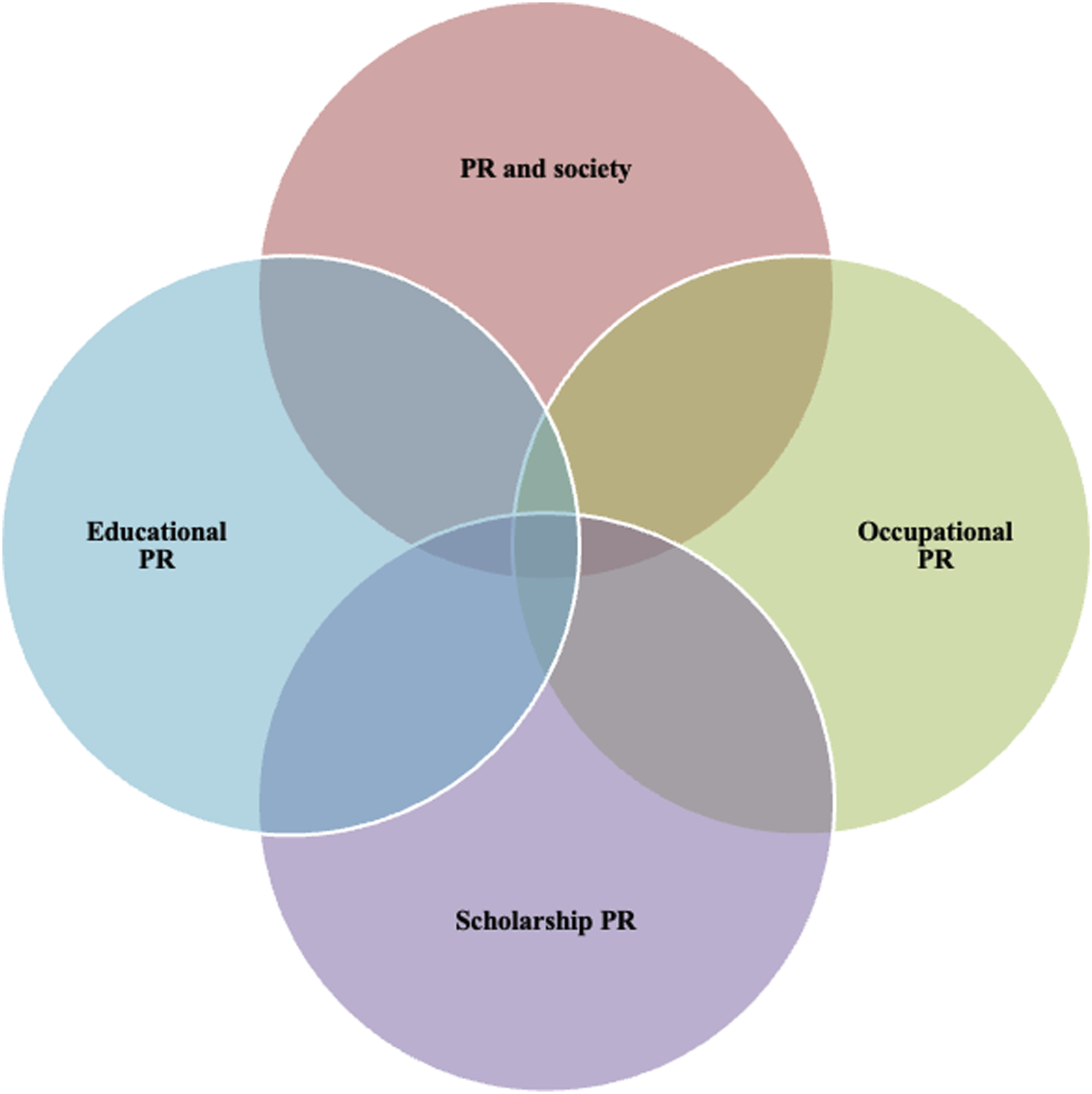
Secondly, a decision about values and beliefs of the curriculum approach should be made. We conclude that the cognitive approach is best for teaching contemporary Public Relations. It would allow to critically evaluate the current job skillset and build the new curriculum around higher-level, cognitive problems and contexts. In tune with Ruck’s and Baily’s findings (2023), the cognitive approach would facilitate a quicker adoption of capabilities that are expected to be soon in high demand: artificial intelligence and handling data analytics, EED&I, managing yourself and others, psychology of PR. These transferable skills should be taught as a separate module, as well as added to learning goals to already existing practical modules, where applicable. We believe that the understanding of what PR literacy means will change. An ideal PR apprentice will need to demonstrate openness to conflicting information more flexibly, as well as the ability respond to new, unknown challenges. We expect that the proposed changes would leave students graduating from PR programmes with skills that better prepare them for relevant tasks and problems, which are currently lacking from their university education (Figure 2). Current and ideal PR skillset curriculum development process. (a) Current process of budiling public relations skillset curriclum, (b) Ideal process of budiling public relations skillset curriclum.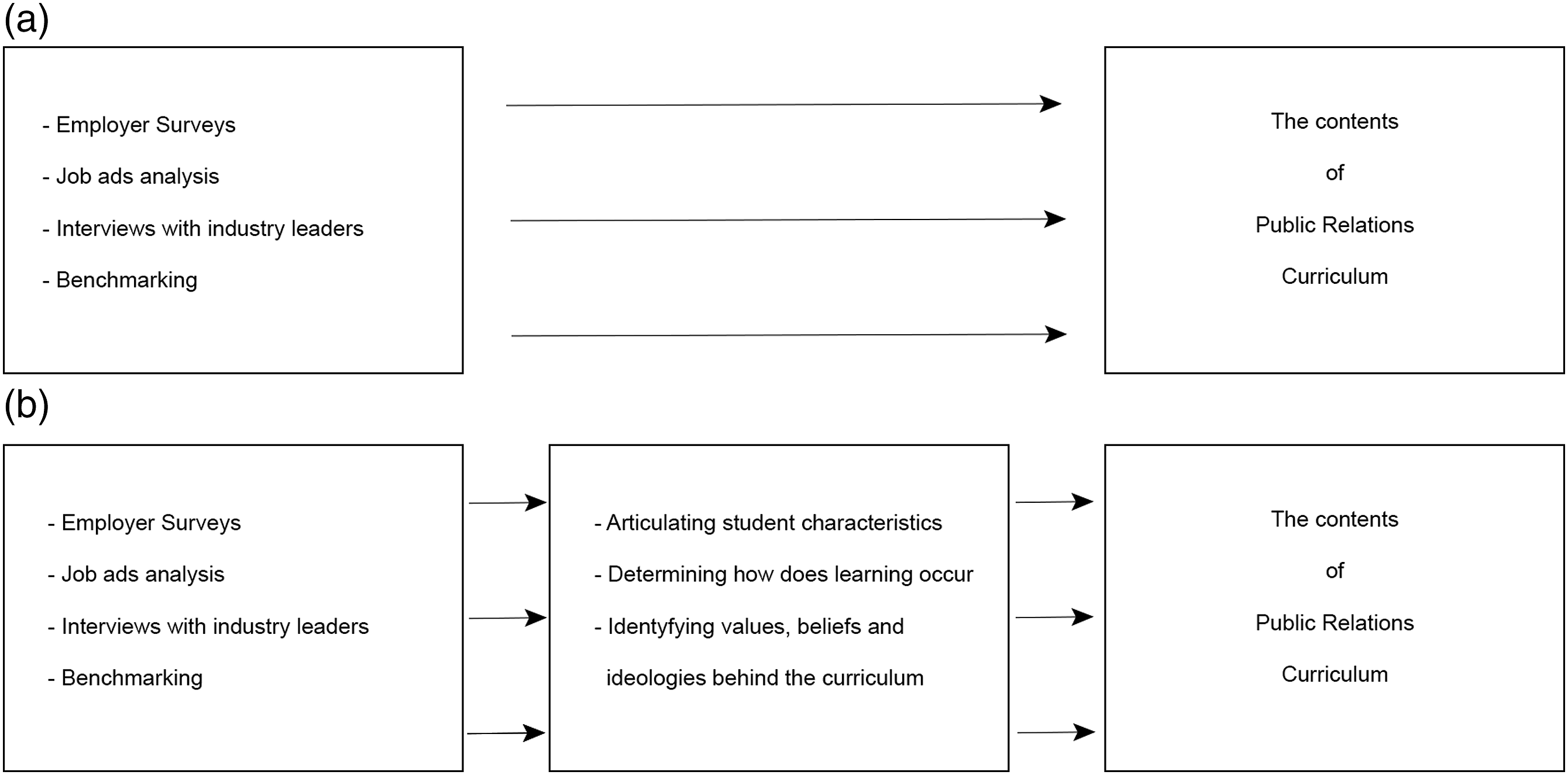
Footnotes
Declaration of conflicting interests
The author(s) declared no potential conflicts of interest with respect to the research, authorship, and/or publication of this article.
Funding
The author(s) received no financial support for the research, authorship, and/or publication of this article.
