




Abstract
Much is currently expected from what PR campaigns involving social media can accomplish with regard to strengthening employee voice. Previous research on voice as a specific approach to employee relations has primarily relied on the effects and mechanisms of voice. There is scant research dealing with the processes and practices of employee voice. This article outlines a performative approach to conceptualizing the practice of employee voice. It focuses on how employees perform voice in a PR campaign involving Instagram takeover. The campaign was launched by a complex organization in Scandinavia, aimed at countering negative attention in local news media and improving the reputation of the organization. This article analyses the conditions of voicing concerns in the campaign through the lens of a dramaturgical approach to social life. First, the findings indicate that voicing is a form of individual and collective performance through which the meaning of work and the campaign are negotiated in relation to both other participants and an imagined audience. Second, visual conventions and organizational culture were found to govern performances of voice on Instagram. Third, findings underscore the need to understand employee voice as a socially and culturally embedded practice.
Introduction
Employee voice is gaining increased attention in the public relations literature as an important aspect of organizational engagement. The concept of voice is mainly studied in human resource management research, and little attention is given to the concept in public relations. This neglect of employee voice is surprising given that employees’ views are important in communication management (Ruck et al., 2017). Previous research indicates that employee satisfaction with voice mechanisms, and a sense of being listened to by management, lead to higher levels of engagement with work and job satisfaction (Morrison and Milliken, 2003; Rees et al., 2013; Wilkinson et al., 2018). In broad terms, employee voice refers to ‘how employees are able to have a say regarding work activities and decision-making issues within the organization in which they work’ (Wilkinson and Fay, 2011: 66; Lavelle et al., 2010). This may involve various forms of ‘speaking up’, such as talking to colleagues in the lunchroom, or expressing yourself using traditional and social media, and enterprise social systems (Ruck et al., 2017).
The dedication of employees to their organizations and the way they enact organizational values in public are linked to organizational image, both internal and external (Gill, 2015; Shuck and Wollard, 2011). For example, Helm (2011) found that pride in organizational membership was positively related to employees’ awareness of their impact on organizational image. Cable and Turban (2003) argue that affiliation with a reputable firm improves employees’ self-esteem. Employees of reputable firms are keen to uphold their employer’s good name (Gill, 2015). Moreover, promotional activities directed at external stakeholders also affect the way employees make sense of the organization and the development of organizational culture and identity. Even though such activities are primarily intended for an external audience, they may also maintain and confirm the organization’s values vis-à-vis its members. This type of autocommunication (Christensen, 1997) contributes to a shared sense of organizational belonging in employees and strengthens organizational image internally as well as externally. Organizational image is thus contingent on both external and internal communication processes.
Social media poses a number of novel challenges to public relations strategies aimed at increasing employee voice. Such challenges include how to turn employees into external brand ambassadors for their organizations (Van Zoonen et al., 2014) and gauging the extent to which voice practices can be controlled by communications management (Miles and Mangold, 2014; cf. Botan and Taylor, 2004). Communication on social media is directed towards various stakeholders, both inside and outside the organization, thus merging the professional and private realms. Consequently, expressing employee voice on social media platforms is complex and requires a more holistic understanding of voice as a mode of practice and organization. Thus far, however, there is scant knowledge of how employee voice is enacted in public relations campaigns involving social media. Previous studies predominately focus on how to use social media to increase engagement among publics (Agostino, 2013) and stakeholders (Lovejoy et al., 2012).
The aim in this article is to develop a theoretical approach to employee voice in public relations study that can account for contextual and social conditions of voice on social media. To this end, the study approaches employee voice as voicing, a social performance. The performative approach underscores the importance of social conventions and norms by which employees themselves understand and enact voice. In contrast to previous research, which mainly focuses on voice as related to employee complaints and dissatisfaction in formal voice mechanisms, this study examines voicing as related to employee views of the organization on social media. Gaining an understanding for of how voice is organized and performed in and through social media is important when it comes to grasping how voice mechanisms can be monitored and improved. More specifically, the study examines a PR campaign, orchestrated by a public health care organization in Sweden, aimed at countering negative attention in local news media and improving organizational image. The campaign involves a so-called Instagram takeover, based on the principle that an employee is responsible of the organization’s official account for a limited period in time, usually 1 week. Engaging employees in co-creating the meanings of the organization means that there is less control over the content being produced and circulated (cf. Botan and Taylor, 2004). Instagram primarily relies on visual communication, entailing that voice is ‘visualised’ and turned into an artefact that employees can discuss and share with others (Thelander and Cassinger, 2017). Informed by Goffman’s (1959) dramaturgical perspective on social life, the study approaches voicing practices on Instagram as shaped by negotiations of meanings between organizational members in relation to an imagined audience. Particular attention is paid to visual conventions on Instagram and what these mean for employees as regards visualizing everyday work for a wide and partly unknown audience.
The study addresses the following research questions: (1) How do employees understand voicing practices during the Instagram takeover? (2) How do the employees practice voicing in terms of taking, selecting and publishing photographs on Instagram? (3) Which social conventions and rules govern the practice of voicing? In order to answer these questions, we conducted a qualitative study involving in-depth interviews with employees and visual analysis of employees’ Instagram posts.
Performing employee voice
In recent years, public relations scholars have begun to examine voice in relation to organizational engagement and social media (e.g. Ruck et al., 2017). However, research on employee voice is carried out in different disciplines in relative isolation from each other (Holland et al., 2016), resulting in different approaches, foci and understandings of voice. The dominant body of research is found within human resource management and organizational behaviour studies. Both traditions, predominately informed by psychological theories, acknowledges voice as important to employees, and the employer, as it has the possibility of enhancing organizational performance (Cox et al., 2006; Lavelle et al., 2010). Interest is directed towards employees’ willingness to exercise voice and under which circumstances it occurs (e.g. Martin et al., 2015). In these studies, voice is typically viewed as contributing towards management decision-making and effectively realizing HRM goals (Dundon et al., 2004; Millward et al., 2000; Williams and Adam-Smith, 2010).
There are several ways in which voice may be practised, for example, individually by an employee, collectively by trade unions, or through surveys or suggestions schemes. Williams and Adam-Smith (2010) distinguish between two main forms of employee voice: that is, participation and involvement. Participation is about employees who play a key role in management decision-making and have opportunities to influence and improve organizational performance. Involvement, however, refers to management arrangements intended to improve and increase communication in the workplace in order to enhance organizational commitment and employee engagement. This article understands employee voice as involvement, and more specifically, ‘as any type of mechanism, structure or practice, which provides an employee with an opportunity to express an opinion or participate in decision-making within their organization’ (Lavelle et al., 2010: 396). Next, we outline in more detail an approach to voice as social practice.
From voice to voicing
The study draws on Goffman’s (1959) dramaturgical metaphor to examine employee voice as a socially situated theatre performance. This means that it follows the performance based tradition within public relations research (Johansson, 2007; see also Pieczka, 2019 for a related approach), as well as Holland et al.’s (2016: 16) call for employee voice research using ‘a more holistic approach [. . .] through cross disciplinary collaboration’.
The performance approach belongs to a very early strand of practice theory holding that social life is enacted, that practices are collectively organized and coordinated by shared understandings, procedures and engagements, and that practices are relational and change over time (Edensor, 2000). Social practices are constituted through a particular combination of mental frames, artefacts, technologies, discourses, values and symbols (Orlikowski, 2007; Schatzki, 1996). These building blocks serve as ‘routinized ways in which bodies are moved, objects are handled, subjects are treated, things are described and the world is understood’ (Reckwitz, 2002: 250). Hence, practices are organized according to certain rules and habits, meaning that there are certain routinized ways which employees need to adhere to in order to be heard. Another defining feature of practices is that they are open and ongoing (Scott and Orlikowski, 2014). Moreover, practices also focus attention on how the world is performed in the course of everyday life. Recently, this focus has gained increasing interest in organizational studies as regards to understanding organizational life as ‘in becoming’, that is, that the emphasis is on the emergent, multiple and dynamic nature of organization (Schatzki, 1996; Scott and Orlikowski, 2014). In adopting a performance approach, the focus here is on the practice of voicing, in other words, how employees do voice and the way they make themselves heard.
In his seminal work The Presentation of the Self in Everyday Life, Goffman (1959) outlines a performative approach based on the principles of impression management. Originally, the performative approach concerned face-to-face interaction, but has later proved to be applicable to mediated communication contexts (Marshall, 2010; Persson, 2012). The principles of impression management assume a subject that acts reflexively in a social context. Goffman (1959) developed the notion of the self, as constituted in and through social processes within a symbolic interactionist tradition (Brickell, 2005). Impression management is about controlling one’s own self-impressions in relation to those of others during an interaction. Each individual will try to create favourable impressions and exert an influence on how the situation is understood and defined. In our attempts to create a proper impression, we adapt to norms we feel to be appropriate. Informed by Goffman’s work, we locate voicing within processes of self-performance carried out during interactions between employees. This means that voicing (i.e. taking photographs for an official Instagram account) is understood as a process. During the process of doing what we do (e.g. posing in front of a camera), as well as explicitly creating images (of ourselves and others) and telling stories (e.g. concerning images), we enact ourselves, both individually and collectively.
Goffman (1959: 26–27) defines a performance as ‘all the activity of a given participant on a given occasion which serves to influence in any way any of the other participants’. Those contributing to the performance are the audience, observers and co-participants. They take part in an action, which can be understood as choreographed according to pre-established patterns of action or routines. Performances can be individual or involve more than one individual, a team. A performance team is ‘a set of individuals whose intimate cooperation is required if a given project definition of the situation is to be maintained’ (Goffman, 1959: 108). A group of people can collaborate to carry out a routine. The team is not necessarily based on a social structure or organization, instead being grouped on the basis of what it is going to perform. A group of people can collaborate to carry out a routine. The team is not necessarily based on a social structure or organization, instead being grouped on the basis of what it is going to perform. Impression management is a useful concept in this context because it highlights how social practices are governed by social conventions, rules of speech, and interactions. According to Rogers (1977: 93), ‘Goffman offers a relatively integrated though mostly implicit conceptual scheme with reference to power’ (cited in Jenkins, 2008: 157–158). Hence, his interactionist theory is suggested to be apt when it comes to analysing relations of power. Given the focus, here, on social order and how it is reproduced, Goffman’s performative approach enables identifying and discussing both individual and situational factors, for example, interaction competence, knowledge and control of information, as well as a shared awareness of rules and conventions.
Studying employee voicing on Instagram
The argument made in this article is based on a qualitative study of a public relations campaign involving an Instagram takeover aimed at improving the image of a Swedish hospital among its existing and potential employees. The organization was among the first major public actors in Sweden to employ Instagram for reputational and recruitment purposes. One can thus expect other public organizations to emulate this campaign tactic. Hence, this case is an example of a deviant case (Patton, 1990); a case at the forefront in which knowledge can be expected to be of interest to others. In addition, the case also provided an opportunity to follow a strategic attempt to improve organizational image using employee voice over time. The hospital is currently facing problems with negative attention in local news media where several employees expressed their dissatisfaction with heavy workloads and budget cuts. The project manager describes it, thus, We hope to be able to foster a positive image of the organisation and increase the work commitment and knowledge-sharing of the co-workers. To us, the Instagram account is both an internal and external channel. Externally, we want to reach out to patients, relatives and potential employees. Internally, we want our employees to feel that they’re part of a greater context and to create an understanding of the diversity of the organisation. We want to create an image of ‘one’ hospital. (Mia)
Instagram takeovers entail employees temporarily taking over the organization’s official Instagram account and posting their own photographic representations of the organization. The university hospital uses an open Instagram account, which means that anyone can access it. During data collection, the account had around 8000 followers. The communications office recruited the majority of the participants curating the Instagram account, but any employee could register his or her interest by sending an email to the project manager. The participants posted on the account over a period of a week and there were only a few instructions that had to be adhered to, such as a limit of two posts per day. Posts were first sent to the project manager who added the appropriate hashtags and edited them before publishing them on Instagram. Hence, in principle, the hospital maintained a fairly high level of control over the content. In practice, however, very few posts were modified by the manager.
Selection of informants
At the time of the interviews, the project had been running for 1.5 years. Thus, it might be expected that a shared understanding of how to act during the project had been gained by the employees of the hospital. Almost 50 different divisions at the hospital had participated. Participants belonging to 25 of these divisions were asked to participate in the study. In order to learn more about the strategy and conditions of the project, in-depth interviews with the project manager and representatives of the communication office were also carried out.
Thirty participants were contacted by email and interviews were scheduled to take place near to their regular working hours. Due to the heavy workload at the hospital, and the fact that the interviews took place after regular working hours, a few participants declined to participate. Interviews were conducted with 19 employees who had participated in the project (see Table 1). The interviewees represent different professional categories; however, most of them are nurses. Nurses make up the largest professional group at the hospital, and thus, also during the Instagram takeover. The interviewees participated during different phases of the project; one had recently finished while others were among the pioneers. Their posts had also gained different amounts of attention, comments and likes.
Informants.
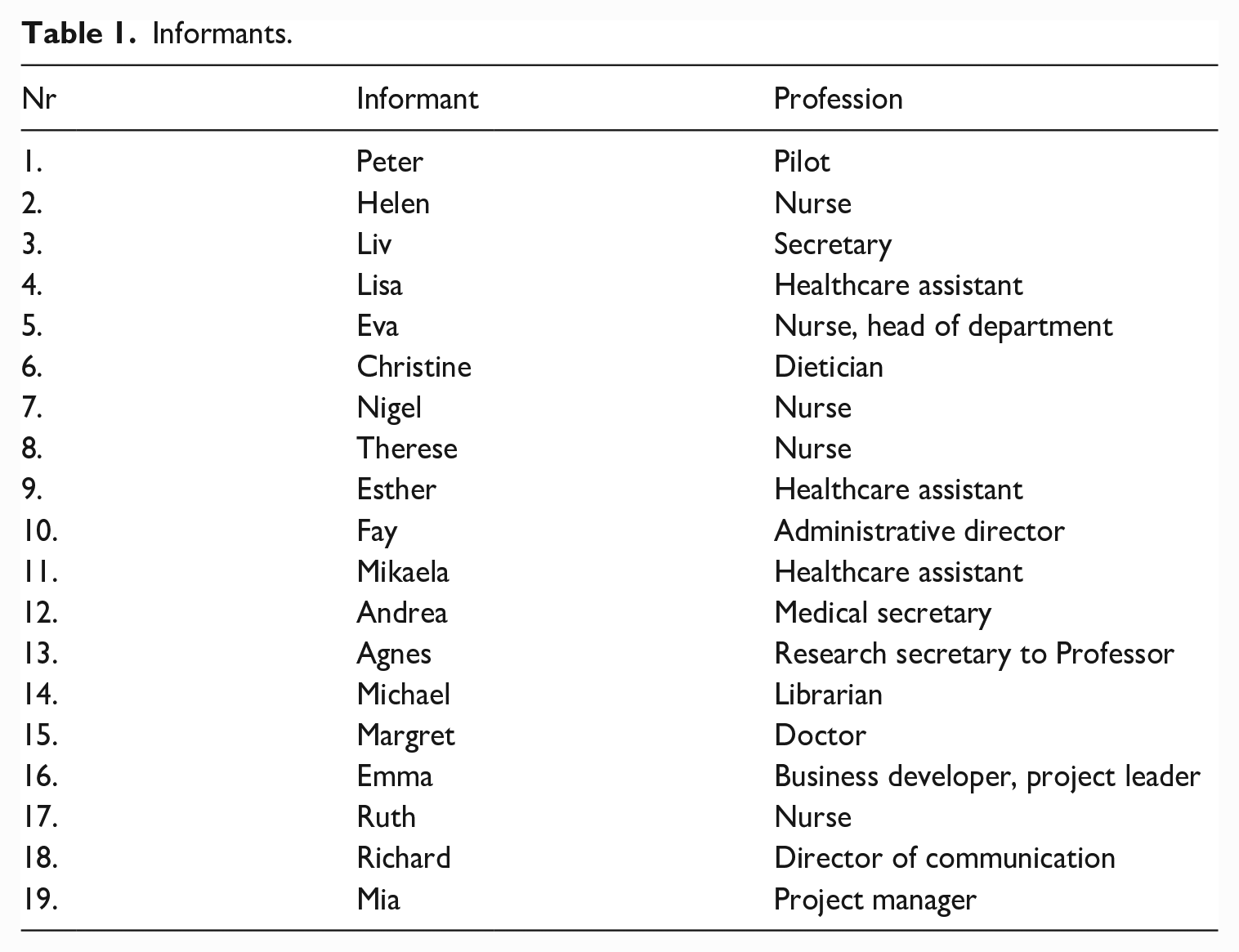
In order to be able to capture different types of practices, a heterogeneous group of informants was sought; thus, a strategic selection was made. Selecting different informants is a way of getting rich and varied empirical material (Brinkmann and Kvale, 2015; Patton, 1990). First, employees were selected on the basis of their professional roles at the hospital, for example, nurses, administrators, doctors, and secretaries. Approaching different professions enabled the capturing of different experiences since different professional roles were likely to imply different ways of performing. Second, the employees who had participated during the different phases of the project were selected. Interpreting and understanding the project was believed to differ with time as rules and patterns of interaction gradually became established. The third and final round of selection was guided by the materiality of the assignment. Employees who had written distinct posts were approached. Distinct posts were characterized by their difference from others in terms of filter, theme, technique, tone of voice or professionality.
Capturing performance in speech
The performative approach to voice entails focusing on social actions and interactions. Observations are typically used as method of capturing interactions during everyday life (e.g. Goffman, 1959). In this study, however, interactions are captured using speech and images. The Instagram posts are prepared and produced over a period of time; the reactions to posts can only be captured retrospectively. Performances are thus stretched out in time and space compared to performances during face-to-face interactions. Planning and preparing the posts took place in in people’s homes or offices, places not accessible to the researchers. To capture the process of composing the posts, therefore, in-depth interviews were conducted with the participating employees during which the participants could discuss and reflect on their performances. Photo elicitation interviews (Harper, 2002) were conducted with the participating employees. The interviews took 30–50 minutes, being recorded and subsequently transcribed. The focus of the interviews was how the Instagram posts were produced and how the project participants understood their roles in it. Performances may be captured through material objects since practical knowledge is ‘stored in them’ (see Halkier et al., 2011; Scott and Orlikowski, 2014). Employee voicing materializes on Instagram as posts consisting of both photographs and texts.
The Instagram photographs were used during the interviews as props in order to facilitate discussing employees understanding of their participation. Studies show that interviews using photographs stimulate memory, empowering the respondent, which helps the researcher to gain a rich interview (Clark-Ibanez, 2004; Harper, 2002). Employees’ accounts of their participation in the project, as well as the different photographs, structured the conversation.
The interviews focused on how employees understood the task, which included questions about their aim, the imagined audience, the photographic equipment, but also their view of their workplace (e.g. the organization’s image, workload, etc.). Moreover, questions also involved how employees volunteered, planned, prepared, photographed, edited, selected, and combined the photographs posted on Instagram. In particular, dos and don’ts were discussed, as well as good and bad examples of posts on the Instagram account. The participants were highly aware of social conventions, often referring to what they considered to be ‘normal’ behaviour on Instagram.
Analysing performance
In our analysis, we sought to uncover the unstated social rules and conventions governing interactions during the Instagram takeover. The analytical process can be described as taking place in four steps: (1) categorization, (2) abstraction, (3) comparison and (4) dimensionalization (Spiggle, 1994). First, the interview transcripts were coded and categories were formed. The second step, abstraction, is based on categorization as the empirically grounded categories are related to more conceptual constructs. Goffman’s (1959) dramaturgical framework guided our analysis, functioning as sensitizing concepts. For example, the concepts of front and routine were used to discuss how the participants defined their participation and to reflect upon how they performed the task in hand. Idealization was used for discussing expectations and fulfilment. The audience has expectations regarding the performance and the actor tries to act in relation to these expectations. There were also ideas that we had not foreseen; consequently, other concepts were used during our analysis. For instance, it became obvious that the takeover was being performed in teams. Third, differences and similarities were explored between and within the categories created. By means of systematically tracing the relationships between the categories, emerging patterns of performing voice were organized according to their similarities and differences.
Finally, two ideal types were created, representing two different ways of voicing. Identifying ideal types is a way of aggregating regularized patterns of voicing into an analytical model (Thornton and Ocasio, 2008). These ideal types consist of segments with particular shared characteristics which are distinctly different from each other (Halkier, 2011). Unfortunately, ideal types are often misinterpreted as rigid and stable, and as existing empirically (Thornton and Ocasio, 2008). Primarily, ideal types represent here a pedagogy of presenting the findings in the empirical material. Secondarily, they are treated as theoretical composites encompassing exaggerations of differences. The ideal types are labelled as the public relations officer and the Instagrammer. The labels indicate the role the participants identified as most relevant to guiding their performance and the main characteristics of their mode of voicing. Hence, the two ideal types should not be regarded as opposites, but as two different ways of performing.
Findings
Employees understood their performance during the Instagram takeover as following a certain script and taking place in front of an audience. Their understanding thus converges with the dramaturgical theory of social life, which holds that people are engaged in impression management when presenting themselves to others, or behaving in a way aimed at making an impression on an audience (Goffman, 1959). Compared to taking photographs for personal use, where the audience consists of people known to the photographer, the audience following the hospital’s Instagram account was partly anonymous to the participating employees. The Instagram platform makes it possible for followers and users to interact with each other and take on the roles of both audience and performer.
In order to perform, the participants identified fronts. Fronts are representations which are institutionalized as they are repeated over time. Goffman (1959) describes the front as ‘that part of the individual’s performance which regularly functions in a general and fixed fashion to define the situation for those who observe the performance’ (p. 6). The front establishes the proper setting, appearance and manner of the social role assumed by the actor. The employees were aware of different fronts and ways of performing the task. This was particularly obvious among the employees participating in the later phases of the project. Because of the hierarchical culture of the hospital, involving many formal positions, fronts were only available to certain groups. Goffman (1959) exemplifies how doctors can use a front relying on particular skills and competencies, while nurses cannot adopt the same front, since they lack the formal competence. The strong collective organizational culture of the hospital particularly influenced the performance of nurses. The nurses assumed that Instagram posts should be produced through teamwork, as opposed to the doctors, researchers and secretaries, who performed it individually. One of the few doctors participating in the project said, I wanted to show that the doctors are there even though they may not be considered part of the regular staff as they move around the hospital and often play a more consultative role . . . sometimes, employees belong to different worlds. I guess it may also be . . . difficult for, say, a healthcare assistant to ask a professor to participate in a ‘groupie’ photo. (Margret)
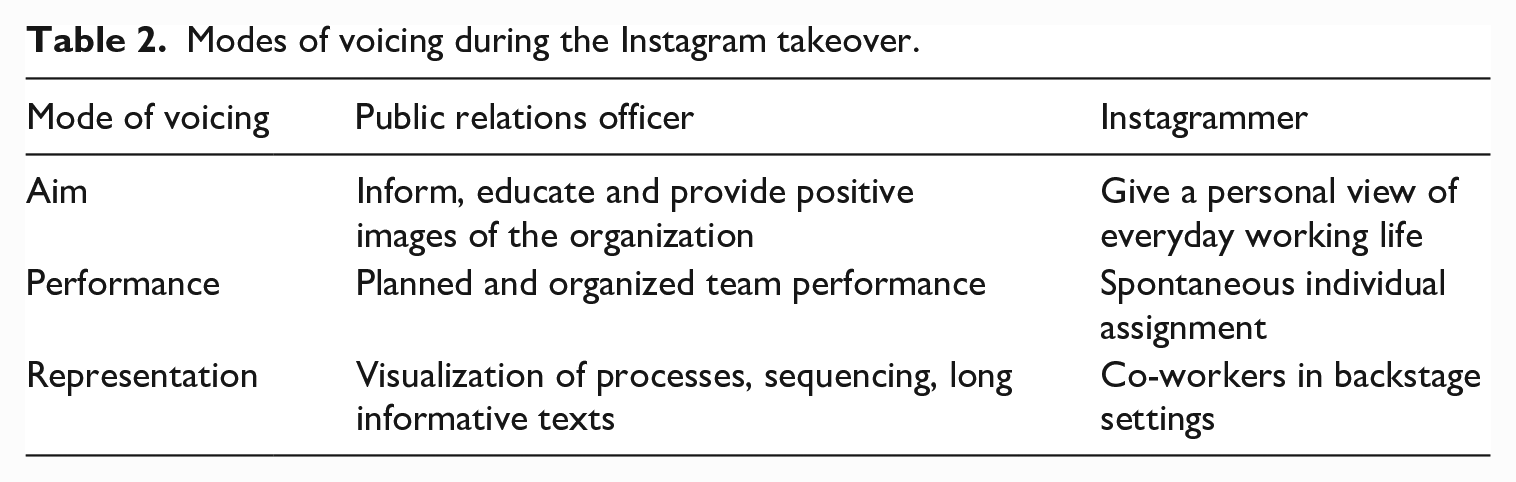
Hence, professional groups at the hospital had different fronts to choose from. Consequently, they engaged in the project differently, resulting in different ways of voicing. In what follows, we analyse two ways of voicing using the ideal types of the public relations officer and the Instagrammer (see Table 2).
Modes of voicing during the Instagram takeover.
The public relations officer
In adopting this particular type of performance, the employees aimed to present the workplace in an informative manner based on facts. One of the interviewees described this aim, thus, I’d been following the account and observing what the other participants had posted. I contacted the project manager to sign up because even if our department is small, I still know that what we do is of great interest to an external audience. It was a way of displaying our work and reaching potential new members of staff: ‘Look at what we do – come work with us’. (Eva)
This mode of performance conveyed a representative image of work, which typically involved presenting advanced and highly technological equipment, or details about work processes and routines. The focus on the equipment used for the different routines resulted in representations consisting of photographs of objects and written explanations (see Image 1). The public relations officer’s front involved conducting a great deal of research prior to the Instagram takeover. The posts were ambitious and included high quality films and photographs, often taken with professional cameras. The participants sought to visually present the work routines of their departments from a professional point of view, as well as a process from the patient perspective. The process-oriented view from the patient perspective was a novel way of presenting work at the hospital and it contributed to a holistic view of the organization. The public relations officer type targeted a distinct audience and adapted the performance to a set of imagined expectations attributable to this audience. The audience was made up of existing and future employees, as well as a more unknown external audience. The challenge of representing the workplace according to this ideal type, while not disappointing the imagined audience, is illustrated by the participant below: I thought it was difficult to find a balanced way of representing our work. After all, this business is exciting and quite cool. There is some action. But we chose not to represent it in that way. We focused on the boring everyday routines, no blue lights or smoke. I guess some had expected cool stuff. I thought it was hard to know. But I wanted to present our work as serious, safe, good and professional. I don’t want to give the impression of us being a collection of adrenaline junkies who are out there doing lots of cool stuff. But it’s difficult to find a good balance and I think the viewers want more adrenaline. (Peter)
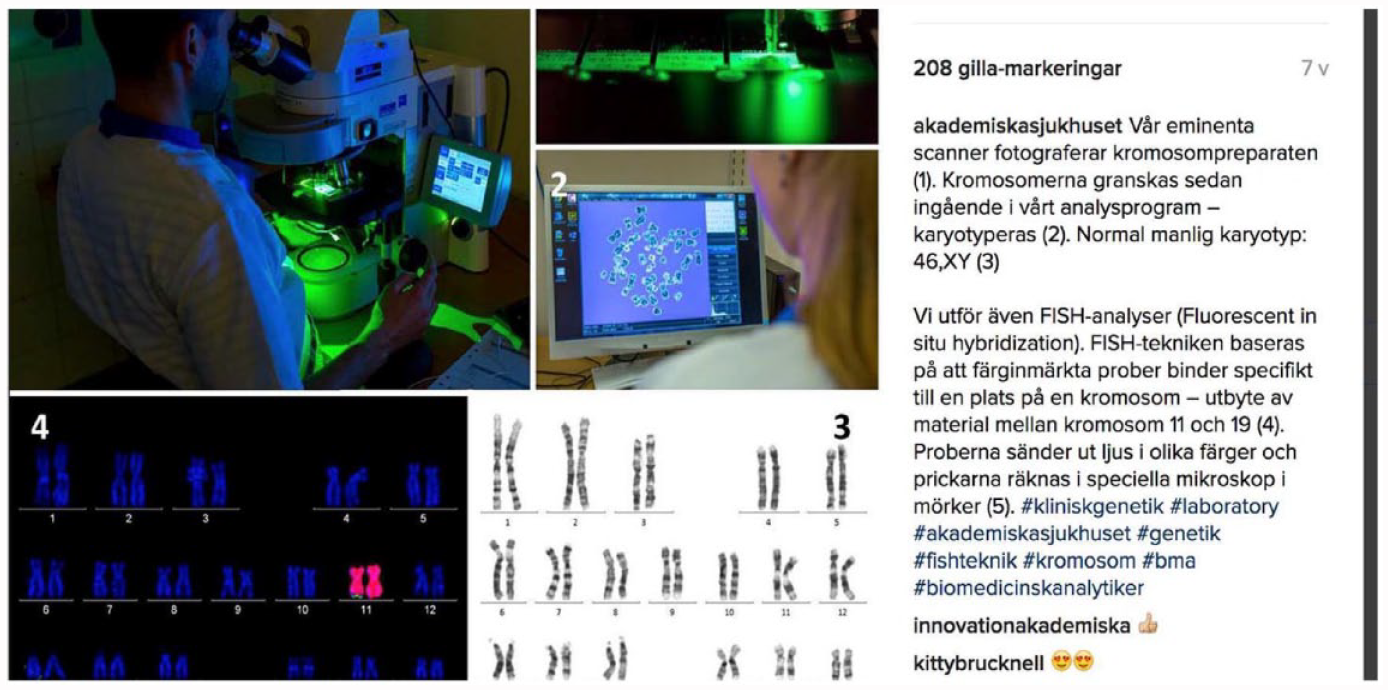
The public relations officer performance.
The interviewees talked about external audiences, but were highly aware of the internal audience at the hospital. The typical performance was initiated by an individual employee who voluntarily signed up to participate and then engaged his or her colleagues in crafting the content of the week. The performance was often conducted in teams consisting of several co-workers. To be able to collaborate as a team, the group must agree on a shared goal and determine the different roles of the individuals participating (Goffman, 1959). In other words, the performance team interpreted and established a common understanding of the task. This understanding was based on a shared idea of the aim and audience, and on their roles and ways of representing their work. The public relations officer type identified information and education as the primary aim of his or her performance. The task was understood in terms of informing about work routines and processes, from an insider perspective.
Participation in the project, and taking on the role of public relations officer, thus entailed the participants creating meanings and identities during an interactional process in which several co-workers were involved. Different roles develop within teams and often an appointed or informal director starts orchestrating the performance. The mutual dependency among the members of the team evokes a feeling of taking part in in a shared project, being insiders, as opposed to the audience who are defined as outsiders. Even though only one team member was responsible for organizing the content for the week, all the team members were involved at an early stage. They formed a group who met several times in order to arrive at a mutual understanding of how to perform, and which impressions to make on the audience. Often, an idealized image of work was created based on the values that the employees believed would be appreciated by the audience.
The team members were typically responsible for representing different parts of a work routine or process. In order to create a coherent story, however, members negotiated their roles, collaboration and presentation mode. It is worth noting that they did not highlight, or focus on, the performer in any other respect than the fact that he or she was the one carrying out the routine, that is, there were no main characters or ‘stars’ in their representations of the workplace. Routines are shaped and reshaped by the context where they are performed. In the next quote, a participant who volunteered for the project discusses how she had to involve fellow co-workers, while simultaneously not wanting to increase their workload: It was tough because I didn’t want them to feel that this demanded a lot of work, I wanted them to feel included. I thought it was hard because I didn’t want them to think I was taking over, but I didn’t want to add a lot of work. (Ruth)
The ambiguous feeling of, on the one hand, involving and co-creating and, on the other hand, not inflicting more work on her already-overworked colleagues was a recurring theme among those volunteering to take responsibility for the Instagram account. The hospital’s collective organizational culture had a particular influence on employee’s mode of voicing. The public relations officer type was impossible to perform individually. There was an underlying expectation to include everyone and perform as a team. The participants were highly aware of how to perform, who to include and the invisible rules governing their performance. Hence, the organizational culture and context created certain conditions restricting the performance.
The Instagrammer
The second ideal type identified in the study is the Instagrammer. The performance entails an individual enactment of the assignment. According to Goffman (1959), however, so-called ‘others’ are also important, since they actively or passively respond to the actions of the individual, and in doing so, attempt to define the situation. The Instagrammer typically sought to respond to the negative media portrayal of the hospital, and its consequences for external stakeholders. The audience was understood to have an opinion approaching an aggregation of all the negative media coverage of the hospital. The aim of the assignment, here, was then a matter of counterbalancing undesirable images with favourable ones of the hospital as a workplace: I’d say that the comments about my posts are very critical and mirror how psychiatry is typically represented in the media. I wrote ‘I’ll take you on a guided tour of the clinic’ and immediately people were wondering how I’d be able to find the time to do that. We’re rather used to this type of comment. It’s hard to say whether or not these commentators are former patients, relatives or just people who have read about the crisis in psychiatry in the newspapers. Unfortunately, the local press in this town rarely writes anything positive about the hospital. (Margret)
The Instagrammer wanted to offer an authentic image of the hospital. In order to do so, the Instagram posts focused on people and events, attempting to show the informal side of the workplace. The photos show glimpses of backstage areas, that is, lunchrooms and colleagues in situations where they are not serving in routinized roles or processes. I’m an extrovert, love photography and have a private Instagram account. I’m also committed to my job and I want to show it in a different and personal way. (Liv)
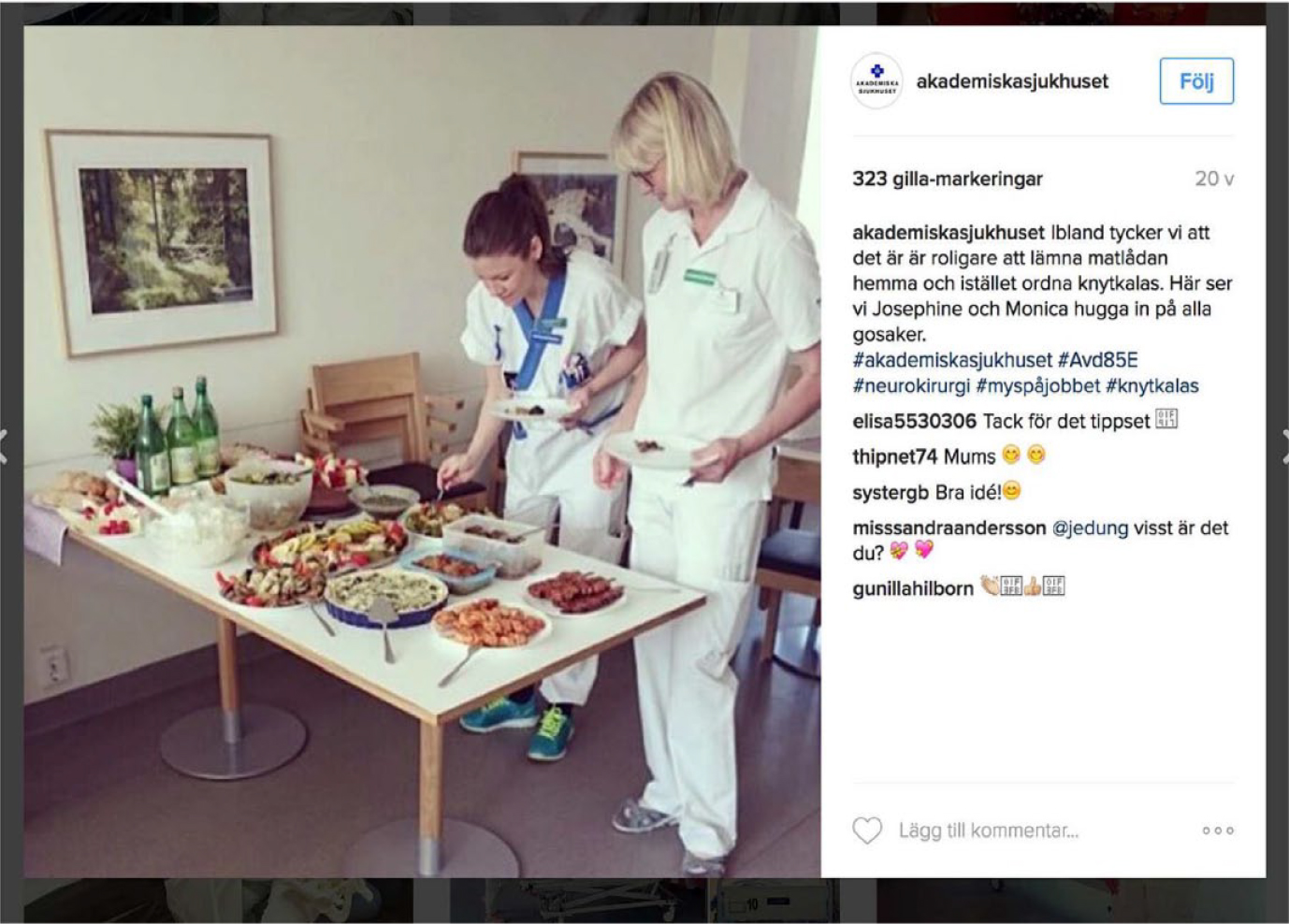
The Instagrammer performance.
The ideal type of the Instagrammer represents a performance that is highly informed by previous experiences of using social media, particularly Instagram (see Image 2).
The Instagrammer follows the script of a social media user, primarily sharing everyday moments at work. The aim of the performance is understood in terms of counterbalancing the negative media image of the hospital by showing a positive and favourable side of the work done there: I wanted to show the positive things, as opposed to all the negative stuff about the hospital. We’ve recently tried to recruit new staff and I think this is an opportunity to show the hospital as a nice place to work. (Therese)
The Instagrammers took it upon themselves to enhance the image of the hospital. Their performance was influenced by a will to improve the reputation and status of the organization. Hence, a positive tone of voice was used. In contrast to the hospital’s public image, the Instagrammer wanted to voice workplace in a personal, but not private, manner: I photographed my co-workers to highlight those working here, who we don’t often see but who do a great job. / . . . ./ It seems that followers enjoy photos of staff. We’ve had a positive response to that. I focus on things that create good energy; our everyday work life is very positive, so that’s what I show. (Lisa)
Social media platforms sometimes blur the boundaries between the front and back parts of social life. Uimonen (2013), however, claims that the blurring of boundaries is illusory as existing borders are maintained and enforced offline. Representations of the hospital and workplace were guided by Instagram conventions and norms. For example, it was not accepted to post content using a negative tone of voice. Critical accounts of the workplace were considered inappropriate. Instead, employees strove to post images of an attractive workplace where they were proud to work.
The performer did not primarily focus on himself/herself, as is often the case when using Instagram; instead, the focus was on the mundane tasks carried out at the hospital. For example, the most common category of photograph used in social media, the selfie, which puts the photographer centre stage, was rare. Instead, so-called groupie shots of co-workers were a recurrent theme. In this way, a larger number of co-workers were involved in the Instagram takeover, even though they did not take part in making the Instagram posts.
The participation of these co-workers was important for several reasons: First, they were important as regards rendering an authentic account of the work done at the hospital. Co-workers appear together with the names of their personal accounts, thus creating social interaction with the audience as followers of the account could then recognize existing and former colleagues, and friends. In this way, social links were established and re-established between employees. Hence, the interaction taking place on the platform serves to build social relations. Second, and even more importantly, by using names and personal accounts, co-workers are recognized and made visible in public. Becoming visible to an internal and external audience was experienced, by employees, as gaining voice. In this context, being recognized as having voice is more important than expressing an opinion Within the confines of the Instagram platform, employees were not primarily defined by their professional affiliation, department, or in terms of being a part of a routine, instead becoming subjects.
The Instagram takeover project, orchestrated by the communications department, was appreciated by the employees who experienced it as an opportunity to present the organization from their point of view. The employees appreciated their freedom of expression during the project and the fact that it offered an alternative medium through which voice could be expressed. Yet, there was no criticism of management, low salaries or heavy workloads. Even though such issues could be voiced in, for instance, the local press, it was still regarded to be inappropriate to voice this during the Instagram takeover. Visual communication on the Instagram platform was typically experienced as ‘seeing work with new eyes’ and ‘presenting the organisation in novel ways’ as one participant said (Nigel). Employees belonging to both ideal types understood their performance to be promotional, that is, as a way of improving the image of the hospital.
Discussion and conclusions
The research aim of this article was to develop a performative understanding of employee voice – as voicing the organization – to meet new challenges for public relations posed by the emergence of participatory campaigns relying on visual social media platforms. In order to examine voicing practices in social media, a study of an Instagram takeover orchestrated by a communications department at a health care organization in Sweden was carried out. The research questions we raised in the study concerned: (1) how employees understand voicing practices during the Instagram takeover, (2) how they practice voicing in terms of taking, selecting and publishing photographs on the Instagram platform, and (3) which social conventions and rules govern the practice of voicing.
In relation to the first research question, the study demonstrates that employees understand the practice of voicing as a public performance before an imagined audience. The audience was to a great extent made up by the employees who enacted performer and audience at the same time. This finding suggests that voicing practices on social media serve as a form of autocommunication that may give the organization new insights and stimulate change (cf. Christensen, 1997). It also underscores the need to examine the employees’ own understanding of voicing, not just the issues being voiced.
In relation to the second research question, the study found that voicing may be organized either individually or collectively. The most important thing about the public relations campaign, for the employees, was the social interactions and relations it enabled in the workplace. The rules and norms of the organizational culture at the hospital conditioned the practice of voicing and who was heard. For example, employees in higher hierarchical positions, for example, doctors and professors, were able to voice individual interests and agendas in their own names, while those in lower positions, were only able to voice collective concerns.
In relation to the third research question, the study demonstrates that voicing in the public relations campaign was shaped by social norms and conventions in the hospital and on the Instagram platform. The hierarchical organizational culture was also reproduced on social media, entailing consequences for what had been posted on Instagram and how participation was understood and organized. In addition, voicing performances were found to rely on knowledge of visual codes. Visual genres and social media conventions were used by the participants to understand how to perform during the project. These findings converge with previous research that demonstrate the significance of the institutional context for voice (e.g. Lavelle et al., 2010). The findings also support Martin et al.’s (2015) conclusion that voice is articulated by those who are already experienced users of social media. Furthermore, they underline that voicing on social media is a socially organized practice.
The study also found that participants experienced that they were given freedom to voice their views of the organization during the campaign, nevertheless, no criticisms or negative remarks were voiced, giving the impression of a harmonious workplace. The Instagram takeover resulted in a polished, well-known and highly affirmative image of the hospital which contrasted with the authentic image that photographs are usually believed to be able to deliver (Chalfen, 1987; Sontag, 1977). This lack of criticism raises ethical concerns regarding whether the campaign will lead to the illusory experience of having agency and the extent to which employees can have voice in this type of management-sanctioned social media initiative. This study shows that the possible multiplicity of meaning held by different employees in the campaign were reduced into two main types of voicing performances. Future research may want to further explore other performances by investigating different institutional contexts where voicing is enacted.
Footnotes
Funding
The author(s) disclosed receipt of the following financial support for the research, authorship, and/or publication of this article: This work was supported by the Crafoord Foundation, Sweden.
