




Abstract
The academic publishing industry faces a strategic crossroads where environmental sustainability imperatives intersect with digital transformation opportunities. This situation creates challenges that extend beyond simple print-to-digital migration. Drawing on interviews with 10 major publishers, our case shows that effective sustainability strategies rely on hybrid models rather than binary choices. While digital formats reduce carbon emissions, they introduce new complexities in measurement, supply chain governance, and market acceptance. Findings reveal that most of the industry’s carbon footprint originates not from publishers’ own operations but from upstream supplier activities such as paper production, printing, and digital infrastructure, areas over which publishers exert limited direct influence. These indirect emissions dominate both print and digital life cycles yet remain difficult to quantify due to complex global supply chains, variable energy sources, and evolving ICT technologies. Addressing this requires new capabilities in supplier management, cultural change, and compliance with varied regulatory regimes. Five strategic priorities emerge: optimizing hybrid models, orchestrating supply chains, building measurement frameworks, transforming professional markets, and navigating regional regulations. These insights challenge simplistic narratives of digital benefits and offer guidance for balancing innovation with environmental responsibility.
Keywords
Introduction
The academic publishing industry is undergoing a period of transition in which environmental sustainability goals intersect with rapid digital transformation (Feroz et al., 2021). Rising awareness of climate change and tightening regulatory frameworks have pressured publishers to cut their carbon footprint without undermining profitability or market relevance (Guandalini, 2022). These demands challenge long-standing business models built around print-centric operations that depend on paper consumption, global distribution, and resource-intensive production (White, 2023).
Publishers now face a dual task; they need to shift from physical to digital formats while accommodating stakeholders whose preferences remain divided. Universities and regulators increasingly call for demonstrable environmental progress, whereas market segments continue to value print for its authority and accessibility (Makarova and Ashcraft, 2024). This tension is intensified by broader forces, including competitive pressures, evolving pedagogical practices, and the wider digitization of higher education and research institutions (Bergstrom et al., 2024).
International climate commitments like the Paris Agreement have reinforced corporate mandates for measurable emission reductions (John et al., 2025). At the same time, the COVID-19 pandemic accelerated digital adoption, establishing new expectations for how scholarly content is produced and delivered (Amankwah-Amoah et al., 2021). Institutions facing budget constraints and sustainability commitments increasingly prefer publishers who can demonstrate verifiable progress (Žalėnienė and Pereira, 2021).
The challenge extends beyond the immediate impacts of paper use and printing. Publishing supply chains include paper mills, printing facilities, logistics networks, and cloud infrastructure for digital delivery (Yoon et al., 2024). Each stage generates distinct environmental burdens, most outside publishers’ direct control (Gadsby et al., 2024). Moreover, market conditions vary widely, with some regions operating in advanced digital economies, while others still lack reliable Internet access. This diversity creates contradictions between sustainability ambitions and equitable access. Professional markets such as healthcare and law retain strong preferences for print (Cham et al., 2021; Peras et al., 2023), while educational publishing shows a more mixed picture, with growing but uneven acceptance of digital formats (Amirtharaj et al., 2023).
Although digital transformation reduces material use and distribution costs (Feroz et al., 2021; Guandalini, 2022), it introduces new environmental complexities, particularly around energy use and data center operations (Mertens and Brown, 2021). Strategies must therefore consider publishers’ direct activities and the indirect effects of how content is consumed across regions with differing energy profiles (Bergstrom et al., 2024; Gadsby et al., 2024).
Our case examines how 10 major publishers address these intertwined challenges. Using in-depth interviews with senior executives responsible for sustainability, operations, and strategy, we explore how organizations balance environmental objectives with digital transformation. The cases capture diversity in size, geography, market segment, and stage of transformation, with confidentiality maintained to encourage openness. Our case analysis shows that digital adoption can generate meaningful environmental gains but produces new risks through supply chain dependencies, uneven regulatory environments, and market heterogeneity. These dilemmas highlight the difficulty of aligning sustainability commitments with operational and competitive realities in a global industry.
This article proceeds by first exploring the strategic context of the academic publishing industry, highlighting the intersecting pressures of sustainability and digital transformation. Next, a series of publisher case vignettes, based on interviews, illustrates varied organizational responses. A comparative analysis of these cases then identifies shared dilemmas and distinctive strategies. The findings are subsequently synthesized into broader strategic implications, followed by discussion questions and a concluding reflection.
Strategic context and industry pressures
The environmental imperative
The academic publishing industry faces a paradox whereby it advances human knowledge while generating significant ecological impacts through traditional operations (Bergstrom et al., 2024; Gadsby et al., 2024; Song et al., 2016). These impacts extend beyond paper consumption and printing, including complex upstream and downstream effects that challenge conventional carbon accounting (Belkhir and Elmeligi, 2018; Song et al., 2016; Upton, 2023). Traditional models rely on global supply chains, from forest management and paper production, through energy-intensive printing and binding, to carbon-heavy international distribution. Although digital formats are often seen as more sustainable, their carbon footprint, which is driven by e-waste, dark data, and data centers, can rival or exceed print (Song et al., 2016; Upton, 2023). Life cycle assessments underscore this complexity. Song et al. (2016), for instance, found e-reading averaged 14.26 kg CO2-equivalent per publication versus 1.69 kg for print, largely due to device manufacturing and prolonged usage. Key drivers of environmental impact are behavioral and contextual, not inherent to the medium.
Projections show ICT-related emissions could rise from 1 to 1.6% in 2007 to over 14% by 2040 if unaddressed (Belkhir and Elmeligi, 2018). Regional energy mixes, manufacturing practices, recycling systems, and lifecycle factors like forestry practices, printing technologies, and transport networks further complicate comparisons. Digital access adds another layer whereby emissions vary dramatically depending on local energy grids and device efficiency (Obringer et al., 2021). While publishers can influence production and supply chain partnerships, they have little control over how and where digital content is consumed. This situation complicates measurement, accountability, and sustainability reporting. Print creates concentrated emissions during production and distribution, whereas digital formats generate distributed emissions over time (Song et al., 2016; Upton, 2023). This temporal difference demands frameworks that address immediate and long-term impacts across diverse contexts.
Digital transformation drivers
Beyond environmental pressures, technological, economic, and social forces are accelerating digital adoption in academic publishing. Institutions are embracing digital-first strategies not just for cost and accessibility but also to enable pedagogical innovations like interactive content, real-time updates, and personalized learning pathways unavailable in print (Zou et al., 2025). The COVID-19 pandemic accelerated this shift, proving the viability of large-scale digital delivery and exposing the vulnerabilities of print-dependent systems (Amankwah-Amoah et al., 2021). This shifts redefined stakeholder expectations for accessibility, speed, and flexibility, setting new baselines for publisher value propositions beyond traditional prestige metrics.
Simultaneously, data analytics transforms how publishers understand and serve their markets, enabling insights into content use, learning outcomes, and engagement that print cannot provide. Digital platforms support personalization, adaptive learning, and dynamic pricing, positioning publishers as data-driven enterprises rather than mere content producers. Generational shifts further intensify these demands, with digital-native users expecting seamless integration across content, collaboration tools, and knowledge creation platforms (Amirtharaj et al., 2023).
Supply chain complexity
Academic publishing now operates within global networks extending beyond paper manufacturing and logistics to digital platforms and advanced technologies. In line with Industry 4.0, publishers are integrating cloud computing, big data, blockchain, and artificial intelligence (AI) to enhance transparency, sustainability, and resilience in procurement, production, and distribution (Büyüközkan and Göçer, 2018; Sharma et al., 2022; Sundarakani et al., 2024). These networks span jurisdictions with varying regulations and cultural approaches to sustainability, requiring sophisticated coordination and governance. Environmental impacts are concentrated mainly upstream, particularly in paper production, printing, and digital infrastructure in areas where publishers have limited control (Bull and Kozak, 2014). Indirect emissions dominate print and digital systems and are challenging to quantify due to global supply chains and varying energy sources. This necessitates a shift from internal operational improvements to influencing suppliers through assessment, capacity building, and performance monitoring.
Achieving meaningful reductions requires a complete supply chain transformation, yet this coincides with financial pressures. Educational and library markets face budget constraints, limiting their willingness to pay for sustainable practices and creating tension between environmental goals and cost control. Market segments also diverge in research prioritizing carbon reduction, education focuses on affordability, and professional sectors emphasize reliability. Publishers must navigate these competing priorities while aligning with evolving regulatory and market expectations (Amirtharaj et al., 2023; Gadsby et al., 2024; Peras et al., 2023).
Publisher case vignettes
The publisher vignettes are based on interviews with senior executives overseeing sustainability, operations, and strategy. We deliberately selected a mix of publishers of different sizes, geography, market focus, and stages of digital transformation to capture the range of industry practices. This allows us to see how traditional print players and digitally driven firms tackle the twin challenges of sustainability and digital transition. The cases highlight common issues, such as supply chain complexity and carbon measurement, alongside context-specific hurdles shaped by regulation and culture. To protect confidentiality and encourage frank discussion, all publishers are anonymized and appear under pseudonyms (Creswell and Creswell, 2017; Creswell and Poth, 2018).
Publisher A (PA)
When PA initiated an assessment of its sustainability impact, a key finding emerged: the carbon footprint of print journals was approximately 80% higher than digital editions. The traditional emphasis on hardcover publications, long regarded as markers of academic prestige, was increasingly at odds with emerging environmental imperatives. The reliance on global shipping and freight networks further amplified this footprint, dispersing emissions across multiple regions and complicating accurate measurements. The transition to digital publishing presents a potential pathway to mitigating these impacts. By shifting journals online, PA could substantially reduce emissions, while ongoing investments in renewable energy, such as solar installation at its United Kingdom headquarters, reinforced this commitment. In parallel, the publisher also began auditing its entire supply chain, from paper production to freight logistics, to support the development of a comprehensive green procurement model.
Several significant challenges, however, remain. The environmental benefits of digital publishing are uneven across contexts because the carbon intensity of content access varies by geography and depends on local energy sources. Data limitations, particularly in Asia and Africa, hinder PA’s ability to quantify and manage this “last mile” footprint. Achieving precise reduction targets requires addressing these gaps without impeding the ongoing transitions. In this respect, PA’s experience illustrates a broader paradox in sustainable academic publishing: environmental performance depends not only on production practices but also on the diverse conditions under which scholarly content is consumed globally.
Publisher B (PB)
PB approached sustainability from the standpoint of a large-scale data enterprise, yet confronted a fundamental paradox: an extensive supplier base with highly inconsistent green practices. Internal assessments indicated that most of the publisher’s carbon footprint originated within its supply chain. Suppliers exhibited significant variation in maturity, ranging from firms with well-established sustainability frameworks to those with minimal awareness of emissions reporting requirements. This complexity creates both challenges and opportunities. Incorporating climate-related criteria into procurement systems gave PB a mechanism to influence various vendors and encourage alignment with science-based targets. Engagement with suppliers suggested a willingness to participate, particularly when PB offered structured frameworks and capacity-building support, rather than imposing compliance unilaterally. The long-term objective was to align supplier practices and PB’s commitment to net zero by 2040.
Significant obstacles, however, persisted. Convincing suppliers to disclose detailed carbon data proved resource-intensive and time-consuming without stronger regulatory mandates. PB also faced difficulties developing standardized metrics applicable across multiple jurisdictions while managing internal cost pressures. Within this context, the sustainability team assumed the dual role of negotiation and education, seeking to reconcile environmental objectives with operational and financial imperatives.
Publisher C (PC)
PC, which is historically associated with print journals, now positions itself as a data and analytics company. This strategic reorientation is partly a response to increasing sustainability expectations. The significant carbon footprint generated by printing and distributing academic work has received limited attention for many years. As environmental standards evolved, the publisher identified the need to redesign its procurement processes to address these impacts. Green procurement extends beyond the use of recycled materials. It required a comprehensive reconfiguration of the supply chain, including reductions in print volumes, digitization of editorial and production workflows, and greater transparency from logistics partners. The publisher’s alignment with the United Nations Sustainable Development Goals (UN SDGs) provided a recognized framework that strengthened the legitimacy of these efforts and framed sustainability as a core component of value delivery to researchers and institutions.
This transition has introduced new challenges. While the shift to digital formats has lowered emissions, it has also increased compliance requirements and heightened reputational risks. Suppliers are now subject to more stringent audits, and customers expect credible evidence of sustainability performance rather than broad claims. PC must balance these demands with the need to maintain profitability. This experience reflects a broader tension within the academic publishing sector: the necessity of advancing digital sustainability initiatives without disregarding the markets that remain dependent on print formats.
Publisher D (PD)
PD presents sustainability as a core organizational principle and is a founding signatory of the UN SDG Publishers Compact. This commitment makes the company advocate for responsible research and publishing practices. Embedding these high-level commitments into procurement activities has, however, proven more complex than anticipated. The company operates across multiple regions, including the United Kingdom and Asia, exposing it to diverse regulatory frameworks and cultural expectations. Coordinating sustainability standards among suppliers in this context requires a structured approach. In response, PD established an internal task force to set measurable pledges, monitor progress, and facilitate staff engagement. This initiative aims to translate broad sustainability objectives into actionable policies and daily operational practices.
Despite this progress, several significant challenges remain. Green procurement frequently entails higher upfront costs, and suppliers demonstrate varying readiness levels to comply with PD’s sustainability requirements. The publisher must navigate these inconsistencies while remaining aligned with mission-driven values. In practice, PD’s strategy prioritizes incremental system-wide adjustments over isolated initiatives. This approach reflects a gradual but significant shift in how PD conceptualizes the production and dissemination of academic knowledge within the context of increasing environmental responsibility.
Publisher E (PE)
PE has a long-standing history in print publishing but has experienced a significant transformation in response to the rise of digital platforms. The increasing adoption of e-books and online learning resources by students and educators has altered market expectations and has placed sustainability considerations at the forefront. Traditional print formats are associated with higher carbon emissions owing to paper production and freight logistics, whereas digital alternatives offer the potential to reduce environmental impacts. The transition toward digital delivery has created opportunities for environmental and operational efficiency. On-demand printing minimizes waste by producing only what is required, while consolidated shipments reduce transportation-related emissions. In addition, digital platforms support learning at scale by enabling personalized content delivery, which provides both environmental benefits and alignment with changing educational preferences.
The transition is not uniform across all markets. In some segments, print remains important, especially where physical textbooks are seen as more credible or easier to use. As a result, the publisher must maintain print and digital production models, making it harder to set and achieve ambitious sustainability targets. The case of PE highlights a broader challenge in educational publishing: finding the right balance between innovation, sustainability, and the continued demand for traditional learning formats.
Publisher F (PF)
PF historically required its suppliers to comply with local environmental regulations, but this approach has been increasingly viewed as insufficient to meet emerging sustainability objectives. In response, the publisher initiated the collection of detailed carbon data from its vendors. This marked an initial step toward repositioning procurement practices as a mechanism for advancing climate action, rather than merely ensuring regulatory compliance. The transition toward digital publishing has contributed to emission reductions relative to print-based models. However, a comprehensive understanding of PF’s environmental footprint requires more granular data, including paper suppliers, printing operations, and cloud-hosting partners. Establishing standardized metrics is therefore essential to inform meaningful reduction targets that could be applied across multiple geographic regions.
A significant challenge involves influencing suppliers to exceed the minimum requirements established by the local laws. Many partners were reluctant to adopt ambitious practices in the absence of clear incentives. As a result, PF was required to assume both coordinating and persuasive roles, seeking to encourage suppliers to view sustainability as an opportunity for value creation rather than solely as a compliance obligation. This approach illustrates the complexities inherent in aligning diverse global supply chains with ambitious climate goals for academic publishing.
Publisher G (PG)
PG describes its procurement approach as responsible rather than only green. Its supplier code of conduct includes environmental requirements but also addresses deforestation, labor conditions, and broader ethical practices. In academic publishing, which depends on global printing networks, this approach expands the definition of sustainability beyond carbon metrics. The framework has led to measurable improvements. By requiring transparency from pre-press and printing vendors, PG has encouraged more responsible sourcing and better working conditions. Annual reviews and compliance audits create an ongoing evaluation and support process, leading to gradual improvements across the supply chain.
At the same time, applying such rigorous standards creates financial pressures. Verifying supplier data, conducting audits, and enforcing compliance require significant resources in an industry with narrow margins. PG must therefore balance ethical objectives with economic realities, while recognizing that credibility in sustainability is earned through consistent action rather than unsubstantiated claims. This case illustrates the wider tension in publishing between strong sustainability commitments and the limits imposed by cost structures.
Publisher H (PH)
PH has committed to achieving net zero emissions by 2040, with a significant proportion of its carbon footprint located within its supply chain rather than in its internal operations. Audits indicate that paper, printing, and logistics vendors account for the majority of emissions, making supplier engagement central to the publisher’s sustainability strategy. Meeting science-based targets requires aligning these external partners with the PH’s climate objectives. This ambition has generated opportunities and challenges. While certain suppliers have already adopted advanced renewable energy practices, others have limited awareness of carbon accounting and associated reporting requirements. Developing a consistent reporting framework that accommodates this variation is necessary and resource-intensive. In addition to gathering accurate data, PH must interpret it critically, identifying genuine progress while addressing the potential risks of misrepresentation.
PH seeks to address these challenges by linking sustainability expectations to procurement decisions and using its position within the market to influence supplier behavior. This approach transforms vendor relationships into a strategic mechanism to connect corporate sustainability commitments with operational realities. PH’s case illustrates the critical role of supply chain governance in achieving climate targets in the publishing sector.
Publisher I (PI)
PI operates across health and legal publishing divisions, each presenting sustainability challenges. Digital transformation has substantially reduced the need for printed journals and brochures; however, specific markets prefer physical copies. This is particularly evident in healthcare, where many practitioners consider printed guidelines more authoritative and reliable. This ongoing demand for print complicates PI’s sustainability objectives. To address these pressures, PI has implemented on-demand printing to minimize waste and adopted centralized procurement policies that establish uniform environmental criteria for suppliers. Additional initiatives include reduced business travel, energy reporting, and efficiency targets that form part of a broader 3-year environmental, social, and governance strategy. These measures reflect a structured approach, rather than an isolated or reactive initiative.
The main challenge for PI is as much cultural as technical. Meeting sustainability goals depends on persuading long-standing customers to adopt digital formats while maintaining their trust in the quality and authority of the content. PI’s case shows that sustainability in publishing is not only about reducing paper use. It also requires reshaping expectations across customers, supply chains, and industry practices.
Publisher J (PJ)
PJ initiated its sustainability efforts through incremental adjustments to printing practices, rather than through a single comprehensive mandate. Historically reliant on large print runs and global shipping from Singapore, the company faced rising freight costs and increasing concerns over its carbon footprint. A strategic shift occurred when PJ partnered with an American printing network to establish decentralized facilities across approximately 20 countries. This arrangement enabled books and journals to be produced near the point of demand, reducing freight emissions and shortening delivery times. The new model generates additional benefits. Localized printing contributed to regional economic activity, reduced warehousing requirements, and facilitated on-demand production, including single-copy print runs. Combined with the gradual adoption of digital formats for journals and monographs, these changes have offered environmental and financial gains by reducing waste and improving operational efficiency.
Comparative overview of sustainability approaches across publishers.
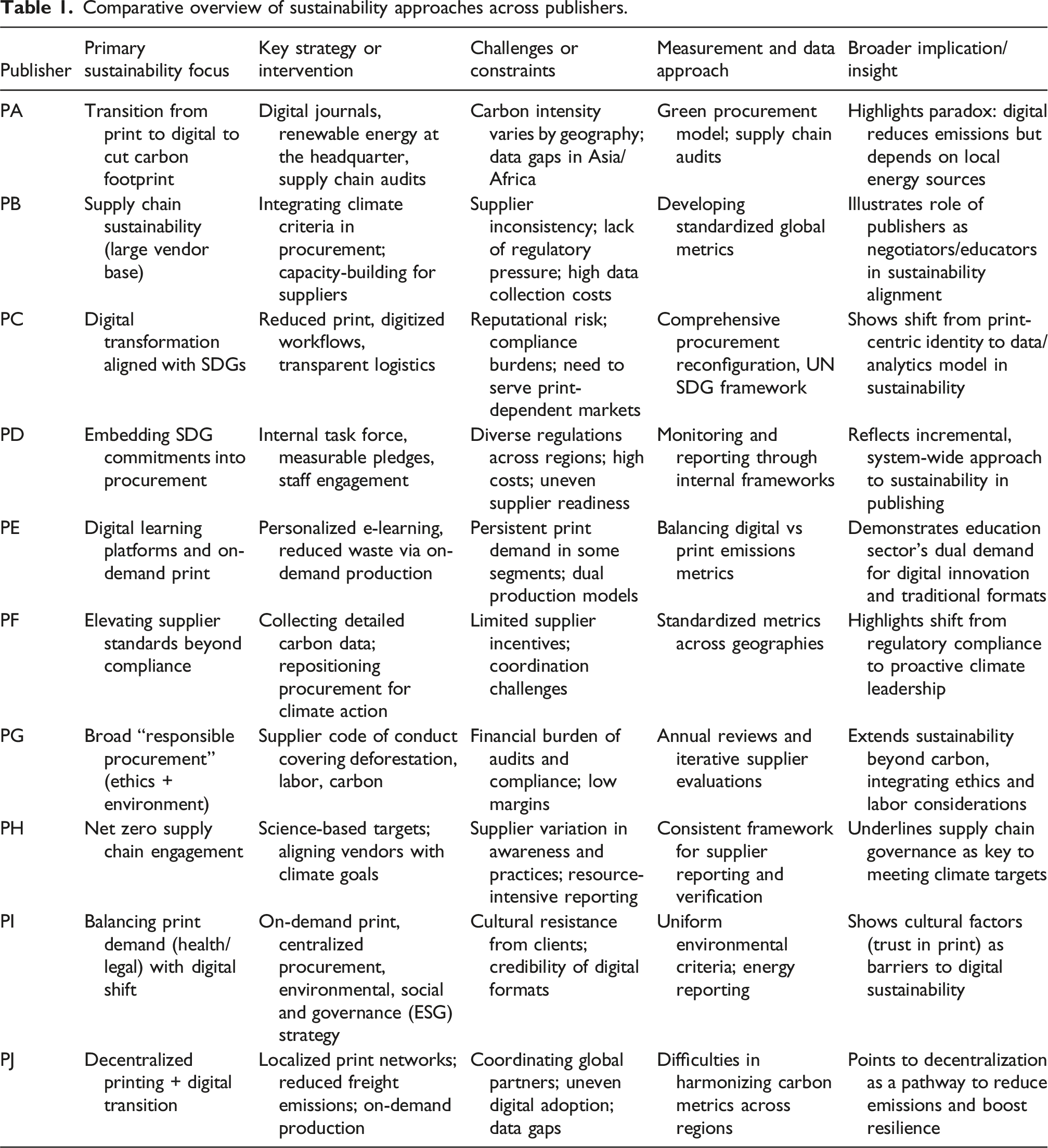
Competitive landscape analysis
Based on the case vignettes, the academic publishing industry can be grouped into four strategic positions along two key dimensions: sustainability integration level and digital capability maturity. This positioning emerges from empirical evidence of organizational investments, implementation capabilities, and measurable outcomes rather than aspirational commitments.
The digital-first innovators
PH and PC represent publishers where digital transformation enables comprehensive sustainability integration through fundamental business model innovation. PH’s commitment to net zero by 2040 is operationalized through science-based targets and digital supply chain monitoring systems that track emissions at scale. The publisher has invested in proprietary digital tools that convert sustainability requirements into competitive advantages through superior data analytics and supply chain coordination capabilities. PC demonstrates digital-first innovation through business model transformation from content distributor to environmental data intelligence provider. Its AI-driven editorial workflows, carbon labeling innovations, and algorithmic resource optimization create new revenue streams while eliminating resource-intensive processes. Both publishers show how cutting-edge digital capabilities can enable comprehensive sustainability transformation that strengthens rather than constrains competitive positioning.
The sustainability pioneers
PA and PF have made substantial strategic investments in sustainability leadership while developing digital capabilities that support but do not fundamentally transform their business models. PA’s comprehensive Life Cycle Assessment tools and large-scale solar infrastructure investments demonstrate pioneering commitment that goes beyond operational optimization. Their digital capabilities, however, primarily serve measurement and coordination rather than creating new value propositions. PF’s transition from regulatory compliance to proactive climate leadership through carbon data collection and supplier education programs illustrates sustainability pioneering. Their digital tools enable sophisticated environmental monitoring and supplier coordination, but remain focused on enhancing existing publishing operations rather than creating new business models. Both publishers occupy a pioneering space where strategic sustainability leadership drives digital capability development.
The supply chain orchestrators
PB, PG, and PJ excel at orchestrating complex global supply networks through digital tools while maintaining primarily compliance-oriented approaches to sustainability. Their competitive advantage emerges from superior coordination and orchestration of complex global networks rather than sustainability leadership or digital innovation. PB’s supplier development programs and data-driven shipment consolidation demonstrate sophisticated supply chain orchestration capabilities applied to environmental objectives. PG’s comprehensive supplier auditing and responsible procurement frameworks show systematic orchestration improvements across multiple sustainability dimensions. PJ’s distributed printing networks supported by digital demand forecasting illustrate how supply chain orchestration can generate both efficiency and environmental benefits. These publishers show that meaningful sustainability improvements can emerge from masterful supply chain orchestration without requiring fundamental strategic transformation or business model innovation.
The pragmatic adaptors
PD, PE, and PI demonstrate balanced approaches to both sustainability and digital transformation, making practical investments in both areas while managing realistic expectations about implementation scope. Their pragmatic positioning reflects measured responses to market demands and organizational capabilities that prioritize steady, incremental progress over transformational change. PD’s role as UN SDG Publishers Compact signatory establishes moderate sustainability positioning supported by practical digital tools for coordination across multiple regions. PE’s digital learning platforms demonstrate solid technological capabilities that enable measured sustainability improvements within infrastructure constraints. PI’s ESG framework and on-demand printing initiatives represent systematic but measured approaches that balance professional market preferences with environmental objectives. These pragmatic adaptors illustrate how balanced investment in both sustainability and digital capabilities can generate steady improvements while managing practical constraints and stakeholder expectations. Figure 1 presents the matrix for the competitive landscape analysis. Academic publishing competitive landscape matrix.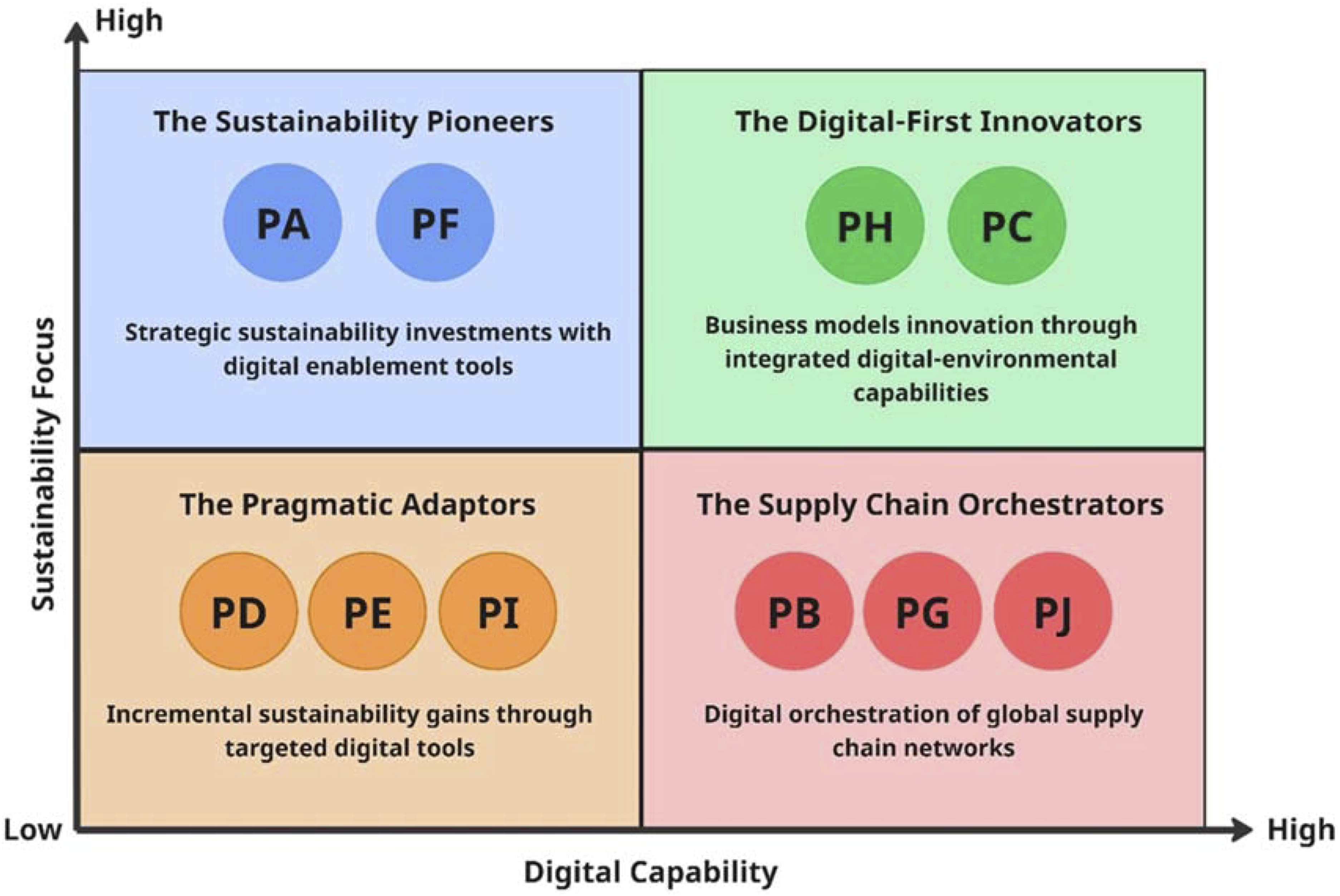
Strategic implications
This positioning analysis reveals that sustainable competitive advantage increasingly flows to publishers capable of aligning digital capability development with sustainability strategic integration. The most successful publishers avoid treating these as separate initiatives, instead developing integrated capabilities where digital tools enable superior environmental performance and environmental objectives drive digital innovation. Publishers positioned as Pragmatic Adaptors face strategic vulnerability as regulatory pressure intensifies and institutional customers demand verifiable sustainability performance. Those in intermediate positions must choose whether to deepen their digital capabilities, strengthen their sustainability integration, or accept more limited strategic positioning within industry transformation dynamics.
The hybrid model imperative
The experiences of the Pragmatic Adaptors highlight the strategic necessity of hybrid approaches. PE’s educational portfolio shows that students readily adopt digital formats for cost and functionality, while PI’s healthcare and legal divisions demonstrate that professional authority often remains anchored to physical formats despite equivalent digital alternatives. This duality illustrates the adaptor position: sustainability gains can be achieved through format optimization, but market retention requires flexibility across segments. The operational implications are significant. Publishers pursuing hybrid strategies must master dual production capabilities while maintaining unified brand experiences across channels. PI’s predictive modeling system, which forecasts format preferences by market segment and geography, represents a new core competency that transforms sustainability from a constraint into a competitive advantage through superior resource allocation and waste reduction.
Most critically, hybrid success requires abandoning binary thinking about environmental impact. PA, as a Sustainability Pioneer, discovered that digital formats’ carbon intensity varies dramatically by geographic energy sources. This reinforces the need for contextually adaptive rather than universally prescribed strategies. Publishers that develop sophisticated carbon optimization algorithms, routing digital content through low-carbon data centers while localizing print production, will capture environmental and operational advantages unavailable to single-format competitors.
Supply chain orchestration
The Supply Chain Orchestrators, PB, PG, and PJ, illustrate that competitive advantage increasingly depends on ecosystem management rather than internal optimization. PB’s transition from passive procurement to active supplier development shows that influencing supplier behavior has become a core capability rather than a secondary task. PG’s comprehensive supplier code, which covers carbon, deforestation, and labor practices, demonstrates how relationship complexity can create competitive moats rivals cannot easily match. PJ’s distributed printing networks, supported by digital demand forecasting, show how orchestration can simultaneously reduce freight emissions and improve efficiency. Simultaneously, orchestration requires substantial upfront resources with uncertain payoffs. PB’s assessment frameworks and training initiatives demand significant investment in a sector known for narrow margins. Long-term success depends on translating improved supplier practices into measurable environmental outcomes that institutions will reward with premium pricing. Achieving this requires advanced measurement and verification systems, which remain underdeveloped in the industry.
The measurement paradox
Among the Pioneers, PA exemplifies the difficulty of carbon accounting at the “last mile.” The metrics required for credible reporting often exceed traditional publishing operations’ data capabilities and cost structures. Digital content consumption varies dramatically based on local energy grids, device efficiency, and user behavior, factors beyond publisher control yet critical for accurate footprinting. This measurement challenge creates both risk and opportunity. Publishers that develop robust lifecycle analysis capabilities, like PA’s pilot hybrid assessment program, gain competitive advantages through regulatory compliance benefits, investor confidence, and superior decision-making. These capabilities become particularly valuable as regulatory frameworks tighten and institutional customers demand verifiable metrics rather than aspirational commitments. The investment is substantial, demanding analytics and verification systems that stretch cost structures. Yet those that succeed will possess unique data assets that support pricing power and create barriers to replication.
Cultural transformation as market strategy
The Digital-First Innovators, PC and PH, demonstrate that sustainable transformation requires cultural as well as technological change. PC’s market education campaigns show that successful adoption depends on reframing environmental benefits as enhancements to credibility rather than trade-offs. PH’s integration of science-based targets with digital supply chain systems similarly illustrates how sustainability can be embedded in business model innovation rather than appended as compliance. PI’s challenges in healthcare and legal publishing highlight the cultural complexity: despite digital equivalence, professional communities continue to prefer physical formats. Overcoming these requires long-term investment in trust-building, stakeholder education, and quality assurance. The strategic opportunity lies in first-mover advantage. Innovators that successfully reposition environmental benefits as integral to professional authority can set the pace of market evolution.
Regional complexity as competitive differentiation
The Pragmatic Adaptors also underscore the importance of regional diversity as a source of competitive advantage. PD’s operations across Europe and Asia demonstrate that strategies must accommodate divergent regulatory frameworks and cultural expectations. PF’s hybrid governance model, combining global standards with localized implementation, shows how regulatory complexity can become a differentiator rather than a burden. The implications extend beyond compliance. Publishers that build regional expertise and stakeholder trust gain advantages in market access and supplier relationships, creating switching costs that transcend purely economic considerations.
Synthesis: The integration challenge
The four archetypes reveal interdependencies that make sustainability transformation a multidimensional challenge. Success requires simultaneously mastering hybrid model optimization, supply chain orchestration, measurement sophistication, cultural transformation, and regional adaptation, which is a combination that exceeds most publishers’ current capabilities. Sustainable competitive advantage will increasingly flow to publishers capable of crossing archetypal boundaries: Innovators integrating Pioneers’ sustainability leadership, Orchestrators embedding cultural change, or Adaptors scaling regional expertise. Archetypal purity matters less than adaptive capacity. This integration challenge represents the industry’s greatest strategic risk and its most significant opportunity. Publishers that successfully combine environmental stewardship with operational excellence and market responsiveness will capture disproportionate value in a restructuring industry, while those pursuing isolated initiatives risk marginalization despite progress. Figure 2 presents the interconnected strategic areas of sustainability in academic publishing. Strategic framework for academic publishing sustainability transformation.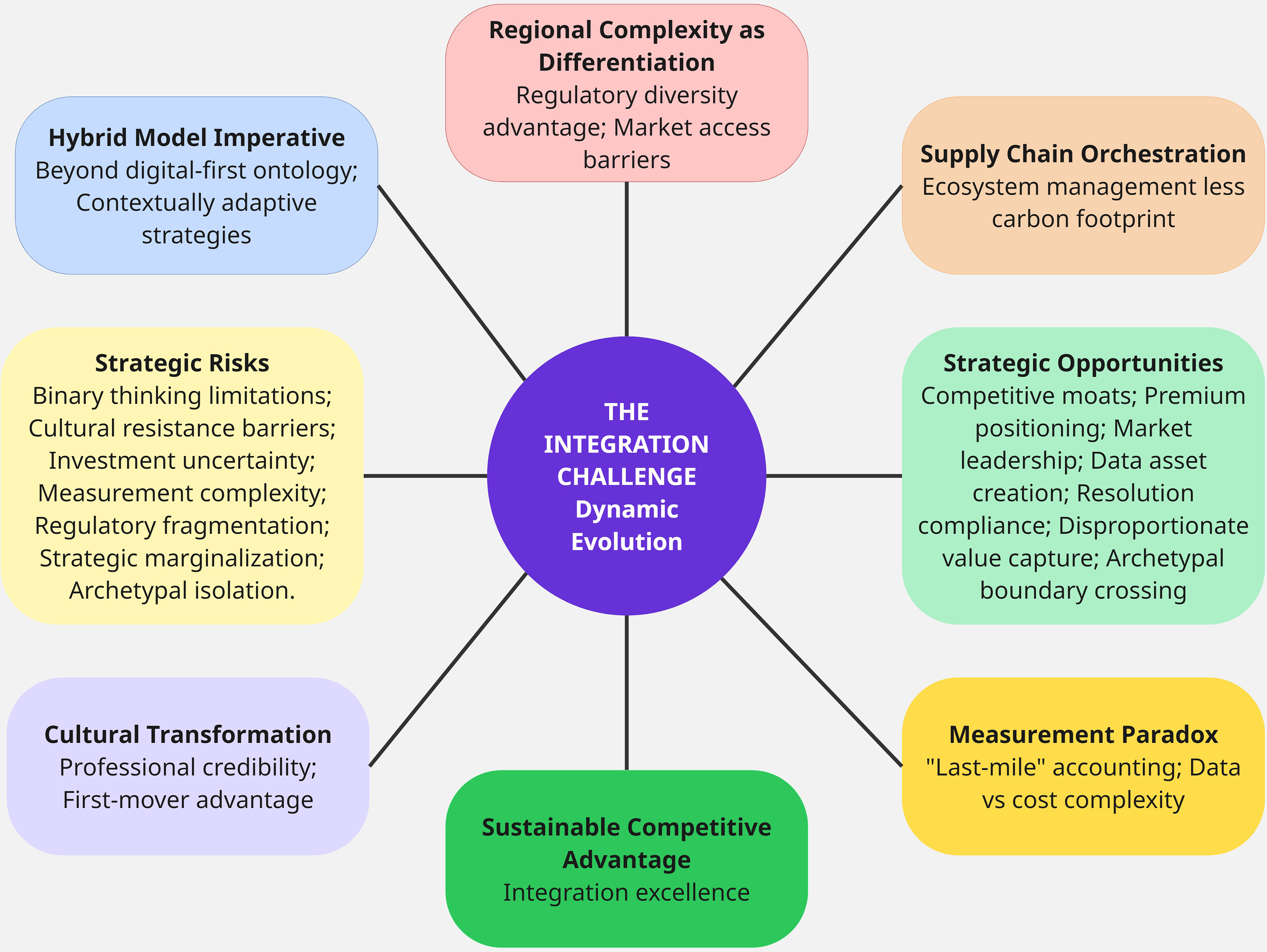
Discussion questions
1. How should academic publishers balance environmental sustainability objectives with persistent demand for print materials in specific market segments? What strategies can publishers employ to accelerate digital adoption while maintaining market share and profitability? 2. Given that most publishers’ carbon footprints originate within their supply chains, how can publishing companies leverage their market positions effectively to drive supplier sustainability improvements? What are the risks and benefits of requiring suppliers to exceed local regulatory requirements, and how should publishers manage potential cost increases? 3. How can publishers develop accurate and meaningful metrics for environmental impact measurement that account for the “last mile” footprint of digital content consumption across diverse geographic markets? What role should publishers play in addressing energy consumption patterns beyond direct controls? 4. As publishers transition from content producers to data enterprises, how can they leverage digital capabilities to create value that justifies the potential sustainability premiums? What new business models might emerge that align the environmental benefits with enhanced customer value propositions? 5. What new competencies must publishers develop to succeed in sustainability-driven transformation, and how should these capabilities be integrated into existing organizational structures? How can sustainability initiatives create sustainable competitive advantages in an industry characterized by low margins and price sensitivity? 6. Given that successful publishers increasingly combine elements from multiple strategic archetypes, how should publishing executives prioritize capability investments when resources are limited? What factors should determine whether a publisher pursues Pioneer sustainability leadership, Innovator digital transformation, Orchestrator supply chain management, or Adaptor market flexibility as their primary strategic thrust?
Concluding remark
The experience of the publishing industry shows that sustainability is no longer a peripheral concern but a factor reshaping its identity and operations. The transition is about replacing print with digital formats and managing supply chains, customer expectations, and regulatory pressures in ways that align environmental goals with commercial viability. What emerges is not a single model but a set of strategies in which publishers combine digital innovation, supply chain governance, and cultural adaptation to remain competitive. In this context, sustainability functions less as a constraint and driver of new practices, from personalized content delivery to decentralized printing and supplier partnerships. The challenge lies in integrating these practices into a coherent value proposition that balances environmental responsibility with the enduring demands of knowledge production and dissemination.
Supplemental Material
Supplemental Material - Environmental sustainability meets digital transformation: Dilemmas and new directions
Supplemental Material for Environmental sustainability meets digital transformation: Dilemmas and new directions by Arif Perdana, Mui Kim Chu in Journal of Information Technology Teaching Cases.
Footnotes

Funding
The authors received no financial support for the research, authorship, and/or publication of this article.
Declaration of conflicting interests
The authors declared no potential conflicts of interest with respect to the research, authorship, and/or publication of this article.
Supplemental Material
Supplemental material for this article is available online.
Author biographies
References
Supplementary Material
Please find the following supplemental material available below.
For Open Access articles published under a Creative Commons License, all supplemental material carries the same license as the article it is associated with.
For non-Open Access articles published, all supplemental material carries a non-exclusive license, and permission requests for re-use of supplemental material or any part of supplemental material shall be sent directly to the copyright owner as specified in the copyright notice associated with the article.
