




Abstract
The right-to-repair movement is a consumer rights movement that supports people’s freedom to repair and customize their gadgets, such as smartphones. To make diagnostic tools, repair manuals, and replacement parts available to the public, the movement continues to push for laws requiring manufacturers to do so. The movement, supported by legislation, is gaining traction as a fundamental human right. On the other hand, the right-to-repair movement received different responses from smartphone manufacturers, including Apple, Samsung, Google, and Nokia. This article describes the evolving market conditions and examines how various brands have reacted to the recent global tide. The article contributes to the efforts toward United Nations Sustainable Development Goals on several accounts since right-to-repair laws help reduce electronic waste and promote sustainable consumption.
Introduction
“Alice: Hey, Bob, what’s wrong with your phone? It looks like it’s about to die.
Bob: Yeah, it’s been acting up lately. It can barely hold a charge anymore, even though I spent a fortune on it a few years ago.
Alice: That’s too bad. Can’t you just replace the battery?
Bob: No, I can’t. It’s one of those phones that has a built-in battery that you can’t remove or replace.
Alice: What? That’s ridiculous. Why would they do that?
Bob: I don’t know. Maybe they want to force us to buy new phones every few years, even if the old ones work fine otherwise.
Alice: That’s so unfair. And wasteful. And expensive.
Bob: I know, right? It’s not only very inconvenient, but it also defeats the purpose of having a mobile phone in the first place. I mean, what’s the point of having a phone that you have to keep plugged into a power source all the time?
Alice: Exactly. It’s like having a landline, but worse.
Bob: Yeah. And it’s not just phones. It’s the same with computers, smartwatches, wireless headsets, and even cars. They all have batteries that degrade over time and can’t be replaced easily.
Alice: That’s crazy. There should be a law against that.
Bob: I agree. It’s a scam. And it’s bad for the environment too.
Alice: Well, I hope you can find a solution soon. Maybe you can get a power bank or something.
Bob: Thanks. But I think I’ll have to bite the bullet and get a new phone eventually. It’s just too frustrating to deal with this one.
Alice: I’m sorry, Bob. That sucks!”
(adopted by the author to the context of smartphones from Klosowski’s (2021) blog on laptops).
A growing movement for the “right-to-repair” had been lobbying for legislation that would require access to various types of repair equipment. This occurred at a time when it was getting ever more challenging to repair various pieces of equipment, and the global crises unfolded due to climate change.
The right-to-repair movement
The right-to-repair movement is a consumer rights movement that advocates for the ability of individuals and small businesses to repair and modify their own devices, such as smartphones, laptops, and other electronic equipment (Bradley and Persson, 2022). Examples of such devices included the Apple iPhone as well as vehicles such as the John Deere tractors. A detailed historical account of the movement is provided by Hatta (2020). The goal of the movement is to challenge the policies of certain large manufacturers, which make it difficult or impossible for customers to repair or modify the products they own on their own.
The right-to-repair movement contended that the inability of products to be repaired not only restricted the freedom of consumers to use and repair the products they purchased but also resulted in the production of unnecessary electronic waste (O’Neill, 2021) and contributed to the ever-increasing cost of electronic devices (Eckersall and Grehan, 2021). Repair also stood as part of the Ellen MacArthur Foundation’s “butterfly diagram” (Figure 1) for minimizing systematic leakage and negative externalities of the finite materials (EllenMacArthurFoundation, 2023; van der Velden, 2021). Supporters of the right-to-repair movement continue working to pass laws that would require manufacturers to make diagnostic tools, repair manuals, and replacement parts available to the general public (Manwaring et al., 2022). The term “right to repair” refers to the concept that if you own something, you should be able to fix it yourself or have it fixed by an expert of your choosing. When it came to older vehicles and appliances, people were accustomed to this idea, but right-to-repair proponents contended that current technology, particularly anything with a computer chip within, was rarely repairable (van der Velden, 2021; Klosowski, 2021). Circular economy system diagram (Copyright EllenMacArthurFoundation, 2023).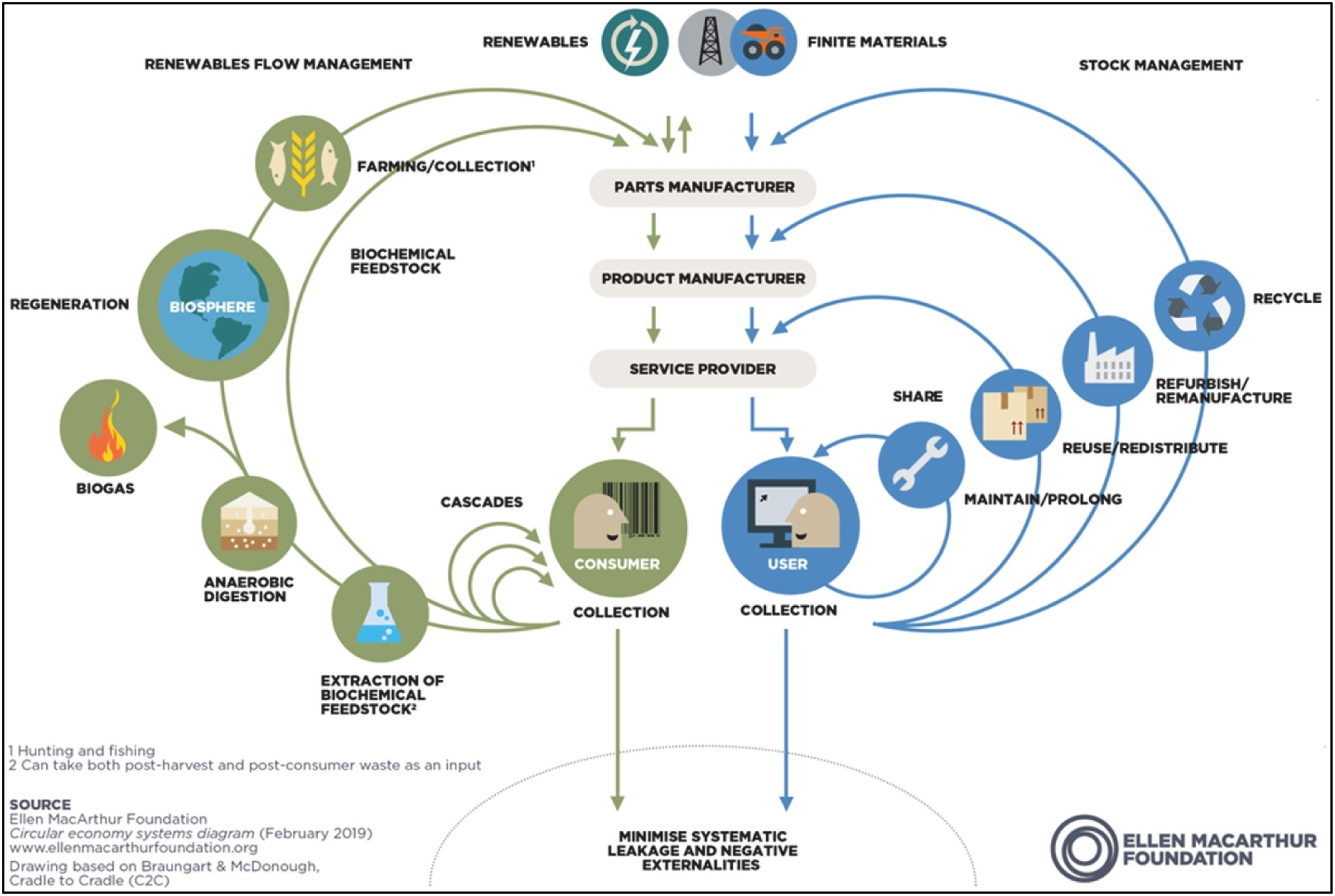
Digital equality advocates pushed for policies that increased Internet access and assured the availability of low-cost devices. Simultaneously, environmental and labor activists pushed for legislation that extends the lives of existing gadgets, which can assist in reducing e-waste while also protecting the viability of the repair and refurbishment labor markets. Making computer repair more affordable and strengthening the secondhand and refurbishment markets guarantees that low-income consumers can afford to keep their existing machines and acquire new ones as needed. Extending the life of a device through repair is frequently a more cost-effective option than acquiring a brand-new item. It can impose market constraints on manufacturers’ pricing of new devices, helping to keep the cost of brand-new gadgets low. These measures can also help to improve digital equity in the long run (Gonzales et al., 2022).
In recent years, the right-to-repair movement has seen significant momentum gains, with legislative efforts being made in several states in the United States and European Union, as well as other countries (Mirr, 2020). Farmers, independent repair shops, consumer advocates, environmental groups, and technology enthusiasts were some of the people who were driving this movement forward.
Consumers were generally permitted to repair any item they purchased; however, in practice, people were frequently denied the knowledge or the parts necessary to do so. Some gadgets even had stickers that purport to void the manufacturer’s warranty, for which the right-to-repair movement stepped in at this point (Klosowski, 2021). The Repair Association, a right-to-repair advocacy group, sought after some policy goals, some of which may be achieved by legislation and others which needed a change in consumer expectations. Specifically, the Repair Association advocates for:
“
Manuals: Publicly accessible, standardized service manuals in electronic formats.
Schematics: Open access to semiconductor diagrams and data sheets.
Software Updates: Unrestricted access for owners and independent service providers to machine code, firmware patches, and fixes.
Licenses: Clear contract language that specifies what’s included in the machine sale and prohibits restrictive clauses in End User License Agreements that might limit future support options.
Availability: Service parts and tools should be accessible at fair pricing to equipment owners and third parties.
Patents: Foster an environment where patent licenses for repair parts and tools are available under equitable licensing terms.
Tools & Codes: Make available troubleshooting and diagnostic tools, codes, and service software.
Most legislative proposals for right-to-repair contained the first two bullet points (Klosowski, 2021). The last essential concept, designing for repairability, was more about changing expectations than it was about passing legislation (Hernandez et al., 2020). Although the first two goals of right-to-repair legislation were the emphasis, Gay Gordon-Byrne, executive director of The Repair Association 1 , said that “there’s definitely a lot more work that needs to be done to make sure that we stop manufacturing things that can’t be mended” (Klosowski, 2021).
France’s repairability index 2 , which awards repairability rankings with the aim of changing consumer behavior, offered one potential solution to the design issue. In the current global economy, any business that wants to sell its goods in France must submit the index scores for those goods.
Advocates for repairs also drew attention to the importance of repairing John Deere tractors, medical equipment, and other items in addition to consumer technology (Perzanowski, 2021). Especially during the COVID-19 pandemic (He et al., 2021; Abbas, 2022), when supply chains were disrupted, if not broken, maintenance and repair of lifesaving ventilators and other critical medical equipment intensified the challenges (Goode, 2020).
The emerging consumer need
Products became increasingly challenging to repair. A product might lack third-party parts options, be impossible to open up without destroying it, or deny owners the ability to install custom software to extend its life after the company discontinues support (Klosowski, 2021). Even once-repairable appliances increasingly used computer chips, potentially making future repairs more difficult. Furthermore, particular gadgets such as AirPods were supposed to last just 18 to 36 months of regular usage before being discarded as long-lived, hazardous technological garbage (Taffel, 2023).
Manufacturers used a variety of strategies to make repairs difficult, whether on purpose or not, such as using proprietary screws, withholding repair instructions, or gluing pieces together (Klosowski, 2021). Several websites, such as iFixit 3 , have sprung up over the years that provide product “teardowns” and user-repair instructions. A single company or a small group of dedicated YouTube instructional creators, on the other hand, could only provide so much documentation to cover the vast array of goods on the market today.
It has been assumed by buyers that the items they purchase may be repaired; however, this is no longer the case. There is hope that improved repairability will result in less global electronic waste (Klosowski, 2021). Instead of discarding usable technology, repurposing it may help with sustainable and environmental practices. Particularly battery replacement, which often reduces the life span to hurt the consumers and the environment, could be a simple solution with a significant impact. Hence, it makes it simpler for individuals to increase the lifespan of the devices they purchase by compelling manufacturers to provide replacement parts and make documentation available.
The resistance from the industry
In an effort to make it easier and less expensive for consumers to maintain their products, the growing “right-to-repair” legislative movement required manufacturers to provide repair information, diagnostic tools, and service parts. Some businesses lobbied against the implementation of right-to-repair laws, which consumers demanded (van der Velden, 2021). Some lobbyists even claimed that right-to-repair might quickly turn the market into a haven for criminals due to security risks associated with granting criminals access to technical information, safety risks associated with unauthorized repair, and intellectual property risks (Klosowski, 2021).
According to TechNet, “granting unvetted third parties access to sensitive diagnostic information, software, tools, and parts would jeopardize the safety of consumers’ computers, tablets, and devices and put them at risk for fraud and data theft” (TechNet, 2021). While it was agreed that more work was needed, it was also argued that the cost of having linked devices should not have resulted in a monopoly on aftermarket service parts and maintenance (Klosowski, 2021). Furthermore, the FTC’s examination of the arguments made against the right-to-repair found that the majority of these arguments, including claims about security and safety, were unsound (FTC, 2021).
Yang et al.’s (2023) research findings, on the other hand, implied that neither consumers nor the environment stood to benefit from the right-to-repair policies. Their model looked at “durable items” that were used repeatedly over time, such as cars, tractors, refrigerators, and cell phones, to study producers’ reactive pricing strategies. They also assessed a product’s total environmental impact over its entire life cycle and tracked consumer surplus, a measure of how well consumers were doing. Manufacturers responded to the right-to-repair legislation differently depending on how much it costs to develop a product. As a result, researchers concluded that if there is a demand for goods that are reasonably inexpensive to produce, manufacturers would most likely lower the price of new products and flood the market with them. This might reduce the allure of maintenance and assist manufacturers in keeping obsolete products from undermining sales of more recent ones. When production costs were high, manufacturers frequently provided free maintenance services to boost demand and increase the product’s value. Independent repair, on the other hand, would increase product longevity and provide manufacturers with an incentive to profit from the higher value if it were widely available. They estimated that the right-to-repair law would result in higher prices, less consumer surplus, and a greater environmental impact for products with a significant environmental impact (Jin et al., 2023).
The smartphone market
As of March 2023, there were 6.92 billion smartphone users across the globe, which equated to 86.34% of the total population of the world having a smartphone in their possession. Because the typical lifespan of these devices was somewhere between two and 3 years, it was highly possible that those billions of devices would be added to the ever-expanding mountain of electronic garbage in the not-too-distant future (Monahan, 2023). And that turnover would cause more harm, such as the mining of the raw materials needed for replacement smartphones, an activity that frequently came with several question marks concerning the United Nations Sustainable Development Goals.
Repairing old electronics rather than replacing them and “recycling” them would, of course, significantly cut down on the amount of need to throw away and replace things like mobile phones. However, finding someone capable of carrying out the repair with access to needed parts at affordable prices remained a challenging endeavor. In an effort to help customers, iFixit released up-to-date Smartphone Repairability Scores 4 in an effort to inform customers of the ease to repair. The American how-to and e-commerce website iFixit offered free online repair manuals that resembled wikis and sold replacement parts for consumer electronics and gadgets. Kyle Wiens started the business in 2003 in California after being unable to find an Apple iBook G3 repair manual.
The response from Nokia
Nokia was the biggest global vendor of mobile phones and smartphones for a decade, beginning in 1998. However, in the late 2000s, Nokia suffered from a succession of disastrous management mistakes, and its share of the mobile phone market fell precipitously. Finns saw the brand with national pride, as its mobile phone industry made it by far the largest global firm and brand from Finland (Vilpponen, 2013). In 2016, The Nokia brand was sold to a new firm named HMD, which was founded in Finland by former Nokia employees (Hern, 2016).
In 2023, Nokia G22 was introduced as the latest Nokia phone engineered to be repaired in minutes (Porter, 2023). The battery could be replaced in about 5 minutes and the screen in around 20. Furthermore, to offer affordable replacement parts for its G22 phone, HMD teamed with iFixit, an infamous right-to-repair advocate, to ensure the ease with which one could swiftly complete the repair successfully and conveniently.
The response from Apple
In 2022, Apple debuted the Self-Service Repair program, which gave individual customers access to genuine Apple OEM parts and documentation for DIY iPhone (and subsequently Mac) repairs (Shakir, 2021). Although the initiative had restrictions and numerous unanswered issues about how it would be handled, it was nonetheless viewed as a potential for Apple to improve customer connections by making repairs more accessible. The program was hoped to be a method for motivated customers to save money on repairs by going DIY while allowing independent repair shops to remain competitive if Apple priced the components competitively. Previously, access to factory OEM parts for iPhones and Macs was limited to a few Apple-approved locations, such as Apple Authorized Service Providers (AASP), Apple Stores, and Apple Independent Repair Providers (IRP). Regarding iPhones, Apple’s self-service program was limited to screen, battery, and camera fixes. Apple intended to become the primary resource for those looking for parts and manuals.
As per the reflections from consumers engaged with the self-service repair program, one, in particular, summarized the experience as “I’m starting to think Apple doesn’t want us to repair them” (Hollister, 2022). The released repair manual only contained instructions for Apple’s own tools, for which the DIY intending customer was provided with the choice to opt for the kit. Apple paid to ship both ways for the US customers; however, it involved some 79-pound (∼36 kg) repair kits in fixing only a 1.1-ounce (∼0.5 kg) battery making the whole experience a far cry from ease and sustainability. Also, the kit was challenging to implement the detailed instructions for an average user, which further stressed that Apple was nowhere close to facilitating the right-to-repair in true terms. In a way, the company seemed to bow to the increasing pressure from the consumer movement and legislation but not with at-heart intentions.
The response from Samsung
In 2022, Samsung collaborated with Fixit in launching a repair program that let some of its smartphone owners buy replacement parts for their devices and access guides on how to do DIY fixes (Clark, 2022). However, the program did not include parts for Samsung’s latest flagship devices. Besides, a limited number of repairs were made available, albeit the launched program was perceived at least in the expected direction to enable its smartphone owners to do their own repairs at home.
The response from Google
In 2022, Google also partnered with the DIY repair specialists iFixit, to offer spare parts for its devices (Porter, 2022). Parts like batteries, displays, and cameras were made available to purchase in the US, Canada, Australia, the UK, and other European countries. The range of availability involved both the latest devices and as old as those introduced to the market in the year 2017. Google promised 3 years of Android updates and 5 years of security updates, which could see the phones being used into late 2026. Easy repairs were deemed essential if Google wanted customers to use its devices for as long as it was planning to support them with software. Pixel spare parts were sold both individually as well as in “Fix Kits,” which came with tools to carry out the repairs. In addition, Google already had partnerships with several professional repair shops, trade-in and recycling programs, and self-service repair programs. These companies were unlikely to be the last as right-to-repair legislation gathered pace worldwide.
Conclusion
The right-to-repair movement, which supports the freedom for individuals and small businesses to repair and alter their own products, is a growing consumer rights movement. The movement claims that not only does the inability of products to be fixed limit consumers’ freedom to use and maintain the products they buy, but it also causes the production of superfluous electronic waste and raises the price of electronic equipment. The right-to-repair movement aims to extend the life of electronic devices through repair and refurbishment, which can help to reduce e-waste and also protect the viability of the repair and refurbishment labor markets, by making diagnostic tools, repair manuals, and replacement parts available to the general public. The right-to-repair movement seems to be gaining pace and moving closer to its objectives as legislative initiatives are made in numerous states in the United States, the European Union, and other nations. The movement may contribute to reducing electronic waste, protecting the environment, and promoting sustainable living by continuing to advocate for laws that expand internet access, lengthen the useful lives of current technology, and enhance digital equity.
Questions
• What is the right-to-repair movement and what are its main goals? • What are some of the benefits of the right-to-repair movement for consumers, manufacturers, and the environment? • What are some of the challenges or drawbacks of the right-to-repair movement? • How does the right-to-repair movement relate to other topics such as digital equity, sustainability, and consumer rights? • What are some of the current or proposed laws or regulations regarding the right-to-repair movement in different countries or regions? • How do you feel about the right-to-repair movement? Do you support it or not? Why or why not? • How does the right-to-repair movement relate to the United Nations Sustainable Development Goals
5
?
Footnotes
Declaration of conflicting interests
The author(s) declared no potential conflicts of interest with respect to the research, authorship, and/or publication of this article.
Funding
The author(s) received no financial support for the research, authorship, and/or publication of this article.
