




Abstract
The Chief Information Officer of the Standard Bank Group, Brenda Niehaus, was contemplating her next steps. It is 2014 and she has just been appointed in her role and was burdened with a considerable set of challenges. Standard Bank Group’s IT costs were far above industry benchmarks, delivery was slow, staff was unhappy and there were a couple of large signature projects that were over time and budget by orders of magnitudes. Her predecessor has embarked on a large whole scale outsourcing journey and a decision needs to be made if that will continue. Dawie Olivier, her Head of Build, advocates something different: Agile and DevOps. The dream in this approach is to have many small cross-functional two-pizza teams that work together in close proximity and build software. The code created on a developer’s laptop will then seamlessly deploy to production automatically without the interference of pesky change control boards or some manual intervention. Should she continue with outsourcing or insource and focus on Agile? What she didn’t realise was that her successors will all face a similar situation and that answers will not be ready at hand. Many organisations face a similar dilemma of balancing outsourcing, Agile, DevOps and general constraints around skilled resources. We provide a rich narrative of the choices CIOs face in developing countries around these themes to help students understand the risks and opportunities these different approaches bring.
Introduction
In this teaching case, we look at three themes broadly. We start by looking at the operating environment of the largest bank by assets in South Africa and the social issues it faces. With this established we will look at the narrative of the last decade on the decisions CIOs have made around outsourcing, insourcing, Agile and DevOps and the interplay between these. All this leads to the choices that the current CIO, Jörg Fischer faces, with respect to cost, delivery, system stability and resourcing.
Operating environment
The industry Niehaus and her successors operated in is highly complex and evolved. The International Monetary Fund (IMF) regards the South African banking industry as one of the best banking systems in the world. As of September 2020, there are 40 banking institutions in South Africa. This figure excludes 39 foreign banks with approved local representative offices but includes 13 local branches of foreign banks. Around R110 trillion is processed by payment clearing houses yearly, with around 100 million individual transactions processed.
Commercial context
Standard Bank was founded in 1862 and is currently the 11th largest company in South Africa by market capitalisation and the largest bank by assets. Standard Bank has 24 subsidiaries and operates in 20 African countries with a presence in Beijing, Dubai, London, New York, Sao Paulo, Isle of Man, Jersey and Mauritius. The bank serves 15.7 million retail customers and 761 thousand small businesses. Standard Bank is seen as a full services bank with a range of products through its different business units. The services include Credit Card, Vehicles and Asset Finance, Transactional and Lending Products, Home Loans, Corporate and Investment Banking Services, Shariah banking and Wealth management. It also offers stokvel (savings or investments held by societies in South Africa) accounts. Standard Bank has 1143 branches and 6600 ATMs. As of December 2019, the total assets amounted to R1,480.7bn.
Country context
The six largest banks in South Africa provide employment to over 185,000 people. Digitalisation, however, leads to the closure of many branches, impacting staff numbers. In 2019, for example, Standard Bank, Absa, and Nedbank retrenched 6680 employees due to digitalisation pressures.
The South African economy has a relatively high level of knowledge intensive jobs with the country ranked 57th out of 139 in terms of this. 24.8% of the total number of jobs in the economy is knowledge intensive. This is based on a World Economic Forum report. The education system in turn cannot fulfil this demand as the quality of math and science education is rated as last of the countries surveyed (139/139) with the overall education system rated at 137 out of 139 countries. This is evidenced by a report by the Manpower group that states that 34% of South African companies have problems finding talent. For large companies, the number moves to 42%. (Figure 1) Standard Bank
1
. Source: Standard Bank Annual Integreated Report 2021.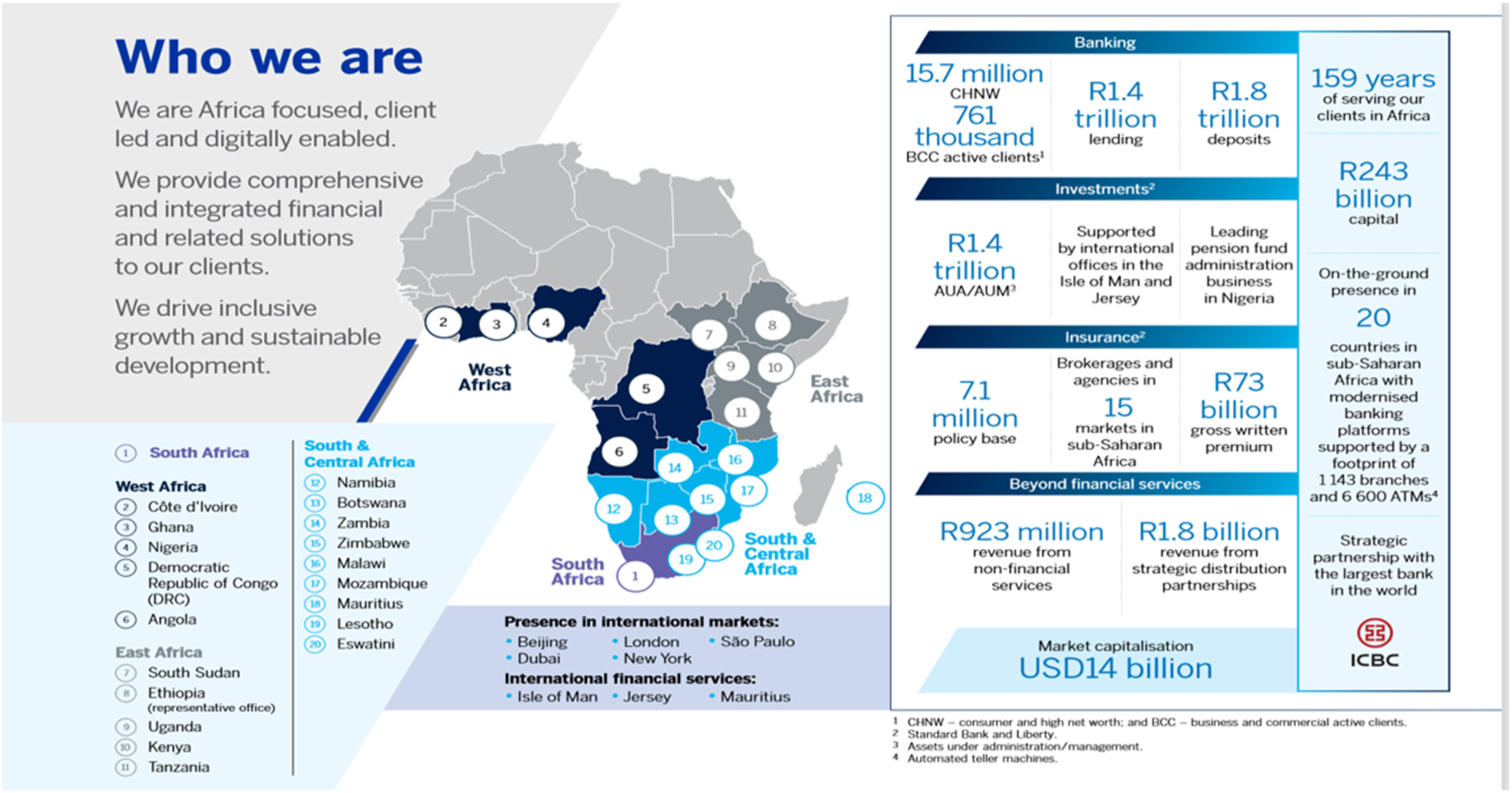
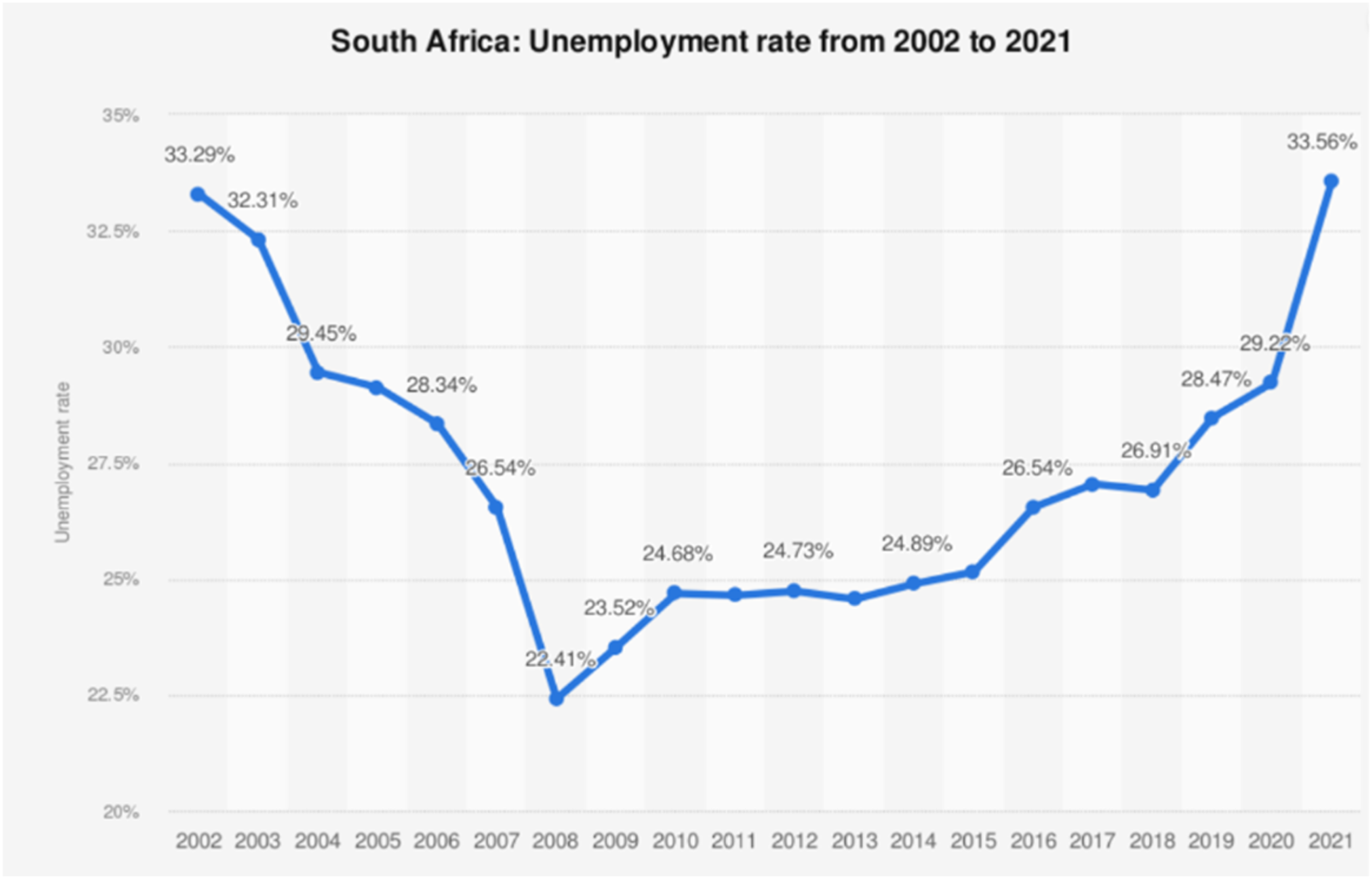
South Africa is beset by challenges such as inequality, stagnant growth, poverty and unemployment. These are not recent developments and were present as early as the 1980s. After the abolishment of Apartheid, the growth of job creation has not been fully provided for those who are willing to work. Figure 2 shows the extent of this problem. Unemployment in South Africa.
2
Against this backdrop of high unemployment, it is no surprise that the sentiment from society is against outsourcing. An excerpt from the Independent Online Newspaper reflects this sentiment: ‘South Africa’s key priority for 2020 is jobs. A number of public sector initiatives to stimulate development and promote food security are underway. However, there remains a heavy reliance on the private sector to play its role in building an inclusive economy…. The argument that job losses are due to digital transformation may be partly true, but the reality is that South Africa’s financial services sector has outsourced its IT functionalities offshore, ……, despite possessing internal capacity. The motivation for outsourcing is purely profit-driven’.
The evolution of standard bank information technology
Standard Bank Group has around 2500 software systems, and this footprint is across all of Africa. In 2017, the IT estate covered two data centres that housed six IBM mainframes, 12,500 Windows servers, 2500 Unix servers and 1000 Linux servers.
These large investments meant that cost management was a constant management theme. In addition to the constant cost pressures, modernisation activities and other strategic themes involved simplifying the IT estate, new ways of working which included Agile and DevOps, system resilience and during the latter part of the 2010s, a move towards Cloud. Customer centricity also became a focus and large-scale solutions like Salesforce were rolled out across the entire bank.
2014 – 2018: system modernisation, insourcing, Agile and DevOps
The project activities that had the most focus from 2000 onwards was a large core banking replacement project that was aimed at migrating legacy Cobol systems toward a modern SAP Core Banking Solution for South Africa. Similarly, all African subsidiaries were being standardised on the Finacle core banking platform. These two activities were multi-billion-rand projects that took many years to complete.
Simultaneously the bank had to develop new digital solutions like revamped online channels for the internet as well as phones and tablets. Massive investments into new projects characterised this period.
When Niehaus was appointed in 2014, the Information Technology function was under pressure from both the executive committee and the board of the bank. Niehaus’s unenviable task was to achieve the following outcomes: • Bring costs down by 30% over 3 years. • Complete the big technology transformation projects. • Increase system stability. • Speed up delivery across all projects.
With the large number of projects being implemented, a large part of the bank’s workforce was contractors. Permanent employees are normally used to manage most of the “business as usual” workload, ad contractors were used when there was a spike in project demand. At times, almost 50% of the workforce was temporary.
Outsourcing and standard bank
During the period 2010 to 2014, Standard Bank decided on an outsourcing strategy for testing in the Retail division of the bank. At that point, testing was not centralised and projects contracted testing resources from a wide variety of local vendors. This created an issue for the bank as it was difficult to standardise rates and the quality of work across many disparate vendors. The bank also had many testers internally, and consistency in terms of delivery and service was challenging to achieve. Against a backdrop of large-scale project work and rising costs, Standard Bank decided to outsource all its testing services to a single vendor in India.
The business case was premised on cost savings, the ability to ramp resources up and down quickly and the improvement of the quality of testing. Internally, staff were moved to the outsourcer and Standard Bank created a so-called retained organisation to do contract and relationship management with the vendor. The feeling in general was that over time, the outcomes of the business case as set out were met.
The Investment Banking division followed suit in 2013 and outsourced their testing to another Indian vendor as part of a multi-source strategy. The business case, like the Retail division, was based on cost savings, resource flexing and improved quality. A couple of years later, the bank abandoned its multi-source strategy and combined both sourcing contracts into a single one. The reason for this is not apparent as different managers expressed different views on why this happened, ranging from quality concerns and simplicity to internal politics.
As part of these agreements, a percentage of the work moved offshore. All the contracts also had provisions to create capacity in South Africa. All the offshore vendors opened South African branches and South Africans were employed. It is unclear if the job losses offset the job creation in South Africa because of work moving to India.
In general, outsourcing left a bad taste in the mouth of the Standard Bank employees as it was felt that Standard Bank was not building internal capability or building resources in the country even though every effort was made to secure jobs for Standard Bank resources after the outsourcing event.
Niehaus inherited this outsourcing legacy. The consensus on the effectiveness was not clear. Some members of the management team felt that Standard Bank should buckle down and outsource more. Others felt that software development should be seen as core to a digital organisation, and it was felt that outsourcing was an abdication of responsibility and that every effort should be made to build internal skills. Coupled with the socio economic situation in South Africa this was a difficult choice.
The Agile and DevOps transformation journey
In 2013 Standard Bank started to investigate the use of Agile and DevOps methodologies for software development. The organisational structure at the time broadly followed a Plan, Build and Run pattern. These functions were all run by different people and there was little overlap between them. There were some experiments in Agility, especially in the Internet Banking, ATM and mobile product space. In essence, this meant working in cross-functional teams and following Scrum. The Agile manifesto encourages: • Individuals and interactions over processes and tools. • Working software over comprehensive documentation. • Customer collaboration of contract negotiation. • Responding to change over following a plan.
Dawie Olivier, the Head of Build felt that outsourcing (especially managed work outsourcing) is against the spirit of Agile and should be discouraged.
Following Agile approaches on a couple of proof of concepts, cost per function point metrics reduced fourfold and the delivery cadence went up. For all intents and purposes, these experiments were a huge success and the business benefits grabbed the attention of management. The question was not so much if Agile should be attempted, but rather how to scale it.
At the same time, DevOps was starting to be used by different teams. Deployment time was rapidly reduced and there was an ethos that organisational boundaries should be collapsed, and all work should be in cross-functional teams. Hand-offs between teams were actively discouraged.
During this period and in line with the general Agile and DevOps ethos, there was a very coordinated effort on culture transformation. Part of the cultural transformation was the empowerment of teams, elimination of silos, focus on flow and the breakdown of silos.
Against this backdrop, outsourcing in the software development space became harder to sustain.
In 2016, a management delegation from Standard Bank visited IGN Bank in the Netherlands and a couple of smaller companies in Europe and the USA to see how they have implemented Agile and what can be learned from them. At that stage, Agile had a foothold in Standard Bank IT, but it was not fully scaled yet. During this visit, it became clear that European firms, in this case, IGN, were moving away from outsourcing and insourcing all of their software engineering work. IGN felt that software development is key to being a digital bank and that outsourcing in the software engineering domain does not make sense. This is in stark contrast to the feeling in the industry during the late 1990s and early 2000s.
Niehaus now had to decide if she should abandon the outsourcing strategy which clearly showed some cost savings, if she should expand it to other areas in the bank or follow the advice of the technical community to move to large-scale Agile and DevOps. On the one hand, this decision was difficult as cost savings and access to resources could be achieved through outsourcing. On the other hand, it was against the advice of the technical community and also not very palatable in a developing country with a high jobless rate.
Based on the success of the internal pilots, case studies from other banks and the general apathy towards outsourcing, Niehaus decided to scale Agile and DevOps and use it across the organisation and insource testing. In 2016 Standard Bank rolled out the Scaled Agile Framework (SAFe) to transform all of Information Technology. As part of this exercise, Standard Bank began to terminate its testing agreements and moved work in-house primarily based on Agile working methods and a shift in culture away from outsourcing (Figure 3). Comparison between the cost that different vendors quoted for a testing RFP compared with the internal cost of around $60m (2013 numbers).
3
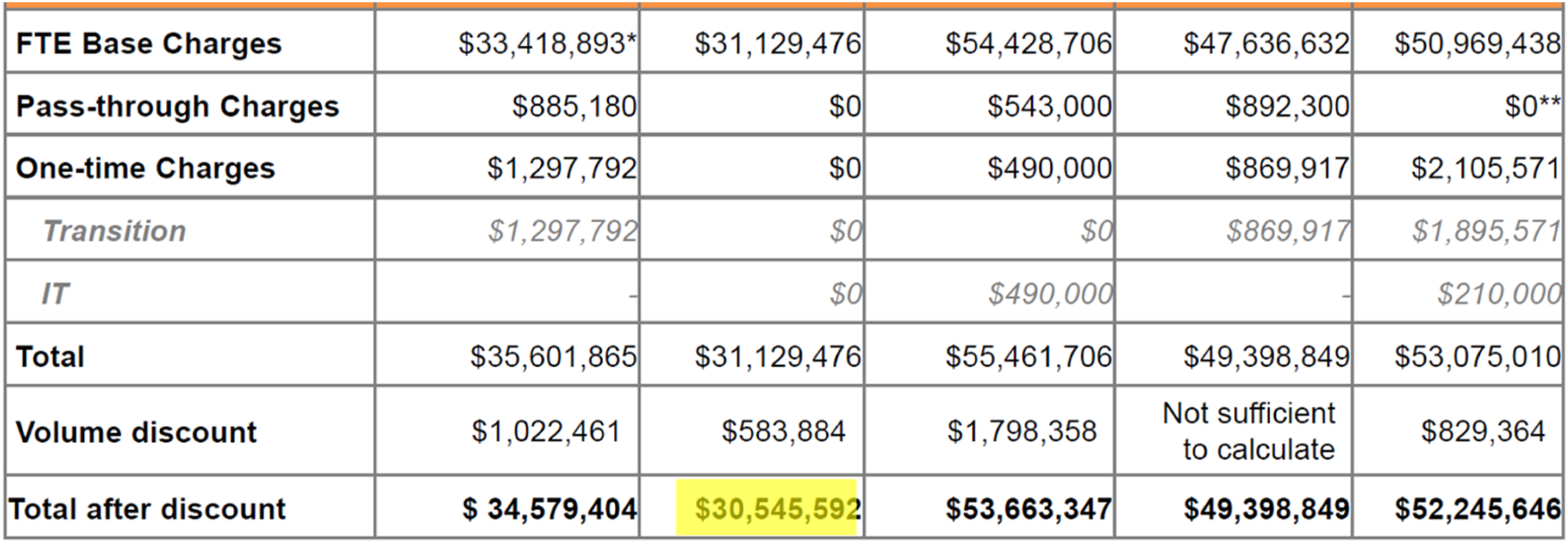
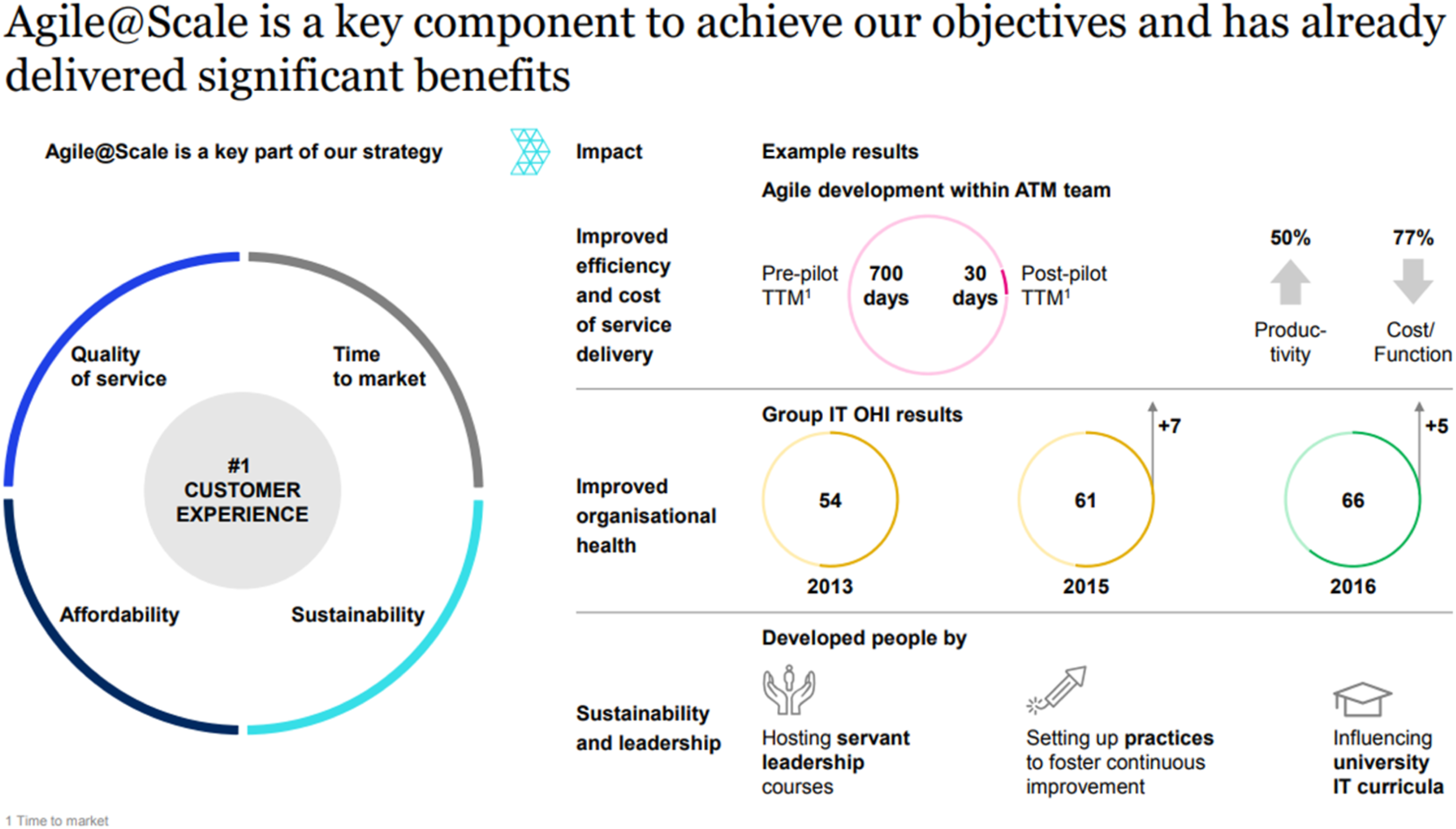
Figure 4 shows the impact of Agile and DevOps across Organisational Health (OHI), unit cost, overall income statement effect, cycle times for significant feature development, meant time to fix incidents (MTTR) and overall monthly incidents. Benefits of the Agile and DevOps journey.
4
2018–2022: digital transformation
Niehaus retired in 2018 and a new CIO, Alpheus Mangale was appointed. Mangale instituted a new era that followed the general zeitgeist of Digital Transformation. Standard Bank adopted the future ready model as advocated by MIT’s Sloan Centre for Information Systems Research. In the past the bank focused on Operational Efficiency. Under Mangale there was a shift toward more customer centricity and the integration of customer experience.
In line with almost all South African banks, Mangale instituted a strategy around Cloud and rolled out some signature programmes that will aid customer centricity. The strategy of Standard Bank was to move the hosting of all of its applications to the Cloud. Huge investments were made to roll out Salesforce to support customer centricity complemented by more modern channel management technologies like Backbase, all of which are still ongoing programmes at the time of writing this article.
In essence, all these big programmes are multi-year projects which would take Standard Bank well into the 2020s. The Cloud Journey based on feedback from other banks would take around 10 years, and the customer-centricity programmes will be ongoing well into the mid-2020s.
At this time neither a move away from Agile and DevOps nor any contemplation of outsourcing was considered. The Testing insource he inherited from Niehaus did not go as planned and Mangale inherited a mixed bag.
Insourcing aftermath
During the insourcing process, new staff had to be hired and many staff from the outsourcers were taken on board. From a development community, this has been a positive move. From a management side, though, the evidence points to the fact that quality has been reduced, and costs have started to rise. There is a feeling that Standard Bank could have done the insourcing better if there were a stronger emphasis on standards and adherence to good testing practice. Better training and coaching of staff on the importance of quality control would have helped. As line management of staff moved back in-house, these skills were not strong, and this resulted in lower levels of quality and increased cost.
In DevOps, there is a focus on automation and the feeling was that a general developer should take over the testing function rather than dedicated testers. Individuals would then become cross-functional rather than only teams. This meant lower costs as fewer resources were needed. This never transpired in practice as developers did not take over the testing function and the knowledge transfer from the outsourcer to internal staff never happened. For example, daily testing reports were produced during the outsourced period and presented to management. The day the outsourcer left, the internal teams did not have visibility of the issues and did not know where to source the data or how to produce the report.
There were initiatives to expand Agile outside of IT and many initiatives were run to improve business agility. The flawed testing insource and the subsequent lack of proper testing contributed to higher system outages that were common during this period.
2022 – onwards
In 2022, the Standard Bank board indicated that IT costs were too high and that cost-saving initiatives should be considered as a matter of urgency. All the system change also added to system instability. Key skills were also lost due to immigration, corporate culture, the great resignation phenomena during the Covid period and lack of technical skills in South Africa.
System instability was a key hallmark of this period. The massive change programmes coupled with an exodus of seasoned engineers and lack of testing increased system instability.
Mangale resigned in 2022 to pursue other opportunities. He can be credited with kickstarting what can be called Digital Transformation Initiatives. In his time though costs stayed high and system instability increased.
After some restructuring, the mantle fell on Jörg Fischer to manage IT. He inherited roughly the same agenda as his predecessors (Figure 5). • The efficient execution of massive change programmes • The mandate to reduce costs • Improve system stability The four pathways to becoming future ready.
5
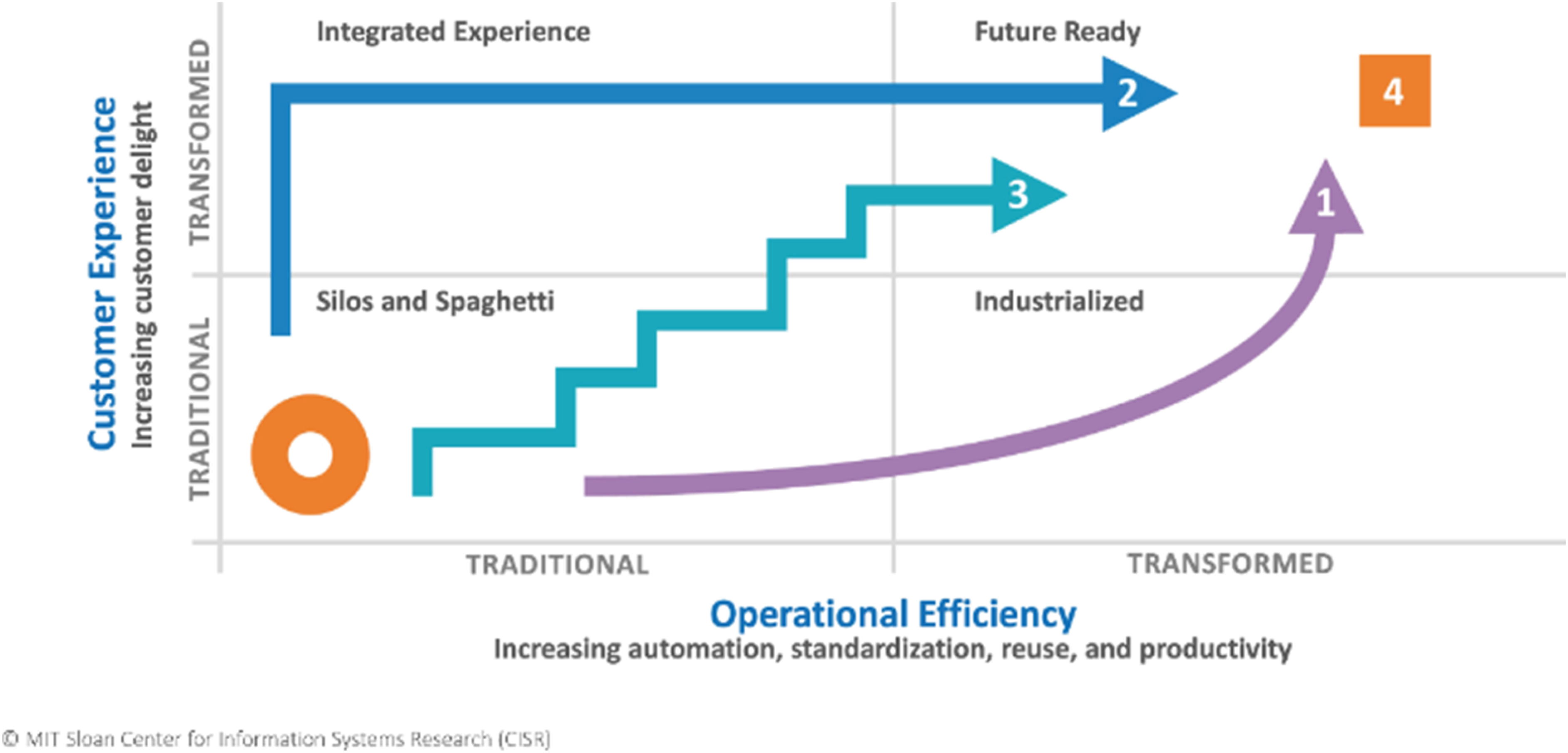
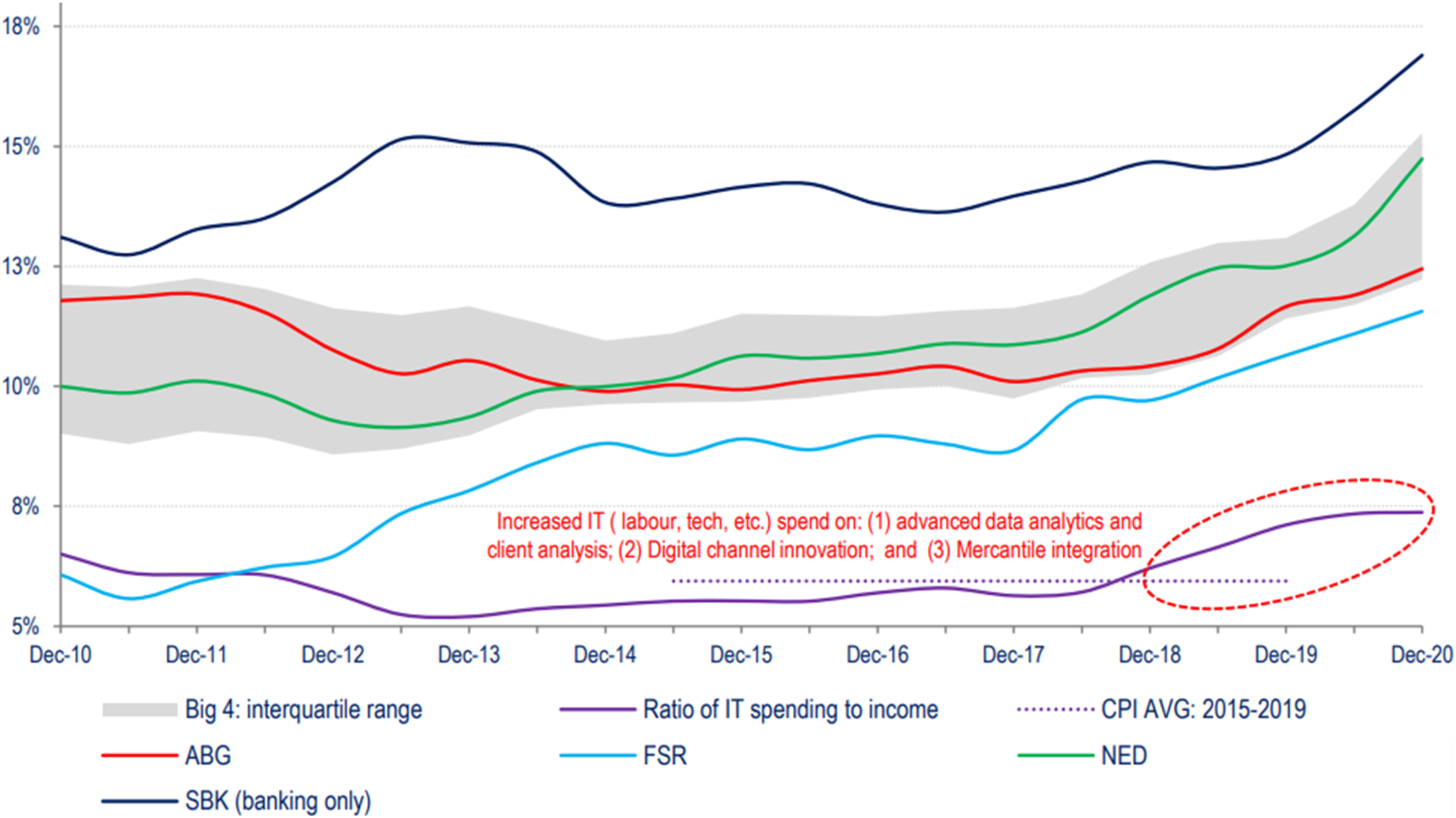
Figure 6 shows that Standard Bank has never fully solved its cost problem and that compared to competitors it is out of line. Cost increase expectations and challenges facing the CIO (Source SA Banks: Big Five, 28 April 2021).
6
Strategic options
Around resourcing which is an underpinning feature of the issues he is grappling with, Fisher has some strategic options: he can do a full outsource as contemplated by Niehaus, he can insource everything and drive an engineering culture (similar to Niehaus and Mangale) or he can follow a mixed approach
Option 1: fully outsource
Outsourcing has a massive cost and access to skills benefit in the South African context. Fischer could consider outsourcing all of IT and manage one or more service providers. The other side of the coin is that banks are more and more becoming fully digitised and that IT is seen as a core capability. Does it make sense for Standard Bank to lose a core competency? If the outsourcing does not work, how will he bring the work back when there is no engineering management capability left?
Option 2: keep all in-house
South Africa is a country with high unemployment and outsourcing might be a bitter pill for the market to swallow. Standard Bank in general prides itself on its social consciousness. Against this backdrop, Fisher can decide to keep all the work in-house and build an efficient Information Technology Function. Standard Bank in terms of IT is one of the largest employers in South Africa. Exercising this option money needs to be spent on training, recruitment and general upskilling. The mistakes in the insourcing of Testing need to be rectified. This option will have long-term benefits but in the short term will slow delivery and costs will be higher that an outsource.
Option 3: mixed approach
Fischer could also consider a mixed approach (some in-house, some outsourced, some staff augmentation). Outsource some highly specialised work or new projects that are urgent. Outsourcing should be strictly time limited with resource plans in place for knowledge transfers. This approach is not Agile friendly as Agile in general frowns on teams where the work is managed through a contract (Managed Work contracts). He could opt for staff augmentation where the contractors are sourced through one or two large outsourcers were there will be deep rate discounts based on volume. Standard Bank will be responsible for output and the outsourcers for the quality of the contracted resources. Management and governance will be more complex as many service providers need to be managed but delivery and cost should be more under control.
Questions for reflection
1. Do the Agile Manifesto and DevOps per se support outsourcing and was it a reasonable decision of Standard Bank to insource testing? What other combinations of outsourcing and Agile can be considered? 2. In a country with very high unemployment, is offshoring a reasonable strategic choice? What can be done to make the implementation more palatable? 3. With rising costs, a resources shortage and a pipeline full of projects Standard Bank must consider some strategic choices. The narrative shows that these strategic choices were similar throughout the last decade. Consider the opportunities and risks of the strategic choices that Fischer faces and make a recommendation on the way forward.
Concluding remarks
The core elements of the issues that CIOs face in Standard Bank are cost, project delivery and recently staff retention. Agile and DevOps made a significant difference to project delivery and cost even in an outsourced environment. The move to insource was not well managed, and with it, the Agile and DevOps journeys got tainted by poor delivery. Standard Bank also had an exit around skills which put skills shortages again at the forefront of the CIO agenda as it affects project delivery. Finding intuitive ways to solve these problems will be at the top of the agenda for any Standard Bank CIO.
Footnotes
Declaration of conflicting interests
The author(s) declared no potential conflicts of interest with respect to the research, authorship, and/or publication of this article.
Funding
The author(s) received no financial support for the research, authorship, and/or publication of this article.
