



Abstract
Across the different vernaculars of the world's urban majorities, there is renewed bewilderment as to what is going on in the cities in which they reside and frequently self-build. Prices are unaffordable and they are either pushed out or strongly lured away from central locations. Work is increasingly temporary, if available at all, and there is often just too much labour involved to keep lives viably in place. Not only do they look for affordability and new opportunities at increasingly distant suburbs and hinterlands, but for orientations, for ways of reading where things are heading, increasingly hedging their bets across multiple locations and affiliations. Coming together to write this piece from our own multiple orientations, we are eight researchers who, over the past year, joined to consider how variegated trajectories of expansion unsettle the current logics of city-making. We have used the notion of extensions as a way of thinking about operating in the middle of things, as both a reflection of and a way of dealing with this unsettling. An unsettling that disrupts clear designations of points of departure and arrival, of movement and settlement, of centre and periphery, of time and space.
Keywords
Introduction
Across the different vernaculars of the world's urban majorities (Simone, 2013; Simone and Rao, 2021), there is renewed bewilderment as to what is going on in the cities in which they reside and frequently self-build. Prices are unaffordable and they’re either pushed out or strongly lured away from central locations. Work is increasingly temporary, if available at all, and there is often just too much labour involved to keep lives viably in place. Not only do they look for affordability and new opportunities at increasingly distant suburbs and hinterlands, but for orientations, for ways of reading where things are heading, increasingly hedging their bets across multiple locations and affiliations.
There is a sense amongst these majorities of just how easily everything they might try can be dismissed, as they strive to draw something out of the mounting ‘noise’ of cities, drawing themselves into whatever opportunity comes their way. Drawing is, in this sense, about acts of extension, to gain increasing manoeuvrability through exploring lines of connection among disparate materials and situations (Bathla, 2022; Crowley and Ghertner, 2022; Eidse et al., 2016). This involves trying to come up with workable and imaginative orientations, which often means unsettling those of familiarity and comfort as well as, sometimes, literally unsettling the body and relations, in order to reach for those positions from which a new orientation is seen as possible.
This is what we take as the starting point to explore the idea of ‘extensions’; that is, the strategies and manoeuvres by which the urban is drawn out, extended and reoriented until a desired urban life becomes viable. What is at stake here are the lives of the urban majorities, whose conceptualizations of the urban inform the questions we ask and frame the commonality, intersectionality and disjunctions of disparate places around the globe. Thus, following the lives of migrants in African oceans, hustling inhabitants of Asian cities and their hinterlands, and landless workers of the Amazon, we collectively ask: what is urban life at the extensions?
Coming together to write this piece from our own multiple orientations, we are nine researchers who, over the past year, have joined to consider how expanded trajectories of urban life unsettle the current logics of city-making. These logics are questioned here in different ways by researchers exploring and expanding the realms of ‘extended urbanization’ – from its original proposition centred on socio-political dimensions (Castriota and Tonucci, 2018; Monte-Mór, 2014) to the more contemporary formulations focused on the operationalization of landscapes (Brenner and Katsikis, 2014), urban metabolism (Brenner and Ghosh, 2022), suburbanization (Keil, 2018) and territorialization (Schmid, 2018). However, beyond the macrological dimensions highlighted by these authors, here we have used the notion of extensions as a way of thinking about operating in the middle of things, as both a reflection of and way of dealing with the unsettling that disrupts clear designations of points of departure and arrival, of movement and settlement, of centre and periphery, of time and space. It is important to emphasize that the extensions examined in this article are multifaceted, sometimes contradictory and consonant with the kinds of situations urban residents frequently face. We embrace these contradictions in and between our works, in order to better interrogate the urban fields in which we are engaged.
The article is thus both an exploration of how to hold several orientations at the same time, how to make new uses of familiar ones and how to conceptually piece together unsettled matters and sensibilities, looking for new possibilities of operation in the ways urban life extends itself across different geographies, times and affordances. And it is a way to share the burden of covering the angles; that is, taking stock of different dimensions of something that doesn’t quite cohere as a whole but which nevertheless eagerly seeks to make use of discrepant scales and categories. We write of extensions as something underway, where we can anticipate certain outcomes but also a great deal of diversions, things heading off course. To us, it is important to be attuned to these unruly dispositions and the conceptual tools that might enable us to more creatively and judiciously engage them, as we outline in the forthcoming sections.
There have been many reflections and disputes about the complexion of the urban beyond the conceptualizations and logics of the city. While there was certainly nothing inherent in those conceptualizations that foreclosed variegated trajectories of expansion, there was usually a prevailing imaginary enduring: that the city marked the inevitable and intensifying individuation of inhabitation, as well as the predominance of citizenship as the valued form of belonging, identification and governance (Joyce and Joyce, 2003; Klause, 2010; Ong, 2013; Turner, 2013). Unanchored from the connections to ancestry, land and metabolic co-dependencies, the city offered a locus of freedom for persons to pursue specifically individual aspirations and competencies (Braun, 2005; Heynen et al., 2006). The capacity to materialize these was contingent upon merit and discipline, and on the needs of industrial production that underlined the distribution of those bodies and their competencies (Boyer, 1986; Dovey, 2016; Tonkiss, 2005).
Extensions, then, are an inevitable sign of the city. Through the history of important work on urban peripheries (McGee, 1991) and particularly that of extended urbanization that builds on Henri Lefebvre's ideas (2015), urbanization has become increasingly understood as its own mode of production. Oversimplified, the urban produces the urban. And this is not as tautological as it might sound, because according to this view, the urban becomes less something that is replicated according to stable categorizations and empirical variables, and more something that engenders heterogeneous configurations that may consist of enough familiar features to warrant at least a feeling of commonality. More significantly, the urban produces technological innovations, recalibrated operations of labouring and remade public spheres that constantly take the urban beyond itself to capitalize on the intersections among different forms of value creation – the disposition of land, the agglomeration of economic activity, the marketization of sociality and the organization of financial matters (Merrifield, 2013; Moreno, 2014; Schmid et al., 2018). It also extends itself through a multiplicity of engagements, built environments, settlement practices, temporalities of investment and ways of using materials that do not necessarily follow the logic of the city (Keil, 2018; Lefebvre, 2003; Monte-Mor, 2014).
Extensions themselves take on multidimensional facets. They are not only an empirical object or a geospatial reference, but also a way of being in the world – one that operates as a vehicle for urbanization – and a way of questioning its aims and materialization. The interest of this essay and our collective at large is not so much to weigh in on long disputes of the concept and locatedness of ‘extended urbanization’ but rather to attempt more precise and heuristic depictions of spaces and processes of the nominally urban that can no longer be productively viewed as peripheral or marginal. We see these spaces and processes as, increasingly, the places of urban majorities. This is a conflicted, yet generative locus of multiple actors, situations and events engaged in attempts to limit their vulnerability to large-scale speculations, maintain sufficient flexibility to shift gears in terms of livelihood and location, and experiment with different itineraries of engagement with ever-expanding urban regions.
Urban life at the extensions is then an attempt to explore the multifaceted dimensions that generate new kinds of heterogeneities – those of spatial formations, contiguities of different histories and economic practices, and infrastructure developments. This ‘life at’ is seen as something itself put into question – not in the conventional city-centric sense of linear progressions but rather something more unruly, impulsive and mutable. Here, there is the seeming commensurability of things that otherwise would not go together, for example, in the sometimes-sharp proximities between agricultural cultivation and mega-residential complexes (Pieterse, 2011).
Based on the different, sometimes conflictual, positions and preoccupations the sections examine urban extensions as a reciprocal shaping of:
Frontiers, as ports of arrival and sites of departure, like in the Southwestern Indian Ocean, where cities were never completed, manifesting the colonial projects behind their emergence. These spaces such as Fort-Dauphin, in Madagascar, exemplify a liminal space that people inhabit, leave and to which they return, extending itself through multiple replications. Reversals narrates the labour of fishers sustaining estuarine and oceanic geographies in Chennai; seemingly peripheral geographies often folded into a logic of extended urbanization. What if this labour was considered urbanization already in action? What if the urban was, in fact, the extension of its natural, material, environments and the labour performed to inhabit them? Becomings describes four of the many quasi-urban lives rapidly transforming India, whose variegated landscapes, processes and actions are singularized as an extension of the urban – a misunderstanding that overlooks the mélange of affordances and orientations shaping these territories, depriving these frontiers of urbanization of the attention they require. Un/settling questions the meaning and scope of ‘settling’ in the context of racial capitalism and its structural displacements, from a perspective situated in new, mobile, trans-border geographies of labour and inhabitation extending between South Europe and North Africa. But also as a way to enquire into the possibility for alternative notions of place, and to understand urbanization as an extended process that cuts through the rural-urban, land-sea, Africa-Europe and South-North divide. Off the radar designates practices and territories that enjoy a certain lack of attention in relation to urban cores, where things are less discernible. In Eastern Amazonia, operating off the radar means, on the one hand, that large capitalist and state interventions are enacted in a rather unregulated manner but, on the other hand, that urban majorities can maximize exposure and reach out to enlarged fields of opportunity (Simone, 2020) (Figure 1). Extending time articulates new geo-economic and geopolitical temporalities through infrastructural transformations that embody new rhythms and trajectories of circulation. This is the case of global spaces of concentration of capital and people that are vitally connected with more ‘silent’ areas where formidable infrastructural operations have been re-organizing the manifold flow of the global economy – such as the spaces crossed by China's Belt and Road Initiative. Material incompletion is a double-edged constitutive feature of extended urbanization. On the one hand, it causes disruptions in life worlds when embraced by the infrastructure state. On the other hand, the urban majority – a diverse and often incoherent class between the ascendant middle class and the poor (Simone, 2013: 246) – utilizes uncertainty as a means for negotiating claims to urban space and transforming life in the cities yet to come. Extensions as Infrastructure is a mode of existence that enables a kind of ontological integrity to function across distances; that embeds the endurance of entities or operations within a larger set of nodes, contacts, interfaces, debt relations and material affordances, or that exerts experimental agency across unfamiliar terrain.
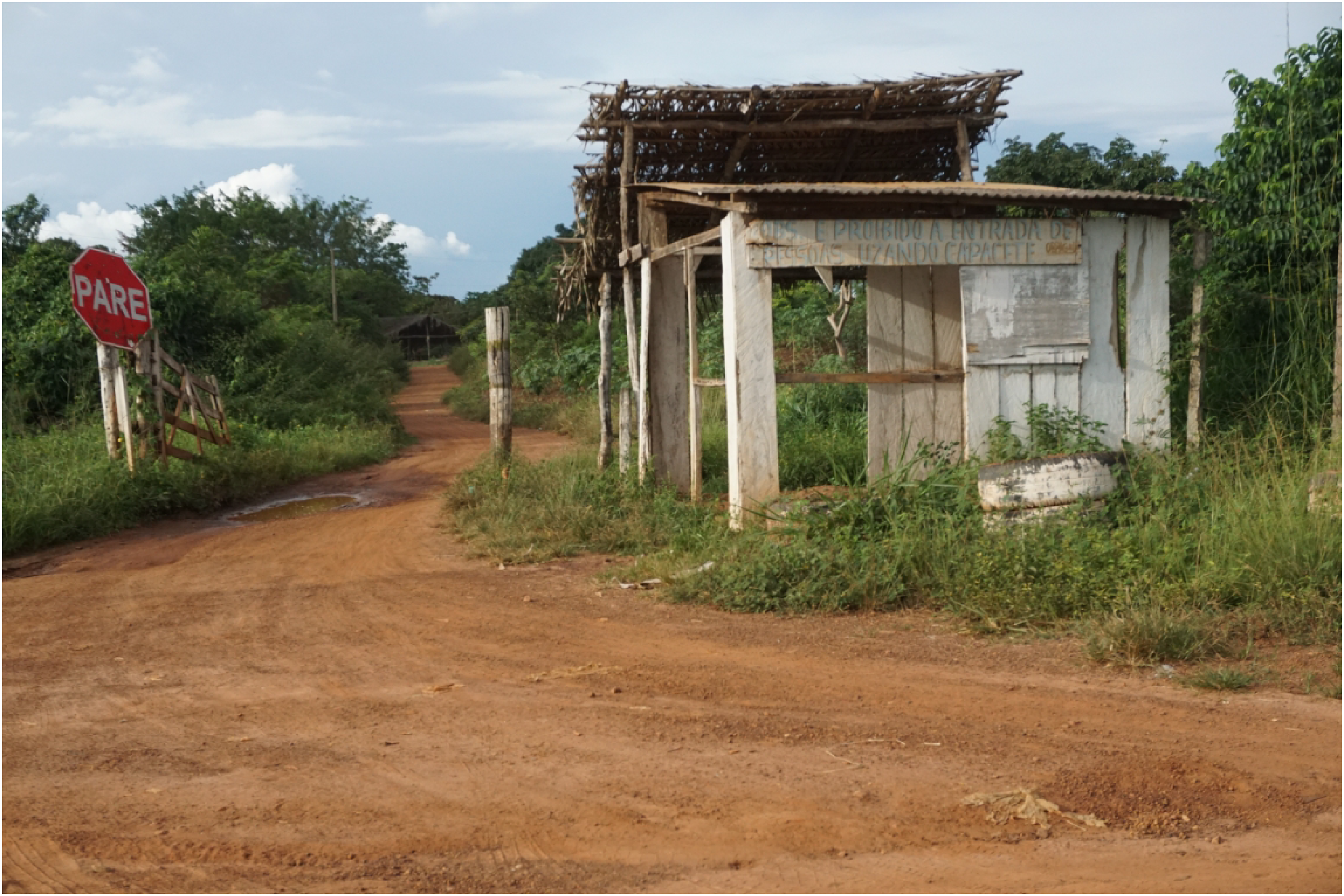
‘Entrance is forbidden for people wearing helmets’, Serra Dourada Landless Encampment in Canaã dos Carajás, Eastern Amazonia – Rodrigo Castriota.
Frontiers
Extensions raise the question of frontiers as something out there, as a horizon towards which extensions are directed. For instance, the so-called frontier cities occupy the edges of worlds extended beyond their initial peripheries. These outposts herald or enforce the hegemonic projects of metropolitan cores. As such, frontiers are always incomplete overtures: their raison d’être is to propagate rather than enclose.
In his work, Igor Kopytoff examines African frontiers as interstices continuously produced through centrifugal processes, as apparent vacuums allowing for new beginnings. These regions, however, are far less utopian and avant-garde than they are made out to be. While not always obvious replicas of their centres, internal frontiers allow them to endure (Kopytoff, 1987: 33–35); some frontiers also challenge fantasies conjured by the centres. On the other hand, for Francis Nyamnjoh, ‘frontier Africans’ are not bound by binaries that, for instance, separate villages and cities, bush and forests; their flexibility allows them to resist reduction to labels. Instead, they subvert the essentialization and certainties that are imposed upon them by more embedded, Eurocentric forces (Nyamnjoh, 2017: 258–260)
Cultural approaches to frontiers often posit their quasi-liminality and hybridity. For Mary Louise Pratt, for instance, frontiers emerge as ‘contact zones’, leading to the emergence of new forms and meanings. More recently, work on the concept of cultural ‘ecotones’ has described spatial transitions and in-betweens (often urban spaces) as sites of encounters engendering and nurturing mixedness, creoleness and métissages (Arnold et al., 2020). Ecotones, frontiers and borderlands are proposed as rebuttals or alternatives to the narratives of purity and homogeneity; instead, they epitomize cultural and social entanglements. These perspectives focus on the diversity that the frontiers contain (and blend) rather than on their elasticity, their dynamic ability to contract and expand alternately. Instead of the heterogeneity of their in-between-ness, it is this stretchiness that we would like to emphasize.
Fort Dauphin, located in Anôsy (in the south-east of Madagascar), is one of the most geographically remote cities in the world. The island is itself at a distance from major Indian Ocean trading routes and secluded from continental empires and organizations forming on the continent. Fort-Dauphin, with its dusty and empty streets, shipwrecks and scattered ruins is undoubtedly reminiscent of abandoned cities found at the margins of a more interconnected world. It was founded in the 17th century as the first French colony in the southwest Indian Ocean. It later became a fortified base camp, used by the kingdom of Madagascar, then again by France in the late 19th imperial project, to grow their control over the ‘dreaded’ Deep South, whose reputation of impenetrability was best symbolized by the dense presence of the prickly pear cactus. Early conquerors and later intruders organized the territory to extract humans and non-humans For foreign armies and their world of traders and entrepreneurs, Fort Dauphin was a refuge to reassemble and harness the wealth of the South.
The brutality of living in a frontier contributes to the emergence of new frontiers, transforming old frontiers into new centres. Anôsy became a place that the defeated and displaced Tanôsy rulers (and their subjects) left behind and carried with them. They created frontier towns, further and further away. Royal centres (andonaky) were re-created with identical toponyms and similar demography, thus stretching the original domains of the Zafiraminia kings. The borders of their domain would extend or retract depending on the pressure of the colonial expansion: relative and temporary colonial withdrawals meant the possibility of returns. In any case, the rulers maintained their connection to their homelands through the uninterrupted use of their ancestral burial sites. Today, similar ritual processes shape the ancestral landscapes with the erection of tombs, megaliths and monuments, sustaining the moral and economic lives of migrants. Fort Dauphin and its extractive industries attract migrant workers who extend their lives beyond their current residence through visits to their rural homes and the performance of their duties to the living and the dead. These city dwellers have dual lives, periodically devoted to their villages and tombs. The ancestral lands manifest an unchanged order away from the fluidity and flexibility of everyday urban lives. The creation of permanence through funerary practices was at the centre of Placing the Dead, the work of Maurice Bloch in the central highlands of Madagascar (1971). In the South, rituals similarly contribute to the illusion of immobility.
Fort Dauphin illustrates a few different possible relations between centres, frontiers and hinterlands. It first turned into a colonial frontier – as a base camp for conquests of an area reputedly hostile and untameable. The sacred and dynastic centres of Anôsy became frontier worlds to carry – with the condition of periodic re-foundation in the homeland, a practice resonating with the migrants of all ranks and status settling in Fort Dauphin, while assuring their rootedness and relatedness. These extensions beyond the city disrupt the urban existences and simultaneously ground them. They create temporal bridges connecting the present lives to past and future projects. Lingering teleological imaginations (colonial or ancestral) inspire the outward expansions and return journeys. Inhabiting the frontier is thus less about an existence in-between (colonization and liberation, life and death, city and village) than living with the possibility and necessity of becoming.
Reversals
Are these trajectories of outward and return always clear? Imaginaries of centration, with their radial lines and outward progressions, situate edges and margins, often bordering apparent natures – deserts, coasts and mountains. Despite settlements having been native or at least adapted to such domains through time, they tend to remain marked as sites of improper inhabitation. ‘Oh, it's not a residential area’, commented a concerned neighbour about a town where fishers sustained waters amidst the debris of industrialization. ‘There are only industries, you can’t live there’, they continued, either oblivious to or discounting the lives and homes of working castes who built, ran and maintained the very industries that ruined their waterways (Figure 2).
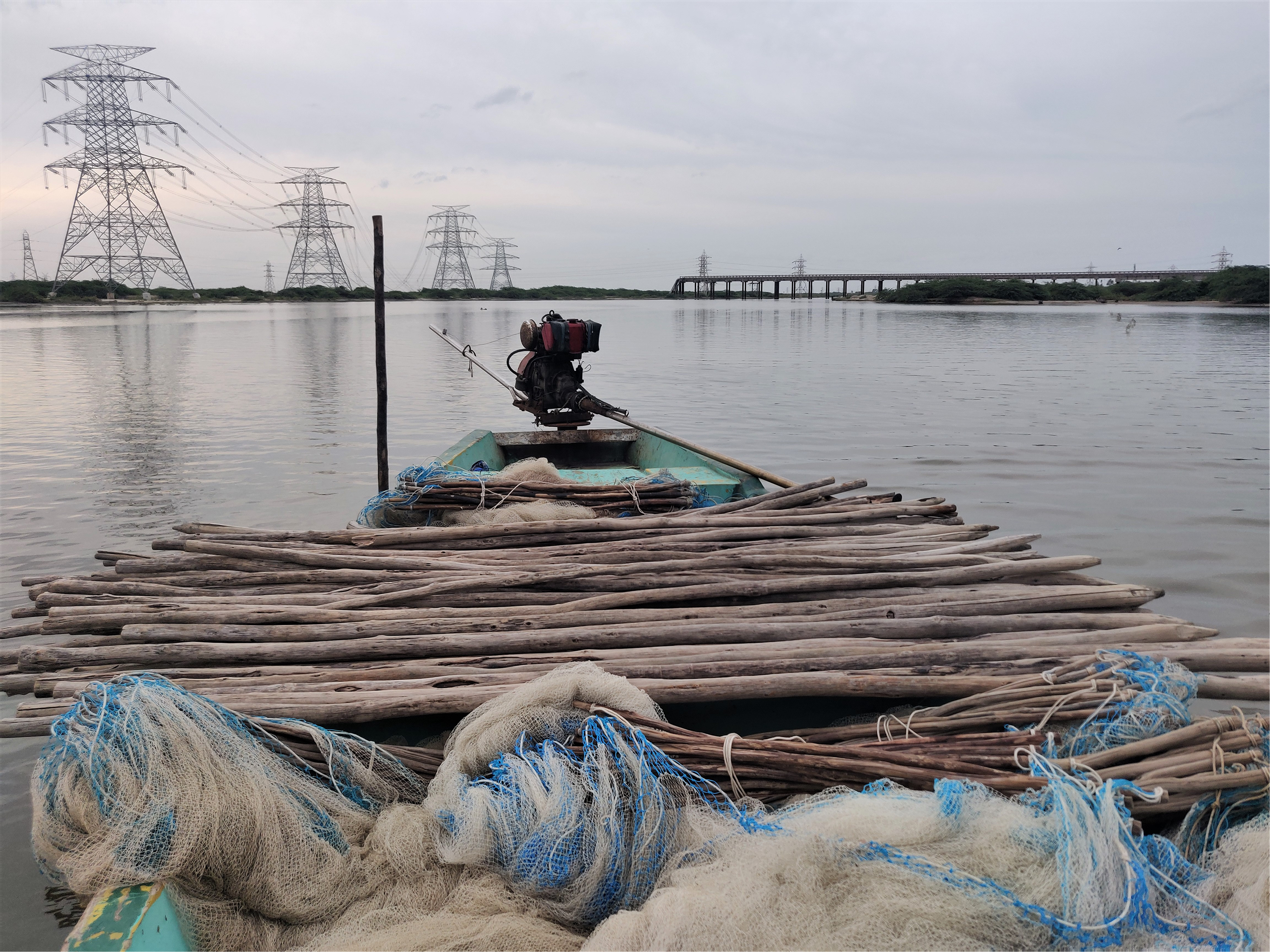
Urban life in the waterways of North Chennai. Credits – Niranjana R.
The town was Ennore, in north Chennai, where a river estuary and a colonial-era canal meet the sea forming a rich estuarine ecosystem surrounded by wetlands. Not all that different from the affluent seemingly ‘residential’ neighbourhoods of south Chennai built unabashedly over marshlands, canals and former irrigation tanks. This has, in fact, been the classical typology of the colonial city in Asia, built on watery environments that were integral to not only their global connections but also internal metabolism (Batubara et al., 2018; Gandy, 2014; Ranganathan, 2015). The complex flows of water on canals, floodplains, underground and nearshore in Chennai have facilitated the movement of sands, debris and social relations such that its north and south and wet and dry are entwined in social and material ways.
Yet, it is the north Chennai wetlands, coastal sands, canal and riverbanks that are seen as ‘marginal’, and in need of urbanization of a certain kind, inhabited as they are by working classes, lowered castes and fishers, always before and in order to labour towards the building of the city proper. When life in these watery geographies gets folded into an analysis of extended urbanization (Couling, 2018), it ends up reifying existing frontier logics. The environments themselves are analysed only in subordination to dominant urbanization – either as nature that is urbanized or as urbanization that pushes into marginalized natures. However, as recent scholarship in urban political ecology has argued, a move beyond the ‘urbanization of nature’ thesis and grappling with the messy lives of ‘urban nature’ are overdue, especially in understanding life at the global margins, that is, the global south (Arboleda, 2016; Gandy, 2022; Tzaninis et al., 2021).
It is then worth asking the question: what work does the term ‘extension’ do for our understanding of the way life in many of these places is lived? Does it risk being appropriated in service of the very processes it critiques? Following from Tzaninis et al. (2021: 243) that ‘the question of the urban condition is a political question that we cannot afford to avoid’, we might be inspired to consider what could be possible when we think of these margins as really being at the centre of things. Could we use these margins to tell the story of the urban from its minority, those processes and ways of living that aren’t quite accepted as urban (Katz, 1996)?
To address these questions, we digress briefly to the routine on winter mornings at the popular Elliots beach in south Chennai. Fishers living nearby go out into the sea at dawn and cast one or two shore seines, karavalai, or modavalai in Tamil. Arriving back on shore, the process of drawing the net inlasts until mid-morning. As the crew of about 8–10 swells with friends and neighbours, they pull the net's massive ropes, swaying gently and appropriating the sea waves for their labour. Blurring the boundary between land and water, the fishers’ labour here inhabits urban space in a way that stretches the city and the sea into each other. It extends the very idea of what an urban process is to contest normative urbanization's claim to the city.
This is a coastline dotted with colonial and postcolonial era ports, which have set off a simultaneous process of seashore accretion and erosion in the south and north, in turn enabling the deployment of shore nets in south Chennai and crab nets on the groynes that protect north Chennai.
In both places, fishers’ lives involved wading into or getting on boats to go into the sea, river and other water bodies for work. The unpropertied space of the beach was for mending nets, parking boats, sorting, auctioning and selling their catch (Kumar et al., 2014). Far from awaiting imminent urbanization, the sea and its wet coast are sites that afford inhabitation in the minor register; that is, ways of being in the city that aren’t necessarily subsumed by dominant urbanization.
Imagine the fluid materialities of the so-called margins as extending the urban fabric, stretching it thin until it becomes something else; engendering practices such as fishing and foraging that are often denied possibilities to exist within dominant views of the urban. This stretch creates tension in what it means to be urban; in where and how it is to be lived, such that it can unsettle established ideas of what the urban is or should be. That is, instead of reinforcing the neo-colonial, planetary tendencies of urban accumulation, extensions can introduce to the urban a ‘radical alterity and radical undecidability’ (Reddy, 2018: 532).
In Chennai, where the wetlands at the city's edges have been attracting global capital and emerged as spaces of political contestation, there is an expectation that fishers and others who work on water will continue to maintain them as the city's ecological buffer; as ‘natures’ in opposition to and protecting the ‘urban’. The valorization of their ‘environmental labor’ and knowledge has not been accompanied by validation of their claims to the city, urbanity and urban culture (Niranjana, 2020). The undecidability fostered through extensions thus can open up the theoretical expansion of the urban rather than merely extension of a theory of urban accumulation. It can be valuable in writing the urban from the minor, reversing the gaze on urbanization, precisely because it is often the majority who are minoritized (Katz, 1996; Simone, 2013).
Becomings
If we start from the reversals suggested above, the disjunction among normative strategic urban planning and the processes of territorial transformations on the ground are amplified, even as there are many intersections. Centric approaches in planning, both older (Scott, 2008) and newer (Brenner, 2004), skew towards accumulating capacities for economic growth. This embedded ideal in national strategies reimposes the influence of such centres across an expanded environment. In this way of seeing, even as national strategies envelop, dissect and accelerate territories beyond these economic centres, their transformations remain absent from the broader accounts of the state (Smith and Katz, 2004). Such omissions overlook local development trajectories, erroneously considering their inhabitants prostrate participants in national forums (Scott, 2008). Instead, these newer urban majorities seek to continuously evolve their capacities, and as active formulators, their variability, disjunction and disparate subjectivities locally reorient state projects and their outcomes (Simone, 2013). In failing to account for or record these variegated becomings, how they come to shape territories remains a black box (Gibson, 2001; Leitner and Sheppard, 2015) – an oversight that continues to imbalance our understandings and the tools we use to assess such territorial transformations.
To illustrate the above, let's take the interplays between the regional expansion of national roads and local housing transformation in the Bengal region. Known mainly as India's rice bowl, Bengal's large rural population is assumed to be predominantly engaged in agriculture, seasonally travelling across the country and abroad for labour opportunities. Under this singular understanding, regional road developments are primarily imagined as boosters for agricultural production, connecting major cities to these production sites. Instead, as regional connectivity improved, the mostly young rural population shifted to non-agricultural activities from the comfort of their home, transforming the region along the way (Samanta, 2012).
Consider the following four composite sketches of former farmers to deconstruct the territorial shift unfolding in Bengal. The first sketch, a usually Bollywoodized reality, is of a son of a wealthy landowner who, in the 1990s, moves to Delhi to set up a clothing store with capital from his father, and marries a city girl. After roads developed in his village back in Bengal, he returned to extend his business, build a modern home and take care of the now highly valued paternal land. However, accustomed to an urban lifestyle, his family still struggles to adjust to the quasi-urban environment of the growing village. The second sketch, commonly found in academic discourse, is of a migrant worker. Before roads came to his village, he lived with his family for only four months during the crop-cutting season, spending the rest of the year in a densely crowded quarter in Kolkata working on construction. Afterwards, demands for contemporary-style houses increased in his village. He now leads a construction gang as a head mason, enjoying family life year-round. However, with increasing land value and rapid construction, he could only afford to build a small one-bedroom house on the expanded outskirts of the village, which floods during monsoon. The third sketch, a familiar oxymoron, is of a medium-income farmer who owns an agricultural plot next to the newly proposed highway. Once the highway construction was announced, the plot's market value skyrocketed. He quickly sold it to a paper-mill owner looking to expand its manufacturing power. From the capital gained, he built a multi-floor, multi-generational home and saw his children go to college. However, they could not find a job that matched their education in or near their village. The dwindling capital from selling the paternal land currently keeps the large, primarily unemployed family afloat. The fourth sketch, rarely discussed in rural transformation, is of a small tea shop owner who barely makes a daily income to support his family. After the road in front of his shop developed, he expanded it to a general store by borrowing from a local moneylender. With improved access, the daily footfall to his now multi-purpose shop increased. However, while his income surged, a large part of it goes towards paying the high interest on the small loan he took 10 years ago.
These composite sketches are a gathering of real negotiations, contestations and acceptance unfolding in Bengal with rapid road developments. They illustrate how improved connectivity has also increased multiple dispositions in former rural lives, who cope, take advantage and sometimes fall between the territorial shifts triggered by these constructions. Even when they reproduce the embedded urban subjectivities in road development, their spatial configurations do not always align with the state's projections for these territories. In doing so, they transform both their and their region's development trajectory – which is largely overlooked by the Indian states (Mukhopadhyay et al., 2020).
Increasingly, growing territorial heterogeneity makes national strategies neither a complete failure nor a complete success. Rather, they impair the otherwise assumptive, binary assessments used for understanding them. This cognitive blind spot deepens the disconnect of the planning discipline from the lives at these extensions, which is singularized, attached to ideas of city-making, and informed by notions of growth, modernism and leapfrogging (Crowley and Ghertner, 2022; Derickson, 2015; Kanai and Schindler, 2019). Further, skewness towards urban conditions in computations, scope, data, models and representation used in regional research and policies misinterprets the impact of national strategies on non- or quasi-urban environments (Gibson, 2019). In these ways, we falsely entangle the transformations seen at the extension as becoming urban, reciprocally limiting the lens and scopes of similar future development strategies in the region.
Un/settling
Such a closer look is warranted in terms of how the intersection of different trajectories of becoming act to unsettle the endurance of particular places, but also usher in a newer generation of emplacement beyond the (colonial, racialized and violent) dualism between ‘settled’ and ‘unsettled’, in an interplay of disruption and generativity.
From colonialism to private property, settling has been the recurring mantra to which modern society has aspired, on whose grounds it built its precepts, imaginaries and desires. To call for a shift in the understanding of social life may seem to some radical, at best, unimaginable, at worst. Yet, the global scale and rapidity with which modes of un-settling are taking place are undeniable: from the proliferation of camps and refugee centres to the pervasiveness of modern slavery and the structural temporariness of the gig economy. What if we conceived of them not as states of exception but as a new ordinariness? Not an anomaly in the order of neoliberal capitalism and the nation-state but an integral attribute, a direct extension of the excluding spatial workings of a fixating conception of social life.
If the ‘settled’ is the colony, the planned city, the immobile, the social and spatial organization of a collectivity into a legible map, who gets to settle and who does not? For settling is only ever partial and that partiality tends to occur along computational lines that stress place as a condition of belonging to a single root. Yet, it would be wrong to assume that settling is the univocal synonym of inhabitation and the possibility to make a place. Deleuze and Guattari (1989), for instance, vividly criticize ‘being rooted’ as the idea of a permanent, individual rootstock that takes over everything else, that never transforms, never evolves. Glissant (1997) brings Deleuze and Guattari's critique forth when claiming that making place (being in relation) is the desire to go against a root. Like Dionne Brand, Christina Sharpe and others, Glissant elicits the violent erasure of (African, regional and ethnic) roots operated by the slave trade and the racialized regime of dis-possession that this made possible. The violent uprooting entailed the designed banishment from the possibility of settling down. In the Americas’ modernity, ‘white’ settled while ‘black’ and ‘indigenous’ were unsettled. But how is the making of place related to processes, economies and ecologies of settling and unsettling? And how can understanding that relation shed light on the violence of that dualism, as well as on alternative ways of being together in the world?
Take the case of the seasonal mobility of African migrants in the agro-industrial food chain of Southern Italy. Arriving at the Southern gates of Europe after the unspeakable challenges of multiple crossings and rebounds, migrants continue to engage the circulatory displacement of global capitalism upon entering Europe's migration industry (hotspots, migration centres, drones and the militarization of borders) and the informal job market. At the rural–urban threshold, in particular, they are easily captured by gang-masters (known in Italy as caporali) who often offer to undocumented migrants, including those awaiting documents in the grey space of Europe's migration bureaucracy, the only viable source of income (Perrotta and Sacchetto, 2014).
Yet, gang-masters do not simply determine the hiring rules and the exploiting working conditions of the labourers (known in Italy as braccianti). In the case of migrant workers, they also arrange and control their dwelling, and their social and biological life, often through an ordered infrastructure centred upon squatting and the overcharged provision of drinking water, food, hot water for showers, rudimentary sleeping facilities, clothes, alcohol, cigarettes, drugs, sex, hairdressing and mechanics services, and, sometimes, limited forms of entertainment (Sagnet and Palmisano, 2015). While the provision of these services may suggest an incipient form of settling, migrant workers are constantly uprooted, seasonally moved between different agricultural sites by the gang-masters, from one camp and region to the other. The harvesting temporalities of different foods thus dictate the location (and, consequently, the conditions) of both the working and dwelling of a migrant worker. These conditions of unsettlement are (re)built under the symbiotic relationship between the gang-master and the agro-industrial system, which capitalizes upon global displacements and a hostile migration bureaucracy.
The capacity to settle is often computed from a state perspective and, not rarely, on racial grounds. In the Mediterranean, for example, it is computed by EU anti-immigration policies, lethargic and opaque bureaucracies, agreements with North African states to retain migrants, Frontex (the European Border and Coast Guard Agency) and the military digital surveillance of borders, agro-mafias and the exploitation of the global undocumented workforce, among other social actors and technologies of racial capitalism. Yet, to extinguish the significance of unsettlement in the spatialization of bare life seems epistemically, politically and ethically inadequate.
In thinking of the Mediterranean Sea as an extended space that connects the politics of sea, land, agriculture, identity, labour, migration and nature between Africa and Europe (Di Maio, 2012; Proglio et al., 2021; Robinson, 1983|2000), Torino (forthcoming) elaborates on the idea that places need no spatial fixation in order to be. Let us think of the scrap-metal shacks at the edge of abandoned farms in Southern Italy, where unwaged agricultural workers set up a makeshift radio station that connects the world's Souths, from Apulia to Mali; or the spectral and long-abandoned summer houses of Castel Volturno, where Nigerian migrants arrived in search of cheap housing and re-inhabited a ruined town; or the 2010 riot in Rosarno, where African agricultural workers claimed their right to life and dignified labour conditions after several iterations of racial violence against them. We can assert the placeness of these spaces of life but not their rootedness, nor their condition of settlement (Glissant, 1997).
Spatial practices of unsettling thus generate new modes of operation at and from the rural–urban threshold, new ways of reading urbanization as an extended process that cuts through the rural–urban divide, notions of capitalist operational landscapes, and geopolitics constructed on the ‘normality’ of settlement. In the case of Southern Italy, they also generate new ways of articulating extended iterations of Southern solidarities, such as between the internally colonized regions of Italy's Mezzogiorno and foreign migrants in a condition of economic and existential precarity. Their strange alliances, as explored in the introduction to this article, extend the realm of both the intelligible and the possible. It is at these conjunctures, we argue, where territorial identities (the rural, the urban, the industrial, the agricultural, the core, the periphery, the migrant, the citizen, the European, the African, the bracciante, the caporale) and spatial practices of dwelling start to inhabit one other and, relationally, can reconfigure spaces of collective residence and urban life.
Off the radar
Un/settling also becomes a vehicle to look at everyday practices seemingly off the radar, as extensions sometimes trail off and assume provisional forms in the most unanticipated or marginal spaces. Earlier formulations of urban extensiveness drew attention to the ways in which the urban-industrial nexus corroded and then equipped the many elsewheres beyond city space (Lefebvre, 2003). In the Brazilian Amazon, those processes were read more closely in the 1980s, in terms of their contradictions and ambiguities, as chainsaws, bulldozers and explosives paved the way for roads, railroads, company towns and extractive developments throughout the forest. One side of the story is composed of the catastrophic clashes between the violent and authoritative forces of urbanization and the complex multi-temporal arrangements that characterized autochthone assemblages of human and non-human species, given that short territorial distances separated modern and pre-Columbian logics, practices and forms of living. On the other hand, the same extensivity of the urban-industrial fabric could also be understood as a terrain of possibilities, especially if attention was paid to how individual and collective mobilities were extended and to how such movements co-produced extended materialities – the best example being how Amazonian majorities appropriated and subverted objects and infrastructure of all kinds particularly means of communication and transportation to organize themselves, protest and demand collective rights (Castriota and Tonucci, 2018; Monte-Mór, 2014).
There is no shortage of contradictions within these ‘new’ extended processes: unprecedented environmental destruction and renewed appropriation of technical-informational objects; new rounds of indigenous genocide and new claims of citizenship; new forms of fighting the state and of disputing the state, rampant violence from new militias and oligarchies and unstoppable mobilizations and social movements operating at increasingly broader spatial scales. But what allows such multitudes to take place simultaneously and with such intensity?
The inhabitation and co-production of the extensions incorporate practices that internalize a notion of being off the radar. The ways in which different agents operate speak to a lack of attention, either perceived or assumed by the places and regions to which they are nominally connected. Consider how mining companies hire labour, extract value, threaten communities, pollute and instrumentalize the state, seemingly outside of any rules or attention; how Amazonian majorities often have to march hundreds of kilometres, all the way down to Brasília, in attempts to be seen and heard; how ranchers and landed elites enclose land, invade indigenous and quilombola territories and how their pistoleiros (hired guns) have been, for decades, murdering, torturing and threatening, without any kind of consequence, in spite of the fact that locally ‘everybody knows’ who they are, where they live and what they do; how police forces and private security companies murder, corrupt and coerce at will; how large agribusiness companies foster practices of deforestation; how they extract water and forest soil, and how they dump tons and tons of pesticides every single day on the food that is then to be consumed or processed elsewhere (Schmink and Wood, 1992).
But let us also consider how Amazonian majorities are able to make their livelihoods in the interstices, how social and material debts are charged and paid for, how land is occupied, how houses are constructed, how economic circuits are rendered viable precisely for not being visible. Let us consider how the novo cangaço (gangs) is assaulting interior towns, robbing stores and police stations, blowing up ATMs by the side of the road, and kidnapping people that are often never missed or searched for. Ultimately, let us consider how certain territories and landscapes are shaped by the certainty that there is not much attention being paid to these operations, by histories and imaginaries of a ‘lawless land’, by promises of progress and development on the back of illegalities that are planned precisely by taking into account such oscillating trajectories of opacity and visibility (Pereira, 2015).
Operating off the radar is then operating somewhere between impunity and circumvention, between the exception and the rule, and between indifference and zeal. From operations of capital to state interventions to popular practices, the logic seems to be to extend oneself to a place or position where things are less discernible – either from a general lack of attention, from overwhelming disorientation, from reduced capacities of translating vernaculars, grammars and practices, or from the difficulties in shifting levels of opaqueness and exposure. There, too, are endless ambiguities to account for. For instance, from the point of view of the thousands of sem-terra (landless workers) fighting for land in Amazonia, the fact that ‘nobody’ is around might be timely for the moment of land occupation, for avoiding the first 24 h of police destitution, for building an entire settlement closer to a mining infrastructure in little time. But it is not so convenient when your husband has a heart attack and needs medical care; when your 14-year-old daughter needs to stay home alone, or when you get the news that a rancher's hitman is going to pay you a visit.
Ironically, extensions have returned to the city, particularly in metropolitan regions where the centre of gravity – from the point of view of the urban majorities – does not necessarily comprise the ‘core’ anymore (Simone, forthcoming). This move shifts the notion of extensions away from simply the conceptual parameters of urbanization processes in core-periphery terms to heterogeneity of manoeuvres that arise molecularly within the ambit of the urban but are both a part of it and apart from it, while remaining essentially a kind of outside. Here, too, there is something retaining the status of the outsider, not only remaining off the radar but counting on it in order to operate. The question, then, becomes how these forms of navigation are materialized and what built environments represent the materialization of such practices of extension.
Extending time, and the time of extensions
The relation between outside and inside has oscillated across different forms of capture, appropriation, extraction and rule (in relation to urban theory, see Brenner, 2014; Jazeel, 2018; Oswin, 2018). There is a shifting temporality that raises questions about where things are actually located and the way in which relations are developed across locations. On and off radars can literally become a matter of switches – off and then on – and the kinds of material lines that can be drawn to put things into view and new uses.
The temporalities of extension are also embodied within the bulky infrastructures that articulate, operationalize and disrupt the uneven landscapes of global space. While contemporary geographies are frequently designed along old colonial routes upon which the global circulation of goods had been organized, new places, structures and itineraries are unfolding along with new actors who, under the hegemony of capital, seek both to strengthen and reshape the violent geometries of the global economy. Such action entails a strong desire for smoothness and velocity that, nonetheless, systematically encounter slowdowns and sabotages interrupting this kind of futuristic narration and revealing spatio-temporal short circuits whereby conflicting ideas of time are remarkably at stake.
These spaces of extended urbanization are organized by the presence of socio-material devices that set in motion the global engine of capital by activating its vital components. The deepening of the global net of circulation – and its securitization – also involves the construction and extension of roads, railways, ports, airports, dams and bridges, as well as the deployment of new technological apparatuses that exert their impact not only at the level of these infrastructural operations but also on the whole process of production, circulation and consumption of goods. In this sense, the deployment of China's Belt and Road Initiative (BRI) functions as an iconic example. Being launched by the Chinese government in 2013, the plan consists of developing a global infrastructural net and involves nearly 70 countries around the world. By recalling the ‘splendor past’ of the ancient Silk Road in its name, the initiative has rapidly spread infrastructures and capital through Asia, Europe, Africa and Latin America, also reaching ‘remote’, neo-extractive landscapes through its swift expansion. In so doing, the BRI has been (and will be) re-articulating the global geographies of infrastructures by both restructuring and renovating its crucial points, routes, corridors and chokepoints (Furlong, 2022). Within this context, Latin America consists of a new regional frontier (Arboleda, 2020). Several bilateral agreements between China and the countries of the region – the most recent and important of which has been with Argentina, in February 2022 – enhance the promotion of mega infrastructure projects such as, among many others, the Bi-Oceanic Railway, the dredging of the Paraguay-Paraná waterway and the proliferation of neo-extractive infrastructures across the Southern Cone (Figure 3).
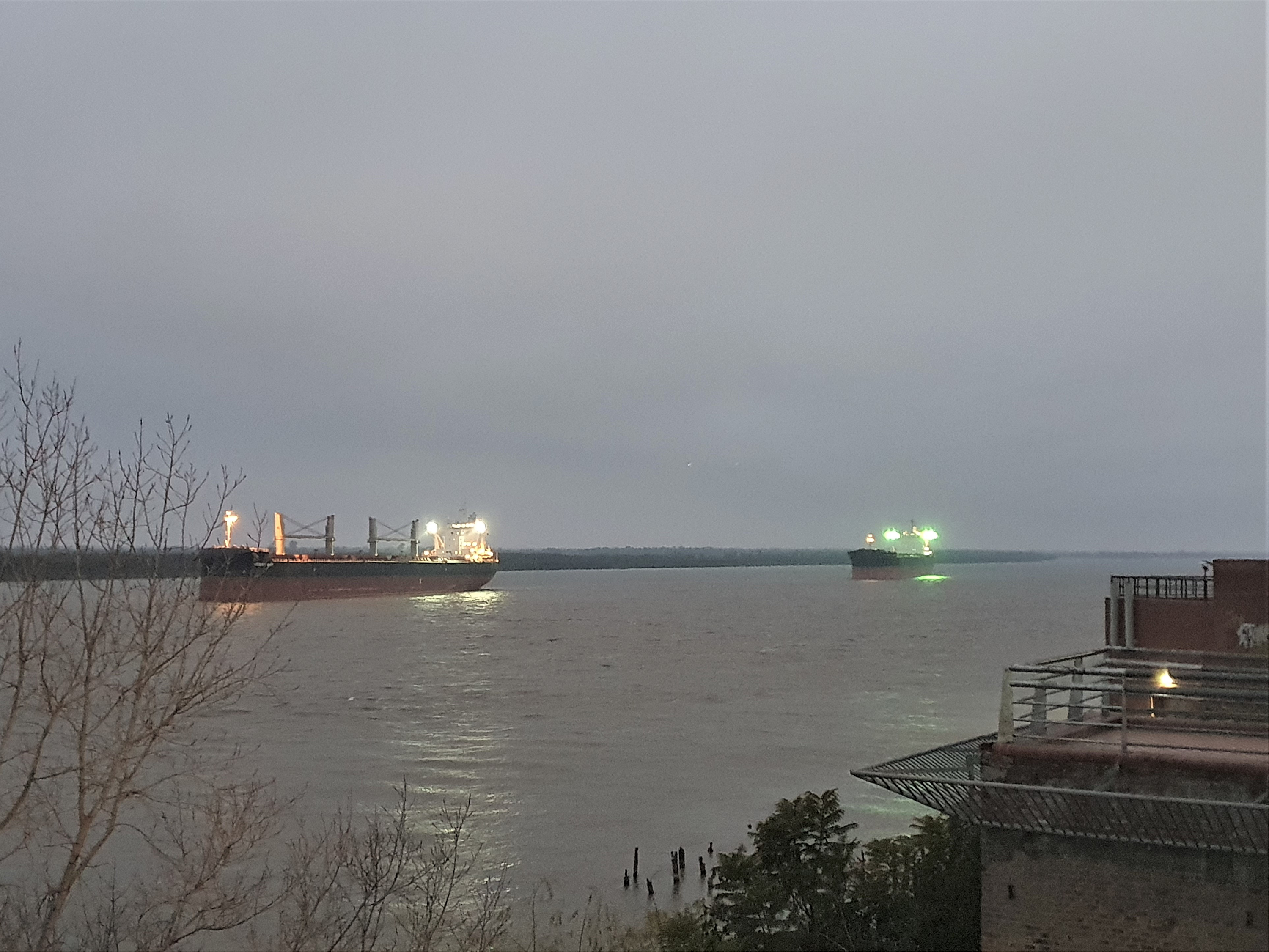
Paraguay-Paraná waterway, Rosario. Credits – Simone Vegliò.
While many Latin American governments and institutions are portraying these projects as new material articulations that can trigger the socio-economic development of the region, such a kind of ‘infrastructure-led development’ (Schindler and Kanai, 2021) appears just to reinforce Latin America's ‘dependent’ position in the global scene (Svampa, 2015; Treacy, 2022). Yet, a greater tension seems to define the re-making of these spaces of extensions. If we observe China as the new core around which this formidable architecture unwinds, it is possible to detect the presence of new methods and modalities that mark the making of its action. In particular, what we would like to stress here is that new kinds of temporalities – that is, different conceptualizations of time – seem to abruptly unfold in this process. For instance, we observe not only a variation in the level of frequency of circulation – an unprecedented ability to understand and coordinate ‘distant’ territories according to the rhythm of ‘global China’ (Lee, 2017; Wei Zheng et al., 2021) – but also, and most significantly, a crave for the duration that this action manifests. That is to say, contrary to the predatory rapidity that has frequently characterized the Western hegemonic powers, the geo-material forms emerging from Chinese action seem to cast a much larger, heterogeneous and farsighted desire for geo-economic and geopolitical power (Lin et al., 2019).
What kind of time (Adam, 2004) is embodied in the space(s) of extension, if we look at the material infrastructures that swiftly re-organize it? Of course, this is not a matter of finding a different ethic within the capitalist order. Instead, it is about wondering how 21st-century Chinese capitalism functions and constructs its own temporalities, which have a global effect, regardless. It is about embarking on an analysis that engages also with the high complexity of China's internal tensions and unilinear processes, exploring this rapid production of concentrations and extensions that proliferate both outside and within its national borders. While considering the geo-material reconfiguration of the global geographies, and being extremely careful with not falling into any Orientalizing trap, could we perhaps conceive extensions as spaces of encounter between new ‘Histories’ of capital (Chakrabarty, 2000) in which, following the example of the BRI's action, Chinese capital(ism) is an essentially novel and distinct participant? What kind of materiality, and what rhythms, does it aim to articulate? What type of futurity, particularly in terms of socio-material and techno-political expressions, is embodied within such infrastructural extensions? Moreover, given the crucial role of technology (Hui, 2016) in materially organizing the project and offering to it powerful imaginaries, how is it possible to understand alternative forms of politics which can face these spatial articulations that appear to be now faster, far-reaching and more entrenched than ever? Finally, what are the ways in which movements of resistance are trying and can try to interrupt, divert and sabotage such a top-town ordering of capitalist temporalities, by re-imposing their own array of radical histories, practices and techno-political knowledge(s)?
Material incompletion
Given the possibility of methodological reversals of urban imaginaries, increased tensions among different modes of becoming, and the unsettling of the ways in which populations are emplaced; given the ambiguous trajectories of inhabiting that slips off and on various radars, and the questions of time inherent in new global spatial ordering, the dispositions of urbanization seem increasingly uncertain.
Uncertainty emerges as an important constitutive feature under extended urbanization, across multiple embedded scales and historical periods. For instance, in The Empire of Cotton, Beckert (2014) describes how the uncertainty surrounding the supply of cotton from the American South due to the Civil War in the mid-nineteenth century triggered a race among stakeholders and investors hedging on alternative material and labour hinterlands to supply the Empire's metropoles. This, in turn, catalysed two of the most extensive infrastructure projects: the Indian railways, which attempted to transform the Indian countryside into the global hinterland of cotton, and the Suez Canal, which aimed at shortening the distance between the European metropole and India.
The iconic maps by Charles Joseph Minard, from this period, capture this antipodal infrastructuring and how it radically transformed urbanization, commodity flows and labour circulation. Between 1858 and 1864, this helped catalyse extensive urbanization in places such as Bombay (Metcalf, 1989), while bypassing earlier boom towns in the Indian Ocean such as Port Louis. Contemporaneously, while the Civil War ended in the abolition of the transatlantic slave trade, it resulted in the birth of another system of racial capitalism (Robinson, 1983/2000; Simone, 2022) channelling a trans-oceanic subaltern diaspora of colonized subjects from the Indian subcontinent and Chinese treaty ports as indentured labour in the service of plantations.
The massive restructuring of urbanization not only triggered a wave of land enclosures in previously bypassed territories, while redefining labour regimes of racial capitalism, but it also brought massive territories into an incompletion, opening new opportunities for co-optation and becoming. For instance, the Indian railways metamorphosed into an infrastructure of circulatory urbanization (Bathla, 2017; Srivastava and Echanove, 2014) for India's migrating urban majority (Deshingkar and Farrington, 2009), while Port Louis became the hotbed of creole urbanism (Kipfer, 2018).
Similar uncertainties imposed by wars, climate change and economic speculation are shaping the current cycles of material incompletions. The ongoing war in Ukraine, for instance, is reshaping urban patterns, physical infrastructures and circulatory arrangements due to the actions of states, markets and stakeholders connected with new global hinterlands of agrarian and fossil capitalism (Malm, 2013). Similarly, economic and geopolitical rivalries and financial uncertainty are redefining and confronting the once-inevitable, globe-spanning infrastructuring. Rival projects by the United States, Europe, Japan and India are reshaping extensions bypassing the still incipient BRI projects. At other scales, highway corridors such as the Delhi-Mumbai Industrial Corridor, built merely a decade ago, are being bypassed by newer urban-economic corridors constructed under the Bharatmala highway program (Bathla, 2022; El-Husseiny et al., 2021). These projects, while extending state space (Brenner and Elden, 2009) into new regions and territories, are leaving others in material incompletion (Figure 4).
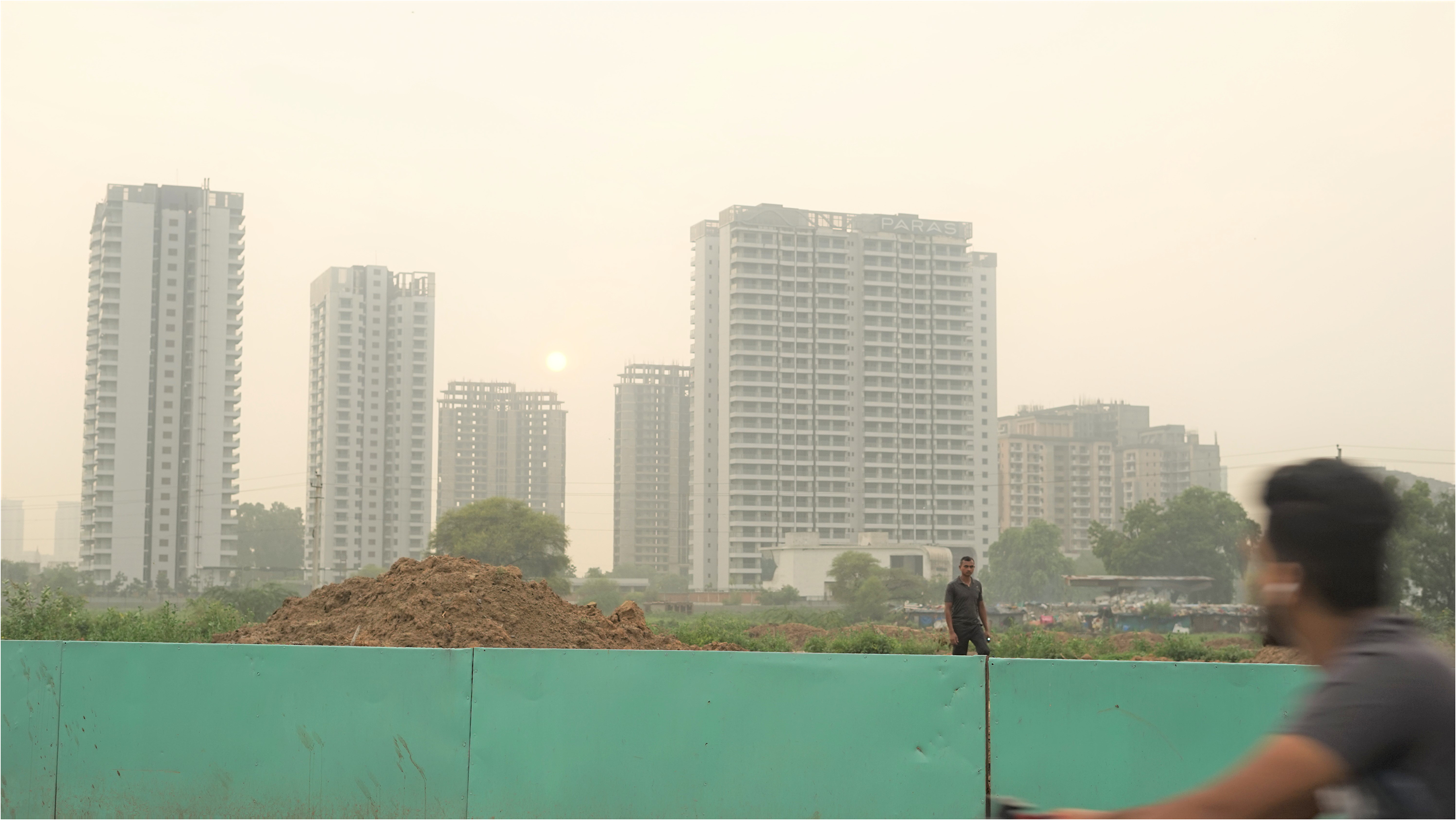
Inhabiting material incompletion in the extensions of Delhi. Credits – Nitin Bathla.
Hedging on uncertainty is not only embraced by the infrastructure state (Schindler, 2015) but also mobilized by the urban majority to lay claims to urban space. The comparative work of Christian Schmid et al. (2017), for instance, highlights how urban extensions are produced plot-by-plot through the illegal sub-division of agrarian land into housing plots (see also Bhan, 2013; Ghertner, 2019; Truelove, 2021).
The urban majority often knowingly invests in the uncertainty of infrastructure (Graham and McFarlane, 2014; Simone, 2013), land use (Bathla, 2022) and environment (Zeiderman et al., 2015), or through circulating temporarily in a world of uncertain itineraries (Simone, 2020). Material incompletion opens the possibility for co-optation by the urban majority, reversing enclosures through practices of squatting and repair (Bhan, 2019) and occupancy urbanism (Benjamin, 2008). Thus, uncertainty and material incompletion under extended urbanization become double-edged, disrupting the life worlds of marginal communities while also becoming productive for these communities in negotiating urban space and transforming life at the urban extensions.
Extensions as infrastructure
One way to consider these questions of futurity – of what kind of time is embodied in extensions – is not only to consider the kinds of infrastructures generating and supporting extensions, but also to see extensions themselves as an infrastructural form.
While we normally consider extensions as a function of infrastructure, perhaps it is also important to consider the infrastructural dimensions of extensions themselves. Here, extensions intensify, reproduce or simply sustain the viability of localized operations through articulating them to differentiated exteriors, most elementally as a hedge against entropy, politically as a manoeuvre to lock in seemingly virtuous co-dependencies, and urbanistically as a means of exerting particular kinds of claims, rights of access and spaces of manoeuvre. Extensions become a mode of existence which enables a kind of ontological integrity to function across distances, embeds the endurance of entities or operations within a larger set of nodes, contacts, interfaces, debt relations and material affordances, or exerts experimental agency across unfamiliar terrain.
Among many infrastructural dimensions of extensions, those of volatility or, rather, turbulence and accompaniment are most salient here. For extensions are multiple. There may be a single extension but, conceptually, if we consider a line, any extension of that line would continue to be that line. And, eventually, an extension would simply be indiscernible from the rest of the line. So, extensions do not simply mark continuity. Rather, they point to the possibilities of trajectories, openings that are not of any line, or orientation, or coherence. Possibilities of wandering off, veering away, interrupting, that are immanent in the very existence of any line, or consolidated entity. Rather than seeing extensions as continuance, colonization, articulation and translation, they are multiplicities that accompany each other, and offer affordances and potentials, but not in a relationship of dependency or transforming an entity or line into something else.
Take the following story. A dowry for a rapidly failed marriage is deployed by a young Jakartan woman, Buna, to purchase a tiny house at a far periphery, too far from work for continuous residence and, as such, is leveraged for the storage of illicit pharmaceuticals, while she resides part-time with her young child at the house of her father's estranged second wife. She also rents a boarding house room down the road from the large retail centre where she runs a small stall selling cheap accessories, venturing each night after work with a boyfriend across a landscape of cheap cafes where she occasionally sings for tips, attending college classes for broadcasting on the weekend, where she also sells small packs of MDM, which she uses to fund a small fashion line distributed under the table to several of the stalls in the retail centre where she collects a ‘formal’ wage. The range of partial, overdetermined settings and infrastructures through which she operationalizes her life and livelihood posit multiple vulnerabilities, exposures, as well as apertures that enable both lines of flight and articulation to be provisionally enacted. Exhausted by never-ending family dramas, she is relieved to have extricated herself from cycles of abuse and obligation, while remaining on the periphery of these family relations just to the extent to have her kid nominally taken care of and maintaining her registration with a local authority that provides some subsidies to her. She is as actively bisexual as can be viable in the Jakarta context, and her longest-term lover is ensconced in a central city apartment block replete with women living on their own as extramarital partners to men with money and connections. It is through these connections that she tangentially maintains a relationship with the drug trade and margins of the music business. The apartment block itself is a nerve centre of information garnered from close-knit relations among women involved in sex work, cheap entertainment and hosting of various kinds.
It could be considered that Buna is rarely ‘there’ in any of these settings, and the quality of her actual presence threatens to undermine its prospective prolongation. Her accounts of what she does are all over the place, and seemingly not aimed at providing any coherent narrative. To bank on prolongation is often considered a trap, a condition of being stuck in stringing things along beyond either their endurability or viability. Buna knows that at any moment all these forward and backward linkages could easily come undone. Instead of curtailing the extensions of her hedges, she simply adds more potential tipping points to the mix that multiply both the risks and the productive possibilities. All the components of Buna's extended livelihood practices accompany each other, extending each into new terrain but without putting together a new hybrid or integrated entity; they don’t add up to something greater than the parts. Accompaniment is a supplement that shows up, now and then, and goes along for the ride. It is not unaffected by the going along, but it is not essentially invested in the outcome of the task at hand; it does not constitute a debt to which the recipient is owed, even though such a debt economy might ensue from a particular accompaniment.
So, distance and proximity, conventionally important vehicles of comparison, are then always fluctuating measures, never available to a single standard. Things can happen right next to each other and be completely impervious to what the other is doing; while events can unfold in different parts of the world and attain an intense intimacy, where everything is staked upon the other. It need not be connected to an origin. It need not be representational or have any discernible genealogy. It need not be transitive, linked or leading to something else – either because it compresses a wide range of factors and differences in ways that foreclose a working out of proportions or because it deflects any available mode of articulation. In other words, space, as well as the globe, is not where we think it is, and we are not where we think we may be.
As such, extensions do not start so much from a fixed point or position, or from a given line, but rather in-between, in the middle of things. This is increasingly the case, given the conditions of turbulence that characterize urban living. In general, infrastructural sufficiency is no longer adequate to stabilize long-term volatilities, and perhaps, more importantly, neither is infrastructure nor technology confined to what we have always assumed them to be. So that basic urban functions, such as the efficacy of drainage or power relay systems, are increasingly contingent upon a wider range of already contingent factors and adverse feedback loops. Intensifying agitations in face of insufficient systems, and climatic and political events lead to compensations that often further exacerbate instability, and thus additional rounds of debilitating compensatory action. Turbulence is thus both a condition of unimpeded capital accumulation and the affective correlate of needing to start in the middle of things, as the operational procedure to navigate the assemblages of massive carbonization, artificial intelligence, logistics, overproduction, value inflation, social media(tion) and infrastructural collapse that characterize the urban today. Subsequently, turbulence comes to characterize the socio-psychological situation of the urban inhabitant: always having to readjust and recalibrate, without recourse to anything but the most truncated of convictions.
Conclusion
The journey through the various sites and modalities of extensions surveyed in this article highlight the tenacious entanglement between extension and urbanization. Extensions in their variegated trajectories unsettle current logics of city-making and a closer look at them is required to develop a newer understanding of how multiple notions of becoming come together and shape territories. Firstly, extensions embody different possible relations between centres, frontiers and hinterlands. This is illustrated, in the constant making and remaking of Fort Dauphin, which turned into a colonial frontier for conquests while concurrently serving as a sacred and dynastic centre for temporarily exiled kings of Anôsy. This practice is currently replicated by the migrants settling in Fort Dauphin who continue to maintain ties to their ancestral lands. Could we then conceive extensions as spaces of encounter between new ‘Histories’ of capital – such as the convoluted re-articulation of Latin America's socio-material geographies through China's BRI? Inhabiting the frontier also translates into living with the possibility and necessity of becoming. The pathways opened by large-scale road development projects in the agrarian hinterland of Bengal discussed in this article, for example, illuminate this.
The ‘undecidability’ fostered through extensions, therefore, can open up theoretical elaborations of the urban rather than limit extensions to a theory of urbanization or urban accumulation. It can be valuable to write the urban from the minor, precisely because it is often the majorities who are minoritized, as we aptly saw in the reversal of the gaze at Chennai from its littoral extensions. The spatial practices of unsettling, on the other hand, generate new modes of operation and new ways of reading urbanization as an extended process that cuts through divides. We witnessed this in the contested emplacement of African migrants in the agro-industrial chain of Southern Italy, beyond the dualist notions of the ‘settled’ and ‘unsettled’. Staying off the radar under extension, however, can also translate into an enlargement of the fields of opportunity, as we saw the co-optation of extensions by landless workers in Eastern Amazonia. In conclusion, we could perhaps think of extensions as a form of infrastructure, a mode of existence that enables a kind of ontological integrity to function across distances; that embeds the endurance of entities or operations within a larger set of nodes, contacts, interfaces, debt relations and material affordances or that exerts experimental agency across unfamiliar terrain.
Urbanization has been both the cause and the outcome of various forms of extraction and capture. Whatever was extracted had to move and intersect with the materials and labour that render it useful and profitable. It required logistical circuits of uninterrupted movement that have underlined the economies of agglomeration. In this intersection, even when emanating from the most exploitative of arrangements, urbanization maximizes the exchange value of whatever is made. Acknowledging the fundamental incompleteness of the structural processes shaping urban forms and life (Amin, 2008; Hetherington, 2018; Latham and McCormack, 2004; Martin, 2012), we have attempted to carry this sense of urbanization forward. Moreover, we amplified the ways in which it operates in the middle of things, as interstitial space, a sense of time suspended and an emphasis on movement neither strictly linear nor circular.
Instead of reading urbanization through its products – its various ‘settlements’ – we must learn to live with extensions as a disposition of material incompletion. Instead of reiterating that the city will culminate in boundless proficiency – where one innovation builds on the next to engender a machine of limitless intelligence that guarantees a sense of continuous enhancement of human capacity –, we should be more attuned to how infrastructural and technical operations materialize incompletion as something that is undone as it is made. Extensions are, in part, ‘on their own’, in unfamiliar terrain, having lost the connection to both the past and that which they sought to extend towards. This non-arrival of many extensions invites reflection on the urgency of a fatal politics of life that holds neither hope with inclusion nor a (neo)liberal celebration of precarity as resilience. Rather, as Hui (2019) emphasizes, life at the extensions might at best introduce new improbabilities into the world, unamenable neither to contract nor democratic accountability, but nonetheless available to anyone, as an incalculable territorialization of liveliness and collective gathering.
Footnotes
Acknowledgements
This article emerged out of the Life at the Urban Extensions Workshop jointly organized between Urban Institute, the University of Sheffield and the Beyond Inhabitation Lab, Polytechnic of Turin, in December 2021. We would like to thank our colleagues who participated in the workshop but could not participate in this article including Nehal El-Hadi, Jaime Amparo Alves, Sabine Mohamed and Dhanveer Singh Brar, for the generative exchange that lies at the heart of this article. We would additionally like to thank Michele Lancione for his continued support. The writing up of this article was supported through the ‘Inhabiting Radical Housing’ ERC Starting Grant project, n. 851940. We also thank the Leverhulme Trust, which funded the research behind one of the contributions. The Carnegie Corporation of New York funded the research of one of the authors. Singapore-ETH Centre, a joint collaboration between ETH Zurich and the National Research Foundation of Singapore, funded the research of one of the contributors. Peterhouse College (University of Cambridge) and the British Academy also funded the research behind one contribution. Finally, we would like to thank the fishers of Chennai – especially in Ennore, Uru and Odaimanagar – for their generous contributions towards developing part of our approach to urban extensions.
Declaration of conflicting interests
The author(s) declared no potential conflicts of interest with respect to the research, authorship, and/or publication of this article.
Funding
The author(s) received no financial support for the research, authorship, and/or publication of this article.
