




Abstract
We are currently seeing a global escalation in social and environmental disruption, yet concepts like the Anthropocene do not fully capture the intensity and generative scope of this crisis. ‘Rupture’ is being used as a term for specific and intense episodes of change, such as wildfires or toxic pollution releases. This is a useful addition to our lexicon for nature-society change but needs to be more robustly theorized. Defining rupture as an intense and adverse episode of nature-society disruption that ripples across scales, we elaborate four dimensions that account for rupture's sources and uncertain effects. The first two dimensions consider how rupture emerges in space and time from: (i) synergistic spatial, material, and socio-natural changes across scales; and (ii) the accumulation of slow violence that builds towards and is exposed by punctuated shifts and crisis moments. The second two dimensions consider the outcomes of rupture, namely: (iii) heightened uncertainty, insecurity, and socio-material deprivation, which are experienced in unequal and deeply affective ways; and (iv) the scope to catalyze diverse forms of agency that play out in uncertain ways. To illustrate our discussion, we draw from our long history of research on hydropower landscapes in the Mekong region.
Introduction
The world currently faces profound disruption. Anthropocene scholars warn of massive and irreversible transformations to the climate and other earth systems (Crutzen and Stoermer, 2000; Steffen et al., 2015). Within this trajectory of intense and cascading change (DeLoughrey, 2019; Folke et al., 2021; Hamilton, 2016), debate continues as to how and why these processes take form. Critical scholars emphasize the role of colonization and capitalism's extractive and exploitative logics as the sources of nature-society crisis (Moore 2015, 2017a, 2017b; Todd, 2015). They cite an imbalance between those who contribute most to this situation and those who bear the consequences (Lunstrum and Bose, 2022; Marino and Ribot, 2012; Porter et al., 2020; Sultana, 2021). Recent work adds that nature-society disruptions are experienced in deeply affective and emotional ways (Albrecht, 2019; Clark, 2020; Head, 2016; Schlosberg et al., 2020). Others find new opportunities for connection with the more-than-human world and beneficial transformations (Armiero and De Angelis, 2017; Gan et al., 2017; Haraway, 2016; Swanson et al., 2017; Wright et al., 2018). In this ferment of discussion about nature-society crisis, we propose that the concept of rupture – a term now being used to capture specific episodes of intense and punctuated change – can be theorized more robustly to advance grounded and critical perspectives.
In common usage, rupture refers to an instance where existing relationships or objects are broken, breached, or disturbed, sometimes beyond repair and often with flow-on effects. In the nature-society context, scholars deploy this term to describe tangible and far-reaching disruptions – breaches or breaking points (Hamilton, 2016; Head, 2016; Kim, 2021) – that cut across spatial boundaries (Miller et al., 2021) and have longer term cascading effects. Rupture signals phenomena that are intense, which scale up in ways that are unfathomable (Simon and Tamm, 2021) or hard to perceive and make sense of – much like Morton’s (2013) ‘hyper-objects’. Rupture also has a purpose outside environmental discourse. In anthropology the term refers to a ‘radical and often forceful form of discontinuity’ (Holbraad et al., 2019: 1). Lund (2016: 1202) discusses the rupture of institutions, which can create an ‘open moment’ where opportunities and risks multiply, new political and material claims are laid, and novel social-political pathways catalyzed. This breadth of thinking on the concept of rupture shows both its importance, and the need for its development and explicit translation for the nature-society context. Based on our research engagements in the Mekong region, we believe that rupture usefully speaks to the intensification of change – a specific challenge of our time. It also provides insights by grounding discussions on the nature-society crisis; ruptures occur in places and as episodes in time (after Escobar, 2001).
We start by discussing how rupture builds upon existing conceptions of nature-society crisis. We then theorize four key dimensions of rupture, which speak to its sources and its implications. These are: (i) the synergistic spatial, multi-scalar, and material drivers of rupture; (ii) temporal dynamics, which involve the accumulation of slow violence, followed by punctuated shifts or crises; (iii) heightened uncertainty, insecurity, and material deprivation which are unevenly distributed and deeply affective; all of which contribute to (iv) rupture's generative potential, which is framed by established power configurations, yet can create new possibilities for agency.
In keeping with our use of rupture as a grounded conceptualization of nature-society crises, we illustrate our discussion with examples from a context that we know well 1 and that exemplifies nature-society disruption: hydropower dams in the Mekong Basin. The damages wrought by dams are significant and increasing (e.g. Barney, 2009; Baird and Barney, 2017; Hirsch, 1998; Hirsch and Wyatt, 2004). In 2022, there are 13 major dams on the Mekong mainstream and 120 large tributary dams exist or are planned by 2040 (Eyler, 2020). These pose an existential threat to the region's ecology, economy, and food security through basin-wide impacts on hydrology, fish stocks, and biodiversity – all in the context of growing climate uncertainty (Mekong River Commission, 2017). The extractive processes and land transformations that dams set in train (Räsänen et al., 2018) further impact local communities, even as dams are represented as a ‘low carbon’ energy option with global benefits (Berga, 2016). These environmental and social disruptions are further amplified by ongoing resource exclusions from land use change. Such dynamics are clearly visible at the dam sites where the authors have worked (see Figure 1). In short, dams sit within significant interconnected resource struggles, and processes of violence and dispossession (Peluso and Watts, 2001; Peluso and Lund, 2011). They exemplify the local-to-global fractures in nature-society encapsulated by rupture.
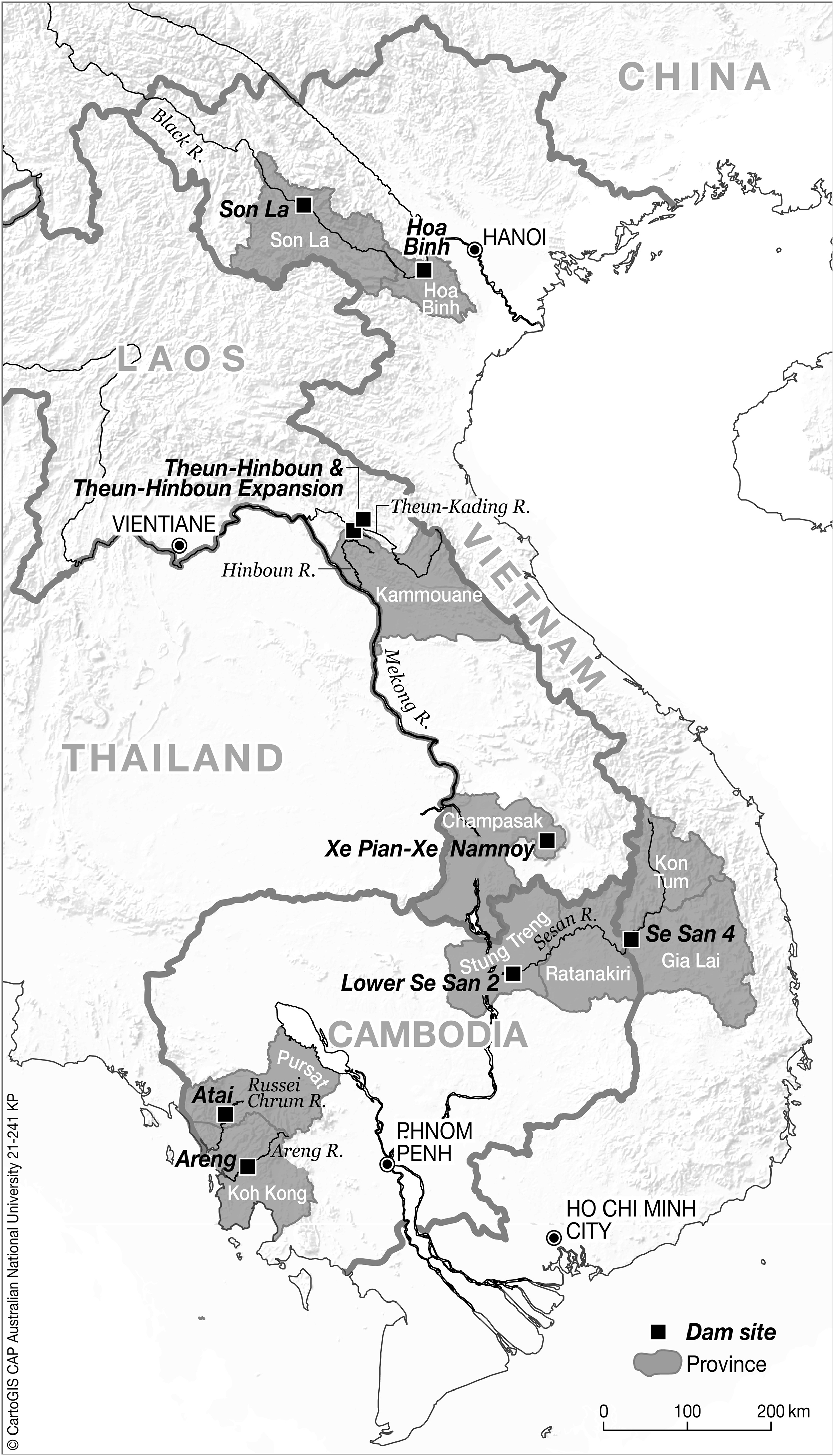
Map of sites mentioned in this paper.
In addition to dams, our discussion touches on other forms of episodic nature-society disruption, including toxic pollution and disasters, to illustrate rupture's broader relevance.
Why rupture?
We agree with Zoe Todd (2015: 244) that the current catastrophic fractures in nature-society are ‘a crisis in search of a name’. As Todd asserts, names matter because they elevate specific knowledges and experiences but exclude others. We especially need to overcome the tendency of global-scale analytics – such as the Anthropocene – to depoliticize or homogenize the unequal drivers and effects of our nature-society crisis. Critical perspectives recognize these historical political-economic causes and their unequal implications. However, they are yet to fully address the intensification of change and its deeply affective character. The concept of rupture productively incorporates and extends these disparate threads.
Rupture is now being used to describe intense and punctuated social and institutional transformations (Ahmann, 2018; Holbraad et al., 2019; Lund, 2016). In a nature-society context, rupture describes moments of change and uncertainty (Head, 2016), the cumulative and cascading intensification of change (Kim, 2021; Miller et al., 2021; Philippopoulos-Mihalopoulos, 2017), and the accumulation of damages in resource frontiers (Mahanty, 2022). These applications all point to processes of change that are adverse, dramatic, interconnected, and far-reaching. Together, they help to define what rupture means: an intense and disruptive episode that ripples through nature-society at different scales, with uneven, uncertain effects that are ‘sticky’ or irreversible (Kull et al., 2018: 32). Like the Anthropocene, rupture signals a form of crisis, but locates these in specific places and times, and within their historical-material contexts.
In this sense, our definition of rupture is critically informed and contrasts with early conceptualizations of the Anthropocene. As a term for anthropogenically driven transformations of earth systems (Crutzen and Stoermer, 2000; Steffen et al., 2015), 2 the Anthropocene has functioned as an important ‘boundary object’ for those concerned with environmental crises (Wright et al., 2018, 457; see also Castree, 2014; Gan et al., 2017; Rickards 2015). As originally formulated, the Anthropocene's racial, colonial, and neoliberal logics are deeply problematic, raising calls for more nuanced analyses of the causes of environmental change and its unequal impacts (Armiero and De Angelis, 2017; Davis et al., 2019). Without a clear grasp of how crises emerge from differentiated political and economic processes, any remedial action will likely be ineffective (Bauer and Ellis, 2018; Chakrabarty, 2009; Dalby, 2020). Recent perspectives have therefore reinserted the political into Anthropocene discourses (e.g. Chandler et al., 2020). They acknowledge that the challenge posed by the Anthropocene is not merely one of adaptation or strengthening resilience, but one of broader social transformation to address inequality and coloniality (Humbert and Joseph, 2019). These critiques reflect ongoing ontological and epistemological debates about how we understand and navigate environmental crises (Rickards, 2020). Within this debate, we view rupture as a more critical and contextualized entry point to studying nature-society disruptions and their implications.
Colonization's influence, both historical and ongoing, is key to this kind of contextualization. Conceptually, the Anthropocene reflects a historical understanding of planetary crisis, but this history is only traced to the ‘great accelerations’ of fossil fuel-driven industrialization in the eighteenth century (Crutzen and Stoermer, 2000), and subsequent post-war booms in population and consumption from the 1950s (cf. Steffen et al., 2015). Indigenous and decolonial scholars propose an earlier origin in European colonialization and the related expansion of capital (Wolf, 1982), when dispossessory and genocidal practices (Davis and Todd, 2017: 769) ‘terraformed’ spaces and peoples to produce colonial wealth (Ghosh, 2021). 3 In the Mekong, this was exemplified in the development of colonial plantations. The Anthropocene, then, does not simply stem from the arbitrary consumption patterns of a homogenous ‘humanity’, but from deeper causes and effects that reflect colonial relations in space, gender, race, and class (Jolly, 2019). These are not only historical legacies but are present in contemporary ‘ruins’: the colonial debris, decaying landscapes, and ruined lives (Stoler, 2008, 2013) that enable ‘new exposures and enduring damage’ (Stoler, 2008: 194−196). Colonial legacies thus frame unequal contributions and exposures to rupture that we explore in our theorization (Davis and Todd, 2017; Whyte, 2018). We also consider possibilities for agency at the ‘edges’ of ruins (Gordillo, 2014; Stoler, 2008; Tsing, 2015), and what is generated as the destructive effects and decay of capitalism become visible.
The material dimensions of rupture are a key focus in historical materialist scholarship, which addresses capitalism's dual exploitation of people and nature. Through this lens, rupture echoes the process of ‘metabolic rift’, involving disrupted material exchanges between humans and nature, and the alienation of human beings from nature and each other (Foster, 1999: 382–383; Schneider and McMichael, 2010). Moore (2017b) adds that global capitalism has become an integrated ‘world ecology’ or the ‘Capitalocene’, where the ‘law of cheap nature’ enables capitalist production to continually draw on cheap or unpaid inputs (energy, labour, and raw materials), co-producing a socio-ecological crisis. 4 The continual re-making of extractive commodity frontiers is integral to this ‘world ecology’, reliant on new resources continually being discovered and exploited for commodification (Moore, 2015; see also Watts, 2012). These ongoing cycles of resource extraction and exhaustion are highly visible in Southeast Asian landscapes and are examined in our theorization of rupture (Barney, 2009; Nevins and Peluso, 2008; sections ‘Spatial effects and adverse synergies’).
While the above perspectives show how rupture stems from underlying and historical patterns, they do not address why discrete rupture episodes occur and escalate. To understand this, we draw on the concepts of ecological, social, and structural violence (Stonich and Vandergeest, 2001; Watts, 2013). Structural violence describes the harm inflicted by social institutions that impoverish and disempower people over time (Galtung 1969). In the nature-society context, accretive and institutional harms can similarly heighten the vulnerabilities of certain groups in gradual and insidious ways over a range of temporal scales (Nixon, 2013; O’Lear 2016). These ongoing and ‘slow’ forms of violence can then build towards visible and dramatic episodes of change that impose rapid devastation or crisis (see Ahmann, 2018; Brown, 2019; Davies, 2019).
The critical disasters literature offers additional insights on slow and punctuated change. Defining disasters as catastrophic or extreme events that are concentrated in time and space (Tierney, 2019: 66), these scholars show that so-called ‘natural’ disasters are co-produced by enduring patterns of inequality and social vulnerability (Donner, 2007; Lunstrum and Bose, 2022; Porter et al., 2020; Ribot, 2014; Sultana, 2021). For example, Tierney (2019) shows how long-term infrastructural weaknesses exposed vulnerable New Orleans residents to Hurricane Katrina, with impacts that have continued to unfold many years later (see also Cutter et al., 2010). In this sense, disasters represent intense episodes of change that cascade into and interact with societal institutions and longer-term processes (IPCC, 2022; Mizrahi, 2020; Pescaroli and Alexander, 2016). Critical disasters research thus flags the importance of long temporal scales of analysis in studying discrete and intense episodes of rupture. These relatively recent insights on the relationships between slow and accumulated violence and specific disruptive episodes are developed further in our theorization of rupture.
The underlying inequalities discussed above hold crucial implications for how we respond to nature-society disruption. Mainstream approaches to resilience governance often emphasize individual responsibilities to cope and adapt (Joseph, 2014: 38). However, this approach neglects the social and political-economic production of vulnerability and inequality, which can be deepened by logics of individual responsibility (Ribot, 2014; Watts, 2016). Critical scholars therefore question whether adaptation or simply ‘bouncing back’ is appropriate (Davidson et al., 2016), instead proposing the need for more radical transformations that challenge existing social inequalities (Evans and Reid, 2014; Humbert and Joseph, 2019; Rickards, 2013). These debates are important in highlighting that inequality is central, and informs our discussion of how rupture takes form, and in how people can or should respond.
The emotional upheaval associated with nature-society disruption (Anderson and Smith, 2001; Davidson and Milligan, 2004) is not addressed within the historical materialist focus on inequalities, material deprivation, and social alienation. These emotions can range from ‘ecological grief’ – the grief we feel at the loss of valued species, ecosystems, and landscapes (Cunsolo and Ellis, 2018: 275; see also Head, 2016); to ‘solastalgia’ – distress at dramatic change in a loved environment (Albrecht et al., 2007: S95); and fear in the face of extreme uncertainty (Akhtar-Kavari, 2015). We show later how such emotions are important to experiences of rupture as well as social responses.
In sum, as a way of describing intense episodes of nature-society disruption in particular places and times, rupture provides integrative potential that addresses existing gaps in Anthropocene and historical materialist scholarship. We next discuss why and how specific episodes of rupture unfold. Our theorization acknowledges the capitalist and colonial roots of such crises, while expanding analysis of temporal complexity and people's subjective and emotional experiences of rupture.
Theorizing the ‘why’ and ‘how’ of rupture
To understand why and how rupture unfolds, we elaborate four key dimensions that are integral to diverse rupture episodes. The first dimension examines how spatial interactions can produce synergistic and adverse changes that lead to rupture. The second dimension addresses temporality: how accumulated and compounded forms of slow violence can produce suddenly visible, punctuated shifts. The third speaks to the deep social and emotional disruptions associated with rupture. These three dimensions in turn can catalyze the fourth dimension of rupture – diverse spaces of negotiation and agency, whose outcomes are contingent upon existing constellations of power and authority.
Spatial effects and adverse synergies
As an emplaced view of crisis, rupture reflects spatial relationships that are inherently multidimensional and interactive (Massey, 2005: 9). Space and the degradation of nature are produced by uneven processes of capital accumulation and market formation (Harvey, 1982, 2006), that play out globally, nationally, regionally, and locally (Smith, 1990). In mainland Southeast Asia, such processes are particularly visible at extractive resource frontiers, where rupture can take the form of ‘frontier exhaustion’ (Moore 2017a). The spatial and cross-scalar aspects of rupture are also relevant to urban settings (e.g. Rademacher, 2015) and disasters (Cutter et al., 2014; Cutter et al., 2010; Sovacool et al., 2018; Tierney, 2019, among others).
Rupture embodies synergistic spatial relationships in that the interactions between specific processes or developments have a combined effect that is ‘greater than the sum of their separate effects’ (https://www.oed.com). To perceive these synergistic changes, we need to look beyond specific projects or developments to consider how multiple projects interact both with each other and with ongoing social and ecological transformations (Baird and Barney, 2017). These kinds of synergistic landscape transformations are familiar ground for political ecologists and critical scholars of agrarian change (e.g. Mahanty, 2022; Nevins and Peluso, 2008). In the case of hydropower, the exclusionary impacts of dams interact with land enclosures and extractive activities in adjacent landscapes (Baird and Barney, 2017). Infrastructure construction and resettlement are in turn shaped by parallel land transformations wrought by state territorialization, migration, market intensification, and dam-linked resource extraction. Similarly, many years after dam commissioning, communities and landscapes continue to interact with markets and land transformations in ways that further intensify social and environmental change.
The synergistic effects of dam-induced rupture extend well beyond immediate construction sites and resettlement projects, as seen in the Son La case in Vietnam. The ethnic Thai villagers who were resettled during dam construction (2005–2011) also had to contend with the introduction of rubber in 2008 by the state-owned Vietnam Rubber Group (VRG), with support from a national poverty alleviation program. The company used a contract farming model to lock villagers into rubber cultivation on their resettlement lands, preventing them from growing food or other cash crops at a time when they were grappling with the effects of resettlement. When the rubber price eventually slumped, villagers could not redeploy their land, leaving them with no rubber income or food crops. While some villagers fought back by planting fruit trees on areas of contracted rubber land, government backing enabled VRG to continue its control of village land use. These interactions left villagers with entrenched debt and many young people migrated to seek off-farm work.
In this way, spaces of rupture tend to mirror and reproduce social and political inequality (Lefebvre, 1974: 1.2). To see these processes clearly, we need to look beyond immediate developments and examine layered and historical axes of differentiation, such as unequal control over and access to resources. It is also important to consider the uneven capture of the benefits of commodification and technical change, and the tendency of certain groups to accumulate resources and control production in ways that enhance their political-economic power (Akram-Lodhi et al., 2021: 4).
Expanding our view from specific ruptured landscapes, cross-locality synergies are also crucial to rupture. As discussed in the introduction, the accumulation of dams on the Mekong and its tributaries poses an existential threat to the basin's ecology, economy, and food security (Mekong River Commission, 2017). These damaging consequences of hydropower have crucial implications for freshwater fish and human livelihoods, especially when synergistic interactions with climate change-induced drought are considered (Dudgeon, 2011). Cambodia's Tonle Sap lake – Asia's largest freshwater fishery – relies on an annual flood pulse from monsoonal rains along the Mekong and its tributaries. Climate change and the reduced flows wrought by dam construction have caused this flood pulse to fail in recent years (Fawthrop, 2020; Milne et al., 2021). At a landscape scale, this failure of the floods resonates across multiple localities, catalyzing migration by displaced Cambodian fishers to pursue insecure work elsewhere, and seawater encroachment and risks to rice crops in the Mekong delta (Seiff, 2022).
These manifestations of socio-ecological crisis speak to broader national and regional dynamics (Miller and McGregor, 2020; Miller et al., 2021). In the hydropower context, cross-landscape scalar dynamics are in part due to the size of individual mega-projects, the extent of hydraulic infrastructure being developed across watersheds, and upstream-downstream connectivity in aquatic ecosystems. Connections forged between local, national, regional, and international actors through finance, institutions, and expertise also support the integration of regional energy infrastructure, where electricity flows as a commodity within and across the Mekong regional states. The Theun-Hinboun dam in central Laos highlights the extent of human influence across multiple landscapes. The ecologies and flow regimes of ‘anthropogenic’ rivers are controlled by dam operators, who directly respond to changing electricity price signals in neighbouring Thailand (Whitington, 2018). Lao rivers and watersheds are thereby transformed into regionalized ‘energy-scapes’ and ‘powersheds’ (Kaisti and Käkönen, 2012; Magee, 2006; Souksakoun, 2022). Laos now exports hydropower electricity across the lower Mekong basin, as far as Singapore, southern China, and South Asia (Harlan and Hennig, 2022). These examples show that nuanced scalar analysis is critical for tracing how local dynamics of rupture are nested within a complex network of wider geopolitical and spatial relationships.
Epistemologically, these scalar relationships must be reckoned with in tandem. Regional and basin-level dynamics in the Mekong tell a compelling and catastrophic story of intensifications, yet understanding local perspectives and experiences is critical. A singular focus on higher-order scales can privilege national or regional views and the perspectives of state authorities and investors (Contreras, 2007). Higher-order analytics can also overlook competing interests and practices among disparate state actors (To et al., 2014). As seen in Anthropocene literature, such choices reify economic, political, and social hierarchies (Swyngedouw, 2000). Local commons that people use for their everyday needs and as safety nets during times of stress therefore need to be considered in the governance of so-called transboundary commons (Hirsch, 2020). Overall, these patterns reinforce the importance of both a multi-scale and spatially grounded approach to grasp the synergistic relationships associated with rupture.
In summary, multi-dimensional and synergistic interactions are central in the intensification of change that constitutes socio-ecological rupture. Analytical choices about scale can make certain social and biophysical processes visible as targets for governance while rendering other processes invisible (Lebel et al., 2007). It is therefore essential to trace synergies from a perspective that is grounded in place to gain a critical and variegated understanding of nature-society crisis (see also Tsing et al., 2019).
Slow and punctuated temporalities
Any observation of change occurs over a timescale. While some of the environmental change literature focuses on sudden shifts or tipping points (Lenton, 2013), we argue here that rupture is instead a defined and punctuated shift that stems from gradual processes of ‘slow violence’ (Nixon, 2013). Understanding why and how rupture emerges therefore requires a multi-faceted temporal lens.
Notions of sudden and non-linear shifts to systems, such as ‘tipping points’ (Lenton et al., 2008; Lenton, 2013) and ‘regime shifts’ (Kull et al., 2018), are influential in contemporary scientific discourse on environmental change. An environmental tipping point signals the passing of a threshold, producing abrupt, non-linear, and irreversible systemic change (Lenton, 2013: 2; Milkoreit et al., 2018). A regime shift similarly involves a sudden shift in broad-scale human–environment interactions (Kull et al., 2018). In practice, it is hard to know when a tipping point is passed (Milkoreit et al., 2018: 11). Through rupture, we instead consider the interactions between slow and punctuated change. Rupture is not a smooth or linear episode but differs from the notion of a tipping point or sudden socio-ecological change because slow and punctuated change are both integral to rupture.
As discussed earlier, the relationship between environmental crisis and slow violence complicates the temporal character of rupture. Nixon (2013: 3) defines slow violence as ‘a violence that occurs gradually and out of sight, a violence of delayed destruction that is dispersed across time and space, an attritional violence that is typically not viewed as violence at all’. An example from pollution and toxicity studies is how the siting of polluting industries near poor communities exposes them to gradual and incremental harm (Ahmann, 2018; Davies, 2018, 2019; Elliot and Smiley, 2019), in ways that echo colonial relations (Liboiron, 2021). Slow violence has also been viewed as an integral facet of mega-infrastructure projects (Rodgers and O’Neill, 2012), and the long-term inequalities exposed by the COVID-19 pandemic (Grove et al. 2022). Further, this interplay between slow violence and dramatic non-linear shifts can shape imaginings about the future (Grove et al., 2022; Kelz and Knappe, 2021) – it is therefore relevant to the generative potential of rupture that we explore later.
Epistemologically, these temporal relationships call for novel ways of understanding environmental change. Davies (2019: 2) argues that a slow violence lens ‘uses time as a provocation’ to expand considerations of what constitutes harm, and that this is best perceived through ‘slow observation’. Related to this, actors may mark time in different ways (May and Thrift, 2003), and we therefore need to understand diverse social and cultural conceptions of time (Edensor et al., 2020: 255). Seeing slow violence therefore requires listening to those most affected by violence, and deploy slow observation as a political tool (Davies, 2018). Historical and embedded explorations of rupture gain importance here, as we have found in studying the accumulated effects of Mekong dams over time. These analytical choices have important consequences, because they render lived experiences of change visible or invisible (Edensor et al., 2020: 256).
Vietnam's Hoa Binh dam illustrates this relationship between slow and punctuated change in a ruptured landscape. The first major infrastructure project in the post-conflict state-building years, the dam took 15 years to complete (1979–1994). Ethnic Muong, Tay, Thai, and Dao villagers in the dam-affected valley were given land for resettlement, but it was in remote and uncultivable areas. The villagers instead claimed land at the edge of the reservoir to rebuild their lives during the 1980s. Over time, several broader social, political, and economic shifts impacted these communities, including: an intense period of hyperinflation during the mid-1980s that suddenly erased the value of financial compensation; food shortages after paddy lands were flooded by the dam reservoir during the late 1980s and early 1990s; de-collectivization in the 1990s; and, in the 2000s, new forms of market engagement as well as ongoing rural-urban migration by youth. Here, the initial slow-but-dramatic transformations from the dam were followed by the cascading pressures of migration, state neglect, land conflict, growing levels of household debt, and social differentiation. For local communities, these processes embodied a legacy of slow violence wrought not just by the dam but structural change too, as Vietnam's economy was liberalized. The flooding of the reservoir and subsequent economic crises were punctuated or defined episodes within a broader change trajectory.
Even when a rupture appears sudden, slow violence is still pertinent, as was seen in the collapse of Laos’ Xe Pian-Xe Namnoy saddle dam. The dam's collapse in July 2018 sent 350 million cubic meters of water down the Bolaven Plateau. The water spread across 46 square kilometres, engulfing six village settlements and their paddy fields in Sanamxai District, Attapeu Province (Latrubesse et al., 2020). At the time the flood was depicted as a sudden ‘wall of water’, but it is now clear that several hours elapsed between the dam collapse and the arrival of the flood wave at downstream settlements (Latrubesse et al., 2020: 15). This gave people in affected areas some time to call for their household members, collect some belongings, and get into boats before the full force of the wave hit. Yet failures in state warning systems meant that in one village at least eight people were reportedly killed. The flood spread over the following days to a much larger area of Sanamxai District and across the border into Cambodia, prompting evacuations (Mekong River Commission, 2018). Even farmers as far downstream as the Mekong Delta observed the flood pulse (Hirsch, 2020). While these immediate physical impacts played out over several months, the dam breach and its effects also had historical, socio-political causes.
Like the toxic environments discussed earlier, dams are sites of slow violence where communities often experience cumulative displacement and material deprivation, as well as intimidation and physical harassment (Blake and Barney, 2018, Milne, 2021). In the Xe Pian-Xe Namnoy case, the dam's stop-start construction history created great uncertainty as well as displacing around 2700 villagers. Livelihood stress and conflict between different ethnic groups led some villagers to return to their original homes, where they faced police and military pressure and became vulnerable to the 2018 dam collapse (Baird, 2021). Furthermore, the dam collapse itself stemmed from inappropriate construction materials, while the ensuing rupture was intensified by lack of preparation for such an event, and the government's failure to warn and evacuate downstream communities as soon as the collapse occurred (Latrubesse et al., 2020: 15). This proved catastrophic for people living downstream, who are still coping with lost livelihoods and post-traumatic stress, accentuated by a slow and poorly coordinated government response despite significant foreign aid and a sizeable insurance payout (Baird, 2021). The Lao government has clamped down or dismissed critical civil society voices (Blake and Barney, 2021: 12–15). Villagers’ resettlement land has even been granted to a banana agribusiness concessionaire on the pretext of creating employment, rather than keeping it for flood-affected farmers (RFA, 2019). These connections between punctuated episodes and slow violence have emerged in many other cases, such as the rupture produced by cyclone Katrina (Tierney, 2019), Australia's black summer fires (Milne et al., 2020), and toxic chemical releases (Ahmann, 2018).
In summary, the complex temporality of rupture stems from an interplay of slow violence and defined or punctuated events. Understanding the nuances of these relationships requires slow, longitudinal, and immersive epistemologies, as well as attention to critical episodes to grasp fully the sources and unequal effects of specific ruptures.
Emotional responses to injustice and insecurity
The social implications of nature-society disruption are typically examined in terms of social upheaval, displacement, conflict, material deprivation, and the loss of safety nets, within historically uneven forms of development (see Lunstrum and Bose, 2022). However, as we observed earlier, the extreme uncertainty and insecurity associated with rupture is also deeply affective or emotional (Schlosberg et al., 2020). Scholars are still at a relatively early stage in understanding the scope and character of this subjective dimension of rupture, which is why we make it our focus here.
Emotions are increasingly being recognized as significant for both personal and social worlds (Sultana, 2015: 634). They are important to understanding rupture because people engage with spaces, and what is happening around them, in profoundly emotional ways (cf. Anderson and Smith, 2001; González-Hidalgo and Zografos, 2019; Sultana, 2015). Epistemologically, a focus on emotions centres our analysis on the different ways people make sense of their world, and how such subjective experience is embodied or felt (Hiemstra and Billo, 2016). We see emotions not just as individual responses to situations, but as existing within intersecting axes of power and social difference (Elmhirst, 2011).
The nexus between emotions, society and place means that rupture can deeply disrupt people's material and emotional worlds. Emotions can range from anxiety about planetary socio-ecological crisis (e.g. Head, 2016; Barnett et al. 2016), to grief over the specific loss of valued places and ecosystems (Albrecht et al., 2007; Cunsolo and Ellis, 2018). The processes of slow violence we discussed earlier mean that trauma after punctuated project or disaster-related dispossession is rarely a singular moment for affected communities, who have often faced displacement by colonial and post-colonial land and market interventions. In the Mekong region for instance, these spatial and social dislocations involved overlapping French colonial interventions, intense conflicts in the 1960s and 1970s and ongoing market intensification and land enclosures. Emotional responses to one specific episode of rupture can therefore have very deep roots (Beban, 2021; Hak et al., 2021; Singh, 2013). We find that these layered processes of trauma intensify the emotional experiences of rupture.
In the Lower Sesan II case in Cambodia, for instance, historical and contemporary developments in the dam landscape deeply disrupted the Indigenous Bunong community's relationships to place and their spirit world, causing feelings of loss, grief, and anger. When dam construction commenced in 2014, villagers already faced a legacy of dislocation and conflict, with associated resentment against state and corporate actors. Furthermore, when the dam reservoir flooded Bunong villages and burial forests, villagers mourned not just the loss of land, but also the broken connection with their ancestral spirits. Many villagers viewed the destruction of nature by the dam as a dramatic provocation to land and water spirits. Their sense of fear and dread about the consequences was reinforced whenever serious illness or conflicts occurred in the community. Deep and emotionally charged rifts about the dam also developed in the community, within families and between intimate partners. Emotional responses were diverse and led people to follow different paths, with some actively resisting forced resettlement, and others acquiescing. In discussions with community members, it became clear that people did not distinguish between their embodied, material and spirit worlds, but saw these as integrally connected. Their embodied experience of rupture was socially and culturally mediated (see Hoover (2017) and Schlosberg et al. (2017b) for parallels in Indigenous North American and Australian communities).
As Ahmed (2004) notes in her work on the cultural politics of emotions, these kinds of layered emotions are not just integral to lived experience, but they also shape social and political action. This means that emotions can figure in the new spaces of negotiation that rupture produces (section ‘Complex generative dimensions’). There is growing evidence on the importance of emotions in social movements (González-Hidalgo and Zografos, 2019). Emotions have been influential in everyday resource contests, such as in Sultana's study of emotionality in gendered water struggles in Bangladesh Sultana (2011). Emotional ties and connection also contribute to the social relationships on which sustained political campaigns depend (Bosco, 2007; Brown and Pickerill, 2009), representing a form of ‘social labour’ (Bosco 2007: 354). These perspectives centre the work that emotions do to produce social relationships and forms of life (Hardt and Negri, 2004: 108; and Singh, 2011; Singh, 2013). Overall, these scholars show that emotions are both subjective and social, and therefore relevant to the political contests that we elaborate next.
In summary, while the synergistic material and livelihood disruptions associated with rupture are highly significant for the insecurities and inequalities they produce, we especially argue for greater attention to subjective and embodied experiences of rupture. This is important both to understanding rupture's effects and to the responses that rupture elicits.
Complex generative dimensions
Finally, we turn to rupture as an ‘open moment’ that exposes existing power relations and injustices, leading to opportunities for institutional change or for grievances to be addressed (Lund, 2016; Molotch, 1970). This represents a creative side of destruction (Stoler, 2013), where grief can spawn opportunities for hope, or even political action in pursuit of social justice (Haraway, 2016; Head, 2016; Tsing et al. (2019). Yet, efforts to resist and reimagine institutions are often met with reassertions of existing or historical power relations. It is in this interplay between catalytic opportunities and constraints that rupture's generative potential can be found. This generative potential can follow different arcs, because of the diverse forms of agency that rupture elicits within various contexts. In using the concept of agency, we refer to processes where actors’ practices, habits, and ideas can reproduce but also transform institutions and social relations (Emirbayer and Micshe, 1998: 970; see also Giddens, 1984). Agency is distinct from resistance as it may be performed within dominant structures rather than overtly challenge them (Dyson and Jeffrey, 2022: 2).
Conventional approaches to agency, as seen in the Anthropocene literature, often point towards normative demands for ‘just transformations’ (Porter et al., 2020; Schlosberg et al., 2017a; Sultana, 2021), or institutional changes that will enable us to ‘live with’ the Anthropocene (Dryzek and Pickering, 2018). These normative perspectives lay out potential principles and directions for strategic change. However, problems arise in implementing these principles in diverse settings (Jobin et al. 2021; Latour, 2014) because they are so centrally founded in western liberal democratic ideals (e.g. Schlosberget al., 2017a). Here, we agree with Brand (2016) on the importance of ensuring that the language of transformation is not vague and uncritical, but speaks to entrenched social, political, cultural, and subjective relationships that frame agency and governance. We also agree with critical resilience scholars that it is detrimental for people to adapt or ‘bounce back’ to unjust situations where they are vulnerable and at risk. Together, these insights have epistemological implications as only emplaced or grounded analysis can witness generative struggles over authority and recognition (Nightingale, 2017). This approach can also reveal the different logics that might shape diverse forms of agency in ruptured settings (Nightingale, 2011; see also Dyson and Jeffries, 2022).
Importantly, manifestations of agency need not always involve direct contestation (Scott, 1985). In the authoritarian context of mainland Southeast Asia, direct challenges to ruling parties are typically dangerous or forbidden (Creak and Barney, 2018; Wells-Dang, 2010). Notably, even the catastrophic Xe Pian-Xe Namnoy dam collapse discussed earlier did not spur a serious domestic social movement or collective response in Laos because of the Lao state's control and monitoring of formal civil society (Blake and Barney, 2021). In such settings, agency can find unconventional political spaces, for instance through informal civil society-state networks (Wells Dang, 2010: 98; Kenney-Lazar et al., 2018). Such engagements can go unrecognized in reductive interpretations of political regimes that lack familiar western democratic freedoms and cultures of protest (Kerkvliet, 2009; Tilly, 2004).
As with slow violence, mobilizations can follow diverse and long-term trajectories towards ‘slow dissent’ (Murrey, 2016) and ‘slow justice’ (Neville and Martin, 2022). These may include the formation of enduring networks, the emergence of new leaders, and a heightened awareness of the possibility of claim-making and other engagements in governance processes (see Kerkvliet, 2009; Wells-Dang, 2010). The Bunong community's campaign to gain communal land title at Lower Sesan 2 is an example. After resisting their forced relocation away from customary lands, the community went on to claim 7600 hectares of land under the Indigenous Communal Title provision of Cambodia's Land Act. This was whittled back to around 500 hectares but came from an earlier situation of imminent eviction. Various community-building activities are also underway with NGO support, in which a shared identity and commemoration of their joint and fierce struggle are central. These are ongoing and generative processes that, like the extended temporality of rupture, can only be understood over years or even decades.
These ‘slow’ forms of dissent and claim-making can exist in parallel with the direct resistance and social movements that have a notable history in Southeast Asia (Jobin et al., 2021; Turner and Caouette, 2009). Here, dams can mobilize open resistance that reflects wider and more long-term grievances over land, identity, state-backed violence, and alienation (e.g. Baviskar, 2001; Glassman, 2002; Hirsch, 1997; Hirsch and Warren, 1998; Lebel et al., 2007). For example, Indigenous rights have become a crucial platform in many anti-dam protest movements, as we observed in the context of the proposed Areng dam and the Lower Sesan 2 dam in Cambodia. In these two cases, resistance involved site-based direct action as well as networked strategies led by regional and international civil society to resist dispossession (Milne, 2021). These cross-scale social movements explicitly aimed to address unchecked environmental exploitation and externalities wrought by states and private actors – a form of Peet and Watts’ (2004) ‘liberation ecologies’ or ‘environmentalism of the poor’ (Martinez-Alier, 2014). The role of rupture here is to catalyze new forms of resistance that may not have occurred otherwise.
Finally, we turn to the critical issue – especially in the authoritarian politics of the Mekong – of state crackdowns or co-option of resistance as a feature of state-society relationships. It is important to understand that states are not understood here as unitary entities, but instead as ‘a set of practices enacted through relationships between people, places, and institutions’ (Desbiens et al., 2004: 242). States are also continually engaged in dynamic processes of ‘boundary making’ (Nightingale, 2018) wherein authority and recognition are constantly in play to consolidate and expand state authority and power (Sikor and Lund, 2009; Nightingale, 2018). These processes are both integral to the causes of rupture and a constraint on the agency of those affected by rupture. In Southeast Asia, such constraints can take the form of violent state suppression of protest and dissidence (Jobin et al., 2021; Milne, 2021; Dressler, 2021). Indeed, violence towards environmental defenders and human rights activists is a growing global concern (Le Billon and Menton, 2021). These experiences highlight that any transformative work in rupture settings must grapple with the opening and closing of political spaces, within complex and often authoritarian state-society relations. The implication of this is that justice and resistance can be slow, fuelled by collective experiences of violence and accumulated knowledge of past grievances.
Based on these considerations, we argue that rupture is generative of diverse forms of agency that may be slow and indirect in some contexts and overt in others. Contextual factors frame the ways in which agency unfolds through historical grievances, hidden emotional experiences, accumulated collective knowledge and constrained political space. Changes may be slow and difficult to see. The ‘open moment’ that rupture represents is therefore a constant interplay between agency and such contextual factors.
Conclusion
By focusing on discrete and intense episodes of change, our theorisation of rupture enables an appreciation of why and how nature-society crisis is unfolding. Rupture draws attention to the differentiated ways that crisis episodes intensify and ripple through space and time. It implies an epistemology that sits between the macro emphasis of the Anthropocene, the micro analysis of environmental humanities scholars, and between materialist and subjective views of disruptive nature-society change. We have drawn from our familiar terrain of hydropower landscapes, and have also touched on other examples of episodic and intense nature-society shifts, such as disasters and pollution incidents, to demonstrate the concept's broader relevance.
Our theorization presents rupture as a combination of long-term and punctuated change, going beyond existing views of nature-society disruption as either prolonged or abrupt. As critical disasters scholars are recognizing, both are crucial in the escalation of nature-society change. While slow violence and interactive developments create the conditions for rupture, it is these punctuated changes that contribute to rupture's intensity, and its capacity to expose injustices. This holds methodological implications, as only through a multi-faceted temporal lens can we see the relationship between these historical, layered, and continuing interactions.
Our critical perspective highlights the deep historical sources of rupture in colonialization and capitalism, and the ecological, structural, and social violence they embody. Rupture's outcomes, then, are similarly unequal, violent, and emotionally intense. Contrasting with the global and undifferentiated perspective of the Anthropocene, ruptures happen in specific places. Epistemologically, this emplaced starting point is significant because it enables us to grasp rupture's interactive character: how changes relate in landscapes over time, across scales and between locations. This approach exposes how processes of commodification drive rupture through tangled material, social and political relationships. These insights are essential not just to grasping rupture's causes and implications, but also the power asymmetries that we must contend with in any efforts towards transformative change.
Although rupture has deep roots and strong momentum, people are finding diverse ways to respond. The ‘open moment’ (Lund, 2016) created by rupture provides fertile compost from which a range of diverse actions emerge (Haraway, 2016). Such expressions of agency must contend with powerful opposition, especially at a time of growing authoritarianism in environmental politics (Dressler, 2021; Le Billon and Menton, 2021). As such, we have emphasized here that agency can follow different paths and unfold slowly (Murrey, 2016; Neville and Martin, 2022). The generative potential of rupture, then, is not simply positive or transformative, but is ‘messy, experimental and partially constituted in difference’ (Head, 2016: 114), and may go in multiple directions within prevailing political and economic institutions. Responses to rupture seemingly ‘bend towards justice’ (King, 1968), but their specific forms and outcomes are necessarily complex. As Head (2016) suggests, our visceral emotional responses to rupture play an essential role in galvanizing action in settings of apparent despair, and warrant serious attention in efforts to study and manage rupture.
We invite further exploration of rupture as an emplaced, critical, and experiential conceptualization of nature-society crisis. It is especially urgent to understand and nurture the complex generative potential that episodes of crisis may provide in our increasingly disrupted world.
Footnotes
Acknowledgements
This research was supported by the Australian Research Council (DP 180101495: Rupture: Nature–Society Transformations in Mainland Southeast Asia). The authors appreciate the contributions of Tim Frewer, Chann Sopheak and Suong Soksophea to Cambodian research. Participants in a STEPS Centre seminar (July 2020) and our panel at POLLEN 2020 (September 2020) contributed valuable comments on previous versions of this paper. Thanks to Sophie Dowling and Ashwin Phillipps for editorial support. We also acknowledge the important comments received from three anonymous reviewers, and from Lauren Rickards, Raven Cretney, and Carolyn Hendriks.
Declaration of conflicting interests
The author(s) declared no potential conflicts of interest with respect to the research, authorship, and/or publication of this article.
Funding
The author(s) disclosed receipt of the following financial support for the research, authorship, and/or publication of this article: This work was supported by the Australian Research Council (grant number DP18010149).
