




Abstract
Children’s creativity in expressing themselves through traditional media, such as drawing, remains strong and reflects their keen awareness of their surroundings. Involving children in the design process provides a valuable opportunity to understand their perspectives. This study engaged 47 five-year-old children to explore their preferences for outdoor play environments through their drawings. The methodology involved analysing these drawings to gain insights into the children’s understanding and desires related to playground experiences. Conducted in multiple stages, the study revealed significant aspects of children’s preferences. The findings highlighted the children’s interest in imaginative features that extend beyond traditional playground structures, as well as their inclination toward natural elements, often conveyed through narrative-driven expressions. In the final stage, the study underscored children’s strong preference for nature and adventurous components in outdoor play areas. These results support the need for designing diverse and stimulating play environments that blend both structured and natural elements, promoting children’s holistic development, creativity, and connection with the natural world.
Introduction
Play is deeply rooted as an integral and fundamental part of childhood experiences across various cultures and societies (Johnson et al., 1999). It is also recognized as a fundamental right of all children, as stated in Article 31 of the United Nations Convention on the Rights of the Child (UN General Assembly, 1989). This provision guarantees children the freedom to use their time for rest, play, and participation in culturally and age-appropriate activities that foster joy and well-being (The Office of the High Commissioner for Human Rights, 1990). Importantly, this right is not merely about leisure—it plays a critical role in children’s holistic development. Developmental theories further affirm the importance of play as central to learning and growth. Vygotsky’s (1967, 1978) Social Development Theory emphasizes play as a vital context through which children internalize social norms, language, and problem-solving strategies. Similarly, Piaget’s Theory of Cognitive Development highlights how children actively construct knowledge through interaction and experimentation during play (Piaget, 1951).
Recognizing play as a fundamental right necessitates robust support from adults, the facilitation of play-friendly environments, and the assurance that children have unrestricted access to exercise this right in the most optimal manner possible (Dereli et al., 2013). This underlines the imperative need to not only encourage but actively provide opportunities for children to engage in play, ensuring their access to environments conducive to play, thereby upholding their rights and holistic development. Outdoor play areas serve as highly influential spaces in children’s development and play, offering a diverse range of materials and equipment while granting extensive areas and unrestricted freedom of movement (Burriss and Burriss, 2011; Fjørtoft, 2004; Maynard and Waters, 2007). Research has consistently highlighted the significance of these elements in shaping children’s play experiences. Studies emphasize that the types of equipment and materials available, the overall playground design, and the involvement of adults all contribute significantly to children’s engagement in play, physical activity, and social interactions (Dyment and O’Connell, 2013; Hyndman et al., 2014). However, despite acknowledging their importance, existing research also suggests that the impact of playground design alone might be insufficient in optimizing these developmental aspects, implying that a holistic approach considering various elements might be necessary to fully enhance the quality of play environments for children (Barbour, 1999; Fjørtoft, 2004; Moore and Cosco, 2010).
The design of outdoor play areas, primarily influenced by adults, could be a key factor contributing to the inadequacy of these spaces (Pearson and Howe, 2017). The decisions made by adults regarding outdoor environments often stem from their own perspectives and perceptions. For instance, children’s preferences for playgrounds and school gardens emphasize a strong inclination towards open, natural spaces with diverse playing opportunities, contrasting with adults’ prioritization of cost-effective hard surfaces and control-oriented designs (Nasar and Holloman, 2013; Ozdemir and Corakci, 2011). These distinct preferences highlight the challenge adults face in aligning outdoor spaces with children’s desires, emphasizing the importance of considering children’s perspectives in design. Active participation of children in the design phase cultivates their sense of ownership, inclusion, and value, ultimately resulting in play areas tailored to better meet the preferences and needs of the children who will utilize them (Pearson and Howe, 2017). According to Sobel (1993: 161), places that are built by children become ‘children’s special places’, playing a critical role in fostering a sense of place among them.
Research consistently shows that children prefer natural elements in outdoor play environments. Kılıc’s (2013) study revealed that preschoolers have a preference for natural materials. Sahin and Turkun-Dostoglu (2012) found that girls prefer comfort and aesthetics, while boys prefer comfortable play areas, larger playgrounds, and trees. According to Jansson (2015), children seek more play opportunities and challenges in playgrounds through physical challenges, equipment manipulation, and place-making activities. Studies also have emphasized the importance of incorporating diverse elements in play areas to promote active play, risk-taking, and engaging environments for children. These elements include asymmetrical structures, jumping play stones, swings, slides, and landscape features (Erdogan et al., 2004; Jongeneel et al., 2015; Malone, 2013; Ozdemir and Corakci, 2011; Sandseter, 2007). Moreover, children’s preferences for outdoor spaces can reveal their inclination towards certain features, such as wooden fences, natural flooring materials, play equipment that encourages social interaction, connections with animals and nature, and inclusive spaces for family engagement (Benliay et al., 2014; Knowles et al., 2013; Malone, 2013; Malone et al., 2014).
Studies exploring children’s preferences in outdoor play environments have provided valuable insights into various aspects of design, features, and elements that cater to their needs and interests (Moore, 1986; Ozdemir and Corakci, 2011; Zamani, 2017). However, children are often excluded from the actual design process, and research involving their direct input in playground planning remains limited (Hart, 2002; Knowles et al., 2013). This study aims to identify the specific play materials, equipment, and environmental elements that children prefer in outdoor play spaces, as expressed through their drawings. Additionally, it investigates the extent to which these child-envisioned preferences align with current design practices. By analyzing and comparing children’s preferences with existing playground designs, the study seeks to uncover gaps and opportunities for more effectively incorporating children’s voices into the design process. This approach supports the creation of more engaging and inclusive outdoor environments that reflect a broader spectrum of children’s needs and enrich their play experiences.
Methodology
This study employs a phenomenological qualitative research design, aiming to explore the nature and states of lived experiences, as commonly pursued in qualitative inquiry (Saldaña and Omasta, 2018). Children’s drawings and accompanying descriptions are utilized to articulate their perspectives on outdoor play spaces. The determination of the situation is established through active participation, facilitated by the children’s drawings and their expressed opinions regarding outdoor play spaces.
Participants
The study sample comprised 47 five-year-old children selected from four different preschools located in an urban area of Turkey. The schools were chosen through purposeful sampling to ensure a diversity of experiences and perspectives regarding outdoor play areas. This deliberate approach was intended to avoid children having identical knowledge and to enhance the richness of the collected data.
After the schools were identified, all five-year-old children enrolled in these preschools were invited to participate. Participation was voluntary, and only children whose parents provided written consent were included in the study. This specific age group was chosen because five-year-old children are at a developmental stage where they can effectively communicate their perceptions and preferences through drawings and simple verbal explanations (Einarsdottir et al., 2009; Golomb, 2003). At this pre-schematic stage, children’s drawings are not mere scribbles but meaningful tools for expressing complex cognitive and emotional ideas, offering valuable insights into their inner world and understanding of their surroundings (Abdulhameed and Rashid, 2022; Fabris et al., 2023). This makes their drawings and accompanying verbal descriptions a particularly rich source of data for understanding their perspectives.
The preschools where the study was conducted incorporated creative and imaginative activities such as drawing, storytelling, and play into their curricula. These opportunities supported children’s imaginative expression and helped them feel comfortable with the drawing-based tasks used in this study. Teachers regularly included such activities, though the specific content varied according to their weekly curriculum plans. In addition to a daily 40–60-minute free play session, there were no fixed-hour activities for storytelling or drawing; instead, creative activities were integrated flexibly from week to week.
The play areas
The Play Area A was established by converting a three-story building into an early childhood education centre. Enclosed by iron fences, the school features a designated play area situated within the sandpit, positioned between the building and the fencing. This landscaped garden encompassed the school structure and houses various play equipment and materials (see Figure 1).
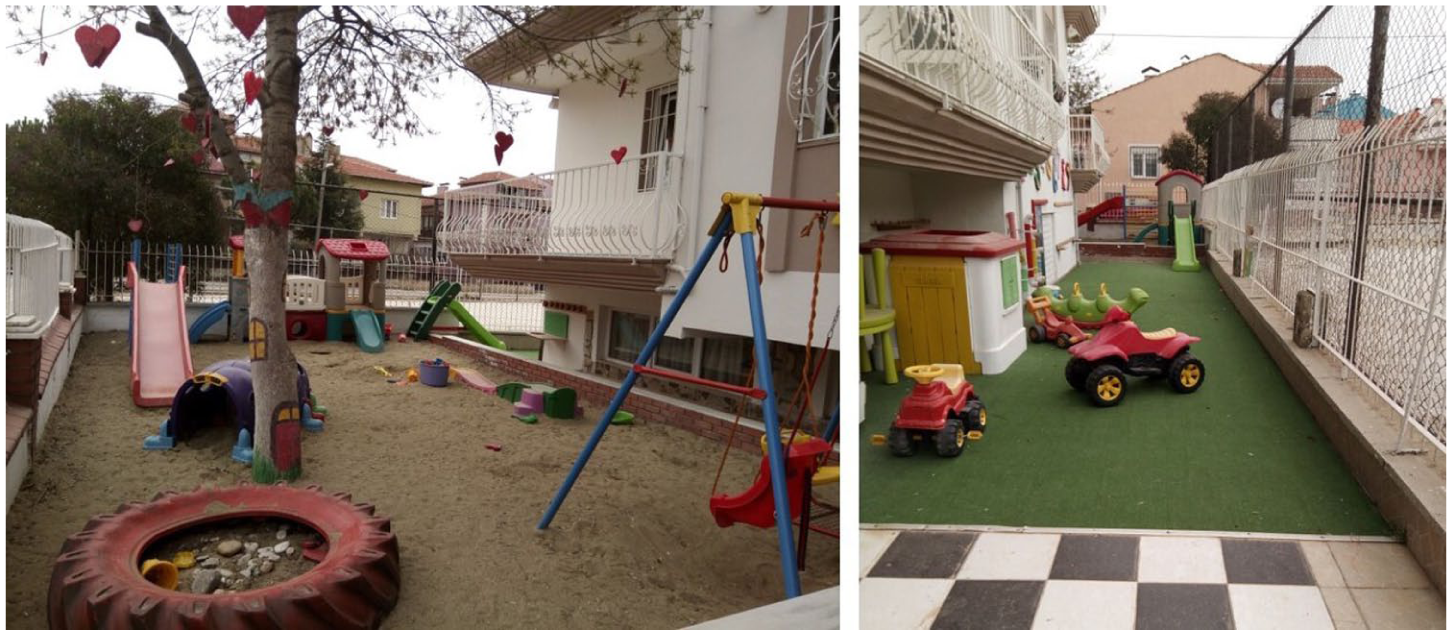
Play Area A.
The Play Area B was situated away from the city centre, embracing a natural setting. Prioritizing children’s exposure to natural environments, this school provided various natural elements, including sand, stones, trees, animals, and designated planting areas. Most of these natural features incorporated play materials and equipment within them. Consequently, the school offered a limited selection of factory-made and plastic materials and equipment (see Figure 2).
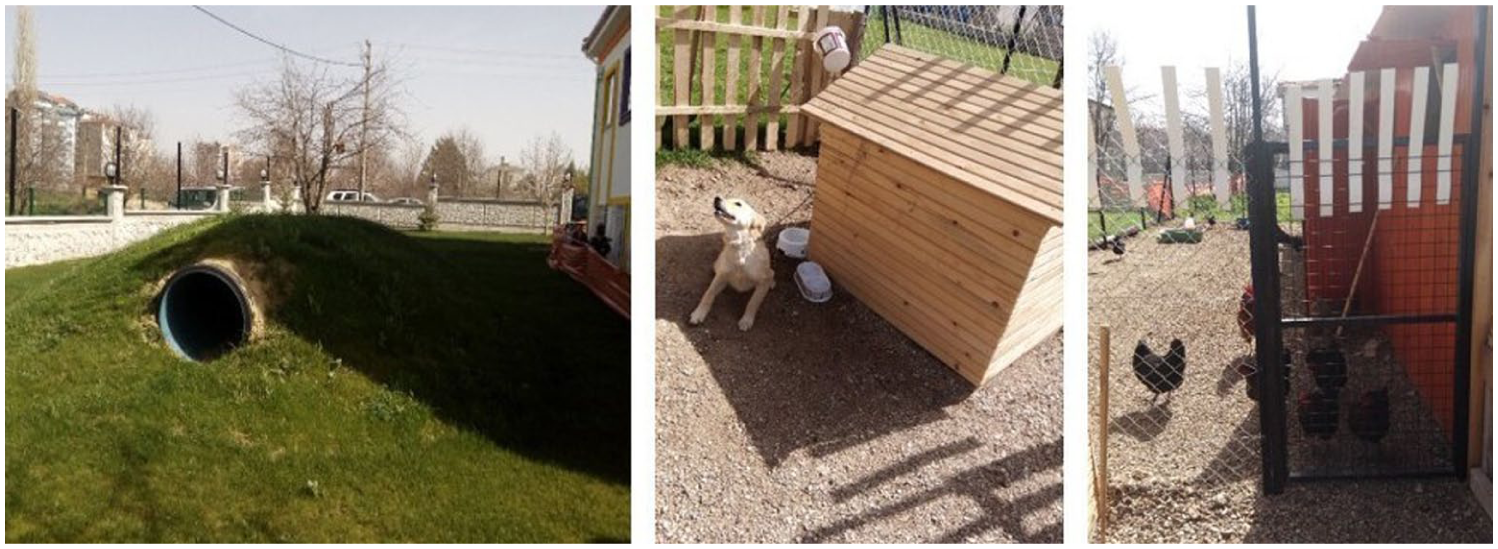
Play Area B.
The Play Area C was created within the ground floor of a building, specifically designed for early childhood education purposes. Its outdoor play area was partitioned from the road by a combination of wooden fences and iron pipes. This play area, encircling the building, encompassed various play equipment and materials, featuring a mix of both natural elements and factory-produced resources (see Figure 3).
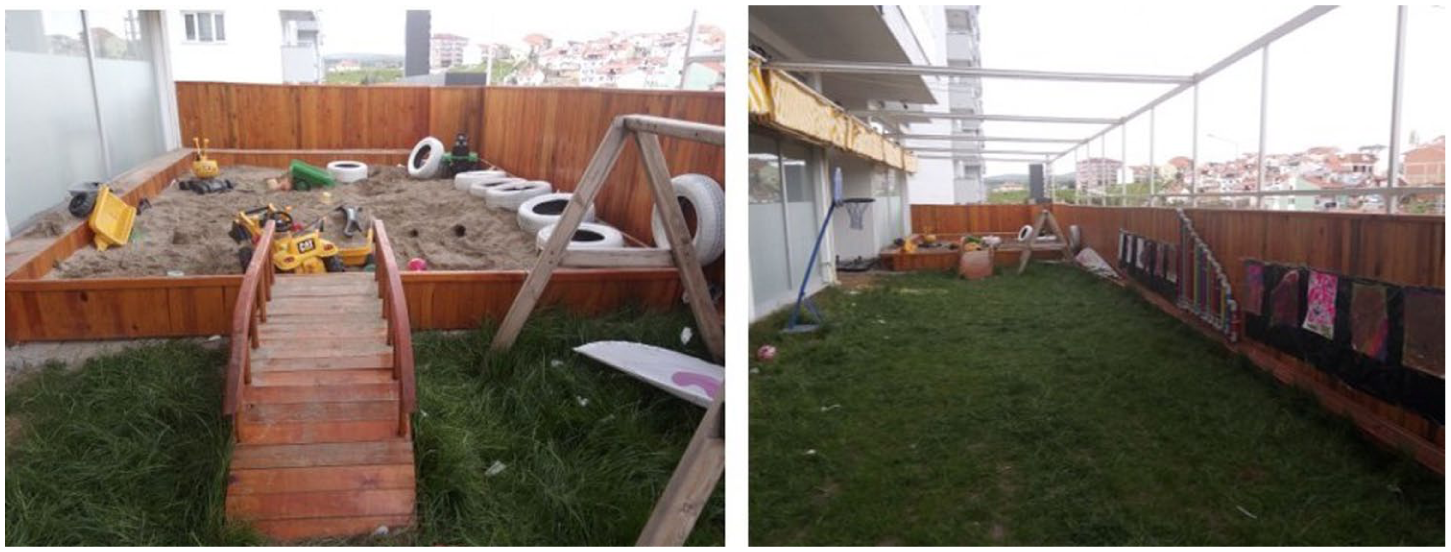
Play Area C.
The Play Area D featured a three-storey building. The outdoor play area was enclosed by iron and stone fences, effectively creating a boundary between adjacent buildings and the road. Covered with artificial grass carpeting, the play area predominantly featured traditional playground structures made of plastic (see Figure 4).
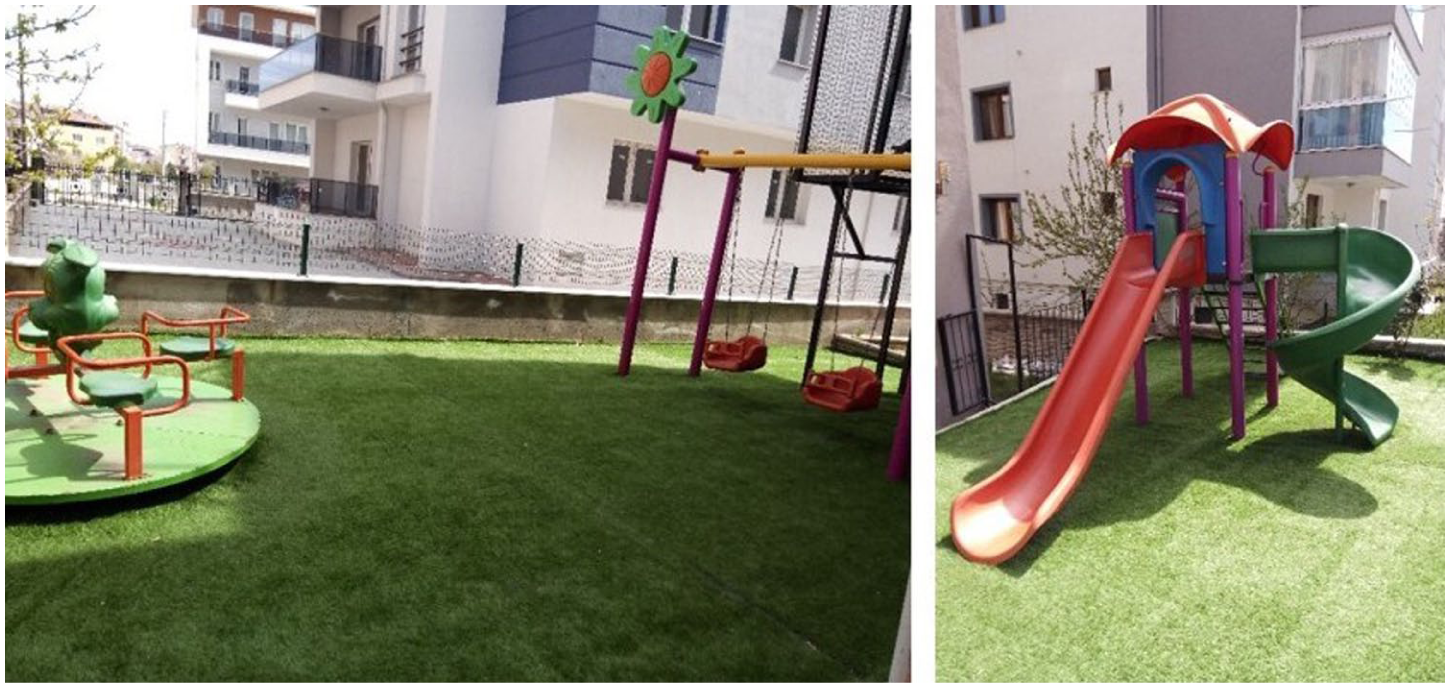
Play Area D.
Data collection
The data collection comprised two methods: drawings and photo elicitation interviews. The drawing method involves inviting children to create drawings that express their thoughts, feelings, experiences, or perceptions (Einarsdottir et al., 2009; Johnson, 2008). These drawings can be a window into their world, depicting their surroundings, relationships, and interests (Einarsdóttir, 2007). Photo elicitation interviews, on the other hand, involves presenting children with visual stimuli, such as photographs or images, and using these visuals as triggers or prompts during interviews or discussions (Hurworth, 2003).
Combining these two methods in the data collection process allowed the researchers to access information from children in multiple ways. Children’s drawings offered a direct representation of their perceptions, while photo elicitation interviews provided a platform for verbal expression and discussion stimulated by visual cues. This dual approach was particularly effective in gaining a deeper understanding of children’s experiences, perspectives, and emotions, as it harnesses both visual and verbal modes of communication.
Punch (2002) highlights the importance of researchers being mindful not to influence children’s ideas and of ensuring clear communication when working with them. According to Rabago-Mingoa (2009), children’s prior knowledge—often reflected in their drawings—is shaped by their past experiences, cultural backgrounds, and environments. Drawings can convey insights that children may not yet have the verbal capacity to express. To accurately capture children’s understanding, it was essential for adults to document what the children said about their drawings. Accordingly, the first author in the present study engaged with the children during the data collection process, recorded their explanations through note-taking, and refrained from adding personal interpretations. The familiarity of the playground context further helped elicit authentic responses from the children, while photographs of various playgrounds supported discussion and reduced the risk of misunderstandings.
In addition, Punch (2002) emphasizes the importance of building trust and rapport with children throughout the research process. To support this, the first author established rapport by introducing herself and engaging in informal interactions with the children before data collection, resulting in their enthusiastic anticipation of her visits. The decision to have teachers step out during the sessions minimized the influence of authority figures and created a more relaxed atmosphere. The use of familiar drawing materials within their own classroom environment also helped make the children feel comfortable and supported open expression.
Data collection protocol with the children
The data collection encompassed four stages to explore children’s perceptions and preferences regarding outdoor play areas. The initial stage involved inviting children to depict and describe the play areas they cherished the most. The researchers engaged with each child, initiating discussions about their drawn play areas, probing into their favourite activities, materials, and equipment within those spaces. Moving to the second stage, children were prompted to imagine their dream outdoor play areas. Through drawings and discussions, the researchers encouraged the children to envision their ideal play spaces, including specific play materials, elements, and equipment that they fantasized about incorporating. Transitioning to the third stage, various types of playgrounds—ranging from traditional to adventurous and natural—were introduced to the children through visual representations. Collaboratively examining these playground images, the children engaged in a narrative-driven activity. They were presented with a storytelling scenario involving three distinct gateways leading to different playground types, prompting them to make choices about which gates they would open. Later, faced with a scenario of possessing only one key, the children had to deliberate and choose which type of playground gate to unlock, fostering thoughtful decision-making and recording their preferences throughout this phase. Finally, in the fourth and concluding stage, children were encouraged to revisit and redraw their envisioned dream outdoor play areas. Conversations ensued, delving into the elements depicted in their drawings, allowing researchers to gain further insights into the evolving preferences and ideas regarding their ideal play environments.
Data collection was carried out during the spring semester. Each preschool was visited once a week over four consecutive weeks, resulting in a total of four visits per preschool. This schedule enabled the researchers to conduct the four stages of data collection in a structured and consistent manner. No follow-up visits were undertaken after this four-week period, as the study was specifically designed to capture children’s responses within a defined timeframe while minimizing potential disruptions to the preschools’ regular routines.
Data analysis
The data analysis on children’s playground design involved systematically examining visual elements in drawings and related descriptions. Researchers used MAXQDA 2022 software to manage the researcher’s notes and children’s drawings. This approach blended qualitative interpretation with quantitative aspects to understand children’s perceptions and preferences regarding playground design. In phenomenological research, while the primary focus is on understanding the depth of lived experiences, reporting the frequency of codes or themes can enhance the clarity and robustness of the findings (Sandelowski, 2001). Researchers may quantify the occurrence of specific codes to highlight the relative importance of different experiences across participants, thereby making the data more accessible to readers and aiding in the definition of key themes (Vaismoradi et al., 2016).
The analysis followed a phenomenological approach, aiming to capture children’s lived experiences and subjective meanings. Using MAXQDA 2022, both visual and textual data were imported into the same project file, enabling each drawing to be directly linked with the child’s verbal explanation. Drawings were first coded independently and then examined in relation to the accompanying verbal descriptions, ensuring that interpretations remained grounded in children’s voices rather than adult assumptions.
The coding process was iterative: an initial template was developed around categories such as play equipment, natural elements, and imaginative features, and was refined through repeated engagement with the data. Themes were generated by clustering codes across drawings and explanations, highlighting patterns that reflected children’s active participation and imaginative contributions. MAXQDA also allowed for frequency counts of codes, which were not used to reduce the qualitative depth but to indicate the relative salience of particular features across participants. Through this methodological integration of visual and verbal data, the analysis foregrounded children’s perspectives and emphasized their role as co-constructors of meaning in relation to outdoor play spaces.
Researchers initiated the analysis by creating a coding template and this template aimed to systematically code visual elements present in the children’s drawings and the descriptions that accompanied them. The template included categories representing various aspects of playground design, such as equipment types (e.g. swings, slides, climbing structures, seesaws), equipment design (moveable/fixed), natural elements (e.g. trees, plants, rocks, sand, water features), seating features, and landforms. The researchers utilized a qualitative approach to analyze the content of the children’s drawings and descriptions, with a focus on identifying and categorizing different items related to their playground designs. This involved recognizing recurring elements present in the children’s drawings and descriptions. Following the qualitative analysis, the researchers quantified the identified items. This step involved assigning numerical values to the various categories established in the coding template. Quantification allowed for comparison, providing insights into the prevalence of different aspects of playground design as perceived or depicted by the children.
Ethical considerations
The study ensured ethical compliance by obtaining permission from both the university’s ethics committee and the Ministry of National Education of Türkiye. This compliance with ethical standards and legal requirements helped safeguard the rights and well-being of the children. Additionally, to protect the privacy and confidentiality of the children involved in the study, data storage procedures were implemented. This included anonymizing children’s names and removing any identifying information if accidentally included by the child on their drawings. Such measures are crucial to maintaining confidentiality and anonymity, ensuring the ethical handling of data involving children.
Findings
The combination of children’s drawing and photo elicitation interviews formed a powerful and insightful strategy for collecting data from children in the current study. Throughout four stages, the study provided a comprehensive exploration of children’s perceptions and desires concerning outdoor play spaces, fostering dialogue and understanding about their preferences and choices in playground settings.
The drawings presented in this section were selected to illustrate a range of themes and to ensure representation from each participating school, rather than to highlight particular children or artistic qualities. Although the drawings were created in classroom settings, each child was individually engaged by the researcher, and their verbal explanations were recorded alongside the drawings. This approach allowed us to interpret the drawings as reflections of individual imaginations and preferences, rather than as collective interpretations of the playground.
Stage one: The outdoor play areas children loved to play
When asked to draw their favourite outdoor play areas, 37 out of 47 children drew the playground at their school, while eight children drew playgrounds near their school, and two children drew playgrounds near their homes. The play area favoured by children combines traditional play structures with natural elements. The most popular play equipment among children are slides (n = 25), sandpits (n = 20), swings (n = 14), and a Ferris wheel (n = 9). Additionally, the children’s drawings depicted natural components, with grassy areas being the most prominent (n = 10), followed by trees (n = 9) and flowers (n = 7). Examples of children’s drawings are illustrated below in Figure 5.
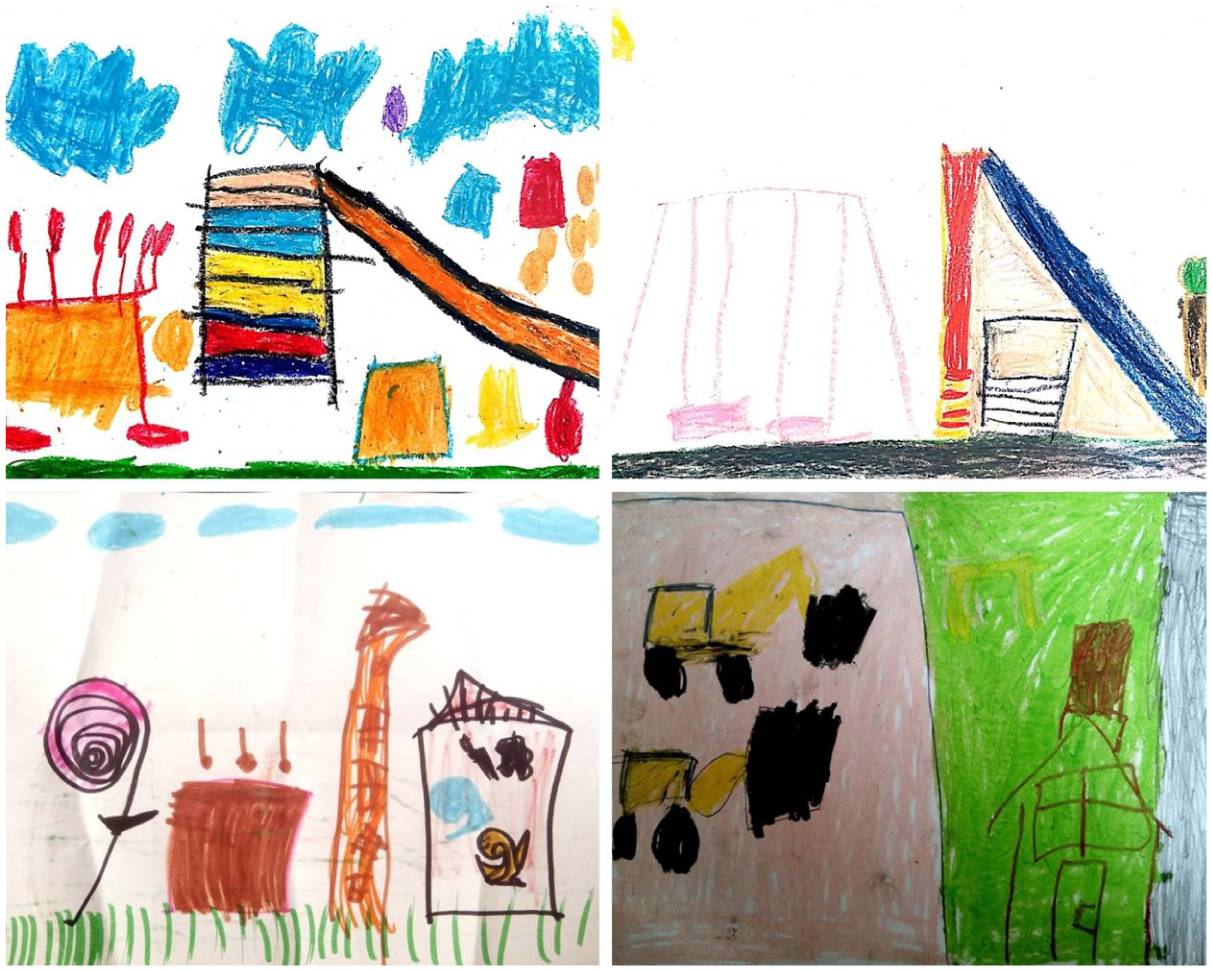
The outdoor play areas children loved the most.
The descriptions of the drawings are as follows:
Drawing 1: The preschool’s outdoor area includes a sandbox equipped with shovels and buckets, allowing children to scoop, dig, and build. A slide is also present, with colourful ornaments placed nearby under a cloudy sky.
Drawing 2: This play area, located near the school, features a swing and a tree. A bench is positioned under the slide to provide a resting spot, and the ground is covered in sand.
Drawing 3: The preschool’s outdoor play area includes a tulip near the sandbox, which contains shovels. Adjacent to the school building, a small shed is depicted housing animals—specifically ducks and chickens.
Drawing 4: Another preschool outdoor play area is shown with a soft green grass carpet. The school building is nearby, and children’s toy trucks are scattered throughout the sand area.
Stage two: The outdoor play areas children dreamed to play
The children presented various play equipment in their imagined outdoor play areas. Slides (n = 33) and swings (n = 14) were the most commonly depicted equipment in their drawings. Climbing equipment (n = 9), balance boards (n = 6), and sandpits (n = 5) were also prominently featured (see Figure 6).
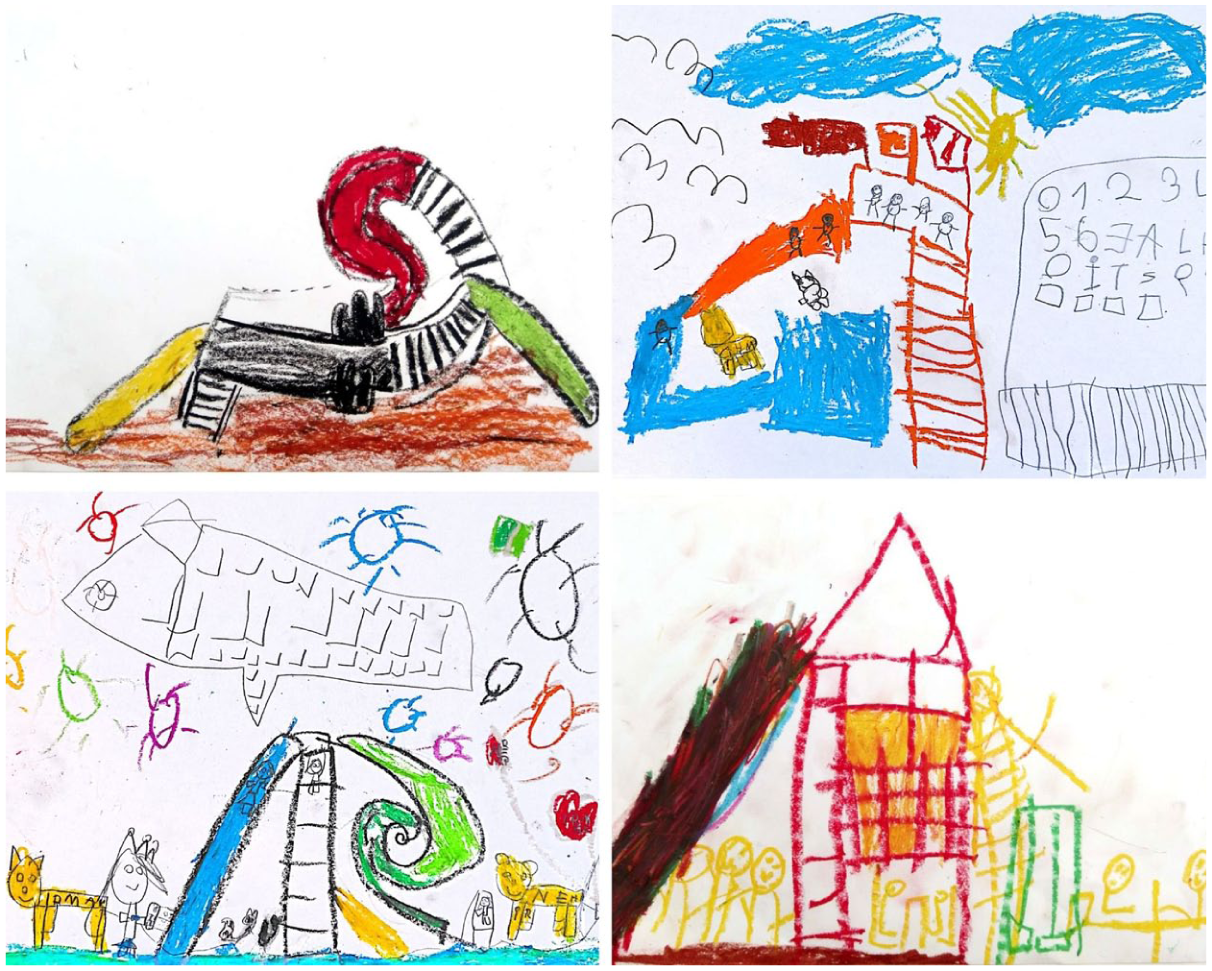
The outdoor play areas children dreamed to play.
The descriptions of the drawings are as follows:
Drawing 1: A short yellow slide is positioned beside a set of stairs. A path leads to a tall green slide, with a nearby red twisting slide curving downward. Below, a soft sand area is designated for safe landings, and handholds are included for children to grip.
Drawing 2: A large slide descends into a shallow pool of water where children are shown playing. A chalkboard nearby displays numbers, letters, and shapes. Birds are depicted flying overhead, while a dog and a cat sit near the pool. A balance beam is placed beneath the chalkboard, with the sun and clouds illustrated above.
Drawing 3: The play area includes animals such as a cat, a dog, and a squirrel. A little girl is shown standing between the cat and a slide. Multiple slides are scattered across the landscape, varying in height, twists, and turns. The sky is filled with colourful suns, and a large fish is illustrated flying overhead.
Drawing 4: A slide winds down from a tall tower equipped with climbing structures. Adjacent to the tower are a swing and a seesaw, with children playing around them.
Moreover, the children included various unique items they wished to have in their play areas. These items included a Ferris wheel (n = 3), musical equipment (n = 1), a sailboat (n = 1), a seesaw (n = 1), a flying balloon (n = 1), an airplane (n = 2), and water mechanisms (n = 1). It is notable that the children depicted a range of toys within these playgrounds, with the ball (n = 5) emerging as the most popular toy. In addition to these objects, the children also drew a robot, a balloon, a toy shovel, a toy rake, a wheel, and a jigsaw, among other playful elements. The drawings also clearly show that children desire to have various animals in their outdoor play areas, including cats (n = 5), dogs (n = 4), snails (n = 2), sheep (n = 2), butterflies (n = 2), fish (n = 2), chicken (n = 1), ladybug (n = 1), squirrel (n = 1), turtle (n = 1), frog (n = 1), ram (n = 1), and birds (n = 1). Examples of children’s drawings are illustrated below in Figure 7.
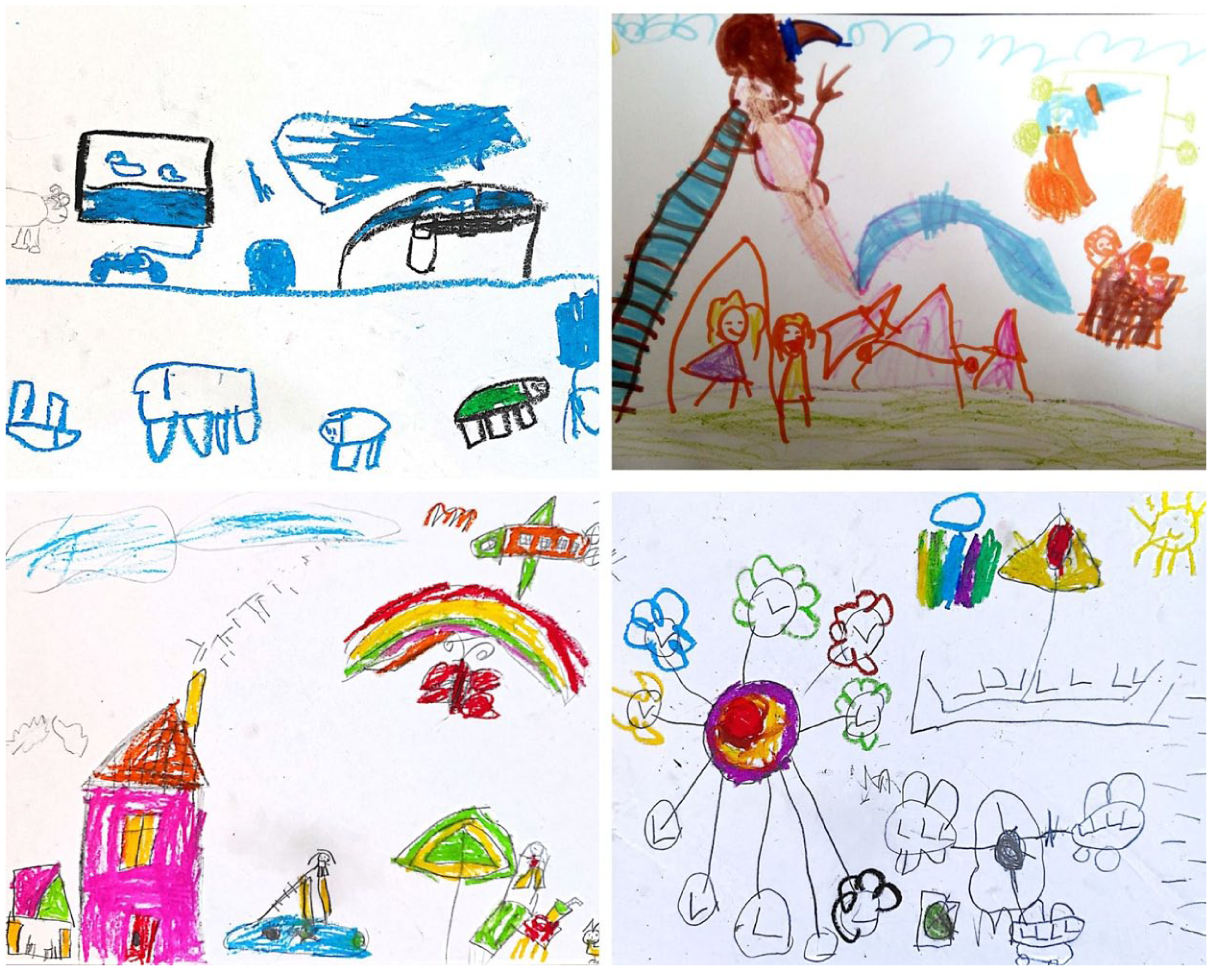
The outdoor play areas children dreamed to play.
The descriptions of the drawings are as follows:
Drawing 1: Children are depicted gathering around a variety of animal figures and water features. The drawing includes a ram, two small frogs in a water tank, a grazing sheep, and three turtles. At the centre is a water feature with streams of water trickling and splashing through pathways and small pools.
Drawing 2: The drawing shows children gathered in a grassy area featuring a slide and stairs of various shapes and sizes. A nearby tent offers a quiet retreat. The playground also includes a sandbox, with a small shed beneath it housing animals.
Drawing 3: A rainbow arches beneath a butterfly, with an airplane soaring overhead. Below, two houses sit next to a water slide, where fish are depicted swimming. The drawing also features a sun lounger and a cat.
Drawing 4: A large Ferris wheel is shown nearby, with a sailboat rocking on a small pond filled with colourful water. Beneath this scene, an airplane launcher is depicted, and the sun is illustrated overhead.
Stage three: Children’s narrative-driven playground choices
The children were presented with pictures of various outdoor play areas and were subsequently asked about their preferences, assisted by a narrative. Following this, they were instructed to choose one door leading to an outdoor play area. The depicted playgrounds included traditional, adventure, and natural settings. The results indicated a preference for natural playgrounds (n = 22), followed by adventure playgrounds (n = 19), with only three indicating a preference for traditional playgrounds.
Stage four: Revisit and redraw the envisioned dream outdoor play areas
In this stage, children revisited and redrew their envisioned dream outdoor play areas. This revisitation allowed them to refine and tailor these spaces to align with their evolving interests, preferences, and imaginative capacities, following discussions about their narrative-driven playground choices in the previous stage. In comparison to their drawings in the second stage, children depicted play areas characterized by a prominent presence of nature and adventurous elements (see Figure 8).
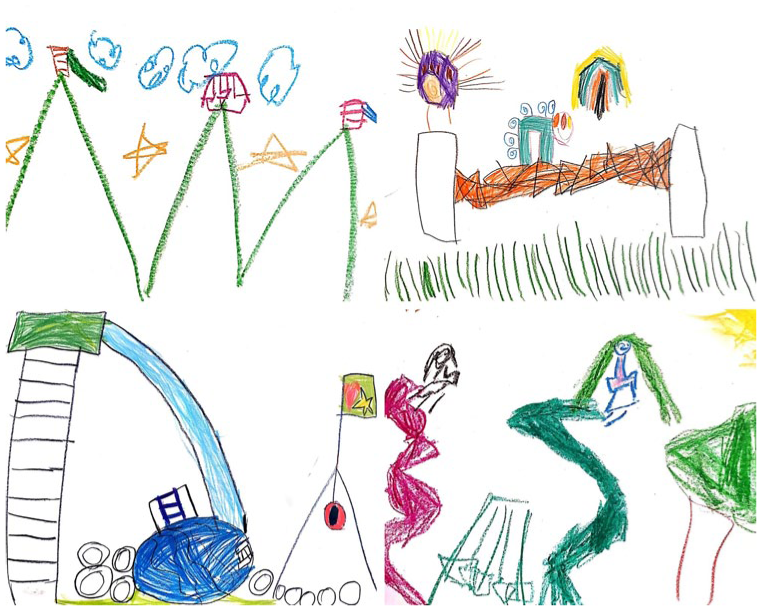
Revisit and redraw the envisioned dream outdoor play areas.
The descriptions of the drawings are as follows:
Drawing 1: The drawing features three tall green hills, each topped with a unique play structure. One hill has a climbing frame, another a spiralling slide, and the third a swing. Clouds drift above, and stars are illustrated between the hills.
Drawing 2: A climbing and balancing structure, made of intricate spider webs and sturdy blocks, stands prominently in the drawing. Below, a lush grassy area provides a soft landing. A rainbow stretches across the sky, beneath which two friendly monsters are shown playing.
Drawing 3: This drawing depicts climbing equipment positioned near a pool, which is surrounded by circular seating. A slide curves down toward the pool, and a nearby tent offers a shaded retreat with additional seating areas.
Drawing 4: Two slides of different shapes twist and turn as children slide down. Multiple swings are placed between the slides, and a tree nearby provides shade for the play area.
As illustrated in Figure 8, the predominant equipment in children’s drawings was the slide (n = 29), followed by climbing structures (n = 23), swings (n = 13), and jumping equipment (n = 5). Additionally, children expressed their desire to play with various items, including balance boards (n = 3), sandpits (n = 2), Ferris wheels (n = 1), and musical instruments (n = 1).
Discussion
Children’s creativity in expressing themselves, as highlighted by Roe (2006), remains robust even when utilizing traditional media methods like drawing. They demonstrate a keen awareness of their surroundings, often feeling that adults do not listen or understand them sufficiently. Furthermore, they perceive the open landscapes around them as not tailored to their needs and considerations. Engaging children in the design process can be mutually enjoyable and, concurrently, offers a valuable opportunity to grasp their perspectives (Roe, 2006). Therefore, the aim of this study was to explore children’s preferences regarding play materials, equipment, and elements in outdoor play areas by incorporating the opinions they have expressed in their drawings. This multi-stage study allowed for a comprehensive exploration of children’s preferences and choices in playground settings, fostering dialogue and understanding about their outdoor play experiences.
The findings from the first stage of this study highlight the significant role that school outdoor areas in shaping children’s play experiences. The majority of children expressed a preference for the playground at their school, indicating the central importance of these spaces in their daily lives. This finding aligns with previous research emphasizing the crucial role of school playgrounds as primary environments for children’s physical activity and social interaction (Dyment and Bell, 2008; Veitch et al., 2017). The drawings created by children in this stage provided valuable insights into their perceptions of ideal outdoor play environments. These drawings depicted a combination of traditional play structures, such as slides and swings, and natural elements, including grassy areas, trees, and flowers. This combination highlights the significance of incorporating both structured and natural elements in playground design to cater to children’s diverse play preferences. Research has shown that incorporating natural elements into playground design has numerous benefits for children’s physical, cognitive, and socio-emotional development (Bell and Dyment, 2008; Fjørtoft, 2001). Natural elements provide opportunities for sensory exploration, imaginative play, and connection with the natural world, fostering children’s overall well-being (Fjørtoft, 2004; Taylor et al., 2001). Additionally, the presence of green spaces in playgrounds has been associated with increased levels of physical activity and reduced stress among children (Mårtensson et al., 2009; Wells and Evans, 2003).
The findings from the second stage shed light on the play equipment and distinctive elements that children envisioned in their ideal outdoor play areas. Although traditional play structures like slides and swings maintained their popularity, the children’s aspirations extended beyond the conventional, revealing a desire for more adventurous and imaginative elements. Notably, children expressed interest in unconventional additions such as a Ferris wheel, musical equipment, and the incorporation of various animal structures. This insight aligns with research emphasizing the significance of imaginative and creative elements in playground design to enhance children’s play experiences (Bundy et al., 2008). By incorporating such diverse elements, playgrounds can serve as dynamic spaces that not only promote physical activity but also stimulate cognitive and imaginative development (Burdette and Whitaker, 2005). The inclusion of unconventional features can contribute to the creation of unique and engaging play environments, fostering a sense of excitement and novelty for children. Therefore, the second stage of the study underscores the importance of moving beyond conventional play structures and embracing creative design elements to enrich and diversify children’s outdoor play experiences.
The utilization of a narrative-driven approach in the third stage of the study facilitated children’s ability to express their preferences regarding various outdoor play settings. This method provided a platform for children to articulate their inclinations, shedding light on their inclination towards natural playgrounds over traditional ones. This preference underscores the significance of designing outdoor play spaces that integrate natural elements. Research by Fjørtoft and Sageie, (2000) highlights the positive impact of natural environments on children’s play experiences, suggesting that such settings stimulate curiosity, creativity, and physical activity. Additionally, studies by Dyment and Bell (2008) and Herrington et al. (2007) emphasize the importance of nature-based play environments in fostering children’s connection with the natural world, promoting environmental stewardship from a young age. Therefore, incorporating natural elements into outdoor play spaces not only aligns with children’s preferences but also enhances their overall well-being and environmental consciousness.
The final stage of revisiting and redrawing dream outdoor play areas served as a valuable platform for children to further refine and personalize their play spaces in accordance with their evolving interests and preferences. The drawings created during this stage prominently featured elements of nature and adventurous components, reflecting the children’s strong inclination towards dynamic and stimulating play environments. This aligns with findings from studies such as those by Chawla (2006) and O’Brien and Murray (2007), which highlight the importance of incorporating natural elements and adventurous features in outdoor play spaces to enhance children’s engagement and creativity. Moreover, research by Fjørtoft and Sageie (2000) underscores the positive impact of nature-rich environments on children’s play experiences, suggesting that such settings promote exploration, imagination, and physical activity. Therefore, the emphasis on nature and adventurous elements in the final stage drawings not only reflects children’s preferences but also underscores the significance of creating diverse and stimulating outdoor play environments to support their holistic development.
In the context of Türkiye, these findings gain additional significance. Prior research has shown that many schoolyards in urban Turkish settings are dominated by hard surfaces and standardized play structures, often shaped by adult-centred priorities such as cost-efficiency and control (Ozdemir and Corakci, 2011). Studies with Turkish preschoolers have similarly highlighted children’s desire for natural elements and diverse play opportunities (Erdogan et al., 2004; Kılıc, 2013). Benliay et al. (2014) further demonstrated that outdoor landscape design strongly influences young children’s perceptions and experiences in preschools. More recent research confirms these patterns, showing that preschool outdoor areas are predominantly equipped with manufactured, fixed structures that primarily encourage functional and parallel play, while natural elements, open areas, and loose materials support more diverse cognitive and social play types (Cetken-Aktas, 2023). An earlier study (Cetken-Aktas, 2021) also revealed that opportunities for risky play in Turkish preschool playgrounds are severely restricted due to safety concerns and design limitations, underscoring the need for environments that allow more adventurous and developmentally beneficial play. These trends align with the current study’s findings, in which children expressed a strong preference for nature-rich and adventurous environments over conventional plastic playground equipment. The contrast between children’s imaginative desires and adult-driven playground designs reflects a broader challenge in Türkiye, where urbanization and safety concerns often overshadow the creation of stimulating, child-centred outdoor spaces (Dereli et al., 2013). Thus, incorporating children’s voices into the design and planning of schoolyards is particularly critical in the Turkish context.
Conclusion
Overall, the combination of children’s drawing and photo elicitation interviews provided a powerful and insightful strategy for collecting data on children’s perceptions of outdoor play spaces. By engaging children in dialogue and exploration, this approach facilitates a deeper understanding of their preferences and choices, ultimately contributing to the design of inclusive and engaging outdoor play environments. Moreover, the interactive nature of the drawing activities fosters a sense of agency and ownership among children regarding their outdoor play experiences. By actively participating in the research process, children become co-creators of knowledge about their play environments, influencing discussions about what makes these spaces meaningful and enjoyable to them. This participatory approach not only enriches data collection but also promotes a sense of empowerment and engagement among children, fostering a collaborative relationship between researchers and children.
Limitations and implication
While the study offers valuable insights into children’s perceptions and preferences regarding playground design, it is essential to acknowledge several limitations. The study’s generalizability may be limited by factors such as sample demographics and contextual variations in playground environments, which could impact the transferability of findings to broader populations or settings. Researchers and practitioners should strive to engage with diverse populations, considering factors such as age, cultural background, and socioeconomic status, to ensure the relevance and applicability of findings across different settings and communities. Additionally, while efforts were made to encourage children to envision their dream outdoor play areas, the feasibility and practicality of implementing their ideas were not explicitly considered, which may limit the applicability of findings in real-world design contexts. Nonetheless, incorporating children’s ideas and aspirations can inspire innovative and child-centred approaches to playground design. Practitioners and designers should seek to collaborate with children as co-designers, engaging them in meaningful dialogue and co-creation processes to develop inclusive, stimulating, and responsive play environments that reflect children’s diverse needs and desires.
Footnotes

Funding
The authors received no financial support for the research, authorship, and/or publication of this article.
Declaration of conflicting interests
The authors declared no potential conflicts of interest with respect to the research, authorship, and/or publication of this article.