




Abstract
This article critically analyses the politics and poetics of communicating of girls’ rights in India’s new developmental state, with a focus on public-private partnerships in visualizing girls’ education. It foregrounds significant investments by both the government and corporations in visual campaigns that shape public discourse. The historical context, rooted in colonial India and framed within discourses of colonizers and colonized, portrayed girls as pre-modern victims needing rescue. This narrative continuies to inflect postcolonial governance. In the contemporary context, corporate advertisements of girls’ education reinforce conventional gender roles and emphasizes girls’future economic participation. Developmental projects, conducted under the influence of nationalism, and modernization, frequently render invisible girls from marginalized communities. Here, the Hindutva-Development framework is explored, offering a postcolonial feminist perspective on girls’ development. In conclusion, the article underscores the need for a layered understanding of girls’ rights and additional need to critique new developmental orthodoxies in India.
Introduction: Public-private investments in visualizing new developmental orthodoxies
In 2021, a report presented by the Parliamentary Committee on Empowerment of Women (2021) in the Lok Sabha (the lower house of India’s Parliament) examined the government’s Beti Bachao, Beti Padhao (Save the daughter, educate the daughter) welfare scheme. The data disclosed a crucial finding: that approximately 80% of the designated funds for the scheme were apportioned to the government’s advertising and media campaign endeavors. Notably, while the total budget allocation stood at INR 848 crore (approximately AUD 160 million), a mere INR 156.46 crore (approximately AUD 29.5 million) was allocated for the actual implementation of the scheme over a span of 5 years. In contrast, an amount of INR 446.72 crore (approximately AUD 84.3 million) had been disbursed primarily for the creation of visual advertising campaigns.
However, while government expenditures are significant, it is also imperative to highlight the synergistic efforts of private capital for visualizing girls’ education in India. In December 2022, the Adani Group executed a hostile takeover of an independent Indian news channel (Reuters, 2022). Gautam Adani, the billionaire chairman of this multinational conglomerate, is known for his close association with Prime Minister Narendra Modi (Mitta, 2018). Following the acquisition, in May 2023, the newly corporate-owned NDTV produced a documentary series titled “9 years of PM Modi” (NDTV, 2023). The second episode unveiled the perceived benefits of the Modi government’s welfare programs which had the aim to promote “the cause of the girl child” (NDTV, 2023).
Against the backdrop of these significant financial investments, it was important to undertake a study of the “public-private partnership” regarding the visual field of girls’ education in India (Eslava and Pahuja, 2020). While the government’s use of girls’ education for populist purposes is apparent in the parliamentary committee report, the commensurate influence of corporations in shaping the visual field of girls’ education remains a relatively under-explored facet (Committee on Empowerment of Women, 2021). Moreover, both public and private investments for this visualization work has yet to receive sufficient critical engagement to interrogate the developmental assumptions that underpin these endeavors. This article seeks to bridge this gap by addressing the following central question: How can a critical examination of visual representations employed by corporations to promote girls’ education contribute to the understanding new developmental orthodoxies in India?
The object of the research is a collection of corporate advertisements that specifically focus on girls’ education within the Indian context. I have gathered a diverse range of visual content for this examination, including images originating from both corporate in-house campaigns promoting girls’ education and corporate advertisements that explicitly endorse government initiatives such as Beti Bachao, Beti Padhao.
Through critical analysis, I contend that these corporate visualization of girls’ education in India functions as a site for communicating and legitimizing the narratives of the new developmental state and its prevailing orthodoxy. This is evident in two main aspects: Firstly, it reinforces the modernization ideals of development propagated by the Global North, presenting education as a key driver of girls’ progress and advancement. Secondly, these advertisements conform to the domestic exclusionary logics of “Hindutva-Development,” prioritizing a Hindu nationalist agenda (Kaul, 2017). Consequently, this framework enables the construction of a governance model for girls’ rights that disregards the rights subjectivities of girls from marginalized communities, ultimately benefiting governments and corporations by ostensibly reconciling the many contradictions within the developmental project.
The article is organized into four sections. To begin, I establish the historical context by exploring the utilization of visual artefacts related to girls’ development during the colonial era. This examination will shed light on how colonial modernity depicted Indian girls as pre-modern victims requiring development, an approach that the old and new developmental states have inherited and built upon. Second, I will shift to the contemporary context, analyzing the corporate advertisements centered on girls’ education in India. It will reveal how they depict girls as passive objects of Hindu identity, beneficiaries of the masculine state-corporate figure and future participants in a capitalist economy, rather than as rights-bearing individuals. Third, I will explore the impact of developmental projects on girls’ rights governance by the new developmental state in India, exploring these initiatives through the lens of Hindutva-Development. This examination will illuminate the intricate interplay of Hindu nationalist and identity-based policies with global modernization and developmental ideals. It will entail a specific focus on the exclusion and marginalization of girls’ education, particularly for those from Bahujan communities—historically disadvantaged groups including Dalits, Muslims, Adivasi, OBCs, etc. In conclusion, I will synthesize the key arguments and reaffirm the thesis, emphasizing the significance of comprehending the geopolitical factors and developmental constructions that contribute to the selective visibility of girls’ education in Indian corporate advertising.
Historisation: Visualizing colonial modernity via girls
Visual artefacts have historically been influential in shaping developmental narratives, and in the context of girls’ rights, they offer a distinctive perspective on the historical and geopolitical dynamics that sustain such discourses (Balagopalan, 2014). Nevertheless, it is essential to acknowledge that the scholarship on visual communications, both within and beyond the discipline of law, has faced criticism for its deep-rooted “Eurocentric” focus (Dissanayake, 1989; Miike, 2006). The majority of this scholarship traditionally centered on topics concerning the Global North, creating a skewed perspective that calls for broader examination. Initiatives like #CommunicationSoWhite have underscored the urgency for critical media studies to expand their horizons beyond the Global North and explore visual narratives from diverse global contexts (Chakravartty et al., 2018). In parallel, there is a growing demand for systematic research on the visual aspects of populist political communication in the Global South (Veneti and Rovisco, 2023). Specifically, within the Indian context, some researchers have investigated the instrumentalization of girls’ development as a political strategy through speech acts, highlighting the crucial role played by non-textual sources in shaping universal developmental discourses (Kaul, 2017).
This article responds to these calls by interrogating visual sources to unravel contemporary corporations’ exclusionary modernization narrative surrounding the instrumentalization of girls’ development in India. In this section, I will provide a historical backdrop of colonial India, where a symbiotic relationship existed between the British Empire and the East India Company (hereinafter, the Company). Together, they promoted colonial modernity through visual representations that depicted Indian girls as pre-modern victims in need of rescue (Levine, 2020). I will illustrate the impact of this discourse on policies during the postcolonial era, particularly within the pre-liberalization old developmental state in India. This period maintained a focus on the welfare of the girl child, mirroring the colonial narrative. Furthermore, I will delve into the subsequent development of the contemporary new developmental state in the late 1980s after economic liberalization, exploring how it continues to draw from and innovate upon this discourse, as discussed in later sections.
In the historical context of colonial India, the colonial bureaucracy, comprising the British Crown and the Company, operated in a symbiotic relationship that mutually reinforced their authority (Washbrook, 1999). This relationship was self-legitimized, both within the colony and in the metropole, by promoting the idea that colonial modernity was a civilizing force in India (Sen, 2002). This mutual reliance facilitated the gathering of artefacts and imagery that aimed to depict British colonialism as a driving force behind modernization and improvement within the colony, making it integral to the sustenance of colonial rule in India (Ryan, 1997).
The colonial bureaucracy actively promoted the collection of visual material among its personnel, urging them to capture various facets of native life and culture. This initiative played a vital role in advancing the agenda of colonial modernity and leveraging visual representations to strengthen the British assertion of their civilizing mission in India (Rizzo and Gerontakis, 2017). For instance, James McCosh, a senior military surgeon with the Company, emphasized the significance of photography and visual documentation in his 1856 “Advice to Officers in India” (Ryan, 1997). He advocated for every officer with the Company to acquire proficiency in all aspects and branches of photography. Moreover, photography was incorporated into the curriculum for cadets at the Company’s Military Seminary at Addiscombe beginning in 1855, signifying its organized commitment to utilizing photographs as a means of advancing colonial interests (Ryan, 1997).
The emphasis on visual documentation extended beyond the military, with even engineers of the Company also being actively encouraged to maintain photographic records of public works and projects (Ryan, 1997). The subsequent amalgamation of the Company’s Engineers with the Royal Engineers in 1862 also continued the efforts to utilize photography for achieving imperial objectives (Ryan, 1997). This perspective envisioned India as a vast “living museum” teeming with visual material awaiting capture, reflecting the emerging recognition of the importance of visual documentation to empire (Rizzo and Gerontakis, 2017). It highlights the colonial “museumising” of native communities and their experiences, reducing them to potential exhibits in the visual field, akin to objects in a museum (Rizzo and Gerontakis, 2017).
European travelers to India, particularly those affiliated with the Company and its personnel, also played a pivotal role in the creation and dissemination of paintings, photographs and postcards of the colony to the metropole (Rizzo and Gerontakis, 2017). These artefacts served as visual productions of the empire, bolstering colonial endeavors (Rizzo and Gerontakis, 2017). Their primary objective was to distinguish and exoticize the colonized populations, with a specific emphasis on women and girls (Grant, 1978). Within this context, the colonial bureaucracy notably highlighted gendered social injustices such as the practice of sati, where widows either willingly or forcibly self-immolated on their husbands’ funeral pyres (Mani, 1989). The Company frequently cited the abolition of such practices as evidence of its reformist initiatives, presenting itself as a force modernizing, protecting and improving the cause of women and girls against antiquated Indian customs (Kawlra, 2014). The colonial bureaucracy effectively harnessed these images, utilizing girls as symbols that embody Indian customs and traditions through their very existence and physical presence (Kawlra, 2014). For instance, the saree and other Indian women’s clothing were frequently employed in illustrations by the colonial bureaucracy to visually represent Indian customs and traditions (Kawlra, 2014). This helped reinforce of the discourse of rescue of the girl child furthered the narrative of the civilizing mission employed by the colonial state to legitimize its rule.
Accordingly, issues related to achieving the improvement of girls’ lives received significant attention within the broader framework of the colonial project. Central to the British colonial administration’s mission in India was the concept of civilizing the “native” population, deeply ingrained in the colonial narrative (Perwez, 2011). Within this framework, girl children were consistently portrayed as passive recipients of colonial care and charity, symbolizing a presumed romantic innocence in desperate need of rescue (Levine, 2020). This narrative assigned victimhood to the multifaceted identities emerging from girls’ interactions with the complexities of postcolonial settings (Balagopalan, 2014). Therefore, it is essential to contextualize the enduring notions of girls’ innocence and the idea of saving them within the broader historical context of colonial modernity, which promoted a singular normative ideal for girls’ lives. This perspective had found deep roots in the visual materials produced by British colonialism in India.
In summary, the British East India Company actively encouraged its employees, including military personnel and travellers, to document visual materials as an integral part of their responsibilities and activities in India. This approach aligned with the broader agenda of colonial modernity and significantly contributed to the proliferation of visual representations of girls that underscored the necessity of colonial modernization. These representations served as a lens through which the lack of colonial modernity was visualized, emphasizing the urgency of its implementation.
Contemporary corporate advertisements: Thriving in contradictions
From the period leading up to India’s independence in 1947 until the late 1980s when economic liberalization took hold, the old developmental state in India can be charted (Balagopalan, 2014). Ethnographers have contended that this era’s responses to girls’ issues, whether in terms of legal, political or social actions, represent a continuation of the British colonial “civilising mission” within postcolonial India (Perwez, 2011). Although the overt processes of self-legitimization and the practicalities of British colonial rule have given way to a more democratic and legitimate mandate in the postcolonial state, the underlying philosophy and legacy of the colonial “civilising mission” continue to influence the behavior of postcolonial governments in South Asia including India’s (Balagopalan, 2014). This enduring influence is further reinforced by the global shift in discourse from “improvement” to “development” since the 1930s, as governments worldwide increasingly orient their programs toward welfare and development (Balagopalan, 2014; Escobar, 2011). Consequently, the old developmental state’s initiatives concerning the girl child, reflects the implicit continuation of the colonial civilizing mission approach.
After India’s economic liberalization in the late 1980s, a shift towards a new developmental state can be identified. This shift signifies a transformed relationship between capital and the postcolonial state, which is more commensurate compared to the previous patron-client dynamic that characterized the old developmental state (Balagopalan, 2014). This mutual dependence has been strengthened by the emergence of public-private partnerships as a key mechanism influencing various levels of educational decision-making—from high-level policies to localized planning (Balagopalan, 2014; Perwez, 2011). The widespread adoption and promotion of corporate visual campaigns for girls’ development education in India align closely with the nation-building concept (Anghie, 2006). International and domestic child rights laws now served as a framework through which the lives of working children are dramatized and differentiated (Perwez, 2011). The combined rise of international human rights law, postcolonial modernity and late capitalism led to a concerted effort in India to visualize and advocate for girls’ rights (Anghie, 2006; Balagopalan, 2014; Eslava and Pahuja, 2020; Linarelli et al., 2018). In this section, I will analyze a selection of corporate advertisements that focus on girls’ education in India to further elucidate this point (Nanhi Kali and Nestle India, 2016; Reliance Animation Academy, Beti Bachao Beti Padhao, 2017; LG India, 2017; NDTV, 2023; Samsung Electronics, 2017; Luminous Power Technologies, 2022; OLAY India, 2022; Vivo India, 2022).
Within the visual landscape of India’s new developmental state, there was a notable surge in corporate advertisements addressing girls’ issues and development, with a pronounced emphasis on girls’ education. This heightened focus on education can be attributed to the persistent perception among Indian businesses that the education sector holds substantial growth potential (Nambissan and Ball, 2010). This trend coincides with the emergence of novel models of corporate philanthropy, particularly within the realm of elementary education (Nambissan and Ball, 2010). Large corporations, motivated by their aspiration to carve out unique agendas and solidify their influence, often measure their impact by the number of partnerships and memorandums of understanding they can establish with various government programs (Nambissan and Ball, 2010). Consequently, private capital began to infuse girls’ school education with a technocratic driven ethical dimension (Balagopalan, 2014).
Some contemporary advertisements dedicated to girls’ rights explicitly manifest this approach. For instance, the Indian multinational conglomerate Reliance Industries Limited shared an animated video from its animation academy in support of the Beti Bachao, Beti Padhao initiative (Reliance Animation Academy, Beti Bachao Beti Padhao, 2017). These advertisements incorporated letters of appreciation from the Prime Minister within their content, thus overtly and implicitly aligning themselves with government endeavors. Through these narratives, corporations seek to establish and imply a connection to the government’s role in girls’ development. The narrative bestows global corporations with a sense of legitimacy as development actors and provides them with a platform to actively shape the present and future of communities (Eslava and Pahuja, 2020).
A 2017 advertisement by the multinational corporation Samsung Electronics titled “We Care for the Girl Child” tells a heartening story of a girl’s journey from a society biased towards sons to her eventual triumph as she fixes a generator during a power outage (Samsung Electronics, 2017). The narrative unfolds as follows: a girl child is born into a family where her father and two uncles’ express disappointment at her birth due to their preference for a son. As she grows up, she must seek their permission for various activities, such as attending school and working with tools, eventually leading to her enrolment in the Samsung Technical School. Despite her two uncles’ disapproval, her father supports her aspirations. The climax of the advertisement occurs during a family event when a power outage takes place, and the girl successfully repairs the generator, restoring electricity to the household, as depicted in Figure 1.

We care for the girl child.
However, a critical analysis reveals several contradictions and limitations within this narrative. This advertisement promotes the Samsung Technical School, a collaborative venture between Samsung India and the Indian government, clearly emphasizing the commitment to strengthening the public-private partnership in girls’ education and skilling. While the story is indeed heartwarming, it highlights some inherent contradictions. The advertisement emphasizes that education and gaining skills essential for the capitalist economy are the singular means to bring progress and development into a girl’s life. This narrative is consistent with a recurring theme and imagery found in many such advertisements—the colonial idea of bringing light to darkness by modernizing and developing what is perceived as pre-modern and undeveloped. In this context, girls are consistently portrayed as future participants in the economy, focusing solely on their future potential without addressing the complex realities they face in the present.
Furthermore, the advertisement underscores the girl child’s identity primarily as a daughter, reinforcing traditional heteronormative relational roles within Indian society. Here, men are portrayed as the power base of households, society and the nation, while women and girls are reduced to purely relational roles as daughters, wives and mothers of men (de Beauvoir, 2015). This representation not only limits the agency of girls but also perpetuates narrow gender identities that fail to acknowledge the diverse experiences and aspirations of girls. The presence of the masculine father-state-corporate trinity in many of these advertisements further exemplifies their limitations. These figures are consistently depicted as the enablers and facilitators of girls’ development as seen in Figure 2, positioning girls as relational objects rather than empowering them as agential individuals. This portrayal mirrors historical perceptions of vassalage, where children, especially daughters, were regarded as their parents’ property, primarily their fathers’ (Re Agar-Ellis (1883); Re Woolley; Ex Parte Applicants (2004); Shafin Jahan v Asokan KM (2018)). Such views persist to some extent today, deviating only when exceptional circumstances necessitate state intervention. The intersectionality of being female and a child imposes a double vassalage on the girl child, depriving her of the opportunity to be seen as a rights-bearing individual beyond narrow relational identities.
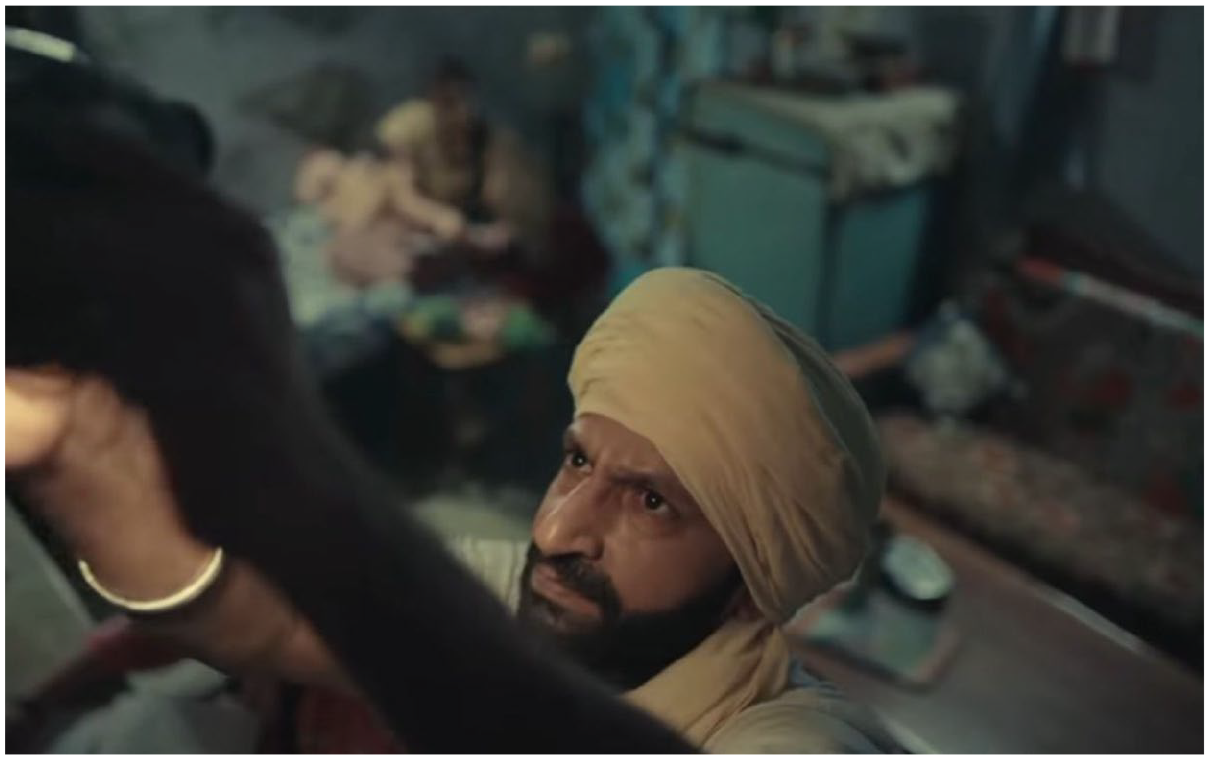
#vivoForEducation.
Erasure: Exclusionary Hindutva-development
The corporate advertisements promoting girls’ education frequently perpetuated traditional gender roles, emphasized a future-oriented perspective and consistently upheld a paternalistic and relational view of girls’ development. These narratives, in their adherence to the old developmental paradigms, overlooked the significance of a more inclusive and emancipatory conception of childhood that recognizes girls as rights-bearing individuals with multifaceted identities and aspirations. Nevertheless, it is imperative to scrutinize not only what these narratives present but also what they conspicuously omit from the visual landscape.
The Modi government in India has adeptly crafted a narrative that weaves together Hindutva (Hindu right-wing nationalism) and development, using it as a skillful populist tool (Kaul, 2021). This complex balancing act, evident in the actions and advertising choices of contemporary public-private partnerships, is exemplified by the simultaneous launch of the Beti Bachao, Beti Padhao initiative, ostensibly promoting girls’ education, and the enforcement of a ban on the hijab in schools in states where Modi’s Bharatiya Janata Party held power (The New York Times, 2022). This ban led to the discontinuation of education for many girls. Despite these apparent contradictions, they do not register as such in the popular consciousness. This is because the public-private partnership’s visual representations solidify the image of the girl child as Hindu, systematically portraying school-going girls in the public visual sphere as savarna or elite Hindus—or, at best, as a curiously secularized figure.
The Hindutva-Development framework plays a pivotal role in deconstructing a political narrative rooted in the concept of masculine asceticism within the development sphere, particularly when conveyed through non-textual means (Kaul, 2017). Furthermore, it provides a platform for adopting a postcolonial feminist approach to the development of girls, emphasizing the intricacies stemming from the diverse backgrounds of children, including those hailing from marginalized communities such as Dalit, Adivasi, and religious minorities (Kaul, 2017). This perspective nurtures a more comprehensive understanding of the issue by acknowledging the multitude of signals and contradictions that surface from the experiences and viewpoints of marginalized groups. It refrains from presenting the matter as conclusively resolved solely because of its exclusion from public discourse and imagination, recognizing that this exclusion erases the complexities and significance of the issue.
As a consequence, the emerging Indian developmental state adeptly combines seemingly contradictory elements—traditional values and modernization, individual rights and Hindu nationalism—all while advancing capitalist market dynamics. Within this fusion, girls are depicted as the future and potential contributors to a capitalist economy, provided they conform to the modernization agenda set forth by the developmental project. This visually dominant narrative, prominently featured in corporate advertisements, is constructed upon exclusionary principles that disregard the experiences and aspirations of girls hailing from Bahujan or marginalized communities.
Ratna Kapur’s examination of the hijab ban in the Global North illuminates how processes of “othering” and the restriction of freedom within narrow confines are perpetuated by the absence of critical scrutiny of entrenched debates surrounding concepts like universality, civilizational superiority, and cultural relativism (Kapur, 2018). These unexamined developmental discourses frequently conflate human rights with profit-driven agendas and an overarching civilizing mission, thereby contributing to the establishment of a developmental orthodoxy. This orthodoxy finds expression and legitimacy through various channels, including corporate advertising, and reinforces the endeavors of public-private partnerships in shaping state-preserving projects (Anghie, 2006; Eslava and Pahuja, 2020).
Conclusion: Rethinking uncritical orthodoxy
In conclusion, this article examines the intricate politics and poetics surrounding the communication of girls’ rights within the context of India’s new developmental state, with a specific emphasis on the influential role played by public-private partnerships in visualizing girls’ education. Through critical analysis, it becomes clear that these corporate visualizations of girls’ education serve as potent conduits for communicating and legitimizing the narratives of the new developmental state and its overarching orthodoxy, thereby substantiating the thesis that is put forth.
Historically, dating back to the colonial era, visual representations were indispensable in propagating the narrative of colonial modernity, casting Indian girls as pre-modern victim in need of rescue. This narrative, deeply rooted in the colonial civilizing mission, did not merely fade away with the dawn of postcolonial India but rather continued to exert a formidable influence on subsequent governments, shaping their strategies concerning girls’ issues. The advent of the new developmental state, ushered in by economic liberalization, witnessed the ascent of late capitalism and the rise of public-private partnerships as pivotal forces in shaping the trajectory of girls’ education. Corporate advertisements, frequently aligning themselves with governmental initiatives, have asserted a dominant presence in the visual realm of girls’ education. However, upon close examination, the narratives consistently reinforce conventional gender roles, champion a future-oriented perspective and perpetuate a paternalistic gaze upon girls’ development.
Furthermore, the article highlights the fusion of ostensibly contradictory elements within the Indian developmental state. This fusion, characterized by the coexistence of traditional values and modernization, individual rights and Hindu nationalism, all situated within the overarching framework of advancing capitalist market dynamics, inevitably results in the marginalization of girls from marginalized backgrounds. The Hindutva-Development framework emerges as a pivotal mechanism, systematically dismantling the narrative of masculine asceticism within the development paradigm. It concurrently fosters a postcolonial feminist perspective on girls’ development, emphasizing the rich diversity of backgrounds among children, including those hailing from marginalized communities. Importantly, this framework avoids prematurely concluding the matter, recognizing that the issue’s deliberate inclusion in public discourses leaves behind the context of complexities and significance that must not be ignored.
In conclusion, the article has foregrounded how uncritical developmental discourses, typified by corporate advertising, often entwine the noble principles of human rights with profit-driven motives and the overarching civilizing mission, thereby laying the foundations of a rigid developmental orthodoxy. The research lends support to the argument, accentuating the imperative need for a nuanced comprehension of the intricate dynamics shaping the communication and legitimization of girls’ rights within the contemporary new developmental state of India. It calls for the recognition of historical legacies, the critique of exclusionary narratives and the embrace of multifaceted perspectives that collectively sculpt the visual representations of girls’ education. Ultimately, the article seeks a critical reevaluation of these narratives, steering them towards the adoption of a more inclusive and emancipatory approach to girls’ rights in postcolonial India.
Footnotes
Acknowledgements
I am grateful to Sundhya Pahuja and Luis Eslava, whose work and comments during the early stages of this article were invaluable. I also thank Nicola Yelland for reading a draft. All errors remain mine.
Funding
The author disclosed receipt of the following financial support for the research, authorship, and/or publication of this article: This research was supported by the Alex Chernov Scholarship.
