



Abstract
This paper critically examines the use of the photostories method adapted from Photovoice in research with children, exploring its effectiveness in enabling decision-making and influencing change while addressing potential challenges. Specifically, it investigates the extent to which the photostories method enables children to make decisions and influence change while mitigating potential challenges, and how this contributes to a broader understanding of child participation in research. Using a reflective practice approach, the paper analyses researchers’ experiences alongside children’s accounts to assess how this participatory method enhances child agency. The research was conducted in collaboration with two United Kingdom-based organisations supporting underrepresented children. Data were drawn from three sources: evaluation interviews with children (n = 18), researchers’ reflective diaries, and field notes recorded during the evaluation process. The analysis is grounded in reflective practice, considering both the implementation of photostories and the ethical complexities of working with children in research settings. Drawing on the frameworks of Lundy and Arnstein, the paper argues that power imbalances, ethical considerations, and safeguarding requirements mean that participation alone does not ensure full agency for children. This study critically examines who ultimately benefits from participatory methodologies that seek to amplify children’s voices, while also contributing to ongoing discussions about how the research process captures children’s lived experiences and shapes research outcomes.
Introduction
The use of visual and participatory research methods marks a significant shift from researching children to researching with them, as these approaches empower children to amplify their voices (Fane et al., 2018; Kleine et al., 2016; Mayall, 2008; Sevón et al., 2023; Soliman et al., 2022). Visual methods, such as drawings, photographs and photovoice, allow children to communicate experiences, emotions, and ideas that may be difficult to articulate in words (Farmer and Cepin, 2017). By actively engaging children in the research process, these methods help to centre their voices, making them co-creators of knowledge rather than passive subjects of study (Lewis-Dagnell et al., 2023). However, conducting research with children requires the navigation of complex and unequal power dynamics between adults and children, shaped by differences in age, status and experience (Einarsdóttir, 2007; El Gemayel and Salema, 2023). In recent years, traditional approaches to children’s participation in research have been challenged, with calls for critical reflective practice to ensure greater equity in co-produced research with children (Flewitt and Ang, 2020; Montreuil et al., 2021; Powell et al., 2020). This paper seeks to contribute to this conversation by critically examining our practices through researcher reflections that address the following research questions: To what extent does the photostories method enable children to make decisions and influence change while mitigating potential challenges and how does this contribute to a broader understanding of child participation in research?
In addressing these two questions and sharing insights from two evaluation findings, we draw on Lundy’s (2007) model of child participation, which national and international organisations, agencies and governments have widely adopted. This model has significantly influenced the global understanding of child rights-based participation, both in policy and practice. Lundy’s (2007) model offers a clear, structured framework emphasising four key elements: Space, voice, audience and influence. In participatory research, this framework helps reflect on whether children are provided with safe, inclusive spaces (space), are actively listened to (voice), have their views considered by decision-makers (audience) and can influence outcomes (influence). To enhance this approach, we have combined Lundy’s (2007) model with Arnstein’s ‘Ladder of Participation’, which introduces a hierarchy of democratic participation, ranging from ‘nonparticipation’ and ‘tokenism’ to ‘citizen power’ (Arnstein, 1969). Combining Lundy’s (2007) model with Arnstein’s (1969) ‘Ladder of Participation’ enabled an examination of participatory methods go beyond superficial engagement, actively contributing to meaningful and equitable outcomes.
In the context of this research, the combined model is situated within the tensions between protectionist and participatory narratives, the former focusing on ensuring the safety of research participants and the latter on promoting their full and meaningful inclusion. This model thus aligns with our aim of exploring the implications of using participatory methods in engaging children as active contributors.
Literature review
Visual and participatory research with children
A significant body of research, as previously mentioned, examines the potential of participatory and arts-based methods, such as drawing, photo-elicitation and discussions with children (see Fane et al., 2018; Mandleco and Clark, 2013; Martin and Buckley, 2020; Mayall, 2008). This has contributed to a shift in childhood studies from research on children to research with children (Fane et al., 2018; Mayall, 2008), placing children’s voices and experiences at the core of the research process. Studies in this area highlight the advantages of incorporating children’s perspectives into policy, initiatives and research while also challenging adult-centric approaches that marginalise their voices (Sevón et al., 2023). This study engages with literature on voice (Breathnach et al., 2018; Spyrou, 2016) participation, and safeguarding, arguing that including children in research requires careful consideration of decision-making processes (Crane and Broome, 2017).
Thomson (2009) identifies two key issues when engaging with children through participatory arts-based methods: the importance of the child’s voice and its role in shaping knowledge about their lives. This focus extends beyond providing child-friendly spaces, emphasising the need for children to take ownership of the research process as co-researchers (Lundy et al., 2011). Their contributions and capacity to produce knowledge about their own experiences should be recognised and respected (Andresen et al., 2019). Visual methods can challenge power imbalances by creating opportunities for children to determine what is important and take control of their participation (Fane et al., 2018).
A second key approach is acknowledging children’s agency by involving them in research and giving them a voice in how it is conducted (Pyle, 2013). Participation is not simply about inclusion; it involves creative, practical, and reflective collaboration, fostering diverse, multi-dimensional narratives (Mkwananzi and Cin, 2022). For instance, photography can support children’s agency in the research process, providing an opportunity to express concerns and share experiences. Children should also be involved in analysing photographs, rather than leaving interpretation solely to adults, as this process allows for reflection and social engagement through documenting and sharing experiences (Kumpulainen et al., 2014). Meaningful involvement as co-researchers can address power dynamics by creating safe spaces that promote agency and empowerment.
While participatory approaches aim to mitigate power imbalances by centring children’s perspectives, there is a risk that overly encouraging participation may undermine this goal (Spyrou, 2011). A balanced approach is therefore required – one that prioritises children’s best interests respects their agency and incorporates strong ethical and safeguarding measures to ensure that their voices genuinely inform the research without overshadowing their autonomy or ethical considerations. The growing body of work on participatory arts-based methods with children highlights both the potential of these approaches and the risks of performative participation (see Korkiamäki and Kaukko, 2023; Luescher et al., 2021; Nunn, 2022). Building on this literature, we examine the complex power dynamics and ethical issues that arose in two participatory research projects we conducted.
Lundy’s model of participation and Arnstein’s Ladder of participation
Developed from the United Nations Charter on the Rights of the Child (UNCRC), Lundy’s (2007) model of participation delineates four critical elements of ensuring effective child participation in the decisions that affect them: space, voice, audience and influence. Although first conceptualised to aid educational practitioners, Lundy’s model has seen widespread usage due to its rights-based focus and the individualistic view of the child, for example, being applied to legal debates (see Molloy, 2024), cultural citizenship (see Mai and Gibson, 2011), and medical ethics (see: Lansdown et al., 2015). The four elements within the model are given specific characteristics that enable practitioners to review and evaluate the inclusion and participation of the child. Space focuses on the need to create inclusive and welcoming environments for the child where they will feel comfortable expressing themselves (Lundy, 2007). Voice is the facilitation that enables the child to express their views in the manner that suits them (Ward and Lundy, 2024). Audience is the guarantee that the voice will be heard by the appropriate audience, who will commit to both hearing and valuing their contributions. Finally, influence, seeks to ensure that the child’s views are given due weight, and lead to change (Lundy, 2007). Despite its wide use, there are challenges and tensions within the Lundy model, with the rights based and individualistic approach to the child placing limits on the social and relational aspects which hold significant influence over the child’s life (Horgan et al., 2017). Adults, for example, may hold paternalistic attitudes toward children, limiting their engagement, or a belief that ‘mature’ opinions must be expressed before their voice is taken seriously (Mitchel et al., 2023; Thomson et al., 2022). Space creation can be ineffective if there is low trust between adults and children or influence is diminished if there are formal (adult-led) procedures for dealing with grievances, such as evidence tribunals in a peacekeeping context (Berents, 2018; Horgan et al., 2017). To resolve this, Lundy’s (2007) model can be used in conjunction with other participatory models to ensure that social and relational aspects of a child’s life are considered, whilst still grounding participation in their fundamental rights.
Within this research, Lundy’s (2007) model is combined with Arnstein’s (1969) Ladder of Citizen Participation, a widely used model of public engagement and participation, where participation is characterised as a ladder, with each ‘rung’ representing increased citizen control, with the highest rung representing citizen power, and the lowest representing non-participation. Arnstein’s Ladder was founded on the principle that citizen participation is a democratic process, which requires a real authentic reallocation of power. Arnstein (1969) noted that stakeholder claims are often considered, but the benefits are only realised at the top. Like Lundy’s model, Arnstein’s Ladder has been applied across a variety of topics, including parental involvement in school exclusions (see Bridgeman, 2024), urban planning (see Laskey and Nicolls, 2019), and healthcare (Stewart, 2013). Critiques of the Ladder are often aimed at the idea of dichotomised positions, and the crude categorisations of participation (Carpentier, 2016). Further to this, in participatory projects, there may be a variety of different areas, some tangible and some not, where the distribution of power may be different, for example, open discussion of ethics can be collaborative with power being distributed, but the formal adoption of ethical guidelines, not (Ward, 2011). This has been addressed in literature, with authors expanding on the model, both re-positioning it outside of its Western context to underdeveloped countries, focusing on governmental attitudes towards the community, or reframing the ladder metaphor as a mosaic to highlight the diversity of views and breadth of group relationships (Cai and Marks, 2021). Expansion of the model has been particularly pertinent within participatory and visual methodologies which often require a complex integration of conceptual models which has required the adjustment of Arnstein’s model, though it has been successfully implemented (Blohm et al., 2024; Cai and Marks, 2021; Wang, 2006).
The critiques of both models can be balanced against one another within the research context. Lundy’s model creates a platform for understanding the child’s fundamental rights, through the four elements of space, voice, audience and influence. This delineates four clear areas where relational power dynamics of Arnstein’s ladder can be explored (Figure 1). There remain areas of tension that should be considered by researchers, for example, the continued reliance on dichotomous categorisations may undercut complex social systems and relational dynamics (Cai and Marks, 2021). This requires researchers to adopt reflexive processes to ensure findings are reflective of the real lived experiences of the participants when being applied to participatory and visual methodologies.
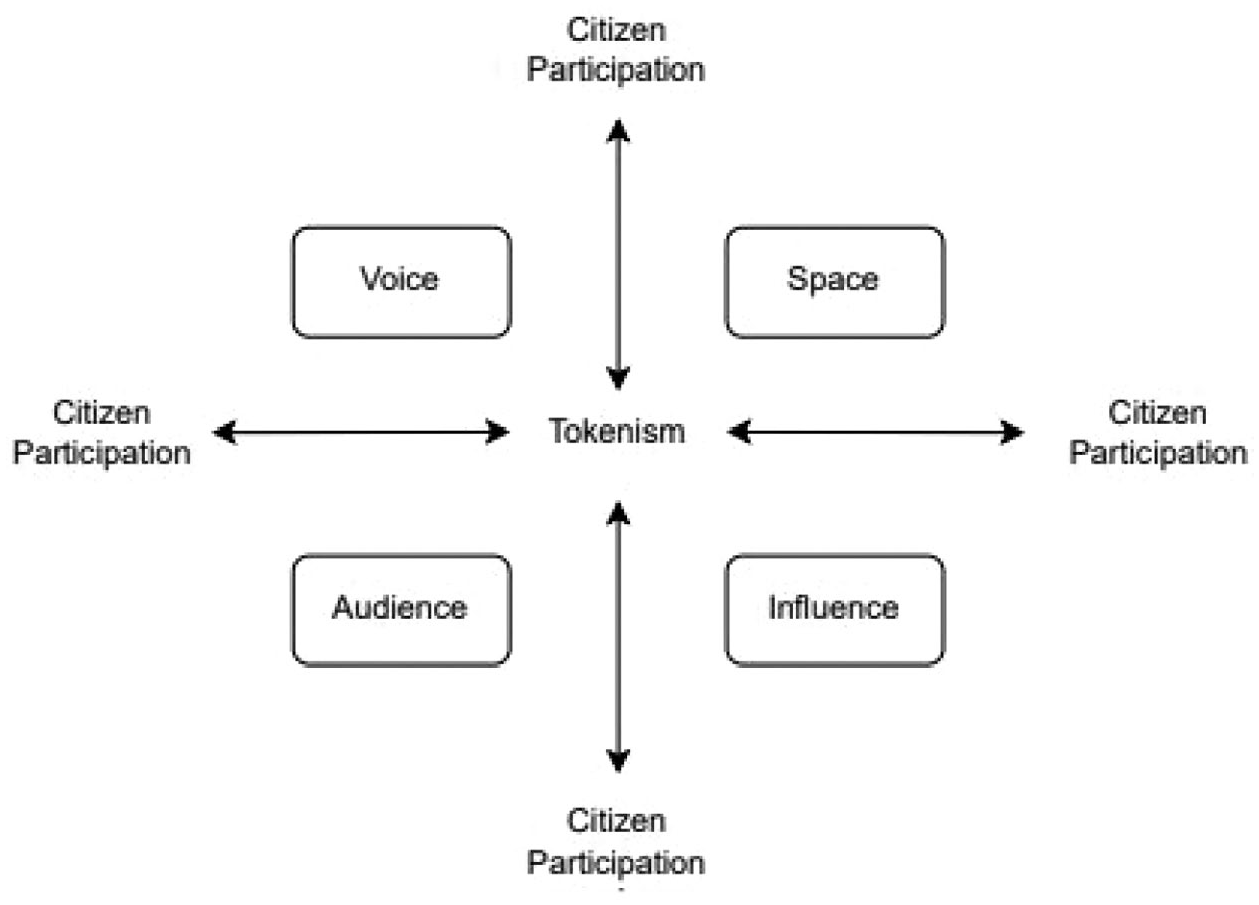
Diagram of hypothesised model combining Lundy’s four dimensions of child participation and Arnstein’s Ladder.
The combination of the two models allows for each dimension to be evaluated in not only how it was implemented but also by how power was allocated. For example, photo exhibitions may create a space for voice but if they are led by stakeholders and participants are unable to tell their stories on their own terms, it could still be considered tokenistic.
Methodology: Using photostories to understand children’s experiences
Context
Two third-sector organisations in England and Wales implemented initiatives designed to support underrepresented children. The researchers of this paper evaluated these initiatives using a mixed-method approach that combined interviews, surveys, and the ‘photostories’ method to gain a deeper understanding of the lived experiences of children engaged with these organisations and to enhance intervention strategies.
This paper, specifically, examines the use of the photostories participatory method, adapted from Photovoice, to assess outreach programmes delivered by these organisations. To maintain confidentiality and anonymity, they are referred to as ‘Organisation A’ and ‘Organisation B’. Both developed innovative programmes for children facing multiple challenges, including family issues, deprived neighbourhoods, low educational attainment, school dropout and behavioural difficulties. The evaluations sought to investigate the design and development of these initiatives for children experiencing disadvantage in these regions.
The children engaged with both organisations were aged between 8 and 18 years and came from underrepresented backgrounds. These backgrounds were categorised using the Indices of Multiple Deprivation, which align with the Equality Act 2010. In addition to being from underrepresented backgrounds, some children faced further challenges, such as educational disadvantages and behavioural management issues. In the United Kingdom, a child is legally defined as a person under the age of 18 (Children Act 1989); therefore, this research refers to ‘child’ or ‘children’ accordingly.
Both organisations operate nationally but adopt different approaches to engaging with children. Organisation A focuses on encouraging well-being and self-confidence, whereas Organisation B emphasises the development of practical skills, such as employability, for young people at risk of becoming ‘Not in Education, Employment, or Training’ (NEET). These organisations were selected for their shared commitment to supporting underrepresented children and promoting education, as well as their use of community-based programmes integrated with educational settings.
Researcher reflections
This research paper uses a reflective practice approach to critically assess the use of photostories with children, drawing upon researchers’ experiences and reflections combined with accounts from children involved in the research. The methodology is grounded in reflective practice, analysing the implementation of photostories in collaboration with the two organisations. These reflective accounts allowed the research team to engage actively with the photostories method, iterating and adjusting our approach as new insights emerged. By using photostories, we sought to foster a more holistic understanding of the use of creative methods for overcoming barriers to engagement with children – moving beyond quantitative measurements or rigid frameworks, embracing the fluidity of artistic expression and interpretive inquiry (Wang et al., 2004). Reflecting on this approach, we generated a nuanced understanding of the efficacy and impact of photostories as a participatory research method and as a means for participants to convey their experiences
Photostories method promoted storytelling through photography, with participants using their cameras where possible or being provided with equipment. Originally, the project intended for researchers to support participants throughout the process. However, Covid-19 restrictions limited in-person engagement (Abma and Schrijver, 2020). As a result, the research team only delivered a face-to-face introductory session for Organisation B, while for Organisation A, local stakeholders were briefed, and an explanatory video was provided via YouTube. Photostories, adapted from Photovoice, was designed to allow children to work individually or in pairs, following a booklet designed with input from safeguarding officers, which outlined the process, required equipment, and the intended use of the photographs. The booklet, written in accessible language, also included ethical and safeguarding measures such as informed consent, withdrawal procedures and parental consent forms.
Photostories retained core elements of Photovoice, such as photography and captions, but differed in its structure. Photovoice typically includes exhibitions and involves researchers spending more time with participants (Latz, 2017; Liebenberg, 2018). Due to pandemic-related constraints, fewer photographs were collected than anticipated, highlighting the methodological challenges faced in adapting this approach.
The photostories process is explained in Figure 2.
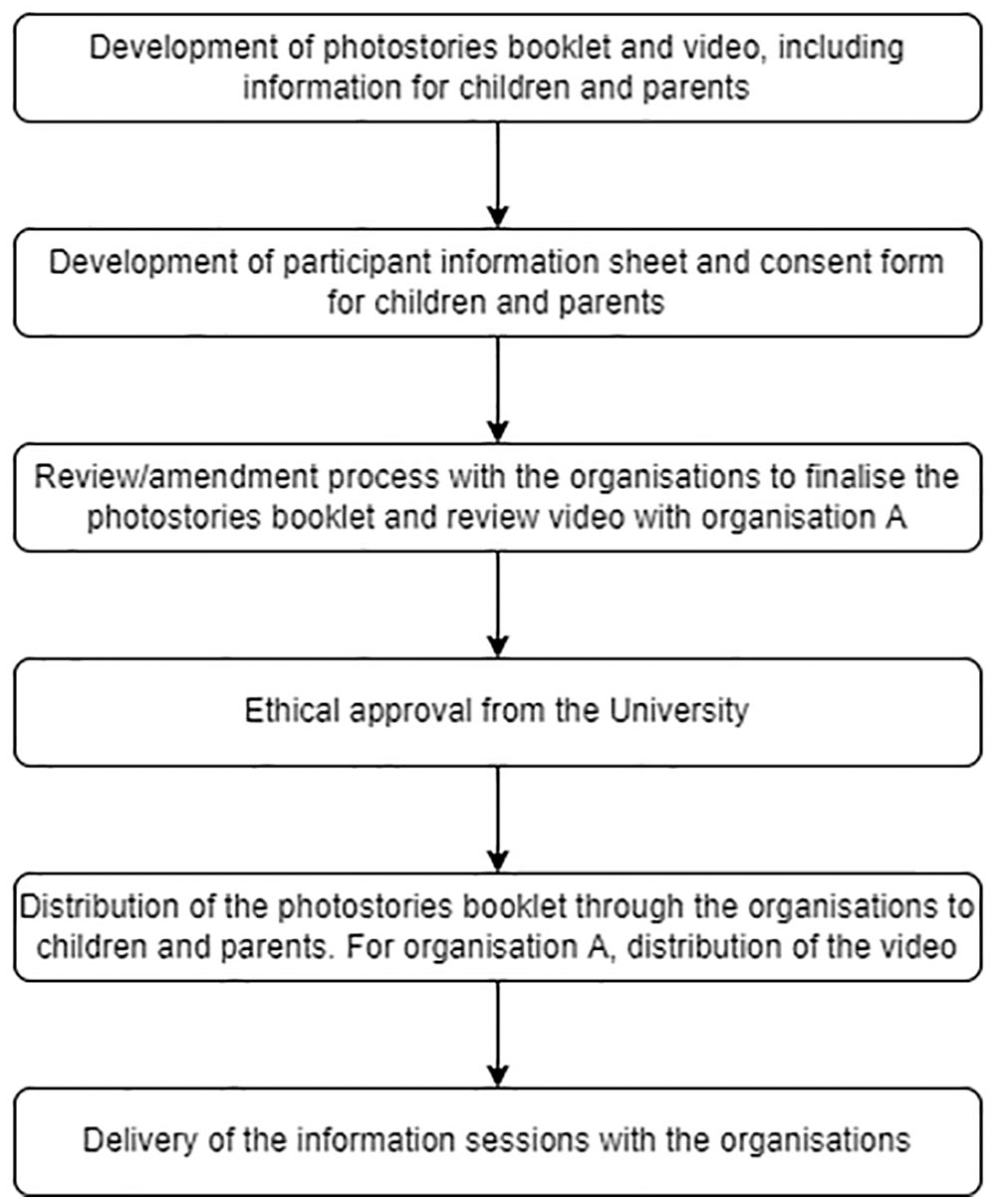
Photostories process.
The figure above illustrates the iterative nature of our approach, wherein reflective practice is embedded at each stage of the research process alongside a formal evaluation of the photostories methodology. These two complementary methods – reflective accounts and evaluation – serve as key sources of data that underpin the analysis presented in this paper.
Qualitative data
Data were drawn from three sources: evaluation interviews with children from Organisation A (n = 7) and children from Organisation B (n = 11), researchers’ reflective diaries, and field notes recorded during the evaluation process. The qualitative data used in this paper were anonymised and labelled as ‘Organisation X, Child X’. Children from Organisation A were aged between 8 to 18 years, children from Organisation B were aged between 12 to 16 years The organisations led the selection process, engaging directly with children to explain the research scope and purpose while considering local contexts. Due to Covid-19, there were some limitations. Organisation A involved two groups of children from two sites, whereas Organisation B worked with one group from a single site. In total, 25 photographs were submitted to the research team. Children from Organisation A provided twenty photographs, while children from Organisation B submitted five photographs.
Researchers’ reflections centred on team engagement and researchers’ individual experiences throughout the project were also analysed as part of qualitative data. The reflective process was a central aspect of the research design, with detailed journals of thoughts, challenges, breakthroughs and evolving perceptions of the research process collected for analysis. These reflections were not only valuable in understanding how our photostories was embedded in the research but also served as an opportunity to examine the implementation of photostories in situations where tensions between children’s agency in research and protectionist responsibilities, ensuring that children are appropriately safeguarded and not put at risk. The reflection was continuous, occurring during each phase of the research, with team discussions playing a crucial role in shaping our understanding, as we reflected on key moments of the photostories implementation. Notes and journal entries maintained during the process provided valuable insights into the ongoing development of the project and the challenges we encountered These notes and journal entries were analysed using reflexive thematic analysis (Braun and Clarke, 2006), alongside qualitative data collected from children. The analysis aimed to assess the extent to which the photostories method enabled children to make decisions and influence change while addressing potential challenges in research involving children.
Ethics procedure
In our study, we ensured data protection, secure storage and participant safeguarding. Ethical approval was obtained from the University of Northampton’s Ethics Committee, following the British Educational Research Association (BERA, 2018) guidelines, which were current at the time the research was conducted. The ethical application, and associated participant documentation, was reviewed by the organisations involved in the programmes before submission for approval. Special attention was paid to ensuring that the photostories methods were age-appropriate and culturally sensitive, fostering an environment where children felt safe to express themselves freely. The research design was sensitive to the emotional and psychological welfare of the children, with strategies in place to support any child who might experience distress during the research activities including information in the booklets to support children. Given the challenges in researching during the Covid-19 pandemic, with researchers unable to engage fully with children, the research team was mindful of power dynamics that could occur, ensuring that the research was not coercive, and that children had agency in their participation, making sure their voices were heard and valued in the research process.
Findings
Balancing protection and participation
A fundamental aspect of safe research is ensuring that participants are fully informed of what their inclusion entails, what is expected of them, and that they have opportunities to ask questions (Xu et al., 2020). The organisations involved in our photostories project encouraged children’s participation for evaluation purposes. However, how spaces were organised to enable children to engage fully with the researchers differed significantly. The protectionist approach (ensuring research participants are safe) meant that whilst children were given initial explanations about the project, there were limited opportunities for them to engage directly with researchers. Covid-19 restrictions further contributed to this, creating a reliance on information sheets or videos. As a result, the ‘space’ created for children to ask questions was not developed effectively, preventing researchers from building rapport and confidence with participants so that open dialogue could commence (Lundy, 2007). The inability for children to ask questions or a mutual dialogue to be established additionally limited the extent in which they were able to influence the project, simply being informed of what was occurring (an element of Arnstein’s Tokenism) (Arnstein, 1969).
A key limitation was that these protective measures restricted conversations where children might have expressed concerns sought clarifications or shaped their involvement. Without this, it was difficult to ensure that they fully understood what was expected of them, limiting their ability to make informed decisions. Power remained concentrated among researchers and stakeholders, who benefited from tokenistic buy-in from the children whilst still fulfilling the expectation of creating ‘space’ (Arnstein, 1969; Lundy, 2007).
The organisations continued to act as intermediaries between the researchers and the children, primarily for safeguarding purposes. While this was intended to protect the children, it indirectly hindered direct communication, reducing opportunities for them to express concerns or seek clarification. This raised concerns that the ‘voice’ of the children, as drawn from Lundy (2007), was limited and that they lacked sufficient opportunities to express their views freely about their involvement. This mediated communication compromised the audience aspect of Lundy’s model, which emphasises that children’s views should be actively listened to by those in a position to act on them. The children were not fully empowered to engage in direct dialogue with researchers, affecting their sense of agency and autonomy in the research process. While they were asked for their opinions, their input did not noticeably influence decisions regarding the research process limiting their power and control (Arnstein, 1969).
This issue is often associated with ‘tokenism’, where ‘children and young people may be consulted but their views have no discernible impact on decisions’ (Arnstein, 1969; Tisdall, 2013, p. 184). For instance, the organisations expressed concerns about children wanting to use pseudonyms for photographs in exhibitions, arguing that chosen names could still pose risks to anonymity if they were identifiable. While this decision was grounded in safeguarding policies, it overrode the children’s preferences, limiting their ability to shape their contributions. This highlights a broader challenge in which safeguarding, and participation are often framed as conflicting. By imposing restrictions on name selection, the organisations effectively limited the extent to which children could exercise agency over their contributions. This dynamic, documented in field notes throughout the research evaluation, provides evidence of how safeguarding concerns translated into constraints on children’s decision-making in practice. According to Lundy’s (2007) model, participation should enable children to influence decisions. However, these protective measures restricted their involvement and their ability to shape how they were represented in the research outputs.
While safeguarding concerns are well-founded and reflect a responsible approach, the restrictive measures constrained the children’s engagement and capacity to influence the research process. Lundy’s model stresses that children’s views should not only be heard but also acted upon. However, the limited involvement of children in the design, implementation, and dissemination phases undermined their potential to act as co-creators. For the organisations involved, participation was framed primarily as a consultation rather than co-creation. Children were invited to contribute their views, but their influence on project design and implementation remained limited, which aligns with critiques of ‘tokenistic participation’ (Arnstein, 1969; Tisdall, 2013), where children may be included in discussions but lack decision-making power.
By examining professionals’ perspectives, it becomes evident that participation was mediated through an adult-centric lens, prioritising protection over agency. This raises important questions about the authenticity of children’s participation when they are not given full agency over their contributions. If participation is mediated or restricted, it challenges the validity of claiming a genuinely participatory approach. Lundy’s (2007) model encourages a balance between protection and empowerment, ensuring that children’s voices are not only safeguarded but also respected and integrated into research in ways that uphold their autonomy and agency. While participation and protectionist narratives are often seen as conflicting, both are essential for ensuring the well-being of children and young people (Graham et al., 2013).
Participation: On whose terms and for whose benefit?
Informal conversations with children and organisations indicated numerous benefits from participating in the photostories method. Drawing from Lundy’s (2007) model of child participation, this method respected and enacted various aspects of participation rights. The Photostories method, involving children capturing images reflecting their perspectives and experiences, led to positive outcomes. Children reported that taking photos allowed them to express themselves in ways words sometimes could not, providing a creative outlet to convey their thoughts, feelings and ideas. For example, one of the children who took a photo of a sunny day reflected on their experience to note that they felt more confident: A journey to grow. Getting more confident like the sun shining through (Organisation B, Child, 1).
Another child when asked about if taking photos made a difference to how they express themselves, they noted: For me really, my pictures were to try and show my story of starting this programme and my situation now after attending the programme (Organisation B, Child 3).
Another child from Organisation A noted that looking at each other’s photos, they instantly knew what each photo meant. The child said: We understand everyone’s photos because- we’ve all been through the same sort of thing (Organisation A, Child 2)
This was referring to the struggles they have been through. This aligns with Lundy’s concept of ‘voice’, where children express their views using a suitable participatory tool. By allowing children to control the medium used to collect their inputs was additionally an effective way of reallocating power within the research context. Photo-taking fostered collaboration, encouraging teamwork, cooperation, negotiation and appreciation for diverse viewpoints. One of the children who worked with their cameras to take photos of teamwork said: Working together boosts my confidence (Organisation B, Child 2).
This collaborative effort enhances children’s social skills and embodies Lundy’s ‘space’ element, providing a safe and inclusive environment for free expression. Using a participatory method with two external organisations prompted critical questions. The photostories methodology provided a platform for children to authentically voice their perspectives, ensuring their involvement is meaningful and impactful. Photos are a form of individual expression, a personal and subjective interpretation of the photographer’s ‘lived world’ (Balammal, 2020). As a participatory method, the goal of photostories is to allow the photographer (children in our case) the freedom to express their feelings on a given subject before discussing them as part of a focus group from which research themes are drawn out collaboratively. This collaboration brings the collection and interpretation of data beyond the researcher, flattening the power dynamics, and allowing fuller inclusion of the research participants into the research field (Creighton et al., 2017). This was challenged by the creation of exhibitions by organisational stakeholders, with limited input from children, or cancellation of these events.
The final step of the photostories process is typically an exhibition, where policymakers, stakeholders, or the public engage with the research findings. This exhibition helps disseminate the findings and also reinforces children’s ownership of their stories by allowing them to present their perspectives in their way. When organisations take control of exhibitions or limit children’s influence, they undermine this purpose and stop children from telling their own stories and shaping how their experiences are represented. This raises questions with regard to the organisational needs, prompting reflection on how much children managed to input freely, how much their input was integrated into the project, and how their rights and agency were respected throughout the process. Separating research creation from research exhibition challenges the value of co-production throughout the research methodology as exhibitions are also part of the process of co-producing where the best ways of engagement with a wider audience are designed and planned (Cin et al., 2024). Our aim of using photostories was to emphasise the importance of individual creation and expression as participants take photos of their lived world. Importantly, arts-based methods are meant to be all-encompassing experiences where participants are allowed to create and have control over how they communicate with stakeholder groups. These are meant to be both ‘thoughtful and intentional’ conversations between artists and audiences (American Art Therapy Association, 2013). By removing control over the presentation or exhibition of the research, the participatory process is compromised. This restriction allows for the reinterpretation of the participants’ work to fit the audience’s context, potentially distorting the intended meanings and intruding on the private spaces of the participants. Such actions can affect how participants disclose information and how their work is perceived and understood (Creighton et al., 2017; Wang and Redwood-Jones, 2001). The integrity of the participants’ voices and the authenticity of the research findings are at risk when participants are not fully empowered to present their narratives as they see fit.
The role of researchers: Reflexivity and positionality
Reflexivity is recognised as a vital concept, playing a key role in qualitative research methodologies (Olmos-Vega et al., 2022). Despite its importance, defining reflexivity precisely is challenging, and researchers must navigate how to incorporate and practise it in their work (Ide and Beddoe, 2024). Reflexivity involves a continuous process of self-examination and critical reflection, acknowledging how researchers’ backgrounds, perspectives and interactions with participants can shape research outcomes. It requires researchers to be embedded in the research process to understand the lived experiences of participants and critically reflect on their own positionality. Reflexivity involves both an internal examination of the researcher’s identity and an external consideration of their relationship with the research and its broader context (Rose, 1997).
In this study, reflexivity was applied as a method for evaluating photostories, rather than being an inherent component of the data collection process. The involvement of three distinct parties, children, organisations and the research team, added complexity, particularly in establishing rapport with the children. Building trust with young participants can be challenging (Griffith and Johnson, 2019), and the presence of organisational agendas and researchers’ biases can further complicate this task. The research team facilitating the photostories sessions had to be acutely aware of how their presence, as well as that of organisation members, impacted both the process and outcomes. For safeguarding reasons, teachers and organisation members were present during these sessions, adding another layer to the dynamic.
To address these challenges, our team employed several strategies, including maintaining reflective journals, engaging in regular debriefings and fostering open communication with all stakeholders. During the in-person training for Organisation B, researchers engaged in direct dialogue with children to understand the impact of photostories from their perspectives. These practices helped mitigate power imbalances and ensured that the children’s voices were genuinely heard and respected. Through developing trustful relationships, children can learn to express themselves in other forums: The presentation skills is a classic that I draw back to because I think about when I first took part and the first or second week everyone was talking to me about doing this presentation and I was thinking, ‘There’s no way I could do that’. Even with 30, 40 people I just thought that’s way too many; I can’t talk in public. I thought it was just going to be a massive challenge. Since then, I’ve gone on and spoken for them at dinners. (Organisation B, Child 4)
This quote from Child 4 above shows that when power balances are mitigated and children are supported, they feel confident and voice their opinions freely. By integrating reflexivity into the evaluation process, we aimed to produce a more ethical and transparent study, ensuring a clearer understanding of the researchers’ positionalities and the influence of their interactions on the findings. Reflective journals allowed researchers to assess their own biases and assumptions continually, preventing excessive influence on the research process. Regular debriefings facilitated discussions within the team, enabling them to address emerging issues and consider the ethical implications of their methods and decisions. Open communication with all stakeholders, including children and organisations, fostered a collaborative environment where participants’ contributions were valued and integrated into the research. Creating spaces for open communication has dual benefit for the research team and children, with children able to express opinions and ideas that shape research. For example, in one session with children, the broader impact of a project was discussed allowing the researchers to establish a new perspective on the project – demonstrating the real value in fostering a collaborative environment: And therefore, actually having less disruption in the classes from these younger people who are gaining these benefits, then benefits a wider audience, if you know what I mean. So, it’s not just an impact that they’re having on the individual young people that are actually part of the programme, it’s then the wider impact that then those young people have on those young people around them that also probably should be identified. (Organisation B, Child 5)
This broadened the scope of the research to include educational providers leading to the development of a Social Emotional Learning (SEL) programme built on the Capabilities Approach (Paterson-Young et al., 2024). This type of reflexive practices is essential in evaluating the effectiveness of photostories as a participatory research method. Our approach highlights the importance of transparency and critical self-awareness in producing robust and equitable research outcomes. It highlights the need for continuous reflection on the ethical dimensions of participatory methods, ensuring that children are not merely participants but co-creators of knowledge whose perspectives shape the research narrative.
Despite these challenges, we adapted our methods to the new circumstances, leading to the development of the photostories booklet. Online platforms were used for discussions and data collection, allowing children to contribute their perspectives through photostories and semi-structured interviews as part of the evaluation process. However, the lack of face-to-face interaction limited informal conversations and spontaneous insights that often emerge during in-person sessions, affecting the richness of the data in participatory methods such as Photovoice.
Discussion
A growing body of literature highlights studies that either explicitly aim to foster children’s participation or thoughtfully consider its implications (Lundy et al., 2011; Maconochie and McNeill, 2010). Our findings emphasise the necessity of creating opportunities for shared reflexive practices with children throughout the research process, ultimately fostering experiences that genuinely empower all participants. In this context, we developed a model that integrates Lundy’s (2007) rights-based framework with Arnstein’s (1969) relational dynamics (Figure 3) to provide a more nuanced understanding of the complexities involved in participatory research, particularly when considering ontological and epistemological factors surrounding what constitutes information and who is empowered to generate it (Gallacher and Gallagher, 2008; Uprichard, 2010). As we explore the dynamics at play in participatory research, we address the pressing question of how to reconcile the often-opposing narratives of protection and participation.
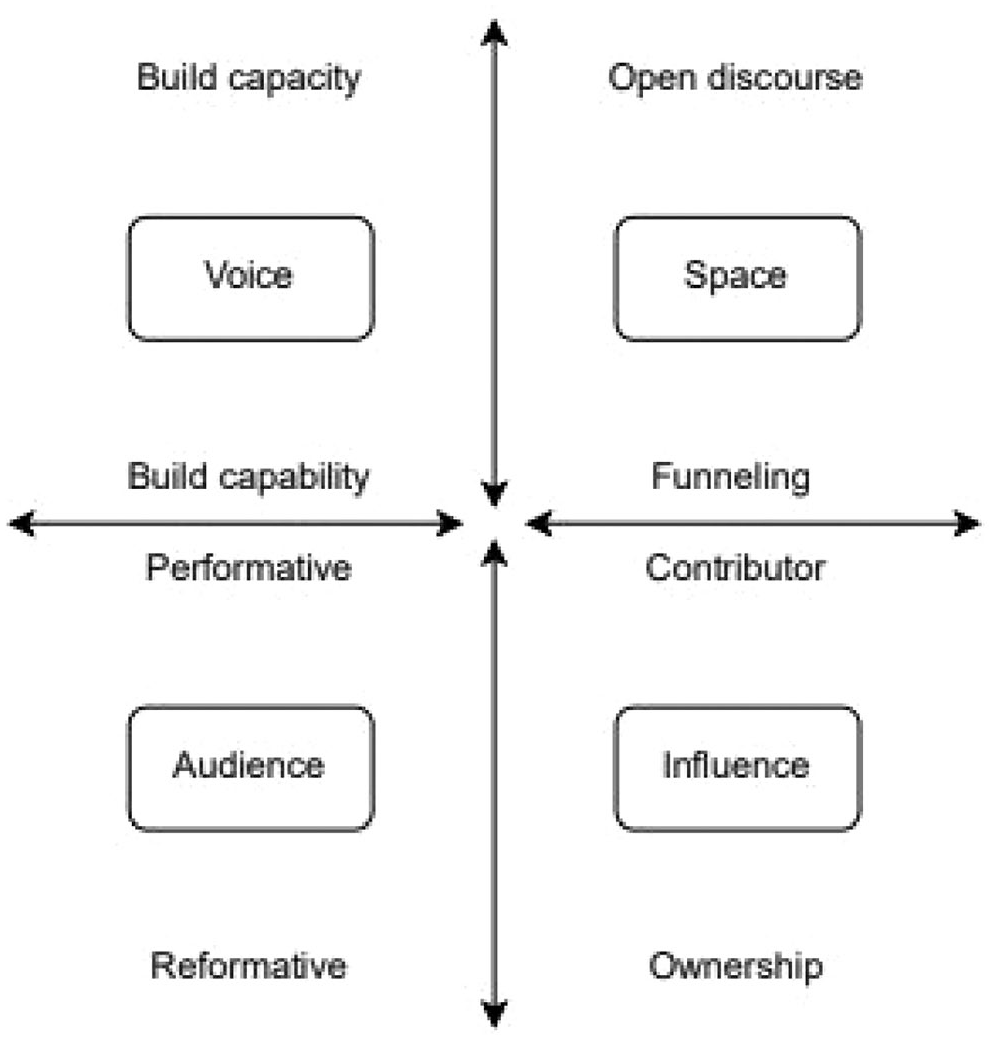
Model of competing tensions within Lundy’s (2007) dimensions of child participation.
We found that achieving this balance is inherently precarious, requiring collaborative efforts between organizational stakeholders and researchers to avoid inadvertently disempowering children and any young participants. Such complexities necessitate the facilitation of reflexive dialogues aligned with each of Lundy’s dimensions, particularly regarding the distribution of power among adult stakeholders. For example, within the ‘Space’ dimension, our observations of mechanisms like ‘funnelling’ reveal that even in child-centric environments, participants may encounter limitations on thematic exploration, which may result in voices being muted, ultimately hindering their understanding and expression within the research context. This tension raises important questions about the implications of ‘building capacity’ versus ‘building capability’: to what extent are we merely equipping children to consent to research, rather than empowering them to influence it? Addressing this requires us to facilitate open discourse as a key strategy, fostering deeper relationships between children and researchers. Such dialogues allow us to reflect on the structural supports necessary to meet the evolving needs and contexts of young participants.
Arnstein’s (1969) idea of power reallocation becomes particularly relevant in the context of exhibitions. Although participation may have evolved, the actual influence that participants have over the final outputs often remains limited. This raises concerns about the authenticity of participation itself. Are these exhibitions simply platforms for children’s expression, or do they genuinely empower them to influence and own their narratives? The ‘Audience’ dimension further highlights the need to move beyond performative engagement. Truly transformative participatory research requires children’s voices to be integrated into decision-making processes, thus affecting real systemic change (Christensen and James, 2008), highlighting the ethical considerations raised by Tisdall (2015), who advocates for ‘hearing’ or ‘inclusion’ over simply ‘participation’, urging a shift from individualistic legal frameworks to a more collective approach.
Our study maps these tensions – between protection and participation, between expression and influence – onto a model that integrates Lundy’s (2007) framework with Arnstein’s (1969) ladder, illuminating the complex interplay of power dynamics. The insights gained challenge us to reimagine participatory practices, creating environments where children are not only empowered and protected but actively recognised as co-creators in the research process, thereby ensuring that their participation is both authentic and transformative. This necessitates continuous evaluation and adaptation, ensuring that the methods truly facilitate children’s agency and influence, ultimately aligning research practices with the ideals of participation.
Conclusion
The challenges of balancing participatory principles with real-world constraints highlight the complexities of involving children in research during unprecedented times such as the Covid-19 pandemic. In designing our research, we aimed to adopt a fully participatory and co-productive approach, recognising the importance of including children as active agents. We intended to involve them not only in data collection but across all stages – from design and implementation to dissemination – drawing on Lundy’s (2007) and Arnstein’s (1969) models of participation, which emphasize the creation of spaces where children can express their views, ensuring their voices are heard and that they influence decisions. However, while we aimed to adhere to these principles, the onset of the Covid-19 pandemic-imposed constraints that limited the feasibility of full co-production, highlighting the tension between participatory research – which seeks to amplify children’s influential voices – and the protectionist responsibilities that ensure their safeguarding.
The pandemic created barriers to direct engagement with children and other participants, affecting the intended collaborative nature of the research. Organisations had to respond to the immediate demands of the crisis, and social distancing, school closures, and travel restrictions necessitated a shift to remote communication. Although functional, virtual methods could not replicate the depth of interaction and rapport-building that in-person engagement affords. As researchers, we found that limited opportunities for direct dialogue made it more difficult to build trust and ensure children’s sense of agency. This shift from in-person to online interactions affected the implementation of the ‘space’ and ‘audience’ dimensions of Lundy’s model, where children require both a platform to express their views and active listening from researchers and decision-makers.
Our contribution lies in providing a nuanced understanding of how participation can be effectively managed despite significant constraints, offering insights into the dynamics of child engagement during crises. We recommend that researchers and practitioners working with children engage in collaborative reflexivity, critically reflecting on their roles and the positions of stakeholders within power dynamics. By doing so, future research can both uphold children’s voices and empower them, even in the most challenging situations.
Footnotes
Consent to participate
Written consent was taken from the participant prior to research.
Data availability statement
Due to the nature of the research, due to [ethical/legal/commercial] supporting data is not available.
Ethical considerations
Ethical approval was taken prior to research from the University of Northampton’s Ethics Committee. Both of the research evaluations were approved by the University of Northampton Ethics Committee on 05/11/2020 (Organisation A) and 27/09/2021 (Organisation B). Reference number for Organisation A is: 30092021EP, reference number for Organisation B is: 25112021EJ.
Funding
The author(s) disclosed receipt of the following financial support for the research, authorship, and/or publication of this article: The evaluation of these projects was funded by Premier League Kicks and Jon Egging Trust.
