



Abstract
In the current age of border talk, border enforcement, and of draconian policies that further separate and break up families, children who remain in the country of origin are rarely asked what they understand the border and the United States to be like. Media vehicles and academic papers have reported the brutal effects of family separation at the border for children and families. In order to further understand how young children make sense of their feelings of loss and separation psychologists and members of the American Academy of Pediatrics have collected drawings done by children to understand how trauma has manifested in the minds of children during detention and separation. However, another facet of children’s perceptions of the United States, migration and family separation also exist a little farther away from the physical border that divides the U.S. and Mexico. This paper, then, addresses the questions: How do Mexican children in Mexico make sense of their family separation through their drawings? How are children’s drawings and narratives describing how they see and understand the United States? In this paper, we analyze 50 drawings from children in Puebla, Mexico who have one or more parents living in the United States. Data for this paper stems from a 3 year, multi-sited ethnography that spanned New York City and several states in Mexico.
Introduction
Most research on migration from Mexico to the United States, which has long represented the world’s largest migration corridor, has been about why people migrate, what their lives are like in the host country, and the policies and conditions in the U.S. and Mexico that shape these flows (Soboroff, 2020). Though Mexican men and women comprise the flow of migrants, there has been less focus specifically on how children who stay behind in Mexico come to understand the location of where their parents are headed toward. Studies on children in Mexico who have parents that migrated have found that parental migration has implications for children and the overall family structure (Oliveira, 2018, 2019; Boehm, 2011; Dreby, 2010; Gallo, 2014). Children of immigrants in the United States have also been given scholarly attention (Soto and Garza, 2011; Suárez-Orozco et al., 2006). However, children in Mexico who have one or more parents living in the United States are part of the ways in which families organize transnationally. Thus, in this paper, we focus on drawings from 50 children in the state of Puebla, Mexico. Children drew what they thought the United States looked like.
In the current age of border talk, border enforcement, and of draconian policies that further separate and break up families, children who remain in the country of origin are rarely asked what they understand the border and the United States to be like. Media vehicles and academic papers have reported the brutal effects of family separation at the border for children and families. In order to further understand how young children make sense of their feelings of loss and separation psychologists and members of the American Academy of Pediatrics have collected drawings done by children to understand how trauma has manifested in the minds of children during detention and separation. However, another facet of children’s perceptions of the United States, migration and family separation also exist a little farther away from the physical border that divides the U.S. and Mexico. This paper, then, addresses the questions: How do Mexican children make sense of their family separation through their drawings? How are children’s drawings and narratives describing how they see and understand the United States? In this paper, we analyze 50 drawings from children in Puebla, Mexico who have one or more parents living in the United States. Data for this paper stems from a 3 year, multi-sited ethnography that spanned New York City and several states in Mexico.
In this paper, we show how children used symbols of border, surveillance, urban development, and family to describe the United States. And while scholars have shown the ways in which conceptualizations of the United States are conflated with the border, in this paper we take on children’s sophisticated thinking of the United States as this contrasting, juxtaposed reality of threats and opportunities. We situate this research in scholarly work as it relates to the anthropology of transnationalism, anthropology of childhood, and the political economy of families who are spread across borders. The understanding children have of the meanings, emotional, metaphorical, geographical, of the borders is powerful as they dislodge cityscapes and attach them to “entry” points into the United States. Data for this paper was collected between 2010 and 2015, thus prior to many policies that came to fruition in the Trump administration.
For the data analysis portion we built on research done by sociologist Joanna Dreby who had analyzed children of immigrants and immigrant children’s drawings as a window into their social world. We carefully coded the frequency of symbols that appeared in the drawings and narrowed and analyzed the narratives and interviews in conjunction with the pictorial representations. When looking at migration across the US-Mexico border and how children perceive this, it is important to look at how children view their family structure. Dreby and Adkins (2011) took a child-centered approach to their study and looked at how the migration of different family members affected children’s ideas of their families. To do this, Dreby and Adkins (2011) analyzed 421 drawings from Mexican children between the ages of 5 and 15. In these drawings, children were asked to portray their families. In terms of the methodology of the study, Dreby and Adkins (2011) explain that, “drawings can be a useful tool for research with children, especially those of young ages or those who, due to age or educational background, may have difficulty verbalizing their ideas about families, especially to foreigners” (p. 173). Drawings were used in this study as they allow deeper insight to how children perceive the world, and can offer more data than a conversation with a child. Drawings also “provide a culturally sensitive measure of symbolic concepts” (Dreby and Adkins, 2011: 173). When looking at how children perceive the effects of migration, drawings are a useful tool for research studies. Thus our work is oriented by these tenets of understanding how and when symbols appear in the drawings done by children who have one or more parents living in the United States.
Incorporating visual methodologies in research with children
Various studies use children’s pictorial representations in the form of drawings to investigate different topics of childhood experience. Akesson (2015) studied Palestinian children and families under Israeli occupation and used drawings to make space for children to play and tell stories. Through these drawings, combined with interviews, researchers investigated the formation of identities around the idea of place and found that the longstanding Israeli occupation contributed to emotions of both frustration and hope for Palestinian children and families (Akesson, 2015). Earlier studies in the field of developmental psychology have discussed the method and findings of using drawings as a way to further understand children’s perceptions of the world. Cox (1992, 1993) examined children’s drawings to assess personality and diagnose problems. Cox also discussed how children oftentimes draw what they know is there, rather than what they actually see. Coles (1986a, 1986b) drawing upon his experience studying social conflict in the US South, migrant children, and working abroad sought to explore children’s moral understandings and children’s political views. He argued that these views stemmed from the environment they were part of, including their families, neighborhoods, and the regions of the country.
In another study, Barnikis (2015) used both drawings and conversation with children in Canada to investigate how children perceive their educational setting. In their three separate case studies, Johnson et al. (2012) used varying visual methods, including drawings, to supplement their other data and to demonstrate the versatility of visual methods for obtaining reliable data. They support the method of drawing because drawing is “‘child-centered’ because of the fact that it can be enjoyable, familiar to children, implemented without the constant presence of the adult researcher, and appropriate for children in different stages of cognitive development” (p. 166). The case study that used drawings was performed in four pediatric oncology wings in Buenos Aires where the researchers conducted 35 semi-structured interviews with children from ages 5 to 17. The participants were asked to create and interpret their drawings as responses to each of the following four prompts: “create a freestyle drawing,” “draw diagnosis and treatment scenes,” “draw his or her most difficult and happy moments,” and “draw the different stages of their life” (Johnson et al., 2012: 167–168). Because the drawings were collected after the interview, many new experiences were revealed that were not in the interviews (Johnson et al., 2012: 168). The results indicated that “drawings, photographs, and performance all encourage young research participants to select, contextualize, and codify themes and issues that are most important to them” (Johnson et al., 2012: 175).
Because the age range of the participants varied, one limitation of the data is that many of the older participants thought the drawing components were childish, and thus opted to write their accounts as opposed to drawing them (Johnson et al., 2012: 168). This limitation suggests that visual methods may only be optimal within a limited age window. However, one of the many benefits of using visual methods for data is that it is more inclusive to younger or with less writing experience children, which allows them to be a valuable portion of the sample. (Johnson et al., 2012: 164). Much like the researchers from these case studies, many other researchers indicate that drawing acts as tools for children to be active agents of their experience and therefore valuable participants in research (Dreby and Adkins, 2011; Sertzen and Torres, 2016; Soto and Garza, 2011). Earlier studies in the field of psychology have also employed forms of assessments that involved drawings. Bardos and Powell (2001) discussed an assessment that was developed as a screening tool for children and adolescents to determine the presence of emotional or behavioral disorders.
Additionally, in her study with bilingual Mexican-American students, Alvarez (2018) indicated that the multimodality used in her study though children’s drawings encouraged the participants to “express the meaning they constructed from their experience and socialization practices with family and peers” (p. 123). Therefore, having children express themselves through drawings is both beneficial to the researcher, by giving them a deeper understanding of a child’s experience, and to the child who is able to make sense of their own experiences through their artistic expression.
Perceptions of the migration process for children in Mexico
Oftentimes, children in Mexico may see conflicting sides to the migration process: they may see it as dangerous, but also as a process that allows family members to have an increased chance at greater opportunities (Iglesias-Prieto, 2012; Sertzen and Torres, 2016). In her study, Iglesias-Prieto (2012) analyzed two films created by children 11–13 years old to better understand their perceptions of the border: the film Wacha el border, created by children in Tijuana, and the film Beyond the Border, created by children in San Diego. Each film showed how children perceived the other side of the border, and the children involved in creating the films had a variety of experiences with the border: some had never crossed it, some had a family member living on the other side, and some had crossed the border themselves. In the Wacha el border film, the children in Tijuana portrayed the police as scary, criminalizing innocent people who pursue a better life, and contributing to the idea of social oppression in the United States (Iglesias-Prieto, 2012). However, these children note that migration to the United States is a method of trying to improve one’s quality of life and recognize the opportunities that may exist in the United States (Iglesias-Prieto, 2012). The inclusion of the San Diego Zoo in their film depicts the higher standard of living that they associate with the United States. While they perceive the United States to be a place filled with buildings, stores, restaurants, parks, and homes, these children in Tijuana also recognize the dangers associated with the police in the United States (Iglesias-Prieto, 2012).
Sertzen and Torres (2016) also speak to children’s conflicting perceptions of danger and opportunity regarding the US-Mexico border. This study involved children in Veracruz, Mexico, between the ages of 8 and 9 who had a family member living in the United States. Through both writing and drawing techniques, researchers gathered data on how children perceived the migration process, as well as how they perceived life in the United States (Sertzen and Torres, 2016). Many children in the study recognized the actual migration journey as dangerous, both due to environmental conditions and the US border patrol. Children understood that those who migrate must escape the police, and endure crossing through rivers and deserts with dangerous wildlife (Sertzen and Torres, 2016). When depicting the United States, many children included urban scenes with roads, vehicles, buildings, factories, and homes. These children also perceived that having a family member in the United States meant they had better housing, toys, and clothes, and they believed these material goods were cheaper in the United States than in Mexico. They also believed that there was an abundance of jobs in the United States (Sertzen and Torres, 2016). In this study, children perceived the migration journey itself as dangerous, while the destination of the United States was seen as one filled with opportunity, material goods, and bustling city life (Sertzen and Torres, 2016).
The United States as the border
Anzaldúa’s (1987) seminal work has shown us that there are different conceptualizations of the border that divides Mexico and the U.S. Borders, from geographical ones as those that have divided and defined the US and Mexico, to cultural borders segregate communities and individuals because of ethnicity, language, religion, gender, and sexuality. Borders exist whenever two or more different cultures come together and share the same space, and can be viewed as a “third country—a border culture” (Anzaldúa, 1987: 3). While borders “distinguish us from them” (Anzaldúa, 1987: 3), they also represent vague spaces and are constantly being transformed. People who find themselves in between two cultures may find themselves at the “crossroads,” (Anzaldúa, 1987: 21) and identify with a mix of both cultures, reject some aspects of each culture, or feel completely separated from both cultures. Additionally, language differences can be another representation of a border. Anzaldúa (1987) explains that Chicano Spanish is a border language, made by people who are caught between two cultures, who do not identify with Castilian Spanish nor with English. Those who speak Chicano Spanish “straddle the borderlands” (Anzaldúa, 1987: 62) of Mexico and the US, as they are representative of multiple cultures. While this border is not physical, it is one of the many metaphorical borders that exist between Mexico and the US.
Alvarez (1995) has argued that the conceptual parameters of borderlands, borders, and their crossings, stemming from work done on the Mexican-US border, in particular, illustrate the contradiction, paradox, difference, and conflict of power and domination in contemporary global capitalism and the nation-state, especially as manifested in local-level practices. Like Anzaldúa (1987), Alvarez (1995) speaks to the fact that the US-Mexico border is both a literal, physical space, as well as a metaphorical space. The people living on the border constantly shift and change their identities, and often have multiple identities—the border contributes to the cultural identity of an individual. In the past, anthropologists viewed the border as a definite structural divide, but it has more recently been seen as a place with shifting boundaries, where cultures extend into one another. It is difficult, however, to define border culture due to the challenge of encompassing all characteristics of border culture and not obscuring any one particular component (Alvarez, 1995). When looking at the US-Mexico border specifically, it is one that highlights the “inequality of power, economics, and the human condition” (Alvarez, 1995: 451) between the United States and Mexico, due to their differing economies. Alvarez (1995) remarks that migrants crossing the border become part of global capitalism, as they work in the US but are “controlled as commodities without a legitimate bilateral accommodation in the market” (p. 458). Additionally, when describing the border, Alvarez (1995) refers to other scholars (Whiteford, 1979; Wilson, 1995, as cited in Alvarez, 1995) who have a new perspective of the border as a transnational space, with immigrants having extended social ties across the border. Overall, Alvarez (1995) calls for a new perspective of the border, paying attention to the ever-evolving identities and behaviors that exist in the borderlands.
Jusionyte (2018), Negrón-Gonzalez (2015), De Genova (2013), and Anderson et al., (2009) have also theorized on the border as a spectacle that includes surveillance and hegemonic displays of power. De Genova (2013) coins the term “border spectacle” to explain the intricacies of this conflict of power. He defines “border spectacle” as the highly visible border enforcement which inherently exposes immigrant illegality as a threat to the nation and excludes the immigrant population from society. Building on DeGenova’s language of “border-spectacle,” Negrón-Gonzalez proposes a new term, “counter-spectacle,” which combats the hegemonic power instilled by the “border-spectacle.” Negrón-Gonzalez’s “Counter-spectacle” is a rupture of the common narrative that equates criminality and illegality. The example of “counter spectacle” used by Negrón-Gonzalez is of undocumented youth activism, which directly counters the narrative of undocumented people in the US. The performative nature of border enforcement indicates that it is intentionally visible because border enforcement acts as its own method of protection by feeding on the fear of the immigrant population (Negrón- Gonzalez, 2015).
Jusionyte (2018) contextualizes these frameworks through her own experience with first responders who work along the border. In her experience, she discovered that borders are more than political arguments but rather are places where ethics are tested because the US prioritizes protection over the well-being of human beings. Anderson et al. (2009) add to this discussion by explaining that borders both generate and reinforce inequality. Borders are ideological and create unequal power imbalances, labeling people as either “citizens” or “illegals.” Due to injustices at the border, there is a call to make immigration controls more humanitarian. One approach to this that Anderson et al. (2009) discuss is the politics of the No Borders approach, which “rejects notions of citizenship and statehood, and clarifies the centrality of borders to capitalism” (p. 5). The No Borders approach believes that border-control practices reflect unequal rights and also produce this inequality. This approach believes that every person should have the right and freedom to move or to choose to stay (Anderson et al., 2009). The No Borders approach believes that borders are unstable control devices, and their authority needs to be challenged. Anderson et al. (2009) explain that this approach “redefines equality by positing it as a relationship among co-members of a global society and not one among national citizens” (p. 12).
While our prior analysis of transnational childhoods has centered on the “here” and “there” through the lens of inequality and belonging (Oliveira, 2018, 2019) in this data set the more salient conclusions were the narratives that directly identify the United States as the border. These alternative definitions of the border give us a new framework in which we can contextualize our data.
Methods
Data for this paper stems from a multi-sited ethnographic study that sought to “follow the people” and their stories (Marcus, 1995: 106). Thus, this article presents findings on one specific source of data within this ethnography: drawings from 50 children, aged 8–11, in the state of Puebla who had one or more parents living in the United States. Author 1 traveled frequently between different states in Mexico and New York over a 32-month period in order to capture the dynamism of transnational caregiving and communities that are both “here and there.” Author 1 did research in the Mexican states of Puebla, Hidalgo, VeraCruz, Mexico State, Morelos, and Tlaxcala, but spent most of the time in Puebla. The United States research focused on the New York City neighborhoods of East Harlem (Manhattan), Sunset Park (Brooklyn), Jackson Heights (Queens), and the South Bronx.
Author 1 conducted interviews and observations with several mothers and their children in the U.S. for over 5 months and then went to Mexico to meet their children and the caregivers. For 3 years in a row, Author 1 was in Mexico for four straight months—May-September and then took three 2-week trips in the months of December and January. Through different art workshops run through Universidad Iberoamericana in Puebla, Author 1 met children in two Puebla towns who had one or both parents living in the U.S. During those times one of ways in which data was collected was through children’s narratives and pictorial representations. Author 1 worked in partnership with members of the Universidad Iberoamericana in Puebla who were already conducting art workshops with children in schools. Crayons, markers, pens, pencils, glitter, paint, brushes, and white paper were available for children. Children spent an hour working on their drawings, talking about them, and putting the finishing touches. Author 1 and teachers were together in the room with the children. Through workshops with teachers and schools in the state of Puebla Author 1 collected over 120 drawings from children aged 8–11. Sixty children had one or more parents living in the United States and the remainder had at least a close family member living in the U.S. In this paper, we hone in the 50 drawings and narratives from children with one or more parents living in the United States. Children in Puebla were asked to draw with minimal instruction what they thought the United States looked like, “como crees/ como imaginas los Estados Unidos?” This data collection took place in two neighboring towns in the Mixteca Poblana in the state of Puebla, Mexico. The towns have between 4-8 thousand people. Many migrants from these towns go to New York City. This subset of drawings was chosen since all of the children had at least one parent living in the United States.
Setting and background
The state of Puebla is one of the most industrialized states in the country of Mexico. The region where children were based was the Mixteca Poblana. At the schools where the study took place all children spoke in Spanish and no child participant indicated indigenous background or the presence of another language spoken at home. The houses in this town had televisions, radio and other forms of print media available for children. Caregivers’ occupation varied from farm work (peanuts and corn), to owning small general stores, selling tortillas, animals they raised and other food. Puebla as a state has had a long term migration pattern with New York City (Gálvez, 2009; Smith, 2006). Thus, the presence of narratives of urban areas in the United States was not detached from what children drew and talked about. According to INEGI (2015) there were approximately 8000 people in the town where drawings were collected. In 2015, 13.9% of the population in this town had no access to sewage systems, 3.25% did not have a water supply network, 12.7% did not have a bathroom, and 0.48% did not have electricity (Data Mexico, 2020).
Data analysis
To analyze the data from the drawings, first Author 1 read-through transcripts, observation notes and sorted the drawings developing the first pass on codes. Then, a research assistant coded the second pass on the drawings data. The data was coded by examining all the drawings to find commonalities between them and determine the important themes observed across the different drawings. Through this first and second open coding approach, 17 different codes were found. The 17 codes included: written words, people, emotive states, commerce, threats, national identifiers, personal possessions, recreation, basic needs, people’s actions, the location of people, landscape/nature, weather, infrastructure/construction, transportation, safety/rule of law, and religion. Some of these codes appeared in as few as five drawings (safety/rule of law, and religion), whereas others appeared in as many as 48 drawings (infrastructure). Of these 17 codes, the research assistant grouped the most salient ones into four themes. The four themes were: thinking of the U.S. as a developed nation with an emphasis on consumerism/capitalism (including the codes of commerce, infrastructure, transportation, and threats), thinking of the U.S. as a place of opportunity, personal growth, and enrichment (including the codes of basic needs, recreation, and religion), thinking of the border/migration journey as generally benign (including the code of infrastructure when objects appeared to be representing a wall) and thinking of the U.S. in terms of specific places (including the code of national identifiers).
Once this initial coding was complete, Authors 2 and 3 completed a third round of coding to review the established codes. To do this, the two research assistants examined each of the 50 drawings and compared them with the already established codes. When looking at the four themes already established, the two research assistants altered them slightly to be more inclusive of the 17 codes. Once this third round of coding was completed, five major themes emerged: seeing the U.S. as a developed/urban setting (including the codes of commerce, infrastructure, and transportation), seeing the U.S. as a place of opportunity/growth/enrichment (including the codes of basic needs, recreation, and religion), associating the U.S. with specific locations (including the code of national identifiers), the juxtaposition of safety/organization with threats (including the codes of safety/rule of law, and threats), and the connection between the U.S. and Mexico (both positive and negative perceptions of this, using the code of infrastructure when objects appeared to be representing a wall).
The significant changes made to the original themes were in relation to the codes of threats and safety/rule of law and in relation to the connection between the U.S. and Mexico. The code of threats was originally in the theme of viewing the U.S. as an extremely developed nation, and the code of safety/rule of law was not included in the original 4 themes. The second two researchers who analyzed the data grouped these two codes into the theme of the juxtaposition of safety/organization with threats. The second major change made to the original codes/themes was changing the theme of thinking of the border/migration journey as generally benign to the theme of the connection between the U.S. and Mexico. The second researchers felt that this new theme more appropriately represented the mix of both the positive and negative views of the border seen throughout the drawings. Overall, these 5 final themes sought to include the most important aspects of the 50 drawings. In the next sections, we analyze the different themes that emerged from the drawings and we use field notes and interview transcript in order to contextualize the drawings.
Findings
U.S. as a developed, urban setting
One of the main themes present in the children’s drawings is the idea of seeing the U.S. as a developed, urban nation. This is noted in the presence of items drawn within the following categories: infrastructure, transportation, and commerce. When looking at infrastructure, children included items such as buildings, homes, and roads. While 21 of the 50 drawings depicted a city scene, 48 of the 50 drawings included some type of infrastructure. For example, Nancy Rodriguez Rodriguez did not depict a city, but rather a suburban scene. While including grass, flowers, and trees, she also drew both a house and a hotel. Even within a more suburban atmosphere, the theme of development is seen through the inclusion of infrastructure, with an emphasis on the hotel in a suburban location. However, when talking about her drawing, Nancy, 9, offered insight into how she saw the U.S. as more than the buildings drawn on paper. In class, she asked her teacher a fundamental question: “Who owns the United States, teacher?.” Her teacher replied to her “well the people there”. “But where does the United States finish?” Nancy was concerned about understanding when the United States starts and when it ends and who owns it. “Is the United States pushing on Mexico?” (Los Estados Unidos está empujando a México) she gestured with her two hands onto her desk in the classroom. Nancy explained to me The United States, where her mother lives, is “right on top” of Mexico as she continued gesturing now with her hands made into fists and touching one another.
Nancy, like most of her peers, had one or more parents in the United States and received some form of remittances. However, she herself had never physically been to the United States or to the border. Thus, in part because of the history between Mexico and the United States and the fact that her mother lives in the US supported Nancy’s thinking of the United States as deeply connected with the territorial image of the border. Nancy continued “I am drawing the sides. . .because the United States are dividing”.
Lucia and Anahi, along with seventeen other peers, drew a prominent hotel in their drawings. Like Nancy, Lucia, and Anahi described the temporality of the border as a path to the United States. You have to stay in the hotel first to then get to your destination. And where is the hotel? I asked. Lucia answered, “it’s right when you go in. right there when one goes in.” She looked at me and finished her thought, “the same way you came here”. Lucia explained the porous notion of the border and the fact that it is perhaps in the border making that societies are built and developed. In the cases of Lucia, Anahi, and Nancy, the US is seen as a developed nation with hotels and houses, but this infrastructure is heavily related to the idea of migration, the border, and crossing.
Nancy, Lucia, and Anahi, however, were not the only children to see the US as a developed nation. In addition to the prevalence of infrastructure, 28 of the 50 drawings included some form of transportation, seen through cars, trucks, boats, airplanes, and helicopters. Marquina Ramirez Cortes’s drawing of New York City included boats in the water as well as cars driving through the city streets. Maribel Ramos Lopes also showed a city scene including both an airplane and cars. Both drawings emphasized transportation in the U.S. and did so through depicting city life. Children included the idea of commerce in their drawings through restaurants, hotels, stores, factories, bars, and offices, and was noted in eighteen drawings. While most of these depictions were more frequently seen in the city scenes, various hotels were drawn in what otherwise appeared to be a suburban setting, such as the hotel seen in Nancy Rodriguez Rodriguez’s drawing. Many of the city scenes also included a building clearly labeled as “restaurante,” such as in Tomasa Alejandra Torres Molina’s depiction of a city street with cars, buildings, and a “restaurante.” Tomasa explained that she knew “people would need to eat on the way” thus her representation of the restaurant.
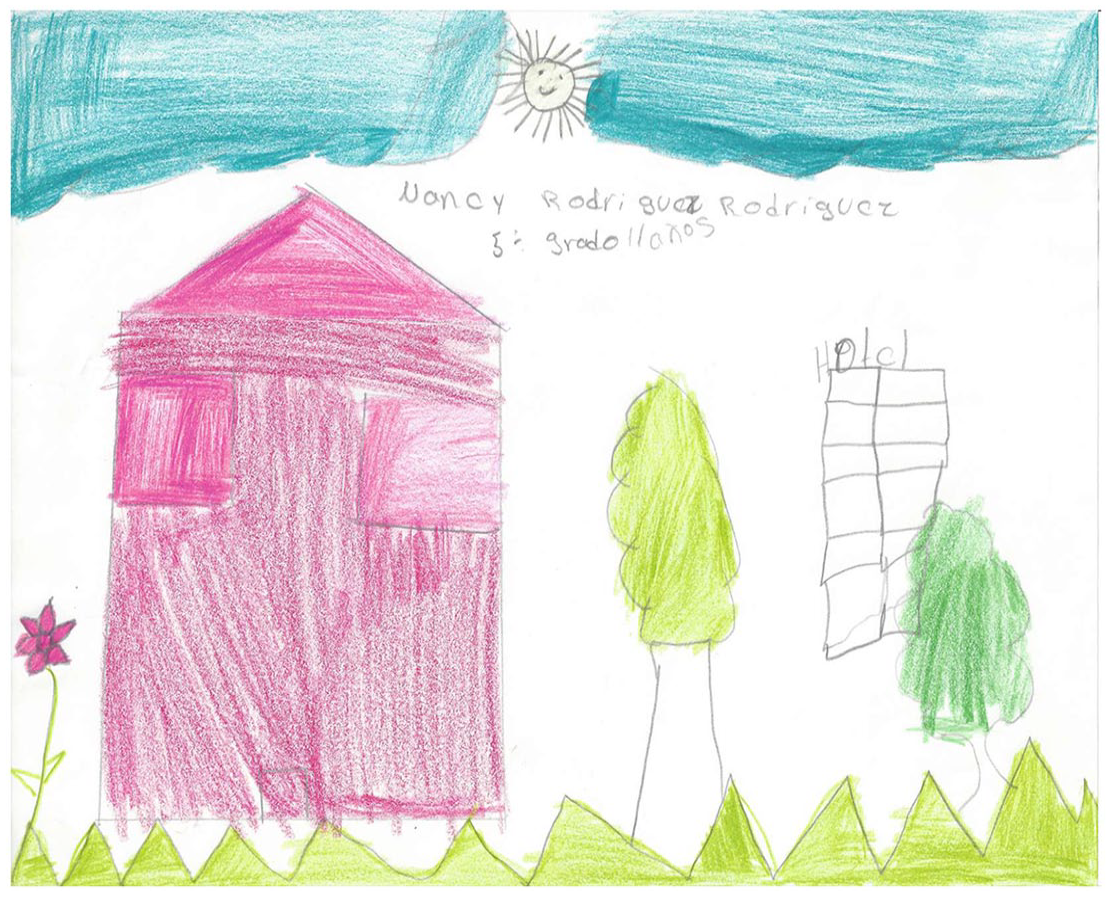
Nancy’s Landscape.
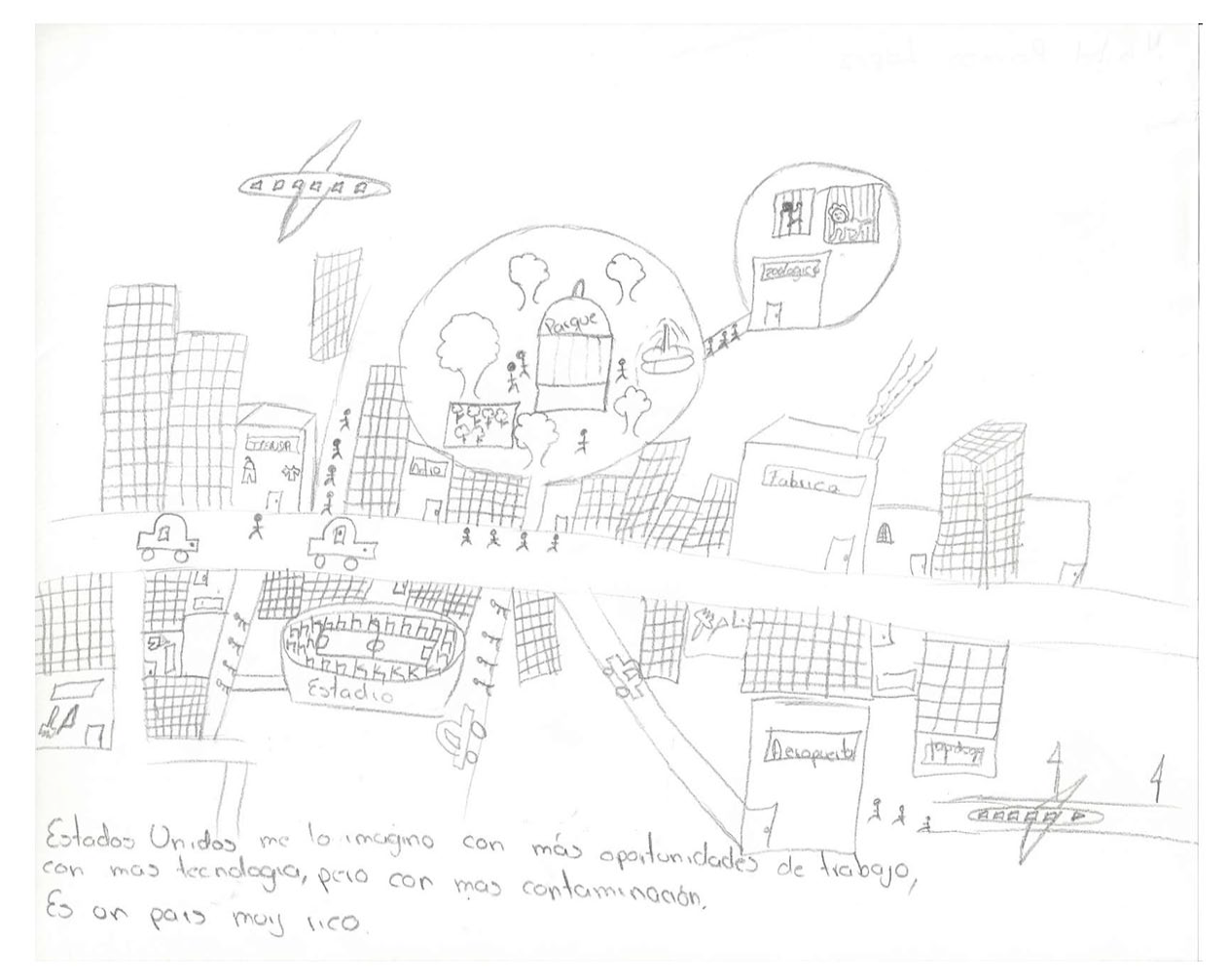
Maribel’s City.
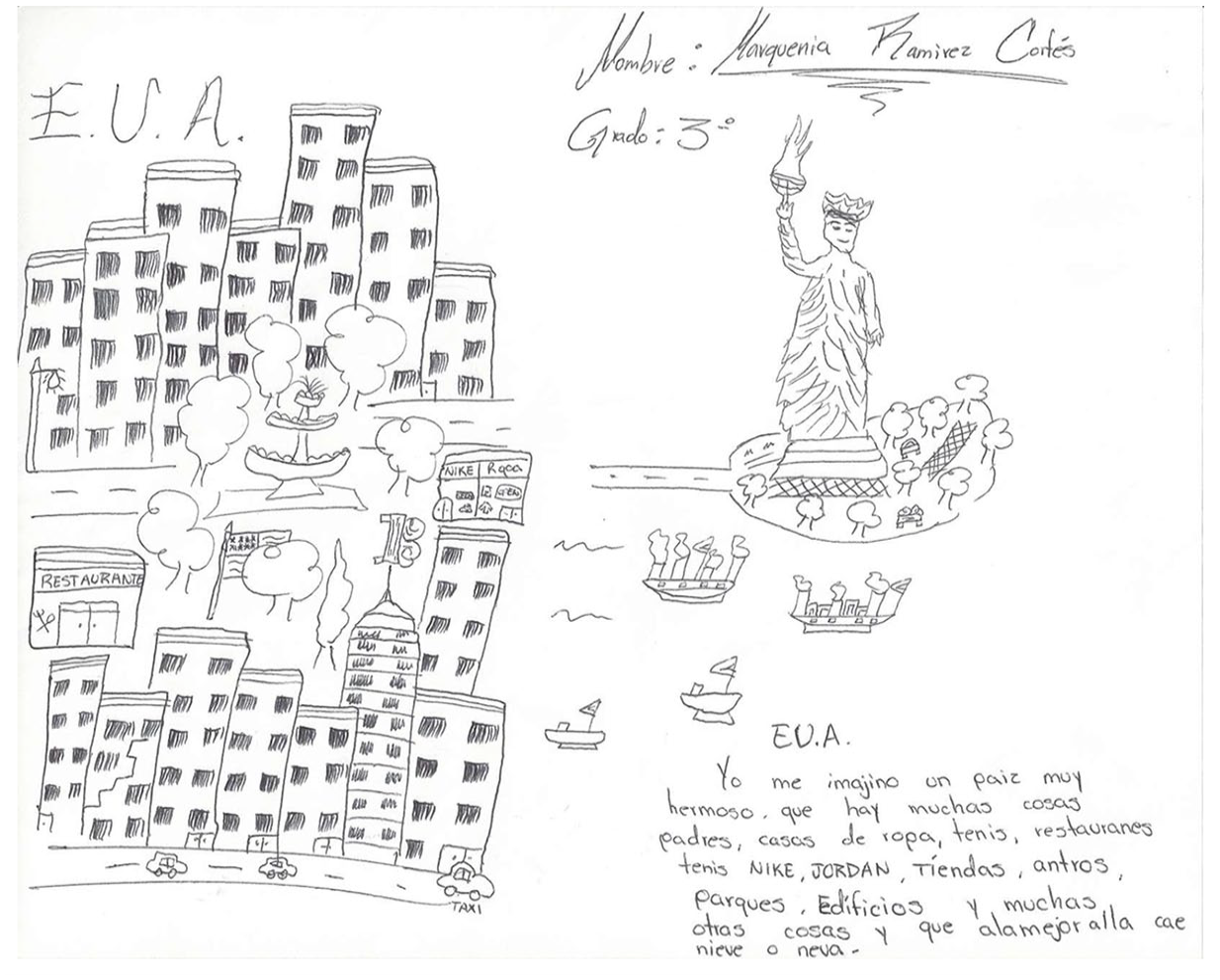
Marquenia’s U.S.
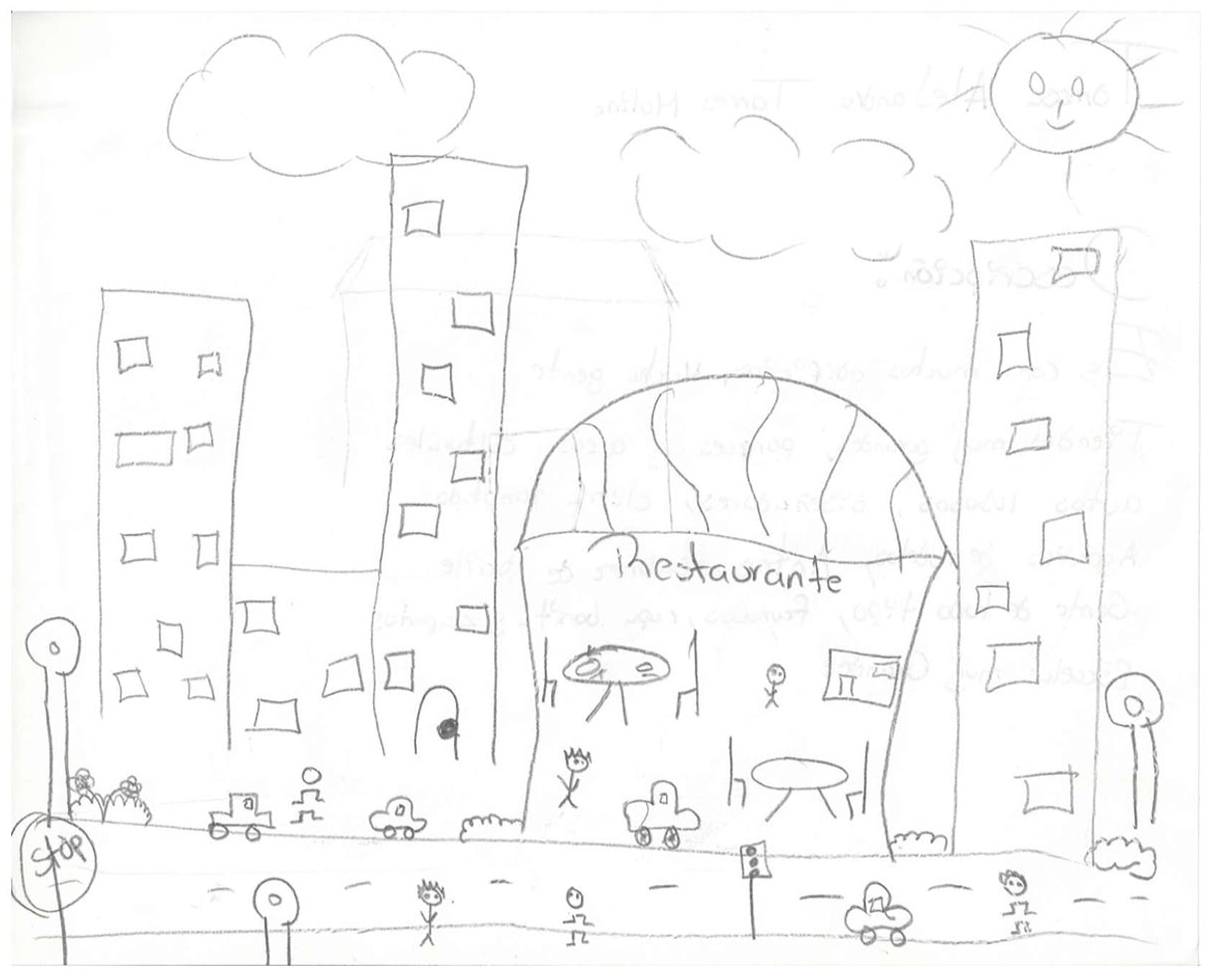
Tomasa’s City.
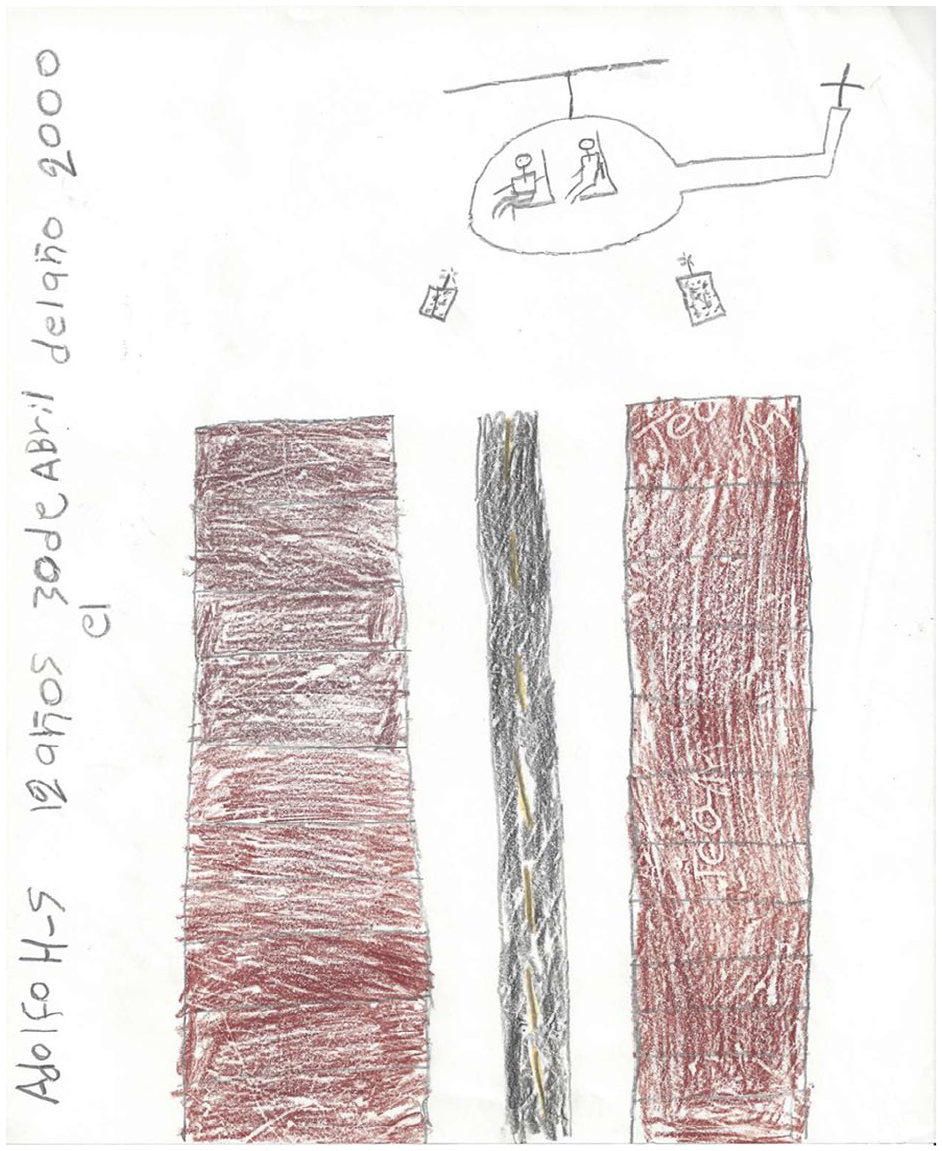
Adolfo’s Twin Towers.
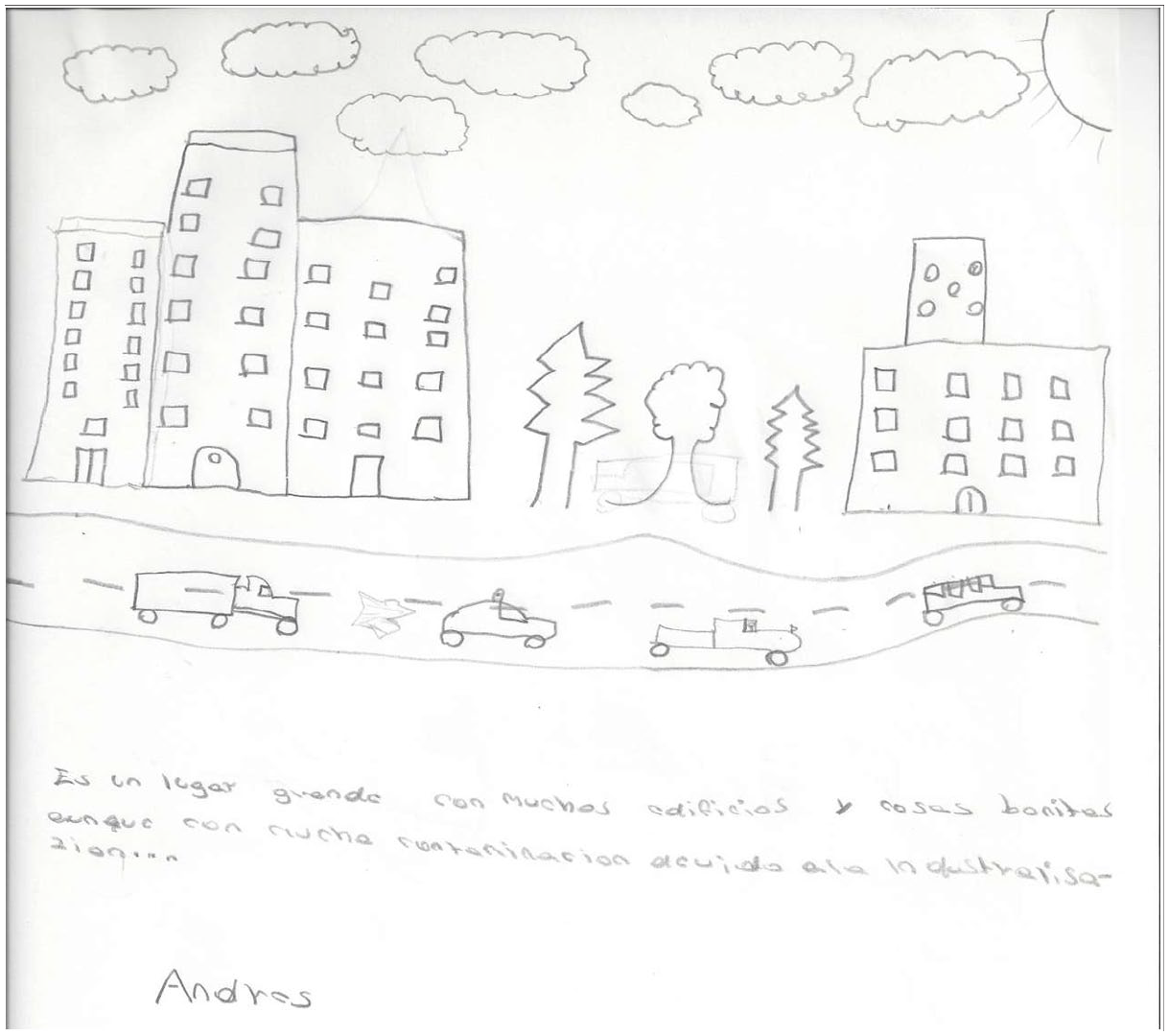
Andres’ City.
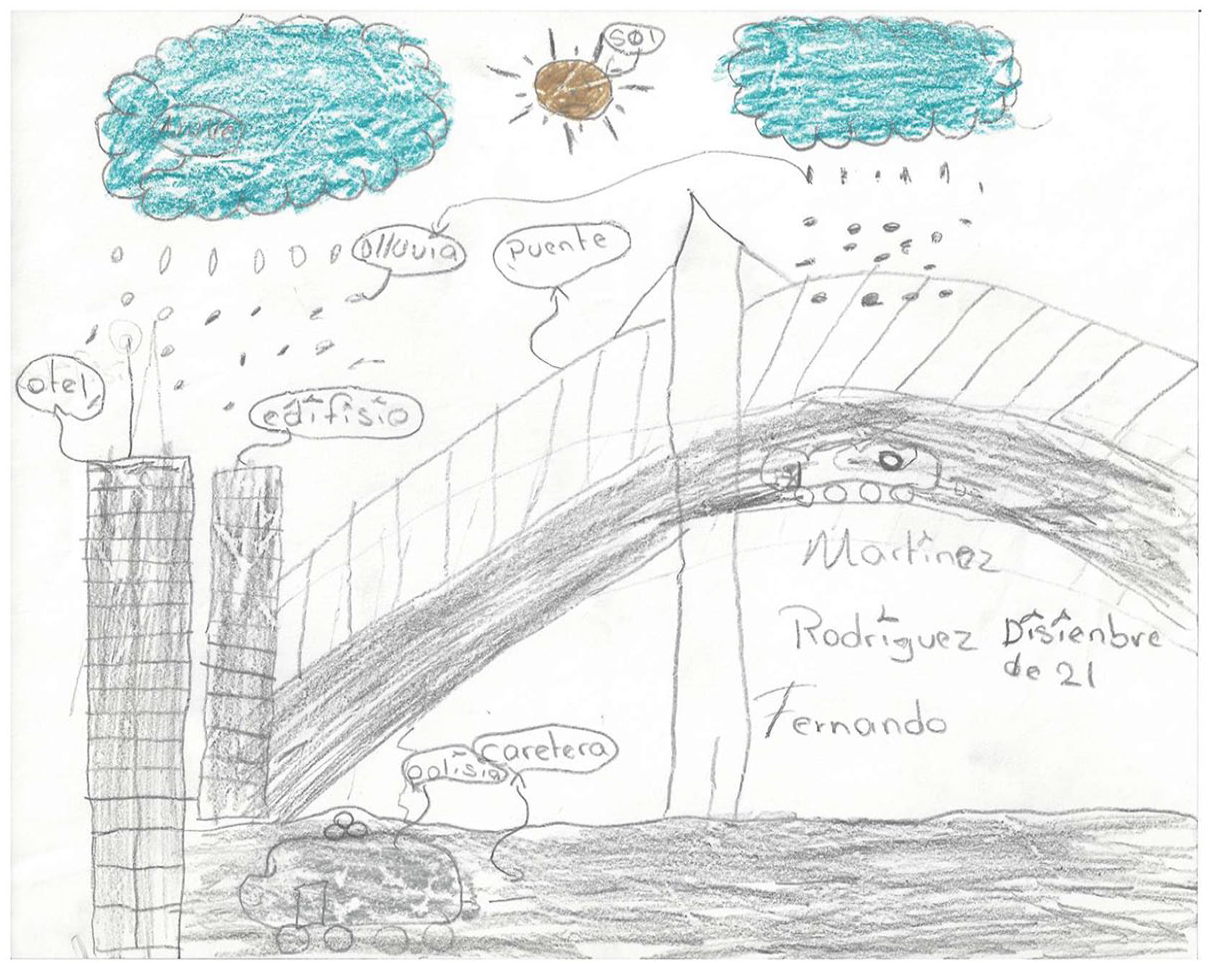
Fernando’s Bridge.
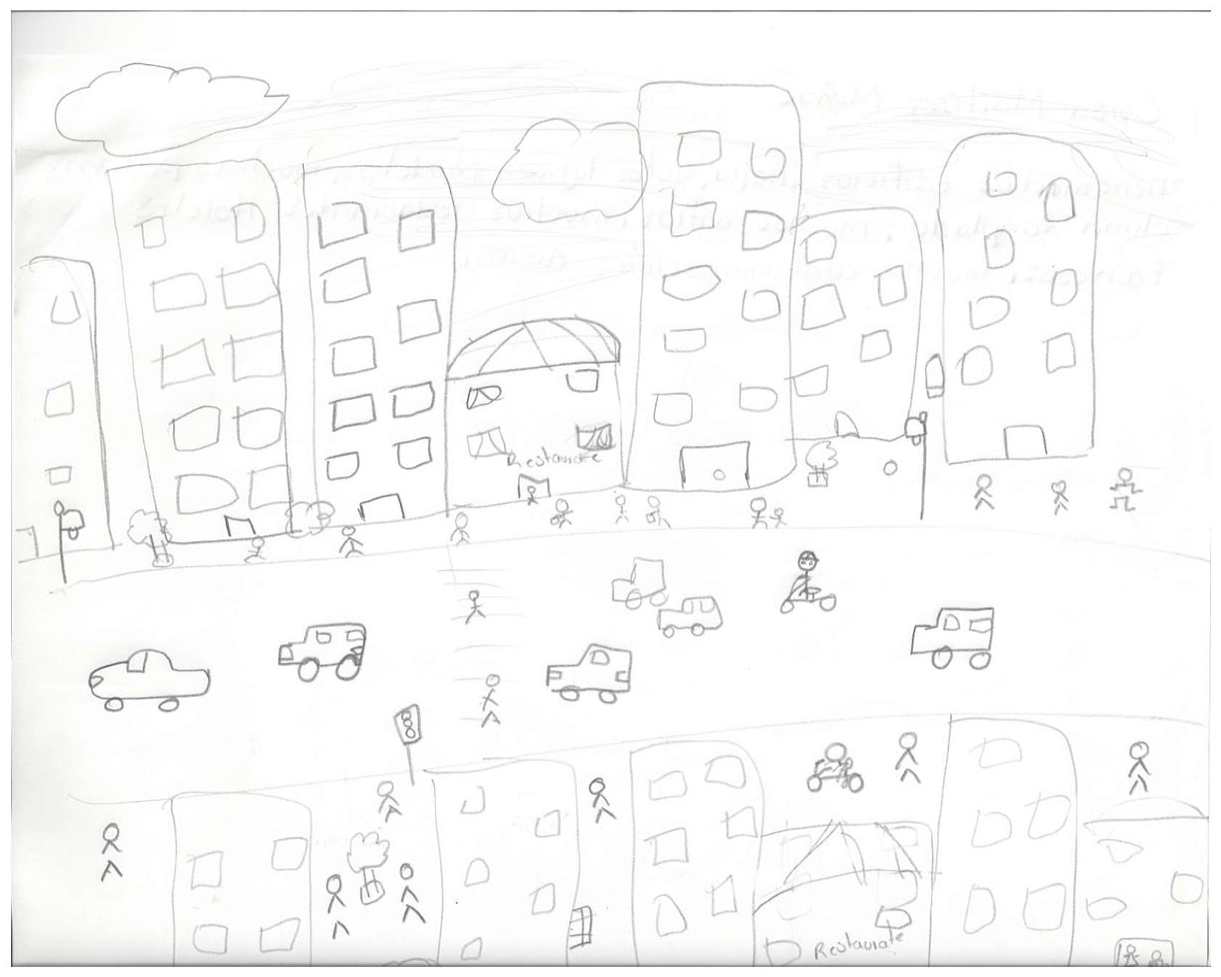
Luiza’s City.
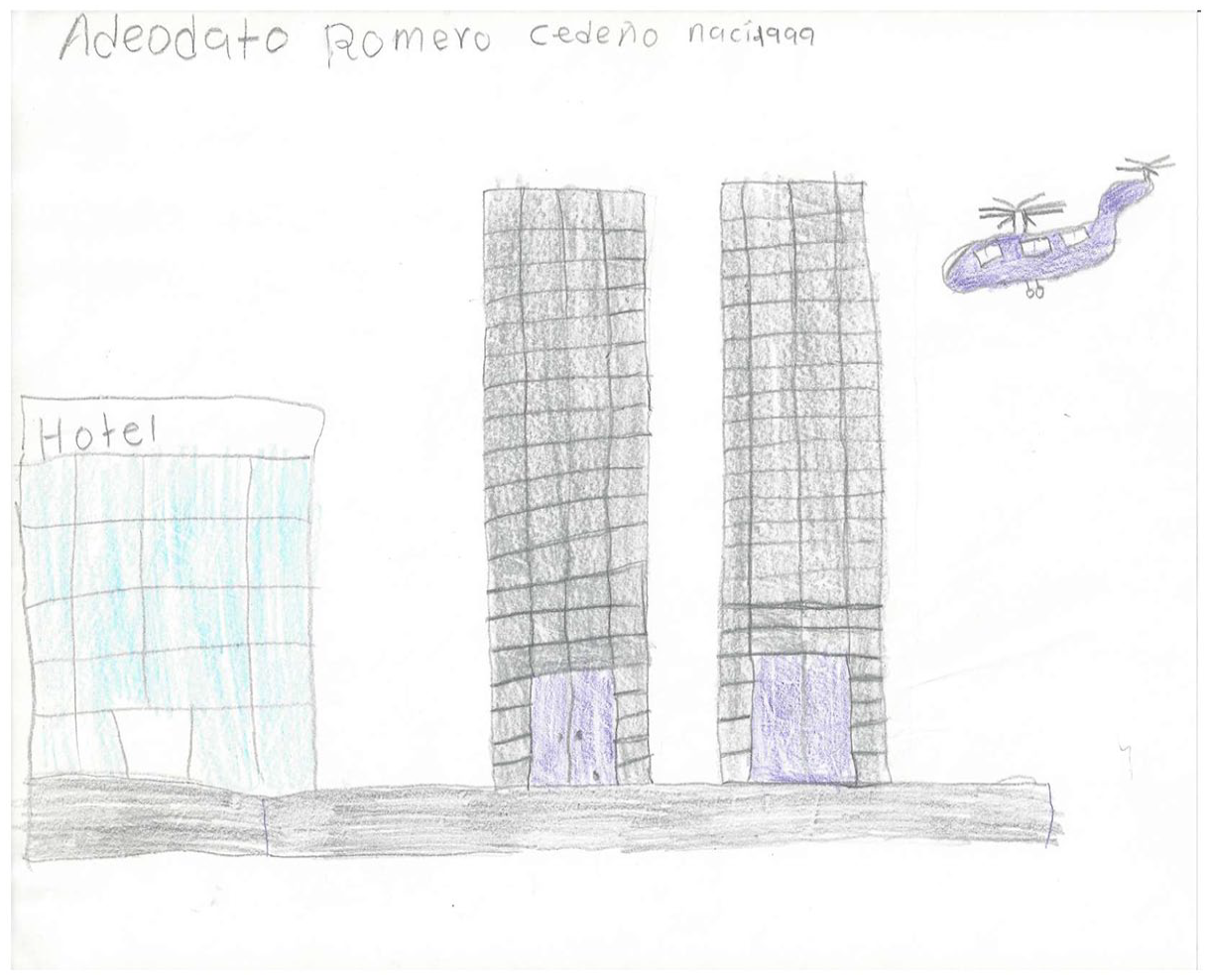
Adeodato’s Twin Towers.
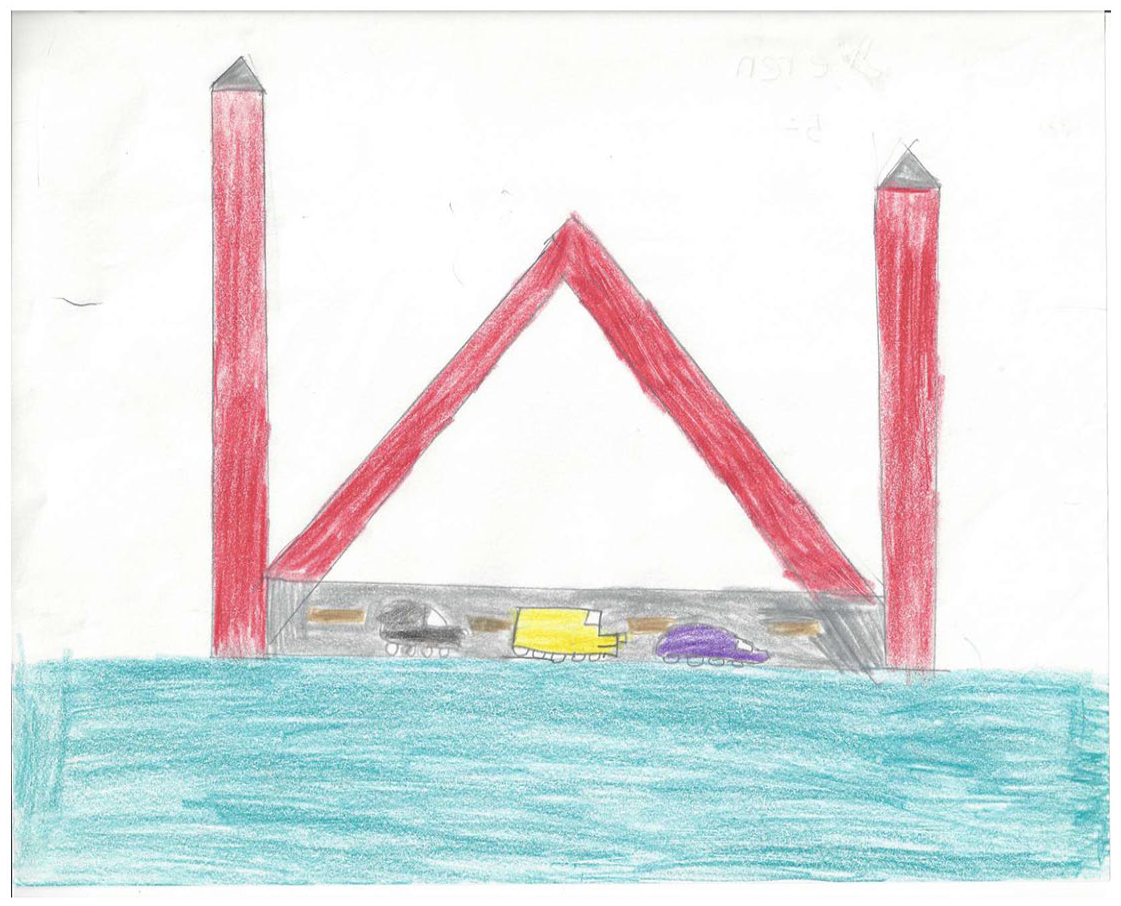
Veren’s Bridge.
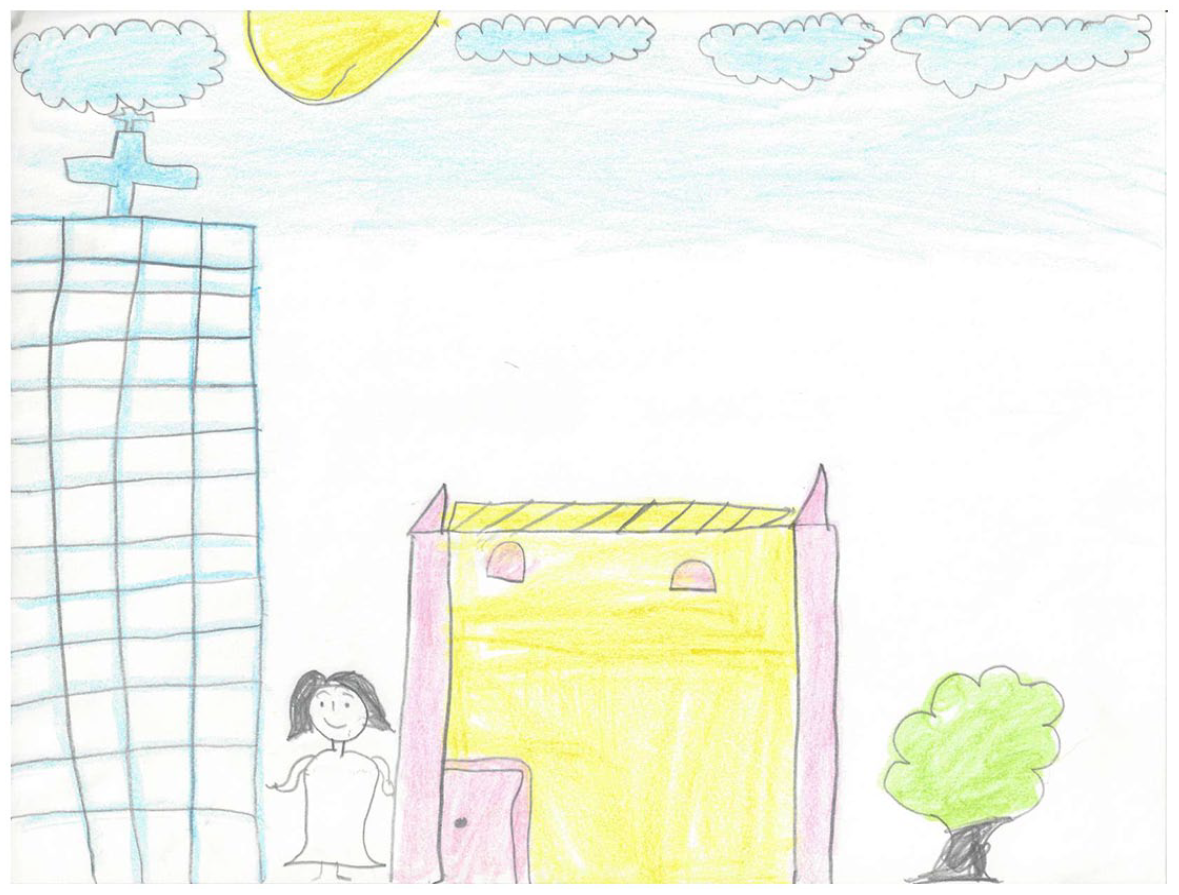
Montserrat’s Home.
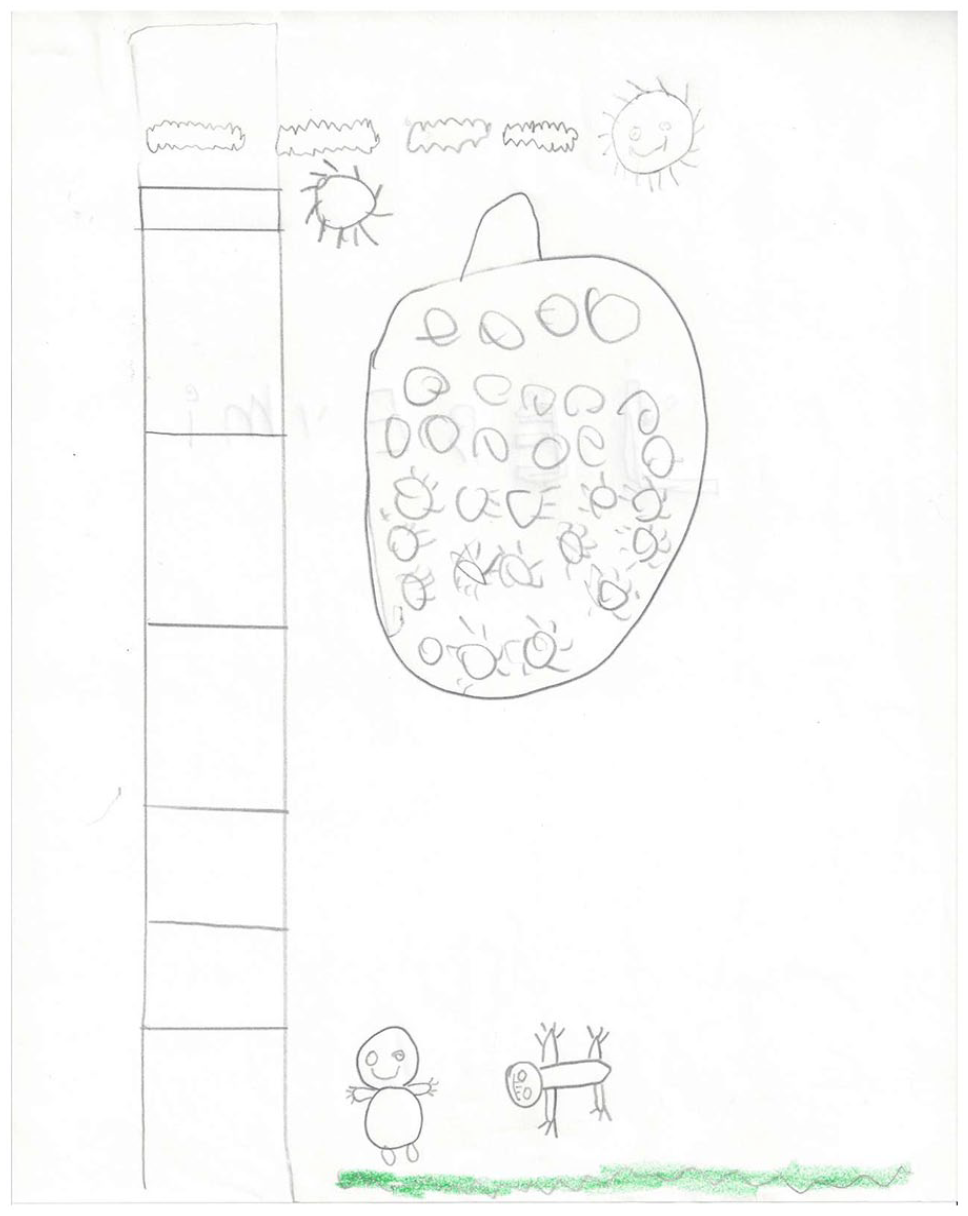
Jeremy’s Wall.
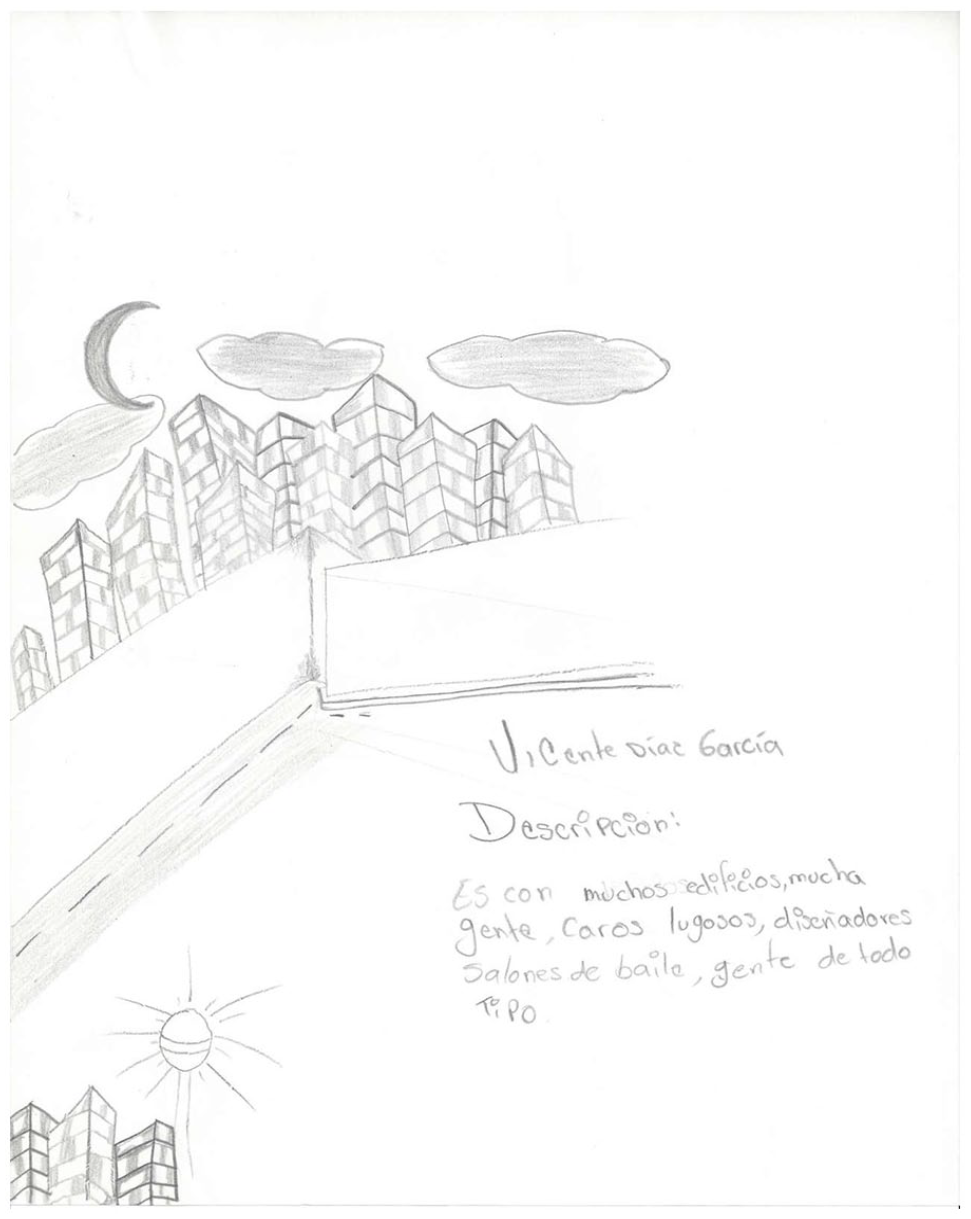
Vicente’s Buildings.
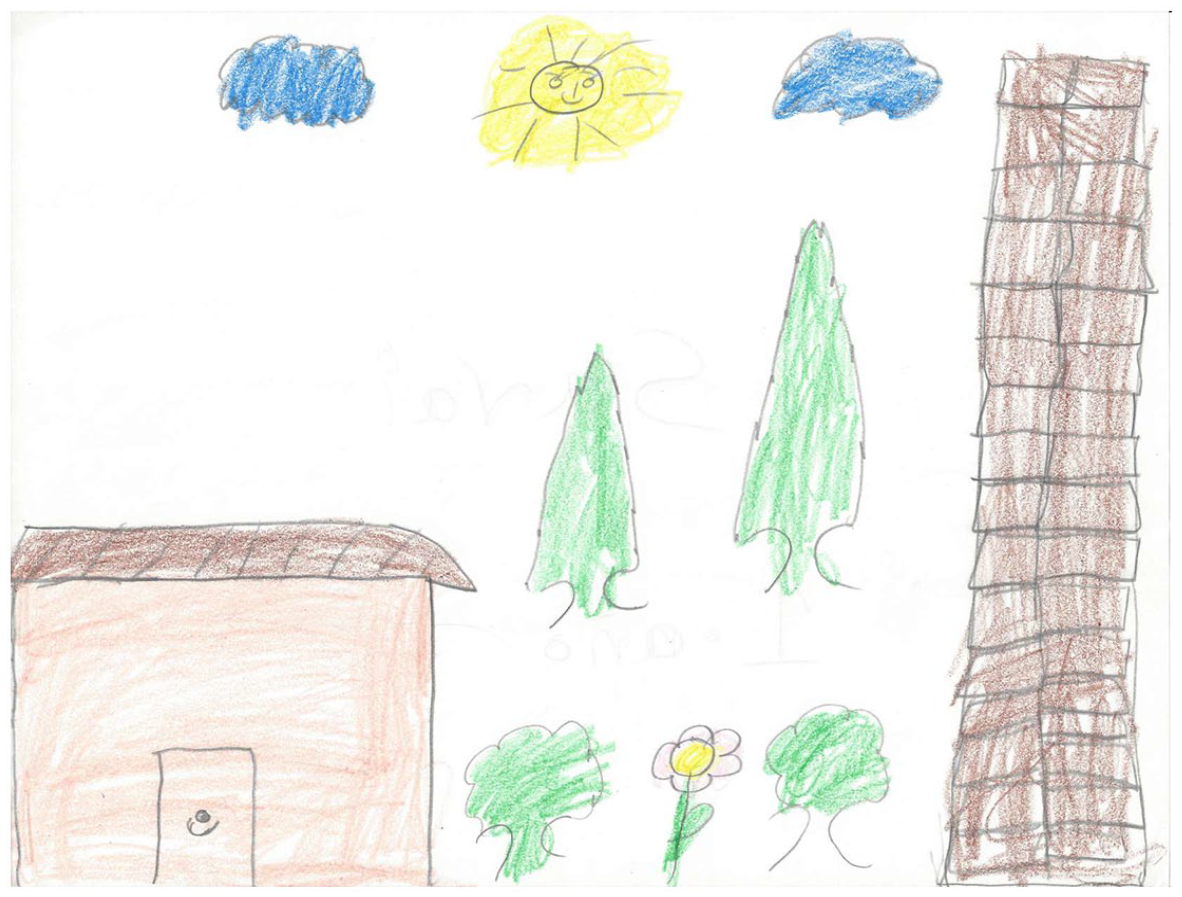
Lina’s Home.
Threats within the US
A theme that emerged among the drawings was the representation of items symbolizing threats. Among the 50 drawings, 10 had items that represented ideas of threats. Within the category of threats, children drew bombs, the Twin Towers, a volcano (seen in only one drawing), pollution, and made note of crime and death. For example, Adolfo Hernandez Serapio showed men in helicopters dropping bombs on what appeared to be the Twin Towers. In Maribel Ramos Lopes’s drawing, there was smoke coming out of a factory building, implying a sense of pollution. Andres Aranda Ramos added to this when he wrote in his drawing that there was “mucha contaminacion [sic] debido a la industrialisazion [sic]” [a lot of contamination due to industrialization] in the U.S. In Lorena Romero Alvarez’s drawing, she noted that she imagined there to be “muchos crimines [sic] muertes” [a lot of crime and death] in the U.S. In these drawings children associated various threats and danger with the U.S. When describing his drawing, Fernando, 9, brought in the surveillance aspect of the border: “this is the police trying to see who is running in.” It is worth noting there was a history of violence within the state of Puebla that according to Kloppe-Santamaría (2019) has shaped the Mexican state formation.
Children explored tall buildings, airplanes, and helicopters in their drawings. Ten other drawings constructed similar scenarios that were followed by this narrative of an elaborate production that takes place in the United States as the border. The idea of threats that exist within the US was integrated into the idea of the US as a border, as children saw the police as a threat to crossing between Mexico and the US. While the socio-economic characteristics described prior in the article contribute to children’s exposure to different forms of media, it is important to center children’s expressions and listen closely to what they tell us.
On the other hand, however, five drawings incorporated the themes of safety and organization as they related to the idea of rule of law. This included street lights, street signs, traffic lights, ambulances, and police. For example, Tomasa Alejandra Torres Molina depicted a city street with an organized way of life through stop signs, street lights, and traffic lights. However, in contrast with Fernando’s description, while the police were present in several other drawings, they were not shown in a positive or negative manner but rather were simply present. Fernando’s drawing, a car was labeled as “polisia [sic]” [police] but there were no people in the drawing and there was no indication of whether the police promoted safety or were just simply present.
US as a place of opportunity/personal growth/enrichment
The characterization of the US as a place of opportunity, personal growth, and enrichment was also a salient feature in the drawings. The main focus was basic needs, establishing belonging, and recreational spaces. Through depictions of homes, hotels, schools, parks, and churches, the children are identifying these spaces as distinct from other parts of the drawings. They are going beyond the depiction of buildings and instead are focusing specifically on what the buildings contain and the opportunity these resources present. In this way, children are establishing a conceptualization of a hierarchy of needs that is not only fulfilled but plentiful in the United States, which allows for opportunity and recreation. However, in their narratives, children acknowledge the difficult and arduous process of reaching opportunity and leisure.
Of the 50 drawings, 27 identified basic needs such as food, shelter, and health care. When depicting food, there were no instances where physical food was drawn, rather children suggested the presence of food by sketching restaurants. Most drawings only contained one restaurant, however, Luiza Martinez Munoz chose to draw two restaurants among her many other specified buildings. Shelter was another fulfilled basic need that was clearly illustrated in most of the drawings with depictions of homes or hotels. Interestingly, hotels were the most prominent version of shelter (besides unmarked buildings). Since there is a temporary aspect that is correlated with hotels, this indicates that these children do not imagine the US as a permanent home for their parents, but rather a temporary situation. Nancy demonstrated this understanding when she drew, she explained that in the United States people can live in houses if they make it there. While including grass, flowers, and trees, she also drew both a house and a hotel. The hotel is her marker that in order to be in that house there are other temporary spaces people need to go through. “It’s that before you get to your house you have to stay in many hotels. . .you know, when you are going.” In addition to seeing the US as a developed, urban nation, Nancy referred to border crossings or the trajectory as a means to the end depiction of a home in a positive environment.
With basic needs met in the images, it only follows that children imagine more opportunities for further growth. Nancy explains the concept of temporality through the idea of staying in hotels before you have a house. In recognizing the journey of belonging in the United States, she highlights the opportunity for growth. Likewise, the idea that the US is a location for more education (Michael Flores Avellano) and work opportunities (Maribel Ramos Lopes) was a salient finding. Neither of these ideas was conveyed through drawings, they were only mentioned in writing. Maribel, 10, provided yet another detailed account of the United States in her drawing. Stadium, park, factory, airport, airplane, tall buildings were all featured in her very detailed drawing. When she explained to me, she gestured with her hands where she thought there was a division: “you arrive in here, then you have to cross over there.” Maribel also provided a written account of her drawing saying that in the United States there were more opportunities for work and more technology, and like her peer Carlos she also mentioned pollution and contamination.
Recreation is seen in nine drawings as being depicted by, a park, club, stadium, zoo, playground (Luis Angel Gauilan Juarez), pool, and a bar. The most prominent of these recreational structures are parks (11 drawings). Most parks are labeled and depicted as plush and sometimes green. However, there are also many other drawings that contain green spaces but do not specify it as a park. Lorena Romero Alvarez imagined that there are “muchos. . .areas verdes [sic]” [many green spaces]. These parks and green spaces showed the possibility of having free time to spend enjoying the outdoors. This association was particularly clear when parks were depicted with people and attractions as Maribel Ramos Lopes and Amalia Priego Lopez drew in their images. All the other recreational places included came up less frequently and in a large variety. Our analyzes showed that while children articulated that in the U.S. there was time to play, what they imagined to be recreationally varied. They also didn’t speak about play in their narratives. These sentiments about opportunity and enrichment are all encompassed in Maria Luisa’s sentiment that in the US there is “la promesa de una mejor vida y libertad [sic]” [the promise of better life and liberty].
US with specific locations and events
A surprising aspect of the images was that many of the children indicated specific locations or landmarks specific to the United States. All of the landmarks can be considered symbols of America by citizens and non-citizens alike. Though the children made very clear and detailed drawings, some geographic details in pictures and between pictures and narratives were not entirely accurate.
The landmark that was most frequently included was the Twin Towers, which was drawn by four children. The inclusion of the Twin Towers in drawings that were created by children who (a) were not alive at the time of the attacks (b) and never lived in the states, was very surprising. Another landmark that appeared more than once was the Statue of Liberty. Both Marquenia Ramirez Cortes and Alejandro Morales Hernandez included depictions of Lady Liberty on an Island detached from “mainland.” The children clearly knew that the Statue of Liberty is on an island, but they depicted it is that it is almost severed from the rest of the image. Some other miscellaneous landmarks included Central Park and the “Holliwod [sic]” [Hollywood] sign. Though they were not labeled as such there were images that carried a great resemblance to the Empire State Building (Marquenia) and the Golden Gate Bridge (Veren).
Though there were not many instances of disjointed geographic understanding, a couple of examples stand out as very poignant. One occasion that stands out is with Maria Luisa Cortes Teyuca, whose image contains the Hollywood sign, while her written description explains what she imagines how New York appears. Additionally, Armando, 11, drew the twin towers and a helicopter dropping what he explained were bombs on the buildings. Armando had not been born when 9/11 happened and he explained to me, “this is the United States and it’s what happens to people when they cross la frontera.” When I asked him where he had drawn, he patiently told me again, “there in the border, this is right there when people cross, but it’s New York.” He paused. “My mama is there, she crossed.” Adeodato, 11, also drew what appeared to be the twin towers and an airplane coming very close as a scene depicted from 9/11, “this is when they fell. . .the buildings. That’s why they don’t want us there!” New York, where Armando’s mother lived was the United States, but it was also described to be the border that keeps him from his mother. This indicates that often the way children understand the US may not be accurate to the actual way the States are situated.
Connection between the U.S. and Mexico
Several of the drawings emphasized the connection between the U.S. and Mexico through the inclusion of an obstruction or a bridge. While some children saw the connection between the two countries as divisive, through the inclusion of a wall, other children saw the connection as an opportunity, through the inclusion of a bridge.
Wall and fence-like structures are seen in 15 of the drawings, marked by a tall, thin structure that usually takes up the entire height of the page. For example, in Lina’s drawing, she depicts a scene with a house, trees, and flowers, but also includes a wall. The wall is drawn on the right side of the page, is tall and brown, and spans the full height of the paper. Lina, who is 9 years old, explained to me, “see how high you have to go to get there.” With her finger, she traced the long, thin, and brown structure. Montserrat and Lupe also drew similar tall structures that they described as “cerca” or “muro” fences or walls. Monsterrat in particular drew her mother between the structure and a home. Author 1 asked about a cross-looking symbol on top of the structure and she said, “it can be the church too.” Jeremy depicted a man and a dog standing on grass, next to a tall building that appears to be a wall. In Vicente’s drawing, an entire city filled with skyscrapers was blocked off by walls. In all three of these drawings, children felt a sense of division between their home in Puebla, Mexico, and the U.S.
On the other hand, some children included a more positive connection between the U.S. and Mexico. In Fernando Rodriguez Martinez’s depiction of a city, he clearly labeled a bridge. The bridge could serve as a connection or pathway between the U.S and Mexico, and is seen as a source of opportunity. In contrast with a wall, a bridge may show a more optimistic view of the connection between the two countries. However, in Francisco’s, 11, drawing he explained to author 1 that even though there was a bridge that connected the US to Mexico, there was also a rupture in this bridge and only the lucky ones got pass to the other side: “see here this is what breaks the bridge and the police is waiting to catch who fall”. Author 1 followed up and asked about the rain and he said, “do you think it rains there? Where they walk. . .” Francisco saw the US as the border, as he emphasized the difficulty of the migration journey, and like Cristian, touched upon the idea of the police as a threat to those who migrate. For Francisco, as for many other children, their own constructions of precarity, uncertainties, and the potential for danger corresponded to the many stories they had heard in their communities as well as transnationally. Puebla has had a history of migration with the United States. Thus, narratives and storytelling about journeying North were not uncommon. However, our argument lies on the idea that children are agentic beings who are making decisions about what to show, draw and express. They draw from a repertoire of their own experiences listening, watching, and reading about what happens when folks migrate to the United States.
One child’s drawing seemed to link both the idea of the wall and the optimistic view of the connection between the U.S. and Mexico. Nancy Rancino included a wall in her drawing, but it was covered with hearts, and she wrote the researcher’s name on her wall. While she included an object that seemed to relate to division, the inclusion of hearts suggested that she did not have negative feelings towards this wall, but rather a more optimistic outlook. She also may have associated the researcher with the U.S. or as a contributor to division.
Discussion
Several themes emerged from analyzing the drawings by children in Mexico whose parents were in the United States. The first one of the United States as a place of opportunity and personal growth emphasized the idea of the imposition of the United States on Mexico. The idea of the U.S. being “a land of opportunity” in many ways as described by Nancy pushed into Mexico by “taking” people from Mexico. Anzaldúa (1987) described what the wound of the border looked like and Nancy in her own way expressed the pressure of the U.S. onto Mexico.
Children conceptualized the United States by drawing the many landmarks and famous monuments in the United States. The statue of Liberty and the Twin Towers appeared in the drawings. All of the children had been born after 9/11, thus also the representations of helicopters, airplanes and bombs near urban centers. Children had also never lived in the United States before. But since 9/11 was an event that elicited worldwide attention and led to very distinct travel limitations, it could have reached the children in Mexico. The travel limitations that ensued after 9/11 eventually led to even more regulation and the eventual exclusion of Mexican migrants too. While landmarks and statues hold different meaning to different constituents, children made use of a portfolio of available symbols in order to describe what they imagine the United States to be like.
Another landmark that appeared more than once was the Statue of Liberty. Both Marquenia Ramirez Cortes and Alejandro Morales Hernandez included depictions of Lady Liberty on an Island detached from “mainland.” The children clearly knew that the Statue of Liberty is on an island, but they depicted it as being almost severed from the rest of the image. Over 90% of children’s parents lived in New York City. It is important to contextualize that because of the prevalence of urban ideas in the drawings. Besides New York City’s landmarks that also included Central Park (Luis Angel Gauilan Juarez) and the Empire State Building (Marquina Ramirez Cortes), places in California were also represented by “Holliwod [sic]” [Hollywood] (Maria Luisa Cortes Teyuca), and the Golden Gate Bridge (Veren Jesus Rodriguez Lopez). Children discussed that their ideas came from a combination of what they knew from their parents and what they had watched in movies or shows. Maria Luisa Cortes Teyuca, whose image contained the Hollywood sign, but her description indicated that she was imagining New York City.
Children showed us the complex ideas they have about where their parents are in the United States. The longstanding relationship between Mexico and the United States has had implications for how children’s families have become organized and or divided across borders. We argue that children make sense of the United States in ways that ring to light issues of inequality, policing, surveillance, but also opportunity. These are themes that are ever more present in current debates of policies that further undermine families and children. The underlying idea that the U.S. distinguishes “us” from “them” (Anzaldúa, 1987) are present in the explanation of Nancy when she said that the U.S. was pushing into Mexico. Similarly, Fernando talked about the police and their surveillance, thus the power imbalance of the border between Mexico and the US (Alvarez, 2018). Francisco discussed how the police could catch those who migrate, or in his words “catching those who fall”. It is an unfortunate narrative from immigrants crossing the border that if you fall, get injured or faint you may get left behind and eventually be detained and deported by agents.
Many of the drawings depict an active economy of goods and services in the United States. For Alvarez (2018) migrating was an integral part of global capitalism. For children incorporating commerce and transportation in their drawings of the U.S. connected ideas of development, globalization and the constructed quest for opportunity. Their familiarity with ideas behind parental departure (i.e. better opportunities) has implications for how they imagine where their parents live. Anderson et al. discuss the border as a spectacle, thus, children drew elements of policing and surveillance. These power imbalances described the authors were captured by children whose parents were in the United States.
Iglesias-Prieto (2012) and Sertzen and Torres (2016) both found that children in Mexico see the U.S. as both a dangerous place (mainly due to police) and as a place of opportunity. Accordingly, children’s drawings showed this juxtaposition of different conceptualizations of what is “good” and “bad” through the drawings of children. Thus, the three sub-themes relating to the U.S. as a developed nation (infrastructure, transportation, and commerce) were seen in the majority of drawings, connecting to how children in this context think of the U.S. Examples included drawings that contained skyscrapers, buildings, hotels, restaurants, and roads. Sertzen and Torres (2016), who looked at drawings by children aged 8–9 living in Mexico, found similar trends in their work. The authors found that many children viewed the U.S. as an urban setting filled with roads, houses, factories, and modes of transportation.
Limitations
Data presented in this article stemmed from a larger ethnographic study that spanned 3 years. The analysis of the drawings and narratives of children allowed us, researchers, to make space for their knowledge of migration, separation, and the border. Thus, one limitation is lack of knowledge of how much interaction each child had with media outlets that depicted the United States or border crossing. A second limitation is that visual materials may be interpreted differently by researchers compared to participants, thus why we used interview data as a way to do member checking (Glaw et al., 2017).
Conclusion
This paper has three main takeaways. First in the face of current draconian immigration practices in the Americas, the intersections among immigration policies and childhoods are more important than ever. In the current Mexico-U.S. context and across the globe, immigrant children are discussed and talked about, and they have rarely deemed experts of their experiences. We must redesign ways to understand their views to better gauge the perspectives and experiences of im/migrant children across the globe. Second, we must consider what these knowledges mean for children as they remain separated from their parents? Does the idea of a developed urban area contribute to the desires of migrating North? In addition, it is important to capture how intimately children know and understand the United States by virtue of being part of transnational movements of family members, consumerism, and global capitalism. However, the third and most important takeaway lies in the idea that we must center children’s experiences and views. Centering research on children’s perspectives has important ramifications for policymaking. In schools teachers and curriculum can attend to the knowledges children have about the migration of their parents. Allow for space for discussion, questions about the United States and its role in the historical out-migration from Mexico. Additionally, drawings and visual methodologies can assist social workers, school psychologists, and caregivers in understanding how family separation impacts children’s notions of violence, safety, home, and play. More often than not children are excluded from decision-making as it pertains to their own lives. Perceived as always in the process of becoming, children rarely make it into the sources decision-makers consult with. Adults involved in the care of children can make space for a window into children’s ideas about migration and separation and take what they draw, write and say as their own truths. We owe this much to children around the world.
Footnotes
Funding
The author(s) received no financial support for the research, authorship, and/or publication of this article.
