



Abstract
Africa’s emerging leadership is made up of young people who have energy, passion, and vision for the continent. Harnessed well, this passion and energy will ensure African countries will be able to benefit from an array of human capital that can take the early childhood development agenda on the continent forward. But many challenges stand in the way of the emerging young leadership – and it is essential that we give our children and youth the tools to overcome them. Early Childhood Development is a pillar and tool that can assist young leaders to pick up their role in the development of their nations and continent. Early investments in young children through early childhood development programmes that support a strong start and foundation have been proven to be cost-effective. As the continent boasts of a young population, how prepared are the youth to lead in early childhood development in the future that lies ahead? It is essential that young people be a central and active pillar in the continents development agenda and participate in early childhood development. For the transformation and development process of the continent to forge ahead, leadership capacity promotion in early childhood development must be a priority to help create a secure, prosperous, and peaceful continent. The author highlights some capacity promotion initiatives that he has participated in and the role they have played in building leadership capacity in early childhood development.
Background/context
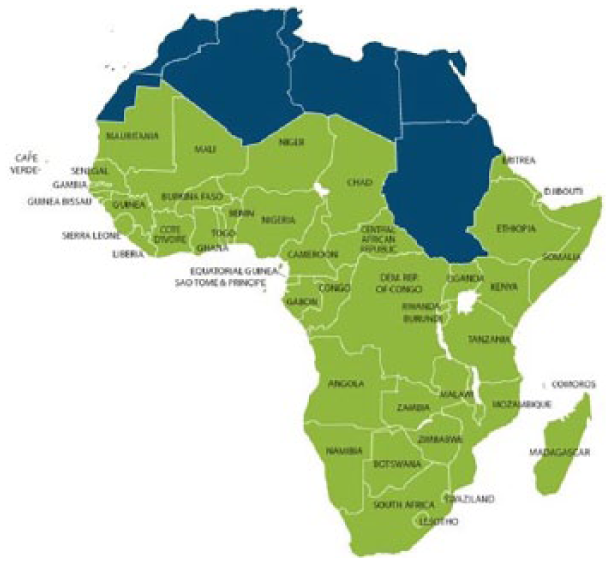
According to a United Nations and Department of Economic and Social Affairs, Population Division (2017) Report projections indicate that by 2050, about 40% of all children will be in Africa, up from around 10% in 1950. Africa’s true size is just under twice the size of Russia or bigger than Canada, the United States of America and China put together! (Brilliant Maps, 2015). The African population is estimated to be more than a billion people, of whom over 60% are young men and women under the age of 35. According to The World Bank (2011) Report, youth account for 60% of all African unemployed, and young women feel the sting of unemployment even more sharply. African leaders met in Addis Ababa, Ethiopia, in 2009 and declared 2009–2018 the ‘African Youth Decade’ by crafting and adopting a document that was aimed at addressing issues to do with unemployment, youth participation in politics and the economy (African Union (AU) Volume 2:2004–2007).
Participation by youth in matters that affect them politically, socially, and economically is vital because it has a direct bearing on how they live their lives. Africa’s young and emerging leadership is made of people who have a vision of the continent’s future that is expressed through focused passion and skills. According to the African Development Bank (AfDB et al., 2012), the majority of African youth continue to face: unemployment, underemployment, lack of skills, relevant education, access to capital, and unmet needs for health-related information and services. Within this youth population, there exists sub-groups including women and the disabled who are affected and bear the brunt of internal and external crisis, whether these are economic, sociopolitical, shortages of food, the changing weather patterns in part due to climate change as well as civil unrest and instability. Sadly due to some of these factors, many youth who come from poor families and communities find themselves being used by politicians to advance nefarious agendas and sometimes find themselves being conscripted into militaries, forming cabals, juntas, and other armed formations. These formations are then used to settle political scores, run illegal drug networks and the youth become exposed to not only risky sexual behaviour but illicit substance abuse as well.
In the last two decades, there have been strong arguments on the importance of investing in Early Childhood Development (ECD) programmes. According to Heckman (2006), investment in such programmes brings greater financial returns to an economy. It has become even more apparent, as other economists and early childhood researchers such as Heckman, Pinto and Savelyev (2002) have also provided strong economy-driven narratives that have provided the rationale and argument for increased investments in ECD purely for the returns they provide to countries.
Youth and ECD in Africa
Africa with a projected largest young population (United Nations and Department of Economic and Social Affairs, Population Division, 2017) in the world has a massive stake in child development matters. In the late 1980s, this stake became more pronounced with the approval of the Convention on the Rights of the Child (United Nations, 1989). It was following this approval in a March 1990, Education For All (EFA) conference in Jomtein, Thailand, that the statement ‘learning begins at birth’ (UNESCO, 1990) began to gain traction in the African childhood development arena. It is important to note that going back to the late 1980s and early 1990s, African leaders and their governments were enthusiastic supporters of the Convention on the Rights of Children (Marfo and Pence, 2004).
Leaders of the then Organization for African Unity (OAU) now AU held a Pan-African Forum in May 2001 in Cairo, which led to a declaration called Africa fit for Children (Pan-African Forum for Children, 2001). This plan noted that ‘national planning and international development cooperation should reflect the prioritization of early childhood and youth’ (Pan-African Forum for Children, Africa Fit for Children, p.12). While a continental plan, framework, or strategy is very important, it is my view that Africa needs robust country ECD policies that use evidence-based practices to support the role of ECD in setting the right foundation for children. These children will become the youth of ‘today’ and with the right foundation will be better equipped, responsible and contributing citizens of their countries and the continent.
Children in Africa have been seen as contributing members of the community particularly in carrying out chores at home as well as providing labour in the fields. This has been documented by eminent scholars from the continent such as Ohuche and Otaala (1981), Nsamenang (1992) and Zimba (2002). There has been a tendency to link the notion of children being involved in the household economic activity as child abuse, but this involvement of children should be seen in the context of tradition and culture; notwithstanding the fact that children in Africa have always had a productive role in communities. The purpose of ECD is to provide experiences that promote holistic development intellectually, emotionally, physically and socially.
In a World Education Forum meeting held in Dakar, Senegal, in April 2000, African nations present further enhanced the profile of the ECD agenda on the continent by adopting among many goals, one commitment to ‘expanding and improving early childhood care and education, especially for the most vulnerable and disadvantaged children’ (Dakar Framework for Action, 2000: p.8).
With this recognition, coming from political leaders on the continent, it is important to then identify capacity promotion initiatives that can prepare leaders, policy makers and actors in ECD to take on leadership roles on the continent.
A personal journey
Capacity promotion initiatives in ECD through the world forum foundation, ECD virtual university, and Mandela Washington fellowship
The invitation to attend the World Forum Foundation (WFF) conference in Belfast, Northern Ireland, April 2009, came as a surprise to the author. Being a young leader of a small but growing non-profit (www.nhakafoundation.org) working in the charitable sector in Zimbabwe, Africa, the author felt there could have been more fitting leaders to attend this conference. It was in Belfast, that the real exposure to the early years sector occurred. The hundreds of passionate and committed professionals in the sector, the quality of the presentations and the depth of the matters discussed left an indelible mark on the importance of ECD programming.
Prior work experience for the author had been in broad community development initiatives such as school and community feeding programmes, youth advocacy and development work, community-based support for orphans and vulnerable children, education programming, design and implementation of income generating and savings schemes as well as community organizing. With this broad range of experience and none whatsoever in early childhood programming, the author felt quite intimidated being at an international conference discussing only one aspect alone, early childhood education. To compound to this insecurity, in many of the sessions, the author tended to be the only male in the room! As if that was not enough, everyone seemed to have some ‘grey’ hairs of some sort, making the author almost if not the youngest person in the room and the least knowledgeable at that time, of ECD matters. However, the conference made its impact, investing in the early years was a no brainer and this began to shape the authors perspective on importance of the early years.
Back home in Zimbabwe, the author began to research and read as much as possible into the sector. Access to content and material generated in Africa proved to be difficult and a lot of reliance was made on euro-centric material on ECD. In a major observation for the author, the African story of ECD had largely been untold. There existed very few afro-centric evidence-based literatures that could help inform African-based professionals to design new or support existing community-based programmes in ECD. As noted by Pence and Benner (2015), despite sub-Saharan Africa’s size and share of the world’s population, indigenous African voices are seldom heard in child development literature that dominates policies and programmes in international ECD.
In Zimbabwe, recommendations of a 1999 Commission of Inquiry into Education and Training by Nziramasanga (1999) provided for the attachment of ECD classes in existing primary schools among other things. This recommendation was given life by the Ministry of Education through Circular Number 14 of 2004. It was therefore imperative for the author and his organization to work in alignment with that policy. Further to this Ministry policy directive another set of policy directives through (Ministry of Education Circular No 12 of 2005 and Statutory Instrument No 106 of 2005) gave guidelines on the provision of ECD in primary schools.
However, there were numerous challenges to their implementation. The schools for example had inadequate infrastructure, children had no play materials, no basic ECD furniture and the classes were packed to the rafters. In addition to this, the teacher-to-student ratio was unfathomable, and teachers still inadequately trained and prepared to be working with the young children. As if this was not enough, the Ministry had also just introduced another policy directive (Ministry of Education Secretary’s Circular Number 2 of 2014), and this time, no child would be allowed into the first grade of formal school without having spent 2 years in an ECD class. There was need for the author to be grounded in ECD and another fortuitous invitation came through.
In 2011, the author was invited to become a fellow of the prestigious Global Leaders for Young Children programme that is organized and managed by the WFF. In 2004, the WFF had launched the Global Leaders for Young Children mentorship programme. The Global Leaders for Young Children programme at the WFF works to identify and develop the next generation of early childhood leaders throughout the world. (https://worldforumfoundation.org/global-leaders/). This 2-year fellowship provided the possibility for the author to receive further training in ECD programming, advocacy, leadership and implementation of ECD programmes.
In 2015, another timely invitation for leadership and capacity promotion came through the Early Childhood Development Virtual University (ECDVU) for the author to participate in a 2-year rigorous academic programme run through the University of Victoria, Canada. The ECDVU was launched in 2000/2001 focusing on providing context-appropriate education for multi-sectoral cohorts of participants from an initial nine sub-Saharan Africa countries. External evaluations by The World Bank conducted after the first delivery and after the third multi-cohort delivery of the ECDVU highlighted the broad in-country impact of the programme with key policy, programme, education and networking developments within and across the 17 countries that had participated (138 graduates, with 95% completion rates) (Pence and Benner, 2015). All of the participants in this programme were from sub-Saharan Africa and active ECD practitioners in their countries.
In 2017, a third invitation for capacity promotion came through the Young African Leaders Institute (YALI) which is jointly sponsored by the Mandela Washington Fellowship (https://yali.state.gov/washington-fellowship/). As one of the young leaders from Zimbabwe attending the 2017 Institute at Bowling Green University (BGSU) in the USA, the author was very excited to be among colleagues from Africa and countries as far North as Mauritania and as far South as South Africa. The YALI fellows at BGSU had such depth of knowledge on the immediate challenges African youth faced. While having acute awareness of the challenges that existed, there was a burning desire to be part of the solutions to the challenges. There was a cry for space by the young leaders to develop, test and implement their ideas in their countries. This space was being restricted however by the elders. They felt that political leadership had failed the young African leaders. In the absence of meaningful empowerment, the continents young leaders would fail to address some of the ills bedevilling the continent.
Africa’s young leadership can take advantage of these capacity promotion initiatives aimed at deepening their leadership skills and knowledge in ECD. This is important especially, as Africa has the youngest population in the world and therefore it is critical to ensure that the foundational years of the continents young children are strong and support their developmental needs right from conception (http://www.africa.undp.org/content/rba/en/home/blog/2017/8/7/africa_defining_challenge.html).
Key reflections
Nhaka Foundation
With this exposure and participation in the capacity promotion initiatives, my work, leadership and involvement in various key ECD initiatives in Zimbabwe and sub-Saharan Africa became more pronounced. The quality and depth of ECD programming by our organization improved tremendously, attracting the funding and support of various agencies to scale up our operations (Makokoro, 2015). It is important for capacity-promotion initiatives to focus on providing contextually relevant training.
Our work at Nhaka Foundation shifted dramatically in the period between 2011 and 2016 from being solely solutions based to co-discovering, co-creating and appreciating the community capacities in developing programmes that could be sustained by the same communities. I began to focus and direct my teams more on basing our work on the community energy and strength. It became even more important for us to use appreciative inquiry, a strength-based approach that is used in community development (Cooperrider, 1999). What resources did the communities have in their hand? How best could this be utilized to advance the ECD agenda? How can the communities sustain the programmes that were being implemented? Strategies and experiences from these capacity promotion initiatives began to influence a lot of the work that we did. Furthermore, as a leader in a non-profit organization, I began to recognize and appreciate the policy gaps and inconsistencies that existed not only in my home country but in others too, as I began to delve into regional consulting work.
These capacity promotion initiatives exposed me to a different way of thinking, engaging and leading. I began to appreciate the uniqueness of each community we worked in but important began to set in motion community collaborative processes that would ensure that the work carried out would remain sustainable when the non-profit had moved its focus to another community (Makokoro, 2015).
More is better
It is my submission that not one or two capacity promotion initiatives can address the needs of the youth on the African continent. In fact, the more initiatives that are aimed at addressing leadership development, entrepreneurship and community development the better. Is there space for these capacity initiatives to complement one another? To offer synergies that align with country development priorities? I think there is space for capacity promotion initiatives to come together and break some silos in programming that may exist (Makokoro, 2019). I further argue that while there is the common notion of government departments operating in ‘silos’, the same too can be seen when it comes to capacity promotion initiatives. As one who has participated in the above three initiatives, I believe there is space for co-operation but this comes with a clear need for dialogue, addressing common obstacles within the developmental space and creating opportunities for a more is better approach to capacity promotion (see Makokoro, 2019)
Conclusion
Strong foundations are important for strong houses in as much as a strong start in life is important for a successful future for an individual. African governments have to commit to investing in the youth but more so increase their spending on early childhood programmes to ensure a healthy and strong foundation for the children on the continent (Makokoro, 2015).
This article recognizes some capacity promotion initiatives available and is alive to the fact that thousands more exist on the African continent and beyond. How do these begin to infuse the lessons we are getting from ECD literature and evidence-based programming on the continent? It is important to prepare the young leaders in Africa to meet the challenges of adulthood through a coordinated and progressive series of activities and experiences in youth development. There is need for African leadership to step back and also reflect on the concept of ECD and how this can be the first step in empowering the continents future leaders.
Footnotes
Funding
The author(s) received no financial support for the research, authorship, and/or publication of this article.
