




Abstract
This article examines the web 2.0 blogging experiences of one 8-year-old travel blogger. The research question is centred on ‘What does the interactive function of a web 2.0 blogging experience make available in terms of a child’s pedagogic rights?’ This instrumental case study is made up of 56 written and photographic travel blog posts covering some 11,411 words and 150 photos over 170 days, as well as the 187 replies from external blog participants. Background information about the child, his family and the context of the blogging project is provided via an informal interview with him and his mother. An analytical framework capable of rendering visible what the travel blog project made available in terms of the three pedagogic rights of individual enhancement, the right of social inclusion and the right to political participation is developed and activated. Two core findings emerge. First, in this blogging experience, the pedagogic rights of individual enhancement (80% of posts) and social inclusion (96% of posts) dominated the right to political participation (39% of posts). Second, despite claims that the interactive function of web 2.0 has the potential to boost individualism of meaning-making and action, in this case, the blogging experience did not always manifest itself to capitalise on the transformative potential of this experience for this young child travel blogger.
Keywords
Introduction
The research literature on children’s experiences with web 2.0 interactive spaces is characterised by a debate between entrenched positions of ‘uncritical romantics and dismissive sceptics’ (Thomas, 2011: 2). This article examines one form of web 2.0 ‘participatory culture’ (Jenkins, 2009), that of an open access blog. We consider what a sustained blogging experience makes available in terms of one child’s pedagogic rights. Open access blogs are stored asynchronous (postponed time) interactions made available to web 2.0 consumers and producers on demand (Carrington, 2013). Online blogs display fluidity, simultaneity (available on an indefinite number of screens) and non-degradability in copying, transcend traditional limitations on textual dissemination, and have permeable boundaries where one text may hyperlink to another. Through online blogging children learn ‘what it means to be a member of an online community and a participant in collaborative networks’ (Marsh, 2013: 85). Alexander (2008) advances those platforms, such as blogs, promote worldwide intercultural interaction, discussion and debate. Selwyn (2011) cautiously offers that this virtual dialectic has the potential to ‘flatten out’ hierarchies of social relations and foregrounds a ‘network logic’ of knowledge that serves to boost ‘individualism of meaning-making and action’ (p. 7). He, however, counters that ‘the much-heralded technological transformation of schools and schooling has yet to take place’ (p. 5).
Theoretically speaking, the construction and sharing of artefacts via an online blog are conceived of as a form of pedagogy that is as
a sustained process whereby somebody(s) acquires a new form or develops existing forms of conduct, knowledge, practice and criteria from somebody(s) or something deemed to be an appropriate provider and evaluator – appropriate either from the point of view of the acquirer or by some other body(s) or both. (Bernstein, 2000: 78, brackets in original)
Ridgewell and Exley (2010) examined a case study of primary school students using an online interactive blog to document their learning in science. The research findings were that the online blog extended the time and space available for student reflection outside of the teacher-led class discussion. While the findings showed that an online interactive blog could extend some of the constructivist ideologies of a multiliteracies project, on its own, it failed to develop important forms of scientific literacy, most notably evaluation (Ridgewell and Exley, 2010). It is thus prudent to examine another case study of a virtually created dialectic pedagogic experience. This time, we examine the potential of a virtually created pedagogic experience for one 8-year-old child travel blogger in relation to his pedagogic rights. In his last work, Bernstein (2000) proffered that pedagogic encounters should be contributing to developing the minimal conditions of democracy by invoking three pedagogic rights for the learner: the right to individual enhancement, the right to social inclusion and the right to political participation. The next section overviews the heuristic of pedagogic rights. The section after that introduces our case study, followed by a description of the research method and a discussion of our two main findings.
The heuristic of pedagogic rights
Bernstein’s (2000) research theories render visible the interrelationship among education, democracy and pedagogic rights. This point needs to be foregrounded so as not to reduce Bernstein’s legacy to ‘a toolbox, a mere set of theoretical props or a formalised technical language disconnected from major social, political, sociological and anthropological issues and other conceptualizations in the social sciences’ (Frandji and Vitale, 2016: 14). The most salient point of the heuristic of pedagogic rights is the interconnectedness and complementarity of the three rights. Taken together, these three pedagogic rights emphasise enhancement and boundary crossing, the possibility of integration without absorption, and active participation in the construction of a model of society. Pedagogic rights are about the notion of freeing people to ‘imagine and act’, or, on the contrary, the boundaries impacting ‘imagination and what it seems possible to do and be’ (McLean et al., 2013: 276). Pedagogic rights is a mechanism for considering how people are ‘differently enabled and constrained via the construction of symbolic and real boundaries’ in knowledge and skill acquisition (McLean et al., 2013: 276). The heuristic of pedagogic rights is useful for reflecting on the development of pedagogic practices. Previous research has focused on the pedagogic rights of students in primary and secondary schooling (Arnot et al., 2004; Bautier, 2012; Reay and Arnot, 2004), vocational education (Wheelahan, 2010) and higher education (McLean et al., 2013, 2015; Walker, 2002), and on the pedagogic rights of non-Indigenous adult volunteers in an afterschool Indigenous homework club (Exley et al., 2016). The focus of this article is on the distribution of pedagogic rights through the outputs of the open access online travel blog created by one 8-year-old boy and the replies from other adult participants. The points below provide more detail about the notion of the three pedagogic rights:
The pedagogic right of individual enhancement is an individual’s right to expand their personal horizons via the means of new access and thus new possibilities of critical understanding (Bernstein, 2000). The achievement of individual enhancement requires boundaries of disciplinary knowledge to be ‘experienced [as] tension points’ (Bernstein, 2000: xx). In this sense, enhancement involves a continuous, collective process of knowledge production, and by default, a contribution to the development of ‘collective intelligence’ (Frandji and Vitale, 2016: 21). While the knowledge is considered to be collective in formation, the right to individual enhancement operates at the level of the personal and thus provides the potential for the capability of individual confidence.
The pedagogic right of social inclusion is an individual’s right ‘to be included socially, intellectually, culturally and personally [including] the right [to be] autonomous’ (Bernstein, 2000: xx). ‘Communitas’ is the capability gained from access to the pedagogic right of social inclusion. McLean et al. (2015) draw on the field of anthropology to elaborate that communitas characterises people who experience liminality or periods of transition together. This togetherness does not necessarily need to be within a structured community or bound by homogeneity for ‘feelings of solidarity and togetherness among equal members of a community’ (McLean et al., 2015: 191) to arise. In current discourses, a greater emphasis is given over to the notion of ‘adaptive expertise’ and ‘diversity as a resource’ (Exley et al., 2016). Thus, the right to social inclusion operates at the level of society, providing the potential for the capability of communitas.
The pedagogic right of political participation talks about the right to participate in civic debate and practices that have outcomes in society, that is, ‘to participate in the construction, maintenance and transformation of social order’ (Bernstein, 2000: xxi). In Bernstein’s view, an effective democracy needs people to ‘have a stake in society’, that is, to both receive what is at stake (via rights) and contribute to what is at stake (via a sense of obligation). Civic political participation is provided by the individual citizens, who have an ability and a duty to contribute to the common good of all citizens (Frandji and Vitale, 2016). The right of political participation operates at the level of polity, and thus provides the potential for the capability of civic discussion and action.
Introducing the case study
The data for this article is drawn from an instrumental case study. Case study, as defined by Yin (1994), offers a holistic perspective that permits a fuller exploration of the issues under examination. An instrumental case study is a useful research design for in-depth investigations into an individual’s experience (Stake, 2000) as its contexts are scrutinised and its ordinary activities detailed. This case study centres on the online communication of one young child travel blogger (who has requested the pseudonym of ‘Bob the Great’) and the replies posted online. Bob the Great travelled in a caravan around Australia with his older sister, and his mother and father. Over 170 days, he wrote, visually documented, designed and archived 56 blog posts. These posts were made available on an open access virtual space set up in his mother’s blogging account and were visited by over 1000 viewers from around the world who were unknown to him. Written replies were provided on 187 occasions by a handful of external blog participants known to him. Case study data have been harvested from the open access blog site (with the permission of Bob the Great and his mother) and information about the context of the blogging project was derived from an informal interview with Bob the Great and his mother.
By way of background, Bob the Great’s 170 days on the road were spent exploring the flora and fauna, and following the Indigenous dreaming stories across time and place. Approximately two-thirds of the nights were spent in points of isolation, away from electricity, running water, sewerage and the general population. Bob the Great explained that he set himself the task of tracking the family’s physical journey on a road map (see Figure 1) because he is fascinated by maps. In his blog post from Day 2, Bob the Great explained,
It’s my job to mark our travels on the map with a black pen. It’s [my sister’s] job to keep an excel spread sheet of our distances and petrol costs. Here is a picture of me doing my daily mapping on a map of Queensland. I have one big map for each of the states in Australia plus a big map of Australia.
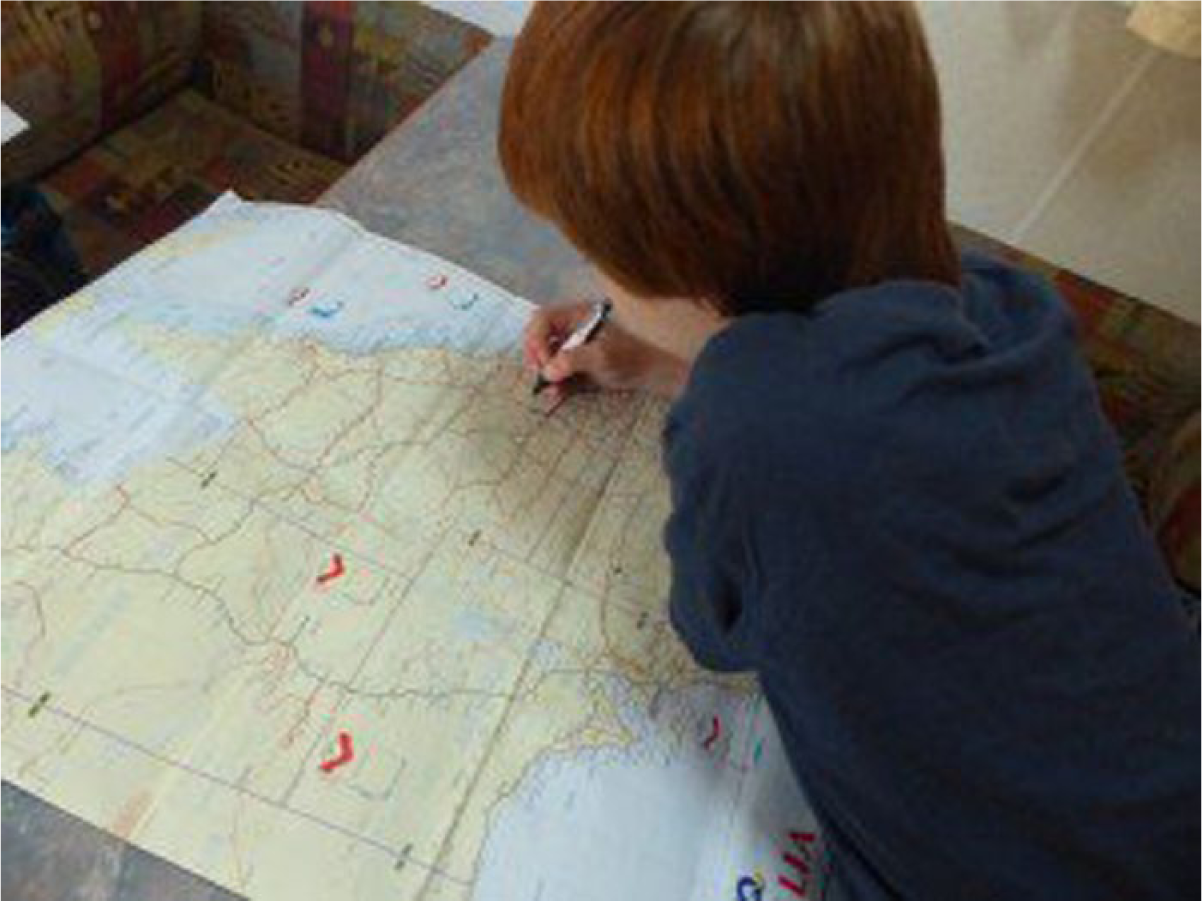
Bob the Great tracking his family’s journey on a map of Australia.
The primary purpose of the blog (see, for example, Figure 2) was to create an artefact of the family’s travels for the benefit of Bob the Great and his sister, as well as the extended family and friends who were interested in the family’s travels. The blog site is a semi-controlled account in that all blog posts are open to the world, but all external non-pre-approved participant feedback is moderated via his mother’s email account before being made available to him and his sister on the blog site. Thus, Bob the Great and his sister had some protection from direct exposure to virtual violence (see Carrington, 2013; Gillen and Merchant, 2013). This virtual repository and a few online widgets (such as a world viewing map) cost approximately AUD$60 for the duration of the trip. This focus on ensuring Bob the Great and his sister had a safe virtual space for open-to-the-world communication may also have been partly responsible for the realisation that the only external blog contributors were already known to the family. External blog contributors included extended family members, friends and a class of similarly aged children from England who were being taught by his Dad’s Cousin’s Wife. Grandparents, aged in their 70s and 80s, were by far the most regular external blog contributors, posting comments directed to Bob the Great and his sister almost every day. This point reinforces the intergenerational interactional affordances of social networking (see Waller, 2013 for another example).
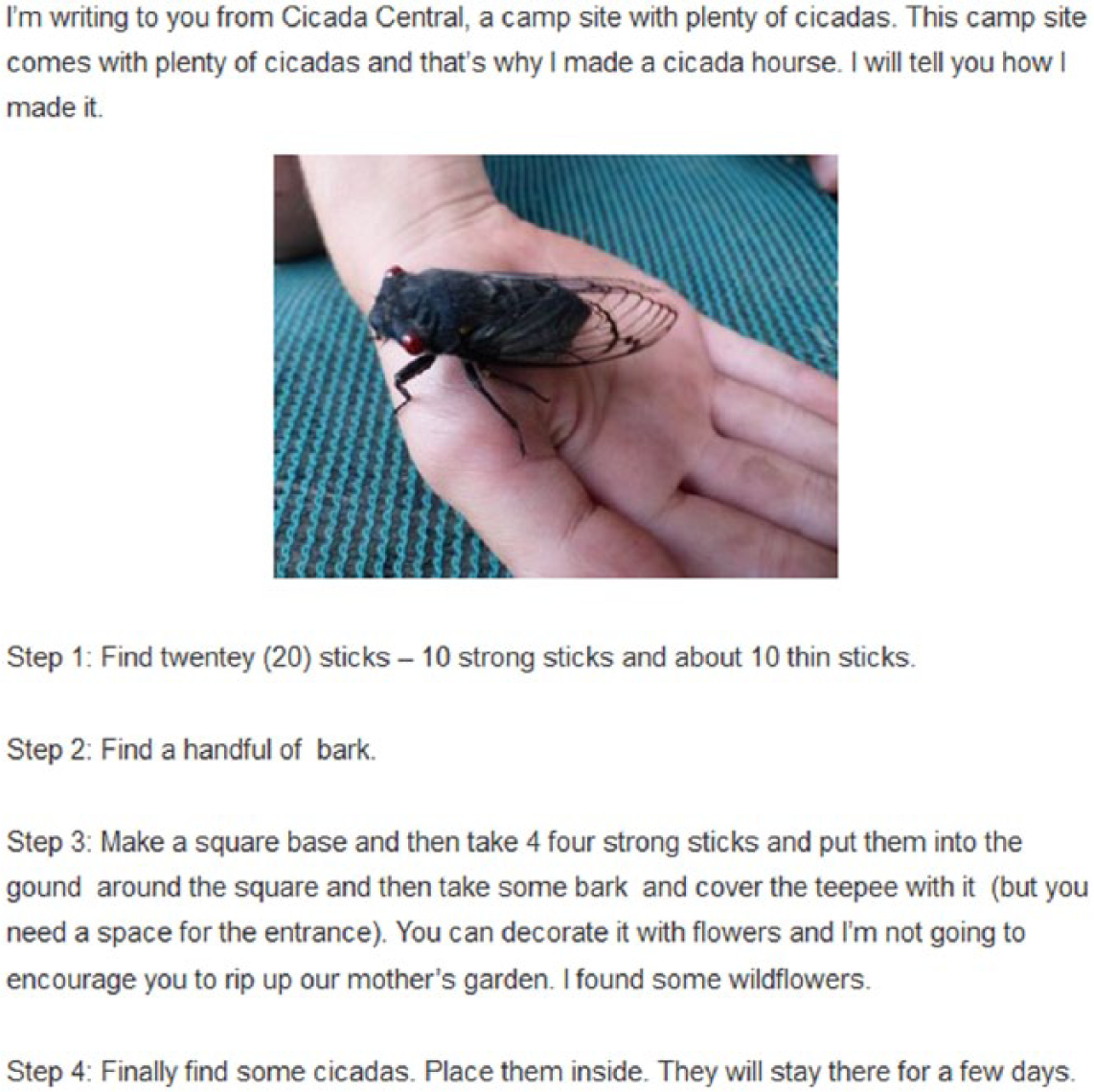
Screen shot of extract from Day 124 blog.
In the informal interview conducted with Bob the Great and his mother, we learnt that the background workings of the blog site, combined with the absence of a national broadband network throughout rural and remote Australia in 2013 and 2014, made blog posting a clunky exercise. His mother took responsibility for the final upload of each blog entry, not because Bob the Great couldn’t navigate the icons, but because the written element and each photo had to be uploaded incrementally in case the network dropped out. This was time-consuming and handing over this task reduced the frustration when carefully written and designed blog entries became irretrievable. Although the site advised that uploading sound and moving image was possible, they were not able to do so. While familiar with technology as entertainment and technology for information seeking, up until this experience, Bob the Great had never experienced technology as social media. As it transpired his knowledge of and use of the highly complex symbol systems commonly used within online social networks (see Waller, 2013) was not well developed. He tended towards the form of prose most often taught and rewarded in schooling. His ‘digital wisdom’ (Prensky, 2011) was thus not as complete as it might otherwise have been.
Importantly, at the time of writing the blog, the people of Australia were attempting to enact a process of reconciliation between Aboriginal and Torres Strait Islander peoples and non-Indigenous Australians. In January 2008, just before Bob the Great turned 3 years of age, a newly elected Prime Minister, Kevin Rudd, publicly apologised to Australia’s first nations people on behalf of the Australian Government and the Australian people for atrocities committed from the mid 1800s to 1970 via the forced removal and institutionalisation of Indigenous children. Despite his tender years, Bob the Great knew of the history of the apology for two reasons. First, Kevin Rudd lived in his neighbourhood and Bob the Great liked seeing Kevin on the television. Second, even though Bob the Great and his family identify as White-European Australians, he knows that his mother has Indigenous family members on both her maternal and paternal sides. He is aware of the inappropriateness of stereotyping people on the basis of their race and/or culture. This political background is important, as he and his family purposefully seek out the Indigenous Dreaming stories on their travels. Bob the Great reflects on these ventures in a number of his blog posts.
Data set
The data set which forms this instrumental case study consists of 56 blog posts and 150 photos composed, designed and curated by Bob the Great over 11,411 words. The shortest post was 80 words in length and the longest post was 354 words in length. His average word count was 203 words per post. These statistics talk back to the moral panic that social media ‘distract(s) the attention of children and young people from engaging with print literacies practices’ (Davies and Merchant, 2009: 111).
Altogether, his blog posts cover five different social purposes (Derewianka, 2011):
In total, 52 blog posts are recounts – serving the social purpose of detailing places visited, people and animals involved, or activities undertaken;
Three blog posts are procedural texts – serving the social purpose of how to weave a reed fibre basket (Indigenous arts), make a reed fibre paint brush (Indigenous arts) and build a cicada house (refer Figure 2);
Two blog posts are information reports – serving the social purpose of informing the reader about magnetic termites and land formations;
One blog post is a book review;
One blog post is identified as a list of facts about two characters from a book he read.
The genres used for the blog posts were not necessarily mutually exclusive; hence, the account of social purposes listed above tally more than 56. This break down shows Bob the Great’s tacit knowledge of moving in and out of different genres for different social purposes.
The case study also considers the 187 written replies from external participants as well as the informal interview with Bob the Great and his mother, which provided the context of the blog site and reflection on the blogging experience.
Analytic framework
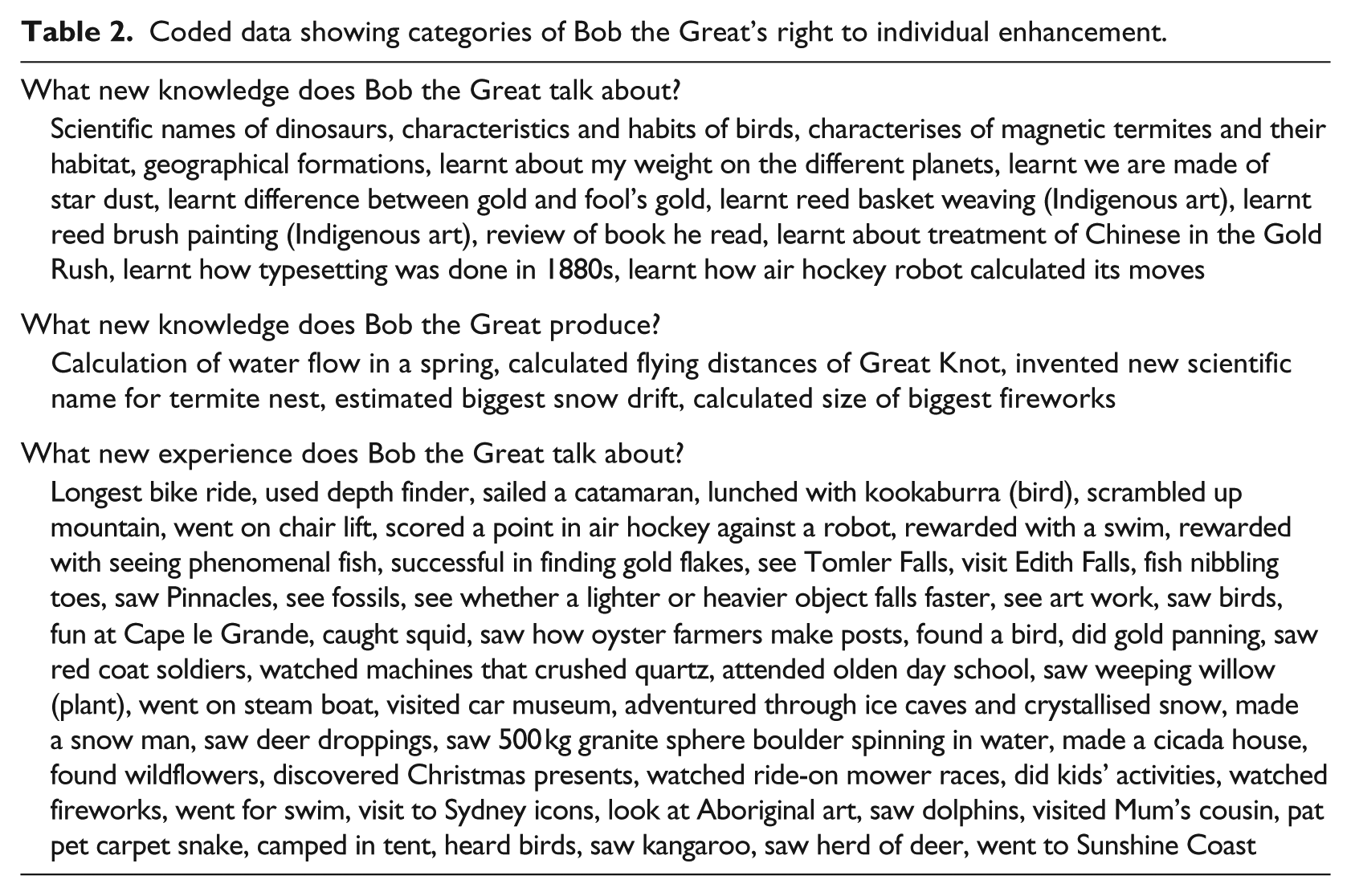
Data were analysed deductively, using an analytical framework we developed from our understandings of Bernstein’s (2000) heuristic of pedagogic rights. Table 1 lists the questions we deduced from reading the theoretical descriptions. We applied these analytical questions to the data set to interrogate each sentence of each blog post. Responses were coded and then listed in an abridged form according to the heuristic of pedagogic rights of individual enhancement, social inclusion and political participation (see Tables 2– 4). We then turned our attention to the replies posted by other blog users to consider if the reply, as a form of sustained pedagogy, enhanced the realisation of confidence, communitas or civic discussion and action for this 8-year-old blogger. In the section that follows, we provide an example of the coding and summarise the findings for each category of the heuristic of pedagogic rights. In the section after that, we discuss our two main findings.
Analytical framework derived from the heuristic of pedagogic rights.
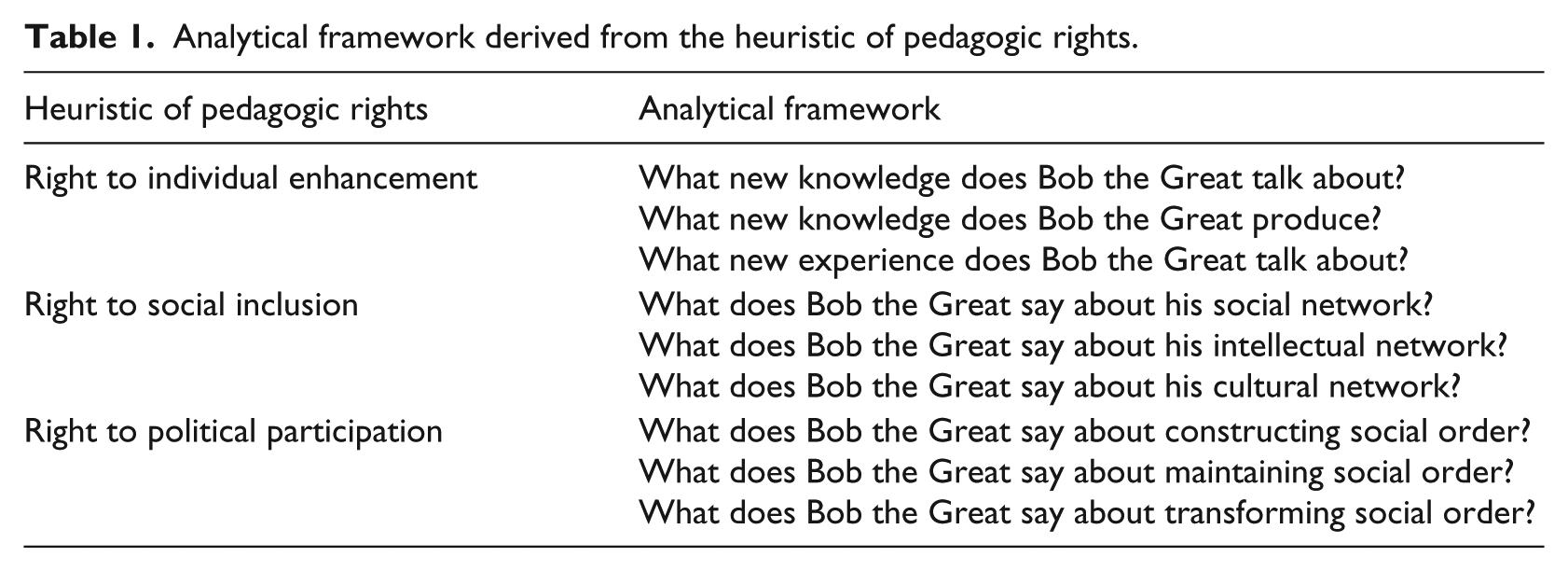
Coded data showing categories of Bob the Great’s right to individual enhancement.
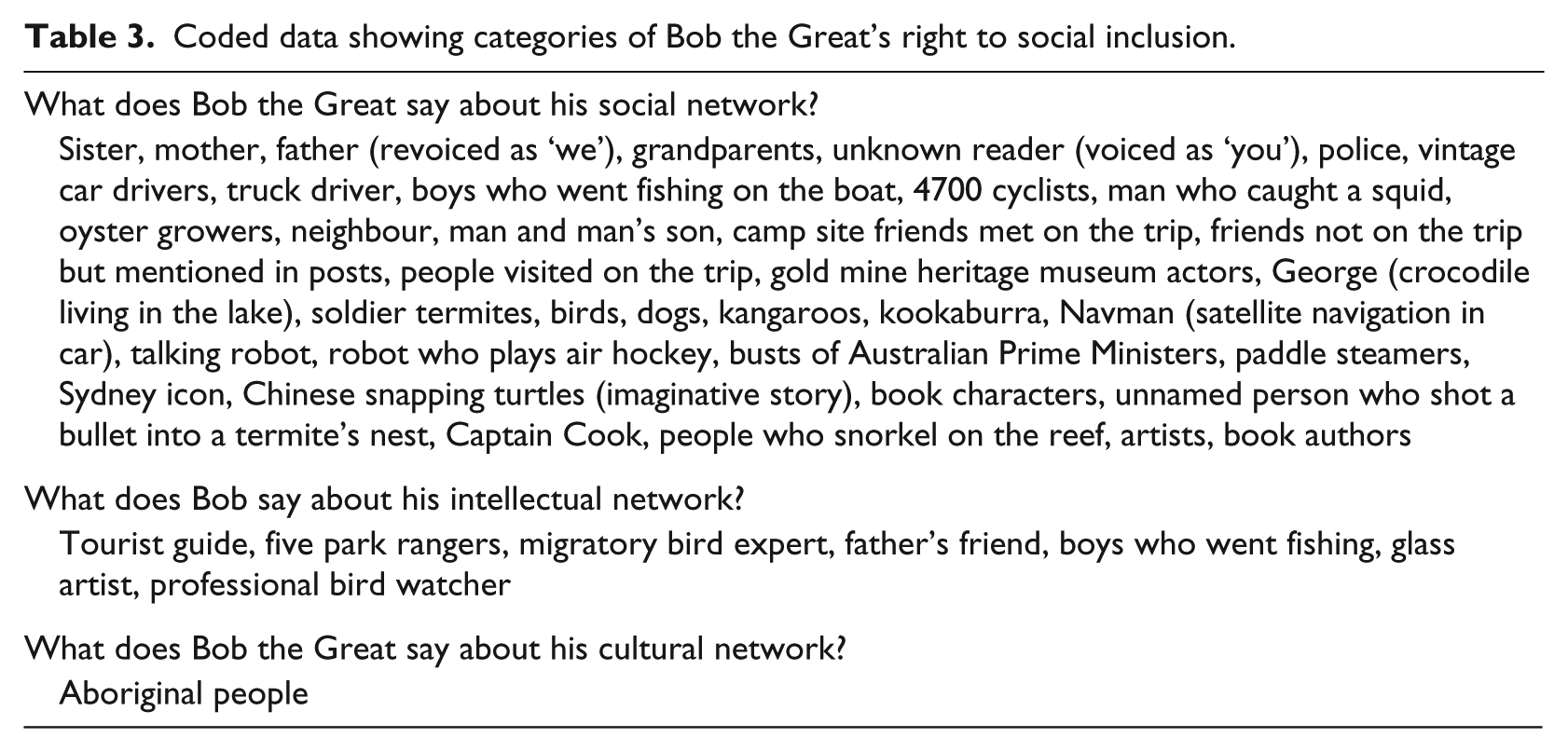
Coded data showing categories of Bob the Great’s right to social inclusion.
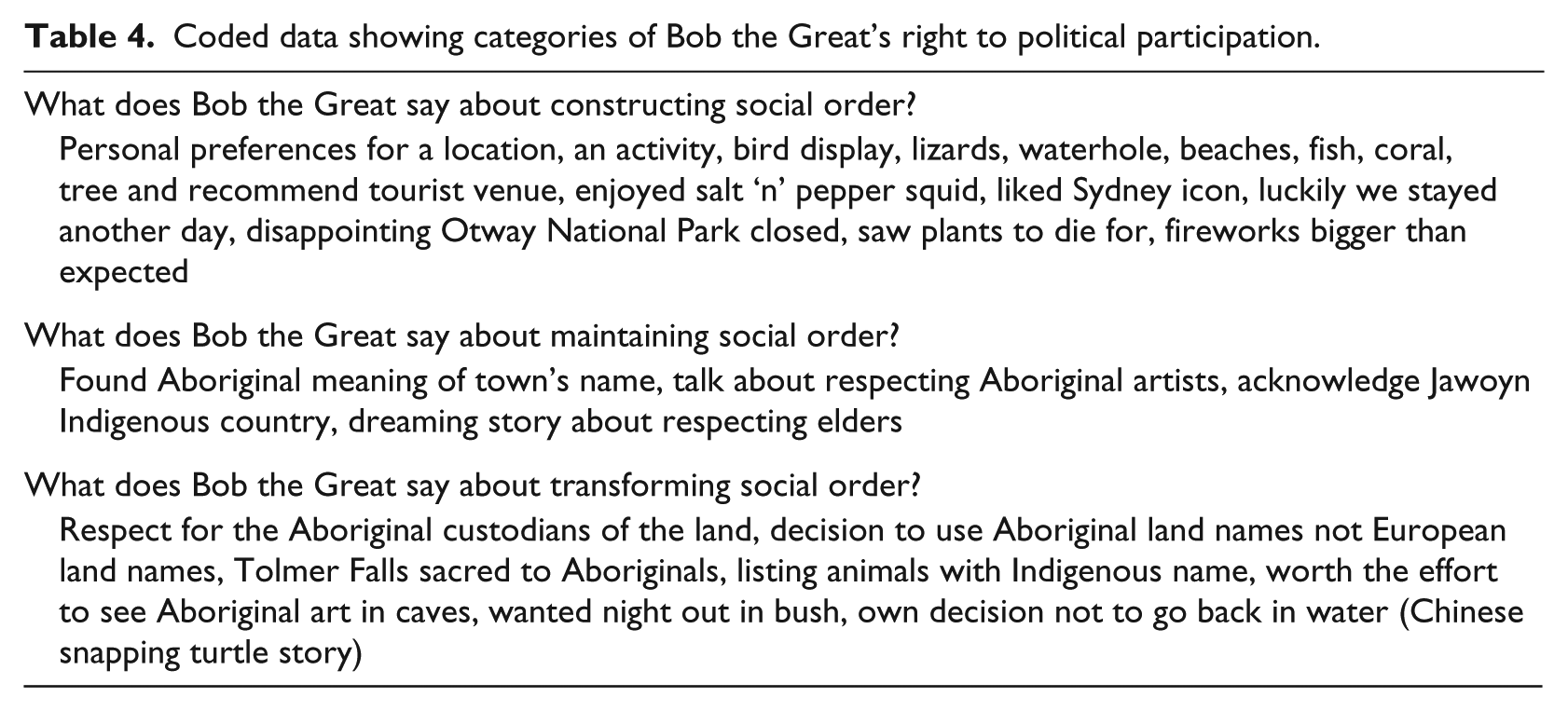
Coded data showing categories of Bob the Great’s right to political participation.
Findings
Individual enhancement
The deductive analysis shows Bob the Great talked about forms of individual enhancement in 45 posts (80% of the posts). His topics for individual enhancement covered acquisition of new knowledge, himself as the creator of new knowledge and awareness of his new experiences (see Table 2).
Altogether, his posts evidenced his confidence with the acquisition of new knowledge within the disciplinary fields of science, Indigenous art production, novel reading, mathematics and Australian history. Bob the Great’s posts evidenced his confidence in creating ‘new’ knowledge, particularly through mathematical calculations and the invention of a new scientific name for a termite mound. Bob the Great’s posts evidenced his confidence with his new experiences, involving personal achievements and personal rewards.
A typical example of a post that was coded as Bob the Great creating new knowledge is shown in Figure 3. In this blog post from Day 49, he describes a ‘tension point’ (Bernstein, 2000), that is his curiosity about termite mounds ‘shaped like humungous cow pats’ that ‘were different to the magnetic termite mounds (tall and thin and built on flood plains and facing north and south to dry out) and cathedral termite mounds (tall with large folding sections to create shade)’. He resolves this tension point, offering that ‘all things scientific need a scientific name’ so ‘we called them Termitous Cowpattious’ [sic]. He’s coined a new binomial nomenclature for classifying species that respects the heritage of using Latin as a lingua franca for science classifications.
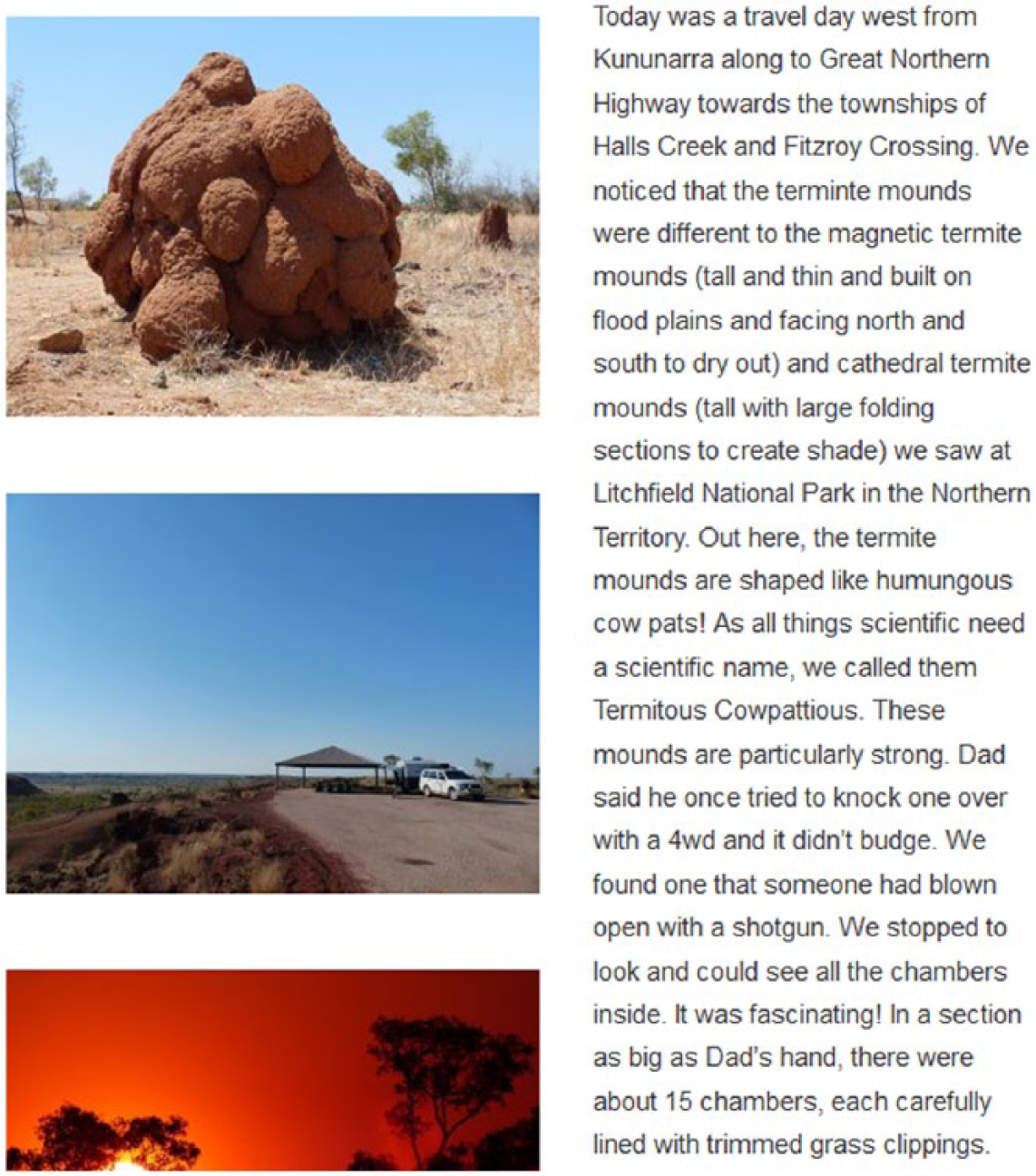
Screen shot of extract from Day 49 blog.
The Day 49 blog post generated eight replies from adults known to Bob the Great. Only one of the replies connected with the theme of the Day 49 blog. One of Bob the Great’s grandparents responded to the visual image of the termite nest, offering that the ‘Ant mounds look like Cow pats wrestling’. This rather humorous reply served to acknowledge the topic of Bob the Great’s post, thereby contributing to the condition of confidence, but did not overtly acknowledge his attempt to create new knowledge.
Social inclusion
The deductive analysis shows that Bob the Great talked about social inclusion in 54 of his posts (96% of all posts). His talk about social inclusion covered three categories: social networks (defined by social conversation), intellectual networks (defined by disciplinary conversations) and cultural networks (defined by sharing of cultural knowledge; see Table 3).
Altogether, his posts evidenced his realisation of a broad social network of present and absent participants, as well as inanimate participants and animals as social networkers. Bob the Great’s posts that were coded as evidence of his intellectual networks all identified ‘learning’ or ‘knowing’ actions and were made up of adult participants. His posts that evidenced his cultural network were all interactions with Indigenous people. In total, Bob the Great has realised a varied network of communitas.
A typical example of a post that was coded as Bob the Great participating in social networks is shown in Figure 4. In this post from Day 77, Bob the Great connects with his mother, revoicing their shared experience as ‘we’. He also describes his awareness of the social world of a number of animals, such as the pied oyster catchers (bird), who were ‘just scavenging around for food but surprisingly let me get 50 cm from them’.
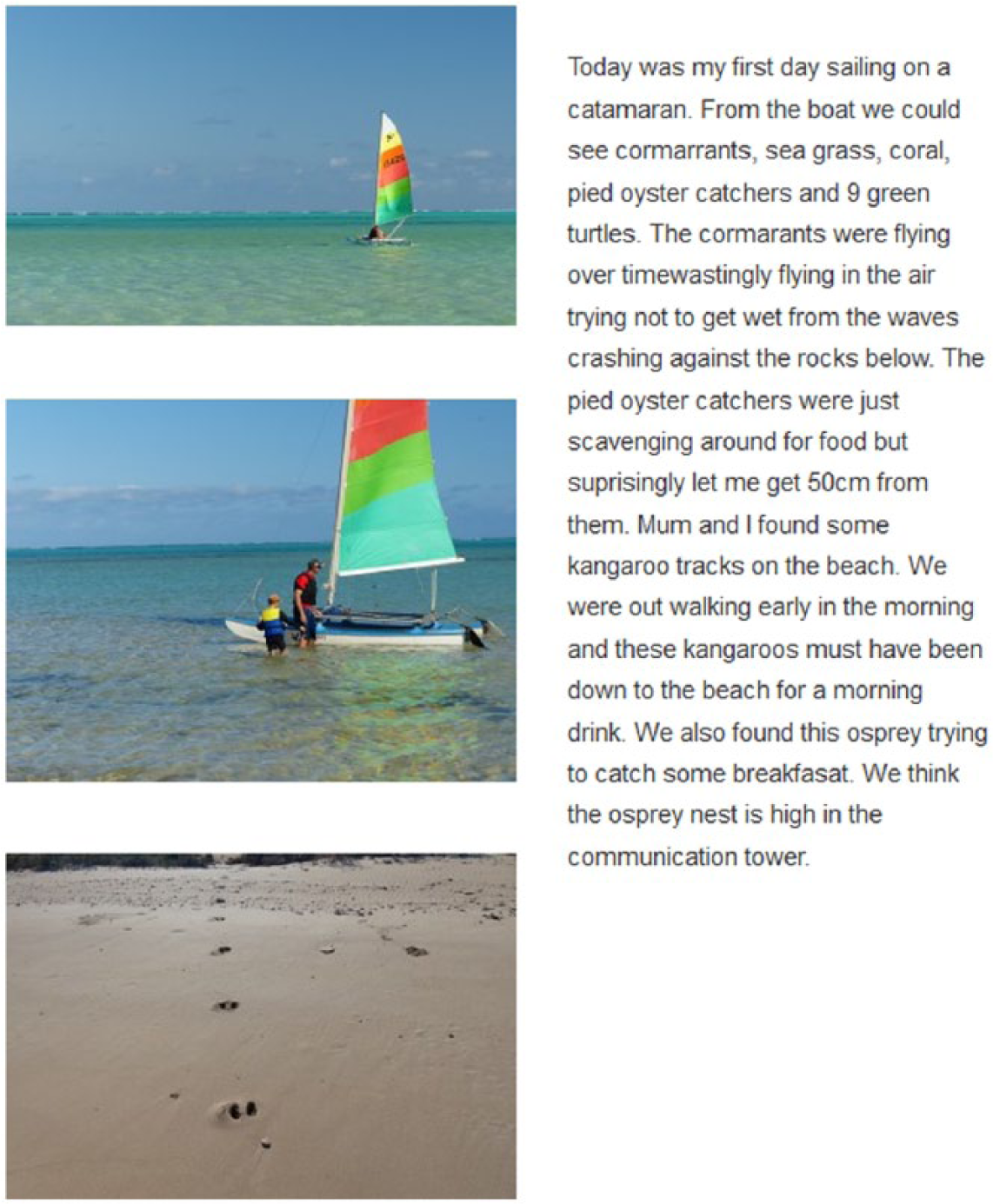
Screen shot of extract from Day 77 blog.
The Day 77 blog post generated three replies from adults known to Bob the Great. Two of the replies connected with the theme of the Day 49 blog. One of Bob the Great’s grandparents observed, ‘I’ve looked back over the blog and I think you have named a “creature” from every letter of the alphabet’. Another grandparent encouraged him to keep a log of all the birds he sighted. These replies served to acknowledge his growing realisation of the condition of communitas, albeit, in this instance, in the form of animals.
Political participation
The deductive analysis shows that Bob the Great talked about political participation in 22 posts (39% of all posts). His topics for political participation covered constructing and maintaining social order, and to a lesser extent, transforming social order (see Table 4).
Altogether, his posts on constructing social order revolved around his preferences, disappointments and changed expectations. His posts on maintaining social order focused on matters pertaining to his new knowledge around Indigenous language and an Indigenous world view. His posts that showed evidence of the transformation of his social order were about his justification for changing his actions, such as his decision to use Indigenous names for land formations instead of European names. In another two posts, Bob the Great transformed his existing social order enacting two new decisions: to tent camp in the bush by himself and to not go into a waterhole after he told his sister a story he had made up about the presence of Chinese snapping turtles. His own imaginative story became so real to him, and he admitted he was too scared to go into the water for fear of the fictitious Chinese snapping turtles. These posts show Bob the Great as politically active, participating in civic discussion and action.
A typical example of a post that was coded as Bob the Great taking a political position is shown in Figure 5. In this post, he shares his observation that the ‘mighty Tolmer falls’ is ‘the tallest Water Fall in the park!’ He also explains he and his Dad ‘aren’t allowed to swim there because it is SACRED to the Aboriginals’.
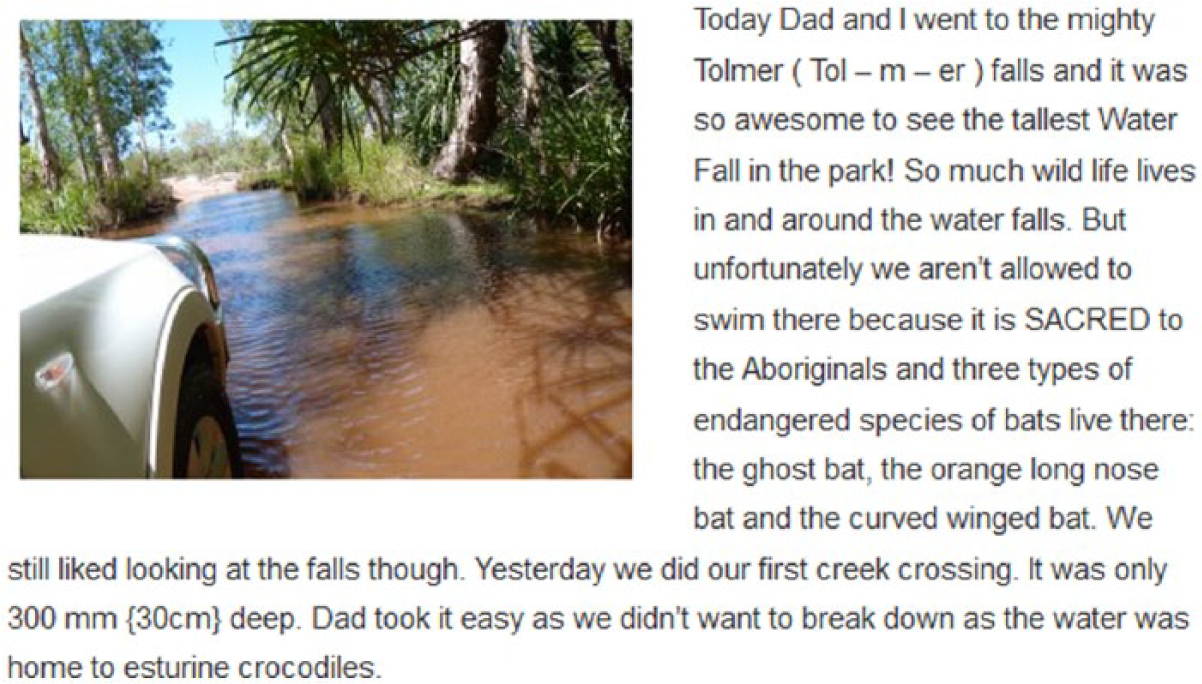
Screen shot of extract from Day 34 blog.
The Day 34 blog post generated two replies from adults known to Bob the Great. One of the replies connected with the theme of the Day 34 blog. One of Bob the Great’s grandparents offered, ‘high waterfalls are always exiting and noisy I hope you are keeping a count of all the Staghorns you see on your trip’. While this reply served to acknowledge the excitement of the tall waterfall, it does not engage with Bob the Great’s political position whereby he and his Dad made the decision to respect sacred Aboriginal sites. At no point did the external blog participants overtly acknowledge Bob the Great’s political positions. Similarly, the replies from other blog participants affirmed his pleasurable experiences but did not respond with the free-flowing opinions often found on open access blog sites (see Kendall and McDougall, 2013). The 22 blogs that evidenced Bob the Great taking a position were all devoid of replies that acknowledged or asked him to justify his political participation. In this way, the replies did not enhance civic discussion and action for Bob the Great.
Discussion
For Bernstein (2000), questions of justice and the struggles against inequity are not separated from questions of transmission and acquisition of knowledge, cognitive and social development and, ultimately, culture. In Bernstein’s view, a democratic educational system, or in this case, a democratic pedagogic encounter, requires the three rights to be guaranteed and institutionalised. The first finding is that the web 2.0 experience was not only pleasurable for Bob the Great but also enabled him to engage all three of his pedagogic rights and thus benefit from this authentic activity. As Waller (2013) noted, young children’s participation in social networking has the potential to ‘open out participative possibilities in their learning, but in a safe, controlled environment’ (p. 126). In our study, we confirm all three pedagogic rights were present and accounted for and their symbiotic relationship was also reinforced in multiple ways. For example, his posts on maintaining social order also focused on matters pertaining to the acquisition of new knowledge (individual enhancement) around Indigenous language and an Indigenous world view (political participation), mostly facilitated and reinforced by the adult intellectual network he encountered through the Ranger programme (social inclusion) or through signs and placards that were created for the purpose of sharing new knowledge with tourists (both social inclusion and individual enhancement). This latter point shows that social inclusion does not necessarily have to be a human-on-human encounter.
The second finding is that promoting one of the pedagogic rights does not necessarily imply routing for the others. This finding is evidenced in the responses from adult responders who did not seize on the opportunity to continue civic discussion and action to enhance his pedagogic right of political participation and his capacity to transform his social order or the social order of the world. Returning to the notion of ‘digital wisdom’ and Prensky’s (2011) claim that ‘while the need for wise people to discuss, define, compare, and evaluate perspectives is not changing, the means by which they do so and the quality of their efforts are growing more sophisticated because of the digital technology’ (p. 21). By drawing attention to the rituals of one young travel blogger’s experience, this research study offers a sobering reminder. Despite Bob the Great’s growing comfort with digital technology, the apparent ease with which he composed and disseminated texts that demonstrated individual enhancement and social inclusion, and the steadfast commitment of grandparents aged in their 70s and 80s to participate in online intergenerational interaction over his 56 blogs, the affordances of virtual open access online spaces as politically participatory sites was not manifested to capitalise on the transformative potential of this experience for this young child travel blogger.
Such a finding is not a complete surprise to us. To return to Ridgewell and Exley’s (2010) research mentioned earlier, they reported that web 2.0 school-based blogs engaged students in ongoing dialogue about scientific content in different ways to programmed learning and real-time face-to-face class discussions. The results, however, found that on its own, the online interactive blog did not achieve all forms of scientific literacy, most notably evaluation (Ridgewell and Exley, 2010). So too it seems for this case study, that is, it did not necessarily follow that engaging in the online interactive blog space value-added to Bob the Great’s capacity for political participation. In returning to the literature discussed in the opening paragraph of this article, we take on board Selwyn’s (2011) optimism that the dialectic affordances of blogs have the potential to boost ‘individualism of meaning-making and action’ (p. 7), but like Selwyn, we too hold concerns that the transformation is yet to take place. In closing, we reflect on these findings in relation to online social networking in school settings. Waller (2013) contends that school learning needs to take into account the way media of this ilk is used by children beyond the school walls so that they are prepared to ‘think critically about the ways technologies are shaping our society and social relationships’ (p. 127). Our finding that this child’s active participation in social media was primarily ‘social’ suggests that school-based education may need to rethink its heightened responsibility for overtly facilitating the development of the pedagogic right of political participation so that children’s three rights are guaranteed.
Footnotes
Funding
The author(s) received no financial support for the research, authorship, and/or publication of this article.