




Abstract
The COVID-19 pandemic forced the rapid move of Higher Education from face-to-face to online formats worldwide; initially referred to as emergency remote teaching. As Higher Education transitions into a “new normal” of online and blended education, how educators had transitioned to online spaces at an historically Black and disadvantaged university in South Africa was explored; more specifically, how educators were using the Sakai learning management system (LMS)/virtual learning environment (VLE). This study investigated the instructional design and educational-soundness of online pedagogical practices. To this end, forty-eight (48) online undergraduate course sites from an Ecnomic and Management Sciences faculty were reviewed from nine departments and programmes, according to socio-constructivist and Universal Design of Learning (UDL) principles. It was found that Sakai LMS/VLE tool usage was skewed towards administrative, evaluative and management functions over pedagogical functions: communication (83%), evaluation (83%), content (71%), monitoring (67%), and collaboration (52%). While most courses included varied types of learning activities, they were dominated by traditional and passive approaches, and less inter/active approaches: acquisition (89%), practice (71%), production (64%), discussion (35%), collaboration (31%), and investigation (8%). The results from this study will guide future staff development initiatives to improve LMS/VLE instructional design and online educational practice. Future research includes qualitative exploration of both staff and student experiences. Implications for equity, social justice and transformation in South African Higher Education, and related contexts, are emphasised.
Keywords
Introduction
In March 2020 South Africa went into national lockdown as the COVID-19 pandemic crossed boarders and rapidly spread across the globe. What was initially thought to be only a few weeks of lockdown evolved, along with the virus, into extended weeks, and months, of varied lockdown levels, as repeated waves of COVID-19 hit.
This disrupted many aspects of life in South Africa, including Higher Education (HE); face-to-face classes were suspended, campuses closed, and staff and students were sent home. In April and May of 2020, Higher Education Institutions (HEIs) across South Africa began “emergency remote teaching” (ERT) with educational activities taking place solely online (Van Schalkwyk, 2020). Importantly, ERT differed from online education, for it did not allow time for careful planning, intentional design and critical reflection; rather it was a rapid response to a crisis. Staff and students scrambled to adapt to this new reality.
As we settle into a “new normal” of online and blended/hybrid education, a faculty of Economic and Management Sciences at a South African university sought to review how staff had transitioned to, and continued to use, the Sakai learning management system (LMS)/virtual learning environment (VLE) “Ikamva” (a fitting isiXhosa word that can be translated to mean “future”). The purpose of this study was to establish the baseline practice of online pedagogy and instructional LMS/VLE course design by staff, to identify possible gaps needing to be filled to move from short-term surviving to long-term thriving.
Online education in (South) Africa and factors influencing practice
Information, communication and technology (ICT)-enhanced education, or e-learning, including the use of LMS’/VLEs, was adopted in South African HEIs by the mid-2000’s (Bagarukayo and Kalema, 2015). One of the advantages of online education in Africa is the increased access of students into HE in order to meet a growing student population and demand; which aligns with the larger vision of developing human capital for social and economic gains (Bervell and Umar, 2017). In fact, some believe that digitized curricula and online education can “rescue” HE in South Africa (Khoza and Mpungose, 2020).
However, the online aspect of education can be both an enabling and hindering factor; while a tool for inclusion and potentially widening access, it can also reproduce the historical exclusions of working class and rural impoverished students (Badat, 2020; Czerniewicz et al., 2020; Dziuban et al., 2018; Motala and Menon, 2020). More recently, the term “digital divide” has been used to describe this inequity (du Preez and le Grange, 2020; Badat, 2020; Czerniewicz et al., 2020; Motala and Menon, 2020). Critically, the definition of digital divide has been expanded from a lack of physical access to ICTs, to a lack of cognitive or epistemological access, such as possessing the required level of ICTs or digital literacy skills needed to make a success of online education. As du Preez and le Grange (2020: 90) put it, “Having access to technology does not guarantee that one gains epistemological access.”
Indeed, inequity remains a major concern in online education worldwide (World Bank, 2020). COVID-19 and ERT further highlighted these vulnerabilities locally and globally. In (South) Africa, these challenges include constrained resources, poor infrastructure, internet connectivity and accessibility (including limited access to digital devices, poor network coverage, bandwidth and high data costs); a lack of institutional leadership, management and support; differing online educational experiences and limited digital literacy and ICT skills for both staff and students; nonconductive remote work environments; low confidence and motivation; psychological issues; and pedagogical challenges around online curriculum and instructional (re)design (Ali, 2020; Bagarukayo and Kalema, 2015; Bervell and Umar, 2017; Biney, 2020; Darko-Adjei, 2018; Dube and Scott, 2014; Jili et al., 2021; Kaliisa and Picard, 2017; Motala and Menon, 2020; Mtebe, 2015; Noorbhai and Ojo, 2023; Noorbhai et al., 2023; Odame, 2019). Additionally, longstanding disruptions to electricity (power failures termed “loadshedding” in South Africa) exacerbate poor connectivity issues (Asamoah, 2019). Facilitating conditions such as access to digital devices; stable internet connectivity; capacity building of staff and students; and institutional support policies are needed (Bervell and Arkorful, 2020).
When it comes to online instructional design staff are largely ill-equipped to (re)design their courses for online spaces, notwithstanding the added challenges of subject discipline and device compatibility. For instance, practical and clinical disciplines (hard sciences and health professions) have further struggled with online formats (World Bank, 2020). Yet. encouragingly, mobile phone access is rapidly spreading across South Africa (and the broader African continent), with the vast majority of South African internet users connecting through their mobile devices (64%), as few have internet access at home (9.5%) due to with unequal access rates across the country (Clement, 2020; Johnson, 2021). Mobile-friendly instructional design (i.e., smartphone compatible educational design), however, remains an area of need (Ali, 2020; du Preez and le Grange, 2020).
In terms of psychological factors, the ongoing trauma that the COVID-19 pandemic has caused, along with continued challenges with online education, have resulted in reports of staff and students feeling isolated, stressed and overwhelmed (Verhoef et al., 2020; Du Toit and Verhoef, 2018; Verhoef and Coetser, 2021; Motala and Menon, 2020), and generally needing improved mental health support (Van Schalkwyk, 2020). Furthermore, during lockdown and ERT, and their physical and social distancing requirements, students lacked in-person social support from family, community and peers that contribute to student retention and success – especially for first-year and first-generation African students (Motsabi et al., 2020).
In the context of these immense challenges to online education, many historic, but further exacerbated during COVID-19 and ERT, this study was interested in how staff were using ICT and LMS at a historically black and disadvantaged South African HEI during this disruptive time (2021).
Research design and methods
While the use of LMS/VLE in sub-Saharan African HEIs has been widely adopted since the mid-2000’s, with South Africa leading the way; how they are specifically being used remains largely unknown (Asamoah, 2019; Bervell and Umar, 2017; Mtebe, 2015). One review of e-learning and ICT adoption in South African HEIs found no common approach to their use (Bagarukayo and Kalema, 2015). Therefore, as Higher Education enters long-term online and blended/hybrid education, first an understanding of how staff have been using ICTs and LMS’/VLEs must be established. These findings have implications for future pedagogy, staff development and capacity-building initiatives.
Study context
But first some background on this study’s context. At this particular South Africa university data was collected from staff and students at the start of lockdown and ahead of ERT (in 2020) to establish resource needs. High device ownership was found amongst students, with the majority being smartphones (92.9%) and laptops (69.6%); however, some devices were not internet connection compatible (15.7%) (Pather et al., 2021). While most students had a smartphone, the majority preferred using an laptop (70%) for online education. Around half (56%) of these students had internet access at home, with another half (51%) indicating they could not afford access to the internet on a daily basis. Most (73.7%) students reported having home environments conducive to online education, yet only a minority (36%) felt confident to continue their education remotely online. In order to meet these needs the university provided laptops to 28% of students and data for internet connectivity to 58% of students. Despite this support, in 2020 8% of registered students did not participate in any form of online education and 22% partially participated (Pather et al., 2021). In light of this, the university developed a flexible online teaching and learning policy (2020) that recommended a more equitable “data-lite” approach to online education. Due to immense contextual challenges, staff were encouraged to adopt asynchronous online educational practices (in 2020 and 2021), as opposed to synchronous practices.
Positive experiences of ERT for both staff and students included increased creativity and flexibility; more peer collaboration; greater online engagement and improved digital literacy skills (Pather et al., 2021). Yet challenges around a lack of infrastructure and resources; readiness for online learning and curriculum issues remained for students (Pather et al., 2021). Staff were concerned about rushed redesign of curriculum for online spaces; the quality of online assessment; their readiness for online delivery; balancing personal and professional responsibilities as they worked remotely; and a lack of boundaries with regards to work hours (Pather et al., 2021).
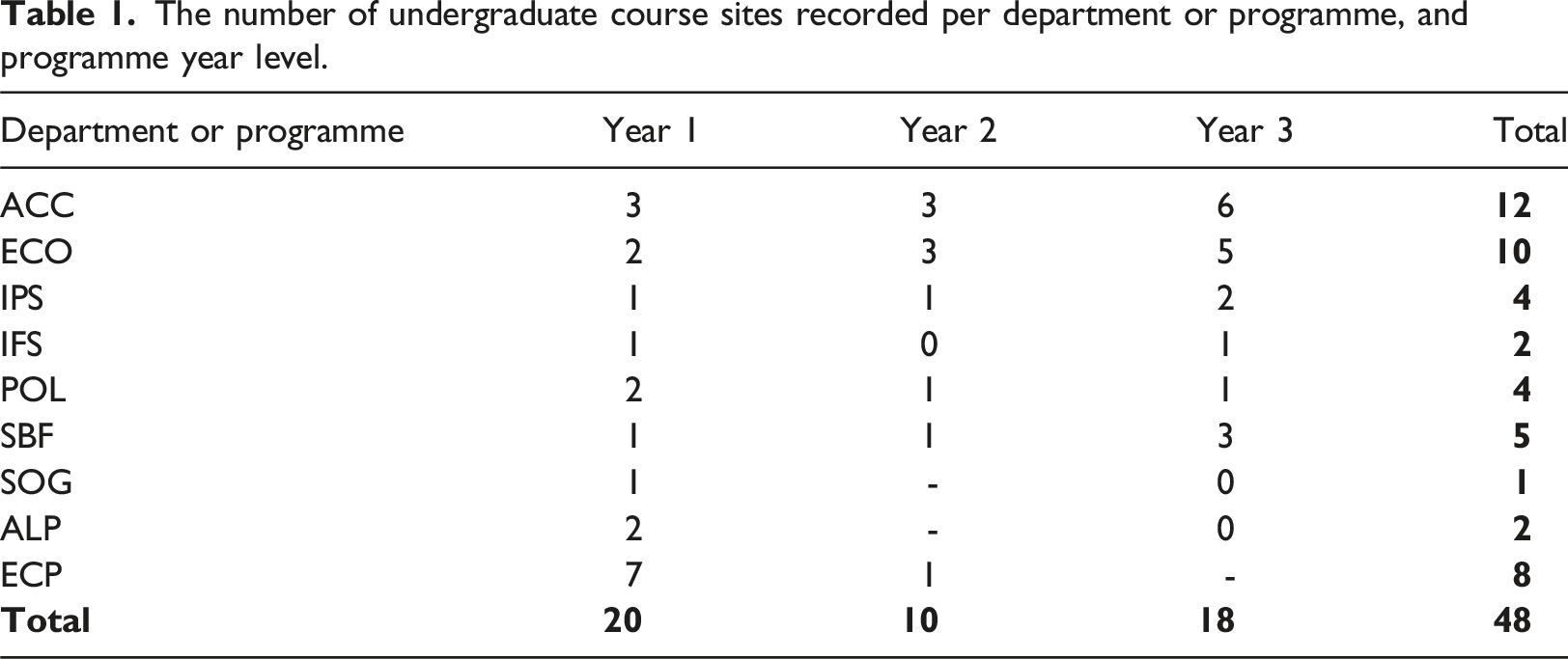
The rushed redesign of courses and students’ reporting of a lack of multifaceted support (traditionally provided by “campus life”), along with poor communication and feedback from staff during ERT, were additional reasons for this study. All undergraduate course sites, from the Faculty of Economic and Management Sciences (EMS), were invited to take part in the study, through the emailing of course convenors for LMS site access. Research ethics approval was obtained from the Humanities and Social Science Research Ethics Committee (reference number: HS21/3/18). Two researchers (the EMS faculty educationalist and an EMS postgraduate student research assistant) independently reviewed 48 undergraduate Ikamva course sites; sampling 58% of all undergraduate courses offered in the EMS faculty in 2021. This consisted of course sites from nine departments and programmes: Accounting (ACC), Economics (ECO), Industrial Psychology Department (IPS), Information Systems (IFS), Political Studies (POL), School of Business and Finance (SBF), School of Government (SOG), Academic Literacies Programme (ALP) and Extended Curriculum Programme (ECP).
Sakai learning management system/virtual learning environment
Briefly, this South African university uses a Sakai LMS/VLE. Sakai is an open-source educational software platform which was first launched in 2004 (Li and Wang, 2010). Sakai was adopted at this university in 2010, with the pilot rolling out in 2012. In comparing Sakai to other popular LMS’/VLEs (e.g., Canvas, Blackboard, Desire to Learn), advantages include its multi-platform interface and functionality in creating virtual educational spaces; video conferencing; ease of use and reliability; support of joint investigations; open source architecture; scalability; compatibility with mobile devices and other web tools; cost-effectiveness; and space for personal and private work (Dagada, 2013; Gladilina et al., 2020; Martin et al., 2008; Mohd Kasim and Khalid, 2016). The collaborative functionality of Sakai allows for integration with a variety of other online tools, supporting innovation (Li and Wang, 2010). Based on the tools available within Sakai, a variety of teaching strategies are supported (Li and Wang, 2010).
Sakai’s internal tools have been more specifically categorized by others (Munoz et al., 2015; Tagoe and Cole, 2020) as: • Communicative tools: announcements, messages, calendar, overview, etc. • Collaborative tools (i.e., a/synchronously interactive): discussion forums, chat room, wiki, blog, commons, polls, etc. • Content tools (in/active teaching and learning): resources, lessons, syllabus, podcasts, meetings, web content, etc. • Evaluative tools (assessment-related): assignments, tests & quizzes, gradebook, rubrics, etc. • Monitoring tools: site statistics, my workspace, etc.
Effective online education and instructional design: a socio-constructivist and inclusive framework
One of the goals of online education is to develop self-directed learning by students as they flexibly take ownership of their remote developmental journey. In order for online education and LMS/VLE use to be effective, it needs to be student-centered and constructivist (Abdul Talib et al., 2019; Asamoah and Oheneba-Sakyi, 2017; Cabero-Almenara et al., 2019). There should be a shift from a teacher-controlled environment to a more learner-controlled environment; with the teacher becoming a supportive facilitator (Geng, Law and Niu, 2019). Furthermore, LMS/VLE use should be community-centered (Abdul Talib et al., 2019); with students feeling supported by their online communities – especially during remote teaching and learning (Van Schalkwyk, 2020). The integration of online education into student social structures, through interactivity, collaboration and community (i.e., a socio-constructivist approaches) are recommended for student success (Olasina, 2018).
A relational online educational practice is described by Salmon (2013) in a five-stage model for active online teaching and learning: access and motivation; online socialization; information exchange; knowledge construction; and development. This model centers around inducting individual students into the online space, in order to move towards online socialization and networking, for collaborative knowledge building and personal development (Salmon, 2013). Technical support needs to be coupled with academic and social support (“e-moderating”), initially provided by the teacher (a facilitator) and later students’ peer community, in order for students to thrive in their online educational experiences (Salmon, 2013). Evidence on online socialization and support was mapped through Sakai collaborative tool usage, and online collaboration and discussion types of learning.
South Africa is often called a “rainbow” nation to reflect its diversity. According to Universal Design for Learning (UDL), inherent flexibility, through multiple ways of designing (online) education, (i.e., multiple means of engagement, representation, action and expression; which align with Salmon's (2013) model) is critical for overcoming barriers and enabling diverse students to learn and succeed (Rose, 2000). In the South African context it could be argued that the inclusivity of UDL, in seeking to address “disabilities” in the learning environment (not the student) (Rose, 2006), aligns with social justice pedagogies and addresses broader inequity and exclusion in Higher Education (Leibowitz and Bozalek, 2015). One way in which UDL practice was evidenced was through determining whether staff were using a variety of teaching and learning activities on their LMS/VLE course sites in order to more inclusively and effectively meet the learning needs of diverse student populations. In “ABC curriculum design”, a rapid design method successfully used in (re)designing curricula for online and blended formats, six learning types are described: acquisition, inquiry (investigation), collaboration, discussion, practice and production (Laurillard, 2012; Young and Perović, 2016). These six types of learning are effective for student learning for they encompass “conceptual learning, experiential learning, social constructivism, constructionism, and collaborative learning, and the corresponding principles for designing teaching and learning activities in the constructional design literature” (Laurillard, 2012: p. 93).
Briefly, learners learn through a balance of the following six types of learning activities (Laurillard, 2012): • Acquisition: teacher communicates concepts to learners (e.g., listening to teacher presentations, reading, watching videos, listening to podcasts), • Inquiry (or investigation): learners explore and interrogate teacher concepts (e.g., analyzing information, evaluating ideas, searching for new information, comparing texts, doing research) • Practice: learners put concepts into practice to achieve an outcome, and then respond to feedback (e.g., exercise tasks, practical, field trips, labs, role playing, simulations), • Discussion: learners discuss concepts with peers to develop their understanding (e.g., discussion forums, tutorials, seminars, web-conferencing), • Collaboration: learners discuss concepts and put them into practice together with their peers (e.g., group projects for joint outputs, chat rooms or wikis), • Production: learners reflect on and represent what they have learned to their teacher (e.g., producing written assignments, essays, reports, blogs, designs, presentations, artefacts, photographs, models, videos, performances, e-portfolios).
An adapted online version of the rapid ABC curriculum design methodology (Young and Perović, 2016) was introduced to the EMS faculty in 2021 for (re)designing courses for online and blended formats, as staff are responsible for the design and implementation of their LMS/VLE course sites and online practices. Evidence of UDL principles were evidenced through staffs’ use of different teaching and learning activities – or lack thereof.
Lastly, whether staff were using external ICT tools on their LMS/VLE course sites was of additional interest. In particular, were staff using ICT tools to stimulate student motivation and online engagement, or to provide additional supportive educational resources to scaffold student learning in a self-directed manner? (Bagarukayo and Kalema, 2015). Evidence of overall constructive alignment between learning outcomes, teaching, learning and assessment activities (Biggs, 1996), and scaffolding, the structured, tapered assistance of student learning (Doo et al., 2020), were sought on LMS course sites as evidence of effective online educational practice.
Therefore, LMS/VLE course sites and tool usage were reviewed according to the following: • Sakai (and ICT) tool usages, • Teaching and learning activities, • Overall online instructional design.
Results and discussion
Undergraduate Ikamva course sites mapped
The number of undergraduate course sites recorded per department or programme, and programme year level.
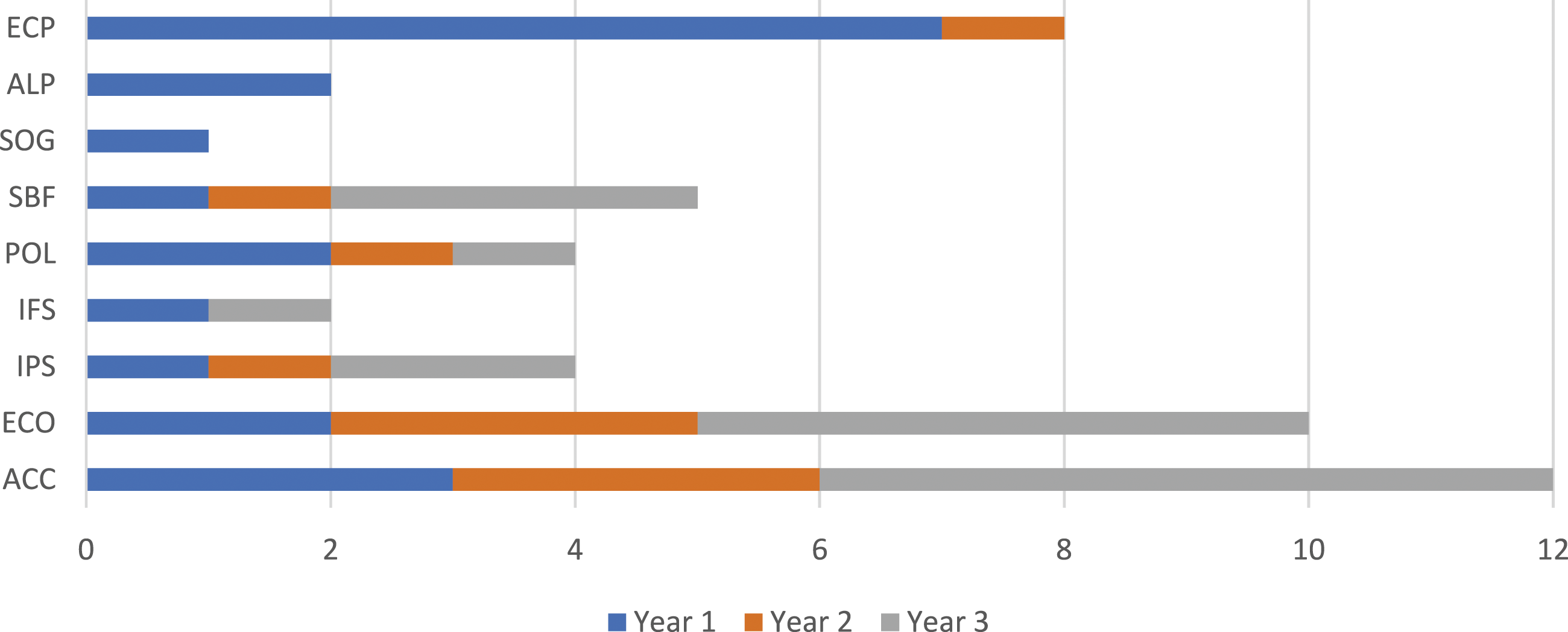
The number of undergraduate course sites mapped per department or programme and programme year-level. Totals: ACC (12), ECP (10), ECO (10), POL (4), IPS (4), IFS (2), ALP (2), SOG (1).
Sakai and Information and Communication Technology tool usage
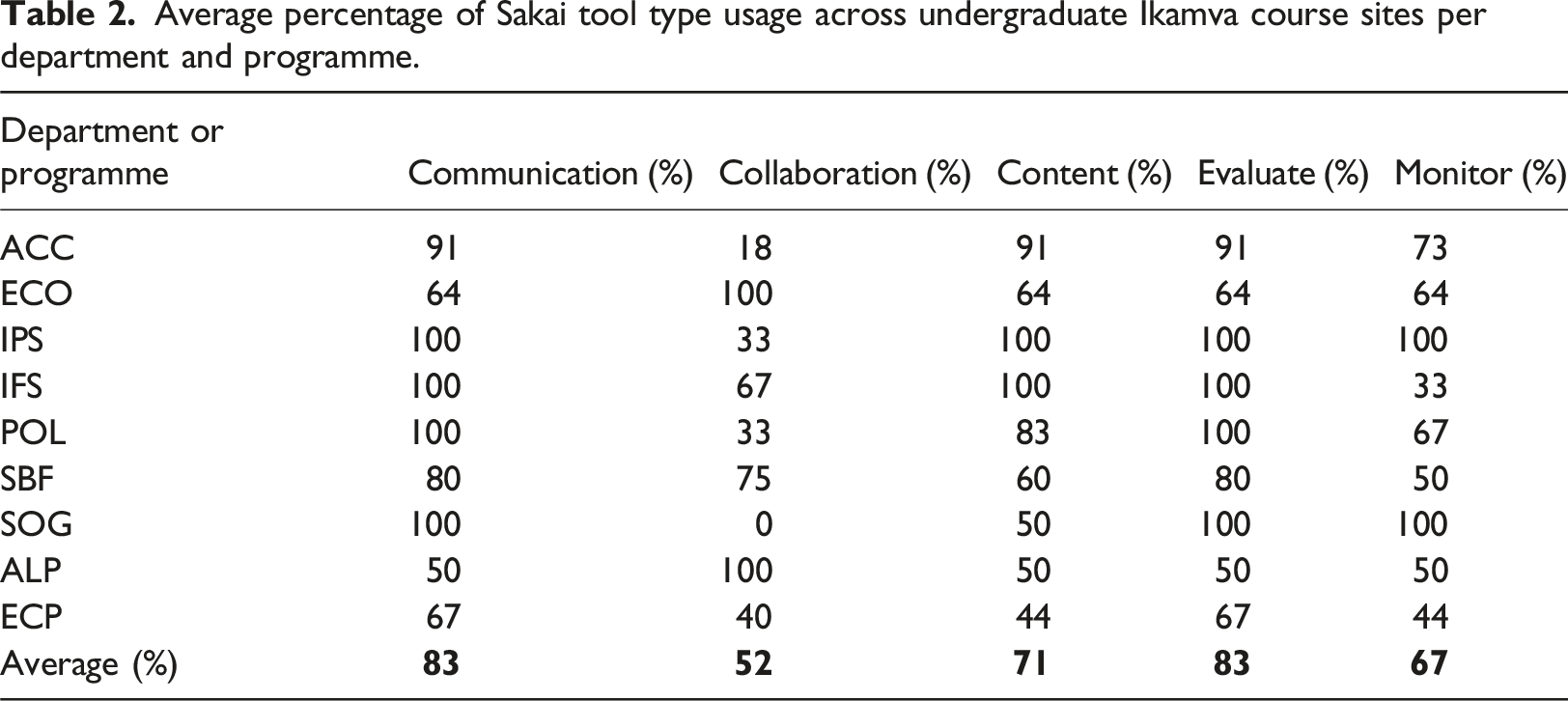
Average percentage of Sakai tool type usage across undergraduate Ikamva course sites per department and programme.
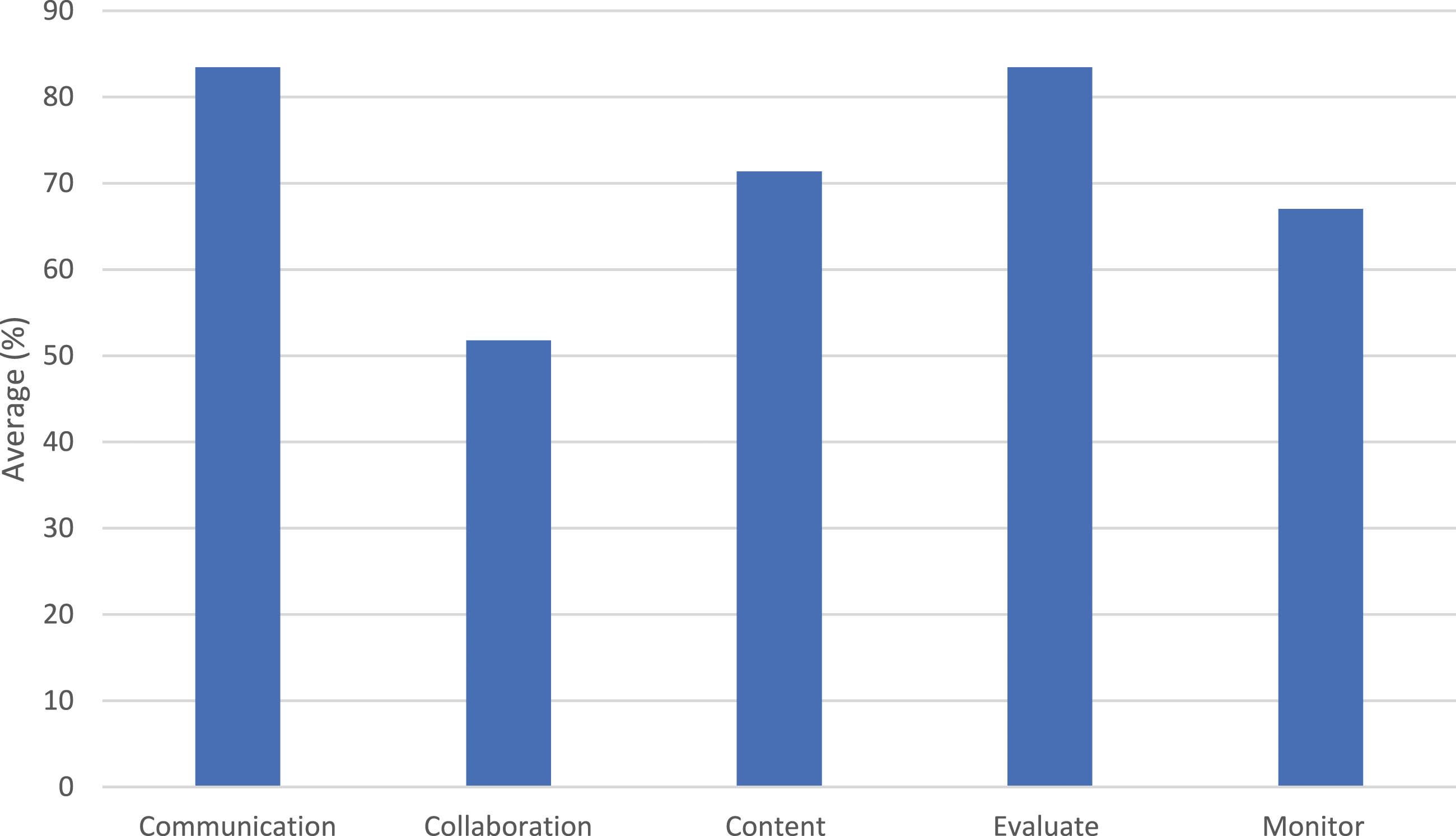
Overall average tool types usage across undergraduate course sites across the EMS faculty.
All departments and programmes used four out of five of the classifications of Sakai tool types; with seven of the nine departments and programmes using all five (78%). ACC, ECP, IPS, ALP and SOG recorded low to no use of collaboration features (see graph 3). Average use of classified Sakai tools types across departments and programmes.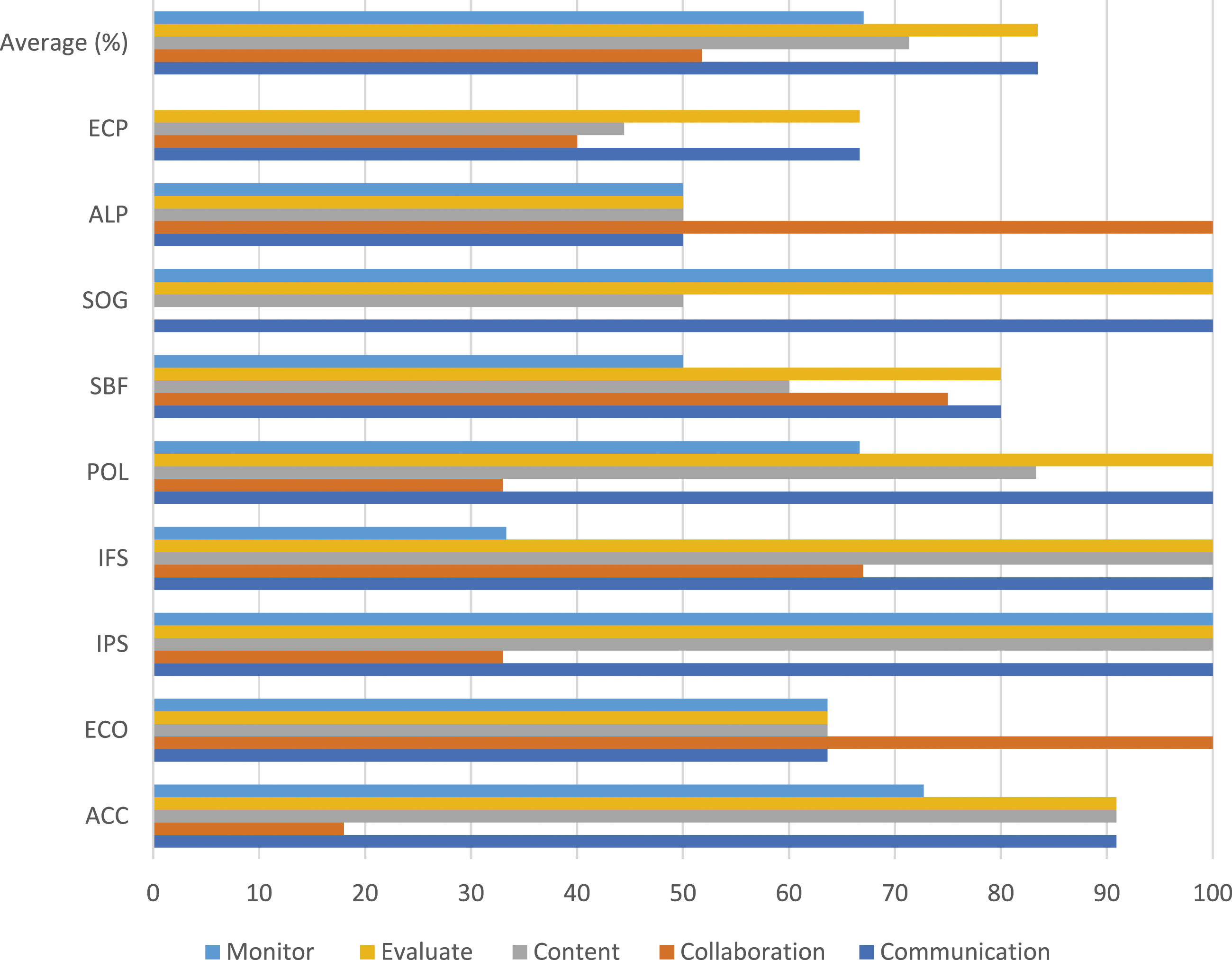
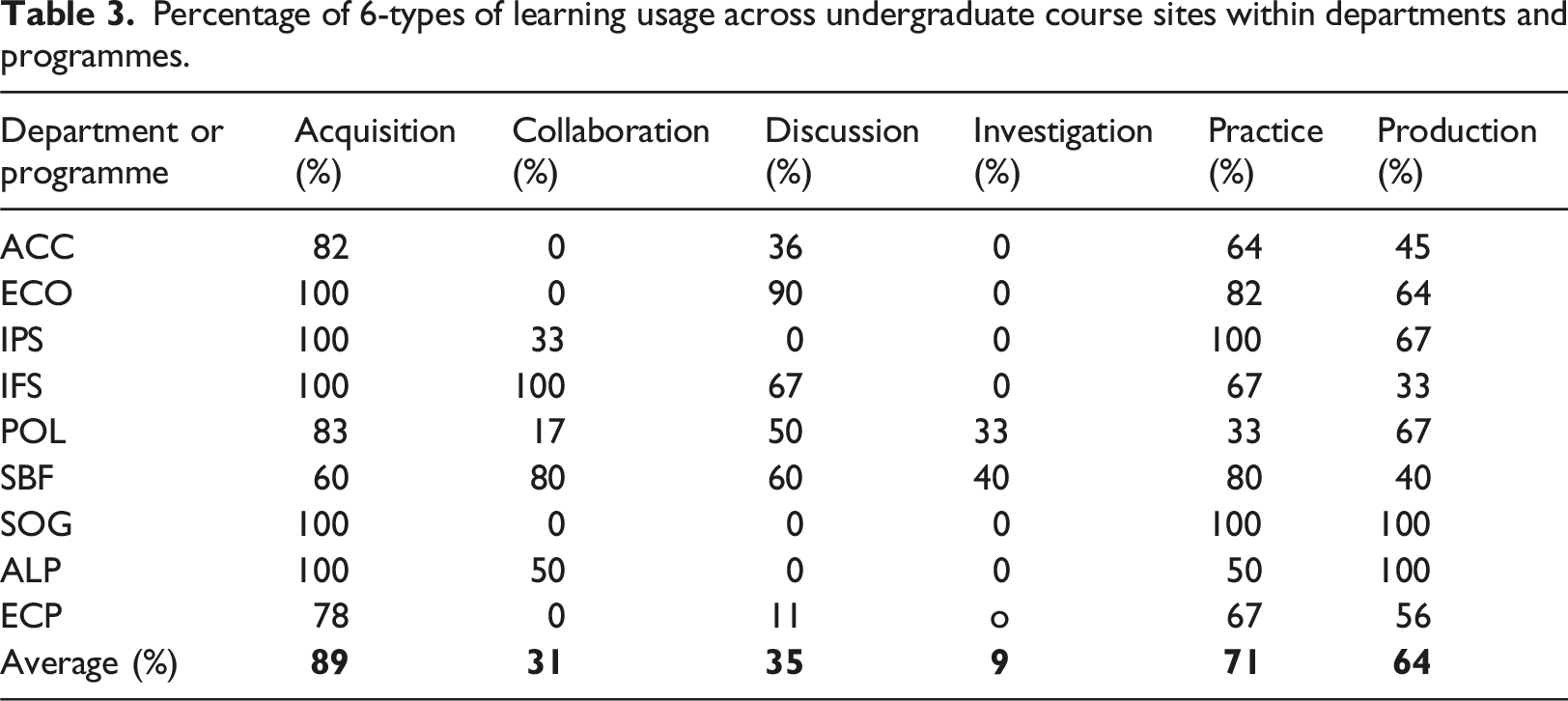
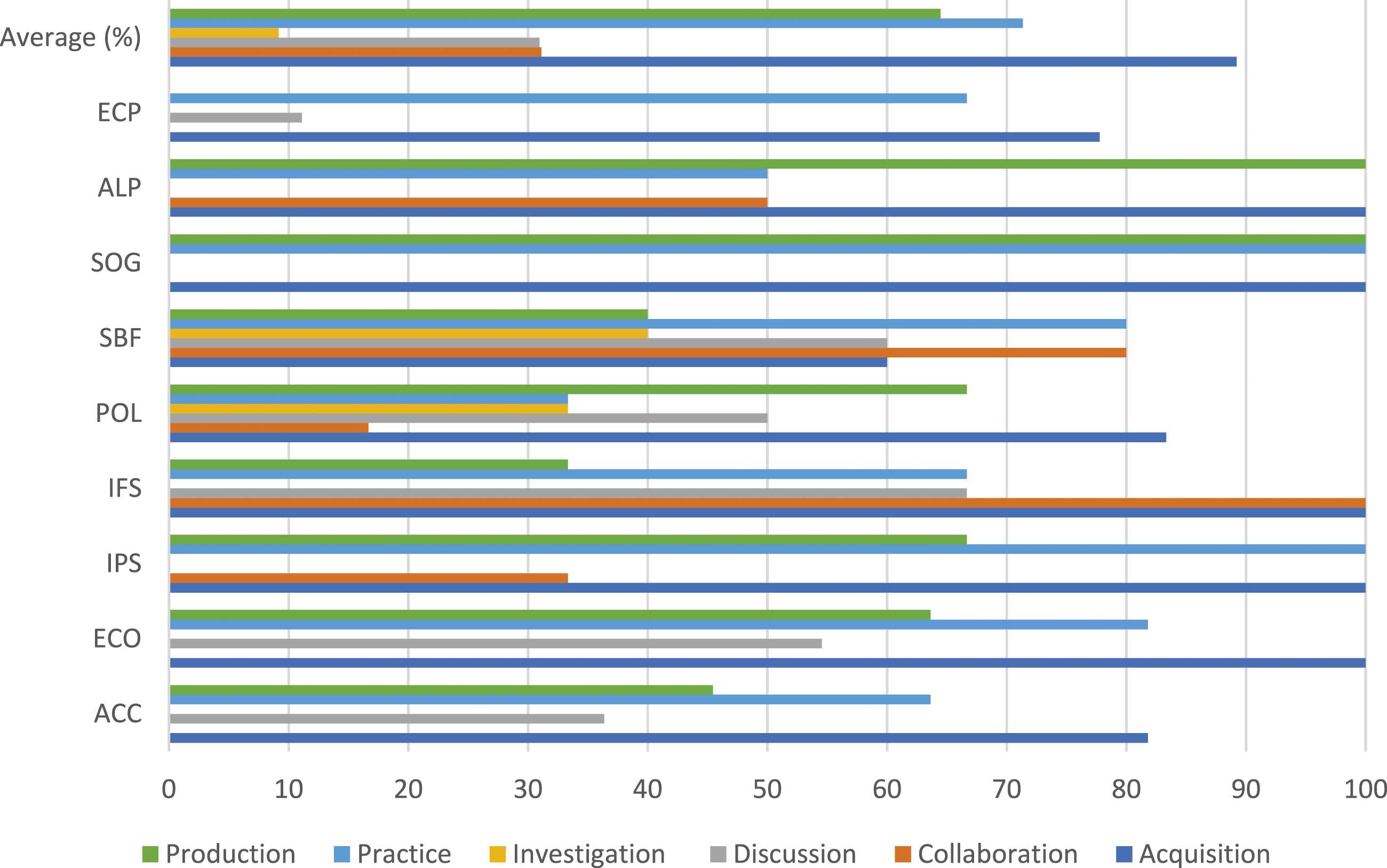
Percentage of 6-types of learning usage across undergraduate course sites within departments and programmes.
It should be noted, however, that courses may have more than a single lecturer; for instance, other lecturers, (postgraduate) teaching-assistants, administrators, and even tutors, who may also been posting announcements. Furthermore, it is possible to create announcement groups on Ikamva, meaning that certain announcements may have been viewed by selected student groups. Additionally, some courses may have multiple student groups; fulltime, part-time, and varied numbers of lecture groups, with announcements referring to specific groups only. This could contribute to the varied number and large range of announcements per courses we observed. Note: students may also control notification settings (i.e., whether or not they receive an email notification for an Ikamva announcement).
Upon content analysis of announcements, little difference was noted across departments and programmes. The composition of announcements centered around course administration and management, evaluation and content. Course administration and management included welcomes, instructions, clarifications, lecture web conferencing links, lecture cancelations, tutorial group sign ups and any relevant student administrative processes or documents (e.g., querying a mark or applying for a sick test). Evaluation consisted of announcements around assessments, such as submissions, tests, exams, marks and feedback. Content spoke to the uploading or attachment of course resources (e.g., readings, presentations, recorded lectures, class exercises, tutorials). Differences across courses related to the style (informal to formal), tone (friendly and empathetic to curt and disrespectful) and length (short to long) of the announcements.
In reflecting on effective online practice, regular two-way communication and feedback are of central importance (Boateng, 2020). This is supported by UDL’s principle of multiple means for action and expression (Rose, 2000, 2006), as well as the conversational framework for effective student learning, which includes communications between teachers and students, and student to student (Laurillard, 2012). What we observed was what appeared to be unidirectional communication from the lecturer to the student.
It was also interesting to note when announcements were sent; announcements were not limited to typical 8a.m. to 5p.m. workday hours but included early morning and late-night communications. We speculate that this reflects the loss of work-life boundaries with the blurred lines of remote work (Pather et al., 2021). Yet, staff also mentioned that some students only had access to ‘night-time’ data (provided to students for free by the university through agreements with telecommunication providers during COVID-19), meaning that they could only access the LMS/VLE at later hours versus standard workday hours.
Overall, clarity and coordination around announcements and the development of a coherent, and possibly faculty-standardized, communication strategy is recommended. Moreover, consideration of what is important enough to warrant an announcement and email notification (i.e., urgent or critical information), versus a routine communication (e.g., the uploading of a resource), should be carefully considered.
For programme year-levels, it was interesting to note a possible trend of decreasing announcements over time (see graph 4). According to the average and median values, the greatest number of announcements were posted in year-level 1 courses, with less for year level-2 and the fewest for year-level 3. We speculate that first-year students may require more scaffolding and support, and therefore communication; whereas more senior students, who have adapted to the educational context and developed some independence, and may therefore require less. Announcements per undergraduate programme year-level.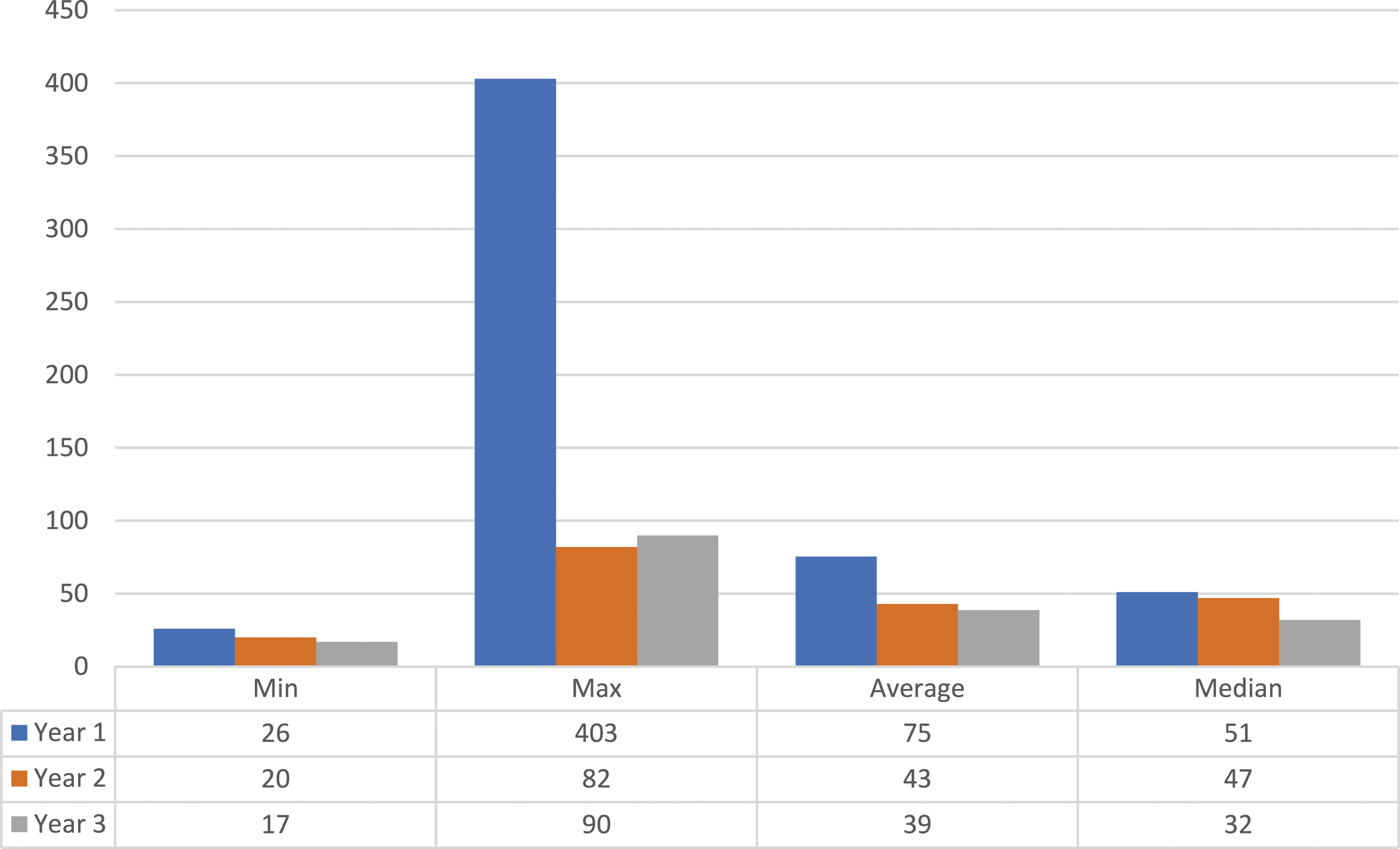
An external ICT tool often used alongside the Sakai announcements tool for communication was WhatsApp messaging service, which has been found to be effective in other settings too, due to high user penetration and preference (Motala and Menon, 2020; Mpungose, 2020; Tagoe and Cole, 2020).
Other Sakai communicative tools, such as the overview and syllabus, or course outline, features were used at low rates; 35% and 15% respectively. These tools are important for clear ‘big picture’ communication and student scaffolding (e.g., course learning outcomes, critical course information, such as the course calendar, assessment deadlines, required textbooks and contact details), which are critical in remote educational contexts. Simply uploading a course reader or module descriptor to resource folders is not a sufficient or effective form of remote communication. This lack of clear communication was evidenced in student confusion, for example, seen in the (unanswered) questions students posted in the discussion forums or chat rooms.
Evaluation speaks to the use of the assignments, tests and quizzes, gradebook, and rubric tools of Sakai. The majority of course sites had enabled the use of the Ikamva assignments, tests and quizzes (71%), and gradebook (60%) features; however, if they were all used remains unclear. The use of the rubrics tool was recorded only once. This could reflect more of an administrative bend, for instance, a necessary tool to use for students to submit their assignments online versus a way to use technology to assess students creatively and innovatively, and in a manner effective for their learning.
Content was measured by staff’s use of Sakai’s lessons and course resources tools; lessons to structure content and scaffold student learning, and course resource folders for the storage and accessing of educational materials. While asynchroneity (i.e., a “data-lite” approach) remained the university’s online education policy at the time of this study (2020-2021), the majority of staff employed synchronous lectures via Ikamva’s meetings tool (web conferencing), or external ICTs such as Google Meet or Zoom. Staff would then uploaded the recordings of these synchronous sessions to Ikamva course resource folders for students to asynchronously engage with. Unfortunately, this accounted for the majority (60%) of content tool usage as opposed to more educational lessons tool usage (40%). While course resource folders may have been well-labeled and organized (although this was not always the case), perhaps accompanied by an announcement, this was largely a passive and ineffective asynchronous teaching approach. Uploaded resources could also have been directly embedded or linked in structured and educationally-design lessons pages (see below). Overall, it suggested a skewing towards course administration as opposed to active online pedagogical strategy for student learning.
These findings are in line with similar African Sakai studies that reported communication (announcements) and content (resources) tools to be the most used and perceived to be the most valuable by staff and students (Alves et al., 2011; Asamoah and Oheneba-Sakyi, 2017). In reviewing LMS/VLE usage in South Africa, the purpose of LMS/VLEs were perceived to primarily be a tool for administration (communication), content management (storage) and evaluation (assignment submissions); not for active teaching and learning (Bagarukayo and Kalema, 2015). Using an LMS/VLE as an online repository for educational materials, instead of pedagogically, a pattern we observed, is problematic (Cabero-Almenara et al., 2019; Tagoe and Cole, 2020).
Although the lessons tool was less frequently used, evidence of emerging pedagogical practice was seen. These included the learning outcome for the lesson, directly embedded educational material in various formats and sizes (video, audio, PDF), clear instructions to scaffold self-direct learning, along with links to or the use of other Sakai tools (such a checklist, discussion forum or assignment). The use of different file sizes (e.g., low, medium or high-resolution videos) and formats (e.g., a “data-lite” PDF version of a PowerPoint presentation with a written narration transcript, and more data heavy PowerPoint presentation with audio narration or audio-visual recordings of the PowerPoint presentation) was an encouraging observation in terms of accessibility and equity for students with differing connectivity’s. The inclusion of timestamps for recordings, or presentation breakdowns (e.g., slides 1-5 cover A and prescribed textbook chapter B pages C; slides 6-10 cover X and prescribed textbook chapter Y pages Z), also scaffolded remote learning. Similarly, checklists detailing staff expectations of student engagement for each lesson or timeframe (e.g., read prescribed textbook, watch recorded lecture, complete tutorial activity, post questions on the discussion forum, and do formative quiz), were an important instructional design inclusion for explicit communication and the guiding of remote learning.
Student engagement was further stimulated with additional external ICTs (web pages, videos, Google suite applications, Padlets, etc.) as educational materials or activities. Even something as simple as a link to a recent news blog post, or image (e.g., photograph or comic) from an online newspaper, were used by staff to link taught concepts to real-world examples relevant to students. This not only built off student prior learning but sparked interest and motivation to engage further (Salmon, 2013). These intentionally designed lessons pages with aligned multi-media resources demonstrated UDL instructional design principles (Rose, 2000, 2006). Furthermore, the structuring of learning materials protected against cognitive overload. Well-designed lessons pages reflect quality asynchronous online pedagogy.
In terms of collaborative tools, such as the discussion forum, chat room, blogs, commons, wikis and polls, these were the least used Sakai features of EMS staff in their course sites. Of course, this may have been an artefact of encouraging an asynchronous approach to online learning, although asynchronous engagement on these tools is possible – and usually the norm.
When collaborative tools were used their success was usually limited, with low student participation, decreasing over time. Perhaps the initial higher rates of online collaboration and interactivity initially observed during ERT (Pather et al., 2021) decreased as heightened excitement, stress and need (i.e., wanting to connect with their peers and lecturer as they isolated at home), from the start of the pandemic and hard lockdown waned.
Successful occurrences of participation in discussion forums and blogs often took place in higher programme levels (year 3). We speculate this may have been due to the greater experience and familiarity of more senior students in self-regulated learning and online education practices. Yet, incentivization, in the form of assessment contributions (i.e., a small percentage for participation added to a student’s course mark), may have been the greatest motivation for participation.
Troublingly, often staff did not remove unused tools from their course sites included in the default course site template. This could lead to students posting (sometimes urgent or distressing) questions in discussion forums or chat rooms with no response from staff. Student confusion could also be considered an indicator of poor-instructional design.
A lack of interaction with and mismanagement of collaborative Sakai tools has been reported elsewhere (Tagoe and Cole, 2020). It further indicates the need for course site evaluations, communication strategies and continual monitoring of student online in/activity by staff.
Regarding the monitoring tools of Sakai, while the majority of course sites enabled the site statistics tool, we were unable to infer whether or not this equated to regular online tracking of student activity. Due to the many challenges with online education, routine monitoring of students’ participation was strongly encouraged; however, it was unknown if this was implemented.
Online teaching and learning
The most prominent types of learning activities used in undergraduate EMS course sites were acquisition (89%), practice (60%), and production (52%); followed by collaboration (31%) and discussion (31%); with the fewest using investigation (8%) (see Table 3 and graph 6). All departments and programmes were observed to use acquisition, practice and production; with POL and SBF being the only departments to use all 6-types of learning across all their undergraduate courses. ACC, ECO and SOG recorded no collaborative activities; IFS and SOG no discussion activities; ACC, ECO, IFS, IPS and SOG no investigative activities.
It was encouraging to observe seven, out of nine, departments and programmes used at least four different types of learning activities across their undergraduate courses (see graph 6). This speaks to UDL’s principles of multiple means of representation (varied displays of information, e.g., audio-visual multi-media accompaniments to text-heavy readings and presentations) and engagement (e.g., choice of additional learning materials for students to engage with, or formative, self-assessment activities) (Rose, 2000, 2006). Importantly, UDL proposes that students become independent self-directed learners through the increased and varied offerings (Rose, 2000, 2006), that can ‘spark’ student interest and engagement (Salmon, 2013), without them, we simply reproduce passive learners through passive design and instruction.
These overall findings (Table 3 and graph 5) reinforced the Sakai tool usage findings; a somewhat passive approach to online teaching and learning (Table 2 and graph 2). We measured a greater reliance on more traditional acquisition, followed by practice and production, teaching and learning activities (lectures, readings, tutorials and assignments) than interactive group work, discussion or student-led inquiry. This was most likely due to the challenges around online educational practice and the university’s “data-lite” asynchroneity policy. While some students may have found synchronous sessions supportive, creating much needed social presence, it also had the potential to exclude those who did not have the data or connectivity to join (Czerniewicz et al., 2020). Overall average use of 6-types of learning activities across undergraduate course sites. Variety in online teaching and learning activities across departments and programmes.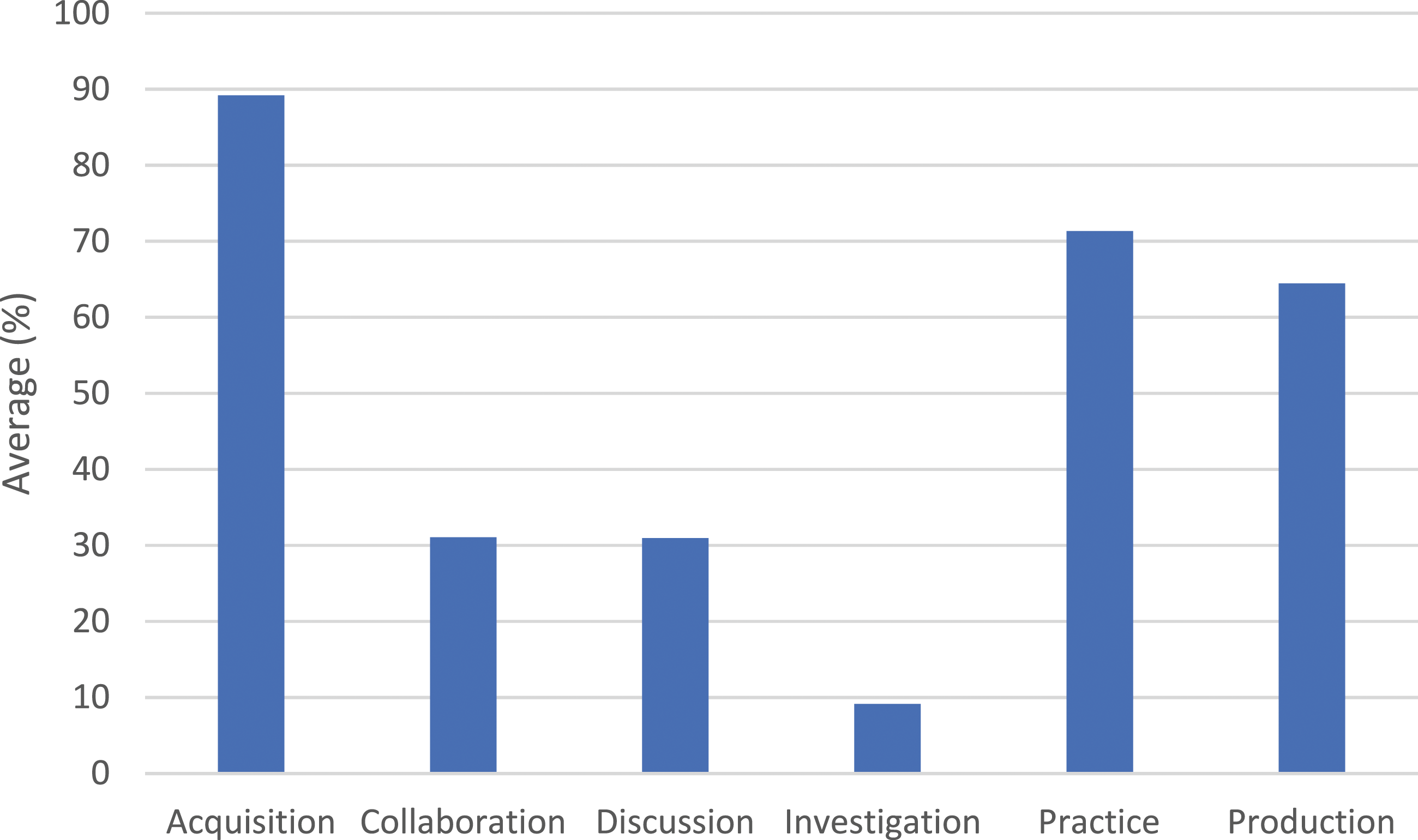
Despite the potential for active and collaborative learning on Sakai (Boateng, 2020), collaborative tools such as discussion forums, chat rooms, wikis, and blogs were largely underutilised. Observations of less discussion and collaboration in online teaching and learning activities were disheartening, especially when reports of feeling isolated and experiencing poor mental health during online education have emerged (Du Toit and Verhoef, 2018; Van Schalkwyk, 2020; Verhoef and Coetser, 2021; Verhoef et al., 2020). As aforementioned, collaboration and discussion could still have been achieved asynchronously through the use of Sakai collaborative tools, as well as ICT tools such as shared Google documents, slides and sheets. The lack of these tools could reflect a lack of awareness, understanding, or apathy towards, issues of accessibility and equity. However, as other ICT tools were in place for communication, such as WhatsApp, collaboration and discussion could have taken place on that platform, as opposed to Ikamva, for ease of access and familiarity. Whether staff specifically used WhatsApp for collaboration and discussion (e.g., during tutorials) was not explored in this study.
While online participation and engagement remained a general challenge, aligning with the reports of others (Martin et al., 2020), it remains important to effective online pedagogy, for it assists in creating a “social presence” that can promote a sense of community in these online spaces, which, in turn, could decrease students’ feelings of isolation and encourage their online inter/activity (Bagarukayo and Kalema, 2015: p. 175; Tagoe and Cole, 2020). Yet, none of the course sites mapped used the blogs, commons or polls tools, all of which could have asynchronously contributed to the development on social presence.
Similarly, staff were encouraged to ‘humanise’ their online spaces in other ways, such as including a personal photograph, video or use of audio/voice-notes on their course sites. This was observed in a minority of course sites.
Lastly, adopting a different strategy, one study suggests the gamification of the Sakai LMS as a way to stimulate student interest, engagement and learning (Ofosu-Ampong and Boateng, 2018). While Sakai checklists and polls provide an element of interactivity for students, they were unfortunately rarely used in the course sites mapped. On some lessons pages, however, staff did include formative assessment questions for student self-assessment, which added an element of interactivity.
Conclusion
This study describes Sakai LMS/VLE usage by staff from a faculty of Economic and Management Sciences at a South African university. The hope was to observe evidence of a successful transition from passive administrative and repository LMS/VLE usage to a more active and pedagogical use, and indeed this was found, to a degree, in diverse ways across undergraduate EMS departments and programmes. However, the underutilization of Sakai functionality, a lack of consistency and standardization in effective, fit-for-purpose online pedagogy and instructional course design was also observed.
While it was important for the university to promote flexibility in online educational practices, especially as one size does not fit all in a diverse context (Sims et al., 2023), a minimum standard of quality and effective online and blended education practice should be established and maintained moving forwards. The many recommendations around enhanced support for digital literacy development and online instructional design are supported by this study. In particular, the structuring and scaffolding of online teaching, and development an online community, through the use of collaborative tools to support student engagement and active learning.
Pre-COVID-19 resistance by staff and students across (South) Africa to adopt LMS usage was reported (Asamoah, 2019; Asamoah and Oheneba-Sakyi, 2017; Khoza and Mpungose, 2020). However, ERT was a transformative learning experience for both staff and students (Khoza and Mpungose, 2020) with both expressing positive perceptions of online education during COVID-19 (Noorbhai et al., 2023; Noorbhai and Ojo, 2023). While the disruptions caused by COVID-19 has highlighted immense challenges, it has also provided a critical opportunity to reimagine and more equitably transform educational practices. Czerniewicz et al. (2020: 963) summarises it well, “The pandemic has ironically provided possibilities for policy reformulations as well as for entrenching new practices that foreground flexible and equitable forms of provision. It has brought into focus numerous examples of extraordinary resilience, networks and at times unexpected alliances of collaboration and support, including inspiring creativity, examples of technology used for equity purposes and moments of optimism.”
Yet, one cannot simply uncritically adopt technology in education and ignore the diverse and varied lived experiences of our students and staff, or else we may risk their disembodiment, leading to feeling of disconnect, alienation and isolation (Du Toit and Verhoef, 2018; Verhoef et al., 2020; Moorhouse and Kohnke, 2021). First there is a need to reflect on how technology has been used over the past couple years in order to use technology as a transformative tool in Higher Education going forwards (Du Toit and Verhoef, 2018). Simply put, in all this disruption, there is a need for care - a reminder of who is impacted by these evolutions and innovations (Czerniewicz et al., 2020). Socio-constructivist and UDL approaches provide helpful design and evaluative frameworks for this agenda.
Future research could explore instructional design and online educational practices in other disciplines and HEIs, supported by qualitative explorations of staff and student experiences and perceptions of their LMS’/VLEs. For example, interview could explore staff preparedness and reasons behind their in online pedagogy and instructional design choices; student preferences regarding LMS/VLE usage for most effective learning; as well as the impact of different online pedagogies and LMS/VLE instructional designs on student outcomes (e.g., pass, retention and throughput rates).
To close, in light of the South Africa context, which is likely to resonate with many international contexts in the global South, online educational practice must move towards equity and social justice (Motala and Menon, 2020; Walwyn, 2020). This includes resisting the desire to ‘globalise’, ‘Westernise’ and ‘modernise’ (i.e., uncritically adopting ICTs), as these are simply socially-legitimate cultural homogenation and reproductions of coloniality, which could risk the losing of African identities, values, knowledges and practices that make this complex and challenging Higher Education system so rich (Njenga, 2017). In sum, in using any technological innovation, one needs to remain both critical and compassionate; cognizant of longstanding and recent calls for transformation of Higher Education for epistemological access and success for all.
Footnotes
Declaration of conflicting interests
The author(s) declared no potential conflicts of interest with respect to the research, authorship, and/or publication of this article.
Funding
The author(s) received no financial support for the research, authorship, and/or publication of this article.
Ethical statement

Author Biography
Danica Sims is a lecturer and early career researcher in the Department of Education at the University of Oxford, and a research associate at the University of Johannesburg. Her research interests include assessment, curriculum development, faculty development, qualitative research methodologies and online education. As a South African, she is passionate about using critical perspectives and amplifying marginalised voices from the global South.