




Abstract
This research investigates student’s perceptions around their online learning experience during the sanitary confinement period. It tests the impact of social presence on the performance of learners through an integrator model that includes direct, mediating and moderating relationships. This research uses the method of structural equations (AMOS 21) and the macro Spss for the test of mediating and moderating effects. The model is tested on a sample of 234 students interviewed through a self-administered questionnaire. The results of this study showed that social presence influences positively collaborative learning, learner satisfaction and engagement. Satisfaction and engagement play a mediating role between collaborative learning and academic performance. Finally, the results proved the moderating role of selfefficacy on the relationship between satisfaction-performance and engagement-performance has been invalidated. From where, it is recommended that teachers design their learning modules based on collaborative activities and using interactive social media tools to enhance the e-learning experience.
Keywords
Introduction
With increasing technological development and the acknowledged prominence of the Internet and social media, online learning is on the rise, particularly through social networking sites. Indeed, the use of online technology has steadily increased over the past two decades (Allen and Seaman, 2013). This is done through the use of interactive applications and platforms, as well as the synchronous and asynchronous features on social media sites. This growth reflects the importance given to this type of teaching, as a very flexible form of learning, especially in a context of crisis such as that caused by COVID-19. Indeed, since its inception in early 2020, this pandemic has been considered a “Black Swan Event” (He and Harris, 2020; Taleb, 2008), a shocking event that has changed the world (Grech and Grech, 2020; Stefano et al., 2020). Indeed, COVID-19 has caused profound changes in all aspects of human life and has led us to believe that the world will not be the same after its demise. Nevertheless, while the consequent effects of this pandemic appear to have a significant impact on the attitudes and behaviours of individuals and organizations
Around the education system, these measures have led to reconsider the place given to e-Learning, compared to traditional learning (Maqableh and Alia, 2021). Teachers and tutors are now forced to rethink their teaching methods as well as the learning tools used and to appeal to online learning to resolve the problem linked to the conjunction of physical distancing and educational continuity during the period of sanitary confinement (Yekefallah et al., 2021).
Nevertheless, since the first experiences of distance learning, this type of teaching has been linked to certain failures felt by users, in particular around a lack of humanisation and interpersonal connection, which has always been a barrier to its use (Simuth and Sarmany-Schuller, 2012). And yet, the advocates of distance education have not stopped looking for ways of interactivity in order to create the perception of a social presence. This presence is not only comforting to the user but also linked successfully to important online learning outcome variables ligne (Richardson et al., 2016) such as satisfaction (Maqableh and Alia, 2021; Gunawardena and Zittle, 1997) engagement (Gallini and Moely, 2003) and learner performance (Al-Rahmi and Zeki, 2017). Thus, it is recommended that socio-emotional aspects be taken into account in e-Learning with a view to making it a positive and desired experience for the learners.
On the other hand, according to Vygotsky’s socioconstructivist theory, social presence is important in the learning process for not only psychological but also pedagogic reasons (Russo and Benson, 2005; Picciano, 2002). Indeed, according to this theory, developing knowledge necessarily involves a phase of social interaction with others (Vygotsky, 1986). This interaction is likely to facilitate the acquisition of knowledge and skills (Vygotsky, 1986). Thus, the collaborative approach of learning is likely to have a positive effect on the attitudes and behaviors of learners and contribute to the success of learning’s activity (Johnson and Johnson, 1990). In this perspective, this research aims to study the following problem: what extent does perceived social presence should be influence the performance of learners during the COVID-19 pandemic?
Literature review
Social media
Kaplan and Haenlein (2010) define social media as “a group of Internet based applications that build on the ideological and technological foundations of Web 2.0, and that allow the creation and exchange of user generated content”. So, referring to this definition and that of Peters et al. (2013), we define social media as Internet-based communication systems that support the creation and exchange of content between virtual links. The rise of social media as collaborative communication channels has created disruptions in the habits of Internet users in a bid to overcome COVID-19 induced restrictions (Khan et al., 2021).
These have evolved from passive consumers to content creators, which are also prosumers or post-consumers (Cova and Cova, 2009). The term User Generated Content (UGC) (Rachna and Khajuria, 2017) testifies to this phenomenon by designating the rise of content produced on the Web by Internet users themselves, which has led to a new version of the Internet that is intended to be participatory, creative, and playful. On the other hand, the physical distance required by the pandemic has stimulated the increasing use of mediation technologies to maintain social connectivity (Kirk and Rifkin, 2020). According to Mnkandla and Minnaar (2017), the adoption of social media platforms in e-Learning has clearly led to a reconsideration of distance learning. They facilitate learning and promote the development of knowledge in higher education institutions (Khan et al., 2021). In this case, the learner uses digital social networks to play a proactive role in the development of the course: he shares content, videos and photos related to the teaching module, discusses in real time via the Forums, Messenger, Skype or Google Talk but also publishes and reviews information on blogs and social networks (Abi-Rafeh and Azzi, 2020; Khan, 2020).
Social presence
In a mediated environment, social presence refers to the degree to which users perceive one or more other people to be present via the mediated interface (Lim et al., 2015). This definition is an interpretation of the definition of Short et al. (1976) which were the first to introduce the concept of social presence in the field of social psychology and communication. Short et al. (1976) define social presence as “degree of salience of the other person in the interaction and the consequent salience of the interpersonal relationships” (p. 65). In this conceptualization, social presence has emerged as a social and communicational factor that affects the perception of online learners of psychological distance with their instructors on the one hand and learners on the other (Gunawardena and Mclsaac, 2004).
Other interpretations of this definition, such as that of Gunawardena (1995), have led to the view of social presence as the degree to which a person is perceived as a “real person” in a mediated communication. Social presence is therefore a psychological state in which a technology user experiences virtual presence with other social actors when receiving a certain social or communication signal (Lee, 2004). This perception and awareness of the presence of others would encourage interaction as claimed by Kim and Biocca (1997). The sense of social presence is therefore essential in order to understand the psychological and emotional relationship that develops between learners despite the distance (Kim, 2011). This notion is useful for detecting the effects of such a perception on the behavior of users of a mediated interface, in particular their propensity to interact (Tu and McIsaac, 2002) or to engage more in e-Learning activities (Molinillo et al., 2018).
Collaborative learning
According to Panitz (1996), collaboration is defined as the cooperation and interaction between members of a group who work together to achieve a set of common goals. In pedagogy, collaborative learning is the set of teaching strategies that foster the collaboration of learners to optimize their own and others’ learning (Maharani et al., 2020; Johnson and Johnson, 1999). In this type of learning, learners do more than listen passively to the lesson; they are encouraged to participate in knowledge generation by speaking, writing, reading, reflecting and interacting (Laal et al., 2013
Learner satisfaction
The success of e-Learning is based on several factors, including user satisfaction. Indeed, the degree of satisfaction of learners with e-learning plays an important role in whether or not this type of learning is adopted. In the context of e-learning, Sun et al. (2008) define learner satisfaction with e-learning (Lee et al., 2009; Szymanski and Hise, 2000
In the context of collaborative learning, satisfaction has a particular impact on the attitudes of learners towards group work and the learning atmosphere in general (Guuawardena et al., 2001). From this perspective, Dewiyanti et al. (2007) defined learner satisfaction with collaborative learning as the degree to which a learner feels positively associated with their own collaborative learning experiences.
Student engagement
It is widely accepted that the concept of engagement is essential for the success of learning activities. Nevertheless, there is no consensus on the definition of this important concept. Multiple definitions of engagement were provided by the research. These definitions are based on various and often overlapping concepts such as effort, interest, persistence, motivation or involvement (Bouvier et al., 2014b; Molinari et al., 2016). In this case, we focus our research on the emotional dimension of engagement by adopting the definition of Rueda et al. (2017) that learner engagement refers to the degree and intensity of a student’s emotional involvement, his motivation to collaborate, participate and contribute during the course activities
Academic performance
According to Salgado (2013), performance is, in practice, a vague and multidimensional notion that makes sense only in the context in which it is used. In the context of e-learning, Zhang et al. (2010) see effectiveness and efficiency as important criteria for the performance of e-learning. Effectiveness refers to the achievement of the objectives of the educational experience, while efficiency reflects the maximization of the benefits of e-learning (Zhang et al., 2010). Applied to individuals, learning performance refers to the extent to which learners achieve the course’s learning objectives in terms of acquiring knowledge, understanding key concepts and developing skills. (Alavi et al., 1997). This is also consistent with the definition advanced by Narad and Abdullah (2016) that academic performance refers to the knowledge acquired and assessed by a teacher’s grades in response to the educational objectives set by students and teachers over a specific period of time.
Self-efficacy
The self-efficacy, is a notion derived from Bandura’s sociocognitive theory (Bandura, 1986) according to which individual behaviour, cognitive factors and the environment influence each other in a dynamic and reciprocal way (Bandura, 2002; Gist and Mitchell, 1992). In terms of learning, self-efficacy refers to the learner’s belief in his or her ability to successfully organize and perform a task in an e-Learning context (Zimmerman, 2000). This definition emphasizes the importance of an individual’s confidence in their skills and the impact of that confidence on their achievements. Indeed, the feeling of effectiveness is likely to affect the motivation and behaviour of the individual and intervenes so that he implements his skills in order to achieve a goal. In this regard, it is important to point out that the self-efficacy is likely to influence the human experience in all its phases. It acts on the setting of the objectives for which people invest themselves, on the amount of energy spent to achieve these objectives and on the probability of achieving specific levels of behavioural performance. In addition, self-efficacy is particularly important as it incorporates the person’s judgment on what he or she might do in the future. It also incorporates its judgments on its ability to apply its skills to broader tasks and in various situations (Compeau and Higgins, 1995). In the context of the use of technology, Compeau and Higgins (1995) consider that individuals would use computers if they perceived that there would be gains associated with their use.
Based on this review of the literature, this research seeks to answer the following questions: ⁃ Would the perception of a social presence on social networks influence collaborative learning, satisfaction and learners’engagement? ⁃ Is the relationship between collaborative learning and learners’ performance mediated by their satisfaction and engagement? ⁃ Does learners’self-efficacy moderate the satisfaction-performance and engagement-performance relationships in the context of e-Learning?
Conceptual model and development of hypotheses
The model addressed in this research is theoretically based on findings related to social cognitive theory (Bandura, 1986), the active learning paradigm (Bonwel and Eison, 1991) and the socioconstructivist approach (Vygotsky, 1986). In this perspective, the model below (Figure 1) looks at the impact of social presence and collaborative atmosphere on learner satisfaction, engagement and academic performance. To do this, it tests a set of direct, mediating and moderating effects that make up all of our research hypotheses as follows: Conceptual model of research.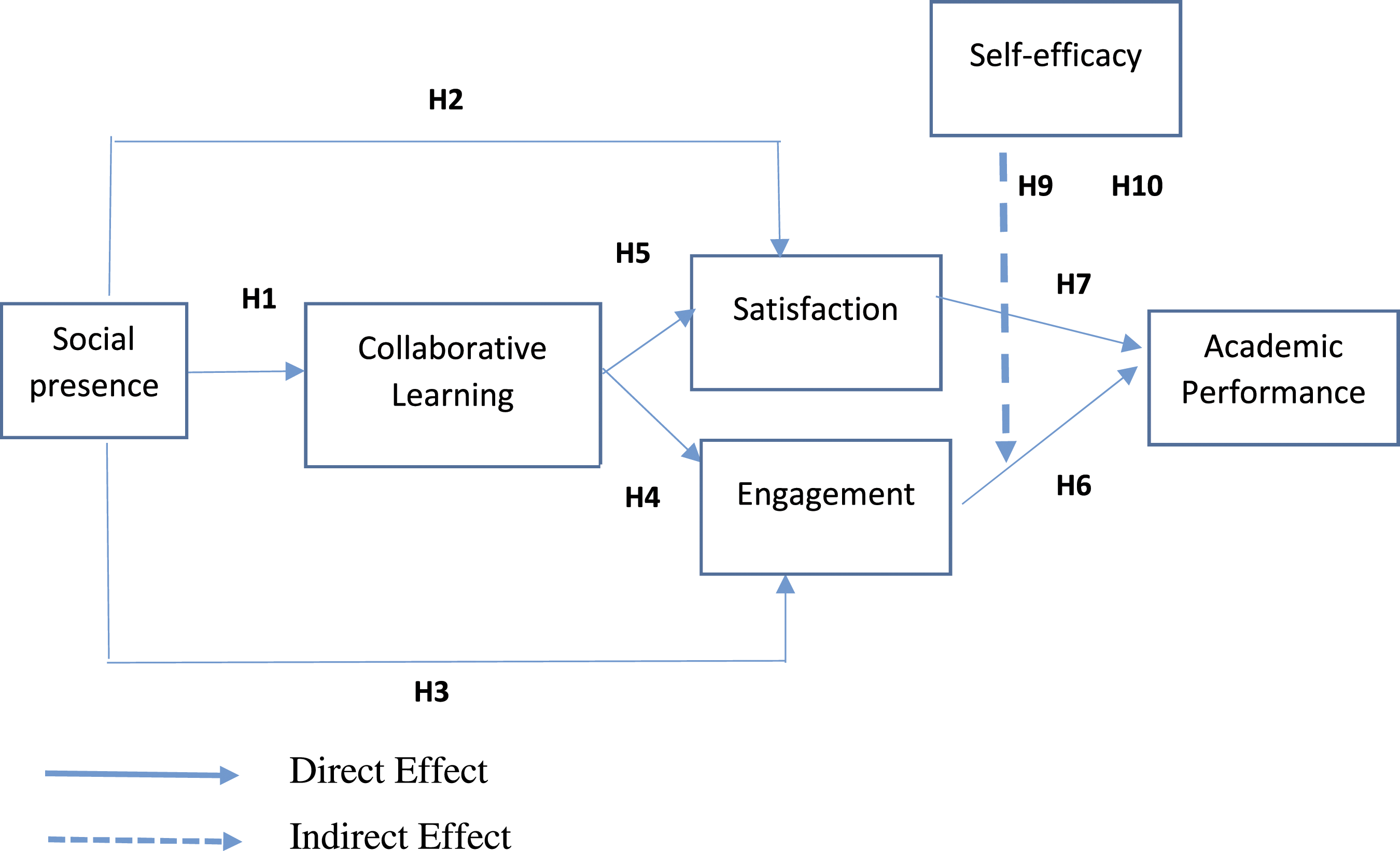
Effect of social presence on collaborative learning
According to Cho et al. (2015), the stronger the social presence in the group, the greater the importance of collaborative learning. Thus, in the event of a strong social presence, employees may be able to interact more easily to define a problem, explore relevant information, integrate ideas, discuss alternatives and test possible solutions (Garrison et al., 2010). Thus, we make the following hypothesis:
Social presence has a positive influence on collaborative learning
Effect of social presence on learner’s satisfaction
In the literature, several studies have already shown that perceived social presence positively affects learner satisfaction in an online course (Kang et al., 2014). Indeed, Gunawardena and Zittle (1997) examined social presence as a powerful predictor of student satisfaction in a computer conferencing environment. Thus, we make the following hypothesis:
Social presence influences positively the satisfaction of online learners.
Effect of social presence on student engagement
According to Fu et al. (2009), the social presence of a learner in an online collaborative working group affects the learner’s predisposition to learn and to make a greater individual effort. Indeed, social presence allows the development of a sense of community that influences the motivation of learners towards the development of collaborative learning with their peers (Smith and Flaherty, 2013). Thus, we make the following hypothesis:
Social presence influences positively student engagement
Effect of collaborative online learning on learner’s engagement
In learning environment, collaboration is likely to foster learner engagement in the learning activity. Indeed, by collaborating, learners are further encouraged to invest energy and actively participate in the learning activity (Zheng et al., 2015). Thus, we make the following hypothesis:
Collaborative learning influences positively learners’ engagement
Effect of collaborative learning on learners’ satisfaction
Interactions between instructors and learners (Dietrich et al., 2015) on the one hand, and between learners on the other, are recognized as success factors in collaborative learning (Vuopala et al., 2015). Through such interactions, teachers can encourage their students to adopt active collaborative learning (Chapman and Van Auken, 2001) that gives them satisfaction. Indeed, if students have the opportunity to ask questions, express their ideas, discuss and interact with their teachers as well as with their peers, they will feel more comfortable and therefore more satisfied with this mode of learning (Abrantes et al., 2007). Thus, we make the following hypothesis:
Collaborative learning has a positive influence on learners' satisfaction.
Effect of learners’ engagement on academic performance
Several studies have attempted to demonstrate that there is a direct and significant relationship between learner engagement and achievement of a high level of learning performance. One explanation for this relationship is that engaged learners typically exhibit high levels of energy and dedication when performing a task. They also experience a state of total immersion in activity (Gonzalez et al., 2020) and tend to collaborate more and better (Rueda et al., 2017). Thus, we make the following hypothesis:
Learners’ engagement has a positive influence on academic performance
Effect of learners’ satisfaction on academic performance
In the context of collaborative online learning, So and Brush (2008) have shown that there is a positive effect between perceived satisfaction and learner performance. In the same vein, Al-Rahmi et al. (2018) have shown that the use of social networks positively influences the link between learner satisfaction and performance. Hence, we make the hypothesis:
Satisfaction influences positively learners’ performance.
Mediating effect of satisfaction and engagement
This study looks also at the mediating effect of satisfaction and engagement on the relationship between collaborative learning and the performance of learners. The interest expressed here stems from the fact that no previous study has examined the existence of such mediation, despite the separate approval of any direct effects which constitute it. Apart from the previously developed relationships around collaborative learning-satisfaction, collaborative learning-engagement, satisfaction-performance and engagement-performance, research has also shown that there is a direct relationship, positive and meaningful between collaborative learning and learner performance (Al-Rahmi and Zeki, 2017; Al-Rahmi et al., 2018). Thus, the assumption that the relationship between collaborative learning and academic performance is mediated by satisfaction and engagement is a hypothesis based on sound theoretical foundations. However, we propose to test it empirically in order to (1) affirm or deny the existence of a mediation relationship beyond the separate partial effects and (2) specify whether it is a total or partial mediation and this, placing yourself in the context of using social media in learning. Thus, we make the following hypothesis:
Satisfaction and engagement mediate the relationship between collaborative learning and academic performance.
Moderating effect of self-efficacy
Satisfaction with the type of learning seems to be one of the factors in improving the ability of learners to assimilate new knowledge and acquire new skills (Norzaidi and Salwani, 2009). That said, from the time it comes to using a new learning tool, it is legitimate to think that the relationship of satisfaction-performance could be moderated by the self-efficacy, that is, the learner’s belief in his or her ability to use this new tool to capture the course and succeed. This means that learners with a strong self-efficacy are likely to convert their satisfaction with the learning tool into a completed performance. Thus, we make the following hypothesis:
Self-efficacy moderates positively the relationship between satisfaction and academic performance.
Moderating effect of self-efficacy on relationship between learners’ engagement and academic performance
Past studies have shown that learners’ engagement is likely to positively influence their academic performance (Mayer et al., 2009). Nevertheless, this relationship may be moderated by the self-efficacy. Indeed, if engaged students are more likely to succeed, their engagement could be all the more influential on their performance if they believe in their ability to achieve their learning goals. Thus, we pose the hypothesis
Self-efficacy moderates positively the relationship between learners’ engagement and academic performance
Methodology
Data collection procedure
Measurement items, standardized factor loading, Rho de Jöreskog, and AVE.
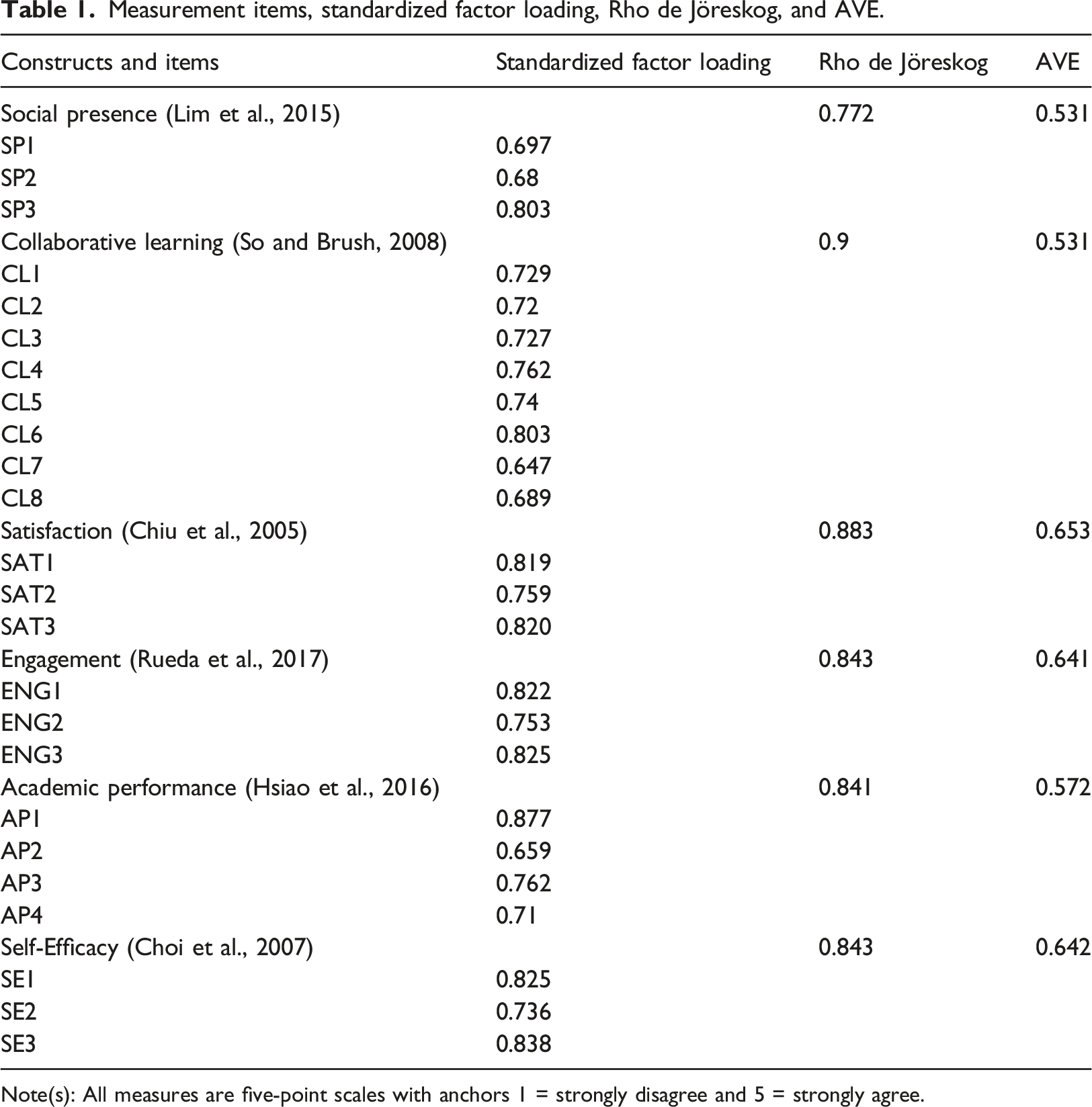
Note(s): All measures are five-point scales with anchors 1 = strongly disagree and 5 = strongly agree.
Results
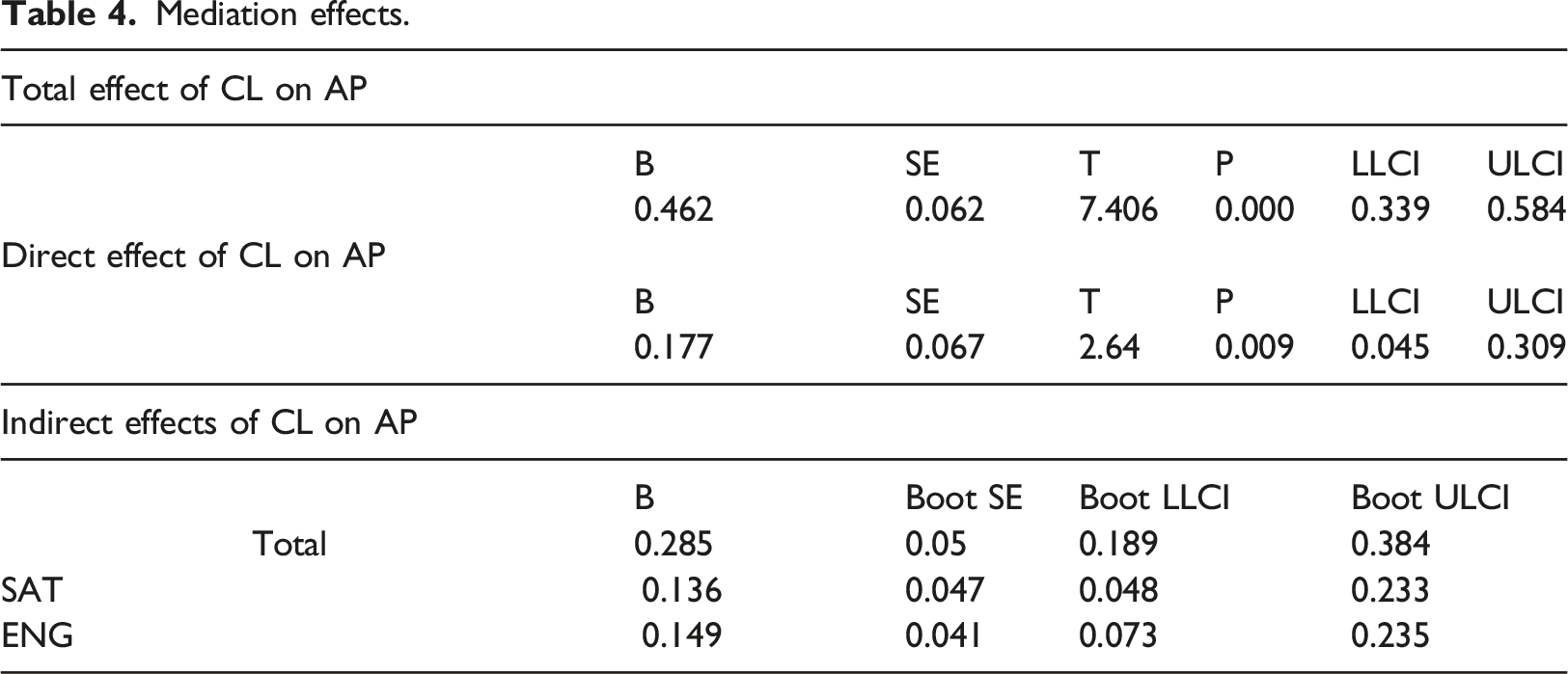
An exploratory and then confirmatory analysis were carried out in order to verify the psychometric quality of the measurement scales borrowed from the literature. We also checked the reliability as well as the convergent and discriminant validity of these variables. Then, we used the SEM in order to test the direct links relating to our model. However, in order to study the mediating roles and the moderation effects, we have chosen to use the Hayes process, with reference respectively to Preacher and Hayes (2008) and Hayes (2018).
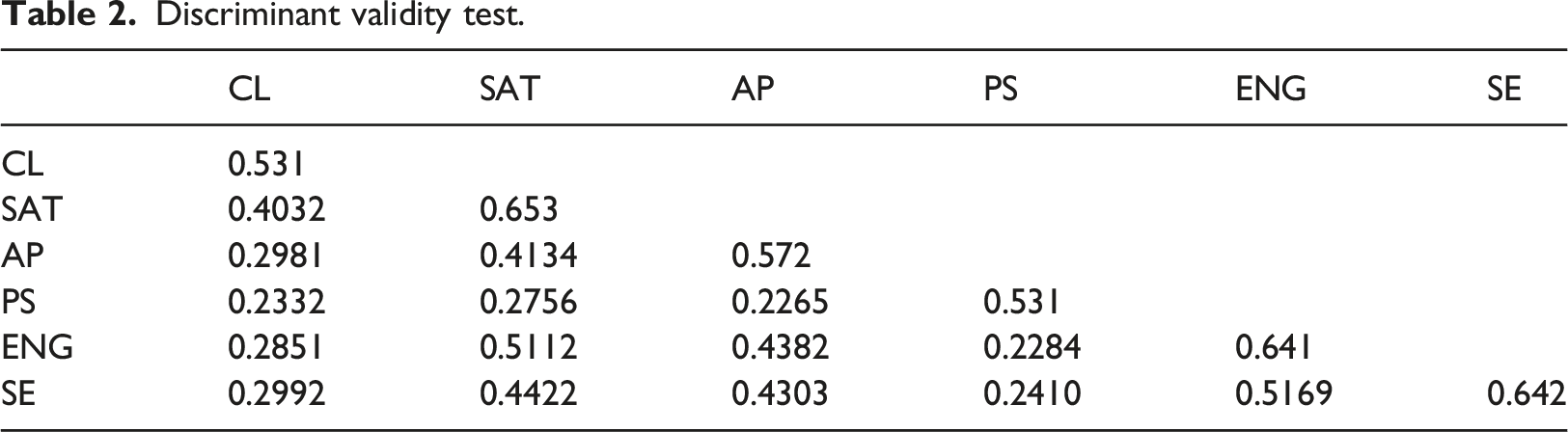
The results show that all variables in our model are reliable with Jöreskog Rhô indices exceeding 0.7. Convergent validity is also ensured as AVE values exceed the empirical threshold of 0.5 (Fornell and Larcker, 1981).
Discriminant validity test.
Hyopothesis testing
Results of hypothesis testing.
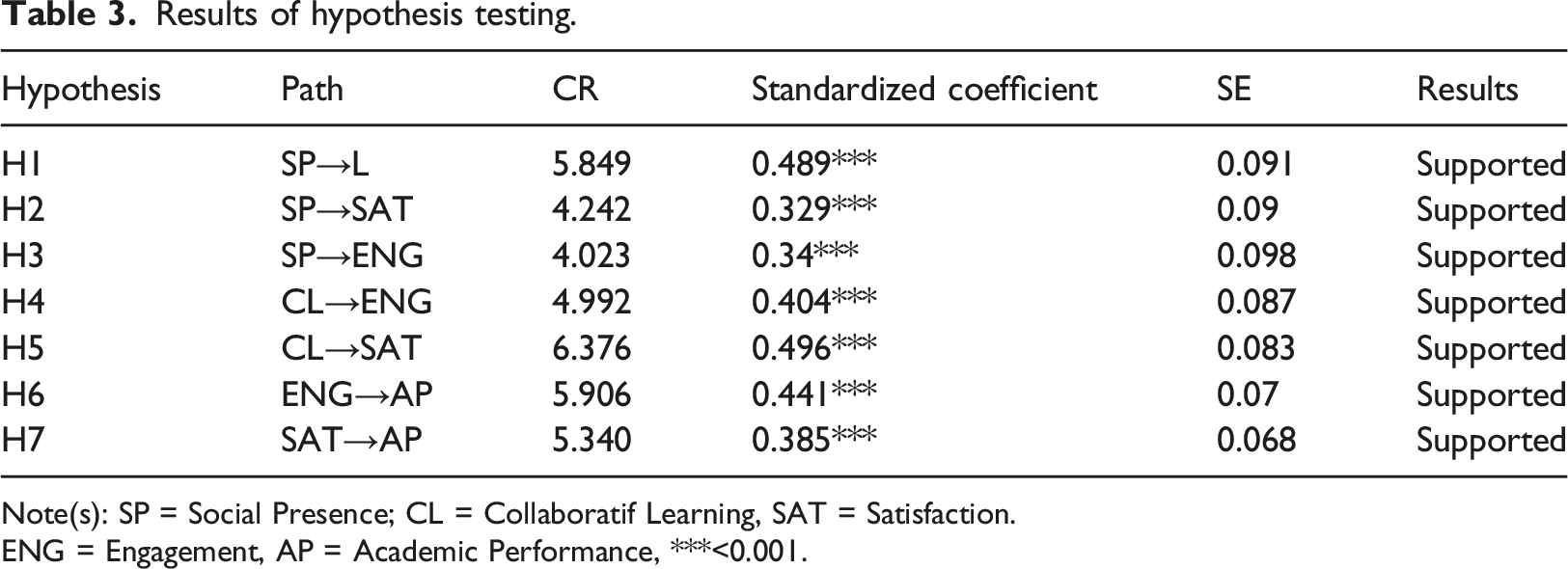
Note(s): SP = Social Presence; CL = Collaboratif Learning, SAT = Satisfaction.
ENG = Engagement, AP = Academic Performance, ***<0.001.
Mediating effect
Mediation effects.
Moderation effects
The analysis showed a non-significant negative effect of self efficacy on the satisfaction-performance relationship as well as on the engagement-performance relationship; This means that the two hypotheses Moderation effects.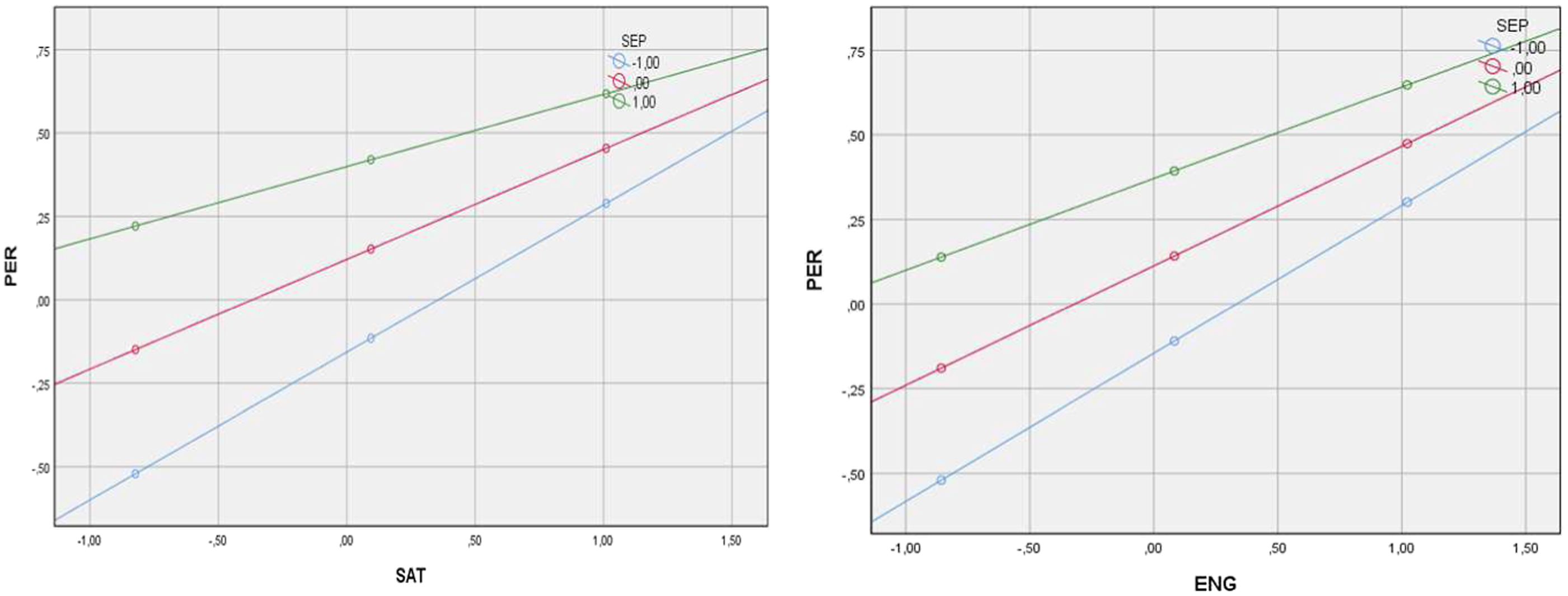
These graphs schematize respectively the effect of satisfaction on performance and engagement on performance at −1 SD, 0 SD and +1 SD of the moderator (self-efficacy). These effects are plotted and compared visually. They can be interpreted by observing the slope of the regression lines. So, based on these charts, we see that high levels of satisfaction and engagement are associated with a higher level of performance, which can be seen on all three lines of each chart. It is also visible that the three groups visible on the graphs differ in their level of performance. However, we can conclude that the respective relationship between satisfaction and performance as well as between engagement and performance is essential for each group. However, what is not significant is the interaction effect for moderation. Thus, hypotheses
Discussions and implications
The objective of this study is to test the impact of perceived social presence on the performance of learners in the context of an integrative model that includes direct links, mediators and moderators. The results strongly and significantly confirmed the direct relationships of the model. Social presence has been shown to have a positive effect on the development of a collaborative learning atmosphere (
This research has shown also that social presence has a positive and significant effect on satisfaction (
On the other hand, this research has shown that collaborative learning has a positive impact on engagement (
Moreover, this research has shown that learners' satisfaction positively influences their academic performance (
Around mediating effects, this research has shown that the relationship between collaborative learning and academic performance is mediated both by the satisfaction of learners and by their engagement (
In addition, it should be noted that the satisfaction and engagement of learners in a collaborative learning atmosphere is linked to the construction of new knowledge through social interaction (Janssen et al., 2009). We relate this assertion to the principles of localized and distributed cognitive theory Hollan et al. (2000) which gives a major importance to the environment in which learning is built and to the interaction that occurs between learners in the course of this learning. In this regard, Dillenbourg et al. (2003) highlighted the role of virtual communities in the development of knowledge in an open and informal setting. The authors used concrete examples to demonstrate that such communities are an environment conducive to the transmission of knowledge and experience, this allows other members of the community to seize new knowledge and develop varied approaches to solving problems raised within the community. Thus, through the online social environment, learners become more able to communicate with their peers, solve problems or organize social events in a collaborative manner (Anderson, 2007).
Furthermore, the results of this study have not shown that self-efficacy plays a moderating role in the relationship satisfaction-performance or engagement-performance. These two moderations were not significant (
However, the results of this study emphasized the importance of reducing the levels of anxiety, depression and stress experienced by learners, thanks to the communication and socialization tools offered by social media platforms. This requires a highly immersive, motivating and effective learning scenario to build collaborative pedagogical situations and implement a training engineering that promotes the use of interactive materials to foster the perception by learners of a comforting social presence. Social media interaction methods should also be used to provide coaching sessions to support students in difficulty. These actions are likely to highlight the relational side alongside the cognitive and technical aspects strongly attached to the teaching profession.
The results of this study also raise awareness among those responsible for improving the predisposition of universities to adapt to such situations. Indeed, because of the pandemic, several academic institutions around the world have decided to move entirely to online education in order to overcome the constraints imposed by this type of disaster, this again highlights the importance attached to this type of teaching.
In terms of practical managerial implications, this study recommends that teachers in educational institutions develop their own pages and groups on the different social networks and invite students to join these groups and pages to help them interact with their tutors and peers, and to proliferate their satisfaction, commitment and academic performance. The social presence of these students on user-friendly interactive platforms such as social networks is a key lever that can help learners overcome educational problems of all kinds. These groups and pages will provide a very convenient communication and interaction environment that can improve the success of online education, particularly in times of crisis. The pages or groups created by the teachers may be published on the official page of the institution to which they are affiliated in order to reduce the research effort of these pages by the students and to further simplify the interaction with the teachers as well as with the peers. It is also recommended to publish on these groups and pages innovative teaching tools such as personalized videos, short conferences, forums and discussion rooms around digital readings related to the teaching undertaken. These learning tools could be supported by collaborative projects and review exercises. In this way, the courses will be delivered in such a way as to bring online teaching closer to face-to-face teaching and to respond to the problems encountered by the learners in a visual and better adapted way. They could then access content that is 100% dedicated to them.
Limitations and further research
Despite its important contributions, this research has its limitations. First, it is important to point out that investigations into e-Learning during crises constitute a recent field of research. It is also multidisciplinary, which makes any attempt to conceptualize it more difficult.
In addition, limits are associated with the small size of the sample as well as the convenience method adopted in this first study on the impact of COVID-19 on the perceptions and behaviors of Tunisian students towards the online learning. These choices related to the limited resources of the investigators as well as the specific conditions under which the study was conducted. The response rate was relatively low compared to the number of students targeted. We therefore recommend that researchers, in the context of future research on this issue, try to adopt a larger and more representative sample.
In addition, we propose other possible avenues of research. Indeed, it would be interesting to include the relationships tested as part of a comparative study that confront different social media, in particular to capture the media that generate the most collaboration, satisfaction and engagement in a learning context.
Another avenue of research that seems promising to us is that of designing a pedagogical engineering that adapts to the way in which the learner prefers to learn in times of crisis, ie to emergency pedagogy. It would also be interesting to study the effect of teachers' use of coaching techniques, for students with difficulties in a crisis, on the performance of these learners as well as their self-efficacy. Finally, it would also be interesting to study the impact of other variables in this research context such as optimal experience, learning and tutoring styles, etc.
Conclusion
History has shown that periods of crisis often lead to major transformations in society (Kirk and Rifkin, 2020) and highlight the importance of socio-emotional aspects in managing these crises. In this case, the present study highlighted the importance of developing a learner’s perception of the social presence of peers and tutors in order to address the barriers associated with the adoption of e-learning as well as to promote the performance of learners.
Nevertheless, the development of the perception of a social presence in an online environment remains delicate because it requires the conscious and deliberate efforts of several actors: designers, professors and students. The same applies to the performance of these learners and yet, this paper has provided the with useful recommendations around the design and scripting of an online learning module in order to promote collaborative learning, increase the satisfaction and engagement of online learners and achieve the pedagogical objective in terms of performance.
Footnotes
Declaration of conflicting interests
The author(s) declared no potential conflicts of interest with respect to the research, authorship, and/or publication of this article.
Funding
The author(s) received no financial support for the research, authorship, and/or publication of this article.
