




Abstract
This paper addresses the paradox of transition to online distance learning during COVID-19 pandemic in Higher Education Institutions (HEIs) in developing countries. The systematic review methodological procedures were employed to draw some limitations and possible opportunities that may inform future practices on online distance learning. The findings reveal several limitations such as digital inequalities, lack of reliable internet access, low readiness and technological competence among instructors and students, and limited availability of digital solutions. The findings also reveal that most students faced social emotional challenges due to rapid and blind transition to online distance learning. It was concluded that most limitations were due to lack of digital culture even before the outbreak of COVID-19 pandemic. It is recommended that deliberate investment should be made to promote digital culture and equity. Further possible areas for research recommended in this paper include exploration of digital inclusion among marginalized groups in developing countries.
Introduction
This paper is prompted by the various students’ online learning strategies as a response to the Corona virus disease 2019 (COVID-19) pandemic. Many countries in 2020 took measures to implement countywide closures of education and learning institutions, be they kindergartens, schools, vocational training colleges or universities where the need to move to online learning was inevitable (Alsuwaida, 2022; Chang et al., 2020). According to Mishra et al. (2020) the whole educational system from elementary to tertiary level collapsed during the lockdown period due to coronavirus disease 2019 (COVID-19) across the globe. Several uncertainties and effects of the COVID-19 pandemic posed pressure to governments around the world to lockdowns which led to schools and universities closure thus keeping 1.6 billion students at home (UNESCO, 2020). In that situation, many Higher Education Institutions (HEIs) migrated to online distance learning without proper planning. As a result, some learners experienced boredom, anxiety, and frustration (Ravšelj and Tomaževiˇ, 2020). There is doubt that the transition to online distance learning would yield a significant learning outcome, but it is unclear whether students in some HEIs in developing countries continued to learn. The available evidence indicates that some universities did not even struggle to engage their learners in online distance learning as there were no digital systems to accommodate the learning needs of which teaching was completely suspended (Marinoni et al., 2020). Further evidence indicates that most students in most countries, especially in rural areas, cannot access the internet (Esteban-Navarro et al., 2020; Ruiz-Martínez and Esparcia, 2020). For instance, during 2019 in Africa, only 28% of households in urban areas had access to the Internet at home, but that was still 4.5 times as high as the percentage in rural areas, which stood at 6.3% (International Telecommunication Union, 2020). It is perhaps difficult to expect students learning at home where the virtual learning environment remains to be a paradox. While the emphasis around the world is on the integration of technology in teaching and learning, most HEIs in developing countries are at the infancy stage of developing technological solutions which create more confusion when migrating to online learning.
There are some researches, which show that the use of ICT to enhance learning among students in developing countries such as Tanzania is challenged by a number of factors. Barakabitze et al. (2019) summarise the factors such as lack of ICT infrastructure, technology affordability and accessibility, lack of public community facilities and students lack technological literacy and innovation skills. In other developing countries, similar challenges persist as Tulinayo et al. (2018) summarise the barriers for ICT adoption in Uganda which include high cost for technological devices, lack of awareness and competence, negative attitude towards technology and lack of a systematic approach to teaching and learning. Another study in Tanzania by Ndibalema (2020) revealed poor accessibility of digital content in Tanzania due to lack of reliable digital solutions and technological competences among instructors in HEIs. These challenges create a paradox whether students can continue to access learning resources and learn remotely during COVID-19. While there is increased awareness on the use of ICT for learning during the crisis of COVID-19 in improving students’ access to learning resources, there is still little evidence that students at home are adequately learning. Therefore, this paper gives insights on effective transition from face-to-face teaching to online distance learning best practices that would serve as a benchmark for future pandemics. Subsequently the study was guided by the following research question: What are the limitations of migrating to online distance learning in tertiary institutions in response to COVID-19 pandemic?
Transition to online distance learning in HEIs
The transition to online distance learning has been facing a number of challenges for many years in HEIs in most countries. Evidence indicates that most countries particularly African countries have inefficient ICT-related infrastructure, trained personnel in technology, ineffective ICT policies in education, limited accessibility of digital resources, limited competence in developing digital resources, limited financial capacity to afford the internet and technophobia (Barakabitze et al., 2019; Gunga and Ricketts, 2007; Mtebe and Raisamo, 2014). Much of the challenges can be attributed to the instructors’ capacity to run online distance courses. For example, Raphael and Mtebe (2017); Tulinayo et al. (2018) emphasise that most instructors in HEIs in developing countries have low technological competencies and some are reluctant to adopt new technological solutions in teaching. Instructors in HEIs need to use technological resources to enhance learners’ ability to solve problems in new situations. Previous studies have also reported that learners feel isolated from peers and reduced quality of online instructions compared to traditional face-to-face classes (Palvia et al., 2018). There is a belief that in a traditional face-to-face classroom, instructors and learners can utilise their facial expressions and emotions, which might be difficult in virtual learning which is linked to passive teaching (Duki´c and Krzic, 2022). Some students perceive online distance learning to be less academically rigorous compared to face-to-face sessions (Armstrong, 2011). It makes sense to note that in virtual learning platforms, there are also obstacles in students’ process of learning due to limited interactivity, delayed feedback and real time solutions the students may need (Coman et al., 2020).
Other factors that limit most instructors in HEIs to migrate to online teaching include the perceived lack of technical and pedagogical skills, lack of pedagogical readiness due to unfamiliarity of appropriate principles for running virtual sessions (Bakare et al., 2018; Eslaminejad et al., 2010). It is on this basis that the transition to online distance learning has also faced many limitations that can be categorised into individual and institutional factors. Many students in HEIs remained unsatisfied with the way distance education programmes were introduced because they lacked the required technological devices and internet access to participate in virtual classrooms (Sarwari et al., 2022). Although technological solutions were thought to be useful during the outbreak of COVID-19 pandemic, many researchers still noted the prevalence of digital divide among students, as many were unable to afford the technological devices, insufficient data bandwidth and lacked technological and pedagogical support (Almendingen et al., 2021; Mpungose, 2020; Ndzinisa and Dlamini, 2022). Other students felt that online learning led to isolation as they lost socialisation with peers and the integrity of online assessments was compromised (Maphalala et al., 2021; Zgheib et al., 2021). The transition to online distance learning requires competent facilitators who are able to incorporate learning activities, which enhance social wellbeing of the learners. It is widely known that if both instructors receive sufficient technical and pedagogical support, there is a very high possibility of reducing negative impacts, which might result from ineffective utilisation of digital solutions for learning. Today, learners are expected to use technological tools to improve their learning and networking skills, utilise technological solutions to collaborate and communicate with their communities (Alsuwaida, 2022). Given that many HEIs did not foresee the danger of sudden transition to online distance learning, they tried to adopt new technological solutions although learners reacted differently. Therefore, this paper would clearly indicate that effective transition requires both instructors and learners who are technologically and pedagogically proficient for enhancing networked learning.
Methodological considerations
The systematic review was conducted in a rigorous and transparent manner to establish various evidence from several studies regarding the limitation of transition from face-to-face learning to online learning due to COVID-19 outbreak (Newman and Gough, 2020). According to Pollock and Berge (2018) a systematic review includes identification of primary research studies and critical assessment and synthesis of studies that meet the eligibility criteria with the aim to bring evidence together to answer a pre-defined research question. In analysing the limitations for transition to online distance learning during COVID-19 pandemic in HEIs, the consideration was on both qualitative and quantitative empirical studies. The review was made following seven steps of systematic review as suggested by Evidence for Policy and Practice Information and Co-ordinating Centre (2007).
The first step was the development of inclusion criteria. In the context of this review, the consideration was based on the following; • Inclusion of studies published between 2020 and 2021 focusing on online distance learning or remote learning in HEIs during COVID-19 pandemic in developing countries • Limiting the scope considering studies which address some limitations encountered by HEIs during COVID-19 pandemic in developing countries • The study must be published after peer-reviewed process as journal articles in reputable outlets • Methodological rigour of which the consideration was on the appropriateness of the method used such as sample size and selection technique, methods of data collection and tools used, and dominant approach and knowledge gap • Limiting the scope to research-based articles on online distance learning during COVID-19 in HEIs in developing countries.
The second step was searching for relevant studies to the topic. This involved a critical search of studies from six scientific databases, which included Emerald, Education Resources Information Centre, Google scholar, Multidisciplinary Digital Publishing Institute, Science direct and Wiley Online Library. The search was limited to research articles published between 2020 and 2021. A search with specific keywords was carried out from various scientific databases to obtain relevant research articles related to online learning during COVID-19 in HEI. Publications whose title contained the term “distance learning” “remote learning” “online learning” “e-learning” “Higher Education Institution” “COVID-19 pandemic” and “developing countries” were sought. The initial search yielded 806 references of which the elimination of 76 duplicates was carried out, which resulted in 11 articles representing limitations of online distance learning during COVID-19 in HEIs in developing countries.
The third step was screening the articles as per inclusion criteria outlined in the first step. In order to answer the research question fairly, the researcher in collaboration with assistant researchers, screened the abstracts and full texts which resulted in a total of 104 full articles which met the criteria for inclusion. The assistant researchers were four where two were academic staff with PhD in education and other two were PhD students in educational technology. After the full screening process, only 11 articles met the criteria to be included in the analysis as reflected in Figure 1. Flow chart of the data extraction and filtration process.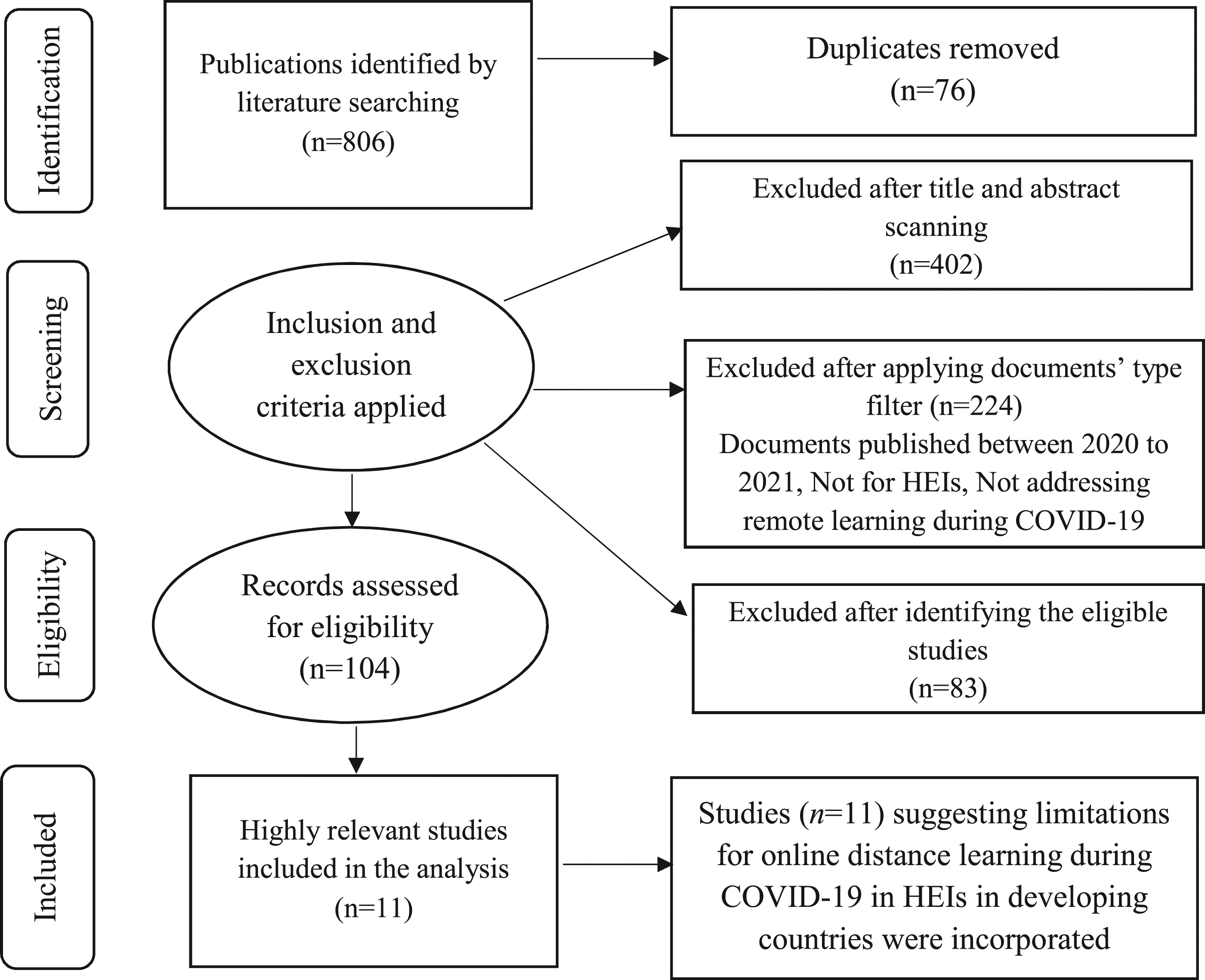
The fourth step involved descriptive mapping which involved checking research articles and their relevance with the research question. Descriptive mapping was made reflecting three aspects which included the technological limitations addressed, recommendations and participants involved in the study.
Criteria for Quality research product.
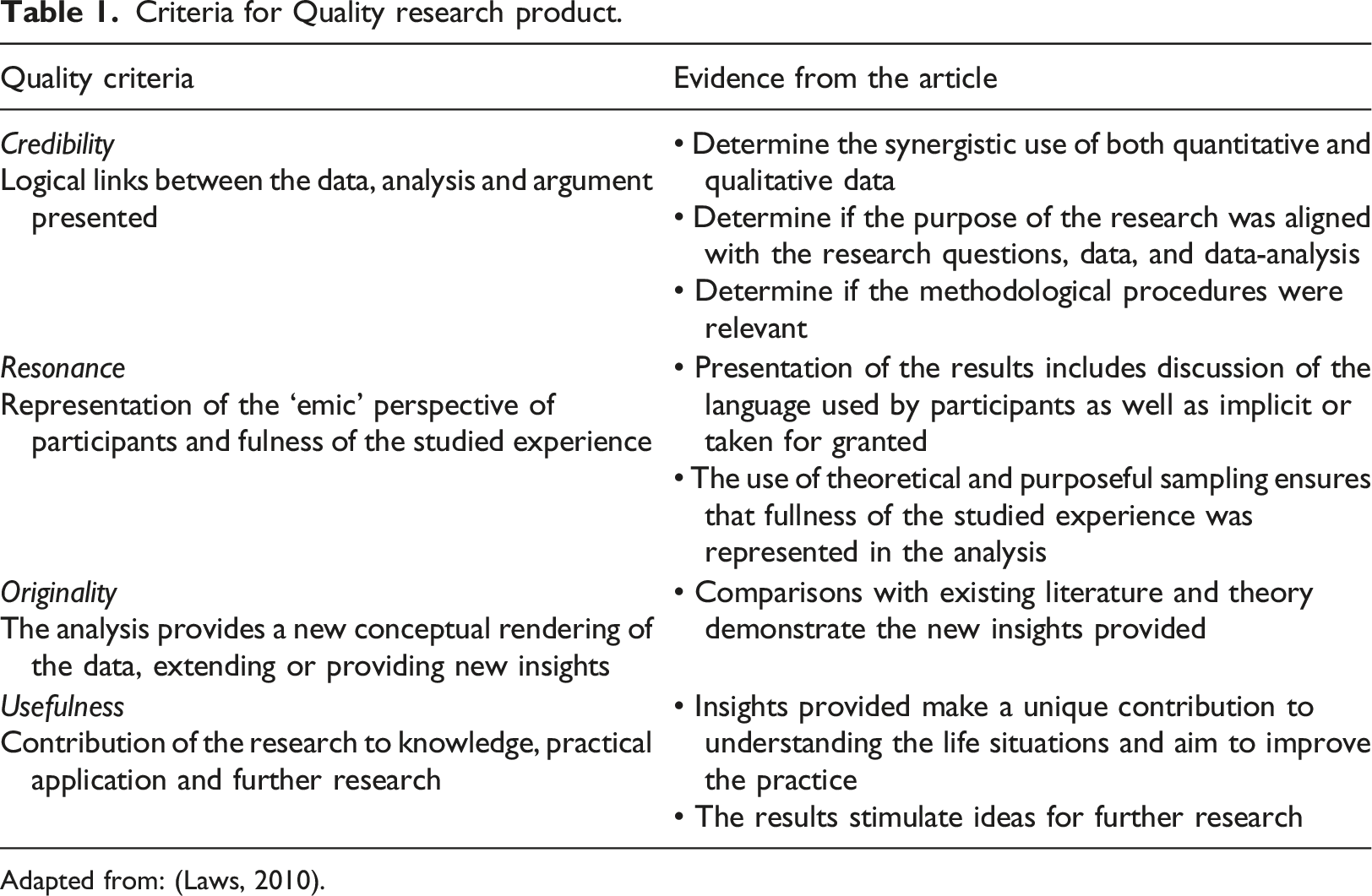
Adapted from: (Laws, 2010).
Approaches to qualitative synthesis.
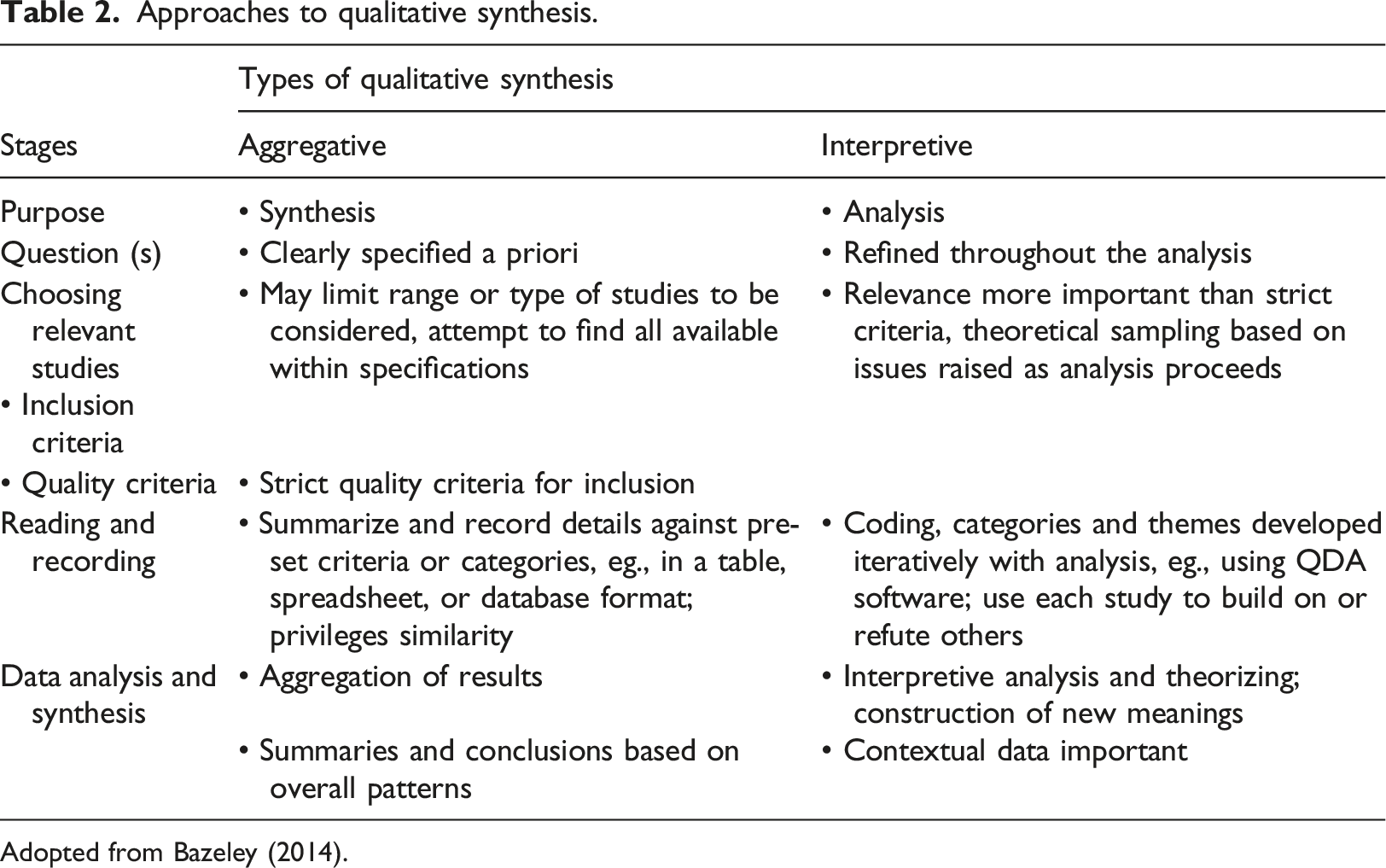
Adopted from Bazeley (2014).
An aggregative synthesis was made in which the findings were summarised into categories and presented in Figure 2. Synthesis of the findings.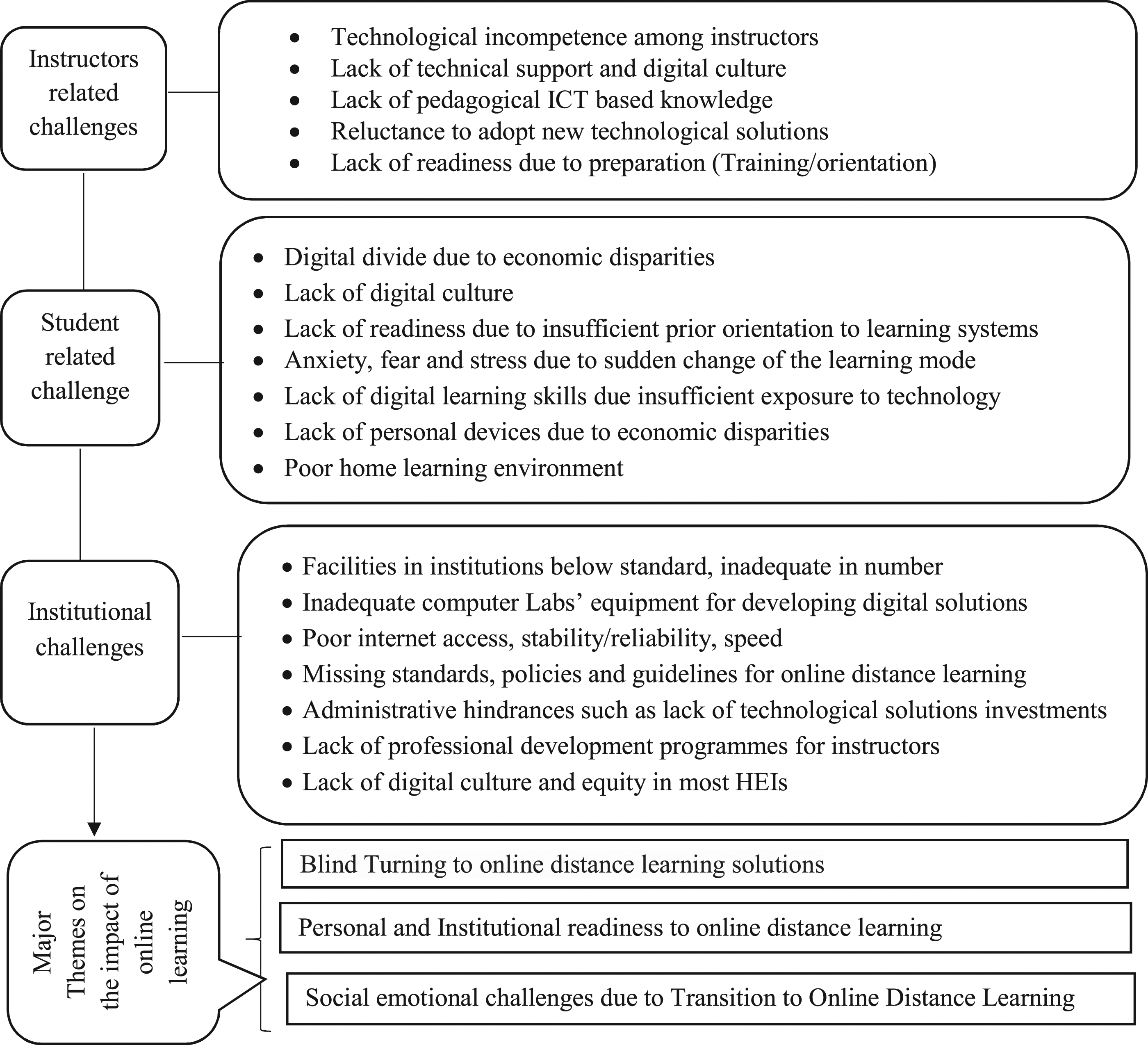
In this phase, several factors inhibiting effective transition to online learning emerged and were grouped into sub-groups while focusing on the context, characteristics and nature of the findings. Again, each sub-group was synthesized to produce three categories reflecting instructors, institutional and students’ related challenges. Further synthesis of categories resulted into three major themes which are blind turning to online distance learning solutions, personal and institutional readiness to online distance learning and social emotional challenges.
The seventh step was conclusions and discussions. The findings were summarized into three major themes in which the discussion followed by addressing critical limitations for migrating from face-to-face classes to online distance learning during COVID-19 pandemic. Moreover, the discussion involved some emerging recommendations and opportunities from several studies that would be used as lessons to improve future practices regarding the transition to online distance learning when such events of pandemic occur.
Generally, the review process adapted the four phase flow chart of the data extraction and filtration process recommended by (Rashid et al., 2021) as summarized in Figure 1
The search terms identified 104 eligible distinct articles, 11 which met the criteria on online distance learning during COVID-19 pandemic in HEIs in developing countries. Eighty-three papers were excluded due to lack of relevance of addressing the problem in developing countries, lack of detailed data explaining the matter from instructors’ and students’ voices and not being published in peer-reviewed journals.
Results
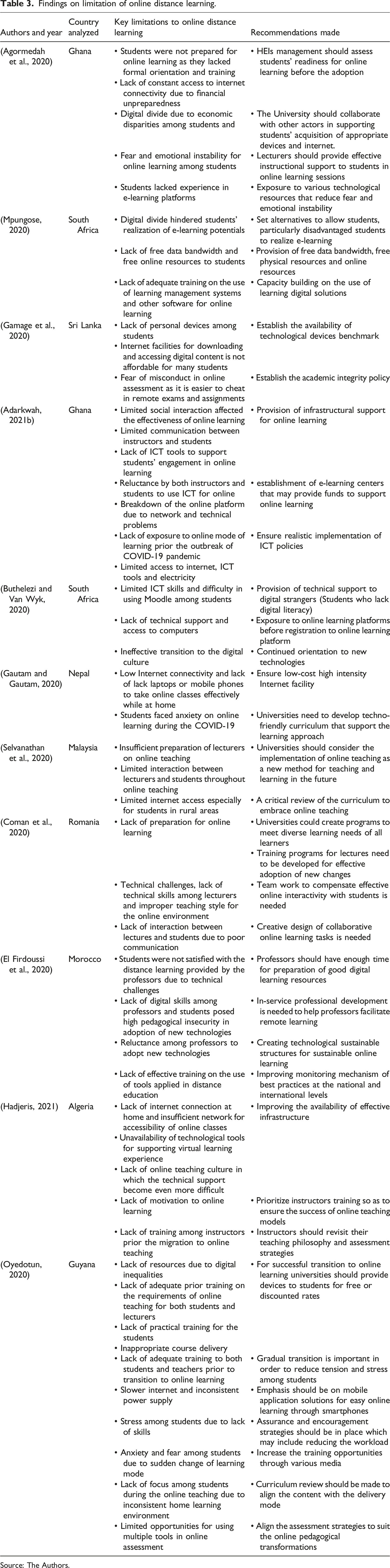
Findings on limitation of online distance learning.
Source: The Authors.
Evidence from various studies summarized in Table 3 reveals that there are several factors limiting effective transition to online distance learning of which most researchers outlined institutional challenges to be the major limitations for effective transition to online distance learning. Although most researchers articulated the institutional challenges, still, other researchers mentioned institutional inability to manage learners’ psychological and social well-being during the transition to online distance learning. The findings presented in Table 3 reveal some risks of both instructors and students’ inability to manage digital technologies safely and responsibly which has resulted into more social emotional challenges such as fear and anxiety to some students.
Synthesis of the findings
General limitations for online distance learning most HEIs in developing countries encountered during COVID-19 pandemic are synthesized into three categories as reflected Figure 2
Discussion
The reviewed scholarly articles on limitations for online distance learning provide conceptual understanding of how learning in HEIs were affected during COVID-19 pandemic. The review points out several factors reflected and described in three central major themes. These aspects include the blind turning to online distance learning, readiness to migrate to online distance learning and social emotional challenges due to transition to online distance learning.
Blind turning to online distance learning solutions
There is some research, which indicates that there was a massive turning to online distance learning during COVID-19 pandemic without a proper consideration of several technological and human factors (Koris et al., 2021; Mpungose, 2020; Turnbull et al., 2021). Evidence exists to show that most HEIs in developing countries had not explored fully the possible technological solutions to allow students to learn remotely during COVID-19 pandemic (Ndzinisa and Dlamini, 2022). The migration to technological solutions such as Google Classroom, Moodle Learning Management Systems (LMS) and other learning platforms were not critically assessed for compliance with institutional policies. It has been argued that most HEIs were compelled to adopt various online platforms that they were not prepared for (Pokhrel and Chhetri, 2021) thus being challenged in the process.
There is no simple way of presenting the concerns revealed from the analysed studies, which appear to attract considerable attention on pedagogy. In the study by Agormedah et al. (2020), it was argued that most HEIs focused on converting subject matter into electronic form to be shared through distance learning mode but ignoring the “pedagogy of care”. This brings the message to educators that migrating to online learning requires proper preparations. Instructors are not mere conveyers of the content into a digital form but have the role to ensure that they are empathetic, caring and supporting to learners during the emergence crisis. It is reasonable to suggest that students would expect most of their instructors to provide online social interaction during the online delivery, but this has not been the case in most HEIs in most countries such as Ghana (Adarkwah, 2021b). Accessibility of the online digital content is another concern brought on board by several researchers in the analysed studies. Although some students at HEIs in developing countries have access to mobile phones, the compatibility with the most preferable LMS remains a big challenge (Mbiydzenyuy and Silungwe, 2020). Although Universities have the responsibility to explore technology-based platforms for enhancing online learning, most of them in developing countries are presently not equipped with any of such platforms within their LMS (Agormedah et al., 2020; Gangwar and Bassett, 2020). There is no doubt that some universities in developing countries have developed some systems for enhancing online learning, but it is unclear whether those systems are serving the intended purpose as there are so many obstacles. In the most recent study by Adarkwah (2021a) it has been revealed that due to many challenges in developing countries such as lack of funds, e-learning systems and ICT gadgets to run online programmes, many HEIs resumed the onsite instructions in early 2021 regardless of the prevalence of COVID-19 pandemic. The situation was different in developed countries were most HEIs had already explored technological solutions for online distance learning but the challenge was that teaching sometimes followed the traditional approach because of lack of development new training strategy (Wotto 2020) while some students reported larger workload (Ravšelj and Tomaževiˇ, 2020).
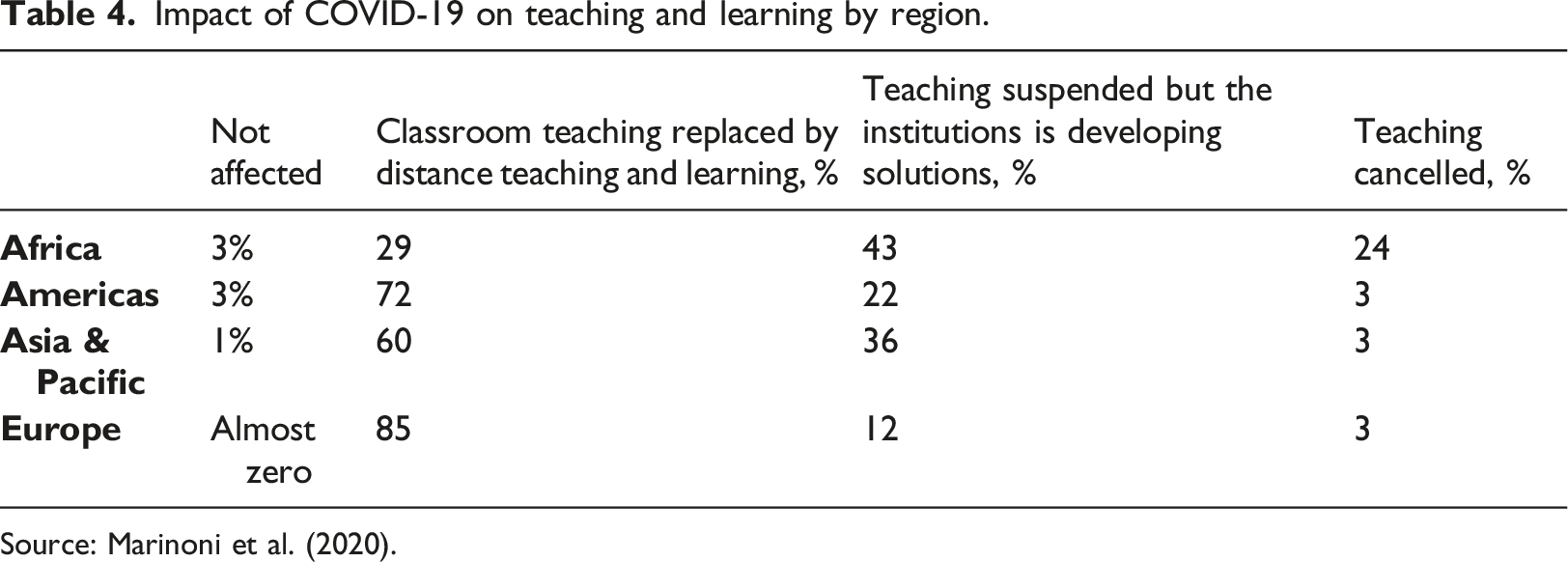
Impact of COVID-19 on teaching and learning by region.
Source: Marinoni et al. (2020).
The good thing one can learn from data in Table 4 is the development of new technological solutions in HEIs in Africa that would serve the purpose of online distance learning in such eventualities of COVID-19.
As it can be seen from the preceding discussion, transition to remote learning in a short period of time appears to be difficult in most developing countries where technology integration in teaching is not a common practice (Mahmood, 2020). This could be reflected in several literatures even before the outbreak of COVID-19 in several ways. In the study in Uganda on integration of technology in HEIs by Tulinayo et al. (2018), it was found that the number of lecturers using digital technologies was still low which in turn affected the students’ use of these digital technologies. A similar observation was made by Raphael and Mtebe (2017) that there has been some adoption of ICT in teaching and learning in HEIs in Tanzania but most instructors are reluctant to integrate them in their teaching. According to Tusiime et al. (2020) the use of digital technologies in teaching has received resistance from many educators for years with the view that it is inconvenient to their core teaching goals. The attitude has persisted even after the outbreak of COVID-19 pandemic when HEIs and other education institutions had to undergo a rapid transition to online distance teaching.
Despite the suitability of technology, most instructors and students were reluctant to migrate to online distance learning in most developing countries (Adarkwah, 2021b; Buthelezi and Van Wyk, 2020; El Firdoussi et al., 2020). Although many HEIs provide Massive Open Online Courses, most of them in most countries such as India were still reluctant towards online teaching and learning during COVID-19 pandemic (Dhawan, 2020). It is perhaps inappropriate to expect instructors with such a pessimistic attitude towards technology to deliver online distance learning and interpret the teaching resources where their own understanding requires improvement. According to Adedoyin and Soykan (2020) migration to online distance learning requires adequate planning and designs of instructions with several available theories and models. Indeed, the migration to online distance learning in HEIs in developing countries raises more questions than solutions as the process has witnessed blind preparation due to lack of proper orientation, planning and designing of appropriate instructional digital resources (Buthelezi and Van Wyk, 2020; Coman et al., 2020; Selvanathan et al., 2020). Similar challenges due to blind transition to online learning could be reflected in the study in Turkey by Korkmaz and Toraman (2020) which revealed that there was a lack of proper interactivity, difficulty in providing feedback and learning ignored individual interests of which students were demotivated. It is clear that despite the challenges for online learning, HEIs were supposed to carry out a critical needs assessment and develop appropriate technological solutions instead of blind migration.
Personal and institutional readiness to online distance learning
The research indicates that lecturers were not prepared to migrate to distance teaching. A good example of research in Morocco by El Firdoussi et al. (2020) which reveals that the abandoning of the transition to online education was facilitated by lack of competency in learning platforms, poor internet connectivity and fear of insecurity of new technologies. In the study by Cutri et al. (2020), it was revealed that most lecturers considered themselves beginners of distance teaching with less than 4 hours online prior to the COVID-19 pandemic. In the study conducted in Indonesia by Sunarto (2021) lecturers’ readiness for synchronous implementation was merely on the use of applications, without proper preparations and understanding on philosophy and relevant conditions in that mode which appeared to cause boredom in learners. In the study about online learning and teaching in Oman in higher institutions by Slimi (2020), it was found that instructors’ readiness for online teaching during COVID-19 was minimal. Nevertheless, these findings are contrary to the findings by Junus et al. (2021) who found that lecturers had adequate readiness to host online classes during the COVID-19 pandemic although they had no prior experience in teaching in a virtual learning environment. This sends the message that technological adoption in teaching requires an optimistic attitude to succeed. However, instructors’ ability to support distance learning in HEIs has been a challenge in many developing countries even before the outbreak of COVID-19 pandemic. The study by Dintoe (2018) revealed that the majority of the faculty instructors at the University of Botswana had very low use of technology for supporting distance learning due to lack of infrastructure. It is an undeniable truth that in many developing countries, there has been a challenge of establishing an ICT-Integrated learning environment, which may contribute to the lecturers’ low capacity in supporting remote learning.
Researching on ICT integration for learning, Cha et al. (2020) found that infrastructure and technical challenges were some of the fundamental issues for ICT integration in education in most developing countries and instructors were not capable of applying such technology and had little experience using ICT in the most effective and efficient way. For constant integration of ICT in teaching in HEIs, there is a need for supporting the transformation of digital culture through various professional development programmes (Liesa-Orús et al., 2020). The review by García-Morales et al. (2021) highlights several technological difficulties professors in HEIs face which include high demand for specific skills such as proficient computer knowledge and the need to solve specific problems quickly during learning sessions. In another study by Lischer et al. (2021) it was found that distance teaching during COVID-19 pandemic was a challenge for lecturers, which in turn created stress for students.
Although there were several challenges in supporting distance learning during the outbreak of COVID-19 pandemic in developing countries, evidence indicates that there were several learning opportunities. The study by El Said (2021) indicates that the rapid shift to online distance learning at the time of pandemic did not result in a poor learning experience as was expected but, it resulted into improved infrastructure and skills as there were signs suggesting that it could have a lasting impact on the trajectory of learning innovation and digitisation. The outbreak of COVID-19 pandemic has paved the way to online distance learning opportunities in HEIs in several ways such as introducing digital learning, digital solutions, independent learning skills, problem-solving, communication skills, team work, academic integrity, online resources searching skills, time management skills, technological communication, collaboration and IT skills (George, 2020; Paudel, 2021; Pokhrel and Chhetri, 2021; Slimi, 2020; Zawacki-Richter, 2021). The findings from various studies suggest an increased use of open access resources than before the outbreak of COVID-19 pandemic in many countries, which may have the epistemological implications of engaging learners in acquisition of knowledge from various sources. Researching on the online learning during COVID-19, Bordoloi et al. (2021) found the extensive use of open educational resources, massive open online courses, social media and meeting apps during the Covid-19 lockdown in which open-minded learners benefited a lot. This could be considered as a promising means for supporting individualised instructions as part of Self-Directed Learning (SDL). It makes sense to conclude that most learners in HEIs are adults who are capable of learning remotely through technology.
Through SDL approaches, students may be able to learn and work on authentic problems relevant to their context and choices. According to Knowles (1975) individuals who take the initiative in learning, learn more things and learn better, than learners who wait to be taught by instructors. Most studies reviewed in the preceding discussion predict a stronger continuity in enhancing SDL in HEIs because of the outbreak of COVID-19 pandemic. Self-Directed Learning is part of the 21st century essential skills of which learners can diagnose their learning needs, explore the learning resources and evaluate the learning outcomes. By becoming aware of the learning opportunities already existing through technologies, instructors in HEIs may capitalise on more innovations to enable students to meet 21st century skills.
It was noted with concern that online distance learning during COVID-19 pandemic faced a number of pedagogical challenges such as instructors’ and learners’ lack of digital skills and lack of social and cognitive presence (Ferri et al., 2020). The situation provides multiple opportunities for HEIs to invest in technological innovations that would enhance online distance learning during the emergence of various events such as pandemic diseases and disasters. There is a need for increased opportunities for instructors in HEIs to engage fully in various professional development opportunities relevant to online distance learning. Through such opportunities, instructors will more likely develop skills and strategies needed in supporting remote learning.
Social emotional challenges due to transition to online distance learning
The rapid transition to online distance learning during COVID-19 pandemic has been reported to cause many social emotional problems to instructors and students in HEIs. In the reviewed studies, it has been stressed with concern that there have been cases of emotional instability which include fear, boredom, frustrations, confusion and anxiety towards new technological solutions for online distance learning (Agormedah et al., 2020; Gamage et al., 2020; Gautam and Gautam, 2020). Further analysis from other studies found that emotional challenges was caused by insufficient preparedness prior to the adoption of new technological solutions in many developing countries (Ravšelj and Tomaževiˇ, 2020). In the study about students’ attitude towards the transition to online distance learning by Unger and Meiran (2020) revealed that students at Wingate University in the United States of America, expressed anxiety towards online learning of which they claimed it to be different from the standard in-class learning. Contrary to the study in Bulgaria by Angelova (2020) who found that most students during COVID-19 pandemic perceived online learning to be better than the traditional classroom because of saving time and being less stressful. With regard to the acceptance of online learning due to COVID-19, several studies indicate that there was a divided feeling among students.
The sudden shift to exclusive e-learning instructional methods has raised anxiety levels in nursing students, especially those in their last academic year (Bahçecioğlu Turan et al., 2021). While some researchers outline the increase of several social emotional challenges due to transition to online learning, (Bolatov et al., 2021) report the burnout syndrome, depression, anxiety, and somatic symptoms after transitioning from traditional classroom learning to online learning due to satisfaction in academic performance among students. However, there were reported indicators of feeling anxious and difficult in handling online academic workload and loneliness during COVID-19 pandemic (Bolatov et al., 2021; Fitzgerald and Konrad, 2021; Ismaili, 2021). The findings suggest the need to have well-structured LMS that allow instructors to provide social emotional support as part of learning instructions.
In addition, most studies have suggested the technological acceptance strategies for online learning during the emergence, which could minimise the occurrence of social emotional challenges among students and instructors. Patricia Aguilera-Hermida (2020) suggests proper content design, which reflects students’ previous knowledge, explore how inequalities may limit students’ ability to access the e-learning resources and explore instructors’ technological competencies in utilising different learning styles. Along these recommendations, Ndibalema (2021) proposes that for effective online learning to take place there is a need for proper instructional design which requires instructors to consider learners’ autonomy in learning collaborative aspects. Likewise, Ananga (2020) insists that instructors must provide a warm learning environment in which learners should be connected all the time and receive immediate and encouraging feedback that builds a sense of belonging in the learning platform. In order to reduce the social emotional challenges as a result of online learning, it makes sense to appreciate the theoretical underpinnings regarding effective online distance learning instructions which are important in influencing technological acceptance. The concept of technological acceptance among instructors and students could be reflected in the Theory of Reasoned Action (TRA) which was proposed by Fishbein and Ajzen (1975). The theory is frequently adapted to determine patterns of human behaviour and their actual use of technology. According to Nguyen et al. (2018) TRA is a good model for predicting intentions and behaviour change for human beings. A possible interpretation with regard to the current findings from the reviewed studies is that most instructors and students were reluctant to adapt and migrate to online learning platforms because of their individual beliefs, attitude and norms towards technology.
Having a positive attitude towards the adoption of new technological innovations in teaching is likely to determine readiness and the actual use in learning. It is on this basis that this paper recommends the development of optimistic attitude and norms among learners and instructors as means for effective transition to online learning. This is because some of the social emotional challenges were due to lack of preparedness, insufficient motivation, dissatisfaction, and lack of hands-on experience towards technology in learning, which led to slow adoption to most HEIs in most developing countries (Ghazi-Saidi et al., 2020; Xhelili et al., 2021). It makes sense to conclude that the results suggest that technology integration in teaching and learning in most developing countries is still in the development stage, which led to difficulties to migrate to online distance learning in most HEIs during the outbreak of COVID-19. Evidence from various studies reviewed indicate low levels of technological preparedness (ElSaheli-Elhage, 2020; Sunarto, 2021) for remote teaching. This has resulted in several pedagogical challenges which has resulted into poor online delivery and thus leading to social emotional challenges among students and instructors. In this regard, HEIs have an obligation to ensure well-organised pedagogical relevant online distance learning programmes in which learners should not face technical difficulties and should consider students’ expectations and goals. Bao (2020) suggests five principles for online instructions, which include high relevance between online instructional design and student learning, effective delivery, adequate support to students; high-quality participation and contingency plan to deal with unexpected incidents of online education platforms. Learners’ satisfaction in learning through online learning depends on several factors such as assurance, reliability, responsiveness, and Web site content (Saxena et al., 2021). Being aware of these instructional strategies has the potential to help instructors understand better the nature of online distance learning and provide safe and effective instructions to learners.
Conclusion and recommendations
The prevalence of personal and institutional technological challenges leads into a paradox whether the transition to online distance learning programmes would be sustainable. One has to work hard to reveal how 21st century skills could be promoted without adequate investment in technology. Almost all the reviewed studies report several weaknesses in accessibility to reliable internet. One would say, reliable internet with high speed is one of the essential key elements for achieving 21st century skills but this has not been the case in most developing countries. It sounds more inappropriate to find some HEIs without proper innovations into digital solutions, which may hamper the acquisition of 21st century skills among students. Higher Education Institutions must address technological challenges for sustainable online distance learning. Deliberate measures to promote digital equity among instructors and learners are essential for achieving the 21st century skills. For sustainable digital equity, there should be specific strategies in HEIs, which aim to promote instructors’ skills in creating digital solutions. Appropriate online mentorship programmes should be part of online learning pedagogy of care for students who feel isolated due to closure of face-to-face sessions because of pandemic outbreak. For effective transition to online distance learning, HEIs must be aware of several limitations addressed in this paper and establish various appropriate strategies for successful transformation. Furthermore, the lessons one would draw from the findings regarding the transition to online distance learning is the consideration of several factors such as flexibility in facilitation, designing digital content reflecting students’ experience, ensuring safety, privacy, social interactions and mentorship.
Although the findings revealed some evidence regarding the prevalence of online distance learning, one could notice some benefits such as promoting digital equity through an improved virtual learning environment in some institutions. Increased knowledge among instructors and students on online research and accessibility of digital resources during COVID-19 pandemic would mark the new beginning for pedagogical transformation in this digital era. There is a good reason to believe that instructors and students can adopt new technological solutions to articulate their understanding and acceptance of online distance learning. Instructors and students’ technological achievement, preference, personal characteristics should be enhanced to guide appropriate online distance learning pedagogical practices. This paper suggests critical investment in technological solutions that would promote digital culture and equity in HEIs in developing countries. Institutional capacity development on technological solutions would be another option for enhancing digital culture and equity as means to minimise stress and fear due to transition to online distance learning. Finally, the findings presented in this paper are the reflection of lived experience across different HEIs in developing countries of which the representation may not be sufficient. One could be interested to find out further bibliometric data by extending the scope to other levels of education. Further systematic review could be on the status of digital inclusion among marginalised groups in developing countries not only in HEIs but also at other levels of education such as primary and secondary education.
Footnotes
Declaration of conflicting interests
The author(s) declared no potential conflicts of interest with respect to the research, authorship, and/or publication of this article.
Funding
The author(s) received no financial support for the research, authorship, and/or publication of this article.

Author Biography
Appendix
Rubric for assessing the quality of the articles
The rating score is 1 = Low and 4 = High
Criteria
Description
Score
Research is marked by thick description, concrete detail; triangulation and member reflections
It begins with having sufficient relevant data for asking incisive questions about the data, making systematic comparisons throughout the research process, and developing a thorough analysis
Demonstrates that the researchers have constructed concepts that not only represent their research participants’ experience, but also provide insight to others
It takes varied forms such as offering new insights, providing a fresh conceptualization of a recognized problem, and establishing the significance of the analysis
It clarifies research participants’ understanding of their everyday lives, forming a foundation for policy and practice applications, contributing to creating new lines of research, as well as revealing pervasive processes and practices