




Abstract
Although online learning has increased as a delivery method of instruction in higher education, learners may still feel isolated from the instructor and peers due to a lack of physical presence. Thus, intentional and purposeful online course design is necessary. To remediate feelings of isolation, cooperative learning strategies have been implemented in online courses, resulting in positive outcomes. A long-term cooperative learning project based on social interdependence theory (SIT) has been implemented into two asynchronous online courses at two different higher education institutions. A mixed-method, design-based research study was conducted to examine students’ attitudes towards cooperative learning. Participants of this study included undergraduate and graduate students who completed pre-and post-surveys. Classroom artifacts were also collected to analyze the group work and dynamics. Even though the quantitative results showed a decrease in students’ attitudes towards cooperative learning, qualitative data indicated that students benefited from this experience. Qualitative data also provided further insights on the group dynamics. Students’ high expectations of group work, faculty support, and shared sense of responsibility among group members could have affected their perceptions of cooperative learning. This study was the first cycle of a multi-cycle effort to develop a robust cooperative learning activity that will benefit learners in future courses.
Keywords
Introduction
Online learning in higher education has increased as a delivery method of instruction. Traditional and non-traditional students often opt for this class format because of its flexibility and convenience. In addition to these factors, other situations, such as a natural disaster or a pandemic, can cause traditional teaching to pivot suddenly to online settings as means to continue instruction even in the face of adversity. A sudden transition from face-to-face to remote delivery might not result in a comprehensive learning experience as expected (Johnson, 2020) because this approach is not the same as online learning. Remote instruction is a result of an instructor transitioning their course delivery from an on-campus to an online setting; while online instruction involves a course being purposely designed for online, taking into consideration principles and theories to guide the design and structure of the course (Ruth and Jane, n.d.). Therefore, online instruction requires training and preparation of faculty (Chen et al., 2017; Martin et al., 2019; Palloff and Pratt, 2011). Faculty and staff can be fearful and reluctant towards online learning because they feel this mode of education disconnects them from students (Johnson, 2020). While online learning provides benefits for students to learn at a distance, it can also lead learners to feel isolated from the instructor and peers due to a lack of physical presence (Oyarzun et al. 2018).
To remediate feelings of isolation, it is important for faculty to design opportunities for students and faculty to engage with one another either synchronously or asynchronously to create a social presence in the online environment. One method for creating social presence among students is the use of cooperative learning strategies, which can help to facilitate and build community (Johnson, 2013) as well as the positive aspects associated with this approach in student achievement, motivation, and interpersonal relationships (Roseth et al., 2013). However, implementing cooperative learning strategies in online environments can be difficult for several reasons. First, there is a lack of “formal training in how to successfully interact or work with others” (Brindley et al., 2009: 1). Additionally, working cooperatively in a virtual setting can be challenging due to communication constraints in the learning environment. Furthermore, instructors often have to closely monitor and scaffold teamwork as well as prevent frustrations and problems such as a single group member completing most or none of the tasks that might arise as students work in groups.
Given the evolving nature of online and cooperative learning, it is important to conduct further research investigating the implementation of cooperative learning in online environments as well as analyzing student attitudes towards this approach (Aghajani and Adloo, 2018; Crisanto, 2018; Herrmann, 2013; Sobko, et al., 2020). There are multiple approaches to online collaboration such as networked collaboration, traditional group work, etc. (Sobko et al., 2020). Thus, this study sought to examine students’ attitudes towards cooperative online learning and identify cooperative learning techniques used in a long-term group project in asynchronous online courses.
Social presence in online learning
Establishing a social presence is an aspect that instructors who teach face-to-face courses do not usually consider when planning lessons because they are physically present with students in the classroom. In contrast, intentionally planning for social presence is an important component in online environments as the contact and interactions between instructors-students and students-students are mediated by different tools such as Learning Management Systems (LMS), email, videoconferencing systems, and other tools.
Generally, establishing social presence can be characterized as the ability to project our ‘self’ and our ‘self’ is felt by others (Gunawardena, 1995; Palloff and Pratt, 2011; Richardson and Swan, 2003; Swan and Shih, 2005), which consequently can lead to a connectedness among the members of the learning community. There are many definitions of social presence currently available, but its roots stem from the early work of Short and colleagues (1976) in which the authors defined the term as the use of an electronic medium to create a state of being present with others in interpersonal interactions. Overall, the goal of social presence is to create a “sense of connection with learners who are otherwise separated by time and space” (Palloff and Pratt, 2011: 8). Additionally, social presence is a major component that can impact student satisfaction and success in online learning environments (Garrett Dikkers, Whiteside and Tap, 2017). Thus, when teaching online, extra effort is needed to encourage the social presence of instructors and students to avoid loss of contact and connection. In creating conditions to support and foster social presence, instructors could observe an increase in student satisfaction and improved student success in their online courses (Oyarzun et al., 2018; Strong, et al., 2012).
Cultivating social presence in online environments can be difficult as there are many factors that can contribute to an optimal experience. For example, facial expression, gaze direction, posture, clothing, non-verbal, and vocal cues are all factors that contribute to social presence (Tu, 2000). Still, some of those factors might be challenging to replicate in online settings, especially in asynchronous environments, due to technological limitations. Although an asynchronous delivery mode provides flexibility for students, it can lead to feelings of isolation and disconnection in a course due to the interactions being computer-mediated and not concurrent in time (Flener-Lovitt, Bailey, & Han, 2020). Indeed, students’ perception and the technology’s functions (or features) will determine the degree of social presence (Tu, 2000). That is, technologies that afford more cues to learners can provide greater social presence (Cherney et al., 2018).
In addition to the technologies’ functions (or features), the quantity and quality of student interactions (Dzyuba et al., 2015), the group discussion and size (Akcaoglu and Lee, 2016) as well as the types of interactions in online discussions (Oyarzun et al. 2018) can all affect the social presence in online environments and should be considered in the design and facilitation of the course.
An instructional strategy that can support establishing a social presence, in particular of students in asynchronous courses, is the implementation of cooperative learning. As interaction by itself is not sufficient for students to experience a meaningful approach to online learning, it is important that the interaction is “structured and systematic if a collaborative process of critical inquiry is to be initiated and sustained” (Garrison, 2009: 98). Moreover, studies (Flener-Lovitt et al., 2020; Oyarzun & Morrison, 2013) have shown that cooperative strategies can be used to develop a social presence in asynchronous online courses. Positive responses from learners indicate that this approach can be successful at higher education institutions. In citing Chickering and Gamson’s principles, Miller (2014) points out that cooperation is an important concept in making students feel connected given their sensitivity to the presence (or absence) of their classmates online. Thus, a cooperative learning strategy will be implemented in this study to promote students’ connection and social presence in asynchronous courses.
Cooperative learning theoretical framework
Cooperation in education is usually defined as the process of knowledge-building through relations with others. A process in which learners “re-acculturate themselves by working together” (Bruffee, 1999: 7). In this case, learning cannot be seen as a unilateral and linear process, but a collection of multiple perspectives. The theoretical foundation of cooperative learning is grounded on the developmental perspectives from Vygotsky as well as the motivational perspectives from Lewin and Deutsch’s work (Chen and Wang, 2013). Vygotsky’s sociocultural theory depicts learning as a social process that occurs within a socio-cultural group because of the interactions with other group members (Rego, 1994). For Vygotsky, social interaction has a central role in the development of cognition. A main principle of Vygotsky’s work, which is important to be discussed in this study, is the Zone of Proximal Development (ZPD). According to Vygotsky, ZPD can be defined as “the distance between the actual development level as determined by independent problem solving and the level of potential development as determined through problem solving under guidance or in collaboration with more capable peers” (Vygotsky, 1978: 86). ZPD is this area in between the developed cognitive functions (actual) and the ones that have not developed yet but are in the process of development and maturation (potential). The level of potential development usually requires a More Knowledgeable Other (MKO), i.e., an individual who has a greater level of understanding or a higher ability level than the learner, with respect to a particular task, process, or concept (Galloway, 2001). The MKO usually helps the learner until they can complete the task or internalize the process or concept independently, without the assistance of the MKO. Thus, instruction has to concentrate “on the functions that are ready to develop with the appropriate support from more knowledgeable other” (Eun, 2019: 20) and this is where the cooperative learning approach supports this concept.
Cooperative learning is an instructional approach in which students work together to accomplish shared goals (Chen and Wang, 2013; Gillies and Boyle, 2010). That is, instructors usually design lessons to create a cooperative structure in which students share a common goal, (e.g., developing a product) and they work together towards that goal. This instructional approach improves the “educational experiences through motivational and cognitive effects which are facilitated through the peer interaction that takes place in the cooperative setting” (Emerson et al., 2015: 2). As a result of these experiences, students show gains both academically and socially (Gillies and Boyle, 2010).
Cooperative learning is grounded on Social Interdependence Theory (SIT). SIT is framed on the premise that the accomplishment of each person’s goal is dependent on the action of others (Johnson et al., 2007). Within SIT, there are five basic elements that need to be integrated to increase the likelihood of effective cooperation: (1) positive interdependence, which refers to individuals’ perceptions that their goals can only be reached if other members in their group also reach their goals; (2) individual accountability, which means that each individual is responsible for their fair share to the group’s work and their individual performance is assessed; (3) promotive interaction, which involves the efforts of group members to encourage each other’s to complete tasks and achieve group’s goals; (4) social skills, which refers to group members’ use of appropriate social skills to function as a group, and (5) group processing, which involves intermittently reflection on the degree to which the group works well and means to improve. These five elements guide the structure and implementation of cooperative learning. Johnson et al. (1990) emphasize that these elements provide a general procedure for instructor guidance, allowing for flexibility and adaptation based on specific teaching situations. The authors also discuss the role of the instructor when implementing cooperative learning in the classroom, which varies from providing clear information and instructions to students about the lesson to monitoring the effectiveness of the cooperative learning groups and evaluating students' achievement as a result of cooperative learning.
Cooperative learning in higher education in online courses
Cooperative learning is well researched and has shown a positive outcome in face-to-face environments. The five elements found by Johnson and Johnson (1989) for implementing the cooperative learning model are essential to the success of the educational experience. When these elements are carefully structured into a course, research has shown an increase in motivation and participation, which can lead to learner autonomy. Students in cooperative learning can perform better on assignments than students in a lecture group as the cooperative approach increased group studying (Yamarik, 2007). Thus, it is important to examine the integration of the cooperative learning model into online courses, especially asynchronous ones. Given that the original cooperative learning elements were designed for face-to-face instruction, some may prove difficult to be implemented online due to the distance context. Still, with technological advances and integration of emerging technologies, students should be able to have similar experiences to those in face-to-face environments.
There are benefits to incorporating the cooperative learning model in asynchronous online courses. For example, Borokhovski and colleagues’ (2012) analysis suggested that the most effective student-student interaction treatments in distance education, or online learning, were those designed with the opportunities to work cooperatively. Yet, some studies have not found a statistical difference in implementing cooperative learning in online environments (Kupczynski et al., 2012; Riley and Anderson, 2006; Vargas-Vargas et al., 2011). Hammond and colleagues (2010) reported that students valued the social aspects of working with peers, but they were less likely to agree that cooperation helped them achieve better in assessed tasks. Hillyard et al. (2010) found that students’ attitudes towards working in groups were related to their perception of the value of peer interaction, their previous experiences with working in groups, and, most importantly, the individual teacher’s clarity in explaining the purpose of group work.
In addition to the aforementioned factors, current technologies can also facilitate the development of cooperative learning (Huang et al., 2012). A particular feature that has been effective in supporting cooperative learning is the discussion board (Cox and Cox, 2008). Discussion boards have shown to be enriching collaborative learning environments for knowledge construction (Wilson and Fairchild, 2011; Johnson, 2016; Sun et al., 2018), increased participation and learner satisfaction (Çelik, 2013; Zheng and Warschauer, 2015) as well as a space to foster student interaction and collaboration (Prestera and Moller, 2001). Nevertheless, student participation and engagement in the discussion board are often limited to course requirements (i.e., a post per week) and grading purposes; rarely their participation goes beyond the course requirements to develop a sense of belonging to their communities (Hara et al., 2000; Dennen, 2005).
Many studies have also focused on the outcomes of cooperative learning; yet little attention has been given to the integration of cooperative learning into the online courses. Hillyard and colleagues (2010) found that students needed clarity in explaining the purpose of group work, but students also need guidance on how to work in groups in the online asynchronous environment. Scherling (2011) offered strategies for setting up cooperative learning in asynchronous courses: (a) groups need to establish norms prior to starting the project, (b) consideration for time, (c) monitor group progress, and (e) integrate self-reflection into the project requirement. Jacobs and Ivone (2020) also offered additional considerations for instructors designing cooperative learning activities in online courses: (a) encouraging students to do their fair share in groups, and (b) assessment of cooperative learning. The aforementioned strategies will be further discussed below.
Establishing norms allows the students to work together to determine how they will communicate (e.g., Google, OneDrive, email), what is the turnaround time for correspondence, the preferred method of communication, and days/times they are typically available to meet. The development of these norms among group members provides parameters for the group member prior to working on the project and allows them to challenge a fellow group member if they work outside the established norms (Morgan et al., 2009).
Due to the nature of online asynchronous courses, the student population may be adult learners who are employed full time and are located in multiple time zones, which can lead to extra time needed for groups to work on their responses or tasks. The instructor needs to be cognizant that learners may be collaborating in an asynchronous format and group members need ample time to discuss and come to a consensus on project decisions. Indeed, cooperative learning strategies can be more effective when instructors plan the logistics and provide structure to groups (Gradel and Edson, 2010). For instance, an instructor can design the group project due dates to span weeks, which can allow for collaborating at a distance as well as setting group milestones.
Moreover, the process of self-reflection allows students to concentrate on personal competency development (Kellenberg et al., 2017), which can solidify not only their learning experience but also help them to identify aspects to be changed when working in a group in the future. Additionally, it is important to note that group work is not just a learning strategy but is also a skill necessary in the job market (Larson and Lockee, 2009). Therefore, when designing for online group work, example prompts for self-reflection can be designed around: (a) the group experience, (b) benefits and challenges in the group experience, (c) benefits and challenges with course concepts, and (d) future application of these concepts and skills learned by working in a group.
Ensuring students participate equally in cooperative groups can be a challenge from a distance. Thus, Jacobs and Ivone (2020) offered suggestions to ensure students equally contribute to their work: (a) keeping group sizes small to ensure students are aware of the activity of other students; (b) create a roster of student names and roles stating how students will participate within their groups; (c) ensure students are aware of collaboration apps such as Dropbox and Google Drive; (d) finally, encourage iterative self-reflection for students to think about their contribution to the collaborative work.
Assessment of group work is a tedious process and adds an additional piece to the assessment puzzle in distance education. Since instructors are not part of the group, they are unable to verify students’ contributions (Sridharan et al., 2018). Additionally, the project assessment, including how and what is being assessed, as well as the score distribution can also contribute to major concerns in group work (Caple and Bogle, 2013). Often the question is whether students should be assessed as a group or separately. Johnson and Johnson (2003) favored promoting positive interdependence (cooperation) rather than negative interdependence (competition). Students can only achieve the overall goal if all the individuals in the group achieve their individual goals. Therefore, all students in a group have a role and this role is individually assessed throughout the cooperative process (Johnson et al., 2007). Indeed, students can respond positively to group work when individual contributions are assessed instead of only the final product (Caple and Bogle, 2013). As Sharp (2006) pointed out, the methods for obtaining individual grades from group work are usually not perfect given the group nature. That is, the individual contributions might not have equal weight. For example, a group member may have had a high-quality contribution, but low on quantity, while another member’s contribution is the reverse. Although it can be challenging to design tasks that promote group work, this process can be simplified if the assessment is clear (Hartford, 2005). Furthermore, students’ attitudes towards group work can increase when a required assessment is associated with online discussion board participation (Delaney et al., 2019).
Research methods and conceptual framework
This mixed-method study is an iteration of a design-based research project. Design-based research is used to solve complex and practical education problems through the implementation of iterative solutions, evaluation, and revisions (McKenney and Reeves, 2012). This study represents the first cycle of what will be a multi-cycle effort to develop a robust cooperative learning activity that will benefit learners. The process of design-based research is reflected in Figure 1. Design-based research process adapted from McKenney and Reeves.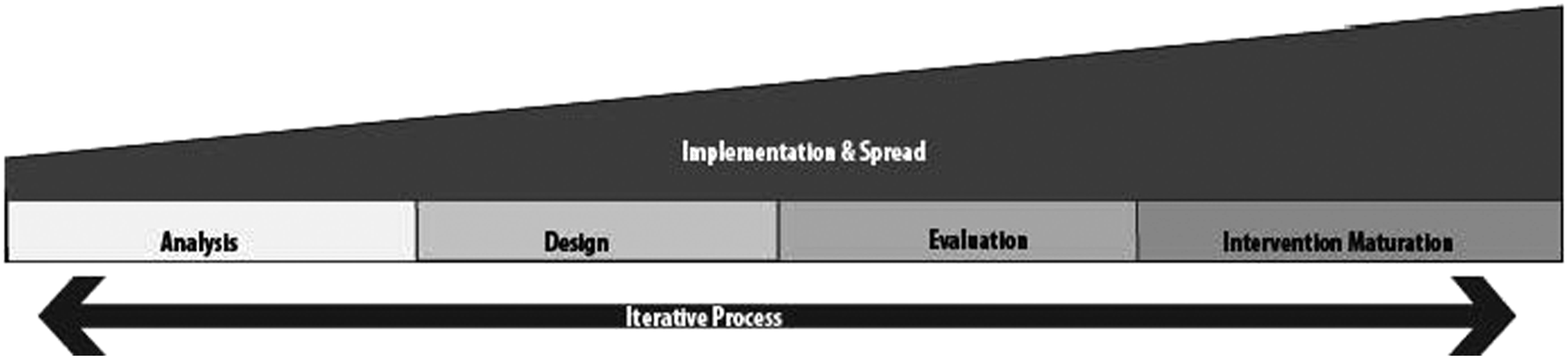
Phase 1 is an analysis and exploration of the instructional problem, which informs each other. In this case, the problem involves the following: (a) avoid student isolation in asynchronous online courses, and (b) an asynchronous online group project has not been as successful as the instructors wished. This project was deployed in an undergraduate and graduate instructional technology course. Initially, the group project instructions were presented, and groups were formed randomly. Students reported that some group members did most of the work while others contributed very little. Students also reported communication issues with group members due to the nature of their schedules and preferred communication methods. The research team explored empirical evidence regarding group work methods in online environments and explored the group project parameters in relation to the research. Phase 2 is the design and construction of the instructional intervention based upon the knowledge gained in phase 1. Phase 3 is the evaluation of the intervention. In this case, the data collected and analyzed for this study will be used to improve the intervention as well as its implementation in future courses taught by the instructors. The last phase is the intervention maturation, which is reached after multiple iterations of the project. Since this is the initial implementation of this project, the intervention maturation has not been reached yet.
These phases are iterative allowing the exploration and construction to happen in cycles. For instance, the researchers explored students’ data and constructed new project parameters, then explored research and best practices to revise and update those project parameters and instructions. After several iterative cycles, the team then moved into the next phase, which is the evaluation and reflection after implementing the new project specifications. This evaluation and reflection will continue after each revision and implementation of the project.
Social interdependence theory components and their application in online courses.
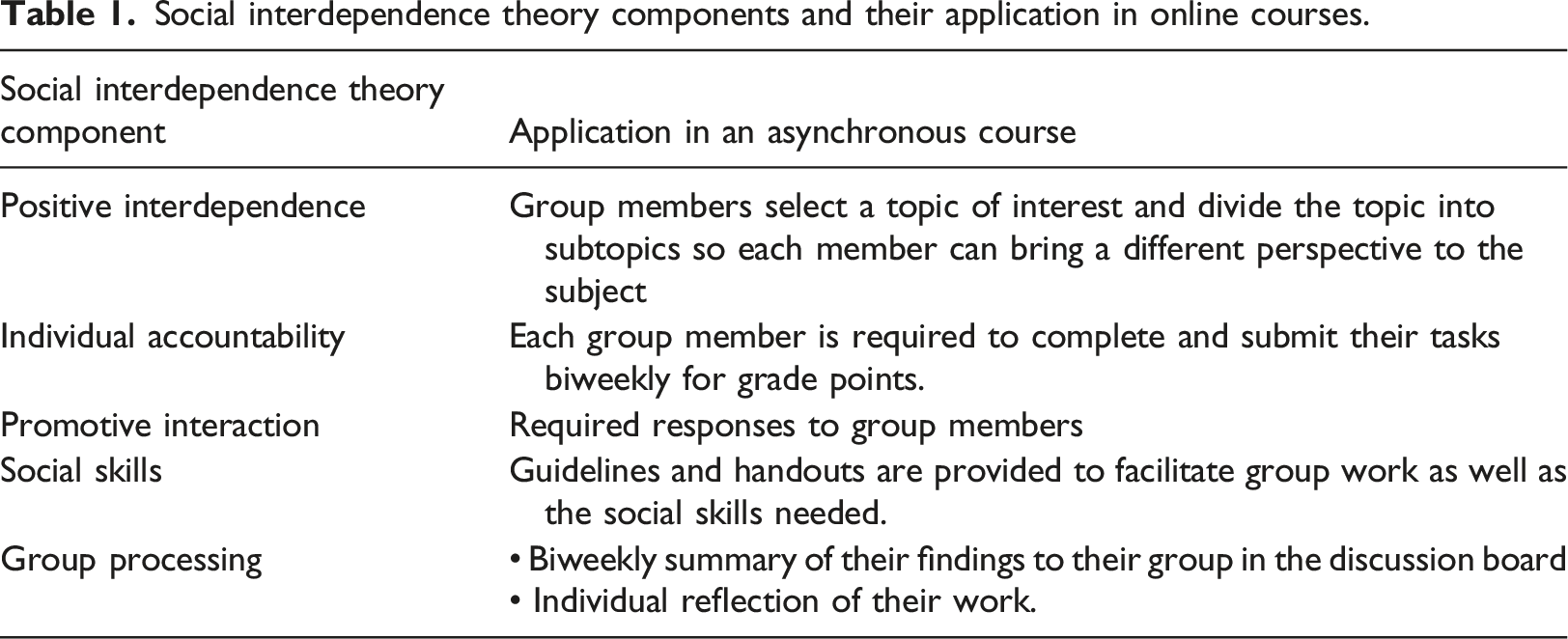
The initial project instructions required groups of students to create a Professional Learning Network (PLN) using various social media tools around a group selected topic and present their findings at the conclusion of the semester. The redesign of the assignment required the group to break down the selected topic into subtopics and that each member of the group select one subtopic and create an individual-social media account of their choice and follow a defined number of experts and organizations for the selected subtopic. This created positive interdependence and individual accountability to ensure each group member was contributing to the project in unique ways. Each group member then reported their findings to the group and the group collectively reported their findings of the topic via a culminating presentation. This provided an avenue for group processing. The project was also broken into six parts with specific instructions and guidance for interactions to create promotive interaction and social skills. Table 1 summarized the project redesign according to the social interdependence theory. Figure 2 depicts a sample group composition for the redesigned project. An example of group composition in the instructional activity.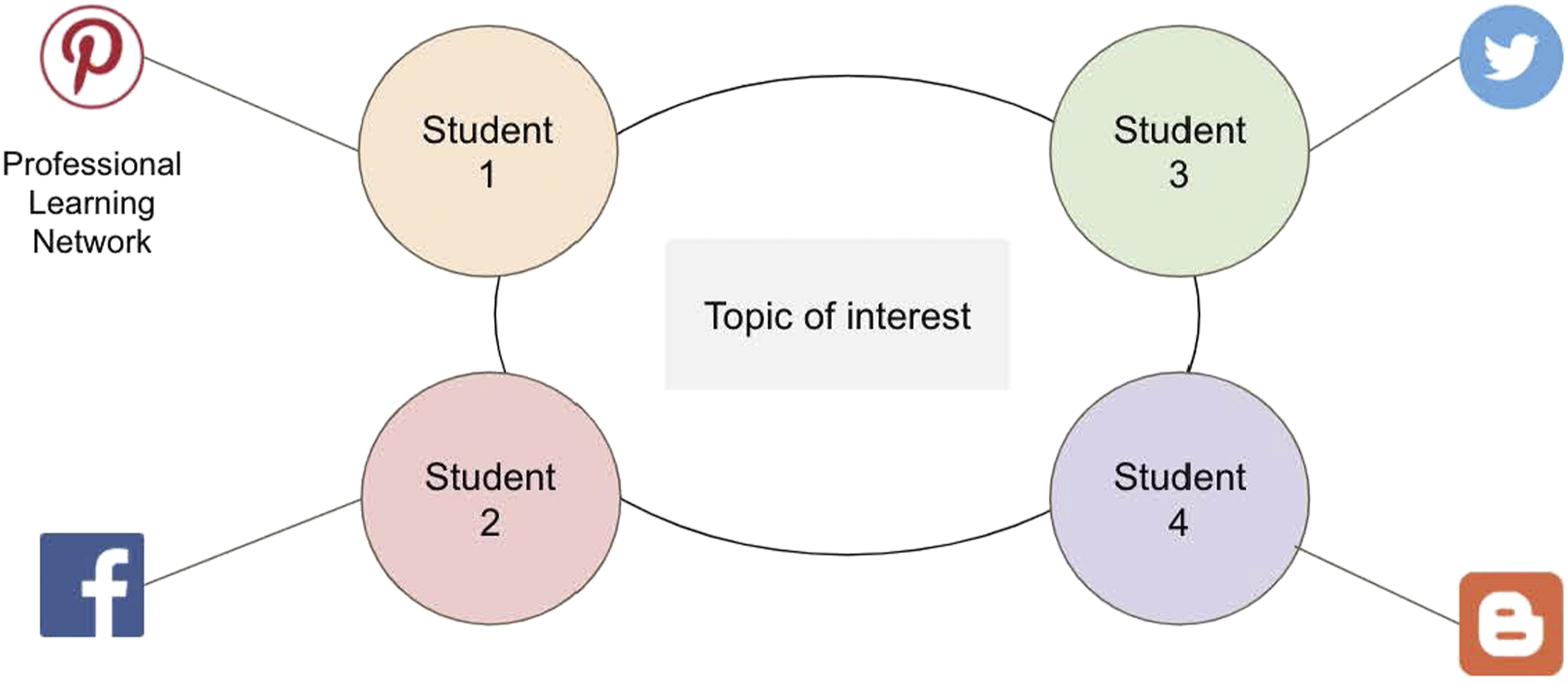
This study examined the implementation of cooperative learning in two separate courses: course A, an undergraduate course, and course B, a graduate course. The courses were conducted at two different higher education institutions. Course A and B were selected for the study because they both were designed to include a cooperative learning approach and were taught by the authors. The instructional content, objectives, and final activities varied with each course; however, the expectations for the group project and final presentation were the same in both courses. The selection of a graduate and undergraduate course was intentional to investigate whether the new project design would benefit a particular audience over the other or both. Students were informed that participation in the study was voluntary and their decision whether or not to participate would not affect their course grade.
Course A was a 15-weeks course conducted asynchronously. Most of the students were elementary school pre-service teachers. The course was designed into eight modules and students had usually two weeks to complete a module. In each module, students were introduced to a new technology in which they had to integrate into a project-based assignment. Out of the eight modules, seven had parts of the cooperative learning project to be submitted. At the beginning of the semester, the students were provided with a one-page job aid with instructions and tips on how to work together. These tips include: (a) how to identify team roles, (b) general guidelines and responsibilities, (c) regular communication, and (d) tools to assist in the communication among group members.
Course B was a 5.5-weeks summer course conducted asynchronously. Most of the students were either part of a graduate certificate or Master of Education in a learning, design, and technology program. The course was designed into 10 modules. The number of modules for this section was kept the same as the number of modules presented in a full term (i.e., fall and spring offerings) of this course. In the summer version, students complete multiple modules per week. Seven modules had parts of the cooperative learning project to be submitted. Students were not given any specific direction on how to work in groups other than the project directions and requirements.
Data collection and analysis
Quantitative data was collected through an online survey and qualitative data encompassed classroom artifacts (i.e., assignments, reflections, discussion, and other student products from the course). Participants’ demographic data was not collected for this study. Participants who completed the survey for this study were undergraduate (N=10) and graduate (N=10) students from two institutions. Participants were asked to complete a pre- and post-survey. The survey was a 5-point 12 Likert (strongly disagree = 0 to strongly agree =5) item scale measuring student attitude toward cooperative learning developed by McLeish (2009). Student classroom artifacts were also analyzed to identify students’ cooperative learning techniques within the group project. For instance, a student may reflect upon group work challenges such as communication methods in a reflection post. Additionally, groups summarized their communication strategies, role of each member as well as a reflection of their group dynamics in the final project for the course. This allowed the research team to identify the types of communication, roles and group dynamics students were using to collaborate.
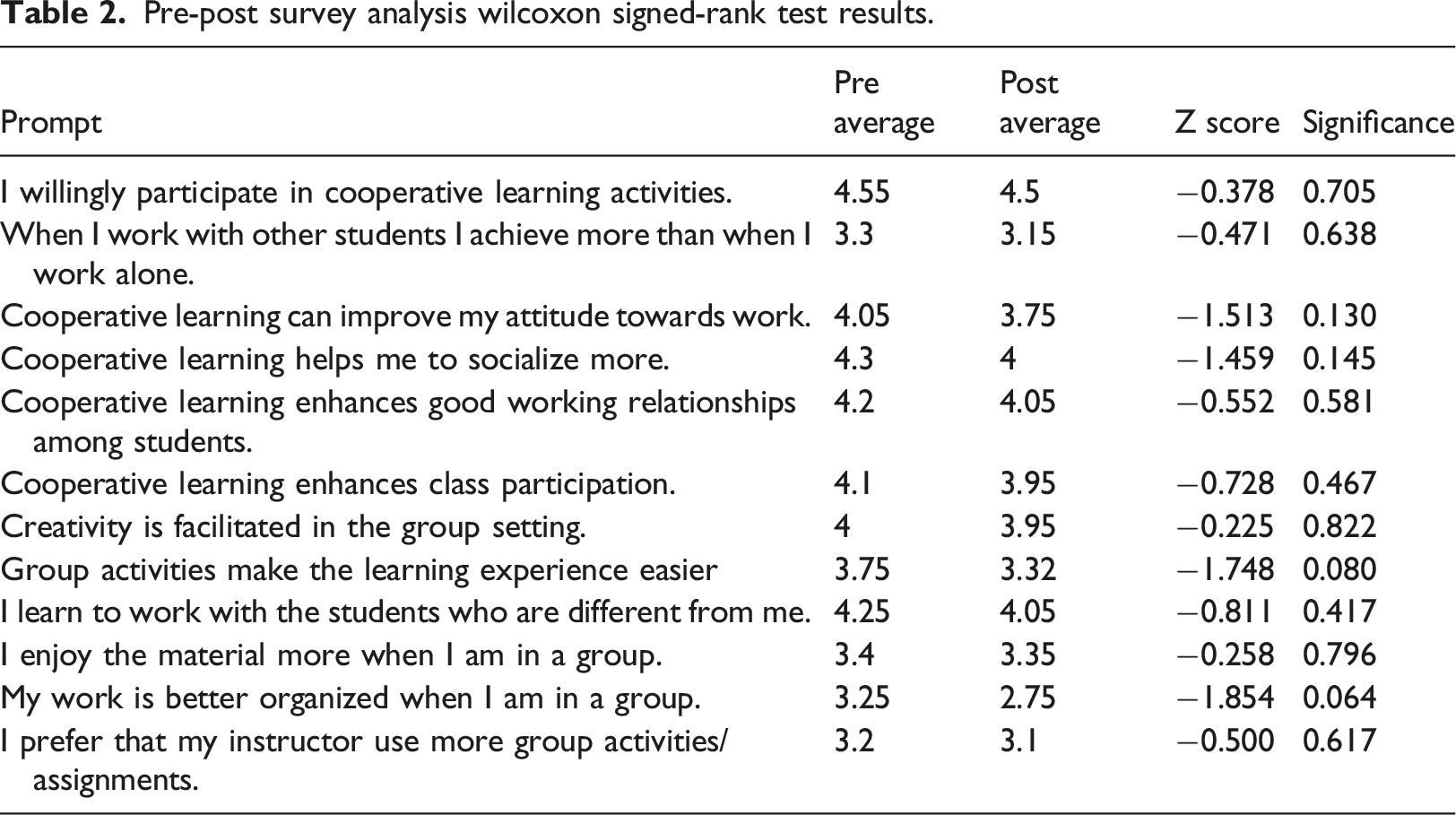
Pre-post survey analysis wilcoxon signed-rank test results.
Qualitative data was collected mainly from those participants who consented their participation in the quantitative study. Qualitative data was analyzed using main analytical strategies such as asking questions and making comparisons (Corbin and Strauss, 2008). The first strategy, asking questions, was used to help the researchers think about the data (e.g., what does a student’s response mean? How does it relate to the context of the group project and cooperative learning?) for understanding. Meanwhile, making comparisons was implemented to analyze and contrast perceptions, impressions and incidents presented in the data. The purpose of this strategy was to find similarities and differences among individual members and groups with the goal to build high-level descriptive concepts of the data. Similar perceptions, impressions and incidents from participants were categorized in order to identify high-level descriptive concepts. The findings from this study are discussed in the section below.
Findings
The results from quantitative data showed a decrease in student attitudes toward cooperative learning, though not significant. None of the prompts had significantly different ratings from the pre-survey to the post survey (see Table 2). All of the prompts had lower values on the post-survey, which indicates that student attitudes toward cooperative learning decreased, but not significantly.
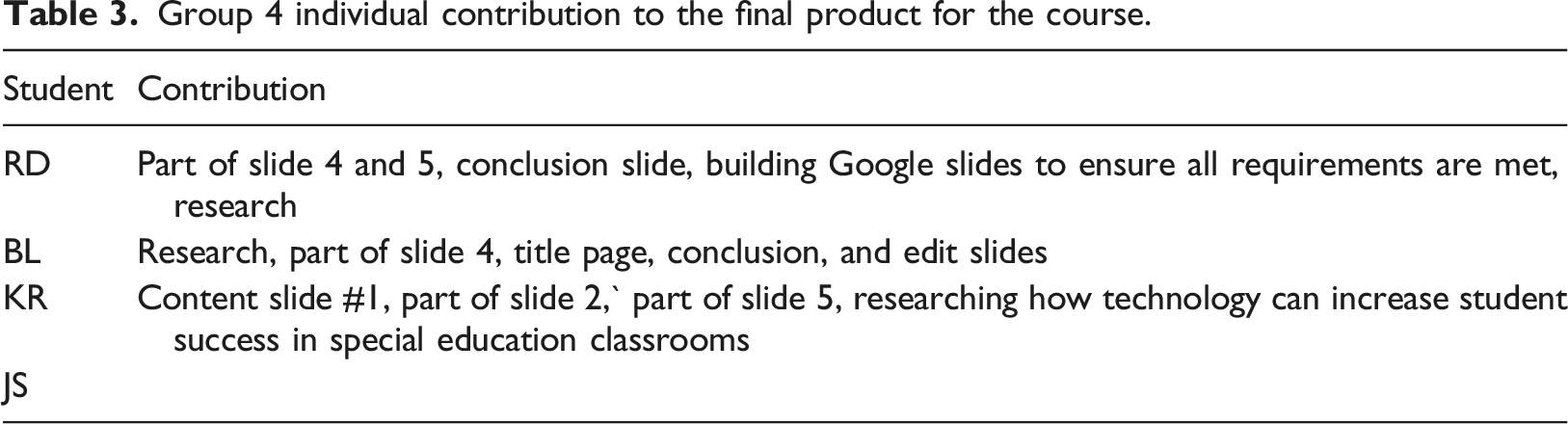
Regarding the qualitative data, students organized themselves in eight groups for course A and five groups for course B, varying from three to four members. Out of the eight groups, two groups showed problems with group members. Some group members were unresponsive or non-participatory in the group areas. Most groups chose to create a Google slides presentation as their final product. A few groups chose Prezi, as an alternative to Google slides, or an infographic tool such as easel.ly to present and summarize their work as a group. Before completing their final product, students were asked to write a final reflection that summarized the main findings from their group as well as their experience with the social media account. Most of the content discussed in the group’s discussion board were related to the students’ research topic (e.g., a summary of their findings for the module, making connections with current events or overall project, etc.). Therefore, group dynamics or any factor affecting them were not covered by group members in the discussion board. Still, group dynamic issues were detected through: (a) group members stopping to contribute and participate in the discussion, (b) students emailing the instructor about non-responsive group members and (c) missing information about the role of a particular group member in their final product for the course. The concepts listed below emerged as a result of the reflection from this experience.
Factors contributing to group selection and formation
When selecting or forming their groups, students sometimes assigned themselves to a group that were not directly related to their majors or interests due to group availability and size as well as their own procrastination to sign-up for a group. That is, students would wait until the course deadline to select a group, which by then only a few groups or spots were available for sign-up. This could have led students to lack interest or find this experience unbeneficial as they were unable to sign-up for a group and topic that matched their learning interest.
Still, there were some groups in which students mentioned this being a positive aspect of this experience. One of the groups, which focused on the use of technology for special education, had two of the members indicating that they were not special education majors, but they still benefited from this experience: Because I am not a special education major I had not put a lot of thought into technology or social media in special education classes, however I am glad I chose this project group because I was able to learn a lot of valuable information from my PLN. (Student KW) I am not a Special Education major, but I still found this project very helpful and insightful. I learned a lot about different ways technology can not only help a student with special needs, but also students that don’t have special needs. (Student JJ)
Another group, which focused on the use of technology for language learning, had also two members indicating that they signed up to the group not because of interest, but being late to complete the assignment (i.e., students had a due date to complete their sign-up for a group), but they still benefited from this experience: Looking back to the beginning of this assignment, I remember being very disappointed that I forgot to sign up for a group until the last day. I also remember thinking that there was so little that could actually be researched on this topic, it seemed too narrow. However, as time went on, I was amazed at the wealth of knowledge available. (Student DC) Truthfully, I initially chose this topic because I was a little last minute with signing up, but it ended up being an interesting topic with a lot more information than I initially thought I would find. (Student JL)
Students’ perceptions and experiences with social media
Students had different experiences with social media. Some students shared that they initially had a negative perspective about social media, being unable to see its use for educational purposes. However, as students used a social media tool for this course assignment, their perspectives changed. As a result of this experience, some indicated having positive perceptions about its use: I did not think using social media in the classroom provided many benefits, however I did think that it was a good way for teachers to connect and communicate with the parents of their students. After my research I know that using social media can provide a helpful and interactive way to teach students about school safety, something that is necessary to teach in school, especially in present day. (Student EL) Prior to this class I had no idea how beneficial social media could be in the field of teaching. I now realize that it can be an asset in a variety of ways. Teacher can get and share tips, trick, tools, assignments, and so much more with each other due to social Media. (Student MN)
While others shared similar positive perspectives towards the use of social media, they also cautioned its use with K-12 students. They believed that social media could be a distraction in the classroom with students checking status, posts and other announcements from friends and followers. Additionally, safety in digital spaces was a concern brought by one of the participants, which led them to see the need to monitor the use of these tools in K-12 settings. It is crazy to compare how helpful social media and technology can be to school safety but at the same time it can also be very dangerous in a school setting. It is hard to monitor all students on social media because of the rate technology is progressing. (Student BM) Social media is one thing that could end up being a distraction to students if used in the classroom setting so it is important that we monitor who students follow and what they are putting out there. (Student KW)
Perhaps, due to the aforementioned concerns, most students indicated that the use of social media was more appropriate and beneficial for teachers. As one of the students mentioned in their reflection, “as a teacher, social media can be a great tool to reach out to other educators and learn from them in order to improve your own teaching” (Student CC). Similarly, another student shared the benefits of using social media as a teacher: Prior to this class I had no idea how beneficial social media could be in the field of teaching. I now realize that it can be an asset in a variety of ways. Teacher can get and share tips, trick, tools, assignments, and so much more with each other due to social Media. (Student MN).
Students also had different experiences with the social media tools used for the courses’ project. While some enjoyed using a particular tool, others disliked it. An example of this finding can be found in how two students in different groups reflected on the use of their social media (i.e., twitter) for the course. For instance, a student did not see any value in the tool, as they indicated: “I am not impressed by Twitter, and really found no use for it outside the assignment” (Student DC). While another, found great value in using this tool beyond this class assignment as they plan to continue to use tool: I chose Twitter to be my platform, I found this form of social media (as a resource and communication tool) to be very much needed. I was able to connect with professionals around the globe, with many different careers, ideas, and viewpoints. This is a resource I will continue to build on after this course. With the research that I have been able to do and from my own classroom experiences I would say that using social media can be effective and useful for students and teachers. Staying connected after school, by using social media, in my mind is a huge plus for students and teachers. (Student TM).
Group dynamics
Although most groups seemed to collaborate well and complete their task on the discussion board, other groups had issues with their members. Two groups in particular showed problems with their teammates for being unresponsive or non-participatory in the discussion and finalizing their final product for the class. These issues will be discussed in detail according to each group.
Group 3
This group was initially composed of four members (i.e,. two female and two male students); however, one of the students dropped the course without informing the instructor or group members. Because the group was unaware of her withdrawal from the course, students assumed she was a non-participatory group member for a while. Additionally, another group member (Student BM) constantly posted his individual contribution to the group late. His tardiness at the beginning of the semester generated the first email contact from one of the group members (Student TY) to the instructor. Student TY was concerned that their participation grade, which was earned by responding to two students in the group, would suffer because of student BM’s tardiness. This information led the instructor to contact student BM about his tardiness. After the instructor’s email, student BM improved his timing in completing the individual contribution. However, towards the end of the semester, this pattern surged back again. He was also unresponsive to student TY’s email about exchanging phone numbers to improve the communication in completing the final project for the course. Due to the aforementioned issues, the instructor had to intervene once again, and Student BM was asked to complete the final project individually.
Group 4
Group 4 individual contribution to the final product for the course.
Discussion and lessons learned
The purpose of this study was to examine students’ attitudes towards cooperative online learning experiences and identify cooperative learning techniques used in a long-term group project in asynchronous online courses that could be beneficial for future and similar instructional experiences. Although previous studies (e.g., Flener-Lovitt et al., 2020; Cankaya and Yunkul, 2018; Farzaneh and Nejadansari, 2014) have indicated a positive view of the implementation of cooperative strategies in teaching and learning context; the findings from our quantitative data indicated a decrease in student attitudes toward cooperative learning (see Table 2). Meanwhile, other studies (Chang and Brickman, 2018; Kupczynski et al., 2012; Vargas-Vargas et al., 2011) have also not found a statistical difference in implementing cooperative learning in online environments. Some of the rationale for this decrease could be based on students’ high expectations of group work. For example, participants might have had previous experiences and expectations of working in groups, and those expectations may have not been met in this study, which led to the decrease. Additionally, students’ high expectations of group work could be related to faculty support when challenges arise. For instance, Hadwin and colleagues (2018) have found that planning and checking strategies are considered most effective during collaboration. The authors pointed out the importance of supporting strategic planning prior to work as a group as well as the need for guiding students to use planning strategies when challenges occur during collaboration. In this study, students were not provided with additional support or training in collaborative strategies, except for a job aid at the beginning of their group formation. A lack of extra support throughout their group work might have impacted participants’ attitudes toward cooperative learning. Another potential reason for this decrease is that students might have an assumption from previous group experiences that they can depend on others to carry their work; while in this context, students had individual accountability of their work. Students may have perceived this as more or extra work than their former experiences.
Moreover, participants in this study self-selected their group based on the research topic or interest. Although self-selection based on interest could be beneficial in bringing the group together, there is no guarantee that students in a group would share a similar sense of responsibility or group dynamics. Indeed, Cankaya and Yunkul (2018) found that group formation (e.g., random selection, self-selection, and instructor selection) can impact group dynamics, with students favoring group members who have a sense of responsibility. Furthermore, Chang and Brickman (2018) found that unsupervised students will not work within their role designation (e.g., notetaker, content developer, editor, etc.), thus, not working to their fullest as a group. Another aspect to be considered is that participants in our study might have valued the idea of working in a group initially; however, when they worked in a group, they may have not perceived the benefits of this experience compared to working individually. As previous studies have shown, students can value the social experience of group work, but they are less likely to agree that cooperation can help them achieve better in assessed tasks (Hammond et al., 2010).
The increased workload of an applied long-term project versus more traditional type of assessments might have also influenced the findings. The group’s affective tone may have also been another contributing factor. A group’s affective tone or the consistent reaction within a group significantly mediates social interdependence on group productivity (Teng and Lou, 2015). Additionally, the way the project was structured may not have had enough collaborative intent or enough instructor social presence to increase learner satisfaction. Oyarzun et al. (2018) investigated learner-to-learner interaction techniques and found that high levels of cooperative intent and high levels of instructor social presence increased learner satisfaction. Perhaps, restructuring the project to have some affective/social interactions among the group members and the instructor could increase learner satisfaction. Further investigation on this area is needed and will be incorporated into the next iteration of this designed based research project.
The qualitative findings also provided insights into students’ negative perceptions of the cooperative learning process. For instance, some groups were formed with members who were late in or stopped providing their contributions to the team. Even though each group member’s contribution was individual and graded accordingly, participation grade in the discussion was earned by responding to two members in the group. Therefore, if a member stopped or posted their contribution late, other members believed their participation grade would be affected by their tardiness or lack of participation. Indeed, this finding corroborates with other studies (Hara et al., 2000; Dennen, 2005; Lee and Martin, 2017) in which student participation in the discussion board is often motivated by course requirements and grading purposes.
The use of social media can vary from communication and collaboration to creative self-expression (Debbagh and Reo, 2011). Students in this study identified positive aspects about the use of social media in educational settings, such as collaboration and communication with other teachers, sharing resources, and gaining information that could improve their own teaching. Students perceived not only the benefits of using social media to collect information for this project but also how they could continue to use social media after the completion of this project, as future teachers. Still, some cautioned the distraction and safety of K-12 students as they use these tools in the classroom, which corroborates with a previous study conducted on a similar topic (Barreto and Durrington, 2017). Students' mixed perceptions of social media for education seem to be a common finding within other studies (e.g., Neier and Zayer, 2015; Chromey et al., 2016) as well. Depending on the purpose and how these tools are integrated into educational contexts, students may deem them more or less beneficial for education.
To a certain extent, the design of the cooperative learning project was successful with most students equally participating and contributing to the overall group product, while simultaneously using social skills to create positive interdependence, and group process to gain the course concepts. The next steps of this study will be to apply the SIT framework to other cooperative group projects to determine if the results are similar. Additionally, information will be gathered in the pre-survey to determine students’ previous experience and attitude towards cooperative learning. The design of the cooperative learning intervention will also include instructor’s checkpoints with groups to provide guidance and support throughout their group work. Lastly, examining students’ perceptions of peer interaction will provide further information regarding their attitudes towards working in groups (Hillyard et al., 2010).
Next iteration of the project
This study followed a design-based research (DBR) approach. The “analysis” phase was initially identified by the course instructors. Based on personal observation and student evaluation conducted by their respective institutions, the instructors noticed that it was important to avoid student isolation in asynchronous online courses as well as to design effective group project strategies in these environments. After identifying and analyzing the problem, the instructors designed an instructional intervention to be implemented in their courses, also known as the “design” phase in the DBR. Based on the results collected from this study, the next phase of this research project will include a revision of the intervention and elements discussed in the aforementioned section will be incorporated. The revision will consist of: (1) a group training in which students will learn the basics of working in group (e.g., group dynamics and norms, set expectations and plan for the group project, etc.), (2) additional support from the instructor throughout the project (e.g., checkpoint meetings with the instructor or instructor’s participation in specific discussion boards with students), (3) students’ reflection on group members as well as group process. The survey instruments will also be revised to add questions about students’ previous experience from other courses as well as attitude towards cooperative learning. Once these revisions are made, they will be implemented in future courses and evaluated again to assess the effectiveness of the cooperative learning strategies incorporated to the intervention. The goal is to reach the intervention maturation after several iterations (and revisions if needed) of the project.
Limitations
The limitations of this study include a small sample size from each institution. Student participation was part of the class, which could have influenced their positive reflection of the group project. Students’ perceptions and prior knowledge of cooperative learning was not examined in this study. This information could provide a more comprehensive explanation for the quantitative data results. Additionally, instructor social presence was not investigated and examining this component could contribute to the understanding of this study’s findings as well as social presence of the students in their groups. Further research is needed on the influence of instructor social presence and the integration of social media tools in higher education (Conklin, Barreto and Dorgan, 2019).
Recommendations
The potential feeling of isolation in asynchronous online courses can be detrimental to students’ success and learning. Implementing cooperative learning approaches in asynchronous online courses can be a solution to build a strong community and sense of presence in online environments (Oyarzun and Morrison, 2013; Flener-Lovitt et al., 2020). Still, instructors might need to consider the affordances of the online tools available in their courses to improve students’ social presence. The use of video discussion platforms or mobile application chats could be useful for students to interact beyond the traditional discussion board. These tools could lead to greater social presence given as they allow for more social cues (Cherney et al., 2018). Careful and thoughtful planning is also needed to teach students how to work in groups and to deal with unreliable members, particularly in online settings. Designing the cooperative learning intervention to include (pre-)planning and checking strategies might lead to more effective collaboration among members (Hadwin et al., 2018). These strategies could help group members to plan and anticipate any group challenges and issues as well as to establish checking points with their group members throughout the semester. The presence, monitoring, and scaffolding from the instructor is essential to avoid group problems. That is, the presence of the instructor needs to be strategic and intentional in helping students navigate the group dynamics and process. For example, instructors could provide more explicit coaching in terms of planning and time management (Vivian et al., 2016) or have the group discussions be supplemented with periodic visits from the course instructor (Lee and Martin, 2017). All these strategies could be beneficial in improving the cooperative learning approach implemented in this study. Finding the “sweet spot,” which contains attributes of cooperative learning, is necessary to increase student satisfaction, sustain the group work and dynamics and improve student success in their online courses (Jacobs and Ivone, 2020).
In traditional face-to-face classrooms, the instructor is usually the expert, delivering the knowledge to learners. Classroom interactions are usually limited to each class unit by time and space. When suddenly moving to an online setting, instructors need to consider how they will translate their face-to-face practices into online contexts as well as establishing the sense of social presence, defined by the ability to present oneself as a “real” person in an online environment (Swan and Shih, 2005). Further research on the impact of the application of cooperative learning in online environments, especially in asynchronous modality, is needed. More studies in this topic could inform practitioners and researchers who plan to implement these strategies in their own courses or conduct similar studies, if migrating to an online space is required due to unforeseen circumstances.
Moreover, the use of social media tools in higher education can present mixed feelings among faculty members, with only some finding it valuable (Manca and Ranieri, 2016), as well as students who seem to have mixed opinion about the use social media for education (Neier and Zayer, 2015; Chromey et al., 2016; Barreto and Durrington, 2017). Thus, it is important to further investigate faculty’s as well as students’ perceptions of social media for educational purposes. Examining the integration of these tools in the classroom as well as students’ response can provide a holistic and in-depth understanding of cooperative learning experience with social media tools integration.
Footnotes
Declaration of conflicting interests
The author(s) declared no potential conflicts of interest with respect to the research, authorship, and/or publication of this article.
Funding
The author(s) received no financial support for the research, authorship, and/or publication of this article.
