




Abstract
The majority of studies on second/foreign language teacher identity have explored the face-to-face environment compared to the technology-assisted language learning (TALL) environment. The paucity of research despite the significance of teacher identity served as the rationale to conduct a systematic review. Scopus and Web of Science indexed journal articles on language teacher identity that met the predetermined exclusion-inclusion criteria were systematically reviewed. Forty-four articles published between 2010 and 2020 were reviewed to convey the reported affordances and challenges of distance learning for language teacher identity. Pedagogically, the findings inform pre-service and practicing teachers who seek a better understanding of teacher identity in TALL in terms of affordances and challenges. Theoretically, the findings shed light on the future research trend and inform researchers about the most frequently reported challenges that need to be addressed concerning L2 teacher identity.
Keywords
Introduction
Language teachers’ perceptions of the language teaching profession develop under the influence of a variety of factors (e.g. psychological, social, educational, political, cultural, etc.) that vary across time and context from one teacher to another and result in multiple identities. Second language (L2) teacher identity has been examined by several scholars from different perspectives (Barkhuizen, 2017; Cheung et al., 2015; De Costa and Norton, 2016; Kern, 2015; Miller, 2009; Thorne et al., 2015). However, there are no studies on reporting the affordances (reported efficacies) and challenges (reported limitations) of the technology-assisted language learning (TALL1) for different aspects of L2 teacher identity (e.g. identity development, professional identity, multiple identities, etc.).
Given the dynamic nature of the teacher identity formation process (Bruggeman et al., 2021; Jonker et al., 2019) and the unprecedented rise of distance learning as a result of the COVID-19 pandemic, conveying such information to the practitioners, researchers, and computer programmers is highly critical. The L2 teachers who were trained to teach in the face-to-face (F2F) environments and had formed particular context-oriented teacher attributes (i.e. relatively stable personality characteristics) have to modify and redevelop new teacher attributes that adapt to the online professional environment. Therefore, the knowledge of available affordances and possible challenges in the TALL environment that can influence language teacher identity can be very informative and facilitative for teachers to readjust or reform their teaching identity to fit in the new e-learning environment. The sudden shift from the F2F teaching environment into a distance learning environment requires educational reforms (e.g. developing digital competence and literacy, developing online communicative and interpersonal competence, etc.). The present study aimed at providing teachers with the necessary knowledge to make a smooth shift by taking preemptive measures against the reported online challenges and utilizing the reported online affordances to develop appropriate if not ideal online teacher identity.
Extant literature
Research on language teacher identity has been conducted under a variety of theoretical frameworks by different research methods and data elicitations tools. From pre-service teacher identity construction to professional identity formation, from socio-cultural perspectives to psychological approaches, teacher identity research has been among the main issues addressed by the scholars of the field to provide future language teachers with illuminating help.
Using narrative inquiry, Li (2020) explored teacher identity dynamics and emphasized the need to approach L2 teacher identity from multiple perspectives in keeping with previous studies (Benesch, 2017; Burns et al., 2015; Farrell and Ives, 2015; Golombek and Doran, 2014; Kayi-Aydar et al., 2019; Kubanyiova and Feryok, 2015). Following a review of the studies on L2 teacher identity, Sang (2020) reported situated nature of teacher learning as a significant factor in identity development and called upon further studies on the effects of the socialization process in keeping with previous studies (Freeman, 2016; He and Lin, 2013). Dudek and Heiser (2017) explored teacher identity in online environments with a focus on identity-centered design development. Dudek and Heiser identified several intertwining and recurring themes (e.g. agency, visibility, competencies, community, and narrative) and integrated them into an online design to train preservice teachers about how to identify, share, and construct their identities. Despite the complexity of the identity formation process, Dudek and Heiser confirmed the efficacy of emerging technologies in giving student teachers a richer understanding of their identities through digital features that facilitate visualization, presentation, recognition, and evaluation of online identities. Mazdayasna and Zaini (2015) examined identity representation in writing tasks and reported that writing analysis conveys information about writers’ identities and factors that consciously or unconsciously influence them. Zaini (2018) called upon conducting research on modes of communication (e.g. sounds, images, graphics, colors) that influence identity representations while doing computer-mediated writing tasks with a focus on other related factors (e.g. power relations, individual differences/preferences, etc.) in distance learning.
Technological globalization has spread emerging technologies within and across all professions including the language teaching profession (Ellaway et al., 2006). The integration of the emerging educational technologies into the TALL environment has introduced both affordances and challenges. Therefore, identifying them in the extant literature on TALL teacher identity is a gap that if bridged can inform the practitioners of the field about the confirmed affordances that can help them construct their professional identity and challenges that need to be overcome in future TALL research.
Several reviews have been conducted on teacher identity in TALL environments. Among them is the review conducted by Çiftçi and Savaş (2018) with a focus on the role of telecollaboration on teacher identity development. Lewis and O’Dowd (2016) elaborated on the advantages of virtual exchanges with respect to language skills development, learner autonomy, and intercultural communicative competence among trainee teachers. O’Dowd (2016) conducted a review on virtual intercultural exchanges in an attempt to identify different teacher identity patterns to shed light on the status quo and future directions of the research in the literature. Çiftçi (2016) reviewed intercultural issues without addressing language learning-related issues. Çiftçi focused on the available tools and devices in the TALL environment and how they can facilitate intercultural learning among pre-service teachers. Chun (2015) conducted a review on culture and language learning through telecollaboration with a focus on Cultura-based projects in teacher education.
To summarize, the previous studies primarily focused on….. • Culture and language learning • Intertwined nature of language learning and intercultural communicative competence • Identifying trends and emerging issues • Language teacher identity development through telecollaborative projects. However, previous reviews have not put together the affordances and challenges of TALL environment for teacher identity in a single study. Therefore, the present systematic review was conducted to bridge this gap.
statement
According to Kanno and Stuart (2011) learning about L2 teachers’ identity is more important than learning about language teaching. Accordingly, several studies have reported the significant role of teacher identity in better handling of the tensions and emotional conflicts during teaching (Hanna et al., 2020; Hong et al., 2017; Mací as Villegas et al., 2020; Pillen et al., 2013). Despite the aforementioned significance of the L2 teacher identity, there is a gap in TALL literature concerning the affordances and challenges for L2 teacher identity.
To bridge this gap, TALL studies on L2 teacher identities were reviewed and the collected data were coded in terms of adopted theoretical frameworks/perspective, data collection research methods, and reported affordances and challenges to shed light on the research trend between 2010 and 2020. The findings of the current systematic review help us reexamine the main predicted research trends. First, the movement from oversimplified approaches towards the appreciation of translinguistic and transcultural teacher identities under the influence of the postmodern and poststructural perspectives as predicted by Yazan and Rudolph (2018). Second, the movement towards a static glocalized identity discourse as predicted by Fang (2018). Third, the movement towards an inclusive, non-racist, global, and dynamic reconceptualization of plural L2 teacher identities types as predicted by Rudolph et al. (2015).
Teacher identity in general and language teacher identity, in particular, develops through a dynamic process under the influence of a variety of sociocultural and professional factors (Bruggeman et al., 2021; Jonker et al., 2019). The shift from the traditional language teaching context to the online L2 teaching context justifies the need to expand our understanding of the available tools and devices in the TALL context that can potentially influence teacher identity development. The present study was carried out to avoid overlooking online teacher identity in TALL as a growing language teaching approach and to respond to the calls upon conducting research towards a deeper understanding of essential preparations and mentorship with regard to online teacher identities (Bahari, 2019; 2020a, 2021a; Richardson and Alsup, 2015; Xiao, 2016).
Method
Data collection
SCOPUS and Web of Science indexed journals publishing peer-reviewed articles on language teacher identity in distance learning environments were the main source of databases. These two major databases enabled us to cover the necessary breadth and include peer-reviewed quality articles for the present systematic review. The main search term was ‘language teacher identity’ that was broadened by adding TALL-related terms (virtual, online, distance learning, blended learning, e-learning, Computer-assisted, mobile-assisted, technology-assisted) to ensure the relevance of our search.
PRISMA principles were observed in keeping with Moher et al. (2015) to collate relevant articles and to evaluate interventions in aggregate data from 44 articles based on pre-determined eligibility criteria in response to the research questions. Empirically delineating parameters, consolidating the data, and selecting primary data are among the affordances of systematic reviews that provide robust results and unbiased synthesis of the data items (Bedenlier et al., 2020; Hemingway and Brereton, 2009; Liberati et al., 2009; Oakley, 2012). To ensure the relevance and quality of the findings, the study also included a configurative systematic approach to address less configurative elements (Thomas & Harden, 2008). Research questions were developed to ensure their manageability, appropriacy, and relevance to the outcomes that we were seeking. Teacher identity-connected terms were used in both electronic and manual searches: “teacher identity in digital language learning,” “teacher identity in mobile-assisted language learning,” “teacher identity in virtual reality language learning,” “teacher identity in computer-assisted language learning,” “teacher identity in tablet-assisted language learning,” “teacher identity in distance learning,” “teacher identity in robot-assisted language learning,” “language teacher identity in e-learning,” “teacher identity in technology-assisted language learning,” and “language teacher identity in blended learning.” Using these parameters resulted in 196 articles.
The included articles were systematically reviewed and the relevant data were collected and coded under two main categories. First, the data that represented teacher identity and divided into three subcategories (identity formation, identity (re)presentation, identity characteristics) in keeping with Beijaard et al. (2004). These subcategories informed about the focus of the studies that were identified and reported either by teachers or researchers.
Research questions and data coding framework.
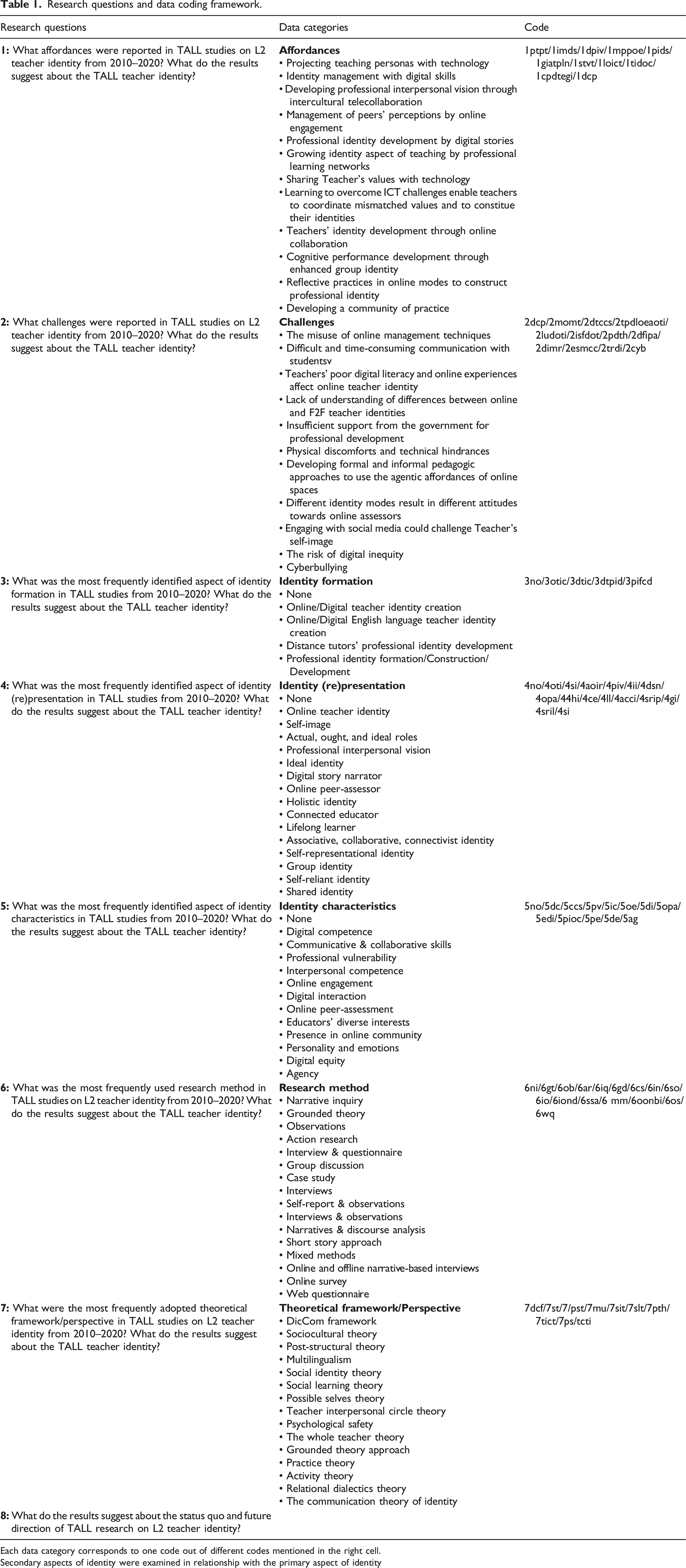
Each data category corresponds to one code out of different codes mentioned in the right cell.
Secondary aspects of identity were examined in relationship with the primary aspect of identity
The study aimed at using terms that are created to characterize L2 teacher identity in TALL environment rather than the F2F environment. Therefore, possible similarities should not be considered as extensions of the traditional F2F environment.
Inclusion/exclusion criteria
Screening the dataset to ensure the accuracy of abstract and title resulted in 93 articles and full-text screening of them based on inclusion/exclusion criteria led to including 44 articles in the study. To ensure the quality of the dataset only peer-reviewed articles published by journals were included by both manual and electronic searches. The search included studies published over the past decade (2010–2020) and focused on different aspects of teacher identity research to provide a representation of the mainstream research trajectory. Once the database searching was conducted, each article was scrutinized against the following exclusion/inclusion criteria and those aligning with the criteria were included in this systematic review.
Inclusion criteria: • Date: 2010–2020 • Type: Peer-reviewed scholarly articles • Focus: Articles on teacher identity in technology-assisted language learning • Language: English
Exclusion criteria: • Date: Prior to 2010 and after 2020 • Type: Dissertations, book chapters, technical reports, and proceedings • Focus: Articles did not include technology-assisted language learning • Language: Other languages
Screening resulted in removing eight articles as they were duplicates. An additional 95 articles were removed as they had irrelevant abstracts and titles. An additional 49 articles were removed as the articles did not address teacher identity in TALL platforms. A total of 44 articles met the inclusion/exclusion criteria that are displayed in the PRISMA flow diagram (Figure 1). PRISMA flow diagram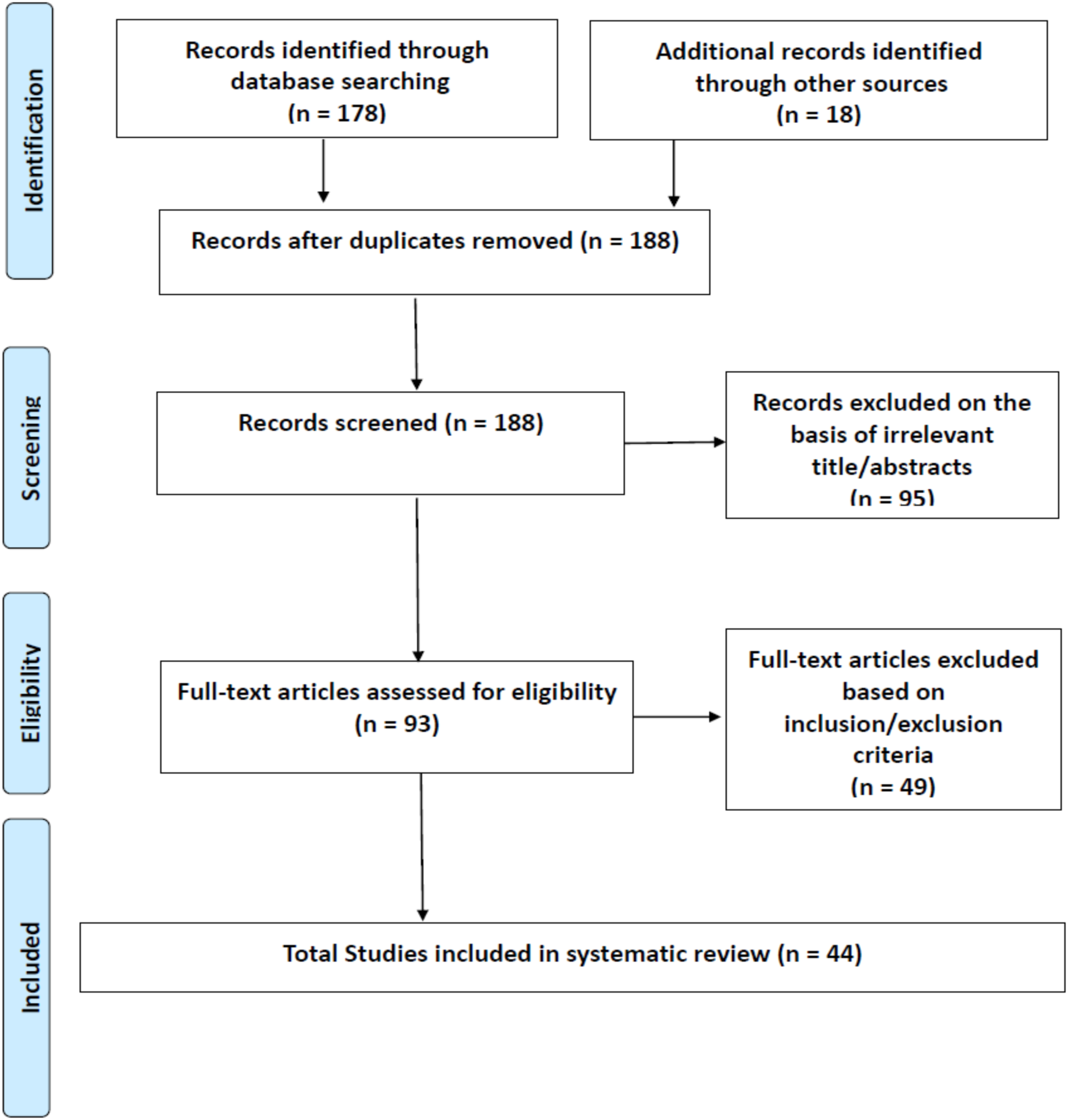
Characteristics of articles
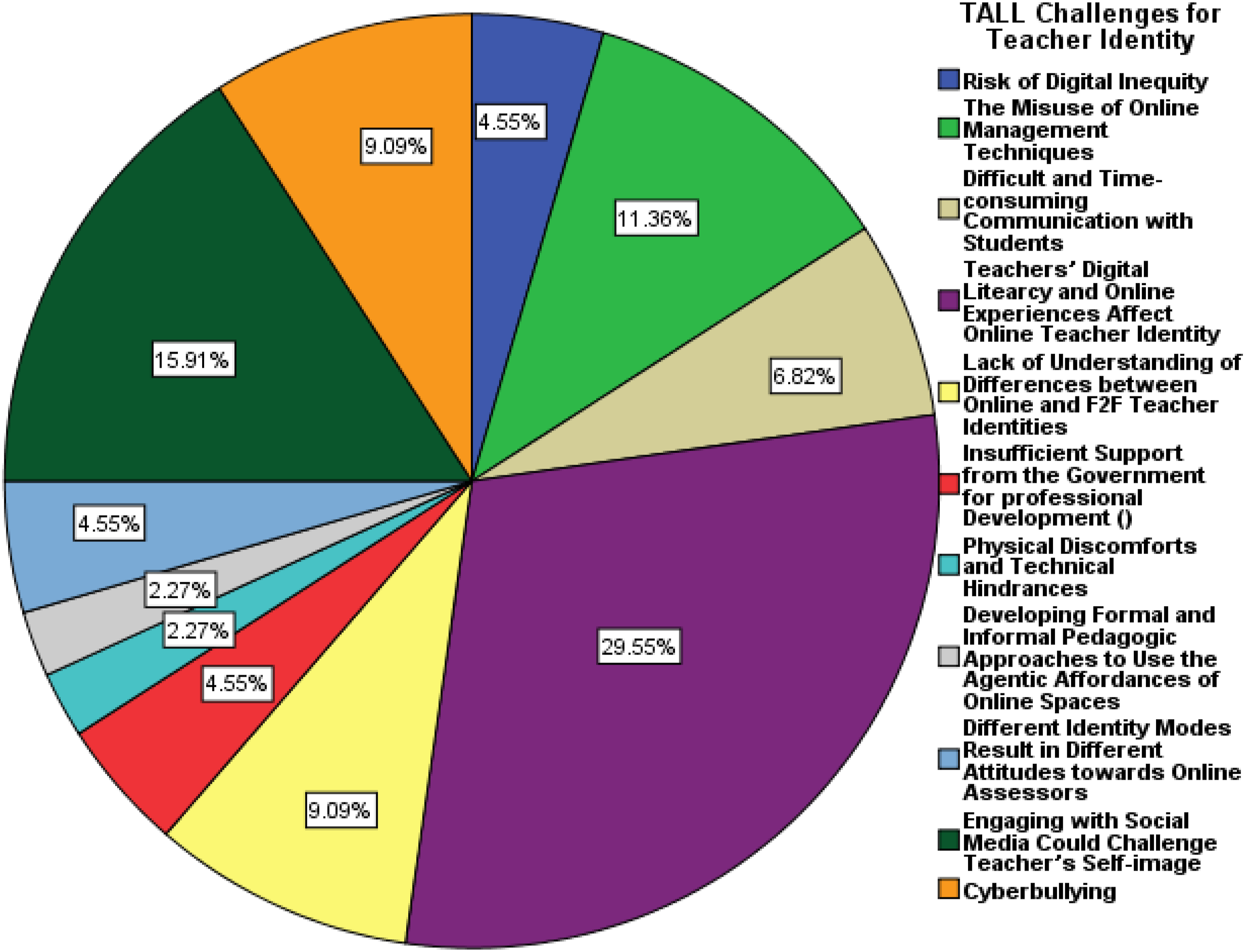
Computers & Education with 40.91% of the total included articles was the first journal. CALICO with 9.9% was the second, and ReCALL with 6.82% was the third journal in terms of the frequency of published articles on online teacher identity. Figure 2 It seems that some journals that mainly focus on computer-assisted language learning such as CALL journal (with only 4.55% of the total) have overlooked the significance of online teacher identity and failed to publish related articles.Figure 3 TALL affordances for teacher identity TALL challenges for teacher identity.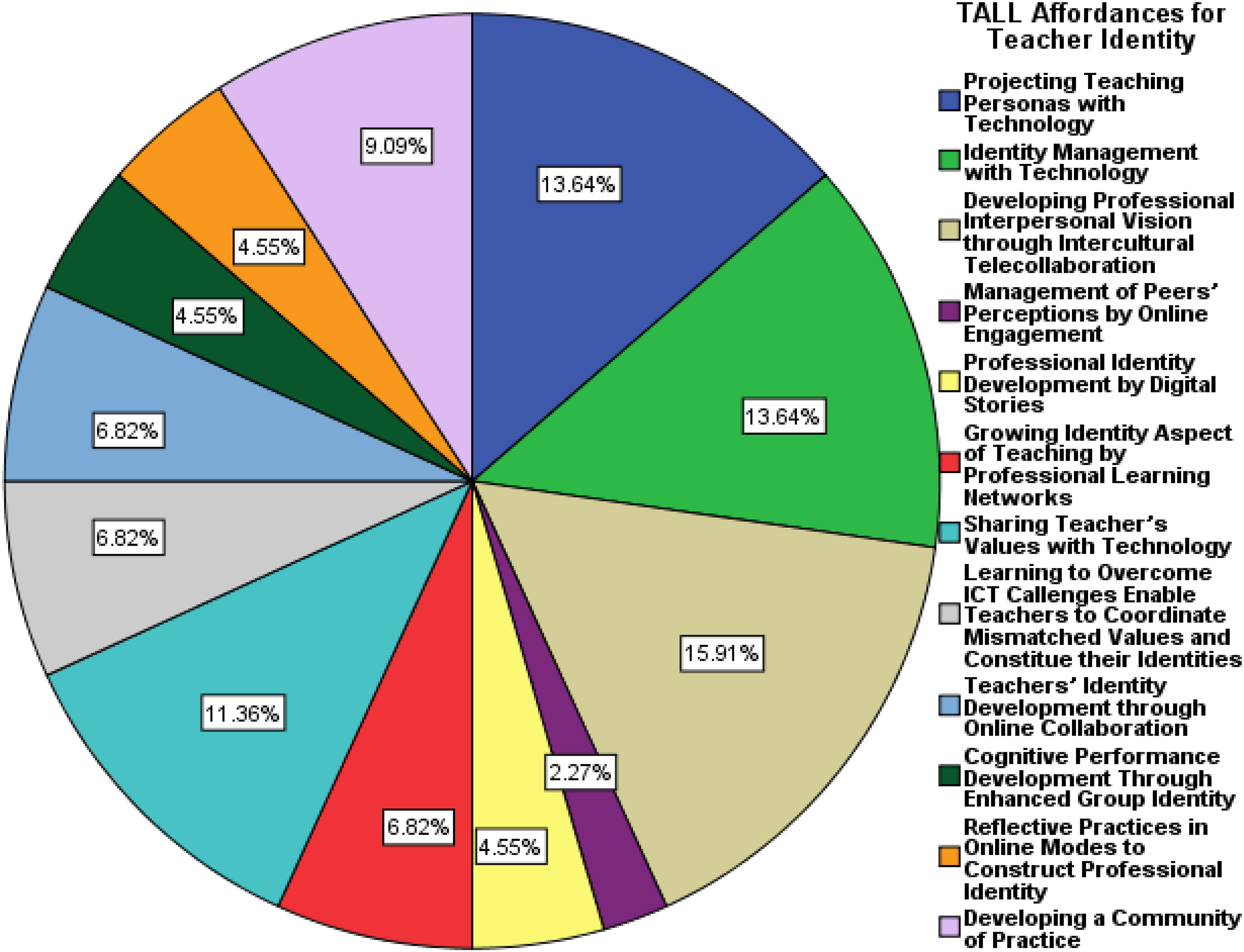
Results
Results to affordances for L2 teacher identity development
Results to challenges for L2 teacher identity development
Results to aspects of identity formation
Online/digital teacher identity creation (34.1%), Online/digital English language teacher identity creation (34.1%), professional identity formation/creation/construction (27.3%), multiple/dynamic online identity revelation modes (2.3%), distance tutors’ professional identity (2.3%) were the most frequently observed aspects of identity formation among the reviewed articles.
Results to aspects of identity (Re)presentation
Self-representation identity (27.3%), online teacher identity (20.5%), self-image (6.8%), associative/collaborative/connectivist identity (6.8%), group identity (4.5%), holistic identity (4.5%), online peer assessor (4.5%), digital story narrator (4.5%), ideal identity (4.5%), professional interpersonal vision (4.5%), shared identity (2.3%), self-reliant (2.3%), lifelong learners (2.3%), connected educators (2.3%), and actual, ought and real roles (2.3%) were the most frequently observed aspects of identity representation.
Results to aspects of identity characteristics
Digital competence (25%), teachers/ personality and emotions (13.6), teachers’ agency (11.4%), educators’ diverse interests and needs (9.1%), digital equity (6.8%), teachers’ presence in the online community (6.8%), professional vulnerability (4.5%), interpersonal competence (4.5%), digital interaction through authentic ways (4.5%), online peer-assessment (2.3%), and teachers’ communicative and collaborative skills (2.3%) were the most frequently observed aspects of identity characteristics.
Results to the adopted research method
Mixed methods (29.5%), narrative inquiry (20.5%), interviews (18.2%), interview and questionnaire (6.8%), case study (4.5%), interviews and observations (4.5%), narratives and discourse analysis (4.5%), group discussion (2.3%), online and offline narrative-based interviews (2.3%), online survey (2.3%), web-based questionnaire (2.3%), data-based approach (2.3%) were the most frequently adopted research methods by reviewed articles.
Results to the adopted theoretical framework/perspective
Social identity theory (27.3%), grounded theory approach (9.1%), practice theory (6.8%), activity theory (6.8%), social learning theory (6.8%), whole teacher theory (4.5%), sociocultural theory (2.5%), communication theory of identity (2.3%), relational dialectics theory (2.3%), psychological safety theory (2.3%), teacher interpersonal circle theory (2.3%), possible selves theory (2.3%), multilingualism theory (2.3%), poststructural theory (2.3%), and digComp framework (2.3%) were the most frequently adopted theoretical framework/perspective by reviewed articles.
Results to the status quo and future direction of TALL research
Based on the reviewed studies it can be argued that online social interactions among training preservice teachers have been an effective approach towards identifying, managing, developing, and transitioning their multiple identities. This was echoed in affordances that encouraged online interpersonal/mutual/intercultural/collaborative/telecollaborative communications through digital features. Therefore, the current status quo of TALL research on teacher identity is focused on the social and sociocultural aspects of online communications as an approach towards giving a richer understanding of online teacher identity.
Based on the current status quo of TALL research it can be predicted that future studies will move towards research on online fluid identity (i.e. constantly changing online self-representation) through group-work research. Group-work research allows examining online group interactions in small and large educational groups and informs about their possible influences on/relationships with online fluid teacher identities. The prediction is based on the reported potentials of online group-work as well as the reported limitations and needs in developing online teacher identities. A group-work-oriented approach to research allows researchers to examine a wide range of reportedly crucial issues and expand our understanding of online teacher identities from a whole teacher perspective.
Current group-work research on online teacher identity has confirmed that it ensures deeper learning outcomes, supports productive interaction, supports meaningful online interactions, allows less guarded communication, facilitates social identity sharing, allows juggling multiple professional identities, allows backstage offline identity rehearsals, caters to emotional factors, and constructs social presence (Ayoko et al., 2012; Crosta et al., 2016; Jaber and Kennedy, 2017; Vuopala et al., 2016).
It can be predicted that the future direction of TALL research will be under the influence of both identified and reported challenges by the earlier studies and practicing teachers’ experiences of challenges that can potentially influence their identity as the TALL teachers.
Discussion
The findings suggest that TALL affordances allow teachers to identify teacher-learner identity types and raise their awareness of the multiple nature of identity types. Telecollaboartive exchanges through a variety of digital tools and features such as audio/video conferencing, instant messaging, discussion forums, and email services raises teachers’ intercultural awareness by engaging them in nonjudgmental arguments over different viewpoints (Angelova and Zhao, 2016). Telecollaborative exchanges among preservice teachers trigger transformational processes and expose them to intercultural conflicts and develop their ethnorelative perspectives (Helm et al., 2012). TALL affordances provide digital features that facilitate establishing appropriate connections towards raising awareness of identity-related values and perceptions rather than imposing the silencing identity. The awareness encourages the use of supportive acts through negotiating perceptions and attitudes of diverse identities despite identity clashes (Dennen and Burner, 2017). Mutual interpersonal and intercultural awareness also moves individuals (teachers/learners) with diverse personal and professional identities towards autonomy and connectedness rather than separateness and constraint despite the discursive struggle that exists in between.
The findings also suggest that it is highly crucial to address culture-related challenges in teacher identity development in distance learning. Our success at addressing cultural issues in educational networked technologies enables learners to develop a powerful transcultural identity (Black, 2006). Telecollaboration facilitates online interactions between teachers and learners with different cultural values and perspectives. However, despite its affordances, there are some challenges that remain to be overcome (e.g. identity issues that might occur during communications, tensions that might arise between intercultural groups, lack of intercultural responsiveness, lack of intercultural communication skills, lack of interpretive skills of other cultural perspectives, etc.) before we can benefit from telecollaboration in developing intercultural identity. Teachers with developed telecollaborative skills can potentially benefit from a variety of digital tools (audio/video conferencing, instant messaging, discussion forums, Email services, etc.) in different TALL environments to develop language skills (Lee and Markey, 2014) and intercultural communicative competence and develop their professional identity (O’Dowd, 2016).
The findings of the study revealed that most of the studies have collected data from teachers through narratives, interviews, questionnaires, etc., and have failed to include learners as data sources on teacher identity. Discussing both groups’ opinions in detail can shed more light on teacher identity during telecollaboration in terms of identity characteristics, identity representation, and identity formation (see Table 1). Accordingly, del Rosal et al. (2017) emphasized that “obtaining a deeper understanding of the participation decisions of teachers and students in multicultural learning spaces and the role of identity in these decisions will enrich the research base of teacher education” (p.400). Therefore, multilateral analysis of online interactions enables researchers to capture comprehensive data on teacher identity from different data sources (teachers and learners) that are two ends of the same online interaction.
The findings also revealed that digital literacy influences teacher identity formation and teachers equipped with digital literacy can manage their identity representations by non-use of or self-censoring of tool settings (Dennen and Burner, 2017). This allows teachers to segregate classroom identity from personal identity and ensure individual agency by avoiding a communication tool that is beyond their personal identity and might result in publicizing sensitive issues that can cause a clash of identities (Heikoop, 2013). Teachers are suggested to integrate hypertext technology as a source of information into TALL pedagogy as a basis for intercultural communication with individualized identity (Bourina and Dunaeva, 2019a; 2019b).
Implications
In the face of the rapid rise of distance learning across the world, preservice language teachers need to be prepared to overcome TALL challenges and to use TALL affordances with more comfort by extending and expanding their digital literacy. The present systematic review of TALL studies on L2 teacher identity has some significant theoretical and pedagogical implications as follows:
Theoretical implications
The TALL environment uses automated reports by different platforms (e.g. Email, Telegram, etc.) that can negatively affect online teacher presence in online communities. Being updated about the latest news in online communities by such operational features can result in pedagogical lurking (i.e. invisible online interaction). Teachers who opt for pedagogical lurking have low levels of collaboration and engagement as teachers see no reason to participate in online community activities when they are automatically updated on a daily basis. Therefore, theoretically, it is highly critical to address the problem of the low presence of teachers in online communities that can affect their online professional identity formation.
The TALL environment offers a variety of technological options that need to be integrated into teacher training programs and inform teachers about their potentials in analyzing and managing socio-cognitive factors in distance learning. Knowledge of the contextual nature of distance learning helps teachers reform and cultivate online teacher identity and avoid challenges that can act as obstructive factors in developing/modifying teacher identities. Therefore, future research needs to elaborate on introducing and examining practical approaches towards enriching teachers’ understanding of socio-cognitive transformations occurring as a result of interactions between teachers and online contexts.
Pedagogical implications
Distinct characteristics of the TALL environment lead to unique online teacher identity. Therefore, TALL teachers need to rethink many subjectivities (e.g. establishing online rapport with learners, giving structured and specific online feedback to learners’ performance, etc.) to ensure effective online pedagogy. Teachers are suggested to be patient and take necessary pedagogical measures in advance to overcome online instruction challenges (e.g. online proximity to learners, online communication and presence, interactive feedback, integrative lesson plan, flexible but structured timing, the shift from teacher-centered to learner-centered pedagogy, collaborative material selection and development, collaborative learning evaluation, etc.).
The TALL environment poses specific issues (e.g. timing, adaptability, content, structure, etc.) that can influence the TALL teacher identity with regard to distance classroom management. Distance learning setting results in an impersonal feeling among teachers that complicates dealing with online problems (e.g. handling problems with aggressive and unhappy students). To avoid negative impacts on TALL teacher identity, teachers are suggested to figure out innovative measures (e.g. one-to-one interactions) to overcome challenges and to ensure learners that teachers are in it together despite being physically distant by offering interactive feedback.
The TALL environment results in intense planning and a higher workload for online instructors that can negatively affect online teacher identity. To ensure that students are participating and to demonstrate that course objectives are met based on dynamic assessments, online teachers have to spend more time monitoring the learning process, giving feedback, and grading exams compared to F2F setting. Therefore, further research is required to overcome these work-context-related pedagogical overloads that can negatively affect online teacher identity and result in teachers’ underperformance.
The TALL environment can affect online teacher identity depending on whether teachers are allowed the freedom to modify instruction based on dynamic needs or being deprived of their personal agency to make classroom decisions. Professional empowerment enhances teachers’ motivation and confidence and allows teachers to manage the dynamic nature of distance learning. TALL teachers can handle different online issues (e.g. projecting presence, pacing, managing pedagogical workload) more smoothly if they are allowed the appropriate professional agency to have a say in online instruction and cultivate their identity by integrating personal identity features with professional duties (Richardson and Alsup, 2015).
Conclusion
This study systematically reviewed TALL studies on language teacher identity to convey the reported affordances and challenges to inform TALL teachers and educational officials whose decisions can influence teachers’ identities. The findings suggest that TALL setting offers a variety of affordances that need to be integrated into student teachers’ training programs to facilitate online identity development. The findings also suggest that there are still some challenges that can negatively affect online teacher identity development and need to be addressed in future studies. Introducing online pedagogical activities that can encourage cultivating online language teacher identity development is a highly crucial step ahead of TALL scholars to facilitate the movement from the F2F learning to distance learning. Group-work-oriented research is the predicted future direction of TALL studies on online teacher identity.
Footnotes
Declaration of conflicting interests
The author(s) declared no potential conflicts of interest with respect to the research, authorship, and/or publication of this article.
Funding
The author(s) received no financial support for the research, authorship, and/or publication of this article.
