




Abstract
Virtual learning companions, such as avatars, have shown significant potential in assisting learners—particularly in the Digital Game-Based Learning (DGBL) condition. Since there are many avatar design approaches which can be utilized in DGBL, questions arise on which type of these are most preferred by learners. Mainly, in ensuring that the design promotes positive emotional experience throughout the learning process. This research has specifically explored the realism aspect of avatar design. In particular, we have found that moderate cartoon-like character designs can be more promising in promoting positive emotional experiences among viewers, in comparison to slightly realistic and overly exaggerated avatar designs.
Introduction
Virtual environments and digital games have been, and are, widely used as instructional support tools in current educational settings. In general, using games in learning is beneficial, as students and teachers consider them to be interesting, enjoyable, fun-filled, effective, interactive, and motivating (Huyen and Nga, 2003; Tinedi et al., 2018). It has also been widely acknowledged that digital games are an ideal tool with which to encouraging learners to actively participate in learning activities (Baid and Lambert, 2010; Huizenga et al., 2009; Kirikkaya et al., 2010; Wichadee and Pattanapichet, 2018). Accordingly, DGBL has received a tremendous amount of scholarly attention, specifically in identifying the design approach that would best optimize its effectiveness (Vlachopoulos and Makri, 2017).
Studies into DGBL have expanded in several ways, such as investigations regarding how the usage of avatars could potentially assist and guide learners in self-learning settings (Haake, 2009). The use of avatars as pedagogical agents in virtual learning environments, such as games, is also beneficial due to its being interactive, engaging, communicative, and motivating (Haake, 2009). As such, these are important requirements and approaches for virtual learning environments (Adham et al., 2018; Ratan and Hasler, 2011). In virtual learning environments, learners tend to complain that learning feels cold and impersonal, since they miss the presence of an instructor or peer to support them through the learning process (Jaggars, 2014; Rourke et al., 1999). It has been suggested that one way to address this problem is by including virtual characters, such as avatars, to personalize the experience (Grivokostopoulou et al., 2019; Ratan and Hasler, 2011).
Peterson (2005) defined avatars as “online manifestations of self in a virtual world, and are designed to enhance interaction in a virtual space” (p. 30). When a virtual space is implemented to represent classroom in game-based learning, educators typically prefer an avatar to represent them so as to increase students’ motivation (Inal and Cagiltay, 2006). Similarly, human-like avatars with many characteristics are ideal to serve as tutors, coaches, or guides in order to provide learners with knowledge-based facilities (Adham et al., 2018; Johnson et al., 2000).
Avatars, or virtual characters, have gone through several developments in order to most effectively suit the players’ needs in digital game environments. Technological advances have enabled animators and game designers to create highly realistic virtual characters (Tinwell, 2015). Some scholars have argued that increased realism would allow the viewer to engage with, and more highly enjoy, the games that they play (Doerr, 2007; Hoggins, 2010; Ravaja et al., 2008). However, others have claimed that users tend to feel unnerved when a virtual character looks too realistic (MacDorman et al., 2009; Zibrek et al., 2018). Moreover, increased realism does not automatically translate into increased approval, and factors such as abnormal facial expressions may evoke emotional disturbance or the uncanny valley phenomenon (Tinwell, 2013).
Meanwhile, Hanson et al. (2005) stated that the field of intermediate designs between realistic and cartoon-like characters was almost utterly unexplored. Consequently, Hanson et al. (2005) conducted a study to identify the acceptance level versus the realism level of virtual characters. They identified that virtual characters designed with appropriate levels of continuous change from cartoon-like to realistic are positively acceptable (see Figure 1). Hanson et al. (2005) also suggested that any level of realism can be socially engaging as long as the aesthetics are well-designed. As such, this can be one of the considerations in designing a virtual character; i.e., cartoon-like characters that resemble actual humans. For the purposes of this study, we will utilize the cartoon-like character design.
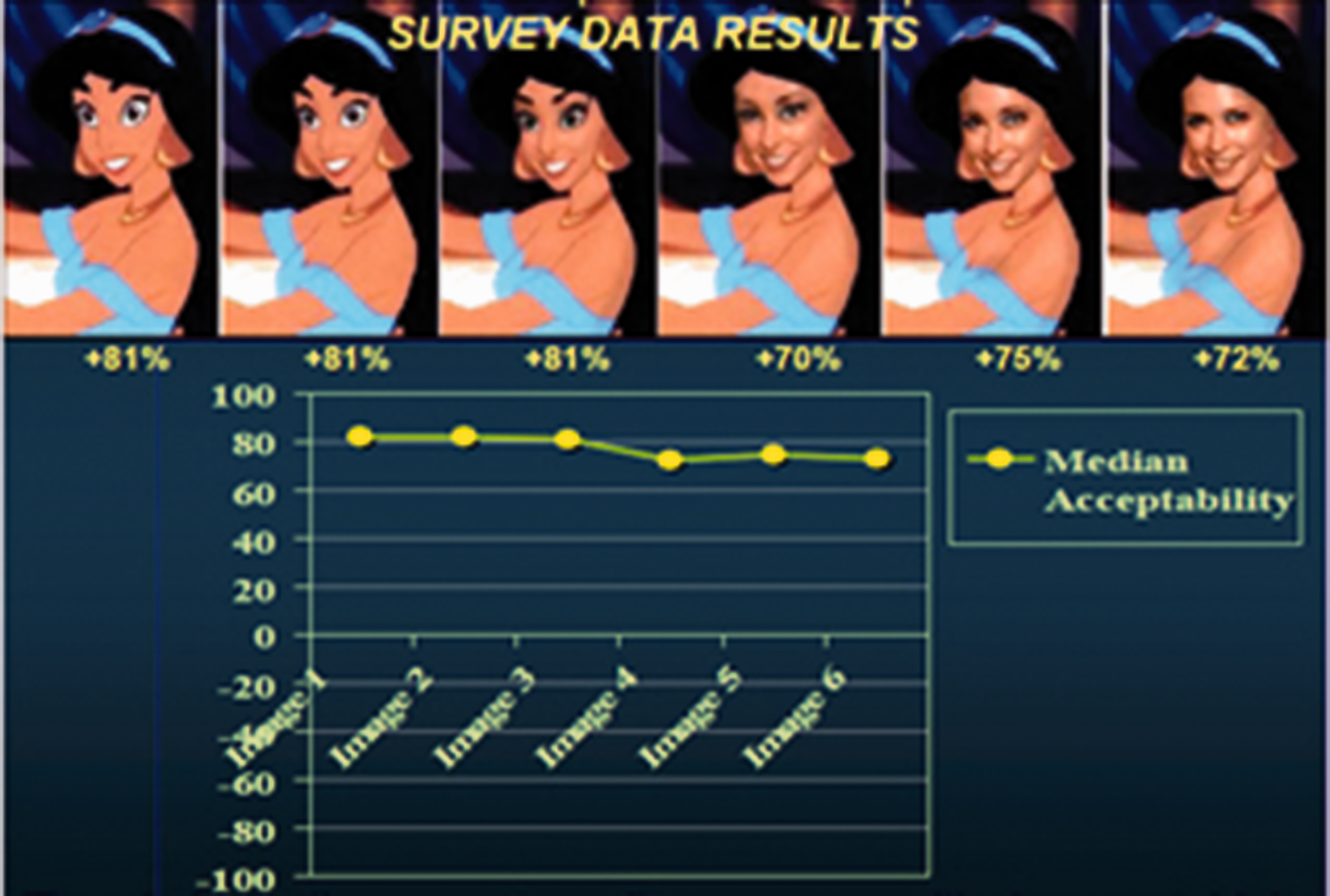
User acceptance of realism within character design. (Source: Hanson et al., 2005.)
Eye size and uncanny valley phenomenon
The uncanny valley phenomenon—or the emotional disturbance of humans—was first introduced by German psychologist, Enrst Jenstach, in 1906 (Kaba, 2013). He found that humans’ decision-making processes were hindered when confronted by a visual resembling living humans or animals (Kaba, 2013). In 1919, this phenomenon was also examined in depth by Sigmund Freud, who found that the phenomenon only occurs when characters are presented in somewhat eerie conditions, such as corpses, abnormal humans, or unnerving situations (Novitz, 2018). The phenomenon was then further explored by Japanese roboticist, Masahiro Mori, in 1970 (MacDorman, 2006; Purzycki, 2019). Mori (2012) concluded his findings in his (now famous) uncanny valley graph, which serves as guide to visually understanding the phenomenon (Figure 2). Based on the graph, Mori projected the relation between human likeness and comfort level. He explained that, when a robot looks too human, even the slightest flaw will make it appear unsettling, thereby falling into the uncanny valley (MacDorman et al., 2009). The graph also depicts that this effect becomes more pronounced when movements are added to the character (MacDorman et al., 2009). While Mori’s study focused on robotics, similar effects have been observed in animation and games, mainly caused by the design aspects of the characters (Mohd Najib, 2015; Vicneas, 2020).
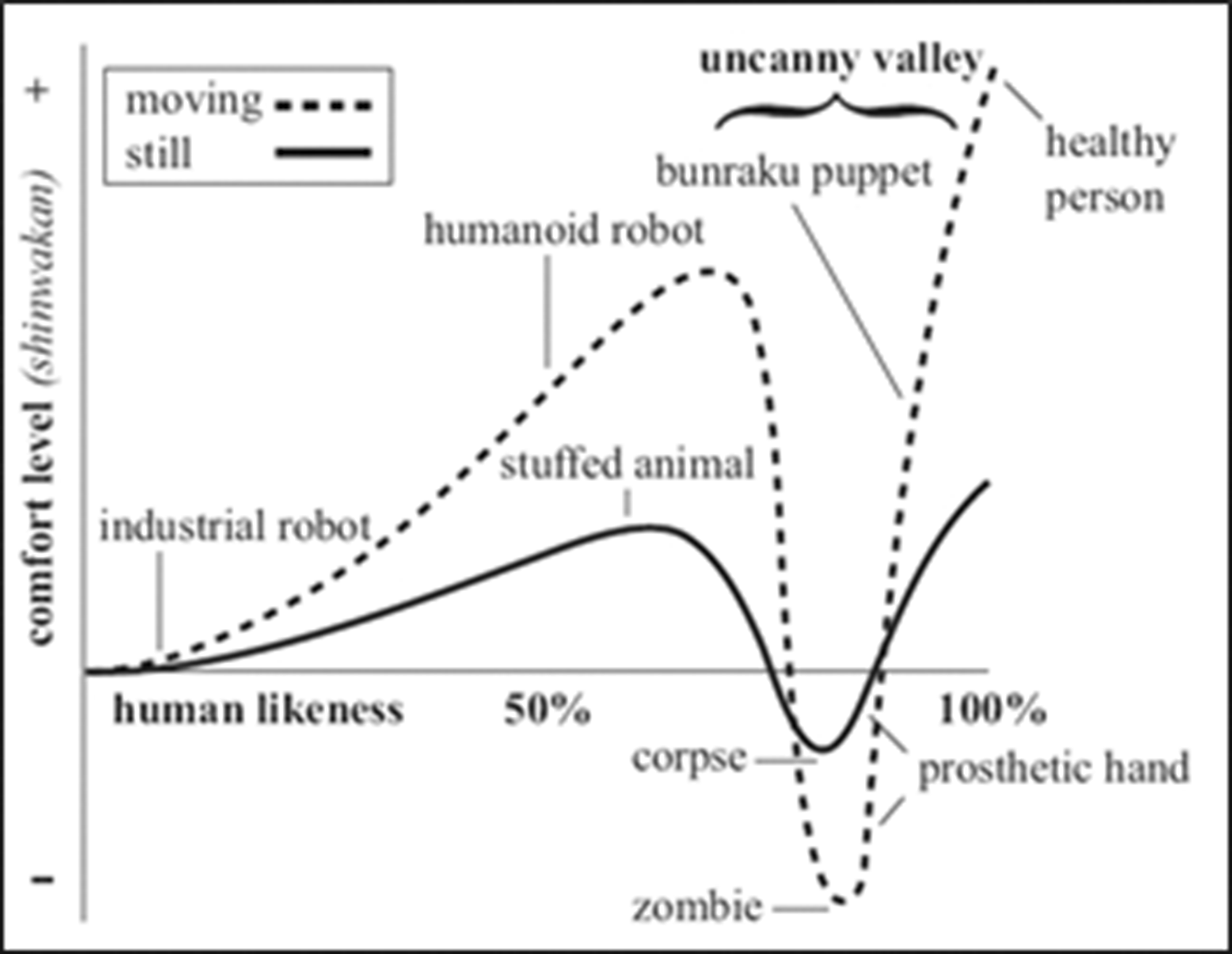
Masahiro Mori’s uncanny valley graph. (Source: MacDorman et al., 2009.)
Considering this, numerous studies have been conducted with the aim of identifying ways to avoid this phenomenon and, in so doing, to give both pedagogical support and comfort to learners within virtual learning environments in the form of a virtual guide. It is reasonable to assume that a cartoon-like design would reduce the uncanniness of a character, i.e., a morphed artificial face rather than an actual human face (Hanson et al., 2005; Mohd Najib, 2015; Vicneas, 2020). However, abnormal appearances may still promote an emotional disturbance among viewers, mainly due to unnatural eye sizes (Schwind et al., 2018; Seyama and Nagayama, 2007). In interacting with the avatar, the eyes would draw most attention from learners. A participant’s eye contact may determine the perception of artificial characters, and its role in decision-making regarding artificial faces, such as avatars. This was affirmed by Schwind and Jäger (2016), whose study indicated that, whether with ordinary human characters or CGI characters, most attention was paid to the eyes (Figure 3).
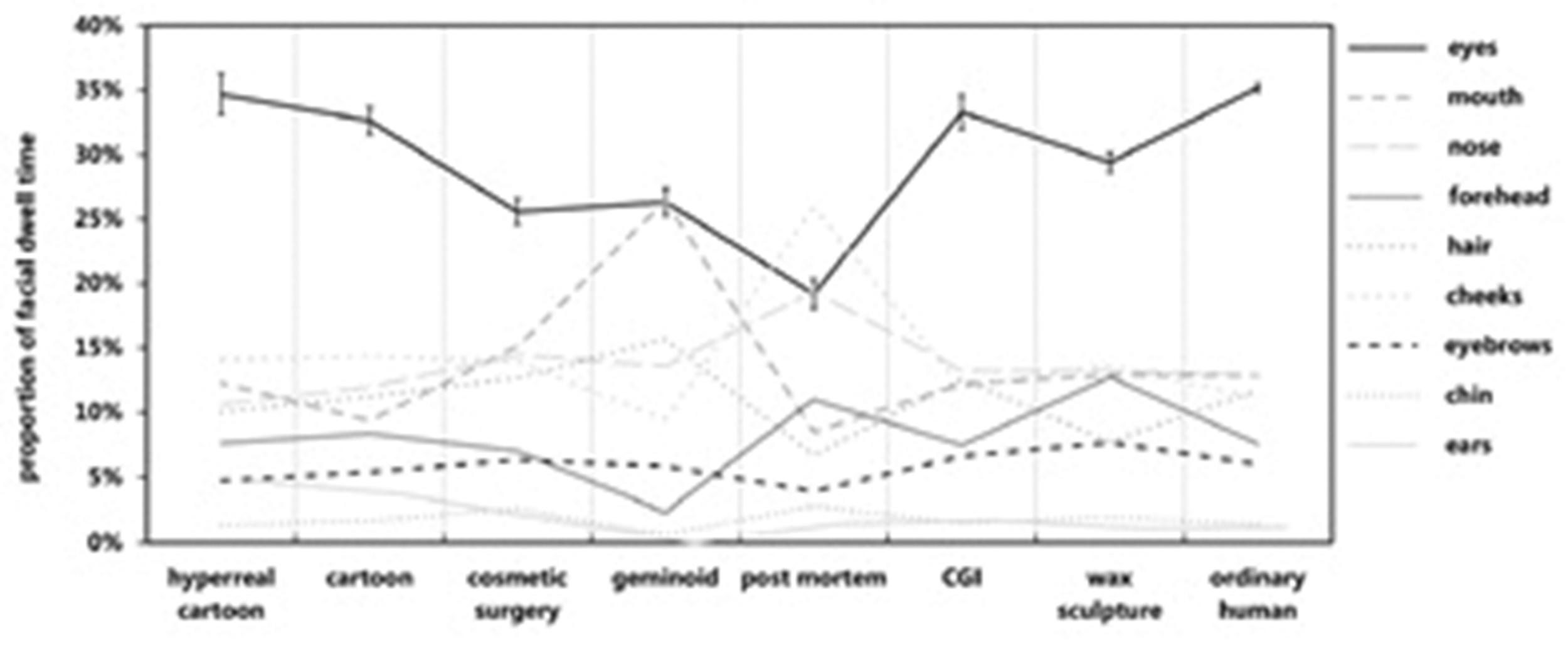
Relative dwell time on facial regions. (Source: Schwind and Jäger, 2016.)
Surprisingly, another study by Schwind et al. (2015) indicated that Asian-shaped eyes, bright and strong eyebrows, and slightly increased size in relation to the average face, were found to be more likeable and attractive, as ranked by the respondents. Considering these findings, we applied Asian-shaped eyes of various sizes and appropriate eyebrow designs for the avatar—specifically so as to maintain a native look. It has previously been suggested that elements of the virtual agent should reflect the cultural value of the country in which it originates and is tested (Liu and Wang, 2010; Stuart Sloan, 2015; Vicneas, 2020). However, the ideal percentage increase in eye size remains a cause for debate. Feng et al. (2018) indicated that, with the enlargement of the eye size and the increased realism of facial images, children’s preference noticeably declined. This happens for both cartoon-like and human images (Figure 4). It should be noted that these findings related mainly to children. Whether the same effect occurs in adults remains to be seen.
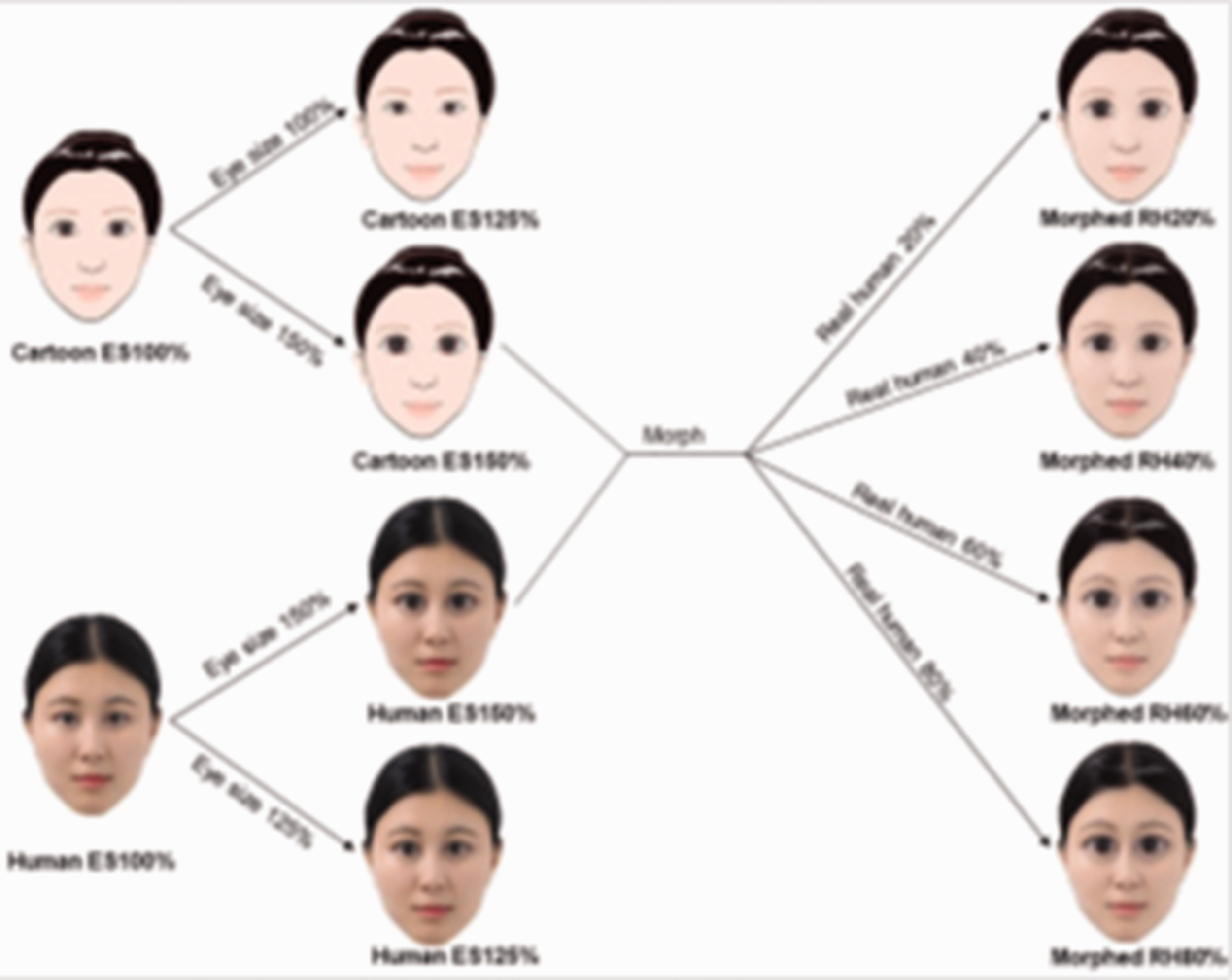
Morphing of eye size from 100% to 125% and then to 150%. (Source: Feng et al., 2018.)

The character with the atypical feature of unnaturally large eyes. (Source: Schwind et al., 2018.)
Furthermore, Schwind et al. (2018) stated that characters and avatars must be designed using consistent levels of realism, as also highlighted by Hanson et al. (2005). Inconsistency typically occurs during the creation process of a virtual character, as some features are more difficult to sculpt, texture, and render than others (Schwind et al., 2018). This results in unequal levels of realism, which make it difficult to assign a category to the entity, thereby increasing feelings of uncertainty in the observer. This in turn prompts unpleasant feelings, such as eeriness or disgust (Schwind et al., 2018). Schwind et al. (2018) listed certain design guidelines to avoid the uncanny valley phenomenon—which we have striven to follow. In detail, the following are the guidelines stated by Schwind et al. (2018):
Steer clear of atypicalities at high levels of realism. The main findings of the study were that atypicalities (strong deviations from the human norm) for high levels of realism in human and animal characters caused negative sensations among viewers. The negative effects of atypical features, such as unnaturally large eyes (see Figure 5) or human emotions in realistic animals, were more significant than for characters with reduced realism.
Avoid “dead eyes.” A virtual character’s eyes are especially important. Using eye tracking, we found that users fixate on the eyes before considering other features in assessing whether a character is real or not. This supports previous findings that people tend to rate the realism and inconsistencies of human characters based predominantly on their eyes.
Use stylization and childish features for stylization. Research in evolutionary aesthetics has found that humans respond positively to any aesthetic stimuli experienced as being conducive to survival and reproduction. Consequently, many designs—regardless of whether they are human-like or not—can be aesthetically pleasing as they may include features that suggest fitness. However, childish features should not be applied to a realistic adult, as they would be atypical. Features that evoke childhood in a positive way, such as snub noses and round head shapes, can also be deliberately used for stylization and thereby prevent the uncanny valley phenomenon.
Use aesthetics and appealing features. Designers can increase a character’s physical attractiveness to avoid uncanny effects.
Arousal and valence
Educational games are designed with the intention of helping students learn the subject matter in an entertaining and motivating manner. Additionally, game elements that arouse learners or players positively can further enhance engagement (Alafouzou et al., 2018). Studies have also shown that positive emotions experienced in an educational game setting can influence the outcomes of educational intervention (Kiili et al., 2018). Some of the games elements that might influence players’ or learners’ emotions include avatars, leader boards, levels, badges, points, collections, and content unlocking (Alafouzou et al., 2018). Due to this significance, we will focus only on avatars—specifically the effects of their design on emotions.
Emotional experiences typically works in a linear combination of two dimensions, namely valence and arousal (Bradley and Lang, 2007; Potter and Bolls, 2012). As stated by Galentino et al. (2017), positive arousal usually positively correlates to positive valence. Furthermore, in an emotional dimension (particularly valence), it has been shown that emotions with positive valence increase the level of engagement, while negative valence has the converse effect (Conati, 2002) as engagement is often strictly related to motivation (Pesare et al., 2016).
In general, valence refers to a pleasant-to-unpleasant state and arousal refers to a low-to-high state of excitement (Kensinger and Corkin, 2004). Therefore, the measurement of valence and arousal can potentially determine the occurrence of the uncanny valley phenomenon or the emotional disturbance caused by the virtual agent (Cheetham et al., 2015; Vicneas, 2020)—which is the focus of this study. Understanding the ways in which media affects learners’ arousal and valence can be an essential guide in understanding how users process the respective medium (Prettyman, 2020). Thus, understanding how different features of a video game impact players’ arousal and valence could also offer insights into how players process the game itself (Prettyman, 2020). These insights would be a practical guideline for instructional designers in determining the perfect design of educational games.
Methodology
There has been scant scholarly attention paid to the relationship between avatar design for educational games, and valence and arousal. To remedy this scarcity, we sought principally to identify how the design of a game avatar in educational games would influence the valence and arousal of learners. As mentioned above, this study focuses on the realism design of an avatar, primarily in relation to eye size. The emotions measured were limited to valence and arousal. The aspects of gameplay motivation, learning performance, and learning achievement will be addressed in future studies.
Research questions
Based on our review of the literature, we formulated two research questions: Does avatar design in educational games cause any significant effect on students’ arousal state? Does avatar design in educational games cause any significant effect on students’ valence state?
Avatar design
Five prototype games, entitled ‘Color Travel,’ with five different avatar designs were developed for the research purpose. The content and approach of the games are identical; only the avatar design differs. The overall design and development of the educational games closely followed the multimedia design principles, and were validated by two content experts and two instructional design experts (Figure 6).
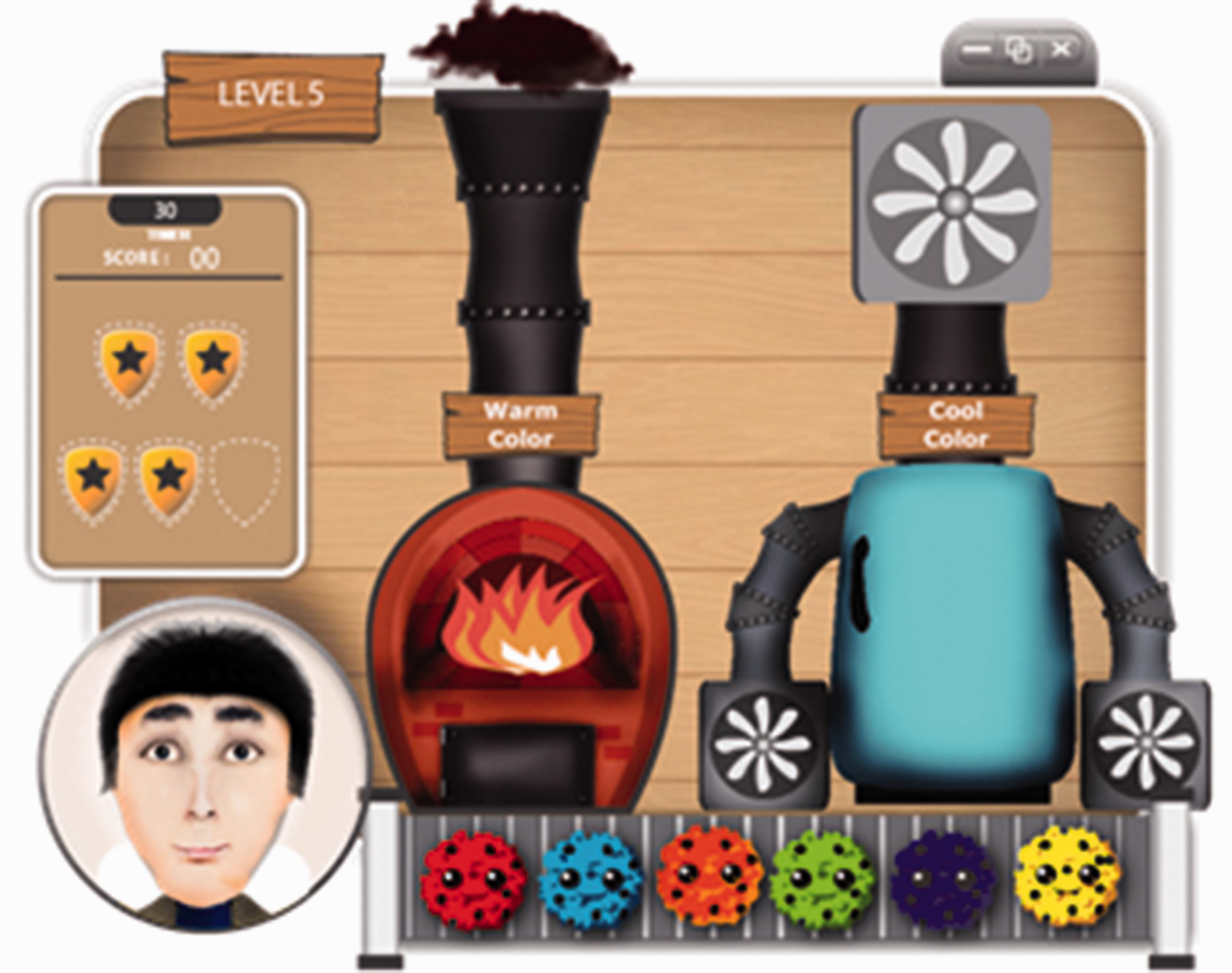
‘Color Travel’ educational games with avatars as virtual agents.
The avatar design closely followed the principles highlighted by Chattopadhyay and MacDorman (2016); Feng et al. (2018); Hanson et al. (2005); Schwind et al. (2015, 2018); and Vicneas (2020). Moreover, it was also validated by two animation experts. Since, the emotional experience we intended measured would be caused by the avatar’s appearance, only avatar design will be highlighted here. The cartoon-like character was morphed from an actual human. The character look is similar to common native. Moreover, the avatar is representative of a young male, meaning that the character was limited in terms of gender. This was decided upon as learners working with male characters reported being more satisfied with their performance and that male characters better facilitated self-regulation (Liew et al., 2013). Liew et al. (2013) concluded that male virtual characters may be more advantageous for both female and male learners in a virtual learning environment. Nevertheless, future studies could focus on identifying the effects of female characters, as well as conducting comparisons between characters of both sexes. Furthermore, peer-like characters are advantageous in terms of improving interest and maintaining the motivation to continue in case of failure (Plant et al., 2009). Additionally, our approach may reduce frustration by offering a mutual understanding environment (Buffum et al., 2015), and boosting confidence by affirming and empathizing with the student (Woolf et al., 2010).
The major differences between the five characters were the eye size, which ranged between the standard size to a 50% increase, with different eyebrow sizes and realism design (Figure 7). The overall design slightly differed so as to comply with the principles stated above—predominantly the consistency-reduced principle, and the morphing of features which resulted in the non-similarity of lips, hair, eyebrow size, and chin. This was essential to differentiate the realism levels while simultaneously avoiding the uncanny valley phenomenon.
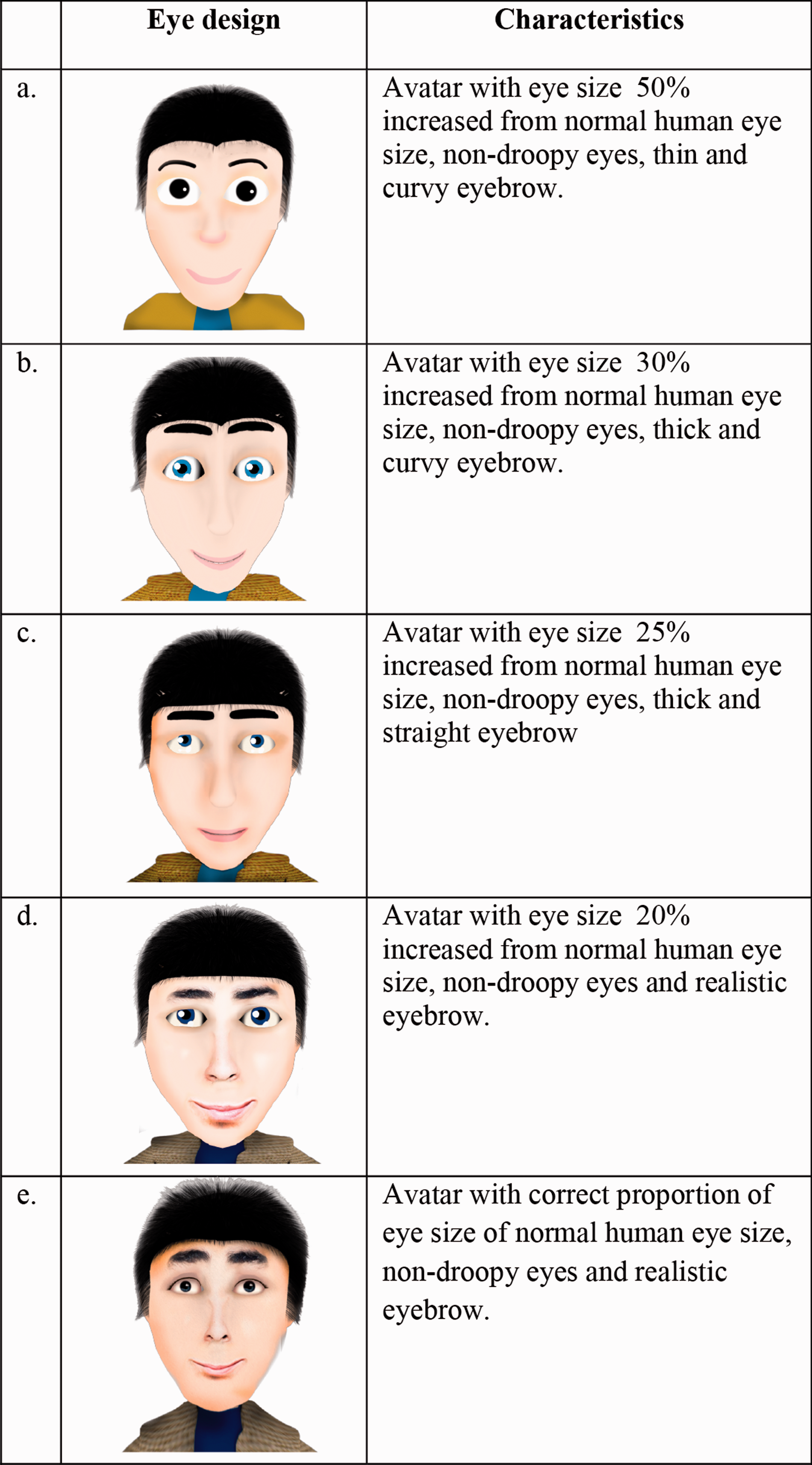
Different design characteristics of the avatar.
Procedure
This quasi-experimental study investigated the effects of different avatar design (e.g., eye size) on learners’ emotional experience, specifically regarding valence and arousal. The independent variable was the avatar design, and the dependent variables were valance and arousal status. The research participants consisted of 200 students pursuing a diploma in Computer Graphics study from five different multimedia colleges, where each group was comprised of 40 students with similar characteristics. The students were aged between 18–20. The study was conducted separately for all groups, in which each college group underwent educational games with their respective avatar design in a controlled lab environment. The participants were given instructions about both the games and the measuring instrument prior to the study.
The students were allocated a few minutes to view the avatar on the personal computer. The avatar presented an introduction to the ‘Color Travel’ games. During this time, the students were only passive listeners—no gameplay was involved—so as to ensure that the feedback resulted from the avatar alone and not the entire gameplay. This aligned with this study’s aim to obtain the emotional experience from the avatar design, rather than the gameplay itself (future studies may address the latter in a more detailed manner). The emotional response test was conducted immediately after completion of the viewing. The research instrument, distributed prior to the viewing, was given to the respondents and they were allocated approximately 20 seconds to complete the feedback. This duration was deemed suitable according to Bradley and Lang (1994), based on their original study using the Self-Assessment Manikin (SAM). The data obtained were then analyzed quantitatively using an ANOVA statistical test.
Test instrument
The SAM was utilized to obtain students’ emotional experience feedback. The test featured a pictorial mood reporting based questionnaire, and students evaluated their emotional experienced based on the 5-point pictorial mood scale on valence and arousal. We based our choice of the scale on the SAM scoring scale (Bradley and Lang, 1999, 1994). The emotional state of valence rating ranged from a happy, smiling manikin to an unhappy, frowning one; for the arousal dimension, the aroused pole was represented by a highly energetic manikin, whereas its opposite was represented by a relaxed mannikin with its eyes closed (Tsonos and Kouroupetroglou, 2008). Should greater accuracy for the results be required, a nine-point (or higher) scale could be used (Tsonos and Kouroupetroglou, 2008). As for this study, a five-point scale was selected, as per the original. The SAM version used in this study consisted only of two visual scales (Figure 8) for valence and arousal.
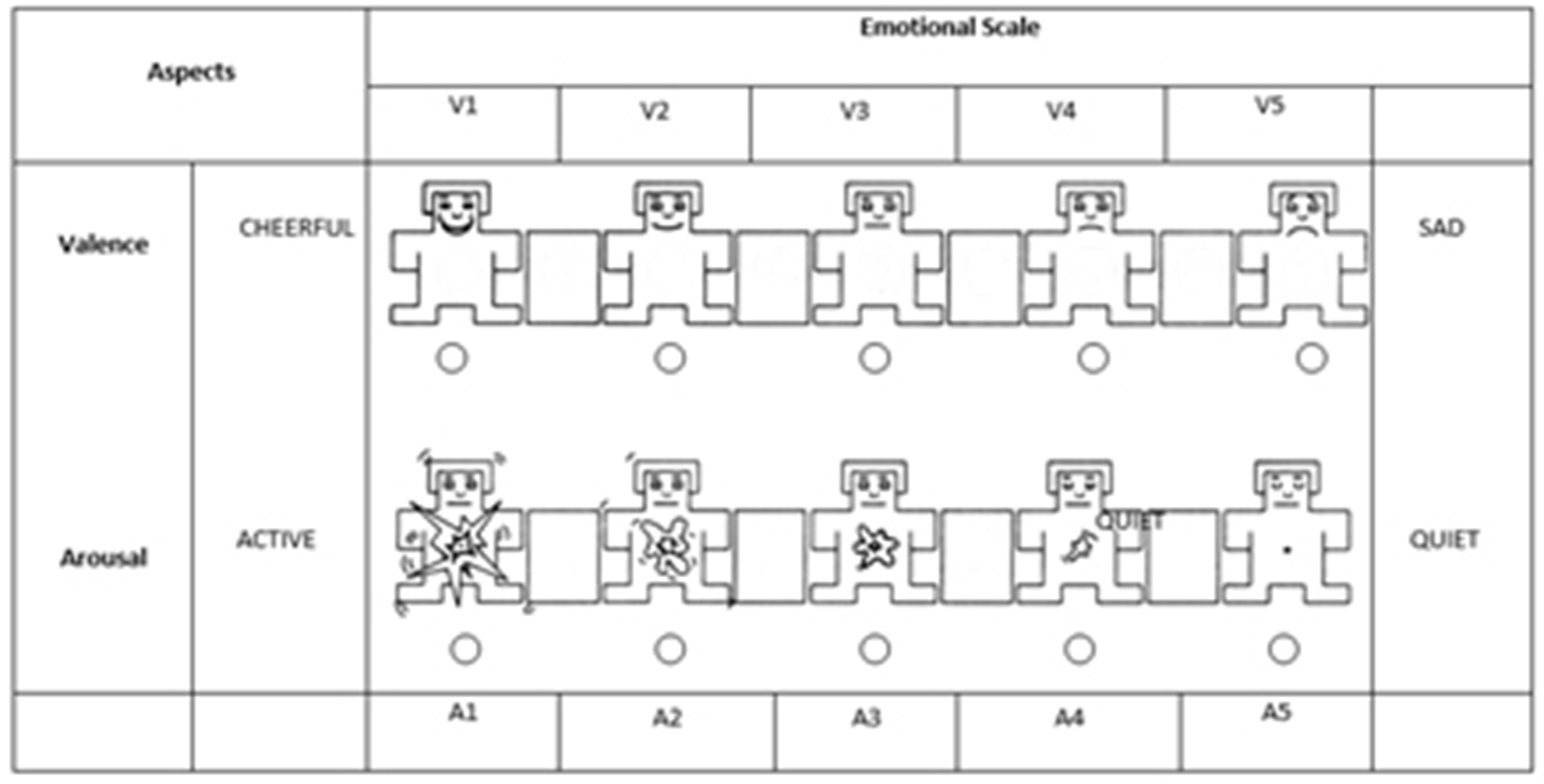
Pictorial mood reporting scale of SAM.
The SAM has also been shown to be effective and user friendly in studies involving computing and gaming. For examples of its use in studies on emotion recognition systems, see Pastor-Sanz et al. (2008); for biometric sensors, see Jones and Troen (2007); for affective computing, computer games, and user experience in HCI, see Yusoff et al. (2013). Nazari et al. (2012) conducted a validity and reliability study to validate the SAM, in which its validity was determined through Pearson’s correlation coefficient and the repeated measures ANOVA. Reliability was evaluated by using test-retest and Cronbach’s alpha coefficient. Cronbach’s alpha for the researcher-made test was 0.89 and 0.83 for the pleasure and arousal dimensions, respectively. The test-retest reliability coefficient for the SAM and researcher-made test ranged between 0.55–0.78. Concurrent validity ranged from 0.56 to 0.87, and the criterion validity was acceptable. The results of the study demonstrated that the SAM has promising validity and reliability. Based on the validity of the SAM and its user-friendly nature, it has been used in many recent studies involving emotions.
Data analysis
Research question 1
Does avatar design in educational games cause any significant effect on students’ arousal state?
A one-way ANOVA analysis was used to test for any significant differences in arousal between the groups of students while viewing the different avatar designs, namely the 50%, 30%, 25%, and 20% increased eye size, normal eye size, and different eyebrow sizes and levels of realism. Prior to that, all assumptions, such as normality and equality of variance analysis, were fully confirmed so as to ensure that the research data could be used to answer the first research question using the one-way ANOVA test.
The results of this analysis (Table 1) show a significant difference from the angle of arousal mean value between different avatar design groups; F (4,195) = 12.15, p < 0.05, partial eta squared = 0.20, with a large effect size based on Cohen’s 1998 guidelines (Pallant, 2010). On the other hand, from the post-hoc Tukey’s HSD analysis, it can be concluded that there is significant difference between increased eye size of 25% and 50% (MD = 1.18, p < 0.05), 25% and 30% (MD = 1.10, p < 0.05), 25% and 20% (MD = 1.03, p < 0.05), and 25% and normal (MD = 1.25 p < 0.05). No notable differences were found between other pairs. Based on the descriptive statistics mean value, we found that avatar design with an increased eye size of 25% (M = 3.70) outperformed other designs based on the mean score (Table 2). Thus, the arousal state of the students who viewed the avatar design with a 25% increased eye size was higher when compared to all other designs, as well as being significantly different. This indicates that the avatar design with an increased eye size of 25% is the most effective avatar in affecting students’ arousal state.
Summary of one-way ANOVA analysis for first hypothesis.
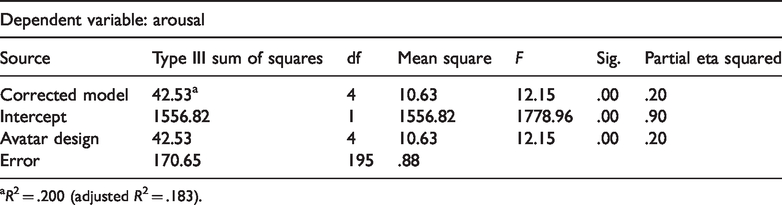
aR2 = .200 (adjusted R2 = .183).
Avatar level positioning in terms of arousal mean score.
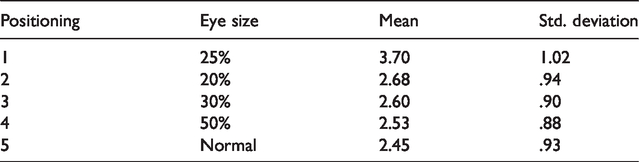
Nevertheless, based on the mean score obtained, every avatar design fell into a positive or neutral arousal state. However, the results show that the most ideal avatar design would include an increased eye size of 25%, non-droopy eyes, and thick and straight eyebrows.
Research question 2
Does avatar design in educational games cause any significant effect on students’ valence state?
A one-way ANOVA analysis was used to test for significant differences in the valence between students viewing the (aforementioned) different avatar designs. Prior to that, all assumptions, such as normality and equality of variance analysis, were fully confirmed to ensure that the research data could be used to answer the second research question using the one-way ANOVA test.
The results of this analysis (Table 3) show a significant difference from the angle of valence mean value between the different avatar design groups; F (4,195) = 21.03, p < 0.05, partial eta squared = 0.30, with a large effect size. On the other hand, from the post-hoc Tukey’s HSD analysis, we can conclude there to be significant differences between eye sizes increased by 25% and 50% (MD = 1.40, p < 0.05), 25% and 30% (MD = 1.30, p < 0.05), 25% and 20% (MD = 1.18, p < 0.05), and 25% and normal (MD = 1.18, p < 0.05). Moreover, no notable differences were found between other pairs. Based on the descriptive statistics mean value, we found that the avatar design an increased eye size of 25% (M = 4.00) outperformed other designs regarding the mean score (as obtained in Table 4). As such, the valence state of the students who viewed the avatar design with the 25% increased eye size was higher compared to the other designs, and it was significantly different. As with arousal, this indicates that this particular avatar design is the most effective in affecting students’ valence state.
Summary of one-way ANOVA analysis for second hypothesis.
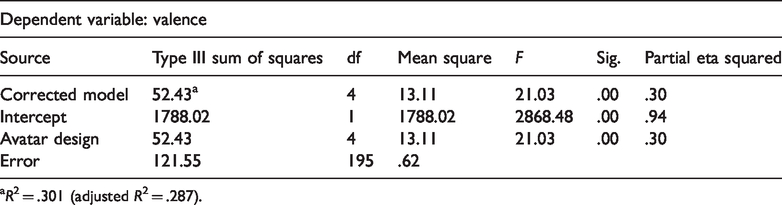
aR2 = .301 (adjusted R2 = .287).
Avatar level positioning in terms of valence mean score.
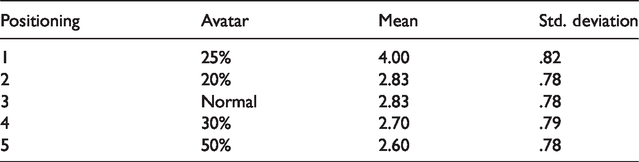
Nevertheless, based on the mean score obtained, every avatar design fell into a positive or neutral valence state. However, an avatar with an increased eye size of 25%, non-droopy eyes, and thick and straight eyebrows can be said to be the most ideal design. Somewhat surprisingly, this outcome is similar to that of arousal.
Discussion
Research question 1
Studies have stated that virtual characters, or avatars, have gone through many developmental stages in order to most suitably fulfill the needs of players. This is due to the technological improvements that have allowed animators and games developers to create characters with high levels of realism. However, as claimed by Tinwell (2013)—and affirmed by the results of the current study—increases in realism do not necessarily comfort users. For instance, there was a significant difference in terms of arousal mean value among students who observed different avatar designs. While many of the designs could be described as being neutral, it was the cartoon-like avatar (with a 25% increased eye size) which obtained the highest and most positive arousal mean value. This also shows that the facial anatomy of said avatar—which was moderately realistic—significantly promotes a positive impact towards students’ arousal.
Based on the findings, the cartoon-like design of the avatar, with its 25% increased eye size, non-droopy eyes, and thick and straight eyebrows, was identified as having the most suitable level of realism for positively arousing students in a game-based learning setting. This could well be due to the interesting features of the avatar design, which might have been aesthetically appealing to the students. This finding is also in line with Schwind and Jäger (2016), who stated that Asian-shaped eyes—with straight eyebrows and slightly increased size in relation to the average face—are considered more likeable and attractive than down-turned eyebrows or droopy eyes. On the other hand, the remaining avatar designs’ mean value reflected a neutral, not negative, state in the arousal scale. This might be due to the cartoon-like design of the avatar, which was sufficiently unrealistic.
Positive arousal is important in learning as it enhances working memory, which is responsible for reasoning and decision-making. In line with this study, the high levels of positive arousal might positively affect the player’s cognitive performance—possibly augmenting the capture and conversion of information—which in turn aid knowledge retention. These can be linked to flow theory, namely the state of full immersion and engagement triggered when a subject’s skills can overcome challenges, thereby creating both a positive experience and effect. When players are in this flow state (i.e., highly focused and enjoying the game), they make optimal use of their cognitive skills, thereby facilitating both their continued use of the game and their knowledge retention. However, this study did not examine either the performance or the outcome of the gameplay. Therefore, future studies would do well to explore students’ achievement caused by the gameplay and its relation to the level of positive arousal promoted by the avatar design.
Research question 2
As with the results of the first research question, the cartoon-like avatar design—with its increased eye size of 25%, non-droopy eyes, and thick and straight eyebrows—was identified as having the most suitable level of realism in promoting positive valence in a game-based learning setting. Moreover, the remaining designs fell under a neutral (and non-negative) state. Again, the cartoon-like design of the avatar could explain this outcome, i.e., it being a morphed artificial face from an actual human face. In alignment with Galentino et al. (2017), it seems there is reason to accept the claim that positive arousal usually positively correlates to positive valence. The cartoon-like avatar seems to promote positive arousal as well as positive valence, whereas the remaining designs promoted neutral states. A more detailed study on the correlation effects might further affirm this claim.
The outcomes of this study seem unaligned with Feng et al. (2018), who indicated that, with the enlargement of the eye size and increasing realism of the face, viewers’ preference noticeably declined (both for cartoon-like images and human images). However, Feng et al.’s (2018) study focused predominantly on children, whereas this study focuses on adult learners. This indicates that age might influence students’ emotional experiences to character design, i.e., older learners seek peer- and adult-like avatars. In terms of similarities between Feng et al.’s and the current study, both used young and native-looking characters. However, the only difference was gender, whereby this study utilized a peer-like young male avatar, while Feng et al. (2018) used an adult-like female character. This difference could lead to promising future studies to identify the ideal character design which can accommodate the needs and preferences of views of any age.
In conclusion, in a game-based learning environment, engagement is crucial for continued playing. It is normal for a player to fail a level and repeat it. In order to ensure engagement with the flow of the game, the players need to feel positive emotions throughout. Since emotions with positive valence potentially increase the level of engagement (Conati, 2002), cartoon-like avatars (as described above) should be the design of choice when including virtual guides with which to accompany the learner throughout the gameplay process.
Conclusion
The notion of utilizing digital games for educational purposes has garnered a significant amount of academic research. Continuous technological advances have paved the way for implementing high end game-based learning methods. However, the need for a coach or tutor has always been conventional within education. Therefore, an avatar can be inserted to fulfill this need. This study has answered the question of what type of avatar, and which level of realism, would best suit a DGBL setting. We found that a moderate cartoon-like avatar design was more promising in promoting positive emotional experiences among viewers in comparison to slightly realistic, or overly-exaggerated, character designs. Specifically, this study suggests the inclusion of a peer-like male character, with a cartoon-like look morphed from an actual human, an increased eye size of 25%, non-droopy eyes, and thick and straight eyebrows. This research contributes to the creation of more effective and comfortable virtual DBGL environments for students to acquire knowledge with the help of an avatar as a virtual teacher. Moreover, this study has also helped identify the most appropriate approach for avatar design in DGBL. Consequently, higher levels of engagement can be achieved when students are in an appropriate emotional state (arousal and valence), leading to the effective acquisition of knowledge within DGBL.
Additionally, this study allows tertiary education teachers to identify new approaches with which to enhance the learning process, further to the established presentation of an avatar in DGBL. This could result in creating an interesting way of learning since it would engage with an environment nowadays preferred by most students. Moreover, it will provide students with the luxury of learning at their own pace with a virtual teacher that could eventually transform learning into a lifelong process.
Limitations
This study is not without limitations, particularly regarding the content used to conduct the study, the participants, and the device used. The study focused on tertiary level students. According to Ding et al. (2017), studies have shown that games have a great potential to motivate and engage learners, and may enhance the level of concentration in intellectual activities in tertiary education.
Regarding DGBL’s content, its sole focus is on color theory—a subject offered to Computer Graphic Design students in their fourth semester. The study is further limited in terms of gender, in that the avatars developed for the game were exclusively male. The characters were limited to a three-dimensional appearance, with only five levels of realism to suit the needs for testing all hypotheses. Moreover, only two dimensions of emotion were tested in this research, namely valence and arousal. Therefore, the instrument used to test the students’ emotions (the SAM) was limited to these two dimensions. While the general research focused on the visceral level of emotional design for the game, only the appearance of the avatar was examined. The device used in the quasi-experimental study was limited to desktop computers due to their wide availability in computer labs at the research locations. Additionally, the operating system was limited to Windows 10 as the game was designed and developed specifically for this platform. In terms of game content, only five game levels were used to match the needs for testing all hypotheses.
Footnotes
Acknowledgements
The authors would like to acknowledge Ministry of Education and Universiti Pendidikan Sultan Idris for the support given throughout the study. The data that support the findings of this study are available from the corresponding author upon reasonable request, depending on the approval of the university and fund provider. I herby notify that the manuscript has not been published, and is not under consideration for publication elsewhere. The data that support the findings of this study are available from the corresponding author upon reasonable request, depending on the approval of the university and the fund provider.
Declaration of Conflicting Interests
The author(s) declared no potential conflicts of interest with respect to the research, authorship, and/or publication of this article.
Funding
The author(s) disclosed receipt of the following financial support for the research, authorship, and/or publication of this article: This work was funded and supported by Ministry of Education under FRGS grant (FRGS/1/2018/SS109/UPSI/01/1).
Authors’ contribution
Ahmad Zamzuri Mohamad Ali is the research grant leader and research supervisor. Meanwhile, Kogilathah Segaran conducted the research as PhD student. Tan Wee Hoe contributes in term of the games development.
