




Abstract
The emergence of newer educational technologies provides opportunities for computer-assisted language learning practitioners and software developers to capitalize on the affordances for the second language (L2) learning purposes. This article explored and brought together the reported affordances and challenges of virtual reality to teach the L2 receptive and productive skills by reviewing seventy-five peer-reviewed articles published from 2010 to 2020. The results revealed an imbalanced trend of research on language skills learning by virtual reality tools and affordances in favor of listening and speaking skills compared to reading and writing skills. The obtained data were tabularized in terms of language skills. The results were visualized by hierarchical database formats. Pedagogical implications of the study inform teachers about affordances available to teach L2 skills in educational virtual reality environments toward a more digitally enhanced L2 pedagogy. Theoretical implications of the study inform researchers about the challenges that need to be addressed.
Keywords
Introduction
Virtual reality (VR) technology as an emerging educational technology has attracted several studies in the field of language learning (see Lin and Lan, 2015; Reinders, 2018; Stockwell & Reinders, 2019). However, despite increasingly frequent studies carried out in the field, there are several unexplored research possibilities (Barrett et al., 2020; Lan, 2020). This gap can be attributed to the quickly emerging nature of technologies and the shortage of accessibility to the required VR environment tools. The present systematic review was conducted to find out the strengths and weaknesses of teaching language skills by the use of VR environment technology based on the current research. Despite reported efficacy of VR environment language learning functions in general, it is highly critical to determine the share of each language skill in particular. To this end, a systematic review of the current research was conducted to inform the practitioners about tested and confirmed linguistic gains in terms of language skills. The study also focused on reported challenges and limitations of teaching language skills by VR environment technology to inform scholars and computer programmers about theoretical and technological challenges that need to be addressed to facilitate teaching language skills by VR environment technology.
Virtual reality
Virtual reality as an emerging technology that refers to a simulated experience of a world (real or imagined) that can be used for a variety of educational purposes including second language (L2) learning by different programs (e.g., ImmerseMe, Virtual Speech, etc.). VR is described both in terms of associated devices and functions as a 3D graphics interacted via computer or mobile (Barrett et al., 2020).
VR environment creates a sense of presence (Psotka, 1995) in computer-simulated environment that enables users to experience telepresence during learning process (Alalwana et al., 2020; Minocha et al., 2017) and benefits learners with high levels of authenticity, immersion, and interaction (Alqahtani et al., 2017) by offering adaptive tools and affordances (Kashada et al., 2018).
VR environment enables users to experience physical interaction with virtual worlds along with cognitive processing thereof to create the feeling of presence (Eisenlauer, 2020). This feature fosters knowledge sharing and community building (Cochrane, 2016) and creates personally meaningful moments that facilitate learning process (Hu-Au and Lee, 2017). This environment goes beyond copying reality and provides a sociolinguistics-informed environment that develops language learners’ understanding and knowledge of multilingual culture (Buendgens-Kosten, 2020; Gillespie, 2020).
VR environment goes beyond potentials (creation and delivery of content) and limitations (being recipient or observer of content) of 360-degree media and reportedly offers the benefits of both technology-assisted language learning and face-to-face language learning (York et al., 2020). It enables users to move around freely in proposed worlds, to anticipate user agency and interaction, to create meaning of what captures their attention by cognitive processing, and to envision immersive spaces while drafting and shooting sceneries (Tricart, 2018).
VR is employed by researchers to refer to different functions of VR environments (e.g., gaming, instruction, etc.); however, the current study aimed at reporting affordances (i.e., tested and confirmed efficacies) and challenges (i.e., tested and confirmed limitations) of VR environments equipped with high-immersion devices as well as immersive technologies for teaching language skills. Therefore, the following section provides an overview of extant literature on VR affordances and challenges to shed light on the background and current progress of studies exploring potentials of VR environment to develop language skills.
Extant literature
VR Affordances
VR, in general, offers affordances that facilitate language learning experiences that are inaccessible in other technology-based environments (Jensen and Konradsen, 2018; Parmaxi, 2020), and in particular improves second language (L2) learners’ productive skills more than receptive skills (Wang et al., 2017; Yamazaki, 2018). VR, by offering contextualization of concepts in 360° and 3D (Vieira Monteiro and Pfeiffer, 2020) and immersion (i.e., creating a feeling of an illusion of non-mediation between user and the virtual world), caters for the nonlinearity and dynamicity of L2 motivational factors in learners (Cho, 2018; Park, 2018). VR affordances reportedly engage learners in user-embodied cognitive processes (Shin, 2017) and enriched input (Ebert et al., 2016; Lau and Lee, 2015). VR environment needs to be explored by large-scale studies (Melchor-Couto, 2018; Yamazaki, 2018) to expand our theoretical and pedagogical insight concerning its potentials and limitations for language learning purposes (Li et al., 2014; Lu, et al., 2011).
VR also facilitates establishing collaborative learning environments in which learners interact to complete tasks (Huang et al., 2016) by mobile-augmented reality (Sydorenko et al., 2019) that enhances intracultural awareness (Yeh et al., 2020). In-time interaction by VR reportedly facilitates deep learning by contextualizing instruction (Chen, et al., 2020a, 2020b, 2020c; Hsu, 2017) and enhances learners’ intercultural sensitivity by designing motivating content and context (Li et al., 2020).
VR reportedly improves language learning (Garrido-Iñigo and Rodríguez-Moreno, 2015; Lin and Lan, 2015) and offers a variety of affordances. It improves L2 learners’ vocabulary and language skills by desk-top–based and mobile-rendered head-mounted displays and offering interactive and context-embedded learning environments (Alfadil, 2020; Tai et al., 2020) as well as immersive virtual environments (Lawrence and Ahmed, 2020; Peeters, 2020). As a low-cost alternative, spherical video–based VR approach (i.e., use of 3D photos and videos to create an authentic-like immersive virtual learning context) makes it possible for learners to be engaged in conducting an immersive learning experience (Geng et al., 2017; Sung et al., 2017). VR environment reportedly develops learners’ speaking proficiency while reducing their speech anxiety and enhances their higher order thinking (Sun et al., 2018) by facilitating cognitive processing and making meaning.
VR challenges
Despite the aforementioned affordances reported over the past two decades, the shortage of research elaborating on a variety of limitations remains as a challenge ahead of VR environment researchers (Lin and Lan, 2015). Confirming this limitation, Hartwick (2018) states that “As opportunities for language learning and teaching in virtual worlds emerge, so too do new research questions. An understanding of research design benefits and limitations is timely” (p.1). Expanding studies in VR environment can potentially change teachers’ attitudes concerning the efficacy of it and provide teachers with more evidence to make right decisions concerning educational affordances of VR tools in teaching language skills.
The next challenge is the variety of scope of usage of each VR technology used for learning language skills (Scrivner et al., 2019) that calls upon further research to improve our understanding of the tested and reported efficacy of VR pedagogical programs. To address this problem, the present study listed the reported affordances and challenges to provide both VR practitioners and researchers with a systematic review report highlighting reported strengths and weaknesses.
The next problem was skeptical attitude of teachers and learners toward the efficacy of VR environment for developing language skills (Rienties et al., 2020) that can be attributed to lack of comprehensive knowledge about VR potentials and limitations. To bridge this gap, the present study aimed at conveying current progress in VR research elaborating on language skills development. The findings provide evidence concerning the reported potentials that can justify L2 teachers and learners to use VR environment to develop language skills with less skepticism.
Purpose of this study
Bridging the gap of a review article in the literature elaborating on developing language skills by VR environment tools and highlighting the affordances and challenges reported by studies conducted from 2010 to 2020 was the main objective of the study. The article conveys the findings of 75 articles to teachers and researchers who intend to use VR environment for pedagogical and experimental purposes.
The findings are intended to inform the practitioners and software developers of the field about the need to address particular challenges to overcome technological limitations in teaching second language skills. For example, calling upon introducing changes in design choices, improving character view-panning, and adding differing difficulty levels (Garcia et al., 2019) to facilitate instruction by VR.
Identifying and discussing the strengths and weaknesses of the reviewed studies from a critical perspective was the next objective of the study. For example, a recent meta-analysis conducted by Wang et al. (2019) reported that 3D VR substantially facilitated linguistic gains; however, the study failed to determine the share of each language skill as part of the facilitated linguistic gains.
The narrow scope of research regarding L2 learning by VR environment (Ebert et al., 2016) was the next reason to conduct a systematic review in order to inform the practitioners and software developers of the field (teachers and researchers) about the challenges and affordances reported by studies using VR environment tools to develop L2 receptive and productive skills.
The articles included in the study were rigorously reviewed to collect the required data in response to the following research question: What are the most frequently reported affordances and challenges of using virtual reality to teach language skills (listening, speaking, reading, and writing)?
Method
Data source and search strategy
To capture the affordances and challenges ahead of L2 teachers using VR environment to teach receptive and productive language skills, the publication dates of conceptual and empirical articles published by journals specializing in technology-based language learning research were set to the years 2010–2020. Seventy-five peer-reviewed articles (e.g., research report articles, critical review articles, and conceptual articles) elaborating on language skills learning in virtual worlds were included in the study. In keeping with Smith and Lafford (2009), articles were screened in terms of their relevance to research needs (language skills teaching/learning), relevance to virtual reality–assisted language learning, and significance of contributions to the field. The results were displayed as a hierarchy of affordances and challenges to highlight their frequency and provide a reader-friendly visual report of the findings in terms of language skills (see Figures 2–4 and 5).
Inclusion/exclusion criteria
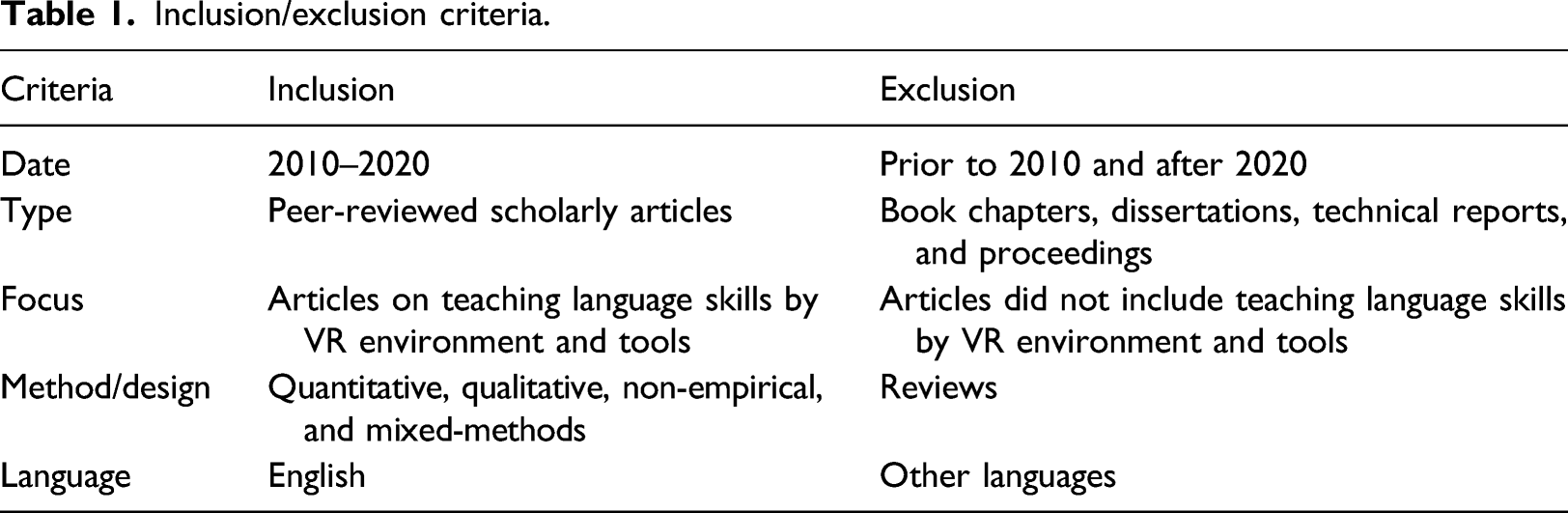
To ensure the inclusion of all major findings in the field, major related databases such as Wiley, ERIC, Sage, EBSCO, Taylor and Francis (Tandf), Web of science (WOS), and Emerald were searched to the point of saturation. Given the heterogeneous nature of selected studies that elaborated on different topics (i.e., language skills), meta-analysis that usually elaborates on similar topics was not included in the study based on previous recommendations (Garg et al., 2008).
To arrive at a comprehensive set of relevant studies, potentially relevant sources were systematically screened and tested by searching for keywords (e.g., challenges of L2 learning by virtual reality, affordances of L2 learning by virtual reality, L2 reading by virtual reality, L2 writing by virtual reality, L2 listening by virtual reality, and L2 speaking by virtual reality) to identify relevant sources in primary electronic databases and platforms plus hand searching of related key journals, networks and associations, personal contacting, websites, and literature snowballing (see Figure 1). Flow diagram of the screening and selection procedure.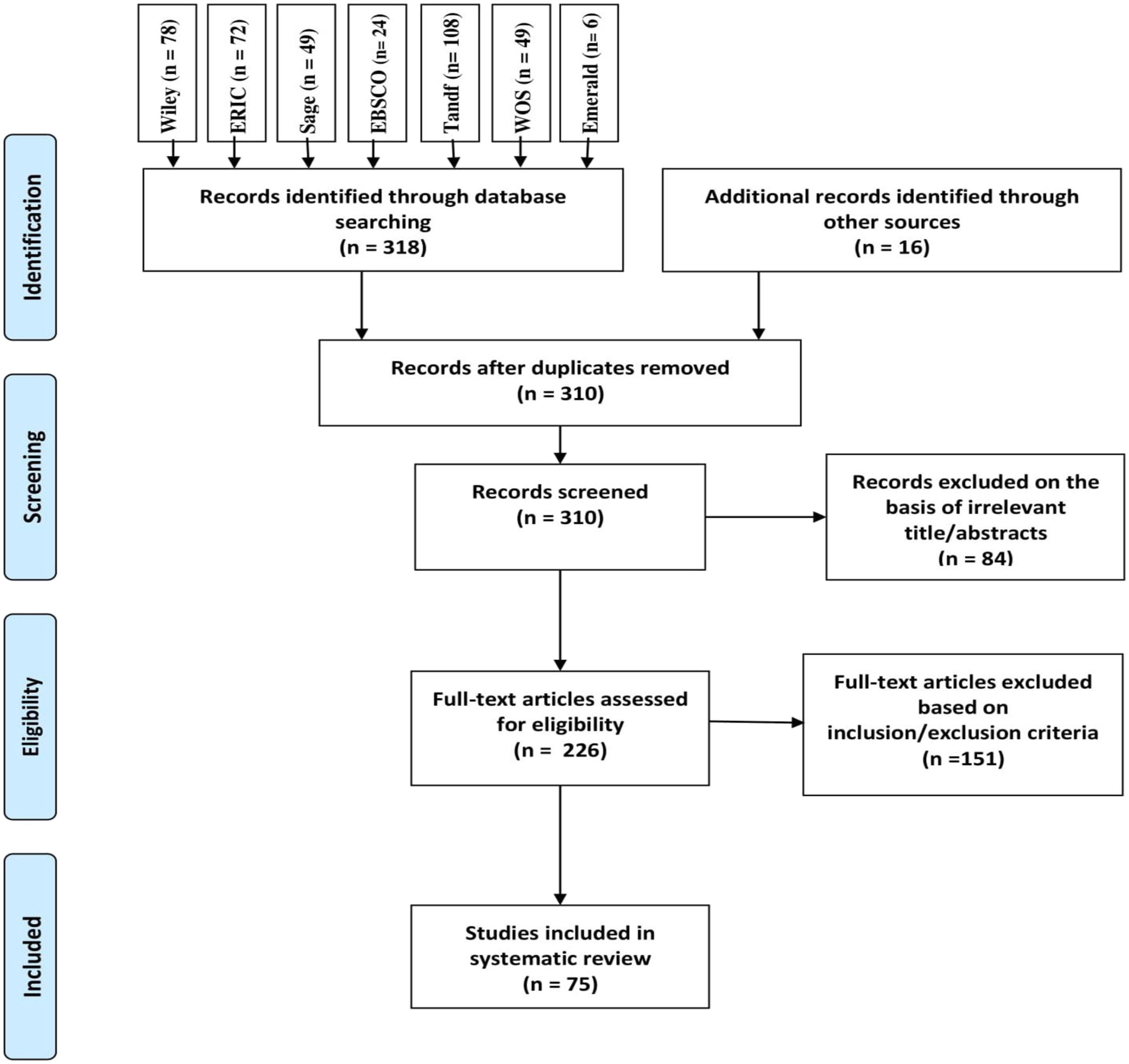
Results
Results to listening development by VR
Figure 2 displays the hierarchy of the most frequently reported affordances and challenges of using VR to teach L2 listening skill from 2010 to 2020. The ascending order of challenges and affordances with respect to their observed frequency provides a snapshot of advantages and issues ahead of the CALL practitioners and software developers who intended to utilize VR for teaching L2 listening skill. The challenges and affordances at the top of the hierarchy are the most frequently reported by the reviewed studies and those at the bottom are the least emphasized ones (see Figure 2). Comparative hierarchy of reported affordances and challenges of using VR to teach L2 listening.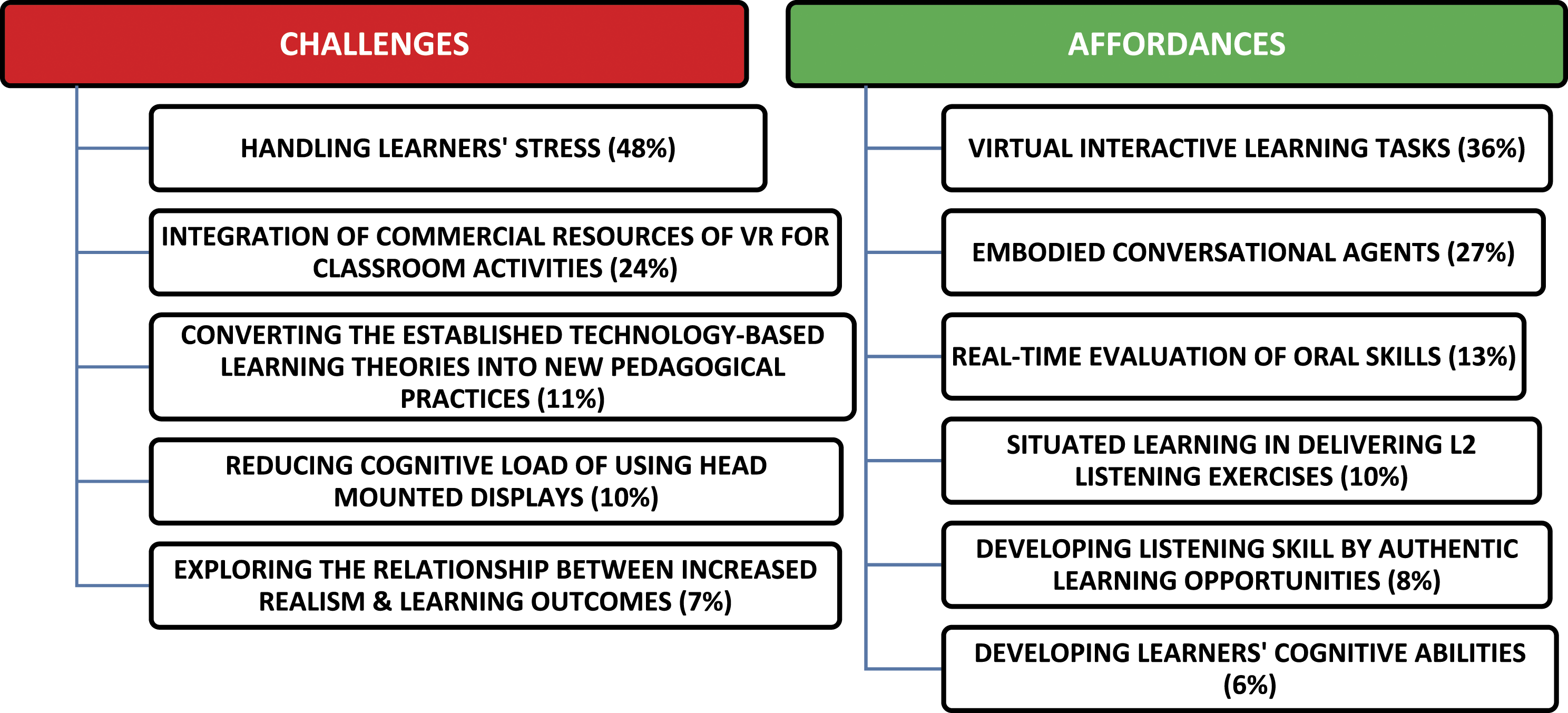
Affordances
Virtual interactive learning tasks (36%)
Exploring the efficacy of embodied agents in auditory, visual, and haptic channels of pedagogical interaction, Hassani et al. (2013) reported the affordance of embodied conversational agents in developing listening and speaking skills. Exploring the potentials of VR for second language teaching, Peixoto et al. (2019) reported the affordance of potentiating listening skill by designing learning tasks within VR environment as well as creating positive perceptions among second language teachers regarding the efficacy of VR tools as a medium to practice listening activities.
Embodied conversational agents (27%)
Lan et al. (2018a, 2018b) explored the effects of embodied learning types on listening comprehension in terms of 3D avatar versus real body and confirmed the affordance of 3D avatars in developing learners’ listening performance. The main pedagogical implication of their finding lies in the priority and efficacy of 3D virtual avatar as an embodied learning type over non-embodied learning type that can be used by teachers to develop listening performance of the learners. The findings reported by Lan et al. (2018a) were in keeping with previous studies that supported embodied cognition in language learning/teaching (Macedonia and Knӧsche, 2011; Willems and Casasanto, 2011).
Real-time evaluation of oral skills (13%)
Hassani et al. (2013) confirmed the affordance of real-time evaluation of oral skills in intelligent virtual environments adapted for language learning purposes reported by previous studies (Emonts et al., 2012). Exploring the effect of scene reality of VR environment on language learning and learner engagement among English language learners, Sun et al. (2020) confirmed the affordance of VR environment in enhancing learners’ engagement in learning. It was confirmed that the higher the scene reality, the easier the evaluation of body language richness, fluency, accuracy, and coherence of pronunciation for the teachers who use VR environment for teaching and evaluation.
Situated learning in delivering L2 listening exercises (10%)
Exploring the efficacy of virtual worlds in developing aviation English, Park (2018) reported the efficacy of virtual interactive tasks in improving linguistic competence, situated learning, and learning motivation. Park (2018) suggested expanding research on virtual worlds’ potential for language assessment arguing that the virtual world provides information about the use of situated cognition on the part of the test taker plus verbal responses.
Developing listening skill by authentic learning opportunities (8%)
Exploring the pedagogical efficacy of VR in L2 skills teaching, Chen (2016) reported the affordances of interactive learning opportunities and developing morphological, phonological, and grammar knowledge by offering contextual learning. Elaborating on the affordances of VR, Chen (2016) confirms the previous findings that this technology-based medium facilitates acquiring linguistic knowledge (Berman, 2007) that eventually results in learning success.
Developing learners’ cognitive abilities and autonomy (6%)
Chien et al. (2019) explored the efficacy of a spherical video-based VR environment for speaking training and confirmed the affordances of the system in terms of developing speaking performance and reducing anxiety as part of learners’ cognitive abilities. Yeh and Lan (2018) confirmed the affordance of developing learner autonomy by 3D virtual world and emphasized on the significance of praise feedback in enhancing speaking performance of the EFL learners as reported by the interviewees.
Challenges
Handling learners’ stress (48%)
Exploring the impact of VR environment on learners’ cognitive development, Chen (2016) called upon future studies to address learners’ stress while confirming the affordances of VR environment in developing learners’ higher level of thinking as well as morphological, phonological, and grammar knowledge. One of the main challenges that can cause anxiety among the learners in VR environment is reportedly “the type of virtual audience” (Van Ginkel, et al., 2019, 79).
Integration of commercial resources of VR for classroom activities (24%)
Calling upon further studies elaborating on the use of VR environment in foreign language teaching, Frazier et al. (2018) reported the challenge of integrating available tools on commercial platforms to create learning scenarios. Moving away from traditional approaches and integrating VR tools and technologies in foreign language teaching are among the challenges highlighted by several studies (Berns et al., 2016).
Reducing cognitive load of using head-mounted displays (10%)
In keeping with other studies (Wang et al., 2015), Peixoto et al. (2019) emphasized on the challenge of converting the established technology-based learning theories into new pedagogical practices to reduce cognitive load. While Makransky et al. (2019) described cognitive load as an inherent part of using head-mounted displays, “cognitive load is inherent with the use of head-mounted displays” (p.227), Jain et al. (2020) confirmed the efficacy of VR environment in reducing language reading. To overcome this limitation, Jain et al. (2020) suggested automatic text visualization in VR environment to assist those who have reading comprehension difficulties (e.g., dyslexia).
Exploring relationship between increased realism & learning outcomes (7%)
Inclusion/exclusion criteria.
A Sample of reported affordances and challenges of teaching listening skill by VR.
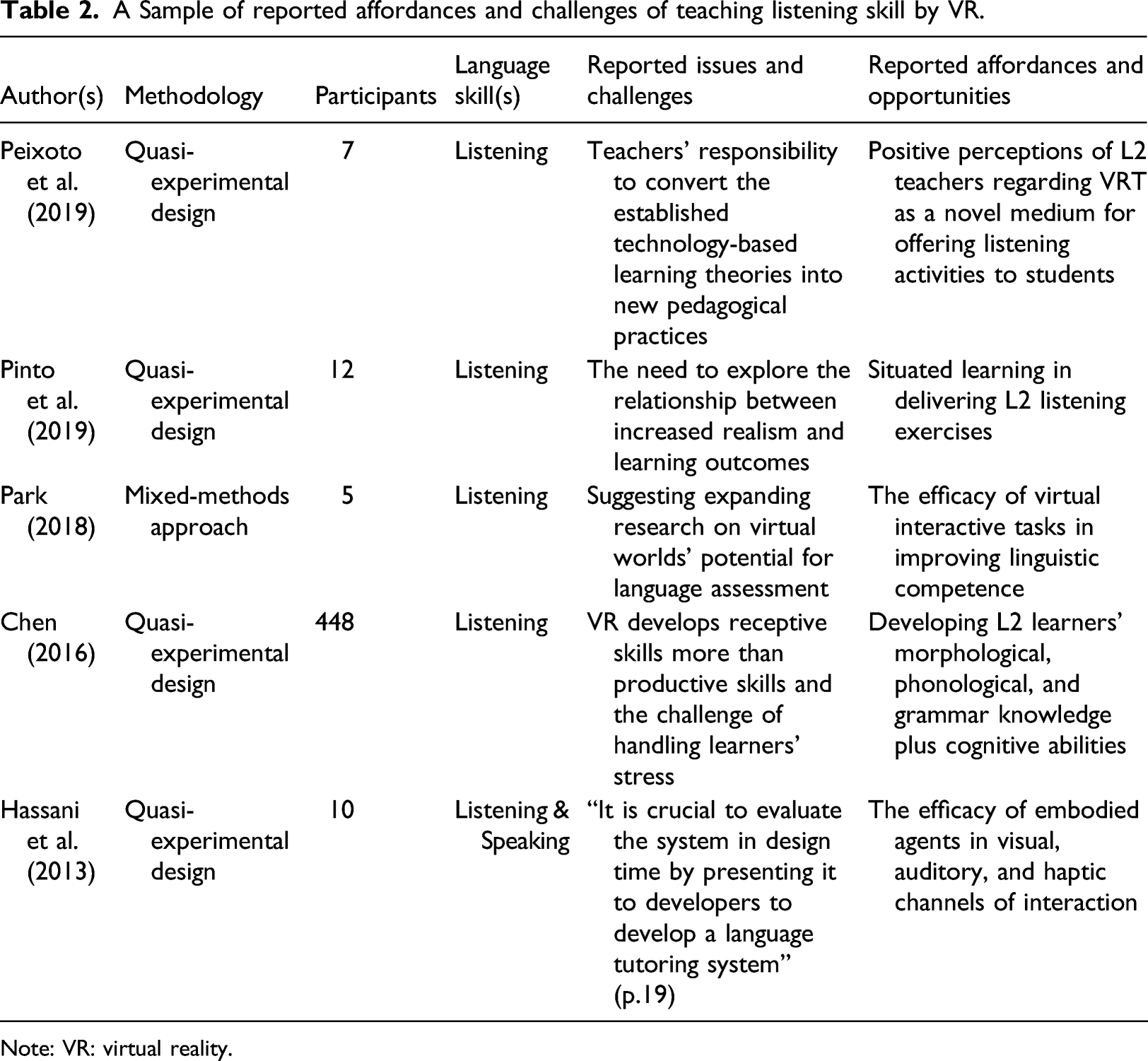
Note: VR: virtual reality.
Results to speaking development by VR
Figure 3 displays the hierarchy of the most frequently reported affordances and challenges of using VR to teach L2 speaking skill from 2010 to 2020. Comparative hierarchy of affordances and challenges of using VR to teach L2 speaking.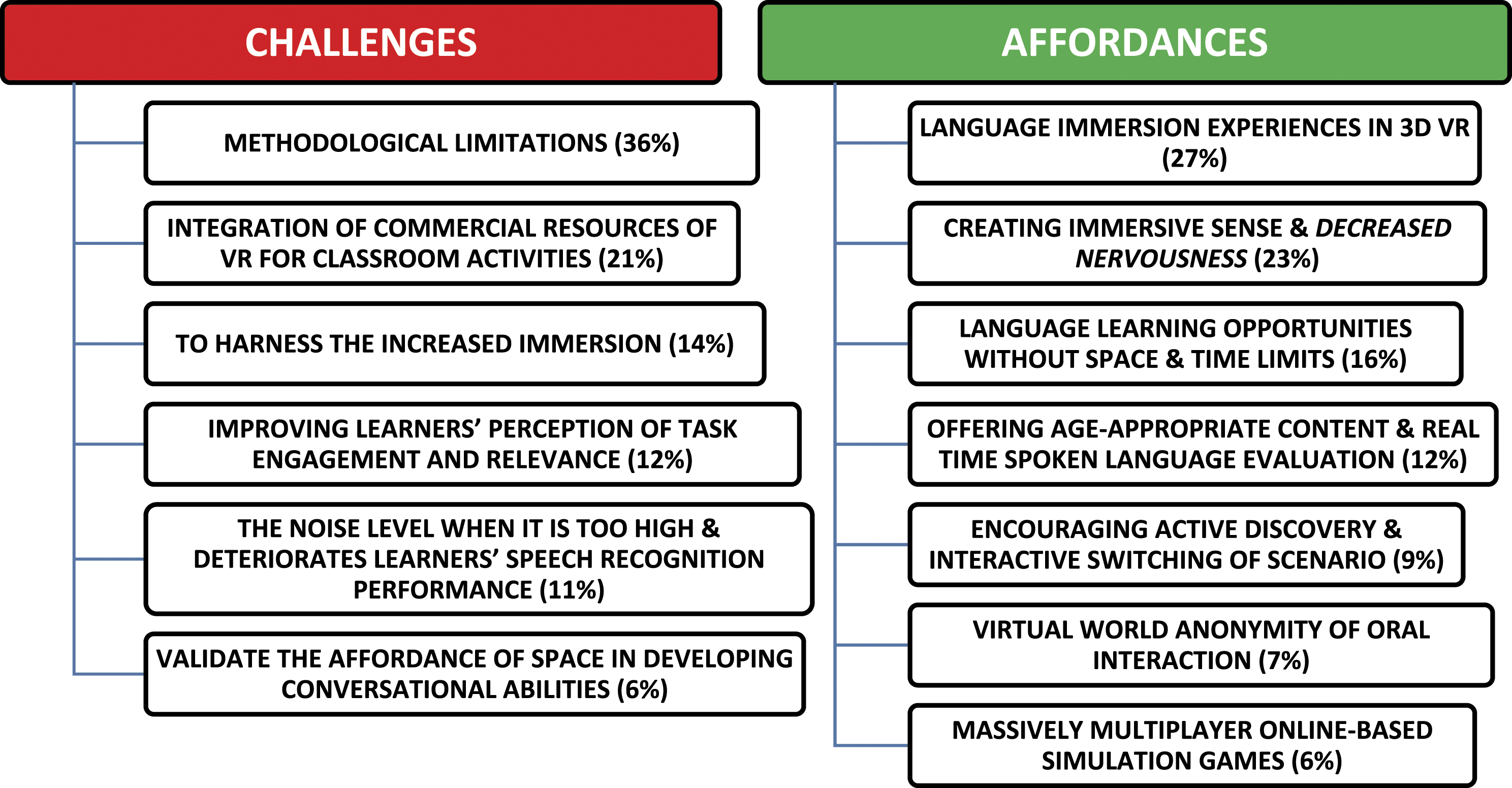
Affordances
Language immersion experiences in 3D VR (27%)
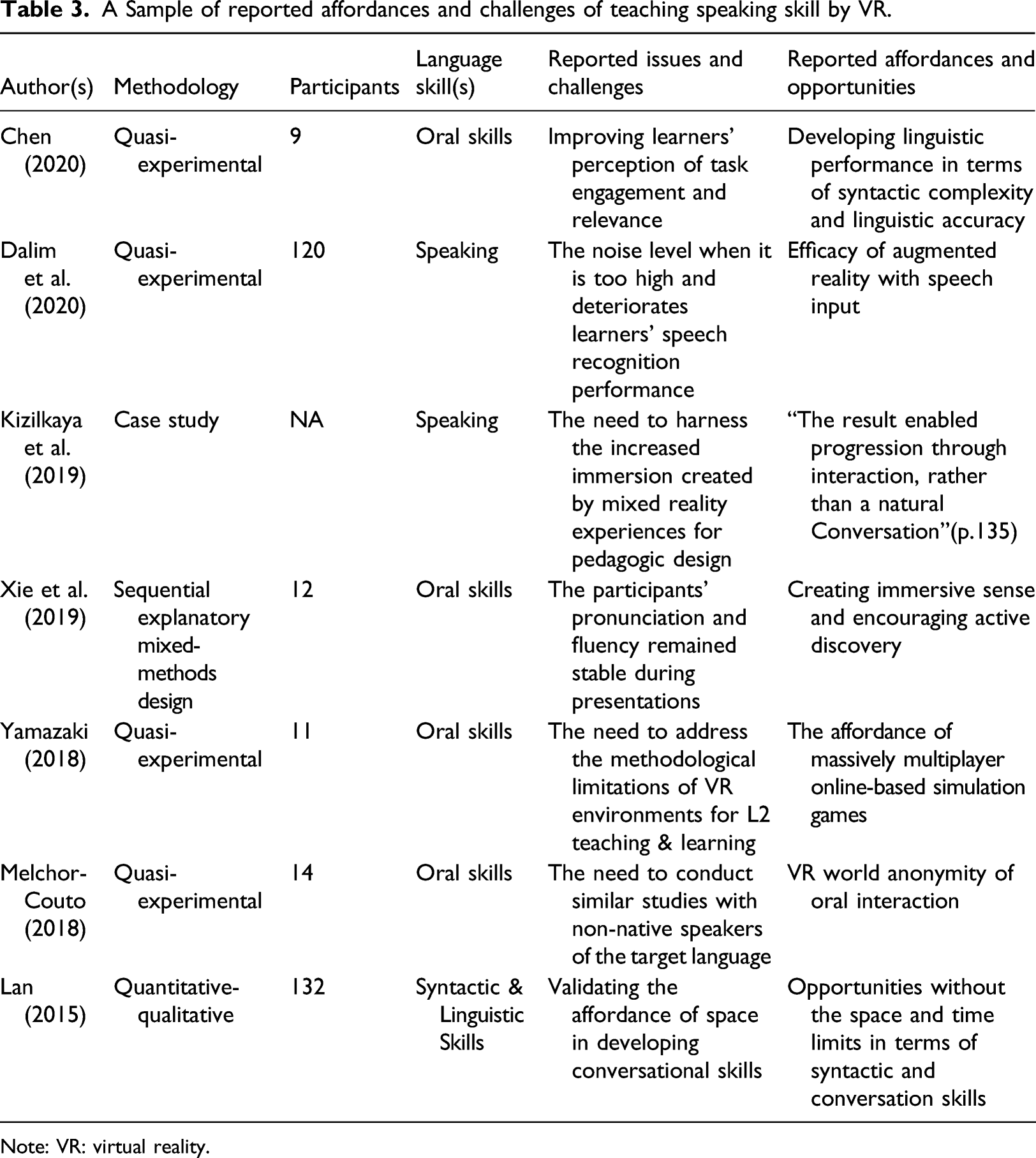
Exploring the efficacy of VR to improve EFL learners’ oral performance, Chen (2020) reported the affordance of improving learners’ linguistic performance in terms of syntactic complexity and linguistic accuracy by 3D multi-user virtual environments that offer language immersion experiences. While confirming the limitation of VR environment in large classrooms, York et al. (2020) reported the affordance of VR environment in developing learners’ speaking skill in keeping with previous studies highlighting features such as synchronous visual and immersive interactions (Blyth, 2018).
Creating immersive sense & decreased nervousness (23%)
Exploring the potentials of VR environment in reducing L2 anxiety, Melchor-Couto (2018) reported the affordance of virtual world anonymity of oral interaction that resulted in decreased nervousness. In addition to confirming the affordance of VR environment in terms of developing listening proficiency of learners, York et al. (2020) reported the affordance of reducing foreign language learning anxiety among learners who used VR environment.
Language learning opportunities without space & time limits (16%)
Exploring the potentials of VR, Lan (2015) reported the affordances of language learning opportunities without the space and time limits in terms of syntactic and conversation skills and emphasized on the need to validate the affordance of space in developing conversational abilities. Wang et al. (2012) explored the efficacy of VR environment in developing oral skills and reported the affordance of oral communicative abilities such as oral descriptive skills and oral explanatory skills among learners who experienced VR space and time versus non-virtual space and time. Confirming the efficacy of VR environment for language teaching/learning purposes, Xhang (2019) called upon future studies to apply VR environment to improve language learning and “break the constraints of time and space” (p.4).
Offering age-appropriate content & real-time spoken language evaluation (12%)
Exploring the potentials of augmented VR, Dalim et al. (2020) reported the affordance of allowing interactivity and physical activities, boosting enjoyment, offering age-appropriate content, collaboration, and small group learning by immersive experience. Cai et al. (2020) reported the affordance of real-time spoken language evaluation in VR environment by “Digital Reality Theater” that leads to “better effect on language learning” (p.5).
Encouraging active discovery & switching of scenario (9%)
Reporting the efficacy of virtual tools, Xie et al. (2019) confirmed the affordances of creating immersive sense (i.e., subjective sense of being present in the scene) and encouraging active discovery among L2 learners who used VR tools. Exploring the efficacy of VR environment, Cai et al. (2020) confirmed the affordance of interactive switching of scenario that enhanced learners’ engagement and willingness in learning process.
Virtual world anonymity of oral interaction (7%)
To clarify how anonymity benefits L2 learner, Melchor-Couto (2018) states that “virtual worlds offer much-needed gentle beginning that enables learners to build up a gradual familiarity with their interlocutor” (p.17). This concluding statement reflects the author’s view regarding the anonymity as an affordance that serves learners as a preparatory virtual oral interaction practice to prepare them for the real-life interactions.
Massively multiplayer online-based simulation games (6%)
Exploring the potentials of 3D virtual world to develop communicative skills, Yamazaki (2018) reported the affordances of massively multiplayer online-based simulation games in terms of communicative competencies (including collaborative communication and persuasive talk).
Challenges
Methodological limitations (36%)
Yamazaki (2018) emphasized on the challenge of methodological limitations and the need to be addressed by future studies and bridge the gap of methodological models to be incorporated in L2 teaching by virtual world environments. Scrivner et al. (2019) called upon further studies to overcome methodological limitations of VR environment for pedagogical objectives to address different aspects of learning process.
Integration of commercial resources of VR for classroom activities (21%)
The integration of commercial resources of VR for classroom activities is a challenge ahead of L2 teachers as reported by MacWhinney (2017) since these resources fail to provide learners with opportunities for spoken language production. Therefore, they cannot be replaced for classroom programs and need to be completed with additional pedagogical measures depending on the curriculum.
To harness the increased immersion (14%)
Conducting an exploratory research, Kizilkaya et al. (2019) reported the efficacy of a suitability toolkit for assessment of VR. Confirming the efficacy of VR for developing speaking skill, they reported that the challenge ahead of benefiting from the affordances of VR is the need to harness the increased immersion created by mixed reality experiences for pedagogic design.
Improving learners’ perception of task engagement and relevance (12%)
Chen (2020) reported the challenge of improving learners’ perception of task engagement and relevance as a significant factor that affects the quality and quantity of learners’ pre-task planning investment. Exploring the efficacy of speech-enabled augmented reality, Dalim et al. (2020) confirmed higher motivation and learner engagement in learning process that significantly improved learners’ gain of abstract words. Dalim et al. (2020) highlighted the challenge of the noise level when it is too high and deteriorates learners’ speech recognition performance.
A Sample of reported affordances and challenges of teaching speaking skill by VR.
Note: VR: virtual reality.
Results to reading development by VR
Figure 4 displays the hierarchy of the most frequently reported affordances and challenges of using VR to teach L2 reading skill from 2010 to 2020. Comparative hierarchy of reported affordances and challenges of using VR to teach L2 reading.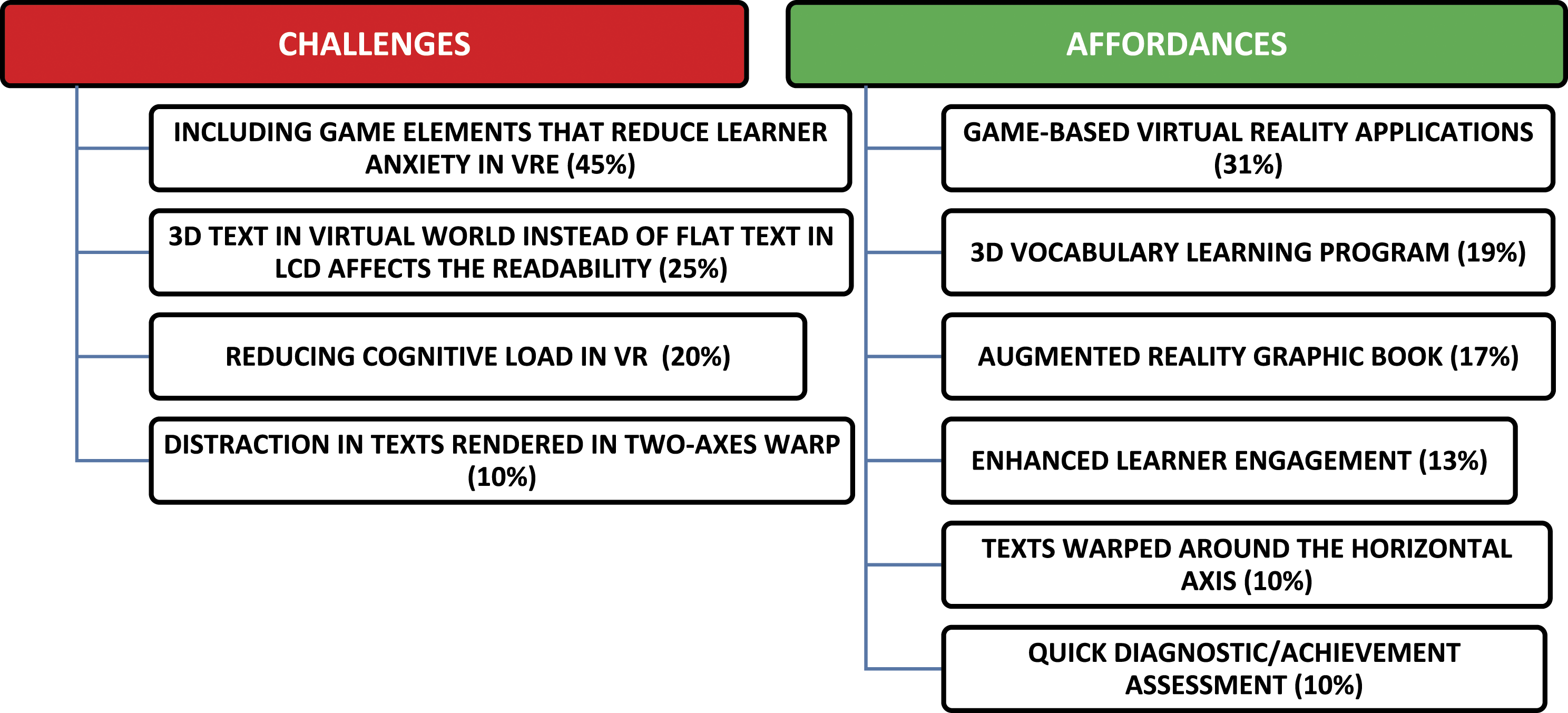
Affordances
Game-based VR applications (31%)
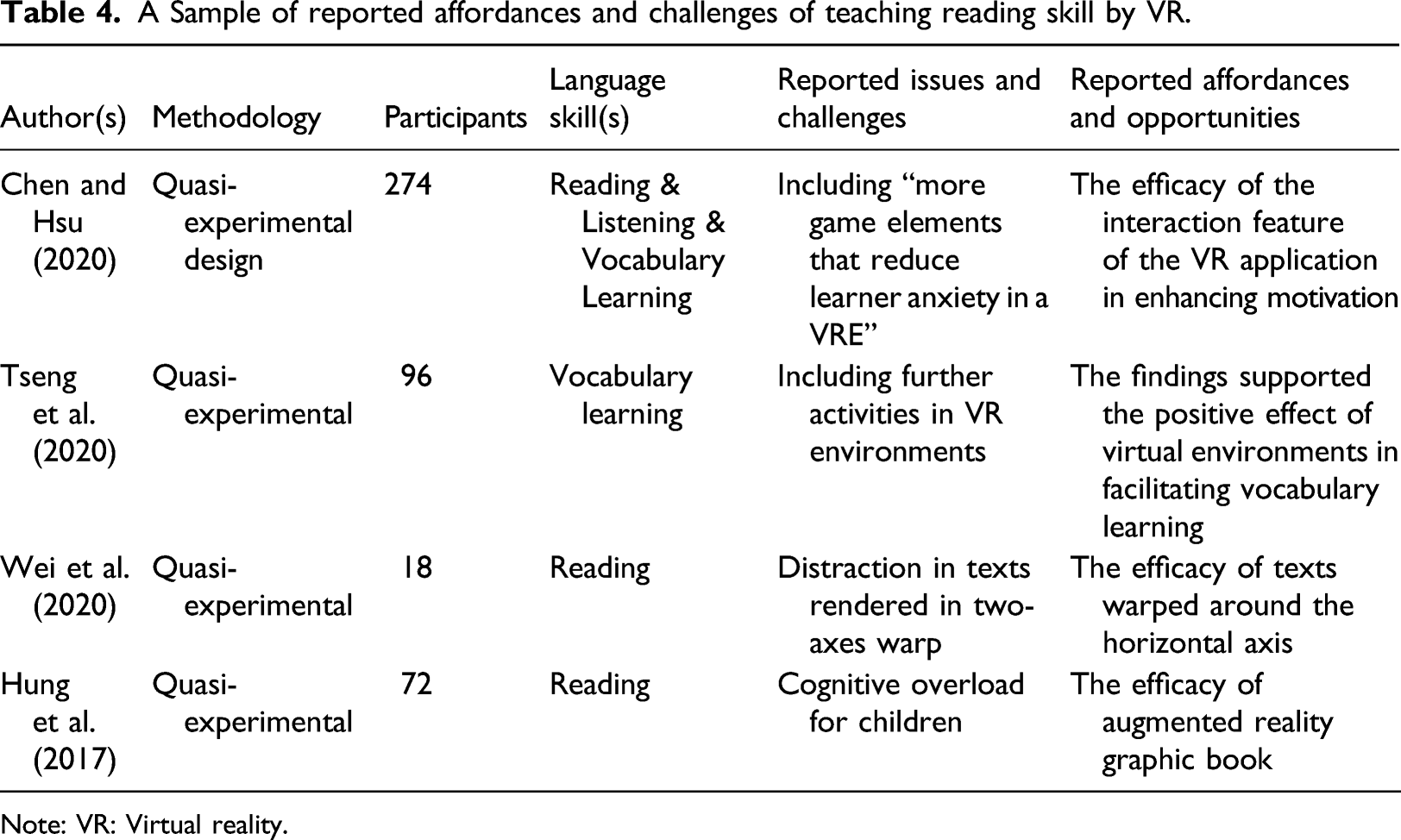
Exploring the efficacy of VR environment, Chen and Hsu (2020) reported the affordances of VR game-based environment in terms of improving students’ L2 learning in vocabulary, listening, and reading. Huang et al. (2020a, 2020b, 2020c) confirmed the efficacy of VR environment in developing language skills by assisting learners to complete collaborative communication tasks and enhancing learners’ engagement in learning process.
3D vocabulary learning program (19%)
Exploring the efficacy of three-dimensional virtual learning environment for L2 learning, Tseng et al. (2020) reported the affordance of 3D vocabulary learning program plus improving learners’ autonomy, active engagement, and collaboration with partners. They highlighted the role of teacher as a monitor who should intervene in case learners are unable to complete the task or reassign them if necessary. Exploring the potentials of VR to enhance learning, Hung et al. (2017) reported the affordance of augmented reality graphic book in terms of offering hands-on and practical way of exploring the reading text by adding interesting features to motivate learners.
Enhanced learner engagement (13%)
Describing VR environment as an engaging way of instruction, Berti (2020) explored the efficacy of ImmerseMe platform and confirmed the affordance of VR environment in developing language skills, in particular reading, listening, and speaking skills that were previously reported by Blake (2011). VR environment not only facilitates out-of-class language learning (Holden and Sykes, 2011), it also facilitates creating deep connection between the learner and the virtual content that enhances learner engagement and positively increases the quality and quantity of learners’ participation (Gadelha, 2018).
Texts warped around the horizontal axis (10%)
Examining the impact of view box widths and warp angles on reading, Wei et al. (2020) reported the affordances of texts warped around the horizontal axis rather than vertical axis in terms of reading speed, comfort, and distraction. They reported 270–300 units in all shapes as the preferred view box widths and 50°–55° in all shapes as the preferred warp angle. Wei et al. (2020) confirmed the affordance of less curved display and higher comfort level in texts rendered around a cylinder axis; they reported the challenge of distraction in texts rendered in two-axes warp.
Quick diagnostic/achievement assessment (10%)
Exploring the affordances of immersive VR environment in reading assessment, Junior and Bodzin (2020) confirmed the efficacy of the Captcha system and Emojis as pre-reading activity as well assessment activities that not only provides teacher with feedback but also enhanced learners’ engagement in reading activity.
Challenges
Including game elements to reduce learner anxiety in VR environment (45%)
Chen and Hsu (2020) highlighted the challenge of including “more game elements that reduce learner anxiety in a VRE” (p.22). They believe that such measures can result in better game-based learning experience that enhances learners’ language proficiency by effective engagement in learning. Future studies are suggested to address metacognitive and cognitive strategy development to ensure balance between game-like experience and learning objectives (Van Ginkel, et al., 2019).
3D text in virtual world instead of flat text in LCD affects the readability (25%)
The next challenge ahead of teaching reading is reported by Jankowski et al. (2010) who argued that the slower reading speed of readers in virtual world lies in differences between 3D text in virtual world versus flat text in liquid crystal display (LCD) that affects the readability. To address this challenge, Rau et al. (2018) conducted a study with a focus on speed reading. They confirmed the differences in terms of reading speed and recommended that to balance the difficulty level between two environments, designers of instructional virtual world environments need to give users 10% more time compared to flat text context to respond to tasks requiring text-processing.
Reducing cognitive load in VR environment (20%)
Hung et al. (2017) confirming the results of previous studies (Dunleavy and Dede, 2014) confirmed the challenge of cognitive overload for children in VR learning environment. Exploring the relationship between cognitive load and sense of presence in VR environment, Huang et al. (2020a, 2020b, 2020c) called upon further studies as they observed inconsistent results and reported that “the components of sense of presence and cognitive load generate inconsistent predictive effects on affective and cognitive learning outcomes” (p.596).
A Sample of reported affordances and challenges of teaching reading skill by VR.
Note: VR: Virtual reality.
Results to writing development by VR
Figure 5 displays the hierarchy of the most frequently reported affordances and challenges of using VR to teach L2 writing skill from 2010 to 2020. Comparative hierarchy of reported affordances and challenges of using VR to teach L2 writing.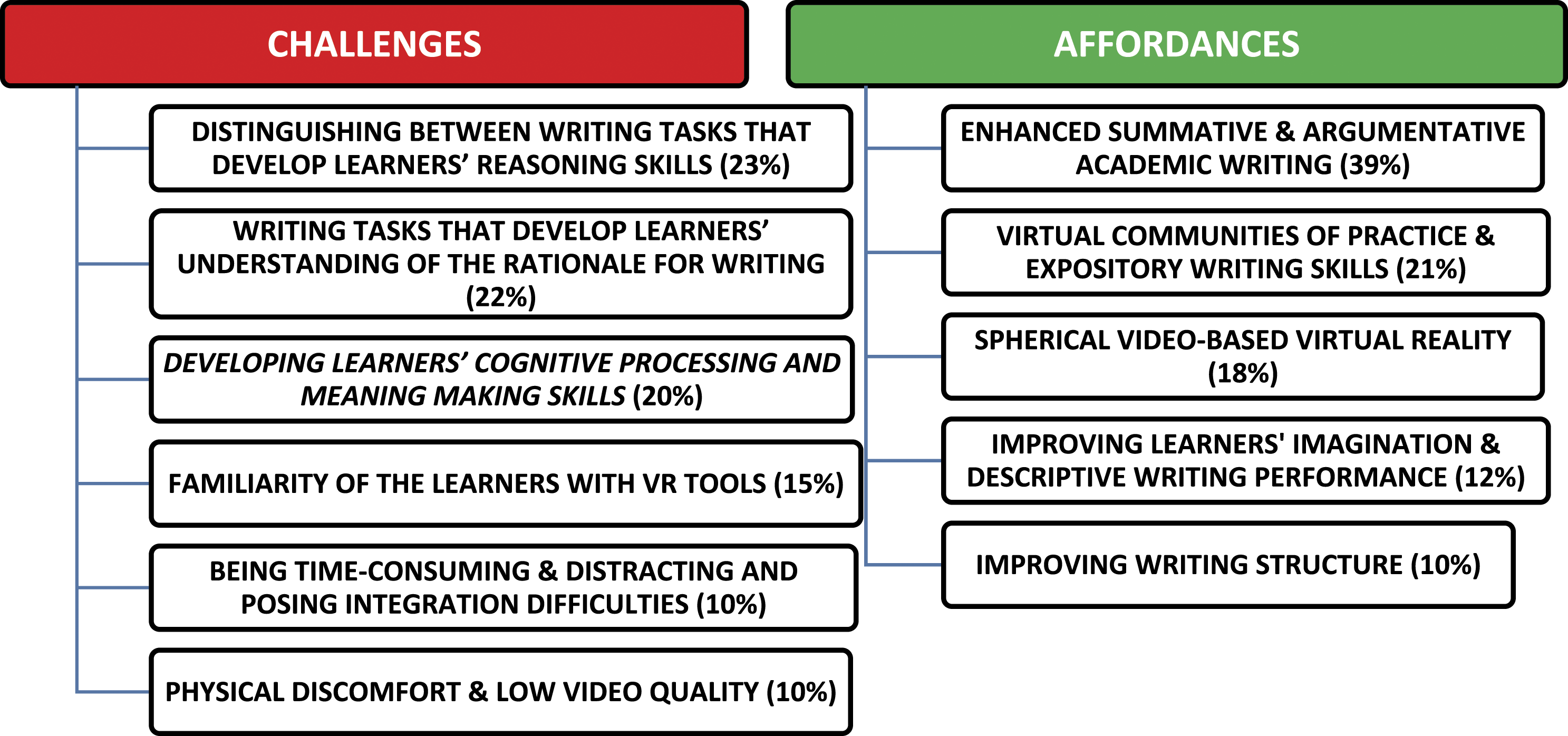
Affordances
Enhanced summative & argumentative academic writing (39%)
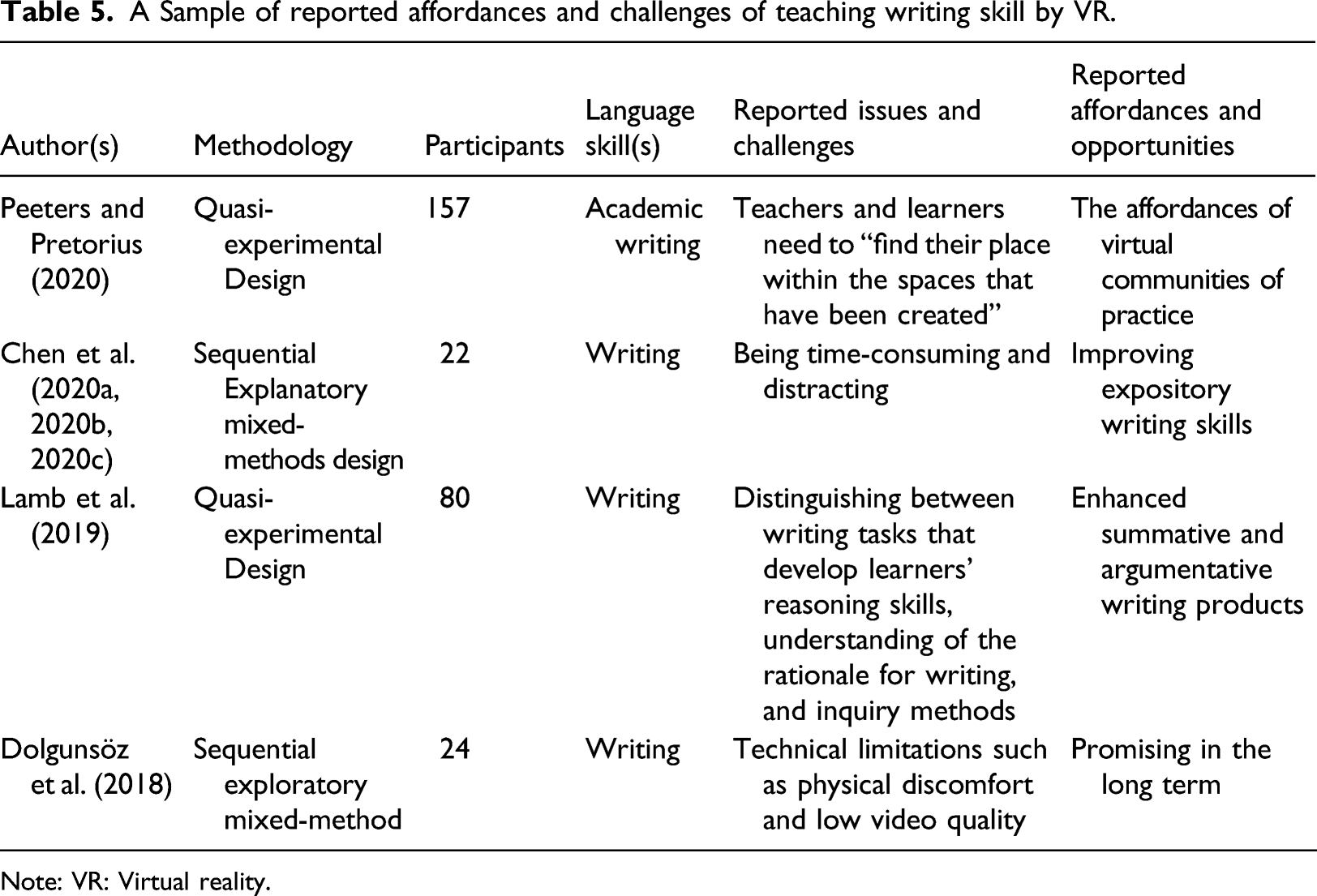
Exploring the affordances of virtual communities of practice, Peeters and Pretorius (2020) reported the efficacy of it for improving academic writing. They emphasized that for developing online instructional interaction and participation, teachers and learners need to “find their place within the spaces that have been created” (p.13). Exploring the impact of VR on writing skill, Lamb et al. (2019) reported the affordance of enhanced summative and argumentative writing products among learners who received intervention by VR environment. They reported higher lexical density and writing complexity with as a result of practicing writing by VR.
Virtual communities of practice & expository writing skills (21%)
According to the studies addressing writing skill, VR environment can potentially improve learners’ writing performance and enhance their interest in writing task (Allagui, 2021). Exploring the efficacy of Google earth VR, Chen et al. (2020a, 2020b, 2020c) confirmed the efficacy of virtual-assisted writing environment in terms of developing learners’ expository writing skills. Exploring the efficacy of VR in developing second language proficiency, Korkalainen et al. (2015) confirmed VR environment affordance in offering practices in official written form of language (writing, grammar, vocabulary) by simulating real-world–like situations.
Spherical video–based VR (18%)
Exploring the efficacy of VR environment, Huang et al. (2020a, 2020b, 2020c) introduced a spherical video–based VR approach and confirmed its affordance in developing descriptive article writing performance. They also reported the affordances of the proposed approach in terms of developing learners’ creative thinking for writing and providing a low-cost and low-tech solution to develop writing performance of the learners. Exploring the impact of full spherical views provided by VR environment on foreign language learning, Berns et al. (2018) confirmed the affordance of spherical views that facilitated creating real-world–like situations to enhance learning process. Allagui (2021) confirmed the affordance of VR environment in developing learners’ imagination and descriptive writing skills that enable learners to characterize events and imagine objects.
Improving writing structure (10%)
Exploring the efficacy of VR environment in developing writing skill, Pack et al. (2020) reported the affordance of VR environment in teaching and learning writing structure and increasing positive attitude among users. Pack et al. (2020) also highlighted on the thin literature of using VR environment to develop writing skill as a limitation that needs to be addressed in future studies and expanding language-oriented VR studies beyond oral skills.
Challenges
Distinguishing between writing tasks that develop learners’ reasoning skills (23%)
Lamb et al. (2019) highlighted the need to distinguish between writing tasks that develop learners’ reasoning skills, understanding of the rationale for writing, and inquiry methods. One of the challenges ahead of designers and teachers is to consider developing learners’ reasoning skills by encouraging them to practice writing while putting together meaning and thought and deliver it individually/collaboratively (Lamb et al., 2019).
Developing learners’ cognitive processing and meaning making skills (20%)
Lamb et al. (2019) reported the challenge of investigating various ways of meaning making (e.g., linguistic, spatial, gestural, audio, and visual) within VR environment. Some studies (Erlandson, et al., 2010; Liu and Tsai, et al., 2013) have reported a number of challenges that need to be addressed in future VR environment studies (e.g., to overcome lack of flexibility in design and integration of educational material, functionality issues, etc.).
Familiarity of the learners with VR tools (15%)
Wang (2017) confirmed the challenge of familiarity of students with tools available within VR environment reported previously by Liu and Tsai (2013). Mediating and regulating the use of VR environment tools by the teacher is reportedly a challenge ahead of the designers as well as users that need to be addressed in future studies (Chang et al., 2012).
Being time-consuming & distracting and posing integration difficulties (10%)
Following the incorporation of Google Earth VR as an environment to improve learners’ writing, Chen et al. (2020a, 2020b, 2020c) reported the challenges of this VR tool in terms of integration difficulties, distraction, and being time-consuming.
Physical discomfort & low video quality (10%)
Dolgunsöz et al. (2018) examined the efficacy of VR environment in improving EFL writing skills and reported the challenge of technical limitations such as physical discomfort and low video quality. They highlighted the feeling of discomfort expressed by some participants concerning their position in VR environment as a limitation that requires further analysis.
A Sample of reported affordances and challenges of teaching writing skill by VR.
Note: VR: Virtual reality.
Discussion
In response to the research question, the study observed a long list of challenges in using VR environment to improve receptive and productive skills. Despite these challenges, VR as an emerging and promising educational technology can potentially overcome instructional challenges by conducting further research to overcome them (Buendgens-Kosten, 2020; Gillespie, 2020). The abovementioned reported challenges serve as a reminder to researchers about problems ahead of the field and the need to be addressed in future studies. Challenges also serve teachers as a reminder of possible problems that need to be overcome by innovative pedagogical measures prior or during VR-assisted language teaching.
The study also revealed a variety of affordances that VR offers that can potentially facilitate teaching L2 receptive and productive skills in terms of learning context and learning strategies. The findings suggest that VR environment influences and converts learning context in different ways and creates a learning context that is neither a copy of face-to-face learning context nor a copy computer-assisted learning context. VR environment offers authentic learning environment by location-based augmented reality (Lee and Park, 2019) that results in developed scope of learning and enhanced nonlinear dynamic L2 motivation (Bahari et al., 2021b).
The findings suggest that VR environment offers affordances that foster language skills learning via different strategies (e.g., contextualized learning, immersive learning, enhanced engagement, interactive learning, collaborative learning, and scaffolding). The variety of tested and confirmed strategies reflect the potentials of language learning by VR environment and calls upon further research to address other strategies (e.g., sociopragmatic learning and pragmalinguistic learning; Bahari, 2020a; Bahari et al., 2021a).
The observed inconsistency in the number of articles selected for each language skill reflects the shortage of research in some language skills (reading and writing) compared to others (listening and speaking). The same inconsistency resulted in less observed affordances for developing reading and writing skills compared to listening and speaking skills. It is worth mentioning that the shortage of reported affordances does not reflect inefficacy of VR environment but rather serves as a call for further research.
This review article provided a detailed view of the reported challenges and affordances of using VR to teach L2 receptive and productive skills. The hierarchical data can help the CALL practitioners and software developers to identify the challenges and limitations of VR and conduct necessary studies to overcome them. The affordances of VR vary from one L2 skill to another, therefore, teachers need to consider the shortcomings and take appropriate pedagogical measures in advance. The L2 teachers and learners need to collaboratively practice the use of emerging educational technologies, in particular VR by varied and ongoing training.
Implications
Theoretical implications
The CALL scholars are recommended to approach the topic of embodied cognition by contextualizing user-embodied cognitive processes by technology-based tools and affordances (e.g., embodied games, embodied peers, etc.) to ensure the success of the VR programs for developing L2 receptive and productive skills. Drawing on the reviewed articles, further studies are recommended to integrate physical and mental learning processes by contextualizing reading activities in VR environments (Kolb, 2015). Chen (2016) highlighted a challenge that confirmed the previous finding reported by Su (2006) that VR develops receptive skills more than productive skills. Therefore, future studies need to address this challenge and find out the possible reasons behind the differences.
Given the quantitative restrictions of VR equipment (Chen et al., 2020a, 2020b, 2020c), the future studies need to address the difficulty of avoiding free-rider effect in collaborative tasks and find solutions to overcome this problem. Given the significance of “guiding students in how to survive in the actual wildness of another language and culture” (Lech and Harris, 2019, 52), researchers need to develop and introduce strategies to enable learners to benefit the most from VR environment for L2 learning purposes.
Theoretically, the findings suggest the necessity of applying visualization analytics in future studies for designing L2 learning environments to guide learners during learning process and finding out whether there is a relationship between L2 learners’ spatial ability and their L2 learning or not (Hsiao et al., 2017). Applying visual analytics enables researchers to identify learning paths and learning strategies with respect to the features of objects and their best arrangement in virtual worlds.
Theoretically, there is a major gap in terms of pedagogical frameworks and models (Zhang et al., 2020) to offer insights into designing and learning tasks that ensure motivating learners to complete online courses without losing interest and ensure the relevance of the learning material (Shapiro, et al., 2017; Wozniak, 2020).
Theoretically, future VR studies are suggested to bridge the gap of less-researched language skills (reading and writing) by contextualizing and examining VR tools to complete real-life tasks that require reading and writing activities in VR environment.
Pedagogical implications
Despite the common belief that emerging technologies are often more effective than older ones (see Levy and Stockwell, 2006) and serve us as “miracle cure-all” (Chambers and Bax, 2006, 465), there are pedagogical challenges associated with them that require further consideration. Drawing on the reviewed articles, the CALL teachers need to avoid replacing commercial resources of VR for classroom activities and include complementary pedagogical adaptations in advance since most of these resources do not provide opportunities to practice productive skills. Given the high potential of VR context to support collaborative L2 teaching (Lan et al., 2018a, 2018b; Tseng et al., 2020), teachers need to take necessary measures to convert the conditions to incorporate VR to support teaching (e.g., by extending, expanding, and enriching the traditional presentations by integrating VR elements).
To benefit from the affordance of interactive learning in VR environment for developing L2 learners’ morphological, phonological, and grammar knowledge, teachers are recommended to engage learners in “virtual field trips, virtual city tours, role playing, and creative construction work by collaboration with others” (Chen, 2016, 8).
Drawing on reported affordances, pedagogically, teachers are recommended to benefit from VR environment for developing oral presentation skills and delivering feedback to encourage deliberately-processed oral presentations (Chollet et al., 2015; Van Ginkel, et al., 2019). To enhance speaking speed, teachers are recommended to adopt technology-mediated approach to L2 story-telling to benefit from the affordance of multimodal communicative activities and providing broader narrative contexts (Liang, 2019). To cater to the nonlinearity and dynamicity of L2 motivation (Bahari, 2019, 2020b), teachers are recommended to benefit from the affordance of VR tools to provide learners with impressive experience of writing topic/context and overcome the deficiency of limited depth of expression (Huang et al., 2020a, 2020b, 2020c).
Conclusion
It can be concluded that the mainstream studies on language skills learning by virtual world have moved from descriptive studies with a focus on social interaction, learning outcomes, and affective domain (Hew and Cheung, 2010) toward experiential studies with a focus on immersive spaces and simulated instructional environments (Kim et al., 2012). Therefore, the current trend of virtual worlds’ studies is in an ongoing process of theory building, expanding experimental studies (Beck and Perkins, 2014), and contextualizing the complexity of language skills learning by VR (Boellstorff, 2015; Gregory et al., 2016).
The review of the studies revealed that listening and speaking skills have been more frequently explored compared to reading and writing skills. This finding confirms the reported challenge that reading/writing do not marry well to virtual environments (Scavarelli et al., 2021). It also reflects an imbalanced trend of research on language skills learning and calls upon further studies on reading and writing skills development by VR environment. As emphasized by Wigham et al. (2018), to benefit from the multimodal and multilayered potentials of interaction in virtual world for language learning purposes, there is a need to take a multifaceted approach. Therefore, both receptive and productive skills need to be addressed by a balanced and comprehensive approach (Wigham et al., 2018) in future VR-assisted language learning studies to ensure equal development of language skills (Blyth, 2018) and accelerate the multifaceted integration of VR technology into technology-assisted language learning pedagogy.
Given the focus of the current study on language skills, other aspects of language learning by VR environment were not addressed. To overcome this limitation in future studies, it is suggested to conduct systematic reviews elaborating on adopted research designs in studies reporting results on the efficacy of teaching language skills by VR technology. This informs the field about the research quality of VR studies and their possible relationship with language skills.
Footnotes
Declaration of conflicting interests
The author(s) declared no potential conflicts of interest with respect to the research, authorship, and/or publication of this article.
Funding
The author(s) received no financial support for the research, authorship, and/or publication of this article.
