




Abstract
In this industrial age, skills required in most jobs are 21st-century skills. The current study aimed to investigate whether there is a relationship between implementing project-based collaborative learning using PowerPoint and improving students’ 21st-century skills from the students’ perspectives. It also examines whether there is a significant relationship between students’ attitudes toward learning collaboratively using PowerPoint to improve their 21st-century skills and their major. The participants of the study were 75 female students enrolled in an Educational Technology and Means course at Najran University. The findings revealed that there is a significant and positive relationship between implementing a project-based collaborative learning approach using PowerPoint and improving the students’ 21st-century skills, r (74) = 0.74 and p < 0.05. Additionally, the findings demonstrated that 21st-century skills improved the most through “actively collaborating with others” (M = 4.6, SD = 0.56). Additionally, there was no significant difference in students’ attitudes toward learning collaboratively using PowerPoint to improve their 21st-century skills in terms of human studies or scientific studies majors, t (37) = 1.97 and p > 0.05. The findings demonstrate that more research is required on the role of higher education in developing meaningful technology-based strategies to improve students’ 21st-century skills in learning environments.
Introduction
In this modern world, qualified employees are those with 21st-century skills. Lai and Viering (2012) and the National Research Council et al. (2012) defined 21st-century skills as a collection of core readiness competencies that influence the future educational, vocational, and interpersonal success of children and adolescents. Similarly, the Partnership for 21st Century Skills (P21Skills, 2009) defines 21st-century skills as the knowledge and skills (competencies) that students should master to succeed in their life and at work. In other words, these skills are necessary for success in education and work and are necessary for facing the challenges of the 21st century. Dede (2010) revealed that a large proportion of jobs now require highly educated individuals who have 21st-century skills and can engage in complex tasks, analytical thinking, and effective communication.
Although these skills are essential in today’s globalized world, studies have concluded that today’s students are unaware of the skills they require for lifelong learning. While students are the result of the traditional school culture, Mäkitalo-Siegl et al. (2011) and Schratzenstaller (2010) posited that today’s students are not necessarily part of an inquiry-based, collaborative learning culture. Dede (2010) argued that collaboration, the ability to use complex communication or technological tools, is not part of high-stake educational tests. Moreover, Velez (2012) revealed that high-stake tests measure fluency in abstract and routine competencies but do not assess 21st-century skills such as higher-order thinking skills and critical and creative thinking. Quieng et al. (2015) also demonstrated that many students at Tri-County Technical College—a community college in Pendleton, South Carolina—lack the 21st-century skills necessary to secure or retain a job in their chosen career field.
When students cannot analyze and solve problems or develop innovative solutions, many students will be uncertain about their ability to secure jobs in their fields following graduation. Mellander (2013) concluded that, given these problems, higher education must take the lead and develop effective methods for instilling 21st-century skills that employers desire to make college graduates more competitive in the global job market.
Incorporating technologies into learning environments could assist educators in improving students’ 21st-century skills. Studies have concluded that using technologies in teaching environments enhances students’ academic achievement and skills. For example, Hopson et al. (2001) concluded that creating a technology-enriched classroom environment appears to have had a positive effect on students’ acquisition of higher-order thinking skills. Another study by Serin (2011) revealed a significant increase in students’ problem-solving skills in an experimental group that received computer-based science and technology instruction. Moreover, a study by Nevgi (2006) reflected that the web-based tool “IQ Team” improves students’ ability to become aware of their group work skills and develop their collaborative learning skills. Rizzo (2013) implemented a student-centered, 21st-century, one-to-one laptop environment to better prepare students for the future. The study’s findings revealed that it was very apparent in the interviews that 21st-century skills, such as creativity, collaboration, communication, problem-solving, critical thinking, research skills, and digital citizenship, are interwoven naturally in day-to-day occurrences.
Therefore, as educational strategies and technology support and improve students’ 21st-century skills, the purpose of this study is to investigate whether implementing project-based collaborative learning using PowerPoint can improve students’ 21st-century skills.
Literature review
When looking for the most qualified individuals, companies and organizations focus on individuals with 21st-century skills (Bellanca, 2010; Rotherham and Willingham, 2010).
According to Rotherham and Willingham (2010), these skills include critical thinking, problem-solving, information literacy, and global awareness. These can be divided into three main categories: learning, literacy, and life skills. The first category, learning skills, is based on Tomlinson’s (2012) research and includes effective communication skills, the ability to collaborate effectively, the ability to think critically and solve problems, and creativity.
The second category is literacy skills, which includes information literacy, media literacy, and technology literacy. Digital and information literacy skills are defined as the ability to effectively and thoughtfully evaluate, navigate, and construct information using a range of digital technologies to function fluently in the digital world (Kereluik et al., 2013). Students should be able to effectively seek out, organize, and process information from various media (Kereluik et al., 2013). These students are also responsible for their use of technology and media and consider moral and ethical issues when dealing with information and communication technology systems and media forms.
The third category is life skills, including flexibility, initiative, social skills, productivity, and leadership. These skills help students to succeed beyond classroom restrictions. According to Zhao (2009) and Jenkins (2006), life skills serve to manage and organize effort, coordinate and organize relevant and important information, and develop end products.
The CEO Forum (2001) identified the 21st-century skills that students should possess as communication (teamwork, interpersonal, collaboration, personal, social responsibility, and interactivity), digital age literacy (basic, scientific, and technical; cultural literacy and global awareness), inventive thinking (adaptability, managing complexity, curiosity, creativity, risk-taking, higher-order thinking, and sound reasoning), and high productivity (prioritizing, planning, managing for results, using real-world tools effectively, and creating relevant, high-quality products).
Davies et al. (2011) summarized the following skills as being the most important in the 21st century: sense-making; social intelligence; novel and adaptive thinking; cross-cultural competency; computational thinking; new-media literacy; transdisciplinary, design mindset ability; cognitive-load management; and virtual collaboration. The P21Skills (2009) argues that the primary 21st-century skill is global awareness, which indicates the ability to work collaboratively and communicate effectively with people from diverse cultures, perspectives, and religions. Creativity and innovation are also vital 21st-century skills that involve coming up with new and original ways to make things more effective, efficient, or improved, and examining different perspectives or brainstorming solutions to solve problems. They should be able to use inductive and deductive reasoning and analyze relationships between parts and a whole (P21Skills, 2009). Additionally, the P21 values critical thinking, problem-solving, communication, collaboration, and ICT skills as 21st-century skills. Students must be critical and able to evaluate and analyze disparate information and different perspectives as the 21st-century Internet world includes vast amounts of information.
Working collaboratively is connected directly to communication competencies, including verbal, written, face-to-face, direct, or indirect communication. Hence, students have to be ICT knowledgeable; access, administer, assemble, connect, synthesize, and construct new knowledge; and communicate effectively (P21Skills, 2009).
Although these skills have been identified as essential in today’s economic and globalized world, researchers concluded that graduates lack these workplace competencies. The P21 argues that there is a large gap between the knowledge and skills that most students learn in school and the knowledge and skills they need for 21st-century working and living. Hence, as most learning is in formal settings, leaders and educators must take the lead and develop students’ 21st-century skills and prepare them for the global job market. According to Kwon (2008), enabling students to think critically should be the fundamental goal of education, and subsequently, a strong link between higher education and employability is necessary. According to Dede (2010), “workers must be prepared to shift jobs and careers more frequently, to be flexible and adaptable in acquiring job skills, and to integrate and focus a changing mix of job-derived and education-based knowledge on business processes and problems” (p. 2). Additionally, educators should make learning more meaningful by allowing students to apply their knowledge and skills in real-world experiences to retain more information.
Project-based collaborative learning
The impact of educational approaches and technology on students’ skills is no longer considered novel. One of these approaches is project-based collaborative learning, which is an active, problem-centered approach to teaching and learning. It consists of two related approaches: project-based learning and collaborative learning. Project-based learning requires students to engage in design, problem-solving, decision making, and investigating activities that lead to a product (Project-Based Learning, 2008).
Collaborative learning is an essential strategy that improves students’ 21st-century skills. Students work in small groups according to their common interests to complete their projects and learn from and with each other. According to Smith and MacGregor (1992), collaborative learning involves joint intellectual effort by groups of students who are mutually searching for meaning and understanding. The two approaches require a central question or problem that serves to organize and drive activities and encourage the application, analysis, and synthesis of course material. Additionally, like many educational approaches, project-based collaborative learning activities can be supported with technology and collaboration tools (Deal, 2009).
Collaborative learning has proven to be a successful and effective approach. According to Cockrell et al. (2000), learning collaboratively is especially noteworthy in education and is often singled out as the most critical instructional approach in college teaching. The foundations of collaborative learning originate from Vygotsky’s concept of the zone of proximal development (Vygotsky, 1978). This learning concept depends on the idea that to measure students’ level of knowledge, it is necessary to examine students’ ability to solve problems independently and in a group.
In 1992, Smith and MacGregor defined “collaborative learning” as a term for various educational approaches, including the combined intellectual efforts of students and teachers. In this type of learning, students work in groups of two or more, mutually searching for understanding, solutions, or meanings, or creating a product. Additionally, these processes depend on students’ discussions and active work, as the objectives are broader than just focusing on lectures, listening, or taking notes.
Liaw et al. (2008) argued that collaborative learning is an approach or a concept that implies that a group of people or students work together to learn. As a social interaction, it involves a community of learners and teachers, where members acquire and share experience or knowledge. This pedagogical approach helps enhance learning performance, leads to deeper learning while students teach each other by addressing misunderstanding and clarifying misconceptions, and allows students to gain different perspectives and articulate and defend their ideas (Blasco-Arcas et al., 2013; McDonough and Foote, 2015). Collaborative learning can be used for discussions, problem-solving, and engaging students in writing. Some examples of this approach include think–pair–share activities, small-group discussions, and group-based case studies (Barkley et al., 2014).
Collaborative learning is thought to influence students’ intellectual growth by requiring students to assume individual responsibility through interdependent work with others to achieve shared educational goals. While learning collaboratively, changes occur due to the socio-cognitive conflict and attendant cognitive disequilibrium that arises in group work. Cognitive disequilibrium occurs when students face the diversity of others’ perspectives in the group (Davidson and Worsham, 1992; Piaget, 1950; Vygotsky, 1978). This diversity in perspectives associated with collaborative learning allows students to identify and correct misunderstandings of new ideas and concepts that may inhibit their ability to learn effectively and enhance the potential for students’ achievements (Nelson, 1994).
Therefore, students’ learning skills, such as social and cognitive skills, are the focus of the collaborative learning process, and students become more active in these processes. Collaborative learning shifts away from an instructor-centered classroom to an educational environment that emphasizes students teaching one another under the guidance of an instructor who provides materials and ideas to facilitate learning (Raver and Maydosz, 2010). It provides environments where student-to-student–centered classrooms are dominant, and students become more active learners. Prince (2004) concluded that active forms of instruction are more effective at teaching and learning in promoting student achievement than “passive” approaches such as lecturing, even though the latter remains the dominant pedagogical delivery method in higher education today. Therefore, studies that explore more active forms of teaching and learning, including collaborative learning in higher learning, are crucial (Rocca, 2010).
Additionally, in safe, collaborative learning environments, students are more accepting of differences and diversity. Osman et al. (2010) demonstrated that students get to know each other in collaborative learning environments and accept diverse groups who have common interests or issues to make discoveries or find possible solutions to tasks. Shy students express their opinions, share and explore their knowledge and ideas with the rest of their classmates, and increase their participation overall. Another study by Sukmawati et al. (2019) examined the effect of project-based collaborative learning (PBCL) and collaborative learning (CL) strategies on conceptual understanding for students with different social skills. The findings demonstrated significant differences in students’ social skills, which are 21st-century skills necessary for conceptual understanding and concept application.
Given the effectiveness of collaborative learning and project-based learning approaches on students’ skills, a project-based collaborative learning approach was used in the current study to examine 21st-century skills from the students’ viewpoint.
Students’ attitudes toward collaborative learning
Studies have concluded that students have positive attitudes toward learning collaboratively in learning environments. For example, Chen (2018) demonstrated that students have positive attitudes toward collaborative learning, realize that they can solve problems as a group, and are satisfied with peer coaching and peer reviews. Additionally, students can be trained to collaborate and provide feedback. Chen (2018) also demonstrated that teachers’ facilitation and students’ participation expand students’ logical thinking, social networks, and communicative skills.
Amanda et al. (2014) examined the differences in attitudes toward sustainable design and collaborative learning between lower- and upper-division undergraduate students majoring in interior design at a university in the United States. The results demonstrated that students have a positive attitude toward collaborative learning. However, the results revealed that upper-division students have less favorable attitudes toward collaborative learning than their lower-division peers. Byun et al. (2012) examined students’ emotional, social, and cognitive learning outcomes and their attitudes toward a multicourse collaborative project. The findings revealed that the learning outcomes significantly affected the development of a positive attitude toward collaborative projects. Kim et al. (2008) studied student learning through a multicourse collaborative project using technology to facilitate communication and teamwork among fashion merchandising students. They demonstrated that students who realized and appreciated the importance of collaboration had a more favorable evaluation of the multicourse project and the subject matter in their courses.
Researchers have also examined the impact of integrating technology into learning environments, whether online or face-to-face and students’ attitudes toward learning collaboratively using technology. The use of technology for learning, such as collaborative learning, is called technology-mediated collaboration (TMC). Finholt and Teasley (1998) studied technology in the context of a group collaboration as a TMC. When comparing the TMC groups to face-to-face groups, they found that higher status group members were dominant in face-to-face and TMC groups. According to Finholt and Teasley (1998), TMC groups are better for generating ideas, participation tends to be more equally distributed, and performance is monitored at the group level as opposed to face-to-face groups. Additionally, TMC involves developing 21st-century skills, such as collaboration, problem-solving, communication, and critical thinking. Finholt and Teasley revealed that TMC groups outperform face-to-face groups in brainstorming tasks because of reduced production blocking and the tendency for one individual to inhibit contributions from other people during a group discussion. However, TMC groups are less likely to exchange unshared information, which is information that is not considered “common knowledge,” than members of face-to-face groups.
Finholt and Teasley (1998) also concluded that technology helps instructors reduce social loafing, which is the likelihood that individuals exert less effort to meet a goal when working in a group than working toward the same goal on their own because individual contributions might not be evaluated. Technology solves this problem as it allows performance to be monitored at the group level better than at the individual level.
As technology has been proven to promote 21st-century skills such as collaborative learning, critical thinking, problem-solving, and communication among students, PowerPoint was used in the current study to support students’ collaborative learning. PowerPoint is one of the most widely used programs to develop visual presentations (Pratami et al., 2018) and has become extremely popular as an educational tool because of its functionalities and easy-to-use design.
Bozarth (2013) argues that PowerPoint is effective in learning environments because it is easy to use, familiar, allows for rapid development and deployment of e-learning, provides easy-to-use graphics and animation, and involves a shorter learning curve for novice PowerPoint users.
Research has revealed that using PowerPoint as an educational tool is more effective than traditional tools. Lari (2014) argued that using PowerPoint while teaching improves learning outcomes compared to conventional methods such as textbooks and blackboards because PowerPoint can increase students’ motivation to improve their understanding.
However, it is important to understand students’ attitudes toward adopting technology to support and enhance their learning. Shittu et al. (2011) conducted a study to understand the influence of technology and revealed that perceived ease of use, perceived usefulness, and subjective norm are significant predictors of students’ attitudes toward using social software. Additionally, students’ attitudes were stronger in determining their intention to use social software. Obaid’s (2011) study to investigate computer science students’ attitudes toward using social networking sites to support their learning revealed that students have positive attitudes toward using social networking sites to communicate, but the tools were only used for social communication and not for learning purposes or academic connections. Wang et al. (2012) examined course participants’ attitudes toward using social media to improve continuing medical education (CME) and illustrated that participants have positive attitudes toward using social media for educational purposes in CME. The participants’ favorable attitudes toward SM were associated with younger age (20–29 years), higher SM use frequency, and higher education level (e.g., PhD or MD).
Additionally, Alghamdi (2018) examined graduate students’ attitudes toward collaborative learning using cloud computing applications. The findings revealed that the students had positive attitudes toward collaborative learning with their classmates (M = 4.07, SD = 0.78) and (M = 3.96, SD = 0.77) toward adopting cloud collaborative learning tools.
21st-century skills, technology, and collaborative learning
Implementing project-based learning using technology has led to the development of 21st-century skills. Fatimatus et al. (2020) investigated whether the English presentation skills of students who were taught using whiteboard animation in project-based learning differ significantly across creativity levels as a 21st-century skill. Their findings indicated that students who were taught through whiteboard animation in project-based learning significantly outperformed those trained using conventional media across creativity levels.
Implementing a student-centered environment one-to-one laptop environment incorporating 21st-century skills, Rizzo (2013) concluded that assignments or projects often require several 21st-century skills. The teachers in the study all described how excited and engaged the students were to share their work with their peers, parents, and the principal. Rizzo’s (2013) study reflects how collaboration among students using technology influences students’ 21st-century skills and makes learning more enjoyable and engaging. Hannele et al. (2014) examined students’ 21st-century skills through digital storytelling (DST). Using MoViE, students collaboratively created stories with their mobile devices or video cameras and shared them in a joint technological environment. The findings revealed that collaboratively designing digital storytelling using MoViE helped students improve some 21st-century skills such as collaboration, digital literacy, engagement, networking, and problem-solving skills. The students reported that, as a group, they set goals for their work, worked out how to complete their project, solved challenges and tensions, included all group members’ perspectives, and made decisions on how to divide the project work (Hannele et al., 2014). Additionally, the students reported that it was challenging to provide and receive feedback. However, the findings demonstrated that students require more collaboration skills, networking opportunities, and teachers’ guidance in knowledge creation and digital competencies (Hannele et al., 2014).
The focus of utilizing technology to improve learning skills has moved toward skills that are essential in the 21st century, including the 4Cs, as set by the National Education Technology Standards (NETS) in 2007. According to NETS, technology is still important, but the focus is on utilizing technology to promote 21st-century skills. This would be more effective than focusing on technology as a tool to improve learning and utilizing these technologies to increase 21st-century skills among students. Thus, as technology such as videos, laptops, and digital storytelling have been proven to improve 21st-century skills when students use them to work collaboratively, investigating how other technologies and educational strategies promote students’ 21st-century skills is also crucial. As there are no previous studies which investigated the use of PowerPoint to improve students’ 21st-century skills and/or students’ attitudes toward using this tool to improve their 21st-century skills, the current study is an attempt to fill in these gaps.
Research questions
Given the overview of previous research above, the research questions of the current study are as follows: 1. Is there a relationship between project-based collaborative learning approaches using PowerPoint and improving students’ 21st-century skills from the students’ perspectives? 2. Which 21st-century skills improve the most through project-based collaborative learning using PowerPoint, from the students’ perspectives? 3. Is there a significant difference in students’ attitudes toward learning collaboratively using PowerPoint to improve their 21st-century skills according to their major?
The need for the study
According to Rice et al. (2010), the higher the number of graduates with 21st-century skills, the less governments need to spend on crime, healthcare, and welfare. Additionally, governments can benefit from higher tax revenue, as individuals with more 21st-century skills have higher earnings (Rice et al., 2010), but more importantly, have a higher positive impact on their society. However, students lack an understanding of employability skills and what business and industry expect (P21, 2011). There is also a large gap between the knowledge and skills that most students learn at schools and the knowledge and skills they need for 21st-century working and living (P21, 2011). Additionally, few studies have investigated how to equip graduates with 21st-century skills by the time they graduate.
Subsequently, the current study results will help educators think about implementing effective educational methods and strategies in their teaching and learning environments to promote and improve students’ 21st-century skills. Additionally, the current study’s findings will be valuable for educational administrators and decision-makers, as these findings focus on how to equip students with 21st-century skills. Educational institutions can use these findings to reform 21st-century skills pedagogies; help students be more prepared for working in the 21st century; positively impact the economy; and reduce crime rates, homelessness, and unemployment. Moreover, as few studies have investigated the contribution of educational technology and strategies by educators to improving students’ 21st-century skills and their readiness for the workplace, the study’s findings will enrich studies focusing on 21st-century skills and the importance of these skills.
Method
Research participants
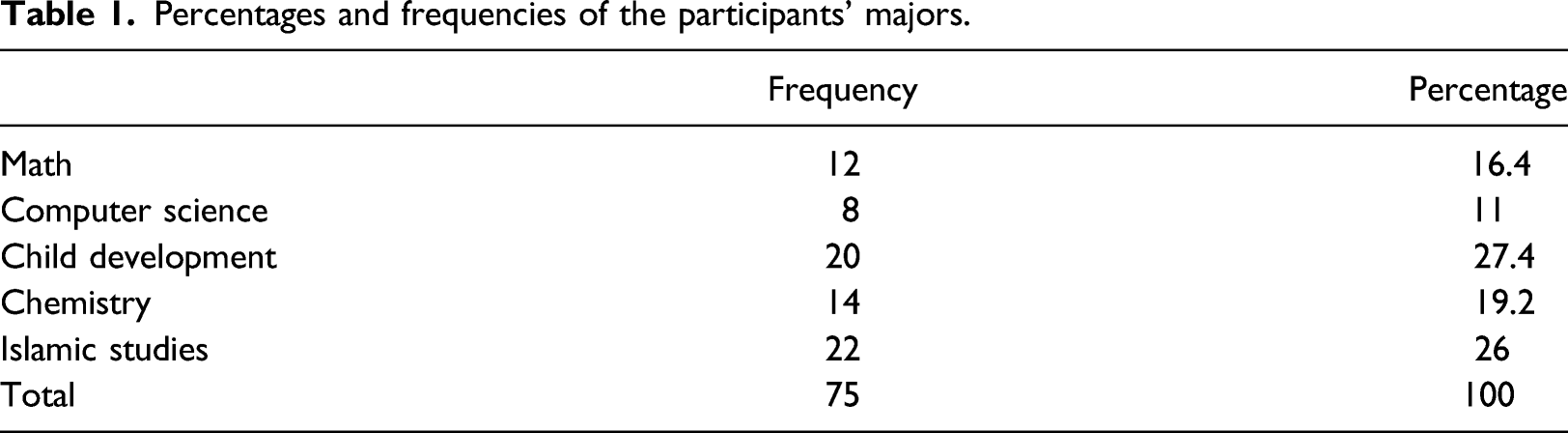
Percentages and frequencies of the participants’ majors.
Procedures
At the beginning of the semester, the researcher assigned students enrolled in the “Educational Technology and Means” course into different groups according to their academic majors, and each group chose a specific research topic. The study was conducted at the beginning of the semester, from September to November 2019. The group topics were about technology and its relation to other majors such as chemistry, child development, and math. After integrating the project-based collaborative learning approach, the students worked collaboratively in their groups. A correlational research method was chosen for this study. PowerPoint was used as a collaborative tool to present and convey the groups’ ideas and projects. The groups chose a topic related to the course (e.g., technology and children or technology and learning); were responsible for collecting information, images, video, or audio related to a specific topic; worked collaboratively using PowerPoint to arrange, gather, and complete the slides; and presented their final projects to the class. They were evaluated by the instructor as a group and individually while presenting their projects through an electronic survey.
At the end of the semester, an electronic survey using Google Forms was distributed by sending the link via blackboard and WhatsApp to the participants, accompanied by a consent form to participate in the study. Participation in the study took about 15–20 min to complete.
Instrument
The electronic survey consisted of five parts; each answered on a five-point Likert-type scale, with 5 = SA (strongly agree), 4 = A (agree), 3 = N (neutral), 2 = D (disagree), and 1 = SD (strongly disagree). The first part of the survey examined students’ perspectives on improving their 21st-century skills through project-based collaborative learning using PowerPoint. These skills include collaboration, critical thinking, communication, creativity, leadership, problem-solving, and responsibility. This was adopted from previous studies, such as Rizzo (2013), Hennele et al. (2014), and Alghamdi (2018).
The second part of the survey asked students to rank each of the seven 21st-century skills. The third part measured the attitudes of students toward learning collaboratively using PowerPoint to improve 21st-century skills. It consisted of seven items and was adopted from Alghamdi’s (2018) study and modified to fit the current study’s purpose.
The fourth part was an open-ended question asking the participants about their additional comments and opinions on if project-based collaborative learning using PowerPoint improved their 21st-century skills. The fifth and final part collected demographic information about the participants, such as their major, GPA, and level of experience with PowerPoint.
Data analysis
Different statistical methods were used to analyze the collected data, and the Statistical Package for Social Science (SPSS) software version 20 was used to analyze the data. All analyses were conducted using p < 0.05 as a level of statistical significance. The descriptive statistics were computed to analyze demographic data and provide an overview of their distribution.
For the first questions, a Pearson correlation coefficient was used to examine the relationship between implementing project-based collaborative learning using PowerPoint and improving students’ 21st-century skills. For the second question, descriptive statistics (means and standard deviations) were computed to examine the improved ranking of the 21st-century skills from the students’ perspectives. For the third question, an independent sample t-test was used to measure differences in students’ attitudes toward learning collaboratively using PowerPoint to improve their 21st-century skills in terms of their major.
Validity and reliability
According to Creswell (2009: 235), validity refers to whether it is possible to draw meaningful and useful inferences from scores on particular instruments. Frey (2006) defines validity as the extent to which an instrument measures what it is intended to measure. The survey items in the current study were developed based on content validity, and experts (Alshaiki, Faiza, Dammas, Osamah, Alhuraity, Ahmad, Ron, and Aust) in research and survey design and educational technology reviewed the survey structure. The experts’ comments and feedback helped improve the quality of the survey items and ensure that they were relevant to the current study’s purpose. The researcher accordingly made adjustments to the survey items to improve the quality of the survey items.
According to Creswell (2009: 233), reliability refers to whether the scores for items of an instrument are internally consistent over time and if there is consistency in test administration and scoring. Cronbach’s alpha was computed for three dimensions to ensure that the instruments were reliable and had internal consistency. Using SPSS, the Cronbach’s alpha coefficient was 0.896, 0.829, and 0.910 for the first, second, and third dimensions, respectively. Thus, based on the findings of the reliability analysis, revisions and adjustments will be made.
Results
First research question
The findings demonstrated that there is a significant and positive relationship between implementing a project-based collaborative learning approach using PowerPoint and improving students’ 21st-century skills from the students’ perspectives, with r (74) = 0.74, p < 0.05.
Second research question
As reported by the participants, the 21st-century skills that improved the most were: actively collaborating with others (M = 4.6, SD = 0.56); communication skills such as speaking and listening to others and debating (M = 4.6, SD = 0.60); problem-solving skills (M = 4.44, SD = 0.71); critical thinking skills (M = 4.42, SD = 0.71); leadership skills (M = 4.41, SD = 0.83); creative thinking skills (M = 4.41, SD = 0.76); and sense of responsibility (M = 4.40, SD = 0.81).
Third research question
Independent sample t-test.
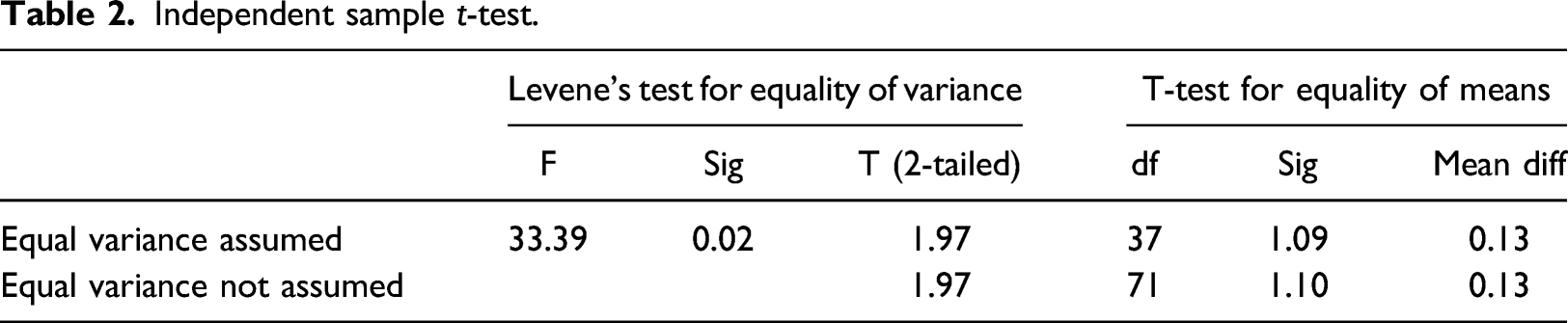
The study’s findings also revealed that the overall average of the participants’ attitudes toward learning collaboratively using PowerPoint to improve their 21st-century skills was high and positive (M = 4.46, SD = 0.67).
Additional findings
The fourth part of the survey was open-ended. Some of the students suggested using PowerPoint to work collaboratively rather than individually to conduct research. They also reported that not all instructors use PowerPoint or implement collaborative learning strategies in their teaching, but they depend on traditional teaching methods. These students suggested that instructors should integrate technology and strategies such as collaborative learning into the learning environment and use them to support students’ learning. Other participants reported that at the beginning of implementing the collaborative learning strategy, they did not like the idea and felt shy to work with other students with different majors, but grew to like the method and became more creative, and began to work as a team and become acquainted with students with different majors.
Discussion
The study’s findings revealed a significant and positive relationship between implementing a project-based collaborative learning approach using PowerPoint and improving students’ 21st-century skills from the students’ perspectives. This is consistent with findings from Jenkins (2006), Finholt and Teasley (1998), Bell (2010), Rizzo (2013), Hannele et al. (2014), and Fatimatus et al. (2020), who concluded that working collaboratively using technologies promoted and developed students’ 21st-century skills. Working in groups collaboratively using technology such as PowerPoint helped the students in this study work as a team, interact with each other, search for the group’s topic, exchange their ideas and opinions, and organize the materials together to present their project to the class. Additionally, they learned how to think analytically, and brainstorm to invent new ideas, and produce thoughts, and think critically to solve problems. Hence, applying the approach of project-based collaborative learning using PowerPoint to design, present, and convey the groups’ projects improved the students’ 21st-century skills from the students’ perspectives.
Additionally, the findings demonstrated that the 21st-century skills that improved the most were collaboration, communication skills, problem-solving, critical thinking, leadership, creative thinking, and responsibility. This supports the findings of Rizzo (2013) and Hannele et al. (2014), who revealed that students’ 21st-century skills, specifically collaboration, communication, critical thinking, creativity, digital literacy, leadership, and problem-solving skills, were improved when working collaboratively using technology, as reported by the instructors and students.
In the current study, 41% of the participants reported that collaboration was the most improved skill when working collaboratively in groups using PowerPoint. This is consistent with Hannele et al.’s (2014) findings. This is due to the nature of the collaborative learning strategy, which entails the learners meeting, working, learning, and interacting to produce and complete their projects according to their interests so that collaboration exists among students in that learning environment. The nature of this strategy was described by Blasco-Arcas et al. (2013), Barkley et al. (2014), and McDonough and Foote (2015).
However, in Hannele et al.’s (2014) findings, the students reported that they still need more collaboration skills but met the challenges and tensions when working in the group, such as providing and receiving feedback when disagreements occurred. One comment in the open-ended question in this study mentioned that at the beginning of the project, they did not like the idea of working in groups and with others with different majors. The participants reported that they did not feel comfortable and felt shy about working with new partners. After a while, as they met several times inside or outside the classroom to work together on the project, the participants began to work collaboratively to complete their project. This supports Osman et al.’s (2010) findings that demonstrated that students get to know each other in collaborative environments and accept diverse group members with common interests. Additionally, shy students can express their opinions and share and explore their knowledge and ideas with the rest of their class more freely.
The findings of the current study also indicated no significant difference in students’ attitudes toward learning collaboratively using PowerPoint to improve their 21st-century skills in terms of the students’ majors. This might be because all of the students were responsible for one part of the project, and as their goal was to finish and produce a project, the attitude of one student impacted the other attitudes in the group as subjective norms. This supports Shittu et al.’s (2011) findings, who concluded that subjective norms are a significant predictor of students’ attitudes toward using social software, and students’ attitudes were stronger in determining their intention to use social software. This is also consistent with the findings of Hannele et al. (2014) and Rizzo (2013), who reported that in collaborative environments, students have to set goals for their work, work as a group to complete their project, and make decisions on how to divide the project work. Additionally, the learning outcomes that emerge from learning collaboratively to accomplish group goals might encourage the participants to have positive attitudes regardless of their majors. This is consistent with the findings of Byun et al. (2012), who concluded that learning outcomes significantly affected the development of a positive attitude toward the collaborative project.
Additionally, in this digital era, learners are digital natives who are technology experts, especially when working with easy-to-use technology, such as PowerPoint. This supports the findings of Pratami et al. (2018), Lari (2014), and Bozarth (2013), who concluded that the ease of use of PowerPoint and its familiarity allows for rapid development and deployment of learning and increases students’ motivation to improve their understanding, which improves effectiveness while learning. This also supports Shittu et al.’s (2011) findings that demonstrated that perceived ease of use of the technology is a significant predictor of students’ attitudes toward using that technology.
Recommendations and future studies
From the study findings, some recommendations should be taken into consideration: 1. Educators should learn about the importance of 21st-century skills and how to prepare students in the modern world. The P21Skills (2009) concluded that educators must relearn new pedagogies for curricula, instruction, and assessments that promote 21st-century skills. 2. Educators must integrate 21st-century skills into core academic subjects and help students apply what they have learned to real-life experiences. According to the P21 (2009), students should master core subjects and apply the knowledge they have learned to real-life scenarios while integrating the 21st-century interdisciplinary themes, such as financial, economic, business, entrepreneurial, civic, health and environmental literacy, and global awareness. 3. Educators should develop curricula that include effective methods, strategies, and practices that contribute to enhancing students’ 21st-century skills. As stated by the US Department of Education’s Office of Vocational and Adult Education, community colleges must collaborate with local businesses and industries to develop curricula that result in mid- and high-level workforce training. Technical colleges are charged with developing a workforce that can meet current and future employment needs. However, to examine the success of these practices and strategies, comparative research among all educational institutions that design and implement 21st-century curricula is necessary. 4. Educators should incorporate educational technology and collaborative tools into learning environments to improve students’ 21st-century skills. Many emerging educational tools are effective in promoting and improving students’ 21st-century skills. This requires educators to begin thinking about harnessing and integrating technology into their teaching to improve digital learners’ skills. 5. Educators must improve students’ global awareness to help students live, work, interact, and communicate with others with different cultures, religions, and races. This can be achieved by developing a comprehensive framework for internalizing 21st-century skills. Future studies should conduct international comparative studies to examine students’ attitudes and perspectives regarding collaboration and cross-cultural communication. 6. Given the current pandemic situation, it is crucial to examine the impact of delivering course materials through electronic learning environments on students’ 21st-century skills. Further comparative studies examining the impact of online (virtual) collaboration and communications on students’ 21st-century skills as opposed to face-to-face (traditional) methods are also necessary. 7. As this study was conducted at a campus of female students, examining the difference between male and female students’ awareness and perspectives regarding the impact of educational approaches, strategies, and technology on their 21st-century skills is also necessary. 8. Other investigations should examine improving other 21st-century skills, such as literacy skills and other soft skills such as flexibility, initiative, and productivity. Additional investigations should also examine the effectiveness and impact of technologies other than PowerPoint on improving students’ 21st-century skills.
Footnotes
Declaration of conflicting interests
The author(s) declared no potential conflicts of interest with respect to the research, authorship, and/or publication of this article.
Funding
The author(s) received no financial support for the research, authorship, and/or publication of this article.
