



Abstract
This empirical study is conducted in a blended learning setting of a technology-focused private university in Bangladesh to offer a model that could help attain a comprehensive goal of blended learning. The main objectives of this study are to examine course design in a blended learning setting, strategies adopted by the course teachers to maximize students’ online interactions in a collaborative manner and how well these strategies had an impact on quality of blended teaching and learning in tertiary education. Drawing upon a quasi-experimental approach, qualitative data were collected by observing the teaching and learning activities of a course named ‘Bangladesh Studies’ over a four-month semester. Findings of this study suggest a model that would allow better student–teacher interaction in both synchronous and asynchronous modes of teaching and learning based on three sequential stages such as referring to and discussing online peer-group comments in the regular face-to-face classes in asynchronous mode (stage 1), off-campus synchronous mode of interactions to utilize students’ personal study hours (stage 2) and off-campus asynchronous mode of interactions to offer flexibility for collaborative learning (stage 3). It is argued that the model that has been offered could be useful in promoting innovative and contextual pedagogy which will essentially involve students in sharing, interacting and collaborating discussions for knowledge construction and hereby enable overall cognitive development of students in a blended learning environment.
Introduction
In the 21st century, integration of an online component with face-to-face teaching and learning has become indispensable in both basic and higher education. As a result of technological advancement and pedagogical transformation related to delivering contents and engaging students in collaborative learning, adoption of blended learning has increasingly gained currency, especially in higher education (Burgess et al., 2016; Shin et al., 2018). Blended learning has been found more effective than traditional e-learning in terms of keeping contact with the students and making classes interactive (Bicen et al., 2014; Boelens et al., 2018). This pedagogical technique is termed a ‘hybrid’ educational innovation, which brings together the past and future teaching and learning (Margolis, 2018). The role of technology here is crucial to support virtual student interaction with their peer groups for sharing ideas and collaborating knowledge construction, which is somehow limited in the face-to-face classes (Vygotsky, 1980). In many educational settings in Asian countries including Bangladesh, face-to-face teaching is predominantly practised, which is primarily teacher-centred where teachers deliver lecturers and students are expected to listen to what the teachers deliver, with limited scope of questing for clarification (Islam and Vale, 2012). Students mostly memorize what they learn from the lectures. Until very recently, such pedagogical practices in Bangladesh and elsewhere have been in decline due to adoption of communication technologies.
Effective communication among students, peer groups and teachers has been prioritized in contemporary teaching and learning. In the context of Bangladesh, it has become a common practice among many students to open a Facebook page for communication between fellow students and the teachers to exchange course-related information. However, interaction among students with regard to contents or assigned tasks is still very low in many courses (Sarker et al., 2019). Use of modern learning platforms such as Google Classroom, Zoom, whiteboard, Integrated Virtual Learning Environment, social media and Learning Management System (LMS) is still not widely popular in Bangladesh. However, many universities worldwide are using these emerging technologies because of its usefulness for managing students participation in forums, building communities of learners and encouraging peer-to-peer interactions (Camus et al., 2016; Northey et al., 2015). Students’ attitude was found positive towards Facebook for its interactive features, flexibility and accessibility (Barrot, 2021). Likewise, Google Classroom can improve group dynamics and ensure pace, ease of access and collaboration (Heggart and Yoo, 2018). In the context of Bangladesh, adopting appropriate technologies and compatible pedagogy for content delivery, including appropriate strategies for engaging students to work on the assigned topics in a collaborative manner, remains a major challenge for all universities. However, the recent COVID-19 pandemic has reinforced many private and public universities in Bangladesh and globally to adopt blended learning with specific emphasis on online teaching and learning through virtual collaborative communication between teachers and students.
Blended learning has increasingly gained popularity in higher education, leading to a change in pedagogical approaches from one-directional instruction to a student-centred interactive approach with the support of technological modalities. It has already been recognized that benefits of blended learning are manifold. Online interactions increase students’ practical skills in case of technical courses (Wilson and Greig, 2017) and foster a positive attitude towards the use of interaction (Aristovnik et al., 2016) and satisfaction with interactive learning (Lee et al., 2017). Several studies have found that blended learning has significant impact on students’ learning and academic performance in different courses compared to traditional face-to-face classes (Sajid et al., 2016; Shu and Gu, 2018; Vo et al., 2017). In order to ensure a successful blended learning environment, it is important to ensure appropriate infrastructure, suitable pedagogy, student collaboration, faculty commitments and the customization of technical elements according to the maturity level of students (Boelens et al., 2018; Porter and Graham, 2016). Despite all these advantages of blended learning, however, Bangladeshi universities have been slow in integrating an online component with the face-to-face mode of teaching and learning. At this backdrop, the objectives of this study are as follows: firstly, to examine the strategies adopted by the course teachers for engaging students in their learning in both face-to-face and e-learning settings; secondly, to explore the impact of these strategies to make a collaborative educational approach in higher education and thirdly, to propose a model of blended learning that will be potentially useful for ensuring student-centred teaching and learning. By examining a blended course offered in a university in Bangladesh, this article offers a specific pedagogical model which is considered to be instrumental in promoting shared interaction and collaborative discussions for knowledge construction among teachers and students in an interactive teaching and learning environment.
Conceptualizing blended learning
Blended learning is an integration of face-to-face and online component of education (Margolis, 2018). It is adopted to support interactions between students in the online mode and improve learning outcomes (Bojović, 2017). Research studies in blended learning have documented that it has reoriented the pedagogical approaches in higher education from one-directional instruction to student-centred interactive modalities (Burgess et al., 2016; Shin et al., 2018). In a blended learning setting, instructional support depends on two factors such as informational support and process guidance where informational support is negatively related to social participation while process guidance positively determines social participation (Cocquyt et al., 2019). The course teachers may use various types of support platform for student engagement and socialization through a blended approach. From a sociocultural perspective, synchronous engagement with multiple e-learning technologies facilitates better knowledge construction of the students (Sobko et al., 2020). Shu and Gu (2018) conducted content analyses of 31,607 documents, which were indexed in the Web of Science database in the field of distance education domain using co-word analysis techniques, and found that the concepts of ‘electronic learning’ and ‘blended learning’ had the highest frequency. It is argued that blended learning arrangements should be designed considering the maturity and level of study of the students, paying particular attention to content delivery strategies and learners’ needs (Boelens et al., 2018). It is also argued that blended learning is better than online learning when it comes to teaching undergraduate professional courses (McCutcheon et al., 2018; Bicen et al., 2014). In another empirical study, Sansone et al. (2018) reported that there had been several thousand messages posted due to peer tutoring in the online component of a blended learning course. By conducting a three-round action research, Li et al. (2020) identified that effectiveness of the blended synchronous teaching and learning significantly depends on how students put priority on their needs, whether they actively participate in the online mode of interaction and demand quality of the technologies adopted by the lecturer.
Advantages of blended learning
Blended learning has been found to have numerous advantages. Wilson and Greig (2017) reported that students’ interaction in online component improves their practical skills because of the delivery of relevant instructional videos of several technical courses. Another study conducted by Aristovnik et al. (2016) found out that e-courses, added with face-to-face teaching, and the teacher’s responsiveness on managing both face-to-face and online modes had significant impact on the students’ academic performance. On the other hand, a study conducted by Shu and Gu (2018) revealed that interaction in the face-to-face classroom was more in-depth than that in the online mode. In their study, students’ interactions were found to be more effective to achieve course goals when it was focused on their real lives and when they can relate it to their course of study. It is thus argued that blended learning offers an opportunity for the teachers to gain a better understanding of the students which will further enhance students’ effective engagement in learning.
With the advent of communication technologies, blended learning has become a common practice in colleges and universities worldwide. Flipped learning (FL) is a new form of blended learning where students individually watch online lectures before coming to the face-to-face classes and then engage in classroom learning activities and interact with peers and instructors. The flipped learning method for learning algebra has been experimented in a Korean university, which resulted in a significant increase in the maturity of mathematical competencies, quality of reflections and satisfaction of the students (Lee et al., 2017). Beyond mainstream education at the tertiary level, professional development training is also conducted using the blended model. In an action research, Çardak and Selvi (2016) conducted teacher’s training through the blended approach and confirmed a positive increase in learning and interaction among peer groups and between students and instructors. So (2015) applied the blended approach for teaching and learning English as a Foreign Language (EFL) and found a positive impact on fluency and accuracy in writing English as a second language. Prifti (2020) found that user-friendly features of blended learning enhance critical thinking ability of the students. Overall, blended learning has been found effective in enhancing the quality of learning of the students regardless of their grade levels if continuous support is provided by the course teachers (Bouilheres et al., 2020; Yang et al., 2019).
Emerging technologies in blended learning
Previous studies have shown that apart from using the LMS, many higher educational institutions have embraced emerging platforms for conducting blended learning such as Google Classroom and social media. Camus et al. (2016) examined effectiveness of the LMS and social media tool Facebook for managing students participation in forums. The authors found that different technology forums can affect classroom activities and student learning in various ways. They argued that, while Facebook may be better at fostering student collaboration and encouraging peer-to-peer interactions, the LMS may be a more effective tool for encouraging students to develop coherent arguments and apply course content in other contexts. Another study by Northey et al. (2015) examined the use of Facebook to facilitate asynchronous learning opportunities as complementary to face-to-face interactions which enabled a stronger learning ecosystem. Moreover, students who participated in both face-to-face on-campus classes and asynchronous online learning opportunities were more engaged than the students who only attended face-to-face classes. These findings also suggest that participation in the asynchronous setting relates significantly and positively to students’ academic performance as reflected in their grades. In fact, this student-centred learning approach increased student engagement and had a positive impact on academic achievements. Very recently, Barrot (2021) claimed that students who used Facebook-based e-portfolio have outperformed those from the conventional portfolio group. These results indicate that attribute of Facebook’s interactive features, flexibility, accessibility as well as its ability to expose students to social pressure contributes to better interaction and collaborative learning. In fine, Facebook is an effective pedagogical and a promising educational tool to conduct teaching and learning in any adverse situation especially in underdeveloped countries (Ramadan, 2017).
Several recent studies have discovered usefulness of Google Classroom as it increases student participation and learning, improves group dynamics, and ensures pace, ease of access, collaboration and student voice (Heggart and Yoo, 2018; Ali et al., 2021). Nonetheless, Google Classroom can improve the reading and writing performance of the students. These attributes are supportive towards positive attitudes of using Google Classroom in terms of its ease of use, usefulness and accessibility (Albashtawi and Al Bataineh, 2020). The authors recommend that future studies should analyse the effectiveness of Google Classroom with respect to other country contexts.
Teacher’s role in blended learning
In a blended learning setting, teachers have a significant role to manage both face-to-face and online components of student learning. Since a paradigm shift has taken place in various blended learning forms, ranging from pedagogy to the teacher’s role (Bogoryad and Lysunets, 2014; Huang, 2019), innovative strategies need to be adopted for successful implementation of blended learning. In a blended English course, Huang (2019) realized that in face-to-face component of learning the cognitive role of the teacher is very important, while the managerial role of the teacher is most notable in the online component of the course. The teacher’s role has been found crucial for planning multiple activities to ensure student engagement, which requires more time from the course teachers (Pierce, 2017). Austin, Rickard and Reilly (2017) examined teachers’ views on implementation of a blended programme consisting of face-to-face and online components, and they found that this approach greatly enhanced interactive learning and students’ academic performance. Similarly, Schechter and his team examined the impact of the teacher’s presence on the online component, and they found that students were highly motivated to accomplish their work with the presence of their course teacher (Schechter et al., 2017). Moreover, students appreciated the new role of the teacher for learning algebra in a blended setting and realized that online classes were better than face-to-face classes. Aligned with the abovementioned studies, Monteiro and Morrison (2014) claimed that specific and intensive guidance is required from course teachers to make sure the collaboration among fellow students. The study by Porter and Graham (2016) suggests that sufficient infrastructure, technological and pedagogical support, assessment strategies, faculty commitments and administrative support are required for successful implementation of blended learning. Furthermore, decision-making by managers and teachers and ‘joined-up thinking’ about the use of technology are essential to integrate the multiple contextual factors that influence how technology is used in teaching and learning (Kirkwood, 2014).
Bogoryad and Lysunets (2014) have focused on the changing role of the teacher in the new learning environment, which includes competence and commitment of the teacher in achieving blended learning. Hew (2016) has mentioned five important aspects preferred by students in a blended learning environment such as (1) problem-centric learning with clear expositions, (2) instructors’ accessibility and passion, (3) active learning, (4) peer interaction and (5) helpful course resources. Additionally, Levin et al. (2013) have concluded that the role of the teacher and their engagement and participation in students’ activities, use of technology, socialization, etiquettes and nonverbal cues are key issues for blended learning. In the context of India, Singh (2016) has found several challenges faced by the teachers in implementing e-learning such as lack of awareness of the stakeholders, lack of proper implementation environment and insufficient support for the teachers in their teaching–learning processes. It can thus be argued that the professional development initiative is required for the teachers to actively conduct blended learning courses. Evans et al. (2020) reported that teachers successfully engaged with blended learning to support their student and made extensive use of features and tools of the adopted LMS after their participation in a professional development training course. Previous studies (Antwi-Boampong, 2020; Strom and Porfilio, 2019) have also highlighted the necessity of professional development training for the teachers for better understanding of the blended learning pedagogy and improved teaching practices for overall motivation and willingness of the teachers. Overall, it can be said that teachers have to play a significant role in successfully attaining the goal of blended learning. Their commitment, technical know-how and enhanced interaction with the students will significantly ensure a successful outcome of blended learning environment.
Connecting blended learning to interaction and academic performance
Compared to traditional classroom learning, the blended learning approach helps achieve better academic performance with a relatively small standard deviation (Shu and Gu, 2018). Vo et al. (2017) studied the impact of blended learning on the academic achievement of tertiary students and found out that blended learning is significantly associated with greater learning performance compared to traditional classroom practices (Vo et al., 2017). Al-Qahtani and Higgins (2013), however, found no significant difference between e-learning and traditional learning in terms of students’ achievement. Another study conducted by Sajid et al. (2016) examined students’ academic performance and attitude towards blended learning and flipped classrooms in comparison with traditional teaching where most of the students reported that blended learning was helpful for examination preparation and concept clarification. However, quantitative data did not show any significant increase in the academic performance of students taught via the blended learning method. They argue that flipped classroom with active student-centred learning may enhance students’ critical thinking and retention abilities including the application of knowledge in a practical context.
The foregoing conceptualization of blended learning and its associated aspects reveal that significant changes have occurred in educational settings in the current digital era relating to the design of pedagogical methods, content delivery, strategies for student collaboration and responsibilities of course instructors. Findings of most of the studies are encouraging in a sense that blended learning, if applied properly, enhances academic performance and better learning of the students. However, there is a dearth of empirical research which needs to be conducted focusing on multi-dimensional issues of blended learning such as innovative strategies for the transformation of a teacher-centred to a student-centred approach, design of the task set for student interaction and cognitive development of students as a result of the interaction. Our empirical study is set to contribute to this gap in the literature and provide a model of encompassing blended learning in higher education.
Research design and methods
This study is qualitative in nature and was conducted at an Information and Communication Technology (ICT) based private university in Bangladesh. This university cultivates the use of online platforms for teaching and learning as an integral part of face-to-face teaching. Most of the students and teachers are familiar with online platforms such as LMS Moodle, Google Classroom and learning feedback systems. For the purpose of this study, blended learning activities of a course named ‘Bangladesh Studies’ had been examined for a period of one semester participated by 199 second-year undergraduate students of Computer Science and Engineering (CSE) and Textile Engineering (TE) departments. Among 199 students, 111 were from the department of CSE and rest were from the department of TE. Students of CSE were divided into three sections, for example, A (39), B (38) and C (34), while students of TE were divided into two sections A (43) and B (45).
Considering the objectives of this research, qualitative research methodology was considered to be the most suitable research technique. Qualitative techniques were used in this study to investigate what strategies were adopted by the course teacher in both face-to-face and online settings to engage students in their learning in a collaborative manner and what were the impacts as a result of adopting these strategies. Evidences of teaching and learning activities were collected from the two learning environments through observations and conducting interview. Students’ online interactions in the form of textual messages were also collected, and the frequency of messages of individual student was recorded for analyses using qualitative techniques.
As part of the course requirement, two face-to-face classes were conducted every week. In addition, the course teacher designed and managed an online component for student interactions using Google Classroom. Using both synchronous and asynchronous modes of learning, the course teacher engaged students in online discussion. Students were provided with several questions/tasks developed by the course teachers for online interaction relevant to the topic taught in the face-to-face classes. The following data were collected throughout the semester: Teaching and learning activities of the Bangladesh Studies course were observed and recorded in both face-to-face and online settings, including the methods and strategies that the teacher adopted for this blended learning setting; frequency of online message posted by each student in each of the two modes (synchronous or asynchronous) of interaction; frequency of messages posted by the course teacher; textual messages of the students’ online interaction; discussion tasks provided by the course teacher and interview with the course teacher about the reasons for managing online interactions in the face-to-face class and using social media for involvement of students in their learning.
Several ethical issues were maintained by the researchers for collecting data from the participants. A consent form was given to the course teacher for observation of his delivery of lectures in the on-campus face-to-face classes and before conducting interviews which were duly signed by the course teacher. In addition, students were also informed about the objectives of conducting this study, and their consent was taken about monitoring of their learning activities in the Google Classroom and the social media.
The data were analysed using qualitative techniques. The data analysis included the following: Content analysis of the course teacher’s activities to categorize the strategies adopted by the course teacher; frequency of online messages posted by the students in each mode (synchronous and asynchronous) of interaction using MS Excel; thematic organization of strategies adopted by the course teachers for formulating discussion tasks to promote student interaction; course teacher’s tasks (questions) to students, both criteria and cognitive level, were analysed and content analysis of online messages was conducted to find out the pattern of exchange of messages among students during topical discussion.
This study has some limitations as well. The content analysis of more than 9000 online messages posted by the students during the off-campus study was done manually rather than using quantitative data analysis software. Such a manual handling of the data might have slightly diminished the reliability and accuracy of the data.
Findings and discussion
One of the major objectives of this study is to explore the effective mode of communication and appropriate strategies for maximizing student interaction in a blended learning setting. The data gathered from observation of the course teacher’s activities revealed the following three modes of online interaction: Synchronous mode: referring to and discussing online comments in regular face-to-face classes. Synchronous mode: off-campus online interaction from 10 p.m. to 12 p.m. Asynchronous mode: weekly online interaction on the tasks assigned.
Plan of online component of course delivery and interaction throughout the semester.
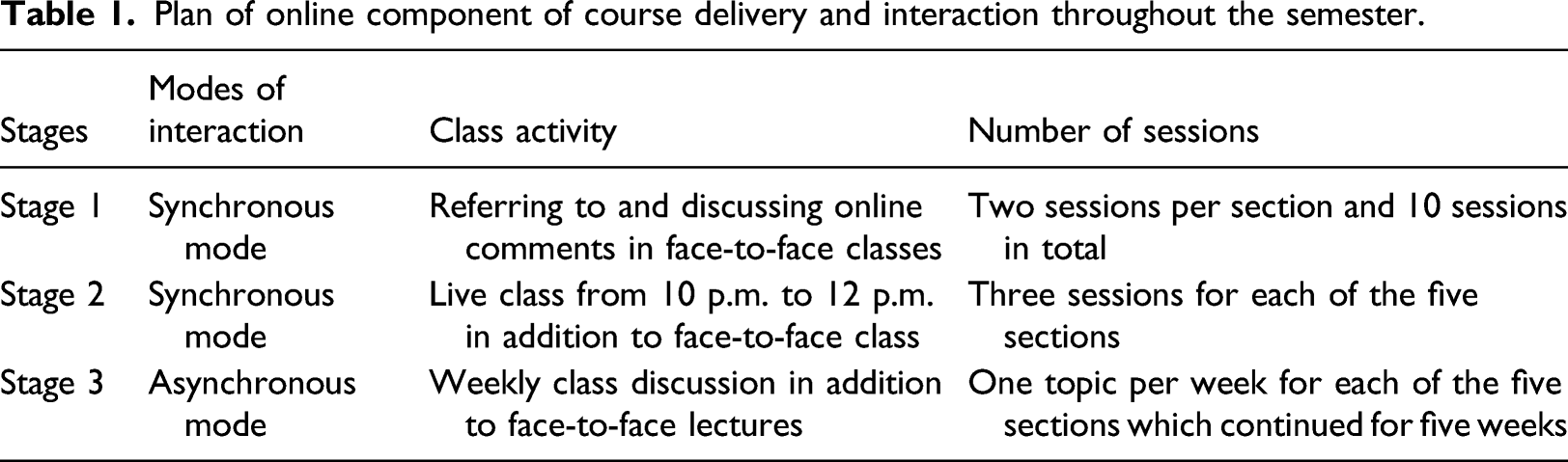
The above table illustrates how the course teacher managed interactions in three different stages. Since students were not familiar with the benefits of interaction (Islam et al., 2016), the course teacher organized online interactions into two successive classes. In each session, the course teacher gave a short lecture on the topic of the day and gave several tasks (questions) in Google Classroom for interaction among the students. According to the teacher’s instruction, students brought either their laptops or mobile phones in the face-to-face classroom to perform the assigned tasks. This opens up an opportunity for the students and teacher to engage in discussions on what they had posted online earlier. Students had the opportunity to ask questions to the teacher as the teacher observed their posts in Google Classroom.
In Stage 2, the course teacher adopted another strategy for involving students online where students were asked to participate in live Facebook interaction with the fellow students from 10 p.m. to 12 p.m. For the purpose of this study, we refer to this specific use of Facebook as Facebook time. On the same day, the course teacher conducted a short face-to-face session with the students to give an overview of the selected topic. Both the students and course teachers came to a consensus that they would utilize their Facebook time for their study purpose. The course teacher posted several tasks (questions) in Google Classroom related to the topics covered in the face-to-face class. Three successive sessions were conducted in the same manner, and students were found to be excited to be online while discussing their assigned topics with other fellow students and the course teacher.
In the third stage, the course teacher conducted one 90-min face-to-face session in a week instead of two face-to-face sessions per week. He then posted discussion tasks in Google Classroom for the students to be involved in interaction with other students. The students were also encouraged to ask questions and clarifications from the course teachers virtually. During the 13-week semester, classes in this pattern were conducted for five weeks, that is, one face-to-face class and online discussion in Google Classroom for the whole week.
Throughout the semester, the course teacher posted 32 tasks for involving students in online interaction. The role of the course teacher is very crucial here to formulate innovative, imaginary and thought-provoking questions so that students get interest in discussion. While interviewing the course teacher of ‘Bangladesh Studies’, he informed that the following strategies were found useful to formulate questions for successful student engagement: Conceptual questions: These questions require brainstorming to answer and create an opportunity for critical thinking. These sort of questions may evoke students to post messages online. Accessible question: These questions are relevant to the past experience of the students which they acquired during the course development or beyond the scope of the course. Contradictory questions: These questions engage students to think critically.
An example of a task (question) given by the teacher is below: Does the judiciary organ of your country have freedom?
Number of messages posted by students in response to the question: ‘Does the judiciary organ of your country have freedom?’.
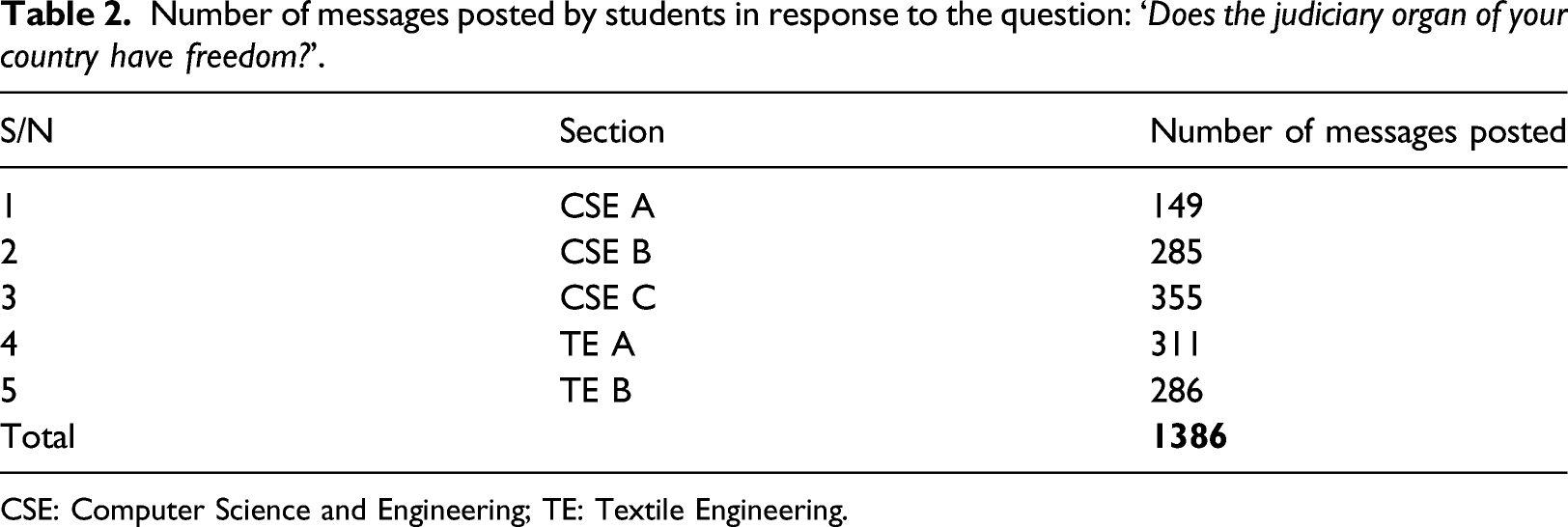
CSE: Computer Science and Engineering; TE: Textile Engineering.
Examples of discussion questions according to Bloom’s cognitive levels.
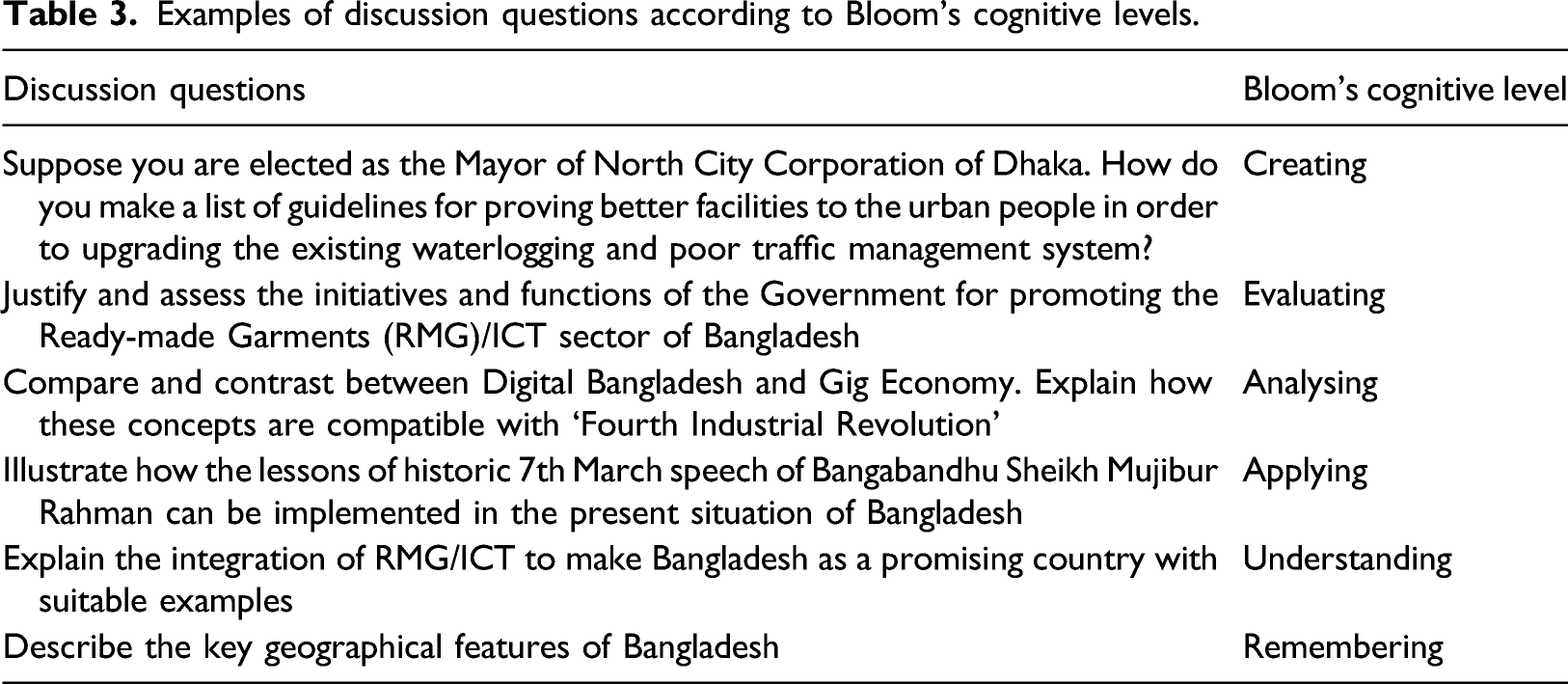
The percentage of the questions aligned with each of the six domains is shown in Figure 1. Analysis of the question as per Bloom’s cognitive level.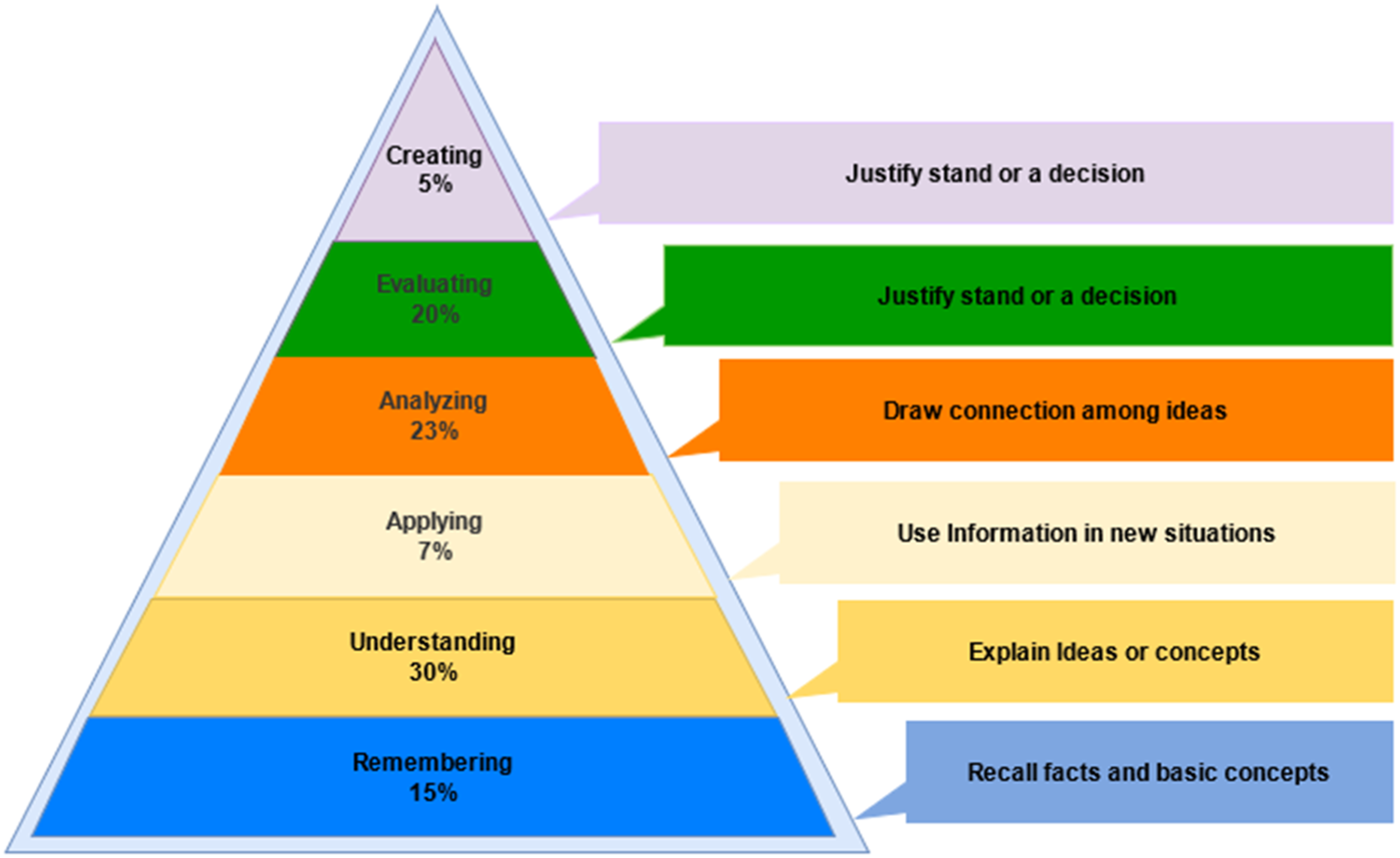
The above figure indicates that the teacher emphasized several higher-order thinking skills and abilities of the students such as analysing (23%) and evaluating (20%). The course teacher focused more on understanding (comprehension, prediction, discussion, etc.) than remembering (recalling facts, finding, telling, etc.).
Participation in Google Classroom
Interactions at different modes of blended learning.
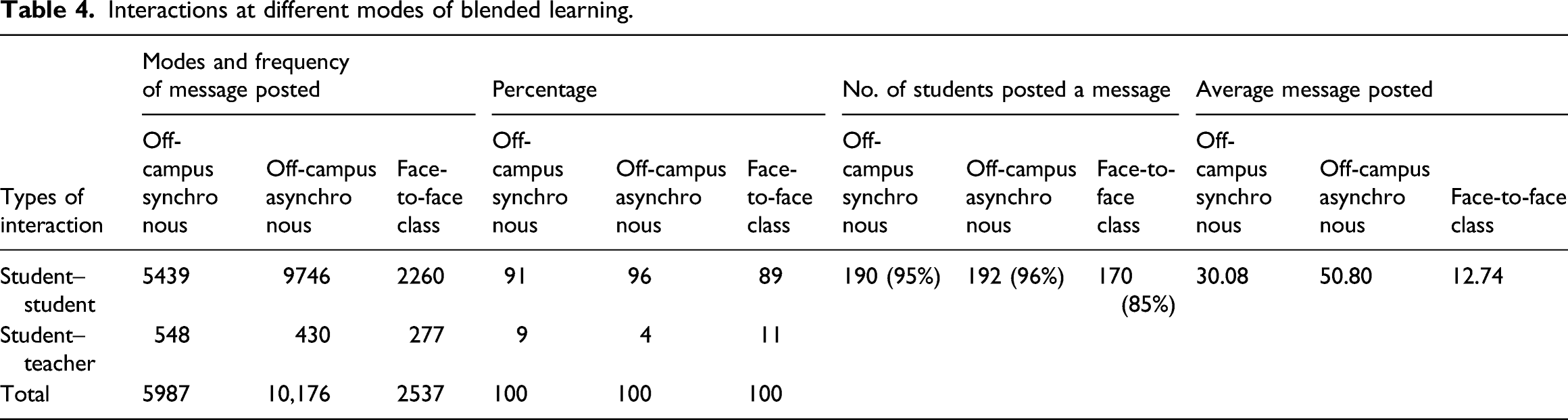
Out of a total of 199 students (in five sections), 170 posted 2537 online messages in two classes. So, a large number of students (85%) posted online messages during two face-to-face sessions. Online interaction between students and the course teacher was also considerably higher. Similarly, online messages posted by the students during another synchronous mode, that is, between 10 p.m. and 12 p.m., were also very significant. The number of messages posted during the off-campus synchronous mode was found to be huge. The rate of messages posted by the participants (both the students and course teacher) is 30. This rate of message posting is much higher than the interactions during the two face-to-face sessions. In the asynchronous mode, the participants (both students and course teacher) were also very active in Google Classroom for a duration of five weeks.
A whopping 96% of the students posted a message during an off-campus weekly online discussion on the task given by the course teacher (Table 3). The number of messages posted is particularly high in this case. The average number of messages posted was also extremely high compared to the postings done in the other two modes of online participation. The content analysis of the huge number of online messages was quite time-consuming. As a result, for the purpose of content analysis, the researchers selected 9746 online interactions that took place between students in the weekly asynchronous mode of learning. The following patterns of online participation were derived from the content analysis of the textual messages of the students. The level (percentage) of these categories (patterns) of exchange of messages among students is shown in Figure 2. Patterns of online participation of the students.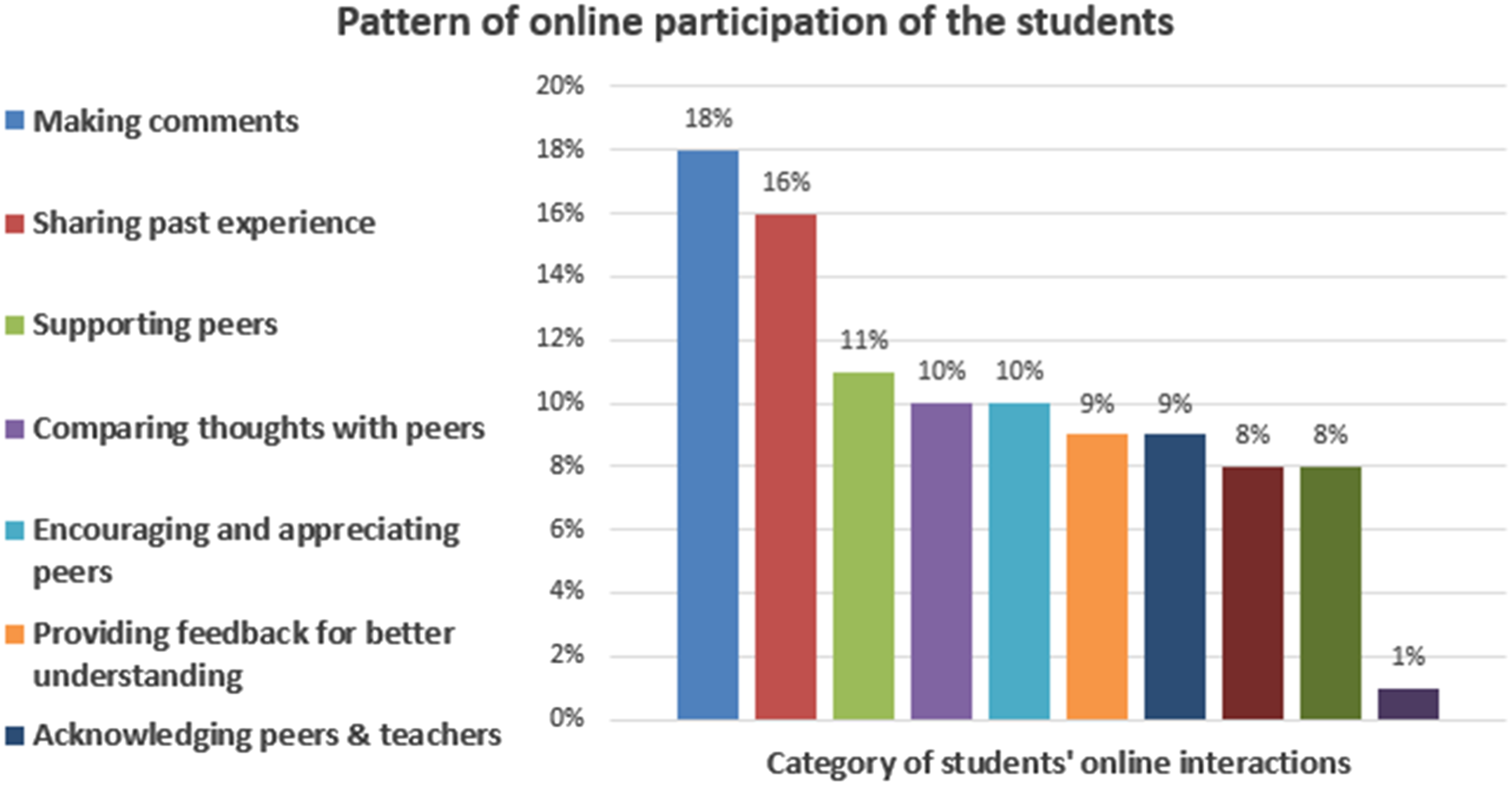
The above findings highlight that rather than disagreeing with peers on a particular issue, most of the students either commented positively or constructively to the response of the fellow students. Students usually responded to the teacher’s task in the first instance and then replied to the fellow students. It is worthwhile to note that students were involved in topic discussions actively by providing feedback to others for understanding the task, giving examples to clarify an issue, suggesting relevant resources for further understanding, offering support to peers for their comments and views and acknowledging and appreciating fellow students for articulating their scholarly support to each other. Such an engagement among peer groups and teachers provides a congenial environment in sharing and constructing knowledge. An example of such exchange of messages among three students in responses to the teacher’s task is given below: Teacher’s Task: How can developed countries be more accountable to protect the environment?
Student 1 responded to the Teacher’s task: ‘Developed countries are mostly responsible for the degradation of the environment. Industrialization has driven the development of these countries like America, China, and Russia. A side effect of industrialization is environmental degradation. The burning of carbon fuels, emission of carbon-dioxide, unplanned framing, unplanned waste management of industries, etc. are the factors that drive climate change and are the result of Industrialization. Underdeveloped and developing countries are victims of climate change, which is mostly caused by developed countries. Their very way of becoming developed has led to global warming. That is why they are more accountable to protect the environment and stop global warming’.
Student 2 responded to the Teacher’s task: ‘I think the Developed countries are responsible for environmental degradation. Major causes of environmental pollution are modern urbanization, industrialization, over-population growth, deforestation etc. The smoke emitted by vehicles, increasing carbon-monoxide, Chlorofluorocarbon, the burning of carbon flues, unplanned framing, unplanned waste management of industries etc. all of them are results of industrialization. For these reasons people suffered different kinds of diseases like skin diseases, diseases... ..’
Student 3 responded to the posting of student 1 and student 2: ‘Both of my friends have written well. They have highlighted many points about how developed countries are harming the environment. The examples the provided include urbanization, industrialization, overpopulation, deforestation etc. In my answers, I’ve mainly focused on the industrialization aspect of the developed countries. Both my friends have mentioned the greenhouse effect in their answers. I missed mentioning that. Both of my friends have written quite well. I’d suggest Sonia Akter should try to understand the question first and then answer. But her answers were pretty good too. And I’m really impressed by Shamima Azad’s answers. They both have less grammatical errors. My suggestion will be to make the answers more resourceful so that they cover those things that I’ve missed and thus broaden my outlook’.
The online message correspondence illustrated above shows that student 1 and student 2 responded to the teacher’s task using their past experiences. Thereafter, student 3 made positive and negative comments on the postings of student 1 and student 2. Besides, student 3 gave justification for the comments made by the two students. Finally, student 3 appreciated the peer’s effort by thanking them.
It has been quite evident in the foregoing discussion that the course teacher designed and integrated three online components (two synchronous and one asynchronous) for promoting blended learning. These include real-time online interaction in face-to-face classes and off-campus personal study hours between 10 p.m. and 12 p.m. The course teacher adopted these strategies keeping in mind the unfamiliarity of the students about the benefits of peer-group interaction. The off-campus weekly online discussion was the third component in the asynchronous mode, which was, in fact, a typical e-learning programme without physical meetings with the course teachers (Authors 2, 2012). Apparently, the course teacher’s efforts led to a pedagogical change from one-directional instruction to a student-centred interactive approach (Burgess et al., 2016), thereby creating a technology-supported environment (Shin et al., 2018; Shu and Gu, 2018) in the university. Although referring to and bringing in online discussions as examples in the face-to-face classes is not new in educational settings, it is absolutely an innovation in the context of many third world countries including Bangladesh. The presence of the teacher in the face-to-face class indicates an encouragement and motivation for the students (Schechter et al., 2017). It worked as a catalyst for attitude-building of the students towards posting a number of messages (Sansone et al., 2018) in Google Classroom. Findings of this study indicate that the course teacher’s role in both face-to-face and online components was impactful (Huang, 2019). Since the students have an inclination to use social media even at their personal study time, live interaction between 10 p.m. and 12 p.m. is an additional advantage for them. Integration of all these strategies and monitoring students’ class discussion required great time and effort on the part of the course teacher (Pierce, 2017).
With the opportunity to create an interactive on-campus and off-campus learning, the course teacher adopted an important strategy by formulating strategic discussion tasks for the students. These tasks have contradictory, conceptual and need-based attributes, prompting a huge number of messages that were posted online (Authors 2, 2012) and encouraging interactions among students (Ellis et al., 2016). In fact, these attributes of the discussion tasks stimulated brainstorming on the topic to find out an answer to the questions (Authors 2, 2016) and post text messages in Google Classroom. Encouragement from the course teacher to interact with fellow students and his physical as well as online presence for facilitating discussion were found to be important strategies for student engagement. In doing so, the course teacher attempted to fulfil the learners’ need (Boelens et al., 2018) for promoting student-centred environment. Finally, working on the teacher’s tasks collaboratively enabled cognitive development of the students (Bloom, 1956).
It was quite interesting to see several thousand text messages (Table 3) which were posted by the students in three different modes of this blended learning initiative. The patterns of interaction (Figure 2) among the students indicate their better performance (Shu and Gu, 2018; Vo et al., 2017) with regard to the broader understanding of the subject. Students also helped each other by making comments on fellow students’ posting, giving explanations, providing feedback and supporting the viewpoints of others, which is a kind of peer tutoring for understanding the tasks assigned (Sansone et al., 2018). This pattern of interaction clearly indicates peer-group dynamics (Forsyth, 2009) in Google Classroom. In addition to student–student interactions, frequent intervention by the course teacher strengthens the relationship between the course teacher and the students (Austin et al., 2017; Kim et al., 2016), which, in turn, contributes to boosting knowledge gain and achievement of the course goals (McCutcheon et al., 2018). The course teacher’s active involvement had a positive impact on the online messages posted by the students, which positively enhance their learning outcomes (Bojović, 2017). In addition, patterns of interaction indicate that effective learning can be attained through the integration of prior knowledge and shared understanding between the group members in a teaching–learning environment (Kalina and Powell, 2009).
A proposed model for blended learning
Based on the findings of this study discussed above, the following model of blended learning has been proposed (Figure 3). A model for student-centred blended learning.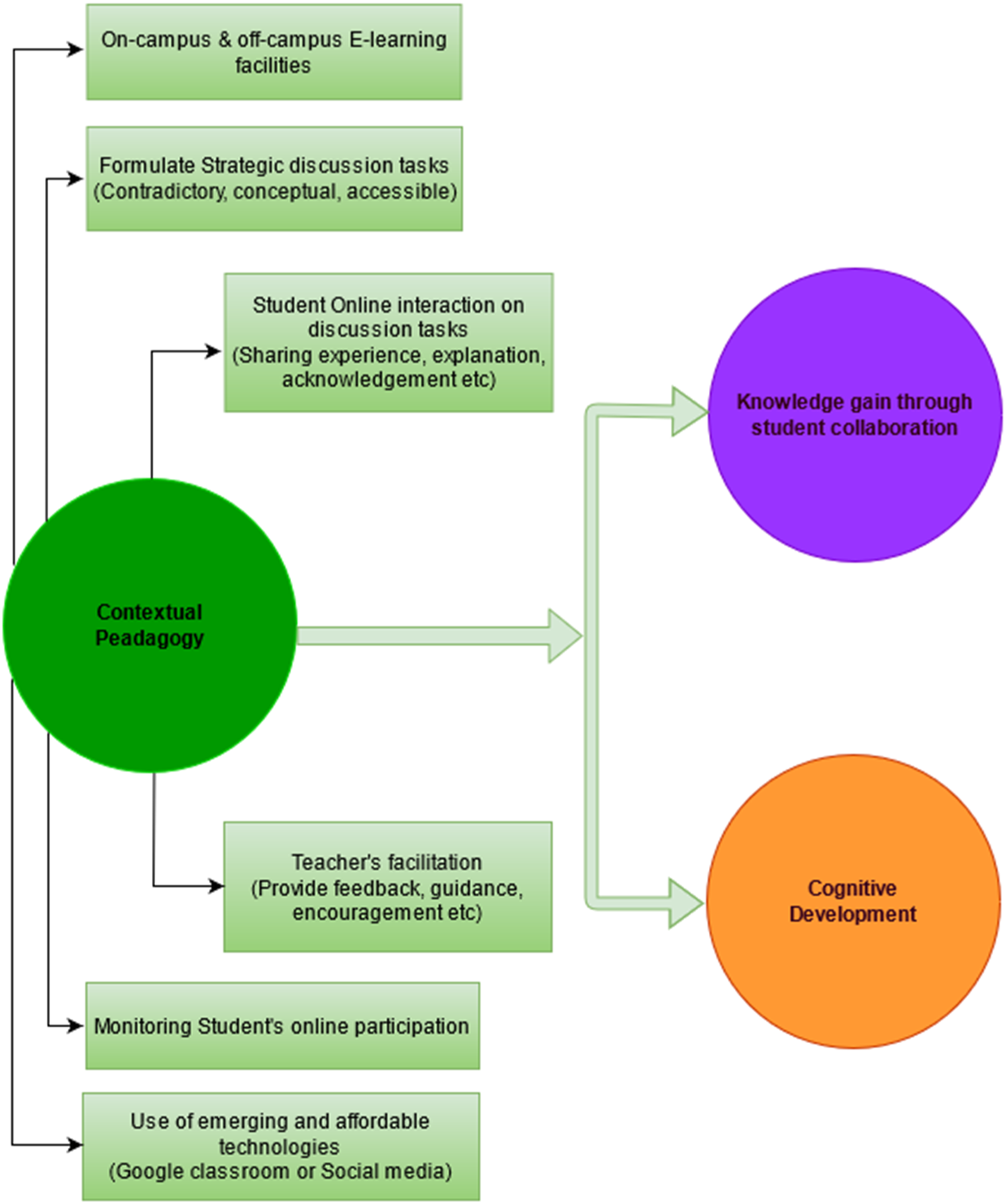
This model envisages the articulation of contextual pedagogy, which is a means of acquiring knowledge and skill on the subject matter and cognitive development of the students. The contextual pedagogy highlights the teacher’s role in both online and face-to-face settings. These require creating an interactive environment in both face-to-face and Google Classroom settings, preparing online lecture materials as per certain rules, developing strategic discussion tasks for the students, facilitating student interaction, monitoring students’ participation in the topic discussion, ensuring contribution from all students by adopting innovative and need-based strategies and evaluating the achievement of the course goals. The innovative strategies adopted by the course teacher promote interaction among peer groups by creating suitable class environments and constructing strategic discussion tasks. This model corroborates with Bloom’s cognitive levels (Figure 1) that highlights the significance of involving students in a discussion on the teacher’s tasks in a collaborative manner. Such peer-group collaboration, online participation in discussion (Figure 2) and face-to-face classes for the acquisition of knowledge and skill enable better cognitive development of the students on the subject matter, thereby ensuring a student-centred blended learning (Figure 3).
The online lecture serves as intensive guidance for the students (Monteiro and Morrison, 2014) to work on the discussion questions. Apart from the course teacher’s strategies, several tools may also be used for student interactions. Now-a-days, Kahoot, Kay Laurence, Quizlet, etc., are considered as interactive tools, which may facilitate easy access to course materials, take class tests and give students a chance for peer assessment. This model has also highlighted that successful implementation of blended learning heavily depends on the capability of the course teacher to blend online and face-to-face learning by ensuring optimum student interaction.
Conclusion
Drawing upon examples from a course named ‘Bangladesh Studies’ offered at a private university in Bangladesh, this study has demonstrated how a course teacher can promote blended learning environment by combining elements of both on-campus and off-campus modes of teaching. For promoting an interactive learning environment for the students, three modes of teaching have been experimented such as referring to and using examples of online discussion in face-to-face classes, real-time class discussion between 10 p.m. and 12 p.m. and off-campus weekly class discussions. During these three settings, students were given a set of questions to respond individually and in groups to promote collaborative learning. Characteristics of these tasks (questions) were examples of contradictory, conceptual and accessible questions, which were compatible with Bloom’s cognitive levels. Involving students into topical discussion enhances their capability of collaborative learning attributes such as sharing past experiences, supporting peers, providing feedback for better understanding, encouraging and appreciating peers and giving suggestions to each other. Drawing upon these findings, this study presents a model for promoting a student-centred blended learning environment, which signifies that contextual pedagogy (independent variable) acts as a catalyst for student collaboration for the acquisition of knowledge and skill which enable cognitive development of the students. This model can be an effective guide for teachers in promoting blended learning and interactive teaching environment in their institutions. Further research may be conducted to examine the effectiveness of this model in other university contexts.
Footnotes
Acknowledgements
Authors would like to thank Md. Sabur Khan, Chairman of Board of Trustee, Daffodil International University, for his kind interest and invaluable support for undertaking this study. Authors would also thank Professor Dr Mohammed Shamsul Hoque, Department of English, Daffodil International University, Dhaka, for providing insightful comments and thoughtful suggestions for improving the overall argument and organization of this article.
Declaration of Conflicting Interests
The author(s) declared no potential conflicts of interest with respect to the research, authorship, and/or publication of this article.
Funding
The author(s) received no financial support for the research, authorship, and/or publication of this article.
