




Abstract
During COVID-19, schools around the world rapidly went online. Examining youth technology use reveals sharp inequities within the United States’ education system and incongruencies between the technologies used in virtual schooling and those in the lives of students outside of school. In affluent communities, virtual schooling is supported by a distributed schooling infrastructure that coordinates students’ knowledge work. This home and school technology infrastructure features material, human, and structural capital that facilitates youth development as nascent knowledge workers. Technology use during virtual schooling keeps youth activity grounded within the “walls” of school; during virtual schooling, students have little voice in setting learning goals or contributing “content.” Technology use at home for learning or entertainment stems from their own goals and features them as active inquisitors seeking out information and extending their social networks, and crucially, using participatory learning technologies such as Discord for communications. An extended period of virtual schooling could enable a rethinking of the role of technology in schools, including an embrace of play, emotional design, participatory communications, place-based learning, embodied understandings, and creative construction.
Introduction
First identified in late 2019, COVID-19 emerged in public consciousness in January 2020. As the virus crossed continents, policy makers learned of its dangers, and by 25th February, the US Center for Disease Control warned American educators to prepare for school closings. Two days later, a school in Washington state closed for testing, and two weeks later, school closings were rampant; by 18th March, 107 countries closed school nationwide, and 1.2 billion children were out of school (Viner et al., 2020).
The challenges of moving entire educational institutions online within weeks is difficult to overstate, and the ways that post-industrialized countries handled the COVID-19 crisis laid bare the thin veneer masking existing educational inequities. For example, Los Angeles Unified School District (LAUSD) moved 700,000 students in 1400 schools online, including over 100,000 students lacking Internet access (Plachta, 2020). After 3 weeks, 33% of high school students did not log in regularly, and at least 15,000 had never logged in at all. Problems were not confined to urban districts; in many schools, fewer than half of students participated in online schooling. Rural schools which lack school, community, or home infrastructure (often including broadband access) were particularly affected (Goldstein et al., 2020). In early April 2020, Common Sense Media (2020) polled students and found that 41% of teenagers and 47% percent of public-school students had not attended a single online class.
Schools have done admirably to deliver educational services in this context. Los Angeles Unified School District responded by purchasing Chromebooks, securing a deal with Verizon to increase Internet access, and adopting the Schoology platform (Burke, 2020). In one rural Wisconsin district, 15% of students did not have reliable Internet access, so schools installed routers in the school parking lot for families to drive (up to 30 miles) so that they could connect (Kelly, 2020). Individual teachers did remarkable things as well. A local colleague, Sherry Skipper-Spurgeon, a teacher in the urban Santa Ana Unified District which serves students on free and reduced lunch, created the YouTube channel Skipper Kids (2020) to provide daily check-ins, lessons, health tips, and invitations to talk. Skipper-Spurgeon, like many teachers, was able to serve as a caring adult for youth often left alone. This is the context we should keep in mind when discussing schools’ use of technology during virtual schooling.
This article reflects on technological practices during COVID-19 to understand the state of contemporary schooling, virtual schooling, and the role of technology in each. The article argues that this rapid “forced” virtual schooling has revealed a latent family-school infrastructure in affluent developed countries that features material, human, and structural capital designed to support youth academic success. Recognizing that there is no one virtual schooling experience, this article identifies patterns in virtual schooling identified in affluent suburbs, urban school districts, and rural areas. Virtual schooling is defined here as school experiences in which youth do not attend physical school, but log in to an online system where they access learning materials, communicate with a teacher, and participate in assessment events (such as completing homework, submitting tests, or turning in papers). In the United States, how districts enact schooling during the pandemic varies, but the vast majority have at least partial online schooling, and through January 2021, the largest urban districts (New York, Los Angeles, Chicago, Miami-Dade, Clark County Nevada) were mostly or exclusively online (Stuart et al., 2021). The implementation of such systems varies, but key components (described in the following section) can be identified which can help educators understand the challenges of virtual schooling.
This article draws from my auto-ethnographic experience and participation as a parent and colleague to teachers, who work in suburban, rural, and urban districts (Ellis et al., 2010). These accounts are compared and contrasted with journalistic reports and firsthand accounts. As such, this article aims to capture experiences and practices as they unfold, which may be the basis for future study, particularly attempts to examine inequities that arise from virtual schooling during the pandemic. Autoethnography, as employed here, enables the theorization of broad cultural trends, which might be used as the basis for more data-driven inquiry (Ellis and Bochner, 2000). The data used in this study are drawn through observations, informal interviews, a review of the literature, and examining industry trends and reports. The article concludes with a review of pedagogical models (including games) based using these same principles, which offers an implicit critique on the structure of modern schooling.
Technologies for schooling during quarantine
While rural or urban schools struggled to even get kids online or to attend activities, well-funded suburban school districts already had most of these systems in place, through what I call the affluent distributed schooling infrastructure. Affluent schools quickly adapted instruction for this new context because they had forms of material, human, and structural capital designed to prepare students for knowledge work in late capitalist systems. For example, the district that my children attend (Irvine Unified School District) already made use of “virtual learning” technologies that included course management software (Canvas and Google Classroom) and supplementary instructional supports, such as Khan Academy (the online collection of well-sequenced instructional videos and practice problems, see Murphy et al. (2014)) or ST Math (a supplementary math game instructional package (Wendt et al., 2014), both supported by Parent Teacher Associations. Students were already required to log in from home at least 30–60 min every day, and parents already coordinated with teachers daily through a learning management system in which they reviewed assignments, checked grades, and assisted with missing work. The following section describes, examines, and theorizes this affluent distributed school infrastructure that had been largely invisible to many pre-pandemic, but I argue, is likely an important accelerator of educational inequities during virtual schooling.
Affluent distributed schooling infrastructure
COVID-19 has highlighted a socio-technical infrastructure among parents, teachers, students and school data systems (see also Halverson, 2018) that supported traditional schooling and have been employed in virtual schooling, which include the following: District data tracking systems for student attendance, health, contact, and test records; classroom data tracking systems for classroom assignments, grades, and policies; publisher-developed content including textbooks, worksheets, and tests that are both paper-based and distributed online; teacher-developed content providing supplementary information for students, often developed and published through Google Classroom; learning activities for students that are posted online (such as often produced with Google Documents and published to Canvas); third party online content including Khan Academy, ST Math, or Lexia Core 5 designed to promote discrete academic skills; student work which responses to homework or research through Google Classroom; parent communication (daily) through learning management systems; and books including literature.
In addition to school resources, families procure the following: Computational devices for viewing assignments and materials, communicating with teachers, and completing homework, exercises, and projects; stable broadband Internet for accessing course materials, communicating with peers, and for interest-driven pursuits; video camera (or scanner) and microphone (often on phone) connected to a broadband device for uploading assignments or participating in conferencing sessions; printer, ink, and paper for printing drafts or final copies of papers; scanner for completing and signing forms and digitizing course work; communication technologies such as Discord to coordinate group assignments and compare answers on homework outside of class; crafting supplies for projects that include colored paper of various card stocks, scissors, glue; a tutor to help interpret assignments, assist with explanations, and manage expectations; space to work on such projects for 1–3 h nightly; a technician to purchase and maintain supplies, as well as to troubleshoot problems with digital tools; and a routine of daily organization and checking assignments, which begins with parents who generate task lists, which are then taken on by children (see Figure 1). Student daily planner during the early phases of COVID-19. While urban and rural schools struggled to get online, high performing districts expected youth to participate in a full day of activities and meetings each day.
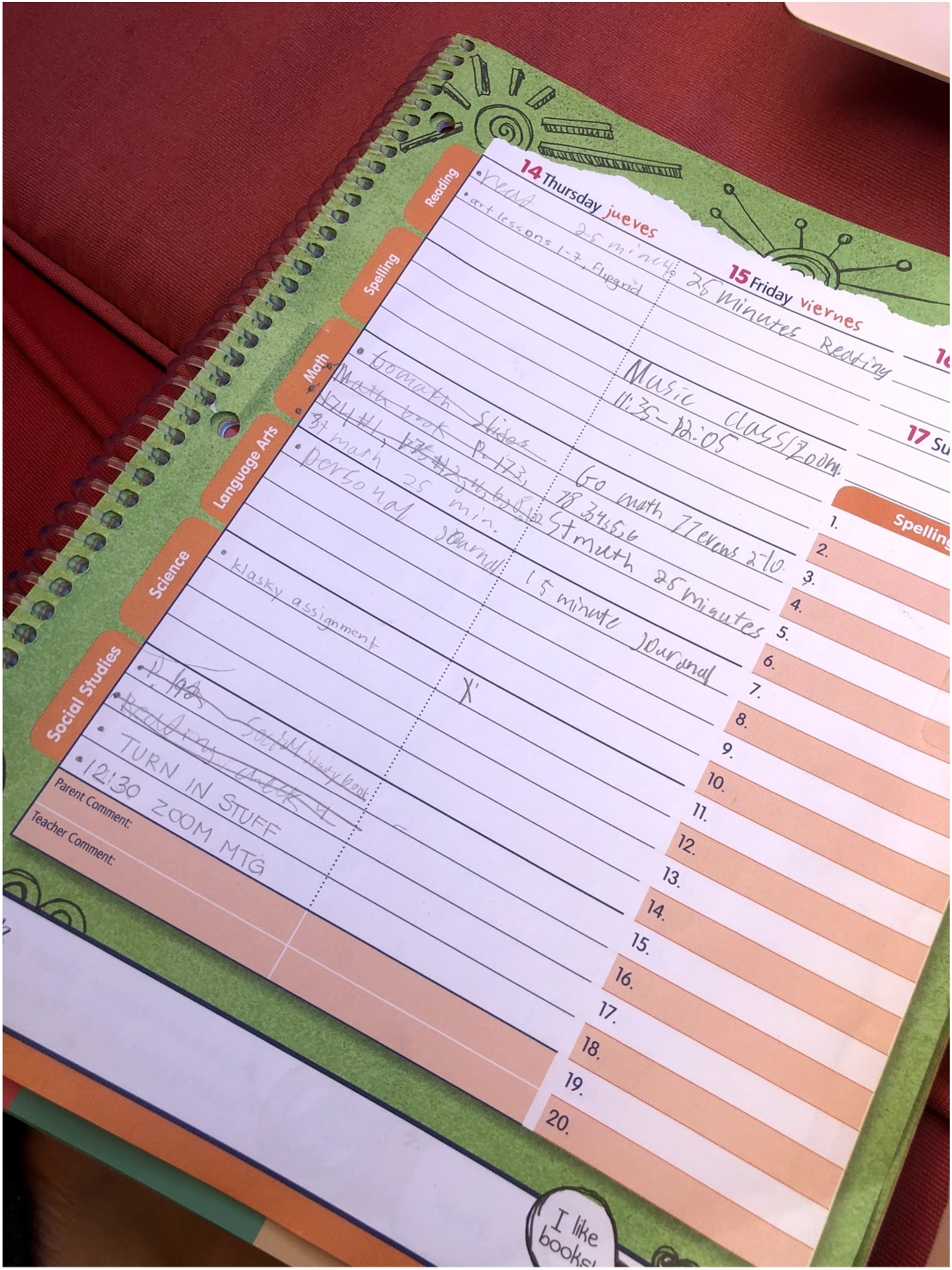
This distributed system was established for traditional schooling and readily employed toward virtual schooling so that participants could expect schooling to continue during the pandemic with few interruptions. Virtual schooling, however, further shifts management burdens to families so that parents or caregivers are akin to tutors or middle managers who ensure that students are developing proper task lists, completing tasks, budgeting sufficient time, have the equipment they need, and keeping pace with long-term goals. Participation in virtual schooling stresses this home system; for example, if early in the morning, a student learns of an ad hoc 1 p.m. Zoom meeting, parent and sibling schedules may need to be juggled and resources set aside to accommodate. While virtual schooling during pandemic has stressed these systems beyond their original intent, they have largely been successfully employed during the pandemic to perpetuate schooling.
This affluent socio-technical system can be understood as having recruited material, human, and structural capital from families. Material Capital: Families provide (a) space to do schoolwork with minimal interruptions for 1–3 h nightly. Typically includes a desk, dedicated work space, and (b) a dedicated computer. The computer is (c) broadband-enabled and includes (d) peripherals (printer, camera, and microphone, connected to the same network). Included with these materials is a reserve of (e) supplies, including printer ink, paper, and crafting materials for projects, which is nontrivial to maintain. Human Capital: This includes (a) tutors to help interpret assignment, assist with explanations, provide explanations or just-in-time instruction, check over work, provide feedback, time management coaching, and emotional support; these tutors might be siblings, family members, parents, or paid tutoring services that benefit from formal academic training to help youth meet expectations of high performing districts and (b) technicians to purchase and maintain supplies, as well as troubleshoot problems with computational tools. Structural Capital: Schools require a series of routines around daily organization that are knowledge contributing to academic success (see Maddocks and Beaney, 2002). Families develop routines of daily check-ins, task lists, time budget and management, and methods to ensure quality work to bolster academic performance. Teachers refer students who lack access to structural capital to specialists.
These forms of capital, accrued by families to advantage their children, work together to enculturate youth into knowledge work.
Preparing knowledge workers
This affluent distributed schooling infrastructure enculturates affluent students into knowledge work, and although it evolved to support traditional schooling, it has been adapted for virtual schooling successfully by many families. Students, armed with their planners, perhaps symbolizing the capital investments from their families, gradually take on the values of their organizations (the family and the school), learning to function as independent knowledge workers. In juggling their daily routines, goal-setting meetings, check-ins, and projects, they learn to weigh which tasks can be completed in which blocks of time, as well as how to manage attentional resources. Thus, the quick adaptation to virtual schooling as experienced in the affluent suburbs is feasible because the pre-pandemic distributed schooling infrastructure required students to have access to this physical equipment, human resources, and procedures.
Critiques of the affluent distributed schooling infrastructure
These realities raise deep questions for educational and learning technologists. How can technologists promote meaningful learning during COVID-19? How might we disrupt inequities? The inequities between educational experiences for affluent youth and those without access to such resources are painfully obvious. Whereas an affluent child has material capital (computer equipment and physical space), other youth share devices and bedrooms with siblings or extended family members. Whereas an affluent child may have full-time access to a formally educated, caring adult for guidance, support, or tutoring, less affluent may be at home with siblings (or, frequently alone). Finally, whereas affluent youth may have been enculturated into a variety of knowledge working processes (setting and managing goals, to-do lists, and check-in), these practices may be absent in homes not engaged in knowledge work.
Thus, whereas the equity issues during the pandemic have largely been framed as access to instruction, this analysis of the affluent distributed schooling infrastructure suggests that attendance, access to schooling materials, or even a broadband connected device is only the beginning. Affluent youth have access to an integrated system designed to support their knowledge work that is missing in many households. As a result, we might reasonably expect gross educational inequities to surface between 2021 and 2025 (and perhaps beyond).
Despite the benefits of this affluent schooling infrastructure, most learning supported with technology have been framed within traditional schooling patterns. Technologies during COVID-19 have largely been used to reify classroom structures, as one might predict (see Cuban, 1986). Technologies have been used, generally, to present materials, assign homework, and test students on required information, consistent with the pattern Lemke (1990) identified in science classrooms decades ago. Learning is, generally for most students, a process of receiving information from teachers or textbooks, manipulating that information on worksheets or other practice homework systems, and then presenting it back on tests or written assignments for feedback. Lemke observes that a defining characteristic of this system is a closed knowledge loop, whereby teachers or school-sanctioned texts present information and students repeat it back, with relatively little input or influence from the outside world, or desire to participate within or shape the outside world. Students’ work is rarely the content for other students, and very rarely does activity within the virtual classroom affect life beyond it. Such critiques are older than educational research itself, but with the walls of the classroom erased, these critiques of schools are especially salient (Dewey, 1938; Freiere, 1968).
Observing virtual schooling reminds us that technology integration is a social, not technical problem, largely hindered by how technologies reify or disrupt existing power and organizational arrangements. Ironically, during virtual schooling, youth have access to the Internet, software development tools (most game and production software applications have free versions for students), mobile devices, and games with creative capacities like Minecraft or Roblox already installed on their devices, but they engage in the same learning practices during the pandemic as they did prior. Removing the physical barriers of school walls did not (in the United States at least) result in waves of youth flooding their neighborhoods or local parks to do service, inquiry, or participatory learning projects. Likewise, there are no widespread reports of youth using virtual construction tools or authoring systems to make personally meaningful projects that make an impact on the world (see Shaw et al., 2020). What is missing from virtual classrooms is less particular technologies but educational practices with those same technologies. The following section examines youth use of technology outside of schools to understand gaps in students’ experiences during virtual schooling, including what tools are from the virtual schooling platform.
Out-of-school technology use during quarantine
Outside of the school context, during the pandemic, youth have embraced technologies that give them places to go, a sense of comfort, and opportunities to shape their own environments. Consistent with new literacy studies approach generally (see Gee et al., 2018), examining youth technology use beyond schools can reveal not just what technologies they value, but what affordances they provide and what practices have value in lifeworlds beyond schooling. Examining youth technology use reveals the absence of students’ voices in the curriculum and a remarkable placelessness of virtual schools.
Communication
Discord, “Your Place to Talk and Hang Out,” has become the de facto hangout for youth during COVID-19. Discord’s (free) capacity to create and manage multiple voice, text, and image channels helped it grow beyond gamers. In spring 2018, the streamer Ninja taught Drake to use Discord live on Twitch, and soon after, streamers and media influencers outside of games opened Discord servers to communicate with fans (Alexander, 2018; Lorenz, 2019). Now, with 100 million active users and billions of messages sent each month, Discord is a primary way that youth communicate at home and make up for the limitations of course management software.
A key facet of Discord for youth is that it enables them to host their own servers. A server is a place they can go, with private lists (or public) friends and acquaintances and share links, memes, videos, or just conversation. A user (such as my son) might make separate servers for a household, gaming friends, and school friends. Users create multiple channels for different purposes (e.g., memes, announcements, and resources). By enabling youth to adopt pseudonyms, communicate in real time, create custom rooms, and share links to the broader Internet, Discord servers resemble the Internet chat rooms of the early 1990s with the liberating potential and problematic issues that such a technology being widely adopted by youth might suggest (Dibbell, 1990; Rheingold, 1994). Families wrestle with the realities of youth both hosting and participating in Discord communities so that they are exposed to Internet culture, private talk, and forms of communication; Discord talk occurs away from the watchful “eyes on the street” of parents who, if conversations were happening at a park, could overhear and intervene as necessary (Jacobs, 1961). Discord is, for better and for worse, largely youth’s own space.
Discord is not only a primary way that youth communicate to socialize but also a tool to address limitations in course management software. In traditional school, youth talk or share homework around class times, at lunch, or before and after school. Most school-sanctioned technologies do not promote direct student communication, particularly during class. Popping up a Discord window enables them to keep tabs with friends, compare notes on assignments, catch up on missed homework, or clarify any confusions.
Generation Minecraft: Giving youth a place to be
Games are where youth go to socialize with friends, have new experiences, and “be” somewhere else. Game sales are up 35% over a year prior, and play sessions from XBox Live to Minecraft have increased during COVID-19 (Batchelor, 2020; Edwards, 2020; Grubb, 2020). With a game like Raft (a breakout hit over the summer of 2020), kids who were stuck in their rooms and could not spend a summer day floating down rivers on rafts played on a virtual one with friends. More generally, Minecraft was this generation’s playground; today’s high school and college graduates first encountered Minecraft in elementary school, and not surprisingly, millions of youth have turned to Minecraft for community, ceremony, and adventure during the pandemic.
Games, but Minecraft in particular, excel at creating a sense of presence. Unpacking presence more closely (which includes experience of place, social presence, and co-presence; Bulu, 2012) further reveals limitations in virtual schools and educational software. A canvas course is not a place that you can go, in part because learners really do not know who else is there. Learners cannot choose to be near another learner or to affiliate, robbing them of opportunities for social or co-presence. There is no real requirement that virtual classrooms have presence; presence does not appear to be crucial for learning, but the lack of presence in virtual schools suggests why learners may feel empty after spending a day in a placeless location, and why they turn to alternatives such as Discord. Even Discord allows participants to see who is present, what they are doing, and when they are available.
With classic third places not available (parks, libraries, and bowling alleys), people are turning to virtual worlds for socializing (Steinkuehler and Williams, 2006). Youth, where they have been empowered to do so, have used Minecraft for rituals such as graduation ceremonies. Inspired by a Japanese school graduation ceremony in Minecraft, Minecrafters created Quaranteen University, an online university graduation ceremony (Anderson, 2020), which should be amusing to educators who remember Second Life. UC Berkeley students followed using “Blockeley” (see Figure 2) a virtual UC Berkeley Campus they made to hold an official graduation ceremony that featured the Berkeley Chancellor Carol Christ and keynote speaker Lydia Winters from Mojan (the developer for Minecraft). These examples of college students using Minecraft reveals the rarity of such programs in K-12 education and potential of empowering youth power to create media within formalized institutional structures. Blockeley. UC Berkeley’s Campus constructed by students in Minecraft.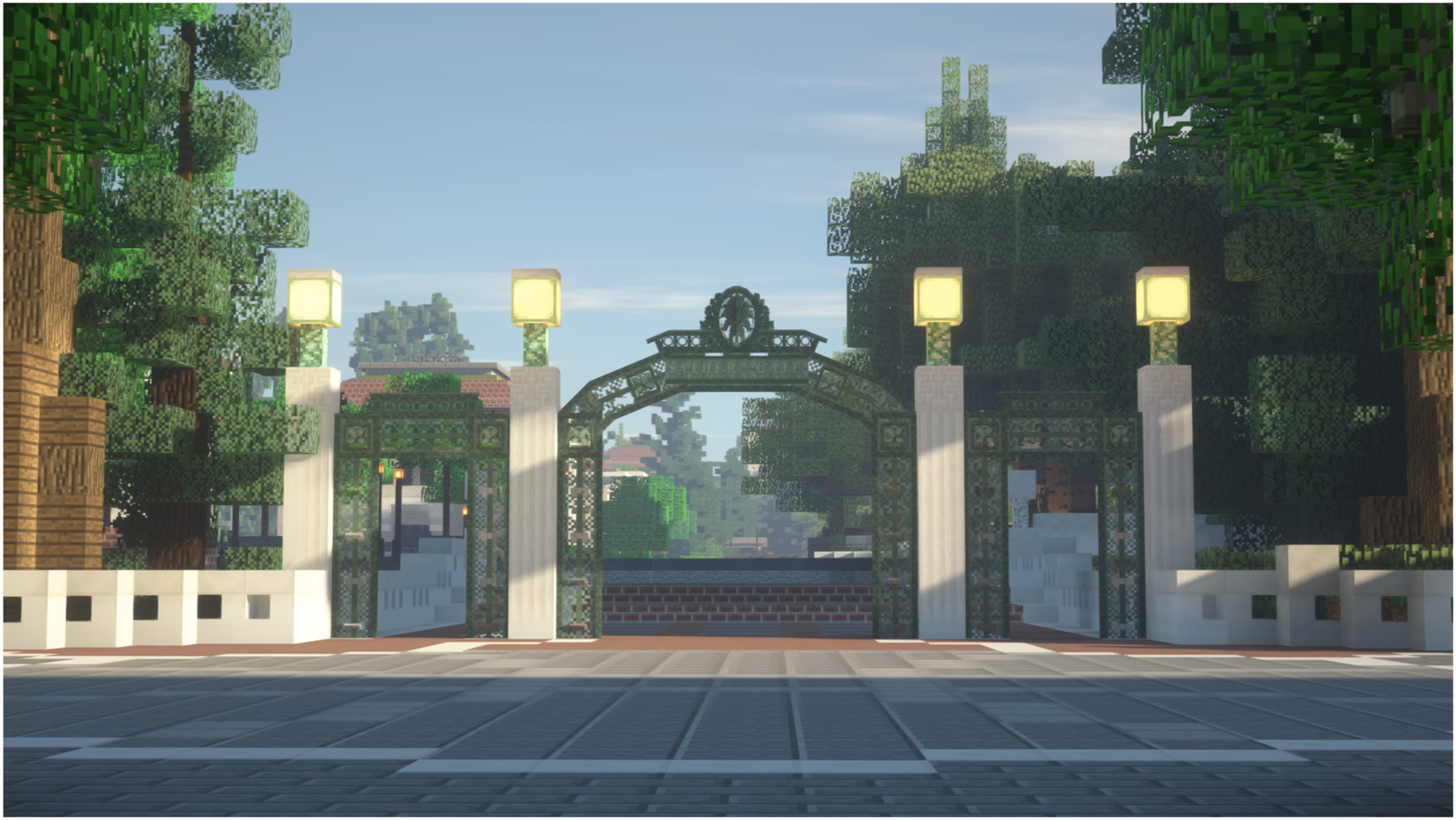
Technologies for learning during quarantine
Youth use both Discord and Minecraft to compensate for needs not met by school, but there are few signs of schools adopting these technologies at the institutional level. Microsoft made Minecraft free to educators during the pandemic, and although teachers have used Minecraft in schools, K-12 educators do not appear to have taken it up en masse. Yet, millions of students have Minecraft installed at home. As a parent, it can be disorienting to see youth log off of Minecraft where they are collaboratively building redstone circuits (which are crude electrical systems) or collaboratively constructed cities and worlds for the relatively isolating experience of school, where they cannot talk, build, make, or collaborate.
The simultaneous pull of Minecraft and its relatively sparse adoption during virtual schooling highlights the distinction between learning-centered and administrative-centered uses of technology (Collins and Halverson, 2009). Schools generally orient toward technologies to regulate learning and to make learning more predictable, consistent, and trackable. Virtual schooling software, which makes tracking assignments or grading easier, will be adopted quickly, whereas software that might address students’ needs is a lower priority and possibly restricted if it makes teachers’ and administrators’ surveillance more difficult.
Virtual field trips
Kids’ complaints about not being able to go anywhere—combined with the Internet’s ability to let students visit anywhere virtually—would suggest the virtual field trip as a natural first technology-enhanced pedagogy to pursue. If nothing else, the inability to congregate as a group in classes would suggest virtual field trips as a popular educational experience during the pandemic, but there are few indicators that educators have pursued them.
Historical games
Virtual field trips in the form of games are now a relatively established games-for-learning pedagogy (see Klopfer, 2008; McCall, 2011). There are a variety of academic and commercial software packages that enable students to explore historical cities or eras, so as to have a situated experience that prepares students for future learning. Ubisoft has created tours for Virtual Egypt and Virtual Rome based on the Assassin’s Creed Series, and its colonial Boston (an important historical site for colonial United States) is used for virtual tours (see Figure 3(a); Berger and Staley, 2014). Right now, youth could visit ancient civilizations or virtual historical cities at home using the same technologies used for virtual school. (a) Colonial Boston in Assassin’s Creed (Ubisoft). (b) Screen capture from MIT’s Revolution game, based on Colonial Williamsburg. Players adopted one of several roles based on actual characters from historical Williamsburg.
Good virtual tours attempt to do more than providing a change of scenery and, instead, attempt to improve upon the field trip by engaging students in historical thinking. MIT’s virtual Colonial Williamsburg (Revolution) immersed players in one of the seven roles based on Colonial Williamsburg’s archives, which ranged from middle class shopkeepers to people who were enslaved (see Figure 3(b); Squire, 2011). Studies of youth playing Revolution! found that it enabled them to perspective take and develop empathy for virtual characters. Such tours could be used for virtual schooling, but many teachers have appeared reticent to assign such independent activities. Virtual tours are particularly valuable desirable because they have value outside of quarantine and offer models of “flipped” technology experiences, where youth engage in immersive technology experiences at home, and save classroom experiences for learning activities that leverage face-to-face interactions outside of quarantine.
Augmented reality field trips
Although youth are not permitted in regular classrooms during quarantine, youth can still explore their neighborhoods and local surroundings. Augmented reality field trips layer information on to the world through mobile devices and position learners as problem solvers or designers (Klopfer, 2008). Schrier (2014) built on the Boston-based Revolution game to create Reliving the Revolution, an augmented reality Boston history game, in which students toured Boston with mobile devices. Schrier found it encouraged participants to explore more deeply a physical site and to consider interactions between the real and virtual worlds. Likewise, MIT’s Mystery at the Museum or the St. Louis Botanical Garden’s augmented reality games replace the “verbs” of field trips (walk, look, and listen) with collecting data, weighing evidence, and creating representations (Klopfer, 2008). Education during quarantine need not be students in bedrooms or makeshift offices staring at phones or computer but could also be exploring the world, using it as a classroom. A good augmented reality (or local) game “makes your neighborhood a game board.”
Local learning experiences
In many ways, an augmented reality game is also simply a reimagination of place-based pedagogies, enhanced them with technology. Local games are turning students’ attention away from standardized curricula and toward the world around them, outside of their windows. With local games, designers can provide a guided exploration of those worlds. Jewish Time Jump (Gottlieb, 2018), for example, engages 5th–7th graders in the 1909 Uprising of 20,000 in New York City, which is the largest women-led strike in US history. Youth visit hidden sites such as the 1911 Triangle Shirtwaist Factory fire in which 146 mostly young Jewish and Italian women died. By centering the narrative of working class women immigrants, youth are encouraged to reflect on working class women’s struggles, a decade before winning suffrage. Teaching history from the ground recenters people’s history over master political narratives, and Gottlieb (2018) argues that teaching history in the context of place enables designers to address the “null curriculum” (that which is important but not taught, see Eisner, 1979).
Local games exist for cities across the world, including Mentira language learning in Albuquerque New Mexico, Picture the Impossible, a social history of Rochester, New York, and Ghost in the Garden (based on Bristol, UK, Holden and Sykes, 2011; Lawley, 2018; Poole, 2018). Many of these games are decidedly lo-fi and can be played with paper, cameras, and headphones; Ghost in the Garden is entirely playable by sound and deliberately cedes authorial control to participants who are encouraged to construct interpretations of the historical space through repeated, nonlinear interactions with characters in exploring it.
These cases leverage technology while reminding us that place-based learning can happen anywhere, any place. As is explored in the following section, local histories, photography projects, or neighborhood design are all pedagogies that can be supported by mobile technologies.
Critical place-based technologies for virtual learning
Suggesting that students use the world as a classroom reminds us how rare field trips are to begin with; most school-based learning is severed from the world outside (Freiere, 1968; Gruenewald, 2003). Standard American curricula do not look at the world and ask “What is happening? Why?”, so not surprisingly, our learning systems have not evolved to leverage the affordances of mobile devices; we have sought to use technology to reproduce classroom interactions online or through phones, rather than rethink what the classroom is, or the boundaries of the classroom should be. Compare learning management systems with the potential of mobile place-based learning technologies for portability, social connectivity, mobility, and context sensitivity (Klopfer, 2008). Mobile media could enable students to explore their communities, using Global Positioning System to confirm location and mobile phone technology to stay in touch with teachers, which would suggest a learning platform very different from Canvas (Mathews, 2010). The following exemplars suggest how place-based pedagogies could address a lack of physical space for schooling and issues of isolationism and unrest.
Citizen science
NestWatch by Cornell University’s Ornithology Laboratory supports bird-watchers in identifying and recording nesting birds (Evans et al., 2005). Bird-watching (and nesting) recruits concepts, from sampling to analyzing and considering variance in data. More than a data aggregation website, NestWatch builds on 20 years of experience to coach students through observations, data gathering, and data analysis. NestWatch provides opportunities for embedded mathematics and model-based reasoning, and researchers have examined letters from participants and found evidence for NestWatch recruiting scientific literacy (Trumbull et al., 2000). Citizen science turns a lack of physical space for schooling from a limitation to an asset, enabling teachers to already revamping curricula to address Next Generation Science Standards (scientific inquiry, reasoning with evidence, and scientific argumentation) to experiment with learning pedagogies during virtual schooling.
Citizen journalism
Seemingly every week, an Internet-connected mobile phone streams an event that disrupts society. During this writing, a mobile phone captured the brutal shooting of Jacob Blake by Kenosha Wisconsin police, and The Black Lives Matter movement has been driven by citizen cellphone footage (Lubin, 2016). Citizen journalists have played a key role in every election cycle since the advent of the mobile phone, but schools have rarely adopted citizen journalism as a model for social studies, government, media, or Language Arts Education. Participation in citizen journalism can bolster self-efficacy and invite discussions of ethics in journalism, as evidenced by a study of Access Dorset, a decade-long citizen journalism program in the United Kingdom (Luce et al., 2017). Increasing affiliation with institutions such as journalism is critical at a time when faith in such institutions struggle (Ireton and Posetti, 2018). K-12 educators have developed citizen journalism lesson plans, blogs, and tools for integrating citizen journalism into English language arts and social studies, but such approaches are sparsely implemented or researched. Although K-12 teachers such as Waters (2015) or Carl Anderson (2015) have developed lesson plans, blogs, and online tools to support citizen journalism, most enactments appear to lack the spirit of authentic citizen journalism, which arises through a mix of serendipity and existing social commitments. Writing as a journalist who also teaches these skills to citizens, Douglas McGill (2007) concludes that citizen journalism could transform the field for the better: “Journalists need to learn citizenship skills, as much as citizens need to learn journalism.” Pandemic quarantine, which coincides with global racial, ethnic, environmental, and political unrest, provides an excellent context for exploring journalism.
Activism: Neighborhood design
Neighborhood civic activism—specifically interdisciplinary units on neighborhood design—empowers youth to see neighborhoods as designed artifacts to shape. A fourth and fifth grade teacher Mark Wagler taught a year-long integrated curriculum around his school’s neighborhood (The Greenbush), which was historically Jewish, African American, and Italian (whites refused to let them settle elsewhere in town). To study Greenbush history, youth observed local interactions, interviewed residents, and administered surveys to understand patterns (Squire, 2011). Students compiled their work into products that included a cookbook, augmented reality game, day-long conference, and legislation to honor the Greenbush. Elena Livorni, as an 11-year old, addressed the Madison, Wisconsin city council and reported to a local newspaper that the experience “gave us a better understanding of how it feels to be discriminated against and having everything taken from you.” She continued, “people who had lived there deserved recognition and that not enough people knew what happened to them, and that we should prevent it from happening again.” Renewed national interest structurally racist policies like red-lining suggests similar projects in most American cities.
Mathews (2010) extended this model to position youth as augmented reality game designers. Students visited their city hall to interview civic leaders about issues. Youth then fanned across neighborhoods to count cars, observe “contested spaces”—occasions where multiple stakeholders had different uses for community resources—and interview business leaders. After presenting a report to the city council, they developed a game for their community around the redesign of a local nature trail.
Instead of conceptualizing virtual schooling as “locking kids in their homes,” we might identify opportunities to “make the world their classrooms.” Place-based approaches enable youth to examine pressing environmental and social issues. Place-based education requires educators to (1) restrict content objectives so youth can pursue locally relevant projects and (2) allow youth to go outside unsupervised during the school day. If we are not preparing students to walk in neighborhoods responsibly, we might wonder how well we are doing as educators.
Embracing the psychology of play
Play is an important way that humans respond to crisis; we use play to manage anxiety, contingencies, and imagine better futures (Malaby, 2007). Perhaps because as a way to play through anxieties about COVID-19, millions of players have revisited Plague Inc. in 2020. Plague Inc. is a hard science fiction apocalyptic pandemic simulation game in which players attempt to engineer a pathogen to wipe out humanity. Designed as entertainment (as opposed to a serious game), Plague Inc. has not left the top 10 iOS games since launching in 2012 and topped the Chinese sales charts in January 2020, which prompted the Chinese government to remove it from application stores (Katz, 2020). Plague Inc. illustrates epidemiological concepts, such as transmission, symptoms, infectivity, and lethality (which are literally the game’s interface elements). Through playing with the model, players see how long incubation times or asymptomatic carriers make controlling a disease more difficult. We learn about systems by pushing their boundaries, playing with their rules, and/or seeing how they respond. Playing against humanity reveals which human strategies combat the virus and even how resilient humans are.
Comfort, creativity, control, and collaboration
We do not often think of games as a model for how make learning spaces comforting or reassuring in times of stress. However, games can provide a sense of comfort, as suggested by the millions of players who turned to Animal Crossing: New Horizons, the breakout hit of COVID-19. Released on 20th March 2020 for the Nintendo Switch, Animal Crossing has sold 22.4 million copies making it the second-best selling game of 2020. Animal Crossing players inhabit an island with virtual animal characters and real-life household members where they explore, terraform, and design artifacts. Animal crossing islands are private and personal, our own little world, but gifting to friends (sending found or designed items) is a key pleasure. Celebrities from Chrissy Teigen to Alexandria Ocasio-Cortez have opened their islands to strangers and shared amusing interactions (see Figure 4(a)). Joe Biden’s presidential campaign released Animal Crossing: New Horizons yard signs. (a) Representative Alexandria Ocasio-Cortez (D-NY) in Animal Crossing. (b) An Animal Crossing letter written by Rep Ocasio-Cortez to another player.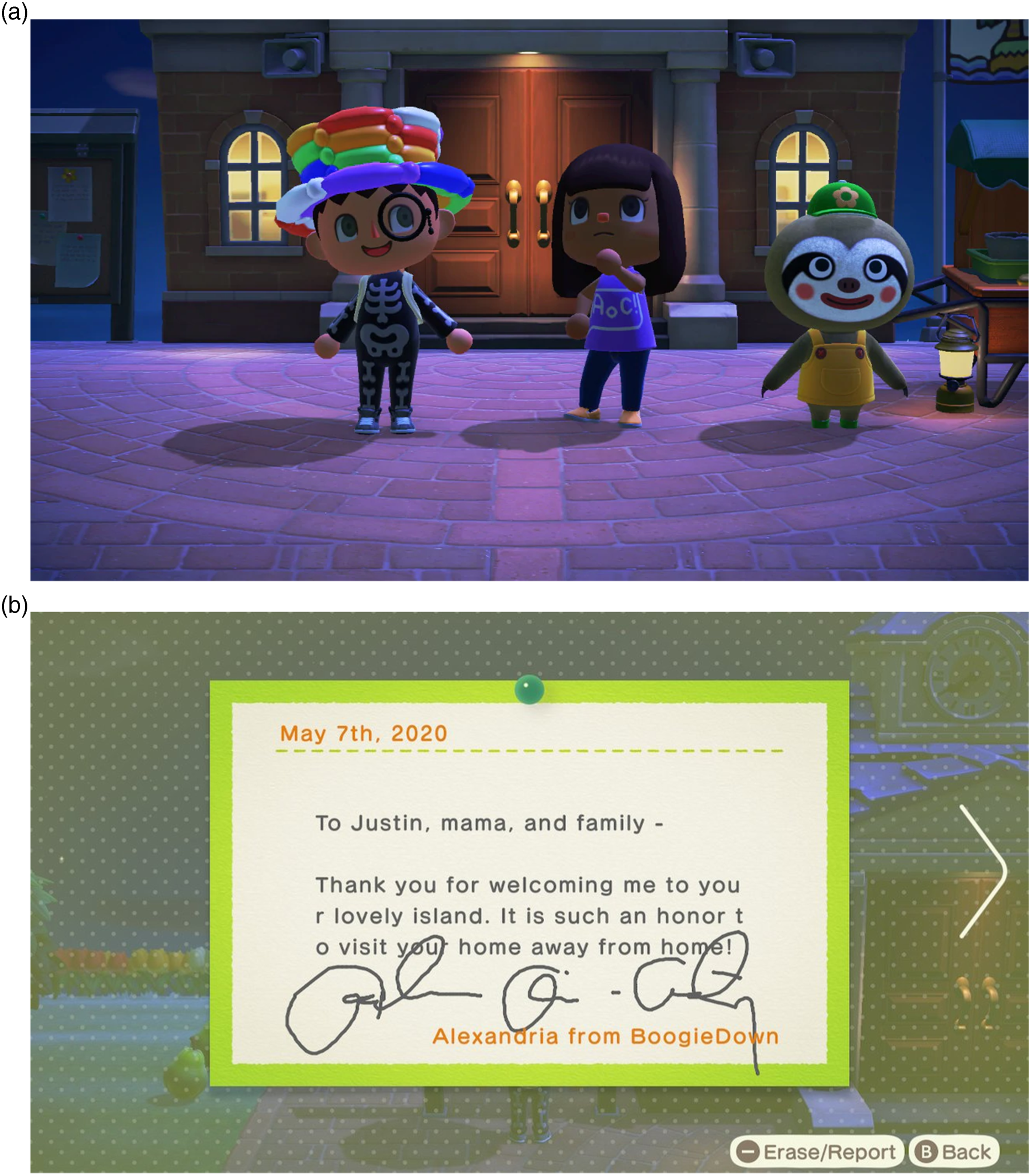
Animal crossing islands are private and personal; they are our own little worlds to inhabit. But we go there not alone; creations are meant to be shared. Treasures are meant to be gifted. Witty talents are to be showcased for others. Animal Crossing is, in Doug Church’s (2000) framework, a stage in which dramas (composed by players) are enacted. To extend the metaphor, they are also costume designers, script writers, and photographers; The Museum of Rural English Life (TheMERL) in Reading England recently challenged players to design smocks using Animal Crossing and then report back their inspiration, what materials they used, and how it connects to TheMERL (Museum of English Rural Culture, 2020). Comparing Animal Crossing: New Horizons to educational technology tools illustrates the importance of affective goals like entertainment, psychological safety, and comfort. Successful educational media aimed at younger children (most notably Sesame Street) address students’ emotional needs. All of us as educators might consider the emotional tone of their learning environments, from learning management systems to Zoom lectures.
Coziness
Chief among Animal Crossing’s pleasures is its coziness. Coziness is a game’s fantasy of safety, abundance, and softness (Project Horseshoe, 2017). Cozy games are marked by an absence of danger or risk and instead an embrace of familiarity and expressivity. Colors and stimuli are soft—free of harsh edges but full of humanity and sincerity. Animal Crossing reminds us that entertainment, psychological safety, and comfort are in short supply during COVID-19. Successful educational media for younger children (most notably Sesame Street) address students’ emotional needs explicitly. Learning technologies, from learning management systems to Zoom lectures, carry emotional tones that educators might examine not only during pandemic but in areas such as mathematics, where anxiety can hurt performance (Ashcraft, 2002).
Creativity and constructionism
Like Minecraft, Animal Crossing affords users opportunities to create and share. Not only do users (like Representative Ocasio-Cortez) design and paint artifacts but they share them (such as TheMERL’s smock competition on Twitter) in ways that add a dimension of creativity. Animal Crossing teaches educator the importance of smoothly onboarding users to making and sharing, an activity with educational potential (see also The Sims, Pearce, 2002; Gee and Hayes, 2010). Construction games are now their own genre, and many construction games are applicable to academic domains. Bridge Construction, Poly Tropico, Anno 1800, City Skylines, Surviving Mars, Construction Simulator, World of Goo, Railroad Tycoon, Rise of Industry, and SimCity all represent real-world phenomena to a greater or lesser degree. Constructionist learning games such as Reach for the Sun or Coaster Creator by Filament Games employ this genre to explicitly educational ends. Adapting such games for learning is no longer a design, technical, or curricular integration problem, but one of promotion, accessibility, or desire.
Esports: Progress, achievement, drama, and community
Finally, people turn to games for an illusion of progress, achievement, drama, and community. Games, with their challenge-driven curricula, constant presentation of goals, and clear reward structures, are an alternative to the day-to-day mundanity of life in pandemic. Quest and level-driven games provide an allure of regular, orderly progression. These mechanics were popularized by massively multiplayer online worlds like World of Warcraft, but are now dispersed across genres, and evolved into esports. Genres such as multiplayer online battle arena games connect us to other people and the experience of shared enterprise. Esports also provide a much needed emotional and esteem support in COVID-19 times through informational and instrumental in-game structures (Freeman and Wohn, 2017). Through watching and playing esports games, we also participate in a bigger community, where there is both camaraderie and debate between fellow players. From game tutorials and celebrating clutch wins to talking about professional players, esports communities are fertile grounds to learn, make new friends, and keep up with the latest news.
Conclusions: How can technology support learning during quarantine?
A substantial portion of schooling will be online for the foreseeable future. COVID-19 is not the first, nor likely the last pandemic. Much as companies embrace work-at-home policies, we might consider how schools can experiment during COVID-19 and examine how new patterns could improve schooling. We should first acknowledge the distributed schooling socio-technical infrastructure that advantages affluent students in and out of COVID-19. This article has framed these inequities as from an affluent distributed schooling infrastructure which consists of material, human, and structural capital. Inequities in broadband access, computers, and space or dedicated computers are the beginning of equity problems but do not address the personnel that support affluent students. The affluent socio-technical infrastructure that supports daily communication among students, teachers, and parents and which includes home office tools and out-of-school tutoring services (whether provided by parents or commercial providers) is a new and evolving form of unequal education. Home-school-after-school programs that close these loops have succeeded in the past, and we may programmatically invest future resources in them (see Moses and Cob, 2002). Home-school areas are a domain that technologies, when fueled by interest, have succeeded. This section explores implications of these technologies for educators.
Unsequestering learning and fostering participation
Learning management systems are remarkably placeless. Learning management systems offer little embodied, social, or co-presence. A Canvas user does not know who else is online, who is working on what assignment, or who to go to for help. There is no real role for students in most courses to shape experiences for other students. Students are meant to not leave a mark on the classroom; system designers appear more concerned with students posting inappropriate content, sharing answers, or cheating than with fostering a sense of connection, shared purpose, or culture.
A simple approach for educators is to establish class Discord servers to create a sense of shared presence. Designed to facilitate “being together,” Discord enables multiple roles in which students can post content, open channels, or even moderate one another. In a spring 2020 game development course, students asked to use Discord, we agreed, and immediately students reported that they felt better supported, less isolated, and increased course satisfaction. Students could see who was online, negotiate class assignments, post requests for help, share resources (and memes), and hang out in ad hoc voice conferences. The degree of control Discord gave them, and the cultural model it evoked, created a context for informal socialization uncommon to most courses. Using Discord does not ensure a participatory model of education, but it bends interactions in that direction.
From rote to embodied understandings
Learning management systems are defined by a “content broadcast” model, whereby the primary pedagogical act is to present information to students so that they process it and repeat it back (ideally in a machine-readable format). Educators have long criticized this pattern, observing how it neglects how we make meaning, promotes inert knowledge, and ensures passive learners (Lemke, 1990; Whitehead, 1929). Educational technologies particularly value textualist propositions, propositions in which knowledge is represented through words, rather than visual, physical, or embodied understandings (Saettler, 1990). Under COVID-19, this situation has arguably gotten worse because Canvas lends itself to textual input more readily than face-to-face classroom activities.
Games, simulations, and virtual reality (VR) offer opportunities for embodied understandings. Academic games for learning now exist across most every academic domain, and games have generally proved to be effective curricular anchors (see Clark et al., 2016). The physics game Surge and its successor Fuzzy Chronicles (see Figure 5) are free online simulation games that illustrate the opportunity for games for distance learning. In Surge, players manipulate variables to develop intuitive understandings of physics which then become formalized through game play (Clark et al., 2016a). Surge has been researched across contexts and led to “significantly higher gains for the game condition in terms of multiple-choice factual outcomes, open-response factual outcomes, evidentiary depth, and student engagement outcomes” (Clark et al., 2016b, 265). In just the last few years, commercial titles including Revolutionary Choices, iCivics, Making History, Human Resource Machine, and while True: Learn() have been released across domains, giving teachers choices for quality learning games. Fuzzy Chronicles, a free, online game developed with support from the National Science Foundation for developing knowledge in physics.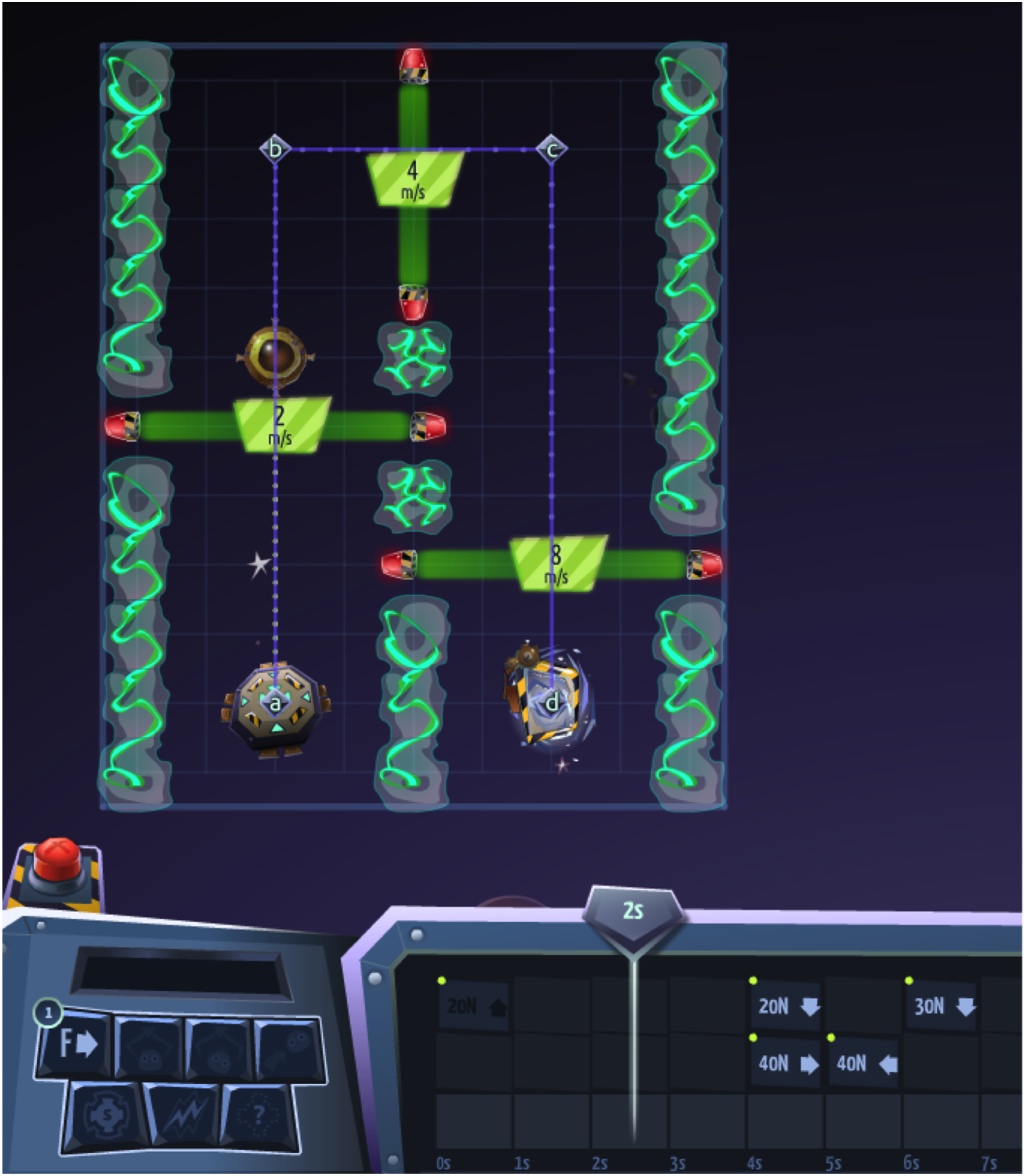
One might expect a renaissance for games during COVID-19, but thus far there is little evidence for it. Games for learning face many obstacles before curricular enactment, including teachers in crisis mode. The technologies that have been readily adopted COVID-19 follow a familiar pattern: They address current content standards, are easily slotted into existing lesson plans, and ease teachers’ burdens for tracking student work, recording grades, and reporting assessments. Today’s learning games track and report user data, but few report student progress to the extent that traditional tools such as ST Math do.
Meaningful education through constructionism
One can easily become sympathetic toward constructionist pedagogies after watching virtual schooling up close. Students are socially isolated (outside of Discord), in front of computers, not really making anything with life beyond the classroom, while compelling constructionist curricula from NetLogo to E-textiles exist across academic domains. Curricula could be created without technology, using constructionist principles (e.g., Shaw et al., 2020): (1) engagement by promoting interest-driven designs; (2) expression by putting aesthetics first; (3) depth by developing challenging content within constraints; (4) multiple experiences for providing opportunities for practice; (5) audience by sharing designs; (6) collaboration by having students help other students; (7) reflection by including design notebooks and portfolios; (8) failure by having students and teachers model and celebrate mistakes; (9) practicalities that transform classrooms into maker studios; and (10) iterations, iterations, iterations.
One could imagine such projects driving learning in virtual schooling, if for no other reason than test-driven units are difficult to administer in virtual schooling. Projects that recruit collaboration among students might address social isolationism. Constructionist groupings have led to positive effects among females in science, for example, suggesting that embrace of constructionist pedagogy could ameliorate loneliness and alienation that appear during quarantine (Davey et al., 2018).
New directions for technology during virtual schooling learning
Digital games, simulations, and constructionist tools are decades-old approaches worth considering during COVID-19, but what new forms of learning tools might help virtual schooling? The following examples, prototypes in the Participatory Learning Group within the Connected Learning Lab, suggest strategies achievable right now.
Creating presence with VR
Achieving co-presence is common with VR systems, and cellphone-based technologies make VR increasingly cost competitive (Roth, et al., 2016). Educational applications are now reaching the market, and VR applications designed to foster social cohesion, teamwork, or co-presence could reduce isolation in virtual schooling. Youth could design VR field trips of their lives or neighborhoods, similar to neighborhood design games, which might address issues around fractures in social cohesion, given urban–rural divides that have driven a politics of resentment across multiple countries (see Cramer, 2016). A similar curriculum used interactive television to connect urban and rural students in Indiana and Ireland led to greater cultural understanding across locations (see Squire and Johnson, 2003).
Tutoring and mentoring with mobile phones
In contrast to the affluent distributed schooling infrastructure, working class youth often face limited work space, mentors, or desktop computers. Could we use mobile phones to connect poorly served youth with mentors? Specifically, in a time of such anxiety and uncertainty, could mobile phone technologies support distributed mentorship? Systems to connect those students not advantaged with the affluent socio-technical support system could help connect working class youth with teachers and provide just-in-time tutoring. News reports suggest that youth need not just cognitive help but emotional supports from caring adults (like Skipper’s Kids), which could be facilitated via phones.
Digital manipulatives through augmented reality
Virtual schooling has forced teachers to abandon many learning activities with manipulatives. Unity and Google Poly, when combined with cameras, enable users to visualize or manipulate 3D models in space. VisMe is an augmented reality tool for users to create and display 3D information on mobile devices (Collins and Craig, 2017). Students can use smartphones (and other digital devices such as computers or tablets) to visualize and manipulate 3D information (such as animated molecular animations) which supports a wider range of manipulations and visual perspectives than worksheets alone. Digital manipulatives for students to think and communicate can facilitate embodied communication.
Critical computational literacy
Algorithms determine what information we receive, what voices are amplified on social media, and how meanings are negotiated in an online environment, suggesting a need for critical computational literacy social sciences (Lee and Garcia, 2014). While digital and information literacy programs focus on “reputable and non-reputable news sources,” nefarious actors manipulate Twitter, YouTube, Instagram, and Facebook to spread misinformation (Tufekci, 2018). Using artificial intelligence to address these issues can overlook local knowledge and reify exploitive power structures (O’Neill, 2016). For nondominant communities, these approaches can exacerbate existing inequities, and the “solutions” do not fit their interests or reality. Participatory design methods might help us understand how underrepresented youth process and consume information, teach how algorithms work through a critical lens, and collaboratively create tools for youth to dissect information and promote their views (Anderson-Coto, inpress).
Conclusions
Virtual schooling has revealed fault lines in our educational systems. The affluent distributed schooling system is a virtual schooling infrastructure that eased the transition to virtual schooling for high performing districts. Technologies that schools have adopted during COVID-19 have largely fit within this existing framework. Tools have retained similar learning goals learning technologies (such as Canvas and Khan Academy) and made little use of educational games, simulations, or innovative pedagogies such as place-based learning or constructionist pedagogy. Universities which still privilege Advanced Placement Courses, Standardized Test Scores, and Grade Point Averages over portfolios of students’ work are among the most culpable actors in this system.
Participatory learning paradigms in which learners pursue questions of interest, shape learning activities, and contribute to the intellectual life beyond the classroom appear, if anything less common during virtual schooling than before it. Paradoxically, youth are learning at home but still trapped within the institutional confines of schools. Technologically, they are limited to the lowest common denominator of tools, even while they use Minecraft, Discord, and YouTube outside of it. Virtual classrooms are less missing particular technologies than a value that students can or should contribute meaningfully to life in or beyond the classroom. Even while at home, knowledge practices remain trapped within the very specific teacher–student relationship. Students’ work is rarely the content for other students, and very rarely does activity within the virtual classroom affect life beyond it. Such critiques are older than educational research itself, but with the walls of the classroom erased, these critiques of schools are especially evident (Freiere, 1968).
Footnotes
Declaration of Conflicting Interests
The author(s) declared no potential conflicts of interest with respect to the research, authorship, and/or publication of this article.
Funding
The author(s) disclosed receipt of the following financial support for the research, authorship, and/or publication of this article: National Science Foundation (Grant No. 1828801).
