




Abstract
This study attempts to determine whether gamification can be used as a pedagogical technique to overcome the challenges in teaching statistics. A post-test quasi-experimental design was carried out in gamified and non-gamified groups in order to reveal the effect of gamification elements in cultivating students’ statistical literacy skills. Students in gamified group were also interviewed to understand the function of gamification process. The results suggest that; although gamifying the instructional process had a positive impact on developing students’ statistical literacy in medium and high score students; surprisingly the influence of the gamification to the low- achieved scores were not positive. The positive impact was discussed in accordance with the gradual structure of statistical literacy and suggestions for successful gamification applications due to the context were included.
Introduction
In an increasingly information-driven society, beyond a mathematical knowledge; statistical literacy is considered as a necessary skill for all students in their daily life (Franklin et al., 2005). In this circumstance, Wallman (1993) pointed out that statistical literacy training should be started in young ages in elementary and primary grade students. NCTM (2000) also puts emphasis on the skills of statistical literacy and suggests enriching mathematics curriculum with statistics learning area at different school levels. Similarly in Turkey statistics topics have taken place in the newly revised middle schools mathematics education curriculum (Ministry of National Education, 2013).
A large body of the statistics literacy generally examined the development of students’ statistical knowledge (Callingham and Watson, 2004), revealing statistical literacy level of the adults (DelMas, 2002; Schield, 2006) or defining how to use the statistical knowledge in real world (Ben-Zvi and Garfield, 2004; Martinez-Dowson, 2010; Rumsey, 2002; Schield, 2006; Watson and Kelly, 2008). Some studies also suggested some new ways for enhancing statistical knowledge in young ages. Leavy and Hourigan (2015) argued that appropriate implementations supported the improvement of statistical literacy by introducing authentic statistical investigations in the lesson. For college students, Clair and Chihara (2012) implemented a pedagogical strategy, team-based learning, and revealed the effectiveness of the approach compared to the individual participation. The results of the previous studies provide hints that students’ statistical literacy skills may be improved in around specific processes (e.g. Clair and Chihara, 2012; Krishnan, 2015). In this sense, various real world problems are suggested to figure out the statistical value of the data, so that such kind of data may support statistical interpretation skills (Woltman, 2017).
Although there is a widespread recognition of the necessity concerning teaching and learning statistics, it is still viewed as a new area compared to other study fields in mathematics (Guler et al., 2016). Many efforts in the classroom level have been provided in years; however, students still have many difficulties in understanding theoretical aspects, and practicing the knowledge in their daily life (Cerrito, 1999; Ozmen and Guven, 2019;Watson and Moritz, 2000). One reason for this is the gradual structure of the statistical knowledge. Students receiving statistics courses are generally unable to pass these gradual stages of operations with data, understanding the meaning of data and using data in real contexts or daily experiences (Verhoeven, 2006). Finally, in line with the motivation, low engagement is seen one of the reason of low achievement. In a recent study; applying Merrill’s First Principles, researchers found that students’ conceptual understanding in terms of literacy, reasoning, and thinking statistically were promoted; however specifically, the understanding of statistical terminology did not develop to a satisfactory level (Tu and Snyder, 2017). Overall, previous research has demonstrated that teachers should deal with these challenges during teaching statistics a multidimensional manner.
In order to eliminate the challenges, this paper reports cultivating statistical literacy where the main stages in learning statistics were taken as a basis and focuses to provide a meaningful link among these stages via gamification elements. This is because; gamification is suggested to provide motivation, encouragement and may regulate students’ behaviors in the instructional processes (Buckley and Doyle, 2016). Thus, the study deals with development of statistical knowledge and the features of gamification elements.
Theoretical framework
Understanding and reacting statistical messages are sometimes more complex than they seem. In this case, Watson (1997) introduced one of the hierarchical and most referred models. This model presents an accurate understanding of the statistical knowledge with the cognitive hierarchy of statistical knowledge, by referring indicators of each stage (Watson and Callingham, 2003). The model is briefly outlined in Figure 1.
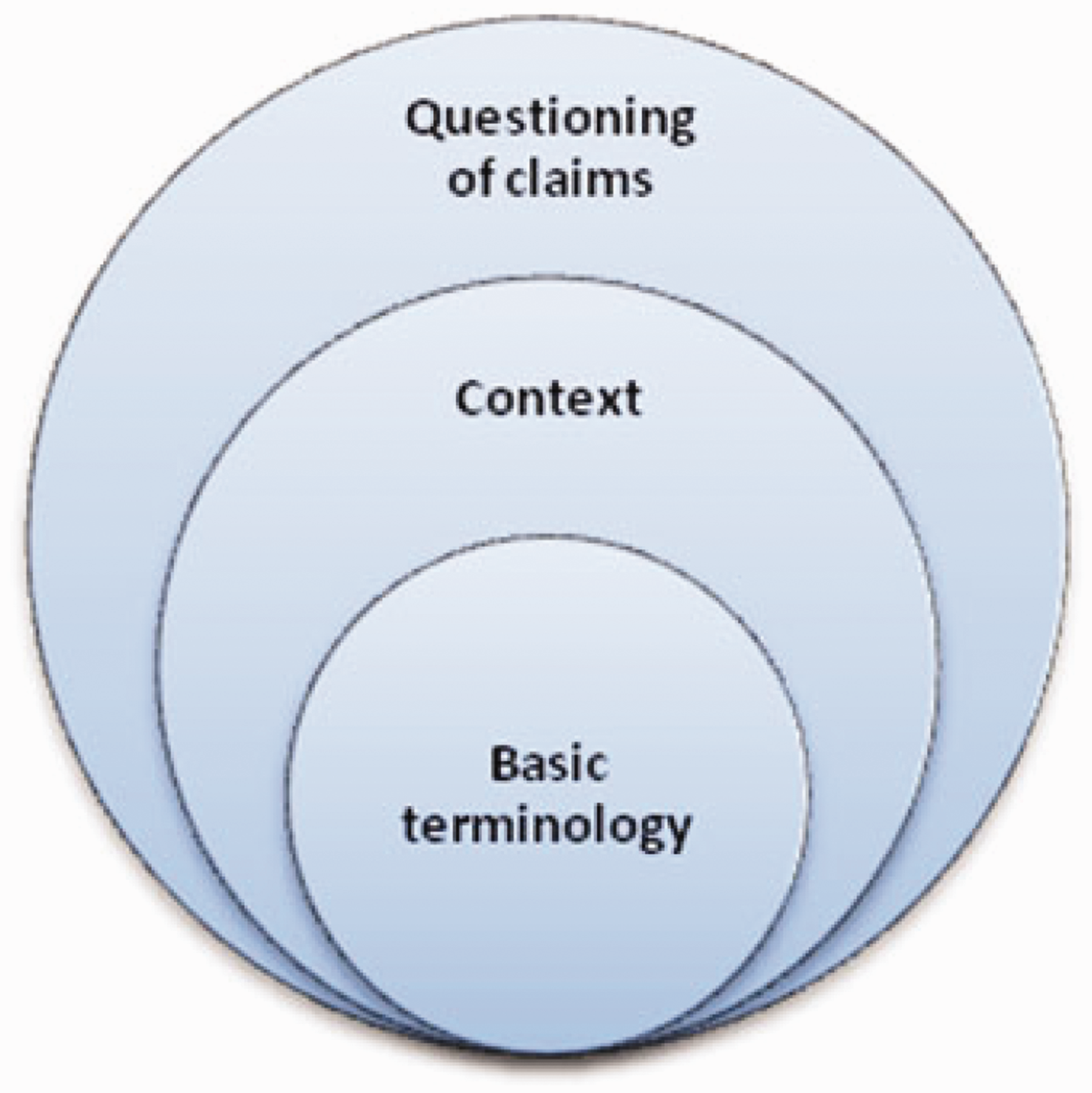
Statistical literacy framework (adapted in Watson, 1997).
Some researchers used this framework as a way to measure and assess statistical literacy skills development and also suggested implementations for statistics courses in line with this framework (e.g. Özmen, 2015; Watson and Callingham, 2003). The core objectives in the stages are as follows.
Tier 1- Basic understanding of statistical terminology: According to Watson (1997), the skills at this stage contains core concepts and are directly related to specific topics in the curriculum and the topics in this tier is delivered in a traditional way with students creating and analyzing their own data sets. Considering Turkish middle school mathematics curricula, the topics in this tier include percentage, median, mean, graphs, measures of spread concepts.
Tier 2 - Embedding of language and concepts in a wider context: This stage involves understanding statistics terminology when embedded in a social context. For instance, when those who already learnt statistical concepts see news on television or newspaper report including statistics, make reasoning or interpretation instead of making calculations. In other words, to read, understand and interpret written reports, rather than just performing computations are at the forefront. In this stage when statistics is embedded in a context, a higher level of mathematical thinking is required than the first tier.
Tier 3 - Questioning of claims: In this stage, students are expected to criticize the data given in a context. For instance, when those who know the background of statistical terms, read statistical data in the media, they intend to show or proof misleads insufficient or inappropriate information instead of making calculations. In this phase, students are hoped to be aware of the missing parts, inquire incorrect interpretations and to question the conclusions.
According to Watson and Callingham (2003), although traditional textbook questions could fulfil the requirements of lower level of objectives such as Tier 1, these questions were insufficient to meet the targeted high-level skills such as providing motivating contexts to challenge students’ critical thinking. In line of this reasoning, they recommend teachers to investigate various contexts such as media reports to provide student engagement and motivation. Within the scope of the study, this proposal was taken into consideration and students were exposed to various contexts in the designed learning environment. Thus, given the potential of gamification to enhance engagement and motivation, we enriched the learning process through gamification elements.
Gamification
Although the question of what the elements are that keep people in this context is not old, the idea of how to transfer these elements to the various settings for a given learning objective has come to the fore in the last decade. Considering the history of gamification, although it was defined only in early 2010s, it became a trend in the following years and studies were carried out on different fields from marketing to education. The outstanding popularity of gamification is originating in the belief in its potential to foster motivation, behavioral changes, friendly competition and collaboration in different contexts, such as engagement (Dichev and Dicheva, 2017). Gamification is somehow different from playing games in the classroom but it is using game elements in non-game contexts (Deterding et al., 2011; Zimmerling et al., 2019). As a versatile and multidisciplinary concept, gamification covers a range of theoretical and experimental knowledge as well as various technological platforms and domains through motivational components (Seaborn and Fels, 2015). According to Huotari and Hamari (2017), the function of gamification is to invoke the same psychological states and emotions as games do. Numerous studies has been conducted on the use of various types of game mechanics and dynamics such as badges (Ortega-Arranz et al., 2019), leaderboards (Çakıroğlu et al., 2017) and real gift (Yaman and Güven, 2014), among others. An adaptation of Bunchball, Inc’s (2010) summary of gamification elements is illustrated in Figure 2.
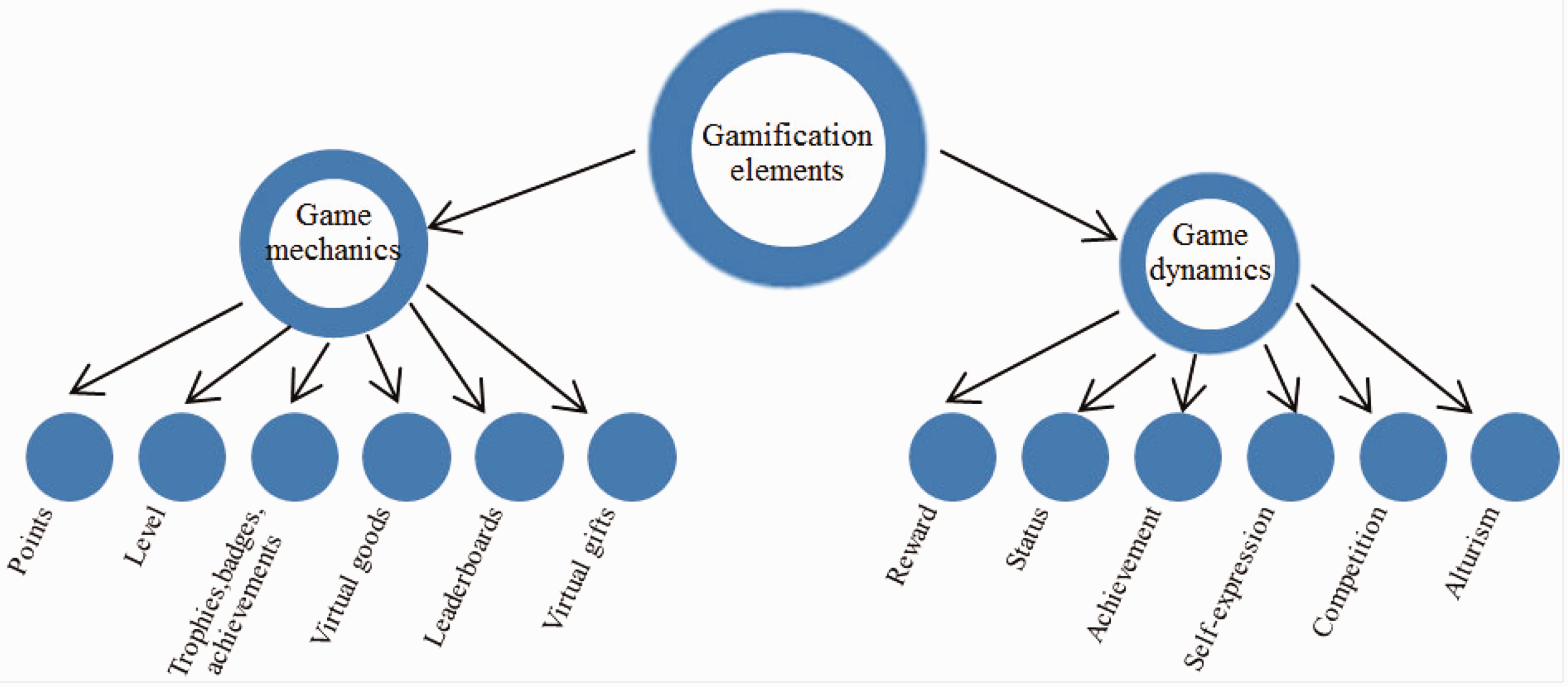
Game mechanics and game dynamics (adapted from Bunchball, Inc, 2010).
According to Ofosu-Ampong (2020), there is still a need to response some questions whether game design elements are suitable to all spheres of human activities and whether their use in education is always desirable. He furthermore recommends addressing more research questions to human–computer interaction researchers in gamification. This study focuses on the effect of gamification on the development of statistical literacy skills of middle school students in terms of the educational dimension. In this context, prior research in using gamification elements in mathematics classrooms provided hints for us to design the learning environment enriched with gamification elements.
Gamification in mathematics classrooms
While teaching conceptual or procedural knowledge, engaging in the tasks is a crucial problem in mathematics classrooms. In this sense, Christy and Fox (2014) pointed out that some traditional activities in mathematics classrooms are inherently uninteresting and teachers are failing to engage students in the activities. Considering the idea that todays’ students are growing up with the games, gamification attracted the attention of educators and they tended to adapt the principles of gamification as a part of the classrooms (Buckley and Doyle, 2016).
Gamification is considered as a useful way to increase student motivation (van Roy and Zaman, 2018) and engagement by providing students with clear, achievable goals (Landers and Callan, 2011), by organizing enjoyable learning environments (Cohen, 2011; Landers and Callan, 2011), encouraging competition and giving rewards (Hamari, 2013). Gnauk et al. (2012) addressed that it stimulated student self-efficacy via feedback. Furthermore, gamification provides inspiration for weaker students and enhances their willingness in the activities (Suls et al., 2002). In educational contexts, gamification have been most commonly implemented through digital points, badges, virtual goods, level, reputation, extra points, or leaderboards (Deterding et al., 2011; Hamari, 2013; Hew et al., 2016; Zichermann and Cunningham, 2011). For instance, leaderboards allow students to perform relative to others; and this competitive atmosphere increases students’ endeavoring in the tasks (Charsky, 2010). Since gamification elements are mainly inspired from the behavioral patterns of the game activities in the real world, educators suggest applying gamification within real life problems or using the gamification elements in the activities, which are validated in real scenarios (Simões et al., 2013).
Studies in mathematics generally used the potential contributions of gamification in engagement and motivational aspects. Focusing on the scoring in a primary school, Kickmeier-Rust et al. (2014) implemented a simple app in Austrian classrooms found positive effects of an individualized and meaningful feedback about errors. In another study, Goehle (2013) integrated two common video game systems, levels and achievements in the online homework program and he noticed greater than a half of the participants engaged with the program. However, some studies revealed the negative results in mathematics (e.g. Attali and Arieli-Attali, 2015). For instance, the study conducted by Attali and Arieli-Attali (2015) found no effect of point as a basic element of gamification on 6-8 grade middle school students’ academic performance. Hence, the empirical evidence regarding the effects of gamification on teaching mathematics is still unclear; and a need exists for more research in order to understand its effects and providing ways of implementing gamification.
Aim of the study
Although the prescription of statistics instruction is well defined by researchers (Gal, 2002; Pfannkuch and Ben-Zvi, 2011; Watson, 1997) and reports such as GAISE (Franklin et al., 2005), the practical difficulties are still enormous. For instance, Martinez-Dowson (2010) highlighted the lack of providing connection between statistical knowledge and real world context as one of the difficulties in statistics instruction. In order to overcome the challenges in statistics instruction, an emphasis is required to overcome the challenges in passing among the tiers. Also the inconsistent results in the studies about statistical literacy provide an incentive to researchers to focus on designing more authentic learning environments.
Hypothesizing that gamification elements facilitate to learn complex mathematics topics, it may also positively act in developing statistical literacy skills involving a hierarchical stages construct. Therefore, the experiences of students were taken qualitatively and quantitatively together in order explain how do the gamified activities work on their learning. In line with the overall purpose of the study the research question, “What is the role of gamified instructional process in cultivating students’ statistical knowledge?” was guided to the study.
Method
A quasi-experimental research was designed with a focus on achievement in statistics learning area. Two groups of 7th grade students received same topics and asked for to complete same activities in the similar classrooms. In the experimental group, the intervention included the tasks enriched with gamification elements, however the tasks in control group classroom was not gamified. Our interest in gamification process is primarily on the tasks related to the stages of statistics instructional process. Since it is difficult to determine the influence of the gamification elements (badges, leaderboard and real gift) solely, the effects in the experimental group are provided through the combinational effect of the gamification elements.
Participants and research design
Two groups of students (with the average age range=13–14) enrolled in a Turkish middle school participated to the study. One class (n= 20, 10 male, 10 female) was assigned as control group (CG), and the other (n=21, 11 male, 10 female) was the experimental group (EG). These two groups were two separate classes in a same public school, which were created with the similar level of achievement and educational background and are taught by the same mathematics teacher. The pre-test results applied to decide whether the groups were equal showed that more than half of the students in both the control and experimental groups left the majority of the questions blank since they did not experience the focused mathematics objectives before. Therefore, instead considering the pre-test results, students' previous year’s mathematics course grade (ranges from 0 to 100) was adopted as the indicator of their current academic achievement as recommended in the literature (Bacon and Bean, 2006; Mladenović et al., 2016). Due to the test variable is normally distributed within groups, and other assumptions are appropriate, t-test was conducted. The results revealed no significant differences between CG and EG found (see Table 1).
Mathematics course grades of participants.

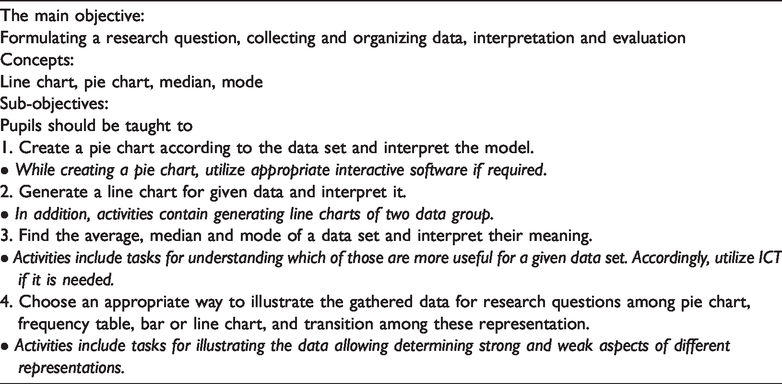
Since, the study focuses on statistics learning area of 7th grade Turkish mathematics curriculum, and the learning objectives were summarized in Table 2.
Objectives of statistics learning area in 7th grade mathematics curriculum.
Course content, which in ways to conduct a total of 12 hours during 5 weeks considering objectives was enriched as, summarized in Table 3.
Activities conducted during implementation.
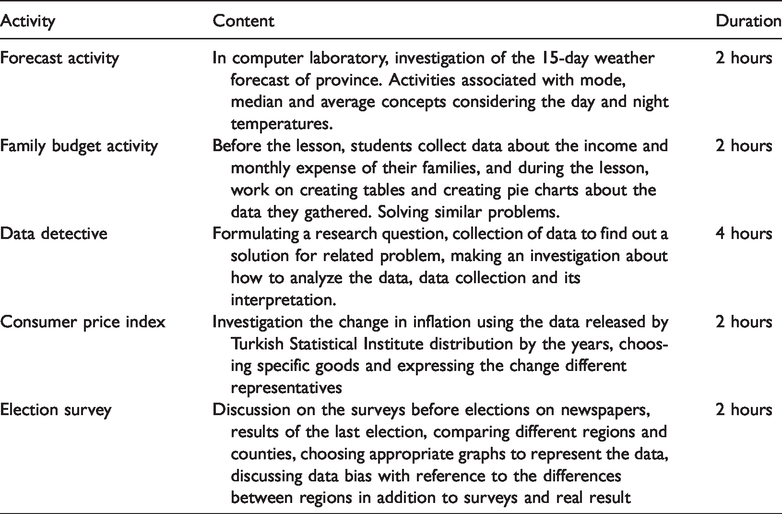
For each in-class activity, teacher firstly underlined the concept related to the relevant topic and explained procedural knowledge for some calculations, and then enriched the lesson using worksheets. For each of the tiers, some tasks were included in the worksheets. For instance, for the forecast activity, students were asked to visit http://www.havadurumu15gunluk.net/ web site, and to note the day and night temperatures of their province in related places in worksheet. Students were requested to response some questions from Tier 1 to Tier 3 relatively such as what they understand the given concept, how they calculate the described concept using data they gathered from the internet and compare and making interpretation with the data. Afterwards, similar implementation was carried out using a ready-data set. For CG, students were asked to answer the questions in pc lab using directions given in worksheet. Both worksheets in EG and CG were collected. Different from CG, in order to gamify the teaching process in EG, students’ worksheets were scored by teacher using an answer key on the scale of 100.
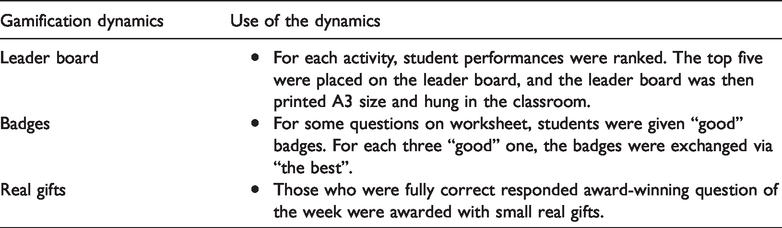
Gamification elements have been included in the process through two different channels. The first was the digital online platform, where the students awarded by leaderboard and budgets. The students were asked to visit the web address shared with them on the evening of the activities implemented. Here, top five students in the previous week’s activities in the EG group were announced on the leaderboard as a result of their performance in the previous week. Badges, which was used as another virtual gamification element, was given to students who responded the questions of tier1 and tier2. Similar to leaderboard, the badges were announced on the website and represented by silver and golden star so that the student who collected three silver star was replaced with golden. Second channel was the real gift. At the end of each activity multiple-steps awarded question, tier3, those who responded correctly each steps were awarded via real gift.
The elements of gamification integrated gamified instructional process on statistics topic is illustrated in Table 4.
Gamification elements used in mathematics course.
Instruments
In order to determine the influence of the gamification elements, students’ achievements were revealed and their perspectives were gathered to explain the influences.
Student Achievement Scores: Final exam scores were used in order to define student academic achievements. Since, Watson (1997) proposed a three-tiered hierarchy to explain statistical literacy proficiency; the final examination questions (For sample questions, see Appendix) covered this structure of statistics. In this study Watson’s model including three dimensions as understanding basic statistical terminology, understanding it in context, questioning claims made without proper statistical justification was considered to determine the statistical literacy. The questions in the final exam are briefly described in Table 5.
Question dimensions of final exam items in terms of statistical literacy.

The reliability of the test is calculated with the Cronbach’s alpha coefficient as .81.
Interviews: Interviews are used to explain students’ behaviors and perspectives by taking the relationships searched as a result of their experiences (Ebenezer and Erickson, 1996). Similarly, in this study, after final examination, interviews were administered to nine selected students in line with their responses in order to explain how gamification elements worked in their experiences of the activities. Interviewees were selected purposefully according to their final exam scores (high, medium and low achiever students). The students were asked questions including how their cognitive process took place during the intervention with gamified activities.
Data analysis
In order to put forth the difference between two groups, t test was used for overall final exam scores regarding the assumption of homogeneity of variance. On the other hand, considering for each tier in the framework, we conducted Mann–Whitney U tests to compare the means of two groups to reveal the differences between CG and EG in the context of statistical literacy levels, as the normal assumption of t-test was not satisfied. In particular, for the analysis comparing of each dimensions of statistical literacy (basic terminology, context and questioning) between two groups, the .05 of significance level was used. The p value represented a 2-tailed significance if the result was not in the expected direction. Students’ performances regarding the overall scores of test were classified considering three intervals: 0-33 for low, 34-66 for medium and 67-100 for high performances. Finally, interviews were transcribed and analysed descriptively. The responses of the students were coded according to three themes which were pre-identified in the context of interview questions: (1) the contribution of gamification to facilitating learning, b) the affective contribution of gamification c) the general evaluation of gamifying process. Some direct quotations of students were provided to explore the interrelation between student achievements and gamified learning setting.
Results
Academic achievements in gamified and non-gamified groups
The descriptive data show that the performance of students in (EG) (n=21 and mean = 66.5) was higher when compared to (CG) (n = 20 and mean =45). In other words, the students in statistics classroom with gamification elements outperformed than non-gamified group. The box-plot obtained from these data is shown in Figure 3.
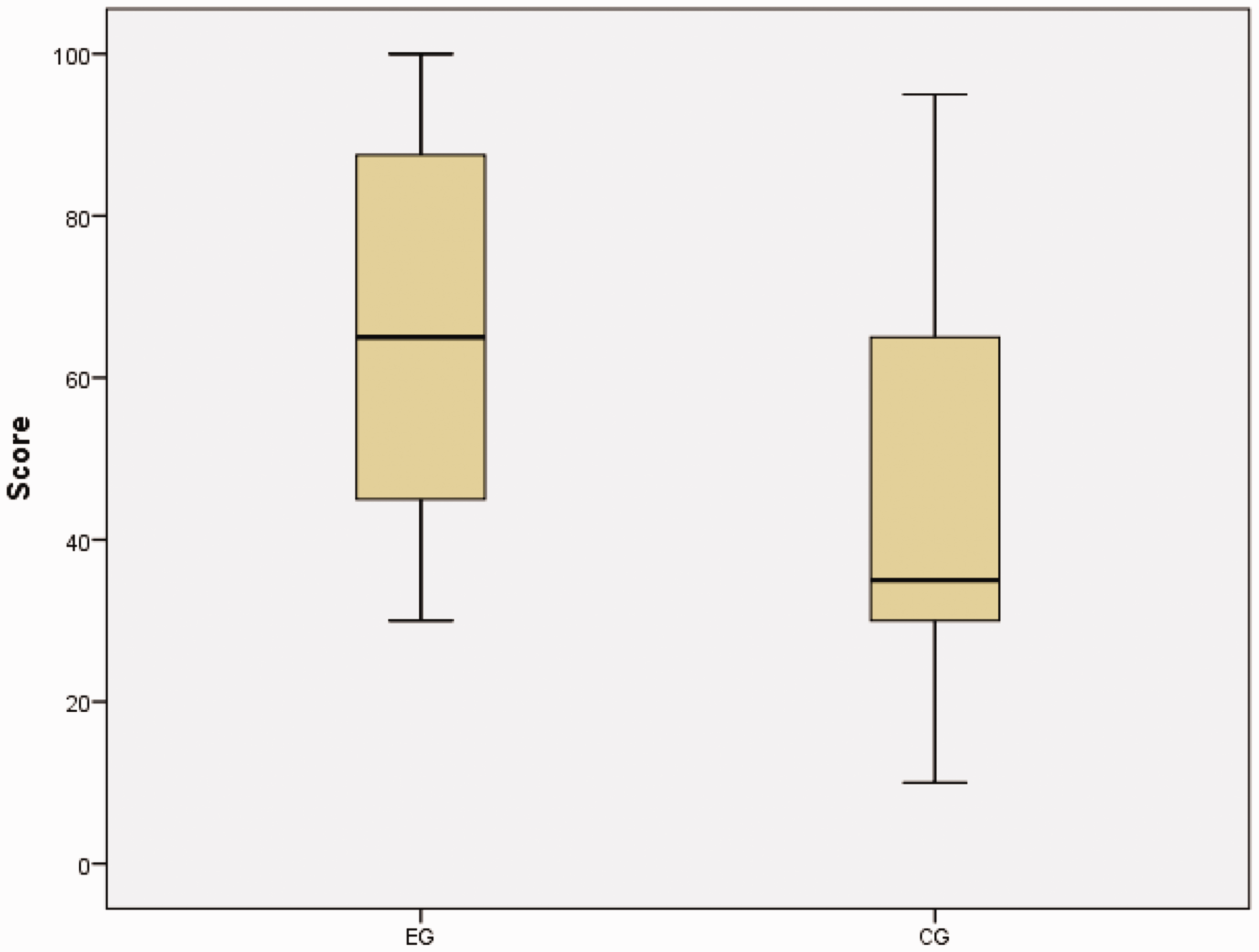
Distribution of statistical literacy scores of EG and CG.
Figure 3 presents a box-plot presentation of the distribution of statistical scores of EG and CG. The test variable is normally distributed within both groups, therefore t-test was conducted and the results showed significant difference between the EG and the CG in favor of EG (see Table 6).
Distribution of final scores among groups (N).

Performances in different stages of statistical knowledge
Considering students’ scores in the test, students in two groups were classified regarding to their scores as low, medium and high. The distribution of the sub groups is shown in Table 7.
Results of independent t-test regarding student achievement scores (N).

The distributions of final scores suggest that there is a considerable difference between two groups in favour of EG, which was arisen with the use of gamification elements. Students’ performances regarding the stages of statistical literacy knowledge, both CG and EG groups in terms of the tiers of statistical literacy and their test scores are outlined in Figure 4. The data is used to interpret how the intervention affected to develop knowledge in the tiers of statistical literacy.
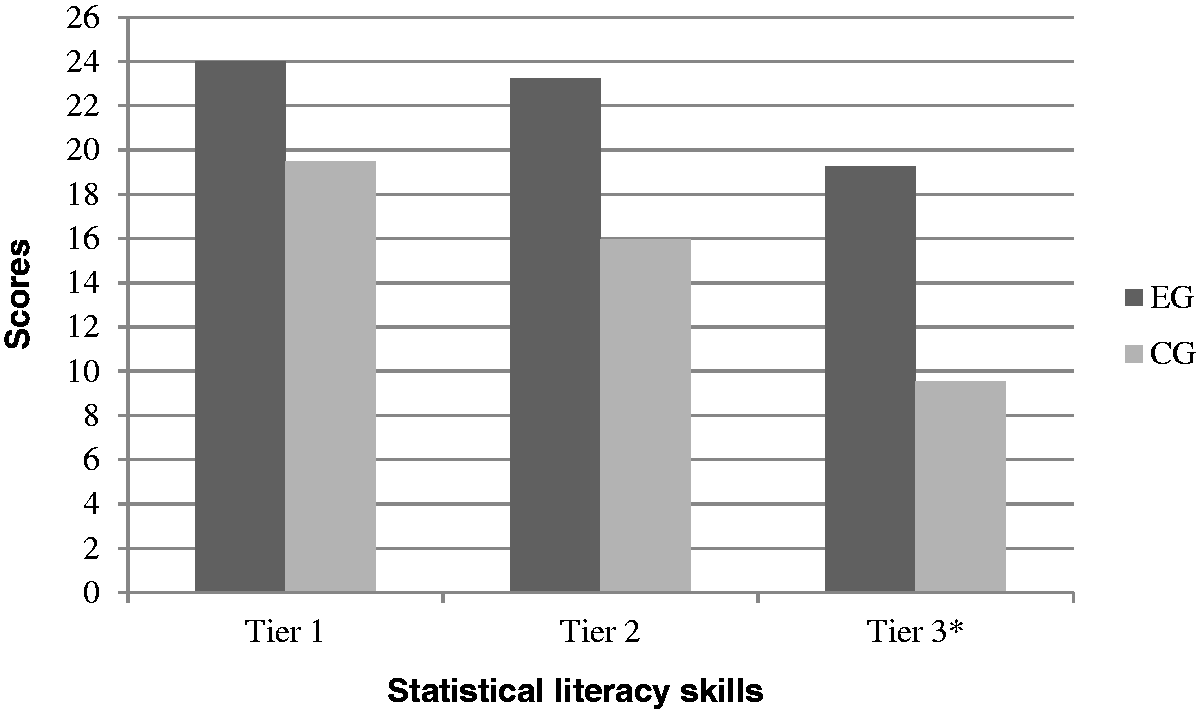
Final test scores in terms of statistical literacy of EG and CG (Mann–Whitney U-test results, *p = .005 < .05).
Out of 30 points, although the tier 1 performance (mean scores in this stage) of both groups were close to each other, EG showed higher performance. The mean scores difference between two groups was expanded in Tier 2, and statistically significant difference was confronted for Tier 3 in favour of EG. The same gamification elements were used in three stages by organizing them related to the tasks in the stages.
Understanding the effects of gamification elements in developing statistical knowledge
Interviews with 3 students from 3 sub-groups of students in EG provided some clues to understand how the gamifying process affected to their academic achievements. Accordingly, the qualitative data also guided researchers to make some inferences and spanning between gamification elements and academic achievement. The questions in the interviews were generally directed due to their work in the tasks. In this context, students were asked whether the gamification elements have contributed their efforts in the tasks both mentally or emotionally. Thus, their motivation and engagement were also asked. Finally, the implementation is asked to them whether they find the process attractive.
The answers of the interviewees were coded in three main themes presented in Figure 5: (1) contribution of gamification elements in facilitating learning (constructing new knowledge), (2) contribution in affective domain (motivation, engagement, interest) and (3) evaluation of overall the gamifying process.
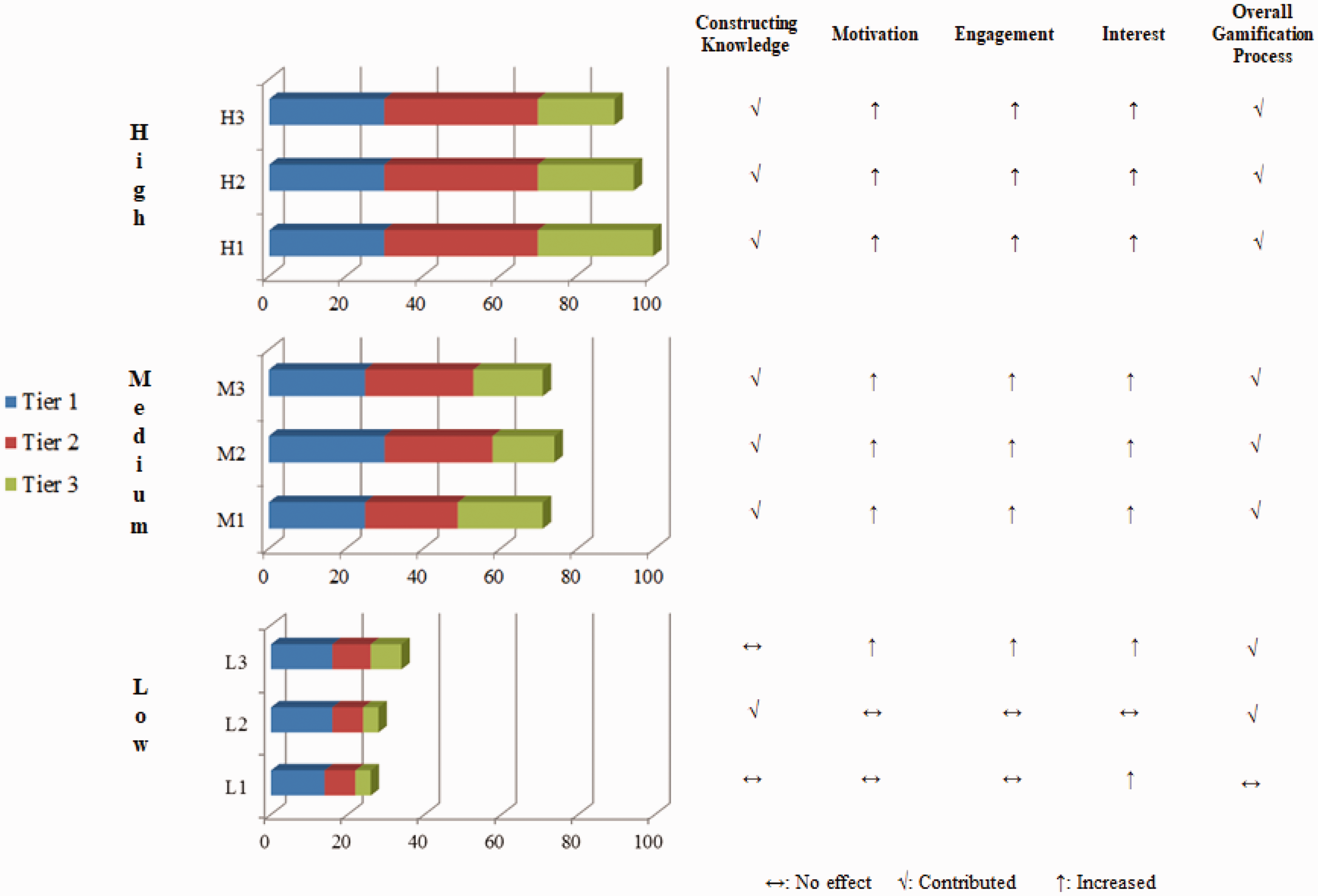
Summary of interviewees’ performance and the interview protocol.
For instance, all of the high and medium achievers stated that the gamifying learning setting has contributed constructing new knowledge. They think that the process has increased their motivation as well as engagement. For instance, H1 addressed that “… When I saw my friends getting badges, something triggered me to get one of the badges. However, the examples were different in the textbook; I sometimes tried to pose problems. I made a list of nut crops regarding to the cities. I calculated their median, average etc.” M2 expressed that “… At first implementation, I asked myself why not I took place on leaderboard. Then I decided to study harder for the previous activities. I had definitely peak motivation, I actually still have.” On the other side, majority of students in low group expressed that the implementation did not affect their motivation nor contributed their studies. As L1 identified, “The process had no contribution. I mean I was not whipped. It was interesting, but I was not motivated. It was difficult to take place in the leaderboard or to get a gift.”
All of the respondents at high and medium level were positive about the contribution of implementation to their engagement. For example, M3 expressed that “I tried to engage more in the lesson, because I had opportunity to get more badges. At the beginning, it was so easy but then it became so hard to get one in the study period. I studied for a lot of questions at home to be more active in the class.” Likewise, H2 asserted that “When you feel you compete to collect more badges, take in to the leaderboard or most importantly for me to take a gift; you necessarily should engage all the activities. In addition, it is not enough to participate to activities during the lesson. Once we have collected the data (means data detective activity), so I asked questions to the people on the street.” However, for 2 of 3 low achievers expressed that the implementation had no influence on their engagement. While L3 specified that “I tried to win the teacher’s favour, I often ask to talk in the class.”, In contrast, L2 stated, “I’m not sure it helped me to participate to the activities more.” Similarly, the students addressed that the implementations attracted their interest.” Interestingly, while medium and high level students prefer real gift or leaderboard as a gamification element, badges was the main choice of the low achievers. In one noteworthy statement from the interviews, L1 pointed out that “… It was difficult to win a gift or take place top three on the leaderboard. However, it was easier to get a badge. I have found the average of both and get a badge, I was so happy.”
To sum up, qualitative results indicate that the gamification elements used in the instructional process have contributed students’ efforts in the tasks as well as increasing their motivation and engagement. Majority of the interviewees found the implementation interesting and found the approach beneficial. On the other hand, while high and medium level of the students had similar experiences, low ones gave vague answers for some questions. Consequently, the overall perspective of the EG groups can be considered as satisfied.
Conclusions and discussion
In this study, middle school students received an instructional package about statistics in a mathematics classroom enriched with some gamification elements. The results of the intervention showed that students in gamified classroom performed better than the students in non-gamified group. In this sense, previous studies reported some various results about the influence of gamification on student achievement. For example, Tomaso (2014) conducted a large-scale study with 20.000 participants from primary and secondary schools and noticed a weak positive effect of student achievement and gamification implementation. Some other studies concluded that the gamified activities positively and strongly affected o students’ academic performances (e.g. Çakıroğlu et al., 2017; Domínguez et al., 2013).
In this study, gamification played a positive role on motivations of students. Similar effects were also seen in a number of studies. For instance, Çakıroğlu et al (2017) used a combination of gamification elements in an ICT course and noticed that the gamified process effected to students’ motivation and engagement that they indirectly had influences on student achievement. In another study, Domínguez et al. (2013) found that gamifying an instructional process positively affected student motivation and achievement, however participation of the students did not change. In this study, the students in experimental group showed slightly higher performances. In the intervention, it is thought that gamifying the instructional process supported students to keep them in the direction of the learning objectives of the stages. In the context of teaching statistics, Tishkovskaya and Lancaster (2010) suggested to follow a way from easy to difficult in order to build statistical literacy skills. In this study, three tiers of Watson (1997) in developing statistical knowledge have guided us in order to apply the instructional process. In other words, the structure of the statistical knowledge provided us a well-organized way of gamifying. Hence, we gamified the tasks in order to direct students to pass the stages. Thus, as a result, gamifying the process supported students transiting among the stages of statistical literacy. In addition, the students in EG expressed that the gamification elements used in classroom has developed their engagement not only in the school, but also outside. This is to say some of them stated that they also studied at home to get badges, take a place in leaderboard or win a gift. The situation is considered as a dilemma in gamification whether it is a target itself or a vehicle for achieving the tasks (Lee and Hammer, 2011). The results of this study supported the idea that aiming to gain a gamification element in the study was a vehicle for achievement as well.
On the other hand, NCTM (2000) suggests connections between mathematics subjects and real-words situations in teaching statistical knowledge. In terms of passing the tiers, the students’ perspectives reflected that passing from one to another was facilitated in experimental group students. Thus, gamification elements in the experimental group is supported students to proceed in the tiers of the statistical knowledge with keeping students motivated and making a sense of game like environment.
In the study, the nature of the course allowed to integrate gamification elements easily in to the instructional process. The experimental group students were asked to follow the directions in the activities supported with worksheets. Especially badges were given in tier 1 and tier 2 in which knowing statistical concepts and terminology, and adapting and implementing them in various contexts. Since Thompson and Iwata (2005) addressed to take care of a large number of students getting badges, and the counter-effect of over reinforce; we used a leaderboard in order to present the top performers of the previous week selected in accordance with their total scores. Thus in the study, students’ perspectives reflect that leaderboard allowed students to keep the external motivation fresh. Although most of the low achieved students expressed that the gamification elements did not affect to their motivation or engagement, they only found badges valuable because of getting it easy. On the other hand, real gift was decided to be given for high-level cognitive questions, requiring critical thinking, true interpretation or justification. During the activities related to Tier1, students were asked to make basic descriptions and calculations such as median of a given data set. The next tier they were requested making investigations such as collecting data on the web and constituting a data set, then for instance, choosing appropriate way of presenting data using the knowledge they already learned the previous tier. In the final tier, different cases such as graphs including errors in or newspaper articles with data bias used to understand how students provide justification the persuasiveness of the case. While badges were frequently used for the first two tiers, real gift was given for tier3 due to its crucial role of high-level cognitive questions, requiring critical thinking, true interpretation or justification. Although, Authors in prior study found that using real gifts may not work for university students; in this study for middle school students found them valuable for achieving the tasks in the instructional process.
According to the GAISE report, the ultimate target of statistics instruction is developing statistical literacy (Franklin et al., 2005). It is clearly addressed that for all stages of building statistical literacy, gamified class descriptively performed higher. Despite there was no statistically difference for the first two stages, in the third tier a statistical difference was noticed between the final test results in favour of gamified group students. In conjunction with the first two stages, the last stage defined as questioning of claims and connected to critical thinking (Guler et al., 2016). In this regard, one of the contributions of the implementation is pushing students to make investigation, inquiry and furthermore, to use their understanding in different contexts. Since the scores of the groups were both above the average in two groups, one conclusion may be derived that gamification implementation works more in higher cognitive level. In addition, one conclusion of this study is that while the implementation accurately increased the motivation and engagement of medium and high-level achievers, low performers remained distant. The results contribute to the instructional design processes in two folds. First, the study results support the idea that an appropriate gamifying process may provide positive learning performances during the learning process (Bai et al., 2020; Buckley and Doyle, 2016; Hakulinen et al., 2015). On the other hand, although a limited number of studies focus on the effect of gamification on academic performance of low-achievers, a study conducted by Ding and Orey (2018) revealed that students with low achievers tend not to engage a learning setting even enriched via gamification elements. Similarly, the results obtained from this study showed that even if the learning environment is gamified, the targeted success could not be achieved for the low. In fact, the interview data show that students become insensitive to the gamification elements after a while and joined the despair. At this point, perceptions to be unsuccessful prohibited taking the advantage of the positive motivation provided by the gamification elements for the low-achieved student.
Limitations and future implications
The study also has some certain limitations. First, this study was a small-scale study; a further study is recommended with a larger group to provide different analysis techniques for additional evidence. Second; since the study was purposefully limited to statistics learning area; and focused on the potential of gamification elements on the examples related with real life implementations having progressive structure.
Consequently, a conclusion may be drawn that, since the target outcome is difficult to achieve, or somehow boring for students, it may be a useful way inserting some gamification elements in to the learning setting. In this sense, gamification process may be embedded regarding the nature of the knowledge requiring for the objective. This may require some experience for teachers or instructional designers about being aware of where students need to be motivated or how they act in the tasks in the learning process. We believe our findings provide insights on, and new possibilities for instructional design for statistics instruction.
Footnotes
Declaration of Conflicting Interests
The author(s) declared no potential conflicts of interest with respect to the research, authorship, and/or publication of this article.
Funding
The author(s) received no financial support for the research, authorship, and/or publication of this article.
