




Abstract
E-learning offers tremendous benefits to teachers and students as it enhances the teaching and learning experience. Despite the adoption of e-learning in many educational institutions worldwide, delivery of construction management courses has been limited to traditional lecturing approach and the use of limited technology such as PowerPoint presentations and smartboards. This study investigates the effectiveness, benefits, and students’ satisfaction of using video-based e-learning approach in delivering the topics of a construction management undergraduate course by introducing instructional videos related to the topics of the course. A total of 67 undergraduate students were surveyed using a closed- and open-ended questionnaire in one of the leading universities in the United Arab Emirates. The survey was designed and posted using the Blackboard learning platform and students were asked to access these videos and respond to the survey via Blackboard. Surveyed students took the construction management undergraduate course in the “Fall 2018” semester using instructional videos supplied to them in the form of quick response codes in order to be more attractive learning experience to the students rather than using a direct web link that would be more accessible and even could be enriched with logo or numbers that reflects the quick response code contents rather than to distract them. This course has seven learning outcomes and the performance of students in the seven course learning outcomes was compared with that of students who took the same course in the “Spring 2018” semester using the conventional face-to-face lecturing. The responses received from students indicated that they are satisfied with the contents of the instruction videos and benefited from these videos. The received data were statistically analyzed and, despite the fact that this course required more hands-on applications, the results showed that e-learning resulted in better learning outcomes as compared to face-to-face lecturing and boosted student’s learning experience. Students also considered the e-learning approach useful as it allows them to access course material anytime and anywhere. Moreover, it has been revealed that absolutely more than 60% of the students preferred to study by blended learning, a combination of e-learning and traditional face-to-face lecturing since it is useful and helpful to their academic progress. It has been shown that despite the limited online e-learning resources of the course, educators can find solutions to enhance the traditional contents of the course material with the available online recorded resources or even to encourage students to develop a related interactive material to the course content that would be used for the subsequent semesters.
Introduction
Traditional ways of delivering lectures in classrooms have proved to be inadequate and inefficient. In the recent past, the education sector is witnessing dramatic progress and is undergoing a major shift towards e-learning. This shift has been influenced largely by technological and pedagogical trends and the greater worldwide access to the Internet. Adopting e-learning in teaching would be a positive influence to boost students’ learning in all levels (Ahmed and Zaneldin, 2013), whether for undergraduate courses (Zaneldin and Ahmed, 2018) or for the postgraduate level (Ahmed and Al Marzouqi, 2015). Also, using instructional videos is considered a major contributor to the shift in the educational landscape, acting as a powerful agent that adds value and enhances the quality of the learning experience. To be an effective player, instructional videos continue to have a dramatic impact on higher education challenging the traditional way of delivering course content. While some lecturers may be embracing the use of videos in teaching, there are still lecturers who are reluctant to integrate this technology into their teaching methodology or do not have the skills to do so (Al-Marzouqi and Ahmed, 2016). As a result of this shift, the world has witnessed an escalating increase in using the internet for educational purposes by adopting different ways. This is attributed to its availability, accessibility, and low cost of running. Therefore, the internet becomes broadly adopted all over the world diminishing limitations and eliminating boundaries of its use and applications. As a matter of fact, this has been reflected on the advantages and disadvantages of our lives generally and in the education sector particularly. However, deploying and spreading the knowledge all over the place without any constraints is considered as one of the key advantages of the internet. Enhancing the learning education and students’ outcome achievements using videos has become a trend and is known worldwide through the observed improvement of students’ performance and course outcome assessment scores (Gustilo et al., 2015; Ketsman, 2018). On the other hand, the fast progress of communication technologies, like social media, has led to more distraction to students, but at the same time has been a positive contributor to the learning process (Reyna, 2018; Stewart, 2015). Nowadays, students spend hours every day on browsing media and using social networks with little focus on their academic obligations. This habit can be changed by encouraging students to use the online pedagogical material, such as videos. Many websites such as Khanacademy, Edx, and Coursera and video channels like Vimeo, Bing, and YouTube offer massive number of free educational videos to the audience that are free, easy to access, and can be used to cast and upload recorded material that can be watched and followed from anywhere and at any time. These free internet-based channels are used vastly in learning, teaching, and training to improve the learning experience by saving the recorded videos on the servers. As such, these videos become an open resource to enhance the study experience of students.
Literature review
Several attempts have been made to assess the factors and instructional tools that affect students’ understanding of construction management concepts. Sunindijo (2016) examined a first-year undergraduate construction management course over a 6-year period to identify factors that affect student satisfaction. Thematic analysis of student surveys was used to identify five fundamental factors: lectures, assessment, teaching methods, communication, and lecturer characteristics. The author concluded that lectures should be structured to have interesting and practical contents. Assessment tasks should have clear criteria, be linked to lecture contents, and diverse. Teaching methods should be diverse and be supported by organized lecture notes. Lectures should also be communicated clearly, respond to inquiries in a timely manner, and give valuable feedback on student performance. Lastly, lecturers should be perceived as being knowledgeable, enthusiastic, approachable, helpful, and considerate. Long et al. (2009) described a work carried out using simulation games to teach key aspects of construction management to civil engineering students. The use of simulation games for this purpose is well documented but is still not fully accepted. The work aimed to address this by analyzing the use of simulation games as the primary teaching mechanism in a teaching module, Applied Construction Management. Jaffari et al. (2001) developed a system called VIRCON, in which the traditional construction planning is combined with 3D/4D models of the project. VIRCON has been implemented using object-oriented programming, client/server configuration, database management information, and CAD. A unique scheduling and simulation engine was developed to integrate cost planning and scheduling and accommodate integrated cross-impact analysis. VIRCON was validated by means of student group projects on a course where many of the project management techniques were being taught. Results showed that using VIRCON in teaching created a dynamic and interactive learning atmosphere. Hingorani et al. (1998) described the implementation of new information technology-based teaching to achieve and compare the corresponding learning effectiveness with lectures and written case study methods. It was concluded that the information technology-based teaching method was more effective as compared to written case studies and lectures in developing higher-level cognitive skills and triggering interest in learning project management-related topics. Zou (2007) investigated the feasibility, effectiveness, and viability of e-learning in construction management education and students’ preference as opposed to traditional face-to-face learning. E-learning modules were developed for an undergraduate third-year course, Construction Technology. The results showed that the majority of students’ knowledge using e-learning has increased and their experience of e-learning has been positive. Besides, the majority of the students indicated that they would prefer a combination of face-to-face and e-learning methods.
May and Brady (2003) taught Timber Structural Systems online to nonengineering majors. The course was divided into five different components addressing different course objective and learning outcomes. Students were required to work on the course component activities synchronously. The authors concluded that the course showed better students’ performance when supplementary online material was used by the students in a face-to-face instruction modality. Jaselskis et al. (2011) experimentally examined virtual project and supervision in as innovative instruction tools in the education construction education environment. These tools would allow students to view real project construction phases. The authors concluded that the experimental results showed that modern video and communication technologies permit construction specialists to conduct real-time project journeys and to supervise construction from a distance. Seago (2003) presented problems faced when trying to develop a comprehensible curriculum using video cases to help educators increase their mathematics teaching and learning. However, the author found that video cases can be a useful means for educators’ learning in mathematics education. Berk (2009) emphasized the great value of using video clips as an instructional tool in the academic classroom. The author illuminated the powerful cognitive effect the video clips can provide to students, and how the video simplifies the students’ learning and increases the success of every student. The author provided tangible recommendations for utilizing video technology as a provision for learning enhancement. Besides, by selecting the appropriate video clips that were incorporated into the instructors’ teaching material and conducted classroom research on the effectiveness of the techniques they use, it was revealed that the clips could add a dimension to teaching that may change the teaching style forever; and instructors’ view of teaching and students will never be the same. Karppinen (2005) stated that despite the fact that digital and online videos are regarded as helpful tools in teaching, they are still just one constituent of a classroom activity scheme. The learning outcomes are influenced greatly by the way videos are used in a pedagogically meaningful way in teaching, studying, and learning processes. Presenting information in a digital or online video does not necessitate in-depth education. The value of the videos is hinged on the ways they are put to use in real-life teaching as part of the overall learning environment, for example, how viewing or producing videos is integrated into other learning resources and tasks.
More recently, Bokor and Hadju (2014) discussed the impact of using blended learning in teaching construction management courses at Ybl Miklós Faculty of Architecture and Civil Engineering, Szent István University. The courses were created using a blended-learning model and face-to-face teaching and learning were combined. Jaeger and Adair (2012) developed a communication simulator and studied its learning effectiveness in an undergraduate engineering program that was analyzed using pre-and post-test experiments. The simulator showed a positive impact on learning effectiveness regarding communications in construction management projects. A distinct requirement for real-world scenarios was identified regarding the application of communication documents, which communicate project responsibilities. Shanbari et al. (2016) introduced augmented reality technology (ART) and a layer of artificial visualizations to simulate the environmental context and space and time limitations of various construction processes. The authors concluded that more research should be conducted before the ART technology is utilized as a typical tool to enhance the students’ learning efficiency in construction management students. Peterson et al. (2011) introduced Building Information Models (BIM) tools and techniques in construction engineering project management courses. They indicated that introducing BIM tools were helpful in developing class activities based on lifelike project sceneries and information to help students apply various project management methods to real-world project management problems. Sherer and Shea (2011) proposed different sorts of inside and outside classroom activities that can be effectively used with online video tools to involve students in course discussions and to fulfill course learning objectives, where the objective is to educate students in fundamentals of science and engineering needed to pursue their career in the profession, whereas the learning outcomes is to apply knowledge of the basic courses to solve engineering problems and to implement their acquired knowledge of engineering science to provide meaningful solutions to engineering problem. Benedict and Pence (2012) indicated that utilizing snapshot blogs (websites that posts a series of informal photographs taken quickly, typically with a small handheld camera) and videos developed by chemistry students and retrieved by means of barcodes through smartphones appears to be the new trend in teaching. They also underlined that posting text on blogs and generating and adjusting videos are becoming a typical technical proficiency.
Multimedia has turned into an essential portion of the teaching and learning environment. Education institutions are getting multimedia embedded in their curricula and in fact becoming a foundation for numerous blended courses. Multimedia technology is defined as the uses of interactive computer elements, such as graphics, text, video, sound, and animation, to deliver a message (Koch et al., 2017). Multimedia is becoming the focal information conveyance apparatus. Evaluation of multimedia and technology (Fulei, 2010) in education is presently broadly a debated theme. Numerous available global studies support this trend. Surveys are important as they call attention to the significance of using technology and the requirement of shared communication and appropriate preparation so that the viewpoint of using multimedia would be customary to scholars who are not used to technology in education. They also indicate the necessity to provide diversity amongst scholars and their creative contribution. From a hands-on perspective, one tool of multimedia, such as portfolio could be used to afford an occasion to learn, acquire, explain, and assess measures.
The arena of engineering learning is a field that has attracted attention (Hashim, 2015) to fortify the conveyance scheme of vocational education through the use of information and communication technologies (ICT). Since the teaching and learning activities have become dependent on communication technology, the pedagogy model is becoming more difficult to remain unopposed. E-portfolio is a perfect stage for use in teaching and learning curricula. It supports students’ learning skills (Oner and Adadan, 2016), supports students’ creativity (Koraneekij and Khlaisang, 2015), manages information in organized and trackable environment (Yang et al., 2016), provides easy and quick access on learning activities (Yastibas and Yastibas, 2015), provides an active learning environment (Chantanarungpak, 2015), and helps the practice of identifying former learning capabilities (Ahmed and Ward, 2016). Therefore, utilizing of E-portfolios evidently boosts the value and innovation in the education structure over the procedure of ICT to generate a collaborating education scheme. It increases the value of vocational education in general and results in a different method that could be followed to advance the ICT practice in vocational teaching. Nevertheless, E-portfolio growth needs a background and exemplary model to fulfill the requirements of a teaching system (Young and Morriss, 2007). This is reinforced by Ku and Chang (2011) that established a distinct E-portfolio model for learning and assessment measurements, while Balaban et al. (2011) proposed an E-portfolio for lifelong learning. Educators can use the E-portfolio system in two ways: (1) To present their data and to contribute to the institution’s E-portfolio; and (2) To communicate with students and support their learning process. However, considering these two E-portfolio prototypes only demonstrates that there is a lack of established models, the importance is only specified to items such as basics of the course management system, shared area, and learning and demonstration zone. Nonetheless, concerning its internal structure, every E-portfolio consists of two main parts: (1) Private: a set of data in E-portfolio available only to the owner; and (2) Public: a set of data grouped and published as an E-Portfolio view to the wider audience. Most E-portfolio views developed in the context of formal education are intended for assessment. E-portfolio inner procedures are significant to exemplify the expedition of a scheme to achieve the needs of learners. These two models do not comprise accreditation of prior experiential learning (APEL) fundamentals to be applied in an instructive scheme. Therefore, an E-portfolio prototype is desired to be established to satisfy the vocational education system requirements. E-portfolio is a technique that utilizes the idea of virtual learning setting, founded on E-learning. E-portfolio technique saves information in a digital system and is manageable irrespective of location and time (Dimarco, 2006). E-portfolio is an assemblage of organized, digital, cooperative, well-thought-out sequences to monitor student’s learning skills and it is easy to use in sharing and uploading information online (Handa et al., 2011). Modern schooling offers students an opportunity to be mobile during the study period and spend it on different institutions (universities). E-portfolio can assist in this process and enable a quicker, easier, and more transparent process of switching between institutions or study programs in a way that competences and prior learning are documented and proven in an easy and transparent manner.
Study objective
Despite the importance of the aforementioned reaches discussed in the literature review section, they were not made to specifically address topics related to teaching construction management concepts. In this study, 67 undergraduate students in one of the leading institutions in the United Arab Emirates were surveyed to investigate the effectiveness, benefits, and students’ satisfaction of using video-based e-learning approach in delivering the topics of a construction management undergraduate course by introducing instructional videos related to the topics of the course. The survey was designed and posted using the Blackboard learning platform and students were asked to access these videos and respond to the survey via Blackboard. Surveyed students took the construction management undergraduate course in the “Fall 2018” semester using instructional videos supplied to them via Blackboard in the form of quick response (QR) codes. The responses received from students were statistically analyzed and the analysis results are presented. The performance of the “Fall 2018” students in the seven-course learning outcomes was compared with that for students who took the same course in the “Spring 2018” semester using conventional face-to-face lecturing.
Using QR codes in teaching and learning
Nowadays, the digital age derives (information presented in a digital form) society evolution significantly by making the schools dynamics rather than being static, so more technological tools become available to educator to enhance the pedagogical process. QR codes (Figure 1) are similar to the well-known bar code that are extensively used in marketing and commercial uses to include information of stuff that could be read easily.

Quick response code “Construction Management CIVL445”.
At the present time, there are a huge number of smartphones and other devices that are able to recognize this information so the user can scan, read, store, and share them. The user needs an app that reads the QR codes. There are plenty of free QR code apps to download for android and Apple products. To read a QR code, simply a phone with a camera is required and has to have the capability to install apps. These QR codes are used in education for teaching purposes and showed their potential in education, like in teaching laboratories of Chemical Engineering to enhance the learning process through deploying multimedia teaching content to students (Álvarez-Hornos et al., 2014). In fact, there are challenges that could delay implementation of the QR code use in education. In order to overcome these difficulties and challenges (like lack of teachers’ knowledge and the essential technological skills, internet availability, mobiles, or tablets and the innovation to present the information), practical examples of how QR codes can be integrated into teaching should be investigated. The integration of QR codes in classroom activities and perceptions of the integration was studied by Son (2012). It was shown that pre-service teachers perceived the use of QR codes to be easy and useful in learning activities and teachers demonstrated positive attitudes towards QR codes and expressed their intention to adopt QR codes in the future. QR codes were implemented in teaching an industrial engineering course (Torres-Jimenez et al., 2018), to improve the learning process with two specific subjects—thermal engineering and the electronic instrumentation—to teach students the use of the lab instrumentations through instructional videos deployed via QR codes. Students showed their acceptance and satisfaction through a deployed survey and expressed their happiness in using mobile technology as part of the learning process. The electronic instrumentation teaching experience was enhanced through integrating QR codes in the teaching of an engineering subject (Dorado et al., 2016). The implementation of QR codes was done through the restructuring of subject objectives and demonstrated in the application of mobile learning. Tulemissova et al. (2016) explained that there are cases when there is an urgent need for information by the teacher, and it is impossible to find in an instant for a number of subjective reasons, but QR code technology can offer exceptional advantages like: (1) Easy access, where it can be placed anywhere and everyone can scan it; (2) A deeper relationship with customers, which will increase the interaction with both sides and even can be used for statistical research for progress monitoring; (3) Bridge online and offline media, where embedded information can be read in both status, except media; (4) Real-time information, to present the aimed information at once, and this can be changed using dynamic QR code; (5) Invoke the user’s curiosity, as an alternative stimulated way for the users. These technologies can provide information about teachers for students, undergraduates, doctoral students, researchers, and administration. Maia-Lima et al. (2015) presented a didactic experience in the context of the classroom, blending smartphones and QR codes that have proven to be powerful in problem solving and in investigative tasks by the motivational factor that triggered students. It is recommended that teachers try to find effective ways to leverage mobile tools in the classroom as the mobile learning becomes more and more prevalent (Miller, 2014), where mobile learning can create both the tool and the need, especially free applications and tools that can be used in enhancing the learning experience. This is going to make teachers happy, since there is no financial commitment to purchase such kind of apps or tools, and that makes the implementation of these practices easier. There is a huge number of websites and blogs that introduce ways and ideas to implement and integrate QR codes in the learning process that encourage educators to integrate them directly with their courses.
The evaluation process
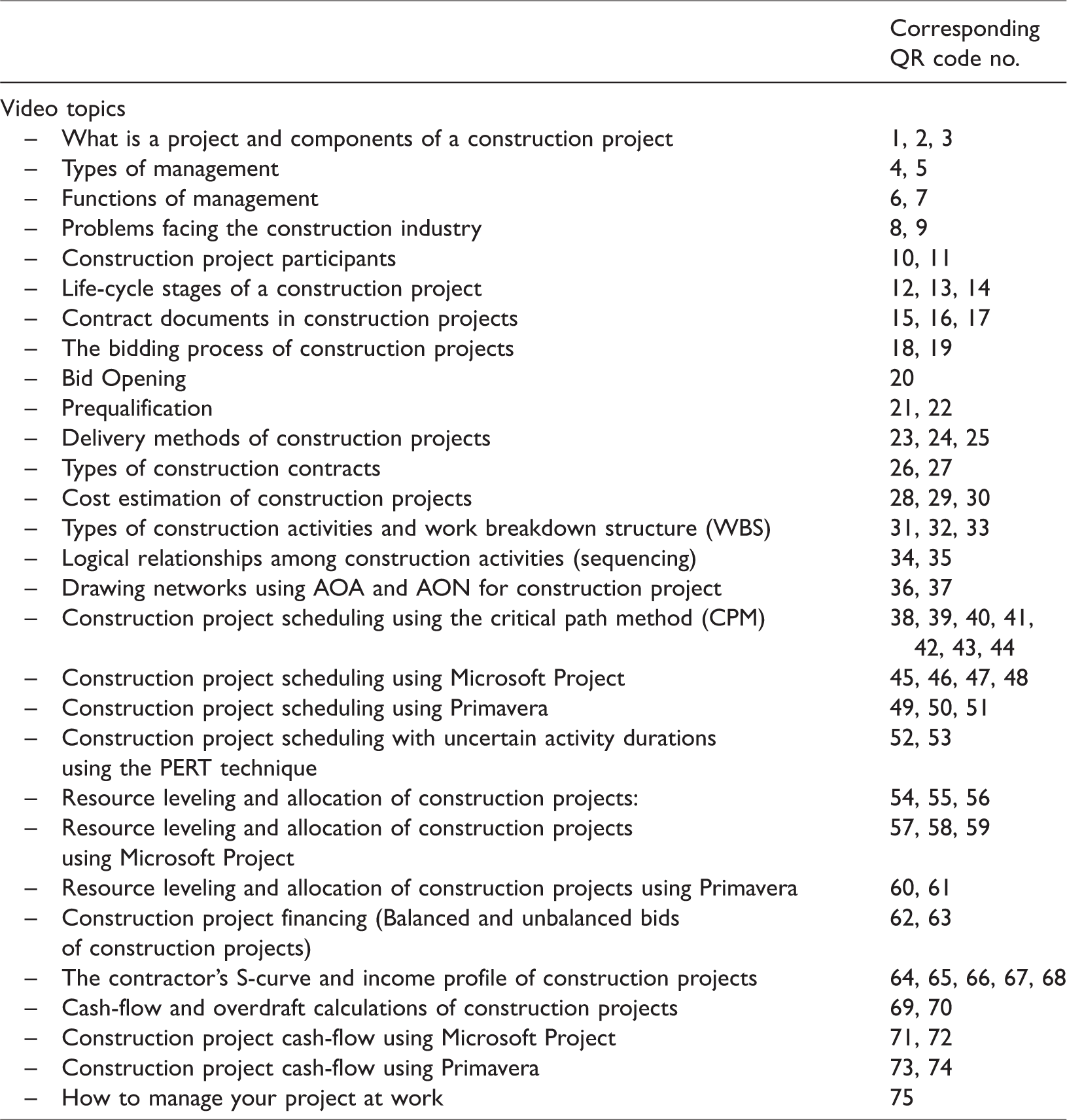
All students enrolled in the construction management course (a total of 67) were surveyed in this study. The course coordinator approved to conduct the survey of the compliance with the university ethical research code according to the University Research Policies and Procedures. The students were informed about conducting this survey after the material was distributed, and an anonymous system through the Blackboard was established to maintain the confidentiality of the students’ identity. The course committee suggested deploying the QR code material before the midterm and final exams into two stages. Stage one comprised distributing printed sheets with the QR code material that is related to the subject covered before two weeks of the midterm to give enough time to the students to grasp the covered subject delivered during the class time, in order to give them the opportunity to understand the benefits of the deployed material. In the second stage, the material covered from midterm to the end of the course was deployed before two weeks of the final exam for the same aforementioned reason of stage one. The questioner statements were explained in detail to the students and they were allowed to query about any point before deploying the survey. This course is a core course in the Civil and Environmental Engineering Department at an international institutional and was offered in the “Fall 2018” semester. Several subjects from the material covered in this course were selected to represent the main course topics and concepts. At the same time, an intensive search was done to find the best related recorded YouTube videos published online. These videos were collected, reviewed, and filtered for further usage later in this study. The selected topics are listed in Table 1, where each topic is related to a number that is associated with YouTube.
Selected subjects for the “Engineering Management” course.
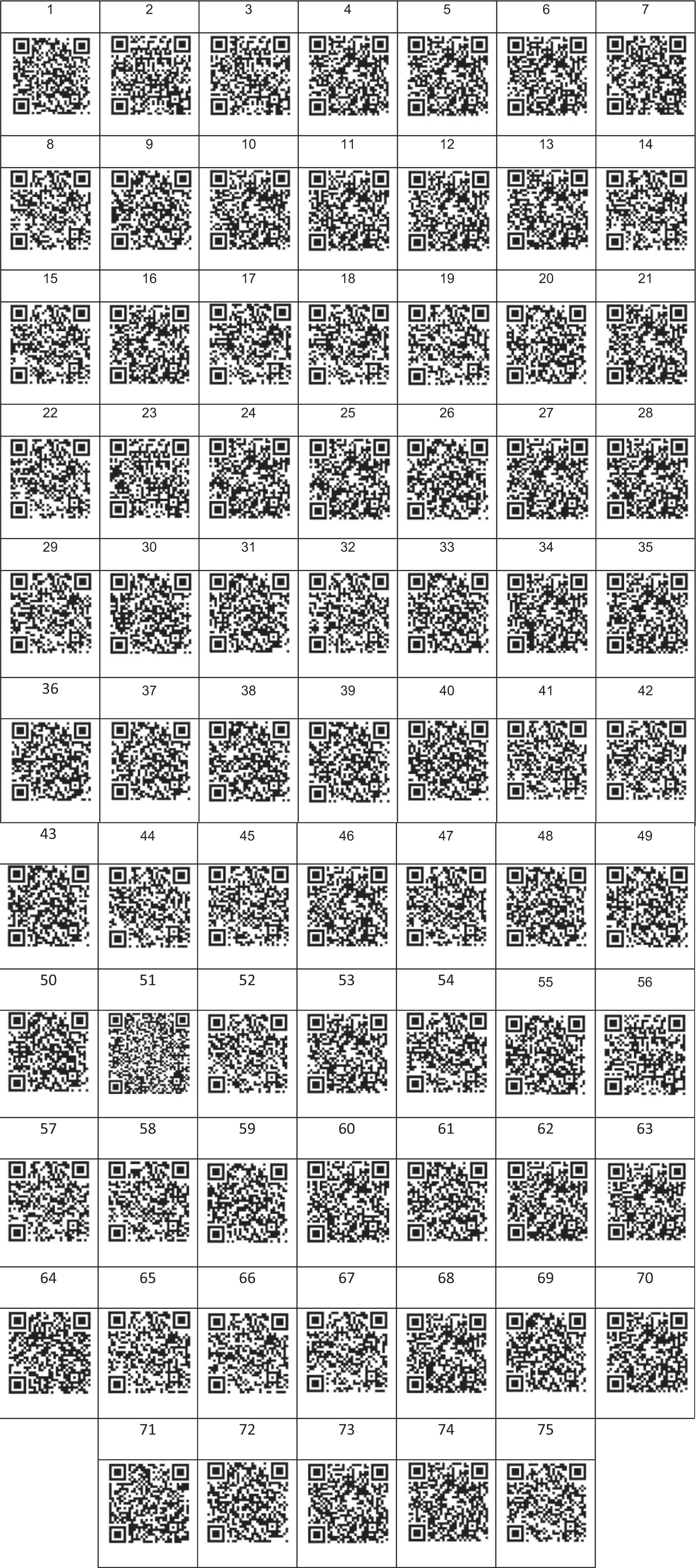
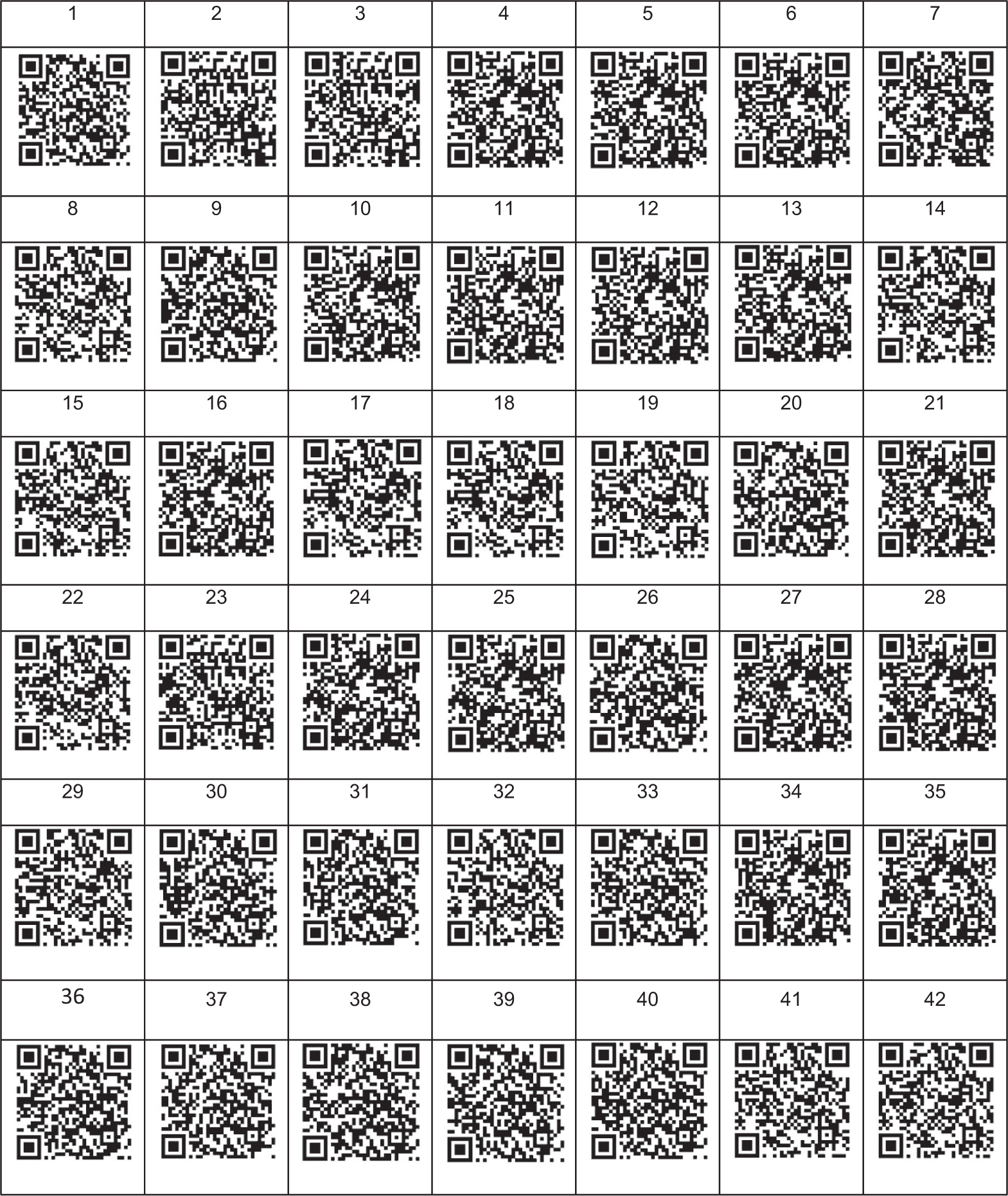
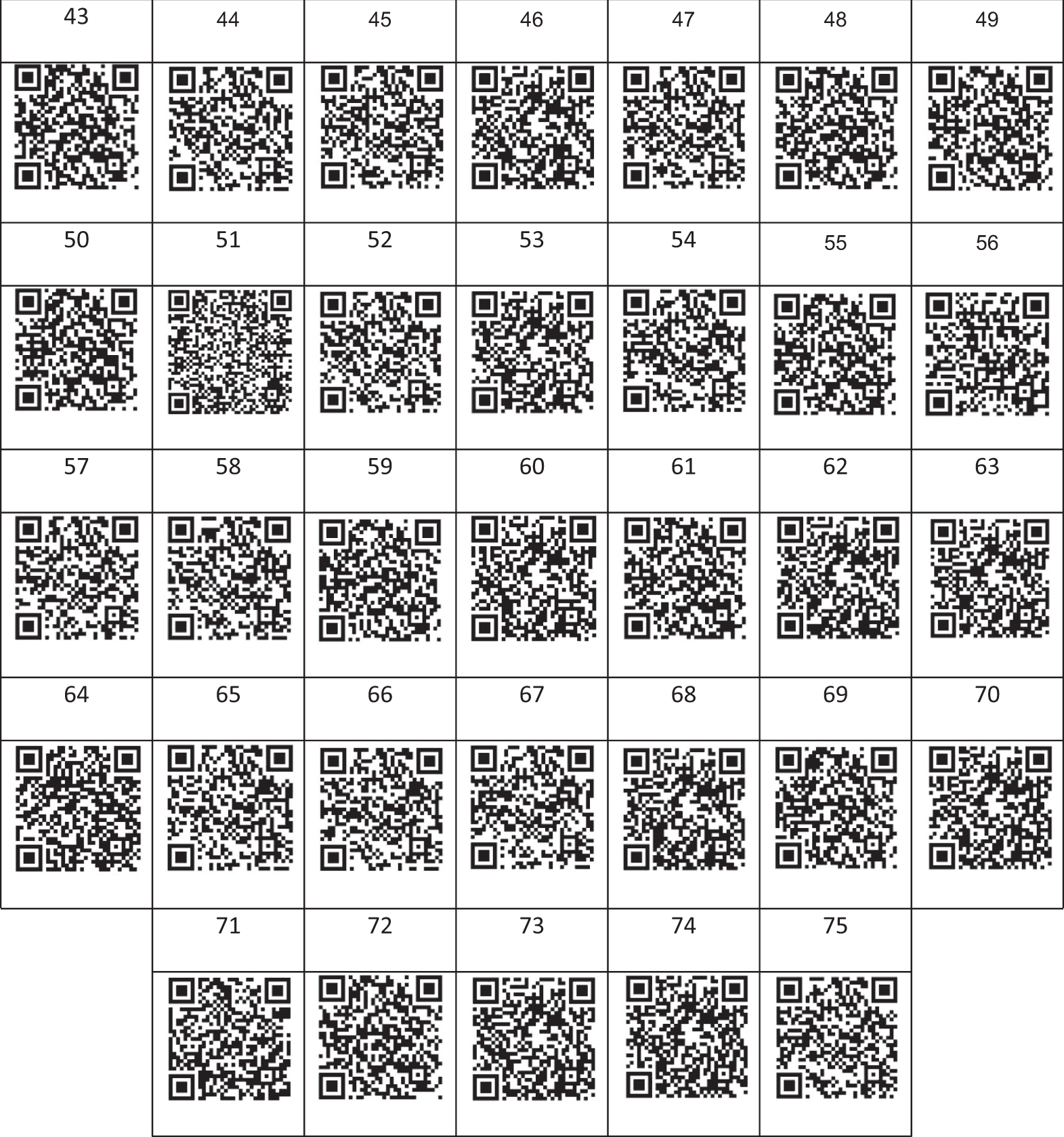
A QR code is used (instead of using traditional links) to make it easy for the students and encourage them to access the online material using their smart devices, as listed in Table 2.
Corresponding QR code for the selected subjects for the course.
The students used their smartphones and iPads to concurrently access a variety of information relevant to the course topics. Besides, it helps the course instructor to upload more online material by distributing additional QR codes to the students either in a sheet or via email or even by publishing these QR codes in a webpage or in Blackboard (an official learning platform used by this international institution). In general, the aim of the distributed survey was to figure out the opinions of the students toward watching videos related to the studied material, and whether the suggested videos were helpful to them and technically clear and good from the recoding perspective. Moreover, the survey also investigated if students prefer to have a recorded lecture or see the course instructor in the video. It also investigated whether students prefer blended learning over traditional delivery methods. The videos were selected to cover certain required learning outcomes for the ‘Construction Management’ course. An overview of identifying learning outcomes, in general, and for the ‘Construction Management’ course, in particular, is explained in the following section.
An overview of identifying course learning outcomes
The Construction Management course is a core course in the Civil and Environmental Engineering Department. The course learning outcomes were carefully identified to address the following general requirements:
Outcomes should be designed to fit into the rest of the program curriculum. Outcomes should be student-centered. Outcomes should have Blomberg action verbs that can be observed and measured. Outcomes should be grouped in broad categories based on similarity to determine if one outcome can take the place of several. Draft outcomes should be shared with others to be certain that the most significant learning is captured in outcomes and that the language is written in such a way that it is understandable to those who do not have a background in the field (advisors, potential students and their parents, employers).
The next step is to select proper and specific learning outcomes for the Construction Management course. In essence, the characteristics of good learning outcomes should consider the following (Davis, 2016):
Focus on the knowledge and skills that students can demonstrate in this course (not on what instructors or curriculum aim to teach students). This satisfies the requirements that outcomes should be student-centered. Prepare the outcomes in a way that the learning described in the outcomes should encompass the “essential and significant” knowledge and skills students should develop in the course. Make outcomes short; usually, one sentence in length that clearly states the behaviors that students should be able to demonstrate. Make sure that outcomes focus on the action that signifies student learning by using concrete, measurable verbs (action verbs). First drafts of outcomes often contain verbs like understand, be aware of, or appreciate that are difficult to observe and measure. Actionable verbs such as interpret, compare, design, and evaluate are far more concrete and less complicated to observe and evaluate. A good number of outcomes should usually be between five and seven. The focus should be on creating a manageable number of significant learning outcomes that cover the entire topics of the course, and it is better to work with six focused outcomes of significant learning than a dozen scattered ones.
E-learning methods for education tend to become complex to model as relative education levels increase. The quality of content and smooth learning methodologies are major criteria used to assess e-learning effectiveness in an e-learning platform for higher education studies (Al-Alwani, 2014). It was postulated that technology will enable educators to design courses and programs that are learnt in the same way that individual students learn, and we offer some conditions that are believed are important to further this goal (Prineas and Cini, 2019). As a result, it was concluded with a consideration of how the faculty role will necessarily change as a result of the advances in our understanding of using technology to improve learning outcomes. However, identifying the most important things students should learn within a course is the first step in deciding what should be assessed, but course learning outcomes (CLOs) have other uses as well. When outcomes are defined, departments can map the outcomes onto the courses that they teach to identify areas within the program where outcomes may overlap (or otherwise be redundant) or where gaps may exist. The CLOs allow instructors to indicate what knowledge, skills, and abilities students are expected to have mastered at the end of their course allow them to communicate expectations to students. They also provide students with a way to articulate knowledge and abilities that they have gained and to express what they know to others and assist faculty in determining appropriate assessment strategies.
Considering the above, the CLOs for the ‘Construction Management’ course was prepared and linked to the Civil and Environmental Engineering Department program learning outcomes. The following seven student-centered CLOs were identified to reflect knowledge and skills that students can demonstrate in this course:
Describe the basic concepts of construction management including types and functions of management, project delivery methods, and types of contracts. Prepare early and detailed cost estimates for construction projects and estimate activity durations. Plan and schedule construction projects using different planning and scheduling techniques, and use specialized scheduling software. Manage construction projects’ resources, and use specialized software for resource management. Perform cash flow analysis and overdraft calculations for construction projects considering various project-financing options. Use specialized software for data management and formulate models of construction problems to find an optimum solution. Interpret construction project drawings, express ideas during classroom discussions, function effectively on teams, and communicate effectively while working in the term project.
A number of educational videos related to the above CLOs were selected to address these outcomes and help students understand the basic concepts of the ‘Construction Management’ course.
Students’ survey
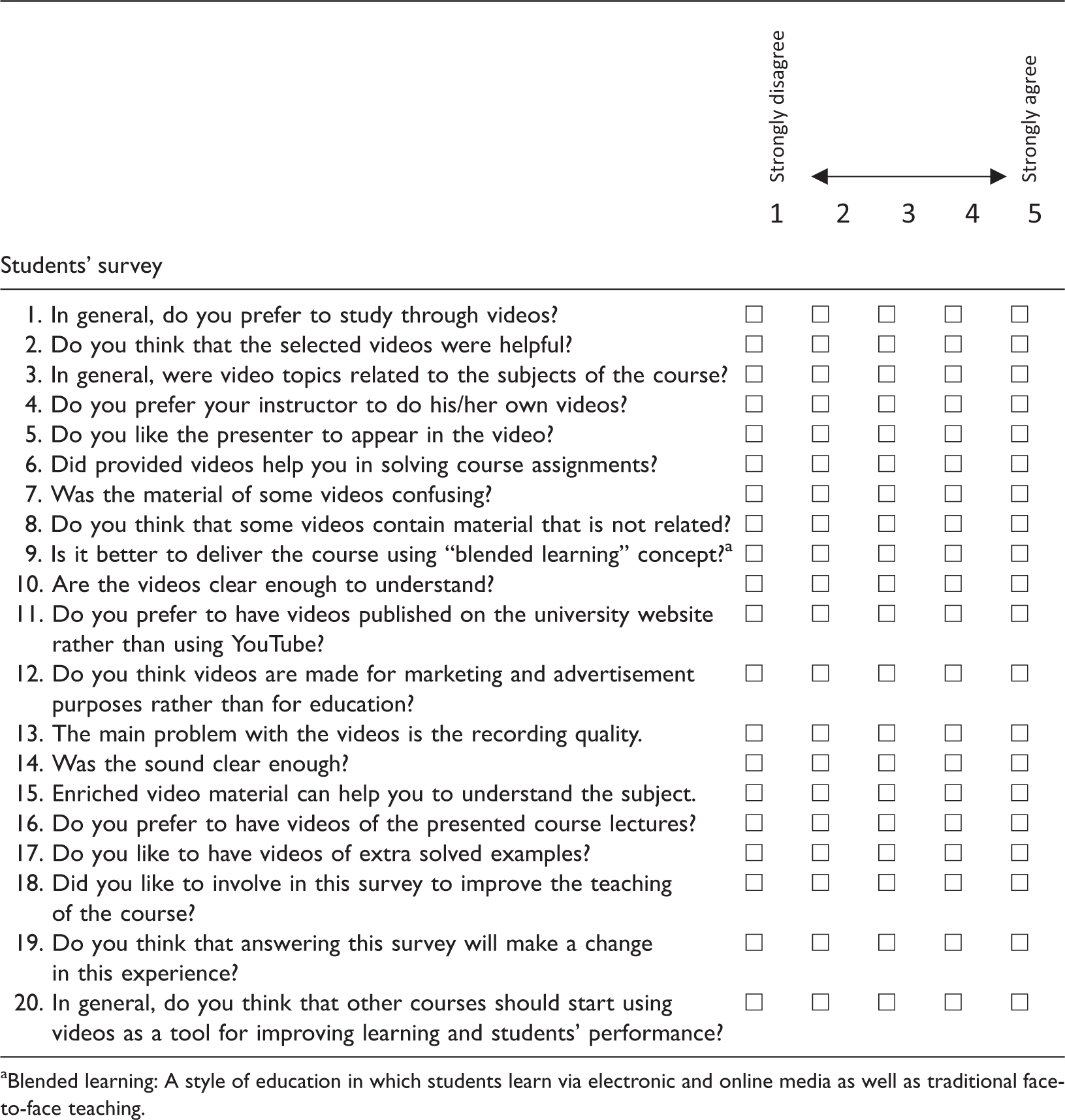
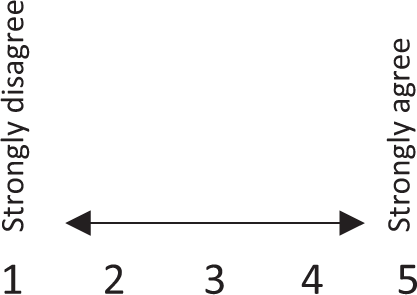
The instructor of the ‘Construction Management’ course investigated the main and important factors that may significantly attract students to use online videos as a learning tool that can help them understand the concepts of the course. These factors were analyzed and formed as survey questions, and then distributed to students to get their feedback and about the previous course material. Besides, this will help in investigating the level of usefulness of the provided videos. Students’ responses were analyzed to investigate students’ understanding of course material using the distributed videos and their impact on students’ academic performance in the course academic progress. Students involved in this experience were requested to provide a score from “1 to 5”, on a Likert scale, for each of the distributed questions, where “1” represents a “very low” agreement with the argument while “5” is “very high”, as shown in Table 3.
The distributed assessment form.
aBlended learning: A style of education in which students learn via electronic and online media as well as traditional face-to-face teaching.
Analysis of students’ responses
The students’ feedback received from the survey was analyzed and the effect of using videos on students’ learning on and performance was assessed. Figure 2 shows the results as percentages of the responses received for each of the 20 questions considered in this study.
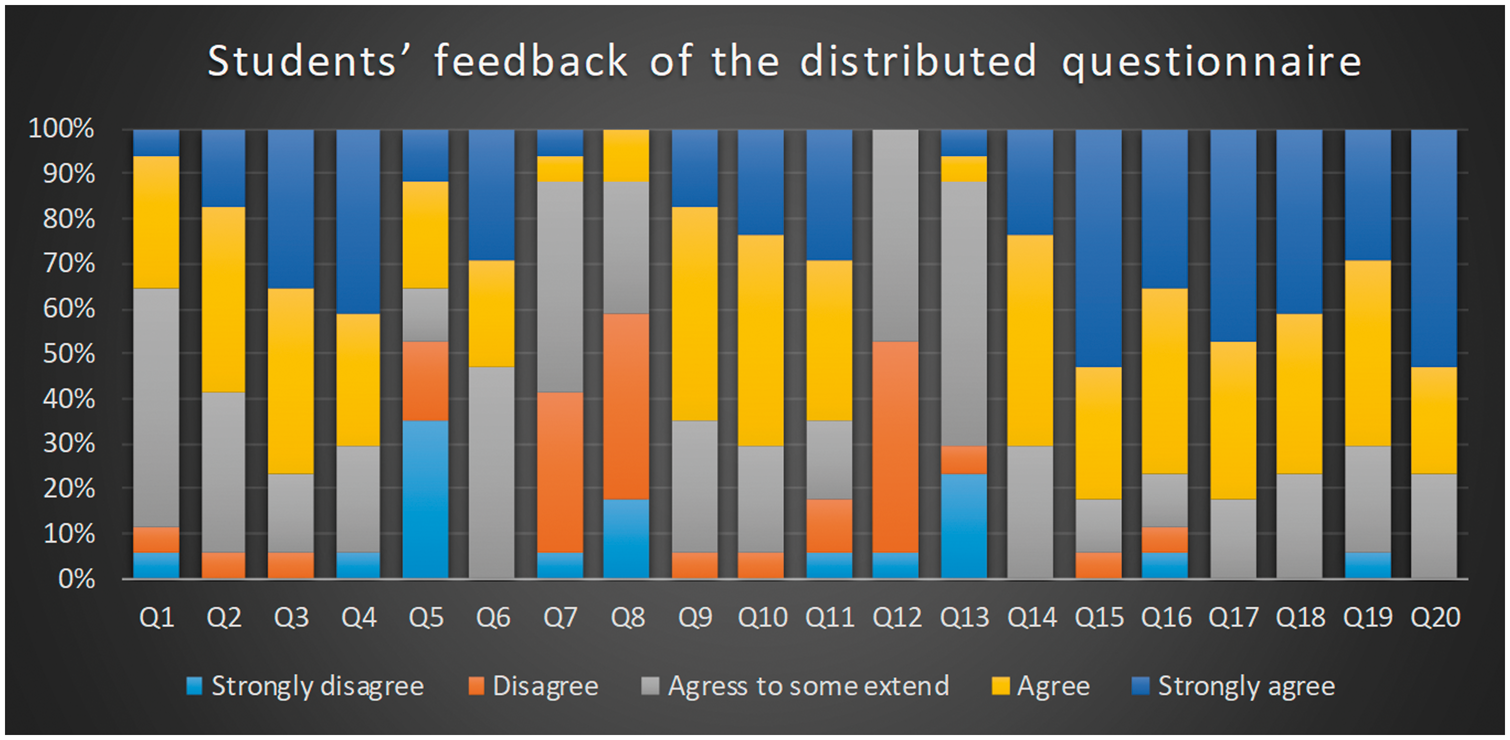
Students’ feedback of the distributed questionnaire.
In general, it has been observed that the experience was positive to the students through evaluating their performance through the exams over the course duration that is reflected by assessing the CLOs of the course. Moreover, the students’ survey feedbacks were analyzed to understand the impact of the experience on their performance that is measured by the classified grades according to the CLOs as well as to the happiness atmosphere prevailed at the end of the course. The students’ responses to question 1, for example, have revealed that 88% of the students have shown interest in studying the course through internet videos. On the contrary, 94% of the students considered viewing videos is supportive for them, which is considered a positive sign, as demonstrated by the responses to question 2. Question 3 requested the feedback of students whether the material watched is related to the studied material or not. A coincided result to question 2 revealed that around 94% of the students indicated that the material of the videos is pretty much the same as the topics of the course.
In general, responses to question 4 revealed that 94% of the students prefer to see course instructors record their own videos and post them to students, whereas 52% do not recommend showing the instructor face during the video recording. Similar to the feedback of question 2, question 6 shows an increase from 94% to 100% in the number of students who believe that watching videos was very helpful for their study. This indicates that the students’ passion to watch videos for learning has interceded is welcomed. In response to question 7, 59% of the students, believe that there is a distraction of the viewed materials due to many factors, which provide a signal to instructors to start recording their own videos. Similar feedback was received in response to question 8. About 41% of the section indicated the irrelevance of some watched videos to the material of the course. The blended learning experience (question 9) seems to be welcomed by the students with 94%. Interestingly, the students agree (95%) that the nominated videos are technically sound and helpful, which is presented by question 10 feedback. The majority of respondents (82% of the students) wished to see videos produced by instructors and published on the university website, as concluded from the responses to question 11. This can be attributed to many reasons including the quality and the relevance of the posted material and the possibility of improvement that can be made anytime. Besides, it is easy for students to browse whether they are on-campus or off-campus, particularly if the material is posted through the university Blackboard.
Meanwhile, the overall response to question 12 received indicated that 47% of the students believe that the watched videos were made for marketing and advertisement purposes. Students believe that there are serious technical problems related to the recording type as well as the quality of the sound of the recorded videos, as revealed in the responses to questions 13 and 14. Unfortunately, the best available material was not with the high quality of the recording, therefore around 71% of the students for question 13 agreed that there is a problem in the watched videos especially the recording quality, whereas 100% of the students expressed their dissatisfaction regarding the sound quality in response to question 14. Responses to question 15 indicated that 94% of the students believe that videos material provide a better understanding of the course concepts, while they prefer course instructor to prepare and record their own videos. Students expressed less interest in having videos of the presented lectures (88%), as indicated in the responses to question 16. On the other hand, responses to question 17 revealed that the whole students (100%) believe that solving additional problems related to the course is very useful for better understating of the course material. A similar response to question 18 indicates that 100% of the students believe that having such a questionnaire survey will help improve the teaching and learning process of the course. This positive trend was also reflected again through the responses to question 19, where around 94% of the students are hopeful to see changes in the teaching and learning process based on the findings of this study. Finally, it was noticed that 100% of the students believe that other engineering courses need to take the initiative to use videos in teaching these courses.
Likert scale and relative importance index
Questionnaire surveys continue to be employed extensively within academic/education community (Holt, 2014). As indicated by Bolarinawa (2015), Sangoseni et al. (2013), and many other researchers, content validity pertains to the degree to which a questionnaire fully assesses or measures the construct of interest. The interest in this study is to evaluate opinions of undergraduate students towards the use of videos as a learning tool to understand the topics of an undergraduate course. The development of a content valid instrument is typically achieved by a rational analysis of the instrument by raters (experts) familiar with the construct of interest on the research subject. Specifically, raters will review all of the questionnaire items for readability, clarity, and comprehensiveness and come to some level of agreement as to which items should be included in the final questionnaire and, in this study, this has been achieved by conducting the initial survey. According to Bolarinwa (2015), the rating could be a dichotomous where the rater indicates whether an item is ‘favorable’ (which is assigned a score of 1 or more) or ‘unfavorable’ (which is assigned score of 0). Over the years, different ratings have been proposed and developed among which Likert scale has been used widely (Bolarinwa, 2015). The Likert scale, named after social scientist Rensis Likert who developed the approach in 1932, is a rating system used to measure attitudes, opinions, or perceptions of questionnaire respondents towards a given number of statements. The rationale of a Likert item is that opinion will vary on a scale from “negative” (e.g. “strongly disagree” or “no importance”) to “positive” (e.g. “strongly agree” or “very important”) (Holt, 2014). Traditionally, researchers have employed a five-point Likert scale (e.g. “strongly disagree”, “disagree”, “average”, “agree”, and “strongly agree”). The categories of response are mutually exclusive and usually cover the full range of opinions. Some researchers include a “don’t know” option, to distinguish between respondents who do not feel sufficiently informed to give an opinion and those who are “neutral” on the topic. A larger scale could offer more choices to respondents, but it has been suggested that people tend not to select the extreme categories in large rating scales. On the other hand, rating scales with just three categories may not afford sufficient discrimination. An even number of categories, as in a four-point or six-point Likert scale, forces respondents come down broadly “for” or “against” a statement. Likert scales fall within the ordinal level of measurement. As such, the categories of response have directionality, but the intervals between them cannot be presumed equal (Jamieson, 2004). For example, in a five-point scale, if a score of 4 would be more positive than either 3, 2, 1, or 0, a response of 4 does not mean that it is twice as positive as a response of 2; however, it means that it is relatively more positive (Prineas and Cini, 2019). A relative importance index (RII) is then calculated for each statement in a questionnaire survey to provide an indication of the relative importance among the different statements in the questionnaire. As reported by Holt (2014), survey data resulting from the use of response scales in construction management research questionnaire are frequently analyzed using the RII method and, therefore, the RII method is used in this study to measure the relative importance among the different responses to questions employed in the survey. The RII is calculated to provide an indication of the relative importance of a particular response to a question as compared to the responses to other questions.
The results of this study were analyzed and a “RII” was calculated for the response of all questions (Peterson, 2011) to figure out the significance of the answers to each question. The RII was calculated using the following formula (Peterson, 2011)

The 20 questions of the survey are ranked in Table 4 according to their importance represented by their calculated RII numbers.
Relative importance index (RII) for students’ responses.
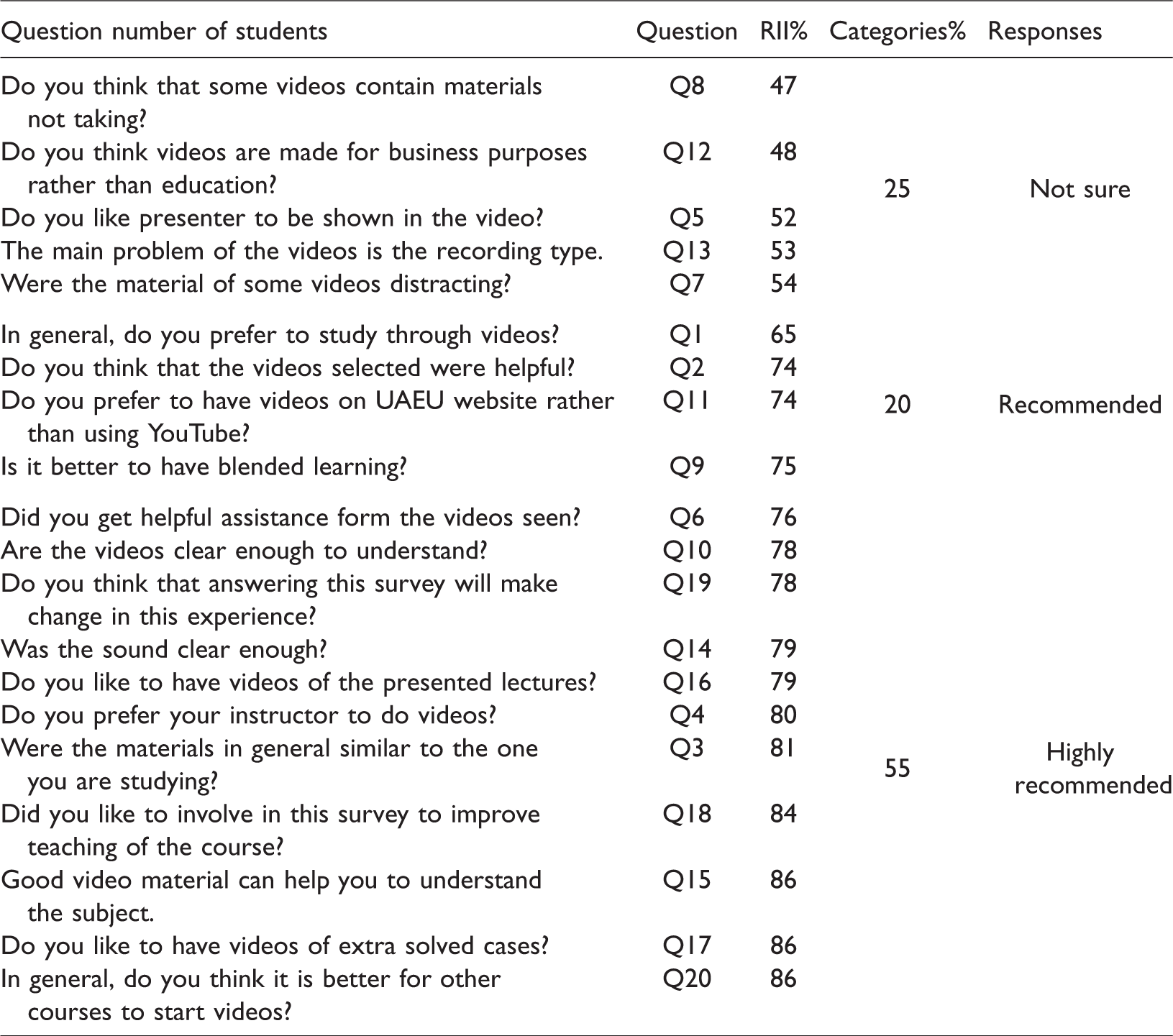
The calculated RII for the responses of all questions was then grouped into three main categories based on their ranking (not sure, recommended, and highly recommended). The “highly recommended” category considered all the responses that have an RII of 76% or more, while the “recommended” category considered all the responses that have an RII of more than 55% to less than 76%. Any RII less than 55% is considered in the “not sure” category. It has been observed that for the “highly recommended” category, the students shared the same feedback for questions 6, 10, 19, 14, 16, 4, 3, 18, 15, 17, and 20. For the “recommended” category, the students shared the same feedback for questions 1, 2, 11, and 9, while for the “not sure” category they shared the same opinions through questions 8, 12, 5, 13, and 7. Figure 3 shows these three categories of the ranked RII for the students.
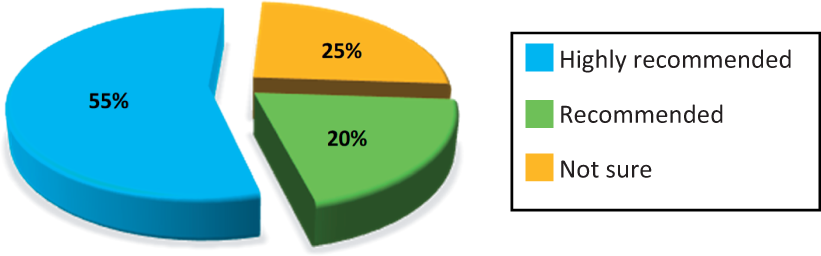
Relative importance index (percentage response) for the students.
As shown in Figure 3, 55% of the students believe that using videos as a tool for understanding the main concept of the Construction Management course is important and will improve the pedagogy outcome. Using videos as a supportive tool is believed to have a positive impact and consequences on the students’ learning process. This can be attributed to the authors’ efforts to collect the most helpful online material related to the topics of the selected course. It has also been noticed that 20% of the students agree on the importance of the blended learning and to study through videos and that the selected videos were helpful and it is better to have them posted on the university website. Figure 3 also shows that 25% of the students believe that some of the watched videos have material that is not part of the course topics, while others are made for marketing and advertisement purposes and have distracting material or even the bad quality of the recording.
Conclusion
The study exposed the benefits of adopting videos through the YouTube channel to be used for teaching the Construction Management course at the Civil Engineering Department in the College of Engineering. This was accomplished over step-by-step careful process to select relevant material to the Construction Management course. This is essential to exclude any distracting material that might be incorporated in the watched videos. Moreover, the study highlighted the students’ expectations to have learning videos developed by course instructors and to be posted on the university website, which is in line with the university vision of course transformation. This approaches to facilitate better class environments and make course material available to students anytime anywhere in addition to the e-learning platform (Ahmed and Zaneldin, 2013) and to overcome some constraints to deploy externals links and photos through the official e-learning platform used. Moreover, it is clear that the used free material is not enough for the course and has a problem in terms of the low quality of the recording and the sound, and we could prove that with these limited resources we could do significant improvement in the students’ performance, and this is going to encourage us to seek and to apply for a fund to establish an e-learning platform to support the course, where our research is the evidence of the advantage of this initiative. Besides, presenting the uses of QR codes to deploy the e-learning material is an excellent modern trend that would change the environment of the online leasing to be more attractive and easy to use by the students’ available technology. To confirm the findings of this study, it is recommended to compare the results of the present study with the outcome assessment of the “construction” course of previous semesters in order to clearly understand the impact of the study and its implications on the learning process.
Footnotes
Declaration of Conflicting Interests
The author(s) declared no potential conflicts of interest with respect to the research, authorship, and/or publication of this article.
Funding
The author(s) received no financial support for the research, authorship, and/or publication of this article.