




Abstract
This study was carried out in an attempt to investigate the impact of embedding video technology into classroom lessons designed using technological pedagogical content knowledge (TPACK) framework in improving students’ conceptual understanding, focused on the concept of breathing. This study hypothesized that embedding video technology into classroom teaching would assist students in visualizing the dynamic biological processes, while improving students’ conceptual understanding of the biology concept of breathing. This study sought to answer two research questions: (1) What are the students’ misconceptions on breathing? (2) Does the integration of technology in lesson improve students’ understanding of the concept? In this study, participants underwent four cycles of interventions, reflecting on the four knowledge dimensions of the TPACK framework (declarative, procedural, schematic and strategic). Mixed research method was employed in this study. Drawing–writing technique, pre- and post-tests and students’ interviews were used to collect data. The quantitative data derived from the students’ pre- and post-tests scores were analysed using SPSS paired sample t-test, while the qualitative data obtained from the drawing–writing technique and students’ interviews were thematically analysed based on the content. Results of this study indicated that there was a significantly greater improvement in students’ conceptual understanding of the biology concept of breathing after the interventions, thus demonstrating the positive impact of embedding video technology into classroom lessons planned using TPACK framework.
Introduction
One of the hurdles students encounter in learning biology has been that they often harbour alternative conceptions or misconceptions that can potentially drive students towards incorrect scientific understanding while learning and impede the accurate construction of new knowledge. Several studies have documented that students’ inability to concretize the abstract concept in biology are due to their inability to visualize the complex biological processes (Friedler et al., 1987; Rybarczyk et al., 2007; Sanger et al., 2001; Westbrook and Marek, 1991). Previous research in that area has demonstrated that the influx of technology into everyday classroom teaching could help the students in enhancing their visualization skills, improving their conceptual understanding and academic achievement (Aksoy, 2013; Gambari et al., 2014; Karacop and Doymus, 2013; Kayaoglu et al., 2011). Many educational technologists have recognized the importance of pedagogical content knowledge (PCK) of educational technology of the teacher in impacting the successful influx of technology into their lessons (Graham et al., 2009; Salleh and Laxman, 2014). Thus, this study encompassed a framework that encapsulated the three essential elements of teachers’ knowledge (pedagogical knowledge, content knowledge and technological knowledge) in the planning of lessons that aimed to improve students’ conceptual understanding.
The current study employed a design-based action research using the technological pedagogical content knowledge (TPACK) as the theoretical framework in the planning of the lessons, actualizing the planned lessons and reflecting on the effectiveness of the video technology in nurturing students’ understanding of the concept. Built upon Shulman’s (1986) concept of PCK framework, the TPACK framework was first proposed by Mishra and Koehler (2006) that encapsulates the three key aspects of teachers’ knowledge, suggesting that teachers have to synthesize the three key aspects of knowledge in order to produce an effective classroom teaching. Many studies have been conducted to assess the correlation between TPACK framework and students’ conceptions and learning, and results from the studies have demonstrated that there is a positive correlation between students’ conceptions and learning with the integration of TPACK as the theoretical framework in designing classroom teaching (Çalik et al., 2014; Chiu and Wu, 2009; Khan, 2011; MaKinster and Trautmann, 2014; Zucker and Hug, 2008). This study will attempt to provide teachers with empirical evidence to determine whether or not integrating video technology in classroom teaching planned using the TPACK framework can improve students’ conceptual understanding on the specific concept of breathing.
Purpose of the study
This research study intended to investigate and analyse the pertinent impact of technology integration underpinned by TPACK framework in designing the lesson on understanding the biology concept of breathing. This study will focus upon students’ conceptual understanding in the above context focusing on students’ learning needs and their learning difficulties that hinder them from grasping this abstract concept successfully. The following research questions have been developed to guide the research investigation in accomplishing the research aims.
Research questions
What are the students’ misconceptions on breathing? Does the integration of technology in lesson improve students’ understanding of the concept?
Conceptual framework
This research study hypothesised that integrating technology in classroom teaching would be able to help students to imbibe the correct conception on the onset of the lesson and facilitate students’ understanding on the concept of breathing. The TPACK framework was employed in designing the lesson to scaffold students in their learning process into successive phases of increasing complexity, provided the scaffolded content is within students’ zone of proximal development.
Inquiry-based learning
Inquiry-based learning (IBL) is a constructivist curriculum design that was introduced back in 1968 by J. Richard Suchman. This type of learning and teaching strategy has been used extensively in science education at all levels due to its potential in developing students’ higher order thinking and scientific reasoning skills by placing learners as an active problem solvers in mastering the learning units through extracting data from questioning based on a real-world phenomenon or a model of a phenomenon and through independent research in assisting students in constructing their own knowledge (Coban, 2013; Demircioglu and Ucar, 2015; Khan et al., 2011; Kogan and Laursen, 2014; Sever and Guven, 2014; Walan and Rundgren, 2015).
Many research studies have been done to assess the effectiveness of IBL on students. In 2011, Khan et al. conducted a study to examine the effect of IBL on students’ academic achievement of secondary level science. In 2013, Coban studied the impact of inquiry assisted by argument maps on science processing skills and epistemological views on prospective science teachers. Kogan and Laursen studied the long-term effects of IBL using a case study from college mathematics in 2014. Similarly in 2014, Sever and Guven did a study to examine students’ resistance in a science and technology course using IBL as the pedagogical approach. All of the results of the aforementioned studies showed the positive potential of inquiry approach. However, studies by Khan et al. (2011) and Kogan and Laursen (2014) revealed contradictory results in terms of the positive impacts of IBL on higher achiever and lower achiever students. Results from the study by Khan et al. (2011) demonstrated that significant positive impact of IBL can be only seen on higher achiever students, while no significant impacts can be seen on low achiever students. On the other hand, contrary to Khan et al.’s (2011) findings, the study by Kogan and Laursen (2014) showed that a significant positive impact of IBL can only be seen on low achiever students. However, due to the fact that both studies were carried out across different subjects, the former study on chemistry and the latter on mathematics, it can be seen that the effectiveness of IBL on students’ learning is highly dependent on the rationale of using it with the subject and content of the topic. While these studies consistently demonstrated the positive impact of IBL on students’ performance, academic achievement and resistance behaviours towards science, the current study attempted to study the effectiveness of technology-enhanced IBL on students’ conceptual understanding of the concept of breathing.
Literature review
Technology-enhanced learning
The integration of educational technology into classroom teaching was shown to correlate positively to the students’ academic performance (Aksoy, 2013; Gambari et al., 2014; Karacop and Doymus; 2013; Kayaoglu et al., 2011). Results from these research studies showed the benefits of embedding technology over the conventional teaching. For example, in 2007, Marbach‐Ad et al. studied how animation and illustration activities impacted students’ achievement on molecular genetics on high school students. The results showed that the students in the experimental group who were taught using the animation achieved significantly better than the students who were taught using the illustration activity. In 2011, Kayaoglu et al. studied how students’ vocabulary learning using animations impacted their academic achievement in vocabulary learning on a small-scale experimental study. Analysis of the pre- and post-tests scores showed that the experimental group has higher achievement in vocabulary learning compared to the control group. Similarly, Aksoy (2013) studied the effect of animation on students’ comprehension on seventh-grade students (N = 60). Data analysed from the pre- and post-test scores showed the usefulness of animations on students’ achievement in comprehension. Further, Karacop and Doymus (2013) examined the effects of cooperative learning and animation techniques on students’ conceptual understanding of chemical bonding and particulate nature of matter. The results indicated that both cooperative learning and animation techniques are equally effective for teaching of chemical bonding; however, the researcher also found that students who were taught using the animation technique acquired much deeper conceptual understanding of the particulate nature of matter compared to the students who were taught using the cooperative technique.
While these studies persistently showed positive response in regard to embedding video technology into classroom teaching on students’ academic achievement and conceptual understanding, Gambari et al.’s (2014) findings in their study that examined the effect of video-based multimedia instruction on secondary students’ achievement and retention in biology had found that the control group who were taught using the conventional teaching method had better retention in biology compared to the experimental group despite the lower students’ achievement than the experimental group. Thus, the current study attempted to examine the effect of video technology informed by TPACK framework on students’ understanding of the concept of breathing.
Technology-embedded IBL environment
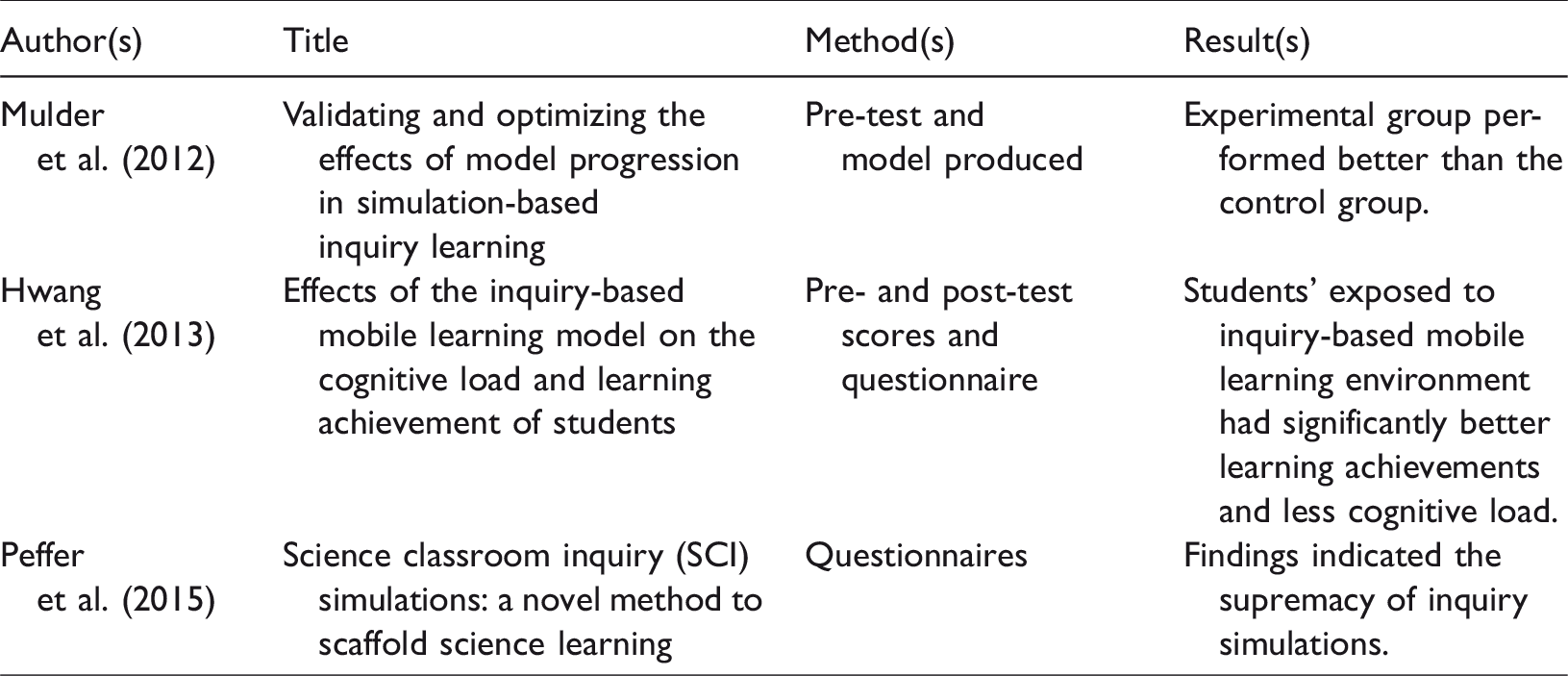
Up to date, many research studies have been done to study the impact of integrating technology in inquiry classroom on students’ learning. In 2012, Mulder et al. studied on the effect of model progression in computer-simulated IBL on the performance of the students. Comparing the students’ performance between the students placed in the model progression condition with the control conditions without the model progression, the experimental group outperformed students from a control group. Similarly, in 2013, Hwang et al. studied the effects of the IBL and mobile learning system as the pedagogical approach and technology employed, respectively, on cognitive load and learning achievement of sixth-grade students (N = 51). Subsequent analysis of the pre- and post-test scores as well as the cognitive load questionnaire data, significantly better learning achievements and less cognitive load are associated with students who learned with the inquiry-based mobile learning approach. Peffer et al. (2015) did a study to investigate the impact of science classroom inquiry simulations on students’ prior knowledge and perceptions on authentic science practices. The results from the study showed the advantages of science classroom inquiry simulations over the typical conventional classroom (Table 1).
Studies examining the effect of technology in inquiry setting.
While these studies addressed the positive effects of integrating TPACK in inquiry classroom on students’ achievement, cognitive load and confidence, the current study will examine the effects of integrating TPACK in designing lessons to scaffold students in constructing their own knowledge from the base of lower order thinking and then subsequently increase in complexity to higher levels of thinking on students’ achievement and conceptual understanding of the concept of breathing.
Methodology
The current study embarked on a design-based research as the research methodology which has been increasingly used in recent times as an educational research methodology, especially in research involving technological interventions that aim to enhance students’ learning (Anderson and Shattuck, 2012). The current design-based research attempted to investigate the use of video technology in lessons designed using the TPACK framework on students’ conceptual understanding measured through students’ achievement over four cycles of interventions. Prior to the designing of the lessons, pre-tests pertaining to the concept of breathing were given to the students. With reference to Mills (2015) Dialectic Action Research Spiral, the pre-tests at each knowledge dimension or cycle were analysed systematically whereby the teacher will precede with a process of action cycles consisting of the identification of the critical object of learning (plan), collection of data (act), analysis of the collected data and development of action plan based on the analysis of collected data (reflect). This information was used in designing the lessons at each cycle, and post-tests were administered after each cycle of intervention (see Figure 1).
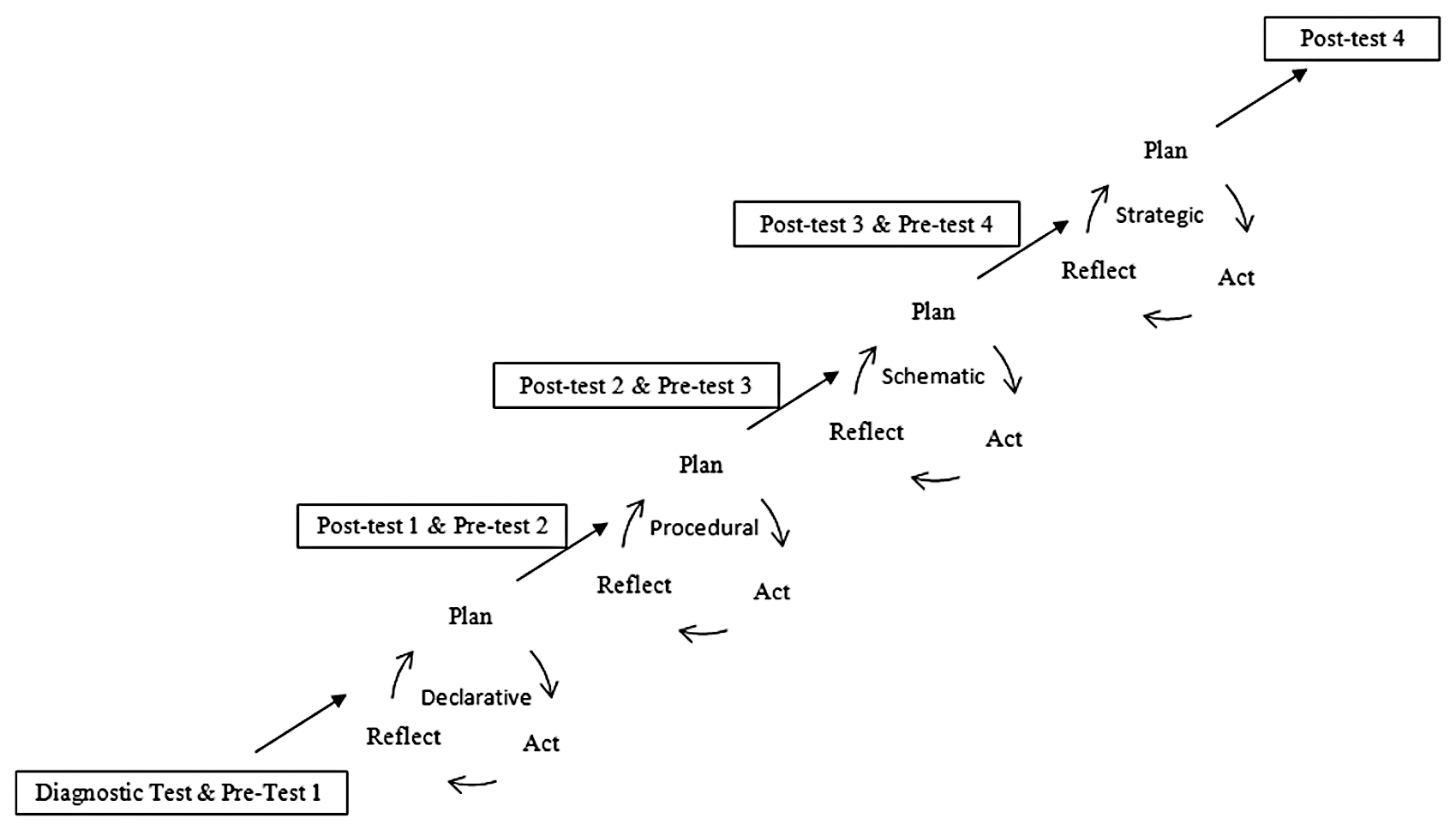
Research design for the study.
A diagnostic test that comprised of drawing–writing technique was given to the participants involved in the study as an attempt to identify the alternative conceptions harboured by the students on the concept of breathing. The effectiveness of drawing–writing technique as a method for identifying students’ hidden cognitive structure pertaining to a scientific concept has been demonstrated by Cetin et al. (2013) and Kurt et al. (2013).
The students involved in the research went through four cycles of technological interventions based on the four knowledge dimensions of the TPACK framework. The first cycle of intervention reflected on the declarative knowledge dimension of the TPACK framework focused on the students’ knowledge of knowing ‘what’. This included the definitions of biological terms and all the basic facts that students need to know pertinent to respiration. For instance, the structures that are involved in the process of breathing. At this phase, students were also required to be able to distinguish the difference between the process of breathing and respiration.
The second cycle reflected on the procedural knowledge dimension of the TPACK framework focused on students’ knowledge of knowing ‘how’. At this phase, students learnt how to apply the knowledge acquired at cycle 1 in constructing their knowledge on how the breathing mechanism works.
The third cycle reflected on the schematic knowledge dimension of the TPACK framework focused on students’ knowledge of knowing ‘why’. At this phase, students upgraded their scientific conception on the concept of breathing. In this study, students were asked to produce an analogy of the breathing mechanism using the knowledge they acquired from cycle 1 and cycle 2.
The final cycle reflected on the strategic knowledge dimension of the TPACK framework focused on students’ knowledge of ‘where’ and ‘when’. At this phase, students learnt the method of evaluating the knowledge acquired in the previous cycle. In this study, students were asked to evaluate the similarities and differences between the target (actual human respiratory system) and the analogue (model of respiratory system).
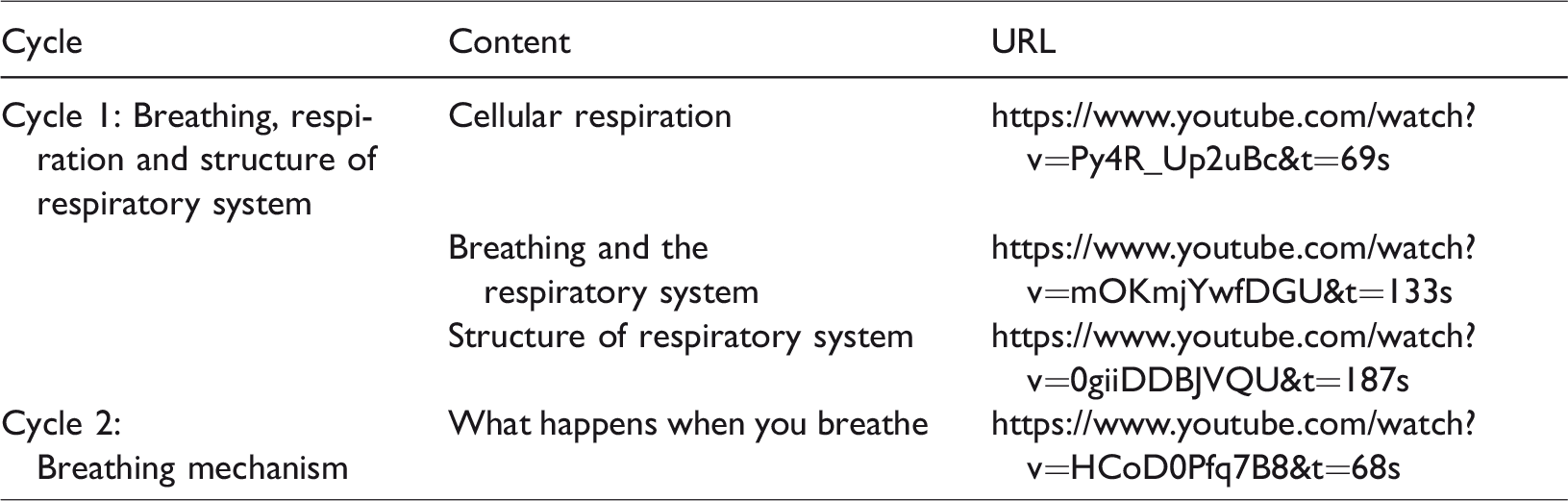
Computer animations from the internet were used at the first and second cycles of the intervention (see Table 2). At the third and fourth cycles, students were given the opportunity to work in their group to carry out independent research and present their findings using Microsoft PowerPoint. Inquiry was used throughout the cycles of interventions. The questions used functioned to cognitively scaffold students in solving a scientific task. A series of questions were used to prompt students towards the final scientific knowledge. This approach hoped to assist students’ in their critical thinking (higher order thinking) skills development as they moved up the cycles of interventions (Table 2).
Animations used in the study.
Results and discussion
Result 1: Students’ alternative conceptions
Analysing students’ alternative conceptions pertaining to breathing through the drawing–writing technique, a total of four categories were formed. Analysing the data obtained through the drawing–writing technique has revealed majority of the students’ responses attempted to define respiration as the process of breathing, and hence the category of defining the process of breathing appeared as the dominant category with the highest percentage of occurrences. The words that were included in this category were breathe in, breathe out, inhale and exhale. This finding revealed the students’ lack of conceptual validity of the concept of breathing and respiration.
The next category was the structure of the respiratory system with the second highest percentage of occurrences. This category focused on the drawing and words related to the respiratory organs and its structure such as the lungs, bronchi, ribs and diaphragm. While most students’ drew the structure of the lungs and bronchi, only a few students drew the structure of the rib. Further, none of the students attempted to draw or write the diaphragm. In this regards, it can be seen that students’ knowledge pertaining to the structure of the respiratory system was still lacking.
The third category was the respiratory-carrying molecule that focused on the structure or the word haemoglobin. Apparently, only one student wrote this word. The fourth category was the purpose of respiration and this category focused on the word energy or ATP. Similarly, only one student mentioned this word.
Further, in analysing the responses given by the students who require students to write the first five words that appeared in their mind when they hear the word respiration, 96% of the students included the word breathing in their answers. These findings indicated that a very high percentage of the students entertained the dominant thought of respiration as being similar to the process of breathing, thus demonstrating the insufficiency of the students’ conceptual validity on the concept of breathing.
Result 2: Improvement of students’ conceptual understanding
One-way between groups analysis of variance (ANOVA) on the test scores of the two group (male and female) of students for each cycle were carried out in order to assess the similarity of the students’ baseline knowledge of male and female students on the concept of breathing. Table 3 shows that there are no significant variances at p<.05. This finding indicated that there is no significant difference in the baseline knowledge of both male and female students at each cycle (Table 3).
The results of one-way ANOVA between male and female students.
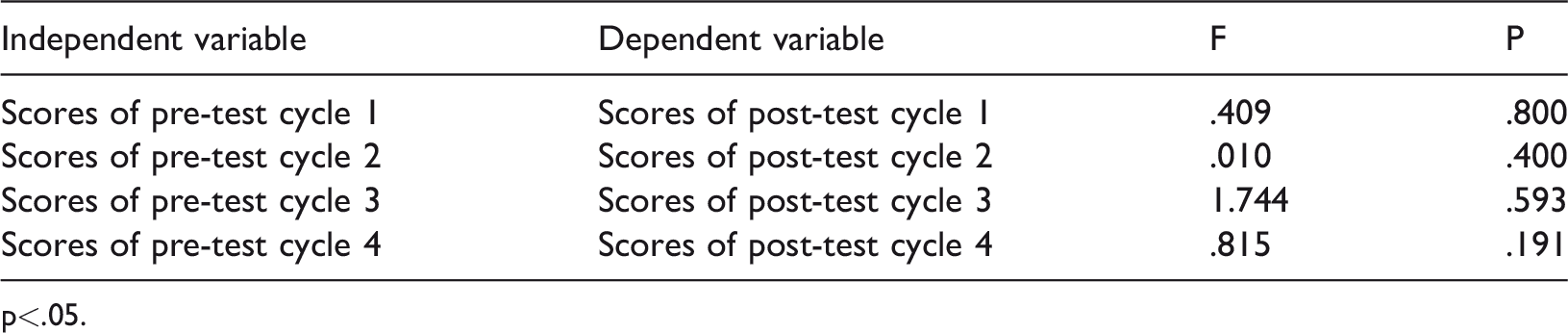
p<.05.
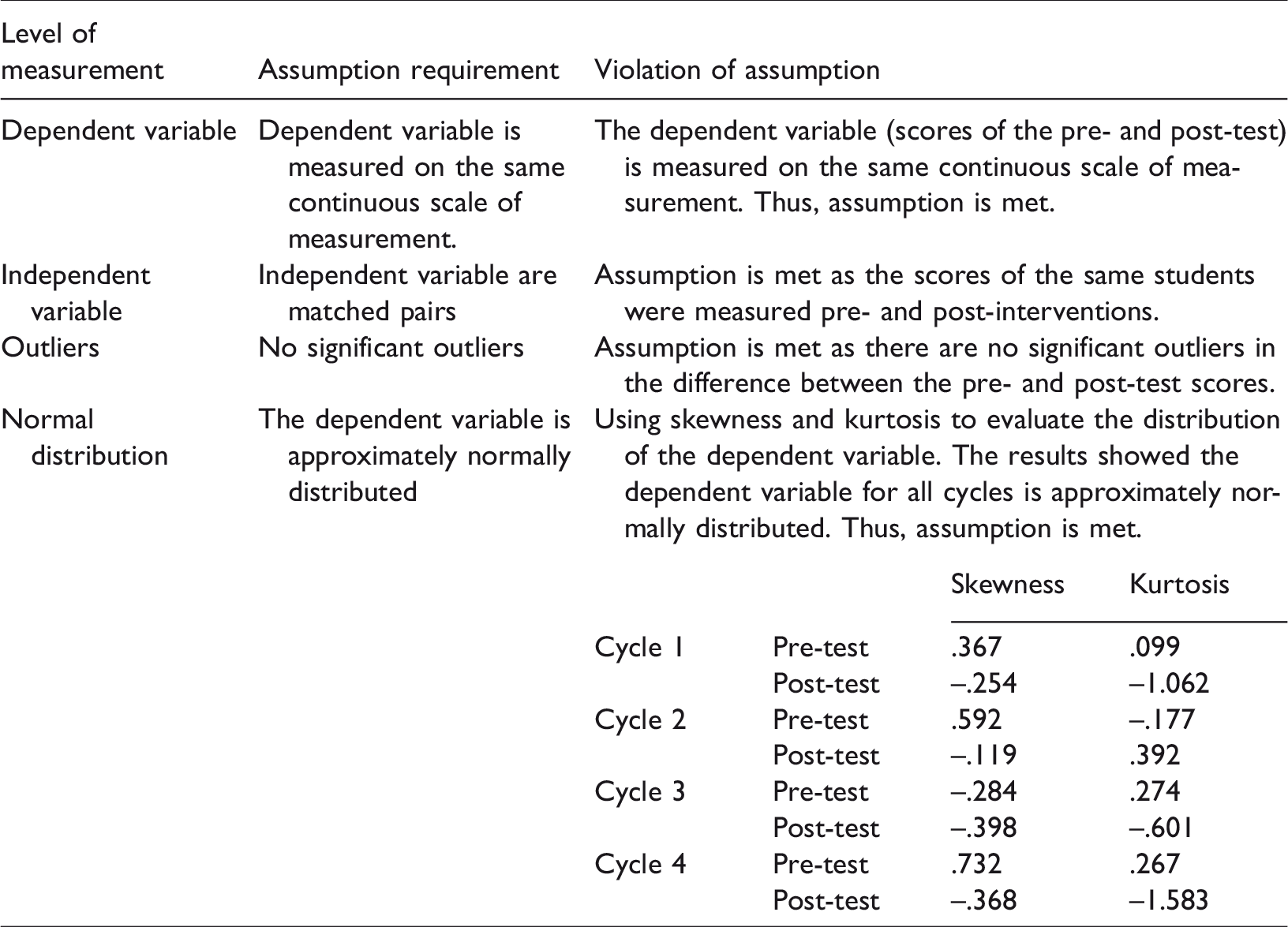
Prior to analysing the quantitative data, the assumptions for parametric statistical analysis (paired sample t-test) were carried out. The pre- and post-test scores were analysed quantitatively using the paired sample t-test to determine whether there are any significant differences in students’ scores before and after the intervention. The qualitative data derived from students’ interviews were used to substantiate the findings of the quantitative data. Table 4 shows the results of the violation of general assumptions for parametric statistical analysis (paired sample t-test). In analysing the results, the data collected for this study had met the assumptions requirement for the use of paired sample t-test (Table 4).
Results of general assumptions for paired sample t-test.
A hypothesis of this study was that embedding video technology planned with TPACK framework into inquiry classroom teaching would improve students’ conceptual understanding of the concept of breathing and students would develop the correct conception on the onset of the designed lesson. Analysing the quantitative data for cycle 1, the mean of the students’ pre- and post-test scores significantly increased by 53% from 3.82 (SD = 1.22) to 8.18 (SD = 1.63). Given that there are significant differences at the probability (p) value of less than .05, it can be inferred that there is a significantly higher students’ achievement after the intervention as evidenced by the result of paired sample t-test which produced a p value of <.001 (M = 4.36, SD = 1.10, t (27) = 21.04) with an effect size of .94. Based on Cohen (1988: 284–287), it can be concluded that there was a large effect size, with a notable difference in the test scores obtained before and after the intervention.
These significant improvements in students’ test scores are supported by the qualitative data derived from interviews of students who were higher achievers (S1 and S2), average achievers (S3 and S4) and lower achievers (S5 and S6) in post-test for cycle 1. Below are the interview excerpts of the students.
Higher achievers
T: Respiration refer to the process of breathing. Is this statement correct or not? S1: Not S2: Not correct T: Okay, can one of you tell me what is the purpose of respiration for me? S2: Respiration is when glucose in the food combine with oxygen to produce energy. T: Alright. Can you tell me what is breathing? S2: Breathing is when you breathe in oxygen and breathe out carbon dioxide. T: So tell me what is the relationship between breathing and respiration? S1 and S2: … T: You see. breathing is when you breathe in oxygen right? So relate that to respiration. S1: Respiration is when the food combine with oxygen to produce carbon dioxide and energy. S2: The carbon dioxide come out when you breathe out. Oxygen is when you breathe in.
Average achievers
T: Can any one of you define the process of respiration for me? S3: Respiration is the process of to produce energy. T: So is respiration similar to breathing? S3: No T: How are they different? S4: Breathing is when you breathe in and breathe out and respiration is when the oxygen you breathe in is used in respiration to give energy for you to work.
Lower achievers
T: Tell me what is breathing? S5: Breathe in oxygen and carbon dioxide is given out. T: Now tell me what is respiration? S6: The process of… energy is produced and oxygen is used to produce carbondioxide. T: You mean oxygen is used in the process to produce energy and carbondioxide? S6:Yes T: So tell me what is the relationship between breathing and respiration? S5 and S6: … T: You see. breathing is when you breathe in oxygen right? S6: Yes T: So what happens to this oxygen? Where is it used? S6: For respiration T: How? S6: The oxygen from breathing is used for respiration. T: S5, can you tell me where do you get the carbon dioxide that you breathe out? S5: During respiration, carbon dioxide is produced which you breathe out.
Kurt et al. (2013) noted in their study that conceptual knowledge is not simply limited to knowing the definition of concepts, but students should be able see the ‘bridge’ between concepts and explain the relations between the concepts as well. This is because, often, the concepts taught in biology are interrelated. Therefore, in order for the students to form a high-quality cognitive structure of the concepts, it is of high importance that they are able to see the transitions and relations between the two concepts. For this reason, the teacher asked the students to evaluate the relation between respiration and breathing during the interview. This phase would be beneficial for the students in their formation of high-quality cognitive structure of what they had learnt, and it is more likely that students attained the knowledge and remember the concept for a longer period of time.
The results from analysing the interview excerpts showed that as the teacher increased the complexity of the questions by asking for the relation between respiration and breathing, higher and average achievers were able to find the connection between the two concepts; however, lower achievers required the teacher to scaffold them through a series of questioning. Such questioning served to prompt students to extend their thinking towards the final mutual conception. From here, it could be seen that understanding the abstract concepts of breathing and respiration are not a problem for all levels of student achievers; however, a deep level of understanding could be achieved only when the students are able to see the relations and transitions between two or more concepts and this was seen to be difficult in lower achieving students. One of the many important aspects of teaching in today’s educational system is equity driven in which all students in a classroom have to embrace equity instead of equality. In this respect, the teachers must acknowledge that in order to ensure that every student with variable learning capabilities in the classroom successfully accomplish the learning objective(s), inequality or uneven treatments might arise. Simply put, students with lower learning capabilities would need more attention and help from the teacher compared to the students with higher learning capabilities. Assistance can be provided by the teacher through lowering the cognitive demands of the questions. This could be achieved by scaffolding them in such a way that students’ attention is driven towards the details that students might have missed – just like how the teacher directed the lower achievers towards the final mutual conception during the interview.
In cycle 2 of the intervention, the mean of the students’ pre- and post-test scores significantly increased by 43% from 2.43 (SD = 1.07) to 4.25 (SD = 1.04). Given that there are significant differences at the probability (p) value of less than .05, it can be inferred that there is a significant higher students achievement after the intervention, as the result of paired sample t-test produced a p value of <.001 (M = 1.82, SD = 1.12, t (27) = 8.58) with an effect size of.73, thereby suggesting a large effect size based on Cohen (1988: 284–287).
The significant improvement in students’ test scores presented above was supported by the interview data inserted below derived from the interviews of students of higher achiever (S7), average achiever (S9) and lower achiever (S11) in post-test for cycle 2.
Higher achiever T: Can you tell me what happens to the ribs and diaphragm as you are breathing in? S7: The ribs will moves upwards and outwards and the diaphragm will flatten. T: Flattened diaphragm, is that a contracted or relaxed diaphragm? S7: Contract. T: Can you tell me the actions of the ribs and diaphragm that allow the lungs to take in air during inhalation? S9: Inhalation… As you breathing in, the size of lungs will increase. So the ribs will move upward and outward and the diaphragm will contract. T: As we are breathing in, our lungs will expand to allow more air enters thelungs. Right? S11: Yes. T: So what happens to the ribs and diaphragm? S11: First, the ribs will move upward and outward… and the diaphragm will contract.
Students’ confidence in expressing their understanding of the concept of breathing was further investigated in this study through examination of students’ written open-ended question responses that were included in their post-test in cycle 2 – describe the series of actions that occur during inhalation and exhalation. One of the issues that was raised in this research was students’ lack of conceptual understanding of the concept of breathing mechanism illustrated by their inability in expressing their understanding into words. In order to achieve a deep level of understanding of the concepts of breathing, simply knowing the abstract concept of breathing is not enough. Students have to be able to express their understanding into words in order for the teacher to measure students’ conceptual understanding during the graded written assessment and students’ ability to accomplish this task reflect that they had fully acquired a deeper level of conceptual understanding. To assess on whether students had met this criterion, students’ responses to the open-ended question were analysed quantitatively. By analysing students’ responses to the open-ended question, it was found that all students had attempted and managed to answer the question. Students had found the basis of breathing mechanisms in maintaining the process of breathing in and breathing out and explained the mechanics of breathing in words. The ability to complete this task suggested that students had developed not only a deep level of conceptual understanding, but they indirectly developed the skills of self-confidence in expressing their understanding. Additionally, students’ ability to answer this open-ended question played a part in the improvement of their post-test scores. Thus, these findings are consistent with the findings by House and Telese (2014) and Kadijevic (2015).
In cycle 3 of the intervention, the mean of students’ pre- and post-test scores significantly increased by 27% from 3.57 (SD = 1.10) to 4.89 (SD = 0.92). Given that there are significant differences at the probability (p) value of less than .05, it can be inferred that there is a significantly higher students’ level of achievement after the intervention, as the result of paired sample t-test produced a p value of <.001 (M = 1.32, SD. = 1.06, t (27) = 6.62) with an effect size of 0.62, thus suggesting a large effect size based on Cohen (1988: 284–287). This significant improvement in students’ test scores was supported by the interview data inserted below derived from the interviews of students of higher achiever (S13), average achiever (S15) and lower achiever (S17) in post-test for cycle 3.
Higher achiever T: This diagram shows the model of the human respiratory system (showing the PowerPoint slide to the student). Can you show and tell me which structure in this diagram represents our lung? S13: This one. (Pointing at the balloon). T: That’s correct. So the balloon represents our lung. Now can you show me which one represents the ribs and diaphragm? S13: The glass jar is the ribs and diaphragm is this (pointing at the rubber sheet). T: So this diagram shows the model of the human respiratory system (showing the PowerPoint slide the student). Can you tell me which structure A to E represent the lung? S15: A T: Alright. Now tell me where is the ribs? S15: C T: Correct. So what is this represent? (pointing at structure X) S15: Dia.phragm. T: This is the model of the human respiratory system (showing the PowerPoint). Can you tell me which structure represents our lungs? S17: A, the balloon represents the lung. T: Right, now which structure represents the ribs? S17: This glass jar. (pointing at structure C) T: That’s right. What about this one? (pointing at structure X) S17: Diaphragm.
Likewise, the last cycle of intervention also showed a significant improvement in students’ achievement before and after the intervention, in which a drastic increase in the mean of the students’ pre- and post-test scores was observed. The mean of the students’ pre- and post-test scores significantly increased by 72% from 1.75 (SD = 1.60) to 6.36 (SD = 1.73). Given that there are significant differences at the probability (p) value of less than .05, it can be inferred that there is a significantly higher level of students’ achievement after the intervention, as the result of paired sample t-test produced a p value of <.001 (M = 4.61, SD = 1.55, t (27) = 15.75) with an effect size of 0.90, thus suggesting a large effect size based on Cohen (1988: 284–287). The results from analysing the qualitative students’ interview showed that the majority of students needed teachers to cognitively scaffold their thinking in reaching towards the final answers. This was particularly noticeable in the interview excerpt with the lower achievers. Higher achievers, on the other hand, though they are able to answer the question posed at them, still required a few probing questions before reaching to the final scientific conception. Managerial questions, those asking the students to elaborate their answer were rarely seen in the interview excerpt of higher achievers and average achievers. Inserted below is the interview excerpt with two high achievers (S21 and S22). T: Tell me how are the breathing mechanism in the actual human respiratory system are similar with the model? S21: The action of the lungs are similar with the balloons. T: Only lungs? S22: The diaphragm are the same with the rubber sheet. T: Can you explain how are they similar? S22: Like… in the model, if you pulled down the rubber, the size of balloon will reduced. In the real one, if the diaphragm contract, the size of the lung reduce as well. T: Tell me how are the breathing mechanism in the actual human respiratory system are similar with the model? S23: ahh… when we pulled down the rubber string, the size of this balloon will decrease. This process is the same with the real one because… when the diaphragm is flat, which is contract, the size of. lung will decrease. S24: and also in the… model, the pressure outside this jar is higher than inside, air will flow into the balloon and the balloon will expand…this is the same because when the pressure outside. our lung is higher than inside, the air will flow into the lung that cause the lung to expand.
When students (S25 and S26) were asked to evaluate the similarities between the breathing mechanism in the model and the actual respiratory system, both students had no response to the question. For this reason, the teacher lowered the cognitive demand of the question in order to gain further insights of the level of students’ understanding by pitching nested questions – This balloon represents our lungs right? This rubber sheet represents the diaphragm right? Although this type of questions elicited responses from the students, however, the issue with this ‘show of opinion’ type of question assumed that students have similar opinions to the teachers. Nonetheless, the teacher managed to steer the discussion with questions like ‘What happens to the size of balloon if you pulled down the rubber string?’ One student (S26) answered that the balloon will inflate. So the teacher responded to this student (S26) with another question – applying this in the context of breathing mechanism in the actual human respiratory system, what happens to the diaphragm when you are breathing in? The student (S26) said that the diaphragm will flatten. Another student (S7) said the diaphragm will contract. These students’ responses were traced further to determine their origins and contexts of understanding. So, the teacher asked if contracted and flattened diaphragm refers to the similar state of diaphragm and both students answered yes. Then the teacher went on to refine students’ thinking with another question – How are the actions of diaphragm and the lungs in the actual human respiratory system similar to the rubber strings and the balloons of the model? And both students managed to answer this question.
The above interview snippet with the lower achiever students revealed that unlike the higher and average achievers, wherein students are able to express their understanding by coming up with their own explanations, lower achieving students required the teacher to make extra efforts in scaffolding students’ understanding before attaining the final answer.
The quantitative results of the current study showed that students’ exhibited a significant improvement in the conceptual understanding with the average improvement of students’ test scores ranging from 27% to 72%. Results in analysing the qualitative interview data showed consistent results in consonance with the quantitative results, thus suggesting that students gained a significant improvement in their conceptual understanding following the cycles of intervention. These findings were similar with the findings of a study conducted by Sanger et al. (2001) who reported the positive impacts of video technology (animations) on students’ conceptual understanding of the concept of diffusion and osmosis. The results from the current study also were in line with the findings of Mulder et al. (2012) and Hwang et al. (2013) who reported the utility of TPACK in inquiry-based environments in improving students’ performance and learning achievements.
Limitations of study
The current study attempted to investigate students’ alternative conceptions and assessed the benefits of using video technology in improving students’ conceptual understanding, focusing only on the concept of breathing. This means that the findings of this study cannot be generalised to other concepts. However, this study illustrated the potential of integrating video technology and designing lessons using TPACK framework in developing further students’ understanding of scientific concepts.
Conclusions and recommendations
One of the hurdles students encounter in learning biology is that of being informed by alternative conceptions or misconceptions that can potentially drive students towards incorrect scientific understanding while impeding the learning of correct construction of new knowledge. As noted by Sanger et al. (2001), misconceptions in biology are often linked to students’ inability to visualize the dynamic biological processes, that potentially can led to difficulties in acquiring the abstract concept and concretizing the abstract concept. Thus, it is important to assist students in developing this visualizing skill as they strive to improve their understanding of scientific concepts. This study attempted to improve students’ understanding of the concept of breathing through implementation of video technology into classroom teaching. Using the TPACK framework to design the classroom lessons, the current study concluded that embedding video technology into classroom teaching led to significant improvement in students’ understanding on the concept of breathing. The findings of this study also infer that the designed lessons using TPACK framework to scaffold students learning from lower orders of thinking to higher orders level of thinking was a successful attempt in improving students’ conceptual understanding. Data analysis of both quantitative and qualitative data for all cycles of intervention showed a consistent trend on improvement in students’ conceptual understanding after the interventions. Thus, it can be concluded that integrating video technology into lessons planned using TPACK framework is potentially useful in improving students’ conception of the scientific concept of breathing.
The current study also recommends conducting future studies to encourage students to produce video presentations of the analogy of breathing mechanisms to foster their verbal literacy skill to further improve their conceptual understanding. On the other hand, since this study did not investigate students’ retention of the concept, future research studies may investigate on the effectiveness of embedding technology in inquiry setting in enhancing students’ content retention of the biology concept of breathing.
This study has contributed to the field by contributing data on the impact of video technology in furthering students’ conceptions of biology concepts. Since research on the impact of video technology as a means to improving students’ conceptions is still minimal, it is suggested that future research should be conducted to assess the impact of video technology on students’ conception on other biology concepts in improving students’ conceptual understanding and critical thinking skills.
Footnotes
Declaration of Conflicting Interests
The author(s) declared no potential conflicts of interest with respect to the research, authorship, and/or publication of this article.
Funding
The author(s) received no financial support for the research, authorship, and/or publication of this article.