




Abstract
The purpose of this study was to determine the use of language learning strategies of e-learners and to understand whether there were any correlations between language learning strategies and academic achievement. Participants of the study were 274 e-learners, 132 males and 142 females, enrolled in an e-learning program from various majors and taking an English course through e-learning in Turkey. The Turkish version of Strategy Inventory of Language Learning (SILL) was used as the data collection instrument. The results of the study revealed that while participants used cognitive and affective strategies least, they preferred to take advantage of metacognitive and memory strategies the most. In addition, a significant difference was found for females in cognitive strategies and for males in metacognitive strategies. Finally, this study suggested that using language learning strategies had an effect on academic achievement.
1. Introduction
E-learning is becoming increasingly popular in higher education. Universities worldwide are starting to open new e-learning programs, one of the easiest ways of reaching information. The situation is the same in the foreign language teaching area, and many organizations and companies are initiating technology-supported language teaching programs through the internet.
Strategy use is crucial, because it makes things easier, faster, more enjoyable, more effective, and more transferable to new situations. Although there has been much research on language learning and e-learning, the language learning strategies of e-learners have rarely been studied, as e-learning in language learning and teaching has been only recently introduced.
Early research on language learning strategies focused on the term of ‘good language learner’, and revealed that good language learners benefited from some strategies such as guessing meaning from the context. In later studies, it was understood that several other factors such as motivation, gender, type of task, age and L2 stage, cultural background, learning style, tolerance of ambiguity, and attitudes and beliefs influenced the choice of strategies used by language learners.
Therefore, this study focuses on the language learning strategies used by e-learners and discusses the correlation between academic achievement and these strategies. The implications of this study can shed light on e-learning programs in terms of curriculum, material development and teaching methodology.
2. Theoretical framework
2.1. The language learning strategy
According to Richards and Platt (1992: 209), learning strategies are “intentional behavior and thoughts used by learners during learning so as to better help them understand, learn, or remember new information.” Wenden and Rubin (1987: 19) define learning strategies as “ … any sets of operations, steps, plans, routines used by the learner to facilitate the obtaining, storage, retrieval, and use of information.”
Early research on language learning strategies concentrated on the concept of ‘good language learners’ (Naiman et al., 1975; Rubin, 1975). It was found in these studies that this type of learner benefited from strategies such as guessing meaning from the context. In later studies, it was understood that using only one strategy was not enough to be a good language learner, and effective use of these strategies in a coordinated and systematic way led to higher proficiency in learning (Chamot and O’Malley, 1996). Nunan (1991) stated that effective learners were talented enough to reflect and express their own learning process. Green and Oxford (1995) also found that there was a correlation between foreign language environment and the use of language learning strategies.
One of the most prominent figures on language learning strategies, Oxford (1990) classifies learning strategies into six main categories.
Cognitive strategies help the learner to use the language material in direct ways. Learners take advantage of strategies such as analysis, note-taking, summarizing, synthesizing, outlining, and reorganizing information to reach their objectives. Ünal et al. (2011) studied the use of language learning strategies by university students learning English, German and French in a Turkish context. They found that teaching memory, cognitive and affective strategies were necessary for language learners. In addition, they revealed that there was a statistically significant difference between strategy types, except one.
Metacognitive strategies consist of identifying one’s own learning needs, planning, organizing, arranging, monitoring and evaluating the learning process. Various studies conducted in different countries proved that metacognitive strategies directly influenced foreign and second language proficiency (in South Africa (Dreyer and Oxford, 1996); and in Turkey (Oxford et al., 1998)). Çakmak (2010) also explored learning strategies and motivational factors influencing information literacy self-efficacy of e-learning students in Turkey. This study was administered to 119 e-learners, and the results revealed that metacognitive, critical thinking strategies, and control belief influenced literacy self-efficacy.
Memory-related strategies help learners to learn and retrieve information in an orderly manner via acronyms, rhyming, images, the keyword method, body movement, mechanical means and location. Learners usually benefit from memory-related strategies to memorize vocabulary and structures in early stages of language learning (Oxford, 1990).
Compensatory strategies help the learner make up for missing knowledge such as guessing from the context in listening and reading, using synonyms, gestures or pause words. Demirel (2012) investigated the language learning strategies of university students to determine whether there were any significant differences between the use of strategies in terms of gender and academic achievement. She conducted a language learning strategy inventory on 702 university students in Turkey, and her study suggested that university students had an average level of language learning strategies, that they mostly used compensation strategies and that they rarely used memory strategies. In addition, she revealed that females used language strategies more than males, and the use of language strategies was directly related to language achievement.
In addition, Korkmaz (2013) explored the most and the least frequently used language learning strategies of ELT learners when learning German or French as their third language. The study revealed that while compensation strategies were the most frequently used, affective strategies emerged as the least frequently used. Furthermore, no positive significant correlation was found between the use of strategies and the learners’ achievement, except for the memory strategies used by French learners. Moreover, a negative correlation was found between the learners’ affective strategy use and academic success for German learners.
Affective strategies involve strategies such as controlling anxiety level, feelings, rewarding, encouraging and relaxing. Affective strategies can be useful for beginner learners, but learners do not need these strategies as they improve in proficiency (Oxford, 1996). Social strategies help the learner work with others, such as asking questions, asking for help and the desire to learn about other cultures (Oxford, 1996).
In addition, according to Oxford (1990), motivation, gender, type of task, age and L2 stage, cultural background, learning style, tolerance of ambiguity, attitudes and beliefs are factors influencing the choice of strategies used by language learners. She also maintains that using these strategies effectively “make(s) learning easier, faster, more enjoyable, more self-directed, more effective, and more transferable to new situations” (Oxford 1990: 8). Moreover, it was revealed that learning strategies also enabled students to become more independent, autonomous, lifelong learners (Allwright, 1990; Little, 1991).
2.2. E-learning
According to the United States Distance Learning Association, distance learning is “a combination of technologies that facilitate teaching and learning among persons not physically present in the same location” and “the application of information technology (and infrastructure) to educational and student-related activities linking teachers and students in differing places” (USDLA, 2006).
The most important characteristics of e-learning are the separation of teacher and student in synchronized or non-synchronized activities, and students performing these activities individually. This individual study makes e-learning an independent and self-directed learning process without age limitations. Chen and Lin (2002) stated that individuality of students was more prominent and directly influenced their achievement within the e-learning process. Artino and Stephens (2009) maintained that in the e-learning process, “students should be well-motivated, autonomous learners, who are able to self-regulate their learning experiences”.
Salmon (2004) identified five stages in an e-learning program as follows (Figure 1).
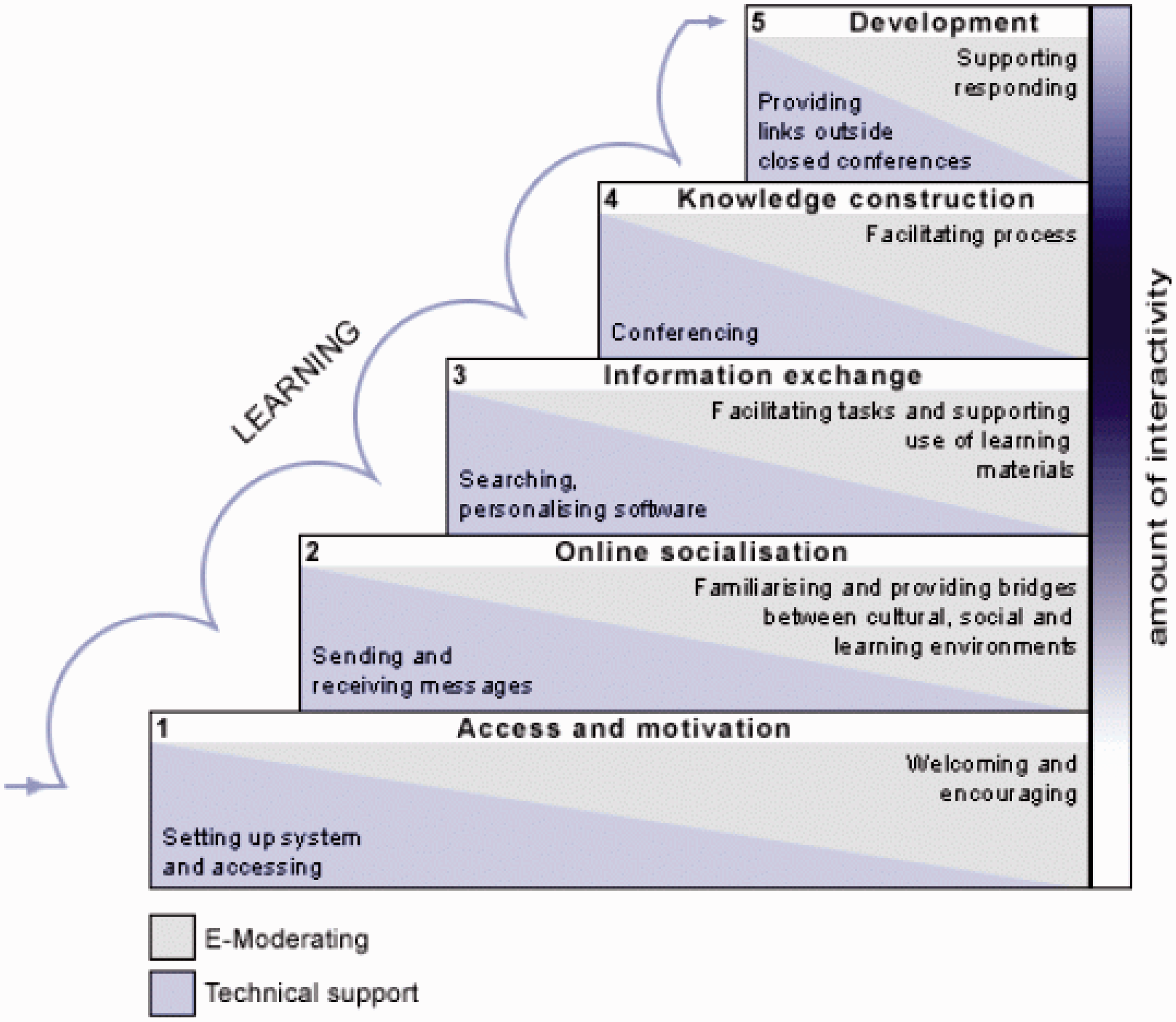
At the first stage—access and motivation—learners need information, technical support, and encouragement to start a process. The next stage is online socialization, which is composed of sending and receiving messages to provide bridges between cultural, social and learning environments. After online socialization, in the information exchange stage, learners try to find the various resources they need on the Web, in a CD Rom or a set of printed materials, and to figure out how interactions with peers and tutors can help them achieve their learning goals. At the knowledge construction stage, learners explore issues, take positions, discuss their positions and re-evaluate their positions. Finally, at the development stage, learners discover their own thinking and knowledge-building processes. In addition, they network and evaluate the technology and its impact on their learning processes (Salmon, 2004).
E-learning has become increasingly popular in higher education (Tallent-Runnels et al., 2006; Zandberg and Lewis, 2008). Artino and Stephens (2009) studied the differences between undergraduate and graduate online adult students aged between 25 and 50, and the study revealed that undergraduate students exhibited greater continuing motivation to enroll in further e-learning courses, and valued and benefited from online tasks. However, they also found that undergraduate students progressed more slowly in the learning process, and were not eager to use in-depth critical thinking skills.
Ganjooei and Rahimi (2008) investigated language learning strategies used by 200 EFL undergraduate e-learners and traditional learners in Iran. They compared two groups regarding their choices of language learning strategies, the frequency of using each language learning strategy type, the relationship between learners’ English language proficiency level and their language learning strategy use in accordance with subcategories of learning strategies. Furthermore, the study also aimed to investigate whether language learning strategy use can influence the proficiency level of the learners and vice versa. The findings indicated that there were no significant differences between frequency and the learners’ use of each strategy type. It was also revealed that participants’ level of proficiency in both groups influenced the effective use of strategies and the way learners usually go about learning.
Aliasa et al. (2012) investigated the role of using Facebook Notes on the learners’ strategy use and its effect on academic writing performance. They suggested that Facebook Notes had the potential to be used as language learning strategy training tool. Internet-literate undergraduates were observed to be enthusiastic about the training tool. As a result, they began to use the indirect language learning strategies more in their learning.
3. Method
A correlational survey method was used in this study. The purpose of this study was to fill a gap in the field of e-language learning. Although there has been much research on language learning strategies in recent years, the language learning strategies of e-learners have rarely been studied, as e-learning in language learning and teaching has been only recently introduced. Therefore, this study focuses on the language learning strategies used by e-learners, and discusses the correlation between academic achievement and these strategies. The implications of this study can shed light on e-learning programs in terms of curriculum, material development and teaching methodology. The following research questions were answered in this study:
Which language learning strategies were used the most and the least by e-learners? To what extent were language learning strategies used in terms of subfactors? Were there any significant differences in the use of language learning strategies in terms of gender? Were there any significant differences in the use of language learning strategies in terms of majors? What was the correlation between language learning strategies and academic achievement?
3.1. Participants
Participants of the study were 274 e-learners: 132 males and 142 females. The content of the course was introducing basic language skills in English, and it was presented in an e-learning environment. Course content was supported by animations and interactive presentations. Videos which involved the presentation of a topic by an expert instructor were also attached to the system. Through the Learning Management System, learners were able to access the system with a password and benefited from it around the clock. Learners could contact other learners and the instructor through email or discussion groups in the system as well. Moreover, at a scheduled time each week, learners were able to chat with the instructor in a synchronized way.
Demographic data of the participants.
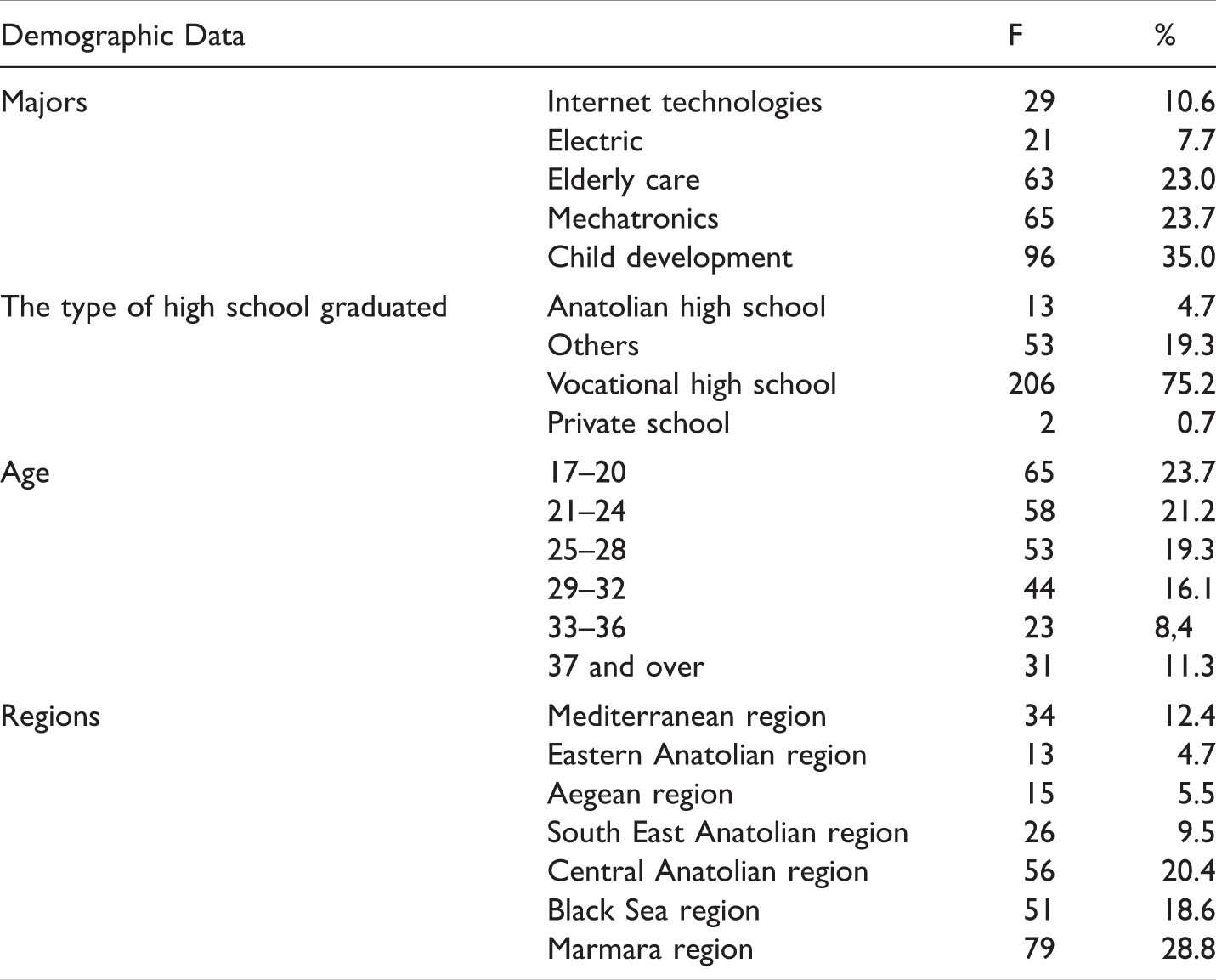
The collected data indicated that most of the participants graduated from vocational high schools. Although the age of the participants varied, the distribution of ages condensed between 17 and 37 years of old. In addition, there were participants from each region of Turkey.
3.2. Instrument
In this study, the Turkish version of Strategy Inventory of Language Learning (SILL), which was developed by Oxford (1990), was used as the data collection instrument. The validity and reliability of the questionnaire for the Turkish version was studied by Cesur and Fer (2007). Reliability of the inventory was found to be 0.92. Factor and realibility analysis were administered to check whether the realibility and validity of the scale corresponded with the previous findings. As a result of factor analysis, six subfactors were represented by 46% variance ratio. Memory was under the first subfactor, cognitive was under the second, compensation was under the third, metacognitive was under the fourth, affective was under fifth and finally social strategies were under the sixth subfactor. These findings were in harmony with the findings of Cesur and Fer ( 2007). According to the results of the realibility analysis, cronbach alpha realibility value flunctuated between .78 and .92. The realibility coefficient was found .88 for the first factor, .91,3 for the second, .81 for the third, .92, 5 for the fourth, .82, 6 for the fifth and .78 for the sixth. This result revealed that the realibility of the scale was corresponded with the findings of Cesur and Fer (2007).
4. Findings and results
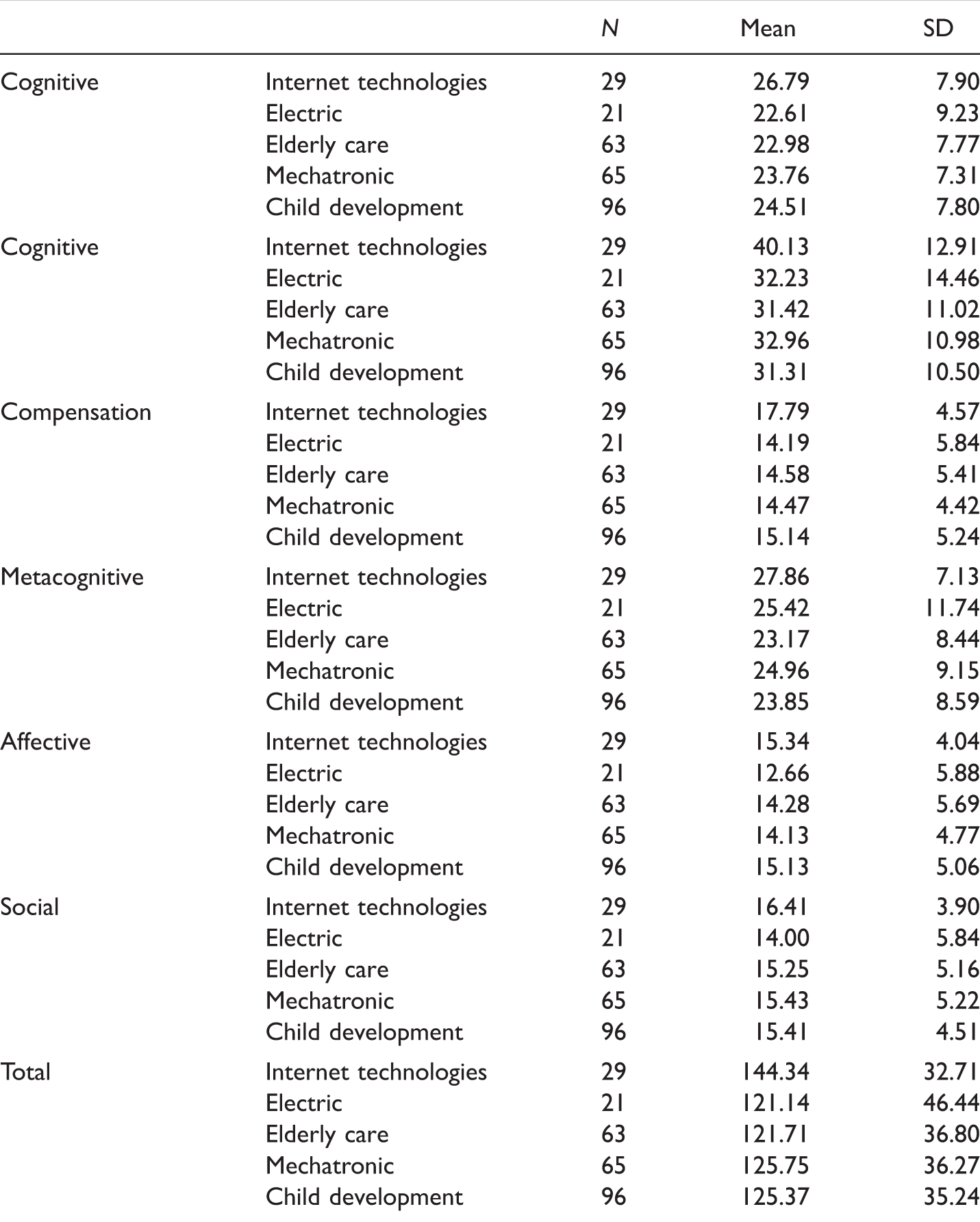
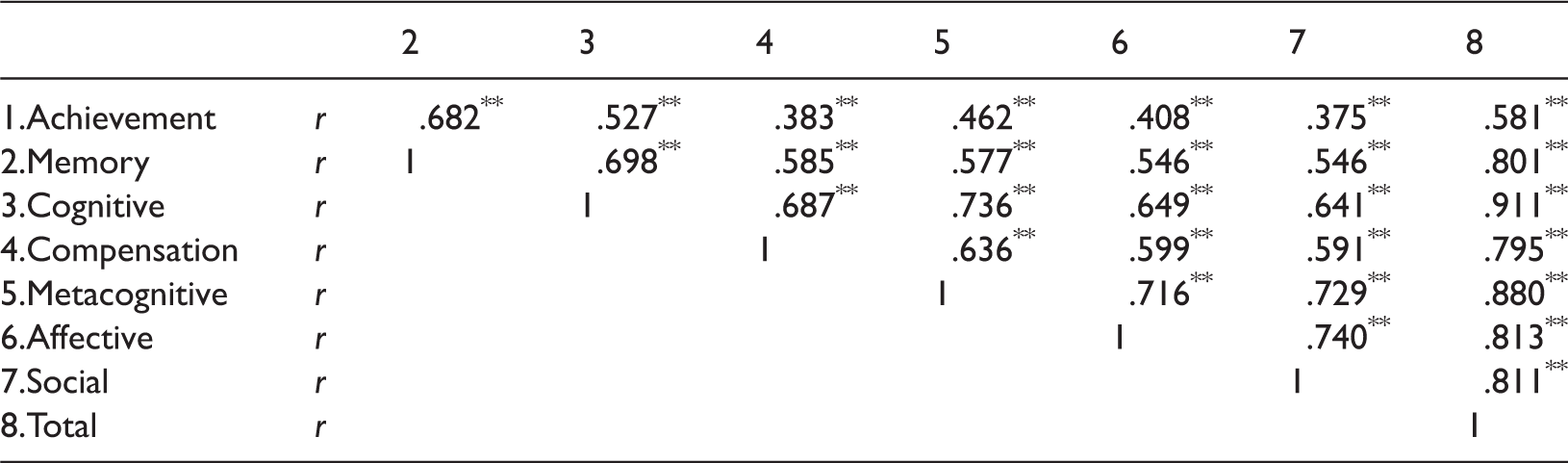
The findings of the study are presented in tables in terms of descriptive statistics of the language learning strategies used by the participants, the mean of strategy inventory in terms of subfactors, the use of language learning strategies in terms of gender, the descriptive statistics of subfactors in terms of majors and the correlation between subfactors and academic achievement.
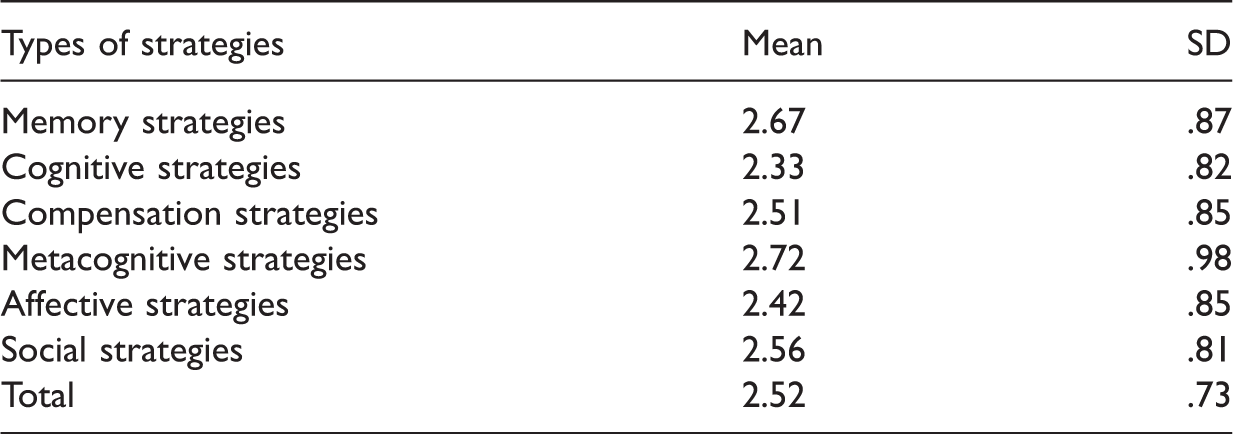
Descriptive statistics of the language learning strategies (Oxford, 1990).

The mean of strategy inventory in terms of subfactors.
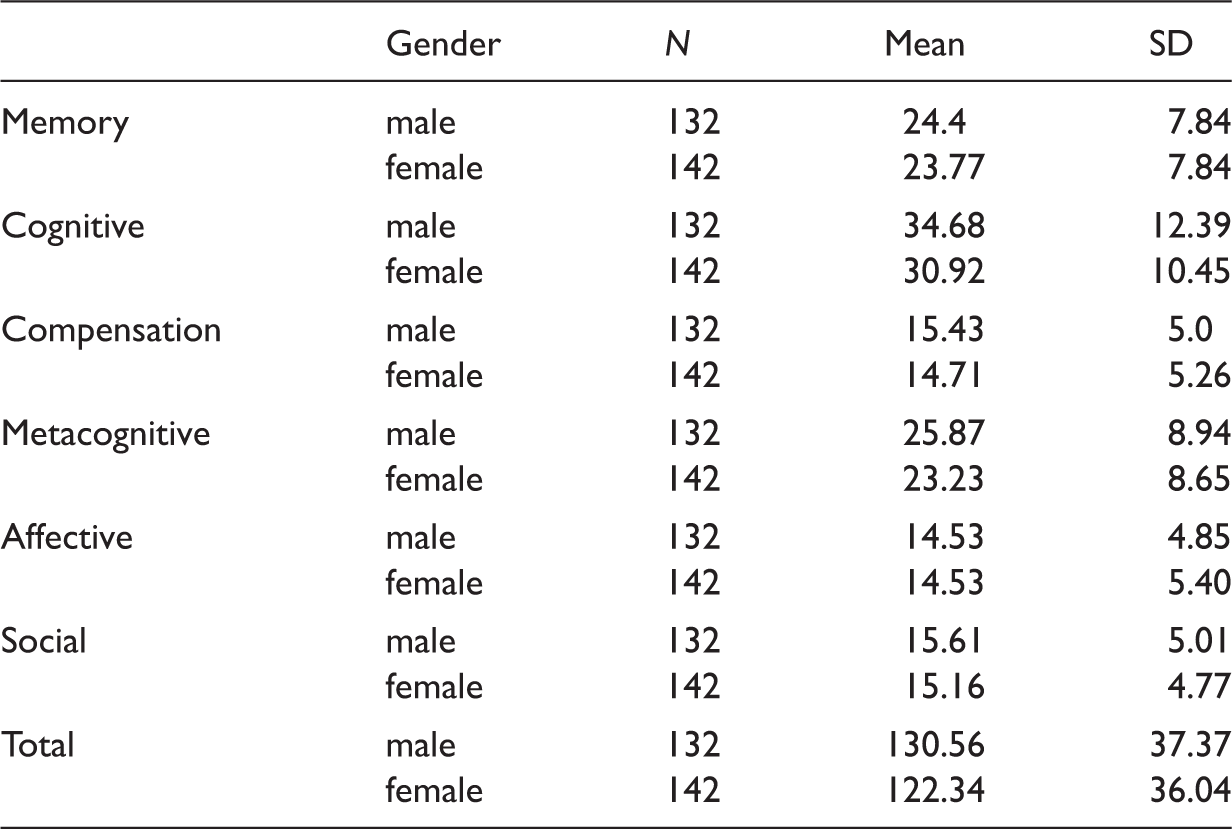
The use of language learning strategies in terms of gender.
Descriptive statistics of subfactors in terms of major.
The correlation between subfactors and academic achievement.
5. Discussion
This study aims to determine the use of language learning strategies of e-learners and to understand whether there were any correlations between language learning strategies and academic achievement. According to the data collected, Turkish e-learners mostly said or wrote new English words several times, and they asked the other person to slow down or say it again if they did not understand something in English. Regarding the least used strategies, they did not prefer to practice English with other students and they did not prefer to write down their feelings in a language learning diary.
In addition, considering all subfactors, the mean was comparatively low. While participants used cognitive and affective strategies the least, they preferred to use metacognitive and memory strategies the most. Çakmak (2010) also found that metacognitive strategies influenced literacy self-efficacy. The results of this study were in line with the findings of Dreyer and Oxford (1996), who revealed that metacognitive strategies directly influenced foreign and second language proficiency. Moreover, Oxford (1996) suggested that affective strategies could be useful for beginner learners, but learners did not need these strategies as they improved in proficiency. Contrary to the findings of the present study, Korkmaz (2013) revealed that compensation strategies were the most frequently used ones for ELT learners studying French and German in a Turkish context. But, similar to this study, they also found that affective strategies emerged as the least frequently used.
Regarding role of gender in use of language learning strategies, a significant difference was found for females in cognitive strategies and for males in metacognitive strategies.
According to Oxford (1990), gender influenced directly the choice of strategies used by language learners. The finding of Demirel (2012) was consistent with the result of the present study: she noted that females took advantage of language strategies more than males.
Of all the subfactors, participants from the internet technologies major had the highest mean in using language learning strategies. A significant difference was found only between cognitive and compensation strategies. Furthermore, in cognitive strategies, there was a significant difference between the internet technology major and the following majors: elderly care major, mechatronics major and child development major. Similarly, in compensation strategies, a significant difference was found between participants from internet technologies and the following: elderly care and mechatronics.
Using Pearson Correlation, a significant difference was found between academic achievement and language learning strategies. The highest correlation was between academic achievement and memory strategies, and the lowest correlation was between academic achievement and compensation strategies. A positive correlation was found when considering all the items. In addition, all subfactors had positive correlation with each other. In this aspect, the highest correlation was between cognitive and metacognitive strategies, and the next highest correlation was between metacognitive and social strategies. Ganjooei and Rahimi (2008) reached a similar result and found that there was a correlation between language proficiency and application of subcategories of language learning strategies.
Demirel (2012) also found that there was a significant difference between the use of strategies and academic achievement. The findings of Aliasa et al. (2012) suggested that Facebook Notes had the potential to be used as language learning strategy training tool, and had a direct effect on academic writing performance. Contrary to the findings of the present study, Korkmaz (2013) found no positive significant correlation between the use of strategies and the learners’ achievement. Moreover, negative correlation was found between the learners’ affective strategy use and academic success for German learners.
The finding of Oxford and Leaver (1996) was in line with the results of this study, and suggested that the more a language learner progressed during this process, the more he/she was able to take advantage of language learning strategies.
6. Conclusion
In conclusion, this study indicates that learners benefit from various strategies while learning English through e-learning. The flexibility of the e-learning program may be a reason for this variety. In addition, e-learners take advantage of metacognitive and memory strategies more frequently than other strategies. Therefore, it is suggested that methodology of the program should be reshaped in this direction. The present study also reveals that there is a positive correlation between language learning strategies and academic achievement in language learning. This statement testifies that strategy training and practice should be an important part of the e-learning curriculum. In other words, considering these strategies in the content and the methodology of the course can help to reach the target more quickly.
Regarding the majors, the use of language learning strategies by internet technology major students with a high frequency may indicate that they are more accustomed to using internet technology for various purposes. It is an inevitable fact in today’s world that internet technology is an important part of our lives, and so is our educational life. Students should be encouraged to participate in e-learning programs to learn foreign languages. This will lead to the enrichment of e-learning programs and encourage the opening of e-learning programs for other majors.