



Abstract
The human visual system is sensitive to statistical regularities in natural images. This includes general properties like the characteristic 1/f power-spectrum fall-off coefficient observed across diverse natural scenes and category-specific properties like the bias favoring horizontal contrast energy for face recognition. Here, we examined the sensitivity of face pareidolia in adult observers to these image properties using fractal noise images and an unconstrained pareidolic face detection task. We presented participants in separate experiments with (Experiment 1) noise patterns with varying spectral fall-off coefficients and (Experiment 2) noise patterns with bandpass orientation filtering such that either horizontal or vertical contrast energy was limited. In both experiments, we found that face pareidolia rates were sensitive to these manipulations. In Experiment 1, we found that fractal noise patterns with steeper fall-off coefficients (favoring coarser appearance) led to lower rates of pareidolic face detection. In Experiment 2, we found that despite the clear bias favoring horizontal contrast energy in a wide range of face recognition tasks, both horizontal and vertical orientation bandpass filtering reduced rates of face pareidolia relative to isotropic images. We suggest that these results indicate that detecting pareidolic faces depends on the availability of face-like information across many low-level channels rather than a favored scale or orientation that is face-specific.
How to cite this article
Balas, B. (2025). Face pareidolia is sensitive to spectral power and orientation energy. i-Perception, 16(6), 1–13. https://doi.org/10.1177/20416695251395442
Introduction
Face pareidolia is a common phenomenon in which observers see face-like structure in images that do not objectively contain real faces. Pareidolia is not just an amusing side effect of our visual system. The robustness of pareidolic percepts across observers demonstrates that there is a shared visual vocabulary of face-like appearance (Omer et al., 2019), which appears to arises from texture patterns or object configurations that are consistent with the first-order configuration of faces, with eye spots situated above image features consistent with a nose and mouth (see Figure 1). The phenomenon has also been used as a means of examining the boundaries of face recognition in the human and non-human primate visual system (Flessert et al., 2022). One way to describe a number of these investigations into face pareidolia is that they emphasize whether some non-face patterns “count” as a face to the visual system, as evidenced by behavioral and neural responses to pareidolic faces that are similar to those elicited by true faces. In imaging and electrophysiological studies, this is usually reflected in the response of face-sensitive subcortical (Leadner et al., 2022) and cortical areas to pareidolic faces (Liu et al., 2014; Palmisano et al., 2023; Pavlova et al., 2020; Wardle et al., 2022), or the characteristics of face-sensitive ERP or MEG components to these patterns (Proverbio & Galli, 2016). Behaviorally, pareidolic faces have been compared to faces, objects (Caruana & Seymour, 2022), and other noise patterns to determine the extent to which they elicit shifts of eye movements or attention via gaze cueing (Takahashi & Watanabe, 2013) or other kinds of response bias (adaptation transfer between pareidolic patterns and faces, Palmer & Clifford, 2020) consistent with a face-like treatment by the visual system. In general, the results of these and other studies demonstrate that pareidolic faces indeed are treated like veridical face images by the visual system.
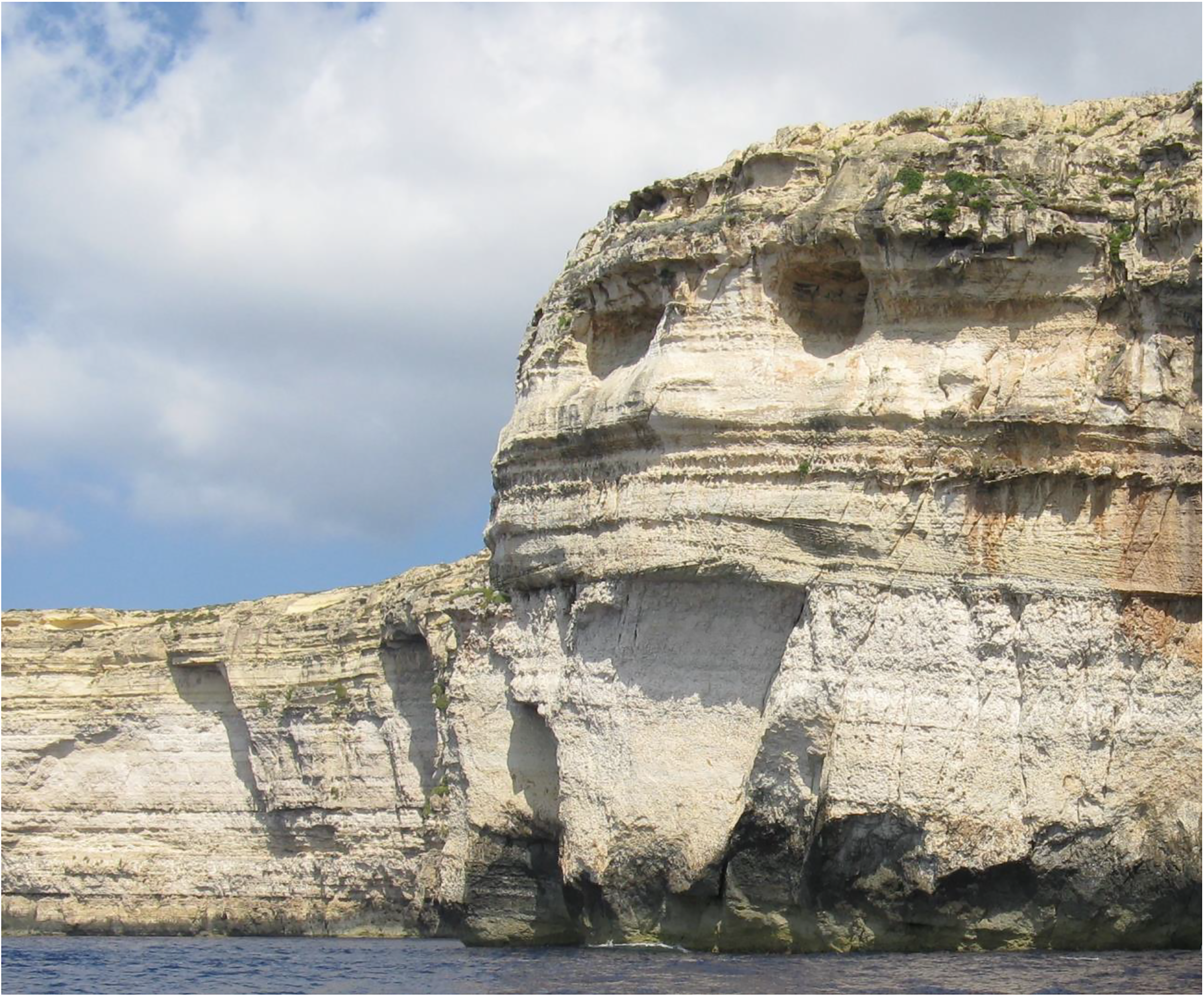
Pareidolic faces like this one result from the accidental emergence of face-like structure, especially dark eye spots, in textures and objects. Image credit: Merlingenial, CC BY-SA 4.0 <https://creativecommons.org/licenses/by-sa/4.0>, via Wikimedia Commons.
Given that pareidolic faces arise from serendipitous configurations of face-like features in natural scenes, a natural question to ask about the phenomenon can be couched in terms of critical features for recognition: What do observers need to see in order to endorse a non-face pattern as pareidolic? Omer et al. (2019) analyzed the contribution of local and global face features (as identified by one group of participants only scoring feature appearance) to pareidolic faceness (as assessed by independent participants), reporting that the presence of eyes and mouth were crucial, while features like teeth and ears were less so. This is consistent with Paras and Webster's (2013) demonstration of dark eye spots as a crucial component of pareidolic face perception, with clear parallels between the dependence of face pareidolia on these features and the dominance of the eyes in the feature hierarchy of veridical face perception determined by human observers (Davies et al., 1977) and more recently evident in DCNNs trained to recognize human faces (Zhang et al., 2024). In terms of higher-level features, Wardle et al.'s (2022) report describing the overwhelming male bias in gender categorization of pareidolic faces may hint at high-level visual features that drive face pareidolia, potentially related to known sexually dimorphic facial features in male and female faces (Russell, 2009). Presently, we wished to expand on these results by considering the question of critical features for face pareidolia in a slightly different manner: Are there properties of the visual environment considered more broadly that support or constrain pareidolic face perception? That is, does face pareidolia depend on the statistics of natural images?
In general, the visual system is tuned in multiple ways to the statistical properties of natural scenes. The agreement between mechanisms for visual perception and the visual ecology of natural images helps to ensure efficient and arguably, effective, neural computation in service of our visual sense. Natural scenes, for example, have a characteristic 1/f power spectrum that reflects the lawful distribution of contrast energy across spatial frequencies (Field, 1987). The shape of the power spectrum is typically described using a logarithmic scale, which turns the exponent of −1 in the 1/f function into a line with that value as its slope. A shallower power spectrum than this would lead to images with more fine-grained “speckly” structure, while a steeper slope would lead to images biased towards coarser, more “blobby” structure. Adults are sensitive to this property of natural scenes, exhibiting heightened discriminability between images with power spectrum slopes close to this value (Knill et al., 1990). Furthermore, the receptive field structures observed in primary visual cortex can be accounted for in part by a data-driven analysis of the filters that provide a sparse code for natural scenes (Olshausen & Field, 1996). In both of these instances, there is a direct connection between the properties of the visual environment and a specific aspect of low-level vision. Similar links have been explored in the context of color and depth perception (Hoyer & Hyvarinen, 2000), and motion perception (van Hateren & Ruderman, 1998), all generally consistent with the hypothesis that early stages of visual processing tend to match various statistical regularities in the visual environment.
Besides very general properties of natural images that the visual system is sensitive to, there are also category-specific image statistics that are reflected in the properties of mechanisms for visual recognition. With regard to faces, one particularly compelling example is the biased use of horizontally-oriented visual structure for face recognition. Specifically, horizontal contrast energy appears to make a larger contribution to face detection and recognition than either vertical or oblique orientation bands (Goffaux & Greenwood, 2016). The configuration of the eyes, nose, and mouth within a face outline leads horizontally-filtered images to preserve a sort of “bar-code” for facial structure that carries sufficient visual information to support performance in multiple recognition tasks (Dakin & Watt, 2009). There is some variability in the extent of this feature bias with task: For example, some facial expressions include enough useful information in vertical passbands to reduce performance differences between conditions with horizontal versus vertical features selectively removed (Huynh & Balas, 2014). However, this class of features in general yields a consistent bias both in terms of the objective content of face images and also with regard to key behavioral indices of face-specific processing (Goffaux & Dakin, 2010). There are many other ways that face recognition is tuned to regularities in visual experience as well, including examinations of the spatial frequencies that contribute most to face recognition (Ruiz-Soler & Beltran, 2006), the impact of the visual diet of face images observers see based on their typical viewing distance from other people (Oruc et al., 2019), and the racial demographics of the faces they encounter in everyday experience (Stelter & Schweinberger, 2023). Similar to what has been reported with regard to general image statistics and early stages of visual processing, these studies generally confirm that mechanisms for high-level visual recognition are matched in multiple ways to the regularities in the environment considered in the context of faces.
Determining how image statistics support or limit robust face pareidolia is an interesting question that lies at the intersection of the results we have discussed. To an extent, face pareidolia is situated between the perception of natural images and the perception of faces: These patterns are typically spotted in observers’ typical visual environments but necessarily depend on sharing some visual features with veridical faces. How then, might face pareidolia be tuned to the statistics of visual scenes in general and the statistics of face images in particular? This is different than asking if face or mouth spots are critical for seeing faces where there aren’t any: Dark spots of approximately the same size can be found in lots of images, after all, but are there other properties of the visual environment that do or don’t favor interpreting such local features as part of a pareidolic face? In the current study, we explored this question in two experiments, each designed to target one aspect of our over-arching hypothesis: Face pareidolia should be more prevalent in images that are more closely matched to domain-general and domain-specific natural image statistics. In Experiment 1, we examined the extent to which rates of face pareidolia depended on stimulus power spectrum. In Experiment 2, we examined how pareidolia rates depended on the orientation energy in visual stimuli. In both cases, we adopt the approach used by Paras & Webster (2013) and Peterson et al. (2024) of presenting observers with noise images in which they were asked to identify pareidolic faces that stood out to them. Compared to using a pre-selected set of pareidolic faces, this offers us the chance to manipulate image content directly and measure the impact of such manipulations on the nature of pareidolic face perception.
Experiment 1: How is Face Pareidolia Affected by Spectral Power?
In our first experiment, we manipulated the spectral power in fractal noise images to determine how images with spectral power coefficients consistent with natural scenes elicited face pareidolia relative to images with shallower or steeper fall-off coefficients. Per Peterson et al. (2024) we predicted that we would find the highest rates of face pareidolia for images with an intermediate coefficient, reflecting the tuning of face pareiodolia to the regularities in natural scenes.
Methods
Participants
We recruited a total of 32 participants from the NDSU Psychology Undergraduate Study Pool. All participants were over the age of 18 and self-reported normal or corrected-to-normal visual acuity. Participants provided informed consent before beginning the testing session and received course credit for Introductory Psychology as compensation for their participation. All participants were naive to the purposes of the experiment. All recruitment, consent, and testing procedures were approved by the NDSU IRB.
Stimuli
We created 12 noise images for this task. Each of these images was created using custom Matlab code for generating fractal noise images and image volumes with varying spatial and temporal fall-off coefficients (Isherwood et al., 2017). We generated four images each in three different spectral power conditions: (1) Natural Scene Spectra—These images had a spectral fall-off coefficient of 1.25, consistent with the regularities observed in natural scenes. (2) Shallow Spectra—These images had a spectral fall-off coefficient of 0.75, leading to a grainier appearance due to the greater proportional distribution of contrast energy at higher spatial frequencies. (3) Steep Spectra—These images had a spectral fall-off coefficient of 1.75, leading to a coarser or “blobbier” appearance due to the smaller proportional distribution of contrast energy at high spatial frequencies (Figure 2).

Examples of the fractal noise images created for Experiment 1. By varying the power spectrum fall-off coefficient, we generated noise patterns with varying levels of fine, grainy appearance and coarse, blobby appearance.
Each image was 1024 × 1024 pixels in size and was generated with an RMS contrast energy of 0.3. We printed hard copies of these images for each participant to facilitate drawing directly on the image to record pareidolic face detection in each stimulus and these were sized at 8.5 × 11 inches.
Procedure
After we obtained informed consent from each participant, the experimenter provided a brief explanation of face pareidolia that was accompanied by illustrative examples of object-based pareidolic faces. Participants were then instructed to look at each image in the packet they were given upon entry and circle any pattern within the larger image that looked like face-like to them. Participants were assured that there were no correct or incorrect answers and that they could circle as many pareidolic faces as they felt they saw. Further, we advised participants that any size, position, or orientation (planar rotation) of pareidolic face was appropriate to include, but that they should not rotate the paper to regard the stimulus in multiple orientations. We provided participants with a marker or pen to circle the faces that they detected and to indicate where the top of each face was. The order of the three spectral power conditions within the paper packet was counterbalanced across participants such that each condition appeared equally often in each ordinal position during the testing session across our sample. In Figure 3, we provide illustrative examples of the types of micropatterns participants circled in each of the three conditions in this experiment. We note that while we provided participants with open-ended instructions regarding face-like appearance in these images, individuals tended to identify candidate eye spots and mouth-like shapes when circling micropatterns in our images.

Examples of participant responses in each of our three stimulus conditions. Note that these images were photographed for display here and contrast-adjusted to make participants’ circled micro-patterns more visible, resulting in some alteration of the appearance of the underlying noise patterns relative to what participants saw during the experiment.
Results
We analyzed the count data of pareidolic face patterns identified by each participant in each image using a Generalized Linear Mixed-Effect Model implemented in JASP v0.19 (2024). We used the Poisson family of functions with a log linking function and included power spectrum coefficient as a fixed effect (intermediate slope, steep, and shallow) with item and participant as random effects. For both random effects, we included estimation of random intercepts but not random slopes. This analysis revealed an overall significant effect of the fixed effect of power spectrum (
Estimates of the marginal means for each condition in Experiment 1 accompanied by the estimated standard error of the mean and bounds for 95% confidence intervals for each level of our fixed effect.

To test our prediction that an intermediate power spectrum slope consistent with natural scene spectra should lead to higher rates of face pareidolia, we carried out a fixed-effects analysis using the intermediate slope as the reference level for testing the effects of steep and shallow spectra. This analysis yielded a significant difference between the intermediate slope and the steep condition, but the difference between the intermediate and shallow slope did not reach significance (see Table 2).
Fixed effects estimates for Experiment 1. While the shallow slope condition does not differ from the reference level, the steep condition does. This indicates that proportionally reducing high spatial frequencies in fractal noise reduces rates of pareidolia, but increasing these spatial frequencies has a lesser effect.

Discussion
The data from our first experiment demonstrate that face pareidolia is indeed sensitive to the slope of the power spectrum, but our results do not support our hypothesis that face pareidolia would be specifically tuned to values of this coefficient consistent with natural scene spectra. Instead, we found that pareidolia was only significantly reduced in fractal noise images with a steep power spectrum slope that limited the relative proportion of high spatial frequencies in these random patterns. This also differs from the results reported in Peterson et al. (2024) who found that random, non-symmetric patterns like ours with these power spectrum slopes gave rise to lower reports of pareidolic objects at a shallower slope rather than a steeper slope. There are important methodological differences between their study and ours, however, including our requirement that participants indicate where they saw a pareidolic face specifically (as opposed to any pareidolic object) in a larger image, with instructions to scan each image and make multiple responses per item. Given that participants in the Peterson et al. task were free to report any type of pareidolic object, including animals of various kinds, this may lead to a different picture of tuning across power spectrum slopes. While faces accounted for a clear plurality of responses in the data from their third experiment, their report did not include separate profiles of pareidolic responses across spectral slope values per category.
We continue in Experiment 2 by examining the contribution of orientation statistics to rates of face pareidolia in fractal noise. Rather than manipulate the power spectrum of our images, in this next task we instead vary the available orientation energy in the stimuli to investigate the influence of category-specific statistical regularities on the perception of faces in random patterns.
Experiment 2: How is Face Pareidolia Tuned to Orientation Energy?
In our second experiment, we examined how manipulating the orientation energy available to observers in fractal noise images affected rates of face pareidolia. Our prediction, based on prior studies demonstrating a recognition bias favoring faces that retain horizontal orientation energy, was that face pareidolia should be less frequent in noise images that were vertically filtered to minimize horizontal contrast energy, but unaffected by horizontal filtering to minimize vertical contrast energy.
Methods
Participants
We recruited a total of 43 participants from the NDSU Psychology Undergraduate Study Pool. As in Experiment 1, all participants were over the age of 18 and self-reported normal or corrected-to-normal visual acuity. Participants provided informed consent before beginning the testing session and received course credit for Introductory Psychology as compensation for their participation. All participants were naive to the purposes of the experiment. All recruitment, consent, and testing procedures were approved by the NDSU IRB.
Stimuli
We created a total of 24 unique noise images for this task. We began by generating eight images using the same custom Matlab code for generating fractal noise images described in Experiment 1, but in this case all images were generated with a power spectrum coefficient of −1. These images were then orientation filtered using an additional custom Matlab script adapted from the code used in Dakin & Watt's (2009) study of “bar codes” for face recognition. This allowed us to filter each image in the Fourier domain by identifying the center and standard deviation of the frequency passband we applied to the images. We selected passbands with central orientations of 0 and 90 degrees to achieve horizontal and vertical orientation filtering, and each of these passbands had a standard deviation of 15 degrees. Examples of each type of stimulus are displayed in Figure 4.

Examples of horizontal, vertical, and isotropic fractal noise images used in Experiment 2.
Each image was 1024 × 1024 pixels in size and was generated with an RMS contrast energy of 0.3. We printed hard copies of these images for each participant to facilitate drawing directly on the image to record pareidolic face detection in each stimulus and these were sized at 8.5 × 11 inches.
Procedure
All informed consent and testing procedures were identical to those described in Experiment 1. In Figure 5 we include illustrative examples of participant responses to our horizontal and vertical noise conditions to demonstrate the type of micropatterns identified as face-like by our participants. As in Experiment 1, despite the open-ended task instructions, participants’ responses tend to include candidate eye spots and mouth shapes that likely guided micropattern selection.

Examples of participant responses in the horizontal and vertical conditions of Experiment 2. As in Experiment 1, note that these images were photographed for display here and contrast-adjusted to make participants’ circled micro-patterns more visible, resulting in some alteration of the appearance of the underlying noise patterns relative to what participants saw during the experiment.
Results
As in Experiment 1, we analyzed the count data of pareidolic face patterns identified by each participant in each image using a Generalized Linear Mixed-Effect Model implemented in JASP v0.19 (2024). Again, we used the Poisson family of functions with a log linking function and included orientation content as a fixed effect (isotropic images, horizontal, and vertical). Unlike our prior analysis, we were unable to include both item and participant as random effects due to singular model fits. We thus removed item from the model, leaving only participant as the sole random effect. We estimated a random intercept, but not a random slopes for this factor.
This analysis revealed an overall significant effect of the fixed effect of orientation content (
Estimates of the marginal means for each condition in Experiment 2 accompanied by the estimated standard error of the mean and bounds for 95% confidence intervals for each level of our fixed effect.

As in our previous analysis, to test our prediction that vertically-filtered noise images should lead to lower rates of face pareidolia than our other two conditions, we carried out a fixed-effects analysis using the isotropic slope as the reference level for testing the effects of horizontal and vertical filtering. This analysis yielded significant differences between the isotropic condition and both of the orientation-filtered conditions (see Table 4).
Fixed effects estimates for Experiment 2. Both the horizontal condition and the vertical condition differ significantly from the isotropic condition by numerically similar amounts.

General Discussion
In both of our experiments we found evidence that the statistical structure of fractal noise patterns influenced observers’ reports of face pareidolia. In Experiment 1, this was evident in the lower rates of face pareidolia when spectral slopes were shallow, indicating that the reduction on high spatial frequencies tended to reduce the incidence of pareidolia. In Experiment 2, this was evident in lower rates of face pareidolia for both types of orientation filtering relative to isotropic fractal images, indicating that compromising either horizontal or vertical orientation energy limited observers’ tendency to see faces in random noise. This second result was particularly surprising to us, as the effects of orientation filtering applied to face images are quite different, substantially favoring horizontal filtering over vertical filtering (Goffaux & Greenwood, 2016). However, to some extent a response bias in the opposite direction (favoring vertical filtering over horizontal filtering) might have been easier to understand vis-a-vis our initial hypothesis. While the vertical orientation passband does not generally support robust face recognition, it does carry useful information about the appearance of the eyes (Goffaux & Greenwood, 2016). Given the clear dependence of face pareidolia on the presence of eye-spots, a flipped preference for vertically-filtered noise images could still be at least tenuously linked to category-specific regularities in face images. Instead, we find that in both of our experiments, face pareidolia behaves differently than we expected: Rates of pareidolia in this task were not tuned to regularities in natural scene statistics, but were sensitive to manipulations of these statistics.
While neither of these outcomes was consistent with our initial hypotheses, nonetheless these two sets of results together suggest some important ideas about the conditions that best support face pareidolia. One way to summarize the results of both experiments is to say that face pareidolia appears to be best supported by images with a relatively broad distribution of different visual structures. That is, whether we are considering the relative power in spatial frequency or orientation bands, substantially reducing any one channel may compromise pareidolic experiences. While not especially consistent with the idea that pareidolia is specifically tuned to real-world regularities in statistical structure, this suggests that perceiving structure in randomness may be a by-product of observing images that are comparatively rich, which may offer more opportunities for the serendipitous arrangement of face-like local features required for face pareidolia to occur. This likely does not apply to all aspects of visual appearance: Paras and Webster (2013) report, for example, the color contrast appears to contribute only weakly to face pareidolia. Still, more careful manipulation of the amount of visual structure across specific channels (Pachai et al., 2018) rather than tuning per se may be a useful next step. Compared to our fairly coarse manipulations of spectral slope and orientation passbands, finer-grained parametric variation in these appearance parameters may also help establish how much information loss has a deleterious effect on face pareidolia.
The paradigm that we used to measure observers’ experience of pareidolia also has strengths and weaknesses that are worth considering in light of our results. On one hand, the use of random patterns in our study (and previous work by Peterson et al. (2024) and Paras and Webster (2013)) has the advantage of being free from any biases that influence the nature of the stimuli included in crowd-sourced images of face-like objects and textures. However, the relative lack of constraint on observers’ responses in the current study means that participants had to make their own decisions about factors including the spatial scale of the faces likely to be in the patterns, the possible orientation of those faces, etc. While these are additionally interesting aspects of participants’ face pareidolia to potentially measure, the absence of any instructions or stimulus parameters fixing any of these variables may mean participants adopted their own varying response criteria in order to limit their search for face-like patterns in an otherwise open-ended task. The relationship of such pragmatic response criteria to the statistical biases to govern properties of faces in natural environments like viewing distance (#Oruc REF) is unknown. Besides the lack of any constraint on the spatial position, scale, and orientation of pareidolic faces, we also did not give specific instructions to our participants about the type of face they were meant to find. Paras and Webster (2013) reported that participants frequently perceived non-human faces in their noise images, and Jakobsen et al. (2023) noted that the pareidolic faces included in crowd-sourced natural images tend to have larger eyes and mouths than a human face. Again, this may mean that participants arrived at different response criteria as a function of what they decided they would look for in these images (consistent with top-down guidance of face pareidolia—Liu et al. (2014)), with potential consequences for how image statistics contributed to pareidolia rates. For these reasons, we suggest that a direct examination of varying task demands and the effects of these on face pareidolia is a potentially valuable contribution to the literature.
Finally, we suggest that there is an important connection to be made between studies of face pareidolia that use noise images like the ones employed here and studies that use natural scenes with face-like patterns that emerged by happenstance. Specifically, the relationship between the statistical regularities that are evident in real human faces viewed in the natural environment is well-known, with specific contrast relationships and spatial frequencies known to support more robust face categorization (Keil, 2008; Liu-Shuang et al., 2022). To the best of our knowledge, the extent to which these regularities are evident in the kinds of face-like patterns observers identify in natural scenes has not been well-explored. This could provide useful insights into how relevant specific aspects of face-like structure are to the perception of faces in everyday objects like faucets, fruits and vegetables, and other objects that occasionally appear to be smiling, frowning or just staring back at us, but measuring these relationships via the images people find compelling enough to share widely would be a useful additional test of our initial hypotheses.
Presently, we conclude that in this setting face pareidolia varies as a function of noise statistics, but not in a manner that is commensurate with the tuning of the visual system to either domain-general or domain-specific natural image statistics. Instead, the visual system sees faces more readily when there is more variety in spatial frequency and orientation, potentially reflecting some probabilistic realities of how likely face-like patterns are to emerge in noise with different statistics and observers’ response biases regarding the patterns they expect to find.
Supplemental Material
sj-docx-1-ipe-10.1177_20416695251395442 - Supplemental material for Face pareidolia is sensitive to spectral power and orientation energy
Supplemental material, sj-docx-1-ipe-10.1177_20416695251395442 for Face pareidolia is sensitive to spectral power and orientation energy by Benjamin Balas in i-Perception
Footnotes
Acknowledgments
Special thanks to Amber Emery at the Fargo Public Library for her support of the “Mind Mysteries” outreach events that facilitated pilot studies with the stimuli we used here. Special thanks to Adam Kalina and Myra Morton who assisted with data collection and formal analysis of the data described in this manuscript.

Ethical Considerations
The research described in this manuscript was approved by the NDSU Institutional Review Board (Protocol #IRB0005061), including all informed consent procedures. All participants provided informed consent before beginning the study.
Author Contribution(s)
Funding
The author disclosed receipt of the following financial support for the research, authorship, and/or publication of this article: .This research was supported by NSF Grant BCS-2338600 awarded to BB.
Declaration of Conflicting Interests
The author declared no potential conflicts of interest with respect to the research, authorship, and/or publication of this article.
Data Availability
All raw data and supporting files for statistical analysis will be made available via the Open Science Framework upon acceptance.
Supplemental Material
Supplemental material for this article is available online.
References
Supplementary Material
Please find the following supplemental material available below.
For Open Access articles published under a Creative Commons License, all supplemental material carries the same license as the article it is associated with.
For non-Open Access articles published, all supplemental material carries a non-exclusive license, and permission requests for re-use of supplemental material or any part of supplemental material shall be sent directly to the copyright owner as specified in the copyright notice associated with the article.
