



Abstract
This study investigates the ballistic impact behavior of Aluminium alloys (Al 6061-T6, Al 7075) and Ti6Al4V alloy plates for potential applications in ballistic protection. The objective was to evaluate the energy absorption and penetration resistance of these materials under varying thicknesses (4 mm, 8 mm, and 12 mm). Three-Dimensional Finite Element Analysis (FEA) was employed to simulate vertical and inclined impacts, with the latter conducted at angles of 15°, 30°, 45°, and 60° on Ti6Al4V plates. Results indicate that the plate thickness significantly affects energy absorption, with Ti6Al4V exhibiting the highest energy absorption, achieving 20%, 44%, and 63% for 4 mm, 8 mm, and 12 mm plates, respectively. Al 7075 ranked second, while Al 6061-T6 absorbed the least energy. Notably, for 12 mm Ti6Al4V plates, perforation occurred only at a 15° impact angle, while the bullet got stuck at 30° and 45° and bounced off at 60°. These findings suggest that Ti6Al4V is the most suitable material for ballistic protection, with Al 7075 serving as a secondary option. This research provides valuable insights for the development of lightweight, high-performance materials for ballistic applications in the military and aerospace industries.
Introduction
Ballistic impacts and other high-velocity impact loading conditions have been important for several structural applications (Manes et al., 2014). The majority of research on ballistic impacts has been reported on experimental as well as numerical investigations. Most of these investigations are carried out to analyse the impact performance of the target. These analyses include primary process conditions such as residual velocity, energy absorption, penetration, and damage (Manes et al., 2014; Saeed et al., 2025). Lightweight systems are one of the primary applications of Aluminium alloy plates as weight is an important design criterion in impact materials. Though ballistic steel has generally been the first choice for defence and protective applications (Pai et al., 2022). The researcher Børvik et al. (2004) showed that aluminum protection has a 25% reduction of weight for the same strength, hence providing a better energy absorption characteristic. The study by Mapelli et al. (2011) used Al6061-T6 alloy plates for an experimental investigation of microstructure using 7.62 × 51 mm projectiles weighing 9.5 g. The experimental investigation revealed that the high ductility of the material led to a high deformation gradient. The impact also led to the recrystallization of lattice due to the high strain rate and induced temperature. The author Manes et al. (2013) did an experimental ballistic analysis on Al6061-T6 tubes with a 7.62 × 51 mm projectile to study the effect of high-velocity impact on Helicopter tail rotors. The projectile was impacted at an angle of 45° from vertical. The deformation of the bullet during impact, paired with the critical impact condition (tangential), led to extensive damage to the plate.
The writer Rahman et al. (2016) performed numerical ballistic investigation on double- and triple-layered HSS and Al7075 alloy plates using a high-speed impactor. The triple-layered composite structure of HSS and Al7075 performed 8% to 12% better than the double-layered configuration with the smallest depth of penetration of 21 mm. The study carried by Periyasamy et al. (2018) has performed numerical analysis on the ballistic response of Al7075 composite plates with honeycomb structure. They found that Al7075 composites with a middle layer of honeycomb structure performed better than Kevlar 149 as the core. Experimental tests have been conducted to study the material response of Aluminium subjected to high-velocity impactor (Børvik et al., 2009; Forrestal and Piekutowski, 2000; Gara et al., 2021; Gupta et al., 2006, 2007; Iqbal et al., 2013; Manes et al., 2014).
Titanium alloys, known for their excellent mechanical properties and high corrosion resistance, are extensively used in aerospace, automotive, chemical, and power plants (Balichakra et al., 2016, 2019; Mallikarjuna et al., 2021; Mallikarjuna and Reutzel, 2022). Titanium alloys have also been investigated to examine their performance under high-velocity ballistic applications (Bless et al., 1997; Lee et al., 2001, 2004, 2005; Me-Bar and Rosenberg, 1997; Montgomery and Wells, 2001; Nemat-Nasser et al., 2001; Walters et al., 2000). The author Medvedev et al. (2021) performed ballistic analysis on Ti-alloys fabricated using the Laser Powder Bed Fusion (LPBF) process. Increased thickness of α-lamellae by post-LPBF heat treatment led to a wrought-like ballistic performance and also led to an increase in ductility. The researcher Zheng et al. (2014) studied the microstructure of the impact region of Ti6Al4V targets post-ballistic impact. RHA steel projectile was used with an impact velocity of 830 m/s. The brittle fragmentation failure mode in the lamellar microstructure was facilitated by the net-like features of adiabatic shear bands. However, the ductile hole formation failure mode in equiaxed and bimodal microstructures was facilitated by regularly spaced features of adiabatic shear bands. The study carried out by Bhav Singh et al. (2012) described the effect of heat treatment on the mechanical properties and ballistic impact resistance of Ti6Al4V alloy against 7.62 mm deformable lead projectiles. Post-ballistic microstructural examination showed the formation of adiabatic shear bands (ASBs) and adiabatic shear band-induced cracks. The heat-treated plates have a higher ballistic impact resistance. Plug formation was observed through the ASB-induced shear localization in planes parallel to the direction of projectile impact in all directions. Thus, with different materials, numerical modeling and simulation of ballistic impact analysis is reported elsewhere (Gara et al., 2021; Naik et al., 2024; Zemani et al., 2024). From the literature, it can be concluded that the effect of the projectile majorly depends on parameters like thickness, impact velocity, nose angle, and bullet radius. A lot of research has been done in the form of experimental ballistic investigations for Aluminium alloys. However, there is minimal research related to the ballistic performance of Ti6Al4V alloys.
In this work, Finite Element Analysis (FEA) of ballistic impact is carried out to understand the plate thickness, energy absorption, and residual velocities. FE Analysis is performed for different thicknesses such as 4, 8, and 12 mm. Also, the inclined impact of a bullet on a 12 mm Ti6Al4V plate at angles 15°, 30°, 45°, and 60° was examined. The Al6061-T6 results have been validated using additional plates of 25 mm, 76.2 mm, and 101.6 mm to compare the results obtained by Manes et al. (2014).
Materials and methods
Materials
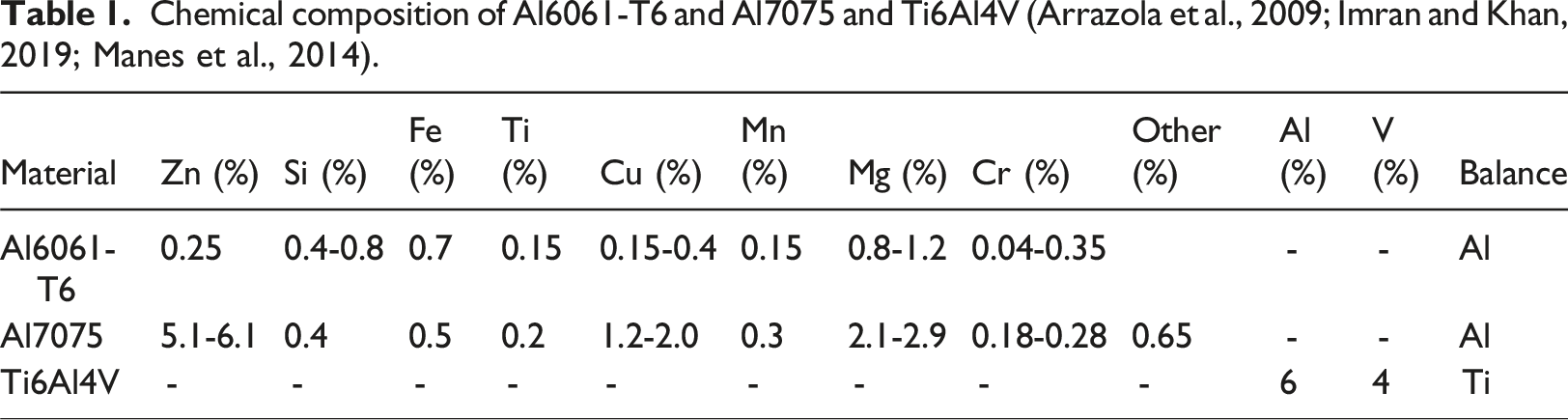
Chemical composition of Al6061-T6 and Al7075 and Ti6Al4V (Arrazola et al., 2009; Imran and Khan, 2019; Manes et al., 2014).
Geometry and impactor
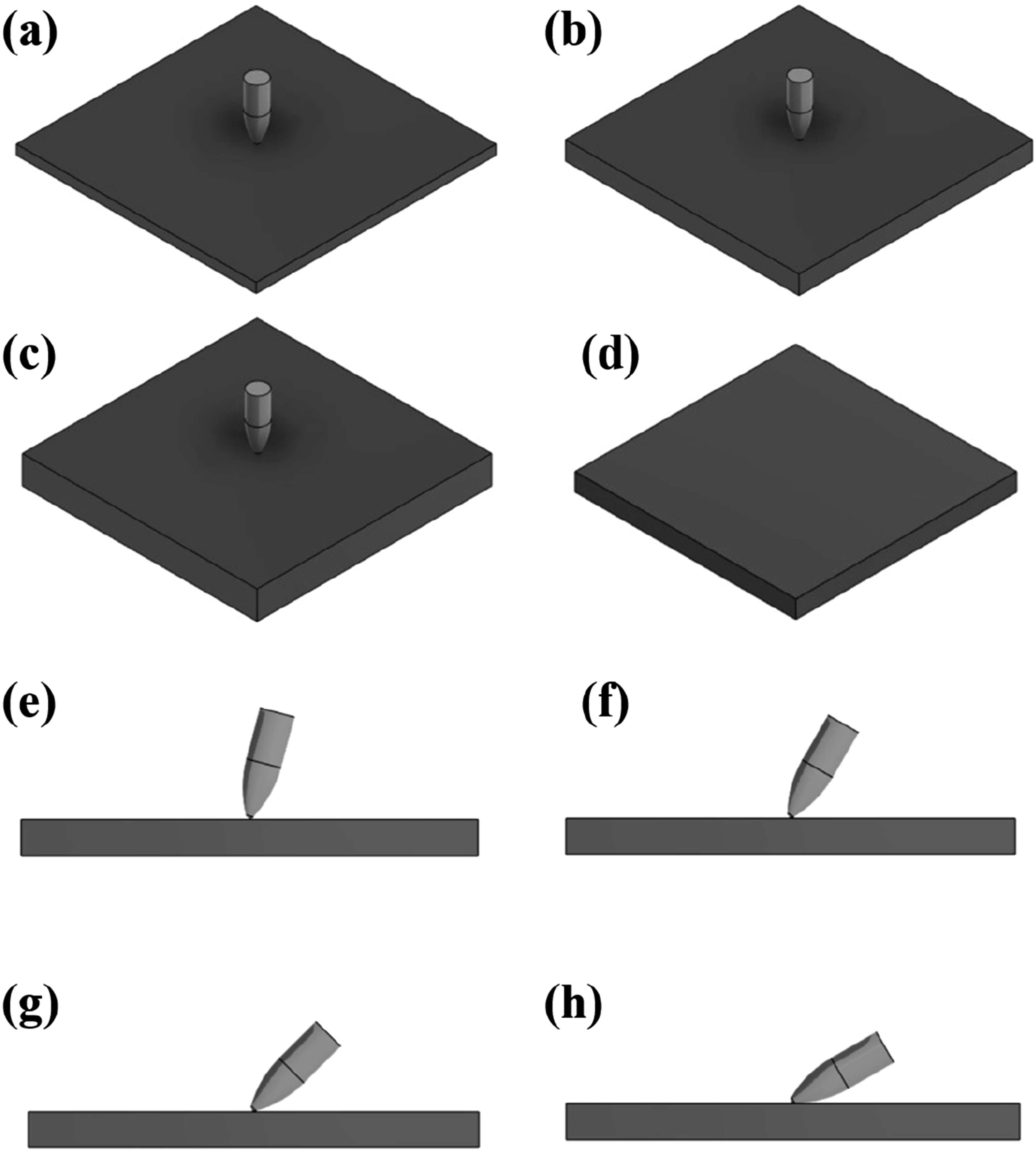
Plate specimens with dimensions of 100 × 100 mm2 (Figure 1(a)) were considered for the investigation. The plate thicknesses selected for analysis were 4 mm, 8 mm, and 12 mm. 7.62 mm armor-piercing rounds were used as projectiles, with the bullet core considered the actual projectile. The core mass was 9.5 g. The impact analysis included angled impacts at 15°, 30°, 45°, and 60° relative to the normal to the plate cross-section. The orientation of the bullet and plate assemblies for different thicknesses and impact angles is illustrated in Figure 2. The projectiles were fired at a velocity of 771 m/s, with 0° impact representing vertical impact conditions (Figure 2(a)-(c)), while inclined impacts at 15°, 30°, 45°, and 60° are depicted in Figure 2(d)-(h). (a) The ballistic plate of cross-section 100 × 100 mm2. (b) 7.62 mm bullet. (c) Projectile core. (a) 4 mm plate with vertical impact (b) 8 mm plate with vertical impact (c) 12 mm plate with vertical impact (d) 8 mm plate for inclined impact (e) 8 mm plate with 15° impact (f) 8 mm plate with 30° impact (g) 8 mm plate with 45° impact (h) 8 mm plate with 60°.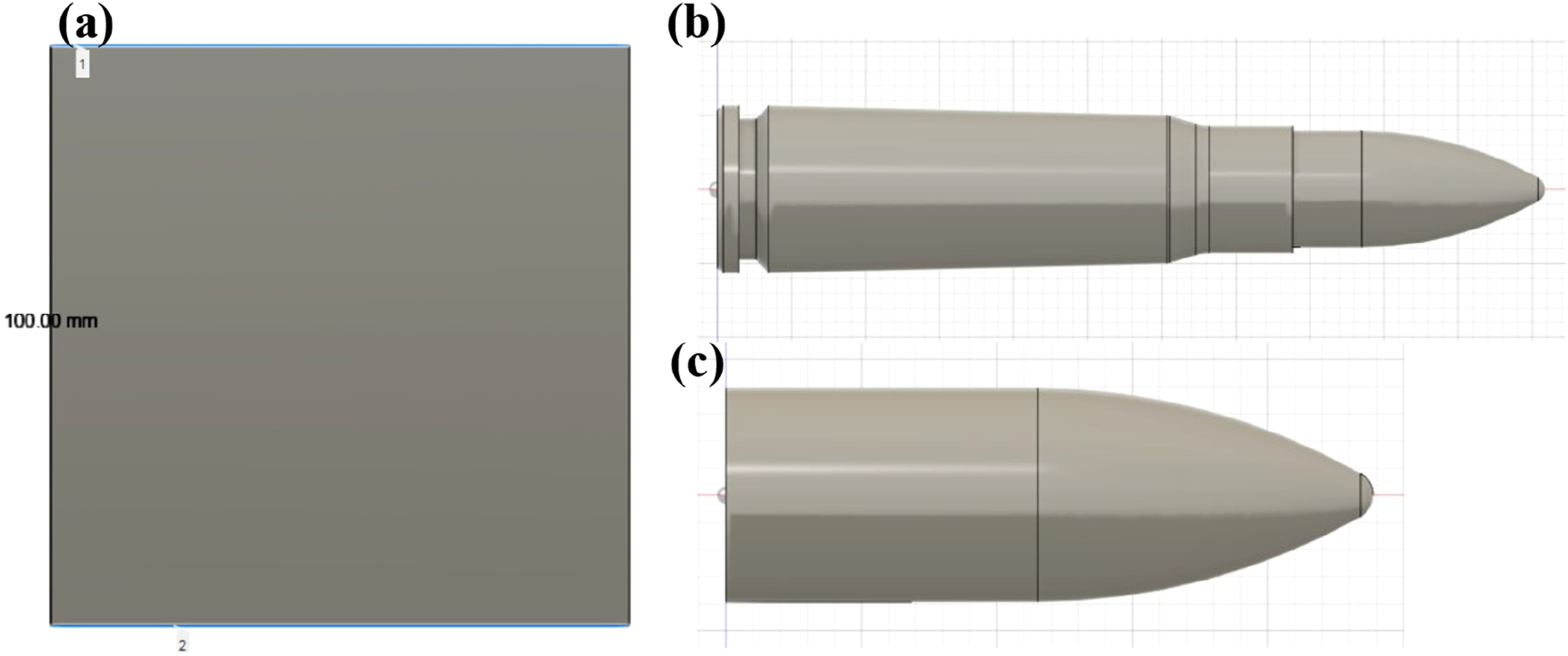
Finite element method
The meshed finite element model of a 7.62 mm bullet, plate with boundary conditions is shown in Figure 3(a) and (b). (a) Meshed geometry (b) boundary conditions applied to the plate.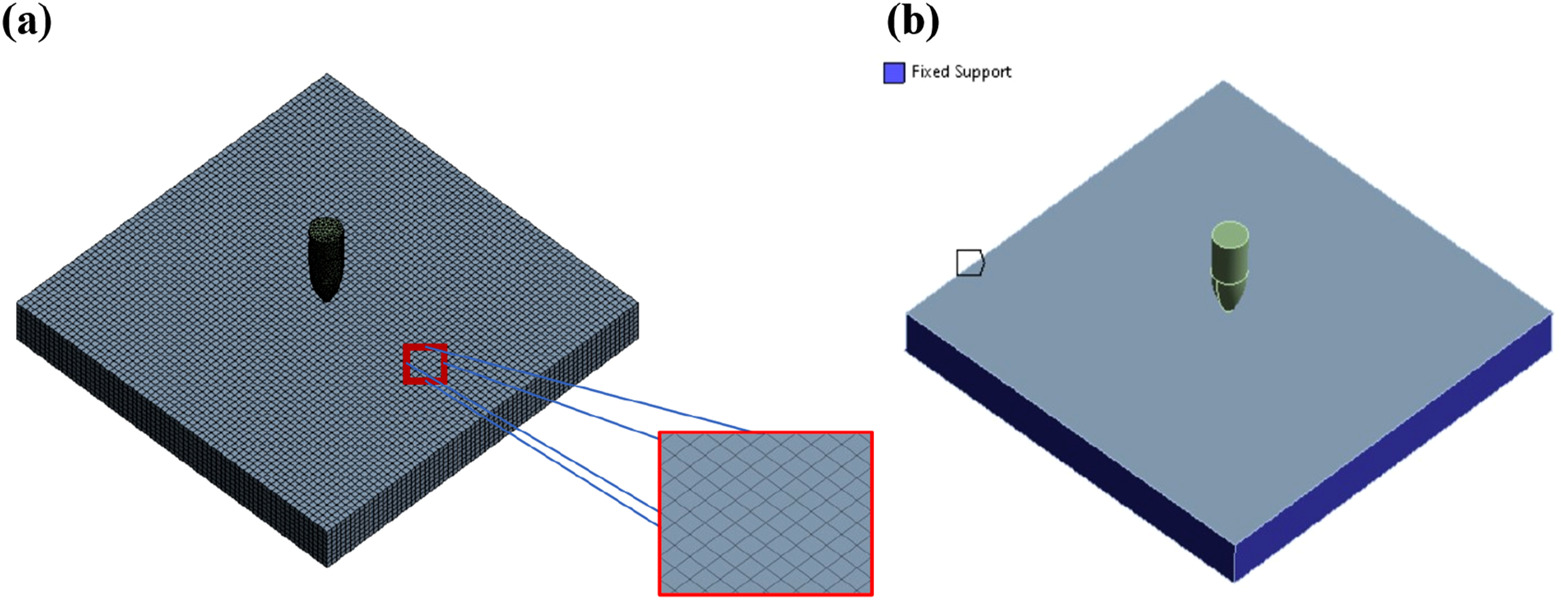
Mesh properties of all plates.
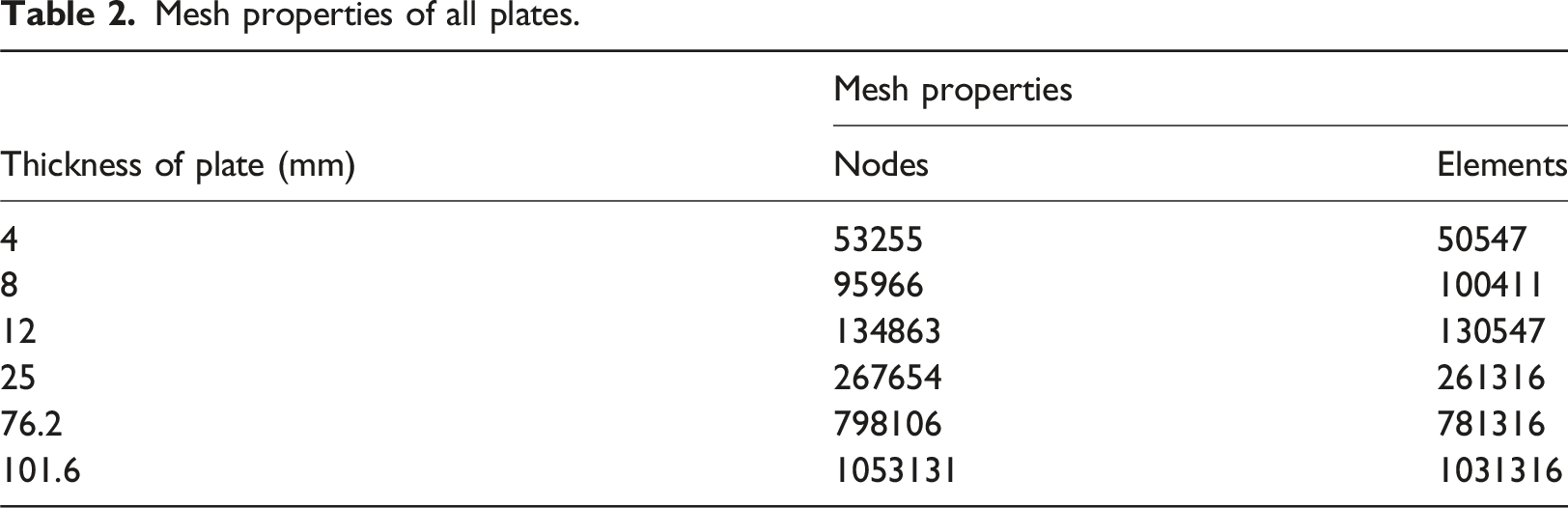
Further, a finer mesh (more nodes/elements) improves the accuracy of the results but comes at the cost of increased computational time and resources. This is especially true for thick plates, where capturing three-dimensional effects and through-thickness variations requires dense meshing. The mesh density typically needs to account for variations in stress across the thickness. For thick plates, this often necessitates higher-order elements or finer through-thickness meshing, which increases complexity.
Therefore, the following assumptions were made to simplify the FE model: plate geometry is flexible, projectile geometry is rigid, and the plate is fixed at all the end faces. Assuming a rigid projectile neglects any deformation or energy absorption by the projectile itself. In real-world scenarios, projectiles may deform upon impact, reducing the energy transferred to the plate. This could lead to an overestimation of the stress and deformation experienced by the plate. The flexible plate assumption allows for more realistic deformation patterns. However, material imperfections, such as non-uniform properties or defects, are not considered, which might cause slight deviations when compared to experimental outcomes. Finally, the perfectly fixed boundary conditions have no movement or displacement at the edges, which is often unrealistic in practical applications where partial or elastic supports exist. This can lead to higher localized stresses and strains near the boundaries in the simulation compared to real-world results. Thus, these assumptions help to reduce model complexity and computation time, but they could lead to over-simplified results that do not fully account for real-world variables.
Material properties
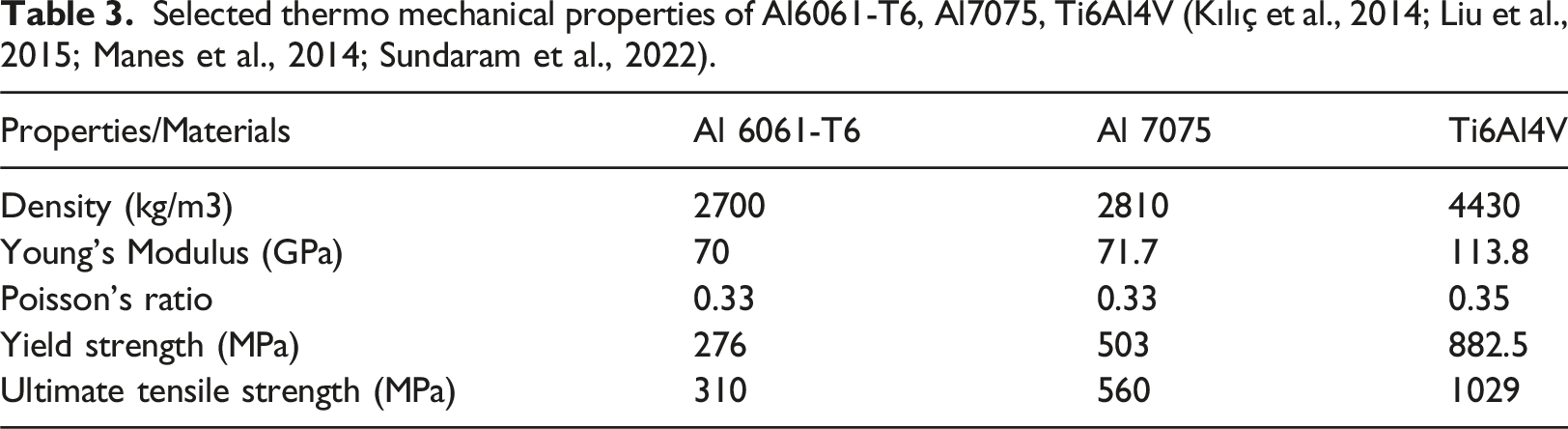
Selected thermo mechanical properties of Al6061-T6, Al7075, Ti6Al4V (Kılıç et al., 2014; Liu et al., 2015; Manes et al., 2014; Sundaram et al., 2022).
Results and discussion
This section presents the modeling and simulation findings and discusses their implications based on the obtained data. The results are analyzed in terms of material performance upon normal and inclined impactors on the impact properties.
Validation of the current finite element model with the existing experimental work
The present study reports on the Finite Element Analysis (FEA) of ballistic impact using commercially available ANSYS software. To validate and confirm the proposed FEA-based ballistic impact model, numerical simulations were conducted using the same boundary conditions (BCs) and material properties as those reported in existing experimental studies on Al6061-T6 aluminum plates Manes et al. (2014) performed an experimental ballistic impact analysis on Al6061-T6. The same experimental geometry, boundary conditions, and loading conditions were adopted for the ballistic impact simulations in this study. Experimental results indicated a maximum penetration of 46.35 mm for plate thicknesses of 76.2 mm and 101.6 mm. The predicted bullet penetration from the FEA simulations is compared with the experimental penetration results in Figure 4. In Figure 4, the brown and grey bodies represent Al6061-T6 plates of thicknesses 76.2 mm and 101.6 mm, respectively, while the bullet is represented by the green body. The simulation results show that the bullet penetrated through the plates and stopped at 43.6 mm, whereas Manes et al. (2014) reported a penetration depth of 46.35 mm. The predicted penetration depth is in good agreement with experimental results, with an error margin of 6%, thereby validating the accuracy of the intended FEA model. Prediction and experimental bullet penetration in Al6061-T6 of (a) deformation contour of bullet penetration (b) experimental penetration of plate thickness of 76.2 mm (c) deformation contour of bullet penetration (d) experimental penetration of plate (Manes et al., 2014).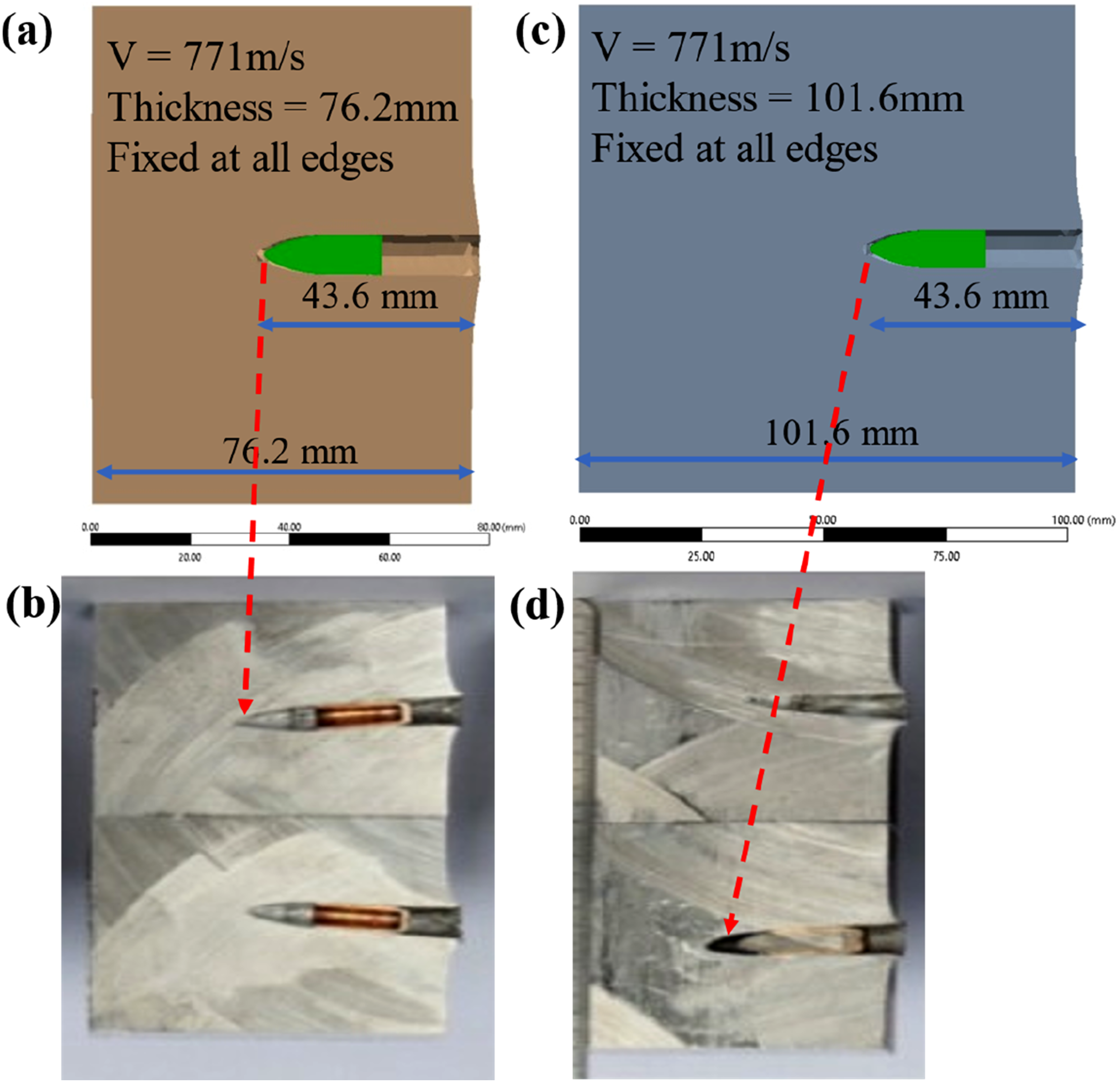
Furthermore, Figure 5 presents a comparison between the bullet exit hole geometry obtained from FEA analysis and the experimental fractography conducted on an Al6061-T6 plate of 25 mm thickness. A close similarity is observed between the fracture zones in both the predicted and experimental bullet exit geometries. This confirms the accuracy and reliability of the developed Finite Element Model for predicting ballistic impact behavior. Bullet exit hole (a) von-Mises Stress contour (b) experimental fractography (Manes et al., 2014).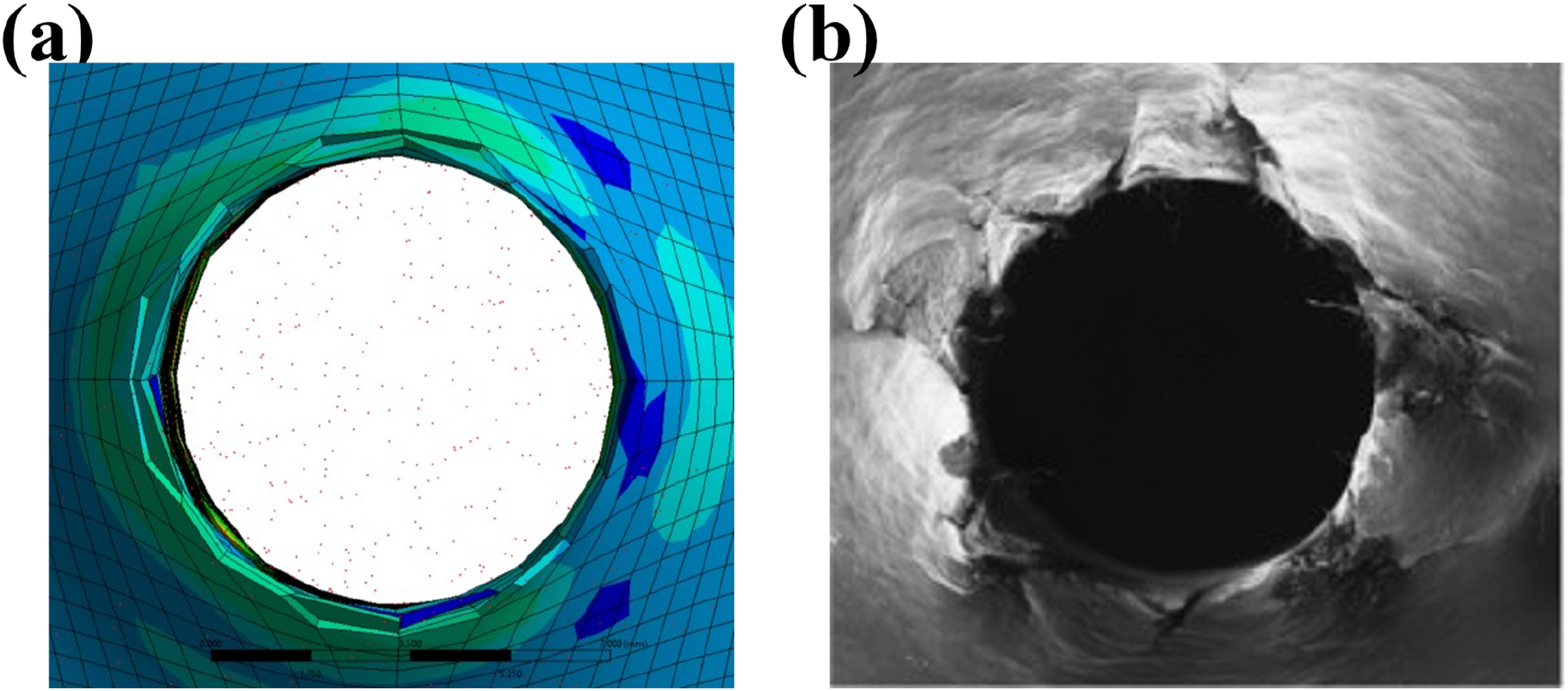
Vertical impact results
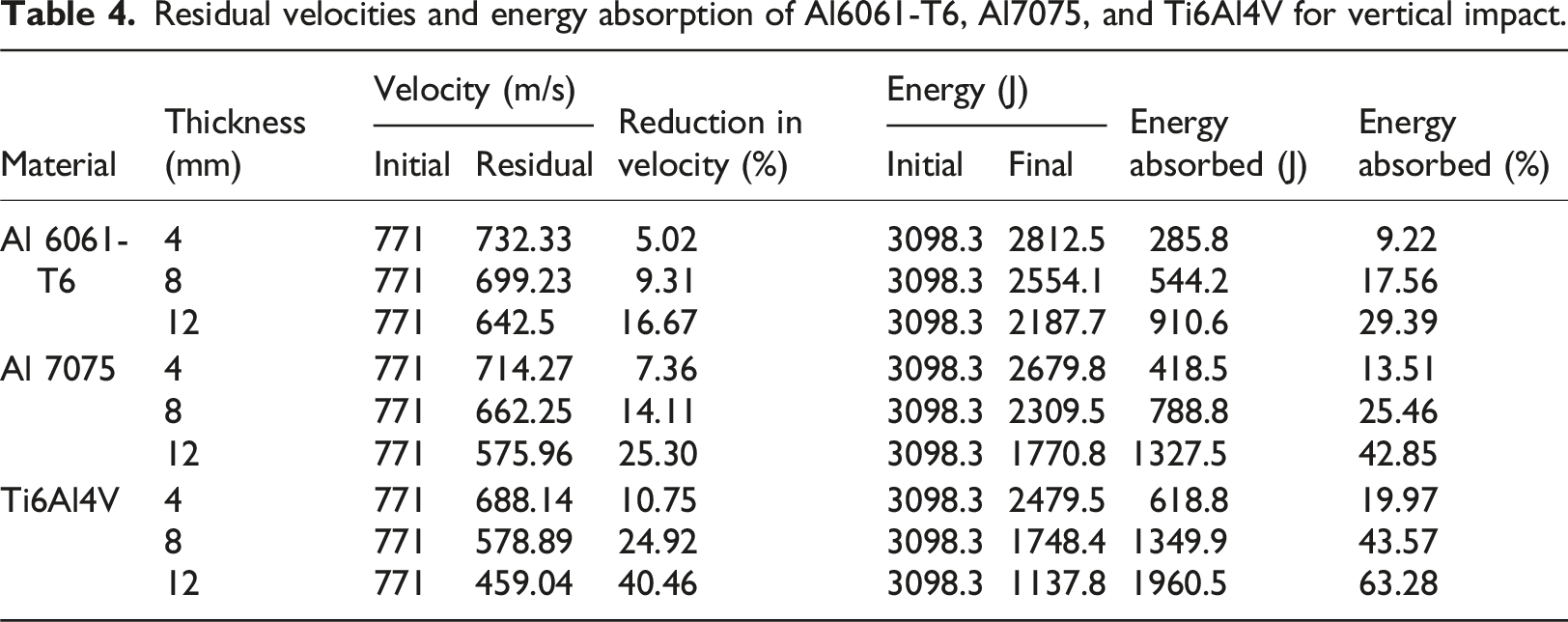
Residual velocities and energy absorption of Al6061-T6, Al7075, and Ti6Al4V for vertical impact.
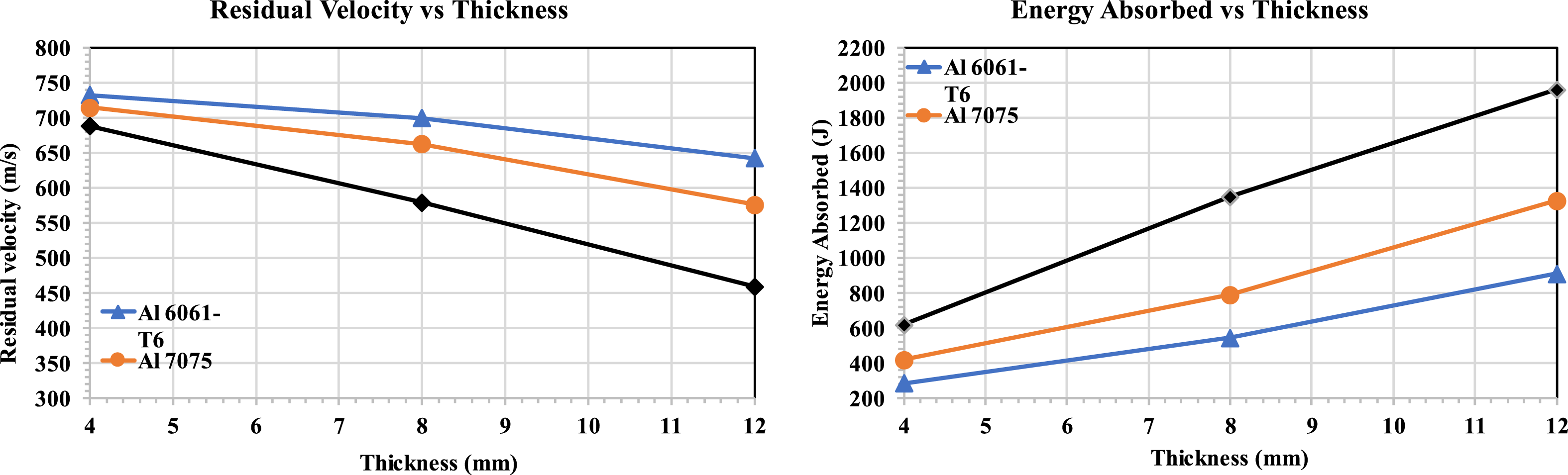
Plots showing (a) residual velocity and (b) energy absorption for different materials with varying thicknesses.
Residual velocity
Residual velocity plots for different plate thicknesses (4 mm, 8 mm, 12 mm) of the plate for Al6061-T6, Al7075, and Ti6Al4V are shown in Figure 6(a). It is observed that for a 4 mm plate of Al6061-T6, the residual velocity is 732.33 m/s. For an 8 mm plate, it is 699.23 m/s, and for a 12 mm plate, the residual velocity is 642.5 m/s. In the case of Al7075, a residual velocity of 714.27 m/s is predicted for a plate thickness of 4 mm, a residual velocity of 662.25 m/s for 8 mm thickness, and a residual velocity of 575.96 m/s for a plate of 12 mm thickness. For Ti6Al4V, a residual velocity of 688.14 m/s is observed for a plate thickness of 4 mm, a residual velocity of 578.89 m/s for a plate of thickness 8 mm, and a residual velocity of 459.04 m/s for a plate thickness of 12 mm.
It can be concluded that Al6061-T6 has shown a velocity reduction of 5.02% for a plate of 4 mm, 9.31% for a plate of 8 mm, and 16.67% for a plate of 12 mm. Al7075 has shown a velocity reduction of 7.36% for a plate of 4 mm, 14.11% for a plate of 8 mm, and 25.30% for a plate of 12 mm. Ti6Al4V has shown a velocity reduction of 10.75% for a plate of 4 mm, 24.92% for a plate of 8 mm, and 40.46% for a plate of 12 mm. Ti6Al4V has the highest velocity reduction out of the three materials. It is more than double that of Al6061-T6 for all plate thicknesses. It is also more than 1.5x that of Al7075.
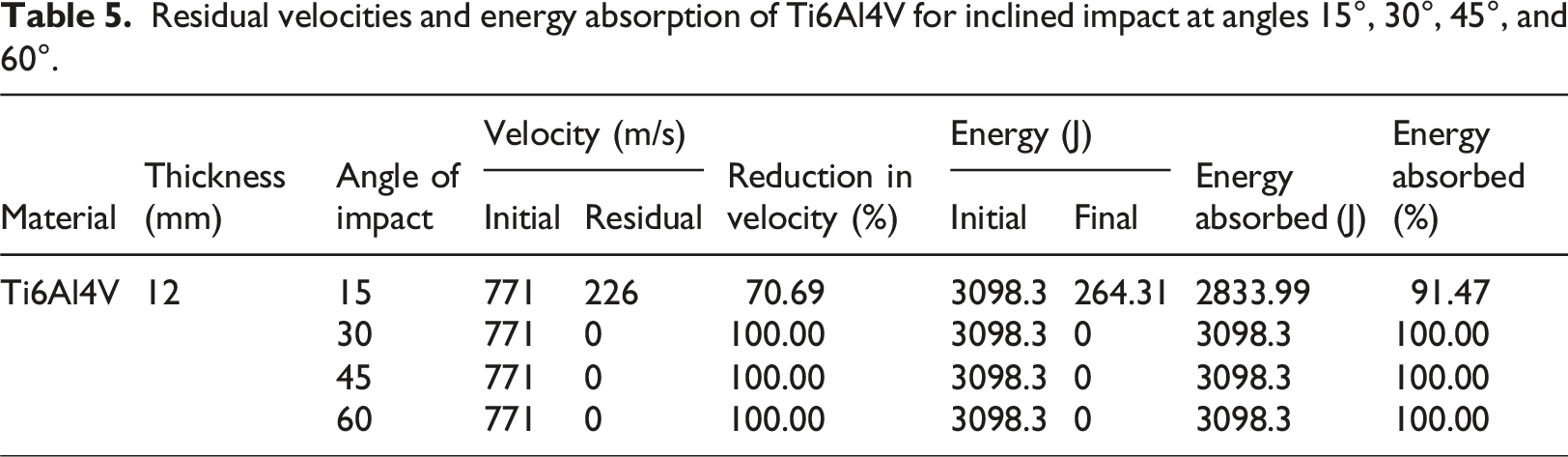
Residual velocities and energy absorption of Ti6Al4V for inclined impact at angles 15°, 30°, 45°, and 60°.
Energy absorption
Energy absorption plots for different thicknesses (4 mm, 8 mm, 12 mm) of plates for Al6061-T6, Al7075, and Ti6Al4V are shown in Figure 6(b). It is observed that for a 4 mm plate of Al6061-T6, the energy absorption is 285.8 J. For an 8 mm plate, it is 544.2 J, and for a 12 mm plate, the energy absorption is 910.6 J. In the case of Al7075, an energy absorption of 418.5 J is predicted for a plate thickness of 4 mm, an energy absorption of 788.8 J for 8 mm thickness, and an energy absorption of 1327.5 J is observed for a plate of 12 mm thickness. For Ti6Al4V, energy absorption of 618.8 J is observed for a plate thickness of 4 mm, energy absorption of 1349.9 J for a plate of thickness 8 mm, and energy absorption of 1960.5 J for a plate thickness of 12 mm.
It can be summarized that Al6061-T6 has shown an energy absorption of 9.22% for a plate of 4 mm, 17.56% for a plate of 8 mm, and 29.39% for a plate of 12 mm. Al7075 has shown an energy absorption of 13.51% for a plate of 4 mm, 25.46% for a plate of 8 mm, and 42.85% for a plate of 12 mm. Ti6Al4V has shown an energy absorption of 19.97% for a plate of 4 mm, 43.57% for a plate of 8 mm, and 63.28% for a plate of 12 mm. As previously observed for residual velocity, Ti6Al4V has the highest energy absorption out of the three materials. It is more than double that of Al6061-T6 for all plate thicknesses. It is also more than 1.5x that of Al7075.
In addition, Ti6Al4V has a higher density, which allows it to absorb more energy during impact. Its high Young’s modulus indicates greater stiffness, improving its ability to withstand deformation. Further, Ti6Al4V’s higher yield strength enables it to resist plastic deformation better than Al6061-T6 and Al7075, leading to greater energy absorption during ballistic impacts. These factors collectively contribute to its enhanced energy absorption capabilities. These exceptionally high values of energy absorption and high energy absorption time of Ti6Al4V can be explained by the high value of resilience and toughness. High toughness means high energy absorption for plastic deformation.
von-Mises stress
von-Mises Stress plots for different thicknesses (4 mm, 8 mm, 12 mm) of the plate for Al6061-T6, Al7075, and Ti6Al4V are shown in Figures 7-9. It is observed that upon impact, high values of stress are predicted, which then increase as the bullet penetrates the plate. However, stress values decrease as the bullet comes out on the other side. Stress contours for vertical impact on Al6061-T6 for plate thicknesses (a) 4 mm, (b) 8 mm, (c) 12 mm. Stress contours for vertical impact on Al7075 for plate thicknesses (a) 4 mm, (b) 8 mm, (c) 12 mm. Stress contours for vertical impact on Ti6Al4V for plate thicknesses (a) 4 mm, (b) 8 mm, (c) 12 mm.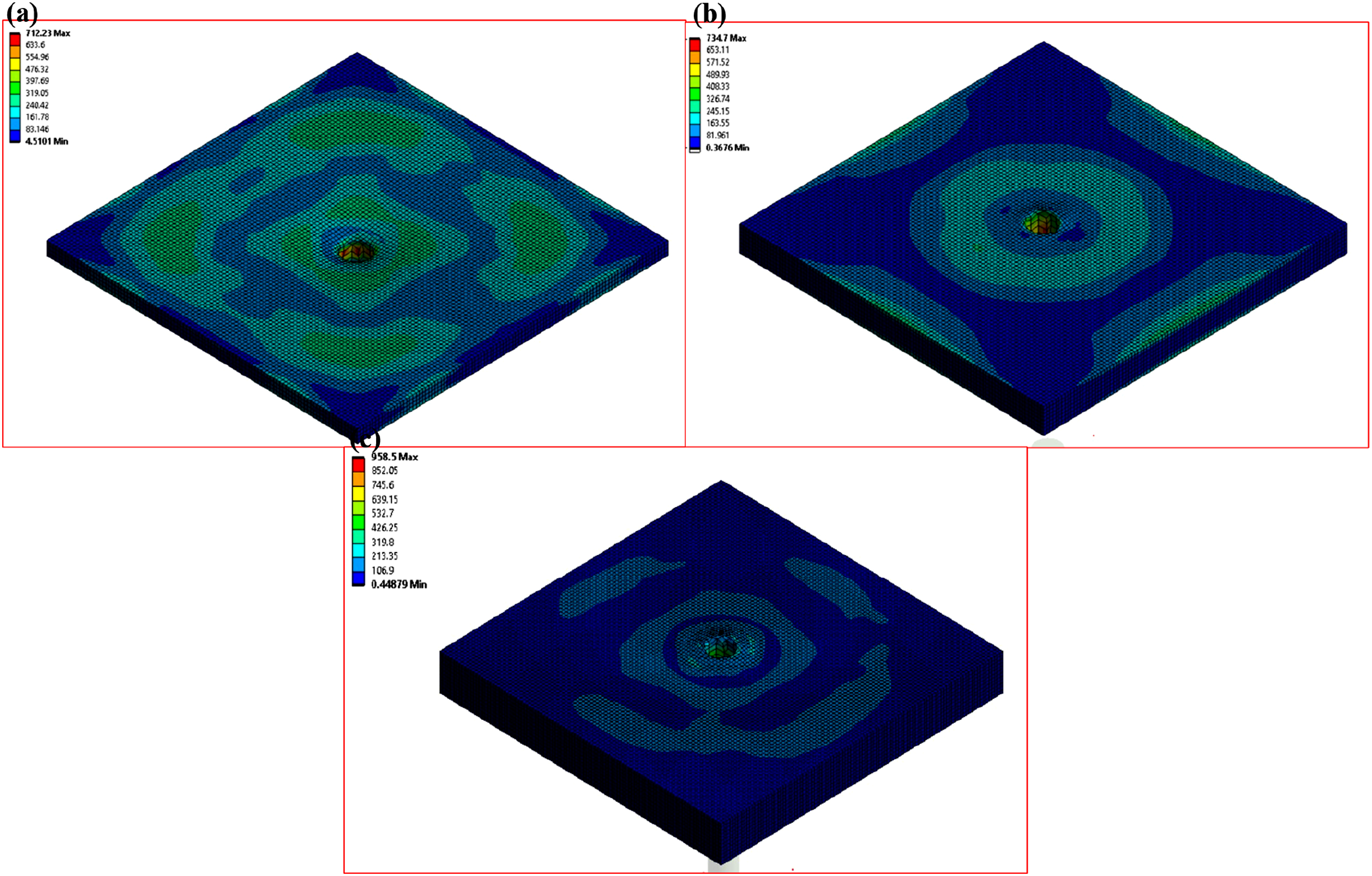
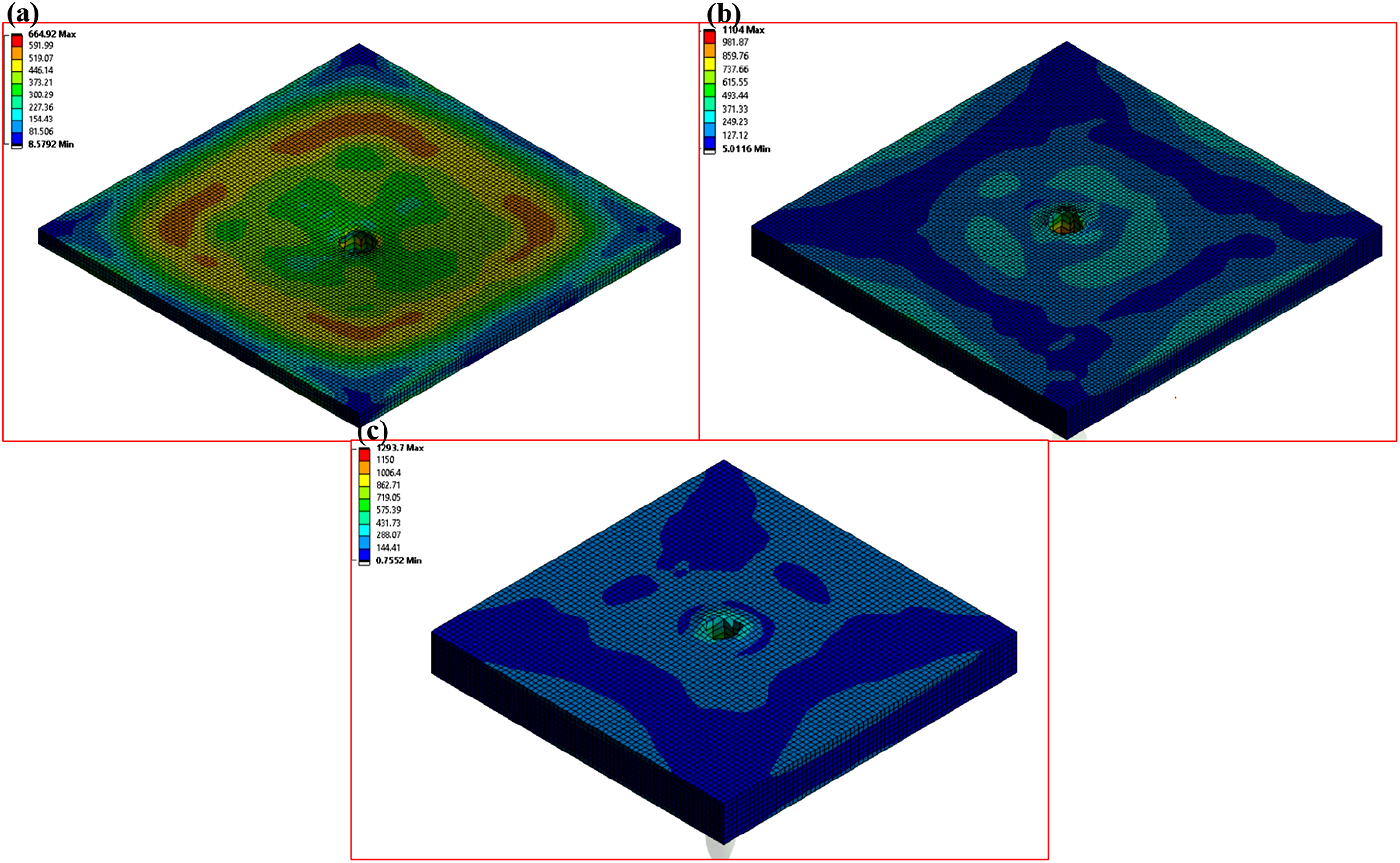
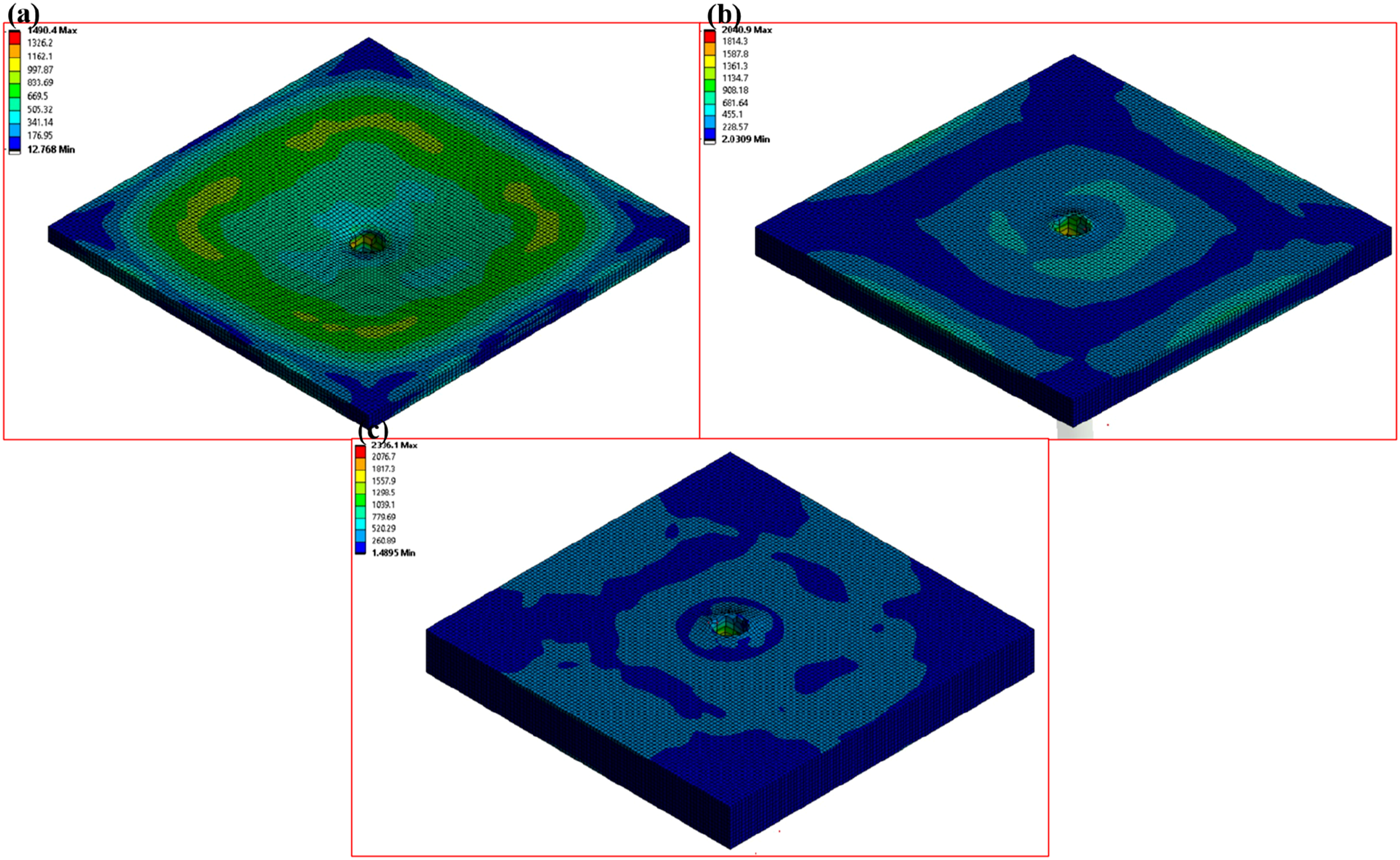
It is observed that for the 4 mm plate of Al6061-T6, upon impact, 780 MPa stress was developed; for the 8 mm plate, it was 860 MPa, and for the 12 mm plate, it was 800 MPa. It is noticed that for a 4 mm plate of Al7075, upon impact, 1100 MPa stress was resulted; for an 8 mm plate, it was 1200 MPa, and for a 12 mm plate, it was 900 MPa. It is further seen that for a 4 mm plate of Ti6Al4V, upon impact, 400 MPa stress was established; for an 8 mm plate, it was 2100 MPa, and for a 12 mm plate, it was 2000 MPa.
As can be observed from the stress contours from the plots given in Figure 9, the stress values in Ti6Al4V were significantly higher than Al6061-T6 and Al7075. The values were almost 2x the values of both Al6061-T6 and Al7075 (Gara et al., 2021). Also, it is reflected that the stress contours in 4 mm plates were spread across the plate. However, for 8 mm and 12 mm plates, the stress was more localized.
Inclined impact
For inclined impact analysis, the projectile was modelled to impact the plate at angles 15°, 30°, 45°, and 60°. Plates of 12 mm thickness of Ti6Al4V were taken for the analysis. The projectile was given a velocity of 771 m/s in the direction of impact. The values predicted for residual velocity and energy absorption are given in Table 5, and plots are given in Figure 10. Plots showing (a) residual velocity and (b) energy absorption for different materials with different angles of impact.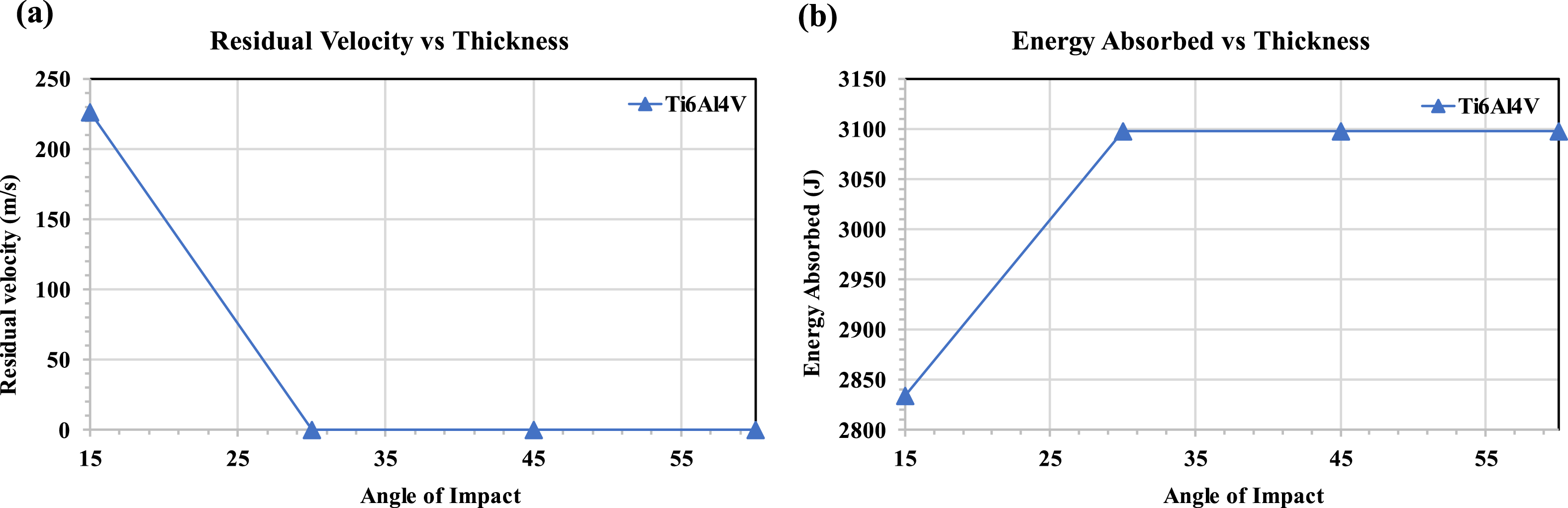
Residual velocity
Residual velocity plots for the 12 mm thickness of the plate for Ti6Al4V impacted at different angles (15°, 30°, 45°, and 60°) are shown in Figure 10(a). A residual velocity of 226 m/s is observed for an impact angle of 15°. However, for angles 30° and 45°, only penetration up to a certain depth is observed, and for a 60° angle, the bullet bounced off the plate without any penetration. Ti6Al4V has shown a velocity reduction of 70.69 % for an impact angle of 15°. Residual velocity for impact at 30°, 45°, and 60° is shown to be tending to zero due to lack of perforation. Ti6Al4V’s high resilience explains the lack of perforation at impact angles of 30°, 45°, and 60°. This high resilience prevented plastic deformation in the lower half of the 12 mm plate.
Energy absorption
Energy Absorption plots for the 12 mm thickness of the plate for Ti6Al4V impacted at different angles (15°, 30°, 45°, and 60°) are shown in Figure 10(b). An energy absorption of 1539 J is observed for an impact angle of 15°. However, for angles 30° and 45°, only penetration up to a certain depth is observed, and for a 60° angle, the bullet bounced off the plate without any penetration. Ti6Al4V has shown an energy absorption of 91.47 % for an impact angle of 15°. Energy absorption for impact at 30°, 45°, and 60° is shown to be tending to 100 % due to lack of perforation. The results obtained for energy absorption are similar to what was observed in the case of residual velocity.
von-Mises stress
von-Mises Stress plots for different angles of impact (15°, 30°, 45°, and 60°) on a plate for Al6061-T6, Al7075, and Ti6Al4V are shown in Figure 11. It is observed that upon impact, high values of stress are predicted, which then increase as the bullet penetrates the plate. However, stress values decrease as the bullet comes out on the other side. It is observed that 2129.7 MPa stress was developed upon impact at 15°. For a 30° impact, 2173.6 MPa stress was developed; for a 45° impact, 2222.5 MPa stress was observed; and for a 60° impact, the stress value was 1591.7 MPa. The highest value of stress observed for 15° impact was 3021.4 MPa, for 30° impact, it was 3196.2 MPa, for 45° impact, it was 2724.4 MPa, and 2596.8 MPa stress was observed for impact at 60°. It is observed that the maximum stress for impact at any angle is induced in the early stages of perforation and penetration. A gradual decrease was recorded in stress values with respect to the angle of impact. As the angle increases, the force acting in the direction perpendicular to the plate decreases, which leads to a decrease in stress. However, overall higher values were predicted after certain penetration for higher angles of impact. Stress contours for inclined impact on Ti6Al4V plates of thickness 12 mm at angles (a) 15°, (b) 30°, (c) 45°, and (d) 60°.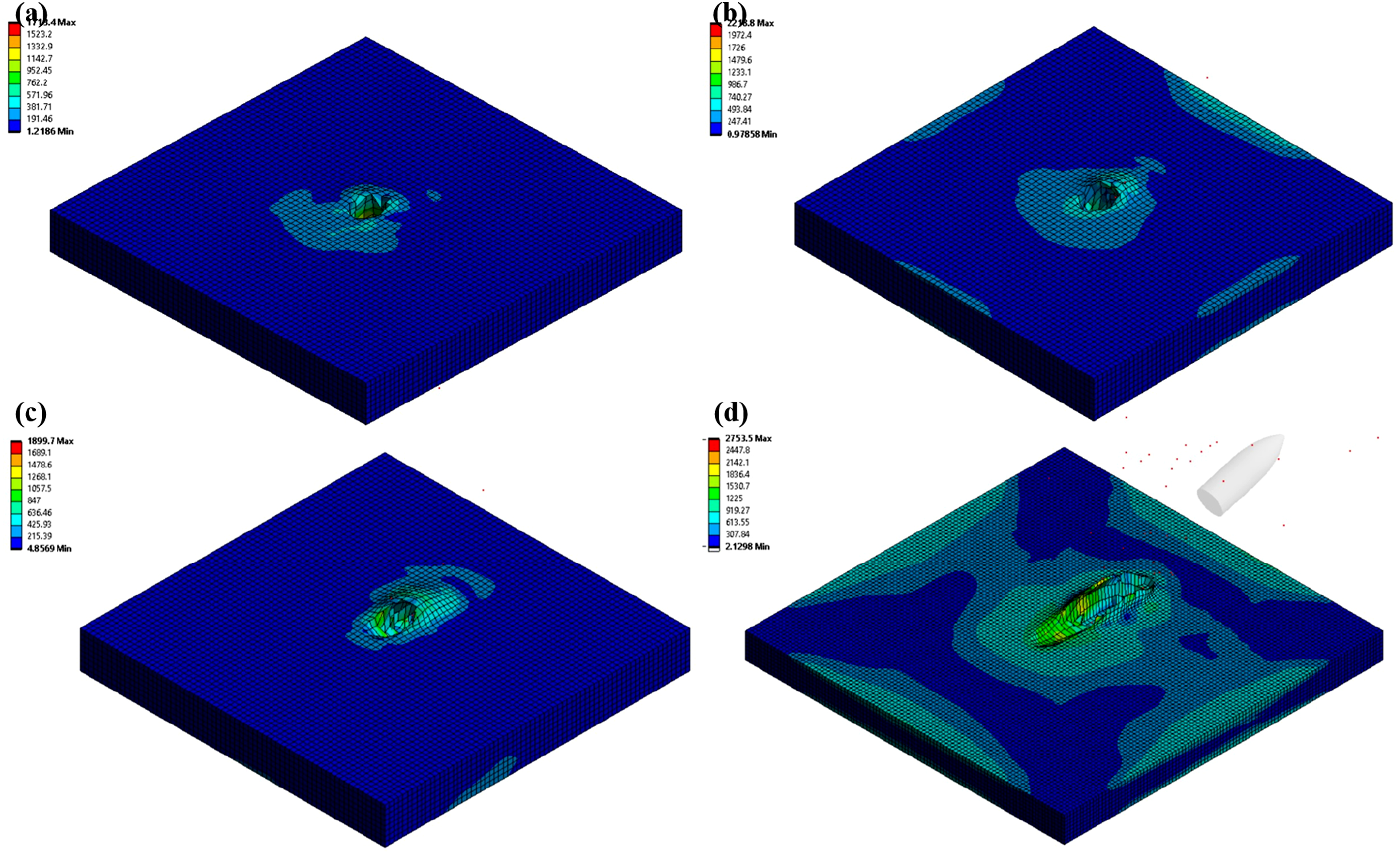
Conclusions
The residual velocity and energy absorbed for Al6061-T6, Al7075, and Ti6Al4V plates have been studied using FE analysis. These FE results have been compared with the experimental results of an earlier study on Al6061-T6. The following conclusions were drawn from the study: • In vertical impact, a reduction in residual velocity of 2%, 5%, and 10% was recorded for Al7075 compared to Al6061-T6 for thicknesses 4 mm, 8 mm, and 12 mm. • The penetration depth and bullet exit hole fracture agreed well, with an average error of 6% in the penetration depth. • An increase in energy absorption of 5%, 10%, and 15% was recorded for Al7075 compared to Al6061-T6 for thicknesses 4 mm, 8 mm, and 12 mm, respectively. • In vertical impact, reductions in residual velocity of 4%, 12%, and 17% were recorded for Ti6Al4V as compared to Al7075 for thicknesses 4 mm, 8mm, and 12 mm, respectively. An increase in energy absorption of 8%, 20%, and 25% was recorded for Ti6Al4V as compared to Al7075 for thicknesses of 4 mm, 8 mm, and 12 mm, respectively. • In inclined impact on Ti6Al4V, perforation was observed only at an angle of 15°, and the residual velocity was 226 m/s. The energy absorption for the 15° impact was 91.47%. For impact at 30° and 45°, only penetration was recorded with no perforation. For a 60° impact, the bullet bounced off of the plate. • Ti6Al4V had the best resistance against bullet impact out of the three materials tested in this paper.
Footnotes
Declaration of conflicting interests
The author(s) declared no potential conflicts of interest with respect to the research, authorship, and/or publication of this article.
Funding
The author(s) received no financial support for the research, authorship, and/or publication of this article.
