



Abstract
This study presents a probabilistic analysis of a single degree of freedom (SDOF) system subjected to drift-controlled distant blast loading employing Monte-Carlo simulation using MATLAB. The simulations are achieved using an equivalent static force (ESF)–based model as the deterministic model. The loading and structural parameters are treated as random variables in the parametric sensitivity analysis. ESF factor and the resistance of the SDOF system are observed as the response parameters. ESF factor is found to be highly sensitive to positive pulse duration, whilst the resistance is found to be more sensitive to both positive pulse duration and the peak blast force. With the log-normal distribution of input parameters, the ESF factor and the resistance of the SDOF system follow the log-normal distribution. The present study suggests that the probabilistic analysis is more conservative than the deterministic analysis. The uncertainty can be incorporated in a deterministic approach for both analysis and design purposes by opting suitable factor of safety (FOS) based on probabilistic analysis.
Keywords
Introduction
Blast is defined as a rapid phase of pressure created by sudden release of energy, generating blast waves in different shapes, causing both external and internal catastrophic damage to structures. Considerable importance has been given to issues caused by blast and earthquake loads in past few decades. While designing engineering structures, exceptional loads play a crucial role, especially in case of public facilities. Structures of public importance such as hospitals, parliament buildings, school buildings, stadiums, bridges, and dams should be designed to resist exceptional loads, such as fire and blast, along with permanent and variable loads (Biggs, 1964; May and Smith, 1995). The negligence of unusual loads may result in severe damage to the structures in the event of such loads. With the rise in the number of blasts caused by terrorist acts and accidental explosions worldwide, a thorough investigation should be conducted to analyze the effect of these exceptional loads. Proper guidelines should be incorporated in the design procedures of important structures for the same.
In general, designers assume that probability of occurrence of a blast is negligible. However, existing structures, as well as those under construction, are highly vulnerable to explosives. The extent of the structural collapse is governed by the amount of explosive material detonated and the location of detonation from the structural element. Hence, to understand the characteristics of blast loads, Goel et al. (2012) defined and explained various associated parameters such as explosion, peak over-pressure, positive phase duration of pulse, arrival time of pulse, waveform parameter defining the decay of wave, and wave incident angle. The energy released by explosive charge can broadly be classified into two categories, viz. thermal energy and pressure energy. Thermal energy is released in the form of a bright flash. However, pressure energy is released in the form of shock waves expanding radially and transmitted either through the air or through the ground as a medium. These pressure waves are categorized as high-intensity and short-duration pulses. As the pressure wave propagates, the wave’s intensity and speed of propagation reduce, as shown in Figure 1 (Ngo et al., 2007). Variation of blast pressure with distance (after, Ngo et al., 2007).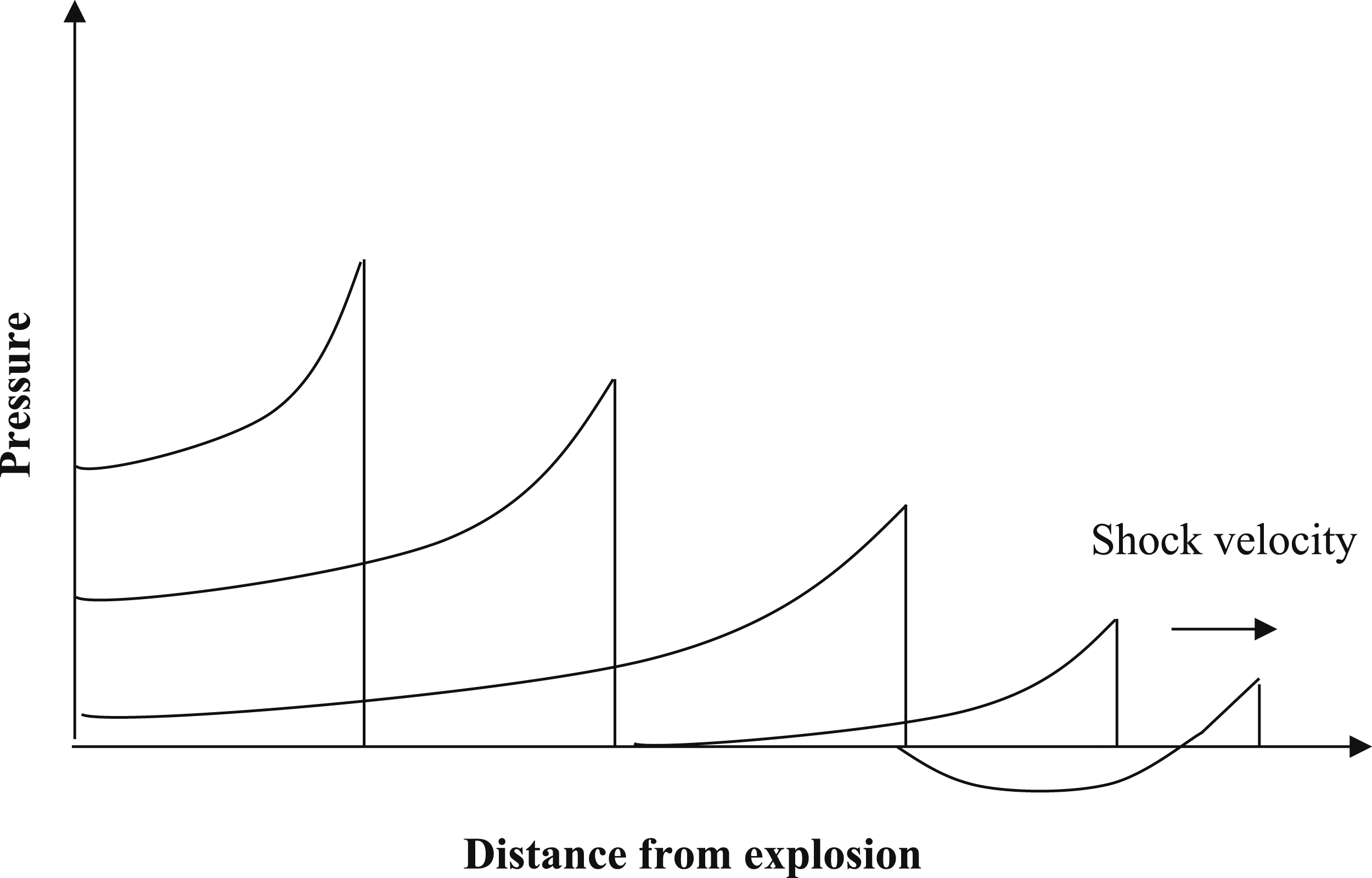
The shock wave propagation is represented by the pressure-time profile which is categorized into two main phases: the phase above ambient atmospheric pressure is known as the positive phase of duration
Blast loads can be broadly classified as near blast or distant blast based on the stand-off distance of the structure exposed to an explosion. The near-blast loading produces non-uniform lateral pressure. While the distant-blast loading produces a uniform lateral pressure on a structure, causing a significant side sway, and thus severely damaging the structure. Various deterministic performance-based or probabilistic performance-based approaches can be used to obtain the response as well as the design of a structure subjected to blast loading which are discussed in subsequent paragraphs.
For a performance-based design, a performance-indicating parameter is required to monitor a pre-defined level of damage. As the distant-blast scenario is similar to earthquake load, drift can be used as a performance indicator for the design of the structure. A considerable drift can be observed for framed structures when subjected to blast loading (May and Smith, 1995; Li et al., 2007). Li et al. (2007) proposed a deterministic design methodology for reinforced concrete frame structures subjected to distant-blast conditions using drift as a controlling parameter and presented distant blast loading as an equivalent static force (ESF). ESF is calculated in such a way that this static force reproduces the same drift as produced by blast loading. A lateral deflection, support rotation, and storey drift are well-known performance indicators in the performance-based design of structures subjected to seismic and blast loads. Various deterministic performance-based approaches for structures subjected to blast load are used for preliminary design, using a single degree of freedom approximation without considering strain rate effect (Biggs, 1964; Defence, 2008; El-Dakhakhni et al., 2010; Krauthammer and Astarlioglu, 2017) or considering strain rate effect (Stochino and Carta, 2014; Al-Thairy, 2016), assuming mid-span deflection and support rotation as performance indicators. Pressure impulse curves (or iso-damage curves) were also proposed using a single degree of freedom approximation to aid the design of structural elements subjected to blast (Fallah and Louca, 2007; El-Dakhakhni et al., 2009; Dragos and Wu, 2014; Xu et al., 2014). Detailed finite element analysis using various FEM software such as Abaqus, Ansys, and LS-DYNA were used to simulate blast load and observe the corresponding dynamic response of structure (Jones, 2008; Jayasooriya, 2010; Biju and Ramesh, 2017).
Though a number of deterministic design methodologies for structures were proposed by researchers, the response predictions and respective design methodologies based on this approach are onerous due to high uncertainties related to blasts and earthquakes. The reliability of the structure is quite sensitive to loads and structural parameters. A probabilistic performance-based approach can yield more realistic and conservative results. As a result of the uncertainty associated with loading parameters such as external load, load duration, and structural parameters such as mass and stiffness, the sensitivity analysis becomes an important aspect of the study for structures subjected to blast. Several research studies were conducted on the probabilistic design aspect of structures, and probabilistic blast load models were proposed for sensitivity analysis. Twisdale et al. (1994) conducted statistical analysis for the blast, recommending a coefficient of variance (COV) of 0.3 for peak over-pressure and 0.25 for impulse. Ahmad et al. (2015) performed a probabilistic analysis for blast load and proposed a COV of 0.55 for peak over-pressure and 0.69 for impulse. Stewart (2021) proposed simplified approach to predict the probabilistic model of air blast variability and associated reliability-based design load factors (or RBDFs) for all combinations of range, explosive mass, and model errors. Some works on probabilistic analysis for structural parameters of masonry and concrete structures subjected to blast load were conducted by a few researchers (Low and Hao, 2002; Eamon, 2007; Netherton and Stewart, 2010).
The main focus of these studies was on variability associated with type, the weight of explosives, stand-off distance, and their impact on blast load parameters viz., peak over-pressure and impulse. It was observed that the response of a structure is more sensitive to peak over-pressure, impulse, and the positive duration of a blast load (Smith and Hetherington, 1994). Borenstein and Benaroya (2009) performed a study to observe the effect of uncertainties of blast loading parameters on the maximum deflection of a clamped aluminum plate and concluded the response to be most sensitive to the duration of loading. Low and Hao (2002) developed probabilistic distribution function for the resistance parameters of a structure, taking into account the uncertainties associated with blast loading. Netherton and Stewart (2010) investigated and established the variability of blast loading parameters. Hao et al. (2010) investigated the failure probability of reinforced columns subjected to blast while also emphasizing the significance of taking random variations in structural parameters and blast loadings into account for evaluating the blast load effects on RC columns. By varying blast pressure and soil/rock parameters in a parametric sensitivity analysis for cast iron-lined tunnels, Khan et al. (2016) discovered that the response is more sensitive to tunnel lining thickness, peak blast pressure in the tunnel, and the elastic moduli of soil and rock, while less sensitive to dilation angle of soil and rock. Kumar et al. (2019) noticed the influence of uncertainty in input parameters, along with the effect of pulse shape on the response of the SDOF system; concluding the response to be highly sensitive to a triangular pulse with a sudden rise in force. Kumar et al. (2019) further concluded that stiffer structures are more susceptible to input parameter uncertainties.
Acito et al. (2011) and Olmati et al. (2017) developed probabilistic design methodologies to estimate the probability of damage and failure of a structure subjected to a blast load, and a corresponding factor of safety was proposed. Although few research works have been undertaken on the sensitivity of the response parameters of a structure subjected to blast load, it is obvious from the foregoing literature review that a detailed study is required to establish the framework for the probabilistic performance based design approach.
In view of this, the present study examines performance parameters, drift, and the resistance for a single degree of freedom system for the structure subjected to blast load. The parameter sensitivity analysis is performed by varying loading parameters such as peak over-pressure, equivalent force (
Methodology
Monte-Carlo simulations
The present work employs Monte-Carlo simulations for probabilistic analysis of system under consideration. Monte-Carlo simulation (Harrison, 2009; Taylor, 2009; Taylor et al., 2011) is a numerical study to estimate the probabilistic mathematical model formed by random sampling of variables. Monte-Carlo simulation process aids in explaining the impact of risk and uncertainty in estimation and forecasting models. The Monte-Carlo simulation is based on the assignment of several random values to an uncertain variable. These values are then fed into a deterministic model to generate state variable values, and the process is repeated several times. After the simulations are finished, the data are averaged to obtain an estimate. The Monte-Carlo simulation, which uses numerous values, may prove to be a superior alternative for producing a forecast or estimation, rather than just replacing the uncertain variable with a single average figure. Monte-Carlo simulation helps in the generation of probability density/distribution functions that describes the possibility of occurrence of a certain step in the simulation. These functions are created using a known mean and the standard deviation of the random process. The relevant mean and standard deviation necessary for simulation are achieved by employing the deterministic models. These simulations depend on spatial coordinates and the number of iterations adopted.
Probabilistic design using ESF model for SDOF system
The present study concerns the probabilistic design of the SDOF system that is subjected to distant blast load (Figure 2). The loading parameters ( Equivalent static force (ESF) for SDOF system (after, Li et al., 2007).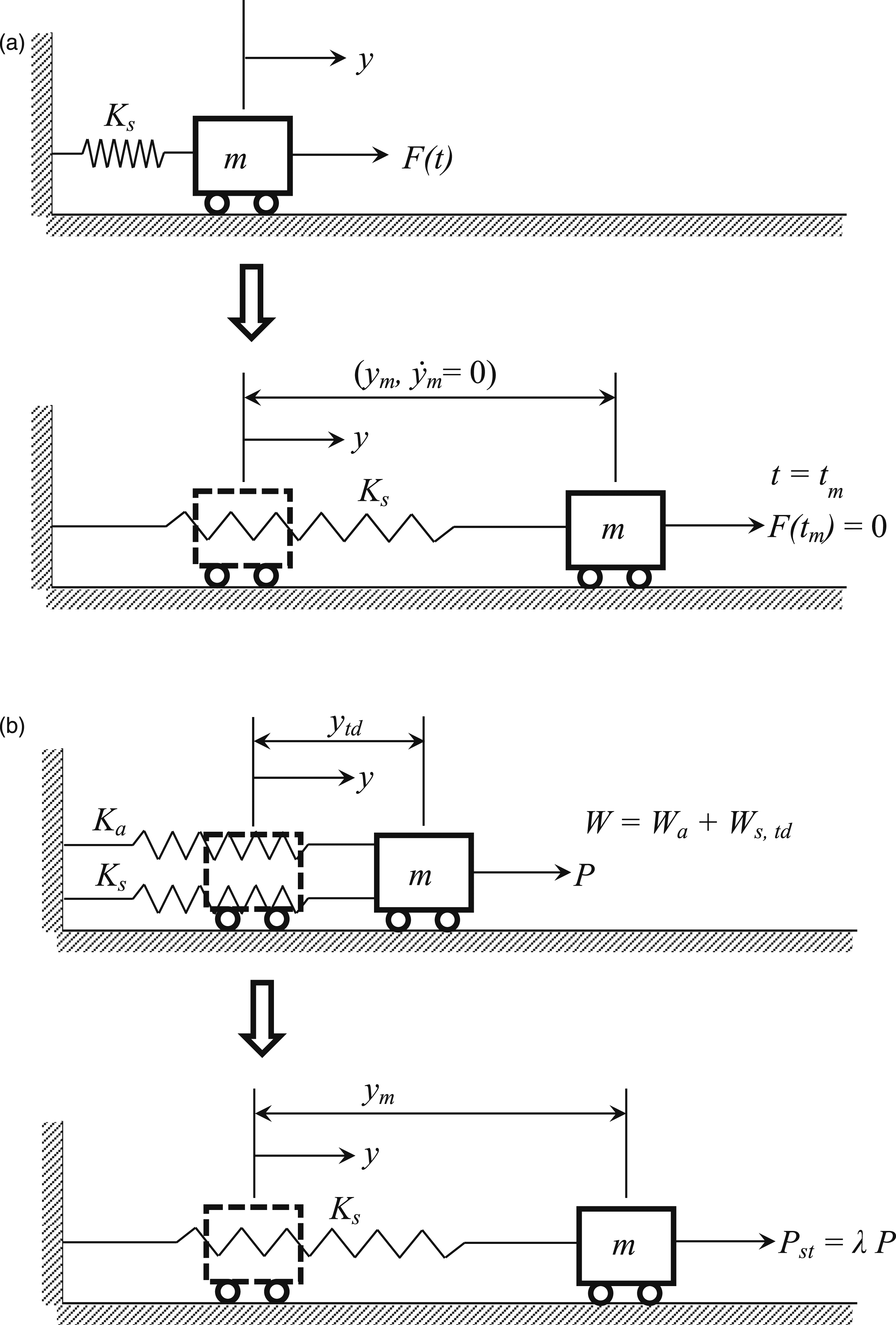
Deterministic model
A deterministic model is required to conduct Monte-Carlo simulations. A computational model using the equivalent static force (ESF) technique for blast-resistant design of structures to achieve the specified target displacement given by Li et al. (2007) is used as a deterministic model in the present study and is discussed subsequently.
The response is found for an SDOF system subjected to a distant blast load of amplitude F(t) and duration
Equivalent blast load for SDOF system can be given as follows (Biggs, 1964):


Figure 2 provides the conceptual background to obtain equivalent static force for an SDOF system as adopted by Li et al. (2007). It was assumed that once the blast load ceases at

For an elastic-perfectly plastic SDOF system, a closed-form solution of equivalent static force (ESF) factor (λ) was derived for three cases based on the response of the system and is mentioned as follows:
Case I: Elastic state at



Case II: Elastic state at



Case III: Plastic state at



For designing an SDOF system with the ESF, the procedure given by Li et al. (2007) can be followed which included the determination of ultimate strength of the SDOF system such that specific target displacement is achieved. For this purpose, initial resistance
Details of simulations
Coefficient of variance (COV) for various input parameters (Gupta and Manohar, 2006).

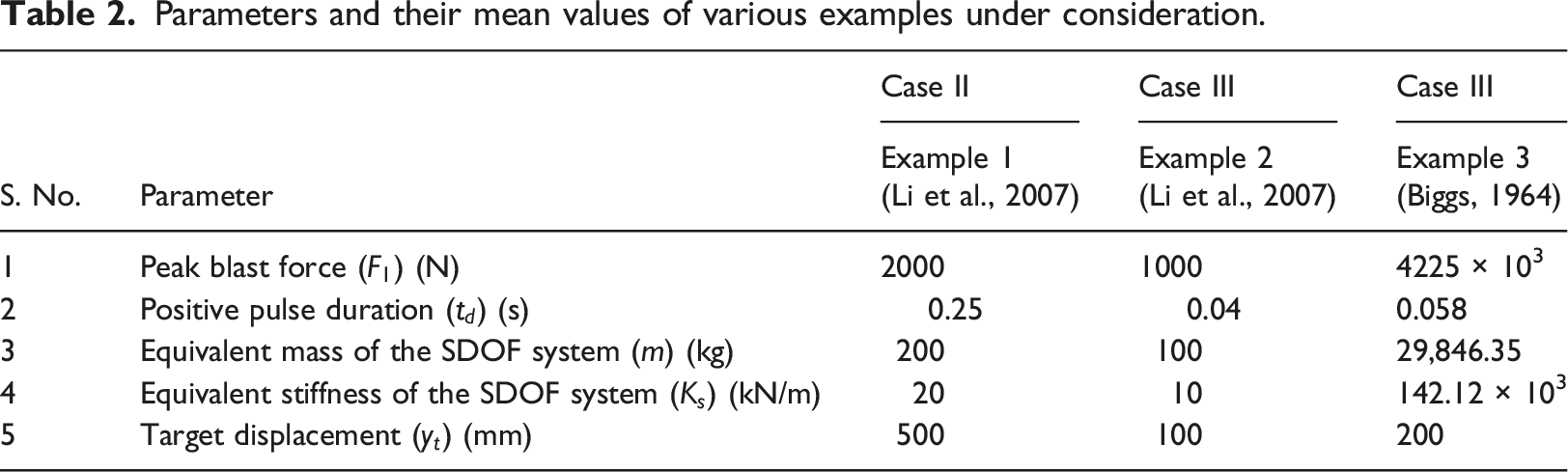
Parameters and their mean values of various examples under consideration.
Results and discussion
Parameter sensitivity analysis
For the SDOF systems having parameters as mentioned in Table 2, a sensitivity analysis is performed by varying peak blast force (
Example 1
Example 1 represents case II (elastic state at ESF factor (λ) for different parametric variations for the SDOF system: Example 1. Resistance (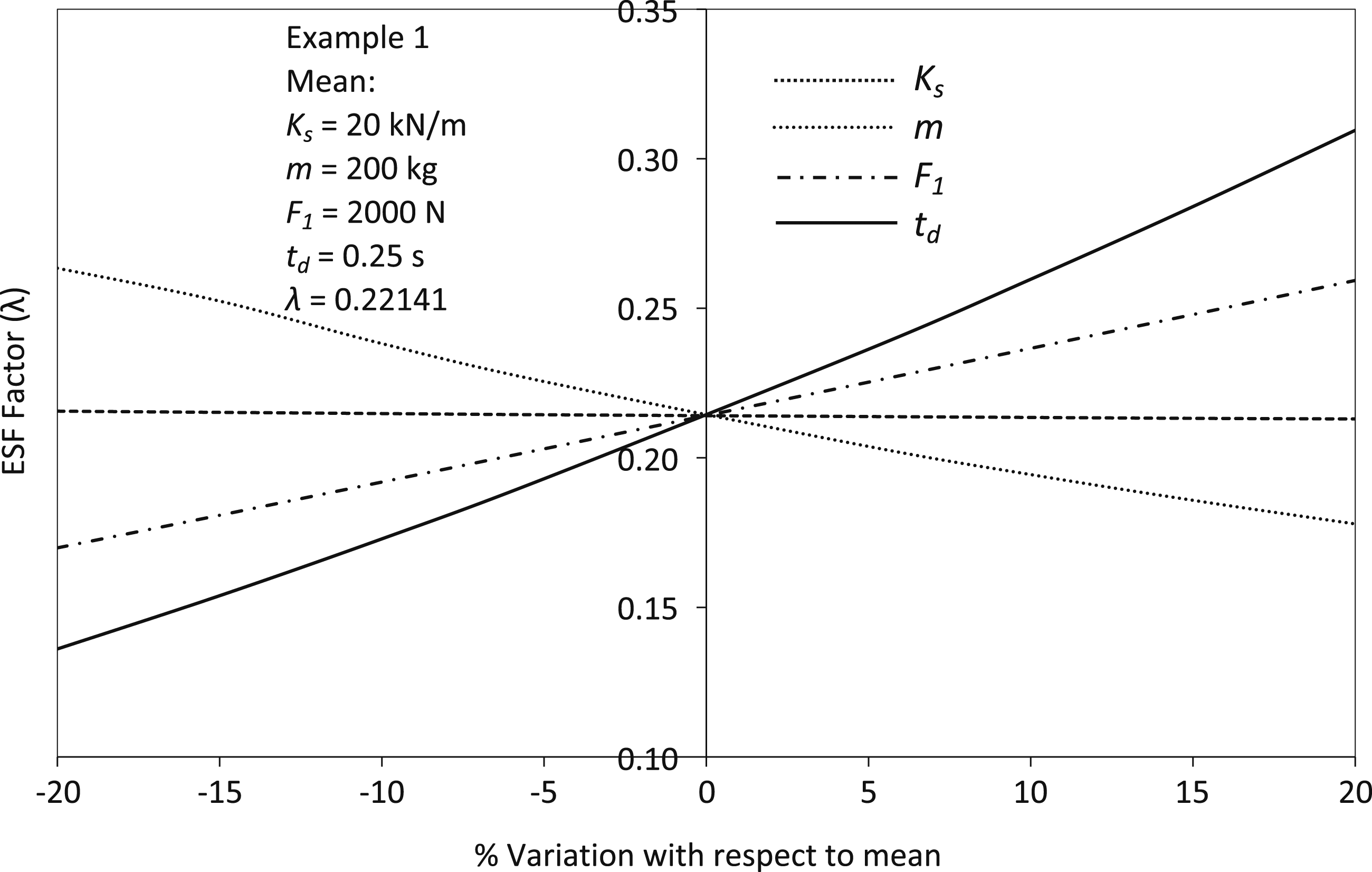
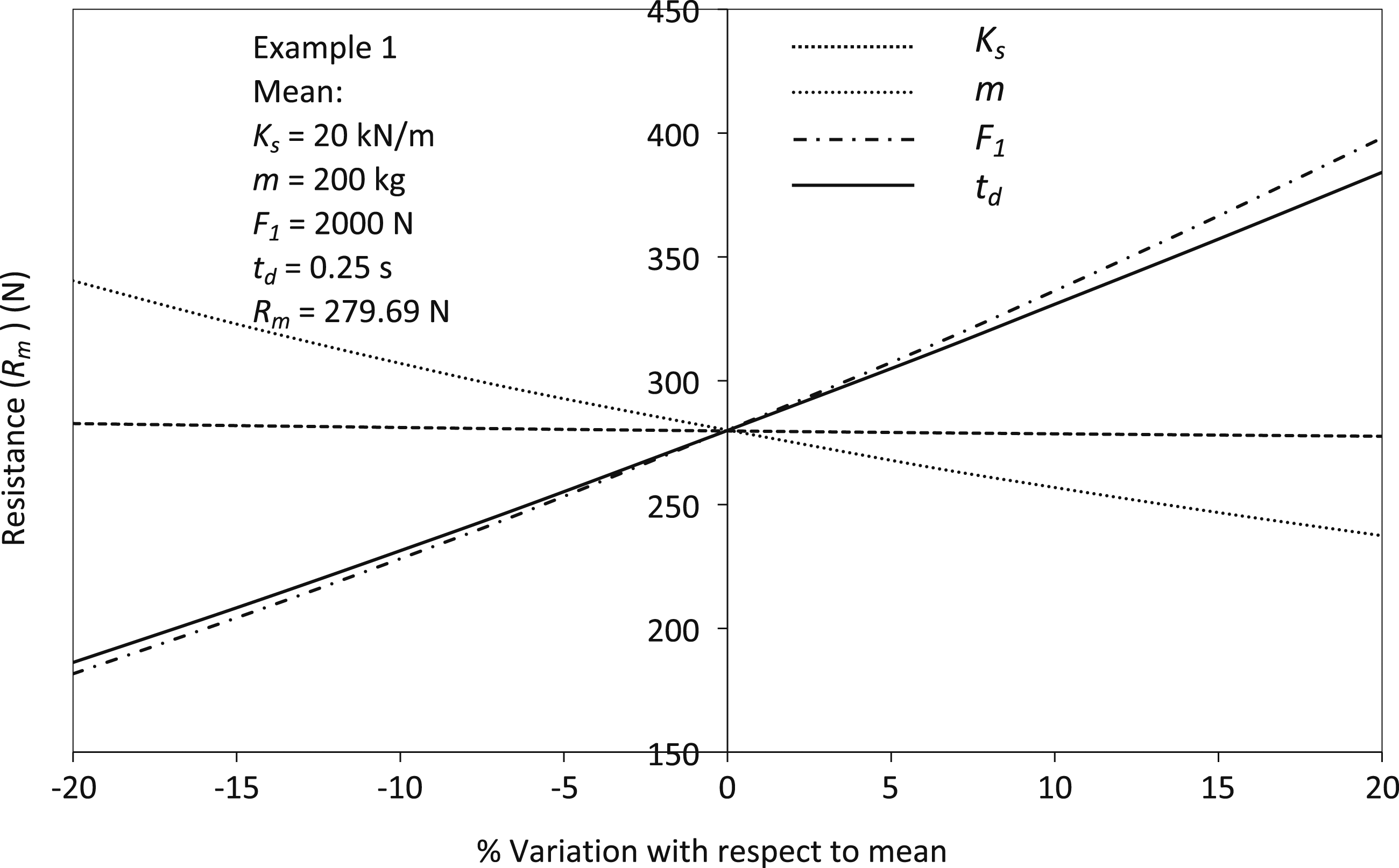
The ESF factor (λ) and resistance (
The variation of examined parameters does not display similar response patterns on the state variables, ESF factor (λ), and resistance (
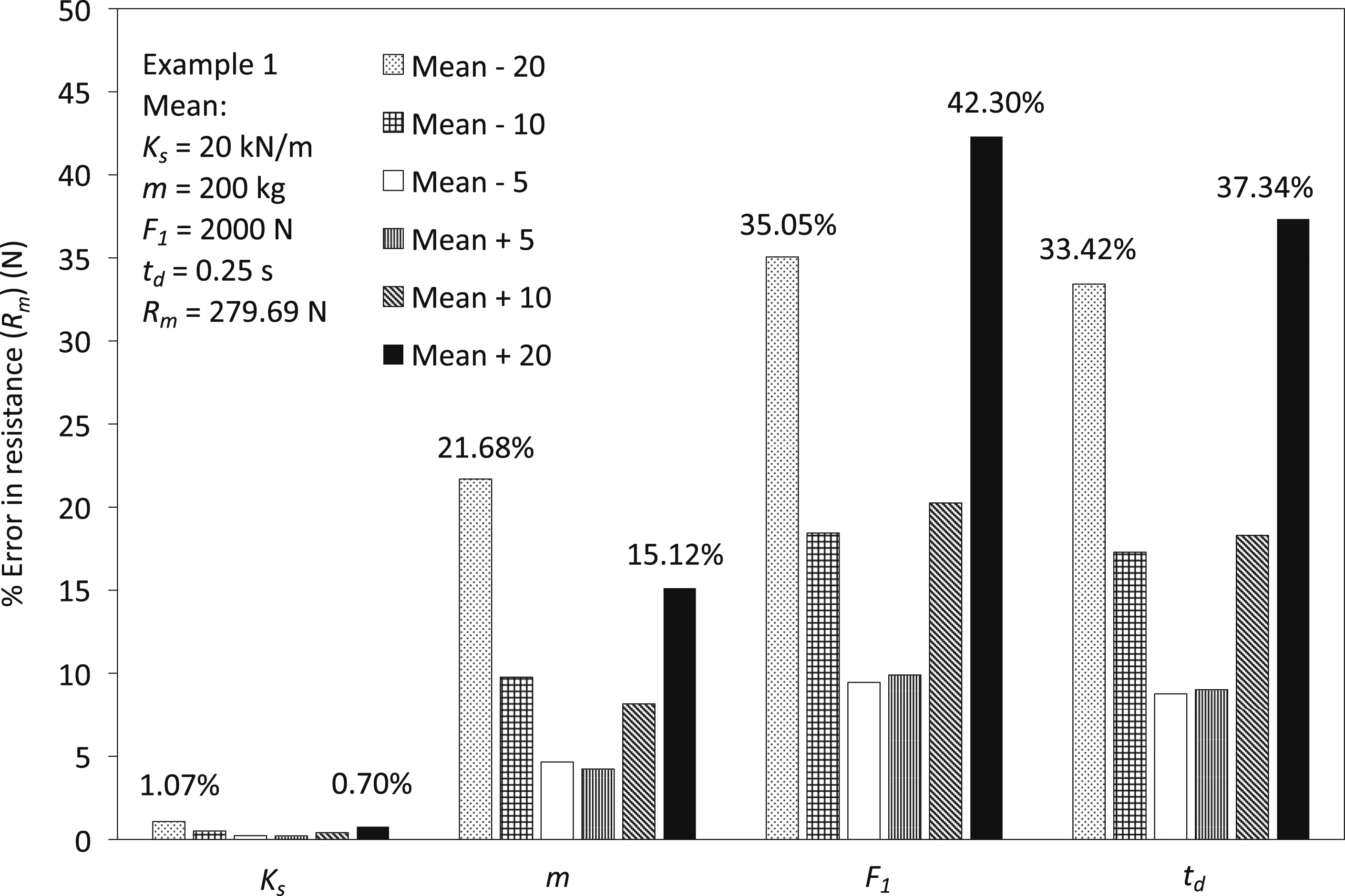
For variations of ±5%, ±10%, and ±20% in the selected parameters, the error has been calculated. The comparison of the variations for a given case has been shown in Figures 5 and 6 for ESF factor (λ) and resistance ( Percentage error in the ESF factor (λ) for the SDOF system: Example 1. Percentage error in resistance (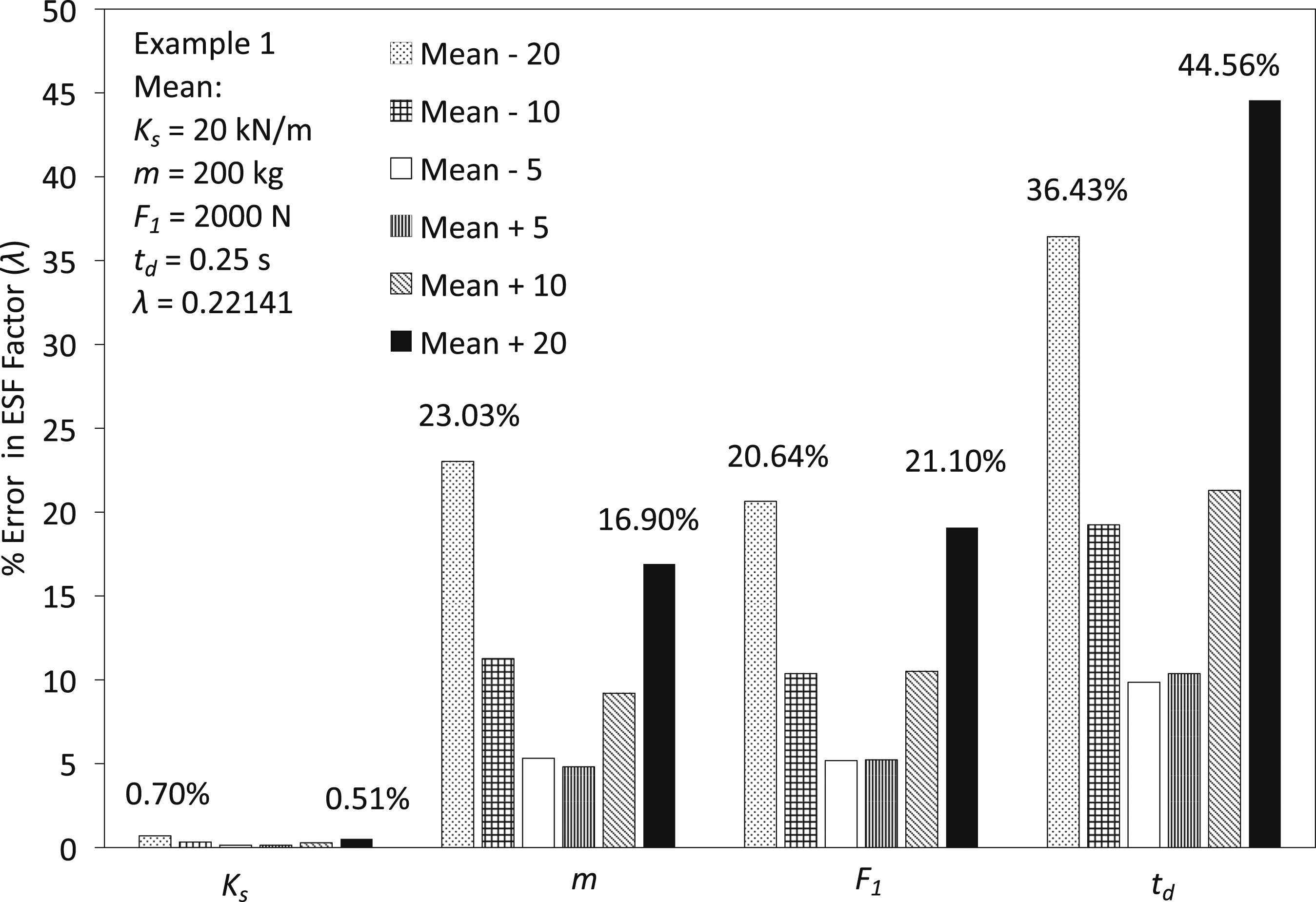
Example 2
Example 2 represents case III (plastic state at ESF factor (λ) for different parametric variations for the SDOF system: Example 2. Resistance (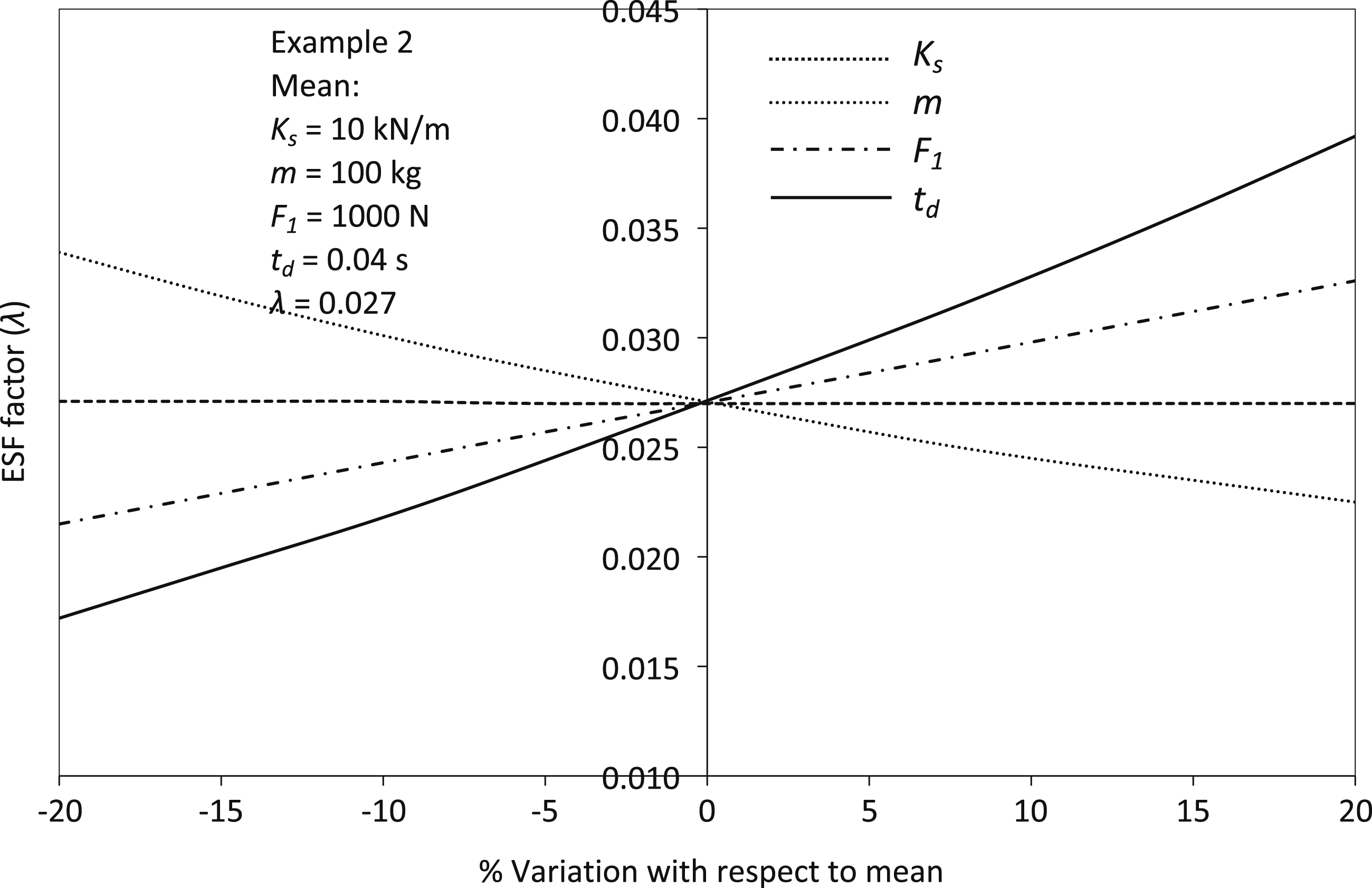
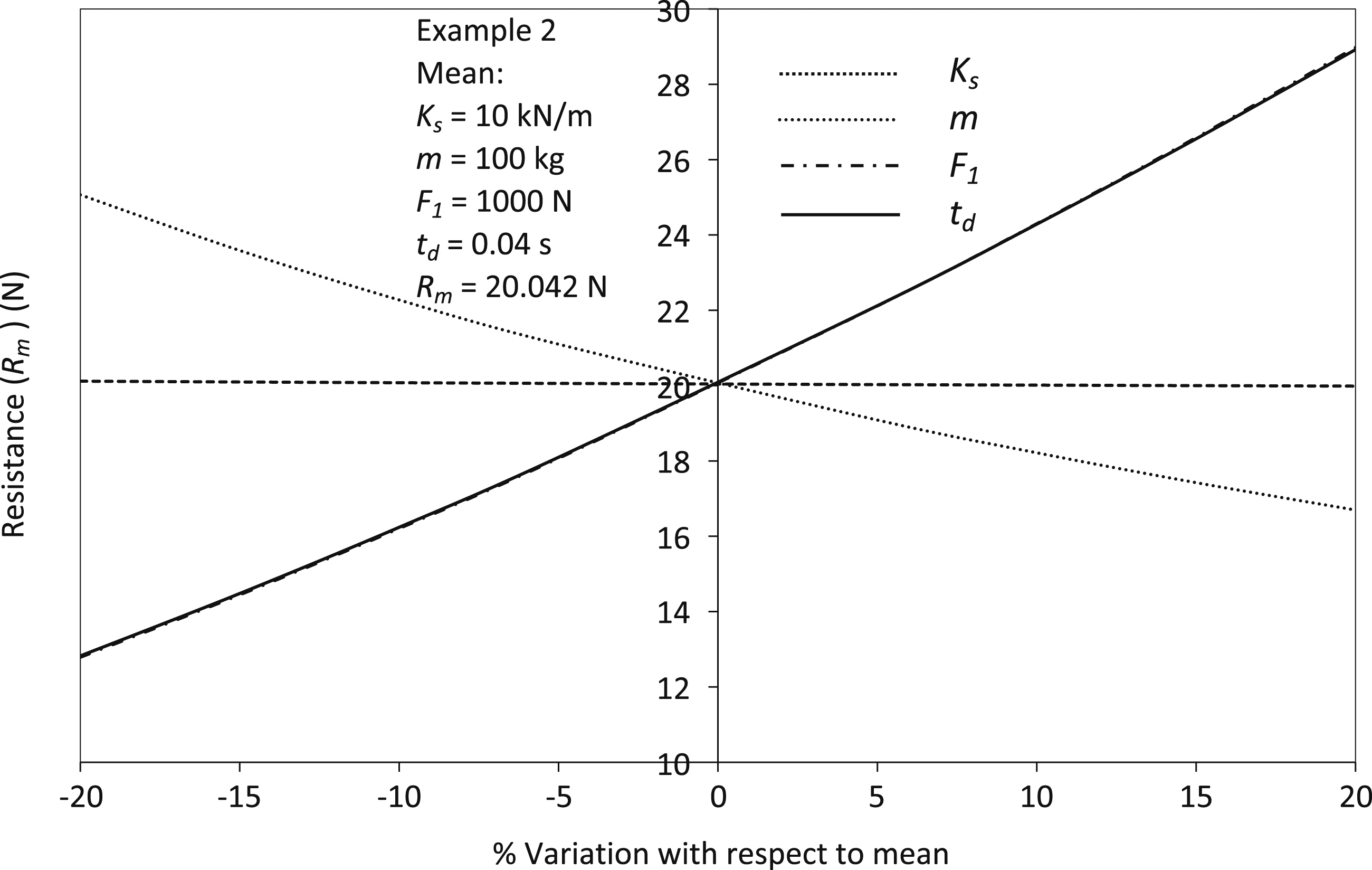
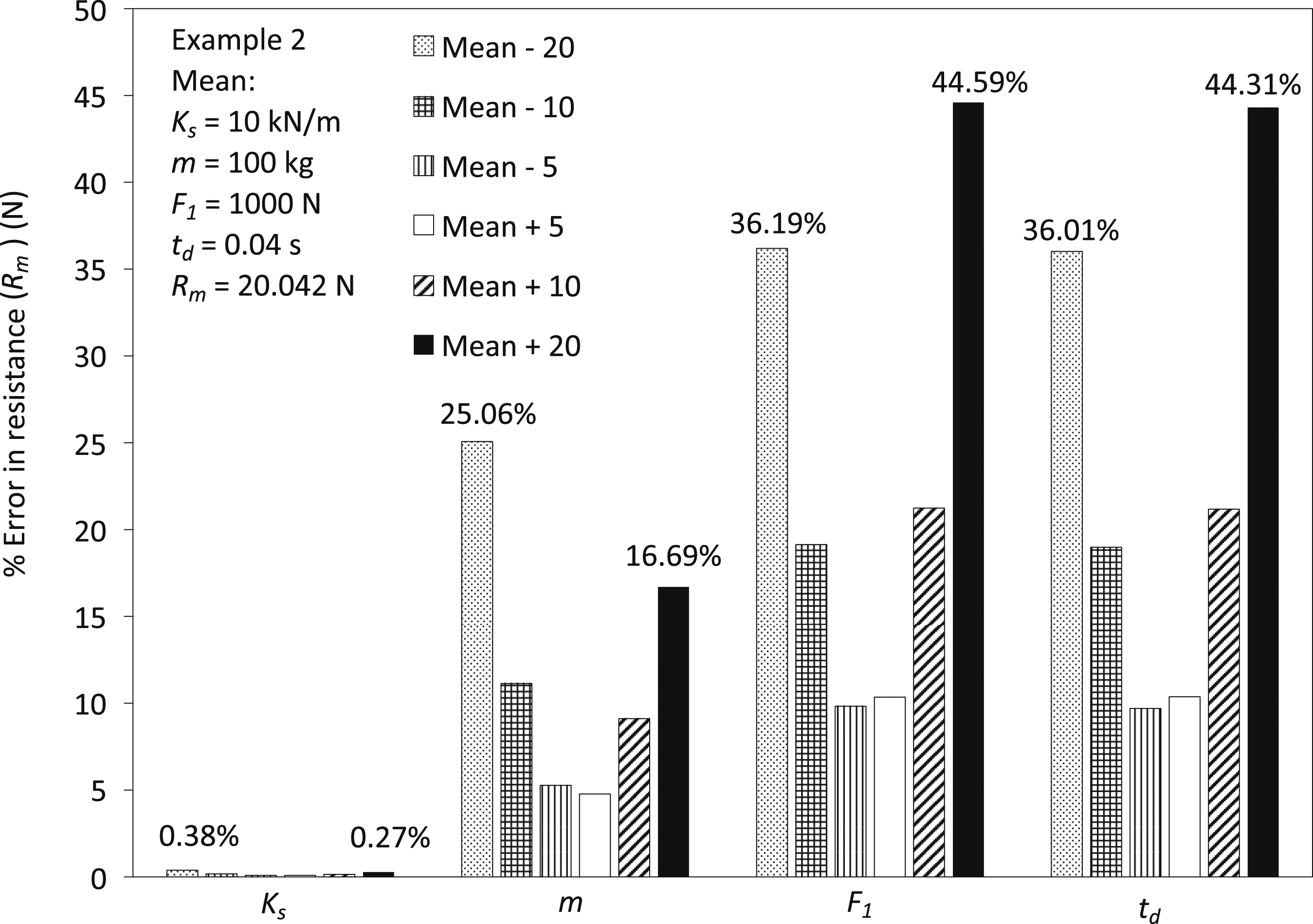
For variations of ±5%, ±10%, and ±20% in the selected parameters, the error is calculated. The comparison of the variations for the given case is shown in Figures 9 and 10 for ESF factor (λ) and resistance ( Percentage error in the ESF factor (λ) for the SDOF system: Example 2. Percentage error in resistance (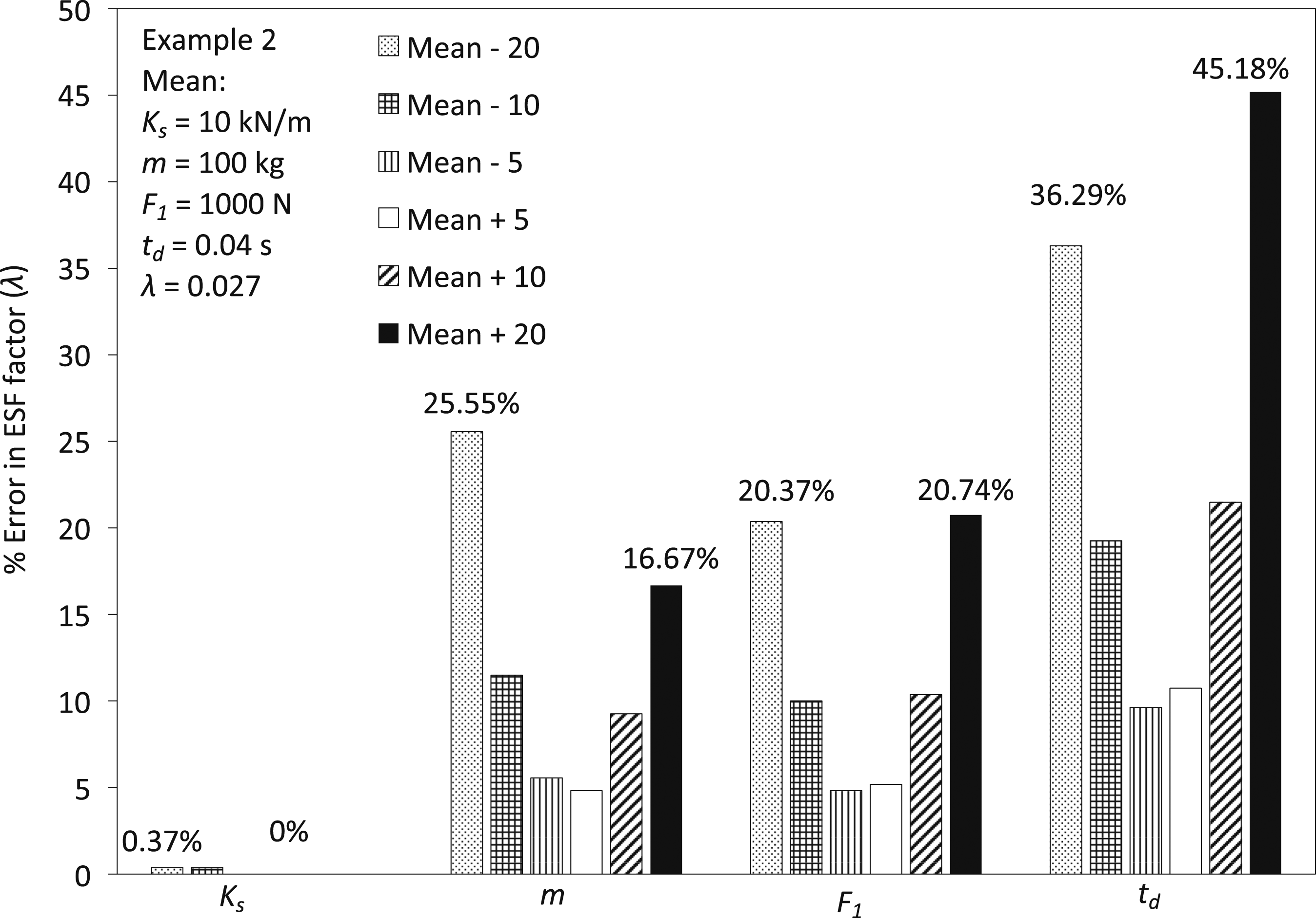
Example 3
In this example, a frame is idealized as an equivalent SDOF system, as given in Figure 11 (Biggs, 1964). The equivalent SDOF system properties can be referred from Table 2 for analysis of the frame. Example 3 represents case III (plastic state at Frame subjected to lateral blast load (after, Biggs, 1964).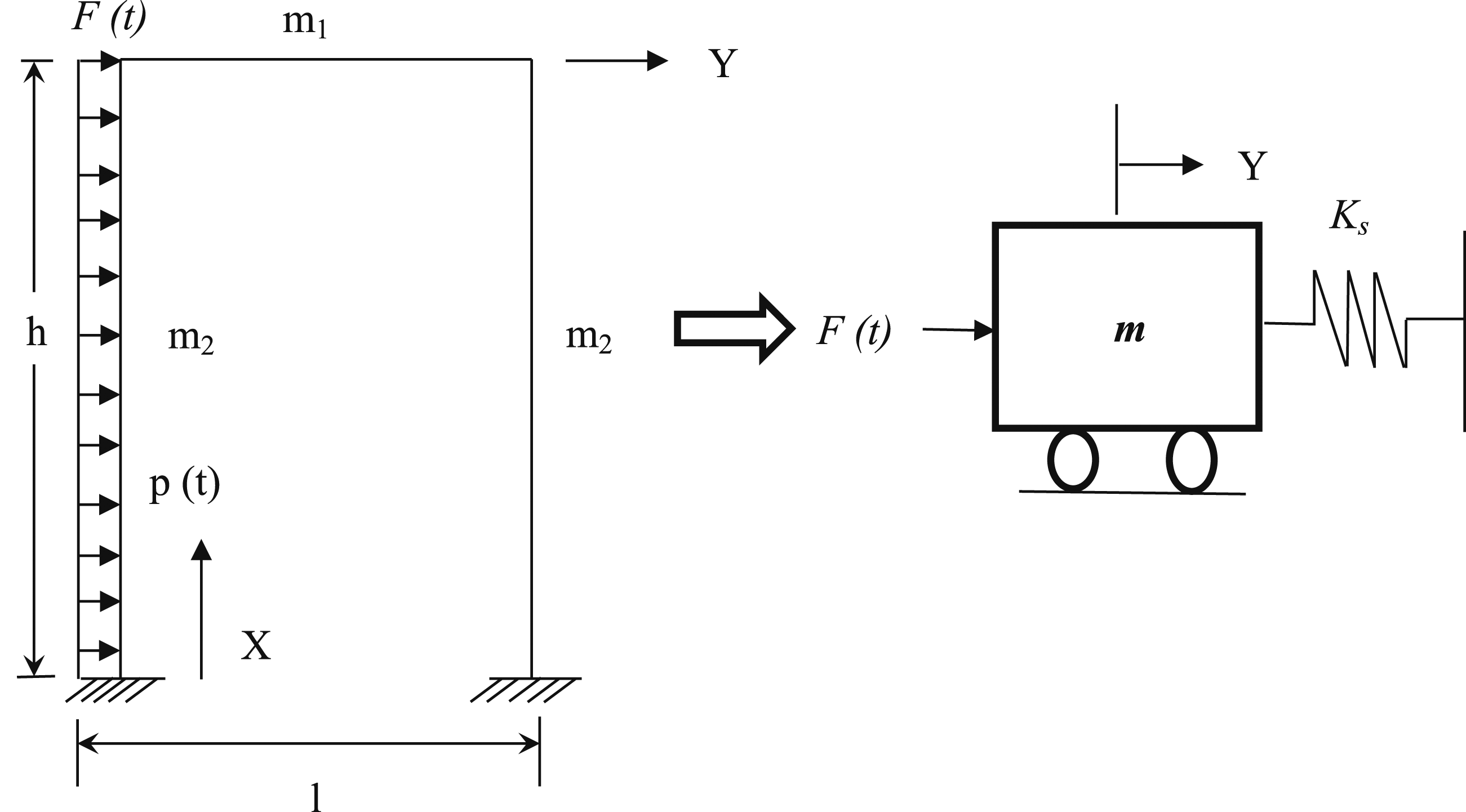
An ESF model is applied for targeted displacement (
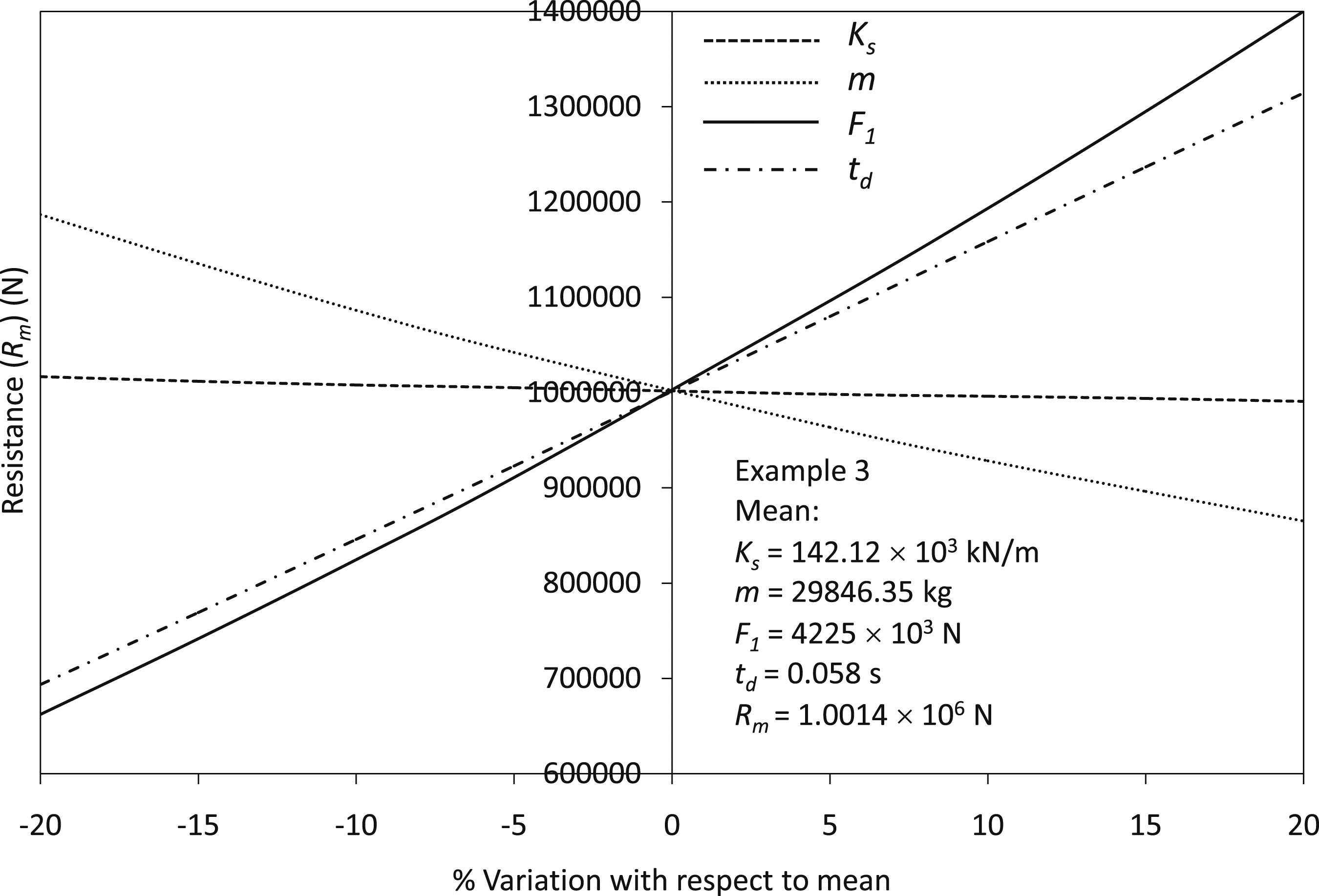
Figures 12 and 13 show the variation of ESF factor (λ) and resistance ( ESF factor (λ) for different parametric variations for the SDOF system: Example 3. Resistance (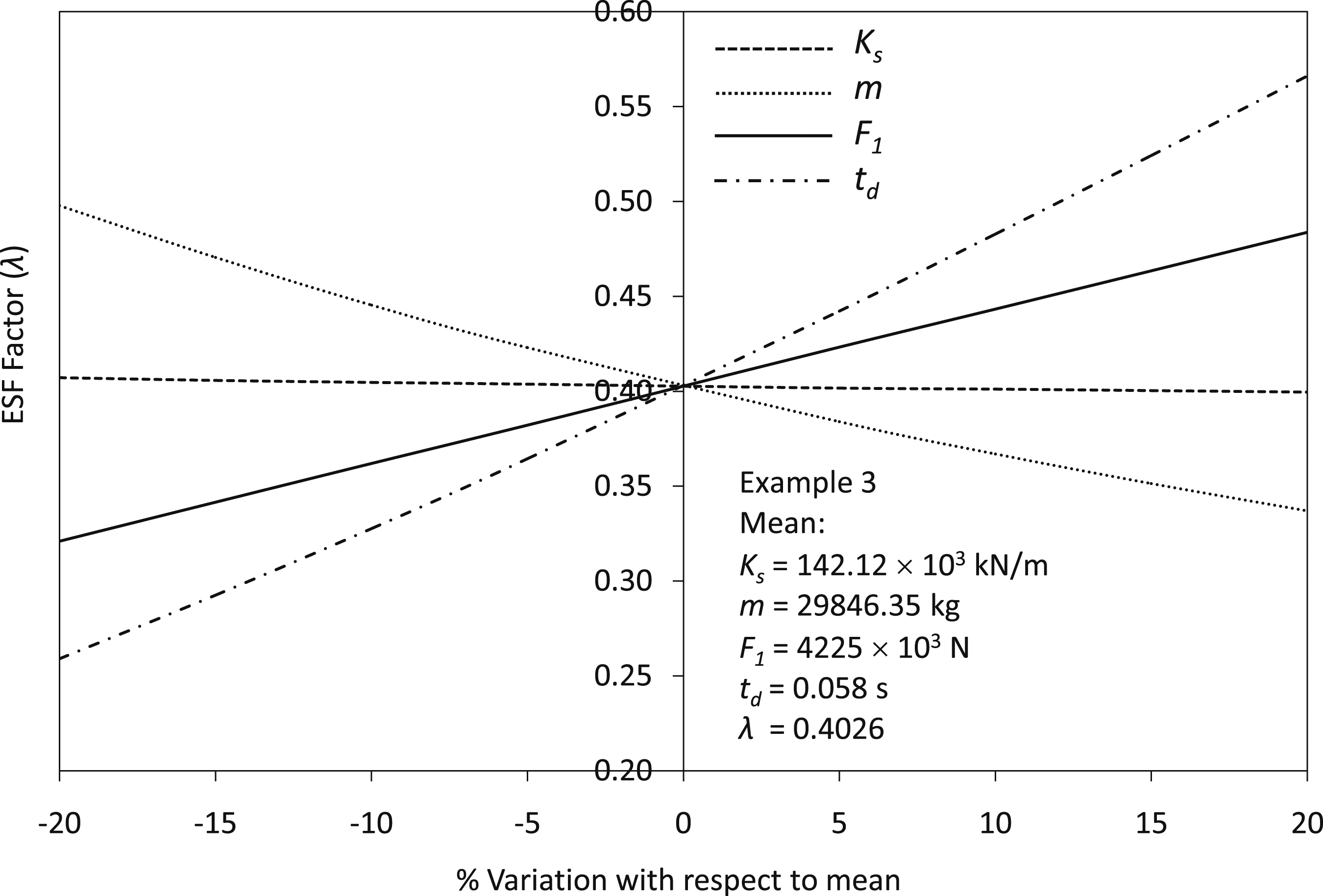
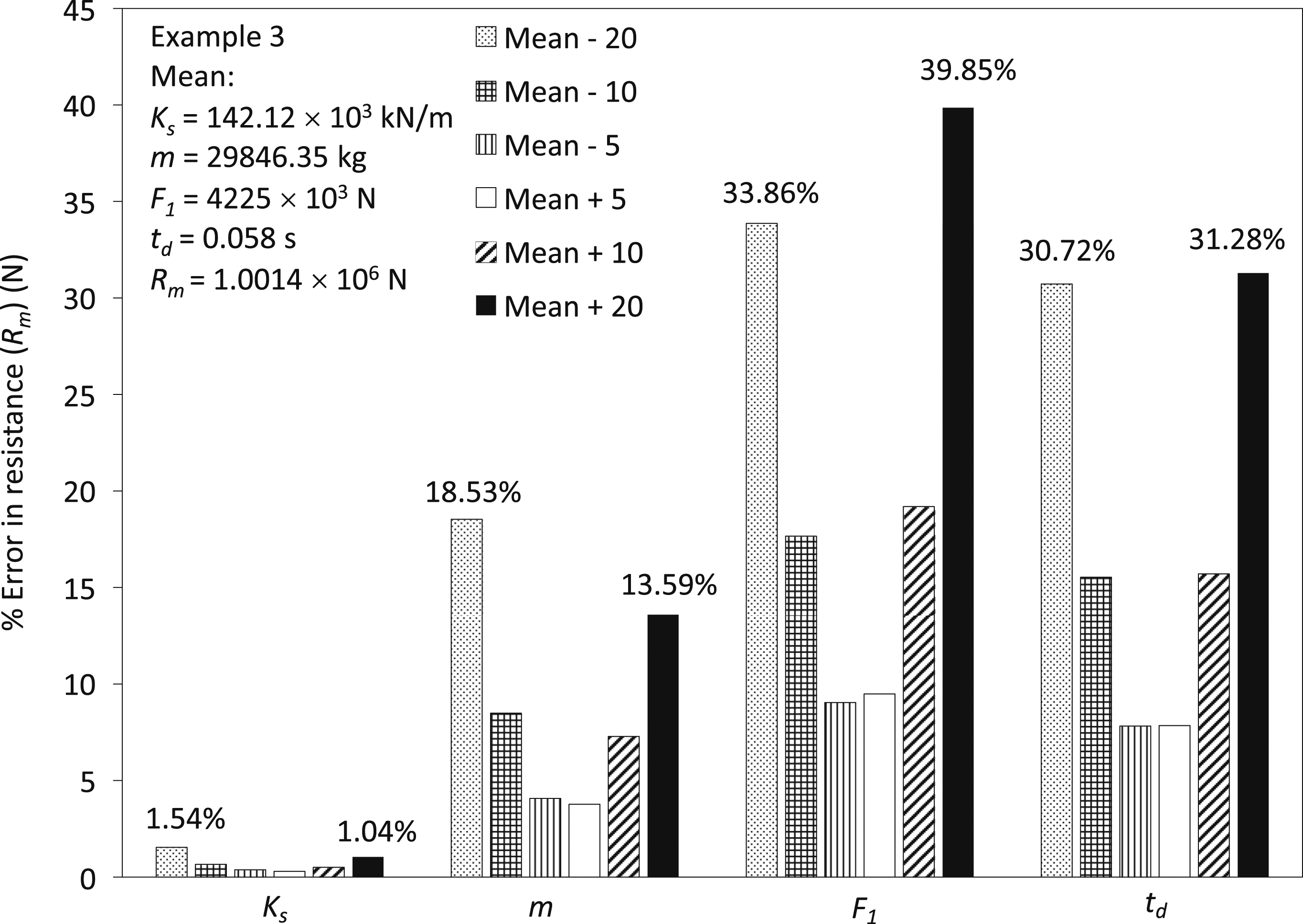
For variations of ±5%, ±10%, and ±20% in the selected parameters, the error is calculated. The comparison of the variations for the given case is shown in Figures 14 and 15 for ESF factor (λ) and resistance (R
m
), respectively. A maximum of 40.6% variation in ESF factor is observed for a 20% increase in positive pulse duration ( Percentage error in the ESF factor (λ) for the SDOF system: Example 3. Percentage error in resistance (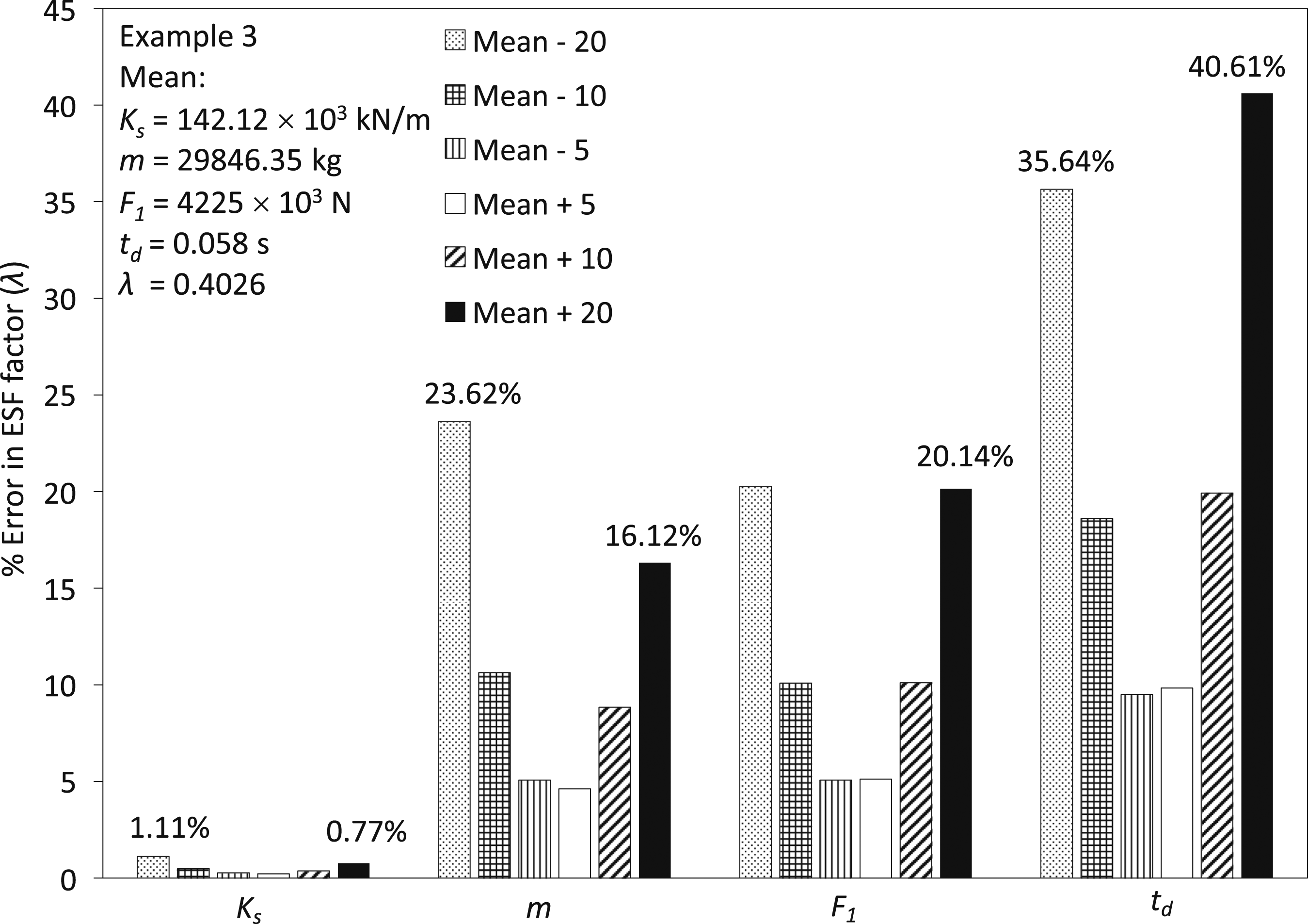
Uncertainty quantification
Selection of an optimal number of realizations for Monte-Carlo simulation
The total number of iterations to be used does not have any upper limit for performing simulations using Monte-Carlo method. With the increase in the number of iterations, the sample approaches the population. Driels and Shin (2004) proposed an equation, mentioned as equation Driels and Shin (2004), to determine an optimum number of iterations that is required to attain a pre-defined percentage error with a particular confidence level. For the number of iterations obtained using equation Driels and Shin (2004), it has been observed that the solution converges quickly and is relatively stable. Probability distribution curves for ESF factor (λ). Probability distribution curves for resistance (
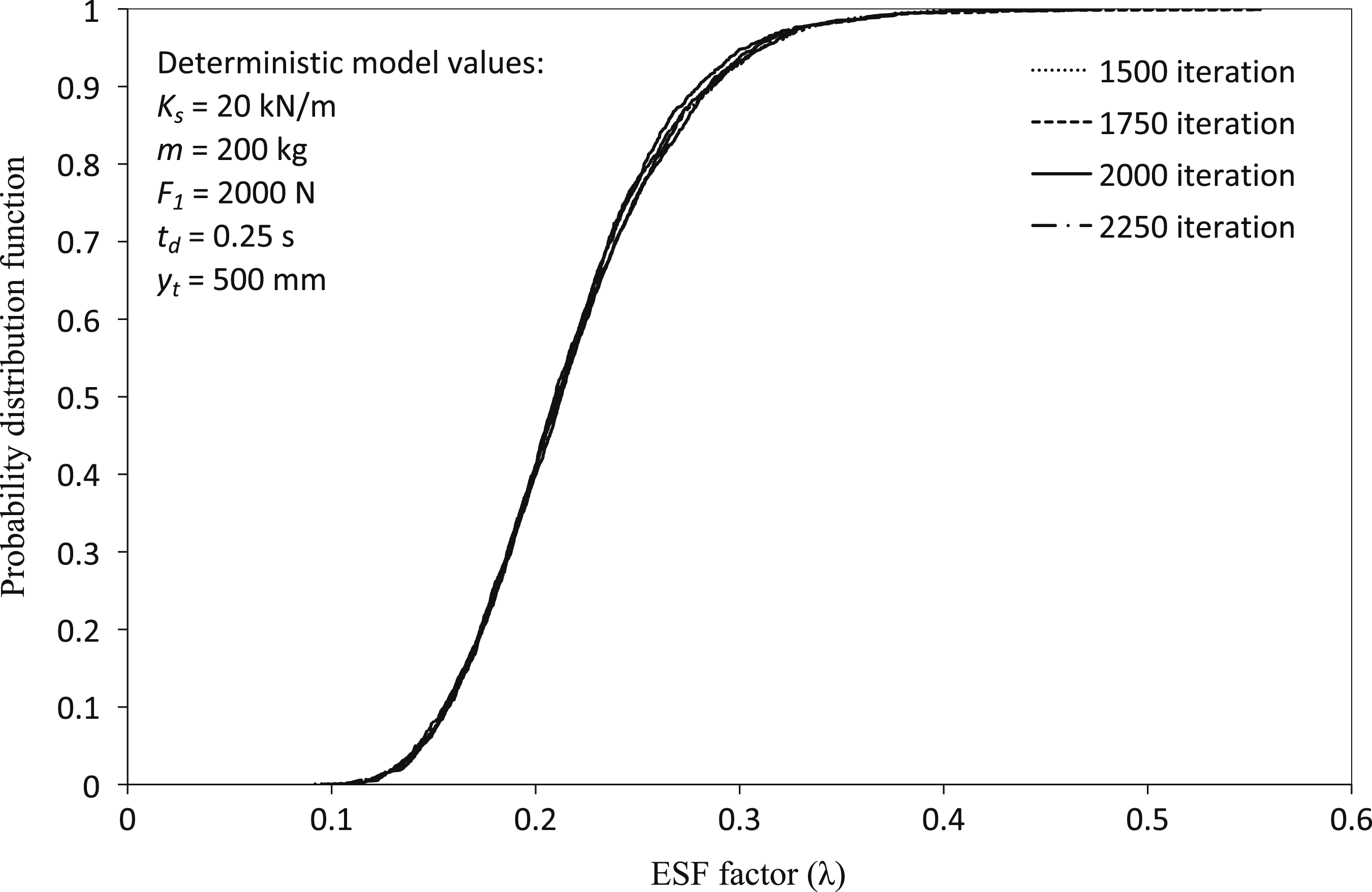
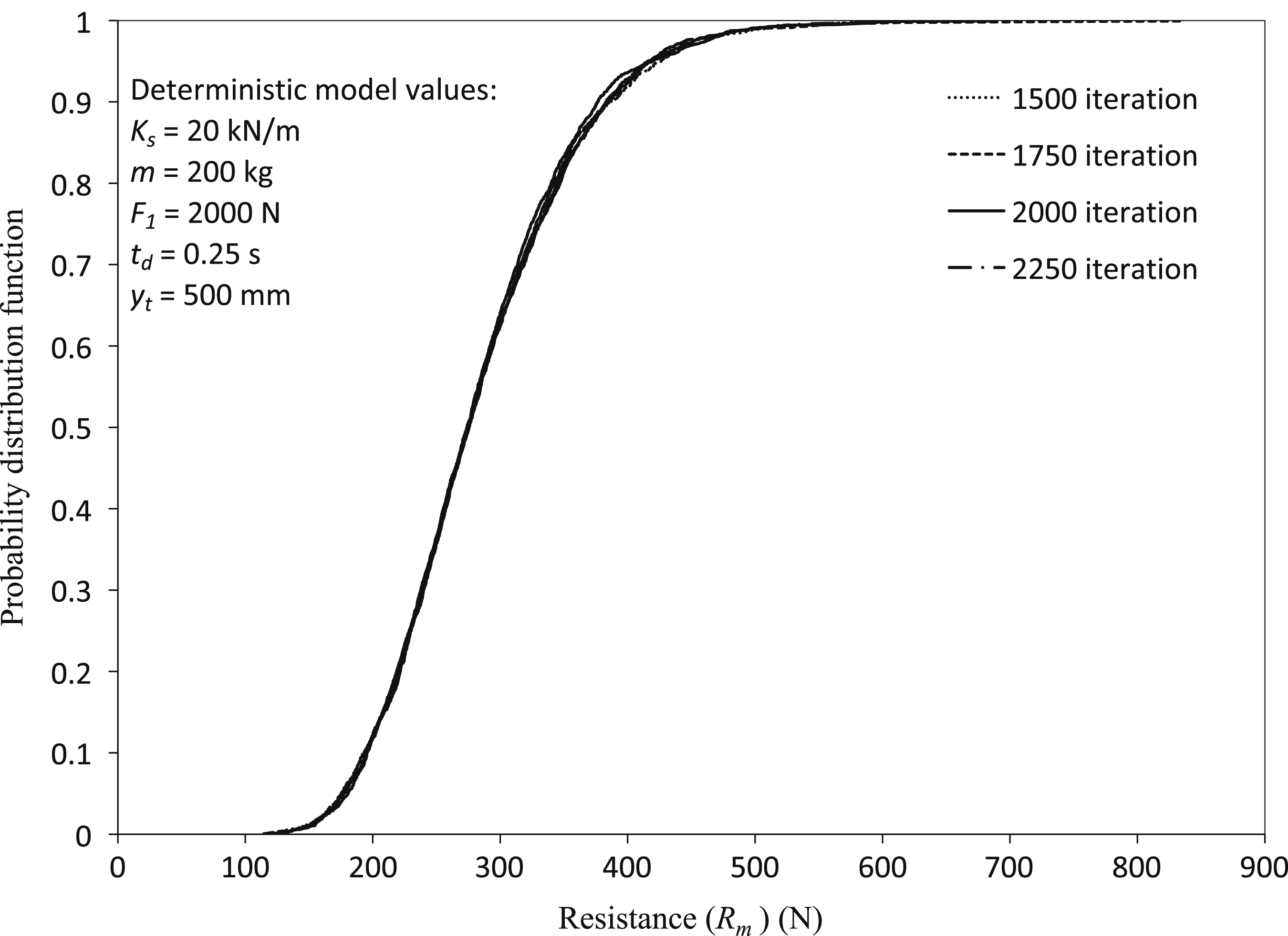
Monte-Carlo simulation study
After fixing the number of iterations for the Monte-Carlo process, the simulation is conducted on the considered deterministic SDOF system models (Section 2.2.1 with parameters mentioned in Table 2). This helps in analyzing the effect of uncertainties associated with input parameters (
Ensuing to generations of n (= 2000) realizations of the response parameters, ESF factor (λ) and resistance (R
m
) of the SDOF system, the attributes of these two random state variables are produced as follows: I. Distribution functions—The realizations of random variables (λ and R
m
) as obtained from simulations are employed to generate the distribution functions of random variables λ
i
and ii. Mean and standard deviation—Invoking “n” corresponding realizations, the mean and standard deviation of random state variables (λ and R
m
) are obtained (i.e., λ
i
, iii. Factor of safety (FOS)—With the aforementioned context, the deterministic design requirement (restricting R
m
to



In the deterministic design, the risk of failure (i.e., R
m
below 


It can be stated from above that a lower recommended risk level will always result in a higher factor of safety. This means that by appropriately raising the FOS, the risk of failure can be minimized significantly.
The present study assumes that the input parameters (say r—
Example 1
Histograms of the ESF factor (λ) and resistance (R
m
) for log-normal distribution of input parameters for Example 1 are shown in Figures 18 and 19, respectively. After considering that the input parameters follow the log-normal distribution, the distributions of response parameters, ESF factor and resistance of the SDOF system, are obtained with the mean value of 0.2142 and 281.7 N, respectively. Distribution of the ESF factor (λ) considering the log-normal distribution of input parameters: Example 1. Distribution of resistance (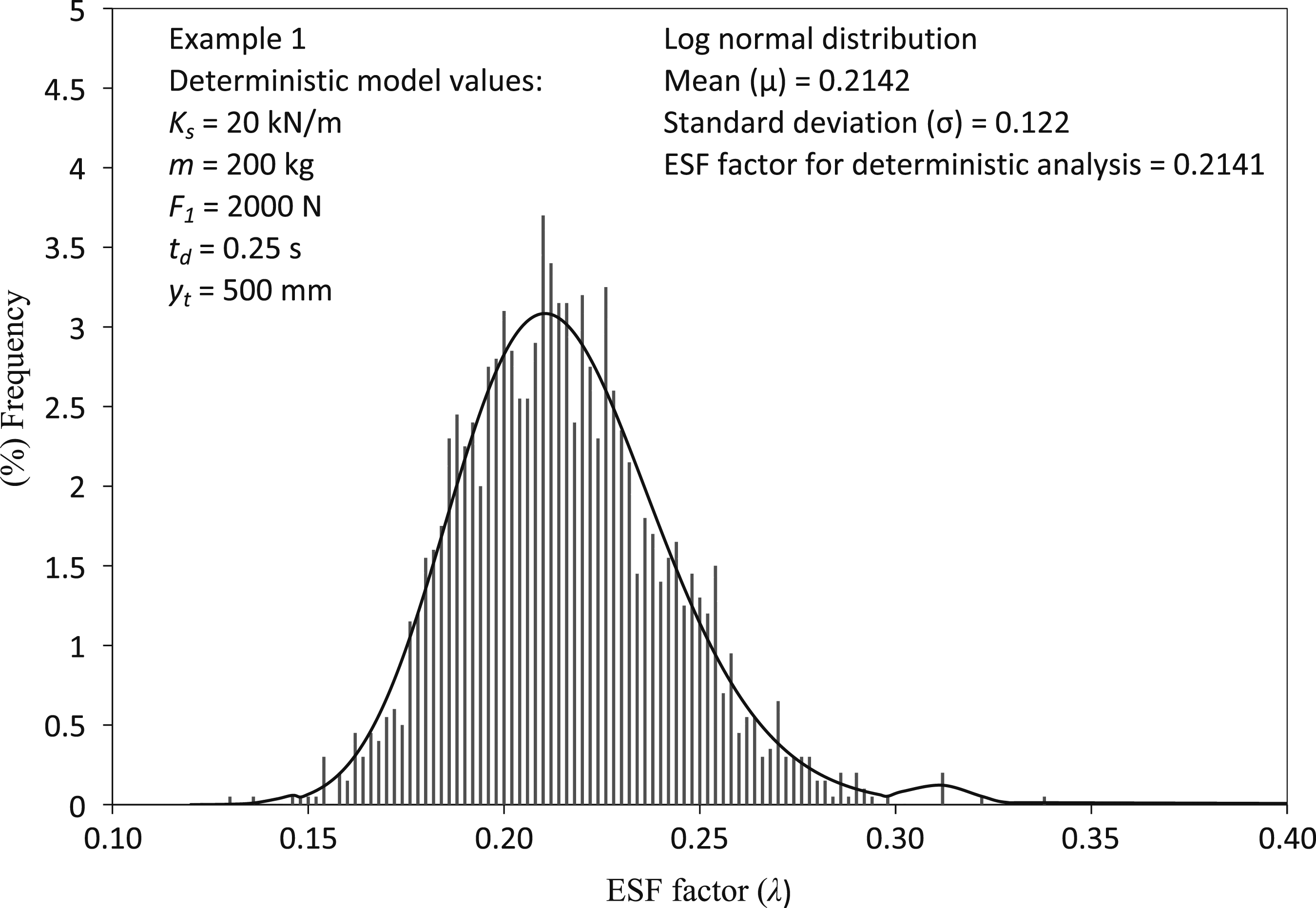
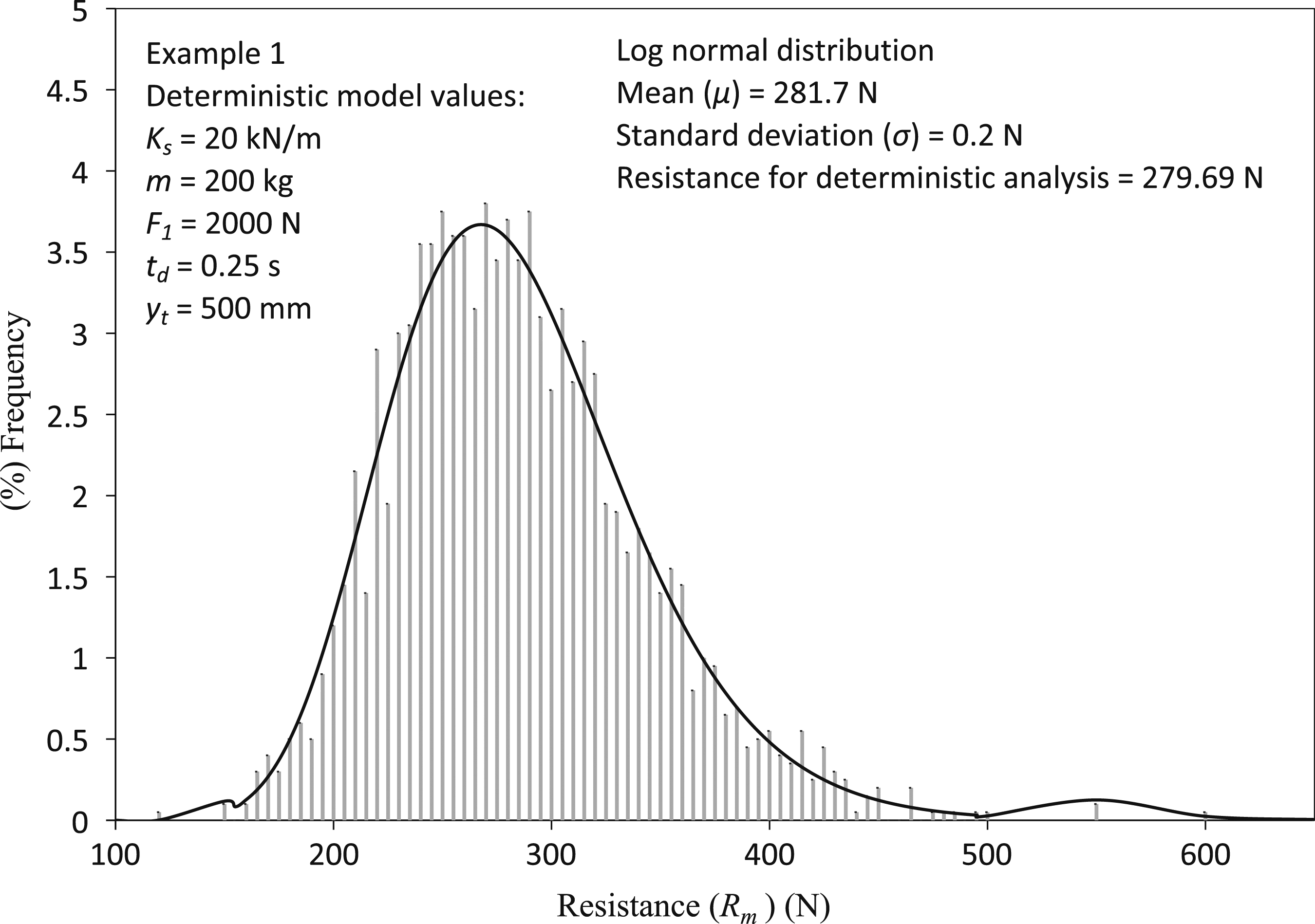
The visual shape of the histograms indicates a log-normal distribution; thus, the ESF factor and resistance distributions are examined for being log-normally distributed. Both ESF factor distribution and resistance distribution are subjected to a Chi-square value test for a 95% confidence level. For ESF factor distribution, the tabular value is 132.144, while the calculated value obtained is 118.5642. Hence, the given ESF factor distribution can be treated as log-normally distributed with a 95% confidence level. Similarly, the tabular value for resistance distribution is 80.232, while the calculated value obtained is 78.16896. Hence, the given resistance distribution can also be treated as log-normally distributed with a 95% confidence level.
Relating Factor of safety (FOS) with risk of failure (
The design challenge of achieving optimum resistance R m of the SDOF system for a pre-defined target displacement may be tackled using a probabilistic or deterministic approach using the aforementioned model. This problem of finding optimum resistance is greatly influenced by the uncertainties associated with the structural and loading parameters.
All the realizations generated for the resistance R
m
of the SDOF system in the probabilistic approach meet the requirement of attaining the prescribed target displacement of 500 mm (for Example 1). The obtained resistance R
m
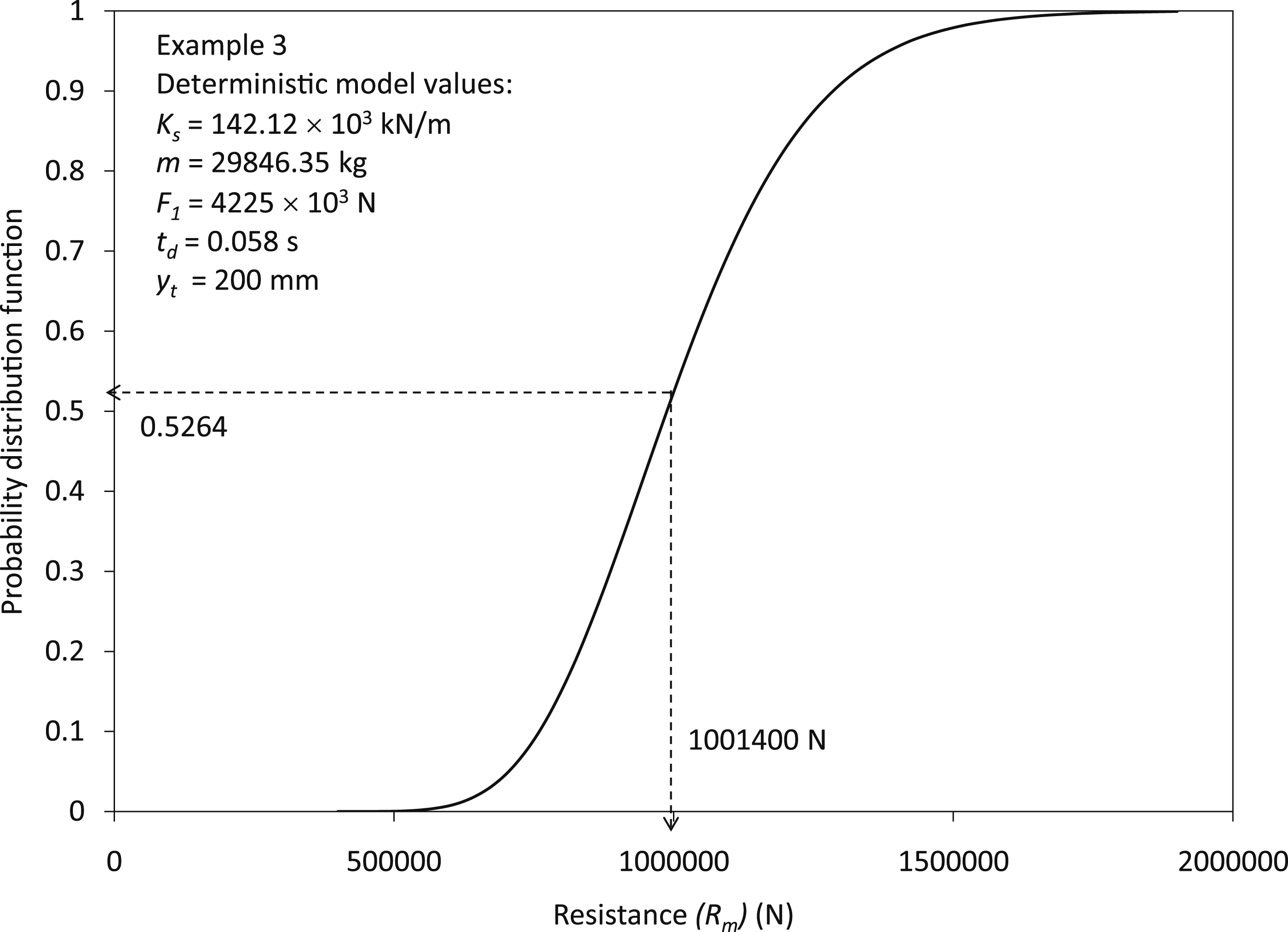
can be characterized by a probability distribution function or by its mean and standard deviation. For the SDOF under consideration, the probability of undershooting (P (R
m
≤ Probability distribution curve for resistance (R
m
) (N) of the SDOF system: Example 1.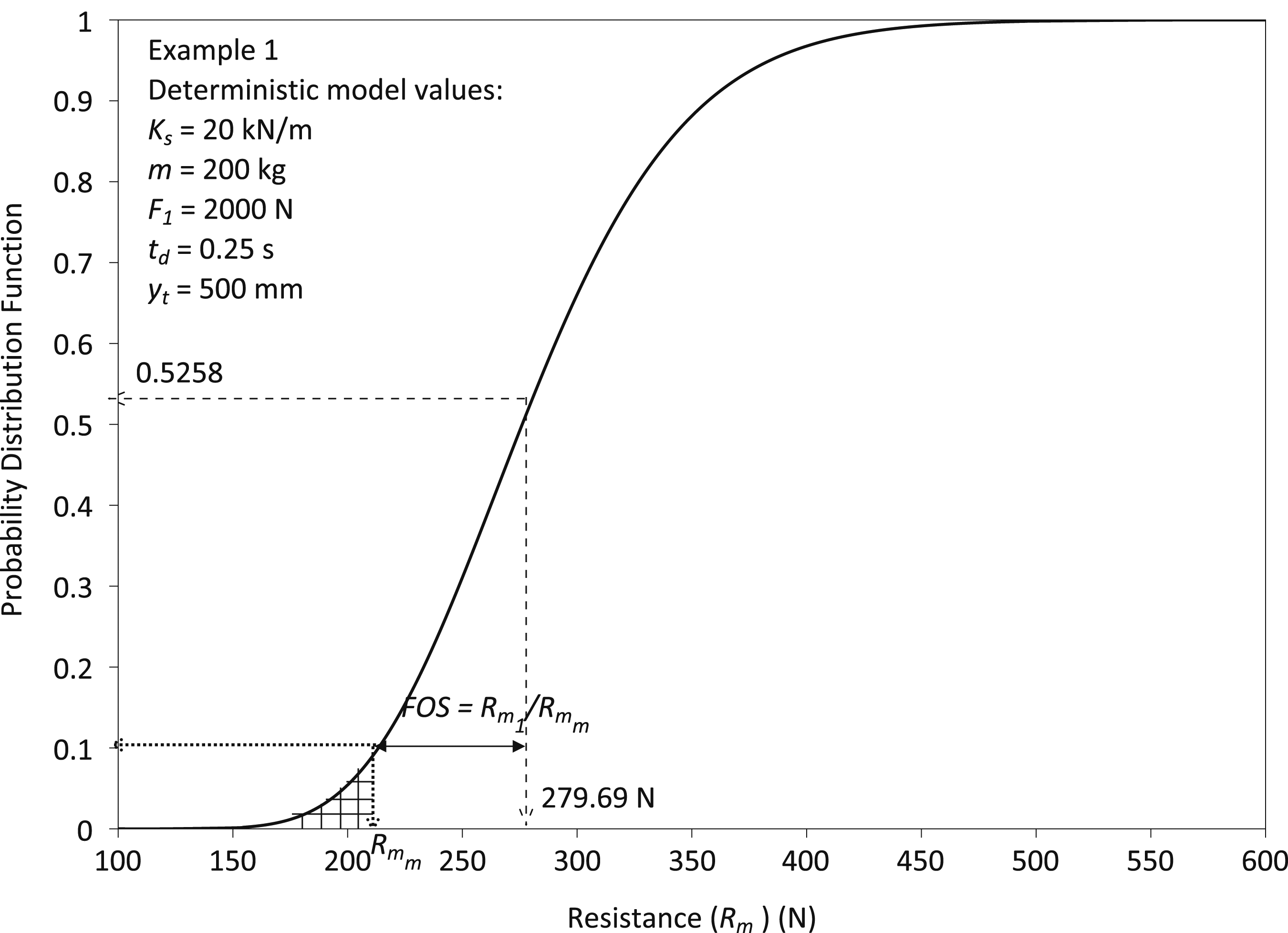
In the deterministic approach, the resistance parameter
The computed resistance parameter
In the present example, the variable resistance (R
m
) calculated using a probabilistic approach is limited to a predetermined lower limit, say
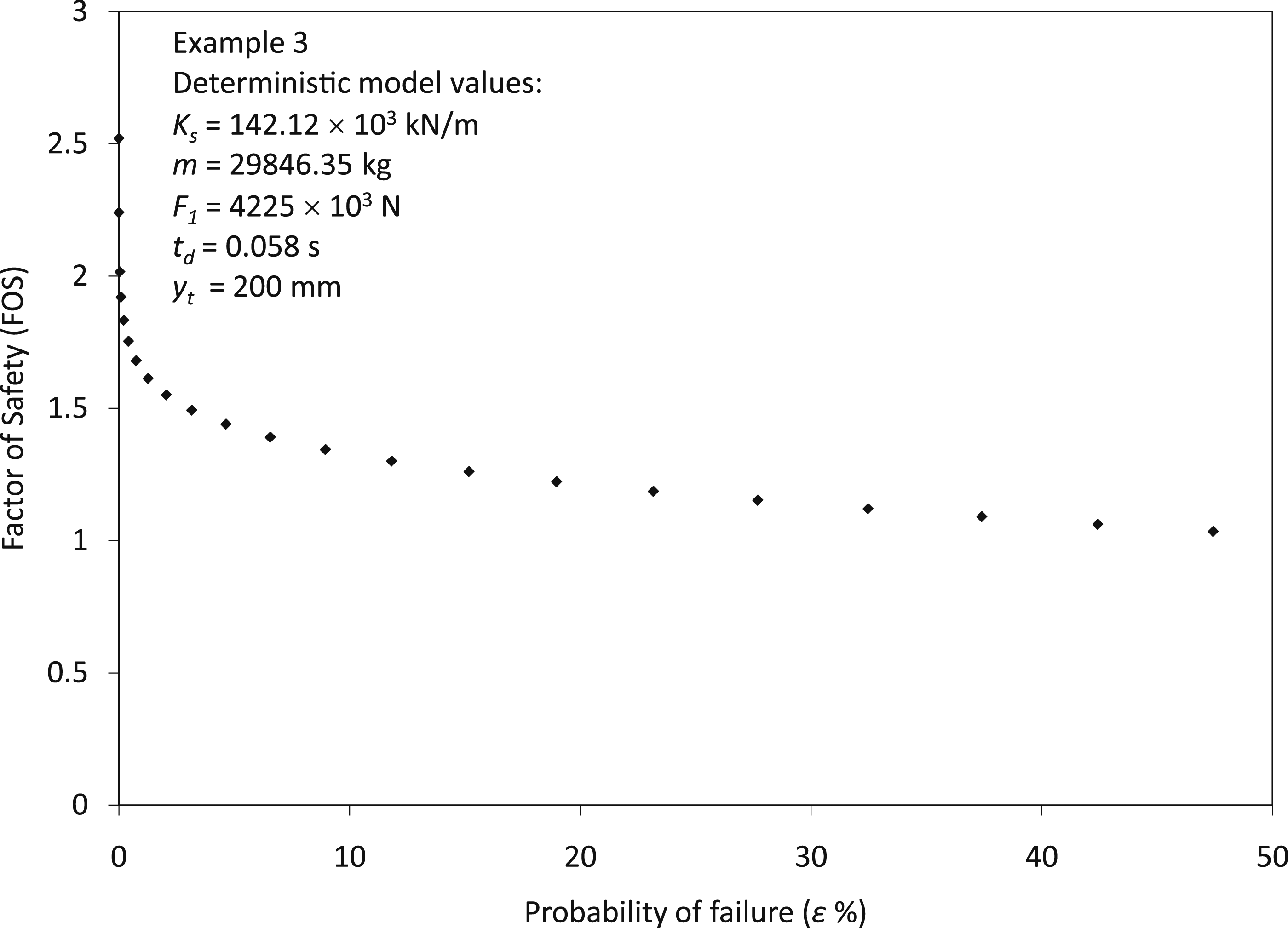
Using equations El-Dakhakhni et al. (2010) and Fallah and Louca (2007), the generated probability distribution function (F
D
) for the SDOF system’s resistance (R
m
) is used to build an array of the associated risk of failure ( Factor of safety (FOS) vs. probability of failure or risk of failure (ε %): Example 1.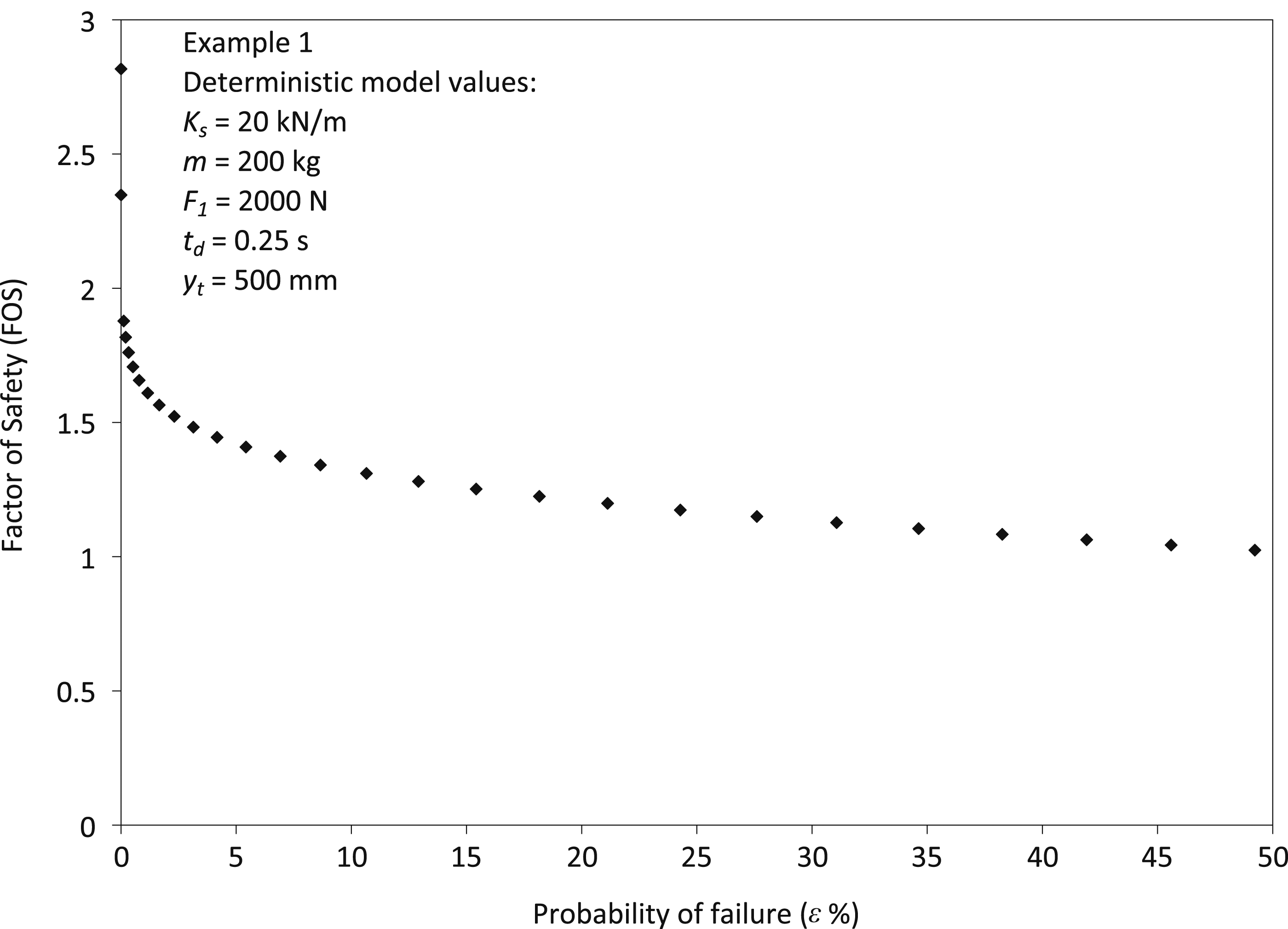
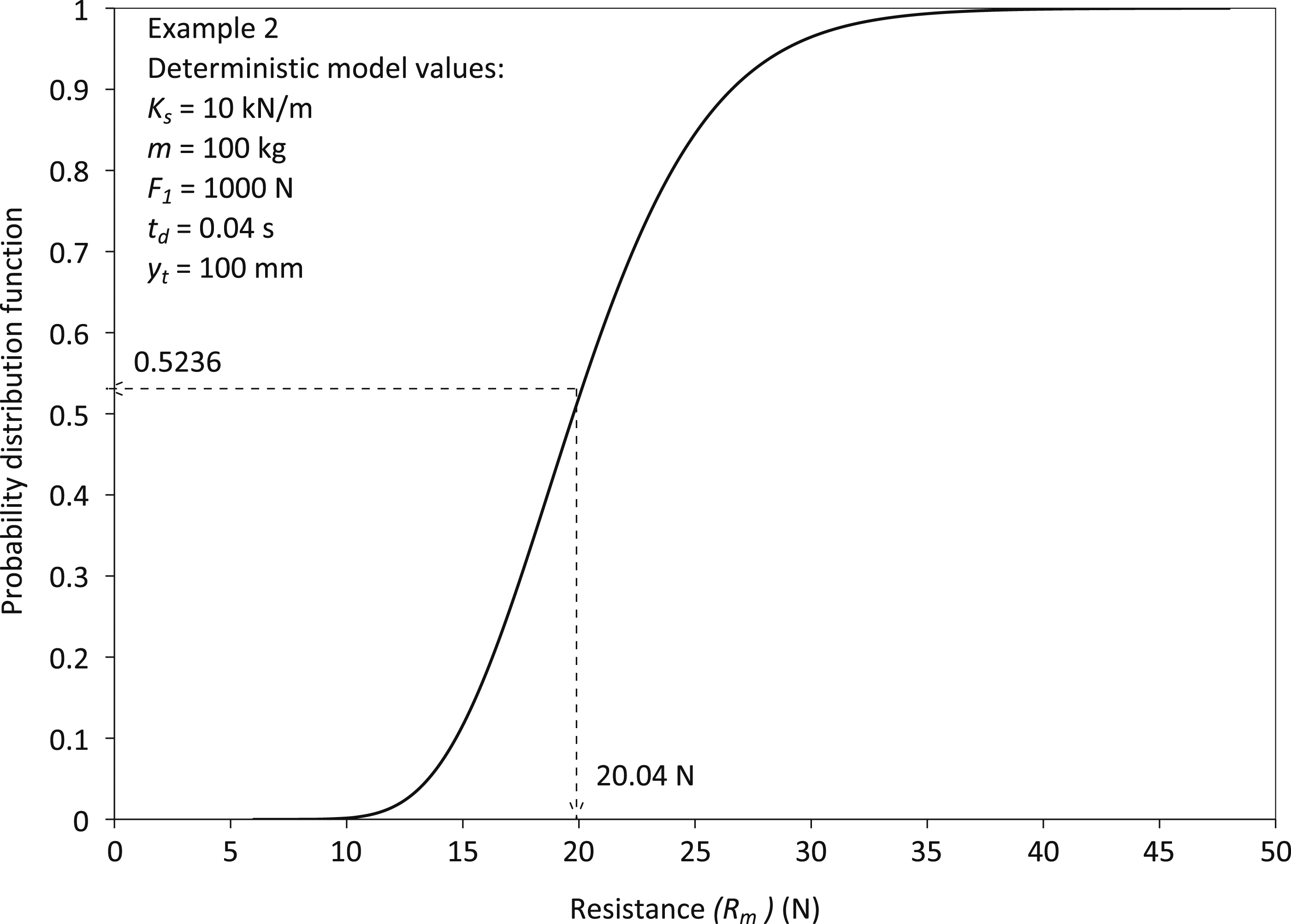
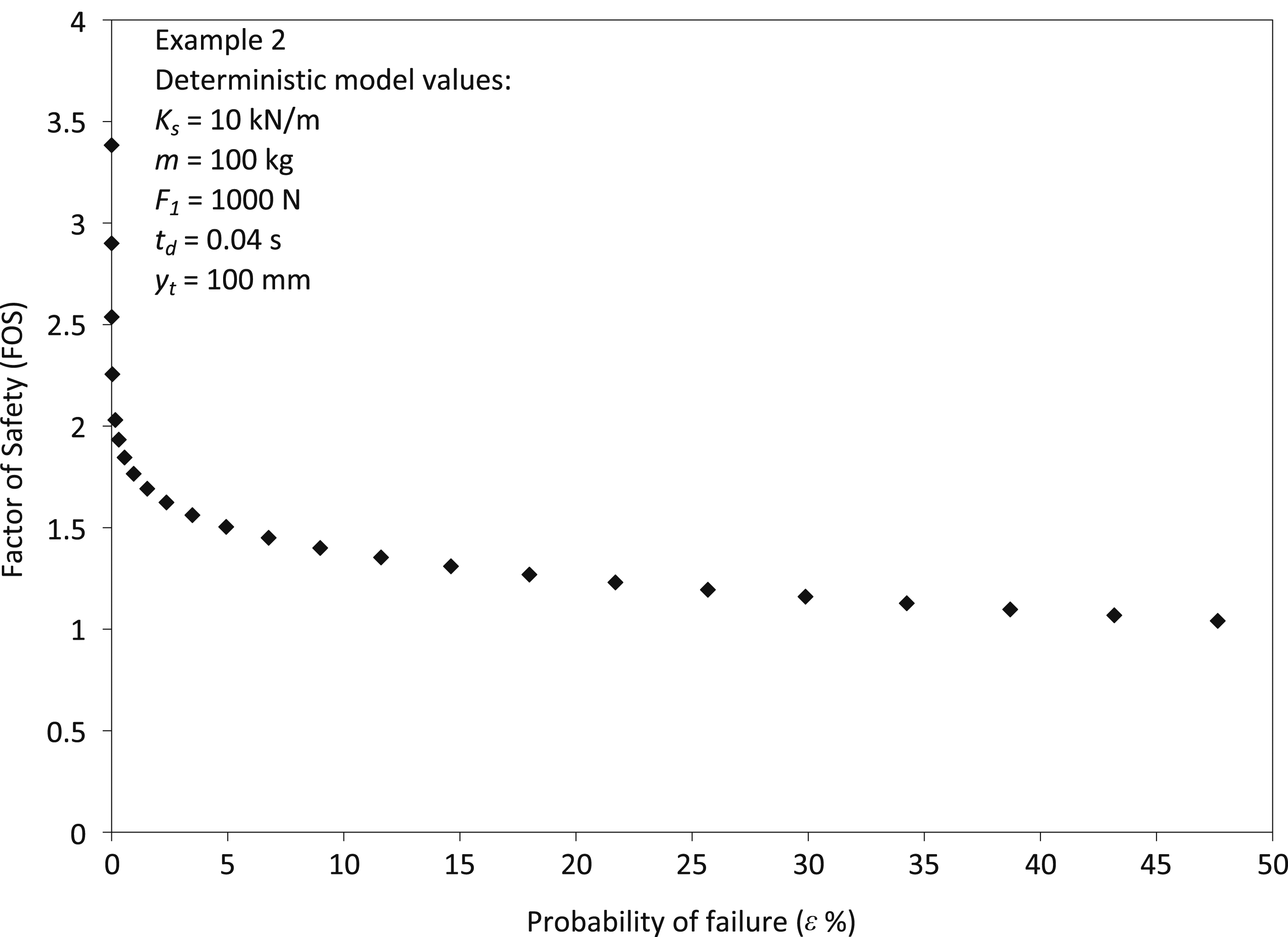
Example 2
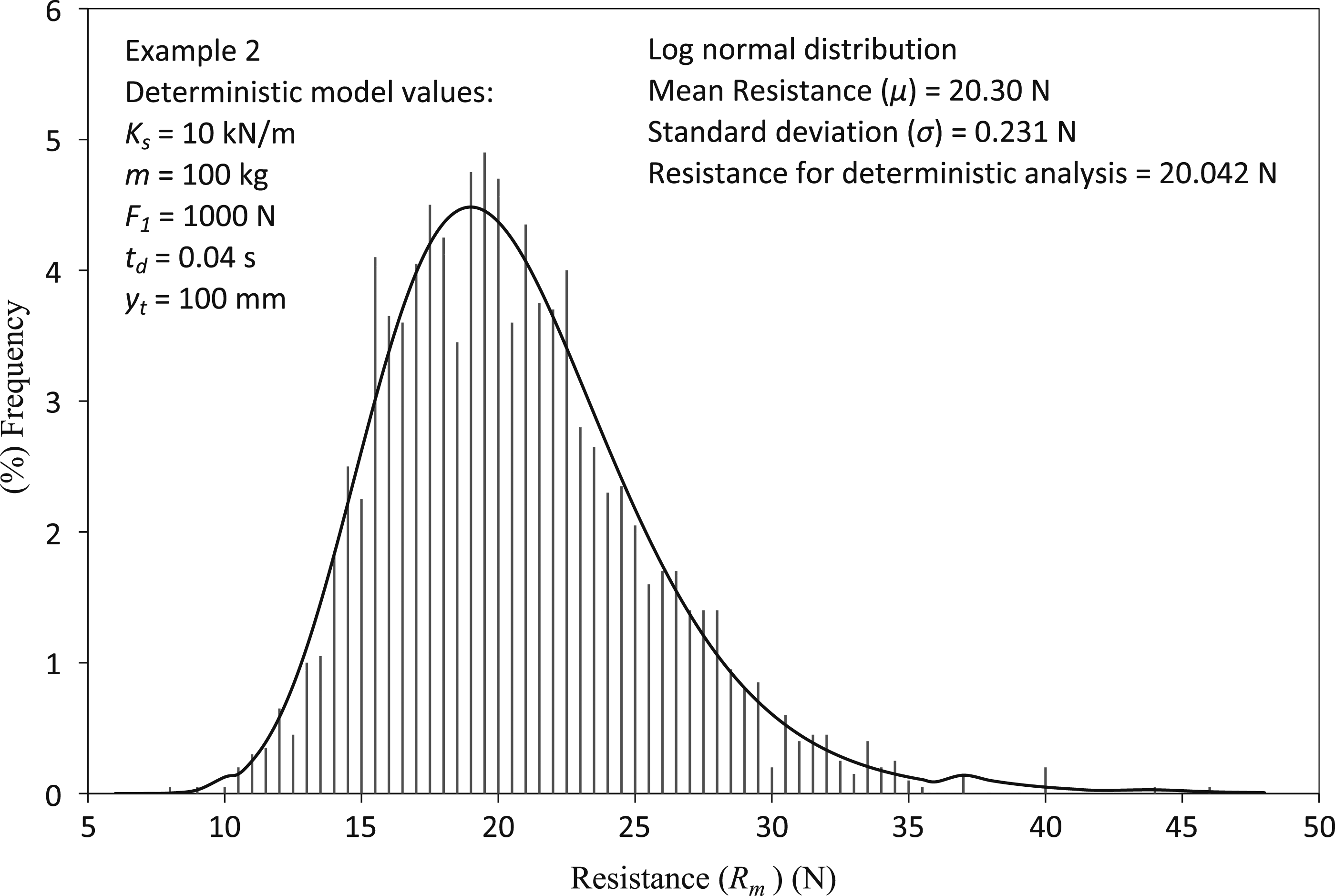
Figures 22 and 23 display histograms of the ESF factor (λ) and resistance ( Distribution of the ESF factor (λ) considering the log-normal distribution of input parameters: Example 2. Distribution of resistance ( Probability distribution curve for resistance (R
m
) (N) of the SDOF system: Example 2. Factor of safety (FOS) vs. probability of failure or risk of failure (ε %): Example 2.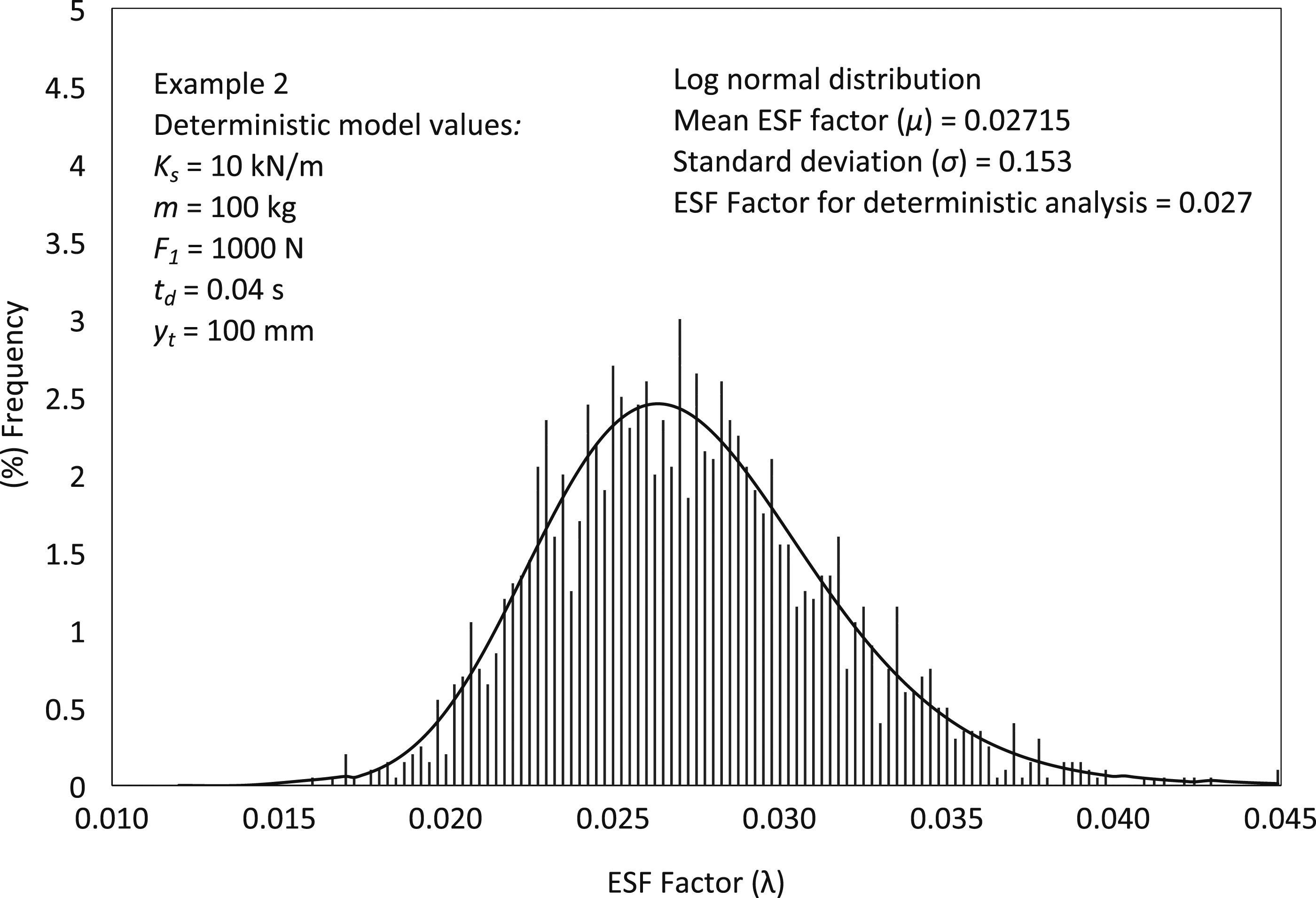
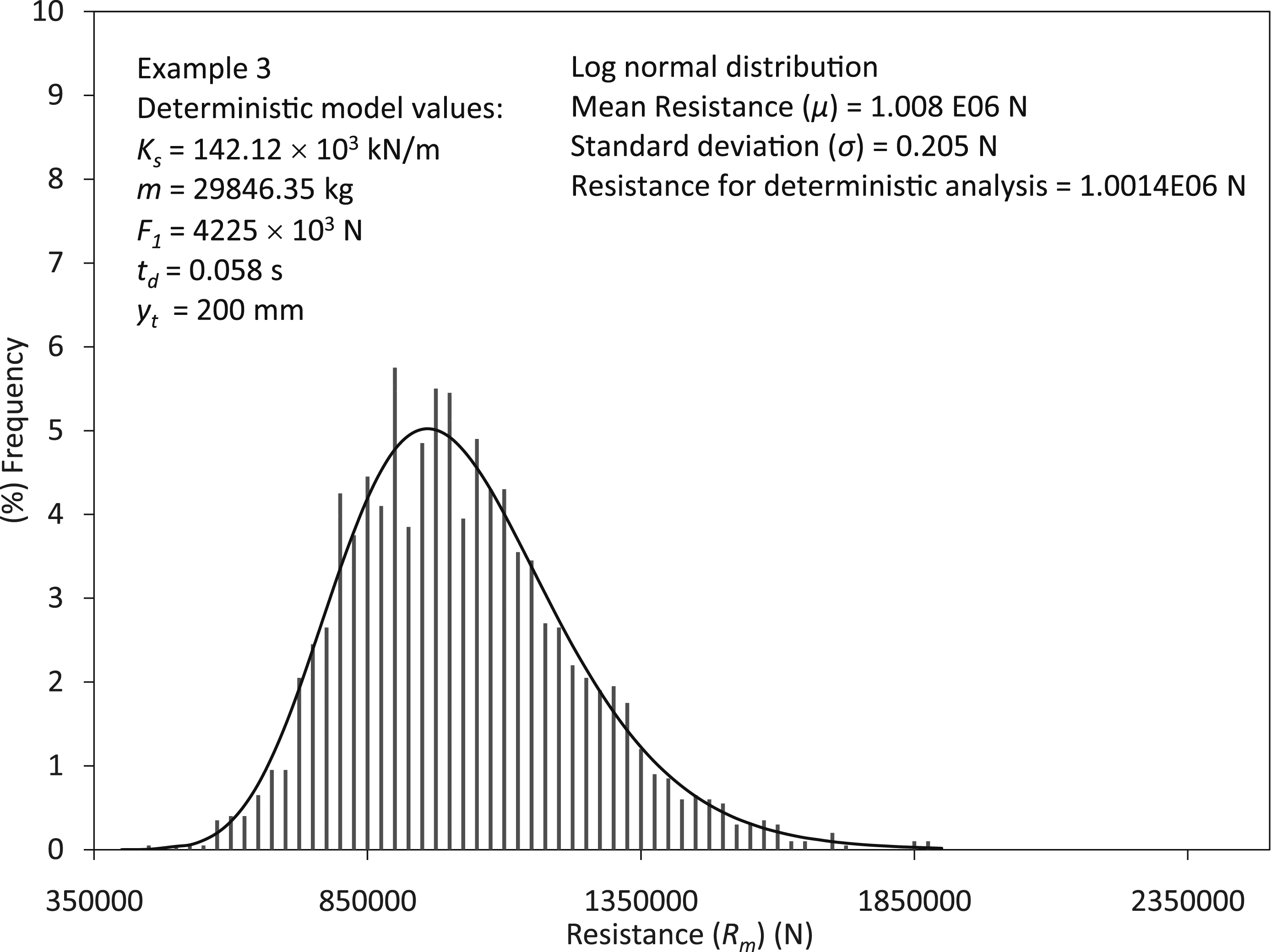
Example 3
Histograms of the ESF factor (λ) and resistance ( Distribution of the ESF factor (λ) considering the log-normal distribution of input parameters: Example 3. Distribution of resistance (R
m
) (N) considering the log-normal distribution of input parameters: Example 3. Probability distribution curve for resistance (R
m
) (N) of the SDOF system: Example 3. Factor of safety (FOS) versus probability of failure or risk of failure (ε %): Example 3.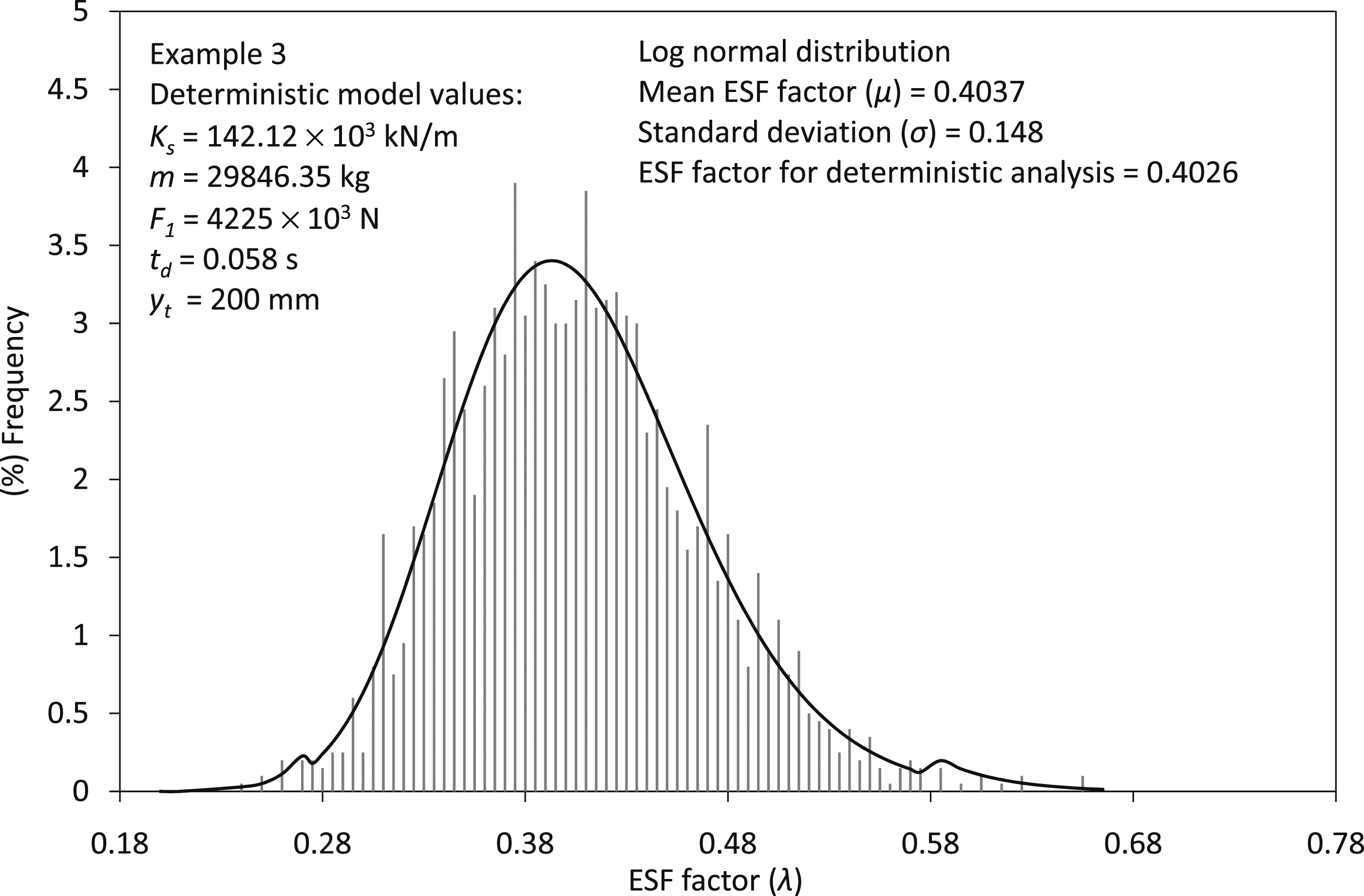
Factor of safety (FOS)
Figure 30 presents the generated discrete FOS with respect to the resistance of the SDOF system corresponding to the associated probability of failure or risk of failure ( Factor of safety (FOS) versus probability of failure or risk of failure (ε %).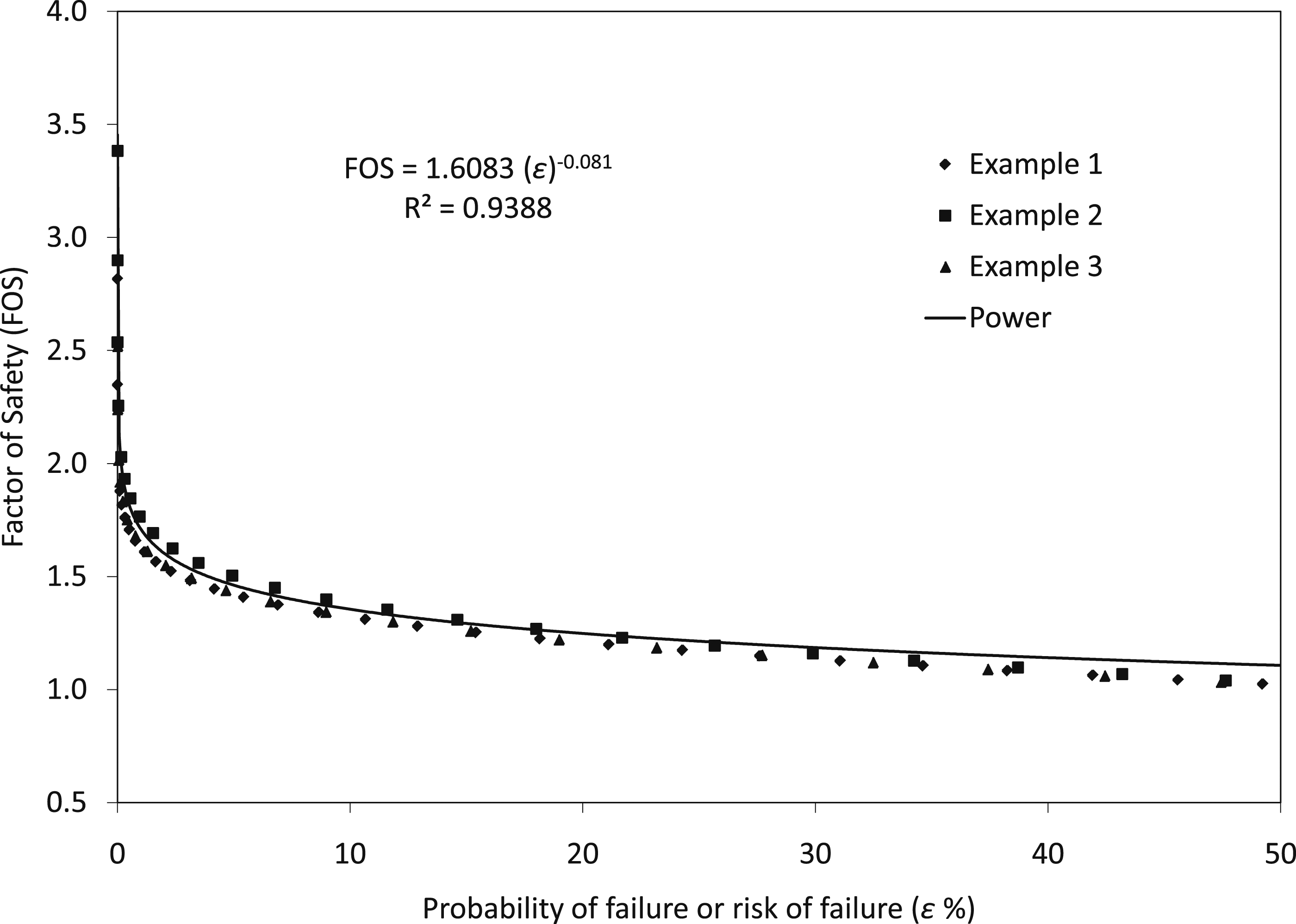
The closed-form expression for the factor of safety (FOS) in terms of the probability of failure or risk of failure (
Factor of safety (FOS) corresponding to the associated probability of failure or risk of failure (

Conclusion
An equivalent static force (ESF) model for the preliminary design of the SDOF system subjected to triangular pulse shaped load was considered for the probabilistic analysis. The loading parameters such as peak force (
Parametric sensitivity analysis was performed by varying input parameters (
Probabilistic analysis was performed using Monte-Carlo simulation after selecting an optimal number of iterations. Assuming a log-normal distribution of input parameters, the derived ESF factor and the resistance distributions also follow log-normal distribution which is validated using the Chi-square test. The present study proposes that the structural elements exposed to blast loading should be designed in a probabilistic mode because of the inherent uncertainty associated with the loading as well as structural parameters. However, deterministic analysis is the most often utilized approach for designing SDOF systems exposed to blast load because of its simplicity. The present work amalgamates the two approaches by associating the appropriate factor of safety (FOS) (in terms of minimum resistance) to the permitted risk of failure, which is in essence a characteristic of the probabilistic design. A closed-form equation for the factor of safety (FOS) in terms of risk of failure was proposed, which may be used to calculate the requisite factor of safety for limiting the risk of failure to any specified level.
Footnotes
Declaration of conflicting interests
The author(s) declared no potential conflicts of interest with respect to the research, authorship, and/or publication of this article.
Funding
The author(s) received no financial support for the research, authorship, and/or publication of this article.
