




Abstract
Service sector employees often deal with mistreatment in their interactions with the customers. Mistreatment during the service interaction varies in severity and intensity ranging from incivility to bullying. However, the current reviews in this domain focus only on certain aspects of mistreatment, rather than looking at customer mistreatment as a holistic phenomenon encompassing a wide range of behaviors. This review provides a thematic synthesis of the literature on customer mistreatment outcomes on employees, identifies boundary conditions of these relationships as well as explains the underlying mechanisms. The review advances the customer mistreatment literature by providing a conceptual framework to explain how reactions towards mistreatment lead to various employee outcomes. Further, the review highlights significant methodological issues and gaps in the existing literature by organizing the customer mistreatment literature and providing agendas for future research.
Keywords
“Angry customer throws hot soup in restaurant worker's face” (Beresford, 2021), “Man attempts to storm the cockpit, strangles and kicks flight attendant on JetBlue flight (Kaji & Sweeney, 2021), and “Angry customer slammed over bizarre note left at café as the owner went for flu jab” (Topping, 2021). These are the excerpts from news reports, that exemplify mistreatment faced by the employees in the service sector.
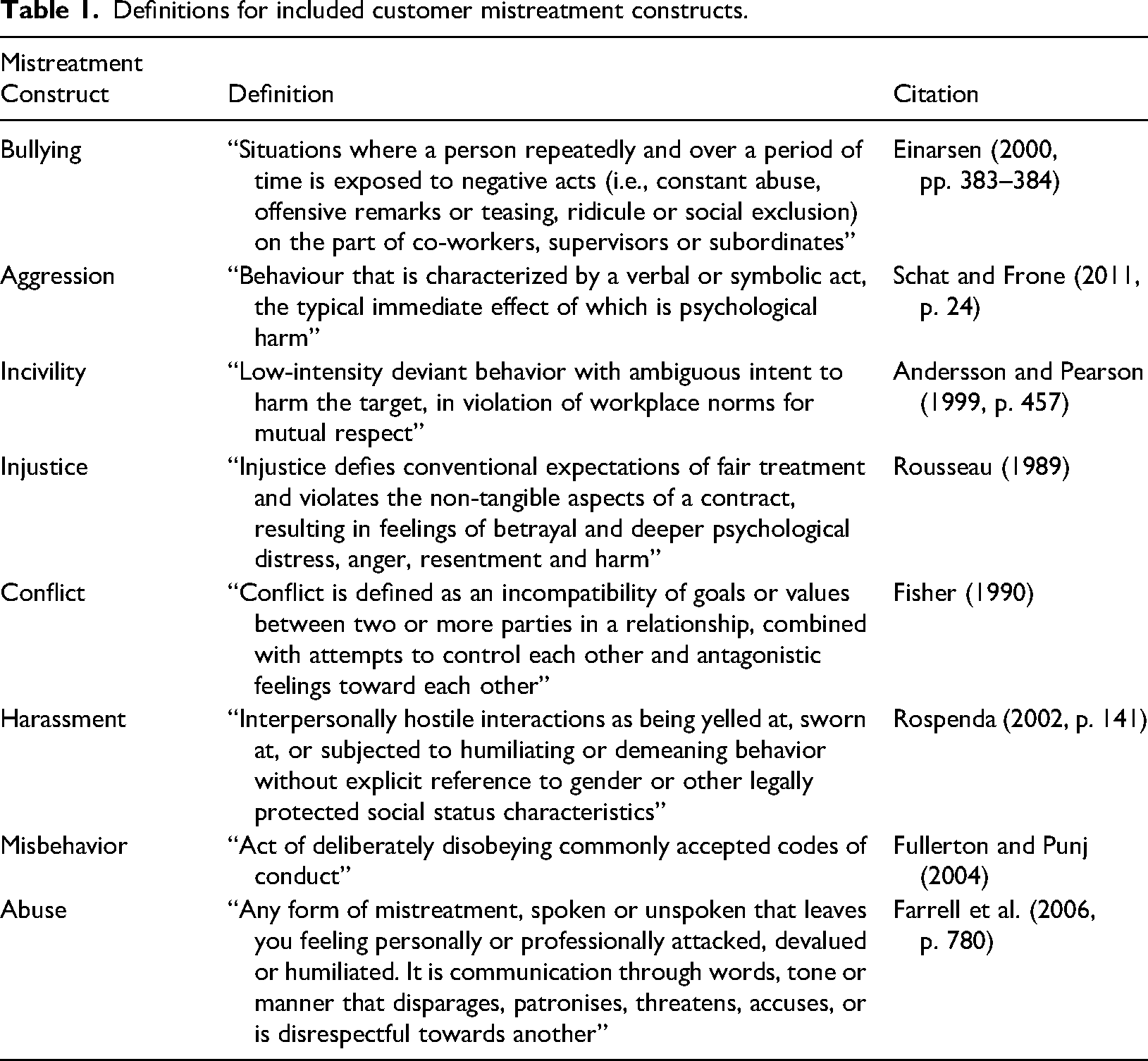
Customer service workplaces are often associated with the low-quality treatment of employees who face “rude, uncivil behavior” by customers, understood as customer mistreatment (Wang et al., 2011). It includes demeaning, unreasonable, disrespectful, and demanding behavior (Skarlicki et al., 2008) against the service employees. These behaviors are often associated with verbal aggression (Sommovigo et al., 2020) or making unreasonable demands (Chi et al., 2018) in a service environment. Customer mistreatment is also depicted in a number of similar constructs such as customer injustice (Skarlicki et al., 2008), customer aggression (Grandey et al., 2004), customer bullying (Bishop & Hoel, 2008), customer incivility (Cheng et al., 2020), and customer harassment (Liu et al., 2014) as defined in Table 1.
Call center employees may encounter as many as ten instances of customer mistreatment daily (Grandey et al., 2004). Other researchers have similarly noted that employees in various industries, including nurses (Layne et al., 2019), flight attendants (Williams, 2003), and those in the hospitality and tourism sector (Garcia et al., 2019), frequently interact with customers or patients who exhibit inappropriate behavior. These findings highlight the criticality of customer mistreatment in various industries where employees have regular interpersonal interactions with customers. The mistreatment in the service sectors is further intensified by the deep-rooted mantra - “customer is always right”, creating an imbalance of power between employees and customers (Kim & Aggarwal, 2016). Therefore, the majority of the employees in the service sector experience verbal aggression, harassment, incivility, conflict, abuse, and bullying, resulting in various negative outcomes. Research in this domain consistently shows a positive association between employees’ experience of customer mistreatment with emotional dissonance (Yeh, 2015), emotional distress (Baranik et al., 2017), and psychological resource drain (Sommovigo et al., 2019) and a number of detrimental outcomes, such as an increase in staff turnover, behavioral disengagement, exhaustion, sabotage, negative mood, and decline in performance (Baranik et al., 2017; Diefendorff et al., 2019; Dormann & Zapf, 2004; van Jaarsveld et al., 2010)
For the past decade, workplace mistreatment during service encounters has attracted significant attention in research, substantiated by the increasing number of works done in this domain. Although there are a number of reviews done on customer mistreatment (Groth et al., 2019; Yao et al., 2022; Zhou et al., 2021), they are limited by many aspects. We identify key concerns with the extant literature that give rise to the need for a comprehensive and integrated review of research on customer mistreatment. First, none of the reviews take a holistic approach to presenting the literature on customer mistreatment, for instance, the literature on customer mistreatment is fragmented as it is present in the form of customer injustice (Skarlicki et al., 2008), customer aggression (Grandey et al., 2004), customer bullying (Bishop & Hoel, 2008), customer incivility (Cheng et al., 2020), and customer harassment (Liu et al., 2014). As the literature considers mistreatment as a broad term, encompassing a wide range of unpleasant encounters during a service interaction, we expect reviews to be more broader in their scope, which is not the case. The past reviews have focused on (a) one aspect of mistreatment e.g., incivility (Wang et al., 2022; Yao et al., 2022), (b) overall customer service behaviors of employees during service interaction with the customer such as customer orientation and service-oriented citizenship behaviors (Groth et al., 2019), or (c) general workplace mistreatment (Zhou et al., 2021). Second, current reviews have failed to capture the important underlying processes and boundary conditions of customer mistreatment in detail, therefore, we present a framework that summarizes the relationships between customer mistreatment and related variables and outlines the various theoretical perspectives and underlying mechanisms (i.e., mediators) used to understand the attitudinal and behavioral effects of customer mistreatment. It provides a comprehensive overview of the current state of research and lays the foundation for future research.
Drawing on our research objectives, the present review aims to conduct an integrative review, synthesizing a broader concept of customer mistreatment in the service sector. The review extends the research on customer mistreatment by consolidating the literature on the outcomes of customer mistreatment, provides detailed description of the underlying mechanisms found in the extant literature, offers a conceptual framework for customer mistreatment that integrates the latest research and the underlying mechanisms, theories and boundary conditions and provides directions for future research in this domain to foster methodological, empirical and theoretical advancement of the literature. In doing so, the current study aims to consolidate, map, and extend the current state of knowledge on customer mistreatment.
Review methodology and analysis
Review scope
For this review, we have considered service marketing and management, Human resources management, and Organizational behavior journals that have published relevant studies on this topic (e.g., Human Relations, Journal of Organizational Behavior, Journal of Organizational Behavior, Journal of Applied Psychology, and Personnel Review). We also include journals from other disciplines that have published reactions to customer mistreatment.
Method
A systematic review should be transparent and replicable and offer a clear structure for the review process (Tranfield et al., 2003). To retrieve the studies that met our objective, and ensure a transparent and replicable process, we conducted a thorough search of the literature by using several strategies. We searched for relevant articles on Web of Science, Scopus, and Google Scholar using structured keyword searches equivalent to the construct being reviewed (e.g., “customer mistreatment,” “customer bullying,” “customer aggression,” “customer incivility,” “customer injustice,” “customer conflict,” “customer harassment,” “customer misbehavior,” and “customer abuse”).
Next, we conducted backward, and forward searches of highly cited sources identified in our literature search. We then browsed the references of review papers on customer mistreatment and forward searched papers related to early theory development.
Conceptual boundaries
To establish the boundaries of the review of customer mistreatment, we included the following studies: (a) customer mistreatment in an organizational context, because the service sector employees receive comparatively more mistreatment from the organizational outsiders than the internal members (b) mistreatment in the customer–employee relationship, because the mistreatment received from the customers is different and unique due to the social positioning and nature of the interaction between the employee and the customer. The employees in the service sector interact with the customers more frequently than their managers or colleagues, and also are trained that the “customer is always right” (Grandey et al., 2004). Therefore, the interactions that the service employees have with customers are one-time interactions, thus it contributes to the likelihood of mistreatment occurring (Kern & Grandey, 2009) and (c) employee perceptions of mistreatment.
Search protocol
Formulation of the research question
Developing a clear research question at the start of the review process is the foundation for a high-level review (Short, 2009). Our review on customer mistreatment in service organizations has been developed around the research question: “What mechanisms and responses are used by employees when they are mistreated?”
Inclusion and exclusion criteria
To be included in the review, studies had to fit five inclusion criteria: (a) offer empirical research on customer mistreatment, (b) include an employee perspective on customer mistreatment, (c) be conducted within the organizational context, (d) be peer-reviewed, and (e) be available in English. We investigated research articles published till 2023. We excluded (a) papers that were non-empirical, (b) papers without employee perspectives, and (c) papers on mistreatment among employees and supervisors.
Search strategy, selection process and analysis
In line with the review process described by (Tranfield et al., 2003), we selected relevant articles based on the pre-defined criteria. First, we conducted a literature search using two central databases in social sciences, Scopus and Web of Science.
The search terms mistreatment*, aggression*, bullying*, incivility*, injustice*, harassment*, interpersonal*, conflict*, uncivil*, misbehave*, abuse* AND CUSTOMER was used. The search was restricted to keywords, abstracts, and article titles. The first search produced 1,310 articles on Scopus and Web of Science. After removing duplicates, 995 relevant articles were found. In the second stage, articles were filtered by keywords, abstracts, and titles. Subsequently, 877 articles were rejected for the following three reasons: (a) articles were non-empirical, (b) research articles did not consider the employee perspective, and (c) the articles included mistreatment by colleagues or supervisors. In the third stage, the 877 accepted research articles were scanned, and those that failed to satisfy the inclusion criteria were rejected. In the fourth stage, a full-text screening of each article reduced the number to 90. In the final stage of the process, the references of all the articles were scanned to identify suitable studies. Through the snowballing method, the number of relevant articles increased to a review sample of 103. Figure 1 shows the flow chart of the screening process.
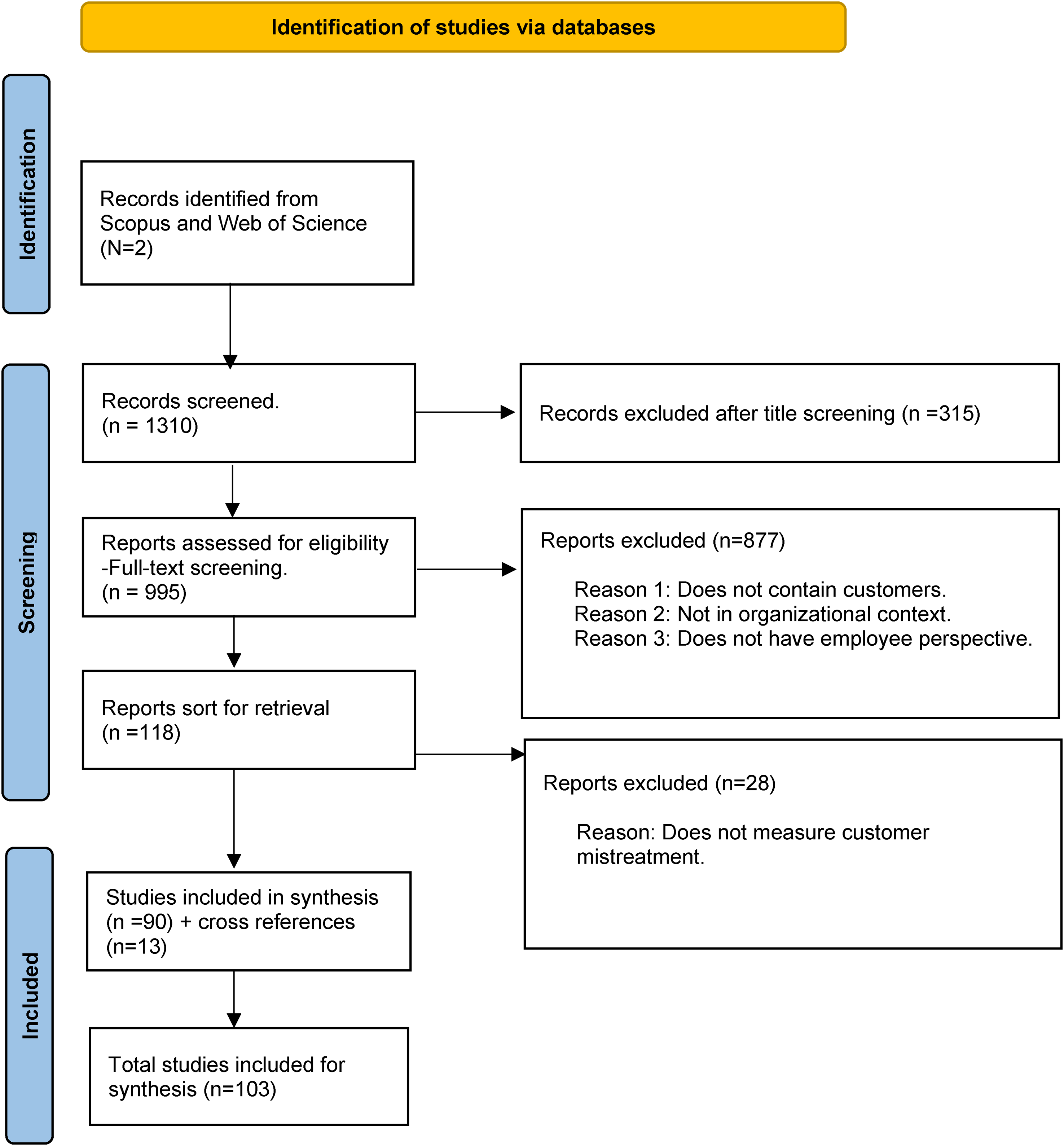
Flow chart of the screening process.
We made of list of outcomes faced by employees as a result of customer mistreatment as documented in these papers and grouped the outcomes into substantive themes that capture distinct consequences related to customer mistreatment (Figure 2), described them in the next section. We synthesize the underlying mechanisms reported in the above papers and explain the outcomes documented. Further, we documented the boundary conditions described in the studies and presented them in the review. We synthesized the outcomes and provided a detailed note that we connected to the future research areas.
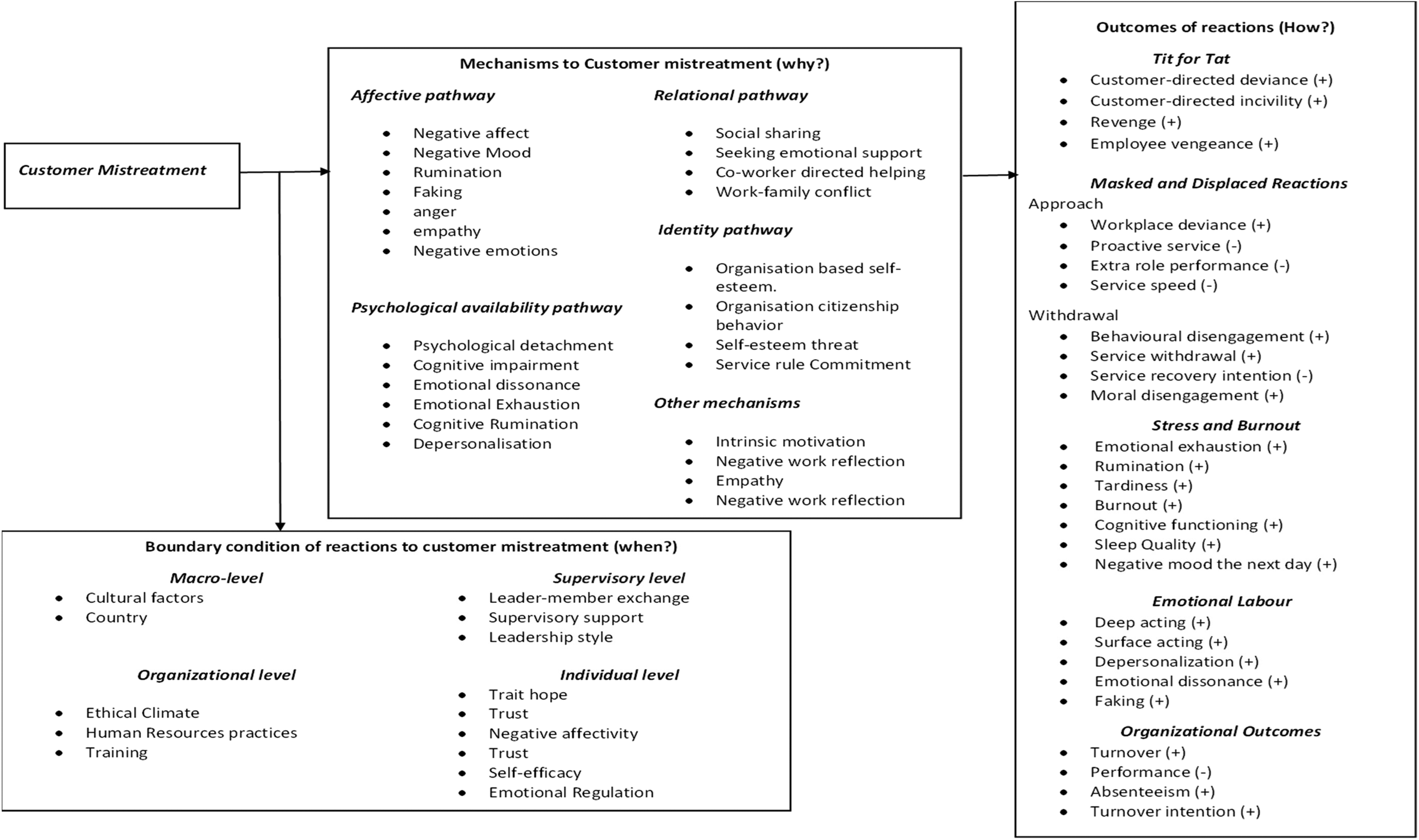
Mechanisms and reactions to customer mistreatment.
Findings and discussion
Employee reactions to customer mistreatment
Based on the review, we found several outcomes associated with service employees, which we have synthesized to generate six broad themes, presented below. Recent reviews also suggest that customer mistreatment triggers multiple behavioral and attitudinal outcomes in individuals (Koopmann et al., 2015). Our review consolidates and extends the knowledge by generating themes as an inductive process grounded in customer mistreatment literature.
Theme 1: Tit for tat
Many studies in the domain of customer treatment have captured the punitive retaliation of service employees (directed against the customer) as a response to the mistreatment received (Kumar Madupalli & Poddar, 2014; Mullen & Kevin Kelloway, 2013), we conceptualize these behaviors as tit-for-tat behaviors. Some studies argue that when the employees experience customer mistreatment, they attempt to get even through retaliatory responses (Arvan et al., 2019; Skarlicki et al., 2008; Spector & Fox, 2006). There is a growing body of research that emphasizes the customers as prime targets of employee vengeance (Mullen & Kevin Kelloway, 2013) leading to visible punitive actions. This vengeance, often attributed to a moral outrage, has been studied as customer-directed deviance (Browning, 2008), customer-directed incivility (Walker et al., 2014), revenge intention (Spector & Fox, 2006), retaliation (Kumar Madupalli & Poddar, 2014), hostility (Chi et al., 2013) and workplace deviance (Browning, 2008). These behaviors have been found to result in stress and burnout (Arvan et al., 2019) and provoke a negative response (Sliter et al., 2011) due to incivility spiral between two parties. These deviant behaviors are considered detrimental to customers, employees, and organizations (Browning, 2008).
Theme 2: Masked and displaced reactions
Another stream of literature emphasizes the reaction to customer mistreatment which is not directly retaliatory towards the customer but affects the service quality of the focal customer as well as organization performance negatively. Based on the outcomes studied in our integrative literature review, we grouped masked and displaced reactions into two categories: (a) approach and (b) withdrawal.
(a) Approach: Some behaviors may not be directly aimed at the customers at the moment like customer-directed deviance (Browning, 2008), customer-directed incivility (Walker et al., 2014), revenge intention (Spector & Fox, 2006), retaliation (Kumar Madupalli & Poddar, 2014), hostility (Chi et al., 2013) and workplace deviance (Browning, 2008) instead these masked behaviors are designed to retaliate in the form of diminished service quality and service delivery. We term this sub-theme as approach-oriented behaviors because the employees are not withdrawing the service but rather diminishing the quality of service delivered. Unlike Tit-for-tat behaviors, diminishing extra-role performance or reduced proactive service is not immediately detected by the management or customers because the employees still perform the necessary in-role functions, but they resist going the extra mile which can significantly wear down the customer service (Hu et al., 2017). Behaviors such as reduced proactive service (Jang et al., 2020) and diminishing extra-role behaviors (Cheng et al., 2020) have equally detrimental effects as tit-for-tat behaviors because they impact customers’ relationship with the organization. Employees indulging in these behaviors experience masking of their emotions unlike venting and direct reactions toward the customers (Yeh, 2015).
(b)Withdrawal: One way that employees cope with the emotional exhaustion caused by mistreatment is to withdraw from the threatening situation, through engaging in behaviors like putting less effort into work and taking longer breaks (Wang & Wang, 2017). Withdrawing from work is useful for employees facing mistreatment, because it helps in mitigating the negative emotions even at the cost of organizational outcomes (Scott & Barnes, 2011). It is argued that when employees experience customer mistreatment, they intuitively devalue the mistreating individual i.e., they believe that the customers are not worthy of a moral treatment (Yang et al., 2019). Devaluation leads to moral disengagement (Huang et al., 2019) and further withdrawal behaviors. Scholars have indicated that customer mistreatment leads to service sabotage (Chi et al., 2013; Hongbo et al., 2021; Huang et al., 2019; Skarlicki et al., 2008; Wang et al., 2011; Yeh, 2015) and reduced service recovery behaviors (Lee et al., 2020; Wang et al., 2023).
Theme 2: Emotional labor
A number of papers have evaluated customer mistreatment outcomes on various aspects of emotional labor. Emotional labor is a dynamic self-regulatory process that keeps expressed emotions in line with expected emotions regardless of internal feelings and situational factors (Diefendorff & Gosserand, 2003). This ability of the employees to exercise cognitive control over their internal emotions and feelings signals that the employees follow formal and informal expectations that display certain emotions even when in conflict with their true feelings (Brotheridge & Lee, 2003). When mistreatment is experienced, the emotional labor required to maintain a professional demeanor is challenging. Research discusses various aspects of emotional labor e.g., deep acting (Lee & Madera, 2021), surface acting (Baranik et al., 2017), and faking (Hu et al., 2017).
Deep acting is a form of emotional labor that alters an individual's thoughts through perspective-taking (i.e., looking at the situation from the abuser's point of view) or by rechanneling to regulate their feelings (Gross, 1998). Surface acting involves altering one's behavior by faking or suppressing one's facial expressions. When employees use a surface-acting strategy to adhere to organizational rules and norms, they are aware of the discrepancy between expressed and felt emotions. Consequently, they feel emotional dissonance which directs their focus to the unresolved emotions. When employees use deep acting strategies, they experience congruence between expressions and emotional experiences, owing to the modification of affective experiences that enable employees to understand the customer's actions (Grandey et al., 2004).
Theme 3: Stress and burnout
Customer mistreatment is a major cause of stress for frontline workers (Groth et al., 2019). For instance, a customer may behave aggressively, disrespectfully, or make unreasonable demands on the employee (Skarlicki et al., 2008), thus leading to a detrimental impact on employees’ psychological and physical states (Gong & Wang, 2019) or work stress (Grandey et al., 2004). In line with the stressor-emotion model (Spector & Fox, 2006), employees who consider customer mistreatment as a stressor that prevents them from accomplishing tasks and threatens their well-being, experience negative emotions that cause higher levels of behavioral, psychological, and physical strain (Zhang et al., 2019). Further, stress likely causes emotional exhaustion when employees perceive that, after investing a great deal of resources, they are no longer capable of meeting work demands (Halbesleben & Bowler, 2007). Further, the power imbalance as compared to the customers, their inability to choose the customers (Kern & Grandey, 2009), makes it difficult for employees to avoid the affective negative events. These events are known to elicit negative moods and emotions like sadness and anger (Sliter et al., 2011). When there is a constant flux of stressful and negative stimuli, the service employees may not be in a position to control their stress, which further leads to burnout (Chi et al., 2018).
Theme 4: Organizational outcomes
Research focusing on organizational rather than individual outcomes are discussed in this theme. Research has evaluated the relationship of mistreatment on employee turnover, job satisfaction, and service quality. Studies on customer verbal aggression (Rafaeli et al., 2012), incivility (Han et al., 2016), and interpersonal injustice (Holmvall & Sidhu, 2007), workplace violence (Laeeque et al., 2018) have shown that employees who are exposed to more customer mistreatment have higher turnover intentions. Customer mistreatment can lead to burnout, which in turn can results in absenteeism (Wang & Wang, 2017). A study on call center employees found a significant positive relationship between burnout and absenteeism (Yagil, 2021). Further, hostile behavior from customers creates an unpleasant work environment that employees may seek to avoid, which is a form of mood regulation through the avoidance of negative situations (Goldberg & Grandey, 2007). High employee turnover can negatively impact customer service in service organizations such as retail stores, restaurants, and contact centers. Increasing turnover rates in these service organizations can result in a decline in customer loyalty, brand image, and service experience (Subramony & Holtom, 2012; Yi & Gong, 2013).
Additionally, customer mistreatment can lead to negative job attitudes among employees such as reduced job satisfaction (Chen et al., 2021). Studies have shown a significant correlation between patients’ mistreatment and job satisfaction among nurses, and more than 46% of employees have reported not having long-term career plans due to frequent exposure to customer mistreatment (Reynolds & Harris, 2006).
Customer mistreatment can also influence the speed of service, as employees may engage in sabotage such as providing low-quality service or engaging in actions that make their work easier but harm the customer experience (Ambrose et al., 2002). Customer-directed sabotage in the form of slowing down or speeding up service can impact organizational performance, for instance, hourly workers may slow down while salaried workers may speed up their services during service interactions (Harris & Ogbonna, 2002).
Boundary conditions of individual reactions to customer mistreatment
Researchers have examined several moderators in the relationship between customer mistreatment and reactions toward mistreatment. Based on our review, we classify the moderators into the following categories– Macro level, organizational level, supervisory level, and individual-level factors.
Macro-level factors
Macro-level factors such as culture (individualistic and collectivistic) seemed to significantly affect the way the service sector employees react to customer mistreatment. Service employees from East Asian cultures were shown to respond passively to customer mistreatment (e.g., decrease in the organizational citizenship behavior) while employees of North American descent respond through more active reactions (Shao & Skarlicki, 2014). In the same vein, employees from cultures with high-power distance had a stronger negative reaction to mistreatment than employees from cultures with low power distance (Okan et al., 2021).
Organizational level factors
Various organizational-level factors such as human resource management practices, service training, and job autonomy were found to have a significant effect on the relationship between customer mistreatment and employee reactions (Hu et al., 2017). Employees who receive customer service training gain a tacit understanding of the reasons for customer mistreatment, such as verbal attacks, and are less likely to engage in negative emotions (Baranik et al., 2017; Chi et al., 2018). Human resource management practices have been shown to buffer the detrimental impact of mistreatment on various work outcomes for service sector employees (van Jaarsveld et al., 2010) and protect the service sector employees who are prone to frequent poor encounters with customers (Chen et al., 2021; Park & Kim, 2019). Work-related autonomy during service encounters are known to reduce the outcome of emotional deviance among employees (Goussinsky, 2012).
Supervisory related factors
Supervisors are the most proximal representatives of the organizations, and when the service sector employees feel that they are trusted by their supervisors, they engage in citizenship behaviors (Lau et al., 2014). When the employee experiences customer mistreatment, individuals with a high leader-member exchange may have strong backing or support from the supervisors for the service behaviors (Yao et al., 2022; Yeh, 2015) reducing the negative outcomes (Skarlicki et al., 2008).
Individual-level factors
Most of the research in the customer mistreatment literature emphasizes the role of individual-level factors in the association between customer mistreatment and employee's reaction. Past research suggests that individual negative affectivity moderates the relationship between customer mistreatment and employee's reactions (Gong & Wang, 2019; Walker et al., 2014). Researchers have demonstrated that self-efficacy moderates the relationship between daily customer and employee sabotage (Baranik et al., 2017; Chi et al., 2013). The authors, Watson and Clark (1984) suggest that neuroticism strengthens/ weakens the positive relationship between customer negative events and hostility. Song et al. (2018) studied that when an employee experiences customer mistreatment, individuals with lower (vs higher) psychological detachment were to engage in deviant behavior and experience emotional exhaustion. Szczygieł et al. (2012) suggest that employees’ trait emotional intelligence (EI) mitigates the effects of customer incivility on emotional exhaustion.
Underlying mechanisms in the relationship between customer mistreatment and outcomes
Customer mistreatment research has studied numerous psychological pathways explaining why and how customer mistreatment may result in the various negative outcomes (as outlined in the four themes above). We present these pathways in the following categories: (a) affective pathway, (b) psychological availability pathway (c) identity pathway (d) relational pathway, and (e) other pathways. Although a variety of individual pathways have been proposed by many studies, most of them have used only one mechanism through which customer mistreatment may result into negative outcomes. We present multiple mechanisms to help us understand the nature of relationships and theoretical approaches better.
Affective pathway
Mistreatment episodes can take the form of verbal abuse, unreasonable demands, and disrespectful behavior from customers and such incidents can include being shouted at, being asked to do the impossible during busy times, and customers interrupting an employee's phone call (Skarlicki et al., 2008). These behaviors are known to elicit a lot of affect-based responses. Research shows that when employees feel their work environment is unjust, it can lead to negative attitudes and emotions, including frustration resulting in deviant behavior towards the organization and co-workers (Chen & Wu, 2022). Additionally, customer mistreatment has been shown to provoke negative emotions such as anger, stress, contempt, or fear within employees leading them to sabotage the customers (Wang et al., 2011), highlighting that the immediate effect of such mistreatment is a negative emotional response leading to detrimental outcomes (Lee & Madera, 2021). Similarly, Rupp and Spencer (2006) showed that experiencing customers’ unfair encounters lead to employees’ discrete emotions resulting in emotional labor. Further, Wang et al. (2013) proved a within-person relationship between daily customer mistreatment and employees’ negative mood (e.g., sadness or nervousness) the following day which negatively impacts their well-being. Therefore, affective reactions elicited by work events have downstream influences on cognition and behavior (Cropanzano et al., 2017). For instance, service employees who experience negative moods due to mistreatment episodes may engage in emotion-based maladaptive coping (Spector & Fox, 2002), which refers to reactions to negative emotions that produce long-term dysfunctional outcomes (Brown et al., 2005). We group these variables into the first category – affective pathways (Figures 1 and 2).
Psychological availability pathway
Psychological availability is understood as an “individual's belief that s/he has the physical, emotional or cognitive resources to engage the self at work” (Kahn, 1990). Mistreatment episodes may result in negative outcomes based on the extent of psychological availability. For instance, (Yang et al., 2019) found that when employees experienced customer mistreatment, they had a harder time psychologically detaching from work, which resulted in higher levels of exhaustion. In an experimental study, Miron-Spektor et al. (2011) found that participants who were subjected to mistreatment had decreased abilities to engage in complex thinking and creative tasks leading to lower performance. Similarly, Goldberg and Grandey (2007) found that participants who were in a customer hostility condition made more errors in processing customer requests, due to the hostile behavior taking away attention from task performance. Further, drawing on the injustice literature, Sommovigo et al. (2020) have studied that Customer mistreatment can affect employees’ cognitive performance, causing them to have negative thoughts and behaviors towards customers. Overall, even a single instance of customer mistreatment can affect employees’ ability to remember customer requests and perform routine and creative tasks accurately (Rafaeli et al., 2012). Similarly, Baranik et al. (2017) found that cognitive rumination mediates the relationship between customer mistreatment and emotional exhaustion. We list these mediating pathways that highlight the emotional and psychological availableness of the employee as psychological availability pathways.
Relational pathway
Third, we view employees’ relational pathway with co-workers and family as a consequence of the mistreatment episode, which is referred to as the assistance received or the feeling of attachment from an interpersonal relationship that is perceived as supportive, loving, or caring (Hobfoll, 2011). Service employees attempt to deal with the difference between their current situation and their desired situation by sharing their experiences with their social network, such as significant others, family members, coworkers, and friends (Diefendorff et al., 2008). For instance, Baranik et al. (2017) study social sharing of negative work events as a mediating mechanism between customer mistreatment episodes and emotional exhaustion. Similarly, Goussinsky and Livne (2016) also found that seeking emotional support like talking about a difficult customer, sharing experiences, and venting emotions with coworkers is a coping mechanism against customer mistreatment leading to employee-wellbeing. Drawing on negative state relief theory, Yue et al. (2017) found that because service employees are largely prevented from engaging in negative displays and behaviors when interacting with customers, helping co-workers may be one of the few avenues whereby employees can elevate positive moods and receive positive feedback from a recipient. In the same vein, when there is a workplace stressor like customer mistreatment it interferes with the family domain. Therefore, Zhang et al. (2019) have studied how work-family conflict mediates the relationship between customer mistreatment and family satisfaction.
Identity pathway
Fourth, we highlight the employee's organization and individual identification as the identity-based mechanism that explains the impact of customer mistreatment on outcomes (Park & Kim, 2020; Walker, 2009). Individuals are motivated to behave in ways that are congruent with their self-view (Miron-Spektor et al., 2011). In line with this Park and Kim (2020) study that employees who experience customer mistreatment come to believe that they are incompetent and ineffective, which in turn results in decreased Organisation based self-esteem leading to reduced employees service performance. Further, Amarnani et al. (2019) posit that The negative impact of customer mistreatment on service performance may be explained by self-esteem threat, which refers to experiences in which “favorable views about oneself are questioned, contradicted, impugned, mocked, challenged, or otherwise put in jeopardy” therefore, Customer mistreatment threatens self-esteem by sending negative signals about the victim's competence, likeability, and status leading to reduced service quality. Further, organizational identification is one type of identity from which individuals derive meaning. Walker (2009) presents that service employees can consider their interactions with customers as a component of the work environment when assessing the attractiveness of their membership in an organization. This implies that employee exposure to customer mistreatment is related to employee identification leading to detrimental service performance. Finally, Skarlicki et al. (2008) found a three-way interaction between customer mistreatment and moral identity dimensions of customer sabotage.
Other mechanisms
Apart from the above mechanisms, there are some important mediators that explain the relationship between customer mistreatment and detrimental outcomes. For instance, when an employee feels emotionally exhausted and burn out they exhibit a callous attitude that undermines their performance at work (Maslach & Jackson, 1981). Therefore, apart from exploring burnout as an outcome of customer mistreatment, studies have widely explored the mediating role of burnout. For instance, burnout has been studied as an underlying mechanism in the relationship between customer mistreatment and employee work-to-family conflict (Greenbaum et al., 2014). In the same vein, Raja et al. (2018) studied the mediating role of burnout in the relationship between bullying and work-to-family conflict. Further, employee burnout mediates the relationship between customer mistreatment and customer-oriented problem-solving behavior (Bani-Melhem et al., 2022). Another significant mediator is intrinsic motivation, customer mistreatment leads to the loss of motivational resources resulting in poor performance (Grandey et al., 2013). Hur et al. (2016) posit that motivation is a critical pathway between customer mistreatment and employees’ creativity. Similarly, Yoon (2022) studied that the individual's intrinsic motivation mediates the relationship between customer mistreatment and service performance.
Recently, Lu et al. (2023) in their multi-time-lagged diary study, examine the mediating role of employees’ negative work reflection between customer mistreatment and customer-directed counterproductive work behaviors. Negative work reflection is the individual's unintentional thoughts about the negative facets of work such as negative work events (Fritz & Sonnentag, 2006). Furthermore, Empathy has been widely studied to be an essential underlying mechanism between customer mistreatment and its outcomes. While negative affect is more predictable (e.g., feeling frustrated, angry, and sad), employees can also feel empathy, as a discrete emotional response (Ashkanasy & Dorris, 2017). Similarly, empathy mediates the relationship between witnessed mistreatment and target-directed support (Hershcovis & Bhatnagar, 2017). In the same vein, empathy mediates the positive relationship between customer mistreatment observation and bystander intervention (Liang & Park, 2022).
An overview of theories used in customer mistreatment research
Research in the customer mistreatment domain has been explained through a number of theories to understand various nuances of the phenomenon. Four theories have been used most frequently – the conservation of resources theory, affective events theory, social exchange theory and the control theory. Thus, we review these four major mechanisms before proceeding to others theories, such as job demands-resources, cognitive rumination, and stressor-stress-strain framework.
Conservation of resources (COR) theory
COR is extensively used to explain employees’ reactions to customer mistreatment. The COR model (Hobfoll, 1989) offers an exceptional theoretical explanation regarding how mistreatment may affect outcomes in the workplace, interpersonally and intra-personally. According to COR theory, employees bring a number of resources to their workplace, defined as “objects, personal characteristics, conditions, or energies that are valued by the individual or that serve as a means for the attainment of these objects, personal characteristics, conditions, and energies”(Hobfoll, 1989, p. 516). Stressors in the workplace contribute to resource depletion or the complete loss of resources (Hobfoll, 1989). Feelings of customer mistreatment also threaten employees’ personal resources, such as conscientiousness and self-efficacy (Gong & Wang, 2019; Goussinsky, 2012). Several outcomes have been explained using COR theory; however, when the customer acknowledges or expresses gratitude for an employee's good service, it enhances their self-worth and self-esteem. In contrast, mistreatments, such as unreasonable criticism, yelling, inappropriate comments, and unreasonable demands, can significantly diminish the employees’ feelings of self-worth and self-esteem. Individuals inherently have limited resources, and the environment wherein they operate can affect the strength and volume of these resources (Hobfoll, 1989). Stressors such as mistreatment sap resources and employees seek to evade these stressors to conserve them.
Affective events theory (AET)
As customer mistreatment has affective consequences, several studies have used AET (Weiss & Cropanzano, 1996) to understand how individuals react to mistreatment. AET highlights how affective states vary at the within-person level to affect performance and workplace behaviors, described as episodic performance (Beal et al., 2005). Episodic performance was coined to recognize how changes in affective states, and events at the workplace, such as customer mistreatment, influence performance (Cropanzano et al., 2017). Therefore, affective events offer insights into the emotional and psychological mechanisms that influence performance and other outcomes through service employees’ emotional states. Employees in the workplace can experience a variety of emotions such as anger, frustration, pride, and job satisfaction, and these reactions can have different behavioral implications (Weiss & Cropanzano, 1996). In customer mistreatment domain, scholars argue that mistreatment evokes negative emotions in employees, including feelings of retaliation, sabotage, and aggression, and these have negative work outcomes, which has been explained using AET. Walker et al. (2014) argue that customer mistreatment could lead to a violation of employees’ dignity and respect and trigger negative emotions, thereby motivating employees to engage in an uncivil customer service interaction, as witnessed in the service industry (Mullen & Kevin Kelloway, 2013; Yao et al., 2022; Zhang et al., 2019). Studies conducted on retail employees confirmed that mistreatment was associated with stress (Kern & Grandey, 2009) and emotional exhaustion (Hur et al., 2015; Sliter et al., 2010).
Social exchange theory (SET)
The social exchange mechanism is another widely used theory to understand how individuals react to mistreatment. It states that employees’ reactions are ruled by reciprocity (Blau, 1964). SET is an influential conceptual paradigm used in understanding workplace behaviors that are manifested in many forms and comprises many key concepts, such as exchange norms, rules, and reciprocity (Cropanzano et al., 2017). The norm of reciprocity is the foundation of SET and explains the quality of relationships (Gouldner, 1960). Employees in the workspace can vary the intensity of their behaviors and attitudes on the basis of the treatment they receive (Parzefall & Salin, 2010).
Andersson and Pearson (1999) explored escalation patterns spiraling incivility between individuals who are being mistreated and those who are mistreating them—the tit-for-tat pattern between the two parties—which is in line with the social exchange mechanism. Research on customer-instigated incivility has focused on understanding the reactions of the mistreated individuals and their negative responses to such behaviors (Mullen & Kevin Kelloway, 2013; van Jaarsveld et al., 2010). The underlying assumption in the spiral game is that individuals are unable or unwilling to comprehend the consequences of behaviors or are not able to change their hostile or aggressive reactions (Masuch, 1985).
Control theory
The control theory perspective of emotional labor (Diefendorff & Gosserand, 2003) suggests that employees working in customer service use customer reactions to gauge the alignment of their present performance with their performance goals, and they depend on emotional labor to reduce inconsistencies between them to accomplish their goals.
Diefendorff and Gosserand (2003) used control theory to understand emotional labor processes which suggest that employees tend to engage in a negative feedback loop that contains the perception of their emotions displayed during a service interaction. Specifically, employees constantly compare their displayed emotions to the company's rules and regulations (e.g., smiling and being polite). If the employee finds an incongruity, they tailor their subsequent behaviors and cognitions to minimize the discrepancy and engage in emotional regulation strategies. The oscillation of individuals’ goals from distal self-goals like self-esteem, to proximal goals like action plan goals, is integral to the control theory (Diefendorff et al., 2019; Martin & Tesser, 2012).
Other theories
Three other mechanisms include job demands–resources (JD-R) theory, cognitive rumination theory, and stressor-stress-strain framework. In particular, JD-R (Bakker et al., 2014) holds that demands in the workplace cause burnout and diminish performance by draining energy over a period. Customer mistreatment is a social inconvenience at the workplace (Sliter et al., 2010), as unpleasant interactions with customers evoke feelings such as frustration, anger, and anxiety (Porath & Pearson, 2013). A number of reactions have been explained using JD-R theory, where customer mistreatment as a demand, has detrimental effects on the performance and well-being of service sector employees (Groth et al., 2019).
A second stream of research builds on cognitive rumination theory (Nolen-Hoeksema et al., 2008), which refers to conscious thinking directed towards a failure to accomplish a goal for extended period of hours (Martin & Tesser, 2012). According to this theory, the immediate underlying cause of rumination is the increased accessibility of the experience in an individual's memory (Rothermund, 2003). Customer mistreatment in this context is positively related to the number of negative outcomes, including employee rumination at night, employee well-being, customer-directed sabotage, and emotional exhaustion (Baranik et al., 2017; Kern & Grandey, 2009).
A third stream of research theorizes how customer mistreatment evokes cognitive appraisals about the situation and coping responses, that is, the stressor-stress-strain framework (Kahn & Byosiere, 1992). In a highly stressful situation, there is a tendency for an individual to feel high levels of discomfort with is the target of agitation and anger (Averill, 1983). As the event occurs often, it is likely to cause stress due to a heightened state of apprehension and arousal. For instance, research suggests that the targets of frequent aggression (a form of mistreatment) are likely to experience fear in their workplace (LeBlanc & Kelloway, 2002).
Future research directions
In our integrative review, we identified various limitations in literature in our understanding of customer mistreatment and its outcomes. First, studies have focused solely on negative attitudinal and behavioral outcomes resulting from mistreatment episodes, it may also lead to different outcomes such as customer-directed helping or coworker-directed helping through different underlying processes (Yue et al., 2017). Second, the mechanisms that explain the reactions toward customer mistreatment remain fragmented. Some of the few central underlying mechanisms—identity pathway, relational pathway, psychological availability pathway—have not been sufficiently integrated. In particular, surprisingly little research has been conducted to understand the event-level characteristics of the mechanisms through which mistreatment impacts individual reactions. Third, scholars studying reactions to mistreatment have focused solely on employees, and little is known about how managers respond to customer mistreatment.
This review clarifies the recent and growing surge of interest in customer mistreatment studies by organizing the reactions to customer mistreatment literature along with the underlying mechanisms. However, several issues limit our understanding of customer mistreatment. This section elaborates on the key issues and suggestions for future research and organizes the four avenues to address customer mistreatment literature.
Avenue 1: Operationalization of customer mistreatment
Past studies have operationalized customer mistreatment as a one-dimensional construct (Skarlicki et al., 2008; Wang et al., 2022). The phenomenon of customer mistreatment ranges from intention to mistreat to the severity of mistreatment; therefore, it is likely that mistreatment can be captured by various behaviors (Zhan et al., 2013). For instance, (Sommovigo et al., 2019) conceptualized customer mistreatment in terms of injustice, wherein employees consume their control resources to defend their right to be treated with respect. Diefendorff et al. (2019) conceptualized customer mistreatment as an affective event at work that triggers an emotional reaction, which in turn signals that- employees are failing to attain their goals, and that there is a disparity between their desired, and felt emotions. Zhan et al. (2013) defined customer mistreatment in terms of demand (i.e., unreasonable requests) or aggression (i.e., verbal attacks). Since customer mistreatment is an umbrella concept for various behaviors that customers use against employees, it has also been operationalized in many ways: (a) through aggression measures (Grandey et al., 2004) (b) interactional injustice and workplace incivility measures (Kern & Grandey, 2009), and (c) interpersonal conflict measures (Sliter et al., 2011). Some studies have adapted and improvised other scales, such as an interactional injustice scale (Colquitt, 2001), while other studies have constructed their own scales (Skarlicki et al., 2008).
We find that none of the instruments considered the multi-dimensional nature of customer mistreatment. Furthermore, the scales also have the issue of recall bias. Therefore, further research on customer mistreatment domain can be strengthened by the development of a more robust scale and measurement practices that consider the intensity and frequency of mistreatment.
Avenue 2: Intensity versus frequency
The way customer mistreatment is studied plays a critical role in understanding the domain in depth. Customer mistreatment can be studied according to its frequency (how often the mistreatment has occurred) and intensity (to what extent employees have been mistreated by customers). It is difficult to explore whether it is the negativity or the intensity of the mistreatment that affects employees’ emotional and cognitive reactions. Such exploration requires data that measures the interactions between employees and customers at the event level. Previous research on customer mistreatment has focused on the experiences of service individuals in the workplace at an individual level, this describes the frequency of low-quality treatment experienced by employees (Goussinsky, 2012; Wang et al., 2011). More recently, extant research has shifted focus to studying specific events of customer mistreatment and employees’ daily exposure to it which emphasizes the intensity of mistreatment (Nguyen & Besson, 2021; Park & Kim, 2019; Yang et al., 2019). At an event level, customer mistreatment refers to the low-quality treatment received by an employee during a particular service encounter with a customer. This is difficult to capture because the same customer mistreatment behavior may be perceived with varied intensity by different individuals based on the context (Rafaeli et al., 2012). It is also plausible that a single major event in an interaction with a customer might take a toll on an employee that is similar in magnitude to multiple minor incidents. However, it is likely that the outcome of few highly negative encounters is not equal to multiple mid-negative customer encounters at the aggregate inter-person level.
Given that multiple types of mistreatments would have similar negative effects on employees’ emotional and cognitive reactions, future research should examine the relationship between frequency and intensity of customer mistreatment and its impact on employee outcomes.
Avenue 3: Explore situational factors
Situational factors might also moderate the effect of mistreatment on emotional deviance (Nguyen & Besson, 2021). Goussinsky (2015) explored the moderating role of job autonomy in the relationship between customer mistreatment and emotional deviance and found that the effect was stronger for employees with higher levels of job autonomy. Previous research has shown that external factors or situational factors can trigger feelings of empathy among individuals (Cuff et al., 2016). Work events and situational factors may trigger emotional behaviors and experiences that influence emotional labor among employees. Interactions between a customer and service employee may be considered to be a “work event” (Weiss & Cropanzano, 1996). Gabriel et al. (2015) included behaviors such as mistreatment as an event characteristic. Among salespersons in the retail industry, work overload, a situational factor, has a negative effect on employee emotions (Kim et al., 2012). Wang et al. (2011) suggested extending the resource perspective to evaluate if supplementary resources allowing employees to handle mistreatment is provided by unit- and organizational-level factors. Other situational factors suggested to be studied are - personal factors, such as psychological and situational factors (Chi et al., 2018) employees’ coping skills on their reactions to customer mistreatment (Yue et al., 2017) and training and participation (Hu et al., 2017). Crowded and busy environments are stressful for service employees. These negative internal feelings are likely to be communicated to customers through nonverbal or verbal channels (DeCelles et al., 2019). Although, there have been several studies that explore the relationship between customer mistreatment and employee reactions, surprisingly very little is known about the situational antecedents of this detrimental phenomenon. Majority of work investigates the consequences of customer mistreatment than when and why it takes place.
Avenue 4: Multilevel design
It is suggested that literature on customer mistreatment research should move beyond correlational studies and draw definite causal inferences through multi-level, experience sampling and longitudinal data (Garcia et al., 2019; Grandey et al., 2004; Walker et al., 2014). Unfortunately, most studies citied in our review had either asked the employees or customers to recount their service interaction experience in hindsight. Therefore, longitudinal, multi-level and dairy studies can disentangle unique mechanisms, antecedents, and consequences of customer mistreatment, as well as understand the higher-level boundary conditions that increase or decrease the effects of reactions towards customer mistreatment (Hu et al., 2017; Wang & Wang, 2017). Longitudinal studies like experience sampling and dairy studies can provide unique insights into how the after-effects of customer mistreatment persist beyond the service encounter (e.g., Chi et al., 2018; Song et al., 2018).
We believe that there is a great need for future work to investigate customer mistreatment through behavioral simulation with organizational participants which may help in unpacking the mechanisms and detrimental outcomes of customer mistreatment in a real-time service context. In addition, customer mistreatment at the event level can be studied using the experience sampling methodology (e.g., Chi et al., 2018).
Conclusion
In this review, we have identified and consolidated several reactions toward customer mistreatment. We have synthesized the outcomes of customer mistreatment into four broad themes, which exhaustively represent the consequences of customer mistreatment; these are (a) tit-for-tat outcomes, (b) masked and displaced reactions (c) emotional labor (d) stress and burnout, and (e) organizational outcomes. We have identified the boundary conditions and clustered them into various levels such as macro-level, organizational level, supervisory level, and individual level which lead to different outcomes when they interact. Further, the underlying mechanisms that explain the customer mistreatment and outcomes have been analyzed, and mechanisms such as (a) affective pathway (b) relational pathway (c) identity pathway (d) psychological availability pathway (e) other mechanisms offer a robust explanation of the phenomenon. The review offers a framework that can be understood through the inter-relationship between the tit-for-tat outcomes, masked and displaced reactions, emotional labor and stress and burnout, leading to organizational outcomes such as absenteeism, turnover, and other detrimental consequences. Finally, we suggest directions for future research. We contribute to the customer mistreatment literature and trust that the synthesized review provided along with the framework presented in Figures 2 and 3, will be useful for future researchers.
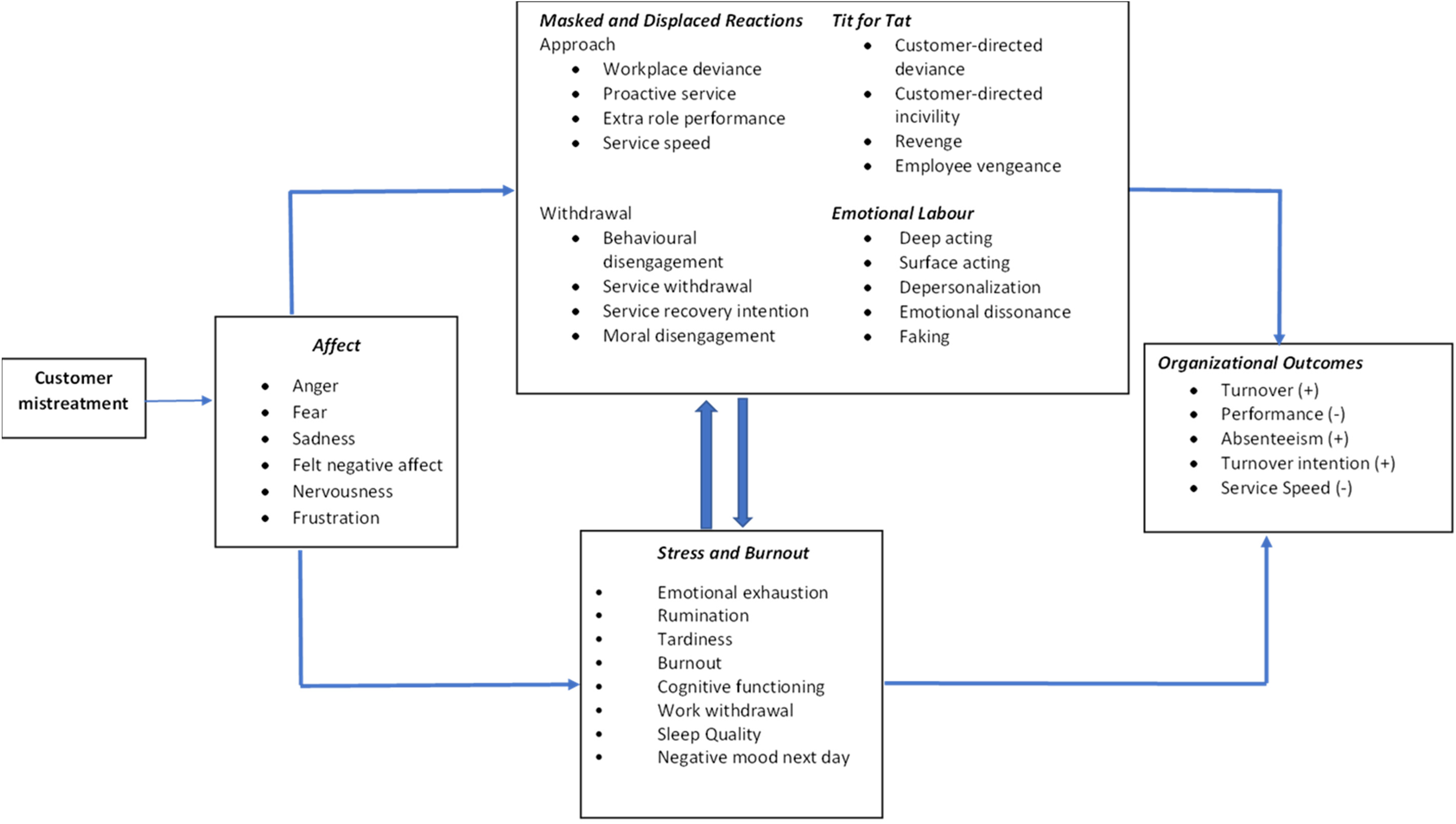
Framework of customer mistreatment.
Definitions for included customer mistreatment constructs.
Footnotes
Funding
The author(s) received no financial support for the research, authorship, and/or publication of this article.
